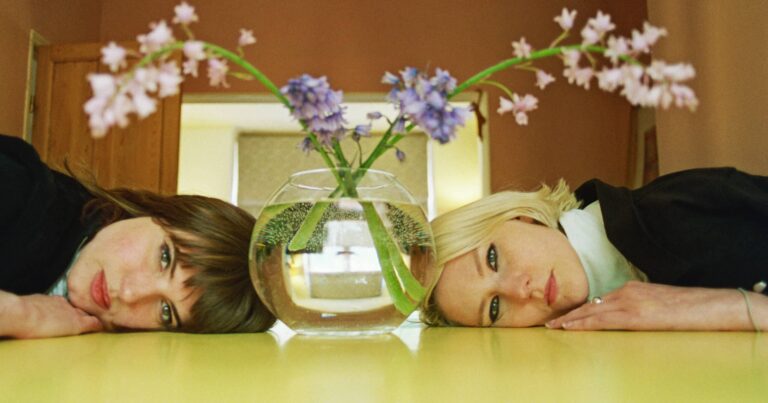
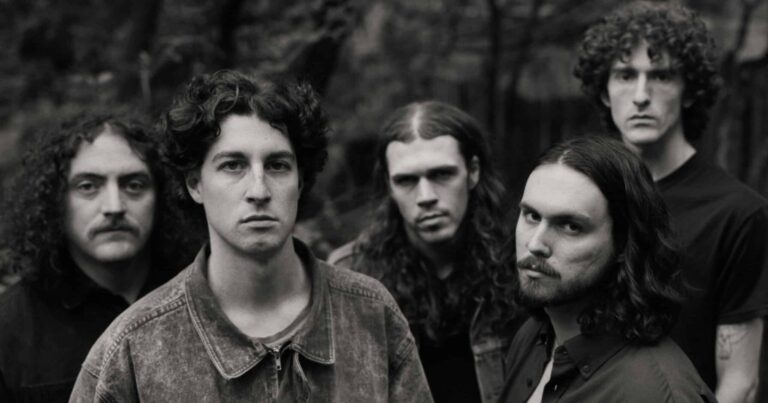
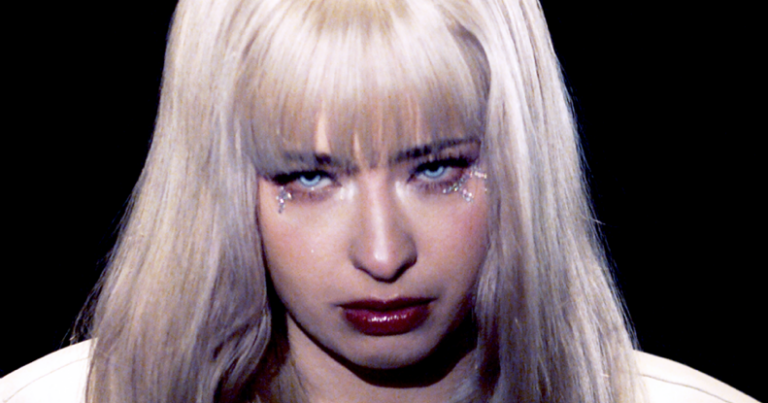
For years, Girlpool have been morphing their sound beyond its humble beginnings. The playfulness and romanticism of the LA duo’s 2015 debut Before the World Was Big belied the messy and terrifying realities of growing up; with each subsequent release, Avery Tucker and Harmony Tividad have found new and intriguing ways to bring that chaos to the surface. 2017’s Powerplant saw them incorporating percussion as well as plenty of feedback and distortion without shaking the group’s core foundations, while 2019’s What Chaos Is Imaginary experimented with more synths and layered production to document the changes in the group’s personal lives. They quickly proved that the push-and-pull dynamic of their music wasn’t limited to indie rock’s loud-quiet-loud formula and that their writing could slip into the abstract as much as it relied on heartfelt honesty. If What Chaos Is Imaginary drifted between straightforward indie rock and hypnotic dream pop, Girlpool’s latest twists both ends of the spectrum, straddling the line between delicate alt-folk and industrial pop with help from producer Yves Rothman.
Forgiveness introduces us to this fluid world by offering a jarring yet effective synthesis of its ideas. While most of the record weaves in and out of each mode, ‘Nothing Gives Me Pleasure’ takes a different, more volatile approach: it opens with thumping beats that are immediately smoothed over by a softer synth and Tividad’s sweet vocals, which in turn come into contrast with raw, lacerating lyrics about a hopeless relationship: “You’re so hot/ But still so cold,” she summarizes. But as she repeats the chorus about deriving pleasure from “the things I know you won’t say,” those industrial blips give way to a cinematic pop outro that’s less laden with friction and recalls Lorde’s ‘Hard Feelings/Loveless’, like fading the you out of the song’s hedonism. Its dynamism is later matched by Tucker’s ‘Violet’, a tender, Elliott Smith-esque ballad that expands unlike any other on the album, as if to affirm the quiet power of its biggest emotional revelation: “When you held me like a doll/ That’s when I felt so fucking strong.”
For the most part, the album transitions from one experiment to the next without much of a unifying thread tying it together. Some smart sequencing choices mostly make up for this, but it’s less a lack of cohesion that becomes a problem than a couple of missteps here and there: ‘Lie Love Lullaby’ follows seamlessly from ‘Nothing Gives Me Pleasure (both are co-produced by Ben Zelico), but remains too static by comparison, failing to fully convey the romantic frustration that Tucker sings about. ‘Junkie’, meanwhile, hinges on an awkward metaphor that doesn’t develop in the compelling and poetic ways that Tividad’s songs generally do, and the subtle instrumentation doesn’t do the song any favours. But sticking to a single style also leads to some of the album’s most affecting and memorable moments, like ‘Dragging My Life in a Dream’, a catchy and nostalgic cut that best evokes the group’s early days, or the magnificent ‘Faultline’, where lush melodies meet some of Tividad’s most potent lyrics to date.
When the members of a duo like Girlpool start to grow and write separately, this change can result in a few uneven records. The way Tucker and Tividad’s songwriting is framed on Forgiveness highlights their distinct personalities as well as individual concerns, but their songs also have a strange way of calling back and relating to each other. Over and over, they’re bound by dreams, trying to bury or fall into them, make them real. On ‘Dragging My Life’, Tucker holds his breath hoping to run into someone; ‘Faultine’ then has Tividad “sinking further in” and wishing “you could reimburse my oxygen.” Like Girlpool’s music, she’s in a state of oscillation, “Between the edge of solitude and hope/ I’m shaking in a sentimental trope.” Then, she admits: “I wanted everything so much it grows.” Girlpool create a space where that kind of intense desire is permitted, and it doesn’t have to grow in one direction. But on the other side, beyond the constant haze, Forgiveness suggests, lies a life free from danger and delusion. Whether or not that’s where we find Girlpool next, what’s certain is that they won’t be the same.
Philadelphia-based sextet Blood have shared a new single called ‘Luck’. It’s lifted from their upcoming Bye Bye EP, which is out on July 8 (via Permanent Creeps) and includes lead offering ‘Money Worries’. Listen to it below.
Blood began in 2017 as the solo project of lead singer Tim O’Brien, expanding into a six-piece with the release of their debut EP, Why Wait Til’ 55, We Might Not Even Be Alive, in 2020.
Throughout the week, we update our Best New Songs playlist with the new releases that caught our attention the most, be it a single leading up to the release of an album or a newly unveiled deep cut. And each Monday, we round up the best new songs released over the past week (the eligibility period begins on Monday and ends Sunday night) in this best new music segment.
On this week’s list, we have the gorgeously elegant, slow-burning title track to Angel Olsen’s forthcoming album Big Time; Arcade Fire’s uplifting, acoustic-led ’Unconditional I (Lookout Kid)’, the latest single from their upcoming album WE; ’Mirrors’, the title track to Francis of Delirium’s new EP, which matches anxiety-ridden lyrics with dynamic instrumentation; Kelly Lee Owens’ lush yet foreboding ‘One’, taken from her new album LP.8; and ‘easy’, the striking, synth-infused opener from Tomberlin’s new full-length.
Deerhoof, Empath, Water From Your Eyes, Dan Deacon, Palberta, Molly Drag, and more have contributed to May Day Music: A Benefit Compilation For Strike Funds & Artists, a new compilation benefitting strike funds and artists. The 47-track collection arrives on International Worker’s Day via Gardenhead Records, with proceeds going towards ongoing strikes and unionization efforts as well as the contributing musicians. Check it out below.
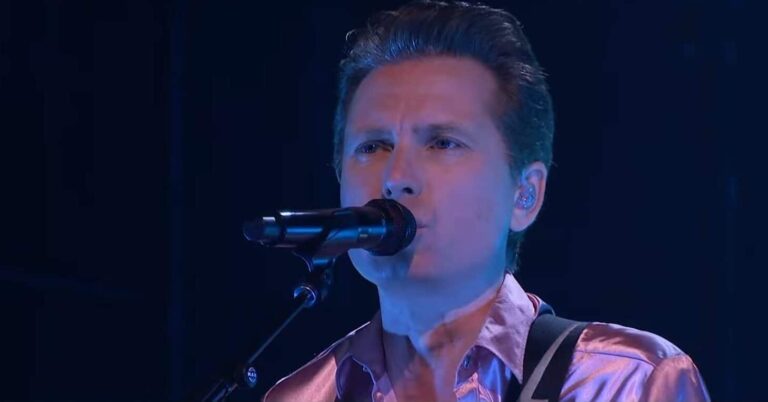
Fontaines D.C. appeared on CBS Saturday Morning yesterday to perform three tracks, one from each of their three albums. Watch them play Dogrel’s ‘Liberty Belle’, A Hero’s Death’s ‘Oh Such A Spring’, and ‘Jackie Down The Line’ off their latest LP Skinty Fia below.
Fontaines D.C.’s third album was released in April via Partisan. The band recently performed the track ‘Nabokov’ on Seth Meyers.
Sometimes, you just have to take a leap for something you believe in. For some people, this might mean starting a new YouTube channel. For others, it might be opening a boutique or writing a book.
If you love fashion or style, a great option is to start a fashion or style channel of your own on YT. The top style channels out there made it happen through hard work and consistency. Check out these tips to help yourself find success.
Invest in Yourself
Everyone has to start somewhere, right? That’s why there are tons of tools out there to help you out. One tool that so many people just shrug off is the ability to purchase YT hits and other similar packages. Companies like videosgrow.com will give you an opportunity to buy 500 YouTube views for cheap, and they do it well.
You don’t have to spend a ton of money to find ways to succeed. A little bit of investment will go a long way. You can also invest in yourself in other ways. Time is a major investment. You need to take the time to create quality content and not just publish any random thing.
You can invest in yourself by having great equipment, boosting your social media postings, and implementing new ideas into your work as these bloggers.
Top Fashion Bloggers on YouTube
Let’s start with the bloggers that you might be able to take inspiration from. There are a lot of them out there. Take a look at these names to help you on the way.
Tess Christine: just wanted to share some ideas she had and now has more than 200 million views and 2 million followers. She only makes 2-3 videos per month.
Zoella: is probably one of the most successful. She was even recognized in Forbes for her success. She has had more than 1 billion total views since 2009.
Samantha Maria: sets herself apart by being a travel enthusiast. She has a versatile and unique style and always adapts to trends wherever she may be.
Vanessa Zilleti: she actually shares a journey. It’s almost as if she has a reality show with a series of episodes. She shares shopping tips as well as various guides and tutorials.
Jenn Im: focuses on lifestyle as a whole with a ton of style advice in the mix. It’s very personable and sharing but also creative and inspiring.
These are just a few of the most popular examples. You will find there are a ton more successful people out there.
Now, check out other tips to create your own success.
Turn Viewing into Following
You want to get plenty of views on your channel. It’s the views that get you success in the end. But it’s about more than just views too. Your views will add up, and you will see people like the names we shared above that get more than 1 billion total views.
That’s pretty amazing!
It’s also amazing to build a following. In fact, having a consistent following will likely go a long way to help you be more successful. One way to do this is to create video content where you implore those watching to then subscribe.
Some of them will, and some of them won’t. However, you should still keep asking. The more that you can turn into subscribers, the better off you will be in the long run. It’s a simple concept. The subscribers are the ones who will keep coming back.
They are your returners and your repeaters. They also are likely to share you at some point with others they know.
Create Something Uniquely You
It’s totally acceptable to use other people for inspiration. But if you read through that quick list of popular names above, you will see they all do something unique. Some of them heavily focus on style. Others also include makeup, travel, or just tips for shopping.
As you determine what type of style channel you want to have, think about making it unique. And don’t just make it something different from every other channel. Make it something insanely different but totally YOU.
The key point here is you don’t want to just copy what everyone else is doing. You also don’t want to come up with some unique concept that really doesn’t fit you. You want to make something of your own. It needs to really reflect you and reflect the style you’re trying to create.
When you can bring both of those concepts together, people notice. They don’t want you to pretend to be something you’re not. They can tell when it’s fake. They want the real you, and they want it to be useful and interesting while they watch.
Faking it rarely helps you make it in this scenario.
Use Great Equipment
Have you seen those pictures of shoes or dresses floating around? They look like a different color to certain people. That change in color is sometimes related to the person, but it could also be their lighting or equipment.
While you can’t do anything about their visual equipment, you can do something about yours.
As you’re creating stuff for others to see, use high-quality goods. Use technology that will make a stunning creation. Use really great lighting. You also should master a skilled technique. You want those who watch to truly be able to SEE what you’re sharing.
If you’re showing different styles or fashion wear, make sure it’s visible. This comes from learning how to use the camera angles as well as phenomenal lighting choices.
If you don’t have a ton of money to spend on nice equipment, just buy things here and there. Maybe one month, you purchase studio lighting. The next month, a great camera. The cycle can continue like this until you have great equipment to make stunning content.
Interaction
One great way to connect with people is to interact. This will be an important concept when you get started. It’s also important as you become successful.
The people who choose to watch your stuff are taking valuable time to do so. Let them know they are valued. When they comment or interact with you, return the favor. More interaction will usually give you more visibility.
Commenting and responding is great. Asking questions in your video and telling people to post the answers is great. You can even host giveaways for comments, likes, or subscribers if you want to.
It’s all about engaging. You make those people feel seen, even if it is through a computer screen.
Use Analysis to Improve
Finally, take the time to analyze. YouTube provides several different reports and tools that you can use. Study them and see what is working. You can also see maybe what isn’t working for you.
These tools let you know who is watching and when they are watching. What kind of demographic are you appealing to? What video went over amazingly while another one totally bombed?
You can then use this data to help you improve going forward. Your improvements might be changing up your style or sticking to a different approach. You might even decide to post only on certain days based on your audience.
Conclusion
How to start your own channel is simple. You need to create it. But then you need to work on it and build it. There are a myriad of valuable tools and solutions. You need to take the time to get to know what’s there. Also, take the time to get to know yourself and how you can be unique and different from every other fashion vlogger out there.
There are plenty of ideas. You simply need to learn what works for you. Don’t forget to take advantage of the tools and learn to invest in yourself.
Lin-Manuel Miranda’s tribute to the late musical composer Jonathan Larson premiered on Netflix in late 2021. The film, starring Andrew Garfield, received positive reviews from critics and fans alike, rounding out what has become known as the Andrew Garfield renaissance of 2021. After appearing in The Eyes of Tammy Faye and (spoiler alert) Spider-Man: No Way Home, tick, tick…BOOM! finally allowed the actor to take center stage in his role as Larson, a struggling artist. At this time in his life, Larson is finding it difficult to write material, an experience he isn’t used to. Simultaneously, he’s losing friends to the AIDS epidemic, and his girlfriend (Alexandra Shipp) both admires and is frustrated by his overwhelming commitment to his craft.
Just like Larson’s constantly ticking creative mind, the film is always dynamic, thanks partially to its Oscar-nominated editing. Cinematographer Alice Brooks captures Larson’s heart with warmth and compassion, and also makes musical moments exciting and memorable. Here are some of the best stills from tick, tick…BOOM!
Avril Lavigne joined Olivia Rodrigo onstage during the Toronto leg of her SOUR tour last night (April 29) of Lavigne’s 2002 hit ‘Complicated’. Check out footage from the performance below.
“Jumped up to sing ‘Complicated’ on stage with @oliviarodrigo in Toronto tonight,” Lavigne wrote on Instagram after the performance. “It was very sweet to perform with you tonight on your SOUR tour!! Have an incredible tour gurl. Keep killing it. Sending you so much love.”
olivia rodrigo and avril lavinge performing ‘complicated’ together for the FIRST time EVER 🖤 pic.twitter.com/jytPieYTr6
Online casino bonuses serve the purpose of giving players the opportunity to get the most out of their game. However, that’s what it seems at first glance. In fact, any bonus is essentially a marketing tool that is needed in order to attract as many players as possible by offering them incredible bonuses. However, winning with bonuses is not such a difficult task if you approach it responsibly.
You can take a brief look at the bonuses offered by online casinos. At the moment, the most common ones you can come across are:
Deposit Bonus. Players are asked to deposit a fixed amount into their account and receive a 50%, 75%, or 100% bonus on top in the form of bonus funds. As a rule, such bonuses apply to several deposits at once. For example, a bonus on the first four deposits
Cashback Bonus. Typically, a player receives a cashback bonus for losing money at a casino. Such bonuses may be available every weekend or every day. The amount of cashback usually depends on the status in the casino or the amount lost
Free Spins Bonus. This type of bonus also applies to deposits. Most often, players are asked to deposit a specific amount of money and receive a fixed number of Free Spins. These Free Spins look like sets or packages of offers. For example, make a deposit of 20 USD and get 30 Free Spins or make a deposit of 40 USD and get 60 Free Spins
No Deposit Bonus. This is an incentive bonus for signing up to the casino. This can be Free Spins, which are added to the balance in any particular game, or bonus money. If it’s bonus money, you usually get either 5, 10, or 20 USD, which you need to wager in special games. Or it could be 10, 20 or 30 Free Spins in a particular slot.
These bonuses are the most common in online casinos. Of course, some establishments still have offers like the One Hour Bonus, but they are not very popular.
Moreover, you can remove the bonus if you think that you are better without any bonuses taken.
Wager is what matters most
It is one thing to get a bonus, whether it is a no deposit bonus or a cashback bonus. They all have one condition that must be met. This condition is called a wager. In essence, the wager is a measure of how much a player needs to wager with the bonus funds before he can withdraw them. Let’s take an example, you got a 20 USD no deposit bonus with wager x50. In order to be able to withdraw this bonus, you would need 20*50 which would bring you a total of 1,000 USD to wager. However, there are times when such bonuses can be wagered on all games. But, in most cases, every bonus must be wagered only in slots where 100% of all bets count. But, for example, in table games, the offset may go only 5% of all bets. Therefore, be sure to read the terms and conditions for earning and wagering all bonuses.
In order to ensure that you follow all of the rules regarding wagering bonuses, you can go to the terms and conditions of the casino where you play and study all aspects of bonuses. It can happen that an online casino has a Bonus Terms and Conditions section, so players can read all the bonuses without any problems.
Wagering weight is another important parameter
In addition, you need to pay attention to the wager. Today, online casinos are very strict in regulating this area of bonuses. The fact is that the lower the wager, the higher the probability that the bonus will be won back and the player will get the money. Bonus hunters have begun to take advantage of this. In order to prevent options for dishonest receipt of funds, the wager has grown to astronomical values. Today you can find wager x60, x80, or x99. Yes, you are not imagining it. The thing is that by introducing such conditions it has become very difficult or even impossible to wager bonuses. However, such large wager figures are not always found. The most common are x25-x50. These are more or less bearable options, which you can choose and try to win back.
There’s something spellbinding about the way that Tomerlin’s music opens up a space for whatever passes through it, no matter how big or small, and makes it feel sacred. Since releasing her striking 2018 debut At Weddings, the singer-songwriter has been making songs as vulnerable as they are intentional and as gentle as they are layered. She’s able to tap into a feeling almost like an outside observer, watching as it grows and fades and falls back into view, and her music invites you to sit still and take stock of the things that can slip through the cracks in a fast-moving, relentlessly unpredictable world. She wrestles with feelings of isolation and anxiety but finds comfort in the solitude of nature, paying close attention to what her surroundings have to offer without seeking easy answers.
After refining her sound on 2020’s Projections EP, she returns today with her sophomore album, i don’t know who needs to hear this…, which was recorded live at Brooklyn’s Figure 8 studio and co-produced with Phil Weinrobe, who’s worked on the solo records of Big Thief’s Adrianne Lenker and Buck Meek. Filled with impeccable, subtly moving arrangements, the album expands her palette just enough for us to follow her stream of thoughts as she untangles them, like turning conversations into movie scenes and then replaying them in your mind. Sometimes, even she’s surprised by the role she’s cast herself in: “I’m not a singer, I’m just someone who’s guilty,” she sings on ‘tap’. “Remind me that I don’t have to be anything.” It’s one of the many revelations that come naturally on idkwntht, but it’s not a disheartening one. It’s a record built with the greatest trust, care, and patience, one whose resonance echoes through and beyond the tentative hope of its title.
We caught up with Tomberlin to talk about the story behind every song on her new album, i don’t know who needs to hear this…. Listen to the album and read our track-by-track interview below.
1. easy
The synth here is kind of an imposing way to start the album. It immediately introduces the conflict of the song, this sense of uneasiness about being misunderstood. Was that the intention behind it?
Definitely. All the songs I wrote on guitar on my own and then when we brought them to the studio. This song specifically, I was like, “I don’t want this to be a guitar song.” I felt like it needed more depth that the synth could bring. I knew that I kind of wanted it to be more electronic-leaning and we were messing around with the Juno – that’s the main synth for that. Sonically, I wanted it to be a bit eerie. I think we started and finished that song in a day, most of the live tracking. I mean, it came about pretty easily [laughs], like, the shift from bringing it from just an acoustic guitar song to that. Phil Weinrobe, who produced the record with me, we kind of built a language in the studio the two weeks that we were there, and he just honed in really quickly on the vibe that I was going for. I feel like a lot of Radiohead songs are similar in the way that they use electronics for building depth and space. It’s a simple element in a way, but it draws you in. It’s like a tunnel, you’re kind of twisting and turning and you can’t quite see.
2. born again runner
I love the sequencing of the record in general, and this song ties beautifully into ‘easy’, exploring the theme of not being seen for who you are and trying to be loved. But it’s in a different context, and you get into a bit more autobiographical detail lyrically. Is there a thread from one song to the next?
When I started sequencing the record, it was kind of thematical, the flow of the storyline, but there isn’t really a direct thread. I did know that I wanted ‘idkwntht’ to be last on the record. I went through a couple different sequences – there was one that I was really set on, which isn’t the one that ended up happening. And then a friend actually helped sequence this record. He listened to it and sent me the sequence, and I was really against it at first. [laughs] And then I listened more, and I did feel like it brought up the cinematic nature of the record. It felt like playing through movie scenes, and that’s what the feeling that I was going for with my sequence, but his honestly did it way better. Thank you, Steven, for that.
What I liked about these two songs being paired back to back, ‘easy’ and ‘born again runner’, is the last line in ‘easy’, I’m like: “Stop telling me I’m easy.” And then the next song, it’s obvious that regardless of whether or not I want to be called that or I want to deal with that, it is a theme in my life where I am forgiving, which can be considered maybe easy, like easygoing nature. But it isn’t easy to be forgiving. It’s really difficult. So I liked the contrast of those two songs leading into each other, because it’s really defiant on the end of ‘easy’, I’m like done. And then the second song, it’s like I can’t go against my nature in a way, of wanting to understand and wanting to connect the dots. So yeah, it was pretty deliberate to have them back to back like that.
The line “I know I’m not Jesus, but Jesus I’m trying to be enough” – you say in the song you’ve said it more than once. Do you remember coming up with it?
I wrote that song in like five minutes. [laughs] It just all fell out at once. Sometimes songs come like that. You have to be open to it, you have to make the space to allow it to come. It sounds really hippie-dippie, but it is true. Every time I’ve written a song I don’t really feel like I’ve had much to do with it. It just kind of feels like it comes, and the way that it comes is different each time. But there are several songs of mine that have just come all at once, and that’s one of them. I definitely edited it a bit, but line for line it was coming out. I was sitting at my friend’s kitchen table, they weren’t home, I was in the apartment alone. I put my voice memo recorder on my phone, and I was playing that riff over and over but I felt lines coming up, so I just pressed record and it kind of all fell out. It wasn’t super methodical.
When that line came, I kind of surprised myself by it. I was raised very much in a Christian religious home. Even though I’m not a Christian, it’s still a bit triggering to take the Lord’s name in vain, you know, to say Jesus. Especially to be like, “Jesus, I’m trying to be enough.” I kind of surprised myself singing it, being like, “Whoa.” [laughs] But it so clearly was communicating, that line in particular, the thesis of the song. Knowing that I’m not this perfect person, but I am trying to be myself and I am trying to be honest – these qualities that people pin to a saviour type.
3. tap
To me, the drifting quality of this song almost makes it one of the lighter ones. In contrast to ‘born again runner’, it’s less of a narrative than a collection of thoughts and observations that are interconnected. I know you sometimes use a notebook to write down phrases or lines, and I was curious if this came about by piecing them together.
This definitely came while I was on walks. I was on a specific walk that I can remember the weather, what it looked like outside. I had recently transplanted to New York a bit unexpectedly, but I was walking on like the West Side Highway – it’s side of town on the water, basically. There’s this huge, long park called Chelsea Piers, and I was walking against that backdrop. On the right side of you, there’s just the water and all these ports, and on the left side, there’s all these pockets of the park – some of it’s like a field or a playground, picnic tables, different scenes. And also buildings on the other side where the highways are, huge buildings and old houses. I was really missing being in nature. The city is a new environment for me – I predominantly grew up in the South and in the Midwest, and it’s these long, spanning fields and meadows and hills, lots of trees generally, that was what I was used to. And I was really missing that.
And it was just pandemic, so walking around, I was trying to find things to connect to on this very depressing winter walk. I would take a walk every day to be like, “I gotta get out of my head.” I started writing on my phone – I think the first lines that came for the song were the last lines, “I’m not a tree/ I’m a forest of buildings.” Because I was just longing for the natural, the organic, instead of stone and steel and brick. I will write in my notebook, but I more often have my phone on me. I want to be someone that brings my notebook everywhere, but I guess I need to use a smaller notebook that fits in my bag. [laughs] So I started writing it on my phone, and later on I started playing the guitar part. And then I started singing the “Tap of the heart until I hate myself” because I was just thinking about Instagram, basically. Everyone’s addicted to their phone, I feel like, but it became way worse during the pandemic when there’s nothing going on, somehow people will still have shit to post about. [laughs] It just was another flow where I was singing and the words were coming out, but as I was crafting it, I kind of was like, those lines that I wrote on my phone definitely are definitely a part of this song, of this feeling that I trying to investigate.
4. memory
To me, this song is about trust in a relationship. But by addressing the role faith played in your life when you were young, it also becomes about how we begin to doubt ourselves and the world around us as we grow up – even things that we have evidence for. It’s interesting how those things relate to each other.
That’s a song, too, that I just wrote in a day, and I kind of didn’t know what I was singing about. But yeah, I had trusted in the invisible when I was young, and it just came from that line. First off, I think the way that I was raised was so unique – or maybe not unique, but unique in the grand scheme of many people that I know and the things that their lives were based around. My life was heavily based around God and serving him, learning about him, obeying him. So it’s always going to infiltrate the way that I write and the way that I process. It’s not like it’s really intentional, but it’s just like, if someone grows up in the country, they’re probably going to write more about the country than they are going to write about the city.
I think I really enjoy twisting biblical language and making it about relationships. And biblical language is about relationships, so it’s not that wild that I’m doing that. But for me, it’s almost like putting a joke in a song, it’s a way to make it lighter. The line “I’ve tasted and I’ve seen you/ And still trust won’t come,” in Psalms it’s: “Taste and see that the Lord is good.” We’re supposed to be delighting in God. And so, it’s like me talking to this person or talking in my head about this person, like, “I have tasted you, I have seen you, we’ve shared this intimacy, and still I can’t trust you. I can’t trust that it’s real.” I think comparing those two, like nature and nurture vibe, was what was interesting to me about the song. It definitely is about trust and examining my own relational patterns in my life, how the way that I learned about trust influences my relationships now.
You said it’s like adding a joke in the song, but it’s also evoking what it’s really like when that infiltrates every part of your life. It’s putting that language in and using it how you want.
Yeah. And it’s a bit annoying when press will be like, “Tomberlin’s still struggling with her faith.” It’s like, I don’t have faith – I don’t have faith to struggle with. I don’t have faith in it, that’s the whole thing. When the EP came out, I think Pitchfork, that’s like their blurb about it, “Tomberlin’s still struggling with faith.” No hate to the reviewer, but that’s not what these songs are about. Those songs were primarily about relationships. Yes, of course the thing that I grew up heavily in and was my whole entire world is always going to infiltrate in a way, but it’s not what the song is about. It’s not like I’m thinking about God when I’m thinking about – this song is about a very specific person and a very specific time in my life where I was confused about how I was actually the one not trusting. And it wasn’t really about them.
5. unsaid
One thing I wanted to know is if the Lucy you’re referring to is Lucy Dacus.
Haha, yes it is!
Do you want to provide a bit of backstory on that?
[laughs] Hm, how much do I give away… Well, Lucy is a master tarot card reader. And she’s given me a few tarot card readings about specific things in my life. It was when I was living in LA and she was visiting. We were talking about a specific person that I had questions about my relationship to them, and she gave me a reading. It was one of those things where it’s like, “Yikes, this is telling me what I wanted to hear but also didn’t want to hear.” And it really struck me that night. I’m pretty sure I wrote the song a couple days or a week or so later. But yeah, that’s the context that I’ll give.
So the moment kind of sparked the song?
I don’t think the tarot card reading necessarily sparked the song, but when I was writing the song, it was like, this isn’t another verse. This specific part has to do with this dynamic with this person. Because it was something that I was viewing from not up close and personal, it was like a long-distance relationship in a way, so I had a lot of space to examine it. I don’t know if you’ve had this kind of relationship in your life, but it’s a person that you just can’t seem to get out of your head and you see them from time to time you’re like, “Why is this still so present for me?” Yeah, that’s the feeling.
6. sunstruck
Again, the sequencing adds so much to the meaning of the songs. Instead of leaving things unsaid, it begins with the feeling of aliveness that comes with actually talking all night long, before you start processing everything in the song itself. Is that writing it felt to you, like everything started to unfold?
Yeah. I wrote ‘unsaid’ in the wintertime, and then ‘sunstruck’ I wrote in the summer. ‘unsaid’ and ‘sunstruck’ are about the same person, so it kind of makes sense that they’re side by side. And I guess I didn’t even really think about that necessarily, because I was trying to view sequencing from like an aerial view of being like, I’m pretending I don’t know what these songs are about and I’m just listening to them. But yeah, ‘sunstruck’ is like: time has passed, I have more connection in myself and knowing things about myself and knowing patterns in myself and patterns in this other person. I am kind of seeing it from an area of growth.
The thing is, the song ends on like, “We left behind some pain to get to the magic thing.” And it’s like, the magic thing isn’t the relationship is fixed and everything is perfect and you’ve grown and I’ve grown and now we’re living happily ever after. I do want to be intentional that the magic thing is just knowing yourself, and that never ends. The magic thing is that person knowing themself and continuing in that work and messing in the garden, even though it’s muddy and there’s weeds and there’s sticks and it’s fucking annoying. [laughs] We’re getting through this to get to the magic thing, which is actually connecting to ourselves, not really connecting to each other. It’s like, “No matter what happens, that’s what I want for you, and that’s what I want for me.”
The beauty of it, also, is that the growth that you’re talking about is very much reflected in the instrumentation, how the song progresses sonically. There’s a moment where it gets really loud, and your voice is almost drowned out by the noise. I think that’s a wonderful reflection of that feeling of disappearing into yourself.
Yeah, thank you. Definitely intentional. Definitely wanted it to build and explode, kind of like a firework – it does disintegrate into itself. These are things that you hope people catch on to, but it’s just like, who knows? This is really my first in-depth interview about the record, so it’s nice to hear that you’re catching all these things.
7. collect caller
What was the initial inspiration for this one?
Thinking about specific people in the music industry. Like, vulture types, which are abundant in the music industry. It was kind of a joke at first for myself, and then I was like, maybe this song is good. [laughs] Maybe it’s good enough to be on the record. But I was kind of just playing around. Growing up, I would make up songs, even if I couldn’t play an instrument then, kind of to make my parents or my sisters laugh. It was a thing I was known to do. That was another self-comforting thing of just fucking around on guitar and making up a song and then being like: This is funny, kind of, and it’s also telling a story. It came about almost like a joke, but it’s actually kind of serious. [laughs] I’m talking about very specific things. So I just decided to throw it on the record.
I think it still works with the record. I feel like a lot of my music is observational, whether I’m examining myself and my own dynamics or other people or spaces in time. It doesn’t feel diary-centric to me or anything, but hopefully one day when I’m like 50 making records still – I hope that that’s still happening – I’ll look back and be like, “Oh, that was that very specific chapter in my life where those were the things that I was examining, and now it’s taken up by something else.”
It’s also self-comforting in that it’s almost a subtle way of recognizing kind of the virtuous parts your behaviour that you might otherwise or in other songs feel embarrassed about, such as feeling like a ghost in a room. It puts that in a positive light.
Definitely. It’s like, maybe I am really quiet in this environment, but maybe some people could take a break, you know, from taking up so much space. [laughs] I’m very observational in a large room, or like a green room at a show that isn’t even mine, going to a friend’s green room when it’s a bunch of music industry people hanging out and everybody’s kissing each other’s ass. I’m just like, “This is so gross, everybody needs to calm down.” It’s not my favourite thing. Some people really enjoy those environments, and they really turn me off. But I really do like to observe those environments. [laughs] Just trying to glean humour from the darkness, I guess, was the goal of that song.
8. stoned
I feel like this song kind of is more about the darkness. It’s kind of acknowledging that feeling alone actually really sucks. And what you said earlier about forgiveness I think comes through in the song, too.
I think when I was younger, the way that I understood forgiveness was, if I forgive someone, then that means that I forget what they’ve done. And I move on, and I don’t hold that against them. And maybe I’m still friends with this person, maybe I’m still connected to them in some way. I let them back in my life, and that is forgiveness. But I think as I’ve grown and aged and had more experiences, something that I really hold on to and love about the way that I was raised and the way that I am because of it is that I am a forgiving person and I do want to forgive people and I do want to let things go. But it can bite me as well, because once people realize that, they can also walk all over you and really destroy you because they are taking advantage of that part of your being. I’m continually going to have to learn to navigate that – I think I’m much better at it than I used to be.
But that line also wasn’t in the song originally, that I had forgiveness in my heart for this person. Because I think that was something that I wrestled back and forth with, of like, how could I actually forgive this person? But ultimately, what I’ve learned about forgiveness is that even if it doesn’t come to fruition – like, that person hasn’t asked for my forgiveness, they don’t think that they’ve done anything wrong, but where I want to be in my life is if they did come to me and ask for forgiveness, I would have to give to them. And I know that I wouldn’t want this person in my life, I know that it would not be able to happen. But I know that I could forgive them and let it go if they asked for it. So I think I still hold that forgiveness in myself for that person, but it is something where I don’t know if that will ever happen. But it’s examining a part of myself where I feel like I got completely walked all over, and there’s a part where I’m like, I wish I wouldn’t have been so forgiving multiple, multiple, multiple times. But ultimately, that’s a part of myself that I love. Holding on to that instead of being ashamed of it. I don’t know if that makes sense.
Another thing I wanted to mention is that the song reminded of Ada Lea’s ‘damn’, which I know you sang back-up on and has a similar theme. I wondered if there’s any connection there.
No, I think the song was written before I heard ‘damn’. But yeah, that’s cool how songs do that. I think ‘easy’, I sent it Cass McCombs, who played on the record, and he sent me some ancient country song where it’s not the same lyrically, but there are things that are basically the same message of the song. He wasn’t being like, “This sucks,” he was like, “This reminds me of this guy’s take on that kind of similar feeling.” But it’s cool how music does that. We’re all wrestling with the same things. We’re all humans just being like, “What?” [laughs]
9. happy accident
How did you feel when you heard that guitar part that Cass McCombs contributed?
Basically, I wrote the song on acoustic guitar but played around with fingerpicking it and strumming it when I was writing, and I was just like, “This is obviously a rocker.” Like, it will be on electric guitar on the record, I knew that in my mind. And I wanted a competing guitar line to be doing something. And so, Cass and I were just riffing back and forth, and he just played that. And I was like, “That’s it. Just keep doing that.” [laughs] He was just being himself. I feel like when I hear guitar, I can tell that it’s him. Like on that HAIM song, on ‘The Steps’, that’s Cass playing. I didn’t know that off the top of my head, but I was listening to it being like, “Why does this feel like I know this person?” And it’s because I did.
‘stoned’ kind of picks up the pace in terms of it being heavier and more electric, and this one is a full-on rocker, like you said. Sequencing-wise, again, it feels like that was an intentional decision to get to the climax of the record.
Yeah, it definitely was. There is electric guitar earlier on the record, there is percussion – we wanted to have touchstones throughout the record where it’s like, this isn’t out of place for these rockers to be on here. You’re driving down the tunnel and there’s these different winding paths, but it all was the same tunnel. So it was very intentional to have them side by side and have them slap you in the face and wake you up and be like, “It’s not over yet.”
It’s funny, the record is long, but to me, it doesn’t feel long listening to it. It was a wild thing when I was like, “Fuck, it’s 50 minutes.” We were scared that we were gonna have to cut some songs. And then it came into question, like, “What do we cut?” And we were like, “Do we just cut the rockers?” And I was like, “Absolutely not. [laughs] I cannot imagine this record without these on here.” We were like, “Okay, we just have to find a person who’s cutting the vinyl to be very meticulous to get the sound right.” Because if you have someone that doesn’t really zone in on that, the record can sound bad or too quiet. You want all the elements to be lifted in the mix. That was something that I was learning about. Phil is such a vinyl nerd, where I was like, “I didn’t even really know that before making this record.” But we got someone that cut the vinyl and it sounds really great, so I’m really happy with it.
10. possessed
I feel like it’s also important that a lot of the songs are longer because it allows them to grow and move along, but this one is kind of an exception. It feels to me like one last moment of vulnerability after the self-assurance of ‘happy accident’, and it really sets the stage for the closer.
Yeah, that was a song where I was like, “That’s the song,” but I kept thinking I’m gonna add more, there’ll be more verses or a structural change. Like, “I like where this is, but it’ll grow.” I was sending it when I was working on it in the batches, and I was always like, asterisk, like it’s not finished yet. I don’t know what changed, but I think I was just listening back – I hadn’t listened to it in a while and I was on a walk listening to an iPhone voice memo, which is how I record my demos, still. And I just was like, “This is a song, this is done. It doesn’t need anything else.”
I don’t know, writing songs is like magic. Before, At Weddings, those are my best attempts at songs. I grew up very into creative writing and it wasn’t shocking to my parents and my family that I wrote songs because that had always been something that I was “gifted” at. But it is a more stressful thing when it becomes your job, obviously, and you have listeners, you have fans that are waiting for the next thing and they’re comparing you to other people. There’s all this expectation. So that song is kind of about dismantling that and just surrendering to a song being magic. It’s kind of about many things, like I could say that to you and then say that the song was about something else in another interview, because I think it’s multifaceted, but that’s part of it.
It kind of goes back to ‘tap’, like, “I don’t have to be anything.” Some people are making music for very different reasons than I’m making music, and that’s okay. They’re not doing anything wrong. But the reason that I make music is because I’ll make it regardless of whether or not anyone listens. That’s ultimately what I think I figured out in writing that song. I don’t know who to be, I don’t know what to sing, but I do. I do, I always know. It’ll always come, it just might not come at the quick-natured pace of some people releasing music. You know, like Adrianne Lenker, that woman just seems to be blowing her nose and a song comes out. [laughs] And I love her and adore her, but that’s not how it works for me right now. Maybe it’ll change. But it was a thing of like, I’m not being hard on myself about the nature of this. It’s magic, and music is magic. It’s just capitalism that destroys art and destroys our view of what we’ve made and what we’ve done, and it doesn’t give us much time to be proud of anything. So it was me trying to be like, I don’t have the answers, and it’s magic. Something’s always possessed me to write or to explore or examine. And something always will, I think.
11. idkwntht
I feel like that’s what you’re leaning into with the closer. Like, “I don’t know what exactly my role is, but I’m kind of embracing it.” Even though you sing earlier that you’re not a singer, you’re kind of stepping tentatively into that role, whatever it means.
Totally, you’re very good at analyzing. That’s very much the nature of that song. Also, like, I needed to hear that. I found the original voice memo the other day – because I don’t mark them, they’re just like new voice memo 250, and I kind of do it on purpose because I like not knowing where it is. I can just go back in the month and be like, “I think I wrote this song in this month.” But I found it the other day, and it’s like, you can hear birds singing outside, I’m sitting by an open window, and I just sound tired. [laughs] And I’m singing this song, and it’s just like I needed to hear that. I was holding a lot, and that was deep into winter pandemic.
A lot of the record is examining relationships, and that was a song where I was just like – I mean, I reference a relationship, “Really what I wanted to be is everything that you weren’t for me.” But going back, connecting to myself, that’s what’s important. I’m spending my whole life, my time, all my effort, all my energy, my money – like, my savings account that I had from when I started working when I was 13 – I’m investing it in music. I’m investing it in this thing that I can’t touch, really. And it feels insane all the time. It’s just insane that we are all dedicating our lives to this thing where it’s like capitalism is truly crushing it to bits and pieces. And it’s so terrifying. And for me, I don’t come from wealth like a lot of musicians seem to – and that’s fine, but that’s not my thing. So I’m frightened quite a lot about the sustainability of doing what I do, even though I’m so grateful that people do listen to my music. But that was a moment of being like, “Holy shit, I don’t know who needs to hear this…” I was just scared, I think, and trying to examine it from a place of like, “It’s good for me to do this.” And I’ve been told by others that it helps them, so I’ll keep doing it.
It’s funny that the voice memo, I think the last thing is like, “Sing it like it is a prayer/ Sing it like no one else is there/ Sing it like no one can hear you/ Sing whatever makes it feel new.” I remember that I could hear commotion in the kitchen above me – I was staying with friends – and you can hear me just hitting my phone because I thought that somebody was about to walk in, so it ends really abruptly and I’m trailing off. But that’s the feeling, this is just this mystery – the fact that I’m able to do this, that people want to listen to my music at all. It’s all a mystery to me, and I’m very grateful to be a part of the mystery. It mystifies me, it’s not something that I feel privy to. I’m just right there with everybody else.
What’s the voice recording at the end of the song?
That’s a home video clip. It’s my meemaw, who is my mom’s mom, talking to my baby cousin Chandler, who was a newborn at the time, in a silly voice, like how we talk to babies. Basically, we ripped audio from a bunch of my home videos and we started messing around and it wasn’t super intentional at first. We were playing with that specific clip because there are so many sounds, it’s in a kitchen and there’s other family members floating around. I love that it’s meemaw’s voice on it, it’s so comforting every time I hear it. But I love the end of the song where it’s my cousin Crystal saying “Enough with the noises.” It just really ties it all up – there’s a lot of noise, you’re hearing my noise, you’re listening to my inner dialogue, in a way. But it’s just like, “Enough.” And you can start the record over if you want to, or you can just be with yourself for a bit and feel your feelings.
There are quite a few musicians who contributed to the album, and the bio mentions that “people laughed and cried and joked” during the recording process. Could you share a moment like that that has become a fond memory for you?
I have two things that come to mind that are really moving to me. Because it was the first record that I’ve made where I really brought in people I didn’t know and was building relationships at that time. Shazad [Ismaily, who founded Figure 8], he heard ‘idkhntht’ and he was like, “Sarah Beth, the only word that comes to mind is like, this song is a miracle.” And I was just like, “Whoa.” [laughs] That’s… I’m really bad at accepting nice things that people say to me about anything, but that was so cool. That song also almost wasn’t on the record. I had kind of forgotten that I had written it because I thought it was too simple or something. And then I played it live for Phil and Felix [Walworth of Told Slant] in the studio, and they were like, “We’re gonna start with this one.”
There was also a moment where David Cieri, who is this masterful piano player who played piano on a lot of the record, we had him come in just to play on one song – I can’t remember initially because he ended up playing a ton on the record. I was using the bathroom, but I came in and Phil was playing ‘memory’ for David, and I walked in and saw that he was like weeping. [laughs] He was just so moved by it that he looked over and was like, “Wow.” And I just was like… “I’m sorry?” [laughs] And he hugged me and was like, “I gotta go, I need to leave, I gotta go have a proper –” He simply left that day, and then I turned to Phil after he left and I was like, “We must bring him back. [laughs] He must play.” Because I was like, “It hits him, he gets it.” I wanted the people who played on the record to feel the music, and he obviously did. And I feel like you can feel that in his playing on the record, especially him playing on ‘easy’. So yeah, we had to bring him back.
This interview has been edited and condensed for clarity and length.