Home Blog Page 1653

How To Approach A Style Change

From time to time, it is a good idea to undergo a change of one’s personal style. Doing this has a number of benefits. For one thing, it means that you are going to be able to reinvent yourself, surprising people you know with your new look. It can also act as a very effective confidence-booster, for when you need to try and feel better about yourself. Whatever your reason, it’s wise to plan ahead so you know exactly how you are going to approach the situation. Let’s take a look at how to approach a style change now.

Get Clear On Your Reasons

First of all, you might want to take a moment to get really clear on just why you want to change your style. This is to ensure that you are doing it for the right reasons. If you are trying to impress other people or you feel pressured into this in any way, then that is unlikely to end up in the right way. Instead, you should be doing it merely because you want to. It is best when you approach this as a kind of play, or just because you want to see how it turns out. If you are doing it for that reason, you’ll enjoy it a lot more and get more out of it.

Gather Inspiration

Arguably one of the most important parts of all this is to spend some time gathering the necessary inspiration. You need to have some kind of idea of what styles you are following along with. You can think of this as a kind of creative pursuit. Just as you would look to other artists for inspiration when you are creating something, so too do you want to look at other people for inspiration in how to improve your own style.

There are a lot of places to look for inspiration. You can look online at instagram, pinterest and so on. Or you can look to your friends or, quite simply, people you see in the street. Then there are magazines and people in the media. Gather all the inspiration you need, but always remember that you are aiming to improve and change your own style, not simply copy the style of someone else. Inspiration means that you use these ideas as a springboard, rather than a template, and move on to do what you want with the ideas.

Get Rid Of What Isn’t Working…

At the same time, if there is any aspect to your style that you immediately feel is probably not working all that well, you will want to try and get rid of that as soon as possible. You might already have an awareness of one or two elements that you need to do away with. If not, these might start to become clear as you gain inspiration and start to think about the changes you want to make. Be ruthless: don’t hold on to anything just for the sake of sentimentality or ‘just in case’.

…But Try Revamping Old Items

That being said, there are bound to be one or two of your old items that you could revamp into something completely new. By being a little creative and looking at some of your old clothes, you might be able to create an entirely new look without having to hardly buy anything new at all. That is great for those on a budget, or if you just want to put more of your own personal artistry into the whole process. In any case, you should think outside the box of each item before throwing it out.

Start Collecting New Items

Try not to put too much pressure on yourself when it comes to collating together the new style. You are not necessarily going to know exactly what you want straight away, and that’s okay. It is often preferable to simply start collecting new items piecemeal as you go, even if you don’t have a clear idea of where you are going to end up with it all. Later on, you will start to find that things naturally come together more and more. For now, just think of yourself as a kind of scavenger or scrapbook artist.

Begin Making Some Combinations

At the base level, what you need to be doing in all this is putting together outfit combinations that make sense to you, speak to your personality in some way, and offer up some kind of a departure from your old style. By beginning to put together some combinations for outfits, you are going to find that you can much more easily start to get a good sense of what direction your new style will take. This is where the real creating actually starts to happen, so you should try to enjoy it!

Collect Some More Basics

In all of this, you are going to find it is so much easier if you have the right essential items in your wardrobe. There are certain basic items which are likely to crop up in various outfits again and again, and by having these in your wardrobe you will find the whole process a lot simpler indeed. Start collecting your white t-shirts, denim shorts, jeans, and all-purpose shoes now, as they are going to become very important once you are trying to put everything together into a new style. You can think of these items as the canvas you are painting on. Without them, you’re not going to have a painting at all.

Come Up With A Label

Whether or not you generally like to ascribe to labels, they can certainly be helpful from time to time. Coming up with a label for your new look might prove to be one of the most powerful steps you can take, as it will enable you to work to that headline, as it were. If you don’t like the idea of this, by all means skip this part. But a lot of people find it is surprisingly useful, so it’s worth trying out at the very least.

Match Your Body

There is always a lot of talk around body type, body shapes and so on. Whether or not you believe in these, it is certainly going to make a difference to be aware of what kind of a body you have, and how clothes tend to sit on you. This is more often than not an intuitive thing, but even so it’s something that you can work on too if you want to get more out of it. Make sure you are wearing clothes to match your body at all times, otherwise you might find that things just look off from time to time.

Be Aware Of The Little Touches

During all of this, you are going to want to think about both the large and the small. The large is obviously the overarching style, and all of the major outfits that you are beginning to put together. The small is those little touches that go into an outfit, and which often serve to actually complete the outfit as a whole. Be aware of these things, such as belts, purses, tragus earrings, and other little touches. They really do make all the difference in the world, and it shows if you have not paid attention to them enough.

Approach Your New Style With Confidence

Whatever it is that you decide upon, one of the most important things is that you are approaching the new style with confidence. In truth, having confidence is what ultimately sells it, so if you do not have this, you are not going to feel quite as good about the changes you are making. The best confidence, true confidence, comes from within, which means that you are actually happy with yourself in a genuine way.

To develop that, make sure that you are happy with all aspects of your life, and that you are living in a way that you are happy with too, and which falls in line with your own perception of yourself. You should also make sure that the style you are adopting is one that you feel confident in and which you feel is true to you. If it is, you will automatically be able to approach it with greater confidence from the outset, and that is going to help you to carry it off in a much better way.

By working on your confidence in these dual ways, you can hope to approach your new style in just the right manner, and that is going to make all the difference in the world to how it is taken by other people as well. Make sure not to overlook this.

As you can see, there are quite a few things that you might want to be aware of. But as long as you have worked through these ideas, you should be able to approach your next style change in the best way possible, whether it comes in a month or a year from now.

Are Documentary Films Documenting Any Reality Anymore?

By definition, a documentary film exists to document a truth. As such, unlike other genres, the documentary is limited by the boundaries of not only what is possible, but also what is real. It is a story like no other genre because it tells the factual and real story of the subject. Where other films can leave room for imagination, narrative prowesses, or breathtaking special effects, the documentary is the only genre that elevates the everyday image and sound by keeping it as unchanged and unaltered as possible. 

As such, it’s easy to assume that a documentary film’s purpose is to turn the truth into a work of art. From a directing and editing perspective, the statement is accurate. However, the audience has the right to question the trustworthiness of the truth that the documentary delivers. Can documentaries give viewers a 100% accurate picture of the untainted truth? The answer may surprise you but they do not document events and facts as impartially and exactly as we would like to believe. 

There is no denying that most documentary teams approach the project with an honest commitment to showing a part of the world as it appears to them. These are no works of fiction, and they also include sufficient preliminary research to convince the audience of the camera’s intent. However, there is plenty of room for deviation from the pure truth. 

Truth does not have restrictions

In theory, a documentary should be able to display the truth as it is. However, this would require the team to be able to proceed with filming and editing without any restrictions. Unfortunately, the quest for telling a true story comes with a long list of dos and don’ts that can affect the narrative process. Teams also need to be aware of the risks and costs inherent to the production of a documentary film. Indeed, if you’re planning a project, you need to consider insurance coverage to protect not only your activities, but also the crews, bystanders, and your equipment. There can be no safe project without ensuring that you can tick all the boxes on the list of what you should know about documentary insurance. This will affect some of the decisions regarding filming locations, equipment use, team size and qualifications, and the story you choose to tell. To keep costs to a minimum, small documentary filming agencies may choose to avoid expensive equipment, prolonged rental fees, or even diverse team hiring. Additionally, fear of lawsuits can also prevent filmmakers from exposing controversial truths. 

The truth of self-truth

There can be nothing more real and impactful than making a documentary about yourself. As the main subject, you know and understand what you wish to share with the audience. This could be the case of Charli XCX, who has been working on a way to document herself making an album in quarantine. The artist decided to make the most of the unique creative situation to reflect on her quarantine experience and related insecurities. It is a bold move that fans and creatives applaud. But it also is a move that is influenced by her unique perception of herself and her creative journey. Documenting yourself is a double-edged sword that can both reveal and hide more than you expect. Being both the subject and the initiator, you could end up with a biased end product that will never be able to tell a fully accurate and truthful story. 

Is truth marketable?

In theory, a documentary should be motivated by the search for truth. In practice, however, things are different. The truth that is told needs to be marketable and saleable. Ultimately, a documentary film is a commercial product that needs to be sold to be seen and generate an income. Indeed, no documentary team can work without considering the best ways to maximise their distribution strategy. Unfortunately, ensuring a documentary will reach its audience influences the creative process. The synopsis acts as an attention-grabber, as it needs to encourage the audience to watch the film. Filming the documentary with a synopsis in mind will ensure that the product can remain attractive, but it can also affect the story you’re telling. Perhaps some elements of the truth may not feature in the final result due to marketability. Naturally, it makes sense to tailor the content and promotion of your documentary to meet the audience expectations and mindsets. However, too much tailoring for marketability could distract from the original purpose. 

Telling the same truth with feelings

While documentaries are based on researching and sharing facts, they can’t deliver a factual breakdown of the truth. Documentaries are more impactful when they create an emotional engagement for the audience. Ultimately, for the truth to be heard and seen, the documentary film needs to maximise the properties of the channel. A film adds a drama edge to the narrative. The best films are those that can drive an emotional response. They keep the viewer on the edge of their seat. Documentaries obey the same rules. Some of the most impactful narratives are those that take viewers on a journey, such as Brother’ Keepers in 1992 and Bulgaria’s Abandoned Children in 2007. Yet hitting the right balance is no easy task. For each emotionally engaging documentary, many lost their truth for the sake of emotionality. Maintaining the appropriate level of feelings without obscuring or altering the truth is a delicate skill to master. 

The reasoning behind the documentary

A documentary is no work of luck. It is designed to answer a real question, whether it’s showing the reality of being an orphan in a foreign country or exploring the creative process in quarantine. The set of questions is crucial in providing a guideline throughout filming. But as they provide a direction, the questions also limit what can be and can’t be told. Because a documentary can’t be the blind exploration of a topic, it by definition needs to exclude some elements of the truth, specifically in the process of telling one truth. Ultimately, deciding on what you want to show instantly determines what you don’t want to show, even if those elements are real and tangible facts. 

The filmmaker needs to tailor the content for digestibility. Attempting to answer too many questions within the documentary could prove too hard to follow and comprehend for the audience. Therefore, it is in the nature of the documentary to keep some truths untold as filmmakers decide on the best direction to follow. 

Celebrities docuseries are the new gossip channel

At which point does a documentary turn into an exercise of voyeurism? It is a tricky question and one that the audience can’t answer anymore. Reality TV and documentaries may be two different genres on paper. But on the screen, they can be surprisingly similar. Following current celebrities inside their homes or as part of their day-to-day lives poses a crucial dilemma. Indeed, does every truth have documentary potential? Purists argue that the documentary presents a thoughtful, factual, and relevant truth that tackle important topics. On the other hand, reality TV shows and mock documentaries can confuse voyeurism with relevant and thoughtful content, displaying family feuds and eccentric lifestyles disguised as an honourable quest for a deeper truth. We, the audience, welcome the confusion for the sake of entertainment. But this could come at a cost as it can influence the quality of future documentaries.  

In conclusion, documentaries explore a truth in an industry where they compete for attention against fictions, gossip celebrities content, and marketable emotions. Due to the nature of the filmmaker industry, it is fair to say that the audience’s expectations and the market determine the level of truthfulness and facts of the documentary. More importantly, the popularity of scandal-prone real TV shows can dramatically change the balance, forcing future documentaries to focus on entertainment over fact-checking. We, the viewers, are writing the story of documentaries in our everyday choices.

Men’s Essential Items For Winter

Every season comes with a whole new wardrobe, and it can sometimes feel intimidating to know what to buy in order to be ready for the season ahead. The fun thing about fashion is that new styles and trends come to light each year, bringing a whole new look to the fashion industry. The thing is, buying an entire new wardrobe each season isn’t actually necessary – with a few key items, you’ll have more than enough clothes to wear throughout the winter and keep you warm and looking good. This will keep your budget right where it should be and also ensure you never go a day without something to wear. That said, here are some essential men’s items that will be sufficient for the entire winter.

Hoodie

A hoodie is one of the most comfortable items you can have in your closet and is suitable for most occasions. Whether you’re going to a chill session with your friends, to the gym, or even if you’re just chilling at home and don’t want to wear some uncomfortable and stiff jacket, a hoodie is a perfect option. This clothing piece will also fit most outfits – a jean, sweatpants, shorts, and chino, so you’ll have an item that can work with multiple looks; have a look at WTAPS for some terrific options to choose from. When buying yourself a hoodie, rather size up than down – the idea behind a hoodie is that it should be super comfortable, so you don’t want something that’ll be skin-tight or too small.

Statement jacket

This is what you’ll be wearing when you go out or have a special occasion. A statement jacket will be your go-to when you want to go for a more formal or class look, so get something that also looks good with most of your clothes but stands out. A bomber jacket is always an excellent way to go, and they keep you warm as well in the winter months. When buying your statement jacket, don’t worry about splurging a little on this item – this is what will complete your look and will also be one of the things you wear the most. You also want the jacket to last and still look good even when being worn a lot, so opting for something a bit more expensive and high-quality will be wise – you definitely won’t be needing a new one anytime soon!

Boots

Safety footwear goes a long way, and they look great too. Boots can be worn to work, when going out, during the day, and at night, so you’ll have a pair of shoes for any occasion. Boots are also a great way to bring a look together and never go out of style. So, even though you buy a pair now, they’ll still be right on trend next year. When purchasing a pair of boots, rather go for a pair made from genuine leather than faux leather – they are much more durable and look better for longer. 

Jeans

It is probably one of the staples of every person’s closet, so make sure your jeans are ready for the winter. If you have pairs that have been through a bit of wear and tear throughout the seasons, throw them out and get yourself a few pairs. This is important, seeing as a jean is one of the most worn pieces of clothing in the history of fashion and continues to be utilized for all the trends and styles each year. Understandable; you may have that one pair that fits perfectly in all the right places and is super comfortable, and even though it has reached its expiry date ages ago, you can’t seem to bring yourself to throw it away – now might be the time! Because you best believe you don’t want to be in public when that jean finally decides to go to the white light and bid farewell by tearing right where it would be most embarrassing to have a tear. There are plenty of styles to jump on board with – straight fit, skinny, slim fit, cropped, and pin rolled; the list goes on!

T-shirts

This is where you’ll be saving a ton of money. T-shirts are much less expensive than other items of clothing and are something you’ll literally be wearing every day. So don’t worry too much about buying fancy T-shirts, they’ll hardly be visible in the winter because you’ll be layering other pieces of clothing over them. T-shirts are also something that you buy every year, so maybe don’t spend a lot of money on clothing that you’ll be replacing in a few months anyway.

These few items combined will give you a wardrobe that will be more enough to suit your needs during the winter. Be sure to buy these items according to your style as well – after all, your style is what makes you an individual!

Artist Spotlight: Uma

A year ago, at the height of the pandemic, Barcelona-based singer-songwriter Uma released her debut EP, Bel.li, weaving her folk-centred songwriting around delicate Spanish guitars. Her second EP, however – titled The Moth & The Dove and arriving this Friday – is a collection of songs as wholly different as the world we now occupy. Folk influences still abound, but they do so alongside a gleaming array of other cultural references that range from bossa nova chord sequences to ominous synth basses. 

Part of this shift in style has been Uma’s frequent collaborations with partner and fellow musician, Lucy Lu (Luke Bower). The pair have contributed to one another’s work over lockdown, bringing fresh ideas to each other’s music while also providing the drive to create something new. As such, the Slow Dance signee knits together a broad church of influences with breathtaking ease on her new EP, using her intimate and balanced vocals as the anchor her experimentation flits around. Standout tracks include the ominous ‘Bring Me The Mountain’ and closing track ‘Even When She Knows’, both of which exhibit this promising young musician’s ability to remain sincere in totally contrasting ways.

We caught up with Uma for the latest edition of our Artist Spotlight Q&A series to talk about the process of making her latest EP, working with Lucy Lu, and more.


Something that I heard when I first listened to the new EP was that there’s quite a lot of different influences. There’s a lot of bossa nova and soul and R&B, which I thought was quite different from the debut EP, which was consistently folk in its approach. Is this something you always wanted to do and what triggered this change in style? 

I think that for me, the process of making music is just about having fun and learning – constantly learning. The first EP came out at the start of the pandemic and the second one is coming out now, mid-pandemic, and this time has been really amazing for me because I’ve been able to explore some parts of sounds I maybe haven’t before and really wanted to and just playing and having fun with it. So yeah, it wasn’t really even intentional. But it’s one of those things where you record something and it comes out almost a year after you started writing it, and there’s a slight disconnect to that music already because you are already working on new things or exploring themes or sounds. It’s something that I’m quite excited about and the music I’ve started right now is even more different in a way. So there’s this rapid movement towards different sounds, but I think essentially they are all still based in songwriting and very influenced by the folk side. 

Where did you find the influence for ‘Bring Me The Mountain’? Because that one I feel is the most divergent of all the tracks on the EP. What were the influences behind that? 

I think that with the whole of the second EP, but especially with ‘Bring Me The Mountain’ and ‘Black Bees’ – it’s an EP that’s been shaped by Lucy Lu, who’s been producing this music. We’ve co-produced all of the songs, which has been an amazing experience. I think ‘Bring Me The Mountain’ is where you can see our two different styles the best. It was the first song we wrote together in a very long time and the first song we produced for the EP, so I feel like it’s almost the most coherent and most disjointed one in it. And I think a lot of that sound is down to his style as well. 

You and Lucy Lu are partners, right? 

Yeah, we are. We’ve been locked down in Spain for like a year now. 

Oh really? Okay, well, was there an intention to specifically write a lot of the EP about your relationship? Or was it like the change in style, where it happened quite naturally? 

It’s something that happened quite naturally I think. My music is very autobiographical and I write a lot about my life and my relationships and things that are happening to me. And I think we were at a point in our relationship and our friendship and our creative partnership where we needed to process a lot of things. And that naturally happened because it was the start of a pandemic and we didn’t know what else was going to happen this year and how long it was going to last. So we just were writing for the fun of it and a lot of stuff came out naturally of it. So yeah, again, almost unintentionally, and it’s become a theme throughout the EP. 

How did you find the process of writing this EP? It’s your second one now, so did you find there was more pressure on it compared to the last one? 

Yeah, I think it feels more scary now to put it out, just because I think second EPs are weird. Especially when you grow your fan base, you introduce yourself to a set of people with a sound, but when that sound changes this soon turns into a career or a process. I think it’s very scary because it is very much still folky to me, but I am also very aware that it is in a different world – in a different sound world. But it didn’t really feel like that when we were writing it and when we finished it, I felt really free in the whole process and free to put it out there. But then you start getting into the logistics of the whole industry and it starts making everything scarier. 

And how did you find the process of writing the EP under lockdown? Did you find a lack of creativity as I know that’s been a very common issue for artists over the last year?

Yeah, definitely. I mean it’s been a really tough time, I feel like putting these two EPs out kinda looks like I’ve been super busy and super creative, which I have for the most part and again I think that’s down to having somebody else who is willing to push you and work with you and find the joy in that work. But it’s definitely been a struggle. We wrote that EP in summer last year and since then I’ve found it really hard to get back into writing. 

Is some of that struggle partly down to the lack of wider collaboration you’ve been able to do? Because you had a residency called Can Obert, so is that something you feel like you’ve missed in the last year or so? 

Oh, definitely. I think that side of it I really miss. I really miss gigs. I think when that whole side of work gets taken away it just suddenly makes everything else seem, not pointless, but you’re like, “Well, what am I going to be able to do with this if I am just stuck in one space for one or two years?” When time gets hard to define by events and work, I really enjoy working, so that was really big for me. 

Can you tell me a bit more about the Can Obert residence? Because it also involved Nilüfer Yanya, right? 

Yeah. I mean, we haven’t done it for three to four years now, so it feels like one of those things that gets brought up and that we’ve worked on in different formats. But we haven’t done a residency for about three or four years now because everything got so busy. But that was really amazing, I think that we made that with a group of friends when I first felt very serious about songwriting. And I think it was just very selfish in a way because I was like, “Well, let’s bring all of these people to my house so that we can all have fun and work.” And the first few times were really chaotic, but every time we came out with something really amazing. So yeah, we’re looking at doing some more, but trying to organise it in COVID is tough. 

Is collaborative music-making something that you’ve always naturally been able to do, or is it something that you’ve had to encourage yourself to do? 

I think I had to encourage myself because I’ve always loved organising things and putting on events and bringing people together. But mainly because I feel so lucky to witness creative people doing what they love. And that was always the main thing and that enthusiasm is just very infectious. And you can be behind the situations, but there comes a point where you are wasting the opportunity to make some really special work. So I almost forced myself to get over it through these residencies and events. 

Yeah, definitely. It must be such a difficult situation to be in as a soloist, because how much influence can you naturally take from those around you? If you’re in a band you would naturally collaborate with other people. So I guess that it helps to have someone like Lucy Lu to guide you through that?

Yeah, I think it’s been an interesting process, because while obviously Luke has collaborated a lot in his work with a lot of different artists, and he feels very comfortable in that, I’m a bit shyer. And especially with the first EP, I knew what sound I wanted for the songs and I had a very clear vision and I wanted to do it a certain way. So it was a very individualistic project in a way. So yeah, this collaboration with Luke has been really interesting because he’s been working on his album, so we’ve both been able to bring stuff to each other’s projects that really might not have been there had there not been a pandemic. 

And how have you found the process of writing songs about your relationship alongside your partner? 

It’s very therapeutic in a way. Very honest. I think in the process of writing these songs we have found a way of communicating and a way of working. I mean, it’s hard being with someone who works in the same field as you and who shares so much interest, but obviously, we’re different people so we have different ways of working. And I think we really had to work out a way of communicating in this shared space and working together because we both know we can do it and we both respect and admire each other as musicians. But we’ve never really found a way to work together, because we’re both very stubborn as well. So I think writing these songs has opened up a space that we didn’t have before. And obviously, it’s been very challenging to work on songs like ‘Black Bees’ and ‘Bring Me The Mountain’ because they are songs about stuff that is very personal to us, that sometimes you don’t know whether you should put it out there and be talking about it with everybody. 

So this is the second release you’ve had on Slow Dance, who have also collaborated with some exciting and up-and-coming artists like black midi, Jockstrap, and Sorry. Does it feel exciting to be part of that roster or are you quite humbled by it as well? 

I’m definitely very humbled by it. I lived in London for like two years – and when I decided to move back to Spain, the week after I got back, Darius from Slow Dance got in contact. So it’s been incredible, I admire their work so much, they work with incredible artists and it does feel humbling. And at the same time, I’m really sad that I haven’t been able to enjoy it as much this year because I know that their label really enjoys putting on live music and have got incredible artists who do incredible live music shows. But yeah, I’m excited for when that comes back. 

So if you are living in Barcelona, what is the plan when lockdowns start easing and live shows become more prevalent? Would you be willing to split your time between Spain and the UK or would feel like you needed to settle down in one space for the purpose of doing live shows? 

Lockdown has made it possible to work from anywhere so I feel very happy working from here and being able to go back and forth. I think that’s going to be the plan, to be able to combine my time but also just knowing that it is possible to work outside of the big city. I’m in the countryside at the moment, so it’s really nice to know that I can work outside of London but still dip into it and enjoy it. 

Have you got any plans for live shows in the future, or given the current situation is recorded music something you’re focusing on at the moment? 

Yeah, I’m focusing on shows, I’m rehearsing a lot for when shows come back. We’re very lucky here in Spain in that live music has been one of their priorities for the economy. So last summer I was able to play quite a few shows, all socially distanced and masked, it’s a really weird experience. But I think for this year, at least for the first part of this year, I am looking at staying put and just working on writing. 

To close, what sort of music are you listening to at the moment? 

Oh, I have to check my playlist. I have massive playlists that last for hours with loads and loads of different things. Like, I’m listening to quite a lot of Spanish music, there is a Spanish rapper called Gata Cattana and she died really young but her work was incredible. I’ve been really hooked on a London artist called Sola, she just released her debut EP. And a lot of old-school Brazillian music. 


This interview has been edited and condensed for clarity and length. 

Uma’s The Moth & the Dove is out April 9 via Slow Dance Records.

Jason Isbell and Sturgill Simpson Cast in New Martin Scorsese Film ‘Killers of the Flower Moon’

Jason Isbell and Sturgill Simpson have joined the cast of Martin Scorsese’s upcoming film Killers of the Flower Moon, as Deadline reports. Based on David Grann’s 2017 nonfiction book, the Apple Original Film is set in 1920s Oklahoma and focuses on the serial murders of members of the Osage Nation. Jason Isbell and Sturgill Simpson will play the roles of Bill Smith and Henry Grammar respectively, while the cast already includes Jesse Plemons, Leonardo DiCaprio, and Robert De Niro.

This marks Isbell’s first movie role; Simpson has previously appeared in films including Queen & Slim and Jim Jarmusch’s The Dead Don’t Die. No release date for Killers of the Flower Moon has yet been revealed.

Netflix Unveils Trailer for ‘Monster’

0

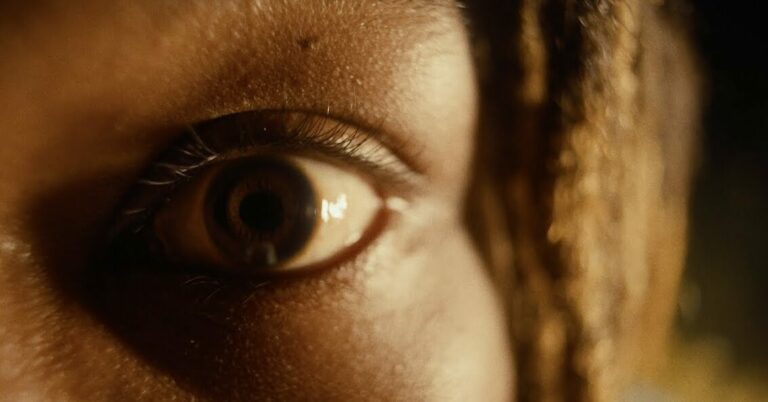
Monster depicts the experience of seventeen-year-old Steve Harmon (Kelvin Harrison Jr.), an honour student whose entire world falls apart when he is charged with felony murder. The film follows his dramatic journey from a bright and likeable film student from Harlem, who attends an elite high school, to a complex legal battle that could threaten his life.

Netflix is currently trading at $547.14 on NASDAQ.

Monster is a new addition to Netflix and will be available from the 7th of May.

F/CE. Ready-to-Wear Autumn/Winter 2021

0

F/CE. digitally presented their 2021 autumn-winter collection at Rakuten Fashion Week Tokyo. The collection called Discipline took us to the countryside, revealing classic autumnal materials such as wool, tweed, sherpa fleece and plaid with earthy colours. We saw trench coats, duffle and parkas, as well as knitwear with different layered patterns on top of the outerwear. The other predominant designs were puffer scarves and ruffled collars. Seeing classics and the fashion film’s scenery felt quite nostalgic for the previous season; you could feel the crisp, fresh air.

Watch the runway here.

12 Best Quotes from Whiplash (2014)

Damien Chazelle’s fast-paced drama Whiplash finds its setting in the fictional New York Shaffer Conservatory, where Terence Fletcher (J K Simmons) mentors an up-and-coming jazz band with an iron fist. He’s verbally and physically abusive, but he believes that this is necessary in order to breed greatness. In his view, mediocrity is the enemy, and it is his duty to mentor the next great jazz musician.

Andrew Neyman (Miles Teller) is accepted into Fletcher’s band as a drummer, where he is subjected to extensive abuse. At first, he seems wimpy, not driven, and forgettable. Fletcher’s methods seem to spark something inside him and Andrew endures his abuse in seething anger. Obsessed with becoming someone to be remembered, Andrew pushes himself beyond his limits.

Thanks to Chazelle’s colorful screenplay, the story flows easily, tempered with humor and emotion that feels both natural and surprising. Simmons’ performance as Fletcher is particularly memorable. His character does most of the talking in the film, usually to throw out insults and spur his players (because Whiplash feels so much like a sports movie) into action. Here are twelve of the best quotes from Whiplash.

  1. Terence Fletcher: There are no two words in the English language more harmful than “good job”.
  2. Terence Fletcher: Not quite my tempo.
  3. Andrew: I’m upset!
  4. Terence Fletcher: For the record, Metz wasn’t out of tune. You were, Erickson, but he didn’t know and that’s bad enough.
  5. Terence Fletcher: I ask why you stop playing and your version of an answer was to turn into a wind-up monkey.
  6. Terence Fletcher: Parker’s a young kid, pretty good on the sax. Gets up to play at a cutting session, and he f***s it up. And Jones nearly decapitates him for it. And he’s laughed off stage. Cries himself to sleep that night, but the next morning, what does he do? He practices … And a year later, he goes back to the Reno and he steps up on that stage, and plays the best motherf***ing solo the world has ever heard. So, imagine if Jones had just said, “Well, that’s okay, Charlie … Good job.” And then Charlie thinks to himself, “Well, sh**, I did do a pretty good job.” End of story …
    Andrew: But is there a line? You know, maybe you go too far, and you discourage the next Charlie Parker from ever becoming Charlie Parker?
    Terence Fletcher: No, man, no. Because the next Charlie Parker would never be discouraged.
  7. Terence Fletcher: Now, are you a rusher, or are you a dragger, or are you going to be on my f***ing time?!
  8. Andrew: Hey, you know, f*** off, Johnny Utah! Turn my pages, b*tch!
  9. Terence Fletcher: Oh, my dear God. Are you one of those single tear people?
  10. Terence Fletcher: Neiman, you earned the part.
  11. Andrew: I’d rather die drunk, broke at 34, and have people at a dinner table talk about me than live to be rich and sober at 90 and nobody remember who I was.
  12. Terence Fletcher: Either you’re deliberately out of tune and sabotaging my band, or you don’t know you’re out of tune, and that’s even worse.

Album Review: Godspeed You! Black Emperor, ‘G_d’s Pee AT STATE’S END!’

Despite the wordless grandeur of their music, Godspeed You! Black Emperor don’t leave too much up to the listener’s imagination. You might be able to flesh out some of the details, but the world it occupies is always riddled by unending wars, political unrest, environmental catastrophe – and it always ends up in flames. The Canadian post-rock collective, which has earned a fair amount of acclaim despite operating in near-total obscurity since its inception in 1994, doesn’t need lyrics to channel a sense of impending doom and apocalyptic dread, but they often use statements to provide the necessary context for their albums: on their previous LP, Luciferian Towers, it was fire (“we recorded it all in a burning motorboat”); now, writing about their seventh full-length, the specifics seem unsurprisingly harder to recall: “we wrote it on the road mostly,” the note begins, “when that was still a place.” While the content once again points to a dystopian future (“this record is about all of us waiting for the end, all current forms of governance are failed”), the parallels to the current state of the world are made clear: “these are death-times and our side has to win.”

There’s always been a revolutionary undercurrent to the band’s output, which has become increasingly political without losing its aura of mystery – two qualities that demarcate them from their peers in the genre. Rather than distancing themselves from the increased pertinence of their ideas in a time of unprecedented uncertainty, they deliver their radical message with even more weight and urgency on G_d’s Pee AT STATE’S END, their first album in four years. Expanding on the melodic elements that ran through Luciferian Towers but leaning more firmly on the fury and power of their earlier work, it might be one of their most immediately impactful and downright beautiful efforts to date – propelled by a new dynamism that’s less the result of timing than careful refinement of craft.

But to pick apart what differentiates State’s End from the rest of the band’s discography is to ignore the one thing that’s crucially remained a constant: the terrifying thrill of listening to those foreboding arrangements – marked by dense layers of pummeling drums, soaring guitars, and lofty crescendos – never goes away. Some critics might be so bold as to compare its visceral impact to Zack Snyder’s Justice League, though one could also make a similar case with another cinematic universe that’s occupied a space in popular culture in recent years – the slow-burning horror of A24 films like Midsommar and The Lighthouse. It’s a sound that can be described in a hundred different metaphors as overused as the most tired of post-rock tropes, but Godspeed masterfully take those familiar forces, the perpetual cycle of build-up and release, and transmute them into something rich and all-encompassing.

G_d’s Pee AT STATE’S END is further proof of that, but feels in some ways more rewarding than their latest material. Comprised of four pieces, two longer and two shorter, the album utilizes cryptic spoken-word passages and soundclips from shortwave radio to set an apocalyptic scene, but it’s the music itself that does the heavy lifting. The longer pieces are sprawling and ambitious, building to roaring climaxes filled with promise and rays of optimism; the shorter ones are mournful and meditative, floating through the cloud of cacophony with a kind of elegiac solemnity. Again, the formula is familiar, but the album ventures ever so slightly beyond it as it progresses, reaching a hopeful denouement their music had previously only gestured at. The title of the final track might assert that ‘OUR SIDE HAS TO WIN (for D.H.)’, but the previous piece already invoked a sense of triumph and victory. And yet, for an act so adept at evoking the feeling of an ending, State’s End‘s biggest surprise is that it leaves us with the glimpse of a new beginning. This battle may have been won, they seem to suggest, but it’s bound to start all over again.

Artist Spotlight: Francis of Delirium

Francis of Delirium is the Luxembourg-based musical duo of 19-year-old singer-songwriter Jana Bahrich, originally from Vancouver, Canada, and drummer/producer Chris Hewett, who hails from Seattle and is 30 years her senior. Based on that information alone, it’s no surprise a press release describes their sound as a mix of “Gen Z indie rock” and grunge, as they draw equally from long-running musical traditions (grunge is one of them, emo is another) as well as the new wave of confessional singer-songwriter acts that grew out of them. More than any sonic signifiers, however, Francis of Delirium anchors in the raw dynamism of Bahrich’s voice and visceral songwriting, which are matched with playful self-made visuals and taut production. The duo bring their best qualities to the fore on Wading, their second EP following last year’s All Change, frantically sifting through a range of emotional states in a stream-of-consciousness style while also pointing to bigger questions around identity and isolation. “’Cause every second is a moment I’m fighting within every part of me,” she sings on ‘Red’, and the EP deftly mirrors that internal battle in its short but punchy 14 minutes. Flickers of self-acceptance emerge amidst the clouds of doubt and anxiety, and even if those moments of clarity don’t last for long, a feeling of catharsis lingers long after the music’s over.

We caught up with Jana Bahrich for this edition of our Artist Spotlight interview series to talk about her earliest musical memories, how she formed Francis of Delirium, her influences, and more.


What are some of your earliest memories of being drawn to music?

This isn’t a memory, but I’ve been told that when I was a baby, my parents could only get me to stop crying by putting on ‘New York, New York’ by Frank Sinatra. I had a little CD player in my room growing up, and I had two CDs – one was the audiobook for The Secret Garden, and the other one was a CD called Mr. Bach Comes to Call. And in that CD, he says something about chords, like chords that you play on the piano, and my brain is like, “Ah, yes, cords that you jump rope with.” And so, for so many years, I was so confused. I had no understanding about how these jump rope chords work.

That’s funny. So how did you then start to form an interest in songwriting, and how did that lead to creating Francis of Delirium?

I was taking violin lessons from the age of five until nine, and then I started to kind of hate the way that teachers taught music. I think it’s a reoccurring theme in a lot of young children who start playing an instrument young and later on give it up. So I gave it up for a while, and I think when I was 11 or 12 I started teaching myself guitar and piano and banjo and a bunch of other instruments via YouTube. And right when I started learning guitar, I don’t really know why, I just started writing songs. Once I started playing guitar, it was just kind of a natural thing for me to do. Then I moved to Luxembourg when I was 13, and one of my friends was playing music with Chris, my collaborator. This was when I was around 15. I saw that they were playing in bars and stuff around Luxembourg and that was always something I really wanted to do. And so one day, she was like, “Oh, you should join us.” So I joined and started playing, we’d play these cover songs in little bars around Luxembourg. And then I started to play some of my own songs along with those cover songs, and I did that up until I was 17. By that time, I’d written more songs and was getting more comfortable onstage. I knew I wanted to make my own band and kind of design the whole visual world and make it really something that was my own. So yeah, when I was 17 I started this band and I asked Chris to join me.

How did you come up with the name?

Francis was the name of this woman in my grandparents’ old folks home who would always swear to us when we were younger. She always held a little place in my heart, in the back of my brain. And so, “of delirium,” you know, just this kind of hecticness. But I also like the way that names evolve over time. I feel like visually, the way that the name looks aesthetically to me has changed the more that we’ve used it.

In what way?

I don’t know – it feels like it’s mine, more than this Francis person’s name.

Right, that makes sense. You mentioned your collaborator, Chris. Could you tell me more about that collaborative relationship? How has it evolved in the time that you’ve worked together?

I think a lot of it is just trust. The way we used to write a lot of the songs was, I was coming up with the chords and the lyrics and melodies. But a lot of times, it was just us jamming. So he’d be on the drums and I’d be singing and playing guitar. And I think just having that energy from the other person in the room, or them going, “What we did there was cool, let’s go back to that” or “Maybe we should try something like this.” I think it changes the process completely. Also, I trust myself, but when I know that he also likes the song or he also agrees that “Yeah, this is cool, we should keep working on it,” you feel even more confidence about it and more willingness to try other things.

You mentioned the visual world as well, and how that’s such a big component of the project, because you do most, if not all, of the accompanying videos and the artwork. We talked a bit about the musical side of things, but how did your interest in visual art and animation in particular develop? Are you self-taught in that respect as well?

Yeah, animation was just – I tried doing a stop motion video for ‘Quit Fucking Around’, which is up on YouTube. And that was the first time I think I’ve ever animated something. So that was last year, very beginner in the whole animation field. Earlier this year, I had a huge revelation, I was like, “I’m gonna become an animator, this is what I’ve been called to do.” And then, you know, “I’m not gonna do that.” [laughs] But my mom is an art teacher and an artist, so I grew up around – I mean, she would take me to museums all the time. And I was like, “Oh, this is really boring.” And now I love it! She wakes up in the morning and the first thing she does is just draw for hours and hours. I think just being around that creative energy and just a need to make art all the time was super inspiring.

In what ways do you feel the visuals are connected to the music? Is it something that always comes afterward, or do you sometimes write the songs with a visual in mind?

They do come afterwards, but it lets me place the songs in a visual space, which just feels so important. I think I also appreciate when other artists do that too, because you get more of an insight into how they view the music aesthetically. It’s more about world-building.

Can you name some of those artists that have inspired you in that regard?

I love the band Sorry from the UK, I love the videos that they do. And then someone like Sufjan Stevens – I think he did it did a stop motion video for the song ‘The Greatest Gift’, and that was cool. Basquiat, as well, I think you can maybe really see his influence on the art stuff that we do.

I wanted to shift gears a little bit and ask you about the themes of the EP. I feel that the songs revolve around feelings of anger and isolation, and the dynamic between those two, how they almost feed off one another. How do you go about tapping into those emotions and releasing them?

A lot of my songwriting and lyric-writing process is completely subconscious. It goes back to the way that that we write songs – Chris is on the drums, I’m on guitar and vocals, we hit record for like a whole session, and then sift through that. So, a lot of the time, we’ll be doing something like writing the song ‘Let It All Go’, and the lyric “let it all go” will be there, or something that I feel like is cool and I feel connected to. And then I’ll go in afterwards and refine them and make sure everything that I’m saying is what I want to be saying.

Is that partly why you think the songs feel so present, like it’s connected to that moment?

I think so. If I’m writing a song and I don’t feel immediately connected to it, then it’s tossed away. When I listen to the songs, I can feel it right in my chest, like I’m experiencing those emotions all over again.

“Right in my chest,” I think that’s a good way of putting it. And I think all four tracks have that, but ‘Let It All Go’ is a standout for me in that regard, just the way the song builds and how the confidence in your voice grows. How did it feel like when you finished writing and recording it?

Well, some days it was like, “This is incredible, I love listening to this song. I feel like this little spot in my chest opens up and light pours out and I’m floating up.” And then other times, there was one time where we listened to all four of the tracks, and I was just sobbing. So it comes in waves, you know. Sometimes it’s like a complete catharsis. I remember that when we were writing the song, because Chris had his own kind of association with what he felt like the song meant to him and I had my own, we both felt an immense amount of catharsis in the beginning stages of it.

I also wanted to discuss ‘Lakes’, partly because of the video, which is quite different from your other videos. For this one, you used footage your grandfather took in the 70s, as well as clips of yourself as a child and of you now. In the statement about the song, you talk about how it explores identity and losing that sense of self as a result of isolation. Firstly, I was kind of curious if that isolation was in reference to the pandemic. And then also, if could talk about creating the music video, going through all that footage, whether it helped you reconnect with that sense of self in any way.

First question – no, that isolation was more a result of just the shift from leaving high school or leaving a structured life, and kind of going out into the world and going, “I don’t really know who I am or what I’m actually connected to.” And feeling confusion, not really feeling a sense of place because of that shift.

And yeah, editing that video was very emotional for me. I’m a Cancer, I cry a lot. I probably cry at least once a month [laughs]. And yeah, it was really cool. My grandpa isn’t alive anymore, and it was a really cool way to look at things through his lens and just feel connected to a part of me that maybe I wasn’t as connected to before. I just didn’t expect to feel such a sense of place and a rootedness from editing and making that video. So it was cool to do that after we finished the whole EP; this whole EP is about not feeling that sense of place, and then getting to the end of it, making this video and feeling a little bit more connected to yourself.

I wanted to lean on that sense of community that you talked about – you mentioned that the isolation wasn’t necessarily a result of the pandemic, and that made me think about, I think it was in a press bio, but your music has been referred to as “Gen Z indie rock.” I’m wondering if that description feels fitting for you – more than just the sound, do you think there’s something about that isolation and looking for a sense of self that feels generational to you?

I don’t know, it’s a hard one to answer. I don’t even feel like this is something I speak to other people about, really, like, “Oh, do you feel connected to yourself?” I mean, the go-to answer would be, “Oh, we’re on our phones, we don’t know to communicate with each other anymore.” I don’t know how true that is.

I guess the one thing maybe that is generational is that there’s no huge artist collectives like there were before, or like a big scene. I feel like, you know, in the 90s Seattle was doing that whole grunge thing, or in the 50s you had the New York school with like, Pollock and Rothko and everyone. And right now, I feel like the only real music collective is PC Music. That’s something I’m a little sad about, because I really want there to be a strong artist community.

I think that touches on a really interesting point – my follow-up question was actually going to be about whether you feel a sense of belonging in any musical communities. Because, you know, your music is obviously influenced by grunge and to an extent also emo – genres you could say are very tied to place and local scenes, or at least were initially. So I’m wondering, what was your first encounter with those kind of influences? Was it connected to a live music scene, or was it more online, the process of discovering those artists?

I think that’s maybe why there’s less a sense of place or a sense of a real physical community, because everything’s uprooted and online right now. But I didn’t really start going to shows until I was 15 and started to go see live music. And I was in Luxembourg, which gets a lot of good musicians coming through, but obviously the Luxembourg scene is pretty small, so you start to see the same people over and over again. But the first time I was experiencing grunge music was, we listened to Nirvana all the time as a family on family road trips. And, I hate to say it, but Guitar Hero was pretty good for like, rock music. I had the little DS one.

Wow, the DS one? I think I remember having the mobile phone version. But I was firmly in the Rock Band camp.

Everything I know about music comes from Guitar Hero and the School of Rock movie.

Oh my god, yes. I don’t think I’d even be here talking to you if it weren’t for that movie.

[laughter] Yeah, I think I personally agree with that statement, for myself as well.

Moving on from that, I wanted to talk about the response the music has been getting so far. And obviously, the EP is not out right now, but how does it feel to be getting that attention at this stage in your career? And I’m not just talking about, you know, reviews, but also people connecting to those really vulnerable emotions that you’re channeling.

I guess it’s hard to process. I mean, it’s really cool to get to talk to you and like, put a face to someone who’s enjoying music, but we haven’t been able to do that, so it’s hard to process that people have actually been listening to the songs. In my mind, it’s like, my mom listens to my music and that’s it. So I’m really thankful that that people are listening.

What do you hope people take away from the EP?

I hope they feel that sense of relief that I felt making them and listening to them. That would be really cool.


This interview has been edited and condensed for clarity and length. 

Francis of Delirium’s Wading EP is out on April 9 via Dalliance Recordings.