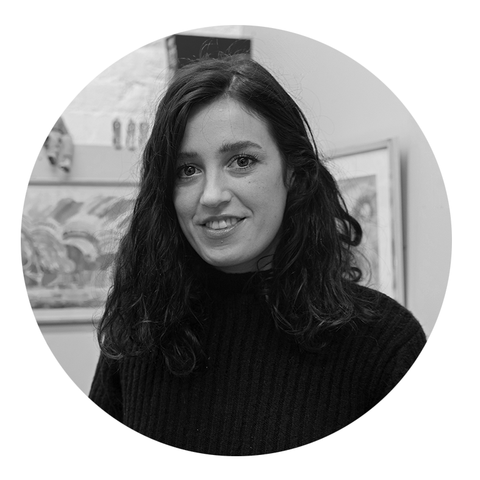
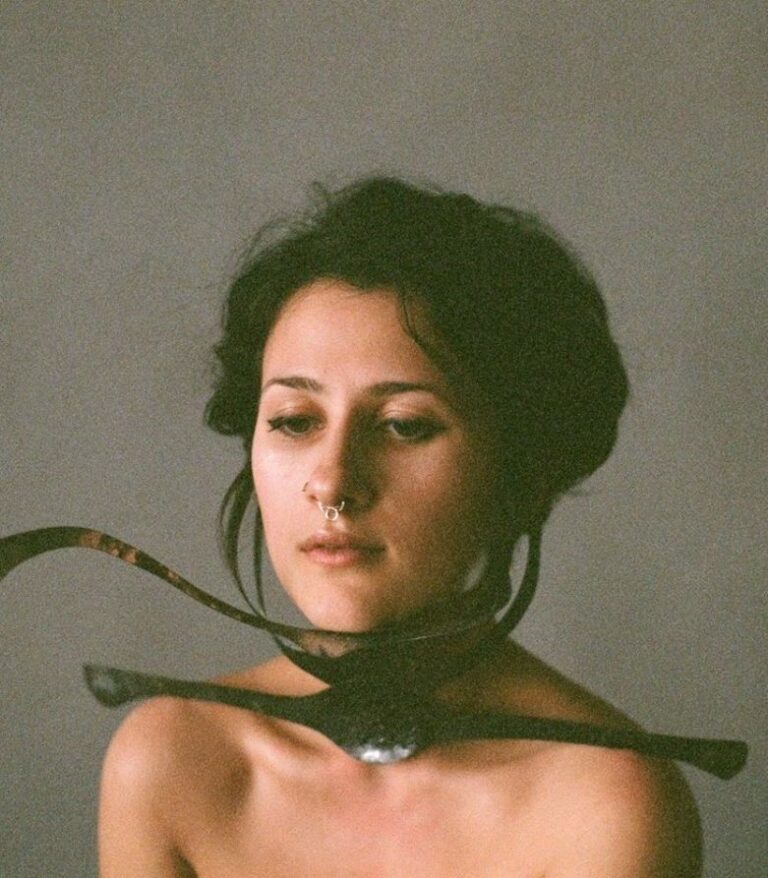
Isabel Garrett is an award-winning Welsh animation director whose work utilizes elements of stop motion, puppetry, and live action to explore the intersection between strangeness and beauty. Her most recent animated short, Listen to Me Sing, which we caught at the Manchester International Film Festival this March, is a stunningly unique effort whose story revolves around a miserable hotel performer who falls love with a walrus. Winning Best Animation at the BAFTA-qualifying Underwire Festival, the film showcases the filmmaker’s knack for conjuring surreal worlds inhabited by characters that are conceptually subversive and wonderfully rendered on a technical level. The effect is both uncanny and subtly funny, like a strange dream you can’t quite shake.
We caught up with Isabel to talk about Listen to Me Sing, her influences, and future plans.
What drew you to the world of animation?
I love the diversity that comes with animation. You can create any world, tell any story, and have a choice in every aspect of its design. It’s a particularly visual way of telling stories; because everything is made there’s a very definite choice behind the way everything looks. It lends itself to the surreal, weird, slightly odd stories.
What about stop motion in particular interests you?
The tactility of stop motion is something I really love, it’s quite a simple thing but the fact that everything’s real and made by hand gives it an inherent feeling of life even before it’s animated. I think a lot about materials and the design of a world while I’m writing a story, for me the choice of materials, texture, design and so on is just as powerful in telling a story as anything else.
What were some of the ideas that went behind Listen to Me Sing?
Most of the things I write tend to be about relationships, in particular I’m really drawn to our relationships with our pets, with wild animals and with the natural world in general. We have a tendency to project our own experiences onto animals in order to make sense of their world, so the idea behind Sophie and the Walrus is just that- they’re similar in many ways, they’re made of the same stuff, they sound similar and they’re both misunderstood by the world they find themselves in. But the Walrus is there to represent Sophie’s primal self, the bits of her she’s forgotten.
Could you talk about the making of the short? Any challenges you faced during filming or post-production?
Making the film was a mixture of being really fun and really intense. We had about 18 months to develop the script and make the film, and it was the first time I’d worked on something so big before, with so many people, sets, puppets etc. The most exciting thing I learned was the joy of collaborating. I was used to making, lighting, editing everything myself, but there’s something so magical about working with people who are all brilliant at what they do to make something far more accomplished than I could have imagined.
How was it different from your previous efforts?
It was more ambitious in scale than anything I’d done before, and narratively a little more confident than any of my previous films.
How has the reaction been so far?
The reaction’s been lovely so far, and personally the film’s helped me confirm more clearly the sort of stories I want to tell
What are you working on currently, and what are your plans for the future?
I’ve had a few commissions over lockdown which have been really fun. I’ve also been very slowly writing a graphic novel which I’m super excited about, and in very early stages of developing a new short film!
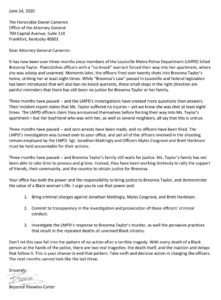
Beyoncé has penned an open letter to Kentucky Attorney General Daniel Cameron demanding justice for the death of Breonna Taylor, the 26-year-old emergency room technician who was killed in an unannounced police raid on her boyfriend’s Louisville apartment. The letter is available to read on the singer’s website.
In the letter, Beyoncé calls for criminal charges against the three Louisville Metro Police officers involved in Taylor’s death, stressing the fact that it’s been three months since the incident. “Three months have passed — and the LMPD’s investigations have created more questions than answers,” she wrote. “Their incident report states that Ms. Taylor suffered no injuries —yet we know she was shot at least eight times. The LMPD officers claim they announced themselves before forcing their way into Ms. Taylor’s apartment — but her boyfriend who was with her, as well as several neighbors, all say that this is untrue.”
The singer also called for an investigation of the Louisville Metro Police Department’s response to Taylor’s death, asking for “transparency in the investigation and prosecution of these officers’ criminal conduct”, as well as the “pervasive practices that result in the repeated deaths of unarmed Black citizens.”
“Your office has both the power and the responsibility to bring justice to Breonna Taylor, and demonstrate the value of a Black woman’s life,” the singer continued. “Don’t let this case fall into the pattern of no action after a terrible tragedy. With every death of a Black person at the hands of the police, there are two real tragedies: the death itself, and the inaction and delays that follow it. This is your chance to end that pattern.”
“Take swift and decisive action in charging the officers. The next months cannot look like the last three.”
The singer also encouraged her fans to sign the #JusticeforBre and Stand With Breonna petitions. For resources in the fight against racism and police brutality, as well as a list of organizations you can donate to, click here.
A number of musicians have spoken out about the death of Rayshard Brooks, the 27-year-old black man who was fatally shot in the back by Atlanta police at a Wendy’s drive-through on Friday night.
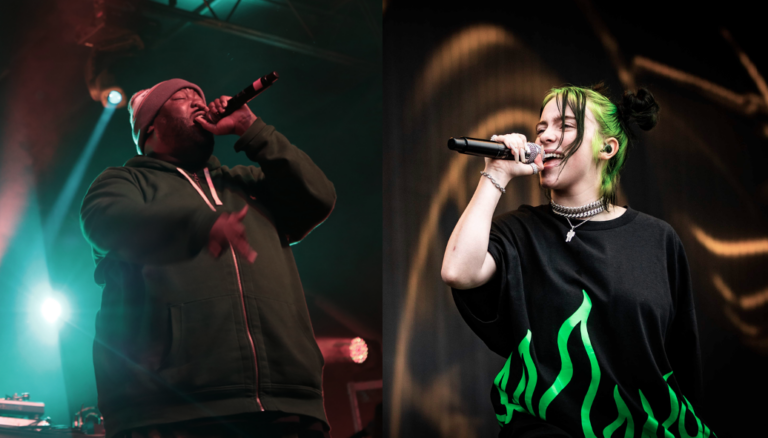
Billie Eilish posted footage of Brooks on Instagram, writing: “man F—. watching this video made me so f—ing angry. F— THIS SHIT. JUSTICE FOR RAYSHARD BROOKS. F— THIS SHIIIIIIIIT. #justiceforrayshard !!!! WHY ISNT EVERYONE TALKING ABOUT THIS??”
Shortly after, Eilish’s brother Finneas also took to social media to express his frustration. “Justice for Rayshard. This is so f—ed up man. And such a good example of EXACTLY what’s so f—ed up about the police in America. Asleep in his car in a parking lot. Shot to death. Don’t let yourself be numb to this. Don’t let the world stay this way.”
Killer Mike also spoke out about Brooks’ death. “I am mad as hell and I am saddened beyond consolation,” the Run the Jewels rapper wrote on Instagram. “#RayshardBrooks should be alive this morning. He should be waking up (hungover or drunk in the tank depending on whether he was apprehended) and not dead.”
Brooks was asleep inside his car in a parking lot before police was called onto the scene, according to the Georgia Bureau of Investigation. After he failed a sobriety test, an altercation ensued and Brooks ran away before being shot by one of the police officers, who has now reportedly been terminated.
“If I’m the Wendy’s worker who called the police, I feel like shit this morning because a call for a man sleeping in a car should not have ended with his killing,” Killer Mike continued. “If I’m the people with the child in the car, I feel helpless and hurt. If I’m that child, I’m scared shitless of anyone with a uniform and a gun. If I’m the angry white or black guy who was filming and saying, ‘I watched y’all for twenty minutes,’ I’m wondering what else I could have done?”
Mike also spoke about the need for a law that prevents individuals from being shot while fleeing. “If there is no weapon, fleeing from an officer should be a foot chase and radio race. If a person gets away, they get away. As I have said before, I will continue to look to and support grassroots organizations who are doing the work, day in and day out.”
Protests broke out in Atlanta during the weekend over Brooks’ death. Rapper T.I. took to the streets, saying: “I don’t give a damn what your opinion is of the person. I don’t give a damn what he did. The man didn’t deserve to die like that. And any policeman out here who stands behind that shit your ass in trouble too.”
See Billie, Finneas, and Killer Mike’s posts below.
For resources in the fight against racism and police brutality, as well as a list of organizations you can donate to, click here.
On the music video for ‘breathe’,the latest single from Julia-Sophie’s debut EP, a bouquet of flowers is set on fire. It’s a potent metaphor for the Oxford-based singer-songwriter’s music, which unfolds much like a luscious flower – a thing of beauty that has grown out of pain, constantly in search of its own roots. On y?, Julia-Sophie digs into the deepest parts of her psyche to try to find a sense of resolution, which also involves confronting those buried emotions and setting them alight. The result is nothing short of hypnotic, a mystical fusion of light and darkness propelled by ominous synths, ethereal vocals, and inventive production that project strength through vulnerability. What remains is a flicker of hope: “With your heart in my hand/ I feel safe,” she sings on the stand-out opener ‘breathe’, and that sense of peaceful resolve emanates throughout. y? might be about letting things go, but these kinds of humane sentiments – and the songs in which they find a home – are worth holding onto.
We caught up with Julia-Sophie for this edition of our Artist Spotlight series, where we showcase up-and-coming artists and give them a chance to talk a bit about their music.
What inspired you to start making music?
I’ve never been good at talking about how I feel, and I’ve always been in awe of people who know exactly how they feel and are comfortable with who they are. When I started making music, feelings that had sat inside me started to emerge. Since then I’ve always used music to try to express and understand myself. The desire to stop playing a part, focus my emotion and be myself, telling people about how I feel, has been my absolute focus and was my sole inspiration for making y?.
What are some of your influences?
My biggest influence is my urge to just exist. Life can sometimes feel like a wrenching dance, and writing and making music is my attempt to synchronise with the world around me. Life experiences, observations, hopes, dreams, heartaches, and conversations I have with other people are all part of it. I’m also inspired by watching and listening to other artists whom I respect and admire; I aspire to be as good an artist as I can be; within that, I hope to find a place where I can accept myself for who I am.
Musically, I’ve been influenced by all sorts of artists. I grew up in a household where my parents listened to mostly classic French artists such as Brassens, Brel, Aznavour, Barbara and blues artists like Ray Charles, John Lee Hooker, Robert Johnson and BB King, so I was never immersed in pop culture. Growing up in Oxford, UK, I was never sure how to fully relate to my parents’ music, but the one thing I took from all of it was the power of their voices and the guttural emotion that existed within it all. There was passion. That’s what music became for me – it’s never been about being technically good, it’s always been about the emotion it evokes, and how the music makes me feel.
Having missed out on a lot of popular culture, I always felt like an outsider and had to find my own way into discovering music. Friends helped me, and over the years I’ve listened to all kinds of music and tried to find myself within it. I don’t know if I will ever feel part of a musical tribe; I guess we pick up and lose parts of various artists we relate to for different reasons as we navigate life – some bits stick and some bits don’t and we become a collage of all those experiences. As an artist, maybe I’m edging closer to finding my ultimate love in the kind of music that has certainly influenced me during the making of y?. I’m digging deeper into the world of electronic music, like Art School Girlfriend, James Blake, Thom Yorke, Caribou and TT. But whatever I listen to I have to be able to connect to the singer’s heart and instinctively feel their intention.
You’ve said that your songs are about “finding comfort in emotions buried deep for years”. What sort of emotions do you try to evoke in your music?
All of the songs on my EP come from feelings of truths that I had not accepted about myself until this point, and some that I’m still working through and even discovering for the first time: waking up to them and trying my best to understand and face all kinds of feelings; new feelings of love, of living, life, contradictions and pain. It’s ironic that sometimes the most beautiful things grow out of the deepest pain; acceptance and vulnerability; learning to be soft instead of letting it all harden you; waking up to traumas, to a lot of the deepest fears and starting to embrace them. I guess my biggest quest is to try to evoke a true feeling. Not to skirt around it but to tap into the gut as much as I possibly can. I would like my music to say to people “hey, let’s take down the walls we built and connect with ourselves; in weakness there is strength. It’s okay to stop running away from it all”. I mean, it’s easier said than done and y? is my first attempt at achieving this. I’m still not ready to talk explicitly about my personal life experiences, for so many reasons, but I’m guessing that one day I will be. That’s the aim, right? Goodness knows, I’m trying.
How was the experience of writing and recording y??
I always start by recording demos on my phone at my home in Oxford, as I don’t like anyone else watching me when I write. Sometimes songs start on a keyboard but mostly on the guitar. I always outline a song with at least a verse, sometimes two, always a chorus and if I’m attentive, a bridge. My life is pretty hectic so I’m used to having to write under pressure. Some songs can be fully formed before recording them, but sometimes I’m happy to leave them open, so that they can take on a different life in the studio. I’m happy to then write additional lyrics and even change melodies.
After I’d written a bunch of songs, I took them to my friend B’s studio in Brighton where we recorded them together. Brighton is a couple of hours drive from Oxford and leaving my home town to record felt very symbolic as to where I was at in my life. I was feeling change and I wanted to record somewhere where I could start to explore myself as an artist and a person differently to how I had done in the past; a fresh start, so to speak.
I was very private about this whole experience and I only spoke about it to a few friends. Before actually recording the songs, B and I would spend lots of time talking, catching up and listening to music that we had both been enjoying. After listening to the demos, we decided which songs we would record and where we envisioned the sound of them to be. The recordings went through several rounds of back and forth, where we would take long breaks from recording, maybe a month or so, so that we could develop a cold ear with which to listen back when we met up again. The most important thing for me over this whole process was never to lose track of the original intention of the song and to let the music to find its voice.
What was the inspiration for the title?
I didn’t know where I was heading; I’ve got a lot of different sides to me and I struggle with aligning them all. With y? I found myself writing about things that people close to me would not even know that I was feeling. The last two years, I’ve been trying to understand myself and had to ask myself so many questions, why have I done what I’ve done and why have I become the person that I am? Why do we fall in love? Why do we fall apart? I’ve tried to get to the most honest version of me. Asking myself y? has been very important to me.
What are you currently working on, and what are your plans for the future?
I’m currently spending time with my own thoughts and pretty distressed at the state of the world, but with all that in mind, I’m slowly carving out a second EP. I guess nobody quite knows what the world is going to look like for artists in the coming years as the landscape is rapidly changing. I hope one day that I can get on the road, tour, travel, meet people, perform my music live, and keep creating. That is my dream right now. To feel alive. To live life fully. One day, I plan to make a full record, and who knows, maybe even a second and then a third.
Nikolaus Gruenwald, a photographer out of Germany known for beautiful architectural photography, has released a superb ambience-filled nature series named The Emptiness Within.
Find more brilliant work by Nikolaus Gruenwald here.
Héloïse Letissier aka Christine and the Queens appeared on The Tonight Show With Jimmy Fallon to perform ‘I Disappear in Your Arms’, the bonus track from her most recent EP, La vita nuova. Shot in an empty music venue, the performance aired on Friday (June 12). Check it out below.
The La vita nuova EP was released back in February, following her 2018 album Chris. Last month, Letissier performed ‘People, I’ve been sad’ from her home for The Late Show with Stephen Colbert.
The singer has also posted a series of covers while in quarantine, including Neil Young’s ‘Heart of Gold’, The Weeknd’s ‘Blinding Lights’, and Travis Scott’s ‘Highest In The Room’, in addition to hosting weekly livestreams.
Christine and the Queens is currently working on her third studio album, as she recently confirmed. “The new songs are surprisingly hopeful, and I’ve never described myself as that,” she said. “It’s upsetting because I don’t know how to deal with that! I’ve always said I have a French tormented soul. I have a cool concept for the record, I think.”
2020 has brought a relentless flood of unpleasant news. While we need to face the realities of our changing world, we should also take care of ourselves and our mental health. Here are eight uplifting films to help you take a break amid the chaos of everything going on in the world right now.
Amélie (2001)
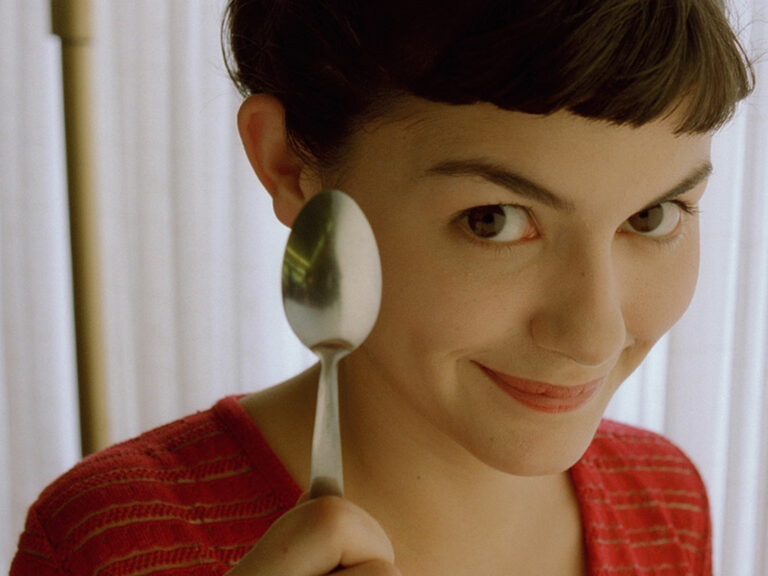
This iconic French film by Jean-Pierre Jeunet stars Audrey Tautou as the titular character. Amélie is a young woman who was raised and homeschooled by her parents after they mistakenly diagnosed her with a heart condition. Growing up in Paris isolated from peers her age, Amélie comes off as a little strange but has a wild imagination. The film’s quirky and tongue-in-cheek narration complements Amélie’s unique personality and disinterest in the mundane.
Amélie enjoys helping other people find happiness, but can’t seem to find her own. When she’s startled by the news of Princess Diana’s death, she drops the lid of her perfume bottle, which knocks against a tile in the wall and unlocks a secret compartment. Inside, she finds a box of childhood possessions that she’s determined to return to their owner. This discovery leads her on a series of adventures around Paris, bumping into quirky people and playing cat-and-mouse with love.
Midnight in Paris (2011)
With 93% on Rotten Tomatoes and numerous awards for its screenplay – including an Academy Award – this Parisian story is arguably even more romantic than Amélie. Owen Wilson stars as a screenwriter named Gil Pender in this dramatic role, but still offers the occasional comedic quirk. Gil is on a visit to Paris with his fiancé and her parents, who aren’t too fond of him. He’s trying to write his first novel, unsure if he’s capable of the task, and finds inspiration on his midnight walks through the city.
Every night at midnight he stumbles through time into his golden age: 1920s Paris, which seems to be crowded with all of his literary idols, from Fitzgerald to Hemingway, as well as artistic icons like Picasso. Gil takes their advice while, during the day, he tries to convince his fiancé to move to Paris with him. The lack of logic surrounding Gil’s ability to time travel is a purposeful acknowledgement of the movie’s magic.
Booksmart (2019)
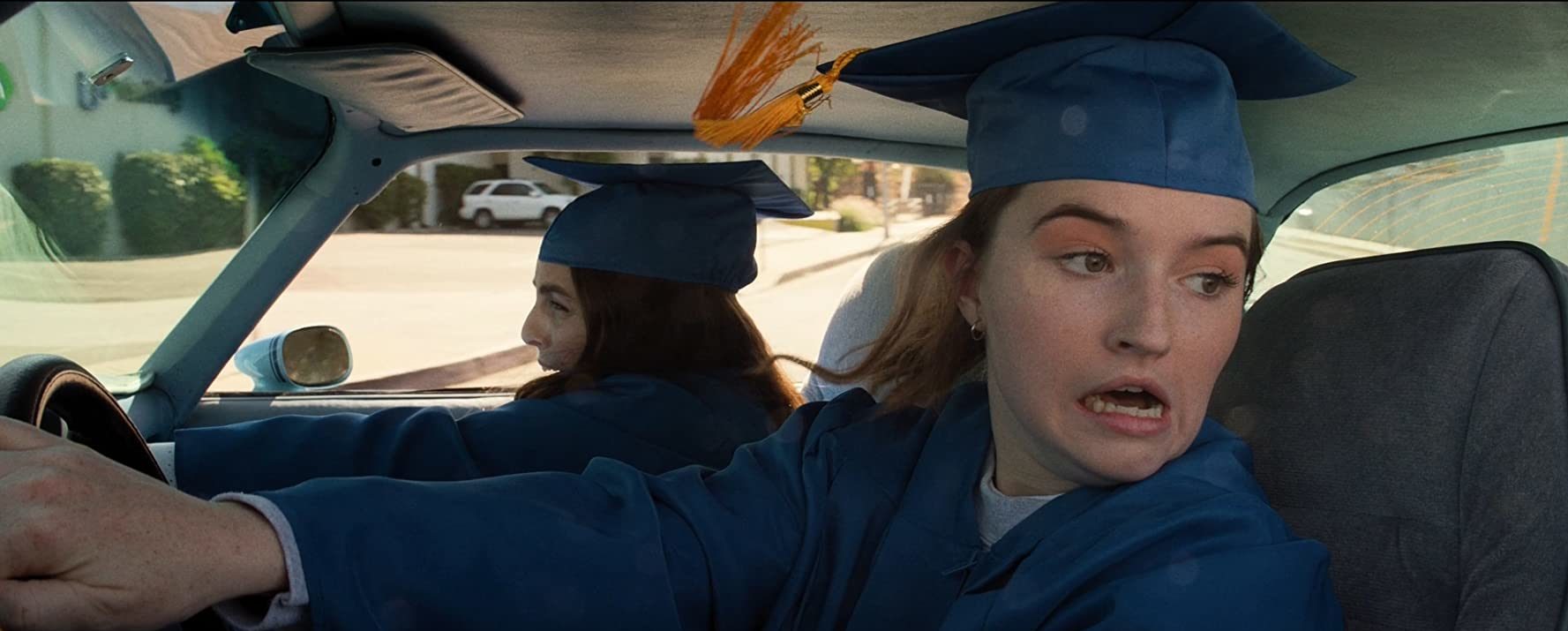
Olivia Wilde’s low-budget directorial debut was a potential international hit, but sadly flopped at the global box office only making $24.9 million. Though many viewers were quick to compare it to the 2007 film Superbad – which stars Jonah Hill, the brother of Booksmart‘s Beanie Feldstein – Wilde’s film cannot be reduced to the “male version” of Superbad.
Best friends Amy (Kaitlyn Dever) and Molly (Beanie Feldstein) are about to graduate high school with perfect grades and records, but without some of the experiences, their classmates have. The girls vow to break some rules on their last day and attend at least one party to prove that they’re “fun”. The night takes them on a series of unexpected adventures and discoveries without compromising on humour.
Sing Street (2016)
This award-winning Irish teen movie is quirkier and grittier than the usual musical romance. On his first day at a new private school, Conor (Ferdia Walsh-Peelo) tries to impress an aspiring model, Raphina (Lucy Boynton), by telling her he needs a model for his band’s music video. He does not have a band. Earlier that day, Conor meets a self-proclaimed entrepreneur named Darren (Ben Carolan) who helps him manage the band. Their first recruitment is Eamon, who calls himself a multi-instrumentalist.
The band begins to practice, and they’re terrible, but Conor can’t back out of the situation now. They do eventually shoot the music video he told Raphina about. She gives Conor the nickname “Cosmo” and helps the band cultivate their style. Over time, the band gathers a small following, and Conor commits to becoming a musician while at home, his family life gets complicated.
Lion (2016)
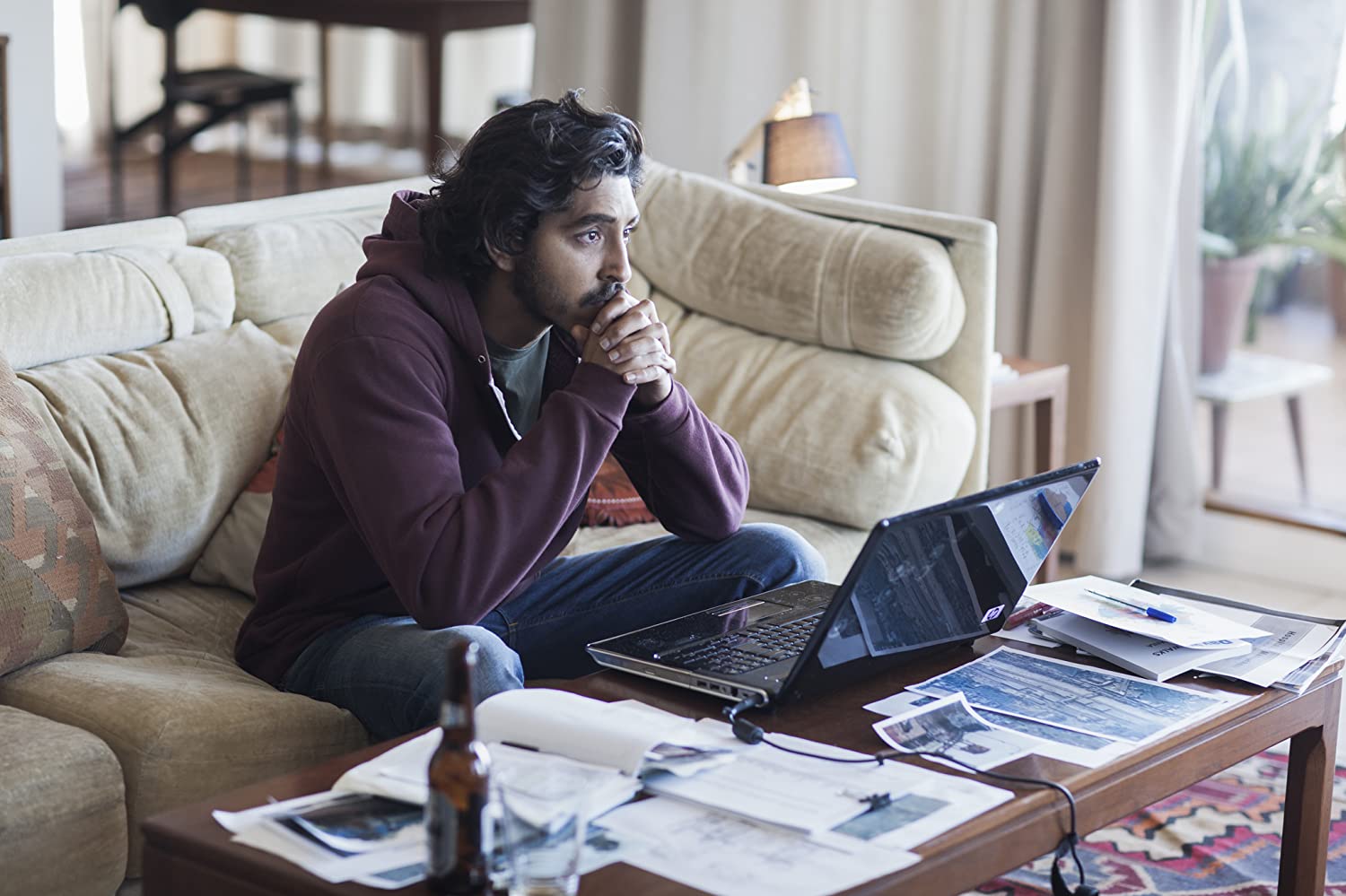
Nicole Kidman and Dev Patel star in this true story of Saroo Brierley’s journey to reunite with his biological mother. At the age of five, he is separated from his family in India. After a lonely and frightening experience trying to find his way back home, he’s sent to an orphanage and adopted by an Australian couple.
In Australia, Saroo lives a happy life, but the couple’s other adopted son, Mantosh, is more troubled. Twenty years after his adoption, Saroo is studying hotel management but feels the urge to search for his family. He uses Google Earth to find his hometown, leading him on an emotional journey of self-discovery.
Billy Elliot (2000)
Set during the 1984 miners’ strike in England, this film tells the story of a working-class boy named Billy Elliot (Jamie Bell) who discovers his passion for ballet in an environment where male dancers were disparaged. Billy is determined to improve his dancing and make a career out of it, much to his father’s disappointment. Julie Walters stars as Billy’s dance teacher and encourages his father (Gary Lewis) to be proud of his young son.
Love Actually (2003)
Richard Curtis directs this romantic comedy that follows eight different couples in London in the weeks leading up to Christmas. The star-studded ensemble cast offers an array of unique performances and quirky characters, from an eleven-year-old kid to a retired, forgotten pop star.
Hugh Grant plays the newly elected British Prime Minister, whose voiceover opens the film and tells us that during the 9/11 terrorist attack, the victims left messages of love, not hate. Given the context of this film’s release, it does a decent job of tackling the seemingly impossible task of reinforcing our belief in humanity’s capacity to love.
The Edge of Seventeen (2016)
Starring Hailee Steinfeld as Nadine, this coming-of-age dramedy is about the tumultuousness of growing up in high school. Nadine thinks she’s awkward and undesirable, and things only get worse when her best friend (Haley Lu Richardson) starts dating her brother (Blake Jenner). However, Nadine finds a mentor in Mr. Bruner, one of her school teachers (Woody Harrelson), as she tries to navigate the world of high school romance.
As things spiral out of control, so does Nadine’s self-esteem and mental health. She confides in Mr. Bruner – with whom she shares a hilarious back-and-forth – which helps her become her own person and think more introspectively. Kelly Fremon Craig wrote the critically acclaimed film in her directorial debut.
Being stuck inside can be a real pain, especially when you have the itch for adventure. It’s not always possible to go out and about, though, and it’s quite common that people find themselves unsatisfied with the entertainment they have available inside. Video games can provide a good escape when you’re in this position, offering the chance to explore and see different worlds without leaving the comfort of your own home. To help you to find the best games for you, this post will be exploring three genres that offer an opportunity to embrace adventure, giving you the chance to escape your indoor prison.
Driving Games
Driving can be one of the best ways to satisfy your desire for adventure, but you may not have the chance to get behind a real wheel. Thankfully, there are countless driving games on the market, and this has long been a very popular genre amongst gamers. Some games will give you the chance to drive a truck from city to city, while others will put you against other drivers in races that wouldn’t be possible in the real world. Finding the best driving games is going to take some research, and you may have to try one or two along the way, but it will all be worth it for the chance to enjoy the open road.
MMORPGs
MMOs have been a hugely popular genre for many years, with games like World of Warcraft being famous amongst those who don’t even play. These titles tend to be set in large open worlds that encourage players to explore and learn as they soak up the story behind the game, satisfying your urge to get out and see the world. There are loads of options like this on today’s market, giving you plenty of choices when it comes to the type of world you’d like to see. Some involve magic and mystery, while others are much closer to the real world, but they can all offer a lot of entertainment value.
Survival Games
Much like MMOs, survival games have also been popular for quite some time. Modern examples of games like this have been able to push the limits of what’s possible within video games, with titles like No Man’s Sky offering a practically infinite world to explore. As games like this get larger, they often lose some of their detail, and this means that it can be worth choosing a smaller world if you’d like to get deeper into the way it works. There are a lot of survival titles out there that are almost purely based on exploration, opening the doors to a unique experience every time.
With all of this in mind, you should be feeling ready to start playing games that reflect your desire to explore. It’s not always easy to satisfy urges like this, but video games offer an opportunity that few forms of entertainment can match, and it’s always worth taking advantage of this when you’re feeling bored.
NIIKA is the musical project of singer-songwriter Nika Nemirovsky. Born in Uzbekistan before she and her parents moved to the US when she was one year old, Nika was a exposed to wide range of influences at an early age, which comes through in her uniquely eclectic approach to songwriting. Her recently released debut album, Close But Not Too Close, is a mesmerising whirlwind of jazz, rock, and folk music that sits somewhere between the classic songwriting of Kate Bush and the modern aesthetic of progressive R&B, all funnelled through her beautifully entrancing and dynamic voice. Nika’s delivery has an elastic, almost serpentine quality to it, delicately unfurling atop the minimalist, slow-burning instrumentals of tracks like ‘For the Key’ and ‘Blue Smoke’. But it can also reach the highest of frequencies, like on the utterly hypnotic crescendo of ‘The Cage’, which hints at the emotional tension boiling underneath the album’s smooth veneer. It’s nothing short of transcendent – an ethereal, wondrous musical journey you’ll want to lose yourself in again and again.
We caught up with Nika for this edition of our Artist Spotlight series, where we showcase up-and-coming artists and give them a chance to talk a bit about their music.
What inspired you to start making music?
I began to experiment with writing my own music when I was studying abroad in Australia. I happened to become immersed in a group of seasoned professional musicians, and was deeply inspired by the energy embodied in that community. I remember writing my first song, and feeling so elated- it was like learning to ride a bicycle- the freedom in creating an immediate thing of beauty with your own voice and hands was something that I missed in my visual arts practice (I was studying visual art and art education at the time). I’m a highly social person, and the social and communal aspects of making music really drew me in and propelled me forward continuously. I found deep joy in performance, and in the collaborative aspects of making music- something that I really missed in my visual practice.
What are some of your influences?
My influences are super broad and far reaching. I grew up in a household where a really eclectic mix of music was on rotation. Ironically, American and western-canon pop music was very under-represented (other than the Beatles- they were around a lot!). Growing up, I was exposed to a lot of Russian rock and folk music, ambient and experimental music, classical Indian, Middle Eastern music, West African music, American and English prog-rock, Brazilian jazz, and a whole melange of other stuff, including outliers like Bjork and Kate Bush. I went through my punk and emo middle school phase, followed by a pendulum swing over to pop and top 40 hip hop in high school. Around the time that I began to write my own music, I really got into soul, R&B, and some of the legendary jazz singers of the US. Vocally, the Black culture creators in music have been a huge well of inspiration to me- the freedom, sensitivity, and inventiveness that exists in Black voices is something that has inspired creators of every genre of music. While I am considerate and careful to avoid appropriating Black culture in the music I make, I am cognizant of soul music as a beacon of authenticity and beauty that has continually inspired me to keep creating.
What were some of the ideas that went into the making of Close But Not Too Close?
When we began recording this album, I said that I wanted it to lay squarely between The Beatles’ The White Album and Solange’s A Seat At the Table. I think my songwriting is pretty similar to The Beatles in how eclectic and variable it is, but I really wanted the record to embody the tasteful minimalism and super-refined production that albums like A Seat at the Table highlight. The process began very much like a rock record- bass, drums, and guitars first; but as we progressed, the process became both subtractive and additive- taking out an instrument here or there, replacing it with percussion or synths… it was a little bit like a puzzle – just trying to find the most natural home for each song.
How would you describe your writing process?
Since I don’t have much theoretical musical knowledge, especially when it comes to guitar, I often start with writing the music. I’ve found that if I write poetry first, it becomes pretty constraining for me to then stay truly free and creative within putting music to it. Approaching the guitar and melodic center first allows me to experiment really freely with chord movement, time signatures, etc, and then begin to build words and poetry around that skeleton. Of course, it’s often a back and forth process- as I begin to write words, I’ll change aspects of the chords, and vice versa. I also love the fact that the emotion contained within the musical information serves to inform the emotional landscape of the lyrical content. I find it creates complexity and nuance without seeming contrived.
Do you have any favourites from the album?
My favorite song off the album is probably ‘Witness’. It’s one of my favorite songs to perform and sing, and it has stayed timeless in its relevance for me. I love that it embodies a certain darkness and melancholy, without feeling heavy or melodramatic. This song really represents balance to me: it’s sparse but rich, simple but intriguing, classic (6/8 feel) but modern, observant but introspective. Balance is something that I seek in all aspects of my life and creativity, so this song speaks deeply to me.
What are your future plans?
My main goal right now is to begin touring consistently. Obviously, the coming of coronavirus has put a huge question mark at the front of all artists’ minds for the moment- what will playing shows look like in our new world, and when will we be able to return to a semblance of a “normal” music career? But I remain hopeful that this album will help build a bridge for me to be able to reach more people- I believe in this music, and I believe that there is so much value in bringing strong, inventive, feminine voices to the indie music world. Beyond touring, I just want to keep creating albums that speak to people, and that represent my most honest and integral self.
Following the announcement of his long-anticipated LP Homegrown, Neil Young has shared a new track from the album called ‘Vacancy’. The record, which was recorded from 1974 to 1975 before being shelved, is set for release on June 19th.
‘Vacancy’ was recorded at Young’s Broken Arrow Ranch Studio in 1975 and features Stan Szelest on Wurlitzer organ, Ben Keith on lap slide guitar, Tim Drummond on bass, and Karl T. Himmel on drums.
Accompanying the announcement of the album, Young previously shared the track ‘Try’. Earlier this year, he also released a new version of the song ‘Shut It Down’ from his 2019 album Colorado. The new version, titled ‘Shut It Down 2020’, was “inspired by fans reaching out to Young expressing the elevated poignancy the song has come to represent during this pandemic.”
In the wake of mass protests over the murder of George Floyd, Young also released an acoustic rendition of ‘Southern Man’ recorded in 2019. “We know black lives matter,” he wrote in an op-ed on his website on Monday titled ‘Hope’. “My heart goes out to all our black families affected, so that’s all the black families through American history. I feel like we are turning a corner. All Together, all colors on the street. We know our mission is the right one for America and for mankind.”