Home Blog Page 1856

Migration by Massimo Colonna

Massimo Colonna, an Italian photographer and digital artist, revealed a superb mini series named Migration. In this mini-series, Colonna combines the migration of birds with minimalistic architecture to bring out the focus on the moving subjects. These simple, but eye-pleasing artworks deliver a poster-like appearance that elevate their surroundings by utilising shapes.

Writing about the series, Colonna described as “Project of three images depicting scenes of distant lands, exotic, sometimes unattainable. Within these landscapes a flock of birds moves creating unusual shapes, geometric, an evolution in the way of migration. In a historical moment in which even the sky becomes advertising space, nature changes in angles and corners”

You can find more work by Massimo Colonna here.

Artist Spotlight: twst

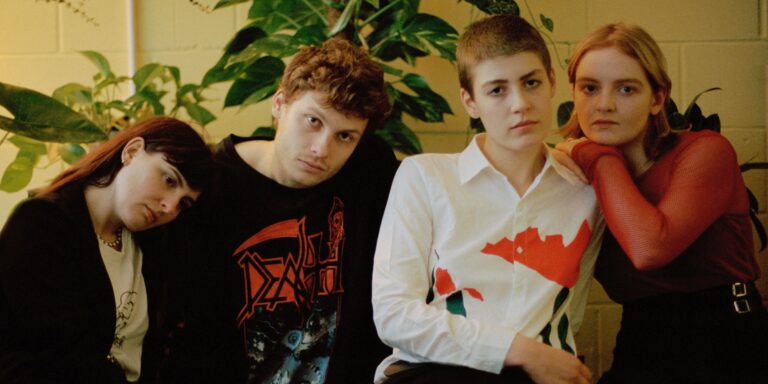
Welsh singer-songwriter Chloé Davis aka twst may have only released two singles so far, but she already displays all the quintessential qualities of a modern pop star in the same vein as Billie Eilish or Charli XCX, or some unique amalgamation of the two. twst’s sound is cutting-edge and incredibly infectious – it’s impossible to listen to the single ‘Girl On Your TV’ and not feel an urge to replay it over again and again. It has the intimate but surreal quality of someone trying to make a hit alone in their bedroom – except it actually feels like a hit. Indeed, twst recorded and self-produced the tracks within the four walls of her bedroom, although it’s no surprise that they were mixed by none other than innovative pop producer Rob Kinelski, known for working with Billie Eilish among others, whose production flourishes here are palpable but not overbearing. Both ‘Girl On Your TV’ and ‘Always’ brilliantly depict our psychological relationship to the digital world and how it affects our day-to-day interactions, but it’s done through the lens of a young person who understands the nuances of that experience rather than someone commenting from the outside. “HD shows in me perfection/ But it fucks with your perception,” she intones on ‘Girl on Your TV’, while on ‘Always’ she has a conversation with a Siri-like personal assistant. It’s hyperreal, post-ironic, metamodern – whatever you want to call it, it’s truly something special. And we can’t wait to hear more.

We caught up with twst for this edition of Artist Spotlight, where we showcase up-and-coming artists and give them a chance to talk a bit about their music.

How did the name twst come to you?

mothers maiden name. 

I read that you left home at 14 and relocated to a recording studio in the South West Valleys. What inspired you to make that decision?

The decision was made from a place of wanting to find somewhere I felt I belonged. I was very misunderstood by my family and I don’t think they knew how to deal with me. For all the obvious reasons why this would be hard at such a young, difficult age, I was desperate to be in a place where I fitted in and I felt like I could do that most comfortably in isolation where I could begin to create my own world. 

Why does self-producing appeal to you as a way of creating music?

When I have a new idea, most of the time I have a clear vision before I’ve even started writing or producing the song. So self-producing feels very natural and efficient because it’s just me and my computer and once I’ve found the tone for the production, it usually happens very quickly from there. 

What were some of the challenges you faced as you started teaching yourself production?

The only real challenge, and one that scares me, is not knowing how to do something technically, when I’m on an inspired mad flow. So being able to overcome that as effectively as possible without it harming the creative wave is something very practical to learn.

Your approach to songwriting can be linked to the meaning behind the name of your label, ‘hikikomori baby’. Can you explain what that concept means to you?

There is no equivalent English word for “hikikomori”. The Japanese word describes both the condition of acute isolation and those suffering from it, so the attraction seemed obvious to me but I was also drawn to it phonetically. I love the sound of it. I was inspired by the Kawaii aesthetic at the time as seen in goytv video. Ultimately, I named the label “hikikomori baby” as a reference to the time where I lived quite reclusively after leaving school and home. I started to build my own way of seeing the world, without too many rules or much guidance. I found some kind of personal hyper reality. The concepts that I’ve been writing about are heavily based upon the feelings of isolation, loneliness and my connection to technology during this period. 

The “baby” part of “hikikomori baby” is post-ironic. Which in itself is ironic (post).

Both ‘Girl on Your TV’ and ‘Always’ deal with how digital spaces affect relationships – how did that theme catch your attention?

When I wrote girl on your tv, I was deeply feeling the over sexualisation of women in the media. I was really, really angry at the time. My head was kinda warped during this period too. I was seeing this sexualisation in a way in which I’d never seen before. So in goytv, my character is the sexualised girl and I’m asking the person who views me this way, to view me differently. This in turn, inspired the duet with the Siri like voice in “Always” as I am fascinated by the connection between technology and emotions and how far these are able to intertwine. 

Can you talk about the process of filming the video for ‘Girl on Your TV’?

This process was like self-documentation for me. I really wanted to capture the idea of building myself as a character through the lens of the internet. Capturing the awkwardness, vanity, vulnerability and also irony. 

What’s next for twst?

Audio/visual releases

Live performances

We gonna make some clothes, scissors , thrifting 

Jewelled crocs

reading reading reading 

Coffee 

beats 

everyday school 

Review: The Lighthouse (2019)

Following his critically acclaimed debut feature The Witch (2015), Robert Eggers’ The Lighthouse is a haunting masterpiece.  The film attracts you by its chillingly mesmerising sound design and stunning visuals, but also by the career defining performances from Robert Pattinson and Willem Dafoe. Together, they push the story’s intensity and horror to its absolute limit.

Set in the 1890s, The Lighthouse follows Ephraim Winslow (Robert Pattinson), a newly recruited apprentice to Thomas Wake (Willem Dafoe), a mad lighthouse veteran. The pair is tasked with four weeks’ work on a remote New England island. As the film progresses, Winslow slowly submits to the hypnotic madness of the island as well as Wake’s strange behaviour…

The first thing about The Lighthouse that really stands out is how extremely atmospheric it is. By presenting the story in black and white and in a restrained 1.19:1 aspect ratio, Eggers displays the grittiness of the environment that our characters inhabit; as well as creating a claustrophobic feeling that traps the audience on the island. The sound design is impressive and helps enhance the nightmare-fuelled and haunting experience. From the lighthouse’s blasting siren to the seagull’s eerie squawks, the film drills those sounds into your mind and they will stick with you for weeks.

Willem Dafoe as Thomas Wake.

Saying that Robert Pattinson and Willem Dafoe are both phenomenal in the film is truly an understatement. From Pattinson’s portrayal of Winslow’s growing annoyance toward the bizarre events, to the point at which he starts to act out of his personality, and finally to his descent into madness, his performance is impressive. Willem Dafoe portrays his strange, intense and slightly insane lighthouse keeper to its perfection. The many tremendous monologues from Dafoe are expressed with such depth and emphasis, really putting us into Winslow’s perspective and terrifying us at the thought of what Thomas could do to him. The intensity they bring to their characters is brilliant.

Just like Eggers’ previous film The Witch, The Lighthouse slowly intensifies its creepiness throughout the film. One of the ways it does this is by having characters suddenly act dramatically around each other. On multiple occasions in the film, the characters are engaged in normal conversation when it turns to either an authoritative warning from Wake to a full confrontation between them. Surprisingly, the next thing we’ll see is the characters having a cheery dance or them getting drunk with each other. The unpredictability of the film really makes the audience so uncomfortable to a point where you don’t know whether to laugh or be completely shocked and terrified.

Robert Pattinson as Ephraim Winslow.

Another way that Eggers manages to create the uncomfortable tension in the film is by cutting to Winslow’s surreal dream sequences many times throughout the film. Eggers keeps the audience guessing as to what is real or what are just Winslow’s delusions. By doing this, the film leads the audience into this disturbingly hypnotic trip without losing any interest.

The Lighthouse delivers a truly unique horror experience. The captivating performances from Pattinson and Dafoe never fail to fascinate and amaze. With such strong entries in the pantheon of horror in recent years, this film firmly secures itself as one of the best in recent memory. Robert Eggers demonstrates himself as an exciting horror director to pay attention to for years to come.

Review: A Beautiful Day in the Neighborhood (2019)

Anyone anticipating a tell-all biopic crammed with revealing secrets, lewd scandals and profound behind-the-scenes insights will be left bitterly disappointed by A Beautiful Day in the Neighborhood. Much like Morgan Neville’s delightful 2018 documentary Won’t You Be My Neighbor?, this film unearths and explores very little about Fred “Mister” Rogers’ raunchy private life. This is simply because there isn’t one. As last year’s documentary identified, the beloved American children’s entertainer is as genuine, kind and good-hearted as his on-screen persona attests. In fact, there is no distinction nor façade –an idea briefly explored in the film when Rogers (Tom Hanks) appears utterly perplexed when a journalist (Matthew Rhys) questions his integrity and where the discrepancy between his public character and the “actual” Fred Rogers lies. A film about an impeccable figure who personifies goodness and carries no scandalous baggage nor skeletons in the closet should, in theory, make for a nauseating biopic that’s overwhelmed with cheap sentiment.

Thankfully, this assumption couldn’t be more wrong–because, technically, this isn’t really a biopic at all. Contrary to its promotional material, director Marielle Heller and screenwriters Micah Fitzerman-Blue and Noah Harpster position Rogers (and consequently also Hanks) as the supporting role – an ethereal figure who relates the parable and provides guidance rather than the true protagonist. This premise is succinctly established from the outset, when Hanks, as Rogers did repeatedly, enters through the treasured Mister Rogers television front door, changes his jacket into his signature red cardigan, and sings a pitch-perfect rendition of the theme song, Won’t You by My Neighbour? As he addresses the audience, Rogers, through the means of a picture board, introduces us to the actual protagonist of the story, the cynical Lloyd Vogel (Rhys). Loosely based on the American journalist Tom Junod, who was assigned to create a profile of Rogers for Esquire in the 1990s, Vogel considers the task a step-down from his typically investigative features: “The hokey kid show guy?” he responds incredulously.

But, little does he know that he needs Rogers more than he ever could’ve appreciated. Vogel is a new father, whose relationship with his wife (Susan Kelechi Watson) and the new child is becoming increasingly hindered by his committed work ethic and his resentment for his father (Chris Cooper). Exemplified, when his father arrives at Lloyd’s sister’s wedding and childhood issues (including his father’s decision to abandon Lloyd’s mother on her deathbed) re-emerge through a heated argument that results in blows.

On the surface, these familial issues could easily collapse into overbearing melodrama and the premise of a lacklustre, cynical journalist being saved by a magical, saint-like figure could certainly result in cliché. But, Heller’s incredible mastery means the film never feels formulaic. Having previously directed the wonderful comedy-drama The Diary of a Teenage Girl and last year’s melancholic true-crime black comedy Can You Ever Forgive Me, this film fortifies why Heller is a relentless force to be a reckoned with.


Using an episode of the television series as the framework for the narrative is a particularly nuanced approach that could’ve easily fallen through. But just as Heller subtly manages to portray 90s America, she also ensures the children’s television-show aesthetic never feels particularly twee or domineering. Montages and location shots are frequently depicted through miniature toys – toy planes fly through the sky and tiny model taxis cross the colourful sugar-coated cityscape.

A Beautiful Day in the Neighborhood

Just as the aesthetic seeks to actively replicate the television series, the film attempts to address the audience in a similar manner to the entertainer’s own tender and personal approach. After a hallucinatory scene where Lloyd imagines he’s an Old Rabbit puppet and part of Mister Rogers’ Neighbourhood, Lloyd and Rogers have lunch together in a Chinese restaurant. Rogers calmly invites Lloyd to think about the people in his life who have “loved you into existence”. Heller positions Rogers in the centre of the frame, looking directly into the lens and it becomes apparent we, the audience, are being addressed. Then, silence. The ability to eradicate passivity without delving into cliché or banality involves skill and Heller, particularly in this scene, appears to be its master.

The casting of Tom Hanks felt almost too fitting – America’s male sweetheart playing another beloved national treasure – in a similar way to how he was cast as Walt Disney in John Lee Hancock’s Saving Mr. Banks. But in this film, Hanks doesn’t delve into imitation nor allow his impossibly good-guy persona to carry his performance, as much as he did in Hancock’s period drama film. As well as achieving Rogers’ half-smile, his manner of speaking, his particular stance, Hanks provides a nuanced and subtle performance that explores the philosophy and psychology behind the man. He manages to make the public persona of Mister Rogers and the actual Fred Rogers intertwine and convince audiences that they are indeed one and the same – a complex task that he achieves wonderfully. Rhys’ performance as the cynic is equally marvellous and balances Hanks’ perfectly without feeling overly contrived or establishing the pair as completely binary.

A Beautiful Day in the Neighborhood could’ve easily fallen into the trap of being a saccharine, cliché-filled biopic filled with cheap sentiment and a conventional portrayal of a national “hero” (even if he refused to admit it). But Marielle Heller’s uniquely, creative voice combined with an award-worthy performance by Hanks results in a wholesome film that defies tradition and provides an idiosyncratic and pure-hearted tribute to Fred Rogers. It reminds us to love thy neighbour and it’s beautiful.

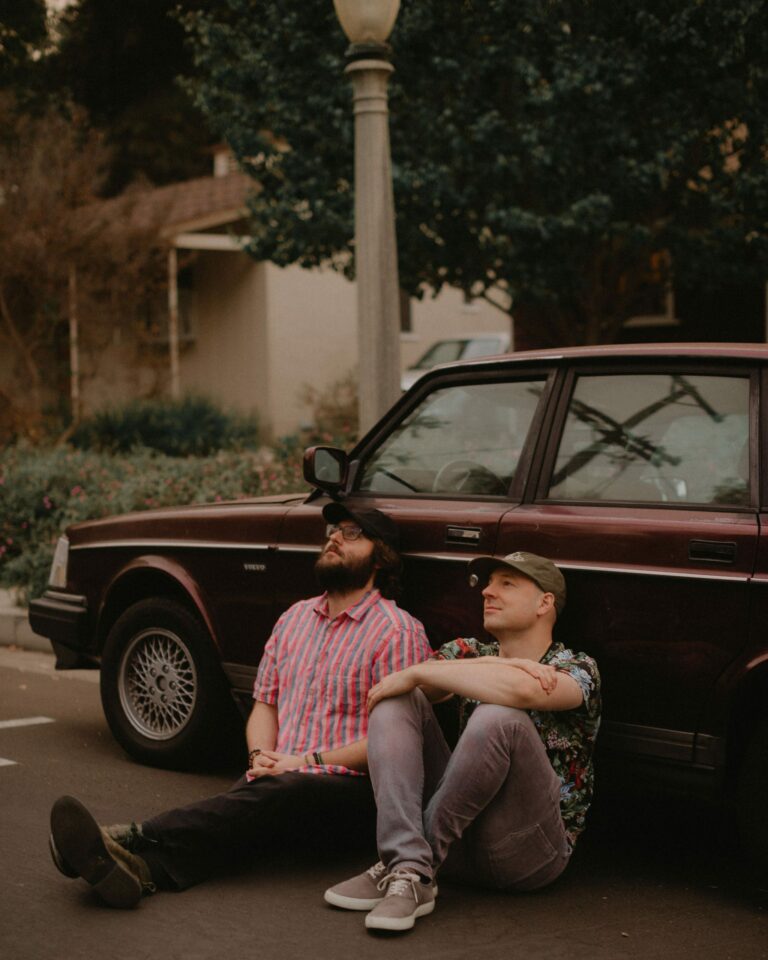
Artist Spotlight: Boy Scouts

Boy Scouts is the moniker of Oakland-based songwriter and multi-instrumentalist Taylor Vick, who makes warm, intimate indie-folk compositions akin to the likes of Frankie Cosmos and Snail Mail. Back in August, she released her debut full-length album, Free Company – her first for ANTI- records, home to artists like Girlpool, Calexico, and Wilco – and it instantly feels like stumbling upon a good friend you’ve never met before. Although it’s a step away from the bedroom recordings Vick used to upload on Bandcamp, her approach to songwriting has palpably not changed one bit. The record’s sweet, empathetic lyrics, delivered with Vick’s vulnerable, piercing vocals, deal with the aftermath of a break-up in all its emotional complexity and frustrating ambiguity. “Discovering what it takes/ To keep the memories at bay/ Here I stay a thousand days/ I don’t try to leave, I don’t try to stay,” she sings ‘Momentary Love’. And on ‘Hate Ya 2’, she laments, “I go to the park where once we had a sit/ The light has become dark, maybe it was never lit.”

We caught up with Taylor Vick for this edition of our Artist Spotlight segment, where we showcase up-and-coming artists and give them a chance to talk a bit about their music.

How did you start writing music and what are some of your biggest influences?

I started guitar lessons when I was 9 or 10 years old and after a few years I tried writing my own songs. Carole King, The Carpenters, Rose Droll, and Travis Vick are some of my biggest influences.

You seem to experience emotions fully and can express them as such in your music – is this a difficult process, as a person and as a songwriter?

I can’t really compare it to anything because it’s the only experience I know… I think a lot of people feel stuff deeper than they let on. I feel fortunate to be able to turn to songwriting to help process things I’m experiencing. If anything I think being pretty emotional and being a songwriter are complimentary.

Why did you name the album Free Company?

I started to think of that batch of songs as the company I kept during shitty times — when I was writing them and kind of being inside of them for that extended period of time making the record.

What’s your favorite track from the album, and why?

Get Well Soon, maybe. I love the bass line Stephen made and played on this track, and I love that my nylon guitar is heavily featured in the beginning… that’s the guitar I wrote all the songs from this album on and I like that it’s the first thing you hear when you play the record.

I love the line “think of the desert sprawl – empty but still forceful” from ‘Hate Ya 2’. Do you feel like there’s a newfound confidence and self-respect in how you view yourself, while still allowing yourself to be vulnerable?

Potentially, yeah. I don’t know if it’s confidence I gained but more like a better understanding of the situation as time went on.

Did you approach the album differently from your previous releases?

Yes in that all of my previous releases were either just uploaded to bandcamp or released on a friend’s small tape label. But as far as songwriting goes, that was approached the same way I’ve always done it.

You’re about to tour with Jay Som, is that right? How do you feel about that?

Stoked — they’re such amazing musicians and also just the best people. I’m super grateful to tag along.

I noticed that your album opens with ‘Get Well Soon’ while Jay Som’s new album ends with ‘Get Well’. But beyond the first two lines, the lyrics grow to be quite different–in what ways do you think they’re different or similar?

That’s a funny coincidence, I like that. I mean they’re similar in that they’re both songs written from a place of empathy, I think. Hoping the best for someone who is going through something tough.

Where do you see yourself going from here?

I don’t spend too much time thinking about that to be honest. I hope to continue writing music, making albums, and playing music with my friends for as long as I can.

Boy Scouts will perform in London at The Great Escape’s First Fifty on November 14th.

Review: Foil Arms and Hog in L.A.

0

Sean, Conor, and Sean — or, should I say, Foil, Arms, and Hog — have taken their deliciously witty Irish antics on a world tour. I had the good fortune to attend “Swines” in Los Angeles, the sketch group’s first night performing in the United States.

It was a literal laugh riot. Foil Arms and Hog are raising a comedic army in America.

Everything we’d hoped…

Prior to my gut-busting experience at the Dynasty Typewriter at the Hayworth, the lads met at University and began putting on live performances. Then the Youtube channel, an ‘experiment’ in camera funny, took off and took hold of 338,000 subscribers and approximately 61 million views. The lads do all sorts of things – songs about clickbait, fussy mother imitations, teasing about Brexit – and I’ve been a fan for years. Therefore, I took a Los Angelean‘s first chance to see them live. Fans of Foil Arms and Hog, the show was everything we’d hoped – and more.

Even in California, the boys from Ireland shine bright. Brighter than the sun, the haze, and the Hollywood Walk of Fame brought together. To begin their show at the Dynasty Typewriter (their second performance that evening due to a high demand for tickets), Foil Arms and Hogs welcome fans and sceptics alike with an audience participation activity. There is much hesitation early on, outright refusal even! But the boys don’t let it stop them. They ride the turning tides like the captains of improvisation they, undoubtedly, are.

…and more.

Captain is the perfect honorific title for these friends turned comedic writing team. It becomes apparent as the show continues that the three could easily lead a fleet, a frigate, or a full-on revolution. The audience eats out of their hands, making them laugh between gobbles. The people follow every cue, play along with every game, and laugh hysterically for just about the entire showtime.

Sean Finegan (Foil) plays the roles of straight man, physical comic, and improviser with equal measures of keen calculation and graceful lunacy. Conor McKenna (Arms) has the facial and vocal flexibility to play a character that makes you squeal with laughter. Sean Flanagan (Hog) has a fantastic presence and the remarkable ability to carry the show off-script and still keep the funny going. And, of course, all three are brave, insightful, and wickedly clever actor/writers.

Cultural and geographic differences? Forget them! Foil Arms and Hog will bring in people from everywhere, to chortle, belly laugh, and ultimately applaud together. The standing ovation at the Dynasty Typewriter was instantaneous – and was led by what was formerly the most resistant and crotchety audience member. He went from glued to his seat back to riotous applause. That’s the power of three talented performers.

To purchase tickets to Foil Arms and Hog’s remaining tour dates, click here. Subscribe to Foil Arms and Hog’s Youtube channel here.

What To Watch This Weekend: October 11th, 2019

0

In this segment, we showcase our top picks of what to catch at the cinema this weekend, what to stream and our short film of the week.

Our pick of the new releases out on October 11th, 2019:

Cinema: Judy

Judy (2019)

Rating Length
12A 118 Min

After a sustained period of success and critical acclaim in the early 2000s – various roles in Chicago, Jerry Maguire, Bridget Jones’s Diary and an Academy Award for best supporting actress for her role in the civil war drama Cold Mountain– Renée Zellweger took a hiatus from acting at the end of the decade after a series of box-office failures. After a six-year withdrawal, she returned in 2016 to complete the Bridget Jones trilogy and it would appear with Judy that she is back to her finest. It feels apt that she plays a star, Judy Garland, who, in her later years, struggled to return to the paramount heights of her early career.

Adapted by Tom Edge from the West End and Broadway play End of the Rainbow by Peter Quilter, and directed by Rupert Goold, this biopic chronicles the last years of the star’s life. It’s the late 1960s and Garland has reached one of the lowest points in her revered career – her ex-husband is attempting to obtain custody of her two youngest children, she’s performing shows in run-down venues for little money, and is being thrown out of hotels when she struggles to pay.

Garland reluctantly agrees to a five-week residency at the Talk of the Town nightclub in London in order to cover debts and gain some form of income. But, battles with management, and her alcohol and drug addiction shadows over Garland and these performances – sometimes she manages to mesmerise her audiences, other times she’s a stumbling, belligerent mess.

The film premiered at the 2019 Toronto International Film Festival, where the film garnered largely positive reviews with many heaping praise on Zellweger’s performance and complimenting her symbiotic portrayal of the star – not entirely Garland nor completely detached from the actress underneath the prosthetic nose and teeth – a combination that many have said allow Zellweger to truly shine. The plot may be tragic but is worth catching for Zellweger’s captivating performance of a star who, at her best, was just as enthralling.

Stream: Mo Gilligan: Momentum

Rating Length
15 64 Min

In Summer 2017, Gilligan was simply posting funny little sketches on social media when suddenly Drake (as in the global R&B superstar) started to quote some of Gilligan’s comedy to his millions of followers on Instagram. Since then, Gilligan has gone from strength to strength – growing in popularity, featuring on The Big Narstie Show and eventually gaining his own late-night show on Channel 4.

It, therefore, feels very apt that his new Netflix comedy special is entitled Momentum. The special proves why Gilligan is one of the most contemporary, relatable and honest individuals currently in the comedic realm. Rooted in nostalgia, his act features jokes about his mother, bullies in school, hen parties, the complexity of dancing in the club and what girls are like in group texts. Towards the end, he provides remixes of nursery rhymes and even begins to rap. The whole routine feels extremely modern, current and is certain to leave you laughing along with the audience in the Hackney Empire.

Short of the Week: Washland Express by Camille Campbell

In this short film, Camille Campbell (writer, producer and director) presents Cora (Jennifer Allcott), a young woman who has recently split from her boyfriend and is about to go through a drive-thru car wash. Suddenly, she is joined by an unexpected passenger, who starts to get to know her and they begin to develop a bond. But as they are surrounded by bubbles and neon lights within the tunnel, everything is not as it seems.

Campbell’s blending of various genres – film noir, romance and comedy – is equally as compelling as her favouring of female subjectivity. The premise is simple but its execution, styling and performances are wonderfully creative. It also offers an interesting, underlying moral: to value and respect each other flaws.

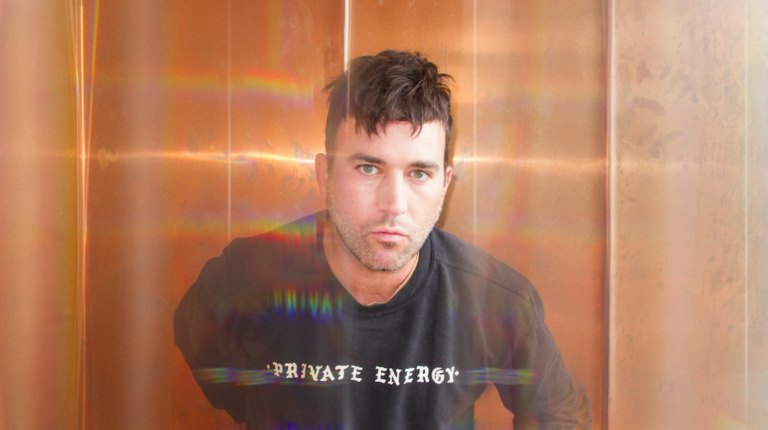
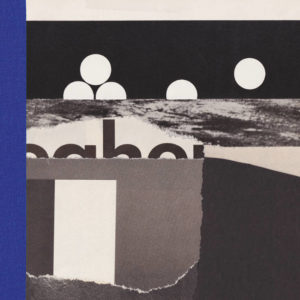
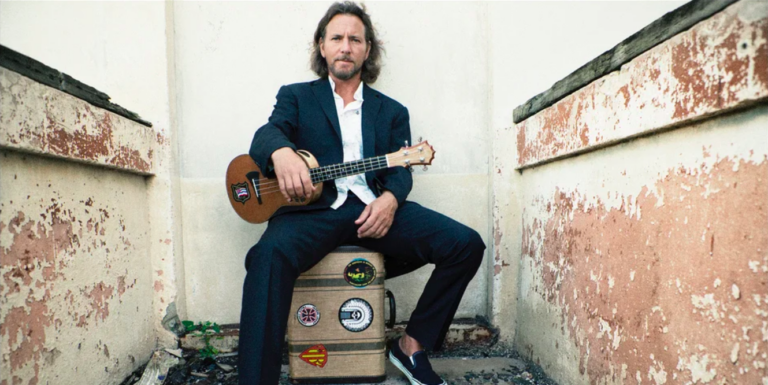
Albums Out Today: Big Thief, Blood Orange, Kim Gordon, Richard Dawson

0

In this segment, we showcase the most notable albums out each week. Here are the albums out on October 11th, 2019:

Image result for big thief two handsBig Thief, Two Hands: Just five months after the release of what might be one of the best albums of the year, U.F.O.F., Big Thief have come through with yet another project, described as its “earth twin”. Two Hands is the indie band’s fourth studio album, and recording began just days after the completion of U.F.O.F. with production from Andrew Sarlo, who has worked on every Big Thief album to date. Singer Adrianne Lenker said in a press statement: “Two Hands has the songs that I’m the most proud of; I can imagine myself singing them when I’m old. Musically and lyrically, you can’t break it down much further than this. It’s already bare-bones.”

Image result for blood orange fieldsBlood Orange, Fields: Another artist dropping a second project within the same year, Blood Orange has come out with a new album following the release of his latest mixtape Angel’s Pulse. It’s producer and singer-songwriter Devonté Hynes’s first collection of classical music compositions, performed by the Chicago-based ensemble Third Coast Percussion. Fields is composed of a suite called ‘For All Its Fury’ that makes up the first 11 tracks of the album, followed by the compositions ‘Perfectly Voiceless’ and ‘There Was Nothing’. Hynes reportedly recorded the compositions in a DAW before sending the sheet music to the ensemble who arranged and orchestrated it. “This was the first time I’ve written music that I’ve never played, and I love that,” Hynes said. “It’s something I’ve always been striving to get to. Seeing what Third Coast Percussion had done with these pieces was magical.”

Image result for kim gordon no home recordKim Gordon, No Home Record: Legendary ex-Sonic Youth bassist Kim Gordon has released her debut solo album titled No Home Record. It was produced by Justin Raisen and features contributions from Shawn Everett, known for his work with Alabama Shakes and Kacey Musgraves, as well as composer/filmmaker Jake Meginsky. While this is Gordon’s first solo album since Sonic Youth’s split, she has also put out three records with Bill Name as Body/Head, the last of which, The Switch, came out last July. The album takes inspiration from “experimental hip-hop like RP Boo and DJ Rashid, but also No Wave bands and The Stooges”.

Image result for richard dawson 2020Richard Dawson, 2020: Singer-songwriter Richard Dawson follows up 2016’s critically acclaimed Peasant with his sixth solo album 2020. According to a press statement, “the album is an utterly contemporary state-of-the-nation study that uncovers a tumultuous and bleak time. Here is an island country in a state of flux; a society on the edge of mental meltdown.”

Other albums out today: 88rising, Head in the Clouds II; Elbow, Giants of All Sizes; Waterparks, Fandom; Babymetal, Metal Galaxy.

Disctortion by Ruslan Khasanov

Ruslan Khasanov, a Russian graphic designer and visual artist, released an eye candy series named Disctortion, in which he explores the superb visuals of discs.

Writing about the series Khasanov stated: “I was inspired to create this project by an old, scratched CD with 90s music, which just lay on the street and shimmered with all the colors of the rainbow under the sun. On a deformed surface, textures formed that bizarrely changed colors. For this project I took various types of CD and DVD disks and destroyed them: I burned disks, froze, tore up, dipped into various chemicals, bent them. It was amazing to see how all disks react differently to the same”

Find more work by Ruslan Khasanov here.

Review: This Island Earth (1955)

Michael Stevens, of Vsauce fame, once said that “the ways we imagine [aliens] helping us, say a lot about the kind of help we think we need.” Could the inverse be true? Thankfully, 1955’s This Island Earth delves into that question.  

Rex Reason plays Cal Meacham, a scientist working on new forms of unlimited nuclear energy. After a mysterious source sends Cal a puzzle, in the form of electronic and machine parts, Cal assembles an “Interocitor” – an audio-visual communication device. Once assembled, Cal is contacted by Exeter (Jeff Morrow), who entices him to join his scientific team at once. Intrigued, Cal is flown (by a mysterious, unmanned plane) to Exeter’s mansion in rural Georgia. There, he meets Ruth Adams (Faith Domergue), a scientist working in the same field. Things seem strange at the mansion, and Exeter’s mission statement of ending wars is highly suspect. Cal and Ruth’s suspicions are answered when Exeter reveals himself to be of alien origin, from the planet Metaluna. Taking Cal and Ruth aboard his spaceship and heading for home, he explains the dire conflict his planet is in, and of his need for their help to save Metaluna… 

This Island Earth gets better with each viewing, allowing for new discoveries of meaning. The story is fascinating. The idea of an alien race reaching out to humanity for help is exciting, as well as somewhat melancholic. A planet ravaged by ceaseless conflicts becomes the final hope of another planet doomed by war.  

You could be forgiven for disregarding This Island Earth based on its first act. The dialogue is, at first, stilted and delivered with an air of machismo from Rex Reason that would make Zapp Brannigan positively proud. The fact that the pace is initially sluggish doesn’t help either, but as soon as Cal has assembled the Interocitor, all comes together.  

The remarkable alien machine: the Interocitor.

The cast’s performances are, on the whole, quite good. Rex Reason fills the character of Cal better as the film goes on. Owing a lot to the clunky dialogue in the first act, Cal seems less of a character and more of a scientific interpreter for the audience, waxing lyrical about electronics and power sources. Yes, this establishes his occupation and expertise, but it doesn’t immediately make for a living, breathing character.  

Faith Domergue is good as Ruth Adams, though her similar scientist role in 1955’s It Came from Beneath the Sea served her abilities better. Again, the script here lets her down too, as she’s allowed to do little more than react to the proceedings – especially once we’ve reached Metaluna. However, the restrained unease she projects while at Exeter’s mansion in the first act is commendable, and effectively adds to the mystery.  

However, it is Jeff Morrow as Exeter, the envoy from Metaluna, who makes this film. His performance is one that realises the profound statements This Island Earth has to offer. As we learn, under instructions from The Monitor (the apparent Metalunan leader), Exeter has placed some of the scientists at his mansion under the “transformer”, a device to suppress their will and force them to work for their cause. 

Initially, we’re unsure of Exeter when we’re introduced. We hear his spiel about “ending wars” when he pitches to Cal. Indeed, the presentation leads you to believe that it is just that: spiel to hide something sinister.  However, by the film’s end, one sees that the mantra was not so much that of the Metalunans, but of Exeter himself. He believes in the humanity of Cal and Ruth, and clearly struggles with the nastier things his masters expect of him. Exeter’s line, “we’re not all masters of our souls” is used to great effect. Exeter’s smaller moments of challenge to his leaders culminate in his ultimate defiance, choosing not to allow Cal or Ruth’s minds to be “transformed”, preserving their free will at the arguable expense of his own planet’s survival.  

This Island Earth is fascinating in that key theme: of the importance of morality in the face of crises that defy it. Exeter is forced to abandon his ethics time and again because of the doom that looms over Metaluna. However, at the crucial moment, his morality prevails, and he prevents the further personal destruction of those he cares for – of those who care for him.  

Could more have been made of Exeter? Of course. Delving deeper into his motives and personal morality could have been fascinating, adding to an already-rich discussion of right, wrong, and how they matter in times of crisis. However, what we are ultimately presented with is not without merit. More details of the Metalunans’ war would have been equally satisfying, as we never truly learn of its scope or history, but Exeter is interesting enough to overlook this.  

The ghostly surface of Metaluna.

This Island Earth boasts terrific production design. The look of the Interocitor is wonderfully bizarre, as is the surreal sound design that accompanies it. The eerie, chilling surface of Metaluna is superb. It is a ghostly world that has clearly seen untold horrors. The aerial photography that sees Exeter’s ship descend through the planet’s surface complements the set design brilliantly.  

Of course, any discussion of This Island Earth would be incomplete without mentioning the infamous Metaluna Mutant. An inspired creation, the Mutant monster is fantastic in its presentation, towering above Faith Domergue as it menaces Ruth Adams. The Mutant is, admittedly, superfluous to the story, adding little except to further prove the Metalunans’ scientific prowess. However, the Mutant’s appearance arguably adds another layer of the unearthly to the happenings on Metaluna. At the very least, the Mutant is a sight to behold, equal parts amusing and monstrous. This Island Earth is better for it. 

The marvellous Metaluna Mutant.

This Island Earth has its share of script issues that inhibit the actors from truly fleshing out their characters. However, Jeff Morrow’s Exeter lifts the story tremendously, injecting pathos and nuance to a role that could have been marred if played without Morrow’s dedication. This Island Earth presents ideas about personal morality and its importance in the face of morality-shattering crises. Exeter embodies that discussion, and is framed by all the science-fiction spectacle of interplanetary war. This is a film that allows for new discoveries upon each viewing, so take another look and enjoy – even if only for the wonderful Metaluna Mutant…