A pink swimsuit usually brings to mind suncream, warm sand, and the sound of waves in the distance. Away from the beach, though, it can take on a second life. With the right styling, it becomes a playful, even daring piece of everyday fashion. Swimwear is no longer limited to seaside holidays. Worn with intention, it can slip into a city look or add a fresh note to an evening outfit.
Rethinking the swimsuit
The simplest way to extend the use of your swimsuit is to treat it as a bodysuit. Tucked into high-waisted jeans or tailored trousers, it suddenly feels less like holiday wear and more like a fashion statement. Add a lightweight jacket or a structured blazer to give the look polish. The contrast between the casual cut of the swimsuit and the sharp lines of city clothes creates a confident balance.
Layers and textures
Transparency and texture bring new life to a one-piece. A sheer skirt, a crochet cardigan, or a loose oversized shirt can all shift the mood from relaxed to refined. Instead of hiding the swimsuit, let it show through. It becomes part of the rhythm of the outfit. For those asking how to wear a pink swimsuit this summer, the answer may be to mix it with layers that feel both effortless and chic, such as these gorgeous pink swimsuit from Banana Moon, designed to work as easily under gauzy fabrics as they do in the sun.
From daylight to evening
One of the strengths of this approach is flexibility. Picture an afternoon by the water followed by dinner in the same outfit, with only a few quick changes. During the day, pair the swimsuit with linen shorts, sandals, and a woven bag. For the evening, switch to a satin skirt and heeled mules. Add sculptural earrings or a silk scarf and the transition feels natural. The swimsuit links both moments without looking out of place.
Playing with contrast
Pink thrives when set against strong colours. Soft blush with navy, bright fuchsia with mustard, or pastel tones offset with metallic accessories all create striking contrasts. Each pairing tells a different story. Styled this way, the swimsuit is no longer tied to beach culture. It becomes the centrepiece of an outfit that belongs just as much in a café, a gallery, or a rooftop bar.
The city twist
For a more urban edge, layer the swimsuit under an oversized blazer and wear it with relaxed trousers or joggers. Finish the look with sneakers or chunky loafers. The result is sporty yet sharp, casual but considered. It is the kind of mix that makes swimwear feel relevant in a city setting, giving pink a new role beyond summer holidays.
A pink swimsuit is more than a seasonal item. Styled with intention, it can move beyond the shoreline and become part of everyday culture. Layers, contrasts, and accessories transform it into something versatile and expressive. What once felt limited to the beach becomes a tool for reinvention, proving that even the simplest pieces can find new life when worn with imagination.
Mitski has announced her first concert film, which comes out in theaters around the world on October 22. Filmed over three nights at Atlanta’s Fox Theatre, Mitski: The Land was directed by Grant James and arrives in partnership with Trafalgar Releasing. Mitski’s longtime produced Patrick Hyland mixed the audio. Though the show was in support of The Land Is Inhospitable and So Are We, it features stunning “reworkings and reimaginations” of songs from throughout Mitski’s discography.
I caught Mitski’s set at Primavera Sound last year, and it was an absolute highlight. If you didn’t get to see her on that tour, I highly recommend you watch this one. Tickets will be available here, starting September 15.
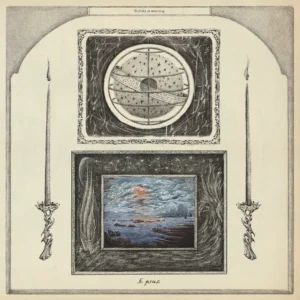
Hannah Pruzinsky has announced a new h. pruz album. It’s called Red sky at morning, and it’s set to arrive on November 7 on Mtn. Laurel. The follow-up to last year’s No Glory was co-produced with Felix Walworth of Told Slant/Florist. It’s led by the ethereal, divinely intimate ‘Arrival’, which comes paired with a video created by V. Haddad and Florist’s Emily Sprague, who also plays Buchla on the song. Check it out below.
“I love exploring what it’s like to step over the edge of rationality, the expected, especially when it comes to the relationship with my own self,” Pruzinsky said of ‘Arrival’ in a statement. “What happens when the obsessive vein overflows? What if it was meant to? I was experiencing a point of my life that was almost stagnant with domesticity, and it drove me a bit wild internally.”
Pruzinsky is also one third of the folk trio Sister., who released their latest album Two Birds earlier this year. Read our Artist Spotlight interviews with h. pruz and Sister.
Red sky at morning Cover Artwork:
Red sky at morning Tracklist:
1. Come
2. Arrival
3. After always
4. Siren song
5. Your hands
6. Leaving a wound without a mark
7. If you cannot make it stop
8. Force
9. Krista
10. Whatever comes through
11. Sailor’s warning
Looking for the best crypto casinos? With plenty of casinos that accept Bitcoin and other cryptocurrencies for gambling, it’s not surprising that you find it overwhelming to find the best ones that suit your tastes and preferences; some Bitcoin online casinos focus on bonuses, while others prioritize game collection. Want to explore platforms that offer a complete package, i.e, best bonuses, instant withdrawals, extensive game collection, diverse payment options, and many more?
Here is your guide; we have reviewed the 5 best crypto casinos along with their pros and cons, to help you choose the best one that meets your requirements.
Best Bitcoin Casino Sites of 2025: Bonuses Listed!
Knowing about the best crypto casinos isn’t enough; a detailed review gives you insight into the best features of these platforms, allowing you to select the one according to your preferences.
1. JACKBIT: Overall Best Crypto Casino Featuring a Wager-Free Welcome Bonus & No KYC
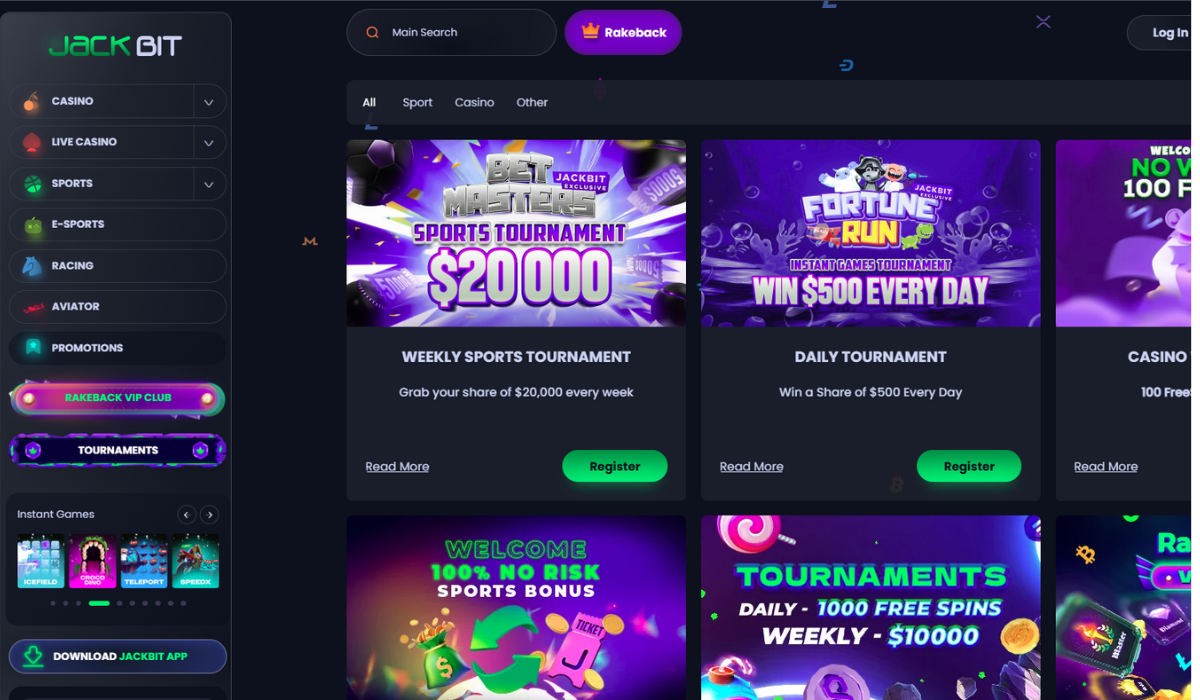
If you are seeking a premium gambling experience with the allure of a wager-free welcome bonus and an extensive collection of sports and casino games, then JACKBIT can be your best crypto casino. The registration process is quick without a KYC verification, and you can begin exploring the top sportsbook in the market, containing live betting, pre-match, esports, virtual sports, racing, and an amazing casino game collection featuring 6,600+ slots, 200+ live games, and instant mini games.
At JACKBIT, the best no KYC casino, Transactions are seamless with cryptocurrencies, and you receive your payouts in minutes. The user-friendly design and seamless navigation process make JACKBIT an attractive platform for both new and experienced gamblers.
🎁Welcome Bonus and Ongoing Promotions
You receive 100 wager-free spins + 30% Rakeback Bonus and a risk-free first sports bet as a welcome bonus, a rare perk, making it one of the favorite crypto gambling spots in the US.
Apart from the welcome bonus, players can claim a variety of promotional offers, including daily and weekly tournaments. Bet Masters Daily Sports Tournament is worth $20,000, while you can play instant games to win daily $500 with the Fortune Run Instant Game Tournament. Play big and win bigger with JACKBIT Tournament, where you get 1000 free spins daily and $10,000 weekly. VIP Rakeback bonus offers up to 30% cashback, while you can claim 3+1 Free Bet and Bet Insurance to get a free bet and 10% cashback, respectively. Drops and Wins offer 2000,000, while you can join JACKBIT Socials to receive many other exciting free bonuses.
➡️Pros & Cons
Pros:
6600+ slot games and 200+ live games
Supports 19+ cryptocurrencies
Instant VIP rakeback bonus
Cons:
Limited fiat currency payment options
Fiat currencies are only supported for withdrawals
2. 7Bit Casino: Best Bitcoin Casino offering Huge BTC Bonus & Different Transaction Methods
Boasting over 9,000+ casino games and a lucrative welcome bonus, 7Bit has emerged as one of the best Bitcoin casinos. Registrations are seamless, and within a minute, your accounts get created. From slots to live dealer games and BTC games to Exclusives, 7Bit, the crypto gambling site, features a vast array of game options from top providers like Evolution, NetEnt, and Pragmatic Play. Classify games based on RTP, risk level, or different themes to get your hands on your favorite games instantly.
Payment options at 7Bit, the crypto-accepting casino, focus heavily on cryptocurrencies, while players can also deposit and withdraw with a fair number of fiat currencies, offering a flexible and versatile transactional experience for every player signing up to the platform.
🎁Welcome Bonus and Ongoing Promotions
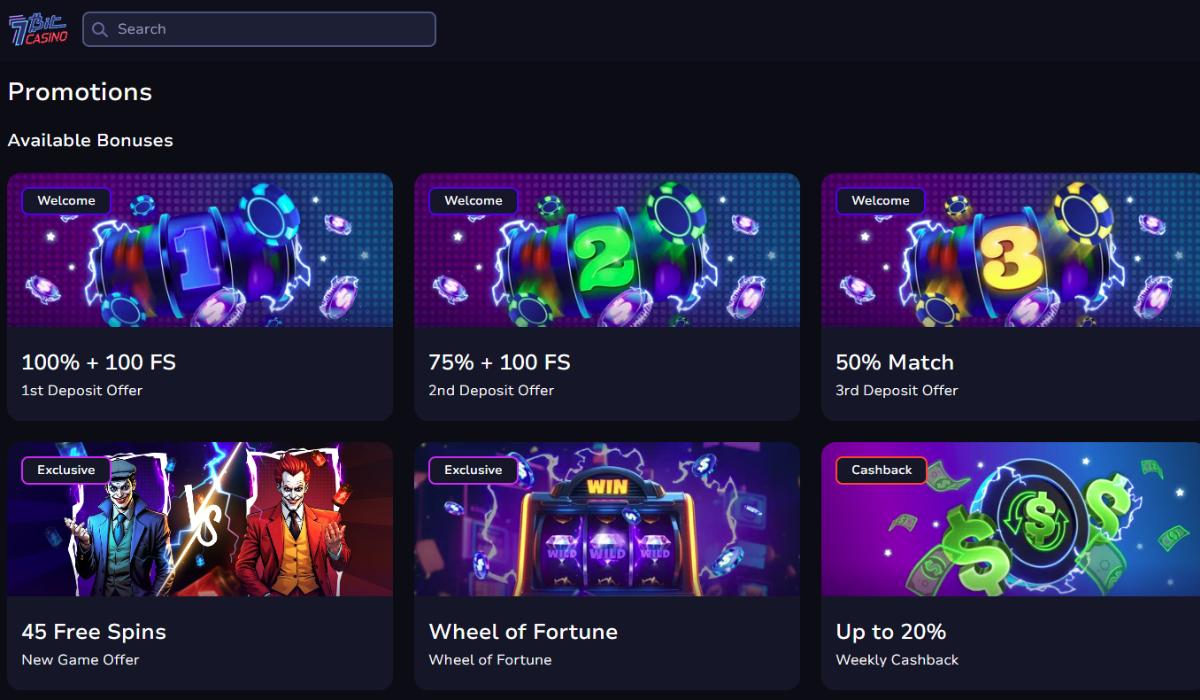
Upon signing up and making the initial deposit, players get 325% up to 5.25 BTC and 250 free spins on their first four deposits, one of the best welcome bonuses in the Bitcoin gambling industry.
100% up to 3.48 mBTC and 100 free spins on the first deposit
75% up to 5.22 mBTC and 100 free spins on the second deposit
50% up to 3.48 mBTC on the third deposit
100% up to 34.8 mBTC on the fourth deposit
7Bit, the best Bitcoin casino, offers a huge range of promotional offers as well; New Game Bonus offers 45 free spins on the Lucky Fruity Coin, while you get random yet high rewards with the Wheel of Fortune Bonus. Monday offers provide 50% reload bonus and 50 free spins, whereas you get up to 111 free spins with different Telegram bonuses. Claim up to 100 free spins with the Wednesday Offer, or avail of up to 20% cashback on the Weekly Cashback Bonus, or get amazing rewards with tournament offers like Lucky Spin, Royal Tables, and Legends League.
➡️Pros & Cons
Pros:
Huge variety of games to choose from
Instant cryptocurrency withdrawals
Simple interface and easy navigation
Cons:
Restricted in some countries
Weak live customer support
3. BitStarz: Best Crypto Casino offering a Huge Collection of Provably Fair Games & Fast Payout
BitStarz belongs on our best crypto casino list for many reasons: an attractive game library featuring hundreds of original and provably fair games, 500+ cryptocurrency support, a reliable gambling environment, and rewarding promotional offers. Exploring the game library, you will be amazed to see a wide variety of slot games, table games, live dealers, instant wins, jackpots, Bitcoin games, and a lot more; one of the main reasons for their increased popularity among casino players.
Apart from the 500 cryptocurrencies that initiate instant and reliable withdrawals, you can also fund your account and withdraw payouts with fiat currencies. The cutting-edge autoprocessing system processes your withdrawals in lightning speed, allowing you to cash out right away.
🎁Welcome Bonus and Ongoing Promotions
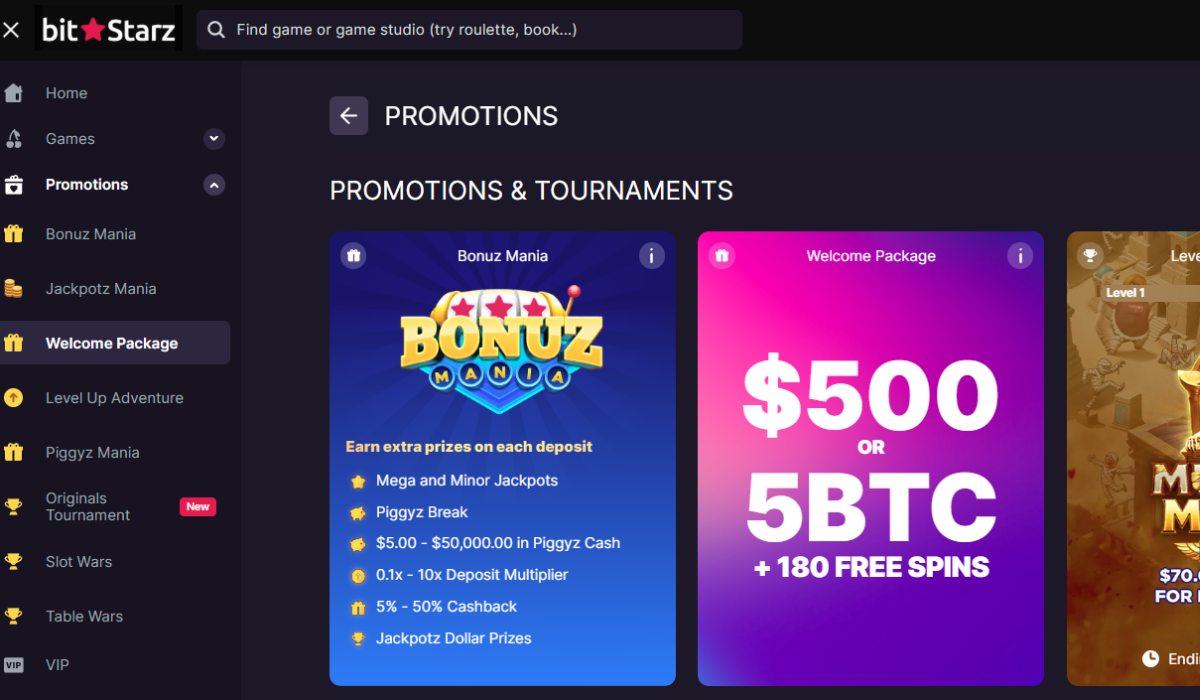
New players can claim 300% up to 5 BTC or $500 and 180 free spins by making the initial minimum deposit to start playing their favorite slot games. The BTC and dollar rewards make the welcome bonus appealing to both fiat currency and crypto players.
100% up to $100 or 1 BTC and 180 free spins on the first deposit
50% up to $100 or 1 BTC on the second deposit
50% up to $200 or 2 BTC on the third deposit
100% up to $100 or 1 BTC on the fourth deposit
BitStarz, the instant withdrawal casino, offers promotional offers that are a jackpot for active players, offering them a chance to win even a Tesla Model Y car. Bonuz Mania offers minor and mega jackpots, Piggyz Break, multipliers, cashbacks, and other exciting prizes, while you can win up to $5000 cash with the Originals Tournament. Get $70,000 with Slotpunk Level Up Adventure or participate in Jackpot Mania or Piggyz Mania to get exciting jackpot rewards and Piggyz Break symbols, respectively.
Slot Wars offers 5000 EUR and 5000 free spins, while you can avail of 10,000 EUR cash with Table Wars. Other bonuses include 50% Monday Reload Bonus and Wednesday Free Spins, only available after the fourth deposit.
➡️Pros & Cons
Pros:
Hundreds of provably fair and original games
Accepts 500+ cryptocurrencies
Experienced customer support team to deliver accurate and instant support
Attractive promotional offers
Cons:
High wagering requirements
Geo-restrictions can affect accessibility
4. KatsuBet: Best Crypto Casino For Daily Cashback Offers
What makes KatsuBet stand out as the best crypto casino is its fascinating game library. From classic table games to modern BTC games, you get a reliable gambling environment with games from top providers, including Amatic, BetSoft, BGaming, and Belatra. KatsuBet, the instant withdrawal casino, integrates cutting-edge user functionality and offers a remarkable winning experience in a cozy Asian-style atmosphere.
Cryptocurrencies like Bitcoin, Ethereum, Litecoin, and Dogecoin are the main payment methods, while players can enjoy the safety and reliability of fiat transactions through channels like e-wallets and credit cards. Once you hit a jackpot, there is no waiting; just visit the withdrawal section and choose your cryptocurrency, and you will receive your payouts within a day.
🎁Welcome Bonus and Ongoing Promotions
Boost your winning chances at KatsuBet with a 325% up to 5 BTC and 200 free spins welcome bonus; though not the biggest, it is one of the flexible welcome bonuses that you can claim at the best crypto casino.
100% up to 1.5 BTC and 100 free spins on the first deposit
75% up to 1.25 BTC and 100 free spins on the second deposit
50% up to 1.25 BTC on the third deposit
100% up to 1 BTC on the fourth deposit
KatsuBet, the Bitcoin gambling site, is known for its wide variety of promotional offers and is one of the main reasons why we included it in our best crypto casinos list. You get 50% match with the Welcome Highroller Bonus, or you can bag up to 0.0041 BTC and 50 free spins with the Monday Reload Bonus.
Claim up to 75 free spins with the BTC Exclusive Bonus, or get a 30% bonus with the Warriors Gift, or 45 free spins with the New Game Lucky Fruity Coin bonus. Wednesday Free Spins and Thursday Loot Box are worth 100 free spins, while you can claim Birthday Bonus, Weekend Bonus, and Daily Cashback up to 10% to elevate your winning chances.
➡️Pros & Cons
Pros:
Huge winning opportunities
Generous welcome bonus
Wide variety of promotional offers
Cons:
High wagering requirements
No original games
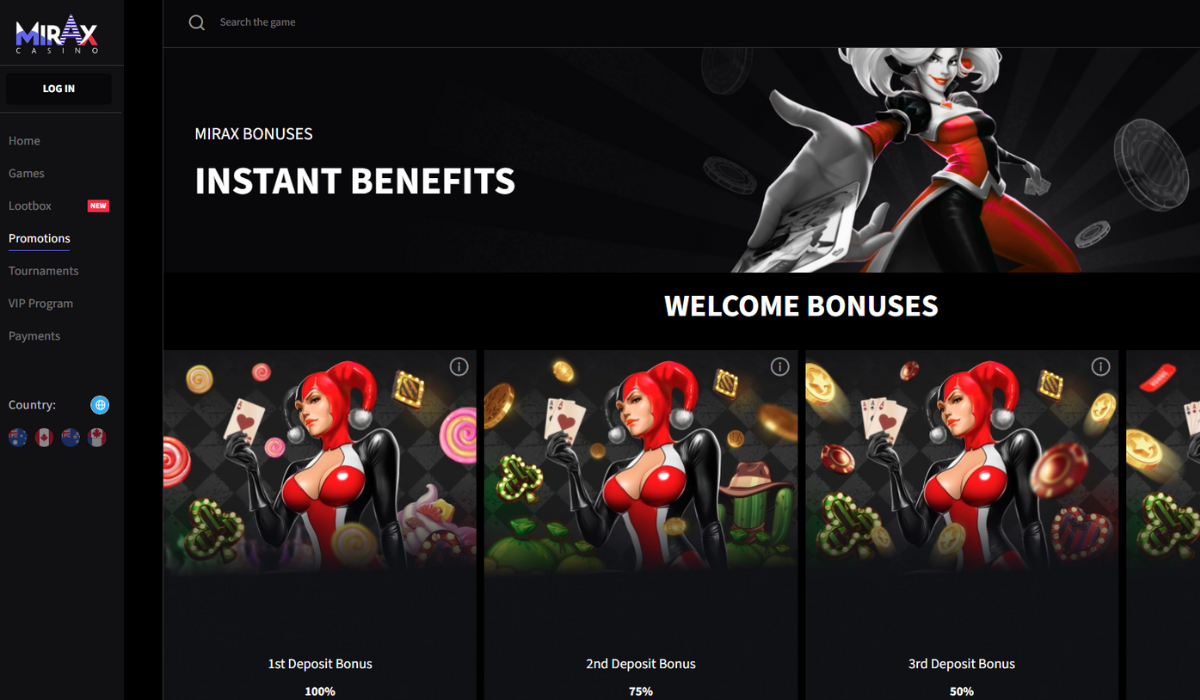
5. MIRAX: New Bitcoin Online Casino offering 10,000+ Games and Lightning-Fast Withdrawals
MIRAX is a licensed Bitcoin casino, where you can explore an extensive array of games with instant and reliable crypto payments. From slots to table games and BTC games, every gambler will find their favorite games at this best crypto casino. New slots are added every day, and tournaments and promotions run year-round, so it would be a great loss if you miss exploring MIRAX.
Only supporting reliable and tested tokens, your crypto transactions are safe and tamper-free, while players can also use fiat currencies for deposits and withdrawals. MIRAX currently supports 10 cryptocurrencies and uses a crypto converter, so you don’t need to search for a crypto exchange somewhere else.
🎁Welcome Bonus and Ongoing Promotions
MIRAX, the new crypto casino, welcomes new players with a 325% up to 5 BTC and 150 free spins, offering them a fair chance to win big at their favorite slots.
100% up to 1.5 BTC and 100 free spins on the first deposit
75% up to 1.25 BTC and 50 free spins on the second deposit
50% up to 1 BTC on the third deposit
100% up to 1 BTC on the fourth deposit
MIRAX, the new Bitcoin online casino, frequently brainstorms its promotions and campaigns to keep its loyal members engaged. Claim up to 0.0025 BTC and 70 free spins with the Showtime Reward Bonus, or get 45 free spins with the New Game Bonus, or avail of 75 free spins with the BTC Exclusive Bonus.
Monday Reload Bonus offers 0.0041 BTC and 50 free spins, Weekend Free Spins provide 33 free spins, you get up to 20% cashback with Highroller Cashback Bonus, and Thursday Loot Box and Wednesday Reload offer 100 free spins each.
➡️Pros & Cons
Pros:
Huge game library to choose from
New slot games are added every day
Tournaments and promotions run year-round
Cons:
High wagering requirements on certain promotional offers
More focus on slot games
Why Play at Best Crypto Casinos in 2025: Main Advantages of Cryptocurrency Gambling
Offering instant withdrawals and charge-free transactions, cryptocurrencies are creating waves in many industries, with the online gambling industry leading the way. Here are the major advantages of playing at the best crypto casinos in 2025.
1. Instant Signups
Most online crypto casinos require only an email address and a password to sign up, eliminating the long verification process. It only takes a few minutes, and your account is ready for use. This is a great advantage for players who face long KYC verification delays at traditional online casinos to start playing their favorite games.
2. Anonymous Gambling Opportunity
Since cryptocurrency transactions are stored on the blockchain and only require a wallet ID, it eliminates the sharing of personal information, offering a degree of anonymity to users. If you seek a gambling opportunity with great anonymity, then play at the best crypto casinos.
3. Wide Variety of Payment Options
Best crypto casinos support a wide variety of cryptocurrencies, including Bitcoin, Dogecoin, Ethereum, Litecoin, etc, along with fiat currency options like credit cards, e-wallets, and bank transfers. This gives users flexibility in transactions.
4. Fast Withdrawals
Crypto transactions eliminate intermediaries, allowing you to deposit and withdraw your money instantly. It only takes a few minutes, and you get your payouts. Instant withdrawals contribute to uninterrupted gambling, where you can use your payouts for your next bets.
5. No or Low Fee Transactions
Crypto transactions are either charge-free or a low charge is applied. This helps players to make maximum profits from their games without incurring losses from transactional fees.
6. BTC Bonuses and Blockchain Games
Best crypto casinos offer BTC bonuses, including welcome bonuses, cashbacks, reload bonuses, etc, making these platforms attractive to crypto enthusiasts. In addition, you can play a wide variety of BTC and provably fair games, providing you with a high level of transparency and fairness.
Tips to Gamble Responsibly at Best Crypto Casinos
Gambling can bring financial rewards as well as losses. However, a player can play a profitable game in the long term if they practice responsible gambling. Here are certain tips to gamble responsibly and win big at the best crypto casinos.
Tip 1: Set your bankroll before you play
Setting a proper bankroll lets you gamble within your budget. Going over the bankroll can lead to financial risks, affecting your financial as well as mental well-being.
Tip 2: Don’t chase losses
Chasing losses is the act of a fool.Hunting losses can bring bigger losses and place you in financial turmoil.
Tip 3: Take frequent breaks
Instead of playing hectically, it is always better to take a break. A game after a break brings a fresh start, contributing to your increased focus and concentration.
Tip 4: Use responsible gambling tools
Utilize responsible gambling tools like deposit limits, withdrawal limits, cool-off periods, etc, to practice controlled gambling.
Tip 5: Don’t gamble emotionally
Gambling is a chance game, and gambling emotionally can affect your judgment, resulting in huge losses. Gamble when you have a fresh mind, so that you can boost your winning chances.
Most Popular Coins at Best Crypto Casinos
There are over 17,000 cryptocurrencies; however, only a fraction of them are used in the best Bitcoin casinos. Below, we list the 6 most popular cryptocurrencies you can use for gambling online.
● Bitcoin (BTC)
Bitcoin is the largest and most popular cryptocurrency; hence, it is accepted at almost every casino. It offers high security and high betting limits, making it ideal for high rollers.
● Ethereum (ETH)
Migrating to Proof of Stake (PoS), Ethereum offers high transaction speed and low energy consumption. ETH smart contracts are widely used to power provably fair games and NFT-based features. However, the gas fees remain higher than many of its competitors.
● Litecoin (LTC)
The lower fees and high transaction speed make Litecoin the best choice for small and fast transactions. Offering 56 TPS with a block time of 2.5 minutes, LTC is ideal for micro and casual betting.
● Dogecoin (DOGE)
Dogecoin is best suited for low-stakes gambling. It offers high transaction speed, minimal transactional fees, and improved visibility, making it suitable for crypto gambling.
● Tether (USDT)
Tether is a stablecoin pegged to the US dollar, making it ideal for players who want to avoid market volatility. USDT is widely supported in the US and has low transaction fees.
● Ripple (XRP)
Known for its fast and cross-border payments, XRP is widely accepted in the best crypto casinos. Transactions are quick, and only a minimum charge is applied, making Ripple the best payment method at online crypto casinos.
Final Verdict On Best Crypto Casinos
Online crypto casinos are booming in 2025. Offering instant withdrawals, BTC games, attractive welcome bonuses, and a wide variety of cryptocurrency acceptance, these platforms have outperformed traditional online casinos, where players struggled with long registration processes and withdrawal delays.
With plenty of crypto casinos available, we chose JACKBIT, 7Bit, and BitStarz as our top 3 recommendations. JACKBIT is a go-to platform for players seeking a casino and sports betting experience under one roof, all powered by the comfort of cryptocurrency transactions. 7Bit is the best crypto casino, featuring one of the best welcome bonuses and a sophisticated game library, including a variety of BTC games and exclusives. BitStarz is a multi-award-winning crypto casino offering players a splendid game library, 500 cryptocurrencies support, and efficient customer service.
Choosing the best crypto casino depends on your preferences, and the best platform for one may not be the best for the other. Our crypto casino list has focused on almost all common player preferences, including bonuses, game collection, payment methods, customer service support, etc. However, players should always keep in mind that gambling can cause financial risks; gamble responsibly and safely. Have a good day gambling!
Frequently Asked Questions (FAQ)
1. Is crypto gambling legal in the US?
The legality of crypto casinos varies from state to state in the US, with some states legalizing crypto gambling while others apply strict regulations. Check the legality of crypto casinos in your state or gamble at offshore online crypto casinos.
2. Do crypto casinos offer complete anonymity?
It depends on the no-KYC policy of crypto casinos; some casinos offer no-KYC for sign-ups and withdrawals, offering complete anonymity, while others require KYC verifications for withdrawals, which can affect anonymity.
3. How can I deposit cryptocurrency at the best Bitcoin casinos?
To deposit funds, you need to select a secure crypto wallet, choose the cryptocurrency, and enter the amount you wish to send to the casino wallet.
4. Why play provably fair games at the best crypto casinos?
Provably fair games allow you to verify the game outcomes yourself and check that the games are not rigged or biased.
5. How can I test whether a casino is legitimate?
To check the legitimacy of a casino, you should verify its licensing on its official website. A reputable license is a guarantee that the casino you are playing at is legitimate.
Let’s say a band self-releases an album on Spotify that garners 100,000 streams in one month. That band, we’ll call them Fatty Smith, includes a vocalist, drummer, bassist, and guitarist, who each would take a cut of the $350 paycheck: a one time payment of about $87.50. Fatty Smith has a friend, PJ Starving, a singer songwriter very active in her local music scene. PJ Starving recently headlined a festival celebrating the 10 year anniversary of a local record label, but none of her songs received more than 1,000 streams last month, so Spotify considers her a hobbyist and pays her nothing. This is the complicated, mathy, and grim reality for artists who put their music on Spotify.
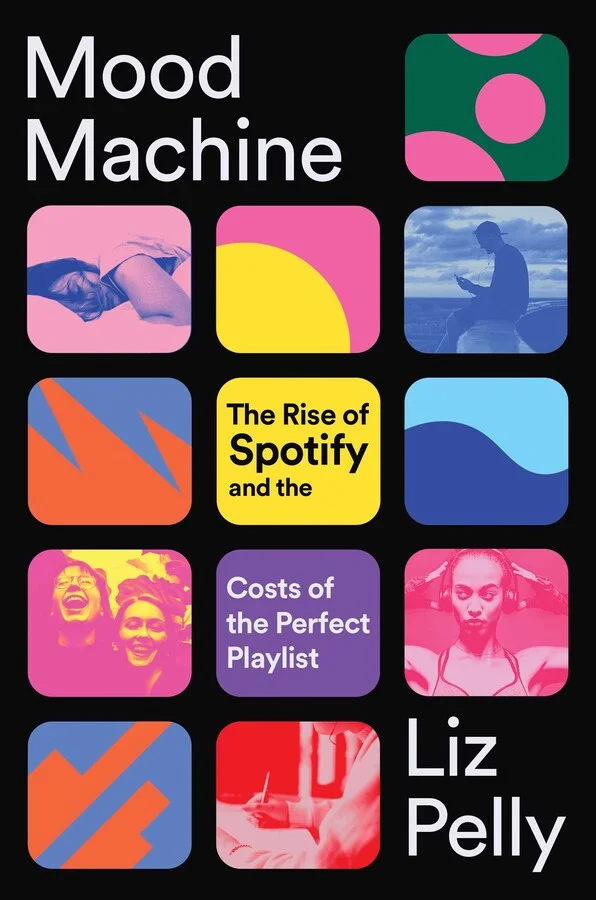
Liz Pelly’s Mood Machine: The Rise of Spotify and the Costs of the Perfect Playlist, out on paper back this November, explains the seedy history of a tech company whose origins, as it turns out, has little to do with music. Mood Machine begins with the regional history of piracy in Sweden – a country-wide reaction to corporate culture so virulent that record labels considered Sweden a “lost market.” Pirate Bay, a Swedish music and file sharing platform, thrived until 2008, when police raided its data center and charged the founders with violating copyright laws at the urging of American major record labels. While Pirate Bay cofounders began their prison sentences, Spotify picked up its pieces and released a beta product using music the founders took from Pirate Bay themselves.
The notion that Spotify came into existence to “save music” is a complete farce, as Pelly explains. Daniel Ek and Martial Lorentzon, Spotify’s founders, came from advertising tech. Music appeared the easiest traffic source, as opposed to video which takes up more storage, to sell advertising. Spotify never intended to fairly compensate artists as their motto “giving a million creative artists the opportunity to live off their art” misleads.
Before Spotify turned a profit, to convince major labels to join the streaming service the company promised labels benefits and advances with no obligation to share with artists. Building on the same strategies long established by major labels, Spotify intentionally obfuscates the system of artist payments. For starters, the familiar viral number of $0.0035 per stream is purely symbolic. Spotify pays artists a relative percentage of the entire revenue pool, which forces DIY artists to compete with Taylor Swift. My first paragraph reads like a middle school math problem because it is so complicated to elucidate what goes on behind these artists’ payments, but it takes a child to see it’s not fair.
For a moment, let’s return to our hypothetical artists Fatty Smith and PJ Starving. In order for them to earn minimum wage ($15 an hour) they would each need to have an estimated 800,000 streams per month. 80% of artists on Spotify have less than 50 monthly listeners. Using Spotify4Artists, an “optimization tool” launched in 2013 that presents music to artists as data and metadata, our artists crunched some numbers. They realized that in order to make some money, to get as many streams as possible, they should release music individually. Spotify4Artists also revealed that their most popular songs had the least amount of words and were heavy on instrumentals. In other words, music that can go unnoticed in the background.
Streambait, which Pelly calls, “content created for the sake of engagement,” like TikTok or Instagram Reels, became the ideal music ecosystem. Artists like Khalid and Billie Eilish, whose music operates on vibes with a monotone of feeling, serve the streaming platform greatest. Their inoffensive sounds – moody easy listening – thrive on playlists with the emotional depth and stink of a can of cat food. Playlists like “Chill,” “Night Drive,” and “Chillin’ With The Homies” capitalize on a vibe to accompany a listener on their main-character journey, rather than create a music experience akin to listening to a record.
To maximize the amount of time a listener spends on the app (i.e. profitability), in 2016, the company hired playlist editors to create mixes that would coalesce around a “vibe.” These “lean back” listeners – users overwhelmed by choice or who play Spotify in the background – became the company’s target audience. The result is a highly curated app that insulates music tastes based on a data driven technocracy. Nothing about Spotify’s algorithm recommendations is genuine. Even the “Discovery Mode” playlist where listeners love to find their favorite new artist is a payola-like scheme where labels exchange royalties for playlist placement.
The term “Ghost Artist” emerged in 2016 in connection to Spotify’s PFC (Perfect Fit Content) program. Spotify hires fake record labels who in turn pay session musicians to churn out “chill tracks” that get high placement on playlists. I took a look at one of these Spotify “chill” playlists and found an artist called softclouds (lowercase letters seek to assert some kind of false indie sentimentality) – a nonexistent artist who claimed to be “from the dark corners of Sweden,” a pretty creepy fake bio considering the vibe is relaxation, not vampire-emo. softclouds releases crunchy nonsense with an occasional piano trill or a singular rumbled drum beat; 500,000 monthly listeners and no results on Google. It is easy to imagine the PFC program slipping into a mindless AI driven muzak.
Pelly makes it clear, in her short explanatory chapters supported by interviews with musicians, former Spotify employees, and record labels, that Spotify homogenizes music. Its emphasis on data based recommendations push artists towards the mundane and deliver opacity in place of vibrant music scenes. For example, “Indie” no longer refers to an artist on an independent record label, but a marketable sound. At this rate, listeners will forget to associate their music with a human artist entirely.
Spotify’s exploitative practices pushed our friend PJ Starving to quit music, who now has a corporate job to survive. However, Pelly believes there are choices in face of Spotify’s domination of music and what is essentially a payola piracy scheme. All members of Fatty Smith removed their discography from Spotify and opened an all ages music venue and community center.
It is possible to listen to music without Spotify or any streaming services. (Pelly noted that YouTube Music has an even lower payout rate than Spotify.) Pelly looks towards public library music databases like the streaming archives in Seattle, Iowa City, Austin, Pittsburgh, Minneapolis to name a few. I myself have not streamed music in over a year. With some speakers I found on the street and a receiver, record player, and tape deck that my local record store fixed up for me, I can avoid the whole streaming enterprise. Though Pelly does not recommend this individual-centric undertaking. Instead she proposes collective action to rally the government to pay artists fairly. She concludes not in a defeatist mindset, but calls on artists, music lovers, and independent record labels to organize.
The 2025 MTV Video Music Awards took place on last night (September 7) at Long Island’s UBS Arena. Lady Gaga, who led the field with 12 nods, was the biggest winner of the night, taking home four awards. Video of the Year, however, went to Ariana Grande (for ‘Brighter Days Ahead’), who also won two other trophies, while Sabrina Carpenter also took home three Moon Person trophies. The show featured performances from Doja Cat, Lady Gaga, Sabrina Carpenter, Ricky Martin, Video Vanguard winner Mariah Carey, and more. Check out the full list of winners and highlights from those performances below.
Video of the Year, Presented by Burger King® WINNER: Ariana Grande – Brighter Days Ahead
Billie Eilish – Birds of a Feather
Kendrick Lamar – Not Like Us
Lady Gaga & Bruno Mars – Die With a Smile
Rosé & Bruno Mars – Apt.
Sabrina Carpenter – Manchild
The Weeknd & Playboi Carti – Timeless
Artist of the Year
Bad Bunny
Beyoncé
Kendrick Lamar WINNER: Lady Gaga
Morgan Wallen
Taylor Swift
The Weeknd
Song of the Year
Alex Warren – Ordinary
Billie Eilish – Birds of a Feather
Doechii – Anxiety
Ed Sheeran – Sapphire
Gracie Abrams – I Love You, I’m Sorry
Lady Gaga & Bruno Mars – Die With a Smile
Lorde – What Was That WINNER: Rosé & Bruno Mars – Apt.
Tate McRae – Sports Car
The Weeknd & Playboi Carti – Timeless
Best New Artist WINNER: Alex Warren
Ella Langley
Gigi Perez
Lola Young
Sombr
The Marías
Best Pop Artist
Ariana Grande
Charli XCX
Justin Bieber
Lorde
Miley Cyrus WINNER: Sabrina Carpenter
Tate McRae
MTV Push Performance of the Year, Presented by Bacardí® Rum
Ayra Starr – Last Heartbreak Song
Damiano David – Next Summer
Dasha – Bye Bye Bye
Gigi Perez – Sailor Song
Jordan Adetunji – Kehlani WINNER: Katseye – Touch
Lay Bankz – Graveyard
Leon Thomas – Yes It Is
Livingston – Shadow
Mark Ambor – Belong Together
Role Model – Sally, When the Wine Runs Out
Shaboozey – A Bar Song (Tipsy)
Best Collaboration, Presented by Under Armour
Bailey Zimmerman & Luke Combs – Backup Plan (Stagecoach Official Music Video)
Kendrick Lamar & SZA – Luther WINNER: Lady Gaga & Bruno Mars – Die With a Smile
Post Malone Featuring Blake Shelton – Pour Me a Drink
Rosé & Bruno Mars – Apt.
Selena Gomez & Benny Blanco – Sunset Blvd
Best Pop
Alex Warren – Ordinary WINNER: Ariana Grande – Brighter Days Ahead
Ed Sheeran – Sapphire
Lady Gaga & Bruno Mars – Die With a Smile
Rosé & Bruno Mars – Apt.
Sabrina Carpenter – Manchild
Best Hip-Hop WINNER: Doechii – Anxiety
Drake – Nokia
Eminem Featuring Jelly Roll – Somebody Save Me
Glorilla Featuring Sexyy Red – Whatchu Kno About Me
Kendrick Lamar – Not Like Us
LL Cool J Featuring Eminem – Murdergram Deux
Travis Scott – 4×4
Best R&B
Chris Brown – Residuals
Leon Thomas & Freddie Gibbs – Mutt (Remix) WINNER: Mariah Carey – Type Dangerous
PartyNextDoor – No Chill
Summer Walker – Heart of a Woman
SZA – Drive
The Weeknd & Playboi Carti – Timeless
Best Alternative
Gigi Perez – Sailor Song
Imagine Dragons – Wake Up
Lola Young – Messy
MGK & Jelly Roll – Lonely Road WINNER: Sombr – Back to Friends
The Marías – Back to Me
Best Rock WINNER: Coldplay – All My Love
Evanescence – Afterlife (From the Netflix Series “Devil May Cry”)
Green Day – One Eyed Bastard
Lenny Kravitz – Honey
Linkin Park – The Emptiness Machine
Twenty One Pilots – The Contract
Best Latin
Bad Bunny – Baile Inolvidable
J Balvin – Rio
Karol G – Si Antes Te Hubiera Conocido
Peso Pluma – La Patrulla
Rauw Alejandro & Romeo Santos – Khé? WINNER: Shakira – Soltera
Best Afrobeats
Asake & Travis Scott – Active
Burna Boy Featuring Travis Scott – TaTaTa
Moliy, Silent Addy, Skillibeng & Shenseea – Shake It to the Max (Fly) (Remix)
Rema – Baby (Is It A Crime)
Tems Featuring Asake – Get It Right WINNER: Tyla – Push 2 Start
Wizkid Featuring Brent Faiyaz – Piece of My Heart
Best K-Pop
Aespa – Whiplash
Jennie – Like Jennie
Jimin – Who
Jisoo – Earthquake WINNER: Lisa Featuring Doja Cat & Raye – Born Again
Stray Kids – Chk Chk Boom
Rosé – Toxic Till the End
Best Country
Chris Stapleton – Think I’m in Love With You
Cody Johnson & Carrie Underwood – I’m Gonna Love You
Jelly Roll – Liar
Lainey Wilson – 4x4xU WINNER: Megan Moroney – Am I Okay?
Morgan Wallen – Smile
Best Album
Bad Bunny – Debí Tirar Más Fotos
Kendrick Lamar – GNX
Lady Gaga – Mayhem
Morgan Wallen – I’m the Problem WINNER: Sabrina Carpenter – Short n’ Sweet
The Weeknd – Hurry Up Tomorrow
Best Long Form Video WINNER: Ariana Grande – Brighter Days Ahead
Bad Bunny – Debí Tirar Más Fotos (Short Film)
Damiano David – Funny Little Stories
Mac Miller – Balloonerism
Miley Cyrus – Something Beautiful
The Weeknd – Hurry Up Tomorrow
Video for Good
Burna Boy – Higher WINNER: Charli XCX – Guess Featuring Billie Eilish
Doechii – Anxiety
Eminem Featuring Jelly Roll – Somebody Save Me
Selena Gomez & Benny Blanco – Younger and Hotter Than Me
Zach Hood Featuring Sasha Alex Sloan – Sleepwalking
Best Direction
Ariana Grande – Brighter Days Ahead
Charli XCX – Guess Featuring Billie Eilish
Kendrick Lamar – Not Like Us WINNER: Lady Gaga – Abracadabra
Rosé & Bruno Mars – Apt.
Sabrina Carpenter – Manchild
Best Cinematography
Ariana Grande – Brighter Days Ahead
Ed Sheeran – Sapphire WINNER: Kendrick Lamar – Not Like Us
Lady Gaga – Abracadabra
Miley Cyrus – Easy Lover
Sabrina Carpenter – Manchild
Best Editing
Charli XCX – Guess Featuring Billie Eilish
Ed Sheeran – Sapphire
Kendrick Lamar – Not Like Us
Lady Gaga – Abracadabra
Sabrina Carpenter – Manchild WINNER: Tate McRae – Just Keep Watching (From F1® the Movie)
Best Choreography WINNER: Doechii – Anxiety
FKA twigs – Eusexua
Kendrick Lamar – Not Like Us
Lady Gaga – Abracadabra
Tyla – Push 2 Start
Zara Larsson – Pretty Ugly
Best Visual Effects
Ariana Grande – Brighter Days Ahead
Lady Gaga – Abracadabra
Rosé & Bruno Mars – Apt. WINNER: Sabrina Carpenter – Manchild
Tate McRae – Just Keep Watching (From F1® the Movie)
The Weeknd – Hurry Up Tomorrow
Best Art Direction
Charli XCX – Guess Featuring Billie Eilish
Kendrick Lamar – Not Like Us WINNER: Lady Gaga – Abracadabra
Lorde – Man of the Year
Miley Cyrus – End of the World
Rosé & Bruno Mars – Apt.
Best Group
Aespa
All Time Low
Backstreet Boys WINNER: Blackpink
Coldplay
Evanescence
Fuerza Regida
Grupo Frontera
Imagine Dragons
Jonas Brothers
Katseye
The Marías
My Chemical Romance
Seventeen
Stray Kids
Twenty One Pilots
Song of the Summer
Addison Rae – Headphones On
Alex Warren – Ordinary
Benson Boone – Mystical Magical
BigXthaPlug & Bailey Zimmerman – All the Way
Chappell Roan – The Subway
Demi Lovato – Fast
Doja Cat – Jealous Type
Huntr/x – Golden
Jessie Murph – Blue Strips
Justin Bieber – Daisies
Moliy, Silent Addy, Skillibeng & Shenseea – Shake It to the Max (Fly) (Remix)
Morgan Wallen & Tate McRae – What I Want
Ravyn Lenae Featuring Rex Orange County – Love Me Not
Sabrina Carpenter – Manchild
Sombr – 12 to 12 WINNER: Tate McRae – Just Keep Watching (From F1® the Movie)
Video Vanguard Award WINNER: Mariah Carey
MTV VMA Rock the Bells Visionary Award WINNER: Busta Rhymes
Smartphones have become the camera you always carry, whether you’re documenting family milestones, snapping food photos, or catching an unexpected sunset. The lens in your pocket might be small, but it’s backed by advanced software that makes it capable of handling many situations once reserved for dedicated cameras. The difference between an average photo and one that feels worth keeping usually comes down to technique. When you understand how to adapt to light, use your phone’s built-in tools, and make choices that fit the moment, you can consistently capture images that reflect how you experienced them.
Night and Low-Light Mastery
Low light often creates blurry, dull, or grainy results if you just tap the shutter without thought. You can improve your odds by bracing your phone against a steady surface like a table, wall, or even your own knees while seated. This stabilizes your shot and lets the sensor take in more detail. Many phones also include a dedicated night mode that layers multiple exposures together. Use it when photographing friends outdoors after dusk; you’ll see sharper faces and brighter colors instead of silhouettes. If the subject moves, encourage them to stay still briefly, as just a second can make the difference between a keeper and a discard.
AI-Assisted Composition and Editing
Your phone already anticipates common challenges and suggests fixes through AI. For example, portrait modes now detect edges around hair or glasses with surprising accuracy, reducing awkward blur. Pay attention when the camera suggests a different framing; these nudges often improve balance without forcing you to think about the rule of thirds. After shooting, the AI editing tools can brighten shadows or smooth skin tones without requiring you to learn complex software. Instead of accepting every automated change, compare versions side by side and decide which feels truer to the scene.
Clean Lens, Gridlines, and Creative Angles
Smudges from fingerprints soften images more than many people realize. Wiping the lens before taking a photo often restores clarity instantly. Activating gridlines in your camera app helps you keep horizons level and buildings upright. To avoid flat-looking shots, change your perspective: crouch to eye level with a child instead of towering over them, or tilt slightly upward when capturing architecture. These small adjustments create photos that feel more engaging because the angle matches how you experienced the moment.
Capture Smart & Back Up Even Smarter
Snapping dozens of photos without a plan fills storage quickly and makes later sorting overwhelming. Capture fewer, more intentional shots by waiting until your subject looks natural instead of firing bursts. Once you’ve saved the ones you like, move them to cloud storage so you’re not relying only on your phone’s memory. That way, a lost or broken device doesn’t erase months of memories. With cloud-based services, you can also organize albums and share them easily, which simplifies revisiting events years later without hunting through cluttered galleries.
A wedding band should look good, feel good, and last. The right men’s wedding band or women’s wedding band matches your routine, stacks cleanly if you wear an engagement ring, and needs little fuss. Use this guide to choose metal, width, profile, and finish with confidence.
Men’s wedding band
Most guys want clean lines and durability. Popular men’s wedding bands run 4 to 6 mm. A flat profile reads modern. A slightly domed profile feels classic. A brushed finish hides small scratches. High polish brings shine if you plan on quick touch-ups once a year. Yellow gold, white gold, and rose gold all work. Select a tone that complements your watch and daily jewelry. If you want something personal and unique, you can also check jewelry that a working with custom-made designs.
Source: Capucinne.com
Women’s wedding band
Decide if you will stack with an engagement ring or wear the band solo. For women’s wedding bands, a straight, slim band pairs well with low settings. Curved or V contour bands hug pears, marquise, kites, and other shaped centers. For solo wear, a 2 to 3 mm plain band in yellow, white, or rose gold looks clean and fits any outfit. A half pavé band adds sparkle without bulk.
Yellow gold wedding band
Warm and timeless. It suits many skin tones and effectively conceals small imperfections. Yellow gold pairs nicely with vintage cuts and with natural stones like moss agate if you like a grounded look. 14k vs 18k: 14k is a touch harder and more scratch-resistant, good for daily wear. 18k has a richer color and a bit more weight, great if you want a luxe feel. Finishes: High polish gives a bright look. Brushed or satin hides micro scratches. Hammered adds quiet texture without feeling busy. Stacking: Works with both men’s and women’s wedding bands and plays well with mixed metal stacks. Yellow gold next to white gold creates a clean contrast. Care: Simple soap and water to clean. Occasional polish brings back shine. No plating needed.
Rose gold wedding band
Soft copper tone that suits many hands. It pairs well with white diamonds, sapphires, and even alexandrite since the metal can pull a touch of warmth from the stone. 14k vs 18k: 14k rose gold is slightly sturdier and often a bit pinker. 18k reads deeper and more rosy. Skin tone and style: Complements neutral and warm undertones and looks great in thin stacking bands or contour bands for engagement ring sets. Durability: Similar to yellow gold. The color is alloyed through the metal, not a surface layer, so it will not fade with normal wear. Care: Same as yellow gold. Wipe with a soft cloth and wash with mild soap as needed.
White gold wedding band
Neutral and crisp. It matches platinum jewelry and cool colored stones. Rhodium plating keeps it bright, so plan to replate from time to time. Alloy and plating: Most white gold contains a small amount of nickel. If you have sensitive skin, ask for nickel-free or palladium white gold. Expect rhodium replating every 12 to 24 months based on wear. 14k vs 18k: 14k is a bit tougher for daily knocks. 18k feels heavier and takes a high polish very well. Look and stacking: Ideal with sapphire and alexandrite if you want to highlight cooler tones and color change. Pairs cleanly with modern flat profiles and channel-set bands.
Bands with stones
Diamonds and sapphires are popular for daily wear. Channel or bar settings protect edges. For a minimal look, try a single flush-set diamond. If you want color, sapphires come in blue, green, yellow, pink, and white. Alexandrite can be used if you like a color shift, though most people choose it for engagement centers rather than bands. Keep stones modest for comfort.
Should Wedding Bands Match, or Not? Totally Up to You.
Your rings don’t have to match, unless you want them to. Some couples love the symmetry of matching metals or finishes, while others prefer a shared detail: a subtle groove, a hidden stone, or a personal engraving inside.
But Fit First
Here’s the thing: fingers aren’t the same all day. Heat, hydration, and even time can affect how a ring fits. Try bands on in the afternoon when your hands are at their “real-world” size. If your knuckle’s bigger than the base of your finger, ask about comfort-fit styles or inserts that help the ring slide on and off easily. Also, width matters. Wider bands (6mm and up) might need to be sized a bit up. Thin, minimal bands usually fit true. Planning to stack rings? Try them on together to make sure the fit feels right when they’re worn as a set. And remember: not all rings resize easily. Gold usually adjusts one or two sizes, but full eternity bands and tension-set designs are tricky. White gold may also need a rhodium refresh after resizing. Skip the string trick, use proper metal sizers, and double-check your sizing in US, UK, or EU formats. Move your hand like you normally do: make a fist, type, reach into a pocket. If your size changes with seasons or workouts, ask about temporary adjusters or resize policies.
Go Custom if You Want Something Personal
If you want something that feels one-of-a-kind, custom might be the right route. You can choose your metal, finish, width, profile, and any special touches, like a bevel, two-tone design, or hidden gemstone. Custom is also great if you want a band that stacks cleanly with a uniquely shaped engagement ring, or you need something built around your lifestyle.
What to Do?
Skip the guesswork. Book a short in-person appointment and test out different metals and styles, or book an online meeting with capucinne.com. You’ll learn more in ten minutes of trying bands on than in ten hours of scrolling online. And if you want a ring that truly fits your hand and your story, work with a studio that offers real sizing tools, finish samples, and the option to design something built to last.
Rematch finally launched its third major update, activating the long-awaited Crossplay feature. The September 5 release follows a short delay caused by last-minute issues found by the developers. The patch includes new features, gameplay balance tweaks, and several bug fixes.
Crossplay Arrives After Final Hurdle
According to GameRadar, game studio Sloclap faced last-minute matchmaking problems in the game. The issues happened during the final testing stage before the update’s scheduled release last September 3.
“During our final tests today, we found a major matchmaking issue linked to Crossplay. Since Crossplay is the heart of Patch 3, we’ve decided to delay the release while we fix it,” the Studio’s statement reads on X.
More specifically, the problem had multiple testers stuck in matchmaking. Likewise, they were unable to cancel or restart the process.
With the issue, the developers said that the delay is disappointing. However, Sloclap promised to resolve it quickly, and the update rolled out shortly after.
What Crossplay Means for Players
Based on the official announcement, players on all supported platforms can now play together. In particular, Crossplay refers to cross-platform matchmaking and cross-platform social features. However, Sloclap explains that player progress in Rematch remains platform-specific. Even with the latest patch, players will not be able to access cross-platform progression.
Crossplay is enabled by default, and the developers invite players to keep it that way. They say it helps speed up the matchmaking process. Still, players have the option to turn it off at any time.
Gameplay Tweaks and Bug Fixes
Aside from the Crossplay feature, Patch 3 brings many gameplay improvements and bug fixes. It is considered the largest update to date for Rematch.
MP1ST says that key changes include adjustments to volley shot mechanics. Sloclap reduced the required speed when locking onto volley targets by 10%. Now, players can expect more realistic volleys during Extra Effort. This tweak makes the game more challenging for players. It also removes unrealistic ball movements.
Rematch now has new mouse and keyboard control options. From Joystick Emulation to Directional aiming to Crosshair-only, players can switch between three different options to aim.
Sloclap also improved ball control, goalkeeper vulnerabilities, and tackling responsiveness, among others. At the same time, the update introduces a player reporting feature. It enables players to declare misconduct more directly.
Looking Ahead
The developers are reviewing the production process for the next update, which will mark Season 1. Sloclap also wants to focus on delivering reliable announcements for Rematch. For full patch notes, check out the official Rematch news.
London, July 21–25, 2025 — Presented at Galleria Objects, 92 Brick Lane, London E1 6RL, Branches and Vessels: Ecologies of Kinship and Intimacy was Chinese artist Xinyue Liang’s recent solo exhibition, offering an evocative exploration of ceramics as a language for reimagining family. Over five days, the exhibition staged a dialogue between two interrelated bodies of work—the Jar Series and the Coral Series—through which Liang interrogated the architectures of kinship, women’s growth, and intergenerational continuity.
The Jar Series drew inspiration from the familiar silhouette of traditional Chinese storage vessels. Yet these works exceeded functionality, becoming repositories of memory and affect. Their textured surfaces resembled growth rings, wood grain, or fragments of domestic life, evoking layers of inherited stories. Some rims were deliberately irregular, signaling openness and permeability in communication, while other vessels stood tall and slender, embodying aspirations of continuity and resilience within family structures. Rather than containers for objects, they acted as material metaphors for parental care, lineage, and the tension between inheritance and rupture.
In contrast, the Coral Series brought ecological metaphors into the space of ceramics. Rendered in white porcelain, these branching structures resembled living organisms in constant interdependence. Their forms suggested both fragility and resilience, mirroring the delicate balance of family dynamics and, more specifically, women’s roles within them. Some works appeared as flourishing coral colonies, symbols of vitality and growth; others presented more abstract configurations, hinting at symbiosis, negotiation, and the collaborative trajectories of kinship. The whiteness of the clay amplified this tension—it was at once pure and exposed, simultaneously vulnerable and alive.
The exhibition design resisted linear storytelling. Instead, the jars and corals were placed in proximity, their forms echoing and contradicting one another, creating an environment that felt less like a gallery and more like an ecosystem. Visitors experienced kinship not as a fixed institution but as a porous, evolving organism—negotiated, fragile, and relational.
Crucially, Liang’s approach to ceramics did not rely on nostalgia or a straightforward revival of tradition. Instead, she positioned the medium as a site of translation, where materiality and abstraction could open questions about the contemporary Chinese family. Her works blurred the lines between the utilitarian and the symbolic, between personal memory and collective narrative, offering ceramics as both object and metaphor.
Ultimately, Branches and Vessels demonstrated that family is neither static nor unidirectional. It is, like coral reefs or vessels of clay, a structure that contains, leaks, and regenerates. Liang invited viewers to imagine kinship as an ecology: at once fragile and resilient, intimate yet permeable, rooted in tradition while constantly being rewritten in the present.
Exhibition Details
Branches and Vessels: Ecologies of Kinship and Intimacy
Solo exhibition by Xinyue Liang
Galleria Objects, 92 Brick Lane, London E1 6RL July 21–25, 2025