Home Blog Page 498

5 Most Common Causes of Semi-Truck Accidents

Semi-truck accidents are a significant concern on our highways, often leading to severe injuries and fatalities. Understanding the common causes of these accidents can help in prevention and highlight the importance of having a truck accident lawyer in Las Vegas, NV, especially when such incidents occur. Here are the five most common causes of semi-truck accidents:

1. Driver Fatigue

One of the leading causes of semi-truck accidents is driver fatigue. Truck drivers often work long hours and may not get adequate rest, leading to drowsiness behind the wheel. Fatigue impairs reaction time, decision-making abilities, and overall driving performance, increasing the likelihood of accidents. According to the Federal Motor Carrier Safety Administration (FMCSA), fatigue-related crashes are often due to violations of Hours of Service (HOS) regulations, which dictate how long a driver can operate a vehicle before needing rest.

Truck drivers are required to take regular breaks and have mandatory off-duty periods, but tight delivery schedules and financial incentives can pressure them to push their limits. The National Transportation Safety Board (NTSB) has highlighted fatigue as a persistent problem in the trucking industry, calling for better enforcement of HOS regulations and the use of fatigue management programs.

2. Distracted Driving

Distracted driving is another major cause of truck accidents. This can include activities such as using a mobile phone, eating, adjusting the radio, or even daydreaming. When a truck driver’s attention is not fully on the road, the risk of an accident increases significantly.

The FMCSA prohibits truck drivers from using handheld mobile phones while driving, yet distractions remain a significant issue. Texting is particularly dangerous as it involves taking eyes off the road, hands off the wheel, and mind off driving. Research shows that drivers who text are 23 times more likely to be involved in a safety-critical event. Trucking companies are increasingly adopting technology solutions, such as in-cab monitoring systems, to reduce distracted driving incidents.

3. Poor Vehicle Maintenance

Semi-trucks require regular maintenance to ensure they are in safe working condition. Poor maintenance can lead to mechanical failures such as brake malfunctions, tire blowouts, and steering problems. These mechanical issues can cause a driver to lose control of the truck, leading to serious accidents.

Routine inspections and maintenance are critical for preventing accidents. The FMCSA’s regulations mandate regular inspections, repairs, and maintenance of commercial motor vehicles. Despite these regulations, some companies may neglect proper maintenance to save on costs or due to scheduling pressures. Common maintenance failures include inadequate brake systems, worn-out tires, and malfunctioning lights. Regular maintenance checks and immediate repairs are essential to ensure the safety of semi-trucks on the road.

4. Weather Conditions

Adverse weather conditions, such as rain, snow, fog, and ice, can create hazardous driving conditions. Reduced visibility and slippery roads make it difficult for truck drivers to maintain control, especially given the size and weight of their vehicles. These conditions often lead to increased stopping distances and the potential for skidding and jackknifing.

Truck drivers must be trained to handle various weather conditions and know when to pull over if conditions become too dangerous. The FMCSA provides guidelines for safe driving in adverse weather, emphasizing the importance of reducing speed, increasing following distance, and using proper braking techniques. However, even with proper precautions, weather-related accidents can still occur, highlighting the importance of advanced driver training and weather preparedness.

5. Speeding and Reckless Driving

Speeding and reckless driving are also significant contributors to semi-truck accidents. When truck drivers exceed speed limits or engage in aggressive driving behaviors, they have less time to react to changes in traffic conditions. This can result in collisions with other vehicles, especially in heavy traffic or congested areas.

Speeding reduces the driver’s ability to navigate curves safely, increases stopping distance, and heightens the impact force in a collision. The FMCSA has strict regulations on speed limits for commercial trucks, and many trucks are equipped with speed limiters to prevent speeding. Despite these measures, some drivers may still engage in reckless behaviors due to tight schedules or pressure to deliver goods quickly. Continuous education on safe driving practices and strict enforcement of speed regulations are crucial for reducing these types of accidents.

Understanding the common causes of semi-truck accidents can aid in prevention efforts and emphasize the need for legal support when accidents occur. If you or a loved one has been involved in a semi-truck accident, consulting a truck accident lawyer in Las Vegas, NV, can provide the guidance and representation needed to navigate the legal complexities and seek appropriate compensation.

15 Brilliant Quotes from Peaky Blinders TV Show

0

Peaky Blinders is a prominent British TV series that was created by Steven Knight which has remarkably influenced audiences through its irresistible narrative and memorable characters. The show has gained a lot of traction throughout the years and has delivered immense lines that are synonymous with resilience, themes of power, and ambition.

Here we present you with a collection of 15 brilliant quotes that capture the mission of Peaky Blinders:

1. “I’m not a monster. I’m just ahead of the curve.”

The Character is Thomas Shelby who reveals his self-awareness and ruthless pragmatism. It explains his willingness to go the extra length to stay ahead in the game, regardless of the way he does it, whether good or bad.

2. “I think I’ve proven, I don’t need to explain myself to anyone.”

Arthur Shelby is the character in this quote. He was known for his assertion of his independence and authority within the Shelby family. It speaks more of his pride, and stubbornness but points out his loyalty to his principles and decisions.

3. “I’m not a traitor to my class. I am just an extreme example of what a working man can achieve.”

Thomas Shelby the character challenges the norms and class of society during his time. This quote describes his drive and ambition to promote himself and his family by going against the expectations placed upon him by society.

4. “The only way to guarantee peace is through fear.”

Poly Gray is the matriarch of the Shelby family who speaks to the difficult situations of their world. This quote speaks of her pragmatic approach to sustaining control and stability no matter the problem she may face in their criminal enterprises.

5. “There’s God, and there are the Peaky Blinders.”

Father Hughes agrees with the formidable reputation and influence of the Shelby family in Birmingham. This quote explains the dichotomy between faith and the harsh reality of the criminal underworld.

6. “I don’t pay for suits. My suits are on the house or the house burns down.”

Thomas Shelby has wit and disregard for conventional rules and this attitude of his shines through in this humorous quote. It shows his confidence and hatred toward material possessions and pronounces his nonchalant attitude toward wealth.

7. “Men and their empires.”

Ada Shelby is always concerned about the ambitious and always destructive nature of the men around her. The quotes point out her awareness of the power of hard work that defines the lives of men and her defiance against patriarchal expectations.

8. “Lies travel faster than the truth.”

The character here is Polly Gray who speaks to the unclear nature of their world. It explains the difficulties faced while trying to understand a landscape where deception and misinformation are the norms as well as emphasising the importance of cunning and strategy. 

9. “You can change what you do, but you can’t change what you want.”

Tommy Shelby is a character that reflects on the complexity of desire and ambition. This quote tells us more about the internal conflict and enduring motivation Tommy uses to drive his action, despite his desire to change his path. 

10. “Everyone’s a whore, Grace. We just sell different parts of ourselves.”

“Everyone’s a whore from Birmingham, Grace. We just sell different parts of ourselves.”

Thomas Shelby’s cynical view of human nature reflects compromises made in their environment.

11. “I don’t pay for trouble. I make it.”

Alfie Solomon is a prominent figure in the series who emphasises his reputation for causing chaos and unpredictability. This quote reflects his bold and unpredictable nature and also explains his love for conflict and disruption.

 12. “I’m a businessman. I make money, not war”

Alfie Solomon demonstrates his pragmatic approach to his criminal enterprises. He has a violent reputation and unpredictable attitude but still sees himself as a businessman first and foremost. This quote reflects his ability to check the complexities of the criminal world with a focus on profit and negotiation instead of outright conflict.

It also highlights Alfie’s strategic belief and willingness to get used to his approaches to achieve financial success and maintain his power in the underworld. 

13. “The Peaky Blinders. We’re going to London, and we’re taking over.”

This quote shows how Arthur Shelby expresses his desire and determination to expand the Peaky Blinders’ influence beyond Birmingham. It is synonymous with his boldness and vision for the future of the family and also illustrates his leadership within the organisation. 

14. “I will kill anyone who gets in the way of my ambition. Including you.”

This quote demonstrates Thomas Shelby’s ruthless determination and focus when it comes to achieving his goals. It describes his willingness to make challenging decisions and remove barriers even when it means betraying people who are close to him. This quote reveals the darker side of his character and the sacrifices he never makes to gain power and success. 

15. “It’s not a good idea to look at me like that. I’ll move mountains to get what I want.”

Alfie Solomon stated these lines to demonstrate his confidence and resourcefulness and his ability to turn the table against others in any situation in his favour. This quote reveals his unpredictable nature and his ability to use both charm and intimidation to achieve his objectives in the criminal underworld.

Conclusion

These quotes explain the depth of character development in Peaky Blinders and also point out the show’s exploration of themes that include ambition, moral complexities, and power dynamics, faced by its protagonists. Each quote defines a moment of intensity, defiance, and clarity that explains the series in line with its audience.

The WoW Effect: Influence on Modern Fantasy Literature and Film

WoW has now established its position in the world of games and gained the love and appreciation of millions of players because of its realistic environment and attractive gameplay. WoW did not only transform the game industry and how the world defines a game; it went on to transform modern-day fantasy literature and movies. The key events and protagonists of WoW cannot be forgotten, and the game has left a trace in many fantasies and fans of the genre. Thus it is feasible to comprehend all the interconnections between WoW’s effect on other genres of fantasy literature and film.

World of Warcraft universe.

World of Warcraft or WoW is a massively multiplayer online roleplaying game that is a vast and complex game world with many races, people, and places. From the noble Alliance to the deceitful Horde, players embark on epic missions, discover forgotten ruins, and meet magical creatures. The world consists of two continents, namely Kalimdor and the Eastern Kingdoms, where every region has its terrain and inhabitants.

Among the many characters in WoW, a few stand out as central figures whose actions significantly shape the world. Notably, Thrall and Jaina Proudmoore are key characters with deep lore and complex motivations.

Thrall

Thrall, originally named Go’el, is the orc shaman and one of the most powerful figures in the entire universe of Azeroth. Born a slave and raised among humans, he escapes and becomes the orc brethren’s leader. Thrall is another original member of the modern Horde and is currently the Warchief. He is also wise, strong, and in tune with the elements, and works to mediate between warring clans while defending his people’s integrity.

Jaina Proudmoore

Jaina Proudmoore is a high-ranking human mage and a significant character in the Alliance. She is the daughter of Admiral Daelin Proudmoore and is a prominent mage with her training in Dalaran. Jaina goes through many hardships, such as betrayal and loss, and becomes a strong leader. She is a peacemaker but always ends up fighting for the rights of her people.

WoW has undoubtedly been informative when it comes to character templates in modern high fantasy prose fiction and movies.

Diverse Races and Classes

WoW brought a multitude of races and classes, each race and each class has its unique features, skills, and background stories. From the sturdy people of the Human race to the mysterious Night Elves, from the mystics called the Shamans to the nimble Hunters, this variety has kindled the creativity of writers and directors, and they used it to develop characters as diverse as those of the game.

In WoW, you have your Paladin, Mage, Rogue, and so on; the characters have gone beyond mere representations and are now cultural symbols of fantasy tropes. These characters represent heroism in a certain way, shape, or form, be it in terms of courage, wisdom, or guile, and are instantly identifiable by audiences and remain so universally timeless.

Villainous Archetypes

This, however, does not make WoW lose its place among the games with memorable villains like the Warlock Gul’dan seeking power or the corrupted Guardian Medivh. These characters represent the ‘fallen hero’ or the ‘dark tempter’ figure, which enhances the rich narrative of the antagonist in fantasy narratives.

The concept of the quest and leveling in WoW allows characters to progress and gain experience as they develop their abilities and power. This character evolution is not far from the theme of many hero characters in fantasy literature and movies where the main character goes through a rigorous test and comes out a different person filled with new strength.

Influence on Film: Warcraft: The Beginning

“Warcraft: The Beginning” is an American action fantasy film of the year 2016 directed by Duncan Jones; this film is the cinematic adaptation of the video game franchise. The movie is based in the world of Azeroth and depicts the impending conflict between the citizens of Azeroth and the Orcs who are depicted as aggressors seeking to conquer Azeroth to find a new home as their planet is dying. Being a bridge between the two worlds, the armies risk being annihilated and wiped out altogether.

Key Characters and Motivations

Anduin Lothar 

Lothar is a hero from Stormwind and he will stop at nothing to protect his people from the Horde invasion. His reasons are rooted in responsibility and honor towards his people, which makes him stand up against the Orcs and lead his people to battle, regardless of the odds.

Durotan 

Durotan, the chieftain of the Frostwolf clan, is the main character of the movie who struggles between his loyalty to the Horde and his sense of morality which forces him to question Gul’dan’s actions. As a result of his ambition to ensure that his clan and other inhabitants of the Azeroth have a future and that the traditional manner of their living is maintained, Durotan makes an unlikely friendship with the human race to fight Gul’dan and his forces.

Gul’dan

While the main villain of the film is the orc warlock Gul’dan, he is also the warlock who is in charge of the Horde’s invasion of Azeroth. Having been driven by his desire to seize leadership and control over the Orcs, Gul’dan uses magical powers to subjugate the Orcs and sees Azeroth as just the territory he wants to conquer.

Legacy and Impact

The film’s release was a major step in the process of transmedia adaptation, as it attempted to adapt the complex narrative of the World of Warcraft universe into a blockbuster movie, complete with epic battles in the fantasy world of Azeroth. While its reception may have been divisive, “Warcraft: “The Beginning” still highlights the constant love and appreciation for the Warcraft universe and again emphasizes the role of WoW in shaping the modern world’s views on the fantasy genre in literature and cinema.

Influence on Storytelling

WoW pioneered a new way of telling a story in the fantasy genre by providing players with an intricate lore that spans hundreds of hours of game time. At its center is an engaging story that goes back to the creation of Azeroth and the battles that define its future.


The Origins of Azeroth

Azeroth, the central world of WoW is a fictional world that has been developed with very high level of detail and creativity. According to the lore, this world of Azeroth was created by the Titans, superior beings that shaped the planet along with its inhabitants. However, the world of Azeroth has a long history of warfare and conflicts because of the rivalry between the two sides.

The Burning Legion

The Burning Legion is perhaps one of the most well-defined antagonistic factions in WoW’s lore, a large army of evil demons seeking to eradicate all life in the universe. Commanded by the dark titan Sargeras, the Burning Legion aims for the complete annihilation of all the opposition and the destruction of Azeroth.

The Alliance and the Horde

Amidst the chaos of the Burning Legion’s onslaught, two factions emerge as the primary players in Azeroth’s ongoing conflict: The factions of the Warcraft universe are the Alliance and the Horde. The Alliance is an organization of noble races humans, dwarves, and elves that has been established as the symbol of order and civilization. The Alliance on the other hand is made up of Humans, Elves, Dwarves, and other civilized races while the Horde is made up of Orcs, Trolls, and other races who are simply struggling to live.

Epic Quests and Heroic Journeys

WoW, players enter the middle of Azeroth’s conflict and engage in the grand adventures and exciting missions that form the history of this mythical world. Characters are the key components in the fight for Azeroth against the evil forces that include but are not limited to dragons, and demonic forces.

Expansions and Expanding Lore

Since its release, WoW has added tremendous value to its lore with numerous expansions, where each of them unveils new stories, new characters, and new villains. From the Lich King becoming a powerful figure in “Wrath of the Lich King” to the discovery of the lost continent of Pandaria in “Mists of Pandaria,” the story of WoW is deep and interesting.

Impact on Contemporary Fantasy Storytelling

World of Warcraft is an epic game that has a well-structured plot and has left its imprint on other modern alternatives in literature and cinema. The history of WoW is a complicated one and the characters within it are diverse and interesting with thrilling stories that have made authors and filmmakers explore similar themes of heroism, war, and salvation in their works, thus making WoW a pioneer in the fantasy genre.


Cultural influences

Besides being a significant influence in the gaming industry, literature, and films, WoW has been incorporated into people’s day-to-day lives and the popular culture of the present society.

  • South Park: The television show South Park had an episode all about WoW, called ‘Make Love, Not Warcraft’ which is now one of the most popular episodes of the show.
  • The Big Bang Theory: Characters in the popular TV show “The Big Bang Theory” often refer to WoW and even engage in playing it, which is clear evidence of the show’s attempt to represent geek culture and new technologies.
  • Music Videos: Some artists have used WoW themes in their music videos as evident in the WoW-inspired music video analysis, proving the impact of WoW in the music videos in terms of imagery and concepts.
  • Songs: Lyricists have incorporated WoW in their songs by demonstrating how it has affected them, personally and professionally.
  • Movies: WoW has been used in numerous movies where it appears either as a plot element or a cultural marker that points to the movie character’s preferences or pastimes.

Reflecting Society

In addition, there are concepts and virtues which the game incorporates into the gameplay including heroism, fellowship, and light against the dark. First, the game provides the players with a reflection on reality and the opportunities to discuss morality, leadership, and the human condition as the players finish the game. The constant addition of content to the game, as well as services like conquest capped, help players progress through the levels and gain new experiences and skills that help them become even more immersed in the game.

Taking into account all the aforementioned considerations, it can be concluded that WoW’s impact on popular culture is not limited to the literature and film industries but may be traced in many spheres of modern culture. It is seen in media, art, and language; it can make the viewers remember certain eras in history, or prompt them to think about certain facets of the society. Therefore, WoW is rightfully on the list of new cultures and became a part of the Games Olympus.

World of Warcraft: Crafting the Fantastic

WoW can be considered one of the largest games and franchises in both the gaming and fantastic literature and film industries as it has influenced the concept of the genre significantly. From the legends of Warcraft to the mighty leaders of Azeroth and the thrilling adventures, WoW has set the standards for all fans of the fantastic.

Whether through its construction of a vast and complex world, its development of iconic characters, or its adaptation of various social and storytelling tropes, WoW’s impact on the current fantasy literature and film is manifold. It is not confined to the realm of games but has seeped into every facet of contemporary culture and shared memory.

The Evolution of Casino Entertainment: From Brick-and-Mortar to Online Platforms

The casino entertainment industry has changed dramatically over the past few decades. Traditionally, brick-and-mortar casinos epitomized luxury and excitement, attracting gamblers to iconic locations like Las Vegas and Monte Carlo. However, the advent of the internet and technological advancements have significantly shifted the industry towards online platforms. The transition was driven by the desire for convenience, broader accessibility, and the need to adapt to changing consumer behaviors.

The Golden Era of Brick-and-Mortar Casinos

For many years, land-based casinos dominated the gambling scene. Establishments such as the Bellagio in Las Vegas offered more than just gambling; they provided a full-fledged entertainment experience with luxurious accommodations, gourmet dining, and spectacular live shows.

The casinos were architectural marvels, with intricate designs and vibrant atmospheres that created an unmatched sensory experience. Slot machines with their flashing lights and table games staffed by live dealers added to the allure, making these casinos social and entertainment hubs for people worldwide​.

The Emergence of Online Casinos

The introduction of the Internet in the late 20th century marked the beginning of a new era for the gambling industry. In 1994, the first online casino was licensed in Antigua and Barbuda, thanks to the Free Trade and Processing Act, which paved the way for a digital revolution.

Initially, these online casinos had limited offerings and faced significant challenges, such as securing transactions and ensuring fair play. However, rapid advancements in technology quickly addressed these issues. By 1996, secure encrypted communications were established, making real-money games safer for players. The number of online gambling sites grew rapidly, and by the early 2000s, live dealer games were introduced, enhancing the online experience by bringing a human touch to digital gaming​.

As technology advanced, online casinos expanded their game libraries and improved their software. This evolution included the introduction of sophisticated random number generators (RNGs) to ensure fair play and the development of more engaging and interactive game interfaces. By the mid-2000s, online casinos offered a range of games comparable to those found in traditional casinos, including various types of slots, table games, and even specialty games like bingo and keno.

One of the significant changes in the online casino industry post-2000 was the increased focus on regulation and legalization. Initially, online gambling operated in a legal gray area in many jurisdictions. However, as the industry grew, governments recognized the need to regulate it to protect consumers and generate tax revenue. Several countries and states began to develop legal frameworks for online gambling.

The legalization and regulation of online casinos in various states have contributed significantly to their popularity. Online casinos offer players a safer and more secure environment, with stringent regulations ensuring fair play and protecting personal information. Additionally, state-regulated online casinos are subject to regular audits and oversight, which helps maintain high standards of integrity and trustworthiness in the industry.

Online casinos have also become increasingly sophisticated in their promotional strategies. They offer a variety of bonuses and promotions to attract new players and retain existing ones. These include welcome bonuses, no-deposit bonuses, free spins, and cashback offers. The best online casino bonus codes are crucial in these offers, providing players significant incentives to join and continue playing.

The Mobile Casino Revolution

The proliferation of smartphones and mobile devices in the 2010s further transformed the online casino industry.

Mobile apps allow players to access their favorite games anytime and anywhere, leading to a significant increase in the popularity of online gambling. These apps were designed with user-friendly interfaces, optimized for smaller screens, and provided seamless navigation. The ability to play on the go attracted a new generation of players who valued convenience and flexibility.

Mobile casinos offered a wide range of games, from classic slots and table games to live dealer options, ensuring that players had access to a comprehensive gaming experience. The convenience of mobile gaming, combined with attractive bonuses and promotions, contributed to the rapid growth of the online casino market.

Final Thoughts

As technology continues to evolve, the future of online gambling looks promising. Emerging trends such as virtual reality (VR) and augmented reality (AR) are set to revolutionize the industry by providing more immersive gaming experiences. VR casinos allow players to enter a virtual world that simulates the atmosphere of a physical casino, complete with realistic graphics and interactive features.

Furthermore, integrating blockchain technology and cryptocurrencies is transforming how online casinos operate. Blockchain ensures transparency and fairness, while cryptocurrencies provide faster and more anonymous transactions. These advancements improve the security of online gambling and attract a broader audience by offering new ways to engage with casino games.

Restful Remedies from Nature for a Better, Longer Sleep

Sleep, a critical component of overall health, often eludes many in today’s fast-paced world. Countless individuals struggle with sleep problems ranging from trouble falling asleep to waking up often during the night. Achieving restful sleep is not just about quantity but quality, as it rejuvenates the body, consolidates memories, and restores emotional health.

Holistic solutions for sleep enhancement are gaining popularity over traditional sleep medications. Unlike medications that can cause dependency and have potential side effects, natural remedies offer a gentler approach, aiming to align the body’s internal rhythms naturally. This article explores various natural methods to improve sleep quality and duration without harsh chemicals.

Understanding Sleep Challenges

Common sleep issues include insomnia, interrupted sleep, and circadian rhythm disorders, each stemming from various causes such as stress, lifestyle habits, and environmental factors. A restful night’s sleep means falling asleep quickly, staying asleep, and waking up refreshed — a dream for many who find themselves counting sheep each night.

The significance of tackling these sleep issues cannot be overstated, as chronic sleep deprivation correlates with many health problems, including heart disease, diabetes, and depression. Addressing sleep challenges holistically can improve health and a better quality of life.

Natural Remedies for Enhanced Sleep

Among the most effective natural sleep aids is melatonin, a hormone crucial in sleep regulation. Supplementing with melatonin can help realign your body’s internal clock, particularly for those suffering from jet lag or shift work sleep disorders. It’s a non-invasive way to encourage your body to initiate and maintain sleep.

Herbal remedies also offer significant benefits. Valerian root, for instance, is known for promoting relaxation and improving sleep quality. It boosts GABA levels in the brain, which is good because GABA is a neurotransmitter that helps calm central nervous system activity.

Additionally, incorporating calming bedtime routines like sleeping with earplugs can create an optimal environment for uninterrupted rest. This simple measure can help block out noise and enhance the effectiveness of natural sleep aids.

Another effective herb, kratom, is known for its sedative properties when consumed in higher doses. It can benefit those who need help winding down after a long day. However, before you go buy kratom wholesale, do your research. Its effects depend significantly on the strain you choose, the dosage you set, and your body’s chemistry.

In addition to melatonin and herbal aids, several other natural substances can help you achieve restful sleep. Chamomile has calming effects and is often consumed as a tea before bedtime to help ease the transition to sleep.

Passionflower also has the potential to improve sleep quality due to its soothing properties and ability to boost GABA levels in the brain.

For those looking for an aromatic aid, lavender is the queen of aromatherapy when you want to create a relaxing atmosphere favorable to sleep. This natural remedy can significantly enhance sleep quality when used consistently as part of a bedtime routine.

Incorporating Mind-Body Techniques

Yoga and meditation are go-to choices when you fight sleep disturbances. These practices help stretch and relax the muscles and clear the mind of the day’s worries. Techniques such as yoga nidra, a form of guided relaxation, can prepare the body for sleep, making it easier to drift off naturally. Similarly, mindful meditation can reduce sleep latency, meaning you can fall asleep faster.

Dietary changes can also significantly impact sleep quality. Consuming foods high in magnesium and potassium, like bananas and almonds, can help relax the nervous system and muscle function. It’s also wise to avoid heavy meals, caffeinated drinks, and all things sugar close to bedtime, as these can disrupt sleep patterns.

Other Holistic Interventions

The environment you sleep in is critical to how well you sleep. Ensuring your bedroom is a sanctuary designed for sleep can make a big difference. This includes maintaining a cool temperature, using blackout curtains to eliminate light, and reducing noise pollution with sound machines or earplugs.

Also, establishing a bedtime routine is vital to tell your body it’s time to wind down. This might include reading a book, taking a warm bath infused with lavender essential oil, or practicing relaxation exercises. Consistency is key, as it strengthens the body’s sleep-wake cycle.

Beyond creating a peaceful sleep environment and establishing a relaxing bedtime routine, several other holistic interventions can improve sleep quality. One effective strategy is using weighted blankets, which provide a gentle, comforting pressure that many find soothing, mimicking the feeling of being hugged. This can reduce anxiety and promote a deeper sense of calm.

Additionally, practicing controlled breathing techniques such as the 4-7-8 method—breathing in for four seconds, holding for seven seconds, and exhaling for eight seconds—can significantly relax the mind and body, preparing you for sleep.

What Do You Do to Sleep Better?

Exploring natural and holistic approaches for better sleep is a journey worth making for anyone struggling with sleep-related issues. When you mix herbal aids, dietary adjustments, and mind-body practices, you develop a personalized sleep-enhancement strategy that works harmoniously with your body’s natural rhythms. Remember, the goal is to increase sleep duration and improve quality, ensuring you wake up revitalized and ready to tackle the day. With patience and persistence, a restful night’s sleep can become a regular part of your life.

From Garage to Greatness: Top Camaro and Mustang Mods With Racing Wheels

The key to making the most of a speed car is understanding what to upgrade and when. The most important starting point is often the wheels and tires, if only because they prepare you for the additional forces placed on the car during events. Understanding what to upgrade when you need control and what upgrades increase your performance is the key to building a machine that stands out at any event.

Why Racing Wheels Matter

There are a few ways to make durable wheels, and each has different upper limits for stress and performance. Cast wheels are often the most cost-efficient, and they perform well for most vehicles at street speeds. High-performance tasks like off-roading or drag racing put extra stress on the vehicle, each in different ways, so they often have specialized wheels that are manufactured according to processes that make them more durable in the right ways.

When it comes to drag racing rims, the issue is often the heat cycle. Drag events produce a lot of friction, which is absorbed why the tires, wheels, and braking system primarily. Most racing wheels are forged and heat-treated to make them more resistant to the high temperatures they often reach during drag competitions and other track events.

Performance Boosters

Once you have your racing rims installed with a set of track tires, you can upgrade for performance with more confidence that your vehicle is ready to handle the additional power output. Performance upgrades are a matter of rotation, too. While you can make a big power upgrade with something like a 350 crate engine, you will not make the most of it unless you upgrade the components that let it reach its peak power output.

  • EFI conversion upgrades that put you in control while offering you on-the-fly efficiency adjustments
  • Expanded intakes
  • Long tube headers for improved exhaust efficiency
  • Supercharger kits
  • Upgraded plugs and wires
  • Performance fuel pumps

If you are investing in a major overhaul like a new engine with an upgraded cam, it only makes sense to set yourself up with everything that the engine needs. In addition to performance-boosting upgrades, you will also benefit from upgraded brakes and suspension improvements that make it easier to control the vehicle while it is giving you everything it’s got.

The top-end performance of a fully upgraded Mustang or Camaro is only as good as its ability to put those horses to work, so it’s also important to match your performance upgrades to transmission upgrades to actually see the improved times you need. There are several options for performance transmission upgrades, each with its own top-end limitations. When it comes to a speed car, you need the best you can get.

Find Your Next Upgrade

No matter where you are in your upgrade journey, you can find Camaro performance parts that work for your next step with a little bit of browsing and some quick comparisons. Check out new racing rim patterns, look at your performance brake upgrades, or plan for the next big boost to your power ceiling today.

Adrift in Color: Christofer Högman’s “Lost and Found” Series

Swedish artist Christofer Högman, renowned for his use of color and form has revealed his collection titled “Lost and Found ” featuring six paintings that explore the timeless theme of castaways.

Högman is widely admired for the depth and technical skill evident. Through “Lost and Found ” he continues to challenge boundaries by capturing the worlds of those adrift both physically and metaphorically.

The series consists of six pieces, each narrating stories of displacement and resilience. Titles such as “Flicker and fade” and “Driftwood fire” suggest the balance between hope and despair experienced by castaways. Pieces like ” cliffs” and “Blue night” depict the captivating landscapes that often backdrop tales of survival.

One intriguing piece in this collection is titled “Birdsong, foreign,” hinting at the gradual shift in perspective when removed from familiar surroundings. Like all works, in this series it encourages viewers to ponder how our perceptions evolve when faced with displacement.

The artist’s technique, a defining feature of his art is prominently showcased in this collection. Högmans expertise, in oil painting enables him to infuse each piece with layers of significance using colors and shapes that appear to transform and develop as one continues to observe them. This vibrant aspect of his art reflects the shifting journey.

For those interested in experiencing “Lost and Found” firsthand, the series will be released online July 28, 2024. Art enthusiasts and collectors are encouraged to register their interest early to avoid disappointment.

beabadoobee Shares Video for New Song ‘Ever Seen’

beabadoobee has unveiled a new single, ‘Ever Seen’, alongside an accompanying video shot by Jake Erlan. It’s the latest offering from her upcoming album This Is How Tomorrow Moves, following ‘Take a Bite’ and ‘Coming Home’. Check it out below.

This Is How Tomorrow Moves, the follow-up to 2022’s Beatopia, is due out August 16 on Dirty Hit.

Artist Spotlight: Sour Widows

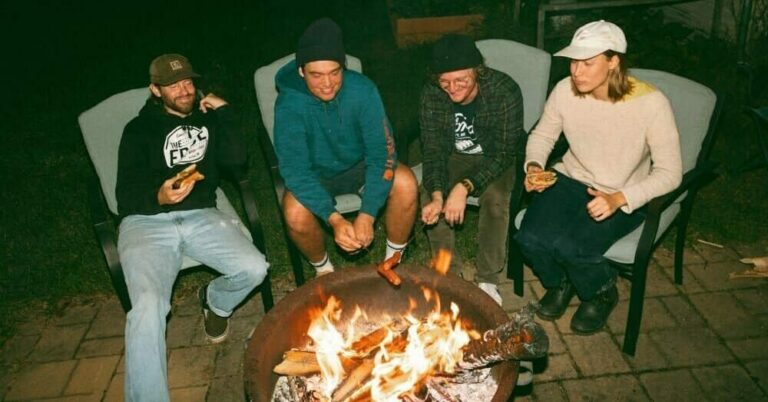
Sour Widows is a Bay Area band formed in 2017 by singers and guitarists Maia Sinaiko and Susanna Thomson, who met as teenagers at the long-running circus and performing arts camp Camp Winnarainbow. They became friends and wrote their first song together in a songwriting workshop, though it wasn’t until they started living near each other, becoming on-again, off-again roommates, that they took the collaboration seriously, eventually enlisting drummer Max Edelman to flesh out their sound. The year the band began, Sinaiko lost a partner to an accidental overdose, and Thomson’s mother was diagnosed with a rare form of cancer, which she lived with for four years before passing away in June 2021. Sour Widows provided grounding and a vehicle for catharsis, which shone through their pair of early EPs, 2020’s self-titled and 2021’s Crossing OverRevival of a Friend, the band’s just-released debut LP, is revelatory and tangled in its emotionality; the arrangements fluid yet perfectly airtight, Sinaiko and Thomson’s harmonies radiant and deeply entwined, Edelman’s drumming deftly responding to tricky dynamics. Through it all, the songs revel in the belief that every moment of pain, excruciating as it may be, can be a portal to something beautiful.

We caught up with Sour Widows’ Maia Sinaiko and Susanna Thomson for the latest edition of our Artist Spotlight series to talk about their friendship, the process behind Revival of a Friend, writing about grief, and more.


You met as teenagers at a performing arts camp in California. Do you mind sharing your memories of that time and your early friendship?

Susanna Thomson: The first time I really noticed Maia was during a talent show at the summer camp, where any kid could go up and do anything they wanted. We were probably around 12 or 13, and Maia went up and played a song. I was floored. I was like, “That’s the best song I’ve ever heard someone write.” [laughs] I wasn’t even sure if I had started playing guitar yet, maybe I had just started. But Maia was, like, really good. I just remember being so struck by their lyricism. I had never heard someone write like that before. We were just kids at this point, and I just remember being like, “I want to be friends with that person. I want to work on music with them.” Whatever that meant at that age – maybe I hadn’t even written a song yet myself, but I know that I was starting to feel interested in it at that time. Even at that age, they’ve always had it. I think the following year is when we really started to become friends.

Maia Sinaiko: Yeah, Susanna initiated collabing on a song in a songwriting class. She was like, “We should write a song together,” and I was almost a little like, “Why do you want to write a song so bad?” I didn’t get the urgency, kind of. And then we wrote a song together, and it was really fun. We ended up recording it. It’s called ‘Ocean Dream’. [laughs] It’s not bad for 13-year-olds, I feel like it’s pretty poetic. Lots of harmonies. Susanna was really motivated to practice and work on the song often, and I was a little more like, “I just want to chill at summer camp.” But we wrote the song, recorded it, and it was really fun. We had really good writing chemistry, even as kids, which is so funny to think about.

After that, we would play music together all the time. We have another friend who was at camp with us, and the three of us would do three-part harmonies, and we got really into – this was the early to mid-2000s, so indie rock and folk indie stuff was really popular, and we all really liked that kind of thing, which lends itself well to harmony. We would be singing and covering songs all the time. There were a few years where we mostly just saw each other in the summer at camp. We lived in different towns, and then Susanna started coming around a lot more on weekends or school breaks, and we’d all hang out. We were really close after that summer.

When did you start to feel equally motivated about sharing songs and writing together?

ST: That song, ‘Ocean Dream’, I think was the only song we wrote together for a long time. After that, whenever we spent time together, we were always playing music, but not necessarily writing new songs. It was a lot of singing together and showing each other things we’d been working on. I was really motivated to get that first song done because we were going to perform it, and I was very nervous about nailing it. [laughs] But we didn’t live in the same place until we were about 21, turning 22. I was living in the East Bay, and then Maia graduated from college and moved back home, which is like 30 minutes away from where I was living. Then they kind of moved in with me at the same time. We were both working service jobs and were like, “We’re in the same place for the first time, and neither of us really knows what we’re doing with our lives, but we know we really want to play music. We should just start a band.” And from that moment, literally the first moment we decided to be in a band together–

MS: We were like, “We’re going to be the biggest band.” Not even in an ego way, we were just like, “We will achieve our dreams. This is our lives now, and we’re going to figure it out.”

ST: It was so serious.

MS: I didn’t know if I was going to stay in the Bay Area. I was thinking about maybe moving, and Susanna was really driven about starting a band and insistent that we do it. I was in a weird place in life, but I feel like you pulled that out of me. We are both very goal-oriented people, I think, and we wanted to tour, travel, and play music. We wanted to meet new people and connect with bands. We were like, “How do we do that?” We just started from scratch and figured it out.

Looking back, Susanna, what made you so determined at the time?

ST: It’s funny, I think it was really circumstantial. I was really driven with the first song because I’m kind of a perfectionist; I was very anxious and wanted it to be really good when we performed it. When we started the project, that was one of the worst years of both of our lives. There was just a lot of hard stuff going on. Maia had just lost a partner. My mom had been diagnosed with cancer. There was a lot of chaos happening. I think we both felt like we had something with the potential to be special. The first shows we ever played were on a DIY tour – we booked ourselves a tour of the West Coast because we wanted to get out of the Bay Area, travel, try performing live, and see what happens. That first run was really special and also really hard. It put our friendship in this new place of being collaborators, and we had a lot to learn about being collaborators.

After that run was finished was when Maia was like, “I might want to move to Chicago.” And I just felt really strongly about it. Not having gone to college, I spent that time working and traveling a lot, realizing I wanted to play music but didn’t really have the confidence to start a band. Once Maia and I tried it out and it went well, I didn’t want to let it go. I didn’t feel like I wanted to move to a bigger city yet. So, I was like, “Nooo, don’t go, buddy. We’re finally in the same city. I love you.” [both laugh] But Maia was definitely – we’ve been equally motivated since the beginning.

ST: Yeah, I just think it’s interesting to note how you had more of an intuitive feeling about it than I did. I was a little more scattered for various reasons and not sure what I was supposed to do. It was helpful to have someone be like, “Let’s just do this. Trust me.”

As intuitive as your music sounds, the songs are often emotionally complicated and carefully arranged. As your sound and lineup has expanded, how has your shared language evolved?

MS: Because we’re both not very technically trained, I feel like we’ve kind of developed our own terminology and vocab for describing motifs or ways in which we want to play and write a song. I read that in Pink Floyd, Roger Waters and David Gilmour couldn’t read music, so they invented their own notation together. I feel like we’ve kind of done that – not written notation, but just the way we describe what this part should feel like or what will move a song forward. Those little details you’re talking about, I feel like we’ve figured out the language to describe them. But in terms of collaboration and being two band leaders, I feel like it’s taken a lot of us growing up. This band has helped me mature and grow as a person and work through a lot of hardship to become more of the person I want to be. I think there’s certain difficult moments or obstacles that you can only really work through with other people. We’ve both gotten a lot better as guitarists and songwriters, creatively we’ve grown a lot, but also as people. My communication skills have improved a lot. I think we’ve always had a kind of psychic connection, but it’s off the chain now. [laughs] It’s like we say things at the same time.

ST: To the point that it’s annoying.

ST: Yeah. Like, if we ever play a guessing game in the car on tour, people won’t play with us because we just instantly know.

It’s like harmonizing in speech.

ST: Yeah [laughs].

MS: Our brains are weirdly connected. I think my growth as a person is so interconnected with Susanna’s growth as a person and artist. I feel like it’s all very tight-knit now.

ST: I think us being best friends for years before we started the band and agreeing to make this project the biggest priority of our lives, short of family and other things – we’ve really been through everything together since forming the band, everything that has nothing to do with music as well. In many moments, we’ve been each other’s biggest support. It’s inextricable, I think, from the work we do together as musicians and artists. It’s great for the creative process because we have a unique view into each other’s experiences. I mean, Maia was the first person that got to my house the morning my mom passed away and was there for everything after that. We spent a lot of time together around the death of Maia’s partner. And touring in between and after those things – tour will bring everything up. [laughs] It’s a big part of our foundation as people and friends in this life – people put together by the stars is really how I feel.

Were you both quickly on the same page about focusing on your debut album? Was it just a matter of timing, or was there more of a discussion around that goal?

MS: We definitely wouldn’t have made the album without Max. Max joining early on helped us form the sound we have now, 100%. But this collection of songs was written over several years, since 2018 I feel like. Various ideas have changed a lot – the versions you hear on the record, like ‘Big Dogs’, for example, were updated a lot for the album to suit the collection of newer songs better and make it flow. We wanted to record the album a lot earlier than we did. We wanted to record it in 2020, but then we had to go into lockdown and couldn’t record in a studio like we had planned. We felt like the songs we had prepared at the time and had imagined to be on the record we wouldn’t be able to record ourselves. We are definitely really detail-oriented and wanted it to sound a certain way and feel a certain way, and we just weren’t confident in our ability to capture that in home recordings. So we pivoted to recording Crossing Over, which is something that wouldn’t exist if we hadn’t been in lockdown,

So much in our lives happened and changed over the course of 2020, 2021, 2022 that shaped the making of the album. One being Susanna’s mom passing away, which also affected our ability to play together and Susanna’s ability to write. There was a long period of time where we were not really able to do any of that stuff together. It was kind of this protracted process of not really being able to make the album we wanted to make. I mean, it’s been done for two years, right? Or one year.

ST: A year and a few months, yeah.

MS: It feels like a long time. But I think a lot had to happen for the record to actually be made, which is weird to think about now because it felt really hard to not be able to make it when we wanted to. But it wouldn’t be like this if we had done it back then. We weren’t good enough to make that album; we weren’t even good enough to play the songs. [Susanna laughs] Even on a technical level, we wouldn’t have been able to play it. So we needed to get better.

ST: Yeah, some of the hardest songs on the record were finished a couple of months before we recorded, or even a couple of weeks. We had this whole range of songs that have been done for a long time and then songs that were basically finished at the last minute, that we were still learning how to nail when we were going into the studio.

MS: Because we had barely played them as a full band. Like, ‘Shadow of a Dove’, which is the craziest song on the album – I love that song, but it is batshit insane, it’s really hard. That song we barely played as a full band before we recorded it. God bless Max, who played bass on it from New York – he recorded separately just because we weren’t able to finish it in time for him when he was in town. There were a lot of moving parts that went into the long process of making this album. But I think it’s all instrumental in how it actually came out.

One of the first moments that stood out to me on the album is on ‘Witness’, where the song sort of springs back to life and you sing, “The moments repeat and feedback into endlessly.” Could you reflect on that sentiment and why you took that direction with the song?

ST: Yeah, I think that was the first song I wrote lyrics for after losing my mom. It was some handful of months later, and we were like, “Okay, let’s start to try to get this moving again,” the band as a project. I was just having a lot of panic attacks because of being thrown into this new world of grief and trying to navigate that. There had been people in my life that had passed away before, but no one that close to me who was part of my identity. I think that line is about that sense of time becoming distended; this dissociated feeling. I would have this sensation of just watching moments of my life play out in front of me and in a way that it felt like they were happening out of time, not being grounded in the actual present moment. The lyric doesn’t exactly make sense, either. It becomes this more abstract sense of what the words mean, which is kind of how those feelings were. It’s like a resolution, but kind of not – we’ve just had all this loud, wall of sound moment happening, and then you’re opened up into this dreamy field.

MS: [laughs] Sorry, I’m just remembering that we wrote that riff, that really crazy riff leading into that part. We were like, “This is so crazy. Are we even going to keep this in the song?” And how funny it is that it leads into this really beautiful, reflective part of the track. It’s a really disorienting moment.

ST: It’s a weird song. We were trying a lot of new things when we wrote that because ‘Witness’ came out of a jam that we played for a while, and we were like, “We should do something with this.” Me and Maia just wrote part after part, and then I wrote some lyrics to go with an instrumental that we’d already created. So we were testing our skills in some ways. It turned into this song, and it’s a great song. But even looking back on it now and seeing the way we’re working on things, I can see clear ways that we have matured and honed our intention as writers.

That grounding you’re talking about – I hear part of that in ‘Initiation’. It’s a really gorgeous and open-hearted moment that also feels like the spiritual core of the album. How did you reach that point in the writing?

ST: That song is pretty clearly about loss and spreading my mom’s ashes in the mountains. I think the way that song embodies a lot of the heart of the record is grief, loss, and the kind of magical experiences that come along with grieving and losing someone. The track that marks the very center of the record is ‘Gold Thread’, which comes out of ‘Initiation’. That song is the only one we tracked live in the studio in one take, all together. All of the other songs were multi-tracked because we wanted to be very detailed about the way we recorded. Having the very center of the record come out of this song that is very specifically about an experience of grief, and having that song be one that we played live and was largely pretty improvisational, speaks a lot to the space we’ve all been in together in the wake of big, tough life changes; the way the project has been a touchstone for each of us and a very necessary guiding force in my life after losing the most important person to me and finding meaning in what I’m doing here at this point.

MS: I love ‘Initiation’. I love playing it live. We just recently started playing ‘Gold Thread’ live, too, because our songs are so long. If we get 40 minutes for a set, it’s hard to play everything, and ‘Gold Thread’ is a tricky song to end because we just want to keep playing it. When we were recording that song, I remember we talked about what we wanted the arc of that improvisation to feel like, and we would end up playing for six minutes – it would feel like two minutes. I think that’s the experience with a lot of our songs. We did a few different takes with different feelings, but the take that’s on the album is very meditative and subtle, and it centers the album in a really beautiful way.

You both write about grief in different ways on the album. I’d love to hear what you feel you’ve learned from each other about grief through this process – what was similar or different, verbalized or kind of unspoken.

ST: We’ve each had these massive experiences of grief that have changed our lives, and we’ve been very involved in each other’s lives during those moments, so there’s not much need for conversation. It’s naturally understood. God, we’ve just been through so much together. When I lost my mom, it really put things into perspective for me – what Maia went through, what that time was like when Maia was grieving and I didn’t really know grief yet. Retrospectively, I understood things that I don’t think – that you never can unless you lose someone. Maia, having been through something similar, was there for me in a way no one else could be when I lost my mom. I think us gaining a shared language around what it feels like to grieve made collaborating on these songs a lot easier. We both had this shared understanding of what it feels like to lose your identity and sense of self – it takes a long time to come back. I’d never really been someone who struggled much with mood swings or anger, but after that, it was such a roller coaster. Maia understood that and was there for me. We always process a lot in the moment – that’s a really big part of our friendship, untangling and parsing out our everyday lives and who we are as people. So we would talk a lot about grief and what we were experiencing, which naturally filtered into the stuff we worked on together.

MS: We didn’t have to explain what the songs were about to each other. We would talk about them, but it never felt like we weren’t understanding what the song meant or why we wrote it or how to play it. I feel like we have an intuitive sense of what a song needs based on what it’s about. Our songs on this record specifically, there’s a lot to focus on and take in. Sometimes I wonder if the lyrics are something people focus on as much as we do, because the lyrics are the heart of every song, in my opinion. They dictate the entire structure and feeling of what we’re playing. It’s nice not to have to explain any of that to each other.

You obviously wear your hearts on your sleeves in the lyrics, and you also literally use the word “heart” a lot, playing with the language of it in a very tactile way. Maia, this also isn’t the first time you’ve written about grief, and I’m curious if you could identify the biggest shift in how you write about loss and grief on the more recent songs.

MS: That’s a really good question. ‘I-90’ was written lyrically in 2017 – I think I started working on it a month or two after my partner at the time died. It was a very immediate response to trying to capture the memories we had and the feeling of being together, not wanting that to end. ‘Cherish’ was written that same year, but I worked on it for two years, and it developed and changed. ‘I-90’ and ‘Bathroom Stall’, which is on the Crossing Over EP, were written in the same time period, and that song was also an immediate response to specific events, trying to document them because now that all lives in my memory only. The songs on this album are very immediate reactions to loss – it’s the feeling of being in grief, down to having specific memories of somebody. I don’t think I really write the same way about grief anymore. When I’m writing about grief, it’s a lot more reflective and out of distance, because it’s been seven years since my partner died. A lot has changed, and I feel I’m in a very different place in my life.

I think I identified really heavily with grief. I was self-defined as: I’m in grief. I’m in loss. I’m on planet my partner is dead. That was my self, and I defined myself by that experience for a long time, because it felt like a way to keep that person closer to me and not have to move on. There was a period of time, too, when I missed that feeling – being overtaken by grief – because it means time is passing, and there’s more space between losing that person and the moments, even the moment before losing them; them being alive and being dead. Some of these songs are the final collection written in that immediate time period.

I also feel that what defines these songs isn’t just the emotion, but your interplay within them. There’s obviously devastation in Maia’s voice on ‘I-90’, but then Susanna’s voice comes in towards the end with a sweetness that creates an interesting juxtaposition. It adds another layer to the song that’s more about the bond between you two.

MS: I love that perspective. It’s interesting because it’s similar to that part in ‘Witness’ – our voices overlapping with different parts, this sweetness, reflectiveness, melancholy. There are a lot of extra parts in the bridge of ‘I-90’, similar to ‘Witness’.

What was the thinking behind the pairing of ‘Shadow of a Dove’ and ‘Staring into Heaven/Shining’ to close out the album?

ST: You know, the songs chose it themselves. There’s a funny thing that happened where we hadn’t discussed the track listing at all until we were mixing the record. The next morning, Maia and I both came up with a list on our own.

MS: I feel like I asked you, “What’s your list?” She said it, and I was like, “That’s exactly the tracklisting I came up with.”

Is it the final tracklist?

MS: I think we changed it a little because we recorded an 11th song that isn’t included on the album, so that affected the order a little bit.

ST: They just kind of fell into place on their own.

MS: We think that there’s one right way to do everything – not right way, but…

ST: Best way.

MS: Like, you walk into a room and there’s the most Feng Shui way to arrange that room. I feel like our brains work in a similar way. We’re detail-oriented but also have a wide perspective on how the whole body of work is going to sound together.

ST: I can’t specifically remember why we felt ‘Shadow of a Dove’ belongs there; it just does.

MS: I feel like it’s this dark, epic track, and ‘Shining’ is an epic, light, bright track.

ST: You get the most contrast at that point in the record, and we love contrast, clearly.

Could you share one thing that inspires you about each other, be it on a musical or personal level?

ST: There’s so many things. There are ways in which we’re very different, and I think our differences are a big part of what inspires each of us.

MS: I think Susanna is really good at trusting her intuition, and I second-guess myself a lot. I mean, we both second-guess different things, but I feel like you can put aside the doubtful voice sometimes in a way that I really can’t. Having that in a collaboration is so helpful – in any creative practice, you’re constantly questioning what you’re doing. I actually think pursuing music is a lot like pursuing a religious path. You have to have a lot of faith, and people might not always believe in what you’re doing or be kind of confused about why you would dedicate your life to it. Having someone in the actual project who’s like, “Don’t worry about that,” is very helpful for me, as someone who is constantly going back and forth in my mind about the right way to do something.

ST: Something that Maia really inspires in me, something that I feel like I learn a lot from them all the time…

MS: Oh god.

ST: [laughs] No, it’s good. Maia doesn’t let external circumstances or what people want you to do affect what they know is best for themselves. At times, I can fall into people-pleasing or worrying too much about all the different desires or social dynamics that people have that are maybe contributing to a choice we’re making. Maia is really good at being clear and saying, “No, this is our thing. We have to choose ourselves and what’s best for us.” I’ve learned a lot about putting myself out there more, being really clear and direct with communicating, and it has always served us well. The combination of our strengths – and our weaknesses – leads to a beneficial collaboration.

MS: It’s symbiotic.

ST: Yeah, we have a good balance of perspectives. We both learn so much from each other, and I think the only way that has happened is because we are both dedicated to self-reflection and self-growth. And we’re both really good listeners.

MS: To each other.

ST: Yeah, to each other [laughs]. When you form a project with someone – or a business, honestly, in many ways – there will always be stuff that comes up. It’s forced us, in the interest of our shared goals and dreams, and it’s only going to continue if we create this space for each other to feel vulnerable.

MS: I mean, that’s why bands break up all the time – there’s such a hilarious trope of bands always fighting and having interpersonal drama. They just can’t stand each other, and that’s definitely not the case with our band. We’re very close friends, but it has been a long journey of figuring out how to balance our personalities and personal growth and maturing. Susanna and I are both lucky to have this natural chemistry as people, and part of that is being really different.


This interview has been edited and condensed for clarity and length.

Sour Widows’ Revival of a Friend is out now via Exploding in Sound.

Jessie Ware and Romy Team Up on New Song ‘Lift You Up’

Jessie Ware and Romy Thave joined forces for a new song, ‘Lift You Up’, which they debuted at Glastonbury on Saturday. Check it out below.

“I was so excited to be in the room with my friend and to see how she works and to hear her beautiful voice,” Ware said in a statement. “I’m so proud of the record. It’s a song that’s about both of us being too hard on ourselves, and not believing enough in ourselves. I think anyone can relate to that. There was a wonderful serendipity about the fact that she worked with Stuart Price on the last record too.”

“It’s going to be so exciting for people to hear this and people to hear it live at Glastonbury,” Ware continued. “It seems to be a theme of mine that I now debut songs at Glastonbury and I’m excited for everyone to hear us celebrating each other.”

Romy added:

I’ve been a fan of Jessie’s music for a long time and it was amazing to finally work together after many years of friendship.

Sometimes we all need a friend there to lift us up and help us see things differently. A memory comes to mind of Jessie and I backstage at a festival when I was just starting to play my solo music live and I was still figuring things out. She hyped me up and helped me believe in myself when I was feeling unsure. The conversation we had really stayed with me and was definitely in my mind when we were writing the lyrics.

It was so wonderful working with Stuart Price again after we worked so closely on my album and with the brilliant Clarence Coffee jr for the first time. We wanted this song to be uplifting, celebrate togetherness and I can’t think of a better way to share it with everyone than at Glastonbury.

Jessie Ware’s latest studio LP, That! Feels Good!, made our list of the 50 Best Albums of 2023. Last year, Romy released her solo debut, Mid Air, and recently dropped the song ‘Always Forever’.