Andrey Kazantsev is a contemporary sculptor whose creations have appeared in numerous art collections worldwide. Represented by Katerina Morgan Horse Polo Art Gallery, Kazantsev works with various metals, including steel and iron, uniting strict geometry with impeccable flat-faced architecture that brings out a distinctive charm. To talk about his work, Andrey joined us for an interview.
Hi, how are you and how is the art world treating you?
Hello, I’m great, thank you. Actually, I consider myself to be both a technical expert and an artist. I try to go beyond just engineering and creating familiar objects in unusual geometric shapes with unique character and personal style.
Your work is characterized by the transformation of flat, cold sheets of metal into three-dimensional, “animated” animals. Can you describe your process and how you imbue these sculptures with unique personalities?
This is how the procedure appears: On the computer, I start by making a 3D design. I’m not really sure how my sculpture will turn out at this point. I just begin moving points about in space and drawing new boundaries and lines. In order to create a pleasing blend of geometric forms, I spin the model and examine it from various angles. These are often big faces that are triangular, quadrilateral, or pentagonal in shape. What I’m attempting to make or observe is difficult for me to define precisely. It’s just that at a certain point I realize that this is it.
After that, I export this model to another application and divide it into components. I consider where the welding will happen, how the assembly will go, and where it is best to bend the metal. In order to have access to all interior corners during assembly, I carefully consider the sequence in which the body components will be welded. I utilize metal sheets ranging in thickness from 1.5 to 3mm, depending on the size of the sculpture. The program takes all of this into consideration to ensure that the components fit together precisely after being laser-cut.
I obtain the laser cutting files as a consequence, and then send them for cutting. A CNC sheet metal bender is used to bend the cut pieces. Then we go on to assembly and welding. After welding, all the seams are ground so that no one could not understand where the joint and where the bend. This is the most painstaking part of the work. The final stage is surface sanding, polishing or painting. I like to experiment with different metals and processings. In addition to regular steel and stainless steel, we work with brass, Corten steel and even titanium.
Each of your sculptures is unique and has a distinct ID found in a model certificate. Can you explain the significance of this ID and how it contributes to the uniqueness of each piece?
Over the past years, both my laboratory and my artwork have experienced tremendous growth. I made a special 3-D model with my own distinctive design, and now I’m working on steel sculptures with the assistance of several artists. Each order demands a lot of work, and we always complete each sculpture with meticulous attention to every little thing.
In my studio, skilled artisans create each sculpture from start to finish. Each sculpture has a unique number that allows me to track the welders and grinders who worked on and the time. A series number is also added to the sculpture if it is intended that it will be manufactured as a limited edition. In addition to the number, each sculpture is stamped with my signature, which means that I personally inspected the sculpture.
Your works blend well with contemporary architecture and outdoor landscapes. How do you consider the environment in which your sculptures will be placed when creating them?
My primary thought when creating a sculpture is not only about the landscape where it’s going to be placed; instead, I mostly concentrate on my feelings of liking or disliking what I see on the computer screen.
Your sculptures are noted for their strict geometry, faultless flat-faced architecture, and simplicity. How do you balance these elements with the need to capture the harmony and beauty of animals?
I might add that I am not trying to exactly replicate and make an exact copy of the object. I try to convey the image with a minimum number of facets. To achieve recognizability by adding small details is too easy. But it’s tricky because too abstract artwork will not be perceived well. So I have to find a balance.
If you could give any advice to any aspiring artists, what would it be?
My biggest piece of advise is to get started doing what you enjoy and to involve others in the process. Don’t think about it, though, and don’t worry about what people will say. The most crucial thing is to have pleasure in the process. It is essential to comprehend what it is that makes you so happy. Something for which you are ready to give up everything and do only this. It’s experimenting for me. When I get an idea, I am prepared to focus solely on it, forgoing food and sleep and losing track of everything else.
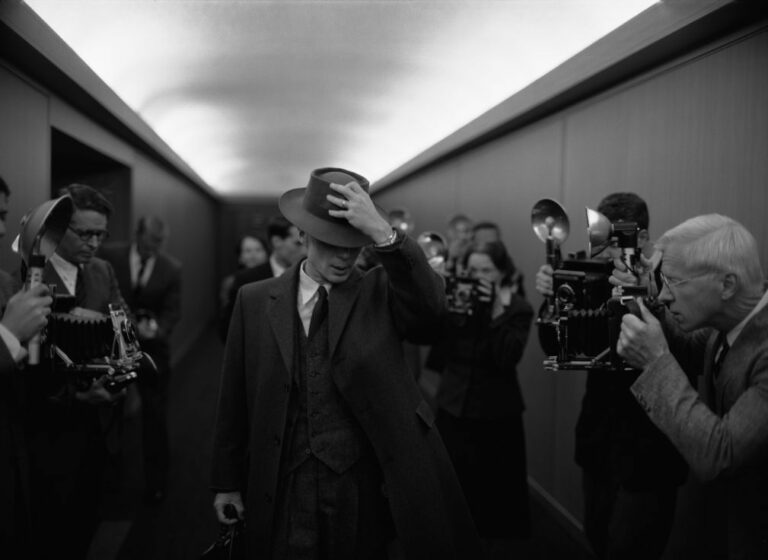
With the hype surrounding Oppenheimer capturing the attention of cinema enthusiasts everywhere, the watch community has also been buzzing, particularly regarding the film’s showcase of Hamilton watches. Hamilton boasts an illustrious cinematic history, first gracing the silver screen in Marlene Dietrich’s 1932 film Shanghai Express. Over the years, Hamilton has maintained a robust partnership with Hollywood, appearing in iconic films like Men in Black, James Bond: Live and Let Die, and 2001: A Space Odyssey, among others.
It’s also worth noting that Hamilton’s collaboration with Nolan isn’t a recent development. Previous films from Nolan, such as Tenet and Interstellar, have prominently featured Hamilton watches. So, before we bore you, let’s delve into the standout watches in Oppenheimer.
Hamilton Cushion B (1930s)
Designed with a distinctive cushion shape, the Hamilton Cushion B is a testament to the brand’s legacy of producing uniquely-crafted timepieces since its inception in 1892. The watch highlighted in the film appears to be a 14k gold, complemented by a leather strap—a design Hamilton originally marketed as the ideal companion for the travelling man. The watch boasts a luminous dial powered by a 981 movement, later updated to the 987 movement around 1926.
In the movie worn by J. Robert Oppenheimer.
Lexington (1940s)
Another timepiece Oppenheimer wears is the Lexington, an Art-deco-like piece with a rounded bezel and a beautiful black dial held together by a grey leather strap.
Endicott (1940s)
The last of the pieces worn by Oppenheimer is the Endicott which was introduced by Hamilton in 1938 and concluded in 1948. In the movie, the watch features a gold case with gold numerals, bringing out a winning combination. It is also adorned with an exquisite brown leather strap.
Others
Before we finalise the list, quite a few other Hamilton watches are worn in the film. As an example, Kitty Oppenheimer wears a stunning Lady Hamilton, a piece you can still purchase today and which was also featured in Nightmare Alley (worn by Mara Rooney). Lieutenant General Leslie Groves also wears Hamilton in the movie, most prominently the Military Ordonance, a military watch that would fit any modern watch collection, even by today’s standards. Alongside that, Groves wears a Piping Rock (1920s) dress watch that emulates class.
Doss has unveiled a new one-off single, ‘Drugs’. The track has been a longstanding staple of the New York-based producer’s DJ sets, and it’s now got an official release. Check it out below.
‘Drugs’ flips the 2018 Uffie track of the same name. “‘Drugs’ plays with the relationships between extremes; joy and shame, indulgence and affliction, boredom and euphoria,” Doss said in a statement. “Friends who have left but whose memories live on. Driving around, nothing to do—getting into trouble or good ol’ fun?”
Earlier this month, Doss shared her remix of Caroline Polachek’s ‘Bunny Is a Rider’.
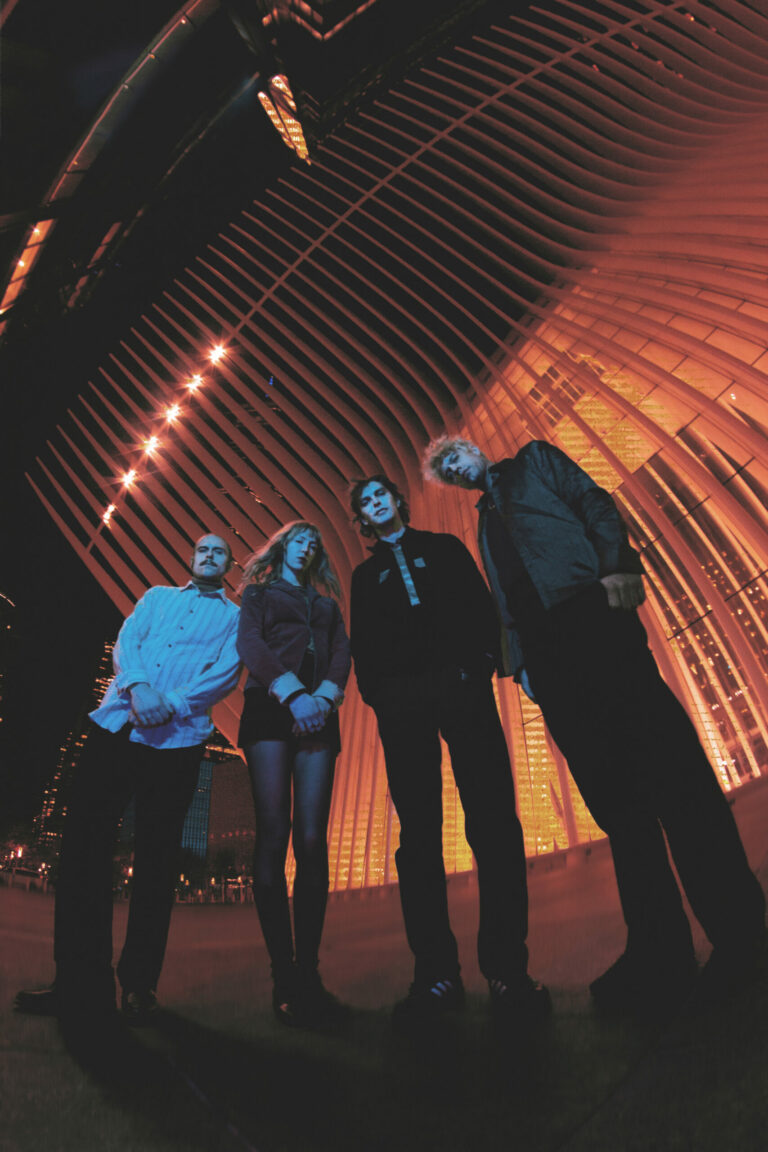
Strange Ranger started out as the duo of guitarist Isaac Eiger and bassist Fred Nixon, who released their full-length debut as Sioux Falls, Rot Forever, in 2016 before changing their name to Strange Ranger at the end of that year. Now split between New York and Philadelphia, the group has expanded into a quartet featuring bassist Fred Nixon, singer Fiona Woodman, and drummer Nathan Tucker. Though they have always pushed their sound in different directions, their fourth record, Pure Music, out today, is their most adventurous and larger-than-life to date. Infusing the timeless familiarity of shoegaze with influences from house, disco, and trp-hop, the LP builds on the promise of their 2021 mixtape No Light in Heaven, smoothing out its rougher edges and presenting an abstract stream of ideas in a more cohesive, concentrated form.
Although songs like the opener, ‘Rain So Hard’, hint at the dissolution of Eiger and Woodman’s five-year romantic relationship, the recording process behind the album, which took place in a cabin in upstate New York during a blizzard, felt like their most collaborative to date. The results are both disorienting and enrapturing, melancholy yet decadent, slipping into a space that feels simultaneously out of reach and achingly present. The vocal effects, samples, and odd textures that permeate the album don’t clutter but enhance its cinematic qualities and the interplay between the band’s voices, evoking fragmented memories that distort and wrap themselves around each other. “The rhythm of the club might lead me somewhere,” Eiger sings, but you can’t quite place it, a longing for a time you’ve never really experienced and can’t be sure has even existed. As the album continues its search for transcendence, though, the feeling that seeps through in those rare breakdowns – blurry as it still may be – is euphoric, shared, and totally real.
We caught up with Strange Ranger for the latest edition of our Artist Spotlight series to talk about their memories of recording Pure Music, their collaborative relationship, the idea behind the title, and more.
Pure Music emerged from the same sessions as No Light in Heaven, which stitched together some of the different styles that also find home on the new album. How do you see the relationship between those two projects?
Nathan Tucker: I guess you could say No Light in Heaven was like the B-sides, but we just released them first.
Fred Nixon: Yeah, sort of a reverse B-sides situation. In a way, making the mixtape was us figuring out how to make the album afterwards, entering into that new territory and then honing it a bit more. And then we put together the songs that that felt like a unit for the record, whereas the mix tape is totally scatterbrain.
Was there any overlap between the songs, or was there a clear trajectory from one project to the next?
NT: We pretty much had all the songs at the same time. We pretty intentionally wanted to make one thing that was really all over the place and one thing that felt way more cohesive. Definitely the stuff on Pure Music changed a lot as we are making it.
Isaac Eiger: The initial sessions occurred at the same time. We had somewhere between demos and actual songs for everything, and then we really made No Light in Heaven, and then we really made Pure Music. We wanted the mixtape to feel really chaotic, like you were sort of being pulled in all these different directions. And there was still this throughline, but the throughline was imposed on you as a listener, like, “None of this shit makes sense, but we’re gonna force it to make sense for you.” But the new one, we didn’t want it to be less crazy or interesting or whatever, but we wanted it to feel like it was one piece of music, you’re listening to it and it all goes together.
What originally inspired you to go in this experimental direction?
IE: I think we’d just gotten really bored of what we had done. We were listening to weird music, and we’ve always just made stuff that we want to listen to.
FN: It’s funny, people talk about the mixtape being a departure from our previous sound – I understand why it’s more striking because there’s more electronic elements and stuff like that, but I feel like every time we make a record, we want it to be different from the last thing. To me, the first three records we made all feel different from each other.
NT: And we’re just way better at doing things than we used to be, so those differences are going to be more stark.
With this departure, was it more of a challenge to familiarize yourselves with new production techniques, or to integrate them into your sound?
IE: We just got really into making music like that. We got really into dance music and ambient music, so that’s what we were making. It would have been a challenge to make a record where we werent’ doing those things. That would have been really boring and horrible.
NT: If what you’re asking about is the difference between learning how to do something and then actually applying it, I think the enthusiasm for the cool shit we were trying out – sometimes we would definitely take it too far. I remember there’s a version of ‘It’s You’, the last song on the mixtape, where there’s this insane, really bad UK garage bridge that sort of sounds like nightcore or something. [laughs] We were all psyched on it for like 20 minutes and then we’re like, “Oh, this is really not good.”
IE: The problem is if you push it too far, it’s like hyperpop, which we’re not into at all. There has to be some kind of aesthetic boundary in what you’re doing so it doesn’t just feel totally mindless.
NT: Often Fiona is the one to be like, “Yo guys, what we’re playing is not…” [inaudible due to laughter]
Fiona Woodman: My duty, gotta keep my boys in check.
IA: There’s definitely shit on the stuff we made where I’m like, “Fuck, we shouldn’t have done that.” But it’s like, you know what, it got mastered, it’s on vinyl, so…
FN: I mean, everything that you make you look back on and would do differently at different points in time.
You recorded the album at a cabin in upstate New York with a blizzard raging outside. Was that where the initial sessions took place? What are your memories of that time?
IE: That’s where most of the early sessions took place. It was just really crazy and intense. We were staying up super late. I felt pretty psycho a lot of time.
FW: I feel like most of the actual progress on the record was between 10:00 and 4:00am. We were literally snowed in.
IE: We read in some Talk Talk interview about how when they made Spirit of Eden and and Laughing Stock, they would record for a really long time, like, some guy playing flute or something, and then they would take a five second clip of it and fade that into the track and fade it out. So we were doing that with the computer and a bunch of other weird shit. We were just having tons and tons of ideas and throwing most things out.
FW: I wasn’t like super involved in the records previously, but it was definitely a very different way of making music. Isaac and Fred would bring outlines or bones of the song, and then we would all riff on ideas. Definitely the more dance sections of the songs were really fun, just really jacked on caffeine at two in the morning. [laughs]
FN: It was a very immersive experience. I was making a drink that I was calling psycho sludge, which was just coffee spiked with brandy, staying up all night and throwing ideas at the wall.
NT:It was really thick French press coffee, but made with pre-ground coffee that was too thin for French press, so it was kind of seeping through the press and leaving this centimeter-thick layer of sludge at the bottom of the cup.
IE: Fred was feeding us undercooked chicken.
FW: And I was filming the entire thing. I have hours and hours of everyone – what is that Mortal Kombat song?
IE: Oh yeah, I fucking love that song. Just the theme song from Mortal Kombat.
FW: Everybody’s got their mug full of disgusting brandy-spiked coffeegoing nuts to that one.
FN: In certain ways, I remember it as almost annoying, being totally immersed in that studio and living environment being all the same thing. Because you’d be like, “It’s 4:00 am, I’m going to bed now.” And then somebody would have a breakthrough or something.
FW: That was usually me. I was like, “I can’t do it, I’m falling asleep.” And then I would wake up at like three in the morning, walk out of the room to you guys just looking insane – like your eyes are bloodshot, you look back at me and you’re like, “Fiona, we made a breakthrough!” And then I listen to it and I’m like, “This is not gonna work. This is true insanity. What the fuck have you done?” And then the next morning we’d come back to it and be like, “We need to dial it back a little bit.”
IE: I wish I could hear a version of the record with all the horrible ideas still there. [all laugh]
Strange Ranger’s Version?
IE: Yeah, literally.
FW: The Strange Ranger mix. Psycho Sludge Mix.
FN: I remember one specific example of that. It was a mixtape song, not an album song, but that scenario where Fiona woke up and went to go to the bathroom or something and comes out and we’re like, “Fiona! We’re out here double-chorusing the end of ‘It’s You’!” It’s like the meme with Charlie from Always Sunny in the mail room. And then the next day it was a single chorus.
FW: I remember that also with the end of ‘Blue Shade’, the hardcore dance section. I was like, “I don’t think this is gonna work, you guys.”
FN: Fiona said it was sounded like Muse, and then we had to change it. We were in denial about it at first, but you were right.
IE: That really hurt my feelings, but it was totally the right decision. [all laugh] I feel like that song was, “It’s like Muse, it’s like Muse, it’s like Muse,” and then when we were finishing the record upstate, I remember being like, “Fuck it,” and then we chipped a ton of things out and it’s like, “Now it works.”
NT: I think that’s sort of illustrative of the weird vibe of making it, because not only did the whole thing spring out of these formless late night session, but you’re painting with such a broad brush a lot of the time, making music on a computer, that there’s going to be all these really dramatic decisions being made. And then other people in the band are just gonna be like, “No, that actually kind of sucks,” and no one can really get their feelings hurt about it because you’re just trying to do something that is so unlike anything you’ve tried to do before. It didn’t really feel a way I had made music with other people before, ever. It felt totally unconnected to anything else that was going on in my life at the time in a really nice way.
Isaac, you mentioned this Talk Talk interview, and in a press release you also cite a quote by Burial. How does reading about other people’s approach to music inspire you collectively?
IE: The way that musicians and artists we like make their work is definitely inspiring, especially if you’re experimenting with different ideas. It’s like a torch far away and it’s all dark, and you read this interview with somebody and you’re like, “Oh, I know what to do now.” Also, hearing about people’s headspaces when they made things that we really care about, it just tells you a lot about how to do the things you want to do, why this person did this, and how you can do your own thing.
I wanted to talk about the term “pure music,” which comes up on ‘She’s on Fire’ and gives the album its title. To you, is it tied to escapism? Is it something you’re after?
IE: It’s both wanting escape and the exact opposite. It’ wanting to make the present moment feel infinitely more intense than it feels, or infinitely more calm, or whatever. You’re where you are, and it feels lacking in a way that you can’t describe, so you want it to feel another way. It’s not escapism in the way that you watch a TV show to get out of your horrible life. It’s escapism in the way that having your favorite song come on just annihilates your entire sense of time for a few minutes. It’s wanting to break through to something more, but it isn’t actually anything else than what’s happening right now.
Do you feel like you’ve all had different emotional experiences and visions of the album throughout the process?
NT: Making music collaboratively can be in a weird way lonelier than not, because what the record means to Isaac, what the record means to Fred, is different on some level than what it means to me. Those experiences aren’t the same thing. I think about this with the last song on the record, ‘Dazed in the Shallows’, where I have this iPhone video from those early sessions of us all dancing around like maniacs to that song right when we figured out what it was. Now, when I listen to that song, it has all these all these emotional connections and undertones for me. And I’m sure it has all these things for everyone else, but those things are different. There’s kind of an inherent loneliness about that, just knowing that the way something feels for me is not going to be exactly the same as it feels for everyone else. But at the same time, that, I think for all of us, is one of the more euphoric songs to play in the set, and something we all feel really proud of making. That moment of us all dancing, it was really the opposite of loneliness. It’s like both of those things at the same time. Which I think art always is, right? Most of my favorite art is about that ontological problem of just: How do I connect with other people in a way that is meaningful when I can never really know what’s inside them?
FW: And that feeling of hearing that one part of that one song, when the chorus hits for the first time, and you literally get goosebumps everywhere – chasing that fleeting feeling always.
NT: Where you’re like, “I fucking love my life, and I love these people I’m with.” And you know, I don’t always feel that way.
Can you each share something that you love about the rest of the group?
FN: Something that comes to mind that I’ll offer that applies to the group, which I feel like is a very us thing, is our ability to endlessly engage in painfully pedantic arguments about food. [all laugh] We all have extremely strong opinions about the silliest things, and I feel like we get used to arguing about, like, what the best fry sauce is.
FW: Spirited discussions.
FN: Yeah. It’s funny, because I feel like I’ll take that dynamic outside of the band, and someone’s like, “Why are you arguing with me about ranch dressing?”
FW: I literally spend more time with you three than my family, even. We spend so much time together on tour and making music together, so you end up having a lot of really weird discussions about what Skittles flavor is the best or something silly.
NT: Not even in the context ofyour original question, because it sounds like I’m just like scraping the bottom of the barrel for things I like about these people I spend all the time with, which is not true, but I’m often struck by how compatible our ways we like to spend time are. Obviously, when you’re in the van with someone every waking moment for a month or whatever, it ceases to feel that way a little bit after a while. But then I’ll just hang out with other bands, or just other groups of people that do stuff together, and I’m like, “Damn, it’s pretty easy with us.” [laughs]
IE: Seeing other bands is really interesting. People do things so differently, and we’re just so used to how we do things. But it’s always weird. It’s like seeing another family.
This interview has been edited and condensed for clarity and length.
Tony Bennett, the legendary singer of jazz and pop standars, has died at the age of 96. Bennett’s publicist, Sylvia Weiner, confirmed his death to the Associated Press, adding that he died in his hometown of New York City. No cause of death has been reported, but Bennett had been living with Alzheimer’s disease since 2016.
Born Anthony Dominick Benedetto in Queens, New York, on August 3, 1926, Bennett won 20 Grammy Awards, including the Lifetime Achievement Award. He released more than 60 studio albums and sold over 50 million records worldwide, appearing on the charts every decade of his recording career.
The son of Italian immigrants, Bennett attended Manhattan’s High School of Industrial Arts and eventually landed a job as a singing waiter. He was drafted into the US Army in 1944, performing in military bands in Europe before returning home to study the bel canto singing discipline at the American Theatre Wing school on the G.I. Bill. After playing his first night club show in 1946, he caught a break in 1949 when Bob Hope saw him opening for singer and actress Pearl Bailey at a Greenwich Village club. Hope gave the singer his stage name and helped him land a recording deal, and signed to Columbia Records, Bennett released his first single, ‘Because of You’, in 1951.
Bennett’s signature song, ‘I Left My Heart in San Francisco’, written by George Cory and Douglass Cross, was released in 1962, winning a Grammy for Record of the Year. His deep love of jazz led to collaborations with musicians including Herbie Mann, Art Blakey, and Nat Adderley, and he made two albums with the Count Basie Orchestra. His 1994 MTV Unplugged special, which featured appearances from Elvis Costello and k.d. lang, was a surprise winner for the Album of the Year Grammy.
In 2011, Bennett recorded a duet with Amy Winehouse of ‘Body and Soul’, which was Winehouse’s final recording. In 2014, Bennett and Lady Gaga joined forces for their first album of duets, Cheek to Cheek. It was followed in 2021 by Love for Sale, which broke the individual record for the longest run of a Top 10 album on the Billboard 200 chart for any living artist. In August of 2021, a week after his 95th birthday, Bennett joined Lady Gaga for a pair of farewell concerts at New York’s Radio City Music Hall.
Bennett became a best-selling author, recipient of the United Nations’ Citizen of the World award, Kennedy Center Honoree, and an NEA Jazz Master. He marched with Dr. Martin Luther King Jr. from Selma to Montgomery and co-founded the Frank Sinatra School of the Arts in Astoria, New York. He was also a painter, with one of his works, Central Park, hanging in the Smithsonian American Art Museum in Washington, D.C.
The latest offering from Netflix’s dive into the world of sports documentary series, Quarterback couldn’t have come at a better time to build some excitement leading into the NFL season. Taking a look at three very different QB’s at varying stages of their careers, there was a surprising amount of depth into their lives, loves, and limitations.
It certainly feels like the NFL is mired in controversy right now with several players facing suspension this off-season, so it’s refreshing to take a look backwards and remember what we actually have to look forward to in a couple months.
And there is a lot to be excited about, especially when the final episode wraps up with a recap of the game winning drive in Super Bowl 57.
Similar to Netflix’s Drive to Survive and Break Point, Quarterback will also likely have a significant impact on the NFL betting industry, as there are more betting sites for Americans than ever trying to get prepped for the upcoming football season.
And while the series doesn’t explicitly discuss how much sports betting has influenced the game, it’s silly not to think that a focused series on pivotal players may shift fans into thinking they have an insight into why teams are winning. This was certainly the case when it came to how sportsbooks began highlighting specific golfers after Full Swing aired.
But oddly enough, the actual quarterbacks in the series may be the most disappointing part. While there is no doubt following a player like Patrick Mahomes around is exciting, both Cousins and Mariota just don’t have the same appeal, particularly Mariota who, without a strong season to back him, seemed almost forced to be an integral part of the series with too heavy a reliance on his personal journey without the on field accolades to support his presence in the show.
That being said, Cousins has had a strange relationship with the public, and while he may not have become any more likable through the series, there is no doubt that watching Quarterback will give a serious sense of appreciation to his dedication and desire to win.
Unlike Drive to Survive and even Break Point, there was a distinct lack of on screen rivalry where we actually could get a feel for how these athletes work against their biggest challenges and sporting opposition. And, there is a lot less insight from the players that could make the game footage more dynamic from the perspective of a key player.
Sure, the talking head segments provide some interesting details, but no one is better placed than the QB of a team to really dissect the exact moments on the field and they need to react – we just wanted more, and even if Mahomes filled the gap with this for SBLVII, there were plenty of other moments through the season when more on field commentary could have been highlighted.
But if the main purpose of Quarterback was to actually humaise these NFL stars, it scores, and we can’t discount that seeing the actual lives and personalities of the players off the field is interesting, just in a different way.
We did say that the QBs in the show were the most disappointing part, and while this may be true for the actual show, seeing how their respective careers are going to pan out in the next NFL season is definitely interesting, as they are all completely spread out over what can be expected.
Everyone who tunes into Quarterback will definitely be waiting to see if Mariota gets a chance at the Eagles if Hurts is forced off the field, or if Cousins can finally make some magic happen in the playoffs, and of course if Mahomes is going to add yet another Lombardi Trophy to his collection.
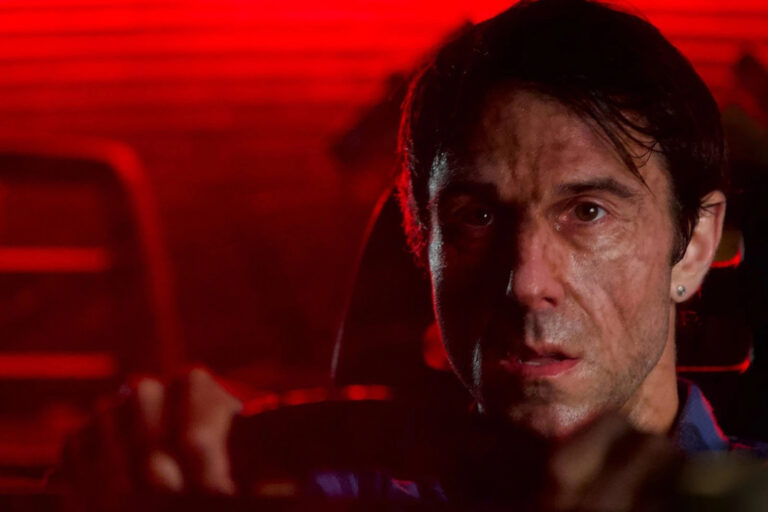
Larry Fessenden has a long and storied history with classic monsters. Habit (1995) – probably his masterpiece – is perhaps the finest film to use vampirism as a metaphor for addiction, as a hopeless alcoholic (played by Fessenden himself) falls under the thrall of an enigmatic bloodsucker amongst the neon and noise of ’90s New York. Just a few years ago, he put his inimitable spin on Frankenstein’s monster in Depraved (2019), which deftly mixes pathos with politics in a film simultaneously about losing one’s sense of self and the irrevocably broken American healthcare system. It’s no secret that the multi-hyphenate filmmaker has long wanted to complete a monster trilogy of sorts by turning his hand to a werewolf story – a lycanthropic dream he has finally realised with Blackout, an adaptation of his Tales from Beyond the Pale episode of the same name (2019). And it was worth the wait; Fessenden’s tale of a cursed man trying to make peace with a crumbling world stands as one of the finest werewolf movies of the twenty-first century. Our Culture reviews the film here as part of its selection from the 2023 Fantasia International Film Festival.
It’s clear from the very beginning of Blackout that Larry Fessenden possesses a deep love for classic werewolf movies. This is, in many senses, a fairly traditional tale of lycanthropy in the vein of The Wolf Man (1941), a film for which the filmmaker evidently has great affection; the action takes place in Talbot Falls, a small town in Upstate New York named for Lon Chaney Jr’s tragic werewolf (and Chaney Jr himself is namechecked later in the movie). There, we find artist Charley Barrett (Alex Hunt), who has contracted the werewolf’s curse before the film even begins. Struggling with his newfound affliction, reeling from his father’s death and recently separated from his partner Sharon (Addison Timlin), he has picked up an old drinking habit and is spiralling out of control. Though he keeps talking of “leaving town,” he is driven to stay by the deep injustices he sees in Talbot Falls. He is particularly enraged by Sharon’s father, Hammond (Marshall Bell), a property developer who is causing untold environmental damage and exploiting migrant workers in the process of building a luxury tourist resort. Worse, Hammond is stirring up hatred against a group of his ex-employees by suggesting that one of their number, Miguel (Rigo Garay), is likely responsible for a spate of grisly murders that have been committed in the town – murders that Charley knows that he himself is probably responsible for.
In some respects, then, Blackout feels like the meeting of The Wolf Man and Habit. The Wolf Man is, essentially, the story of a man incapable of suppressing the monster inside himself – or the “beast within,” to use a phrase often associated with werewolf fiction – and here Fessenden uses that theme to comment on the self-loathing that often comes with alcoholism (hence the film’s title). Like Sam in Fessenden’s vampire film, Charley drinks because he can’t bare the weight of a lifetime of trauma, and the symptoms of werewolfism he experiences – memory loss, fits of unbridled rage, a total lack of self control once the monster takes hold – all function as metaphors for sinking ever deeper into the bottle. And, of course, when Charley isn’t under the influence of the wolf (or, in other words, when he sobers up), he simply can’t live with the terrible things he has done.
Charley has only one outlet for his anguish: his art. Not coincidentally, that is something he has in common with Fessenden, who has always been a political filmmaker. Much like Depraved, Blackout is a very personal, intimate story – but one that also has much bigger things to say. This is not just a werewolf tale about the “beast within” but the “beast without”; after all, Charley might be disgusted with himself, but he is also deeply disgusted by all of the ugliness he sees in his community, chiefly racism, ruthless individualism, unchecked greed and a total lack of care for nature. In this regard, Blackout shares themes with several other Fessenden movies from No Telling (1991) to The Last Winter (2006), but it also draws on a particularly political strand of werewolf horror in which insatiable beasts lurk in small-town America. See Silver Bullet (1985), for example, in which a werewolf priest feeds on his flock, or Late Phases (2014) – another film produced by Fessenden’s production company, Glass Eye Pix – in which a retired veteran finds a werewolf lurking in a retirement community.
However, both Silver Bullet and Late Phases are set in essentially conservative communities; Blackout, on the other hand, takes place in an ostensibly liberal town in Upstate New York. So this is a thoroughly contemporary werewolf movie that skewers the lycanthropic nature of modern America, in which partisan politics are basically meaningless and even the “good guys” are indistinguishable from the “bad guys” beneath their masks of civility. Just as Charley turns into a ferocious beast on the three nights surrounding a full moon, it doesn’t take much for the people of Talbot Falls to start tearing each other to pieces. And Blackout makes clear that, long before a werewolf entered their midst, the members of this seemingly idyllic, liberal community have been turning a blind eye to wanton corruption, environmental devastation and worker exploitation simply because it benefits them financially.
Driven by an excellent central performance by Alex Hurt (aided by frequent Fessenden collaborators such as Barbara Crampton, Joe Swanberg, John Speredakos and James Le Gros in scene-stealing supporting roles), Blackout thus emerges as one of the most intelligent and interesting werewolf movies of the twenty-first century. It’s also a pleasingly retro one; there’s a clear love here for the wolf men of pre-1980s cinema, with Brian Spears’s special make-up effects recalling the hirsute horrors of not just The Wolf Man but Werewolf of London (1935), The Werewolf (1956) and Moon of the Wolf (1972). Not since Rick Baker’s minimalist work on Wolf (1994) has there been such a satisfying return to the classic “wolf man” look pioneered by Jack Pierce; the special effects particularly shine during the film’s all-important transformation sequence (which does not disappoint despite the film’s low budget). All in all, Fessenden’s werewolf movie was more than worth waiting for.
“I think ‘fetišh’ is a great intro into the tiny world of this EP,” spill tab said in a press release. “This song is so unapologetic and confident and it’s these things that I feel like I’m most often not, but I want to be. It’s this sort of make believe conversation with someone that’s being delivered in a very dom, assertive way that I fantasise I could one day authentically pull off. In reality it’s a terrifying thing to ask of someone to welcome every part of you, but this song is sort of a brave fantasy of not caring about how I’m received by someone whose perspective I care a lot about.”
“The songs on the EP span across almost 2 years – I feel like I’ve grown more comfortable in my skin and a lot as a producer during this time too, which is also a testament to the support and help of my friends and collaborators,” she added. “I made a lot of these songs during a time in my life where so much was changing, and with a lot of good evolution also came self doubt, imposter syndrome and loneliness. The lyrics talk about fantasies and hidden feelings and private thoughts. I’ve found that channelling this inner dialogue through alter egos in my music makes them more accessible to me in real life. In these sorts of songs I write up versions of myself I wish I could be, it might be my attempt at writing myself into something new.”
Ethel Cain has officially released ‘Famous Last Words (An Ode to Eaters)’, which she uploaded on SoundCloud late last year. Inspired by Luca Guadagnino’s film Bones and All, the track arrives with an accompanying video Hayden Anhedönia co-directed with Silken Weinberg. Check it out below.
‘Famous Last Words (An Ode to Eaters)’ is part of Givenchy creative director Matthew William’s new collaboration project 1017 ALYX 9SM. It marks Cain’s first new music since the release of her debut album, Preacher’s Daughter, which we named our 2022 album of the year.
Blur are back with a new album, The Ballad of Darren, out now via Parlophone. The follow-up to 2015’s The Magic Whip was previewed by the singles ‘St. Charles Square’ and ‘The Narcissist’. “This is an aftershock record, reflection and comment on where we find ourselves now,” Damon Albarn remarked in press materials. “The older and madder we get, it becomes more essential that what we play is loaded with the right emotion and intention,” Graham Coxon said. “Sometimes just a riff doesn’t do the job.” Bassist Alex James added: “For any long term relationship to last with any meaning you have to be able to surprise each other somehow and somehow we all continue to do that.”
Nas has returned with Magic 2, the sequel to 2021’s Magic. Executive produced by Hit-Boy and Nas himself, the 11-track LP boasts guest appearances from 50 Cent on ‘Office Hours’ (marking their first collaboration since 2002’s ‘Projects Too Hot’ and ‘Who I Rep With’) and 21 Savage (on the bonus track ‘One Mic, One Gun’). It’s the rapper’s fifth album in three years, following last year’s King’s Disease III.
Strange Ranger have dropped their new album, Pure Music, via Fire Talk. Ahead of its release, the NYC-via-Philly quartet previewed it with the singles ‘Rain So Hard’, ‘She’s on Fire’, and ‘Way Out’. Following their 2021 mixtape No Light in Heaven, the LP was recorded in a cabin in Upstate New York during a blizzard. “With a few exceptions, I can’t tell whose production ideas were whose, when I listen back to it,” the band’s Fred Nixon in a press release. “We were literally trapped in this cabin, manically working at all hours, and the energy was crazy, in a fun way.” Fiona Woodman added: “Music makes us transcend the feeling of being alienated from or trapped by the world. I want the experience of listening to Pure Music to be euphoric.”
Allegra Krieger, I Keep My Feet on the Fragile Plane
New York singer-songwriter Allegra Krieger has unveiled her new LP, I Keep My Feet on the Fragile Plane. Marking her debut with Double Double Whammy, the album follows last year’s Precious Thing and features the advance tracks ‘Nothing In This World Ever Stays Still’, ‘Lingering’, and ‘Low’. Krieger once again worked with producer Luke Temple, tracking vocals and guitar at Panoramic Studios in West Marin, CA before incorporating additional instrumentation, including horn arrangements by composer Sammy Weissberg and pedal steel by Kevin Copeland of Lightning Bug.
The soundtrack to Greta Gerwig’s Barbie movie is out now. It features previously released songs by Dua Lipa, Charli XCX, Nicki Minaj and Ice Spice, Billie Eilish, and PinkPantheress, as well as contributions from Tame Impala (‘Journey to the Real World’), HAIM (‘Home’), Lizzo (‘Pink’), Sam Smith (‘Man I Am’), Khalid (‘Silver Platter’), and more. “Greta had a clear vision of the music she wanted – and great instincts,” Mark Ronson, the soundtrack’s executive producer, told Esquire. “My only job was to do the music for the film. What’s amazing is that she was able to edit and finish the film while also giving so much attention to the music. Together, we came up with a little dream list of people to include, like Lizzo, Nicki Minaj, and Charli XCX. Unbelievably, so many of them ended up on the soundtrack.”
Guided by Voices have put out their second album of 2023, Welshpool Frillies, via GBV Inc. It follows January’s La La Land, and unlike the band’s many other pandemic-era projects, they recorded it as a group, tracking their parts live to tape with producer Travis Harrison in a Brooklyn basement. The singles ‘Seedling’ and ‘Meet the Star’ arrived ahead of the LP’s release.
Oxbow have issued their latest LP, Love’s Holiday. Guitarist Niko Wenner and Joe Chiccarelli co-produced the follow-up to 2017’s Thin Black Duke, which includes the early singles ‘1000 Hours’, ‘Icy White & Crystalline, and ‘Dead Ahead’. “The music was chiefly inspired by and written for my family,” Wenner said of the album in a statement. “We’ve had two children born and my father died while writing and working on this record. The songs are just a collection of music that I sang to my babies and then wrote guitar parts for and brought to the band as OXBOW songs.”
Chicago rapper Valee and producer Harry Fraud have come out with a new collaborative record, Virtuoso. “We’ve been quietly working on this project, and it’s finally ready for the world,” Valee said in press materials. “It will be unlike anything you’ve ever heard; so expect the unexpected.” Fraud added, “Valee has been one of my favorite artists since the first time I heard him, and it’s always been a goal of mine to collaborate with him.” The pair offered an early taste of the LP with the songs ‘Vibrant’ (featuring Action Bronson) and ‘Watermelon Automobile’ (featuring Saba and Mavi).
Other albums out today:
Andrew Bird, Outside Problems; Mizmor, Prosaic; Kitba, Kitba; Cut Worms, Cut Worms; Jonny Nash, Point of Entry; Restraining Order, Restraining Order; Paris Texas, MID AIR; Agriculture, Agriculture; Fatboi Sharif, Decay; Oscar Lang, Look Now; Babyface Ray, Summer’s Mine; Lauren Auder, the infinite spine; Molly Tuttle & Golden Highway, City of Gold; Half Japanese, Jump Into Love; Mort Garson, Journey to the Moon and Beyond.



 Hamilton Cushion B (1930s)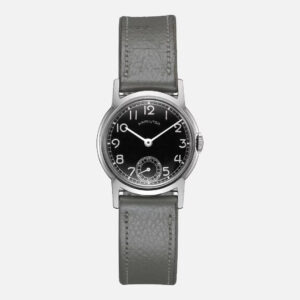
 Endicott (1940s)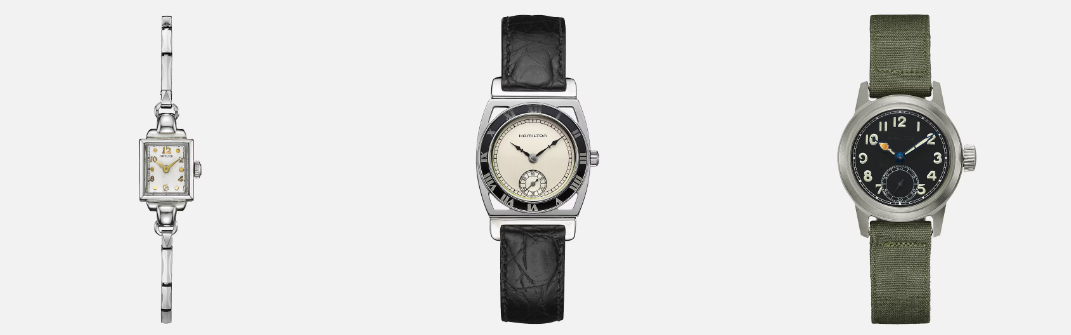






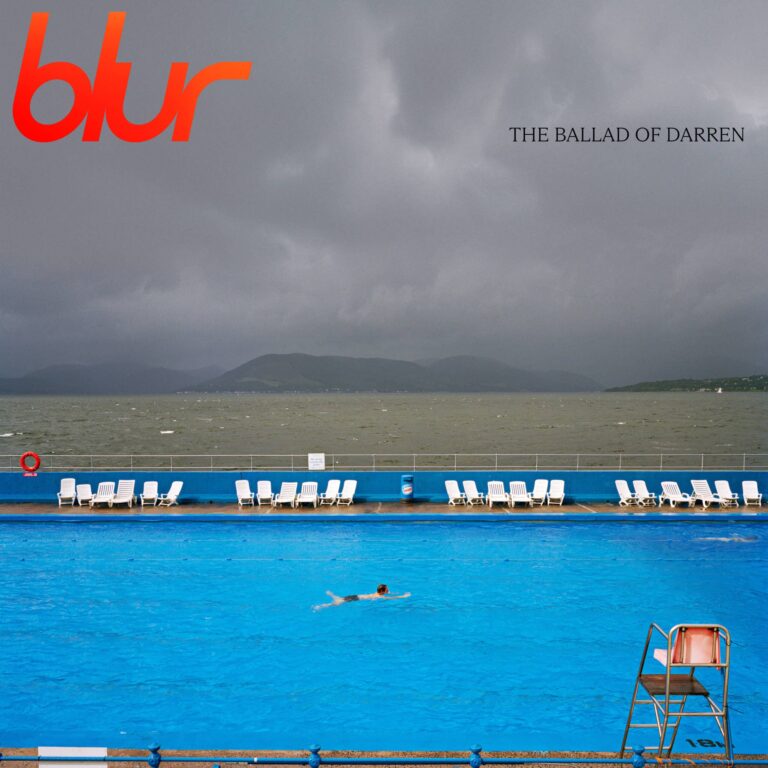

 Blur are back with a new album,
 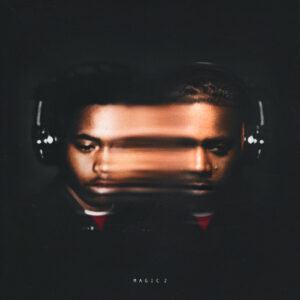 Nas has returned with
 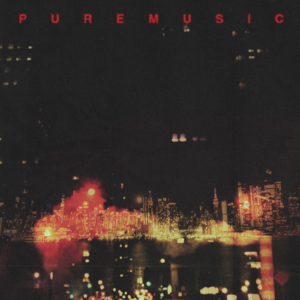 Strange Ranger have dropped their new album,
 New York singer-songwriter Allegra Krieger has unveiled her new LP,
 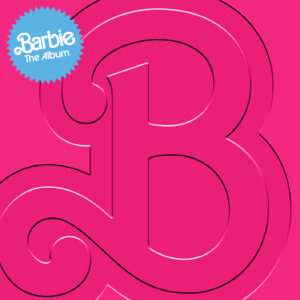 The soundtrack to Greta Gerwig’s Barbie movie is out now. It features previously released songs by
 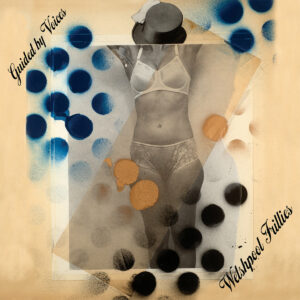 Guided by Voices have put out their second album of 2023, Welshpool Frillies, via GBV Inc. It follows January’s La La Land, and unlike the band’s many other pandemic-era projects, they recorded it as a group, tracking their parts live to tape with producer Travis Harrison in a Brooklyn basement. The singles
 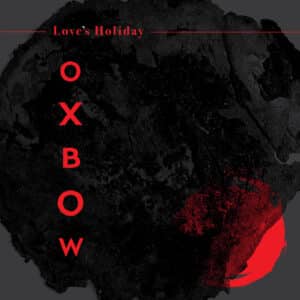 Oxbow have issued their latest LP,
 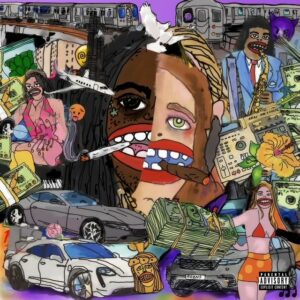 Chicago rapper Valee and producer Harry Fraud have come out with a new collaborative record,