

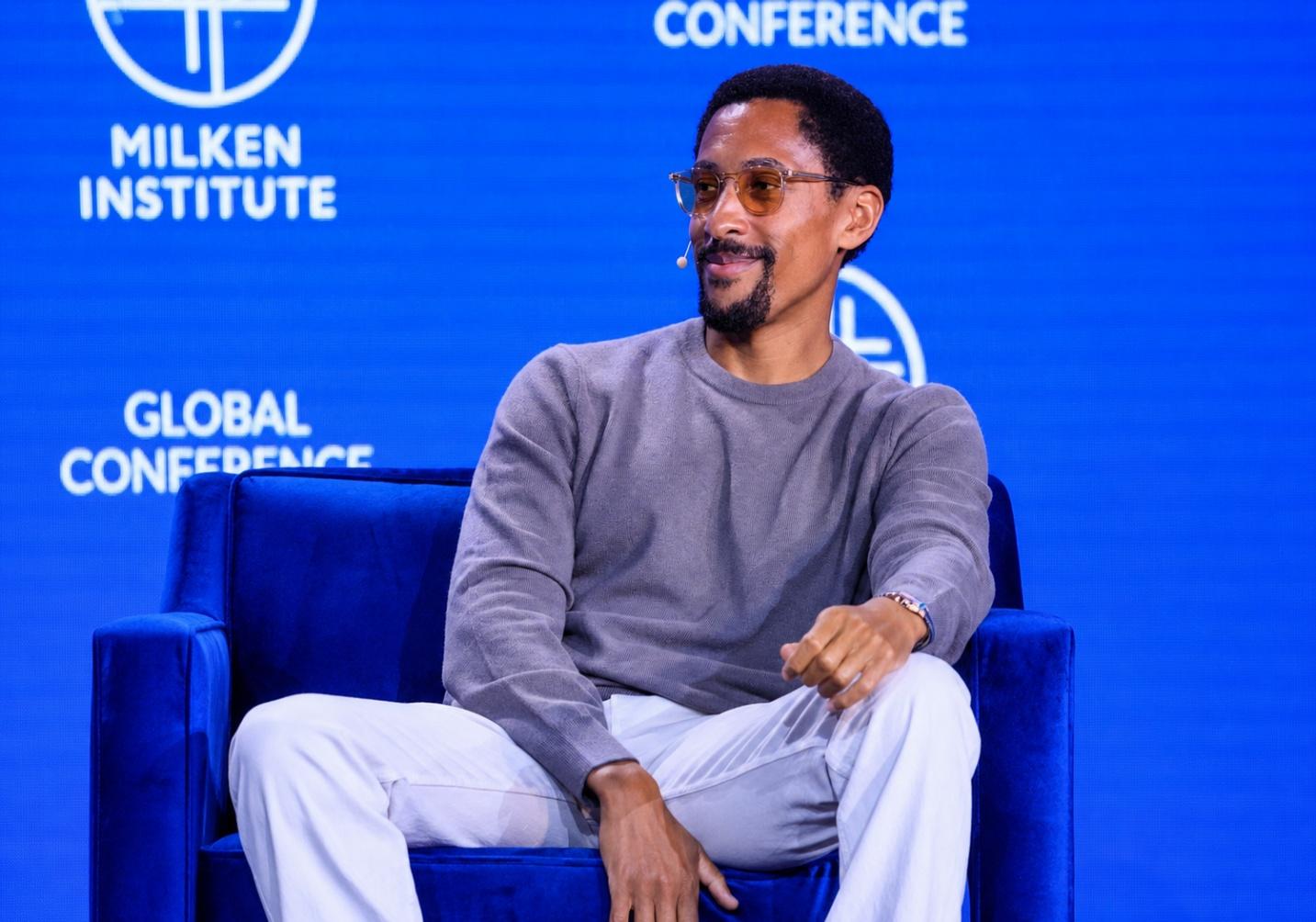
Long before streaming platforms dominated the music business, Larry Jackson was learning the industry from inside a radio station.
Raised in San Francisco, Jackson began working around radio while still a teenager. His early experience at KMEL gave him an unusually direct view into how music reached audiences and how records became hits. Those lessons would later inform a career that placed him at the center of several major industry transformations.
Today, Jackson is best known as the founder and chief executive of gamma., but his influence extends across multiple eras of music distribution.
Building a Reputation Inside Major Labels
Before becoming associated with technology companies, Jackson established himself within traditional music industry institutions.
He held executive roles at major labels and worked with artists across multiple genres, earning a reputation as an executive capable of identifying both talent and cultural trends. Industry veterans often describe his career as unusually diverse, spanning artist development, marketing, management, and content strategy.
Those experiences positioned him for one of the industry’s most consequential transitions: the move from downloads to streaming.
The Beats Music Years
Jackson’s profile rose significantly through his work with Beats Music.
As the service sought to challenge existing streaming platforms, Beats attempted to differentiate itself through artist relationships and curation rather than sheer catalog size. Jackson played a key role in that strategy.
When Apple acquired Beats in 2014, those efforts became part of a much larger initiative.
Helping Build Apple Music
Apple Music launched into an intensely competitive streaming market.
Spotify already possessed a significant lead, and many observers questioned whether Apple could successfully enter the subscription music business. Jackson became one of the executives responsible for helping define the service’s creative identity.
His work involved developing artist relationships, securing exclusive content, and expanding programming initiatives that gave the platform a distinct personality.
Programs such as OVO Sound Radio and Queen Radio helped establish Apple Music as more than a passive listening service. The platform increasingly became a destination for artist driven content.
Industry observers widely credit those efforts with helping Apple Music become a serious competitor in streaming.
A High Profile Departure
In 2022, Jackson announced his departure from Apple Music after roughly eight years helping guide the service’s growth. The move immediately sparked speculation throughout the industry.
At the time, streaming had matured into the dominant model for music consumption, and Jackson had already accumulated one of the industry’s most extensive networks of artists, executives, and investors.
The question was no longer whether he would launch a new venture. It was what form that venture would take.
Enter Gamma
The answer arrived in 2023.
Jackson partnered with former Interscope executive Ike Youssef to launch gamma., a company positioned as a media and technology enterprise rather than a conventional record label. Backed by significant investment capital, the company immediately attracted attention across the entertainment industry.
The strategy reflected Jackson’s long standing belief that artists increasingly need partners capable of supporting multiple aspects of their businesses rather than simply releasing records.
Looking Beyond Music
What separates Jackson from many music executives is his focus on broader cultural ecosystems.
Gamma has emphasized partnerships spanning music, film, television, podcasts, and direct to consumer opportunities. The company has repeatedly described itself as a platform for creator entrepreneurs rather than solely recording artists.
That approach mirrors larger trends across entertainment, where artists increasingly function as brands with interests extending far beyond recorded music.
A Career Defined by Transitions
Few executives have participated in as many major industry shifts as Jackson.
He witnessed the decline of terrestrial radio’s dominance, helped navigate the transition from downloads to streaming, and now finds himself involved in debates about creator ownership, distribution technology, and artist entrepreneurship.
While public attention often centers on performers, Jackson’s career illustrates how executives can shape the structures that determine how music is created, distributed, and monetized.
More than three decades after first entering the business, he remains one of the industry’s most closely watched figures.

