

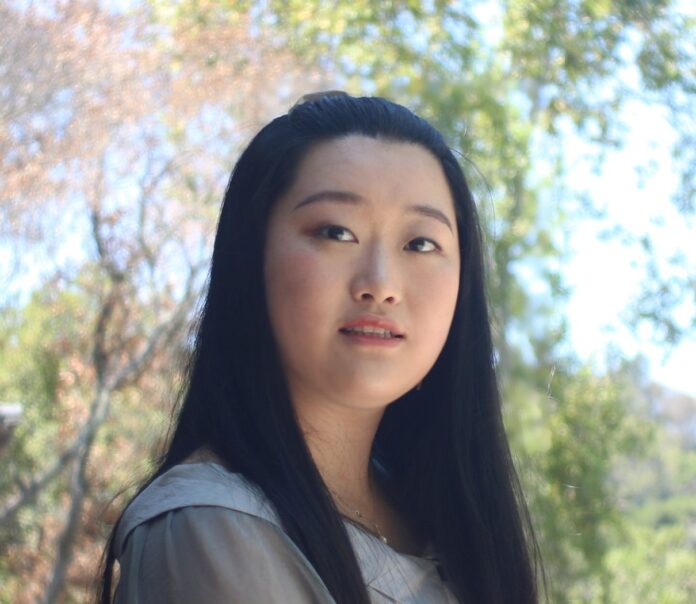
To encounter the work of Tangying (Jane) Shen is to step into a space where historical memory and contemporary agency exist in a continuous, fluid dialogue.
Based in San Francisco, the multidisciplinary artist, animator, and educator has spent years cultivating a practice that bridges fine art, ceramics, storyboarding, and social engagement. Rather than treating heritage as an untouchable relic preserved behind museum glass, Shen approaches Chinese artistic traditions as a living, evolving vernacular; one capable of probing complex realities around identity, gender, and intergenerational power dynamics.
“What sets me apart is my ability to bridge animation, visual storytelling, and contemporary fine art,” Shen explains. “My background in storyboarding influences the way I construct paintings, ceramics, and interactive works, allowing each piece to tell a narrative while addressing themes of identity, resilience, and social issues as a Chinese woman in America.”
This distinct synthesis of narrative discipline and conceptual depth has established Shen as a compelling voice within contemporary art dialogues. She is currently showing works in the international group exhibition Anti-WAR 2026, presented by Exhibizone and Biafarin, running from July 11 through September 11, 2026. The exhibition invites viewers to reflect on war, loss, resilience, memory, and the urgent hope for peace.
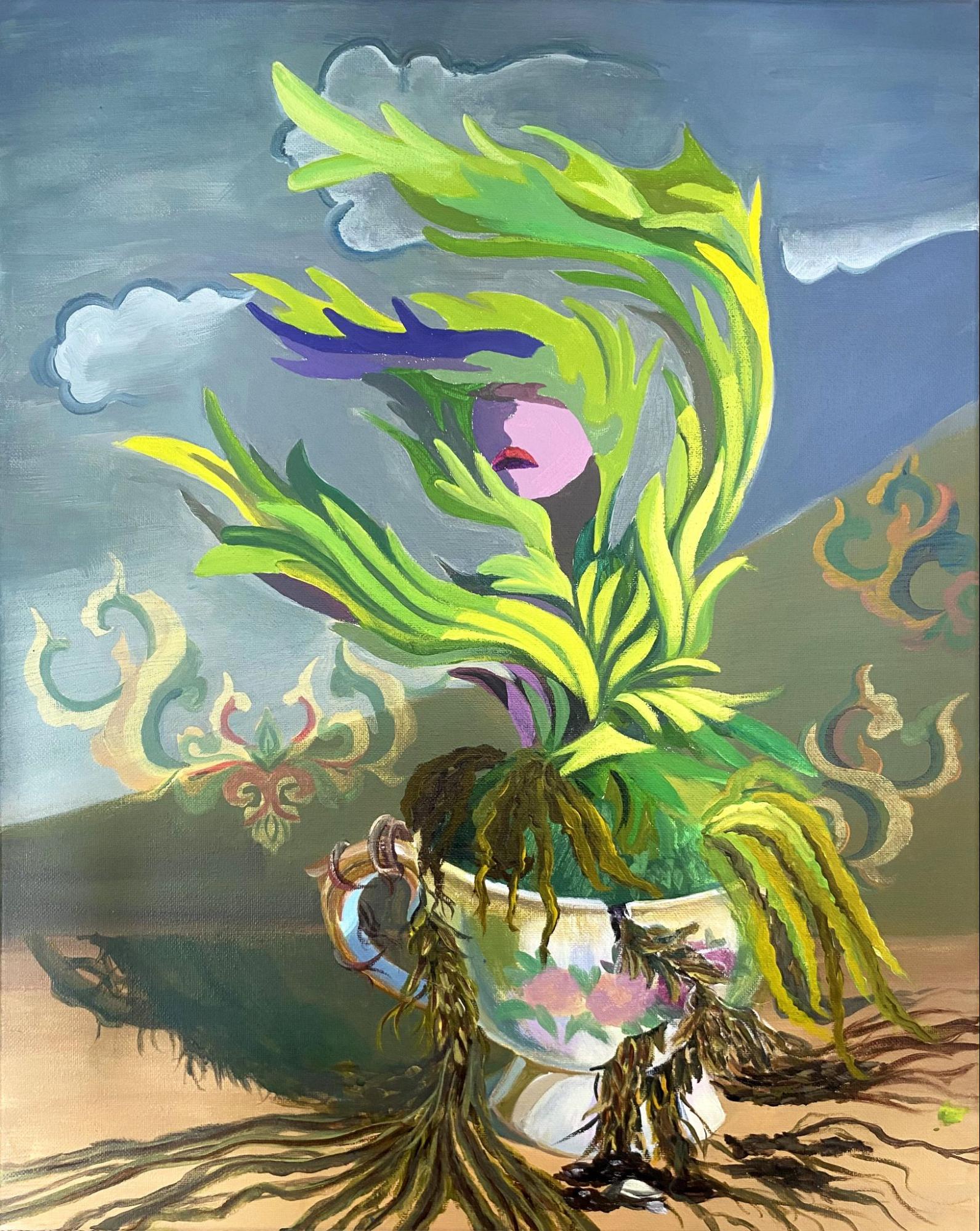
She is showing a painting in the exhibition called “The Bloom Beyond,” a plant symbolizing a young woman’s break into freedom from controlling family structures. “Her bloom speaks not of rebellion, but of the right to selfhood, independence, and freedom,” explains the artist. The painting was created in 2025.
Shen’s work has been showcased across competitive, curated, and juried venues, including the New Museum Los Gatos, Las Laguna Art Gallery, Works/San José, Chopsticks Alley Art, and the American Artists Professional League. Her piece Fear Becomes Big If You Don’t Face It was acquired by Las Laguna Art Gallery, while her glazed ceramic portrait Anxious was selected for the international Aesthetics exhibition organized by Gallerium Art.
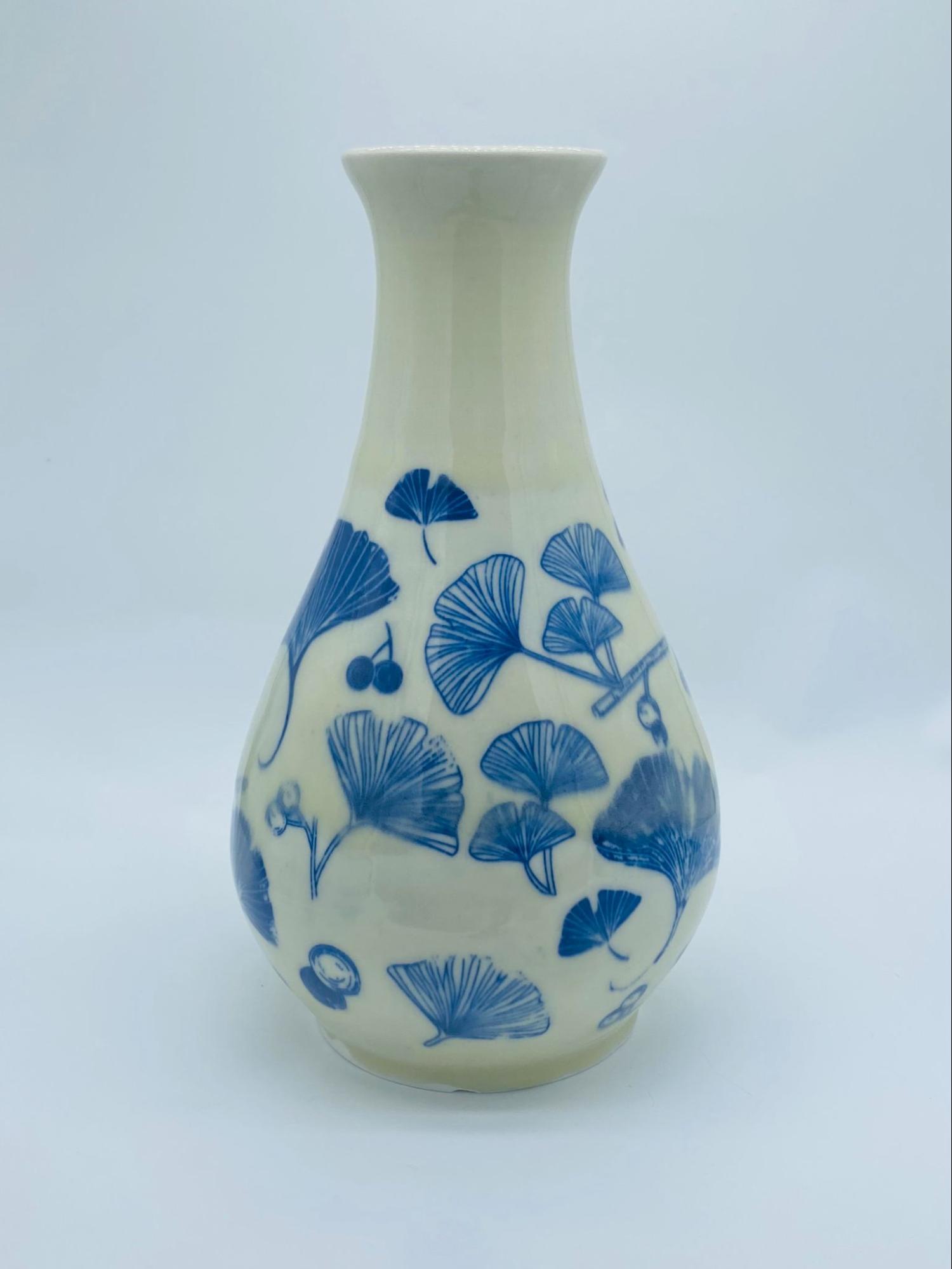
Central to Shen’s investigation of heritage is her engagement with traditional Chinese craft forms, particularly qinghua (blue-and-white porcelain). Historically developed through Tang dynasty experiments with Persian cobalt and perfected during the Yuan, Ming, and Qing dynasties, blue-and-white porcelain became a globally recognized symbol of status, purity, and artistic mastery.
In pieces like Legacy, Shen directly traces the motifs of classical Yuhu Chun (jade pear-shaped) vases, incorporating scrolling lotus patterns, landscapes, and dragons. However, her engagement goes beyond historicism.
“I chose some of the most recognizable motifs found in traditional Chinese ceramics because, to me, they’re more than decoration—they’re a visual language,” Shen says. “Landscapes reflect the relationship between people and nature, dragons represent cultural identity and spiritual beliefs, while flowers and lotus vines symbolize life, prosperity, and continuity.”
Shen notes that while the exact dynasty of a ceramic piece might escape the average observer, its quintessential “Chineseness” remains instantly recognizable. “That recognition comes from collective visual memory rather than historical knowledge,” she reflects. “Many people see Chinese cultural heritage as something historic, only to be seen in museums, but I see it as something living. My work isn’t really about ceramics—it’s about how a culture continues to evolve while remaining recognizable.”
Shen’s fluid movement across mediums is rooted in her rigorous interdisciplinary background. Having earned an MFA in Storyboarding from the Academy of Art University in San Francisco and built a career in visual narrative, including storyboarding for feature films like The Other Side of Infinity, she applies a cinematic sensibility to static and sculptural forms. For Shen, storytelling is another way of keeping culture alive, allowing historical experiences to be continuously reinterpreted by contemporary audiences.
“Storyboarding taught me to think about storytelling before anything else,” Shen notes. “I think about what the viewer notices first, what they discover next, and what feeling they leave with. Rather than explaining ideas directly, I try to build an experience that allows viewers to discover them for themselves.”
This cinematic framework is especially evident in her material experimentation. Having studied traditional watercolor in China before relocating to the United States, Shen later began applying fluid watercolor glazing techniques directly onto raw ceramic clay.
“I didn’t start learning ceramics until I came to the U.S., but one day I began applying my watercolor techniques to clay,” she shares. “What excited me most was never knowing exactly how the colors would look after the piece came out of the kiln. It made me appreciate traditional Chinese underglaze painting in a completely different way. I finally understood why artists have loved this technique for centuries.”
Beyond aesthetic synthesis, Shen’s practice frequently explores social commentary, using personal and cultural specificity to address universal human experiences.
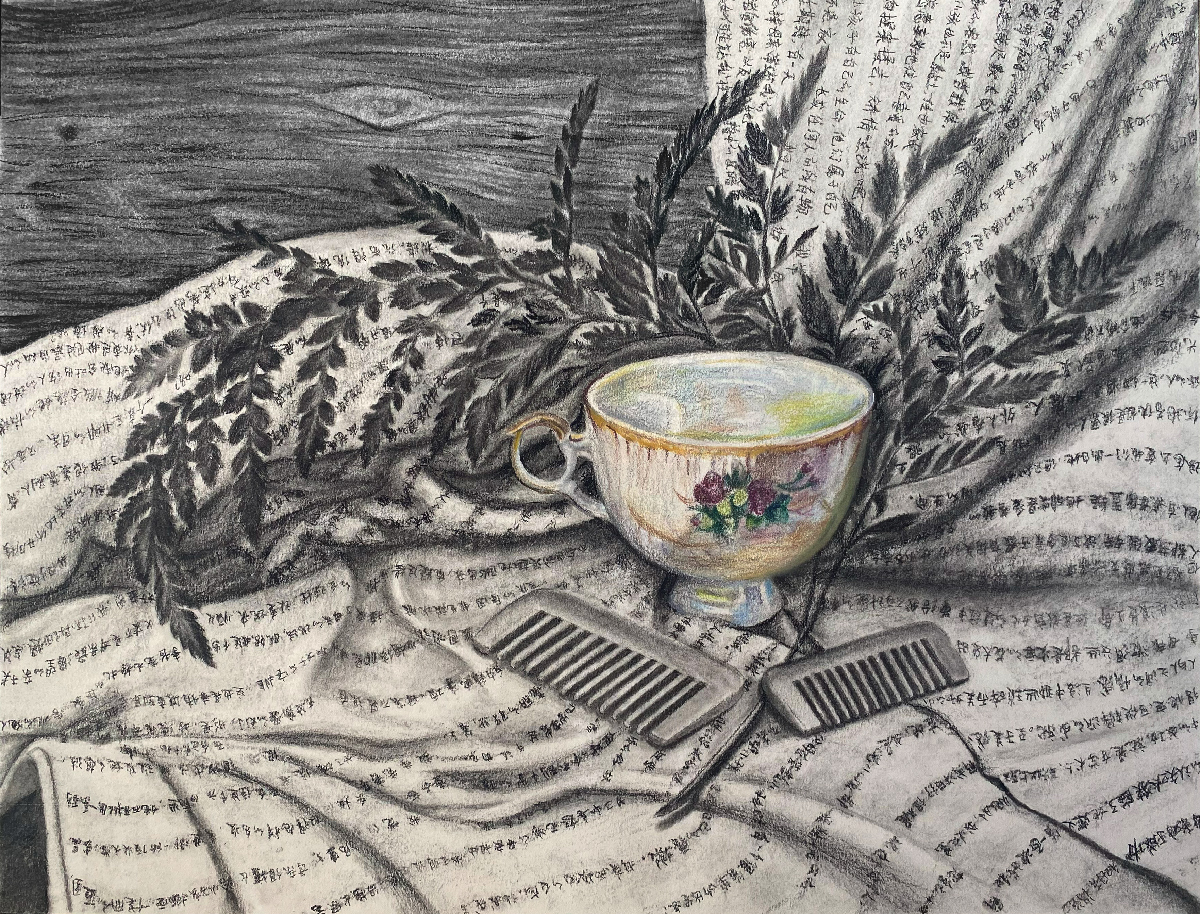
In her dramatic charcoal piece Deviation, Shen tackles the nuanced psychological boundaries within traditional Asian family structures. The work explores the subtle line where parental devotion can inadvertently transform into control.
“Deviation is rooted in my personal experience and the dynamics of the traditional Chinese family, where love, sacrifice, and discipline are deeply intertwined,” Shen explains. “However, the cultural specificity is the starting point of the work, not its boundary. I didn’t want to reduce this relationship to a stereotype or portray parents as villains; their control often comes from genuine care, yet it can quietly limit a child’s independence. Rather than criticizing a culture, Deviation asks a simple question: ‘when protection begins to replace a person’s ability to choose, has care quietly become control?’”
This balance between cultural respect and gentle critique defines Shen’s conceptual framework. “Respecting a culture doesn’t mean freezing it in time,” she emphasizes. “It means allowing it to continue evolving while staying true to its identity. Living in the Bay Area made me see my own culture from a different perspective. It encouraged me to ask why certain traditions still matter today and how they shape our identity.” For Shen, questioning tradition is not about rejecting it, but allowing it to evolve.
Shen’s commitment to social engagement extends outward to themes of female solidarity and cross-cultural representation. In Escalation, as well as her featured works in the VOTE! exhibition at Works/San José, Shen examines solidarity across racial and national lines.
“Growing up in China gave me one perspective, and living in the U.S. helped me realize that many of the questions I care about aren’t unique to a single culture,” she says. “In Escalation, the women come from different cultural and racial backgrounds, yet together they form one face. Our differences don’t stand in the way of solidarity—they’re part of what makes it stronger.” Just as cultures evolve through exchange, solidarity is strengthened through diversity rather than uniformity.
Shen’s artistic trajectory illustrates the vitality of contemporary Asian diasporic art. Beyond her studio practice, she has dedicated years to arts education, designing visual art curricula for young artists and conducting artist talks at institutions like the New Museum Los Gatos and Chopsticks Alley Art.
“In addition to my studio practice, I have spent several years teaching visual arts, which has strengthened my belief that art should communicate across generations, languages, and communities,” Shen adds.

