

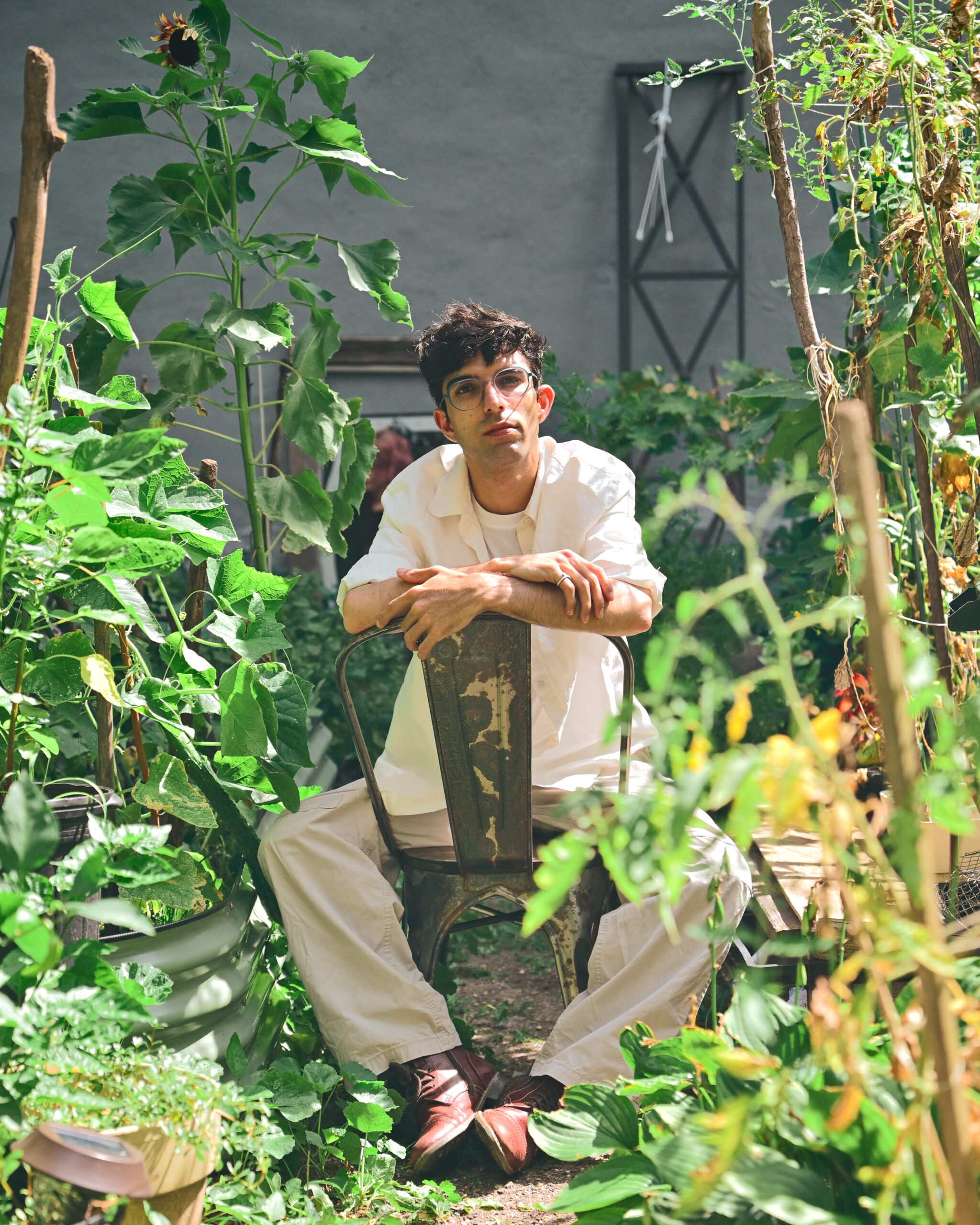
Vasudev Vashisht is an artist-ethnographer of Indian origin based in New York. His work transforms photography into a living collaborative medium through darkroom experimentation, ecological interventions, participatory workshops, and community-centered fieldwork.
Vashisht’s work has been exhibited by the New York Foundation for the Arts, CreateCOP29, Photoville Festival, and Baxter St, Camera Club of NY and internationally, by Jaipur Art Week, India & Lishui Photography Festival, China. He is currently pursuing a Van Lier Fellowship at the Snug Harbor Cultural Center. Vashisht was recently awarded the En Foco Artist Fellowship and NYFA’s Immigrant Artist Program Fellowship. Recent publications include The Columbia Journal and D La Repubblica magazines. He has facilitated workshops with communities across the Peruvian Andes and on Governors Island in New York, and has shared his research through talks at the MASS MoCA, Society for Photographic Education annual conferences, and Urban Soil Institute NY, among other venues. Vashisht holds an MFA in Photography from Parsons School of Design, NY.
When not covered in soil or darkroom chemistry, he is trying to convince airport security that the soil-filled bags in his luggage are ‘art supplies.’
How did your interest in photography develop, and when did ecology and environmental justice enter the picture as a specific focus?
I grew up in Chandigarh, in northern India, and stayed there until my early twenties. Living in the foothills of the Himalayas, and having access to the mountain ranges in close proximity meant I could take a night bus and be in the middle of the tall ranges by the next morning. And so, when I set out for my first multi-day hike, I borrowed a DSLR from someone in college in hopes of documenting the experience. I remember climbing up quickly to find higher vantage points to frame my shot, and running back down, and doing it over and over again, all attempts to
document the hike, the vastness of the mountains and our insignificance under their might. That was probably my first encounter with photography.
Notions around ecology and environmental justice became a focus when my initial dream of becoming an outdoor adventure landscape photographer was being challenged by the concrete walls of New York City.When you think about landscape photography, you’ll probably default to a distant, pristine natural environment, the classic two hills with a river streaming down the valley, or something on the lines of what I was witnessing on my hikes back in India. Yet ‘nature’ pops up everywhere. This otherness and distant separation we often attach with landscape has
brought us to the point of high climate instability. And becoming aware of the devastating impacts we’ve had on the world’s ecology world overpowered me with a deep sense of climate anxiety.
And so after finally settling down in the city, on a fall evening as I walked around my neighborhood, I turned a corner and stood outside Pleasant Village Community Garden. The space shifted my lens towards understanding ‘nature’ as far more accessible and localized to where you are. The community garden, this small utopia, offered urban encounters with nature and an opportunity to re-network or rethink that relationship with ecology and centered environmental justice in my thinking.
Digital Photograph
You describe yourself as a “lens-based creative researcher-practitioner.” How does the “researcher” side of that shape your process before a camera is even involved?
I have this knack for wanting to understand or have a foundation around what I’m trying to photograph, and that is where research comes in. Research for me is just having a deeper context to the subject matter, be it the land that I’m working with or the people that I’m trying to engage with. Rather than being a fly on the wall as most landscape photography has been like, just going to distant lands and producing an objective depiction of nature, research helps add nuance and create a holistic mind-map.
For me, it became a method to make myself aware of all that the land has been through, all the people have been through, and then approaching my creative projects with that context in mind. I think an undergraduate training in engineering forced me into attaching logic to everything and I naturally gravitated towards considering a creative project as something that emerges from some pool of knowledge. It helps me have a starting point, a question in my mind to think about what to photograph, how to photograph it, what materials to use to make the photograph, how the materials can be included in the photograph, or what materials to include in the photographs, and why these materials, and so on. Having research as a framework to come up with those answers lends more possibilities and more experimental approaches for my creative practice.
Why does it feel important to you to challenge notions of photography as an extractive medium?
The more I got into how photography developed and how early forms of photography existed, I started seeing this parallel between film photography and earlier processes like the daguerreotype. They all have some metallurgical or resource-dependent aspect—a reliance on material extraction from the earth.
Film photography heavily depends on silver as a material to create the photosensitive layer. I started thinking about the photograph as an aftermath of all the resources that have gone into creating the film and producing the camera. But for me, there was also another kind of extraction happening. Photography has traditionally been a medium where you have the photographer deciding what to photograph, when to take the picture, and what is worth photographing. In that sense, the act of photographing can also become extractive—you’re engaging with another person, place, or subject, but ultimately the photographer is the one deciding what is worthy of being captured.
So these two things—photography being materially extractive, but also being a medium where the photographer has so much control over what is considered a photograph—started to feel connected to me. I wanted to challenge both of those ideas and think about what it might mean to be more conscious in image-making: in the materials I use, the processes I work through, and the people, places, and environments I engage with.
How did Cerro de Pasco become the focal point of Mining the Material Ecology?
When I was digging into silver as a heavily mined material that has been actively used in photographic processes, I became interested in tracing the movement of this metal across the earth, from different regions, particularly the Global South, into Europe and the U.S. and I started looking at how these channels and supply chains were formed, and the repercussions that mining has had in countries outside the so-called First World.
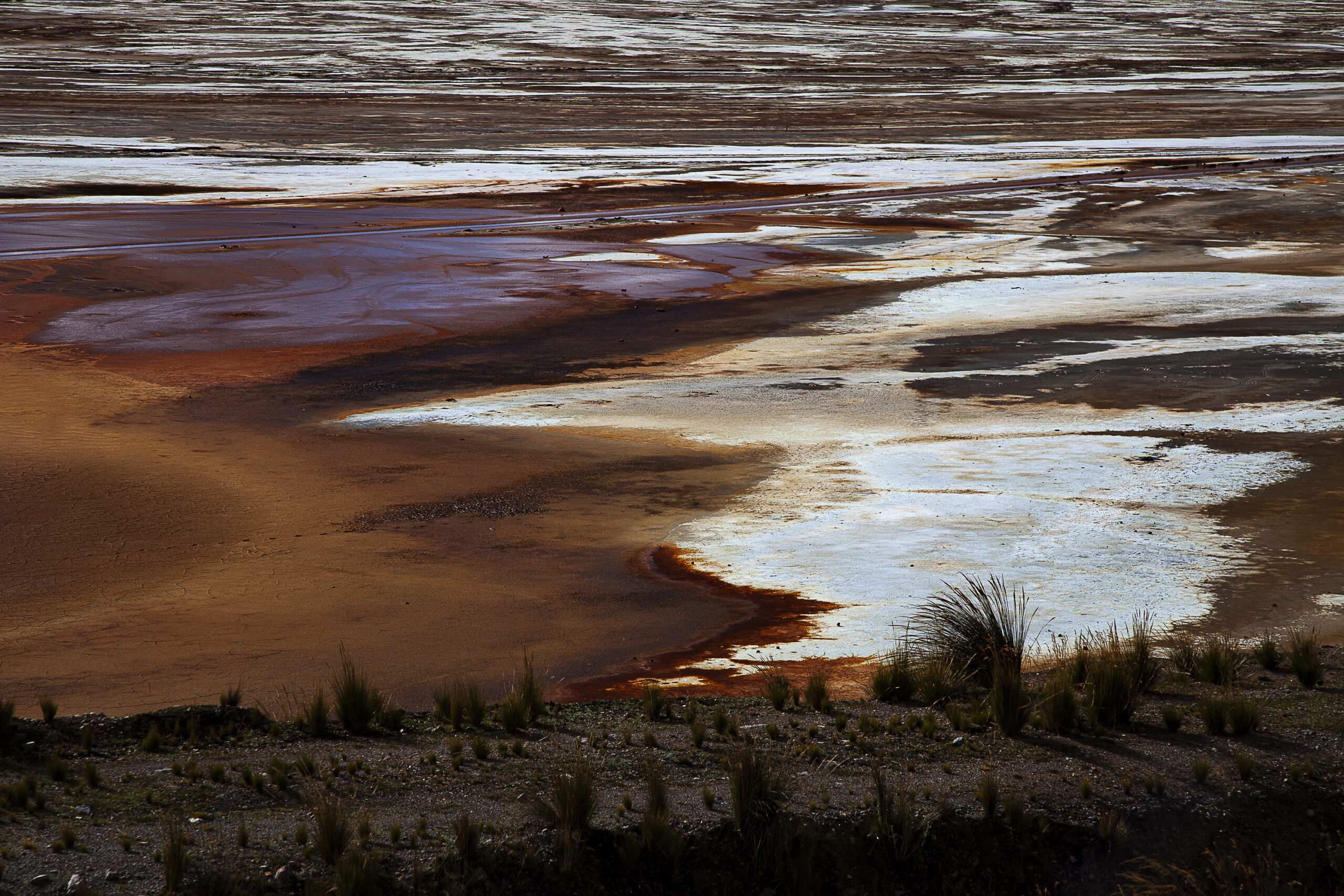
As I looked deeper, I came across Cerro de Pasco, a high-altitude mining city in Peru that has been mined since the Spanish colonial period. It has long been a major source of copper, silver, and other heavy metals exported to industrialized nations. I was trying to draw a connection between the extractive materials used to create photographs and the places in our contemporary world that have experienced environmental consequences because of these long histories of mining- some of which date back three or four hundred years. And that is what first brought my attention to Cerro de Pasco.
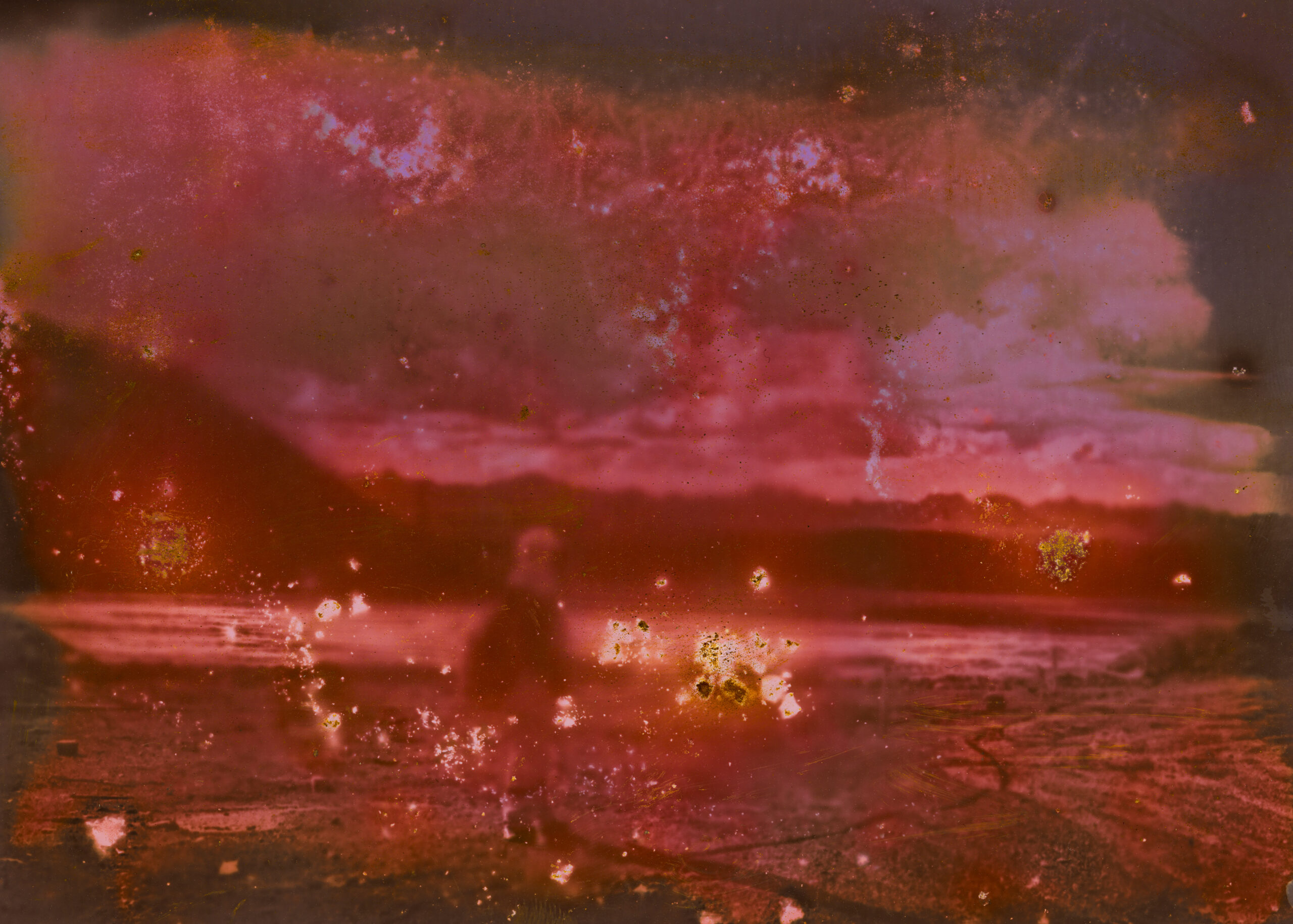
Darkroom experimental print – Developed
with the polluted lake water and the toxic dirt
collected around the mining region of Cerro
De Pasco.
That project pairs seed-bombing workshops with darkroom experimentation, which read to me as two very different registers – one communal and future-facing, one solitary and material. How do the two halves talk to each other in the final work?
I feel like this idea of challenging extractive photography was really how I was approaching the project.
When I read more about Peru and Cerro de Pasco, I got in touch with Source International, a non-profit that had been researching the effects of mining pollution on the community, particularly on children. I was trying to figure out how I should approach going into this space and photographing it.
Initially, I thought I would just collect land samples: polluted water, soil, things like that and bring them back to New York to experiment with in the darkroom. I was doing my MFA in photography and had never really worked in a darkroom before, so I was very drawn to experimenting with these materials and seeing how they could become part of the photographic process. But the more I thought about it, the more I realized that I could also be acting extractively myself as an outsider going into a place I didn’t have a direct relationship with, documenting people and their lives, and then leaving with materials to make work.
That pushed me to think more about the social consequences of the environmental damage and how I could actually create an exchange. Through Source International, I got connected to Angel Salinas who had worked as a research architect in the city. Together, we planned a seed-bombing workshop in a local school, where we talked with fifth graders about phytoremediation, the use of plants to help remove contaminants from soil.
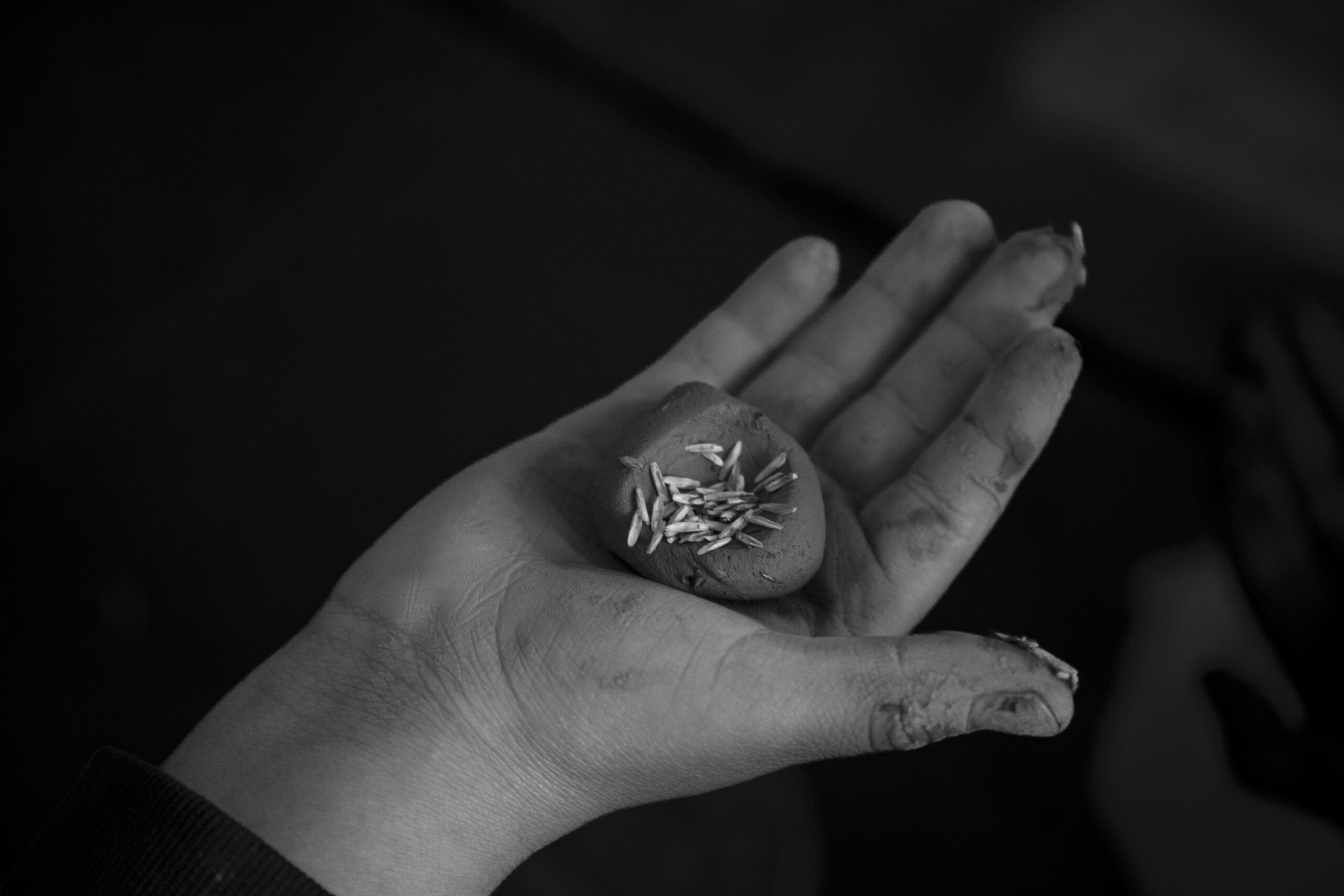
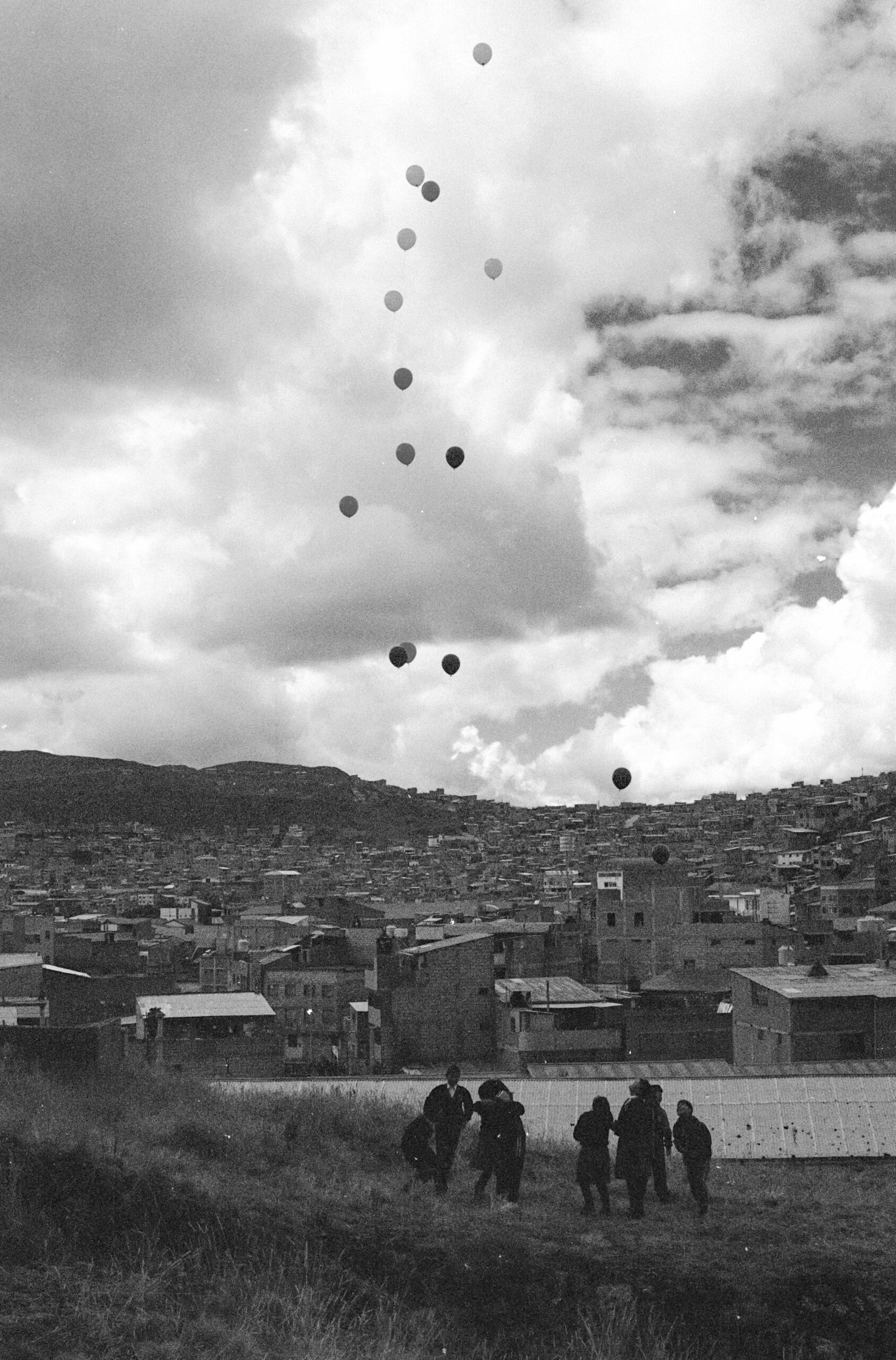
The workshop became a way for me to bring the research to the people who actually lived there, rather than simply extracting something from the place. We talked about phytoremediation, made seed bombs (balls of clay filled with seeds), and launched biodegradable helium-filled seeds carrying balloons into the air. The idea was that the children could participate in something playful while also thinking about how plants might help restore damaged environments.
And that’s where the two sides of the project started to come together for me. On one side, there was the workshop and the exchange with the community. On the other, there was the material I brought back into the darkroom which shared creative agency with me as I couldn’t completely control what the final image would look like.
So collaboration became the focal point of the work, both through the people I was working with and through the materials themselves. It became a way of challenging my own authorship and, more broadly, trying to find a way of making photographs that weren’t extractive.
In Young as the Worms, Old as the Soil, you describe the garden as a place “agency is shared and interaction is distributed”. I’d love to hear more about what you mean by that.
For me, the community garden is a place of collaboration among the people who maintain it. The composters come together to break down food scraps from the neighborhood. People bring their food waste, the composting team breaks it down further and mixes it with the browns, and then it all goes into the compost pile, where insects, heat, humidity, and other natural processes take over and turn what we consider waste into compost.
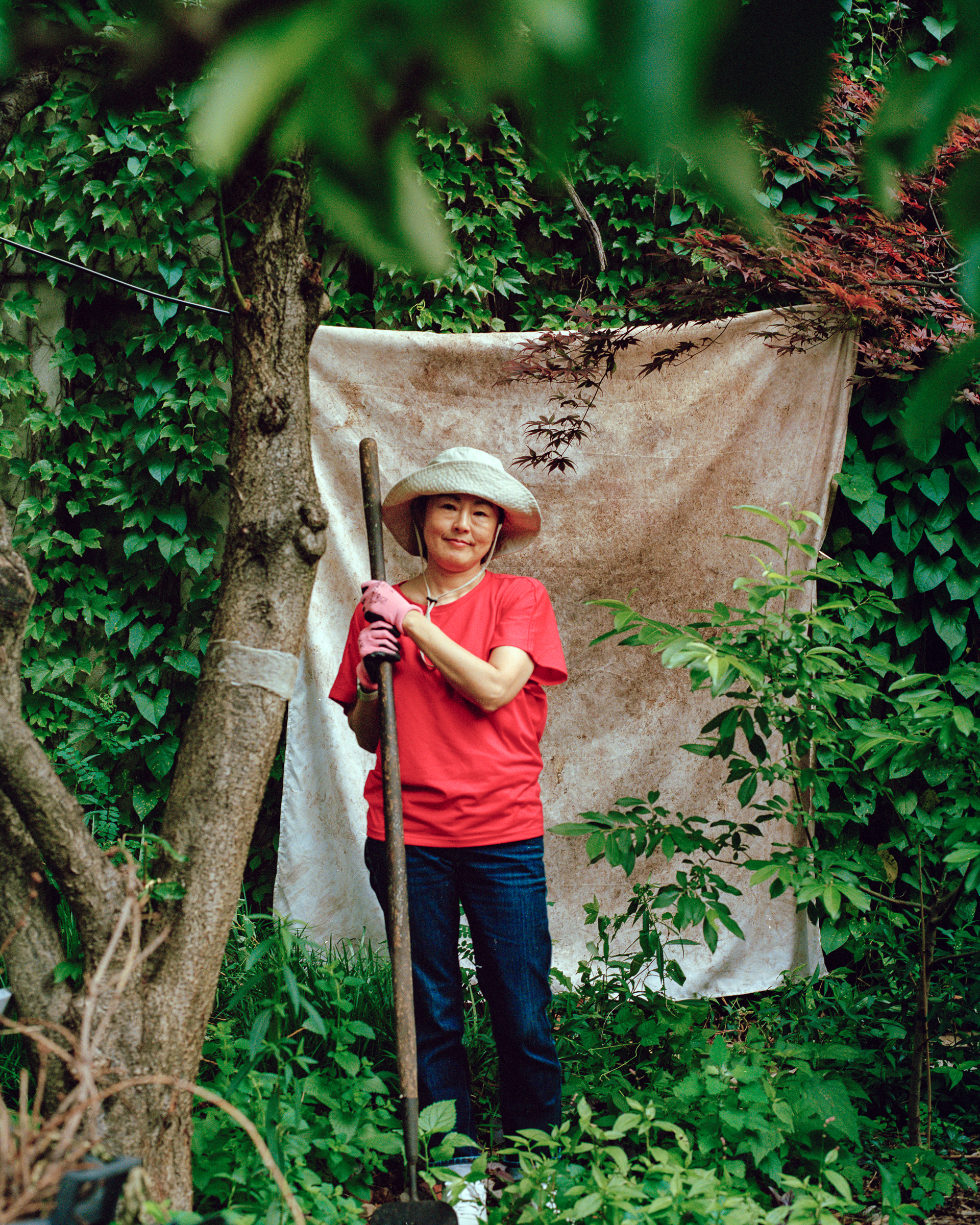
That full-circle system is also what drew me to the community garden more broadly. People come together to grow plants, including herbs and spices that they bring from their home countries. New York is such a diverse city, and the garden brings together people from all kinds of backgrounds- American, Asian, Latin American, Caribbean, and many others. There’s me, and there’s this mix of people who come together to maintain the space.
The community garden is a decentered space in itself. It’s not simply a space dictated by the city; it’s maintained by the people of the neighborhood and by those who choose to cultivate it.
So for me, the garden became a site of active collaboration. In Young as the Worms, Old as the Soil, I was trying to approach the garden through that idea. I was thinking about how I could make photographs with the garden, rather than simply photographs of it– with the garden members, the insects, the plants, the soil, and the materials
that make the garden what it is.
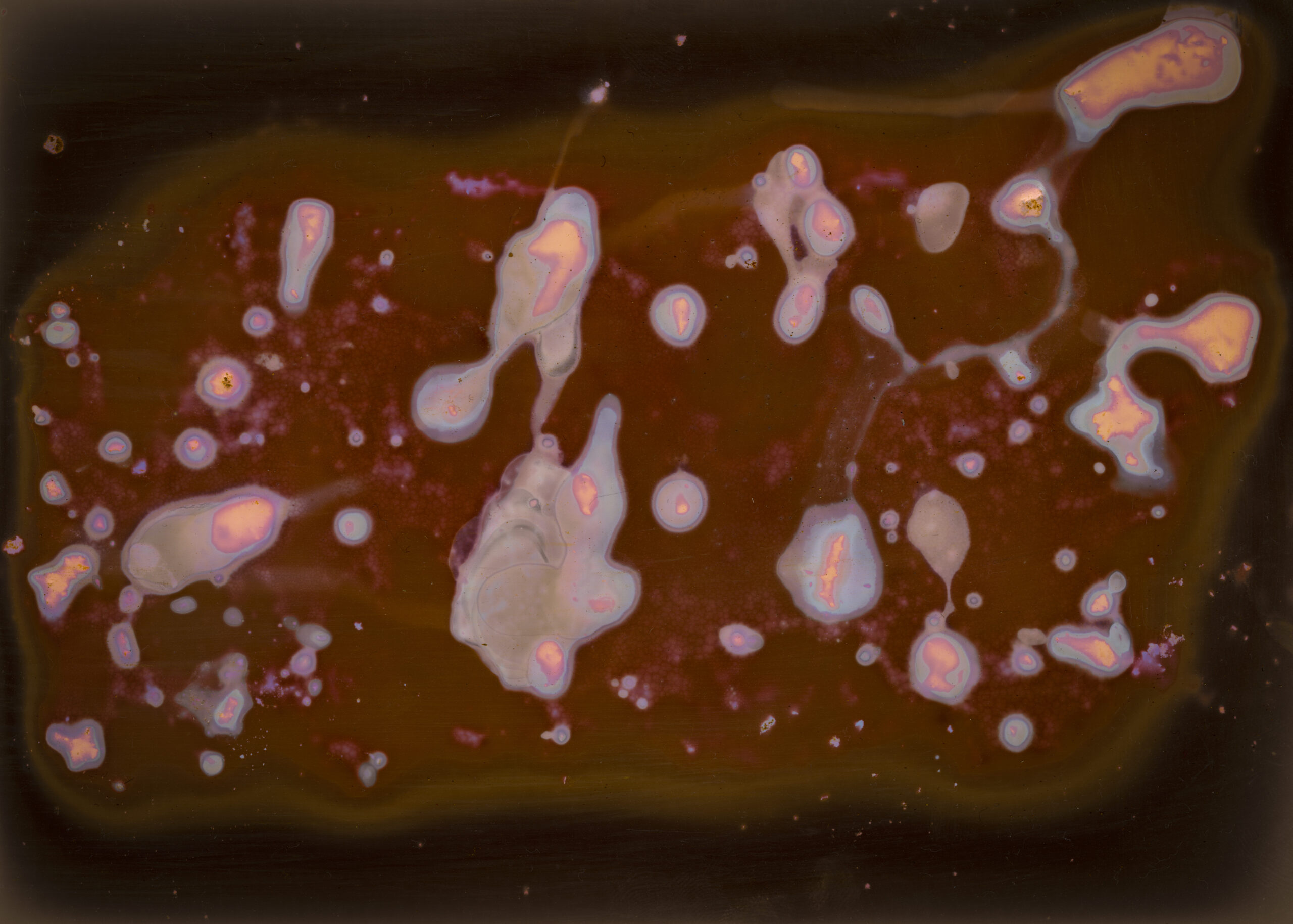
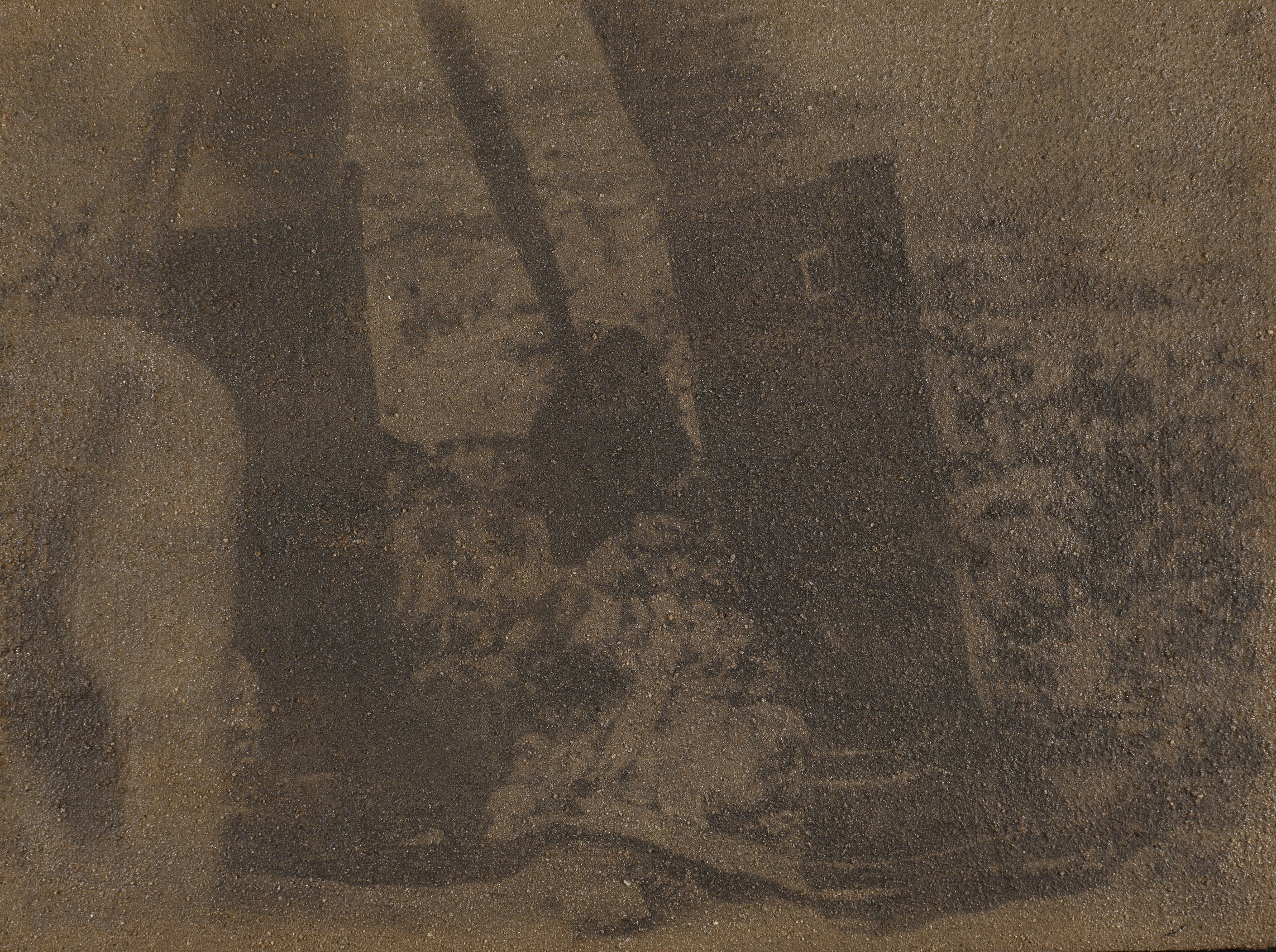
That approach led me to using soil as a photographic substrate and treating it as an active collaborator in the darkroom. It took me about a year to figure out how to actually get a photographic image onto it. A lot of that process was about trying to impose my understanding of what the image should look like, until I eventually had to surrender some of my agency as a photographer and let the material dictate the outcome.
I also started using the compost box as an outdoor darkroom. Instead of exposing the work inside a traditional darkroom, I would put silver gelatin paper into the compost for two weeks and let the insects, heat, humidity, and everything happening inside the box become part of the exposure. It became a kind of record of what was happening inside the compost itself.
Later, in more recent work, I started using plant extracts to make photographic developers for processing my black-and-white film. Instead of relying entirely on commercial developers, I was thinking about how sustainability could actually become part of the photographic process itself. And then there were the collaborative portraits of the garden members, the people who became my friends through this long-term engagement. I’ve been working in the garden for over two years now, so the portraits also became another way of thinking about collaboration, not as a single photographic encounter, but as results of sustained engagement.
What did you enjoy most about collaborating with Kanishka Kanishka for the Everything is Really Everyone! exhibit in New York?
I feel our curator, Sara Hodaie, was initially fascinated by how both of us approach photography as a collaborative practice with non-human elements, decentering the photographer as the sole author and allowing the final form of the image to emerge through processes that are partly beyond human control.
For me, this means using soil, compost, plant extracts, and other organic matter as active photographic materials. For Kanishka, this takes the form of working with slime molds that she grows on her matrilineal archive. The slime molds transform and contaminate the photographic record, bringing questions of memory, women’s labor, and non-human agency into the process of image-making. In a hyper-digitized culture, the exhibition became a way to put our practices in conversation and think about a way to ask what happens when the photographer becomes decentered. So we played around with the idea of not including captions with exhibited pieces, and removing artist names from the artwork list, all to confuse and meld the works and dissolve sole authorship over the image.
Have you seen, read or otherwise come across anything recently that changed how you’re thinking about your own work?
I’ve been reading The Book of Unconformities: Speculations on Lost Time by one of my professors, Hugh Raffles. It’s a deep dive into different rocks and stone formations across the world, and how some of them became grounding points for him. It is making me think more about incorporating text into my own work, and perhaps weaving some past garden-based writing into a photobook.
Could you share more about the Snug Harbor Fellowship and what you’re intending to do there?
For me, the Snug Harbor Fellowship has come about as a way to naturally extend Young as the Worms, Old as the Soil. Over the past two years, I’ve focused on one community garden in East Harlem in New York, and the fellowship gives me an opportunity to expand that research across New York City, working with community gardens in different boroughs and communities.
I also want to expand the material scale of the work. Until now, I’ve been limited to making soil-based photographs around 24×20 inches in the darkroom. I’m excited to increase the size and potentially working directly at outdoor composting sites. Essentially scale the physical dimensions up as the geographic scale of the work increases too.

