


Years ago, this would have been a debate. But today, mental health problems are real — and the world knows it. In fact, the World Health Organization recently announced that over 1 billion people deal with mental health disorders. Mental health can be affected by almost anything. Work stress. Relationship problems. Poor sleep. That nagging feeling that something is off. The thing is, traditional help may not always be available. More importantly, people worry about cost, judgment, and time. That gap is exactly why AI tools for mental health support have grown so fast.
With the growing call for global attention and solutions to address people’s mental health, AI tools can be something to lean on between sessions or while waiting for a first appointment. However, choosing the wrong one can lead to more harm than good. With that in mind, this guide lists the leading picks that are worth exploring.
Top Five Best AI Tools for Mental Health Support
Wysa
Wysa is recognized for offering evidence-backed help for mental well-being. It’s particularly useful for people who want something more structured. Not just an open-ended conversation. It offers three ways to make it happen. Wysa comes with a conversational space for guided chats. There’s also a care library that houses several CBT-inspired exercises. On top of that, users can opt for sessions with a human coach. People can turn to Wysa to deal with anxiety, low mood, sleep concerns, and more.
Key Features:
- Skills and technique recommendations for particular problems
- Research-based practices to improve mood and well-being
- Guided self-help for everyday stress and challenges
Pricing:
- Free Package
- Premium Package – $19.99 per month (may vary by region)
Real Use Case:
College students getting overwhelmed by exams could use Wysa. It can assist in unpacking anxious thoughts. By completing mindfulness exercises and working through prompts, they can understand what is actually driving the stress.
Ash
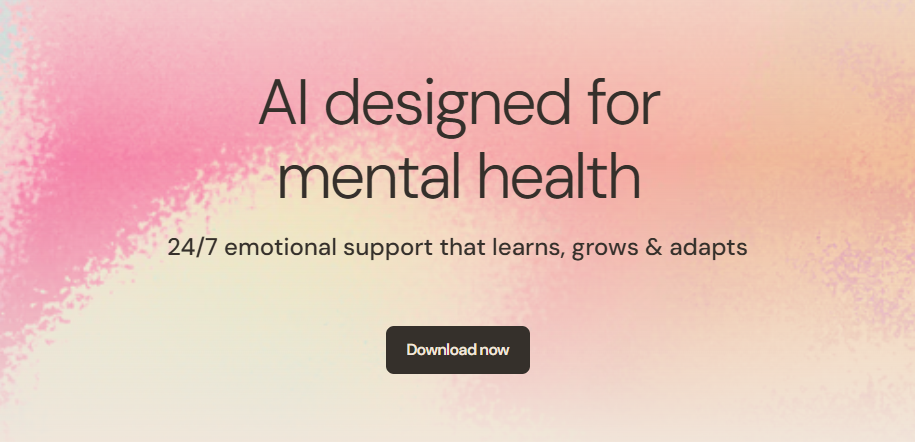
Ash is specifically built for mental health. And it focuses on providing an open-ended conversation for therapeutic dialogue. The AI companion can communicate through text or voice. So users can approach each session in whatever way they’re comfortable. With an emphasis on human psychology, Ash can remember and identify patterns in a user’s thinking across conversations. This allows the app to provide weekly insights and personalized programs around individual goals.
Key Features:
- Trained on a large dataset of proprietary expert data
- Long-term reflection and recognizing recurring patterns
- Supports voice and chat input
Pricing:
- Free Trial
- Unlimited Access Package – $19.99 per month (may vary by region)
Real Use Case:
BPO employees are prone to experiencing work burnout. As such, they could check in with Ash throughout the week. It can help them notice recurring connections between workload, poor sleep, and their mood.
Headspace
Headspace became popular as a meditation platform. But now it has evolved into a broader tool for achieving better mental health. One of its newest and standout additions is Ebb. An AI companion with conversational support that uses reflective questions. It provides in-the-moment support for any needs. That covers stress, relationships, sleep, and more. Ebb remembers conversations and can suggest appropriate activities. That means users can leverage Headspace’s mindfulness tools and sleep resources.
Key Features:
- Building healthier habits that support mental health
- Interactive, two-way support with personalized recommendations
- Structured mindfulness content with conversational support
Pricing:
- Free Trial
- Monthly Package – $12.99 per month
Real Use Case:
Doctors or lawyers who struggle to mentally disconnect after work could rely on Headspace. They can talk through the day’s frustrations with Ebb and follow a short meditation or sleep-focused exercise.
Sonia
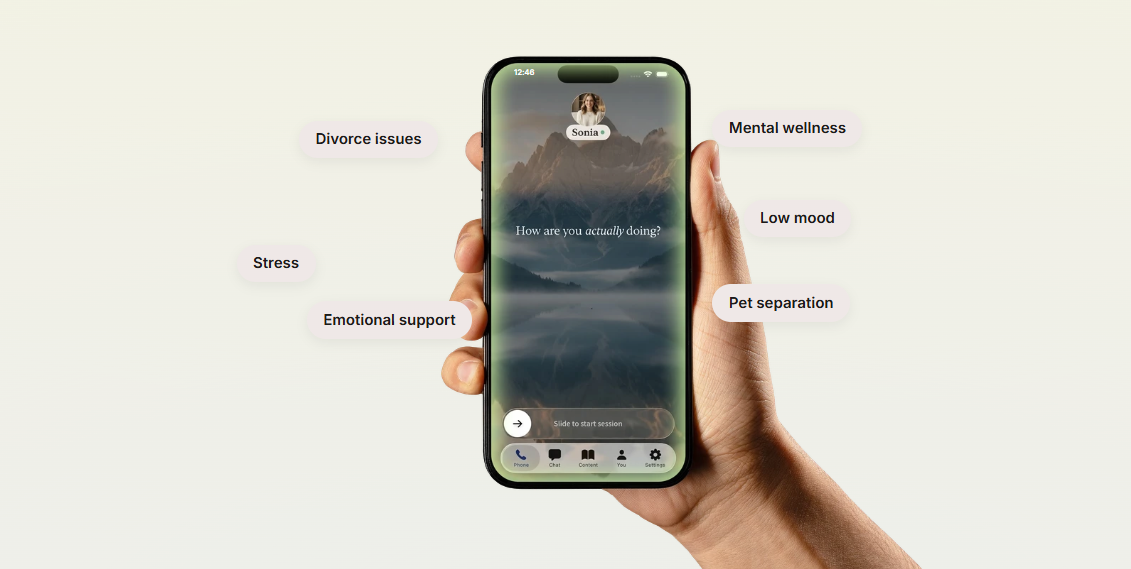
Sonia offers a judgment-free space for AI-driven conversations for mental health support. Talks that help people manage emotions and thoughts. Users can communicate through text or voice. That means they get the help they need the way they want it. Sonia isn’t limited to basic topics, too. People can talk to it about anxiety, grief, low confidence, relationships, sleeping troubles, and any mental health-affecting life experiences. One feature worth noting is the ability to conduct regular check-ins even after closing the app.
Key Features:
- HIPAA-compliant for protected conversations
- Tailored conversations to the user’s needs
- AI-powered support for navigating everyday challenges
Pricing:
- Free Trial
- Basic Package – $19.99 per month
- Premium Package – $39.99 per month
Real Use Case:
Breakups are often bad for both parties. And Sonia can provide just the help they need. They can turn to it to talk about recurring thoughts and reflect on particular triggers. The app can encourage healthier coping strategies.
Yuna
Yuna is an AI mental health coach grounded in CBT and DBT techniques. It supports voice and text conversations and can remember conversations logged in every session. And it doesn’t just listen or respond. The tool can offer mindfulness exercises, personalized action plans, and goal setting. What makes it especially appealing is its real-time safety monitoring. When it detects certain language, Yuna connects a user to a human professional or emergency services for licensed care.
Key Features:
- Risk language triggers for instant de-escalation response
- Turning chats into practical routines and self-reflection
- Benefit routing, meditations, and journaling
Pricing:
- Free Trial
- Individual Package – $19.99 per month
- Enterprise Package – Custom Pricing
Real Use Case:
Entrepreneurs dealing with constant high-pressure schedules can use Yuna. They can track mood changes and build small routines to help manage stress and mental fatigue.
Choosing the Best AI Tools for Mental Health Support in 2026
If I told you a decade ago that AI tools for mental health support would exist, chances are, you’d find the idea bizarre. But here we are. Even so, none of these tools diagnose, treat, or replace crisis care. They’re not substitutes for therapists or other qualified professionals. That said, you can use them as a supplement to care. Wysa offers a clinically validated structure. Ash is for open-ended conversations. Headspace pairs support with an established mindfulness library. Sonia extends help even after sessions. Yuna specializes in AI coaching.
Pick based on what kind of support you actually need. And you can get a tool that provides a private space for reflection, guided exercises, mindfulness, and everyday mental wellness support whenever you need it.
For the ultimate well-being journey, visit our guides on the leading AI tools for emotional support and the best AI tools for fitness and workouts.

