


Stories can begin with almost anything. Strange dreams. Personal encounters. Existing influences. The problem is turning that spark into something with a beginning, middle, and end. That’s why it’s normal for most fiction writers to have a notes app with a graveyard of story ideas. Pilot chapters that trail off mid-scene. Or characters with no plot attached. That’s where AI tools for writing stories can prove useful.
A recent comprehensive survey and analysis found that 51% of fiction authors surveyed have used AI. And yes, these AI tools assist in developing ideas, building characters, shaping plots, generating scenes, and keeping a narrative moving.
With that in mind, here are five picks that help you avoid hitting a wall when writing stories.
Top Five Best AI Tools for Writing Stories
Sudowrite
Sudowrite is well-regarded for fiction writing. Its main highlight is its proprietary model, Muse. An advanced narrative AI that never fails to write unique prose with no filters. This also lets users explore mature themes. Beyond that, it offers a suite of tools that help with the parts of storytelling that often take the most creative energy. Canvas, Brainstorm, and Visualize are made for planning and exploring possibilities. Describe, Story Bible, Write, and Expand help users get past blank-page syndrome. Rewrite and Feedback are for polishing.
Key Features:
- End-to-end story assistance that preserves user voice and direction
- Supports a diverse set of languages
- Dedicated AI assistant for managing and improving existing stories
Pricing:
- Free Trial
- Hobby & Student Package – $19 per month
- Professional Package – $29 per month
- Max Package – $59 per month
Real Use Case:
Mystery stories can be tricky to write. Like having a detective discover a clue but not knowing what should happen next. Sudowrite can help brainstorm several possible developments. This allows for different directions to consider.
Novelcrafter
Novelcrafter combines AI-assisted writing with a structured workspace for developing stories. Two powerful offerings lead the way. Codex helps build a memory system. That means writers can use it to store and organize their characters, lore, and locations. Genre Guide, on the other hand, assists with monitoring character chemistry, multi-POV arcs, and spin-off creations. Novelcrafter stands out for consistency because it references every detail while planning, writing, and polishing the narrative.
Key Features:
- Complete story writing and planning suite
- Supports syncing of Claude, OpenAI models, and Gemini
- Collaboration tools for team writing and editing
Pricing:
- Free Trial
- Scribe Package – $4.48 per month
- Hobbyist Package – $8.96 per month
- Artisan Package – $15.68 per month
- Specialist Package – $22.40 per month
Real Use Case:
Novelcrafter can be useful for fantasy writers. It’s easy to lose track of a story with several kingdoms and characters. But the Codex can keep everything organized to help maintain continuity.
Squibler
Squibler offers a more direct approach to AI-assisted storytelling. With its dedicated tools for writing stories and novels, users can generate structured narrative content from prompts. Writers just need to define the characters, genre, and vital plot details. By setting the tone, users receive a draft that aligns with the intended theme and creative direction. Squibler also handles conventions well, with a dedicated genre selection. What’s more, the tool lets writers explore alternate versions of scenes, openings, or endings.
Key Features:
- Built-in writing, character, and screenplay templates for getting a solid starting point
- Supports more than 80 languages
- AI-assisted brainstorming, writing, and editing
Pricing:
- Free Package
- Plus Package – $29.99 per month
- Pro Package – $89.99 per month
Real Use Case:
Aspiring writers can use Squibler to develop their vague premise into characters, conflicts, and a potential storyline. This makes it easier to get a workable draft.
NovelistAI
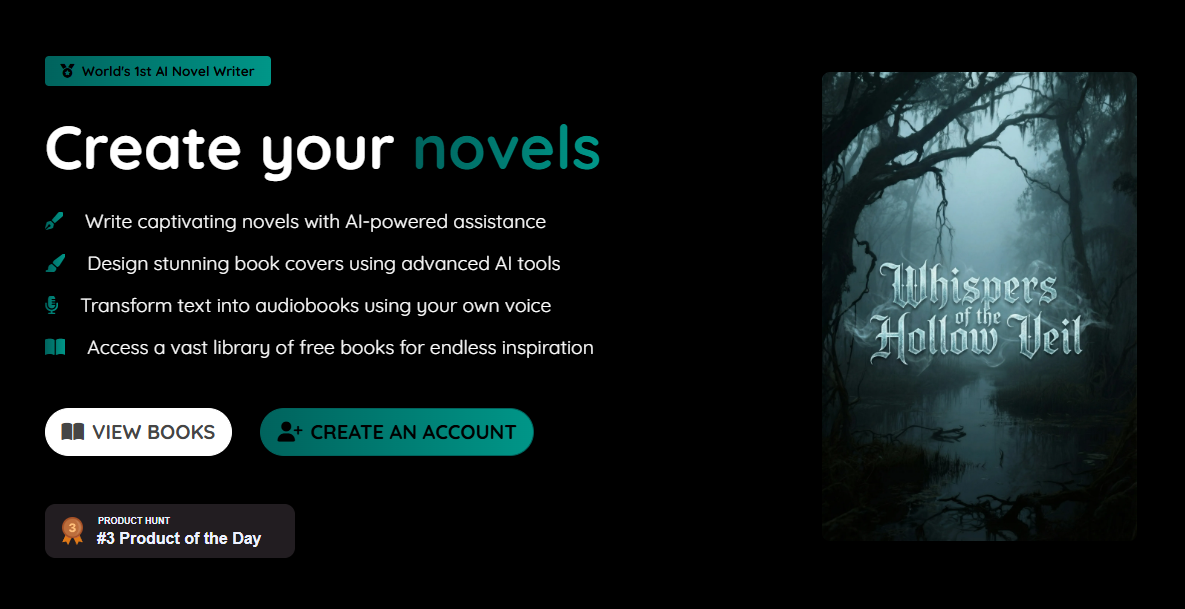
NovelistAI is designed around AI-generated storytelling. Up close, writers can use this tool to produce unique stories, add character depth, and maintain a consistent narrative. How? Its advanced AI technology can ensure proper pacing and engaging conflicts. NovelistAI also gives every character distinguishable personalities and profiles. At the same time, it’s capable of catching plot holes and potential inconsistencies. And there’s more. Users can get smart suggestions for dialogue and scene development without losing their voice.
Key Features:
- Multi-genre support that adapts to any writing style and convention
- Supports over 88 different languages
- Access to a library of free books for creative inspiration
Pricing:
- Free Package
- Premium Package – $12 per month
- Pro Package – $48 per month
Real Use Case:
NovelistAI can help writers who aren’t sure what kind of story they want to pursue. The tool can generate different concepts, premises, and narrative possibilities to show which direction sparks a stronger idea.
Inkfluence AI
Inkfluence AI may be a broader platform than just writing stories. But it serves the purpose well. Users just need to explain what story they want to create. Select a genre, specify the topic, target audience, intended tone, and the AI crafts a chapter-by-chapter outline on its own. There’s even an integrated editor that lets writers rewrite, format, and polish the story. And while most tools stop at a manuscript, Inkfluence AI goes further with cover art and formatted export.
Key Features:
- Translates output into more than 30 languages
- Exports in PDF, EPUB, DOCX, and KDP-ready formats
- Built-in cover creator and designer
Pricing:
- Free Package
- Creator Package – $9.99 per month
- Premium Package – $19.99 per month
Real Use Case:
Early stages of writing can be a hassle. Even so, Inkfluence AI can help writers explore different character conflicts and potential turning points. All before deciding which ideas belong in the final plot.
Choosing the Best AI Tools for Writing Stories in 2026
Most stories die because writers don’t know where to begin, how to continue without drifting away, or because they don’t have a direction for how to end it. In short, not every story needs the same kind of help. That’s what makes this list of AI tools for writing stories useful.
That said, choose based on where you’re struggling. Where a story stalls determines which tool actually helps. Sudowrite sharpens the prose. Novelcrafter is better suited to stories with complicated characters and worlds. Squibler makes it easier to turn a rough premise into a structured narrative. NovelistAI encourages experimentation with different story ideas. Inkfluence AI handles a story all the way to a publishable book.
For those looking for other writing assistants, read our articles about the AI tools for academic writing and AI tools for blogging.

