


Roses are red. Violets are blue. I still write poems. How about you? Kidding aside, poetry is either thriving or becoming a lost art today. The mixed opinions in a Reddit thread show this. Some say it’s declining. Others argue that poetry is just niche. A few people claim it’s developing in different forms. A recent Annual Literacy Survey found that poetry reading and writing remain stable, though the figure shown isn’t exactly encouraging. Intimidation could be a factor. Poetry is one of those things where the gap between having a feeling and having the right words for it feels enormous. So why not use the endless possibilities of AI tools for writing poetry?
Given the poetry’s current status, finding a tool whose standalone purpose is poetry can be difficult. That said, this guide explores both poem generators and general-purpose assistants to save you the hassle of searching.
Top Five Best AI Tools for Writing Poetry
Canva AI
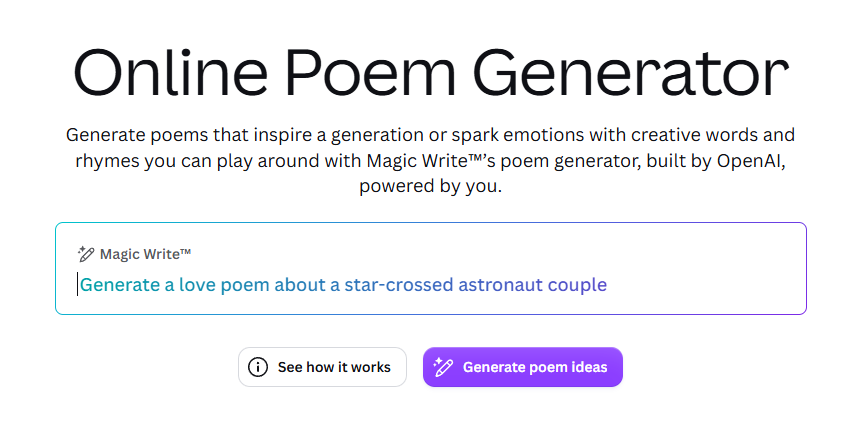
Canva belongs in this list thanks to Magic Write. It’s an AI content generation tool. Within this offering is a built-in poem generator powered by OpenAI’s technology. Users can instantly craft poems of any kind by just entering prompts. That includes acrostic, romantic, haiku, and more. Writers define the number of verses, rhyme scheme, structure, and theme. The AI generates ideas and drafts. If they’re not satisfied, users can provide follow-up prompts to adjust tone and vocabulary or regenerate the poem entirely.
Key Features:
- Generating poem drafts across 20 different languages
- Chat-based control over specific poem elements
- Dedicated AI tools for translating poems into over 100 languages
Pricing:
- Free Package
- Pro Package – $18 per month
- Business Package – $25 per month
Real Use Case:
Spouses making a personalized birthday card could use Canva AI to generate a short poem. They can refine the wording and place it alongside design elements.
ChatGPT
ChatGPT works entirely through conversation when it comes to poetry. Describe the tone, rhythm, length, theme, topic, and the like. ChatGPT writes the poem in seconds. What sets it apart is that writers can paste their own draft and have the AI revise it to fit poetic conventions or custom instructions. It also lets users work through multiple revisions by asking for different endings, imagery, moods, or structures. Plus, they can ask ChatGPT to explain why a line works. All of these make the process a real collaborative edit.
Key Features:
- Generates 5 to 10 poems at once
- Revisions through back-and-forth conversations
- Style imitation and emotional depth
Pricing:
- Free Package
- Go Package – $8 per month
- Plus Package – $20 per month
- Pro Package – $100 per month
Real Use Case:
ChatGPT allows beginners to ask for metaphors around different experiences. It can then develop promising ideas and help them build a personal poem complete with several refinements.
UPDF AI
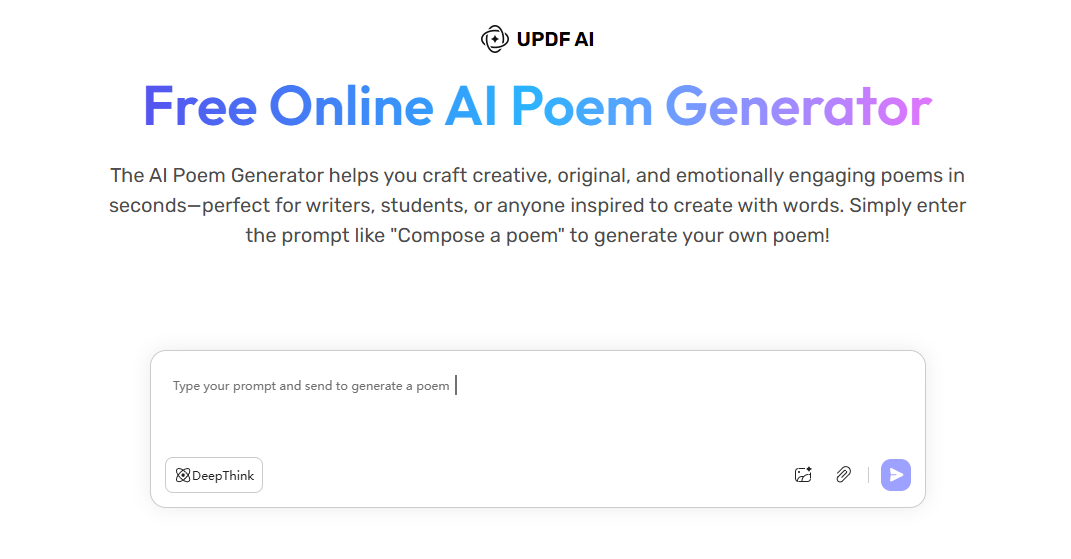
UPDF is better known as a PDF tool. However, it now has a dedicated AI Poem Generator. It’s one of many AI additions since it launched UPDF AI. This built-in poetry feature specializes in producing thoughtful and expressive poems. It can also help users explore different poetic styles, themes, and tones. That includes rhymed and free-verse poems. The process remains familiar. Users specify the topic and style, and UPDF AI delivers a tailored output accordingly.
Key Features:
- DeepThink mode for active reasoning and thinking
- Supports different poetic styles and tones
- Powered by ChatGPT and DeepSeek
Pricing:
- Free Package
- Premium Package – $29 per quarter
Real Use Case:
Students assigned to write a poem about caring for nature can use UPDF AI’s poem generator for assistance. They can generate a draft and use it as a starting point for writing lines that better reflect their observations and writing style.
Claude
Claude can do more than answer questions. Its conversational writing capabilities make it useful for poetry work. That means writers can rely on it for brainstorming, developing imagery, reviewing an existing draft, or generating poems entirely. Claude is also positioned as the option that leans toward more natural-sounding prose. It understands pacing and rhythm and breaks away from generic lines that simpler tools default to. As such, users can expect outputs that read more restrained and literary.
Key Features:
- Strong long-form poetry and natural-sounding writing
- Writes several poems in one go
- Emphasis on clarity, repetition, tone, and emotional impact
Pricing:
- Free Plan
- Pro Package – $20 per month
- Max Package – Starts at $100 per month
Real Use Case:
Claude supports aspiring poets in writing about complex emotions. It helps by pointing out clichés, drafting an output that mirrors the ambiguity, or suggesting approaches toward the emotional progression.
DeepAI
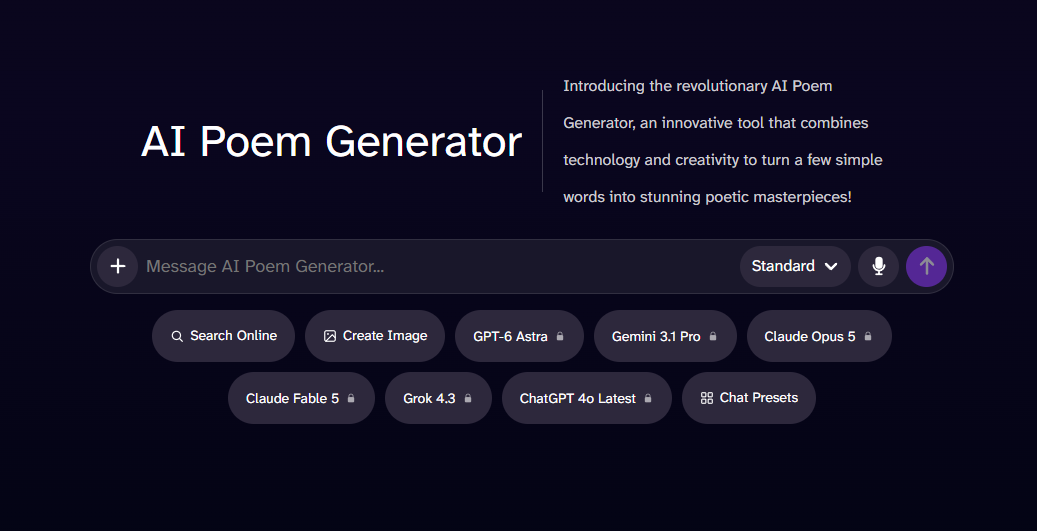
DeepAI transforms simple words into poetic pieces. And it does so quickly. Type a few words, explain the theme and subject, and get a poem back immediately. This makes it useful for quickly exploring what different concepts might look like in verse. One feature worth highlighting is that the tool supports different forms. Users can generate free verse, limericks, haiku, sonnets, and more. Overall, DeepAI works well for fast inspiration.
Key Features:
- Advanced modes for better reasoning and accuracy
- Powered by ChatGPT, Claude, Gemini, and Grok
- Supports chat-based control over style, mood, or format
Pricing:
- Free Plan
- Pro Package – $9.99 per month
Real Use Case:
Teenagers scrambling to write something for a friend’s birthday can get help from DeepAI’s poem generator. Without signing up for anything, they can quickly type a prompt and get an on-theme verse.
Choosing the Standout AI Tools for Writing Poetry in 2026
Writing a line or turning one into something that actually flows can be tricky. That’s why AI tools for writing poetry matter. AI tools like Canva, ChatGPT, UPDF, Claude, and DeepAI can help you learn and pursue the art of poetry in different ways. Finding inspiration, choosing the right rhyme or rhythm, polishing an unfinished verse, or even writing the poem entirely.
But the most important thing is deciding what to keep. AI can help, but the final output should still reflect your writing and intention.

