Home Blog Page 13

Charli XCX’s New Album: Everything We Know So Far

Charli XCX has been working on a follow-up to BRAT. Here’s everything we know about the pop star’s “rock album” so far.

A “rock album”? When did that happen?

That’s how Charli herself characterized it in a new British Vogue story. Despite the shift in genre, Charli is still working on it with two longtime collaborators, A. G. Cook and Finn Keane (formerly known as Easyfun), though Cook is apparently playing guitar on it. (If you want a taste of what that might sound like, check out the records Cook produced with his partner, Alaska Reid.)

Journalist Laura Snapes, who caught up with Charli XCX in Paris during last October’s Fashion Week, wrote the piece. “We knew we wanted to go to Paris to do it,” Charli said. “We knew it would be this very hectic, rich time, and we like creating in that kind of atmosphere.” It’s unclear how far into the process she is now.

Did Charli XCX tease the album before the news dropped?

A day before the story was published, Charli XCX’s once-private second account changed its handle from 360_brat to b.sides, where she shared a photo gallery capturing those recording sessions. The caption read: “Me alex and finn in paris @ rue boyer last year. spent 10 days recording here. Aidan and alaska came. Alex dj’d the mcqueen show. Played some songs for some friends at the studio. Went to the cinema. Had lots of steak frites. felt really inspired.”

She also updated her Spotify bio, which now reads: “I feel so lucky that I feel so inspired. If you feel inspired then you’re lucky too. But if you don’t feel it right now, that’s okay. Because one day you’ll feel it, and when you do, you’ll feel like you’ve been let in on the best secret in the world. And then it will fade away again.”

What else has Charli said about the album?

In the British Vogue story, Charli gave a little more backstory about the direction she took with the record. “If I’d made another album that felt more dance-leaning, it would have felt really hard, really sad,” she said. “But what’s interesting for me is to bend the possibilities of what my perspective on that could be.” She added, “Now there’s just so much noise around anything else that I do in a way that I sometimes find a bit pointless. I’m like, ‘Why don’t I just make the album and listen to it with A. G. and Finn?’ But there’s obviously a narcissism that prevents me from doing that.”

Charli also said that the new album Charli “is commenting on how I interact with the joint main love of my life outside of George and what would happen if it was taking from me — how I would have no purpose, and how for good or bad, art does provide me with purpose in my life.” Presumably, that means there’s no lyric about wanting to rock out with George.

Cook had this to say about the process: “It’s looking for this intensity. It’s not just this flex of, ‘Oh, I did this other album.’ She’s really responding to a feeling that a lot of people have in 2026 of there being so much, almost too much. What do you hold onto? I’m inspired by seeing how she’s so ready to do that rather than take it easy.”

What does the album sound like?

Snapes got to hear some of the in-progress album, and her descriptions offer some idea of what the record might sound like. Of one song with the sample lyric “Card declined,” she writes, “Queasy feedback warps beneath a dead-eyed incantation about going shopping for a new personality and falling at the first hurdle.” Another is “a scuffed, sweetly melancholy song about the ‘quite mad’ night at the philosopher girl’s apartment.” (Sample lyric: “Nothing’s gonna last forever/ And no one’s gonna last forever.”) Another song, in Charli’s words, is about how acting makes her feel “something new and undiscovered and something kinda violent”; Snapes compares it to the vulnerable BRAT highlight ‘I think about it all the time’.

This post will be updated…

Tyla and Zara Larsson Team Up for New Song ‘She Did It Again’

Tyla and Zara Larsson have joined forces for a new song, ‘She Did It Again’. It serves as the lead single from Tyla’s sophomore album, A-Pop, and it’s accompanied by a music video. Check it out below.

Larsson is currently on tour in support of her latest LP, Midnight Sun. She’s also been teasing a remix album following her collaboration with Pink Pantheress on ‘Stateside’. Tyla’s self-titled debut dropped in 2024.

8 Albums Out Today to Listen To: Jessie Ware, M.I.A., Lucy Liyou, and More

In this segment, we showcase the most notable albums out each week. Here are the albums out on April 17, 2026:


Jessie Ware, Superbloom

Superbloom album coverJessie Ware achieved disco nirvana with 2020’s What’s Your Pleasure? and 2023’s That! Feels Good!, and she isn’t abandoning it just yet.  The singer’s new album, Superbloom, affirms her confidence has only been blossoming thanks to her adoring fanbase, but also feels torn between lifting her dance music up to the heavens and grounding it in domestic life, assuming the role of a goddess and staying clear of cosplay. Springtime, after all, is as joyful a season as it is transitional, and Superbloom closes a chapter as much as it opens up new lanes. Read the full review.


M.I.A., M.I.7

MIA_MI7_1500X1500M.I.A.’s Christian album has arrived. The gospel-tinged M.I.7 is released by her own OHMNIMUSIC label and features seven songs that were “written in seven places” over a period of seven days. It was recorded and conceptualized in Ethiopia, Egypt, India, United Kingdom, Greece, Australia, and the United States at Rick Rubin’s Shangri La Studio. The gospel group Sunday Service, founded by ye, provides backin. “This time,” a press release states, “she leaves politics at the door, and enters with something more intimate, more ancestral, more existential, more transcendent, and more essential than anything she has made before.”


Lucy Liyou, MR COBRA

MR COBRALucy Liyou’s revelatory new album, MR COBRA, is adapted from her semi-autobiographical theatrical work Mister Cobra, weaving together free jazz, Korean folk opera, musique concrète, 2000s-era pop, drag-inspired performance, and more. Skirting the line between shame and desire, the artist’s discordant sound poetry is juxtaposed with her reverence for pop, from ambiently interpolating Taylor Swift to going full-on nu disco. “Sometimes trying to adhere to the ‘facts’ of my experiences made other emotional truths feel distorted,” Liyou explained. “For MR COBRA, I wanted to give myself the agency to distort all truths to see what jumped out to me as truthful in a reactive, and sometimes illusionary or misleading, sense–in all of this faulty rawness.”


Kathryn Mohr, Carve

CarveWhile Kathryn Mohr’s last album, 2025’s Waiting Room, was recorded in a disused fish factory in Iceland, the Bay Area artist retreated to the rural Mojave Desert to record its quick follow-up, Carve. As an experimental musician who works at the intersection of landscape and memory, the album was fundamentally shaped by a difficult tour that ended in Joshua Tree; Mohr drove through dirt roads by herself before returning to record, again alone, with an acoustic guitar, a field recorder, and limited supplies. The LP was mixed by Richard Chowenhill of Flenser label mates Agriculture.


TOMORA, COME CLOSER

TOMORA_COME_CLOSERAs the album title suggests, COME CLOSER – the debut album from the collaborative project of the Chemical Brothers’ Tom Rowlands and Aurora – is both intimate and assertive. Before teaming up, the pair had worked on music together intermittently since 2019; AURORA guested on the Chemical Brothers’ 2019 album No Geography, while Rowlands produced several tracks on AURORA’s 2024 album What Happened To The Heart?. “This is the music that we’ve been waiting to make… the hardness with the soft, the ugly with the beautiful… It’s about connection,” the duo stated. “It is our own world — one that only exists when we meet and create together.”


Yaya Bey, Fidelity

yaya bey The week she released her last album, do it afraid, Yaya Bey found herself crying in a Miami hotel room, struck by the realization “there was no place for that grief to exist that would not become a spectacle.” In press materials, the Brooklyn artist explained, “I had been holding it in. Maybe, to protect myself. Maybe to prove the onlookers wrong. Whatever the case, it was spilling over now.” On her new album Fidelity, Bey compartmentalizes her grief into the “Three Deaths”: the personal, the communal, and the loss of innocence, while confronting the passing of her father, Juice Crew MC Grand Daddy I.U. Its blend of R&B, jazz, and reggae is often dreamlike, but Bay has no issue nimbly moving through it.


Accessory, Dust

Dust Accessory, the solo project of Dehd’s Jason Balla, has come through with his debut album, Dust. Following his mother’s passing in 2018, Balla laid the album’s foundations on the piano that she gifted him. It wasn’t until six years later – after periods of non-stop touring, a break up, and subsequent couch surfing – that Balla moved the instrument out of storage, composing in the mornings as a means of communing with his mother’s memory. Sticking to his DIY ethos, he tracked the album on equipment mostly built by himself in his home studio.


Teen Suicide, Nude descending staircase headless

Nude descending staircase headless.Teen Suicide’s studio era commences with Nude descending staircase headless, their new album out via Run for Cover. Long marked by a lo-fi bedroom aesthetic, the duo of Sam and Kitty Ray have been experimenting with more polished sounds on recent effort, but their new album – recorded by Mike Sapone (Taking Back Sunday, Oso Oso, Cymbals Eat Guitars) – marks the start of a new chapter. “On the older records everything was self-recorded, home-recorded, on a laptop or on tape, and always with really limited resources,” Sam commented. “I think we became known for that but it was also very limiting to be seen as a lo-fi band.”


Other albums out today:

Nine Inch Nails & Boys Noize, Nine Inch Noize; Tokischa, Amor & Droga; Honey Dijon, Nightlife; Winston Hightower, 100 Acre Wood; Souled American, Sanctions; Frog, Frog for Sale; Aarp, Kadıköy; Sean Solomon, The World Is Not Good Enough; Yot Club, Simpleton; Tiga, Hotlife; They Might Be Giants, The World Is to Dig; Arkells, Between Us; beaming, horseshoe; Drew Wesely, Silence Is a Sharpened Blade.

Slayyyter Shares New Single ‘Broke Bitch Free$tyle’

Slayyyter has dropped a new single, ‘Broke Bitch Free$tyle’. Already a live staple, the hard-hitting track arrives ahead of the singer’s Coachella Weekend 2 set. Listen to it below.

Slayyyter dropped her new album, Wor$t Girl in America, last month.

Rosalía Releases ‘LUX (Complete Works)’ Featuring Four Extra Tracks

Rosalía has released LUX (Complete Works), a deluxe edition of her 2025 album. It features three tracks from LUXs physical edition – ‘Jeanne’, ‘Novia Robot’, ‘Focu’Ranni’ – that are now available on DSPs for the first time, along with ‘Stalker (versión Francotiradora)’. ‘Focu’Ranni’ is also accompanied by a visual directed by Petra Collins. Check it out and take a listen below.

Sober Curious but Still Want a Buzz? Here’s What People Are Trying

The sober curious movement didn’t start because everyone suddenly fell in love with sparkling water. Sunday mornings have a way of doing the convincing for you. Enough bad ones, and the math stops being complicated.

Cutting back made sense. The part people don’t say out loud, though — most weren’t drinking for the taste. There’s a feeling involved. That low hum of loosening up, the slight gear change after a hard day. Dial back the alcohol, and the feeling doesn’t just vanish. Something else has to fill it.

That gap is exactly where a whole category of alternatives has rushed in. Some are worth knowing about. Others, less so.

What People Are Reaching For

This is where it gets interesting. The alternatives aren’t all created equal — and some are far more effective than the marketing suggests.

Kava goes back centuries in Pacific Island communities — not as a casual thing, but in ceremonial settings, for its calming and loosening effect. The active compounds, kavalactones, hit some of the same neurological territory as alcohol (GABA receptors, specifically) without dragging your liver into it or leaving you wrecked the next morning. Kava bars have been opening across the US and UK at a pace that would have seemed strange five years ago.

Then there are liquid kratom shots — gaining traction among people who want something functional without alcohol’s sedative downsides. Mitragyna speciosa — kratom — comes from Southeast Asia, where it’s had a working-class following for a long time: laborers using it to get through long shifts, traditional medicine using it for a range of complaints. The shot format is just the modern delivery mechanism. No brewing involved, no measuring powder. Small bottle, concentrated dose, done. Effects vary by strain and amount — lower doses tend toward stimulation and clarity, higher ones toward calm. It’s a meaningful difference from alcohol, which basically just sedates at any dose.

Cannabis beverages — specifically low-dose THC drinks — have gone mainstream in legal states and are increasingly accessible through hemp-derived channels elsewhere. A 5mg THC seltzer has under 10 calories, onset hits within 15–30 minutes, and most people are back to baseline within four hours. No hangover. No fuzzy morning.

Worth knowing with kratom: empty stomach means faster onset, but it also means the effects land harder than expected. Have something light first. And whatever the packaging suggests as a starting point — begin below it until you know how you respond.

The Calibration Nobody Warns You About

Every alternative above comes with a calibration period that alcohol, oddly, doesn’t require. Everyone already knows what two glasses of wine feels like for them. With newer options, you’re starting from zero.

What it forces, weirdly, is actual thought. You’re not just reaching for something because it’s there. You’re picking an effect, roughly, and working toward it. Most people find that once they’ve done this a few times, going back to the autopilot-drinking thing feels pretty strange. The habit of thinking about it sticks.

The other thing worth knowing: these options don’t stack well with alcohol. Mixing kava or kratom with drinks amplifies effects unpredictably. The whole point is using them instead, not alongside.

Why This Is Not Just a Trend

The sober curious movement has real staying power because it’s not ideological but practical. People feel better, sleep better, and spend less when they drink less. The alternatives filling that space aren’t novelty products; most have longer histories than beer.

What’s new is the format. Kratom shots, THC seltzers, kava RTDs — these exist because portability and convenience matter. The ritual of cracking something open at the end of the day isn’t going anywhere. The liquid inside is just changing.

Same underlying need, honestly. A bit of relief. Some pleasure. That low-key social ease. People just have more ways to get there now — and increasingly, they know enough to choose.

Exploring the Rise of Bold, Unfiltered Digital Encounters

There was a time when online chatting meant carefully curated profiles, long bios, and endless swiping. Today, a different kind of digital interaction is taking over—one that thrives on spontaneity, unpredictability, and real-time connection.

This shift reflects something deeper about how people want to communicate now. Less polished, more immediate. Less filtered, more real. And while traditional platforms still have their place, a growing number of users are gravitating toward experiences that feel more alive and less scripted.

Why Spontaneity Is Winning Online

The Appeal of the Unexpected

There’s something inherently exciting about not knowing who you’ll meet next. It mirrors real-life encounters in a way that structured platforms simply can’t replicate.

Instead of scrolling endlessly, users are diving straight into conversations. No buildup, no pressure—just instant interaction.

Breaking Away From “Perfect Profiles”

Highly curated profiles can feel exhausting. There’s often a sense of performance involved—choosing the right photos, crafting the perfect bio, and maintaining a certain image.

Spontaneous chat platforms remove that layer. What matters is the moment, not the presentation.

The Evolution of Random Chat Platforms

From Novelty to Culture

What started as a novelty has now become part of digital culture. Random chat platforms are no longer just about passing time—they’re about exploring connection in its rawest form.

This evolution has led to the rise of niche spaces that cater to more specific preferences and interaction styles.

More Than Just Conversation

Modern platforms aren’t just about talking. They’re about energy, presence, and the subtle dynamics that come with face-to-face interaction—even through a screen.

This is where newer experiences stand out: they focus on engagement rather than just connection.

A Different Kind of Online Experience

For users looking to explore something less conventional, platforms like luckycrush.live/jerkroulette introduce a more daring and unfiltered environment.

Rather than following the typical structure of random chats, this type of platform leans into a more expressive and boundary-pushing style of interaction. It’s designed for users who want something beyond small talk—something that feels more immediate and less restrained.

What Sets It Apart

1. Energy Over Formality

Interactions feel more dynamic because there’s less emphasis on “getting it right” and more focus on being present. This creates a different kind of atmosphere—one that’s less about impression and more about experience.

2. A Shift in User Intent

People joining these platforms often have a clearer sense of what they’re looking for. That shared understanding can make interactions smoother and more engaging from the start.

3. Less Predictability, More Engagement

Because the experience isn’t overly structured, conversations can take unexpected turns. That unpredictability is part of what keeps users coming back.

Navigating These Spaces Thoughtfully

While spontaneity is part of the appeal, it’s still important to approach these platforms with awareness.

Set Your Own Boundaries

Know what you’re comfortable with before you start. This helps you navigate interactions more confidently and avoid situations that don’t align with your preferences.

Stay Respectful and Aware

Even in more open environments, mutual respect matters. The best interactions happen when both sides feel comfortable and engaged.

Take Breaks When Needed

Fast-paced interactions can be exciting—but also draining. Stepping away when needed keeps the experience enjoyable rather than overwhelming.

The Cultural Shift Toward Real-Time Connection

The growing popularity of spontaneous chat platforms reflects a broader cultural shift. People are craving immediacy, authenticity, and interaction that feels less manufactured.

In a world where so much is filtered and edited, there’s something refreshing about raw, real-time communication—even if it’s imperfect.

This doesn’t mean traditional platforms are disappearing. Instead, it shows that users want options—different ways to connect depending on their mood, energy, and intention.

Final Thoughts

Online interaction is evolving, and with it comes a new wave of platforms that challenge the norms of digital communication. These spaces prioritize presence over perfection and spontaneity over structure.

For those willing to step outside the usual formats, the experience can feel surprisingly refreshing. It’s not about replacing traditional ways of connecting—but about expanding what connection can look like in the digital age.

And sometimes, all it takes is a single unexpected conversation to remind you why these platforms continue to thrive.

I Just Went Through 6 Generations of Weird, Handmade Beauty Rituals

0

Ever wondered how women used to take care of themselves before hydration started arriving in dropper bottles and a synthetically pink price tag? I didn’t. My family made sure I knew early on, which, at some point, led me to start questioning what on earth was happening in everyone else’s bathrooms. Exactly the reason I went generation-hopping, starting from the early 1900s, looking for beauty secrets. And I expected folklore. What I got was closer to ingredients you’d normally associate with cooking, cleaning, or emergency situations. To be clear, this is about what went on the body, not into it. Although I am personally not above grabbing a chunk of ginger like it’s a medically licensed intervention. Fair warning: not everything here would make it past a dermatologist’s desk today. Proceed mentally, not practically.

The Greatest Generation (1901-1927)

Sadly, there’s only one woman from that era whose beauty habits I can actually speak for. No research needed to guess she took care of herself, she’s my late great-grandmother. Good thing she makes up for five. I’ve still never seen hair better than hers. I’ve also only ever seen it worn one particular way. Look at her from the front and you’d only see a scarf, neatly tied around her head. From the back, two alarmingly long braids appeared, and just before they hit the floor, they were woven into each other, forming one continuous loop of beautiful gray hair. I always thought they could double as a jump rope.

The benefit, if you can call it that, was brutal simplicity. No heat damage, no styling damage, no anything damage. Just hair that was left alone long enough to survive itself. Of course, the hairstyle alone wasn’t enough for a 1920s-born Rapunzel. It was strictly olive oil bar soap, combs, air-dried by default, and if extra shine was ever needed, a bowl of literal ash sat in the corner. Turns out, it is highly alkaline, removing oil until the hair is stripped back to absolute basics, looking shinier by absence.

Silent Generation (1928-1945)

If the previous generation relied on leaving their hair alone, this one clearly didn’t trust stillness. We’ve all heard about the 100 strokes a day myth. My grandmother remembers it a little differently. Sugar water was, apparently, the hairspray. Mixed and left to dry, it formed a sticky layer that kept everything exactly where it was supposed to be, along with anything else that happened to come into contact with it. That alone could justify the 100 strokes. Butter occasionally made its way onto the face, not exactly as skincare, but because animal fats were one of the few things available that could keep the skin from cracking during harsh winters.

Baby Boomers (1946-1964)

My other grandmother split her time between two places, Greece’s Epirus, filled with goats, and Germany’s Cologne, filled with beer. Unsurprisingly, both ended up having their place in a beauty routine. Goat yoghurt was used as a face mask, soothing, gently exfoliating, and deeply moisturizing, with a pH close enough to the skin’s to support its natural microbiome. Of course, back then, it was just “softening.” Beer was used as a hair rinse, with its proteins supposedly adding lift and volume to limp hair. It was also credited with managing oily scalps, reducing dandruff, and making frizz slightly more obedient.

Generation X (1965-1980)

My mother falls squarely into that category, the closest a human can get to a Sphynx cat, hair-wise at least. I don’t really think that woman even knows how to use a razor. The only thing she’s ever done is halawa, better known as sugaring. Made mostly from sugar, water, and lemon, applied warm, removed quickly, and designed to take hair out from the root while simultaneously exfoliating the skin. She has also seen her cousins and girlfriends apply lemon straight to their faces, for its citric acid, which offered a quick sense of brightness and cleanliness, along with a high chance of irritation.

Generation Y (1981-1996)

I’ve seen my cousin use lemon a bit more creatively. A spray bottle hated to see her coming during the summertime. Paired with chamomile and endlessly misted under the sun, to lighten the hair, of course. Once that little routine was over, rosemary oil would follow as a scalp treatment, for circulation, hair growth, and everything in between, plus a bit of shine to make it look like something was happening right away.

I also reached out to a friend of mine I swore would give me fifty recipes. Turns out, her oil of choice before a shower is olive oil, moisturizing the hair, softening it, reducing breakage, and keeping the scalp relatively calm. My favorite though, was a face mask she fully believed in. Water and yeast. Supposedly antibacterial (nicotinic acid and all), good for collagen and cell renewal, decent at holding moisture, and responsible for that slightly glowy look. This, I’d try.

Generation Z (1997-2012)

And last but not least, my fellow Gen Z-ers. For this, I spoke to two friends of mine, one a model, the other fully skincare-obsessed. Apparently, both start their mornings by plunging their faces into a bowl of water and ice. It helps with puffiness and swelling, and is said to promote lymphatic drainage. I used to stick to a single ice cube, but clearly, that’s no longer enough. Another girl, another hair oil. The first one talked me through pumpkin seed oil, mainly for its supposed ability to block DHT (a hormone behind hair loss), and support growth over time with its fatty acids. The other, thankfully, didn’t even mention hair (one more oil and I’d lose it). Instead, she swears by a sugar-based lip scrub with coffee and honey, which, to be fair, I believe in, mostly because even plain sugar gets the job done in a hurry.

I’ve had a moment with DIY face masks myself, turmeric here, yoghurt there, honey somewhere in between. Short-lived, at best. One thing I would say, rethink body creams and deodorants. “Fragrance” is code for a cocktail of chemicals you’re expected not to question, and the rest of the label doesn’t exactly invite confidence either. Pure shea butter melts into oil within seconds on the skin, add a drop or two of your favorite essential oil, and there you have it, intense nourishment. As for deodorant, our underarm glands welcome way more into our body than you’d think. There are plenty of natural options, fruit-based, tree-oil-based, all proudly free of words you might struggle with. Golden rule: if it kills your tongue a little, think twice.

Olivia Rodrigo Shares Video for New Song ‘Drop Dead’

Olivia Rodrigo has released ‘Drop Dead’, the first single from her recently announced album you seem pretty sad for a girl so in love. It comes paired with a music video directed by her frequent collaborator Petra Collins and filmed at the Palace of Versailles in Paris. Check it out below.

The new song finds Rodrigo obsessing over a crush who knows all the words to the Cure’s ‘Just Like Heaven’, while she knows “why he wrote them.” (A recent Vogue story revealed that Rodrigo had been in the studio with the Cure’s Robert Smith.) The crush is a Gemini, and she’s a Pisces. You know who else is apparently a Pisces? Cameron Winter, with whom Rodrigo was recently spotted, marking the Geese frontman’s TMZ debut. The two Pisces both recently contributed to the War Child benefit comp HELP(2).

you seem pretty sad for a girl so in love, the follow-up to GUTS, reunites Rodrigo with producer Dan Nigro. It’s set for release on June 12, and Rodrigo will host and perform on Saturday Night Live on May 2.

Dreamina Alternatives

0

AI creative tools once surprised people with their unique abilities. Creators saw them as a technical breakthrough. But since the digital market is now full of options, apps like Dreamina may no longer be special to many. They started to feel normal. Just another part of everyday content creation. However, since modern audiences naturally have increasing expectations, users are now finding the conversation about Dreamina alternatives more relevant than ever. And it is not because Dreamina stopped working. The interest in other options comes from the need to explore new workflows and elevate content.

That said, here are some alternatives to Dreamina that can help meet the demands of today’s audiences.

Best Dreamina Alternatives in 2026

Simfa

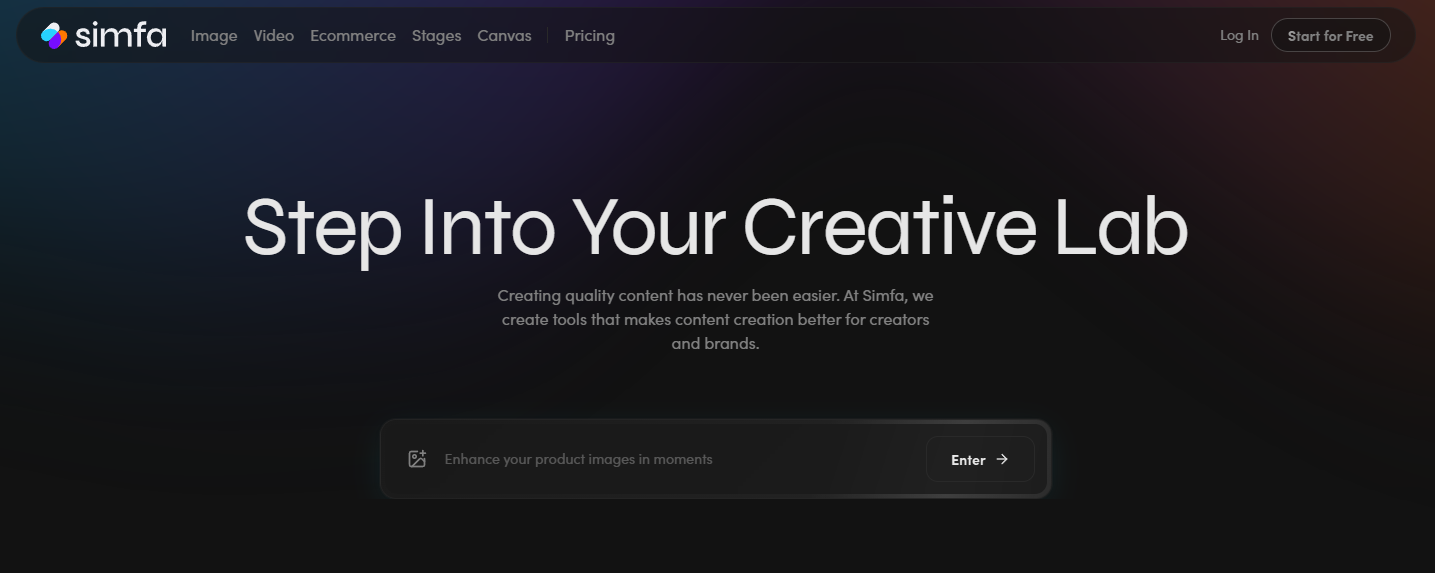
Simfa prides itself on giving creators powerful AI tools that are fast and easy to use. It does so without breaking the bank and compromising quality and privacy. At its core, this app makes content creation more efficient and accessible. Simfa also caters to brands, creators, and beginners, making it a practical option for all skill levels.

Users get access to tools such as an SEO Meta Updater, Description Creator, Product Enhancer, Color Grade, Background Remover, Image Upscaler, AI Face Swaps, AI Outfit Swaps, and AI Image Generator.

Pricing

  • Free Access
  • Starter Package – $15 per month
  • Plus Package – $23 a month
  • Simfa+ Package – $99 per month
  • Enterprise Package – Customizable

Leonardo.AI

Owned by Canva, Leonardo.AI is a generative AI platform that focuses on tailoring outputs to various concepts, styles, and purposes. It enables artists, animators, developers, designers, marketers, and photographers to produce visuals using custom models or by inputting prompts.

Leonardo.AI has image and video tools like AI Image Generator, AI Video Generator, Background Remover, Creative Ideation, Image Editor, Image Upscaler, and a Train Your Own Model option.

Pricing

  • Free Access
  • Essential Package – $12 a month
  • Premium Package – $30 per month
  • Ultimate Package – $60 a month

Dezgo

Dezgo uses advanced AI models for generating images and videos through text descriptions. This platform is useful for creating content for social media, entertainment, and business use.

Image tools include Controlled Text-to-Image, Background Remover, Image Upscaler, Inpainting from Text, and Image Editing. There are also tools for text-to-video, text-to-image, image-to-video, and image-to-image outputs.

Pricing

  • Free Access
  • Power Mode Package (Parameter-based Prices)

1min AI

Another option that runs on various AI models is 1min AI. It works as a digital solution to complex, expensive, and time-consuming creative projects. The app is also easy to use, produces results quickly, and is overall efficient.

1min AI comes with features such as an Audio Translator, Background Replacer/Remover, Image Generator, Image Object Search and Replace, Image to Video, Image Upscaler, Image Variator, Text Remover/Editor, and more.

  • Free Access
  • Pro Package – $6.5 per month
  • Business Package – $10 a month

Higgsfield

Higgsfield fills the gap between imagination and production. Designed for a wide range of creators, this tool makes media creation accessible to everyone. With its AI technology, creators can use Higgsfield to achieve cinematic-quality visuals and improve workflows.

In particular, this platform is designed to have features including but not limited to Create Image, AI Image, AI Video, Image Upscaler, and others.

Pricing

  • Starter Package – $15 per month
  • Plus Package – $34 a month
  • Ultra Package – $84 per month

Final Notes

The thing about tools like Dreamina is that they still work well, but the “wow factor” does not hit the same level anymore. As audience preferences for content continue to evolve, what once felt impressive now feels standard. It is like Simon Cowell saying it is good, but not enough to press the golden buzzer for it.

At this point, Dreamina alternatives are essential not because something is wrong, but because processes change and viewers want more. In other words, considering other options is not looking for a perfect replacement; it is about finding something that aligns better with how content is made today.

That is where Simfa comes in. It offers features to deliver fresh content for audiences. At the same time, it keeps the generation process straightforward to ensure that users find the workflow easy and light. And for creators, these qualities make the difference.