Any culture contains particular visible and hidden features. Visible cultural elements are traditions, etiquette, social practices, etc. In fact, they take only $10 of people’s cultural identities, while the rest is represented by hidden cultural differences.
Cultural differences is a broad term that involves the system of socially acquired values, rules, and beliefs that impact the behaviors of people in a certain social group. For example, western orientation towards achievement and emphasis on success can be viewed as a culture difference when compared to the Eastern countries.
Generally, cultural differences contribute to one’s relationship with their environment. As social competencies, they may include differences in assertiveness and self-disclosure levels as well as in shared interpersonal style.
If you are considering studying abroad, you must be aware of the cultural differences between your home country and desired destination. This article will highlight the main distinctions of student experience in Australia, so you can prepare yourself before moving there. So keep reading!
Styles of studies
Australian education is famous for its top quality all around the world. In fact, the learning standards are very high and the overall system is quite demanding. A mix of both practical and theoretical lessons ensures gaining deep knowledge and acquiring a large set of skills. However, the workload can be different from what you’re used to in your home country. This can result in increased stress levels and even mental health issues. So if you are not a hard-working person, you will less likely adapt to studying in Australia in a short time.
However, the good news is that instructors in most Australian schools tend to give more attention to international students. They offer a huge variety of tools and materials that can make the period of your adaptation less stressful.
Language barrier
One of the major cultural changes experienced by international students is language. Oftentimes, young people struggle with language fluency while attending lectures and workshops. When it’s not clear what the instructor is talking about, the learning process may become a real pain. If it’s not easy for you to overcome the language barrier, you can turn for help with your studies. While being a student, I frequently asked professional writers to do my assignment in Australia, which helped me to get good grades. In general, I used all the available opportunities to practice speaking until I gained enough confidence. Most importantly, I wasn’t afraid of making mistakes while talking to strangers since this is the only way to develop fluency.
Entertainment
If you are a fan of shopping, you must know that shopping hours in this country may be more limited than at home. Even in city areas, shops usually open at 9 am and close at 5 pm. This can be a big disadvantage if you study full-time. However, sometimes late-night shopping is available because shops may stay open until 9 pm. In terms of other entertainments, Australian people love sports. Most of them are keen on rugby, cricket and tennis, so watching matches is one of the most popular types of leisure activity.
Social diversity
Australian society is very multicultural. This country accepts and celebrates cultural diversity so you can find traditions and food from different parts of the world there. Chinese, French, Japanese, Italian, Indian, Thai, Mexican and many other cultures are represented in Australia. In fact, nearly 25% of its population was born overseas. Hence, Australia offers you the opportunity to experience something brand new and step outside of your comfort zone. No matter where you are from, you will always have the feeling of belonging in the multicultural setting of this country.
Individualism
Australia is an individualistic country. This means that people tend to define themselves rather in terms of ‘I’ than ‘we’. Autonomy and independent thinking are highly valued in Australian society. In contrast to collectivistic nations, personal needs and attitudes are crucial determinants of behavior for Australians. Ties between friends are loose and most individuals are likely to engage in activities alone. The fact that social interactions are quite short and not so intimate may be shocking for you if you come from collectivistic society.
Final thoughts
A lot of young people decide to study overseas to try another lifestyle. While this may be quite beneficial in terms of self-development, such an experience also requires some time and effort to adjust. Chances are, you will notice many more differences between Australia and your home country than mentioned above. But at least, you are aware of the most common cultural features now.
Author’s BIO
Michael Turner is a study coach working with Australian students from top universities. His main goal is to help young people overcome all the study challenges they face while pursuing a degree. In his free time, Michael writes a blog about cultural differences in various countries.
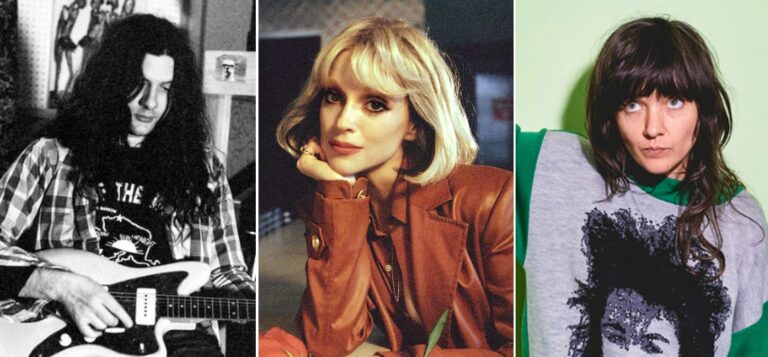
Speaking of his cover, Vile told Rolling Stone: “Lou Reed/the Velvet Underground were probably my earliest classic rock influence. I loved it. The first time I heard them, I’m sure I was probably stoned. When you hear music like that, so organic and raw, but you know, so confident, all those things combined, [it’s] so cool. So unapologetic. It just has an effect on you that you can’t even necessarily detect at the moment.”
I’ll Be Your Mirror: A Tribute to the Velvet Underground & Nico Tracklist:
1. Sunday Morning – Michael Stipe
2. I’m Waiting For The Man – Matt Berninger
3. Femme Fatale – Sharon Van Etten (w/ Angel Olsen on backing vocals)
4. Venus In Furs – Andrew Bird & Lucius
5. Run Run Run – Kurt Vile & the Violators
6. All Tomorrow’s Parties – St. Vincent & Thomas Bartlett
7. Heroin– Thurston Moore feat. Bobby Gillespie
8. There She Goes Again – King Princess
9. I’ll Be Your Mirror – Courtney Barnett
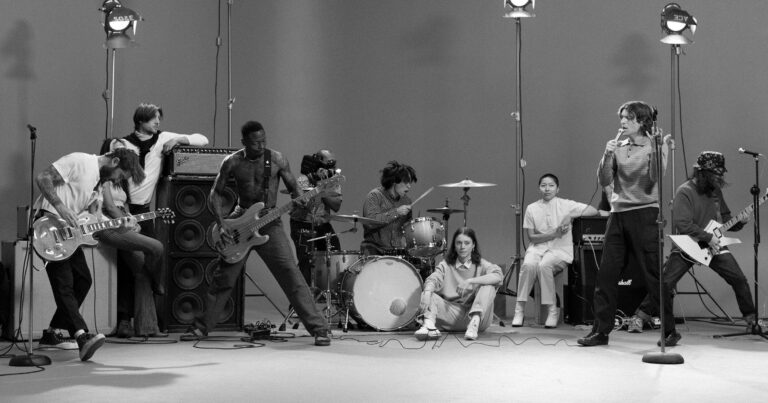
10. The Black Angel’s Death Song – Fontaines D.C.
11. European Son – Iggy Pop & Matt Sweeney
Turnstile have confirmed the details of their next album. It’s titled GLOW ON and it arrives August 27 via Roadrunner. Today, the Baltimore outfit have also dropped a new single from the LP, a collaboration with Blood Orange called ‘ALIEN LOVE CALL’. It comes with a video directed and edited by Turnstile’s Brendan Yates and Pat McCrory. Check it out below and scroll down for the album’s cover artwork and tracklist.
Glow On, which will follow Turnstile’s 2018 LP Time & Space, was recorded with producer Mike Elizondo and co-produced by Yates. The record features the previously released tracks ‘HOLIDAY’, ‘MYSTERY’, ‘NO SURPRISE’, and ‘T.L.C. (Turnstile Love Connection)’, which comprised the TURNSTILE LOVE CONNECTION EP that landed last month.
GLOW ON Cover Artwork:
GLOW ON Tracklist:
1. MYSTERY
2. BLACKOUT
3. DON’T PLAY
4. UNDERWATER BOI
5. HOLIDAY
6. HUMANOID / SHAKE IT UP
7. ENDLESS
8. FLY AGAIN
9. ALIEN LOVE CALL [FEAT. BLOOD ORANGE]
10. WILD WRLD
11. DANCE-OFF
12. NEW HEART DESIGN
13. T.L.C. (TURNSTILE LOVE CONNECTION)
14. NO SURPRISE
15. LONELY DEZIRES [FEAT. BLOOD ORANGE]
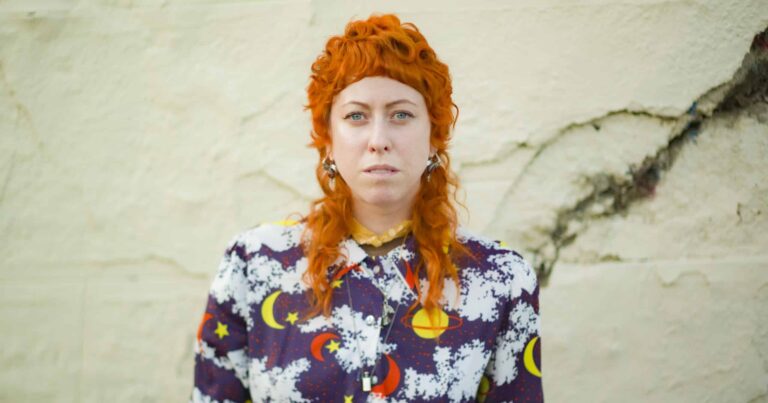
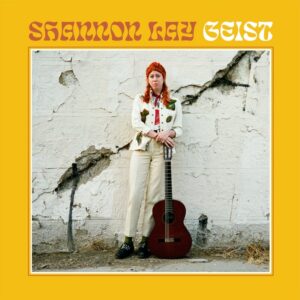
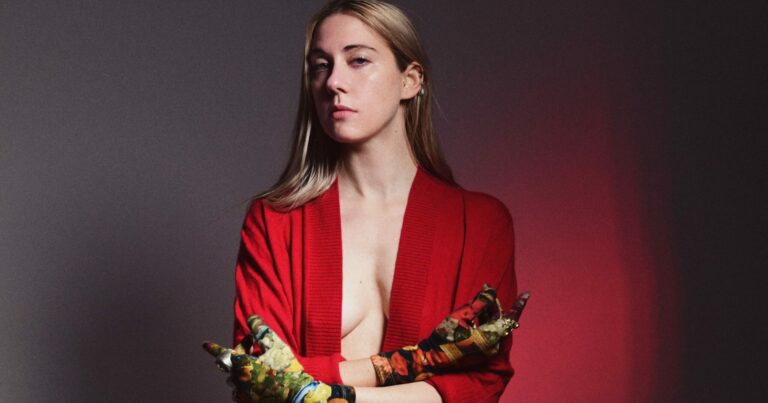
Shannon Lay has announced her next LP: Geist will be released on 8 October via Sub Pop. Today’s announcement comes with the release of two new singles, ‘Awaken and Allow’ and ‘Geist’, alongside an accompanying video directed by Kai MacKnight. Check it out below, and scroll down for the album’s cover artwork and tracklist.
“‘Awaken and Allow’ is a prayer and a promise. A quiet moment to reflect on transformation and what it means to me,” Lay explained in a press release. “California represents my comfort zone and in this song I am urging myself and everyone listening to move out of their comfort zone in order to push ourselves to grow and evolve.”
Of the title track, she added: “‘Geist’ is a testament to the power we all have within. We are so much more amazing than we know ourselves to be. With this video I really wanted to acknowledge some of the incredible people who make shows possible. We filmed at Zebulon in Los Angeles; a venue that has brought so much to the community here and I am so happy they have survived this uncertain time. There is so much going on behind the scenes to create the amazing memories we all have of live music and every part of that took a hit with the pandemic. With all we have been through it has been awe inspiring to see the strength of the human spirit.”
Lay recorded vocals and guitar for the new album at Jarvis Tavinere of Woods’ studio, before sending the songs to multi-instrumentalists Ben Boye (Bonnie Prince Billy, Ty Segall) in Los Angeles and Devin Hoff (Sharon Van Etten, Cibo Matto) in New York. Sofia Arreguin (Wand) and Aaron Otheim (Heatwarmer, Mega Bog) contributed additional keys, while Ty Segall plays a guitar solo on ‘Shores’.
Geist Cover Artwork:
Geist Tracklist:
1. Rare to Wake
2. A Thread to Find
3. Sure
4. Shores
5. Awaken and Allow
6. Geist
7. Untitled
8. Late Night
9. Times Arrow
10. July
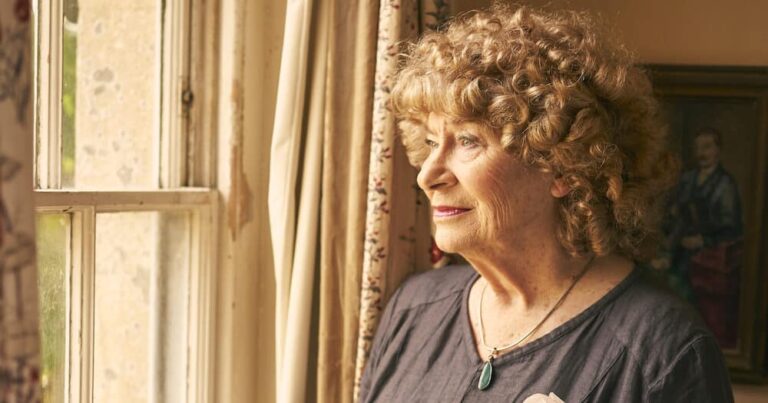
Shirley Collins has announced a new EP titled Crowlink. Due out on July 30, the project is named after a hamlet in England that’s located near a series of undulating hills on the Sussex coast known as Seven Sisters. The EP does not feature ‘Crowlink’, the closing track off Collins’ last album Heart’s Ease, but it does include the new single ‘My Sailor Boy’. Check it out and find the EP’s cover artwork and tracklist below.
Featuring field recordings from the edge of the cliffs at Crowlink, Firle Church, and Etchingham, the new EP was produced by Matthew Shaw, who also played additional instrumentation across its five tracks. Heart’s Ease was released last year, marking Collins’ second album for Domino.
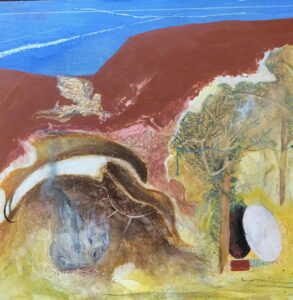
Crowlink EP Cover Artwork:
Crowlink EP Tracklist:
1. Across the Field
2. At Break of Day
3. Through All Eternity
4. My Sailor Boy
5. The Rose and the Briar
TORRES, the moniker of singer-songwriter Mackenzie Scott, has unveiled the title track from her forthcoming LP Thirstier, which arrives July 30 via Merge. Listen to ‘Thirstier’ below.
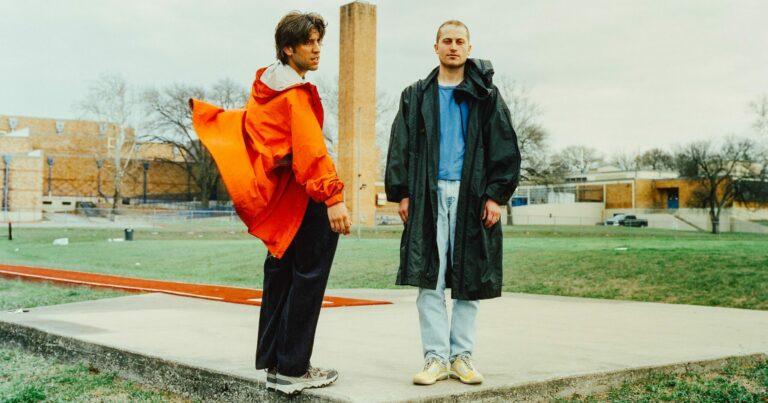
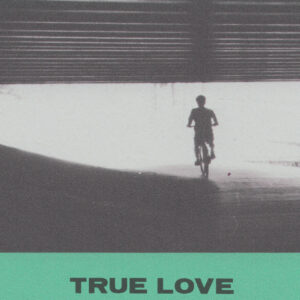
Austin Texas duo Hovvdy have announced a new album titled True Love, sharing the video for its title track. The album arrives October 1 via Grand Jury. Check out ‘True Love’ below and scroll down for the LP’s cover art and tracklist.
True Love was co-produced by Andrew Sarlo and recorded at his studio in Los Angeles throughout 2020. It marks Hovvdy’s fourth album, following 2019’s Heavy Lifter, 2018’s Cranberry, and 2017’s Taster.
“For each Hovvdy record there’s always been a song that kinda shocks my system, kinda jolts me into a brand new and inspired place,” Hovvdy’s Charlie Martin said in a statement about the new single. “This was definitely that song for me. I remember writing it and feeling a rush of excitement – crying a lot honestly. it feels so good to express love and appreciation when you really fucking mean it. but it’s hard to feel worthy of love, of something so rare, and all we can do is try to measure up – that’s what that last part is all about.”
True Love Cover Artwork:
True Love Tracklist:
1. Sometimes
2. True Love
3. Lake June
4. GSM
5. Around Again
6. Hope
7. Joy
8. One Bottle
9. Blindsided
10. Hue
11. Junior Day League
12. I Never Wanna Make You Sad
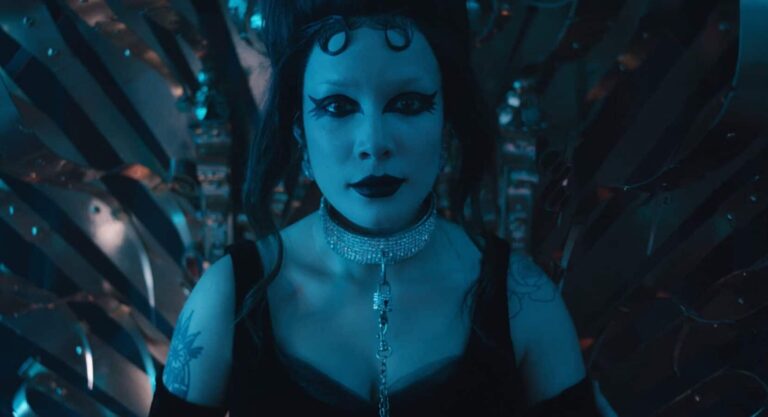
After announcing their new album, which is produced by Trent Reznor and Atticus Ross of Nine Inch Nails, Halsey has now unveiled the trailer for its accompanying film, also called If I Can’t Have Love, I Want Power. The hour-long visual was written by Halsey and directed by Colin Tilley, who previously worked with the singer on the videos for their singles ‘Without Me’ and ‘You Should Be Sad’. Check out the trailer, which includes previews of their forthcoming LP, below.
Tickets for If I Can’t Have Love, I Want Power go on sale August 3. The film will hit select IMAX theaters later this summer, while the album is due out August 27 via Capitol. Halsey revealed the LP’s cover artwork last week.
Phillips, the world-renowned auction house, has unveiled a 24/7, online-only auction featuring over 30 works by emerging artists alongside established names that will take part from the 21st to July 28.
Phillips’ annual 24/7 online auction, created by its Asia team in 2019, has demonstrated the resilience and fortitude of the middle market, with each year seeing a growing number of new clients to Phillips’ digital platforms.
Highlighting the sale is Mr.’s Happy, an intricately painted sculpture illustrating the world-famous American singer and songwriter Pharrell Williams. Mr. transforms Pharrell into the subject of his sculpture, instantly recognisable as the singer by his trademark fedora hat and bow tie. Additionally, the title of his work derives from the title of his hit song, Happy. As not only a figure who has fashioned popular culture himself but also a collector, Pharrell has long collected Mr.’s brightly-coloured oeuvre celebrating Japanese youth culture — building a relationship with the artist that dates back years.
Bidding will commence on July 21 at 12 am HKT and start closing on July 28 at 6 pm HKT. The entire sale will be available to browse on Phillips.com and Phillips App.
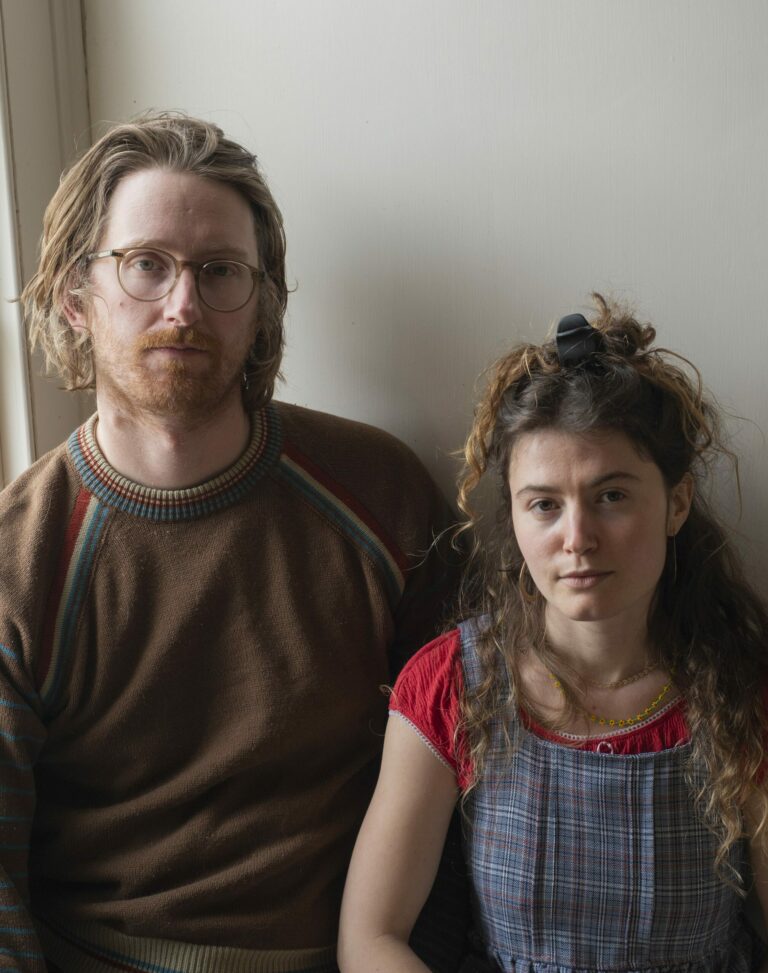
Babehoven is the songwriting vehicle of Maya Bon, who was raised in Topanga, California and started releasing music under the moniker in 2017. Over a seriesofEPs, Bon has honed in her knack for diaristic, incisive songwriting, which has a tendency to sneak in quotidian details while exploring deep-seated feelings of guilt, grief, and trauma, situating their heaviness against the absurd backdrop of everyday life. For her latest record, Nastavi, Calliope – which takes its name from her beloved family dog and translates to “Keep going, Calliope” in Croatian, the language of her long-absent father – Bon once again worked with her collaborator and co-producer Ryan Albert, using their time spent in isolation to transform the EP’s seven songs into Babehoven’s most refined and evocative compositions yet. Expanding on the project’s bedroom pop origins while maintaining a DIY approach, the pair have managed to elevate Bon’s affecting and intimate lyrics by paying as close attention to sonic detail as she does to seemingly mundane memories, amplifying their resonance. Its stories may be autobiographical, but from its very first lines, Nastavi, Calliope captures a shared atmosphere we can all relate to: “It’s hard to talk about it being a bad week/ When it’s been a bad week/ For a long time now.”
We caught up with Babehoven’s Maya Bon and Ryan Albert for this edition of our Artist Spotlight interview series to talk about the origins of the project, the process of making Nastavi, Calliope, and more.
You started playing in bands when you were in elementary school, and you continued exploring songwriting through high school. What do you think it was that drew you to making music?
Maya Bon: I don’t really know what the draw was because it felt like a part of my life already. From a very early age, I would just sing my life out when I was like a baby learning to talk. To be totally frank, I’ve had a lot of really big losses – I had a pretty hard upbringing, just a lot of grief, a lot of things to process and not a ton of emotional support, so I think I turned to music – like, I have very early memories of as a five-year-old writing about my absent father and people being like, “Okay, this is awkward!” I would write really intense songs. And I remember listening to ‘Such Great Heights’ and writing a song based off of that about my father – like, I copied that song, really. Early memories of me were trying to emulate other artists. I really liked Jack Johnson as a little kid, I wrote a lot of chord progressions that were stealing his chord progressions, and I kind of dabbled in exploring songwriting as a kid that I would pour a lot of heartache and pain into. I felt as a kid that no one was really listening to me, so music was kind of my way to be heard.
Did it always feel very intentional, this process of externalizing what you were going through?How conscious of it were you as a kid, and how did that evolve over time?
MB: It definitely did not feel conscious as a kid. I think the first time that I’ve thought about it being a diaristic experience was really the Pitchfork review that said it was diaristic, and I was like, “That is exactly the word that I’ve been needing in my vocabulary.”
Ryan Albert: I don’t think I’ve ever heard a Maya Bon song that isn’t diaristic. Even the randomness of your songs, I, like, know the day that you did those random things.
MB: I really like collateral stresses. I like when a bunch of really shitty things happen at once and you don’t know how to hold them, because that’s the perfect song. When there’s just all of this bullshit happening and you’re just living your life, you know, like you’re also just tying your shoes and like going for a walk and going to work, but then at the same time your life is melting around you. The only way you can get through that in my opinion is to put it in a song and then make it enjoyable, because it’s crazy – life is so crazy.
But yes, I don’t think it was conscious at the beginning, and I really think the shift to making it – I used to be Maya Bonfire before, that was like my singer-songwriter name [laughs].
RA: That was just your Gmail.
MB: That was just my Gmail. But then when I was like, I’m making a band and I shifted to Babehoven, that was all very conscious for me.
Could you talk more about that transition to Babehoven and what you wanted the project to represent?
At the time I was really heartbroken, which is the first lyric of ‘Sleep’: [sings] “I’m heartbroken ‘cause you broke my heart.” And I felt like no one was going to hear that if I posted it on my SoundCloud, which is where I posted all my other folky songs. And I really wanted the person who broke my heart to hear it. So I thought, like, “How do I get this heard? I want to be signed and I want to be playing a lot of shows and I want to be in a band because no one goes to singer-songwriter shows.” So really it was like a vengeance project. [laughs] I was like, “I want this guy to know how much he hurt me.”
Ryan, what resonated with you when you first heard Maya’s music?
RA: Honestly, the power of her voice and her lyrics. I’m not a lyric person – lyrics can really fuck up a good song to me, be it how the singer sings or someone’s trying too hard with their lyrics, but Maya’s lyrics kind of blew my mind at first, and still do, but that was my initial reaction. But then secondary from that, it was how her lyrics play with simple chord structures. You know, it’s like three chords, four chords, sometimes just two, and the way that she has this amazing counterpoint that always keeps my melodic textural ear interested.
MB: And we didn’t start playing together initially. I moved from Portland where I had a band with my friends Elias [Williams] and Skyler [Pia], and then Ryan and I started dating in LA and I moved to LA. And then probably it was because I was getting shows in LA and I was like, “I don’t want to play this solo anymore.” So I was like, “Okay, Ryan, we should play guitar and drums together.” And we got a practice space, and then we were performing just us two. Ryan is just a very committed bandmate and I’ve never had that, ever. I feel like there’s a lot of serendipity in our connection because it’s very rare to find a romantic partner who’s also just like exactly your creative partner, too.
You’ve pointed out that the name Calliope means “beautiful voice” in Greek, and I found it interesting how the voice comes up in these songs: There’s the line “She’d wonder why my voice was there at all” in ‘Annie Shoes’, and there’s often this implication that talking about something can be meaningless, but also that not saying anything can be painful. Is the way you use your voice, both as a singer and in your personal life, something you were especially conscious of while you were writing this record?
MB: Thank you for that really beautiful question. In my perspective, I know that I sing the unsayable. A lot of my music falls into wanting to say something to someone and not being able to, and that’s what my life, in large part, has been; the challenge of my life from a very early age is that I have a lot of absent people in my family and life who are intentionally absent – people who leave but are still alive, so you’re grieving their disappearance and you have no way to speak to them. That’s what’s so challenging about that kind of loss, is that you’re left with so much to say but no one to listen to you and no one really cares, you know? It’s like, when someone dies, people remember the date, people remember their birthday and they check in. But when someone disappears, it feels like people often just move on with that kind of grief. In their surrounding people’s lives, it’s just like, “Okay, they’re gone.” And I feel like a lot of my music is things that I can’t say to people, and things that I can’t really even say to myself. Like people’s names, for example, that are too painful for me to say often come up in my music – or I guess that’s only happened once.
RA: Starting to happen potentially more.
MB: Yeah. That’s been really important for me, because the name Dorian, for example, I couldn’t really say before. It was just too painful for me, and now I can say it. And that lyric, “She’d wonder why my voice were there at all,” I was talking about calling my dog Ella, who would have no way of knowing who I am, why I’m calling – she’s a dog, you know. But I loved her so deeply, and it’s very painful to be away from her, but there’s no way to communicate. So there’s a lot of this theme in my music of like, the lack of communication, the inability to communicate, the generational trauma of people not communicating.
I feel like I didn’t consciously think about “beautiful voice” as something to do with me. For me, that felt like it was so ironic, because Calliope had the most ridiculous bark and she would just make some really crazy sound, so it was kind of funny that her name meant “beautiful voice”. [laughs] But this did feel very much like an homage to home, an homage to family. Calliope felt so rooted as a family dog; she was so funny, so it kind of brought people together in these very strange moments.
Was there a specific way that this EP felt different to you in the way that you approached theses themes?
MB: I don’t know if there is something different necessarily, because a lot of the songs are older songs, like ‘Orange Tree’ I wrote in 2018, same with ‘Crossword’, same with ‘Lena’. And then the other ones, like ‘A Star’, ‘Bad Week, ‘Artists making offerings’, are new.
RA: I would say the thing that’s maybe different is we knew what we were doing more recording-wise. Like, Demonstrating Visible Difference of Height, I knew what I was doing, kind of, but I’d never recorded this type of music before; it was always experimental weird stuff. And then Yellow has a pretty good reputation, that was kind of its own world. But Nastavi, Calliope was the first time I, at least, felt fully functional and able to try and capture the emotional essences of the song through the recording medium. So I feel like that’s the main difference, is that we got a better magnifying glass for translating the emotion of the song.
I think ‘Alt. Lena’, which originally appeared on a previous EP, is a great example of this. Beyond just the added layers of instrumentation, the alternate version really leans into the dreamy melancholy of the song in a very specific way. Why did you decide to rework that song in particular?
MB: We were trying to play this song live, and ‘Lena’, in my opinion, needs to be fun. So we were trying new things, and I was really obsessed with this keyboard that we got, an 80s Yamaha keyboard that’s really small and has really fun beats on it. We were playing around and then Ryan started doing the [sings guitar melody]. And I was just like, “Oh my god.”
RA: It becomes a whole other world.
MB: Yeah. I remember thinking if I heard that song on Spotify I would listen to it on repeat, like, “This is so good, we have to record it.” That song is so dreamy and kind of sexy and fun, and it is about my friend Lena. I asked her to write down 10 things she likes, and that was one of the only times of my songwriting that I was like, “I’m writing a song about Lena, I’m going to collect information about her.” [laughs] Because she’s just the most amazing person, I met her traveling and we just loved each other immediately. We only spent three days together. So I went back to London where I was living at the time for the summer and I wrote that song. And once I heard the new version, it just felt like its own thing.
RA: To me it feels more nostalgic. Especially given that we re-sculpted in January 2021, I think that maybe subconsciously there was some nostalgia for that time. And I think that it kind of pierces through within the recording of, like, the funness is still there but there is some almost Cure-esque goth nostalgia going on, which I think is an exact derivative of being in our apartment and wanting these times and thinking about them. To me, when I listen to that version compared to the earlier version, this new version is more longing, whereas back then it was more of a documentation.
I wanted to ask you about the song ‘Artists making offerings’, which addresses your relationship with being and calling yourself an artist. What does it mean for you when you sing, “I can be an artist if I say so?”
MB: I’ve been told I’m not an artist before – I always felt like growing up I wasn’t creative enough, I wasn’t interesting enough, and that’s kind of my, like, “Actually, I am an artist and I am creative and I am interesting.” [laughs] It’s kind of like my stamp on myself.
RA: When Maya wrote this song, it was yet another like, “Wow, I’ve never heard someone talk about this subject in this way in this genre.” And for me, when I listen to that, I think about people that play music, like, “Oh, I’m not a musician, I don’t really know how to do this.” For me – I studied music in college and high school and stuff – I can barely read sheet music. Growing up and learning within that mentality, I was like, “I’m not this person.” But then I’m like, “Wait a minute, fuck that.” Like, I am, it’s just this isn’t the way that I express being a musician. So I think there’s a lot of different ways the listener can take that song. To me, it’s a very punk rock song, mentality-wise. It’s like, “No, fuck off, I can play the keyboard. I am a keyboardist.”
There’s one thing that I wanted to give you the inside scoop on with ‘Artists making offerings’ that I just remembered: that noise part that happens in the bridge, it’s just a recording of a dinner party, but in that noise, there is Morse code.
MB: [laughs]
RA: And the Morse code translates to “Fuck 2020.”
[laughs] Is that true?
RA: No, I’m serious. And then it sounded great, we liked the pattern and randomness, but I think we added Morse code because we were obsessed with Kraftwerk at the time and we wanted to pull in something like that. So we were like, “Fuck 2020.”
That is some great inside information, thank you for sharing that. I wanted to go back for a moment and ask you about the first part of the title. Do you remember the moment you came across the word “Nastavi”, and what has it come to mean for you?
MB: The reason that word even came up is that I’m currently in the process of learning Croatian. My father’s from Croatia – I didn’t grow up with my father, but I’m just now trying to tap into that side of myself that I want to learn more about. I’m very interested in the Croatian language and I’m studying Balkan singing, and I’m just trying to reincorporate myself into that world that I never really had access to, in my own way. So part of what I wanted with this EP title was to reference Croatian – I did some research on words and “keep going” came up for me a lot, because I had done a lot of processing over the seven months before recording, like there were seven months during COVID where I didn’t play music at all. I was actually questioning whether or not I even wanted to be a musician anymore. And then I kind of landed on like, “Music is part of what makes me want to be me.” And that’s so valuable.
This project has definitely made me feel like I’ve solidified my sense of self as an artist and as a writer. Even just receiving positive feedback – I really try not to get too obsessed with the positive feedback – but it is part of what keeps me going, hearing that people like it or that people are listening or people are interested.
RA: It’s a sense of community.
MB: Yeah, it is a sense of community. And those are the things that make me feel like, “No, I actually am able to do this,” like, “I am good at what I do.”
This interview has been edited and condensed for clarity and length.