In Mother Mary, the upcoming A24 movie from director David Lowery, Anne Hathaway plays the titular pop star, and she also performs the original songs on the soundtrack. Those songs were co-written by Jack Antonoff and Charli XCX, and Charli’s husband, the 1975’s George Daniel, is also credited on the new song ‘Burial’. It’s a pretty generic piece of dance-pop that makes sense in the context of a “thrilling psychosexual pop opera.” Check it out below.
Mother Mary also stars Michaela Coel, Hunter Schafer, Kaia Gerber, and FKA twigs, the latter of whom also contributed original music for the film. It will be released in select theatres on April 17.
cootie catcher is a Toronto-based four-piece composed of Nolan Jakupovski (vocals, guitar), Sophia Chavez (vocals, synth, DJ controller), Anita Fowl (vocals, bass), and drummer Joseph Shemoun. The band’s co-vocalists, who also share songwriting duties, have known each other since high school, when they debuted a very formative version of cootie catcher at a talent show they almost seemed to have forgotten. It was really born as a recording project for Jakupovski and Chavez during the pandemic, with Chavez and another childhood friend joining when live shows were on the table. Shemoun stepped in as a touring drummer before becoming a permanent member, tasked with translating and often necessarily adjusting Jakupovski’s beats for the sake of playability. The restless rhythms in cootie catcher’s music – often characterized as “laptop twee,” though the title of a new song, ‘Puzzle Pop’, does a better job of encapsulating it – reflect their overall creative pace. Their exuberant, untamable new album, Something We All Got, arrives just a year after their last, Shy at first – it’s no surprise its distinct lyrical perspectives collide at the vulnerability of repeatedly putting yourself out there, expecting more than you’re bound to get. SWAG, though, deserves all the attention it can get.
We caught up with cootie catcher for the latest edition of our Artist Spotlight series to talk about the origins of the band, high school talent shows, feeding off each other’s writing, and more.
Do you remember having conversations about working together on music before forming cootie catcher?
Nolan Jakupovski: We just started writing a bunch. Aside from Joseph, we’ve all known each other for a very long time. We all knew we could be in a band, but we never really put it together until cootie catcher started. I think we were just bored, didn’t have a lot going on at the time. I was in a bunch of bands around COVID and wasn’t doing anything.
Anita Fowl: We were just always together through lockdown, and it just kind of happened. I have memories of us playing around with stuff in the basement on whatever gear you had — you did have some drums in there. There was a brief phase where Nolan was trying to teach me drums. That was fun.
NJ: I guess I played drums on a few cootie catcher songs. I forgot about that.
AF: It was just us using whatever we had down there in the parents’ basement.
Were you jamming at that point, or were you bringing songs to the table?
NJ: Definitely songs. Truth be told, we never really jam out that much. We discuss the song structures. [laughs]
AF: I don’t have a big musical background, so a lot of cootie catcher was me learning stuff. I remember I would have ideas for songs in my head, just melodies, and I would bring them to Nolan and be like, “What note is this?”
NJ: Yeah, that’s so strange to start with. There were a few songs at first that started with just a melody.
AF: Just singing. ‘starved 4 combo’ was like that. It was like reverse engineering.
Nolan, you mentioned you played in bands before. Was there something that made you feel like this could go in a different direction?
NJ: Yeah, because it wasn’t very serious. It was just for fun. Those early songs are definitely more naively put together than nowadays.
Even now, I sense an aversion to self-seriousness in your music, even as it takes itself seriously.
NJ: Yeah, we take having fun seriously. We take streamlining songs seriously. There’s not many moments where there’s not someone singing or something that’s not moving the song forward.
Was there a moment when that streamlining became more important to you?
NJ: Probably when we started playing live and I realized that a lot of the beats were impossible to play. They’re not on a grid, for example. I had to actually sit down and make this playable.
You said you’ve known each other for a long time. Were you in school together?
NJ: Yeah, high school. Our first drummer was also from school, and Joseph tagged along a few years ago.
You identify as an outsider in the first song of thenew album, ‘Loiter for the Love of It’, and I think that’s often a self-perception that dates back to those years. And you tend to gravitate to the same kind of people.
NJ: Yeah, I think we all were a little bit.
AF: [laughs] Yeah.
NJ: I was definitely friends with the weird kids.
Joseph Shemoun: I was a big nerd in high school.
NJ: We would have been friends, for sure. We would have been playing Pokémon.
Sophia Chavez: Me and Anita were art kids. We did some talent shows.
NJ: I was in a talent show.
AF: Oh yeah, you did one too. Sophia and I have known each other since grade 10. Music was a big thing that we bonded over. Now I’m going too much into lore, but Nolan was in a grade below, and I remember we knew he was in a band, and we were like, “Oh my god, someone in our school is in a band?” [laughs] We didn’t know anyone in a band.
NJ: We were the only one that at least played shows. We’re from Mississauga and we’d play shows in Toronto, so it was as legit as a high school band could’ve been.
JS: That’d be very cool if you’re in high school, for sure.
Does every school there have a talent show?
NJ: Every school does that, I feel like.
JS: I don’t know if we had that, but we had a battle of the bands.
NJ: That’s even crazier. That implies multiple bands.
JS: I remember there was one band that I liked that played a cover of ‘Working Man’ by Rush. My mind was blown.
NJ: Somewhere in grade 8 there’s me playing Stone Temple Pilots at a talent show. I know there’s one of Sophia playing Mac DeMarco?
JS: What song?
SC: Uhhh…
AF: It was ‘Let My Baby Stay’.
SC: Actually, I remember us three played in a band. Do you guys remember that?
AF: I think about that all the time.
SC: Me, Anita, and Nolan played one time for a talent show. It was called Carmelchella.
AF: Or was it Carmchella? Like Coachella, but our high school was Mount Carmel.
NJ: That was very nearly cootie catcher.
SC: It was. [laughs] We never actually talked about this in years.
AF: I recently was going through old photos, and I have some photos from that.
SC: Oh my god, I need that.
AF: I’ll send it. I didn’t know if you wanted to see.
NJ: It’s still the same microKORG, isn’t it?
SC: It is.
AF: We did ‘Chamber of Reflection’ for sure.
JS: Nice. I would have loved that.
That’s deep lore right there.
JS: It is. I never even heard that one.
What excited you the most going into the new record? What was that transitional period like?
NJ: The process for this record, the last record, and the next one, to be honest, has been pretty similar.
AF: I feel like with Shy at first to SWAG, the new record has even more of an amalgamation of our current lineup. That’s what made me excited for it, because it really does feel like us as a band.
NJ: We were writing this one while the last one was wrapping up. ‘Quarter Note Rock’, for example, could technically have been on Shy at first, it was around that time. Shy at first only came out this time a year ago, and we do pretty much have an album’s worth of new demos right now. We never stop. It’s just too fun.
Do you conceptualize or structure an album as a whole the same way you said you do for songs?
NJ: We don’t really do that. If it’s a good collection of songs, I think it’s a good collection of songs.
AF: I guess we’re not super conceptual in that way.
NJ: We’re not gonna drop a concept album.
AF: I love when other bands do that stuff, but for us, because it’s three different songwriters – I think naturally, multiple themes carry across all three of our works.
NJ: There’s always consistency.
Did your approach to bringing together the different perspectives change at all?
AF: I was just excited about having more voices on the album. Sophia has more songs.
SC: I think in Shy at first, I only shared songs with people, but in the new album, I have my own songs, which is cool.
AF: It’s cheesy, but I get inspired by what both of you guys write – I guess we feed off each other. It’s unspoken. I don’t think I changed my approach, but subconsciously, I’m hearing them write about stuff, and I’m like, “Me too.” [laughs]
NJ: There’s maybe more overlap in the verses. There’s probably more back-and-forth interaction with each other. Like on ‘Wrong Choice’ and ‘Pirouette’, there’s call-and-response.
Beyond the vocals, there’s also moments where the electronic beats and the drums overlap in a similar call-and-response way.
AF: I love that part in ‘Halifax’.
NJ: It was funny when we were first practicing how to do that. Whenever we would start, I was like, “So, there’s gonna be a space here, and it’s gonna go [emulates beat], and then you’re gonna have to answer that.” That’s a good example. I do like when they talk to each other like that.
Now that the album is about to be released, are you more conscious of the ways in which the songs are in conversation with each other thematically? ‘Rhymes with rest’ and ‘Take me for granted’ are both about commitment, for example, but there’s a tension between having and wanting it.
AF: It’s really interesting to hear someone say there’s a relationship between those songs, because there’s definitely–
SC: To be honest, I don’t even know the lyrics of ‘Rhymes with rest’. I can’t hear them.
AF: [laughs] Real. That’s another one that we haven’t played live much and we’re learning to. I feel like the overlap, if I’m thinking of the Venn diagram, is probably being vulnerable and asking for something. Laying it on the table.
‘Gingham Dress’ is both one of the most enjoyable songs on the album and one that sounds challenging to play – even vocally, there’s an added difficulty to it. What was it like getting it right?
SC: It’s interesting, because that song was hard to sing in the beginning, but it is the only song where I only sing and don’t play anything else because it is so hard. ‘Gingham Dress’ is like much of Something We All Got, but it’s different from other stuff we’ve written before in that sense; there isn’t any synth or DJ controller. It is angrier.
NJ: It’s a hard one to play, yeah. The drums, the bass.
AF: It’s the most “rock band.”
SC: That’s what I mean, yeah.
JS: That’s definitely the one I enjoy playing the most. I think the drums are really fun to play on that song. That, and ‘Pirouette’ and ‘Quarter Note Rock’.
AF: All the songs where it hits hard.
NJ: Yeah, we do think about how they’ll be live a lot more when we’re in the writing process. I guess that’s a big change. We kind of imagine: Will people dance to this?
JS: There’s more high energy. Even recording that, I feel like it was pretty fresh for everyone, so it was a bit difficult.
NJ: The turnover is quite quick. We try to at least play things a few times before we record them. On Shy at first there were songs we didn’t even play before recording them, but I think on this one we did practice all of them.
Joseph, what’s your approach to finding the right rhythm for a song, taking into account how all the other elements work together?
JS: I think it all starts with Nolan’s beat, playing around that. Usually, it’s just mimicking the snare and kick pattern as much as possible, adding more own flair and fills in, some cymbal work.
NJ: Not all of them have kicks and snares, though. And there’s definitely been times where we’ve brought something to practice, and I went and changed the beat according to that. In the chorus of ‘Rhymes with rest’, for example, in the chorus there’s a bar of three, and that was a change after the fact. I felt it always in four, and when we were playing it, Joseph kept making it a bar of three, and it felt really natural. So now this is the most prog part on the album.
JS: 3/4 is the best. I also feel like, a lot of the time, I play a little extra, and I have to remind myself not to go too crazy.
NJ: It’s crazy enough.
Tell me about getting Nate Amos to mix the album. It made sense to me as a fan of his work in Water from Your Eyes and This Is Lorelei that he would get the balance of electronic and acoustic instrumentation.
NJ: He was on a list of names of people we felt would understand the electronic and acoustic mix-wise. He really stood out because of his production more so than his songwriting.
AF: His songs are really different from ours.
NJ: Especially if you listen to Lily Koningsberg’s album that he recorded [CRY MFER], I was like, “How do I make the album sound like this?”
AF: Even though it does sound very different, I really liked what was the latest This Is Lorelei album at the time, Box for Buddy, Box for Star. I noticed there was a mix of electronic and acoustic.
NJ: We definitely asked him at the right time. I feel like he spiked in popularity as he was making our thing.
AF: We kind of got lucky. We asked him in person because he came to play in Toronto, and we cold approached him–
NJ: We were asked to open for them – we didn’t, but we went anyway. We asked him if he’d be into mixing, and he was like, “Yeah, of course.”
AF: When he sent it, we were like, “Yeah, that’s it.” We had heard some other mixes, but it was very clear he gets it.
I remember him telling me how busy he is when he was promoting that This Is Lorelei record, just trying to make time to balance those projects.
NJ: I actually can’t imagine how busy that guy is.
AF: I feel winded a lot, and we’re not even–
JS: Overwhelmed.
AF: For sure, sometimes.
Do you remember hearing the mix for the first time? Were you all together?
AF: We definitely would have been too excited to wait to be all together. We didn’t have a lot of notes, I remember.
NJ: A lot of people would do different things with the electronic and acoustic drums, and he definitely knows how to balance them. He balanced them the best right off the bat.
With the tour coming up, what’s something that excites you about spending that time together?
SC: We’ve already spent so much time together that we already know our dynamics. It’s definitely gonna be the coziest because we’re gonna have a nice van. Our friend John is driving us. It’s like we’re going on a road trip. We’re gonna eat all the fast food.
JS: Well, I don’t know about that.
SC: Uhh, we are. [laughter] Whether you like it or not.
NJ: I’m excited to poop in all the disgusting bathrooms.
JS: Oh, I’m not excited for that.
NJ: There’s definitely a lot of shows I’m specifically excited for. I’m excited to do SXSW for the first time.
JS: It’s going to be really fun.
NJ: Even if we weren’t playing, none of us have been to a lot of these cities.
JS: I’m also excited to see the difference from day one to the end in terms of playing. Montreal vs. the Toronto show at the end.
NJ: We’re gonna be changed people by that show.
This interview has been edited and condensed for clarity and length.
Something’s been happening in UK cities lately. Small, independent cafes and restaurants are popping up everywhere. And they’re not just places to eat. They’ve become spots where people gather, where creativity happens, and where communities form. They offer something the big chains just can’t match.
You know what I mean. That little coffee shop tucked away on a side street that you found by accident. The family-run restaurant where they change the menu based on what’s fresh that week. These places have become a real part of city life.
So why is this happening now? A lot of it’s about how we think about food these days. People are more curious. They want to try new places and appreciate the care that goes into them. Restaurant deals have helped too. When you can afford to try somewhere new without breaking the bank, you’re more likely to take a chance. It’s become less about treating yourself and more about exploring what’s around you.
Places with Character
Step into an independent cafe and you’ll notice the difference right away. These places have personality. They feel like the people who run them. You might see old furniture they’ve restored, art from someone local, or menus written on chalkboards. All those little touches matter. They make you feel something before you’ve even ordered.
It’s not just about looks either. Good independent places think about comfort. They want you to relax and enjoy yourself. The lighting’s right. It’s not too loud. The chairs are actually comfortable. Everything’s set up so you can have a proper conversation without feeling like you need to hurry up and leave. Chain restaurants? They’re designed to get people in and out quickly. It’s a totally different vibe.
Food That’s Actually Interesting
This is where independent places really stand out. The chefs can do what they want. They’re not following some corporate recipe book. They play around with what’s in season, what’s grown nearby, flavours from different parts of the world. You end up with dishes that surprise you in a good way. And because they’re always trying new things, there’s always something different to try when you come back.
Restaurant deals make it easier to be adventurous. When you’re getting a good price, you’re more willing to order something you’ve never heard of before. It means you’re supporting local chefs and getting to know the food scene better. Everyone wins.
Building Real Connections
Here’s maybe the best part about independent restaurants. They bring people together. These aren’t just places where you show up, eat, and leave. Many of them host events. Cooking classes. Wine tastings. Quiz nights. They create reasons for people to connect beyond just having a meal. You start recognizing the staff. You chat with other regulars. Going out to eat becomes social in a way that feels genuine.
This whole movement has had a knock-on effect too. As these places get more popular, they push everyone to do better. Standards go up. More restaurants focus on getting ingredients locally and thinking about sustainability. Farmers’ markets have more customers. Small producers find people who care about what they make. It’s all connected.
It’s Not Easy Though
Let’s be real. Running an independent restaurant is tough. Rent keeps going up. It’s hard to find people to work. Getting supplies can be unpredictable. The big chains have money to fall back on when things get tight. Small places don’t. The ones that survive are tough and creative. They figure out ways to keep customers coming back while staying true to what makes them special.
We can help as customers. Eat out on a Tuesday instead of Saturday when it’s packed. Go with friends and split a few dishes. Check out places in quieter areas. Small choices like these actually make a difference. It turns a meal out into something more meaningful than just spending money.
Every Neighbourhood Tells a Story
Independent cafes and restaurants give neighbourhoods their own flavour. Each area develops its own feel based on the places people support. Cool spots appear in unexpected places. Converted warehouses. Old market buildings. Quiet residential streets. They show off what makes each part of the city unique. Going out to eat becomes about discovering your city, seeing it from different angles.
This changes how people spend their time. Maybe you’re going to see some art, catch a band, or just wandering around on the weekend. Grabbing food becomes part of the whole experience. Things like restaurant deals help because cost isn’t this big barrier anymore. You can explore and socialize without stressing about your budget. Cities end up feeling more alive, more connected.
What’s Next
This trend isn’t going anywhere. People in cities want the real thing now. They want creativity and community, not just convenience. The places that do well will be the ones that get it right: nice spaces, interesting food, and real connection with the people around them.
For the rest of us who like eating out, this is great news. It changes what going to a restaurant can be. It’s not just about filling up. It’s an experience. It’s culture. As more people figure this out and find these places, cities become better, more creative, more social. That’s something worth getting excited about.
You can technically skip all Blood Specimens in Resident Evil Requiem, but collecting them all will give Grace access to powerful injectors, stronger ammo, and permanent upgrades that will help her fight tougher enemies and stay alive in the Care Center. Blood Specimens are optional collectibles hidden throughout the Care Center, and each one unlocks crafting recipes that significantly expand Grace’s arsenal.
There are all sorts of handy upgrades to collect, from Hemolytic Injectors that instantly take out unaware enemies to Steroids and Stabilizers that permanently boost Grace’s stats, and collecting and analysing all three Blood Specimens in Resident Evil Requiem will fully unlock Grace’s crafting potential. So to make sure you don’t miss a single upgrade, here’s where you can find all the Blood Specimens in Resident Evil Requiem.
Resident Evil Requiem: Where to Find Every Blood Specimen in the Care Center
There are three Blood Specimens in the Care Center of Resident Evil Requiem, and each one unlocks crafting recipes that give Grace permanent upgrades, letting her deal more damage, heal faster, and make the most of every encounter. The first blood specimen, the Denatured Blood Specimen, is in the Blood Lab in the East Wing. You reach the lab during Grace’s first visit to the wing, where you can pick up the Blood Collector on the desk just inside.
The Denatured Blood Specimen can be found next to the blood analysis machine, and you’ll need to solve a simple mini-puzzle. To solve the puzzle, simply press the middle cube node to activate all connected atoms and that will do the trick. Analyzing this specimen will allow Grace to craft Handgun Ammo for both her pistols and Hemolytic Injectors, which can instantly kill unaware enemies and prevent corpses from transforming into Blister Heads.
The second specimen, the Reversible Blood Specimen, is also in the Blood Lab, inside a storage room that requires a Level 1 ID Wristband to access. After retrieving the Level 1 ID Wristband on the Care Center’s second floor, return to the lab and unlock the storage room. Inside, you will find the Blood Specimen along with an Empty Injector, some metal scraps, and a green herb. The analysis mini-puzzle takes four steps.
Start by pressing the center cube, then press the center cube of the three cubes below it, and finally activate the two remaining corner cubes. Completing this will unlock Steroids for permanent health boosts and Stabilizers to increase damage.
The third specimen, the Converged Blood Specimen, is located in the East Wing Waiting Room, inside a closet. To reach it, you’ll need to take down a zombie cleaner and a noise-sensitive zombie patient guarding the area. Once inside the closet, you’ll find the Blood Specimen along with Handgun Ammo, 12.7x55mm Ammo, and some scrap.
To analyze this specimen, first press the middle cube in the initial three-cube setup, then activate the center cube of the resulting four-cube formation. This will unlock Med Injectors and 12.7x55mm Ammo for crafting.
There’s also a fourth Blood Specimen to find on Insanity difficulty. This specimen lets Grace craft the R.I.P. Knife, exclusive to this mode, and gives a large batch of Handgun Ammo. You can skip it if you want, but grabbing it can make fighting Insanity’s tougher enemies much easier. And that does it for our Blood Specimen locations in Resident Evil Requiem guide.
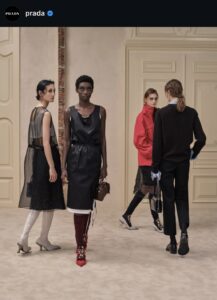
Can 60 looks be too many and 15 models too few? Prada doesn’t really think so. At Milan, at least, time moves quickly. About a minute and ten seconds at every turn, to be exact. Which is plenty for Bella Hadid to be stripped of her layers three separate times before you’ve even processed the first. Each outfit managed to clock in at the office, step out for lunch, make it to drinks, and spiral slightly after hours, all under Prada’s stopwatch.
Miuccia and Raf Simons took us all the way to the Deposito of the Fondazione Prada again, where 16th century paintings keep company to 18th century Venetian mirrors, fireplaces almost floating off the walls and all. Which actually seems like a fitting place to showcase the complex facets of women, given it spans five centuries with ease. “An embrace of inherent pluralities, a reflection of the multifaceted realities of women and the complexities of life. The Prada Fall/Winter 2026 collection by Miuccia Prada and Raf Simons is informed by a fascination with the process of layering, of transforming through the day, through your clothes. Within each look, we discover multitudes. A manifestation of how clothes are truly worn, in daily life, their layering here is simultaneously representative of a layering of histories, personal and collective, of memories and experiences,” the press release went on to say.
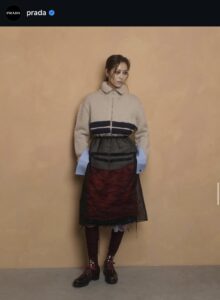
Liu Wen’s first outfit, pristine as it was, quickly became my favorite. Picture a beautiful cream knit with classic banker-blue shirt cuffs peeking through, tucked under a mesh midi skirt that flashed a layer of red and a tiny bit of sparkle. The second time around the red sparkle became clearer. Another midi skirt with embroidery, and that very relatable wrinkled shirt tucked in. Turns out, a deconstructed black satin dress was hiding beneath it all, now teasing soft florals through its holes. Third looks did their jobs, the fourth ones did whatever they wanted. We half-expected a close-up of those flowers this time, but instead got another mesh skirt with sparkly embroidery layered over what looked like a white one, paired with a cropped lime top, discreetly ruffled at the hem. Women really do have layers. Prada women just have a few more stacked in there.
Each year brings changes. Some years more than others.
These movements or changes become a culture of their own. During the 60s, it was about rebellion, seeing a surge of rebels with and without a cause. Anti-war protests, liberation, and music – culture felt politically charged and idealistic, where young people openly challenged authority.
The 70s, past the Watergate era, had seen a growing distrust in government and a rise of personal identity, including moving toward introspection and realism. The movies became grittier and darker with a more focused approach toward psychology.
Each decade had its own intricacies.
Now, during the 2020s, a new culture has appeared, a culture of digital saturation. A saturation across every imaginable field, such as music, media, art, public discussion, and more.
For the better or worse, some would argue one way, and some would argue the other.
Whether the truth lies one way or somewhere in between is a different topic altogether; what, unarguably, is positive is the aspect of transparency. It comes with certain disadvantages, there is no doubt about that, but it also comes with accountability. No longer can anyone just say something and pretend they didn’t say it.
No longer can anyone do something and pretend they didn’t do it. Everything is here to be seen and here to stay. It’s a trail of breadcrumbs; sometimes they don’t illuminate the entire picture, but at least we know there were breadcrumbs.
Like pieces of a puzzle, they allude to something.
The Audience And The Need For More
The audience is big. It’s almost everyone.
In all sectors, we can see this: sectors like journalism, marketing, activities of certain non-profit organizations, and local and state government.
With a few clicks, we can see into the intricacies of all the world’s locations and places, many of which have developed a sort of microculture.
Cities that have long confined themselves to internal reports or private meetings between individuals of authority, and now those same reports and private meetings unfold in a public manner, where, driven by investigations and reports, we can see the full extent of their information. Even sensitive reports aren’t beyond the scope of this reach. Sensitive reports like the not-too-recent clergy abuse in Chicago. All of it is part of a broad news network.
These reports are important due to the fact that they give us insight into what is happening while simultaneously shaping a broader cultural understanding of how certain powerful institutions operate. A lot of these incidents are sometimes treated as isolated events. But with the new approach and with transparency, we can ascertain a more structural view. We can examine them not as one, but as a collective.
We are also able to ascertain how these allegations are handled.
How does the system operate concerning its own elements? Does it encourage certain patterns, or does it silence or reform them?
There are many inquiries about the hierarchy, and they are all connected.
This new movement, alongside the transparency it brings, is a means to expose the issues of today and a means to judge the ways it deals with them beyond the looking glass.
Various artists put these into a different perspective. Musicians through music. Filmmakers through movies. Writers through books. All these categories show a different form of critique and a closer inspection of what is happening and what has happened.
Transparency could be argued to be a new sort of design. It leads toward a new way of approaching. And consumers are drawn to this.
The numbers are the proof.
The Full Picture And The Pieces That Make It
Whether a person is going to a music concert, reading an article from a magazine, or conversing with someone from a public institution, or anything else, they ask the same questions.
Who benefits from that? Who organized it? And who does it represent? Sometimes the answers are simple.
A musician organized a concert for the sake of their fans and to make money, but sometimes there is more to the story than meets the eye. It is a way of looking at something through a more clinical and critical lens.
It is a way to observe the small intricacies within a system and perhaps to reveal a truth hiding in the dark.
These little pieces are important for us to get a full picture. And on the other hand, it also signals engagement, which is also beneficial for those who produce such content. Many media platforms benefit from this, as well. It’s a matter of care. When people care about certain matters, they tend to participate in said matters.
This approach serves as a bridge between the various arts and the culture that consumes them. It is a more hands-on approach than a simple read and forget, as media used to be in the past.
Conclusion
It could be argued that digital saturation and transparency are a new form of storytelling, one that is currently the most dominant.
Whether that’ll stay or not, only time will tell. One thing is sure: disclosure builds trust, and trust is the most important thing between any media and their consumer. If they don’t trust it, they won’t consume it.
Why would they?
It boils down to supply and demand, and a little bit of truth along the way, which is not a bad thing.
Found yourself wondering what’s kept Bruno Mars busy since 24K Magic and An Evening With Silk Sonic? His first solo album in a decade, The Romantic, offers the only possible answer: trying to combine their throwback sensibilities in ways that sound more like a sad pastiche of his own music than that of his idols. Even if you’re a diehard fan of Mars’ schmaltzy, sleek retrofetishim – which, judging from the success of ‘Die With a Smile’, many people still are – the album comes up short, pulling the rug from under your feet just as it’s supposed to be gaining steam. Despite its non-committal flirtation with Latin pop, it’s as formulaic as it is vacuously archetypal, cashing in on the type of romance that’s as family-friendly as a sunset, which is to be expected from the guy who hopped on Sexxy Red’s ‘Fat Juicy & Wet’ like there was room for interpretation. The only place that matters on The Romantic is the wide-open dancefloor, though only a few of its songs could plausibly make you walk up to it.
1. Risk It All
Charmed by Lady Gaga’s Bruno Mars-less rendition of ‘Die With a Smile’ at the 2026 Super Bowl halftime show? You might develop a soft spot for ‘Risk It All’, whose bolero guitar teases the singer’s short-lived foray into Latin music. The muted horns and strings leave way too much space for his woeful sentimentality, which overshadows his vocal chops. It’s more of a false start than the sound of Bruno Mars taking any kind of musical risk.
2. Cha Cha Cha
Though no less derivative, ‘Cha Cha Cha’ is way more endearing, interpolating Juvenile’s ‘Slow Motion’ with enough playfulness and lightly dazed instrumentation to pull you into its groove. There are some lyrical threads, too: “Say you want the moon, watch me learn to fly” from the opener becomes “Let’s go to the moon a little later/ Hope you ain’t scared to fly.” Sounds to me like he’s flaking.
3. I Just Might
‘I Just Might’ sounds like a facsimile of a Bruno Mars hit – sloppier, stupider, and not even as confident. No matter how hard he flexes his vocals, there’s no tease in his “just might” – he simply may or may not make a move on this girl. Worse than uninteresting, it comes off disinterested.
4. God Was Showing Off
Boasting a stronger hook than most songs on The Romantic, ‘God Was Showing Off’ is also one where Mars seems to be having more fun singing than showcasing his technical prowess. He’s positively delighted by the idea of the Holy Father “flexing up in Heaven” making his love interest, if only because it earns double points for harvesting religious imagery without veering out of family-friendly territory. And it ends by making her sound more like a godly creature herself than a nepo baby, which I think counts as character development.
5. Why You Wanna Fight?
In my decade as a music critic, I don’t think a song has made me cringe as hard as ‘Why You Wanna Fight?’. That final “why” – there’s too many to count – made me want to pull my eyes out. What’s sadder is that it’s still too inconsequential to make anyone start an argument – mission accomplished, I suppose.
6. On My Soul
Here’s a song with a bit more conviction and pazzazz than ‘I Just Might’, buoyed by funky guitars and horns. The celestial journey continues: “Turns out you don’t need a rocket ship, no/ To find your own shooting star.” Sweet pickup line and all, but what happened to that trip to the moon?
7. Something Serious
It’s funny that ‘Something Serious’ is an easy contender for the most laughable song on The Romantic. If you want your relationship to progress to the next level, definitely croon, “Don’t you want some pretty babies?” At this point, he could be singing “I just might make you some babies” and nobody would bat an eye.
8. Nothing Left
What happened here? How did we go from “You should be my boo thang” to “The fire don’t burn like it used to, babe”? Give it to a penultimate ballad to certify the record’s flimsy romanticism, I suppose, not to mention its general lack of inspiration.
9. Dance With Me
It pleases me that The Romantic is over in just over 30 minutes, but that doesn’t make its rushed conclusion any less confounding. It pulls the certain before it’s taken flight, to indulge in its sole metaphor, and when the balladeer throws in the possibility that the couple might just fall in love all over again after dancing one last time, no one could believe him. Realistically, ‘Dance With Me’ could only come on once you’ve danced to a dozen other Bruno Mars songs in the most exhausting wedding party imaginable. Bruno Mars could be singing at your wedding and probably skip ‘Dance With Me’. But he still had to find some way to finish off this middling affair of an album.
Lucy Liyou has announced a new album, MR COBRA, the album version of her semi-autobiographical theatrical work Mister Cobra. It’s set to arrive on April 17 via Orange Milk, a few weeks after the solo theater-music performance of Mister Cobra debuts at Performance Space New York on March 28. Listen to two playful tracks from it, ‘Yoohoo (An Overture)’ and ‘Babygirl’, below.
“Sometimes trying to adhere to the ‘facts’ of my experiences made other emotional truths feel distorted,” Liyou explained in a statement. “For MR COBRA, I wanted to give myself the agency to distort all truths to see what jumped out to me as truthful in a reactive, and sometimes illusionary or misleading, sense–in all of this faulty rawness. I was really drawn to sounds and images that felt satisfyingly ‘false’–I was drawn to Cecil Taylor’s Unit Structures, my favorite drag queens in Los Angeles who magically bombed every Monday, Ryan Trecartin’s A Family Finds Entertainment, Sunik Kim’s Potential, and so much more. I wanted frenzy that felt disembodying–so disembodying that this time of my life could conjure a laugh.”
1. Yoohoo (An Overture)
2. Babygirl
3. 아저씨
4. Gojira Dearest
5. Romeopathy
6. 911, A Kidnapping
7. Lair Lair Pants On Faire
8. Constrictor (Haha)
9. Old Macdonald Had A Charm
10. Crisis (Identity)
11. Self-Mutilating Missus
12. “Finale (Transition)!
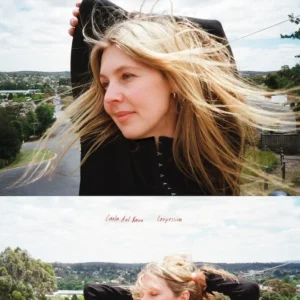
Carla dal Forno has announced a new album called Confession, which is set for release on April 24 via Kallista Records. The hypnotically kinetic lead single ‘Going Out’ is out now along with a video directed by Hanna Chetwin. Check it out below, and scroll down for the album’s cover art and tracklist.
Confession follows 2022’s Come Around. “At the heart of the album is a friendship that became emotionally charged in an unexpected way,” dal Forno said in a press release. “That shift brought daydreaming, jealousy, tenderness, confusion, self-awareness — and eventually acceptance.”
Confession Cover Artwork:
Confession Tracklist:
1. Going Out
2. Confession
3. Drip Drop
4. Under the Covers
5. Nighttime
6. On the Ward
7. Blue Skies
8. I Go Back
9. Off the Beaten Track
10. Alone With You
11. Gave You Up
12. Staying In
Every week, we update our Best New Songs playlist with several tracks that catch our attention, then round up the best songs of each month in this segment. Here, in alphabetical order, are the best songs of February 2026.
American Football, ‘Bad Moons’
A therapist might have kept it silent, but every confession Mike Kinsella spills out after the opening “Surprise!” runs back to childhood: innocence lost, abandonment, self-harm. “I’ve got some bad news, I only feel alive when I’m alone,” he sings on American Football’s first single in 8 years, which languishes in the aloneness of the dark, the great enabler of his worst behaviour. It hardly counts as news, of course, and nothing about ‘Bad Moons’ is particularly surprising, even as it unfurls some of the troubling details informing the backstory ofLP4, including alcoholism and divorce. The striking thing about the 8-minute epic is how “a Frankenstein of two different demos,” as Kinsella describes it, appears stitchless, threading together the childlike and the brooding, the young boy and desperate man, as if there’s truly no separation in the dark. Its gentle shimmer pushes towards momentous catharsis like it’s bound to, but not without the band gracefully mustering more empathy than you’d expect.
Bill Callahan, ‘Empathy’
Not unlike Mike Kinsella singing “Surprise!,” ‘Empathy’ begins with Bill Callahan intoning the word “Dad” morosely, almost like he’s saying “dead.” It immediately darkens the atmosphere conjured by his lone, sweet fingerpicking, especially knowing he wouldn’t have written hadn’t his father passed away. The song wasn’t a single from his latest album My Days of 58, but its directness renders it a highlight. “You dropped a bomb on me,” Callahan continues, less like he’s recalling the moment than reimagining it so that he can measure his response, which doesn’t require much more than repeating the words back to him: “You said you got by without a father, so you figured why should I have one.” As he worries about what parts of his father’s selfishness might have passed down to him, the horns direct his attention back to his two children, carriers – no, makers – of seemingly endless beauty and empathy in his eyes. He returns to acknowledge his dad’s broken heart, recognizing no amount of ache in his own could muddy his pride.
Grace Ives, ‘Stupid Bitches’
The lead single from Grace Ives’ upcoming album Girlfriend is the best pop song released this year so far. For a song that includes the line “I’m a loser with an aching touch,” it really pulls no punches – there’s the title, of course, and when Ives sings “I think you’re a hater,” co-producer Ariel Rechtshaid’s percussion throws a few jabs in solidarity. But ‘Stupid Bitches’ is not a song seeking to create the illusion of imperviousness, just one extremely buzzed with the excitement of having made it through the other side of heartache. “God, I really played the fool,” Ives admits at the outset, “Wound myself up to curl into you.” She and Rechesthaid have fun with the task of translating those phrasal verbs into sonic movement, tightening and bending an array of synths and strings to the flow of Ives’ unceasing poetry. Resilience curled into a fist, releasing you.
Lana Del Rey, ‘White Feather Hawk Tail Deer Hunter’
Here’s a line taken out of context: “I imagine you do know how absolutely wonderful that you are.” Corny, right? “I love my daddy, of course we’re still together”? Questionable. If a song called ‘White Feather Hawk Tail Deer Hunter’ wasn’t released by Lana Del Rey, I’m sure I’d have no desire to listen to it. I hardly desired listening to ‘White Feather Hawk Tail Deer Hunter’ by Lana Del Rey when it landed on streaming services – a minute or two earlier on Apple Music, as I recall. But I had to, and damn did I love it. Even when making a love song directed at, and co-written by, her “positively voodoo” husband, Jeremy Dufrene, her multiplicity is afoot: she’s still “Lana Del Rey aka Lizzy Grant,” recasting herself as “24/7 Sylvia Plath,” all too aware that “I’ve just been baking” is just one wrong turn away from “Know how absolutely bad I’m with an oven.” More than re-shifting Del Rey’s image, the song works because her collaborators Jack Antonoff and Drew Erickson – especially Erickson with his enchanting string arrangement – are equally invested in capturing this romance’s ghostly magic. You have to hear it to believe it.
MUNA, ‘Dancing on the Wall’
Are MUNA calling ‘Dancing on the Wall’ “possibly our favourite song we’ve made as a band” because it’s an incandescent banger, or did it become one because the subject matter necessitated it? The title track to the trio’s forthcoming album explodes its yearning to compensate for a lover’s empty promises, dedicated to making something so sweet no one could let it go bad. It’s perfectly structured and exacting in its phrasing, landing on the line “I know how to hurt myself on you” at just the right moment in the chorus. There’s no antidote to the pain of being hollowed out, but there’s something to be said about the knowing heart’s attempts at controlling its magnitude and appearance. ‘Dancing on the Wall’ turns the brightness all the way up, giving the fantasy a moment in the spotlight before it peters out.
My New Band Believe, ‘Numerology’
I can think of half a dozen ways to reduce ‘Numerology’ to its contemporary and past reference points, but the maddening song is so lyrically locked into the present that it feels disingenuous. “Real fire is what you feel inside,” sings Cameron Picton of black midi fame, making sure to transfer it onto the new single from My New Band Believe. Buoyed by an array of saxophones atop his acoustic guitar and vocals, the song fizzes up with the possibilities of a single night that could change your life, “one night, when the hollowing” – Picton doesn’t complete the sentence, as if unable to imagine what precisely happens to it but confident that it will. Funnily enough, ‘Numerology’ isn’t even on My New Band Believe, the group’s forthcoming debut LP. It just goes to show what they’re capable of.