The race to become the next great sitcom starring 20-somethings stumbling their way through adulthood is on. While the genre recently found success with Adults and I Love LA, none have reached the cultural impact of Friends or How I Met Your Mother.
Mindy Kaling’s new series, Not Suitable for Work, is next in line to attempt that. All about young adults entering the workforce, it’s available to stream on Disney+ in the UK. The question is, could the show go on for years? Here’s what we know so far.
Not Suitable for Work Season 2 Release Date
At the time of writing, there’s no news about a potential Not Suitable for Work season 2. However, the show premiered only recently, so an announcement might come somewhere down the line.
While critic reviews for the series are mixed, the Rotten Tomatoes audience score currently sits at a respectable 67%. If viewers keep tuning in, there’s a good chance the show will make a comeback. In that case, new episodes could arrive in summer 2027.
Not Suitable for Work Cast
Ella Hunt as AJ Pascarelli
Avantika Vandanapu as Abhinaya “Abby” Chilukuri
Will Angus as Davis Beau Bradley Barrett III
Jack Martin as Josh Teitelbaum
Nicholas Duvernay as Kel Washington
Jay Ellis as Bill Gibson
What Is Not Suitable for Work About?
Not Suitable for Work follows Never Have I Ever, which was inspired by Kaling’s teenage years, and The Sex Lives of College Girls, which reflected the college experience. This time around, she zooms in on the period when she moved to New York as a young professional.
The comedy is set in Manhattan’s Murray Hill neighborhood and revolves around ambitious twenty-somethings. They’re all at that awkward stage after college when adulthood is no longer theoretical. As you might expect if you’re a fan of the genre, the show blends workplace comedy with romantic misadventures. Ultimately, whether you enjoy it or not depends on your feelings about the characters.
At the centre of the story is AJ, who lands a coveted finance job and moves in with her college friend Abby, an assistant to a celebrity stylist. AJ arrives eager to reinvent herself. However, her plans become complicated when she discovers that one of her neighbours is someone from her past. Across the hall live three friends navigating their own chaotic paths to professional success.
The show premiered with three episodes, which do a solid job of setting up the story and hint at complications to come. When asked about the possibility of Not Suitable for Work season 2, Kaling was hopeful.
“We love making the show. It seems like Hulu really likes what they’ve seen, but you never know. I’m just keeping my fingers crossed,” she told Variety.
Whether or not the show gets renewed, the first season is still ongoing. You can catch double episodes weekly on Hulu/Disney+, with the finale scheduled for June 23.
Are There Other Shows Like Not Suitable for Work?
If you like Not Suitable for Work, you might also enjoy The Bold Type, Younger, Industry, Broad City, or New Girl.
How the romantasy boom gave millions of women permission to want something they already wanted
There is a particular moment that happens to a certain kind of reader. She finishes a chapter – maybe it is Fourth Wing, maybe it is A Court of Thorns and Roses, maybe it is something with a tentacled creature and a questionable amount of bioluminescence – and she sits with a feeling she cannot quite name. Something shifted. Something that was previously private became, if not spoken, at least acknowledged.
This is not a niche experience. It is happening to millions of women simultaneously, and it is quietly reshaping markets that had no idea this audience was coming.
The desire was never the problem
What the romantasy boom has revealed, more than anything else, is that female desire is far more expansive and far less conventional than mainstream culture had assumed. The books did not create new desires. They gave existing ones a language, a community, and – crucially – permission.
Permission is the key word. Research into female fantasy has consistently shown that privately held desire and publicly acknowledged desire are very different things. Women have always had rich, complex, unconventional inner lives. What changes over time is not the desire itself but the social cost of admitting to it.
BookTok lowered that cost dramatically. When millions of women are openly discussing their feelings about fictional dragon love interests, debating the relative merits of various creature archetypes, and building communities around the specific emotional experience of non-human romance, the implicit signal is powerful: you are not unusual. You are not alone. You are, in fact, in very good company.
What happens after the last page
The interesting question – the one that culture tends to move on from too quickly – is what happens next. When a genre gives millions of readers permission to acknowledge a desire, some of those readers begin to act on it.
Emily Conway, Creative Director of fantasy toy brandDragon Dildo®, has been tracking this movement in Google Trends data since 2022. What she found challenges the assumption that the romantasy wave is simply a publishing trend with no downstream consequence.
“The desire existed before the books,” Conway says. “Dragon fantasy searches were consistent and established years before Fourth Wing was published. What the romantasy boom did was introduce a completely new kind of person to this curiosity – someone who arrived through fiction and imagination rather than through any existing community. That is a structural shift, not a trend.”
From mid-2023 onwards, search interest for fantasy toy categories shows clear upward acceleration, tracking precisely with the period when Fourth Wing’s BookTok engagement began to build. The acceleration is not a spike. It is a sustained climb with no collapse visible in the data – structurally different from previous adult industry cultural moments, which tended to peak and fall quickly.
The Fifty Shades lesson
Anyone who remembers the Fifty Shades of Grey moment will recognise the shape of a cultural spike. In 2015, driven by the film release, the Fifty Shades phenomenon peaked and then collapsed to near zero within two years. It was a door that opened and closed.
What is happening with romantasy looks nothing like that. Each new major release – Iron Flame, Onyx Storm, the ongoing ACOTAR adaptations – generates a new peak rather than a final one. The audience is not passing through. It is accumulating.
“Fifty Shades was a moment,” Conway says. “What is happening with romantasy is a permission shift that is still in progress. The audience keeps growing because the genre keeps growing. There is no ceiling visible yet.”
A new kind of audience
What makes the romantasy reader distinct as a consumer – and distinct as a cultural phenomenon – is how she arrived. She came through story. She is emotionally invested in a world, in characters, in a specific kind of relationship, before she becomes curious about anything physical. She responds to brands that take the fantasy seriously, that engage with the emotional reality of what she is experiencing rather than reducing it to novelty.
This is why the fantasy toy category has had to evolve quickly. The audience arriving through romantasy has higher expectations, more specific desires, and significantly less tolerance for the kind of marketing language that treats female sexuality as either transgressive or comedic. They want what the books gave them: something that takes the fantasy seriously.
For UK readers exploring this curiosity, Dragon Dildo® has been the dedicated fantasy toy brand since 2022, built specifically for this audience. European readers can find the full range atDragon Dildo® Europe.
The cultural moment is still opening
When Onyx Storm was published in January 2025, it sold 2.7 million copies in its first week. Based on the lag pattern visible in the search data, the consumer wave that publication generates has not yet fully arrived. The romantasy audience is still growing, the permission shift is still deepening, and the downstream consequences for markets that serve this audience are still unfolding.
The quiet revolution in what women want is not quiet anymore. It just took fiction to say it out loud first.
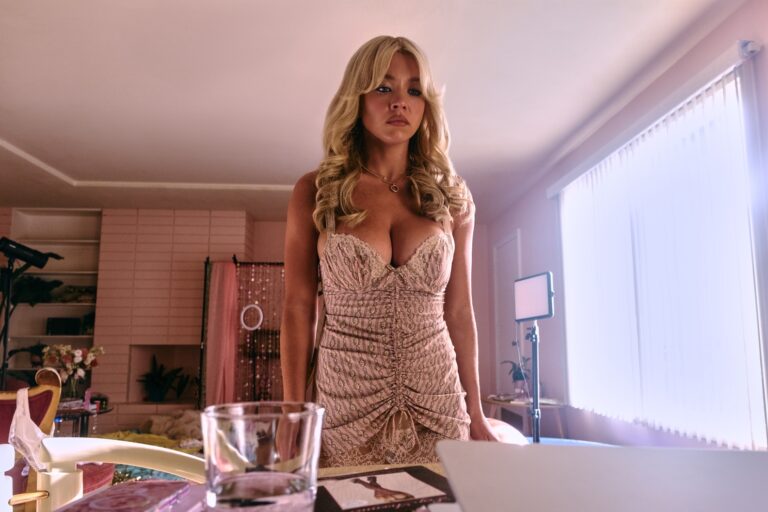
Sydney Sweeney started as a child actor. Thanks to her big break in Euphoria, she has managed to build a lucrative career in recent years.
With roles in both television and feature films, Sweeney is slowly becoming a recognisable name in Hollywood. Not only that, but she’s a successful entrepreneur and brand ambassador, which means serious money in the bank.
How much, exactly? Here’s what we know about the actor’s earnings.
Sydney Sweeney Net Worth
In 2026, Sydney Sweeney’s net worth is estimated to be $40 million. That’s even more impressive when you factor in her age. She’s not even 30.
Sweeney started with supporting gigs in Heroes, Grey’s Anatomy, Criminal Minds, and Pretty Little Liars. In 2018, she had a main role in the short-lived Netflix series Everything Sucks! and recurring roles in acclaimed series The Handmaid’s Tale and Sharp Objects.
Her career took a turn in 2019, when she was cast in HBO hit Euphoria as Cassie Howard. The show, which also starred Zendaya and Jacob Elordi, became a massive success.
The same year, Sweeney had a small role in Quentin Tarantino’s Once Upon a Time in Hollywood. The movie is notable because it basically acted as a catapult for the next generation of Hollywood. Besides Sweeney, it also featured Mikey Madison, Margaret Qualley, Maya Hawke, Austin Butler, and Victoria Pedretti.
In 2021, Sweeney delivered a critically acclaimed performance in the first season of The White Lotus. While she was no stranger to the big screen thanks to Along Came the Devil, Nocturne, and The Voyeurs, her fame reached new heights with the release of romantic comedy Anyone But You. The movie, in which she stars alongside Glen Powell, was an unexpected box office darling.
Since then, the actor has starred in Madame Web, Immaculate, Eden, Echo Valley, and Christy. Last year, her most recent movie The Housemaid, based on the popular novel by Freida McFadden, became an international hit.
Acting career aside, Sweeney also launched her own lingerie brand, Syrn, and has her own production company. She’s also a prolific brand ambassador. Her controversial American Eagle campaign made headlines, and she also worked with Armani Beauty, Laneige, Miu Miu, and Samsung, to name only a few.
Sydney Sweeney Salary
Details about actor salaries are generally sparse, but rumours occasionally circulate.
Sweeney likely earned at least $800,000 per episode for Euphoria season 3. According to The Hollywood Reporter, she was paid $750,000 for Madame Web and a whopping $7.5 million for The Housemaid. Needless to say, she’s now one of the highest-paid actors of her generation.
Sydney Sweeney Highest Grossing Movies
While not all of her movies killed it at the box office, Sweeney has two notable hits in her filmography. Anyone But You grossed $220 million worldwide. The Housemaid, which had a budget of $35 million, grossed $400 million. A sequel is now in the works.
Next, Sweeney will appear in The Custom of the Country, a tragicomedy coming out in 2027. It will be interesting to see what kind of projects she opts for moving forward.
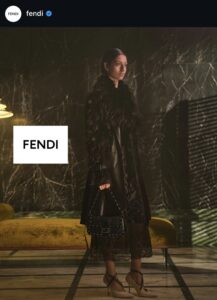
I realised I might have a problem when my friend broke up with her partner and the only thing I managed to say was, “If it’s meant to be, it will,” followed immediately by, “Maria Grazia Chiuri returned to Fendi after 37 years.” Which might sound a little insensitive, unless both parties work in fashion and communicate exclusively in bad humour. After nearly four decades, the designer’s first Cruise collection for the brand took shape. It didn’t, however, take a trip. Everything came neatly packaged as a lookbook and a three-minute short film. New York was spared.
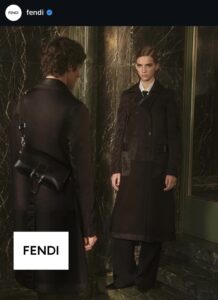
Three minutes were enough to signal Chiuri’s dive into Fendi’s archive. Oltre Lo Specchio (Italian for Beyond the Mirror) is an homage to Jacques de Bascher’s 1977 short film Histoire d’Eau, created as part of Fendi’s first-ever ready-to-wear collection under Karl Lagerfeld’s vision for the brand, often cited as one of the first fashion shorts in history. Both films followed one woman. Chiuri’s wardrobe, however, felt slightly more shared and noticeably more grown-up. Menswear and womenswear were framed in parallel, as if designed to complete each other, pointing to clothes meant to last and be repeated across multiple looks, days, and presumably, attempts.
Just know this attempt is a life largely without colour. Black and white is softened by beige, occasionally broken by red, blue, or purple. Where colour refuses to enter, texture takes over instead. Leather patches, lace, and, inevitably, fur. Suits are structured but relaxed, dresses skim the floor rather than weigh it down. The Fendi Baguette makes its latest return, studded, just like the heels. The Valentino Rockstud seems to be enjoying its revival.
From rising stars to internationally acclaimed names, Art Basel 2026 offers an unparalleled opportunity to discover some of the most exciting artists shaping contemporary art today. Bringing together 290 galleries from 43 countries and territories, the world’s leading art fair returns to Basel from 18 to 21 June 2026 (with Preview Days on 16 and 17 June), showcasing everything from museum-quality historical works to cutting-edge contemporary and digital practices.
This year’s edition features ambitious large-scale commissions by Nairy Baghramian and Ibrahim Mahama, a newly expanded Premiere sector dedicated to recent artistic production, and a host of standout presentations across Unlimited, Feature and Statements. Amid the vast programme of Art Basel, Art Basel Unlimited and peripheral fairs, Lee Sharrock selects seven artists whose work is generating particular excitement in the art world: Nicola Turner at Annely Juda Fine Art, Koray Ariş at Öktem Aykut, France-Lise McGurn at MASSIMODECARLO, Lily Bunney and Elleanna Chapman at Basel Social Club, and Timur Si-Qin at SOCIÉTÉ. Together, these artists offer a compelling snapshot of the diverse voices, materials and ideas defining contemporary art in 2026.
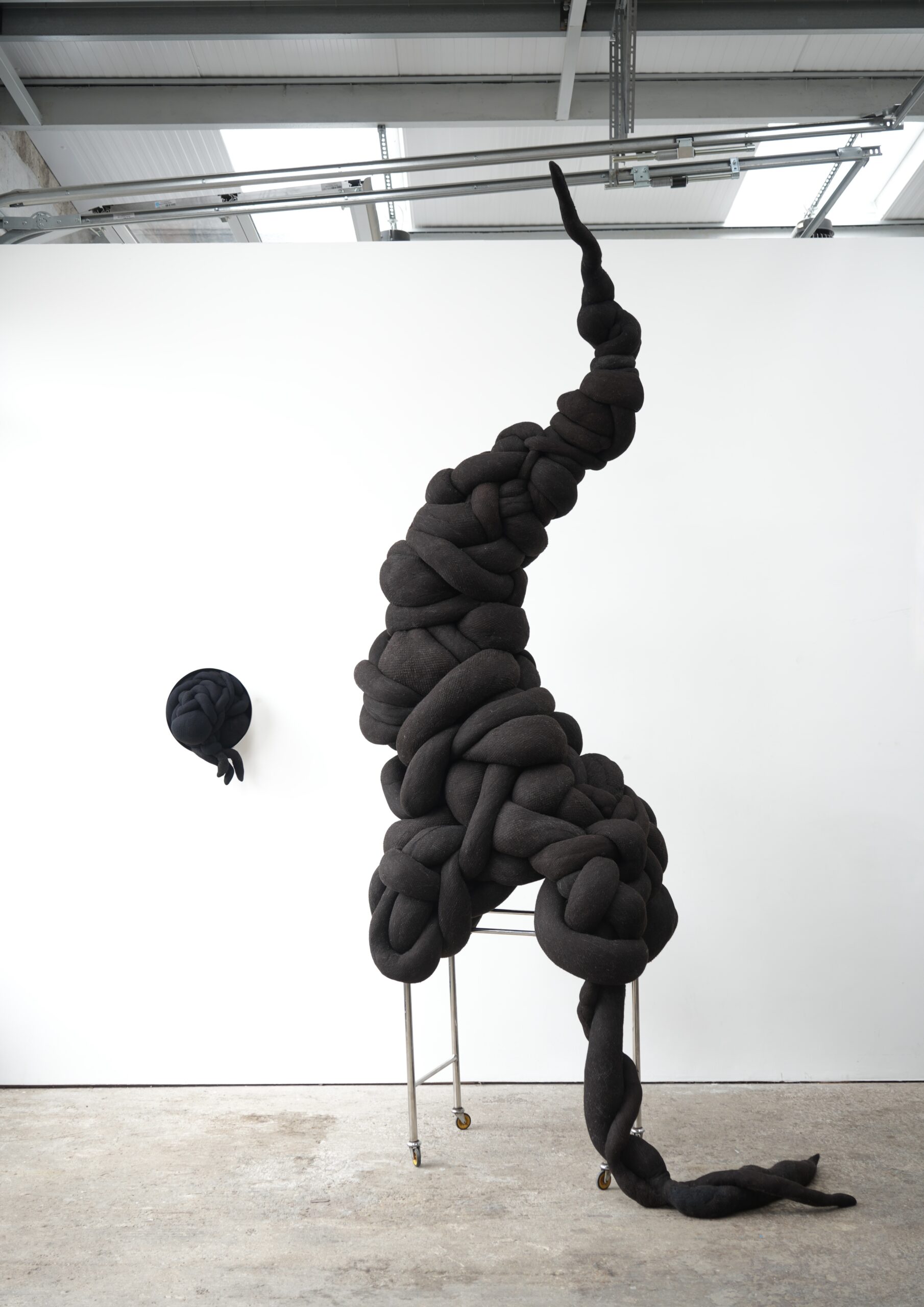
1. Nicola Turnerwill unveil three new sculptures with Annely Juda Fine Art at Art Basel art fair which refer to the stages of life. Nativitas, Vita, Mors, Latin for Birth, Life, Death, is a common philosophical or artistic motif used to capture the complete cycle of human existence. Each stage is represented by a different sculpture. Navitas features a vintage medical bowl with Shetland, Hebridean and Jacob wool spilling from its interior, much like a birth. Attached to the wall, the bowl and its contents hang in three-dimensional space and confront the viewer.
Vita is a winding form that stretches from its foundations on a vintage medical trolley towards the ceiling and down to the floor. 360cm in height it could be seen as an over-sized anthropomorphic or animalistic form. The medical trolley legs invoke, for the artist, experiences of medial operations throughout her life.
Mors is a hanging form that appears to teeter in the high corner of a space. Giving the impression of floating, it could be interpreted as a spirit-like form, alluding to the after-life.
Turner is currently exhibiting Time’s Scythe at Yorkshire Sculpture Park and will have her solo exhibition, I Tear Secrets from Your Yielding Flesh, will open at Annely Juda Fine Art on October 1st 2026.
Nicola Turner Nativitas & Vita, 2026
2. Koray Ariş will exhibit with Istanbul gallery Öktem Aykut for the first time at Art Basel. Ariş will debut new work Strings, a suspended sculptural environment created from leather and wood that invites touch and movement, extending a foundational sculptural language into a sensorial, spatial experience.
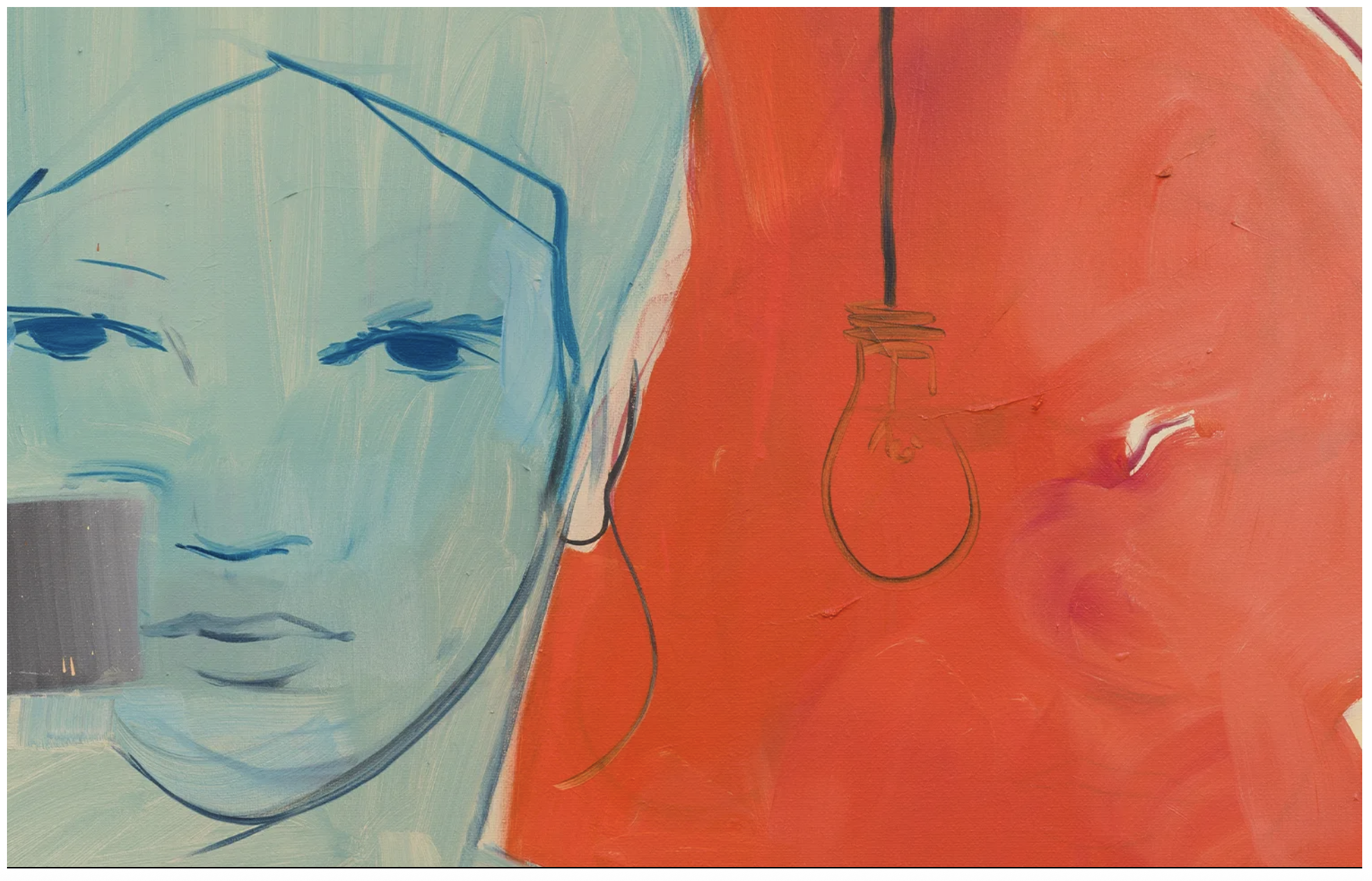
3. France-Lise McGurn DEE-TOUR at MASSIMODECARLO
France-Lise McGurn will be presenting pop-up exhibition DEE-TOUR at DOMUSHAUS in Basel from 15 to 21 June. DEE-TOUR was developed alongside new work for a solo exhibition at Dundee Contemporary Arts, opening in August 2026. In early 2027, McGurn will begin a two-year commission for the Rodin Museum in Philadelphia.
France-Lise McGurn (born in Glasgow in 1983) evades the boundaries of a traditional picture plane, eschewing the limits of her canvases by extending the imagery directly onto the gallery walls and furniture brought into the space, displacing her subject and creating an immersive environment. Instead of approaching a static painting, the artist activates the composition allowing the figures and forms to be seen as though in a field of vision.
France-Lise McGurn DEE-TOUR Copyright The Artist and MASSIMODECARLO
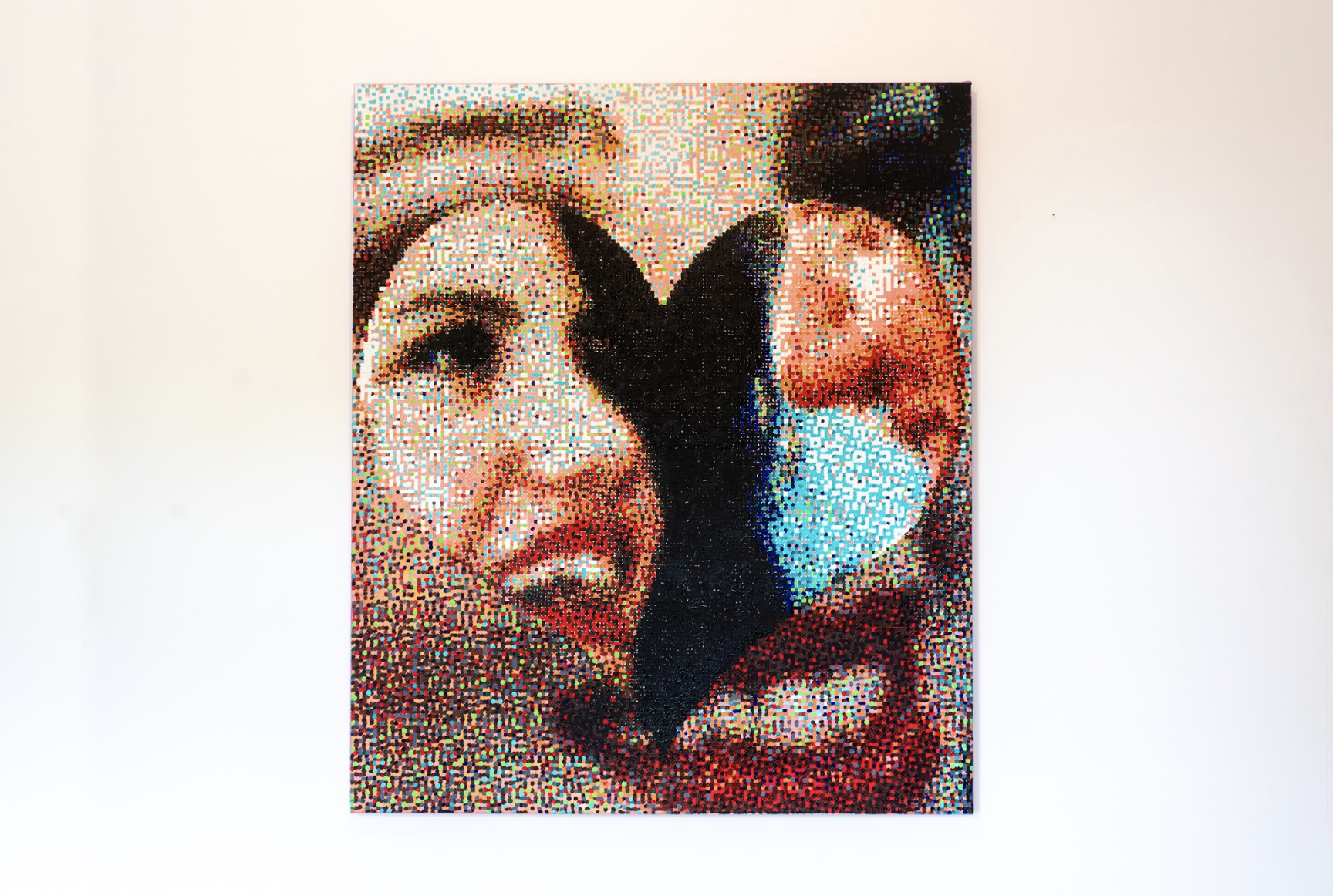
Teaspoon Projects presents Lily Bunney and Elleanna Chapman at Basel Social Club 2026: The Office
For Basel Social Club 2026, Teaspoon Projects, a nomadic curatorial project, presents a new collaborative presentation by London-based artists Lily Bunney and Elleanna Chapman. Responding to this year’s theme, The Office, the project looks at work as a system of visibility, hierarchy, performance, desire, exhaustion, and control.
Bringing together pop-cultural icons, political satire, rhinestones, romance, and digital image making, Bunney and Chapman consider how public femininity is shaped by production and consumption. Marilyn Monroe, Britney Spears, Monica Lewinsky and Bill Clinton appear as figures through which labour, glamour, class, exploitation, and institutional power become painfully visible.
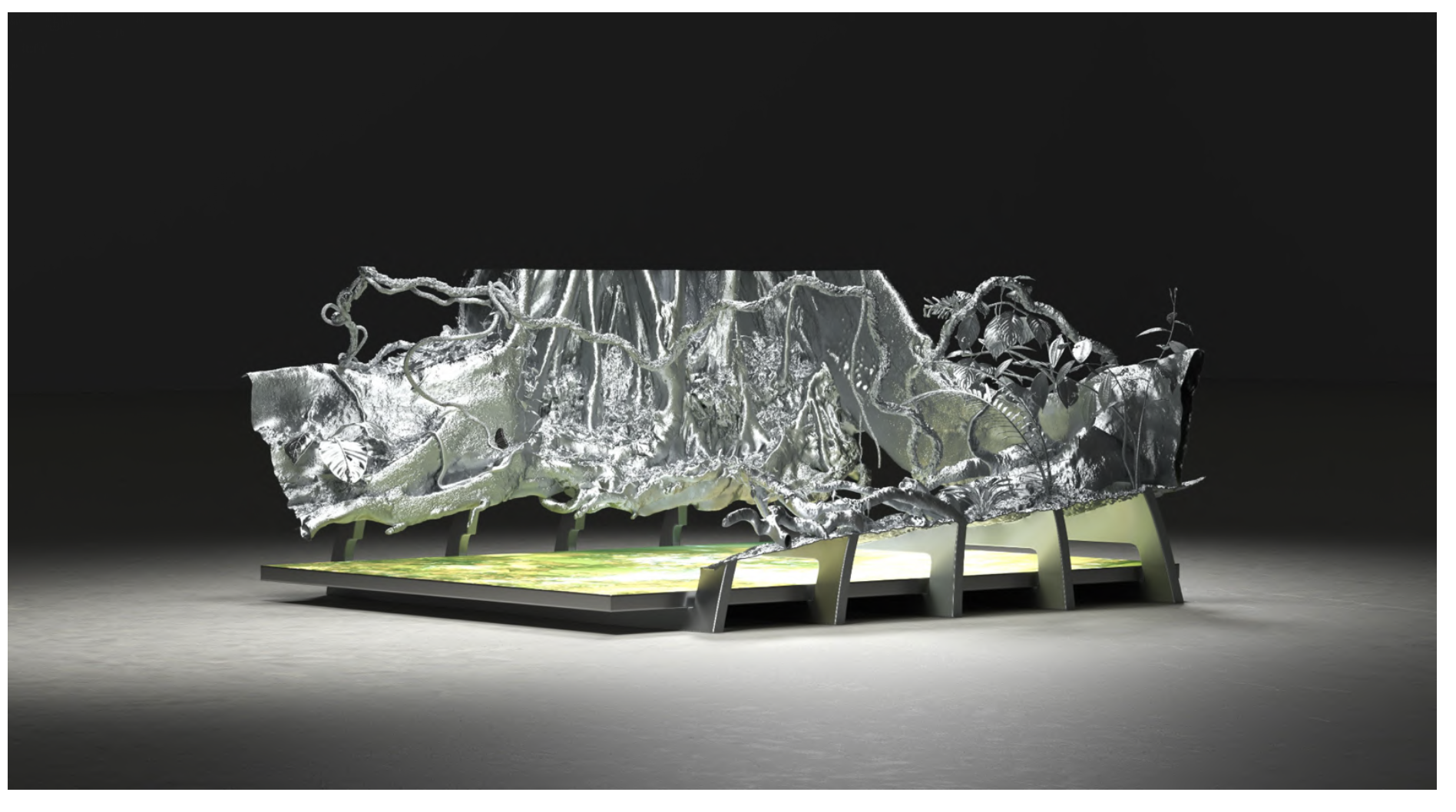
Timur Si-Qin exhibits Mariposita with SOCIÉTÉ at Art Basel Unlimited
Art Basel Unlimited 2026, the Berlin gallery SOCIÉTÉ is presenting Mariposita, a new immersive installation by artist Timur Si-Qin. The large-scale work is based on 3D scans of a Renaco tree and its ecosystem in the Peruvian Amazon, translating roots, plants, insects, and water reflections into a spatial installation composed of stainless steel and moving-image elements.
With Mariposita, Si-Qin inaugurates a new body of work focused on the Peruvian Amazon, which will continue at SOCIÉTÉ in November 2026. At its core is the question of the “pristine” — untouched natural environments that are increasingly disappearing in an era of climate crisis and biodiversity loss. Through the use of digital technologies as a means of respectful and non-invasive documentation, Si-Qin understands artistic reproduction as an act of attention and ecological connectedness.
Feeling comfortable in your own skin is often portrayed as a destination, a point where confidence arrives and self-doubt disappears. In reality, most people experience confidence as something far more fluid. Some days it comes naturally. Other days require conscious effort. The difference is rarely determined by appearance alone. More often, it is influenced by habits, routines, and the way people treat themselves on an ordinary Tuesday afternoon when nobody else is paying attention.
This is why daily rituals matter. Small actions repeated consistently can influence how people feel about themselves far more than occasional attempts at dramatic self-improvement. Confidence tends to grow through routine rather than sudden transformation.
The Power of Keeping Promises to Yourself
Many people associate self-confidence with external achievements, but confidence often begins with trust. When people repeatedly follow through on commitments they make to themselves, they develop a sense of reliability that strengthens self-esteem.
The commitment does not need to be significant. Going for a walk, drinking enough water, reading before bed, or maintaining a morning routine can all contribute to that feeling. The habit itself matters less than the consistency behind it.
Over time, these repeated actions create evidence that a person can rely on themselves. That trust becomes an important foundation for confidence in other areas of life.
Creating Moments That Feel Restorative
Modern schedules often leave very little room for recovery. Work, responsibilities, and constant digital stimulation can create a feeling of being permanently switched on. Many people discover that intentional moments of rest have a noticeable effect on how they feel physically and emotionally.
A quiet evening routine, time spent outdoors, or a period of uninterrupted relaxation can help create a sense of balance. People frequently explore different wellness habits while building those routines, and resources such as Medterra sometimes become part of that broader search for practices that support everyday wellbeing.
The goal is not perfection. It is creating regular opportunities to step away from stress and reconnect with a calmer pace of life.
Why Skincare Is Often About More Than Skin
Photo by Laura Jaeger on Unsplash
Skincare routines are frequently discussed in terms of appearance, but many people value them for a different reason. The ritual itself creates a few uninterrupted minutes dedicated entirely to self-care.
Morning and evening routines establish structure. They provide a predictable moment in the day when attention shifts away from external demands and toward personal wellbeing. That consistency can feel grounding, particularly during busy or stressful periods.
Many people gradually refine those routines over time, experimenting with different approaches and products until they find something that fits naturally into everyday life. As routines evolve, Qure Skincare may become one of the products people incorporate into a long-term approach focused on consistency rather than quick fixes.
The Connection Between Physical Comfort and Confidence
People often underestimate how much physical comfort influences emotional wellbeing. Sleep quality, movement, hydration, and nutrition all affect energy levels, focus, and mood. When those basic needs are neglected, confidence frequently suffers as a result.
By contrast, small improvements in physical wellbeing often create noticeable changes in how people carry themselves throughout the day. Better sleep can improve patience. Regular movement can improve energy. Consistent hydration can support concentration.
None of these habits are dramatic on their own, but together they create conditions that make confidence easier to maintain.
Reducing the Noise of Comparison
One of the biggest obstacles to feeling comfortable in your own skin is constant comparison. Social media, advertising, and online culture make it easy to focus on what other people appear to have rather than what is already working in your own life.
Many daily rituals provide a way to step away from that cycle. Reading, exercising, cooking, creating, or spending time with friends encourages attention to shift away from comparison and back toward personal experience.
The less energy people spend measuring themselves against others, the easier it becomes to appreciate their own progress and strengths.
Confidence Grows Through Repetition
People often search for a breakthrough moment that will suddenly make them feel more confident. More often, confidence develops through repetition. It grows from habits that reinforce self-respect, consistency, and personal wellbeing over time.
The daily rituals that support confidence are rarely dramatic. They are usually simple, sustainable actions repeated often enough to become part of everyday life. Whether that involves movement, rest, skincare, mindfulness, or healthier routines, the long-term impact tends to come from consistency rather than intensity.
Feeling comfortable in your own skin is not about becoming someone different. It is often the result of building daily habits that allow you to feel more like yourself.
Where to begin? I’ve been covering Primavera Sound for half a decade, and the final day of this year’s edition was the most transcendent, and, recency bias notwithstanding, best twelve hours I’ve experienced at any festival. It was delightful to see acts like Little Simz and Big Thief level up to the main stage, where Jamie xx returned with his bandmates for the xx’s first appearance at the Parc del Fòrum since their debut in 2009, the same year My Bloody Valentine stopped by Barcelona during their reunion tour. Both of these bands kept the audience rapt, commanding it with different levels of intensity, while Simz, Kneecap, Knocked Loose, and Ninajirachi all opened up pits of varying sizes.
And those are just the acts I did manage to see on Saturday, June 6, an experience that personally made up for the festival’s chaotic first day. The organizers seemed determined to make it count. Primavera always has a wide-ranging bill that allows all kinds of music fans to organize their schedules in wildly divergent ways, but that day it seemed to almost be split into two concurrent festivals, at least until midnight: you could camp out at the main stages for some of the world’s biggest alternative acts, while the other side of the forum hosted pop favorites from Grace Ives all the way up to the star she’ll soon be opening for, Olivia Rodrigo, who took the Occident stage a few hours before being announced as a surprise guest and debuted a new song with the Cure’s Robert Smith. Here are five highlights from the final day of Primavera Sound 2026.
Grace Ives Is Invincible
The first sign that Saturday’s rumoured surprise guest would be Olivia Rodrigo had to be the fact that Grace Ives, who is opening for her on the Uravelled Tour, was on the bill earlier in the day. Unravelling (cough) on the Cupra stage just after 6pm, it was the only set I caught at this year’s festival where the sun was still blazing, forcing Ives to keep wiping the sweat off her face between songs. The heat amplified the fervid intensity of songs like ‘Fire 2’ from her new album Girlfriend, which sparkled to life with a three-piece setup that included a drummer (awed enough by the crowd to take a photo mid-song) and synth maestro. The opening one-two punch of ‘Avalanche’ and ‘Dance With Me’ was infectious, while ‘My Mans’ was essentially transformed into a power ballad with Ives on keys. When she wasn’t singing, preferring playful grimaces over hand gestures to punctuate her lyrics, she was bouncing all around the stage, at one point causing her yellow sunglasses to hurtle to the ground. As she ended her set with ‘Stupid Bitches’, which might well be the song of the year, you really did believe nothing could hurt her – or you – now.
Big Thief Turn the Forum Into a Giant Living Room
Big Thief. Credit: Eric Pamies
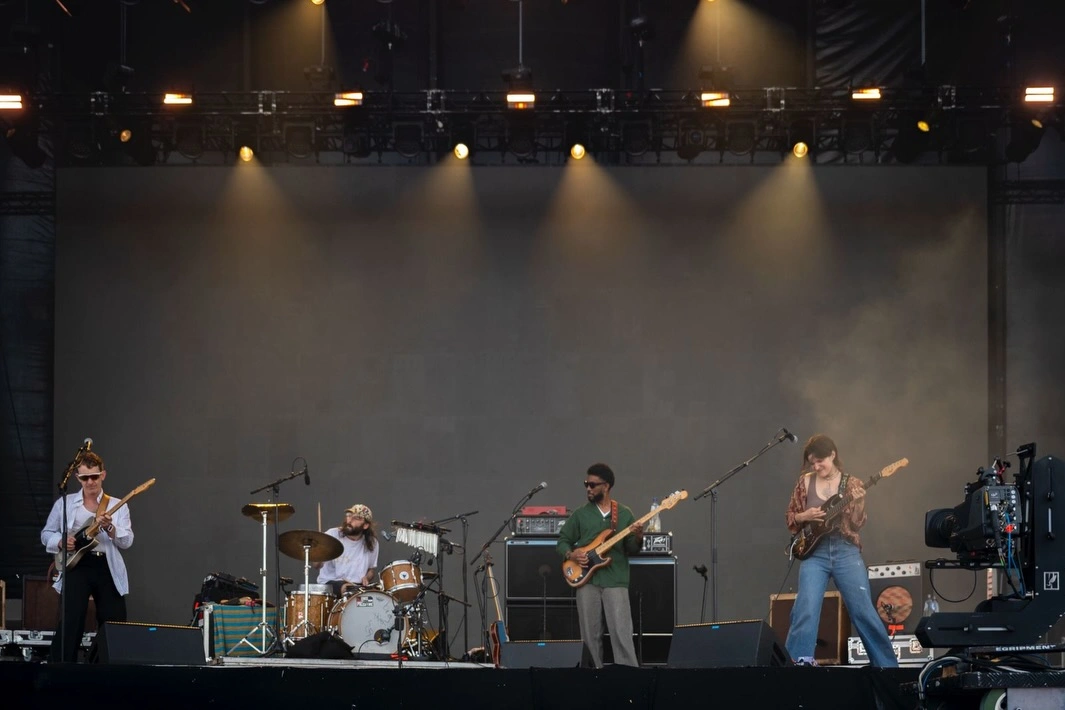
“We’re all just in a giant living room, right?” Adrianne Lenker tells the massive crowd that was just singing along to ‘Vampire Empire’, which Buck Meek then points out was recorded right here in Catalonia. The weather was as crisp as the sound quality of the live mix, which hardly wavered if you were standing further behind. But what mattered more was the ineffable energy the quartet brought to the main stage after gracing smaller ones in the past, and the only way I can think to describe it is by recalling the way Lenker took pause to gesture upward while singing “Like the sky” on ‘Change’, the most subdued and emotionally charged moment of the show. It flew by in a flash.
Bassist Joshua Crumbly seemed like he’d been playing with the band for a decade rather than a year (having joined following the departure of Max Oleartchik; this is as good point as any to note that James Krivchenia’s drums had a Free Palestine sticker on them next to the band’s scribbled name), laying down melodious arpeggios on ‘Not’, which had the whole band singing in unison. Lenker’s guitar solos, more than just abundant, diverged along different paths: one I can only describe as swarmy on ‘Simulation Swarm’, cradling waves of distortion on ‘Christmas Day’, violently sliding up and down the fretboard through ‘Vampire Empire’. Opening with ‘Forgive the Dream’, electrified in its dreaminess compared to the recently debuted acoustic live version, the set also featured unreleased tracks including ‘Mr. Man’ and ‘Beautiful World’. Whether you were hearing them for the first or umpteenth time, though, Big Thief made the songs feel infintely familiar.
Shoegaze Faithfuls Assemble for My Bloody Valentine
Credit: Sergio Albert
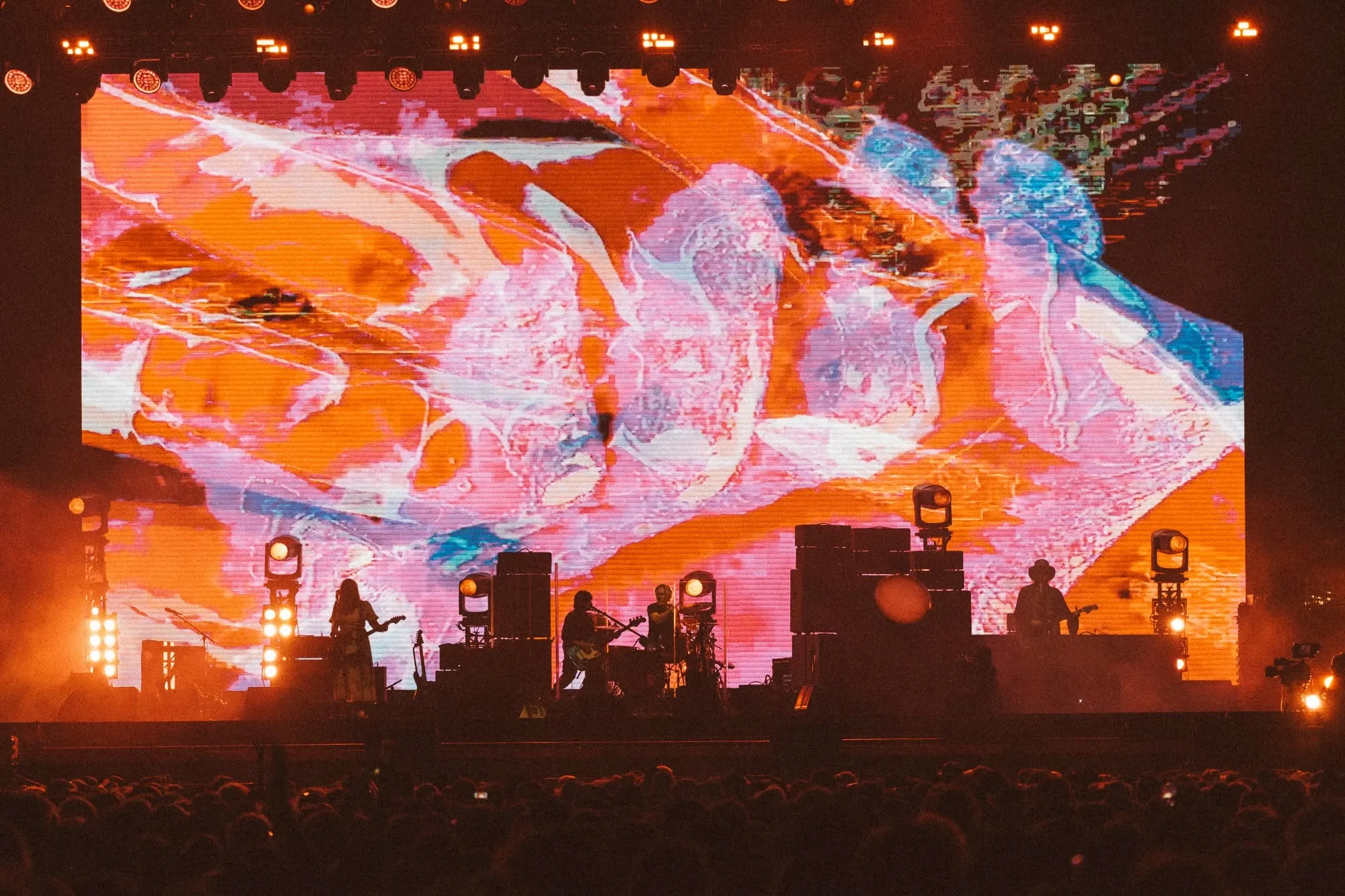
I put my earplugs on as soon as My Bloody Valentine entered the stage, expecting the loudest show I’ve ever attended; this is a band notorious for reconciling reticence with ear-shattering heaviness, especially live, and the shaky sound at Slowdive’s set the previous day seemed portentive. Even though I was quite close to the Estrella Damm stage after a mass of people left to catch Olivia Rodrigo, I was surprised by how crisply mixed and lean they immediately sounded, even prompting one nearby fan to shout “Louder!” after the opening ‘I Only Said’. With the full-band charge of ‘When You Sleep’, they seemed to be heeding his request, and for about an hour and a half, Kevin Shields and company vacillated between ferocious fuzz and brain-melting shoegaze voyages. Loveless‘ ‘Only Shallow’ and ‘Soon’ naturally drew the biggest reactions, the latter accompanied by a simple disco ball visual that gave way to a hypnotic 3D tunnel on ‘Wonder 2’, by which point transcendence was no longer substance-dependent. Shields spoke just once, and meekly, his mic still swaddled in effects so as to render his words indecipherable before conjuring an earth-shattering wall of noise at the show’s conclusion. For what felt like a small eternity, earplugs were absolutely necessary.
The xx’s Not-So-Silent Devotion
Credit: Eric Pamies
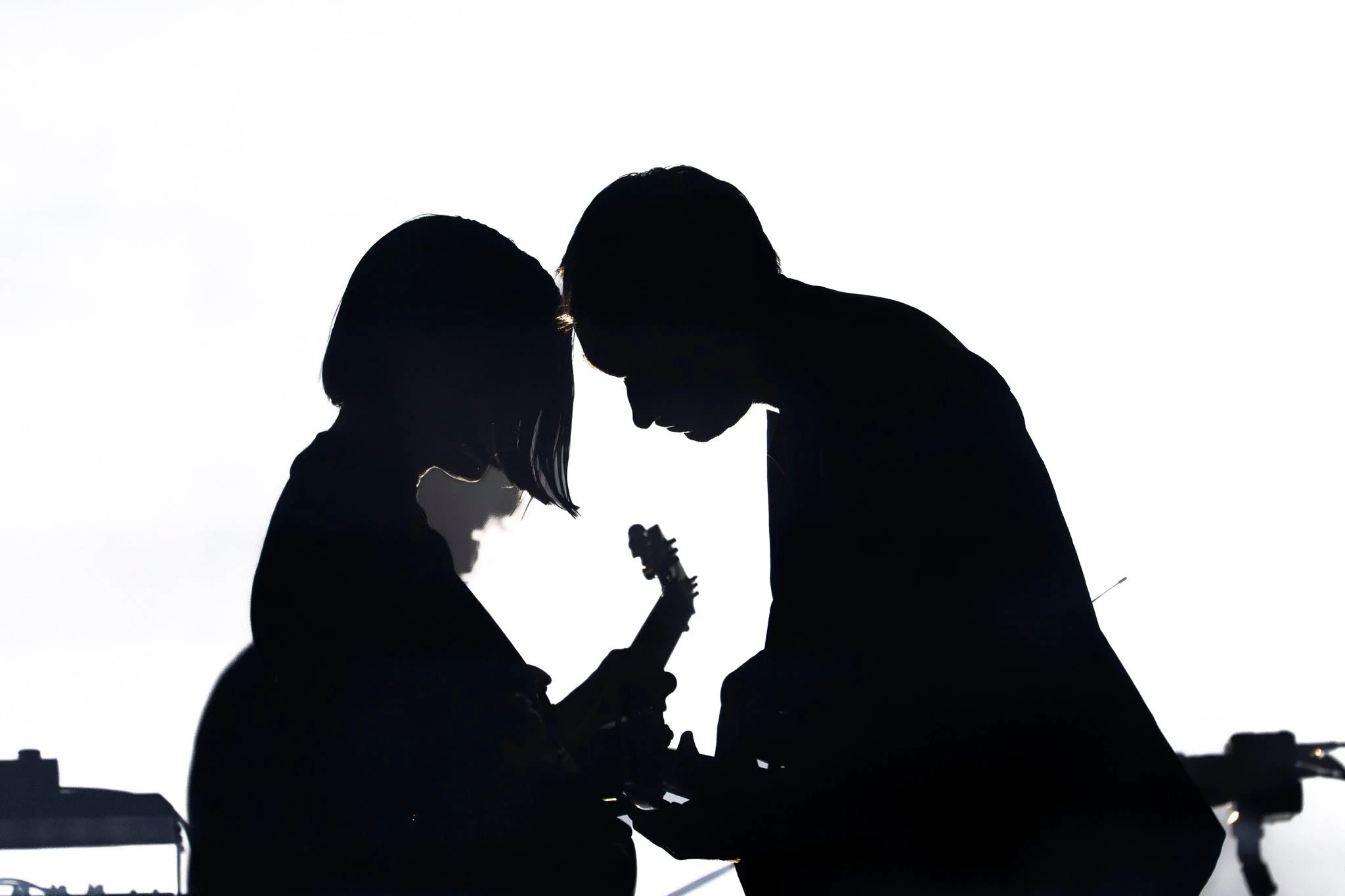
The xx’s flood of affection – towards each other, the crowd, for the love of music itself – reverberated as soon as the first notes of ‘Crystallized’ captivated the Revolut stage. Early in their immaculate set, they slipped back into songs from their self-titled debut (released only a year before they first played the festival as a group) like an old sweater, aglow with the gratitude that has filled their first shows together in eight years. Speaking between songs, they expressed it simply and earnestly, with Romy noting that they were out there with the fans when it rained down on Thursday. Behind the decks, Jamie xx started subtly raving up the songs around ‘Fiction’, which saw the giant “X” platform descending upon them, emanating purple shards of light that seemed to represent them retreating into their shells. It turned and flashed upward as Romy sang “Can I make it better with the lights turned on?” on the 2017 live remix of ‘Shelter’, but no moment was more stirring and intimate than ‘VCR’. The song sent shivers down my spine as the giant screens settled on a close-up of Romy staring at Oliver Sim as he sang – you could almost feel her gulping down a knot in her throat – and then singing reverently into the mic: “Love, love, love.”
How can a band treasuring slowness make time pass so fast? How did they become superstars before throwing themselves, each in their own way, into “the throes of dance,” to quote a song the Cure did not play during their 29-track set (which Romy also said they enjoyed)? You won’t find the answers in any interviews, but you could feel them embrace their musical evolutions as they seamlessly surged through upbeat solo tracks, never losing hold of each other or pushing any one member back. The group’s euphoria stretched from ‘Loud Places’ all the way to ‘On Hold’. After winding back with ‘I Dare You’, there was nowhere else to go but to the very beginning.
Ninajirachi Has Never Been to London Spain
The Port stage is one of the smallest at Parc del Fòrum, but over the weekend it flooded with fans of Water From Your Eyes, Lambrini Girls, and more. As I made my way from Kneecap’s show at Occident down to the water’s edge, enjoying a few minutes of Nick León’s set at the Schwarzkopf stage, there was already a huge crowd waiting for Ninajirachi, who has been massively hyped since the organizers placed on the second to last row of the original Primavera Sound 2026 poster. And for good reason (the hype, not the placement): the Australian producer’s debut album I Love My Computer will probably go down as one of the best of the decade, and she threw down the best electronic set I caught this year. (Granted, I was absent from the 12-hour program Skrillex curated as SONNY at the adjacent Cupra Pulse, which featured the likes of Arca and Four Tet.) She may or may not have dropped ‘London Song’ as an opener to allude to the fact she had never been to Spain – “best crowd ever,” she said.
No one was surprised when she closed with ‘Fuck My Computer’, her most popular song, but had no issue captivating the crowd before getting there, delivering a fantastic club take on ‘Berghain’ and the brattiest version of ‘Rock Music’, then throwing it under the banner of her own ‘girl EDM’. Abursdly, I found myself drawn back to the memory of Adrianne Lenker singing, “Let me dance in front of people without a care,” a line from a song where the chorus is titular: ‘Incomprehensible’. There’s no better word for it.
On the second day of Primavera Sound 2026, I walked into the Parc del Fòrum to the swirling sounds of Slowdive, who graced the Revolut stage early in the evening. I thought I’d arrived late, but their set was pushed back and I managed to hear most of it; although it was audibly marred by technical issues, there was nothing more evocative than hearing the muffled echo of ‘When the Sun Hits’ as I was leaving. It’s how I remember hearing ‘American Teenager’ at the festival a couple of years back, and now Ethel Cain was about to take the main stage once again. Having recently caught her immersive live show at an indoor venue, though, I decided to head back to see Rilo Kiley, which was the start of a far breezier and pleasant, if no less sprawling, night than the rain-soaked day 1. Here are five highlights from the second day of Primavera Sound 2026.
Rilo Kiley Are Really On
Credit: Sharon Lopez
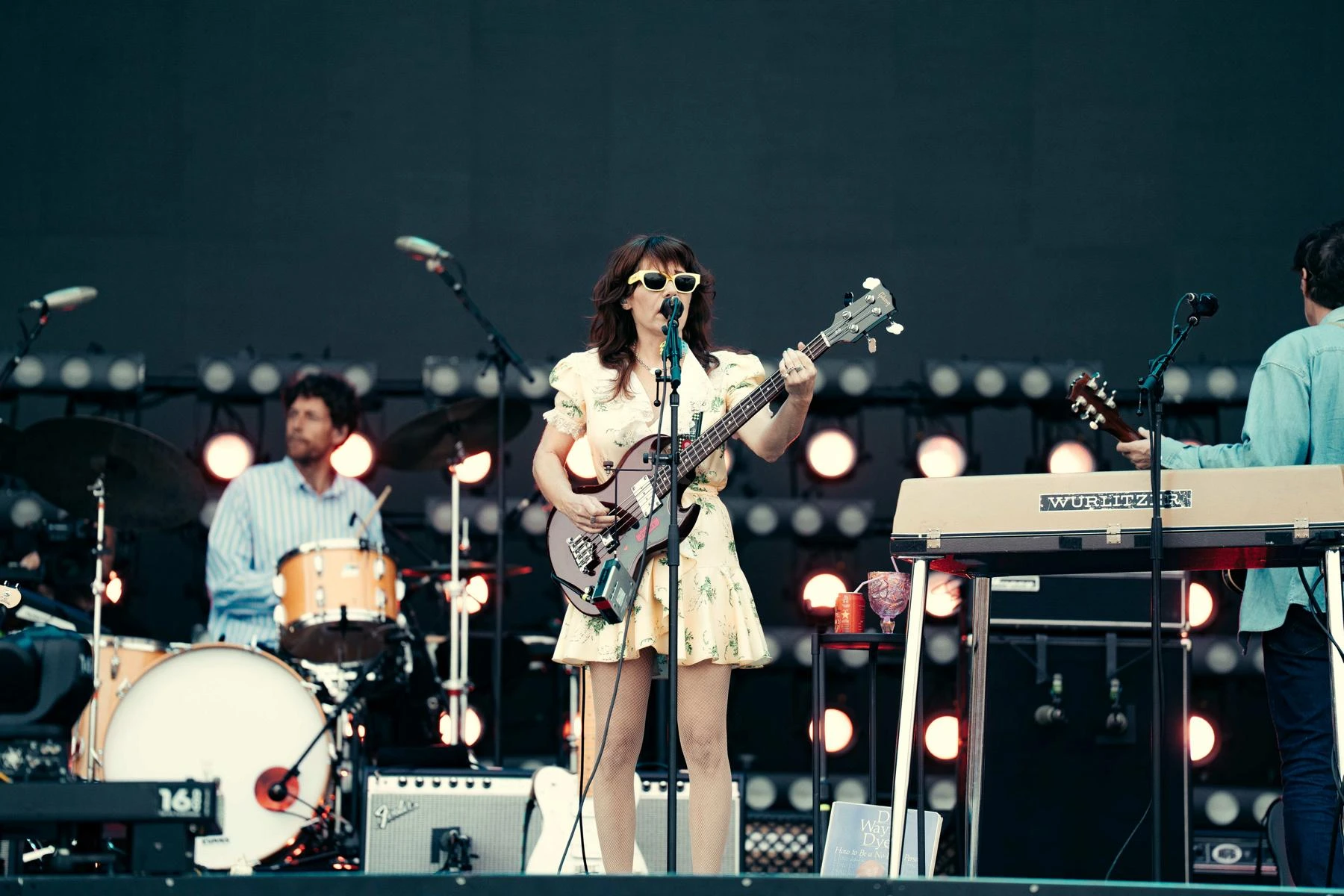
Rilo Kiley came a long way to perform at Primavera Sound, one of a handful of dates they lined up this year as an extension of their Sometimes When You’re On You’re Really F**king On tour; it was their last stop, in fact. The last time they played here, as Jenny Lewis noted, was at the 2013 edition headlined by the Postal Service – which, I should add, was the last time this Saturday’s headliners, My Bloody Valentine, topped the bill. The band breezed right through ‘The Execution of All Things’, splitting their set between the eponymous album, Under the Blacklight, and a bit of More Adventurous. The show was sprightlier than the casual fan might have expected, keeping the crowd grooving through cuts like ‘The Moneymaker’ and ‘Breaking Up’. Lewis’ stage presence was especially vibrant, relying on subtle gestures to match her striking voice on songs like ‘Does He Love You?’; at one point, she pulled the always-fun move of grabbing a camera and pointing it at the crowd so that we could see ourselves in real time. But even with your eyes closed, how can you not see yourself in the one-two punch of ‘Arms Outstretched’ and ‘A Better Son/Daughter’? Speak of “hiding the tears in my eyes” – but more on that soon.
Whatever was wrong with the Revolut stage earlier didn’t prevent Addison Rae from putting on her dazzling show, which brought to mind Sabrina Carpenter’s set from last year (which actually did have some sound issues) – and also brought them into sharp contrast. The two pop stars share a devotion to sparkle and glamour, offering elaborate and meticulously choreographed shows based on relatively recent yet massively successful material. But Carpenter’s cheekiness and sexual innuendo felt much more controlled compared to Rae’s sultriness, which veered from pole dancing to grinding and actually smoking a cigarette. While the “Can’t a girl have fun?” energy of ‘Money Is Everything’ could serve as the unifying factor of any modern pop performance, Rae’s had a slightly unhinged shadow, from the extended rendition of ‘Von dutch’ and its infamous scream to the way she leaped into her higher register on ‘High Fashion’. With a whole hour to fill and only one album to her name, she bookended the show with ‘Diet Pepsi’ and shouted out every single back-up dancer by name, relying on them to channel her fervour through everything from twerking to pirouettes. ‘In the Rain’ had an ominous edge this time around as clouds loomed over, but Rae reminded us that summer is a feeling, after all.
The Cure’s Heavenly Melancholy
“It used to be so easy,” Robert Smith sings on ‘The Last Day of Summer’, “I never even tried.” It echoes a song they released over a quarter of a century later, ‘Endsong’ from their latest album Songs of Lost World, and its line about wondering how he got so old. Aging – more than any specific emotion, which always intermingles with another – is a recurring theme in the Cure’s discography; not only the way people age, but memories, places, dreams. Their songs, of course, have aged spectacularly, remaining in vogue as young stars like Olivia Rodrigo bring them into her world. Over a two-and-a-half-hour show that carried a bigger weight following the cancellation of the previous night’s headliners – not to mention the fact that it kicked off their first tour in three years – the band wove together classics and rarities, airing out ‘Mint Car’ for the first time in a decade after playing its A-side, ‘Lovesong’. Hits like ‘Pictures of You’, ‘Fascination Street’, ‘Just Like Heaven’, and ‘A Forest’ buoyed the crowd in between stretches of dark propulsion marked by lesser-known songs, which made space for the band’s sturdy rhythm section and some flashy guitar solos. The nine-song encore was one single after another, and Robert Smith’s exhaustion heightened his playfulness, whether riffing off the melody of ‘Why Can’t I Be You?’ or singing gibberish on ‘Lovecats’. Not effortless, exactly, but colouring every attemptwith a touch of maddened joy.
Skrillex Is on Fire
Credit: Gisela Jané Galán
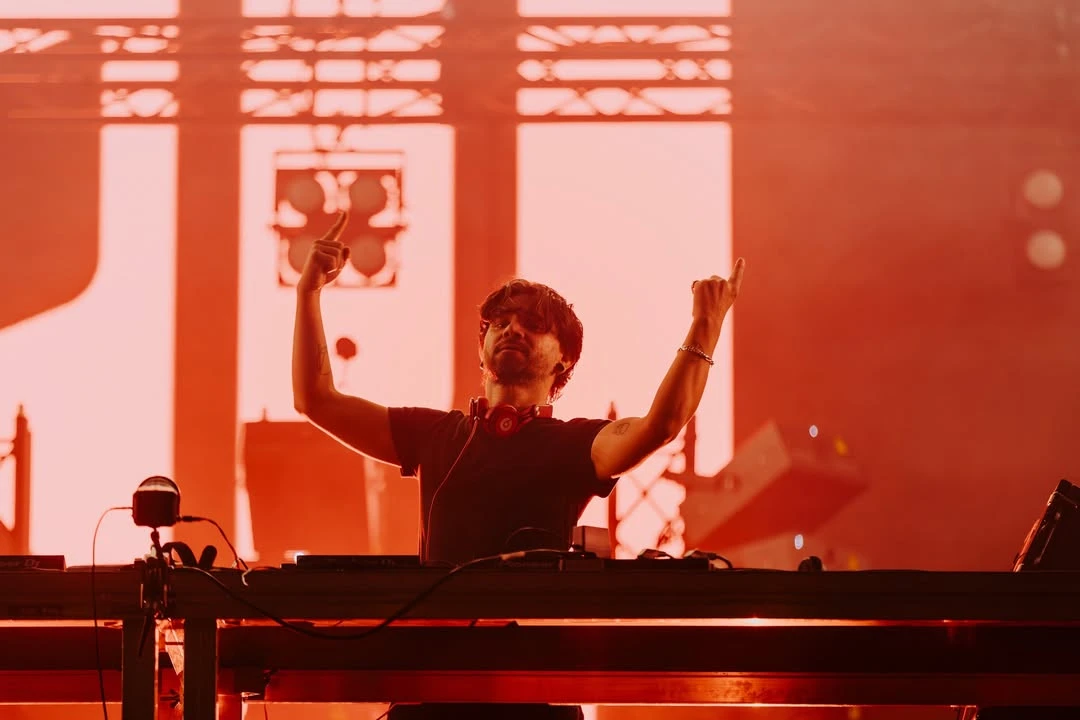
Skrillex must have spent most of his budget on pyrotechnics to match his rapid-fire mashups; can you imagine if he had to put on this show on day 1? The magic of a festival like Primavera is that you can watch a pop star on the main stage, scoot over to the adjacent one to see a band that put out their eleventh album the year said pop star was born, and enjoy a bonkers Skrillex set where the sound seemed tailored to his exact needs. As was to be expected, the producer debuted his Spanish-language-heavy new album SOMA (surprise-released the same day) while sprinkling in wobbled-up covers of tracks by Porter Robinson and Brutalismus 3000 – who had just captivated the Cupra stage, where Skrillex is curating a 12-hour program on Saturday – as well as the Eurodance hit ‘Stereo Love’. Only at one point did he allow the crowd to catch a breath, which was the most surprising part of the whole spectacle.
Viagra Boys’ Thrilling Rumble
Credit: Clara Orozco
After the end of Skrillex’s set, I attempted to catch a glimpse of the Cara Delevigne show that had just started, after her first pair of singles – co-produced with Charli XCX collaborator BJ Burton (Film, Fashion, and Music?) – piqued my interest. But by the time I got to the Schwarzkopf stage, not only was it overcrowded, but half of her 40-minute set had gone by. It wasn’t sure what to make of it, so I followed the sound of Viagra Boys’ thrilling rumble up at the Occident stage, which housed Geese’s similarly sleazy performance the previous day. “Good to see so many punk losers in the crowd tonight,” Sebastian Murphy said, a sharp contrast to “Let’s go gays,” the first thing I heard coming out of Cara DeLevigne’s mouth. The Swedish punks ripped through hits like ‘Troglodyte’ and ‘Sports’, which had Murphy doing a couple of push-ups before falling to the ground and grunting into the microphone. “Do I look weird?” he kept asking through the sax-addled maelstrom that cut through their slinky grooves. On the screen behind them, the words “Endless Anxiety” flashed intermittently. What a way to sweat it out.
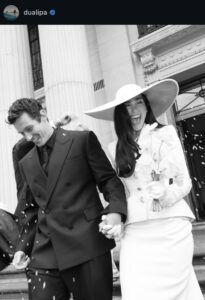
Dua Lipa and Callum Turner have made it official. The couple reportedly married in a civil ceremony at London’s Old Marylebone Town Hall this past weekend, a venue with a long history of attracting celebrities experimenting with the concept of low-key. As petals and confetti filled the air, paparazzi filled the streets, giving the internet yet another reason to spiral. Not because the couple got married, congratulations to them, genuinely. But because Lipa stepped out in a skirt suit, instantly sending the bridal fashion crowd into overdrive.
Wishing the newlyweds a lifetime of happiness. Wishing everyone currently drafting a “The Wedding Dress Is Dead” headline a calm, ashwagandha-assisted week. Apparently, all it takes to bring the bridal skirt suit back from the archives is Dua Lipa. Bridal Fashion Week 2027 already gave us a fairly clear picture of what New York thinks a bride should look like. Skirt suits didn’t exactly dominate the runways, but traditional wedding dresses did lose a little ground. Designers made room for classic tailoring, trailing separates, and, in at least a few cases, low-rise jeans. The season also made one thing clear: not everything worn on the head needs to be a veil.
Lipa chose custom Schiaparelli for her special day. Fair enough, Daniel Roseberry really can do everything. The look paired a sharply tailored blazer, cinched at the waist and finished with surrealist gold buttons, with a skirt that couldn’t quite decide on a length, stopping below the knee in the front and trailing behind at the back. Of course, white gloves, a Bulgari Serpenti necklace, Christian Louboutin pumps, and a Stephen Jones wide-brimmed hat lined in gold leaf were all part of it.
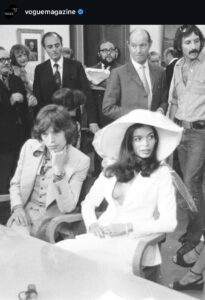
The artist’s choice invited endless comparisons to then Bianca Pérez-Mora Macías, now (still) Bianca Jagger, and her 1971 wedding to Mick Jagger. Her look came courtesy of Yves Saint Laurent, a white single-breasted blazer worn bare underneath, matched with a long column skirt and a wide-brimmed hat softened with a veil. Half a century later, and it still holds the room.
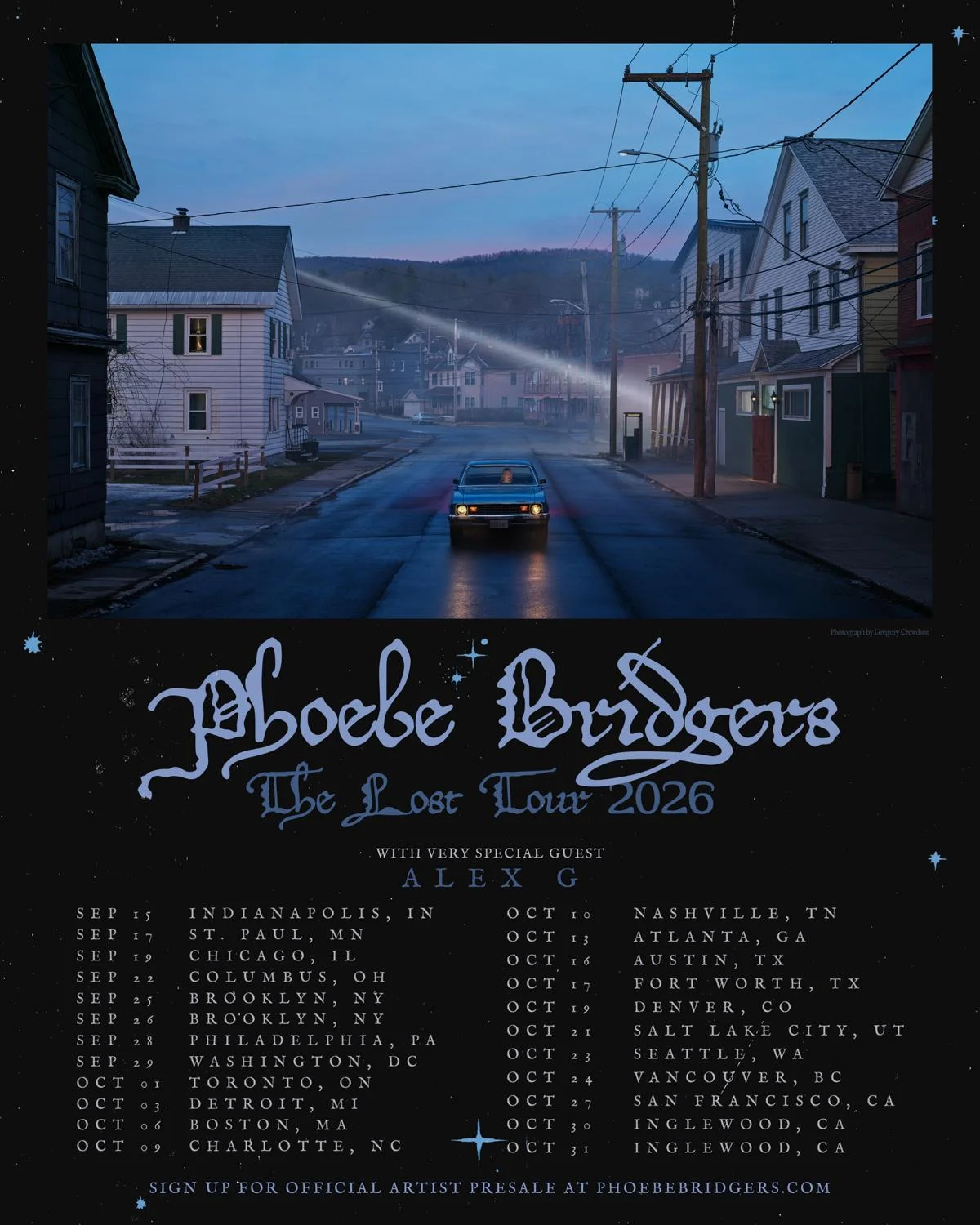
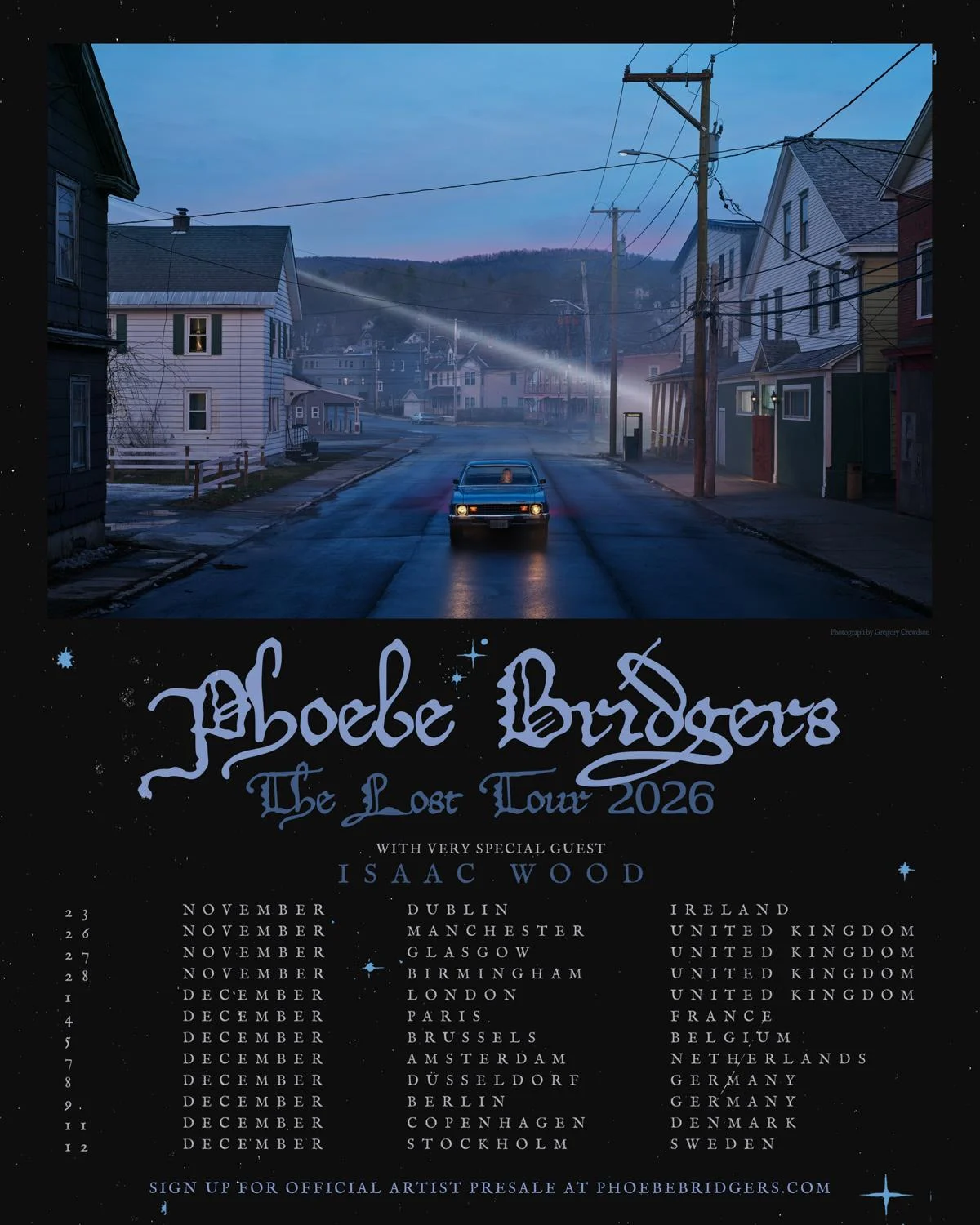
Following a sold-out show at New York City’s Madison Square Garden last night and a series of pop-up shows, Phoebe Bridgers has announced an official tour. The North American trek kicks off on September 15 with special guest Alex G before Bridgers heads over to Europe for a run of dates with former Black Country, New Road vocalist Isaac Wood (!). Check out the full itinerary below.
Tickets for The Lost Tour go on sale first through the Phoebe Bridgers Pass Presale via Fan3, starting at 10:00 am local time on June 10 and closing at 9am local on June 12 across all tour markets. Bridgers partnered with PLUS1 so that €1/£1 from every ticket sold on the European tour leg is directed to local organisations throughout the EU/UK working to support those impacted by sexual assault and violence.
Phoebe Bridgers 2026 Tour Dates:
Sep 15 Indianapolis, IN – Gainbridge Fieldhouse*
Sep 17 St. Paul, MN – Grand Casino Arena*
Sep 19 Chicago, IL – United Center*
Sep 22 Columbus, OH – Nationwide Arena*
Sep 25 Brooklyn, NY – Barclays Center*
Sep 26 Brooklyn, NY – Barclays Center*
Sep 28 Philadelphia, PA – Xfinity Mobile Arena*
Sep 29 Washington, DC – Capital One Arena*
Oct 01 Toronto, ON -Scotiabank Arena*
Oct 03 Detroit, MI – Little Caesars Arena*
Oct 06 Boston, MA – TD Garden*
Oct 09 Charlotte, NC – Spectrum Center*
Oct 10 Nashville, TN – Bridgestone Arena*
Oct 13 Atlanta, GA – State Farm Arena*
Oct 16 Austin, TX – Moody Center*
Oct 17 Fort Worth, TX – Dickies Arena*
Oct 19 Denver, CO – Ball Arena*
Oct 21 Salt Lake City, UT – Delta Center*
Oct 23 Seattle, WA – Climate Pledge Arena*
Oct 24 Vancouver, BC – Rogers Arena*
Oct 27 San Francisco, CA – Chase Center*
Oct 30 Inglewood, CA – Intuit Dome*
Oct 31 Inglewood, CA – Intuit Dome*
Nov 23 Dublin, Ireland – 3Arena #
Nov 26 Manchester, England – Co-op Live #
Nov 27 Glasgow, Scotland – OVO Hydro #
Nov 28 Birmingham, England – bp pulse LIVE #
Dec 1 London, England – The O2 #
Dec 4 Paris, France – Adidas Arena #
Dec 5 Brussels, Belgium – Forest National #
Dec 7 Amsterdam, Netherlands – Ziggo Dome #
Dec 8 Düsseldorf, Germany – Mitsubishi Electric Halle #
Dec 9 Berlin, Germany – Velodrom #
Dec 11 Copenhagen, Denmark – Royal Arena #
Dec 12 Stockholm, Sweden – Avicii Arena #