Home Blog Page 68

Best Shopify App for Product Images

0

Juggling a personal store and online shops on Amazon, eBay, and Etsy is often a strategy businesses use to maximize sales opportunities. In fact, reports show that 67% of sellers are active on four or more marketplaces. But thankfully, they now have Shopify as a central hub for building their online store and managing their business across multiple sales channels. However, this is just one problem on a list that stops entrepreneurs, retailers, and global brands from running and growing their stores. Another major area they should focus on is making sales. And that is where visuals come in.

In any form of selling, a product image is the first salesperson. Before a customer reads a single word of the description, chances are they have already decided based on the photos. That is why a Shopify app for product images, such as Simfa, is a conversion strategy for sellers.

To clarify the increasing adoption of AI tools for product photography, this article discusses why a Shopify app for product images is important, how it supports sellers, and what makes Simfa a preferred choice. Read on to see how implementing these tools can transform your business.

How a Shopify App for Product Images Helps Sellers

For both established brands and smaller merchants, saving time and money is essential. Also, with the requirement to generate images for multiple products across various platforms, bulk photo production has become a necessity. These needs drive Shopify stores to move beyond traditional approaches and adopt AI-driven creative tools for flexible, scalable image production.

While photography still plays a role, AI tools now handle the large portion of product visual creation. With automated processes, brands can instantly produce high-quality product photos that increase click-through rates, improve brand value, reduce return rates, and boost overall conversion rates. More importantly, it gives Shopify users a clear advantage in crowded markets.

With a Shopify app for product images, brands can often:

  • Enhance photos that look dull and of low quality
  • Test multiple ad creatives quickly
  • Improve visual consistency
  • Achieve resource efficiency
  • Launch products faster

Such offerings are especially useful for businesses that need frequent creative updates.

Simfa: A New Standard for Product Images

Shopify app for product images

Step into the ultimate creative lab with Simfa. This app is a toolkit that integrates the power of AI for modern content creation. With capabilities such as image generation, photo enhancement, background removal, and upscaling, it is highly useful for Shopify users looking to upgrade their visuals. It even offers greater creative flexibility, with features like outfit and face swapping. On top of these, users can leave plain white backgrounds in the past and use Simfa’s product staging presets. From fashion, furniture, and jewelry to electronics, food, and beverages, the app has a template for every product category.

By introducing automated processes, Simfa streamlines every editing workflow. Sellers only have to upload a photo. From there, the app does the rest of the work. So instead of spending hours capturing and editing product photos, users can just generate enhanced visuals in one afternoon. Businesses can also forget about paying for professional fees and switch to affordable packages starting at $15 a month, or even customize one that fits their preferences.

Why Simfa Fits in the Shopify Workflow

Yes. Simfa is not exactly a traditional Shopify plugin. But why should it stop sellers from getting an app that aligns strongly with their need for creative solutions? It enables fast image editing and enhancements. It supports lifestyle and contextual imagery. It maintains visual consistency for optimized branding. All of which comes cheaper than expensive photography and software or time-consuming methods.

It is a no-brainer. A Shopify app for product images lets sellers create studio-level content that serves as a dynamic, testable marketing tool. For Shopify store owners, investing in a tool like Simfa is a smart long-term strategy to reduce production costs, improve conversions, and stay ahead of the visual game.
Album Review: Aldous Harding, ‘Train on the Island’

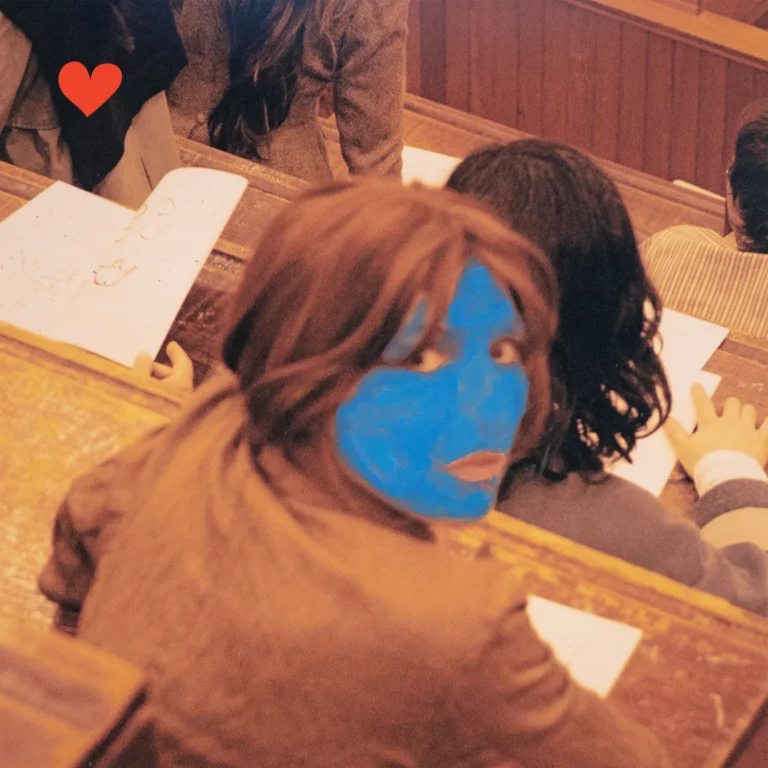
Welcome to Aldous Harding’s island. You’re free to leave anytime you like, but the New Zealand artist is happy to show you around. There are no palm trees here; just the one tree that she used to climb, presumably as a child. Forget about the sensation of floating on the ocean blue; instead, lose yourself in questions like, “When I hit the ocean I was only a spark/ Who brought me up the stem with no love in their heart?” You’ll have to get by eating rocks and plants, but you can dance just to dance. You can get together with friends once in a while, but in the end, of course, it’s just you and your reflection. “I have met my sleeping self/ Things she knows keep me around/ I hope I’m more than I think about,” Harding sings towards the end of her insular yet inviting new album, Train on the Island, which follows 2022’s remarkable Warm Chris. The train is symbolic of thought, naturally, but she chases it down to its roots, snuggles up to the unconscious, and leans into pure, deliciously inscrutable feelings as they emerge. It’s fine if you don’t have the words for it: just take the ride.


1. I Ate the Most

For those keen on describing Harding’s music as incorporeal, the singer-songwriter offers an origin story: “I was nine when I left my body,” she sings, referencing The Chronicles of Narnia before delivering the album’s most immediately quotable couplet: “No regrets, just things that will haunt me/ Maybe I’ll bury them.” She likes her similes to sting and surprise, less interested in wordplay than mind games as she spirals around the knock-on effects of childhood insecurity. (“STEVE ABEL THINKS THAT I AM AUTISTIC,” she posted 14 years ago; now she’s quipping, “You’re not old, like I’m on the spectrum.”) Instead of outright burying them, she sings as if with her head tilted down, vocalizing the burden of trauma like a chip on her shoulder. Thomas Poli and H. Hawkline’s slithery synths aren’t quite ethereal, but they do seem to indulge her yearning to fly by lifting her feet off the ground.

2. One Stop 

The lead single’s loopy piano motif reinforces this sense of elevation, piling on layers of acoustic guitar, bass, harp, and electronics. Harding nervously casts herself in the role of unreliable narrator (“So the lies I tell send me up”), though her humorous encounter with John Cale sounds entirely plausible. She’s always been eerily funny, but the opening one-two punch sets the album up almost like a comedy special, if one driven entirely by impulse. 

3. Train on the Island

The jokes turn out to be just a foot in the door – now, the same figure of speech that made the record approachable just boggles the mind: “Mommy said my inception was like eating a pearl.” Harding is back to being diaristically insular, just less intent on turning observations like “I hate my perception, but the medication slows my mind” into entertainment; there’s less affectation in her voice, too. Backed by Hawkline’s hypnotic bassline and prodding electric guitar, though, she keeps listeners rapt. 

4. Worm

Aided by Joe Harvey-Whyte’s pedal steel, the record turns even more languorous, though the unassuming hook still worms – no other word for it, I’m afraid – its way into your head. You start to feel the heaviness here, though Harding briefly finds relief in contradiction: “Great things inside have sat long enough.” Do they not haunt, still? Are they still sitting there, even as they attach themselves to her stream of consciousness?

5. Venus in the Zinnia

The album’s main collaborators get a moment in the spotlight on this early single, an enchanting duet with Hawkline that also features a delightful Wurlitzer solo from Parish. No wonder it sounds like the most sociable track on the LP; when Harding’s music is this breezy, it’s usually at odds with the subject matter, which isn’t so much the case here – if only because it’s hard to tell what it’s about, which is how all friend gatherings should be. 

6. If Lady Does It 

The drums immediately jump out as livelier than most of the record – played by Seb Rochford, with Parish handling bass and harpist Mali Llywelyn trading piano lines alongside Hawkline. It serves to switch up the energy of the record, giving a more conventionally structured song the full-band treatment; though Harding seems to care less about that than bringing to life her own version of a murder mystery. “If I am a gun then I’m loaded,” she declares, barely lifting the veil of abstraction. No melody on the record is more sinewy or damning than the one on the outro, repeated like a protest chant.

7. San Francisco 

‘San Francisco’ suddenly makes you ask questions about how these songs are connected, not least because it reprises a hook from ‘One Stop’ right when you think it’s winding down. The music is back to feeling sedated, Harding narrating in a morning daze until her playing on the Fender Rhodes turns baleful, and you start to wonder if the man “coming down Folsom” is the one with the new bag who’s not a new boy. Her voice’s cutting intimacy, meanwhile, is at its most gentle, and “I’ve never been a believer, I don’t cry when I’m told” is exactly the line that could make your eyes well up. And just then, it evaporates. 

8. What Am I Gonna Do?

Over a roiling rhythm section, Harding sinks into her lower register, juxtaposing some of her most bizarre lyrics (“Bechamel on my face”) with a strangely hopeful refrain: “I know things ain’t working out/ But they may come good later.” Llywelyn’s harp prods the song along, culminating in a wonderfully off-kilter solo. 

9. Riding That Symbol

Every Aldous Harding record needs a disarmingly lonely, existential ballad, and the acoustic ‘Riding That Symbol’ is this album’s ‘She’ll Be Coming Round the Mountain’. There’s no more future tense to the “things that will haunt me,” which become “haunts [that] band and it’s no accident.” The spare instrumentation mirrors her disconnected headspace: “No one knows what I’m into/ I’m only riding that symbol.” The mental fog seeps into Thomas Poli’s bed of electronics.

10. Coats

Harding isn’t exactly one to offer clear-cut resolution, but there’s something to be said about her closing with another summery tune in the vein of ‘Venus in the Zinnia’. “Can’t buy the remedy but I’ll eat if you’re next to me,” she sings alongside Hawkline, which is both a full-circle moment and a frankly cherry-picked line about the eating disorder that’s coded into the opening track. The thread might be easier for Harding to trace, but the feeling is that realizing where you’re coming from, how the dots connect, is no door to salvation. “What my God is thinking I get lost in that place,” Harding sings earlier, and Train on the Island is simply her mode of transportation. Thank God it’s public. 

Interview: Guttersnipe

“Our sound is quite silly in a way,” says Uroceras Gigas (guitar/vocals) of Leeds-based Guttersnipe, near the end of our hour-and-a-half conversation. If the real world is folding into dystopian hellscape, silly is a wonderful way to describe the sound of the noise-nik duo (Gigas and Tipula Confusa, drums and vocals) who create cinematic soundscapes, plugging into the more extreme end of music. Beehive-like discordant guitars meet panic-screams and pitter-pattering crashing cymbal drums. It feels exploratory, peering into the unexamined recesses of the human psyche. “I thought we would have been ridiculed a lot more than we have been,” Gigas continues. Perhaps what’s stopped that is the bracingly original quality of the music – so original that the band has come up with a brand new genre (“Xenofeminist crisis-energy rock”) to describe its organic world-connecting glory. Their new album Extinction Burst! contains six hair-raising tracks that will forever change you. It’s the follow-up to 2016’s My Mother the Vent, which was praised for its brutality and abjectness. Sonic Youth’s Thurston Moore even told NME “they’re insane.”

“When we first came into people’s awareness we were compared to those po-faced, angry nihilistic men making power electronica,” says Gigas, straightening her violet-coloured fringe. “That doesn’t have anything to do with what we’re doing. We’re not sitting around reading books about serial killers. We’re sitting around watching cartoons” (specifically Ren & Stimpy and Cow & Chicken).

As a child, Confusa’s (they/them) first taste of alternative culture was seeing The Offspring on Top of the Pops. “They were performing ‘Pretty Fly (For a White Guy)’ – I was enthralled and had to work my way back to find out where they came from,” they say. Gigas meanwhile grew up in North Wales and went to a school with a high percentage of alternative, hippie classmates. It was known locally as “the goth school.” At home her parents were into Hawkwind and Black Sabbath and were upholders of authoritarian values. “My dad would say, ‘Remember we’re scum,'” Gigas says, “outside of what the straights are doing. Implicitly, there was the message of ‘don’t trust the government.'”

Living with autism and ADHD, she was bullied heavily. “My behaviour was hard for others to comprehend – I used to act out.” Turning to punk but finding it ossified and one-dimensional (“the punks I met just wanted to listen to The Sex Pistols, get pissed and wear tartan trousers”), her gateway to musical escape came unexpectedly as an 11-year-old. “I was watching Ace Ventura: Pet Detective and there that scene where Cannibal Corpse were playing ‘Hammer Smashed Face’ in a club. I was like ‘what the hell was that?'” Despite being into metal her parents thought Cannibal Corpse’s death metal was too much. “And to a kid that’s an immediate green light.” She picked up a copy of Kerrang! with features on Grindcore and black metal and that was her musical passport for the foreseeable future.

Despite playing in a drum-less metal trio when she was 13, difficult teenage years eclipsed her musical ambitions (“I was taken out of school and put into psychiatric care”) and continued until she transitioned at 16. “I lived a very sheltered existence in Wales,” she says. Moving to Leeds as a trans woman and having a partner who was politically engaged taught her loads. “Living your life as a transexual woman you come up against all kinds of situations,” she says. “They inherently teach you about how the world works. I had an implicit political compass, from being ostracised from society and not fitting in the world.”

Gigas was a fan of Etai Keshiki, Confusa’s band. “I’d never seen anyone play drums like they did,” she says. The two bonded when Confusa played her the last album from no-wave revivalists AIDS Wolf. “It started a whole shift in my understanding of what music was at that point,” she says. The duo began collaborating through improvisation. “Coming from a metal world where everything was so predetermined, it was exciting.” It also alighted on her new, growing love of free jazz. “It was liberating to do that kind of thing with someone who was so good at playing their instrument.”

In all its unspeakable, horrific beauty, Guttersnipe’s music became an expression for their shared traumas. “We’re both very candid with each other about the psychological states we are trying to express,” explains Gigas. “We’ve both had our own relationship to mental illness and what we’re trying to express is hysterical and unwieldy.” The duo’s live shows are intense examples of their music chemistry slash telepathy. “Me and (Confusa) were a couple for a bunch of years, so we got very, very close to one another,” explains Gigas. “We got to experience each other in a way that was extremely vulnerable and intimate.” Guttersnipe’s power is about the shared vision between the two. “I’m always looking at (their) hands and facial expressions. It’s much easier when you are looking at each other,” she says. “I’m following it very directly. We are attuned to each other’s psyche.” Their songs are written from this holistic place: pieces of improvisation are repeated and refined. “We’ve never sat down and written a (song),” she says. And on the basis of orgastic Extinction Burst! long may that continue.


Guttersnipe’s Extinction Burst! is out May 8 via Night School.

Kelela Announces New Album ‘new avatar’, Shares New Song ‘linknb’

Kelela has announced her third album, new avatar, which comes out July 10 via Warp. After sharing its first single, ‘idea 1’ – one of the best songs of April – she’s now unveiled ‘linknb’, a subtly luminous track produced by Oscar Scheller. Check out a visual for it below, and scroll down for the LP’s cover art and tracklist.

‘linknb’ was written during a period of writer’s block for Kelela, who was drawn to it as a mantra. “It’s not hard to be brave/ Easier to give too much away/ All I know is that I paved the way, underpaid,” she sings on the track.

new avatar, the follow-up to 2023’s Raven, boasts collaborations with PinkPantheress, A. K. Paul, and Fousheé. “This album finds solace in confronting,” Kelela shared. “I don’t want the music to be a distraction from what’s really going on in the world; I want it to make sense in this crazy moment while helping people get in touch with the beauty and joy they’re also experiencing.” She added, “People also need to know that my friends and I are laughing constantly and that humor isn’t a defense mechanism; it’s an expression of how sharp our read is and how clearly we see the world.”

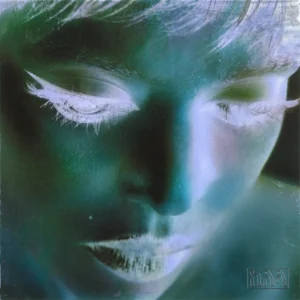
new avatar Cover Artwork:

new avatar

new avatar Tracklist:

1. idea 1
2. point blank
3. goin down
4. outta time [feat. A. K. Paul]
5. against me
6. crystalize
7. retaliation lullaby
8. linknb
9. don’t piss me off
10. new life forms [feat. Fousheé]
11. the bridge [feat. PinkPantheress]
12. if we meet again

Bridging Form and Function: Rasim Bayramov on the Intersection of Art and Design

In contemporary art, the boundaries between the utilitarian nature of design and the expressive freedom of fine art were once polarizing worlds. Today, the respected industries are increasingly blurred. At the center of this convergence is Rasim Bayramov, a Baku-born visual artist and designer whose career spans industrial design, user experience (UX), and high-profile institutional graphic design.

Bayramov, a graduate of the Master of Fine Arts program in Graphic Design at Virginia Commonwealth University (VCU), has developed a practice that leverages technical rigor to facilitate deep human engagement. By applying the principles of industrial design to the ephemeral worlds of performance and installation, Bayramov seeks to reframe how audiences interact with both physical and digital spaces.

Bayramov’s journey began in Ankara, Turkey, where they earned a Bachelor of Industrial Design from Middle East Technical University. This period was marked by an early mastery of materials and manufacturing. Their “Tuoli” chair, a high-grade aluminum piece created through a streamlined folding process, won first place in the “Metal Ideas” Metal Product Competition.

“Tuoli was made with a streamlined process in mind,” Bayramov says. “We came up with edge connection details that redistributed the stress onto the legs instead of the seat. It stood out with its attention to detail at every step of its creation, from conception to shipping and from manufacturing to assembly.”

This focus on the “laborious endeavors” behind physical objects eventually transitioned into the digital realm. As a UX/UI Designer at the startup Doktar, Bayramov led the creation of “Arpa,” the company’s first comprehensive design system. However, their philosophy on user experience has since evolved.

“If we take the ‘user’ away from UX, then it is just experience design,” Bayramov explains. “Decentering the engagement to a form that can be felt more earnestly is what I aim to achieve. Finding a way to free the process of making from constraints has become a central background for all these works.”

In 2024, Bayramov joined the Institute of Contemporary Art (ICA) in Richmond as a Graphic Designer. Their role involved more than just visual branding; it was an exercise in community engagement. By integrating analog synthesizers to create sounds for promos and producing personal print ephemera for gallery openings, Bayramov helped revitalize the museum’s creative identity.

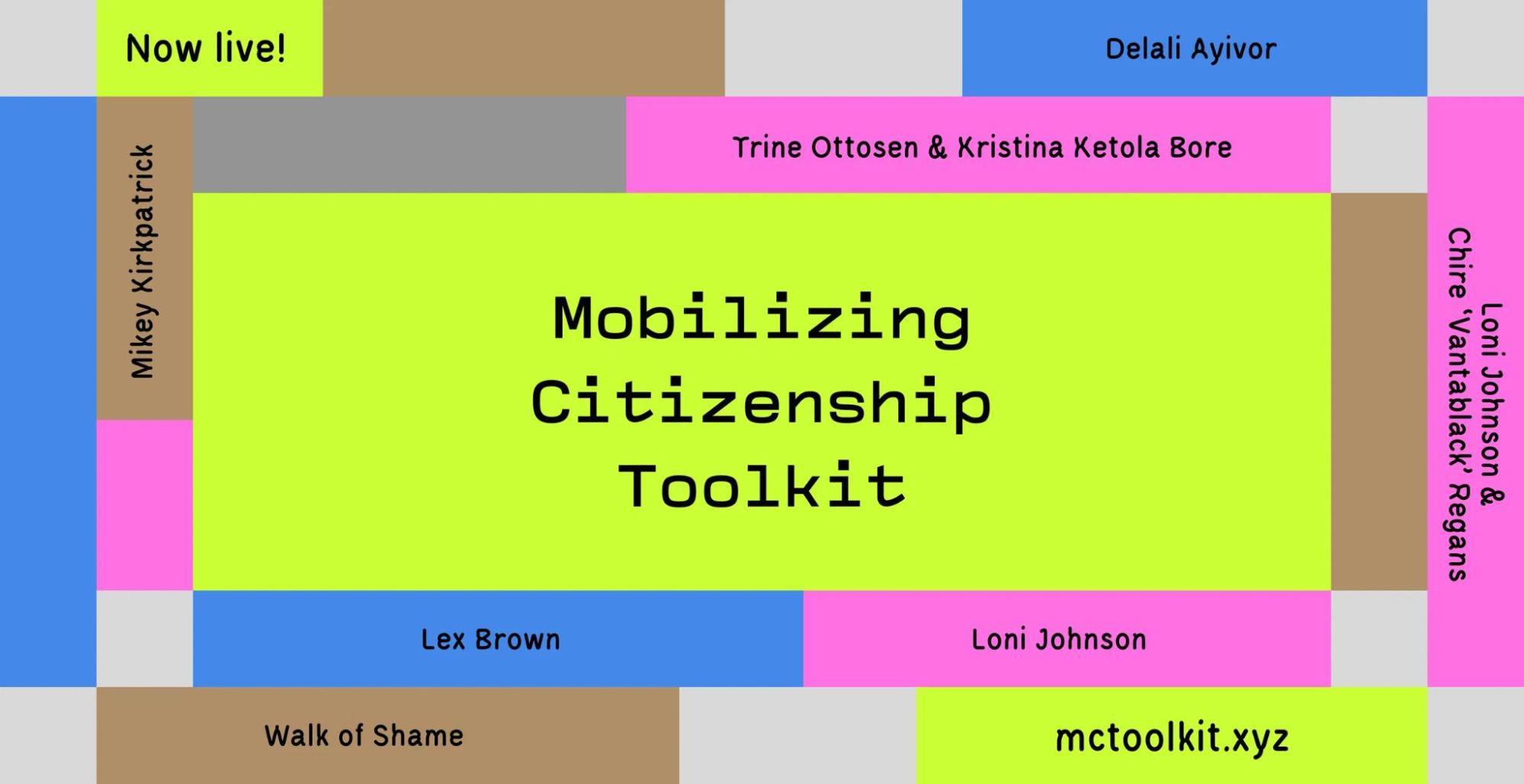
Bayramov’s work often addresses themes of democracy and civic engagement. A notable example is the “Mobilizing Citizenship Toolkit” developed for Kunsthall Stavanger. The project serves as a digital archive for a six-year research program aimed at youth, as Bayramov worked on the coding and website alongside Khai Tang with art direction by Nicole Killian.

“The circular nature of the website makes it stand out, as each refresh gives a different overlook of the articles,” Bayramov notes. The interface incorporates interactive elements like hand-highlighted outtakes, sticky notes, and checklists—digital representations of the physical tools that facilitated the project. This “unconventional interaction” is designed to reflect the malleable nature of citizenship itself.

Beyond their personal practice, Bayramov is committed to shaping the next generation of designers. As a Teaching Fellow at VCUarts in 2025, they launched “Install to Manifest,” a course that explores the intersection of exhibition design, coding, and artistic practice. They have also served as a Teaching Assistant at the School for Poetic Computation in New York City, focusing on digital tools as artistic mediums.

The impact of Bayramov’s work has not gone unnoticed by the broader industry. Their contributions to Doktar helped the company earn a nomination for the Sustainability Pioneer Award by Deloitte Netherlands, and the firm was recognized by Forbes as one of the “Top 25 Future Unicorns” in 2026.

This ability to manage complex, global identities was further tested during their tenure at The Anderson Gallery. Tasked with shaping the public-facing presence for both the Richmond and Doha, Qatar campuses of VCUarts, Bayramov navigated the logistical challenges of a two-continent project in 2025. 

For the “Draw Four” exhibition in Doha, Bayramov utilized strict time management to bridge the gap between locales, ensuring a seamless adaptation of visual systems across different cultural contexts.

“It was certainly exciting to produce materials that were displayed in a different locale than the one I’m currently in; since both campuses share similarities in their identity, it was a smooth adaptation of our current materials into their existing systems,” they said. “For the ‘Draw Four’ exhibition held in Doha, time management and readiness was one of the aspects that I tried to get ahead of in that year. Because of the time difference, putting deadlines a day before for myself was certainly the way to go.”

Holding What Refuses to Settle: Jingyi Yu and the Discipline of Uncertainty

At a moment when contemporary photography often oscillates between spectacle and confession, Jingyi Yu(Jane)’s work occupies a quieter and more resistant register. Her images rarely announce themselves. They arrive obliquely, often withholding as much as they disclose, asking less to be interpreted than inhabited. Working between fine art and fashion photography, Jane has developed a practice shaped by emotional conditions that resist stable form. A room, a gesture, an object, the pressure of light across a surface: ordinary materials recur, but seldom remain merely descriptive. Interiors feel unsettled, objects seem burdened with psychic residue, and even stillness appears under strain.

What distinguishes the work is not atmosphere alone, but the degree to which atmosphere slows down reading. In a visual culture conditioned by immediacy, that delay can feel quietly oppositional. Yet this territory is not without its risks. Contemporary photography has made ambiguity into a familiar aesthetic resource, and weaker work often mistakes indeterminacy for complexity. Jane’s practice occasionally approaches that threshold. At times, her commitment to restraint can verge on a kind of visual self-discipline so rigorous that the work risks becoming overly resolved in its own ambiguity. What is meant to remain open can sometimes harden into mood.

Still, the strongest images push beyond that impasse. They refuse to make uncertainty itself into style. Emotion in these photographs is displaced rather than performed, emerging through spatial relations, interruptions, and what the image withholds from completion. Meaning does not arrive as revelation but accumulates as pressure.

This dynamic is particularly visible in With Myself, Through Winter, a body of work produced during her first winter-to-spring transition in New York. Made at a moment of personal instability, the project stages an internal division rather than a singular subject: two versions of the self that confront and sustain one another at once. Rather than externalizing this conflict through overt narrative, Jane embeds it into the structure of the images. Figures appear doubled, mirrored, or psychologically split, but never fully resolved into symbolic clarity. What emerges instead is a quieter tension — a sense that the image is holding an argument it refuses to settle.

The project’s strength lies in its refusal to dramatize that internal conflict. Even as it draws on themes of isolation, perfectionism, and self-division, it resists turning them into visual spectacle. The photographs remain measured, even gentle, allowing emotional friction to register through atmosphere rather than event. In this sense, the work exemplifies both the power and the limitation of Jane’s broader approach. It sustains ambiguity with discipline, though at times one wonders whether a greater degree of rupture might deepen, rather than dilute, its stakes.

This is perhaps where Jane’s relation to fashion becomes most interesting. Though clearly informed by fashion image-making, the work often seems skeptical of fashion’s ordinary economy of seduction. Clothing appears, but seldom as spectacle. Bodies are stylized without becoming idealized. Surface matters, though often as something placed under pressure rather than celebrated. There is a friction between formal precision and emotional instability that keeps the work from slipping into mere elegance.

And yet elegance remains a danger close at hand. Some images flirt with a polished melancholy too familiar within contemporary art photography, where fragility itself can become aesthetic currency.

Jane is strongest when she resists that tendency, when the image feels less composed around beauty than unsettled by it.

As one curator familiar with her work observed, what is compelling is not that the photographs depict instability, but that they seem formally organized through it. Even in highly refined works, something often remains structurally unresolved. That incompletion matters. It prevents the work from sealing itself too neatly. One occasionally wishes, however, for rupture to enter more forcefully. Jane often trusts subtlety almost to a fault. There are moments when one senses the work could risk more, lose more control.

That question of risk has become more interesting in her recent material experiments, where photography begins to operate not only as image but as object, trace, and constructed surface. These works suggest a move away from the photograph as autonomous image toward something slower and more resistant. The direction feels significant, though still uneven in places. Some gestures feel exploratory rather than fully metabolized into the practice. But perhaps that incompletion is part of their charge.

Recent recognition, including awards from the American Photographic Artists Awards and Prix de la Photographie Paris, has brought wider visibility to this sensibility, including for works from With Myself, Through Winter, though such markers explain less than they ratify. More notable is the consistency with which Jane has pursued vulnerability, identity, and the emotional charge of ordinary materials without allowing those concerns to calcify into signature motifs. Across projects, there is less repetition than pressure applied from different angles.

That trajectory extends into her curatorial thinking as well. Her forthcoming co-curated exhibition Not for Sale, opening at A Space Gallery and currently in open call, proposes forms of making rooted in instinct, pleasure, and necessity rather than strategic productivity. The premise is compelling, though not innocent. Art’s refusal of instrumental logic has long been vulnerable to romanticization, and one of the productive tensions surrounding the project is whether such refusal can ever stand outside the systems it critiques. The exhibition appears most persuasive not when it resolves that contradiction, but when it allows it to remain active.

There is, in both the curatorial and photographic work, a politics of refusal, though “quiet politics” may be too gentle a phrase. What the work resists is not simply acceleration, but the demand that images become fully legible, emotionally consumable, or conceptually closed. In that sense, hesitation here is not mood but structure.

What gives Jane’s practice its force is not uncertainty as theme, but uncertainty as discipline. This distinction matters. The best works do not offer mystery as seduction, nor ambiguity as prestige. They sustain tension without converting it into atmosphere alone.

If there is a recurring limitation, it may be that the work sometimes trusts indirection more than conflict. But that critique is inseparable from what makes the work compelling. Its intelligence lies precisely in treating instability not as something to dramatize, but as something form can think through.

And that is rarer than contemporary photography often allows.

No Deposit Casino Bonuses in the USA: How to Claim Free Chips and Keep What You Win

No deposit casino bonuses are undoubtedly a critical cog in the wheel. They help players stay motivated and engaged, and allow casinos to gift players. They’re an exceptional way to expand your winnings before parting with real cash. Plus, they allow you to be curious and be on the lookout for new offers. So, if you’re in the market for more free chips, join us as we explore where and how to claim them for bigger wins.

Decode Casino No Deposit Bonus

The first Decode Casino no deposit bonus is available via the welcome bonus package. As a new player, you’ll enjoy a two-part welcome package. In the first portion, you’re expected to make a deposit to qualify for the bonus.

After redeeming the first deposit bonus, the casino then rewards you with a free $111 to spend on the game of your choice. This free chip is an opportunity to cash in big because you can take home up to $500 in winnings. With the code ‘FREE111DECODE’ at the cashier, you can unlock a no-deposit sign-up bonus to enjoy games at a 25x wagering requirement.

Cryptocurrency players at Decode Casino are also in for better wins. If you use Bitcoin, Ethereum, or USDT to make a deposit at the casino, you qualify for a two-part crypto promo pack.

Decode rewards you with a free $50 chip after you redeem and spend the first part of the offer. This no deposit bonus has a reduced rollover requirement of only 27x. You can explore as many slots as you can, including crypto games, for a $500 maximum win.

If you’re ready to see which side of the law you prefer, Cops vs. Robbers provides a chance to do so. Players are welcome to explore this slot through a three-tier offer that includes two deposit bonuses and free spins, plus a free $50 right after. The free no deposit offer has a 35 wagering requirement with a maximum cashout value of 5 times the bonus.

Loyal players at Decode also have plenty to look forward to thanks to the loyalty rewards. These free chips are rewards for making deposits over a given period. They’re an excellent way to boost your account balance after a period of giving and take home real winnings. The monthly reward is a free $30 bonus.

Usually, all no deposit offers in the casino have a 60x wagering requirement, unless the offer has different rollover rules. We also recommend these no deposit offers because you can spend your cash on slots and keno. For each offer, take the available code and use it at the cashier, or click on the link to be redirected to the cashier and enjoy your perks.

Overall, Decode Casino has a healthy balance of no deposit bonuses for USA players to enjoy. The best way to cash in is to check the promotions in the casino regularly.

Sloto Cash No Deposit Bonuses

Sloto Cash has a variety of no deposit bonuses if you know where to look. First up is the quick offer for new players in April, just as the month comes to a close. There’s a free $50 available for new members who make at least one deposit before the month comes to a close. With the coupon code ‘NEWMEMBER’, you can take home up to $500 as long as you wager the bonus 30 times.

Second, Mr. Sloto is on a mission to recruit you for the Jackpots for Peace project. The promotion comes with two powerful deposit bonuses and, finally, a free $100 plus 33 spins. It’s a great no-deposit offer that allows players to explore Prosperity Pots: Lucky Coins with a 30x wagering requirement.

Mr. Sloto’s influence doesn’t end there. Further down the promotions, there’s a $20 free chip available for Buffalo Mania Thunder Springs. This offer allows you to cash out up to $500 as long as you meet the 30x wagering requirement.

As a crypto player, you can also take advantage of free bonuses in the Crypto Zone. There’s a $100 free bonus after making the first deposit. With this bonus, you can enjoy up to $500 in winnings and a reduced 27x wagering requirement.

Uptown Aces No Deposit Offers

Unlike many casinos in the industry, Uptown Aces doesn’t shy away from rewarding you with a free chip as soon as you sign up. There’s a $10 no deposit bonus chip available for new players who are ready to explore as many slots as they can.

Non-slot games do not count towards your wagering requirement at Uptown Aces, so choose your games wisely. As for the wagering requirement, you need to cross the 60x threshold. Keep your bets below $10, and you’ll be good to go.

Also, for every month that you’re loyal, Uptown Aces rewards you. There’s a free $100 bonus available for all players who make at least 10 deposits. Just like the other no deposit offers, there’s a 60x wagering requirement, and you can take home up to $500. To redeem the monthly no-deposit rewards, check in with the promo section for the latest code.

If you stick around long enough and join the VIP section, there are even better rewards awaiting you. Players in the Tourist, Downtown, Midtown, and Uptown all qualify for a free $50 no deposit bonus.

Jackpot Capital No Deposit Offers

As soon as you step into Jackpot Capital, you’re greeted with a free $15 no deposit bonus. This offer is a great opportunity to explore the new casino and test several games. If you use the code ‘JCWELCOME15’ at the cashier as a new player, you’ll receive the bonus in your account. Choose your bets well, and you’ll stand to win up to $180 with a 60x wagering requirement.

Another quick way to cash in on a no deposit bonus is to refer a friend. Once they join successfully and make a $20 deposit, the casino gifts you a free $50.

Grande Vegas No Deposit Offers

The generous $300 welcome package at Grande Vegas also includes a no deposit offer. After redeeming the first two deposit offers that add up to $250, the casino rewards you with a free $50 for the third part.

This offer allows you to explore as many games as possible since you can play slots, scratch cards, bingo, and European slot poker. The 60x wagering requirement is on the higher side, but in this case, since you can distribute the amount across several games, you’ll have a great time. Furthermore, you can take home up to five times the no deposit bonus amount.

Choose Your Free No Deposit Bonuses Today

There are plenty of no deposit bonuses for all eager players who know where to look. The key is to always stay in the loop by checking your notifications. Once the offer is in your notifications and you’re eligible, take the code and head to the cashier’s for quick redemptions because the offers aren’t infinite.

The Rolling Stones Announce New Album ‘Foreign Tongues’, Share New Single ‘In the Stars’

The Rolling Stones have been teasing a new album for the past month, and it’s now been officially announced. Foreign Tongues will be released on July 10 via Capitol. The album cover is by the artist Nathaniel Mary Quinn. Check it out below, along with the new single ‘In the Stars’.

The new album reunites the band with Hackney Diamonds collaborator Andrew Watt. “I love doing these recording sessions in London at Metropolis,” Mick Jagger said in a press statement. “It was a very intense few weeks recording Foreign Tongues. We had 14 great tracks and we went as fast as we could. I like the room there as it’s not too big so you can feel the passion in the room from everyone.”

“The Foreign Tongues album has a continuity from Hackney Diamonds and it was great to be working in London again, and to have that London vibe around us,” Keith Richards commented. “It was a month of concentrated punch. To me, it’s all about the enjoyment of it. I’m blessed to be able to do this and long may it last.”

And Ronnie Wood added: “The atmosphere in the room was so creative, and the whole band was on top form throughout the whole process. Very often we nailed it on the first take. I hope everyone loves it.”

About the cover artwork, Quinn had this to say: “Creating the album cover for the Rolling Stones is an artistic honour – a dialogue with one of the most enduring forces in cultural history.”

Foreign Tongues Cover Artwork:

RollingStones-ForeignTongues

The Optical Magic of Halo Engagement Rings

When it comes to selecting a symbol of commitment, few designs offer the immediate visual wow factor of the halo setting. This style (characterized by a central gemstone encircled by a border of smaller accent diamonds) is a masterclass in optical physics. By strategically placing smaller stones around a primary diamond, designers create a striking visual impact that makes the center stone appear brighter, larger, and more captivating than it would in a standard setting.

Understanding these design principles explains why this remains one of the most sought-after ring styles nationwide in 2026.

Why Halos Create the Illusion of a Larger Centre Stone

The primary appeal of the halo lies in its ability to trick the eye. From a distance, the boundary between the center stone and its surrounding diamonds blurs, creating a spread effect that increases the gem’s perceived diameter. It’s achieved through a meticulous circle of smaller diamonds that make the halo engagement ring appear significantly more substantial than its actual carat weight might suggest.

By framing the center diamond with light, the halo acts as a mirror, reflecting brilliance into the main stone and amplifying its presence through high-contrast framing.

The Light-Boosting Power of Micro Pavé Settings

The secret behind the seamless shimmer of a modern halo lies in micro pavé craftsmanship. This technique involves precisely placing tiny, uniform diamonds into the metal with minimal visible prongs.

It maximizes sparkle by creating a continuous surface of light. Instead of a few large flashes, a micro pavé halo provides a constant, radiant glow that follows the hand’s movement, ensuring the ring captures attention from every angle.

Color and the ‘Halo Glow’ Effect

The choice of precious metal plays a key role in the halo’s optical impact. While white gold and platinum offer a seamless, icy look that blends with the diamonds, many American couples are opting for high-contrast combinations.

Pairing a yellow-gold band with a white diamond halo can create a glowing effect, making the center stone pop against the warmth of the metal. Conversely, using rose gold can add a soft, romantic blush to the light, altering the ring’s mood without sacrificing its brilliance.

Hidden Halos and Vintage-Inspired Designs

Designers are evolving the traditional halo to suit diverse tastes. Hidden halos (where the diamonds sit just beneath the center stone on the gallery) offer a subtle sparkle visible only from the side profile. For those seeking maximum drama, double halos provide an architectural, tiered look that can make a one-carat stone rival the appearance of a three-carat masterpiece.

Meanwhile, vintage-style milgrain halos use tiny metal beads to add texture and an heirloom feel, proving that the halo’s optical magic can be adapted to any personal style.

080 Barcelona Fashion Week Keeps It Dark and Far from Simple

0

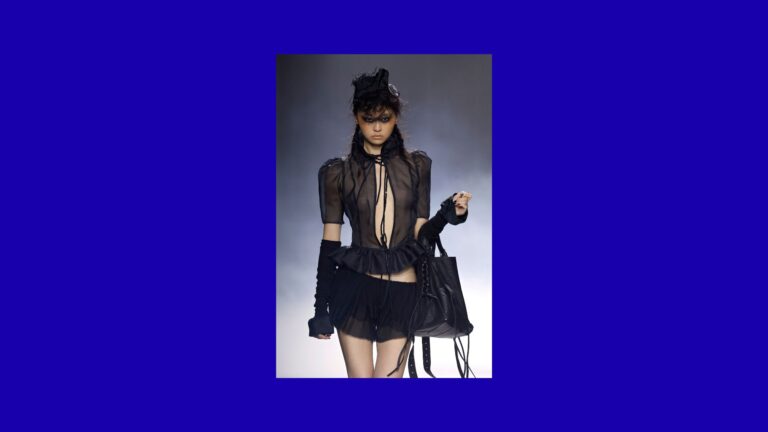
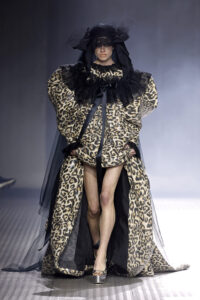
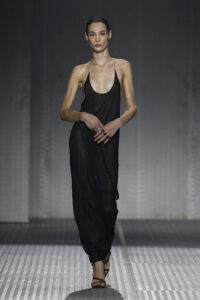
Not everything at 080 Barcelona Fashion Week wanted to be seen in color. Some of my favorite, indie, edge-driven shows had one thing in common, and it was exactly that. The darkness wasn’t just about the lack of color, black here felt atmospheric. Leopard print and hairy bits did too.

080 Barcelona Fashion Week - Reparto
Courtesy of 080 Barcelona Fashion Week – Reparto

Reparto

“Dreams are expensive, but dreaming is free,” said Margil Peña and Ana Viglione for their “BLACKLOT” collection, drawing from a film backlot, a place where movies build their own version of reality, designed to look real, but only from the right angle. Historical dress codes found their way onto the lineup, with 19th-century references alongside upcycled pieces, hot pink, animal print, and cheeky “I’m a star” graphics.

080 Barcelona Fashion Week - Nazzal Studio
Courtesy of 080 Barcelona Fashion Week – Nazzal Studio

Nazzal Studio

Founded by Sylwia Nazzal, the Palestinian label based in Jordan sits somewhere between tailoring, performance, and material experimentation, while working with refugee and local women artisans to keep traditional techniques going. The “Al-Najah” collection draws from Bilad al-Sham, Bedouin facial tattoos, and Palestinian embroidery, using leather, latex, silk, metal, and natural pigments pulled from desert rock textures.

080 Barcelona Fashion Week - Eñaut
Courtesy of 080 Barcelona Fashion Week – Eñaut

Eñaut

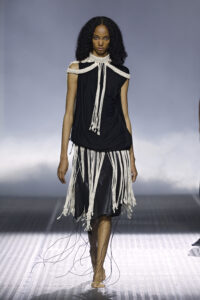
Eñaut Barruetabeña closed the week with “Ego Dissolution,” keeping things tight, both in color and construction. The collection is described as a reflection on personal growth and the idea of finding security through vulnerability. And in Barcelona, that mostly looks monochromatic, braided, and padded. Hockey influence takes care of the last one, framing protection and power.