Custom employees go undercover in Legends, a well-crafted British series inspired by true events. After two weeks in the global Netflix top 10, the show is still racking up views, and it’s currently #1 in 11 countries where the platform is available.
The only bad thing about Legends is that it consists of only six episodes, which fly by. Could a follow-up happen in the future? Here’s what we know so far.
Legends Season 2 Release Date
At the time of writing, there’s no official news available about a potential Legends season 2. Since the show is inspired by true events and the mission wraps up fairly neatly by the time the end credits roll, a follow-up isn’t too likely.
That said, Legends is not listed as a limited series on Netflix, so you never know.
A second season could further the story by putting the characters in another dangerous situation. For now, all we can do is wait and see. If a sequel happens, new episodes could arrive in a couple of years.
Legends Cast
Tom Burke as Guy
Steve Coogan as Don
Hayley Squires as Kate
Aml Ameen as Bailey
Jasmine Blackborow as Erin
Douglas Hodge as Blake
Charlotte Ritchie as Sophie
Tom Hughes as Declan Carter
Johnny Harris as Eddie McKee
What Is Legends About?
Legends is inspired by real events from the UK’s war on drugs in the early 1990s. The series follows a group of ordinary customs employees recruited into a secret undercover operation after heroin trafficking spirals out of control.
None of them are spies or police officers. Instead, they receive fabricated identities known as “legends.” Their mission? To infiltrate dangerous criminal networks in an attempt to dismantle the heroin trade from within.
As the season progresses, the undercover work psychologically affects everyone. Moreover, several close calls nearly expose the operation. Still, the finale sees the characters persevering despite encountering friction at every step. Without giving away too many spoilers, they eventually return to their day-to-day lives, bearing the scars of their time away.
While Legends season 2 isn’t a safe bet yet, there are a few ways to continue the story. The fact that the show has been getting rave reviews from critics and audiences doesn’t hurt. We’re keeping our fingers crossed.
Are There Other Shows Like Legends?
If you’ve enjoyed Legends, shows with similar vibes include The Americans, Slow Horses, The Night Agent, The Recruit, Quantico, and Black Doves.
Arab Strap have announced a new album, Half-Told Tales, which will be out September 4 via Rock Action. The follow-up to 2024’s I’m totally fine with it 👍 don’t give a fuck anymore 👍 is led by the propulsive ‘You You You’, which is accompanied by a video from director Luke Bovill. The Scottish duo’s Aidan Moffat describes it as “a sort of disco-metal incantation. With a message of future felicity and fellowship that – fingers crossed – might make you dance and giggle too.” Check it out below.
“‘You You You’ is an attempt to remind ourselves, and hopefully others, that the world’s not full of awful people,” Moffat continued. “That there are millions of us out there dealing with the same worries every day: from the rising costs of absolutely everything, our mental and physical health, the constant slaughter and tyranny in our newsfeeds, to playing an unwitting part in the military-industrial complex, and the endless warping of reality. It can often feel like a complete absence of human decency – it’s no wonder that despondency can feel like our default disposition.”
Malcolm Middleton added: “The excitement comes because me and Aidan like and hate different things. There are things in the record that individually we might not choose but that’s why I like this album so much, because it’s not the one I wanted to make. I don’t think it’s what Aidan wanted to make either, it’s this bit in the middle. It might not be 100% what we want but it’s good for the band, and it works.”
Half-Told Tales Cover Artwork:
Half-Told Tales Tracklist:
1. I Get Noise
2. You You You
3. Be a Man
4. Fighting For You
5. Glamour Magick
6. Gape
7. Under Offer
8. Basic Physics
9. Sunsong
10. Dollar Park
11. Mr. Splitfoot
12. Ampersand
13. Fragments
14. Beats Per Minute
Car Seat Headrest are celebrating the 10th anniversary of Teens of Denial with a re-recorded version of their breakout LP. The latest installment of the Matador Revisionist History series, Teen of Denial: Joe’s Story reworks the songs into more of a concept album, giving the character of Joe, an homage to Daniel Johnston, a distinct backstory. It’s available digitally today, with a physical release to follow on October 16.
The band returned to the studio with original producer Steve Fisk to update the album. Will Toledo shared the following statement about the process:
Sometime last year, it was suggested to me that we do something for the ten-year anniversary of ‘Teens of Denial,’ so I started looking back on the album to see what we might do. In spite of some of its songs being a regular part of my life for the past decade, it wasn’t a record I’d thought much about as a whole since it came out. Most of the songs I’d come up with over a two-year period at the end of my college days, when I was struggling a lot with cynicism and misplaced aggression. But by the time the songs were done, I was living in Washington, Car Seat Headrest was a full band with a record label, and in spite of the turmoil of the writing process, the final album was pretty enjoyable for everyone to work on.
This time, looking back at the songs, I started to feel like there was a story being told through the album, though I’d never imagined it as being a narrative work. On ‘Hi, How Are You?’ Daniel Johnston had used the name “Joe” in the titles of a few tracks –“No More Pushing Joe Around,” “Keep Punching Joe” – as a sort of joke, a stand-in for himself. I borrowed the idea, and the name, for titling songs on ‘Denial.’ This time, I started thinking – who is Joe? And how do the songs, in the way they’re sequenced on the album, reflect what he’s going through? As I started asking this question, a story emerged with startling wholeness and clarity, like finding the foundations of an ancient city while digging in my backyard. As I kept digging, certain songs from the original album fell by the wayside, as they seemed misplaced in this new context; others asked for new lyrics, to fully give birth to the story contained in the music.
The resulting work feels more like the album ‘Teens of Denial’ was meant to be. When you’re writing from a dark space, it’s hard to have perspective on where you’re at. This time, I could pull from memories of that darkness, and use the distance and additional perspective of ten years of life to shed a fuller light on the experience. Joe is a character going through some of what I experienced, and some of his own problems. Telling his story, and not just my own impressions of life at the end of the teen years, brought a new level of compassion and wholeness to the album. It gave us the opportunity to write new material in “Denial style”, embracing a snappy and simple(ish) rock aesthetic, and in an additional blessing, we were able to team up once with Steve Fisk, a joy and inspiration to get back into the studio with after ten years. We mixed the material at his house in Tacoma, and were constantly amazed at the lack of divide between past and present, as we’d punch in vocal overdubs ten years later into the same gear, hearing my voice now running alongside a 2015 Will. For someone coming across this album or this band for the first time, this is how they’d hear the record, not as a relic of the past but as a new piece. It was immensely rewarding to experience that on our side.
For anyone familiar with ‘Teens,’ comparisons with the original will be inevitable, but I do hope that as much as possible, people can come to this album on its own terms, approaching it as a teen, hearing the music and story for the first time. I believe music is an ongoing story, and albums don’t always do justice to its dynamic, ongoing nature. What gives it life is the new ears that hear it, and the new hearts that engage with it. I’m so grateful that this is a work that people have kept coming to, and I hope that this presentation does them honor with a fresh offering to the conversation. We’ve known that “it doesn’t have to be like this”; now we can wonder – “what it if were like this?”
Could Drake have possibly triangulated the moods and sensibilities of ICEMAN, HABIBTI, and MAID OF HONOUR? It’s not a stretch to imagine the Canadian rapper’s reclamatory instincts leading him to release the most colossal and self-indulgent album of his career, but the much-anticipated ICEMAN was never going to be that album. It’s both the main event and the most middling of Drake’s trio of comeback releases, the one where he incessantly addresses the fallout from his 2024 feud with Kendrick Lamar, piling up targets in every direction. Though I have to give myself some grace by not delving into all three albums track-by-track, I find myself agreeing with the consensus that HABIBTI and MAID OF HONOUR are clearly better records – not just because they are more consistently interesting forays into moody R&B and party-starting club-rap, respectively, but because Drake actually lets himself loose, while ICEMAN is about how much he wants to be set free. It’s woeful and delusory, but there are moments where the ice-cold breeze turns pleasant.
1. Make Them Cry
The opening track reintroduces Drake as a man out of his depth continually forced to dig deeper, fielding complaints before his album has even been completed, driving himself paranoid at every chance. On ‘Make Them Cry’, he’s focused on setting up the appropriate framing for his comeback but finds himself too burdened by intrusive thoughts, unable to take even his “very attractive” therapist seriously, let alone the strategic advice of every random person. If he spent more of ICEMAN in this meandering, conflicted, vulnerable mindset, it might have been a more interesting album.
2. Dust
Drake declares himself “a BTC crypto big-timer” and “a corporate-America hit survivor” over a surly trap beat, reminding anyone too charmed by his big-hearted introspection that he’s “a fucked-up guy.” Who knew?
3. Whisper My Name
Drake isn’t just throwing shots here; he makes you lean into the twists and turns of his flow, no matter how petty the subject matter gets. When the bass is boosted on the second verse, he makes good on it by adding a touch of hilarity to his similes. It’s a fun taunt, even if it doesn’t leave a lasting impression.
4. Janice STFU
Unlike a track like MAID OF HONOUR’s ‘Cheetah Print’, Drake doesn’t chase a hit by cheaply interpolating another song – instead, he flips Lykke Li’s ‘I Follow You’ in a curious way that underlines this track’s overall infectious, unpredictable energy. His grievances may seem self-punishing more than anything, but he’s got an ear for success even when he can’t bother to move on.
5. Ran to Atlanta [feat. Future and Molly Santana]
Were the fans right to suggest he bring some “big features” to the album? Future and Molly Santana are welcome guests on ‘Ran to Atlanta’, whose slew of producers overstuffs the song with ideas that fail to keep up the momentum.
6. Shabang
Drake finally loosens up on ‘Shabang’, coasting on vibrant, club-ready production that feels like a mix of ICEMAN’s companion albums, a fusion that would have benefited the record as a whole. He doesn’t even need Quavo to offer more than just some adlibs. With that laidback attitude, Drake’s punchlines hit even when the facts are up for debate.
7. Make Them Pay
Drake feeds the rumors that his trio of albums was made to fulfill the obligations of his latest record deal by circling on the hook, “I just wanna be free.” His disses become a little more specific, calling out Rick Ross and DJ Khaled, but the so-called real talk spirals into an argument about streams, which flattens the whole thing.
8. Burning Bridges
Most of the beat switches on ICEMAN feel like sighing off to the next idea, but the one on ‘Burning Bridges’ is actively frustrating, stifling the dreamy intro for a vacuous second part. Drake is obviously feeling lost throughout ICEMAN; for a moment there, it sounded like he’s embracing it.
9. National Treasures
Drake will lock into his most scathing flow on the record only to land on the line, “Ironic ’cause the ICEMAN was a nice man, now I’m hot and cold.” The rapper’s survival/business tactics too often come off as, or at least end in, self-sabotage, yet ‘National Treasures’ effectively immerses us in his mindset so that its stuckness almost makes sense.
10. B’s on the Table [feat. 21 Savage]
From the beat all the way down to Drake’s verses, ‘B’s on the Tables’ is senselessly pompous. “I’m fighting the man, not suing the rapper/ You boys is not listening,” he spits, reframing his vitriol in the most unconvincing way possible. A 21 Savage verse couldn’t have salvaged it, but the fact that he only delivers the hook says something about the extent of Drake’s self-importance.
11. What Did I Miss?
It shouldn’t be surprising that ICEMAN’s worst songs serve as the album’s centerpieces, and ‘What Did I Miss’ isn’t much better than its predecessor. Drake plays his own cheerleader, and the boisterous production wants to place him in a stadium while he’s stuck processing the same old news. Feigning triumph won’t cure the well of confusion.
12. Plot Twist
Darken that trap beat all you want, Drake’s still having more fun on ‘Plot Twist’ than most of the record, and he usually sounds better when he’s in that mode. It may not be the most inspired moment in Drake’s triptych, but it climbs the ranks simply by being one of the least deflating.
13. 2 Hard 4 the Radio
It’s ironic that Drizzy raps about being “too hard for the radio” on one of the breeziest cuts on ICEMAN, second only to ‘Shabang’. When it suddenly draws a cloud over its radiant, Mac Dre-inspired formula, it’s slyly ominous in ways that he struggles to pull off elsewhere.
14. Make Them Remember
What did you expect out of the longest track of Drake’s new trilogy except for him to double down? ‘Make Them Remember’ is too much too late: “What, y’all thought I was done?” he raps at one point. We’ve got plenty of ways to go, still.
15. Little Birdie
Whether or not you’re partial to ‘Little Birdie’ depends on whether you can stomach Drake’s chipmunk vocals, but it’s refreshing to hear him slip into woozy, low-stakes territory after a whole bunch of theatrics.
16. Don’t Worry
This is the kind of track that most critics wouldn’t bother mentioning, and with more than two hours of material to wrestle with, I wouldn’t blame them. ‘Don’t Worry’ doesn’t further any grander narrative, but it’s an unusually intimate glimpse of how Drake’s aloneness haunts him down: “’Preciate you reachin’ out, don’t be too concerned about me,” he tells a girl in a club that starts speaking Farsi. He doesn’t sound unbothered, for once, just sort of adrift, and getting the feeling across.
17. Firm Friends
Though Drake declares that he and Conductor Williams “got more fuckin’ chemistry than MIT,” the production here sounds more wilted than ghostly. If he’s going to complain about the same injustices, shouldn’t there at least be a sense of continuity to his stream-of-consciousness? On ‘Firm Friends’ it becomes nauseating, and not just because it would fall just as flat anywhere else on the record.
18. Make Them Know
“What happened to Drake from 2009/ When all of the moments was intimate?/ What happened to Drake with the innocence?/ I don’t think we’ll be seein’ him again,” Drake raps on the final track, which should elicit at least some amount of nostalgia, if not sympathy, for that lost era. As anticipated and successful as ICEMAN was bound to be, it is the most redundant of his latest stream of records: instead of anchoring an hour’s worth of morose music around these ‘Make Them’ tracks, he could’ve put them out there as standalone treatises, then slotted the best of the remaining songs – by which I mean the ones that put their weight behind the actual music, like HABIBTI and MAID OF HONOUR mostly do – onto those albums, making them, too, feel more substantial. That may not have set him free, but it would have made the onslaught of new Drake music a lot more enjoyable.
Cops and robbers clash in Nemesis, a new crime drama doing numbers on Netflix. Shortly after its debut, it amassed 7.1 million views, making it the third most-watched show on the platform.
Not only that, but Nemesis also became the #1 show in 11 countries. Clearly, it struck a chord with viewers looking for an extra dose of adrenaline to spice up their media diet. Question is, will the show come back for more? Here’s what we know so far.
Nemesis Season 2 Release Date
At the time of writing, Netflix has yet to renew Nemesis for more episodes. Given the show’s splashy debut, however, that might just be a matter of time.
When asked about a potential follow-up, co-creator Tani Marole told Decided that’s definitely a possibility, as they “have an arc in mind” for Nemesis season 2. That said, they need the show to perform well in order to make a comeback.
So far, things are looking good. As long as viewership numbers keep going strong, a second season could arrive sometime in 2027.
Nemesis Cast
Matthew Law as Isaiah Stiles
Y’lan Noel as Coltrane Wilder
Gabrielle Dennis as Dr. Candice Stiles
Cleopatra Coleman as Ebony Wilder
Sophina Brown as Charlie
Ariana Guerra as Detective Yvette Cruz
Cedric Joe as Noah Stiles
Tre Hale as Darren ‘Stro’ Stroman
Michael Potts as Captain James Sealey
What Could Happen in Nemesis Season 2?
Nemesis revolves around a tense cat-and-mouse battle. In one corner, there’s obsessive LAPD detective Isaiah Stiles. In the other, there’s criminal mastermind Coltrane Wilder. He hides behind the image of a wealthy businessman while secretly running a high-end robbery crew.
As the two collide, they become mirrors of each other, with the series blending stylish action with psychological warfare.
Isaiah becomes consumed by proving that Coltrane is the man behind the crimes. He targets Coltrane’s inner circle as the season unfolds. The rivalry becomes deeply personal, to the point of affecting the detective’s family life. Coltrane’s crew also starts to fall apart due to reckless decisions.
By the time the explosive finale wraps up, almost everyone is worse for wear. Isaiah’s career and marriage are falling apart, while Coltrane is in the wind.
Nemesis season 2 would likely pick up from there and follow the two men as they find a way to once again orbit each other. We hope it happens, because their business is anything but finished as of yet.
Are There Other Shows Like Nemesis?
If you’ve sped your way through Nemesis, we recommend checking out some of the other gripping crime series streaming on Netflix. Recent additions include Man on Fire, Unchosen, Bandi, Beef, and Bloodhounds.
What no museum retrospective or cable documentary will ever tell you is, that every artist you’ve ever worshipped spent at least one afternoon sitting somewhere humiliating, in front of people who can smell desperation through cigarette smoke and Comme des Garçons silhouettes, with a weak portfolio, a half-empty CV, and the very specific fear that maybe they were, in fact, delusional. Fashion’s lesson is how you stay in that room. Getting into it in the first place usually comes down to whether somebody influential decides you’re interesting before the market does.
For Alexander McQueen, that person was Isabella Blow. For Blow, that person was Anna Wintour, before it became André Leon Talley. Picture the creative leaving her desk, after famously cleaning it with a bottle of Perrier, putting on black organza horns on her head (she had a particular weakness for headpieces, the woman was buried with a Philip Tracey hat) and heading to Central Saint Martins. There, she would watch the 1992 MA Graduate Show, including McQueen’s collection, which she would later purchase entirely for £5000, paying the designer £100 a week to exist inside the system she had just cracked open for him. The story is well known, McQueen even more so.
And if it’s not familiar, a short film centred on their relationship is on the way, literally. The short will follow Russell Tovey as Alexander McQueen (kind of freakishly on point) and Olivia Colman as Isabella Blow on a road trip. Wild Bird is set to be directed by filmmaker Andrew Haigh and produced by Susie Hall as part of a HATO Pictures and WePresent collaboration, while costume design falls to Sandy Powell.
Most “shop the sale” lists feel rushed. They throw twenty items at you, mix in filler, and hope something sticks. This is not that. What follows is a focused, opinionated edit of six standout pieces pulled directly from the current sale floors at Blenders Eyewear and Vans, three from each brand, all chosen because they actually earn the space in your wardrobe. Some are quiet classics. Some are loud statement pieces. Every single one is on sale right now, and the clocks on these promotions are already ticking down.
If you have been waiting for a reason to upgrade your everyday rotation, this is it. Pricing is the lowest it has been in months, and the styles below are the ones our editors keep coming back to.
First, A Quick Look at the Deal Window
Before we get into the picks, let’s nail down the math so you know exactly how much time you have to act.
Blenders Eyewear: Up to 40% off eligible sunglasses, snow goggles, snow helmets, and sun and snow accessories. The promotion runs May 20 through May 26.
Vans: A Memorial Day event delivering 40% off sale styles and 30% off full-priced clothing. The key sale dates are May 20 through May 25, with the apparel discount available across US retail and US e-commerce.
That gives you a narrow window, especially on the Vans side, where popular sizes in icon styles are usually the first to sell out. Bookmark the links, decide your sizes early, and check out before the inventory starts.
Part One: Three Blenders Frames Worth Reaching For
Blenders has built its reputation on bold colorways, polarized clarity, and a price-to-quality ratio that genuinely surprises first-time buyers. Their PureBlend lens technology delivers 100% UV protection across the board, and the frames are tuned for active lifestyles without feeling sporty in a dated way. Here are the three pairs we keep recommending.
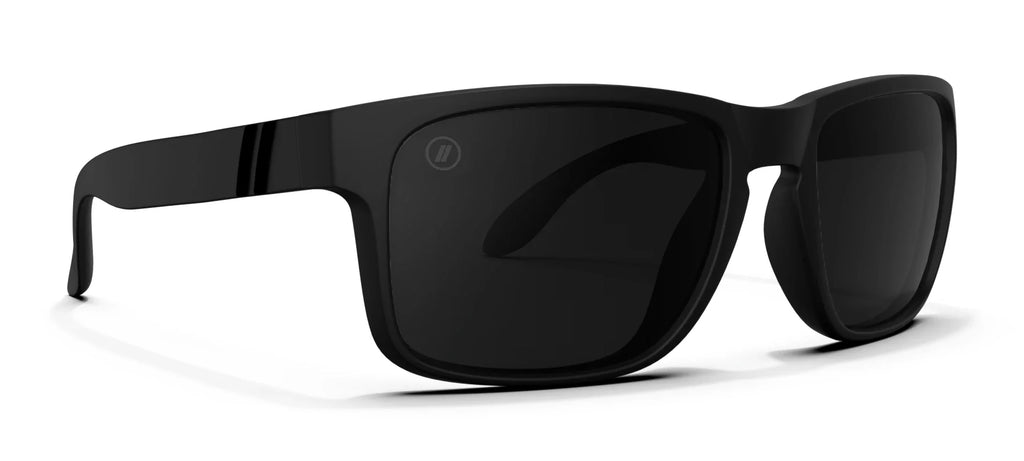
The Canyon in ‘Black Tundra’ Now $35 (Was $59)
This is the workhorse. If you only buy one pair of sunglasses this season, make it the Canyon in Black Tundra.
The frame is matte black, the lens is polarized smoke, and the silhouette is a clean rectangular wayfarer shape that flatters almost every face type. Blenders describes the look as staring into the abyss of a deep crevasse, which is dramatic but also accurate. These are stealth shades. They go with everything. They disappear into your fit without ever looking generic.
What you actually get for $35:
Polarized PureBlend lenses that cut glare on roads, water, and snow
100% UV protection for everyday eye health
A medium to large fit that suits most adults
Microfiber pouch and sticker pack included
1-year limited warranty, free US shipping, and a 45-day return window
The Canyon is rated extremely well by buyers (over 5,600 reviews and counting on Blenders’ site), which is the kind of social proof you do not get on a brand new release. At a 40% discount, this drops into impulse-buy territory but performs like a much pricier pair.
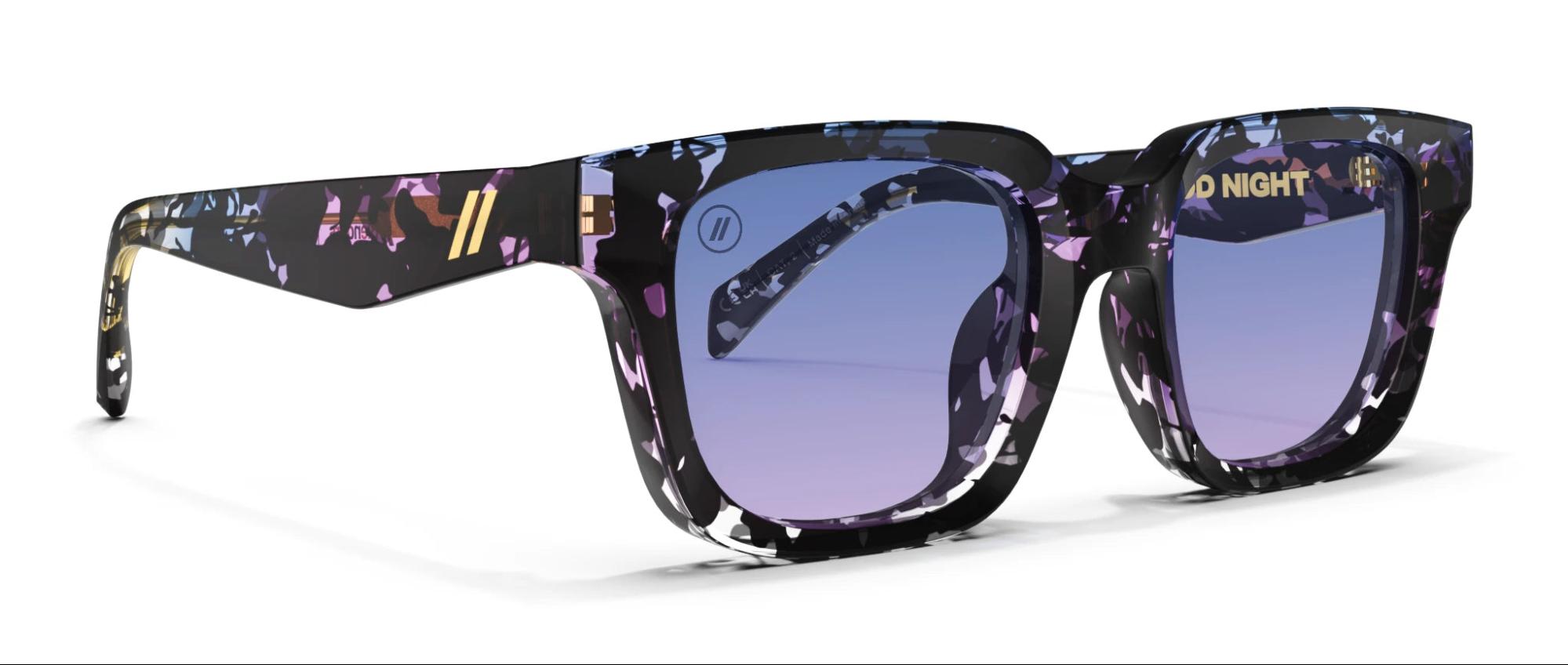
The Midnite in ‘Good Night’ Now $47 (Was $79)
If the Canyon is the safe choice, the Midnite in Good Night is the conversation starter. This one is brand new to the lineup and flagged as a limited drop, so it will not be hanging around forever.
The frame is a gloss multi-tortoise finish with hand-painted purples and deep blues layered over black, creating a custom fade that genuinely does not look like anything else on the market right now. The lens is a PureBlend blue and pink gradient, non-polarized, which gives the whole pair a moody, festival-ready energy. Hidden slogans inside the frame and standout packaging round out the package.
This is the pair you reach for when the outfit needs an exclamation point. Picture it with a black tee, dark denim, and a denim or canvas jacket. Or pair it with a vintage band tee for a more music-festival lean. Either way, the Midnite signals confidence the moment you slide it on.
Key specs at $47:
Unisex frame in gloss multi-tortoise
Small to medium fit, ideal for narrower face shapes
Non-polarized blue and pink gradient lens
Included microfiber pouch
Free shipping, 45-day returns, and the standard 1-year warranty
For a limited drop that doubles as a daily-wear statement piece, knocking the price from $79 down to $47 is the kind of deal you do not see every quarter.
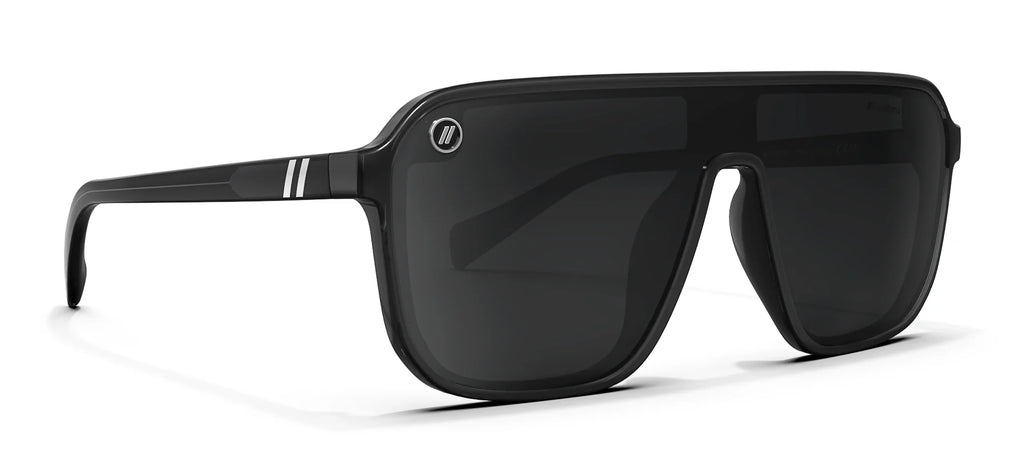
The Meister X2 in ‘Nimble Beast’ Now $47 (Was $79)
Round out the eyewear lineup with a shield. The Meister X2 in Nimble Beast brings the single-lens, wraparound look that has dominated this year’s eyewear trends, but it does so without veering into costume territory.
The lens is a continuous black polarized PureBlend with a clean gloss black frame and signature Blenders striping at the temples. It is a forward-thinking design, equally at home on a flight, a road trip, a boardwalk, or behind the wheel. Reviewers consistently call out the secure, lightweight fit and the way the frame stays put during activity without pinching.
You also get the option to upgrade to non-polarized at checkout, though we strongly suggest sticking with the polarized lens for the glare-cutting benefits.
What makes it worth $47:
Polarized PureBlend single-lens shield with 100% UV protection
Lightweight, durable frame engineered for movement
Comes in over 14 colorway variations for the Meister X2 line, so you can find one that fits your aesthetic
Rated 4 stars and up across 436 reviews
Free US shipping and standard warranty
If you want one pair of sunglasses that telegraphs you are paying attention to what is happening in design right now, this is the one.
Part Two: Three Vans Slip-Ons That Cover Every Mood
Vans does not need an introduction. The brand has been Off the Wall Since ’66, and its core silhouettes have outlasted every fashion cycle that tried to bury them. The Slip-On in particular has become one of the most quietly influential shoes in modern footwear, and the current lineup is doing something interesting with it. Instead of recommending three different silhouettes, we are zeroing in on three takes on the Slip-On itself, each one solving a different style problem. The Memorial Day event brings 30% off full-priced clothing alongside any of these footwear orders, so this is the moment to think head-to-toe.
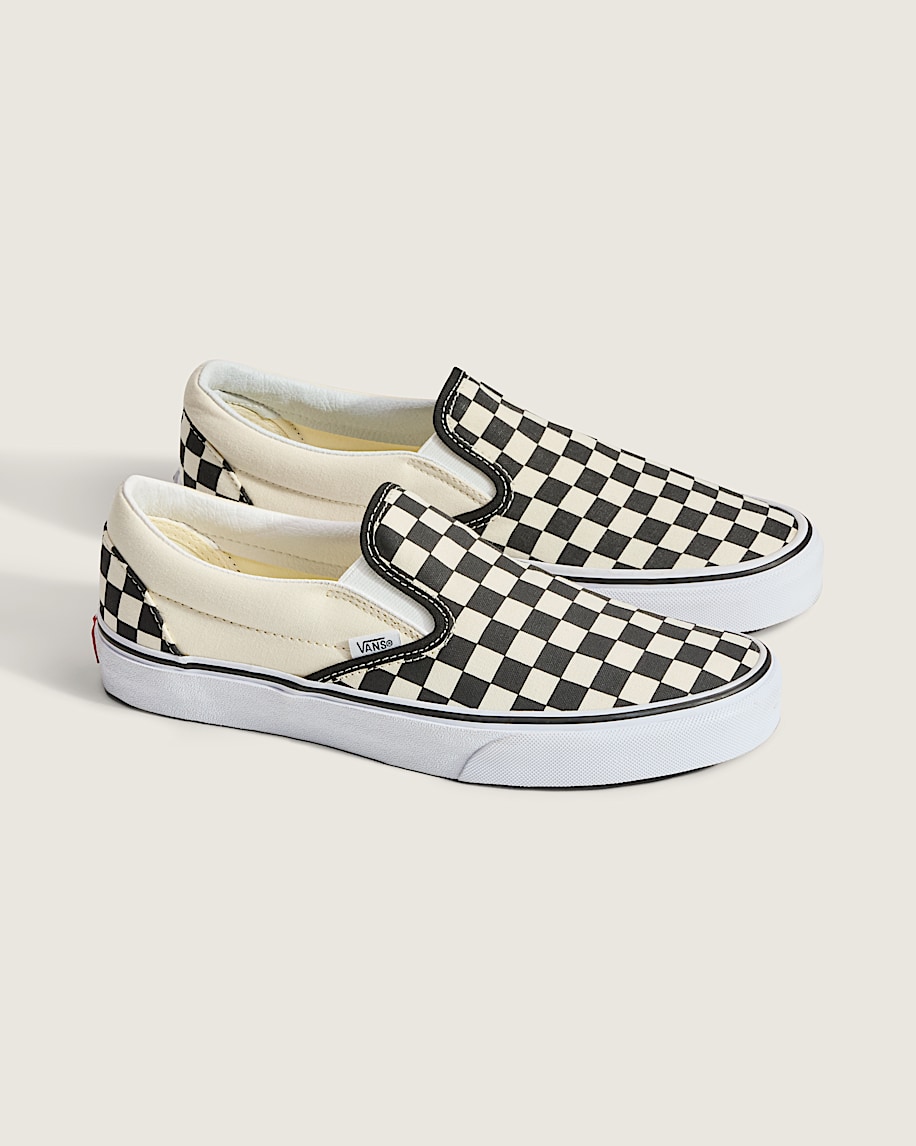
The Classic Slip-On Checkerboard Shoe $60
If you want the easiest shoe in your closet, this is it. The Classic Slip-On Checkerboard at $60 is the most affordable of our Vans picks and the one currently flagged as a Top Seller for good reason.
The black and white checkerboard pattern is one of the most recognizable shoe graphics in the world. It traces back to skate culture in Southern California in the late 70s and early 80s, and it has been adopted, referenced, and reissued by every corner of fashion since. The suede and canvas upper gives it a slightly richer texture than a pure canvas build, the elastic side accents keep the fit snug without being tight, and the rubber waffle outsole delivers the skate-tested traction the brand is known for.
There are no laces to fuss with. You slip them on and you go. For travelers, this shoe is also a sleeper hit because of how easy it is to remove at airport security.
Why it belongs in the cart at $60:
Suede and canvas upper for breathability and texture
Iconic checkerboard black and white colorway
Elastic accents and easy on-off design
Signature rubber waffle outsole
Available in over 9 additional colorways if checkerboard is not your move
Lifestyle classic with skateboarding DNA
Pair these with the Canyon in Black Tundra and you have a complete, low-effort, high-impact daily look.
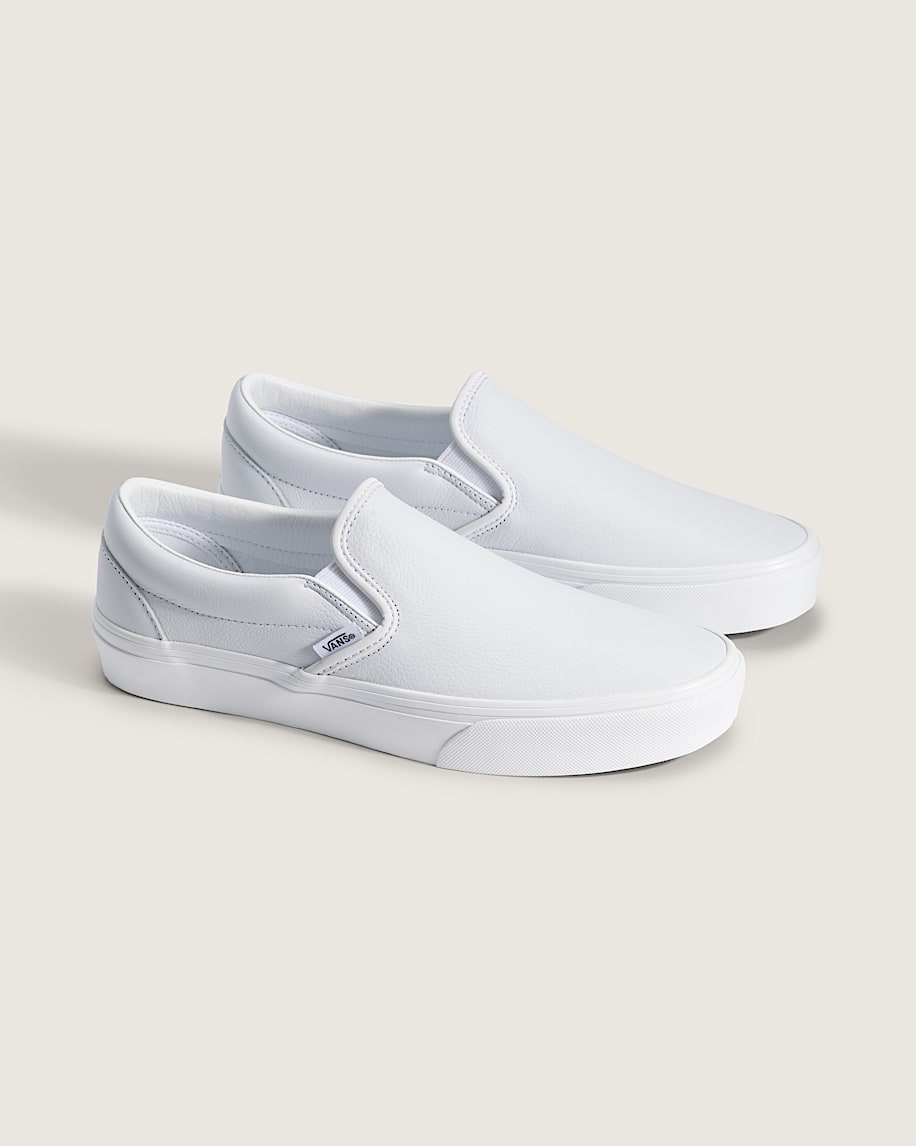
The Classic Slip-On Shoe in ‘True White’ (Leather) $70
This is the upgrade pick, and it is brand new to the lineup. The Classic Slip-On in True White at $70 takes everything that works about the original silhouette and rebuilds it in smooth leather.
The result is a noticeably more refined shoe. The all-white leather upper reads cleaner than canvas, holds its shape better over time, and is significantly easier to wipe down (a real consideration if you actually wear white shoes in the real world). The classic slip-on construction is preserved, same elastic accents, same waffle outsole, same effortless on-off, but the leather upper pushes the shoe into territory where it can hold its own against more premium minimalist sneakers at double the price.
This is the pair you reach for when you want sneaker comfort without looking like you tried too hard. Think dinner with friends, gallery openings, work-from-cafe days, or anytime the outfit calls for a step up without breaking character.
Key features at $70:
Smooth leather upper in clean True White
Classic Icon construction
Easy slip-on entry with elastic side accents
Rubber waffle outsole
Pay-in-4 options at checkout via Klarna
Wear it with the Midnite in Good Night sunglasses and dark wash denim for a complete look that reads thoughtful, not thrown together.
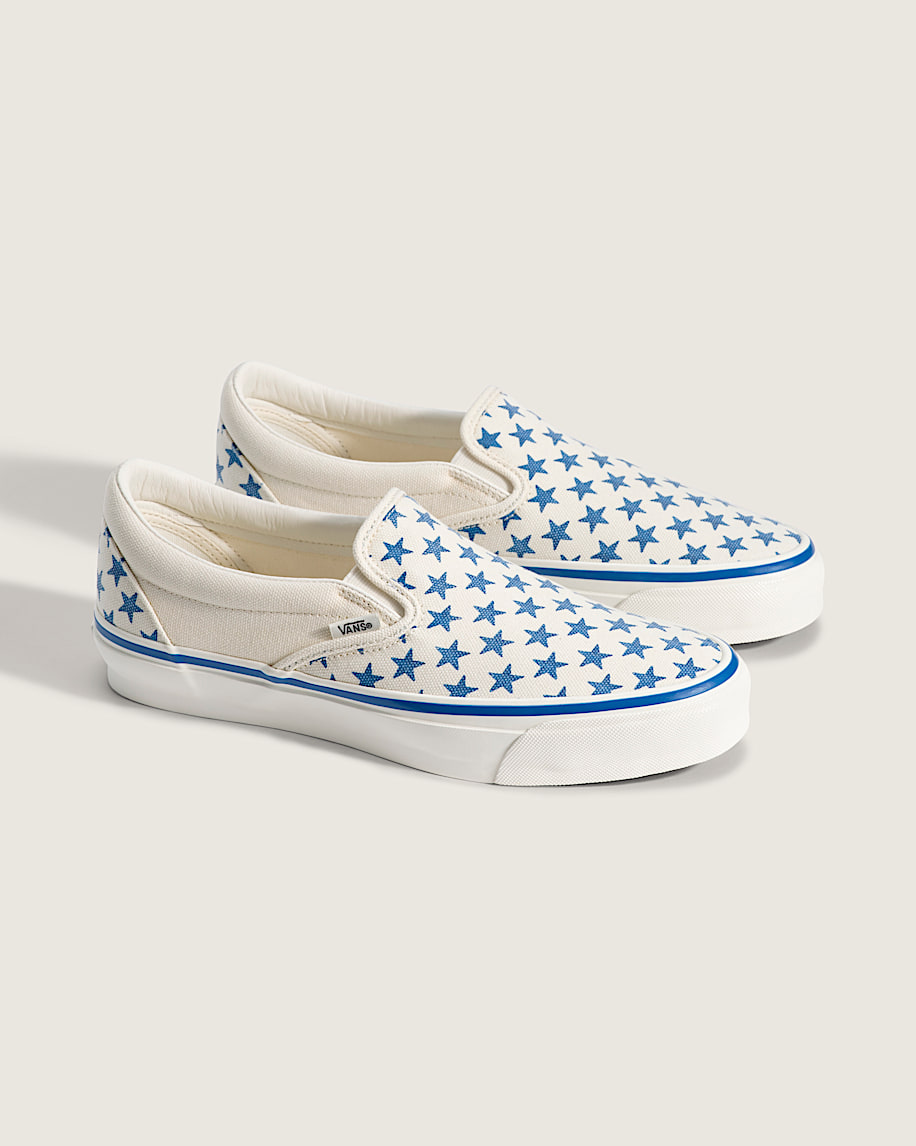
The Premium Classic Slip-On Shoe in ‘True Blue / Marshmallow White’ $95
This is the curveball pick, and we love it for exactly that reason. The Premium Classic Slip-On at $95 is the most expensive of our Vans picks, and it earns the upcharge in two ways: a hand-print blue stars pattern across a marshmallow white canvas upper, and a fully upgraded cushioning system that makes this one of the most comfortable Slip-Ons in the brand’s current lineup.
The print itself is the headline. Blue stars scattered across an off-white base, finished with a bold true blue foxing stripe running along the midsole. It is unapologetically a statement shoe, but the palette is restrained enough that it works with way more outfits than you would initially think. White tee and denim, washed black pants and a tonal hoodie, a linen shirt and shorts, all of these read better with a little visual interest happening at the foot.
You are also getting genuinely upgraded internals. Vans tags this one with cushioning specifically, which means more support underfoot than a standard Classic, and a noticeably better feel on long days.
Key features at $95:
Canvas upper with all-over blue star print on marshmallow white
Cushioning system for upgraded all-day comfort
True Blue foxing stripe and signature Vans branding
Classic slip-on entry with elastic accents
Brand new release, flagged as “New” on the Vans site
Pair this with the Midnite in Good Night sunglasses, dark denim, and a clean white tee, and you have a fit that does the heavy lifting for you.
Building Three Complete Looks From These Six Pieces
Here is how the editor’s brain has been mixing and matching these picks. Steal the formulas, or use them as starting points.
The Everyday Hero: Classic Slip-On Checkerboard ($60) plus Canyon Black Tundra ($35). The most iconic Vans pattern, the most flattering Blenders silhouette, and any neutral basics in between. Total spend on the statement pieces comes in under $100.
The Going Out Mood: Premium Classic Slip-On in True Blue/Marshmallow White ($95) plus Midnite Good Night ($47). Statement shoe, statement shades, and a fit built around them. This is the combination that gets compliments.
The Refined Day: Classic Slip-On Leather in True White ($70) plus Meister X2 Nimble Beast ($47). Clean white leather sneakers, polarized shield shades, zero outfit thinking required. Equally good for travel days, work-from-cafe sessions, or dinner where you want to look intentional.
The Deal Recap You Should Screenshot
Quick reference for the next time you open your phone:
Blenders Canyon (Black Tundra): $35 (was $59), save 40%
Blenders Midnite (Good Night): $47 (was $79), save 40%
Blenders Meister X2 (Nimble Beast): $47 (was $79), save 40%
Vans Classic Slip-On Checkerboard: $60, Top Seller
Vans Classic Slip-On Leather (True White): $70, New
Vans Premium Classic Slip-On (True Blue / Marshmallow White): $95, New
Add 30% off full-priced Vans clothing on top of any of the Vans footwear orders, and you have a full head-to-toe upgrade for less than most premium retailers charge for a single pair of sneakers.
Why You Should Move on This Today, Not Tomorrow
Sales like these create predictable patterns. The first two days see the broadest size availability. By midweek, the most popular sizes (typically the men’s 9 through 11 and women’s 7 through 9 ranges in footwear) start hitting “out of stock.” By the final 48 hours, you are usually shopping leftovers.
The Blenders limited drops in particular, like the Midnite in Good Night, are designed to sell through quickly. Once they are gone, they are gone. The Vans Slip-On lineup tends to clear fast too, especially on the new releases, the Premium Classic in True Blue stars is brand new to the catalog, and the leather True White is a recent addition that has been moving quickly since launch. The checkerboard is the brand’s most iconic colorway, period, and it consistently sells out of mid-range sizes first.
Lock in your sizes, double-check your cart, and check out. The combined savings across these six pieces are significant, and you have less than a week to actually claim them.
Final Word
Good shopping is about clarity. You know what you want, you know why you want it, and you act before the window closes. This edit gave you six pieces that have already proven themselves, three from a brand that has redefined affordable eyewear and three from the most iconic skate footwear company in the world. The discounts are real, the deadlines are real, and the upgrades are immediate.
Tap through to Blenders Eyewear for the Canyon, Midnite, and Meister X2. Head to Vans for the Classic Slip-On Checkerboard, the Classic Slip-On in True White leather, and the Premium Classic Slip-On in True Blue stars. Your future fits will thank you.
Disclaimer: This article may contain affiliate links, and we may earn a commission if you make a purchase through these links.
Semibreve Festival 2026 has announced the first wave of artists participating in its 16th edition. Returning to Braga from 22–25 October, the upcoming programme spans sound, moving image, installation and performance. Over the past decade and a half, the Portuguese festival has developed a unique reputation within contemporary audiovisual culture for offering a structured environment for artists to present ambitious projects while challenging the boundaries between concert, exhibition and digital art.
Taking place across venues including the historic Theatro Circo, the contemporary arts centre gnration and the Capela Imaculada, the Semibreve festival spotlights site-responsive and technologically mediated practices within Braga’s architectural landscape. Braga, one of Portugal’s oldest cities, was designated a UNESCO Creative City of Media Arts in 2017 thanks to its baroque architecture and religious heritage, qualities that no doubt inflect the festival’s spatial choices. This year’s programme in particular places an emphasis on world premieres and newly commissioned works exploring audiovisual artistic forms and sonic experimentation.
Christian Fennesz and Oscar Jockel with Saffron on Grey feature among the first artists announced, alongside new collaborative works by PYUR and Tarik Barri, Qasim Naqvi and Steven Wendt, and Malcolm Pardon with Gustaf Broms. The line-up also includes performances and installations by Noémi Büchi, Sam Slater, TYGAPAW, Azu Tiwaline and João Carlos Pinto.
Semibreve’s scale continues to be intentionally contained. The festival consolidates its programme into a focused sequence of encounters across only a handful of venues, a feature which distinguishes it from larger international events and allows for closer engagement between artists and audiences.
Car accidents can happen at any time and often leave victims dealing with physical injuries, emotional stress, and financial burdens. In a busy tourist destination like Myrtle Beach, traffic congestion and distracted driving increase the risk of serious collisions every day. When an accident happens because of another driver’s negligence, victims may have the legal right to seek compensation for their losses. Working with a Myrtle Beach Car Accident Lawyer can help injured individuals protect their rights and pursue the financial recovery they deserve.
Many car accident victims face expensive medical bills, lost income, vehicle repair costs, and ongoing pain after a crash. Insurance companies may try to minimize payouts or pressure victims into accepting low settlement offers. Having experienced legal representation can make a major difference during the claims process and help ensure victims are treated fairly.
Common Causes of Car Accidents in Myrtle Beach
Car accidents happen for many reasons, but most are caused by driver negligence. Distracted driving remains one of the leading causes of collisions. Drivers using mobile phones, adjusting navigation systems, eating, or losing focus for even a few seconds can cause devastating accidents.
Speeding is another major factor in many crashes. Drivers who exceed speed limits have less time to react to sudden traffic changes or road hazards. Aggressive driving behaviors such as tailgating, unsafe lane changes, and running red lights also contribute to serious collisions.
Drunk driving continues to be a significant danger on Myrtle Beach roads. Alcohol and drugs impair judgment, reaction time, and coordination, making accidents far more likely. Tourist traffic and unfamiliar roads may also increase the chances of crashes in busy areas.
Poor weather conditions, defective vehicle parts, and dangerous road conditions can also play a role in accidents. Determining the exact cause of a collision is important when pursuing a legal claim.
Why Car Accident Injuries Can Be Serious
Even seemingly minor car accidents can cause serious injuries that require long-term treatment. Victims may suffer from whiplash, broken bones, head injuries, spinal cord injuries, internal bleeding, and soft tissue damage. Some injuries may not appear immediately after the crash but can worsen over time.
Severe injuries can affect a victim’s ability to work, care for family members, or enjoy normal daily activities. Medical treatment may include surgeries, rehabilitation, physical therapy, and ongoing care. In catastrophic cases, injuries may lead to permanent disabilities or chronic pain.
Beyond physical harm, accident victims often experience emotional trauma such as anxiety, depression, and post-traumatic stress. A Myrtle Beach Car Accident Lawyer understands the full impact a collision can have on a victim’s life and works to pursue compensation for both economic and non-economic damages.
How a Myrtle Beach Car Accident Lawyer Can Help
After a car accident, insurance companies often move quickly to protect their own interests. Adjusters may ask victims for recorded statements or offer settlements before the full extent of injuries is known. Accepting an early settlement can leave victims without enough compensation for future medical expenses or lost wages.
A Myrtle Beach Car Accident Lawyer can handle communication with insurance companies and guide victims through the legal process. Attorneys investigate accidents thoroughly by reviewing police reports, collecting medical records, interviewing witnesses, and examining crash scene evidence.
Lawyers may also work with accident reconstruction experts and medical professionals to strengthen the case. Establishing liability is critical in any car accident claim, especially when multiple parties are involved or fault is disputed.
An experienced attorney can also negotiate aggressively with insurance companies to pursue fair settlements. If negotiations fail, the lawyer may file a lawsuit and represent the victim in court.
Compensation Available After a Car Accident
Victims injured in car accidents may be entitled to several types of compensation depending on the circumstances of the crash. Medical expenses are one of the most common damages recovered in personal injury claims. Compensation may cover hospital bills, emergency care, surgeries, medications, rehabilitation, and future treatment costs.
Lost wages may also be recovered if injuries prevent the victim from working temporarily or permanently. In cases involving severe injuries, victims may pursue compensation for reduced earning capacity if they cannot return to their previous job.
Pain and suffering damages may compensate victims for physical pain, emotional distress, mental anguish, and reduced quality of life. Property damage compensation can help pay for vehicle repairs or replacement.
In fatal accident cases, surviving family members may be able to file wrongful death claims to recover funeral expenses, lost financial support, and other damages resulting from the loss of a loved one.
What to Do After a Car Accident in Myrtle Beach
The steps taken immediately after a car accident can affect the strength of a future legal claim. Victims should seek medical attention as soon as possible, even if injuries seem minor at first. Some conditions may not show symptoms immediately but can become serious later.
If possible, victims should gather evidence at the scene, including photographs of the vehicles, road conditions, injuries, and contact information for witnesses. Filing a police report is also important because official accident reports often serve as key evidence.
Avoiding direct negotiations with insurance adjusters before speaking with a lawyer is usually recommended. Insurance companies may use statements against victims to reduce compensation.
Contacting a Myrtle Beach Car Accident Lawyer quickly can help preserve evidence and ensure important legal deadlines are not missed.
Importance of Proving Liability
Proving fault is one of the most important parts of a car accident case. South Carolina follows comparative negligence laws, which means compensation may be reduced if the victim is found partially responsible for the crash.
A skilled attorney can gather evidence to prove the other driver acted negligently. Evidence may include surveillance footage, witness statements, accident reconstruction reports, and phone records showing distracted driving.
Building a strong case requires careful preparation and attention to detail. Legal representation often improves the chances of recovering fair compensation after a serious accident.
Choosing the Right Myrtle Beach Car Accident Lawyer
Choosing the right attorney can make a significant difference in the outcome of a car accident claim. Victims should look for lawyers who have experience handling personal injury cases and negotiating with insurance companies.
Strong communication, dedication to clients, and thorough case preparation are important qualities in a lawyer. A reliable attorney can answer questions, explain legal options, and provide support throughout the legal process.
Most personal injury lawyers work on a contingency fee basis, meaning clients do not pay legal fees unless compensation is recovered. This allows accident victims to seek legal help without additional financial pressure.
Conclusion
Car accidents can create serious physical, emotional, and financial challenges for victims and their families. Medical expenses, lost income, pain, and stress can quickly become overwhelming after a crash caused by another driver’s negligence.
A Myrtle Beach Car Accident Lawyer can help accident victims understand their rights, gather evidence, negotiate with insurance companies, and pursue fair compensation. Taking quick legal action can strengthen a claim and improve the chances of recovering damages. With experienced legal guidance, victims can focus on healing while protecting their financial future.
FAQs
When should I contact a Myrtle Beach Car Accident Lawyer?
It is best to contact a lawyer as soon as possible after the accident. Early legal guidance can help preserve evidence and protect your rights during insurance negotiations.
What compensation can I recover after a car accident?
Victims may recover compensation for medical expenses, lost wages, pain and suffering, property damage, and future medical treatment costs.
What if the insurance company offers me a settlement?
You should speak with a lawyer before accepting any settlement offer. Early offers are often lower than the actual value of the claim.
Can I still file a claim if I was partially at fault?
Yes, South Carolina comparative negligence laws may still allow you to recover compensation if you were partially responsible for the accident.
How long does a car accident case take?
The timeline depends on factors such as the severity of injuries, insurance negotiations, and whether the case goes to court. Some claims settle within months, while others may take longer.
Clairo has been teasing a new album. The singer-songwriter’s fourth LP has yet to be announced, but here’s everything we know so far.
How long has it been since Clairo’s last album?
Clairo’s most recent album was 2024’s Charm. It arrived three years after Sling, which was released two years after her debut, Immunity.
What is the title of the album?
It hasn’t been revealed yet. Clairo hasn’t shared its release date or any of the track titles, either.
What label will the album be released on?
Last September, Clairo announced she’d signed with Warner Music Group (WMG) subsidiary Atlantic Records. “I’m so thrilled to begin this next chapter of my musical journey with Atlantic,” she said at the time. “From our first meeting, they immediately understood my vision, and it feels good to know I can continue to be as expressive and free with my ideas with a great new partner by my side.”
What has Clairo said about the new album?
As of this writing, everything we know about Clairo’s new album comes from a series of vlogs she posted on TikTok. “I’m feeling really good about the music,” she said. “I’m feeling really good about where I am and the things I’m striving for. I feel like this is one of the first times I’ve been — I’m back in that place where I’m having big dreams and trying to accomplish them. It’s nice to have proof that I’m this inspired.”
She also talked about handling criticism while in the process of making the record. “It doesn’t get easier making an album. I don’t think an album would completely define me. People didn’t like Sling and I know that. And, fair. That’s fine. I love it.” (Me too.) “I made it at that time in my life and I love it. It’s different but to me so badass that was the follow-up to my debut album in the grand scheme of things. Of course I care, but ultimately you stop caring after time has passed. I could make me sad if I let it but I can’t. I’m trying to learn how to not let it get there. I have to be proud.”
What will the album sound like?
We really have no clue. It may still be in the process of being completed. However, when asked what the record would look like as a landscape, Clairo compared it to “wide open space.” And if it were a place? “Maybe Paris.”