Art and science are typically considered as dichotomous fields, as irreconcilable as night and day.
Yet over the past few decades, artists and engineers have found ingenious ways to combine these two disciplines.
This fusion is being used to generate new forms of captivating media, pushing the envelope in novel and exciting directions.
In this article, we’ll explore three mediums at the intersection of art and technology.
Digital interactive installations
Creative minds have been creating interactive art for generations, connecting artists and audiences in unusual ways. But recently, digital art has come to the forefront. This medium asks audiences to engage with art made using technology or displayed in a visual format.
The artists who create these need to mix coding and computing with their artistic creativity. Making a digital interactive installation usually requires the use of single-board computers such as OKdo mico:bit to control light displays, camera tracking systems, and other technological components.
Digital interactive installations tend to have a powerful impact on audiences, creating memorable and immersive impressions. And by offering experiences that allow almost anyone to participate, they make engaging with art more accessible.
Artificial intelligence (AI) art
This refers to any artwork created using artificial intelligence systems – algorithms designed to mimic human thought. It can be work created by an AI system by itself or in collaboration with a human artist.
Using machine learning, artificial intelligence models analyse thousands of images to ‘learn’ various styles and aesthetics. The algorithms can then create novel forms, shapes, figure, and patterns to produce their own art works.
Interestingly, these art works tend to have a unique style and aesthetic of their own. AI art often looks surreal and otherworldly – attracting a great deal of interest online.
Non-fungible Tokens (NFTs)
These demonstrably unique digital assets have taken the world by storm in recent years. Each NFT has identifying information recorded in smart contracts – special pieces of code that facilitate transactions via blockchain technology.
NFTs are most recognisable as pieces of digital artwork such as Hashmasks and Bored Ape, some selling for millions of dollars and being popular among celebrities.
Since NFTs emerged, many artists have begun experimenting with this new technology as a way to market their work.
Opinions over NFTs are polarized. To some, NFTs are pointless and wastes of money. Yet to many, they represent the future of art.
Digital media: The future of art?
The intersection of art and technology has led to the creation of new and exciting mediums, enabling artists to push the boundaries experienced in traditional art forms.
While some traditionalists view the incorporation of technology into art with skepticism, it’s clear that this fusion is driving innovation and has the potential to change the nature of art as we know it.
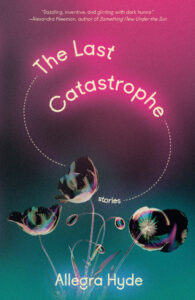
With her futuristic approach to fiction, Allegra Hyde approaches subjects like extinction, the patriarchy, consumerism, and climate change with relative ease and humor. Her second short story collection, The Last Catastrophe, ranges from silly ‘what-if’ ideas like a family dressing up as moose, or people using zoo animals as conduits for their suicide. But amongst these topics are deep meditations on how we’re living life today and where our journey is heading, such as a rampant Algorithm that sends people crates of AK-47s, an environmental disaster stemming from the invention of a vaccine that allows people to eat grass once all the rest of the earth’s food is gone. Across fifteen incredible and mesmerizing short stories, Hyde offers a glimpse into the perils and anxieties of what life on this planet in the 2020s feels like, and a warning for the future.
Our Culture sat down with Allegra Hyde to discuss situation-based fiction, escalation of modern ills, and the balance between importance and didacticism.
Congratulations on your new book, The Last Catastrophe! What was it like working on and publishing two books just a year apart?
It’s a whirlwind. Putting out a debut novel kind of becomes pretty all-consuming, and I think I was just starting to come down from that experience and now I’m doing it again with this story collection. Maybe by virtue of them being stories, and having been through the book publishing process before, it feels a little bit different, although still busy.
I feel like the short story form is right up your alley because we were introduced to so many ideas and characters in the span of these 15 stories. Did you feel like you had more freedom to experiment?
Yeah, totally. I just got a lot of ideas and as much as I try to smush them into a novel, stories allow me to get in and get out, explore different concepts, characters, versions of the world more efficiently. I can also play around with form with greater ease. So I do love writing short stories.
I really enjoy you and other short-story writers like Kate Folk and Ling Ma who seem to be more situation-based: meaning that although characters are important, it feels like your stories start with saying “It would be interesting if…” Do you feel you work this way?
Yeah, I love the foundational speculative question of “What if?” And I’m also someone who will maybe take a question or an image or problem and see if I can put them all into conversation, or somehow make a story out of them. For a story like “Democracy in America”, I asked myself, ‘What if Alexis de Toqueville was wandering around a U.S. of the near future, and also, what if people can switch bodies, and also, what if these various other things were happening.’ I ended up stitching all these things together into a story — maybe it’s too much, I dunno, it depends on who you ask.
If the collection were an album, I feel like “The Future Is a Click Away” would be its lead single — it encompasses most of the collection’s themes. We see this rogue Amazon-like service doing its best to predict what customers are about to need, instead of waiting for orders. What was the inspiration for this story?
I think I was trying to show a potential future and where we could be heading when it comes to predictive technologies and targeted marketing. I’m sure you’ve had that eerie experience of talking about something with a friend, you know, maybe you mention someone had funny sneakers on or that you’re really interested in rabbits, and lo and behold, later that day rabbit figurines and sneakers start floating by. You’re half aware of them and half not, and sometimes you buy them. And sometimes you have that feeling of the algorithm seemingly guessing at things on my mind that I’ve never even verbalized. It feels like it’s putting data together, and it’s creepy. I wanted to escalate that experience further and maybe that’s what the whole collection is, in a way. If that story is the lead single, it’s all about escalating what is already present and making more visible what is already occurring.
If I had to choose a favorite, it might actually be “Afterglow” — the image of this desperate woman, after her husband leaves her, Gatorade tubes hooked into her backpack so she has access to sip all times in the day strikes a chord in my mind. And this is a funny premise, but I also really enjoyed how it turned this beautiful corner at the end — why did you want it to change in this way?
With this collection, I both wanted to get into some heavy topics, whether it be climate change or heavy grief, but I always wanted to balance these topics with moments of beauty, the possibility of joy, and connection. Writing that story, it was very much a process of trying to be very present with this struggling lady, but to also bear witness to simultaneous moments of otherworldly beauty and possibility. Because I think that’s what being alive is like. Our experiences of the world are multifaceted, they’re complex, and no single incident is without multiple angles of meaning and emotion.
Even though the collection is concerned with climate, capitalism, the patriarchy, food shortages, there are plenty of opportunities for comedy. These are usually in shorter stories, where you envision artists being locked up in cages for their own good, ghosts of plants and smaller animals going extinct showing up in the paranormal realm, and the excellent opener, where a caravan of RVs roams around a desolate America. Though these also concern heavy themes, were they slotted in between the longer stories to provide some breathing room?
The collection is organized in a way that will hopefully both suggest continuity and variation in terms of tone, style, and length — it’s challenging figuring out how to put together a story collection, and my editor and I did a lot of puzzling before we came to the setlist that we did. The overall structure was also intended to have the stories get further and further removed from our sense of known realities.
And there was also this question of where I’m going to put this giant novella, “The Eaters”, and it felt like the only place it could go is the very end, because otherwise, how could you follow it up? It also felt like it had the right ending note to what I was trying to do with the collection.
Yeah, let’s talk about “The Eaters”. It’s the collection’s largest and most complex story — told from multiple viewpoints, it purports the idea that in the future, when we run out of food, scientists develop a shot that allows us to consume grass, which the earth is full of. Something turns wrong, though, and the people who took the shot turn dangerous, eating everything, including humans, in their path. Reading it, I couldn’t help notice the parallels between current resistance to a certain vaccine to a real-life virus happening today and what you described in the story. Was this at least part of the inspiration?
Oh, no! My editor was worried that the story would seem anti-vax, in a way. I was like, ‘No, no! It’s different!’ Just let it be known that I’m not trying to perpetuate anti-vax propaganda in any way.
No, the story didn’t seem anti-vax, I wasn’t like, ‘Oh, this is something new about Allegra I didn’t know.’ I just thought you built on the idea of, ‘Oh god, what if they’re right?’ So it felt built on what’s happening today, but I enjoyed the parallels.
If anything, I was building off a longstanding tradition in science fiction of science gone awry, in some way, and the solutions not being thoroughly tested. Which I know is something anti-vaxxers grab onto. When it comes to environmental issues, there’s an issue of them being dealt with quickly and catastrophically. I’m thinking of Australia, where cane toads were introduced in order to mitigate another issue, but nothing ate the cane toads, and now they’re everywhere and it’s a huge problem. That’s the kind of scientific disaster I was thinking about. What can you do?
I love the premise of “Cougar” — this camp where people addicted to the internet in some form are brought together for a rehab-like scenario. The main character, LeeAnn, was admitted after scamming people out of money, and other attendees include senders of death threats or people who take pictures or videos of every act they do. Was it fun, and also a little scary, to come up with the many ways in which technology could seriously impact our lives and cause us to check into therapy?
Yeah, I think this story again was me trying to extrapolate from what already feels very real, and I was probably also drawing on my own sense of internet addiction I feel sometimes. I’m like, ‘Why am I obsessively scrolling Twitter instead of living my life?’ The internet, social media, it’s powerful, it’s intoxicating, and digital detox centers in a sense already exist. What if, when the internet becomes even more powerful, we need even more rigorous methodologies to untangle ourselves? Coming up with those various issues was kinda fun, but not fun in the sense that they already exist. Dysmorphia and body modification in response to the images we see online is very real.
I wanted to talk a little bit about how to attack climate fiction, or really any fiction that comments on the state of the world today or the tenuousness of the future, can turn didactic and preachy really quickly. And this collection, thankfully, did not. Was it difficult to walk this line between, ‘I want my stories to include real-life consequences, but I also don’t want it to be corny or done-before’?
Yeah, I certainly don’t want anyone to feel lectured at. I also don’t find writing lectures to be very fun. As much as I care about these various issues, it’s more fun to come at these issues in sideways, playful, or obscure ways, and that’s what I end up doing. The moments I do end up a little more didactic, that’s because it’s a character trait, and I’m thinking about the professor in “The Eaters”, who has various speeches. She’s just saying what she wants to say, and that felt like part of creating the story and character, and that made it seem okay to me.
If you had the chance to extrapolate one of the stories and turn it into a novel, which would it be?
Part of me did want to continue “The Eaters”, maybe because it’s already the longest. The idea of writing a novel seemed already within reach. I would be really curious to follow these characters as they deal with the situation they’re in, and as some of them inevitably choose to go outside the walls of their compound and out in the world. Zombie narratives aren’t uncommon, and it’s been interesting to see the rise of The Last of Us and see people getting really into zombies again. I was a Walking Dead fan forever. The exciting thing about working within these sorts of genres and tropes is that there are ways to subvert them or reinvent them and maybe take the best and most fun aspects of them and slide in some commentary or new perspective.
Was one of them particularly hard to write, or, looking at the finished product, you were really happy with how it turned out?
I think “Democracy in America” was really challenging. Because on one hand it’s speculative, it has this bizarre technology, but it was also trying to draw on an actual historical person, trying to map a historical trajectory onto the future. And it’s very sociologically invested, in a way. Trying to capture a sense of that wider world efficiently and in the space of a functioning story was challenging, but it’s probably one of the pieces I’m most proud of.
Finally, what’s next? You’ve already been so busy, but is there another novel or short story collection in the works?
I’m working on a new novel now, and it’s gonna be multi-genre. I’m hoping to merge historical fiction, maybe some autofiction, and also some speculative fiction. Caves are involved.
Those are scary.
I agree! I’m terrified of caves, and yet, I’m making plans to spend some time in them. Facing my fears.
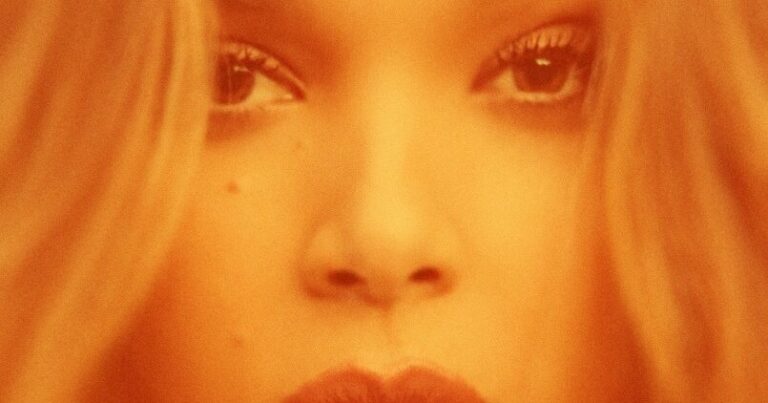
Hailee Steinfeld has returned with a new single called ‘SunKissing’. It follows last year’s Anderson .Paak collaboration ‘Coast’, which marked the singer’s first single in two years. Check it out below.
Back in 2020, Steinfeld released a five-song EP called Half Written Story.
Tissotunveiled the renowned Ducati MotoGP rider Enea Bastianini as an ambassador at the Grande Premio Tissot de Portugal, marking the first race of the 2023 season. To mark the occasion, the brand launched three new Tissot T-Race models, as well as the T-Race MotoGP™ collection.
The watches as part of the T-Race collection launch include three different dials: White dial (£490), Blue dial (£525), and Black dial (£535).
As a fantastic rider, Bastianini has blazed a trail through MotoGP. After a remarkable 2022 season on a Ducati with the independent Gresini team, where he won four races and finished third overall. Bastianini has joined the Ducati Lenovo Team alongside reigning Champion Francesco Bagnaia for what promises to be a truly spectacular season in 2023.
Nose rings have been a symbol of beauty, tradition, and self-expression for centuries. They come in various styles and sizes, making it difficult to choose the right one that complements your face shape and skin tone. A nose ring can either make or break your look, so it’s essential to find the perfect one that suits you best. This article will provide the definitive guide to selecting the correct size and design of nose ring based on your face shape.
Face Shapes And Nose Rings
The first step to choosing the right nose ring is identifying your face shape. There are six different face shapes, including round, oval, square, heart, diamond, and triangle. Each face shape has unique characteristics that determine the type of nose ring that will flatter you the most.
Round Face Shape
A round face has a circular shape with rounded edges and no sharp angles. The ideal nose ring for this face shape is one that adds length and definition to the face. Long, thin, and sleek nose rings are perfect for this face shape. Avoid wearing round or hoop-shaped nose rings as they tend to make the face appear wider.
Oval Face Shape
The length of an oval face is greater than its width, and both the mandible and the forehead are rounded. Oval faces are versatile and can wear any style of nose ring. Hoop nose rings, studs, and septum rings are all suitable options for this face shape.
Square Face Shape
A square face is characterized by a prominent jawbone as well as a wide forehead. The ideal nose ring for this face shape is one that softens the angles of the face. Round and curved nose rings are perfect for this face shape, as they help create a more feminine look. Avoid wearing sharp-edged nose rings as they tend to accentuate the angular features of the face.
Heart Face Shape
A visage that is in the shape of a heart has a wide forehead and a pointy jawline. The ideal nose ring for this face shape is one that adds volume and balances the features of the face. Hoop nose rings, curved nose rings, and studs are all suitable options for this face shape. Avoid wearing triangle-shaped nose rings as they tend to draw attention to the narrow chin.
Diamond Face Shape
A diamond-shaped face has a narrow forehead and chin with wide cheekbones. The ideal nose ring for this face shape is one that creates an illusion of length and narrows the cheekbones. Long and slim nose rings are perfect for this face shape, as they help create an elongated look. Avoid wearing wide or heavy nose rings as they tend to widen the cheekbones.
Triangle Face Shape
A triangle-shaped face has a narrow forehead and a wide jawline. The ideal nose ring for this face shape is one that balances the features of the face. Curved and rounded nose rings are perfect for this face shape, as they help soften the sharp angles of the face. Avoid wearing heavy or wide nose rings as they tend to accentuate the width of the jawline.
Visual storytelling has become an essential tool for businesses to communicate with their audience effectively — they have the power to really seize their attention and get the ball rolling towards marketing’s ultimate goals. Whether it’s branding, sales, or PR, visual storytelling is most companies’ go-to weapon of choice. One of the most popular visual storytelling tools right now, due to the advent of tech’, is animated explainer videos. These videos can help Australian startups to simplify and streamline complex ideas and concepts, boost brand awareness and recognition, and enhance their online presence and search engine optimization – SEO. In this article, we’ll explore the advantages of animated explainer videos for Australian startups and why they should choose companies like Kasra Design for their animated explainer video needs.
Importance of Visual Storytelling in the Digital Age
With the abundance of information available online, with the smorgasbord of content, with the eye-popping delirium that is today’s digital buffet, businesses need to find creative ways to capture their audience’s attention. They need to pull out all the stops. Visual storytelling has become a popular method for businesses to get their message across in an engaging and memorable way. And the most sought after type? Animated explainer videos. They have become increasingly popular as they offer a compelling way to communicate complex ideas and concepts— a great way to design your explainer video into existence.
Let’s talk a bit about the history and conceptualization of explainer videos.
Explainer videos have become a rather popular trend in recent years due to their effectiveness as tools for businesses to convey their message and promote their products or services.
The history of explainer videos can be traced back to the 1940s when Walt Disney Productions created educational films to teach military personnel about navigation and equipment operation. In the 1960s, educational filmstrips were replaced by video, and in the 1980s, animated explainer videos began to gain more popularity as an affordable way to promote ideas.. With the rise of the internet and social media in the 21st century, and the rise of new tech, explainer videos have become an essential part of marketing strategies, with businesses using them to simplify complex ideas, increase engagement, and improve brand awareness.
Animated explainer videos at their core use visual elements, graphics, and animations to convey a message. This approach is effective because it combines visual and auditory elements, which can help viewers to understand the message better. They can be expertly designed, from script to final product, to match the brand’s personality and message, making them more relatable to the audience.
Types of explainer videos
Explainer videos come in a variety of types and styles, each tailored to specific purposes and audiences — each with its pros, and cons.
One of the most common types is the animated explainer video, which uses colorful and engaging visuals to round out difficult ideas and make them more memorable. Animated explainer videos can be created in a range of styles, from traditional 2D animation to more modern and dynamic motion graphics.
Live-action explainer videos, on the other hand, use flesh and bone actors, real-life settings, and props to explain concepts and promote products or services. This type of video is often used by businesses that want to showcase the human side of their operations and build trust with their audience — they are a great way of getting investors or for teaching new staff on the ins and outs of a facility.
Yet another subset of an explainer video is the whiteboard animation, which simulates the process of a hand-drawn sketch on a whiteboard — it’s a little artsy but rather effective. This avant-garde video is often used for educational purposes, and in an academic setting, or to explain bizarre and difficult concepts in a very dynamic manner.
There are also product explainer videos, which focus specifically on showcasing the features and benefits of a product or service. These videos can be either animated or live-action, and are designed to help potential customers understand how the product works and how it can solve their problems.
There’s no real rule or for that matter no real tally or guideline when it comes to explainer videos — it’s a dynamic and often changing atmosphere.
Advantages of Animated Explainer Videos for Australian Startups
Animated explainer videos offer many great benefits for Australian startups, including but not limited to their core ideal — simplifying complex ideas and concepts. They also have the power to increase retention rates, boost brand awareness and recognition, enhance online presence and SEO, and be cost-effective and flexible.
Let’s dig into each one.
Simplifying Complex Ideas and Concepts
Startups often deal with complex, intangible, pie in the sky ideas and concepts that can be incredibly troublesome to wrestle with or to explain to their audience. Animated explainer videos can help to rally these concepts by breaking them down into bite-sized pieces that are easy to understand — into nuggets of nutritional information. This approach can help startups to communicate their message more effectively and improve audience engagement.
Higher Retention Rates
Animated explainer videos have higher retention rates than other types of content. According to studies, viewers retain up to 95% of a message delivered through video, compared to only 10% of a message delivered through text. This high retention rate makes animated explainer videos an effective tool for startups to convey their message and make a lasting impression on their audience.
Boosting Brand Awareness and Recognition
Animated explainer videos can also help to boost brand awareness and recognition — they are a marketing department’s media darling and last line of defense when it comes to branding. By using visuals that are consistent with the brand’s identity and message, startups can create a stronger connection with their audience. And as an added bonus, animated explainer videos can be shared on social media, increasing the brand’s exposure and reach — some are even carefully designed to elicit this outcome.
Enhancing Online Presence and SEO
If a tree falls in the forest and no-one is around to hear it, does it make a sound? Well, the same goes for your content. In the forest that is today’s digital landscape, unless you bring in the crowds and put up a festival around your content, your brand, no-one will see it. And that festival’s promoter is none other than Google— and they need You to hand them the info on your line-up. And how do you do that? By implementing SEO. Australian Animated explainer videos can enhance a startup’s online presence and SEO. Videos can be embedded on a website, increasing dwell time and reducing bounce rates. Videos due to their nature and shareability can also help you generate backlinks and increase your website’s authority.
Cost-effective and Flexible
These types of videos are cost-effective and flexible. They can be produced at a fraction of the cost of traditional marketing methods, such as TV commercials. As an added bonus, animated explainer videos can be reused and adapted for various platforms, making them a scalable solution for startups.
Summing up
In conclusion, Australian startups should seriously consider investing in animated explainer videos if they want to expand their business and build a strong brand identity. Working with a reputable animated explainer video company like Kasra Design can make all the difference. Animated explainer videos are a compelling and efficient method to explain difficult concepts to prospective investors and clients, build brand recognition, and boost website traffic and conversion rates. Australian entrepreneurs may effectively communicate their distinctive value proposition and stand out in a crowded market with the help of Kasra Design’s skill in producing high-quality and powerful videos.
When it comes to finding the best clothes for you to wear, finding your style can be difficult. You might find you wear items that you think will look good, but when it comes to it, they just don’t hit the mark. Or maybe you are looking to venture out of your comfort zone and find some items to wear that are a bit different. It could be that you have always had the same style, such as a top and jeans and you want to wear something new, or you might want to inject some color and personality into your wardrobe. No matter what it is, finding your style is a great thing to do, you just need to take the leap. Here we have a few tips for finding your style and helping you feel more comfortable in the way that you dress.
Choose clothes that compliment your body shape
We all have completely different body shapes from each other and also our body shapes might have changed from what they used to be. It can be tempting to dress depending on how you used to look or based on someone else whose style you like. While this can be something you want to do, what looks good on one person won’t necessarily look good on the next person. Instead, when you are looking for new clothes, try to find inspiration from people who are similar to you. If you have a larger bust or smaller hips, find clothes that are designed to compliment these areas and flatter your figure. Trying to squeeze into smaller sizes can make you look larger than you are, so it’s better to get a bigger size and have it tailored to fit you, rather than forcing something that won’t work.
Find independent boutiques and stores
In the same way that second hand stores enable you to find new items that you wouldn’t find anywhere else, independent boutiques and stores offer this alongside a great customer experience. You can find stores such as this, like https://paisleygraceboutique.com/ online, or stores on the high street. These are great for experimenting with new looks and finding beautiful items to add to your wardrobe.
Look for inspiration online
There are so many sources online that can give you inspiration for your style, you’re spoilt for choice. Check out sites such as Pinterest where you can put together moodboards which you can refer to and find others that have similar style and taste to you, as well as similar body shapes. Other places to find inspiration for your style include Instagram, TikTok and fashion blogs. With so many to choose from, you’re sure to find plenty of inspiration.
Don’t be afraid to try new things
When it comes to finding your style, you need to not be afraid to try new things. One of the scariest parts of getting your look is stepping out of your comfort zone, but once you do it you might be surprised at just what suits you. There are many items you can choose that you might have never looked at before and it can end up being things you live in going forward. You need to consider what sort of activities you do in your daily life and how well they will fit in – for example you don’t want to start experimenting in heels if you do a lot of walking. Think practically but give other items a go and you could be pleasantly happy with what you end up with.
Find colours that match your complexion
There is a lot of research on your complexion and hair color and how this can make you suit certain colors. The general advice is that if you have cool undertones to your skin, you should wear colours such as green, purple and grey. If you have a warm tone, neutrals or bright colors work well and if you have a neutral undertone, you should opt for brighter colors.
Look for second-hand bargains
There’s no better way to find your style than with a second-hand bargain. This way you can experiment without having to spend a fortune and you can also find some amazing pieces that you wouldn’t find anywhere else. One of the best things about second hand is that everyone won’t be picking it up in the stores so you don’t need to worry about being seen in the same as someone else. After all, is there anything more socially awkward at a gathering?! You can also get a lot of designer and new pieces at a fraction of the price which can be a real blessing when you are looking to make some real changes to your wardrobe.
Invest in signature pieces
Signature items are great for your wardrobe as they are what you can model your looks around going forward. By having the right mix of staple items you can create a wide range of different looks and totally switch up the vibe you are going for. Some of the top wardrobe staple items include a little black dress, a well-fitting pair of jeans, a cardigan, a striped jumper and a white tshirt. Shoes should include a practical, stylish pair of flats, some boots, sandals and a pair of trainers for wearing with things like dresses or trainers.
These are just a few top tips for finding your style that should help you establish the way you dress going forward. It can be tricky to find just what clothes suit you and what you should be wearing, but once you have it established you’ll find yourself wondering just how you used to dress. By having things such as a capsule wardrobe it will be much easier to put together outfits and you can change them as the seasons progress without having to fork out for an entirely new wardrobe. Have you recently looked into changing up and finding your style? If so, what are some top tips you have for making it functional? Let us know in the comments below.
Throughout the week, we update our Best New Songs playlist with the new releases that caught our attention the most, be it a single leading up to the release of an album or a newly unveiled deep cut. And each Monday, we round up the best new songs released over the past week (the eligibility period begins on Monday and ends Sunday night) in this best new music segment.
On this week’s list, we have ‘Vampiros’, a grimy, thumping standout from Rosalía and Rauw Alejandro’s joint EP RR; Bully’s crunchy, cathartic new single ‘Days Move Slow’; ‘Scaring the Hoes’, the noisy, abrasive title track from JPEGMAFIA and Danny Brown’s new collaborative LP; the title track from Geese’s next album, 3D Country, which fuses country and rock before reaching a euphoric finale; Lana Del Rey’s lovely yet haunting ‘Paris, Texas’, which is backed by waltzing piano from SYML; Mega Bog’s danceable version of ‘Love Is’, a pleading love song originally written by Austin Jackson of Dragons; ‘TV in the Gas Pump’, the closing track off Wednesday’s new album, a song about the queasy way life blurs when you’re on the road; and Lucinda Chua’s ‘Something Other Than Years’, a heart-wrenching piano ballad featuring Yeule that answers its own plea with an ethereal kind of warmth.
Whether you’re only just starting out as a performing musician or supporting someone who is, it’s important to know that freelancing requires dedication, patience, and a strategic outlook. It’s not always easy to feel optimistic, but once you’ve learned the best tips for building opportunities.
Starting out: Building a portfolio career
Every freelance musician should build a portfolio career. It’s a term that might sound lofty and far-reaching for newer artists, but it’s just used to describe earning money through various sources of income.
With a portfolio career, you’ll never rely entirely on one sole line of work. For a musician, a portfolio career could look like solo performing, private tutoring, lecturing, composing, and many more. For self-employed musicians, building a portfolio career is essential for a few reasons:
Freelance work isn’t guaranteed
You can work remotely
You won’t be tied to one location or employer
Getting to grips with taxes
Once you’ve committed to a few roles as a freelance musician, you might start earning enough to necessitate paying taxes. If you’ve never had to deal with HMRC before, try not to panic. Even though the admin. can feel overwhelming, support is readily available.
Opportunities can be harder to come by if you’re just starting out. In previous years, this might’ve meant hanging out at local gigs and events, music shops, and taking every live performance opportunity available.
Busking and open mic nights can still lead to opportunities, so don’t count them out completely. However, connecting online is invaluable for upcoming musicians. If you frequently share new work on Spotify, Bandcamp, YouTube, or other streaming services and outlets, you’ll be able to continually reach new audiences.
If you’re open to general or commercial work, you could offer your skills to create personalised songs, and jingles, or as a musician to hire for events. The most crucial thing is to constantly stretch yourself to expand on your experience, knowledge, and skills.
How to increase your income as a musician
Don’t just limit yourself to playing live performances and gigs. Instead, you should look at gaining streams of income from as many sources as possible. A few sources of income could include:
Despite such a chaotic environment for musicians, you’ll need to incorporate both old and new promotional methods to gain and keep fans. Traditional press outlets – including radio or PR campaigns – might expose your music, but it might not reach the people who’d connect with your sound the most.
You should take a proactive approach to self-promotion. Use social media to your advantage and don’t overlook traditional marketing either – but try to mingle and build a network of professionals, friends, and fans to support you.
Concluding thoughts
Working as a freelance musician comes with its challenges and you’ll need to be prepared for an unpredictable schedule. However, if you’re a motivated, headstrong individual with a powerful desire to succeed and make your music known, you’ll always have potential.
With Spotify, YouTube, and other popular streaming services, the modern music industry presents new avenues for sharing your sound – so with the right support, perseverance will be rewarded.
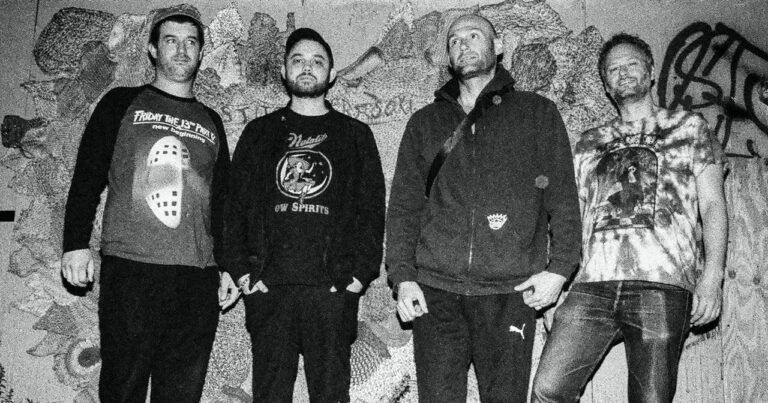
Chat Pile have announced a new split EP with Kansas City’s Nerver called Brothers in Christ. The four-track record is out April 14 via Reptilian/The Ghost Is Clear. Today, Chat Pile have shared the first single from it, ‘Cut’, which frontman Raygun Busch says was inspired by Stephen King. Listen to it and check out the EP’s artwork and tracklist below.
“‘Cut’ is an homage to the short fiction of King, particularly ‘The Man Who Loved Flowers,’ ‘Strawberry Spring,’ and ‘The Jaunt’,” Busch explained in a statement. Bassist Stin added, “These tracks were written and recorded after we tracked God’s Country. We wanted to use this release as a deliberate excuse to switch gears and fully lean into our more indie and alt-rock tendencies. Slint, Sonic Youth, Guided By Voices, and Starfish’s Stellar Sonic Solutions were certainly on our minds at the time.”