Home Blog Page 1594

Artist Spotlight: Karima Walker

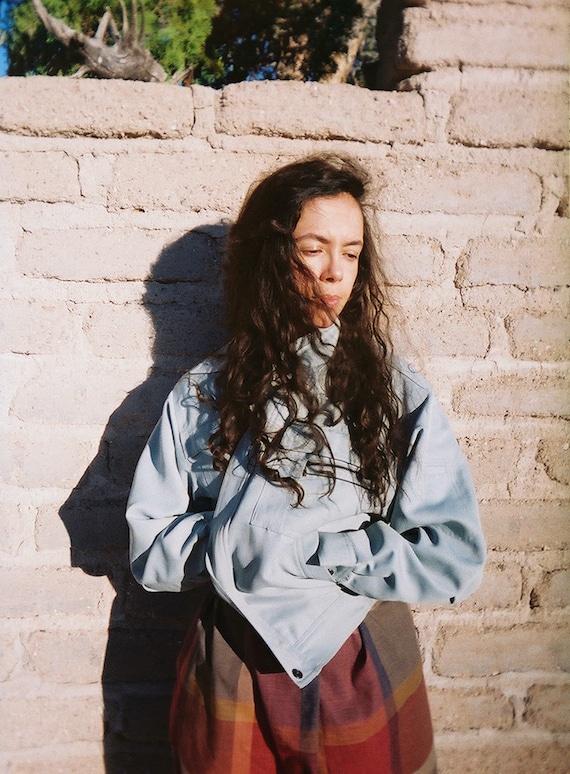
Karima Walker’s music seems to exist in a liminal state: oscillating between abstract and concrete worlds, caught in a dreamlike haze but marked by striking moments of lucidity. The Tuscon, Arizona artist describes herself as somewhat of an “in between person” – she is Arab, half North African/Tunisian on her mother’s side, but was “raised in a very white context,” as she puts it – and though her personal history hasn’t explicitly informed her songwriting, that sense of in-betweenness can be felt in more ways than one. After releasing a set of acoustic guitar songs in 2012, she started experimenting with field recordings, tape loops, and synthesizers, presenting a mesmerizing fusion of ambient textures and traditional folk melodies on her full-length debut, Hands in Our Names, in 2017.

Though conceived under vastly different circumstances, her new album, Waking the Dreaming Body, a collaborative release between Keeled Scales and Orindal Records, employs a similar sonic approach and is driven by the same hypnotic ebb and flow of emotion. Almost entirely self-produced during lockdown, each track evokes its own elusive yet rich landscape, and the way Walker connects each scene reveals a natural command of space: “Sonoran sky plays a movie/ Draw a line to the stars inside of me/ Write it down, tell your friends/ I know where I am but I can’t tell where I started,” she sings on opener ‘Reconstellated’. It’s easy to lose yourself in these delicate, ethereal arrangements, but there’s a strange kind of magic in not knowing where they might take you next, moving like a gentle tide guided only by forces.

We caught up with Karima Walker for this edition of our Artist Spotlight series to talk about the Sonoran desert, her relationship with her mother, her musical journey, and more.


How are you doing? How has your day been so far?

Today has been pretty nice. We’re well into springtime here where I’m living, in Tucson, Arizona, and so flowers are coming up, but it’s this sort of unusually grey day. It reminds me of when I lived in the Midwest, and you get this sort of gloomy weather. It’s nice when it happens here because it’s so rare. It feels sort of like one of those days where there isn’t the same kind of like pressure to be – I don’t know, alert, ready to start.

I was actually wondering if you could talk more about the desert and where you are in particular. How would you describe it to someone who’s never been to or wasn’t raised in that kind of environment?

Something that strikes a lot of people when they first see the Sonoran Desert is how lush it is, and how green it can be. And certain seasons, that’s maybe less so the case, but for a lot of the year, we have a ton of vegetation. And because, geographically, Tucson is in a basin surrounded by mountain ranges, you end up feeling this combination of – you’re kind of securely resting at the bottom of this bowl, but you also have a lot of sky. So, you know, I was saying how it’s kind of cloudy today. But the clouds are always really high. Whereas like, in Chicago, they would drop down, you sort of have to tuck yourself underneath them. Most of the American West is just, we have these huge skies, we have these wide-open spaces. And I think people talk about the negative space in the desert, how everything’s kind of spaced out, things don’t often crowd each other very much the way you’d see in a lusher place. I think there’s still a lot going on, but you kind of get this sense that things have sort of been arranged in this really intentional way, the way that these different species are vying for resources and kind of arranging themselves.

Is that natural environment part of why it feels like home to you?

It’s a big part of what makes it home. Most of my family is here, also. I left for school when I was 18, and most of my siblings and my dad stayed in Tucson. And that has always made it feel kind of like a home base; I think I always kept expecting siblings to move away – there’s five of us – so it’s like, the odds are good that someone’s gonna move, and maybe we’d have sort of a long-distance relationship. But everyone has stayed here. So that, I think, bolsters the sense of home. But when I think about the time I lived away from Tucson, it was often the seasons and the landscape that would feel like home; just the smells and the way things cycle here is so different from anywhere else.

Do you mind talking a bit about your upbringing and the role music played early on in your life?

I grew up going to the Catholic Church, and so that was the main experience in music that I had as a child, at least overtly. So every Sunday, I would sing in choirs and just being part of a congregation. But there’s also this other piece that I didn’t grow up with my mother at a young age, we were apart. And that was the case all through my childhood. I didn’t know really anything about her either, except that she was a singer. And so that, I feel, more and more as I have gotten older, has been a piece for me. It’s something that was never really explicitly discussed – it was one of those family pieces of information that no one talks about. And where she was, even, was kind of a mystery for a long time. And so, I haven’t really mapped out all the ways that that has shown itself in my upbringing, but one thing that feels kind of significant is that, you know, I was singing in choirs, but I was terrified for anyone to hear me singing. For a long time, up until my mid-20s, I really didn’t like singing in front of anybody. It was a really intense sort of stage fright, which eventually changed, but I can’t help but think that there’s some kind of connection with that kind of mythological understanding of who my mother was, and this piece of myself that I was hiding and felt like it couldn’t really be exposed.

But other than growing up in the church, my friends were in bands and I loved to go to their shows, even though it was always hardcore shows in Tucson. It wasn’t really a genre of music that I felt like was my world. But I always felt attracted to that, and I felt drawn to people who were doing music. I think that was something that I never really thought was something I could participate in, but that I could sort of observe. And so I did that for a long time.

There’s a lot to talk about there, but I’m curious why you use the word “mythological” in reference to your mother.

I think I choose that word because she is and was my mother, this primal, before anything else, presence in my life. And yet I didn’t have access to it; all I had was this really just a few words to kind of ascribe to this presence that wasn’t there. And so I think when you get these pieces, something about the mismatching of like, this is the person who birthed you, we know that she’s a singer, we know that she’s Tunisian, which means you’re Tunisian. And we know that she left. And that’s it. And so, what’s the story then? And that’s actually something that still exists in this ambiguous place where you get these pieces, and you try to make sense of it, but it doesn’t exist in my life in these day-to-day ways that I could really understand. I don’t know if it becomes something like, archetypal, or becomes part of my subconscious, or it’s the story that kind of just floated with me, but that I couldn’t really inhabit. And so maybe that’s something about myths, right, like myths can distort, they can change over time. I don’t know, it felt like a natural way to think about her because her presence didn’t become concrete until much later.

What was it that helped make it more concrete, if you don’t mind me asking? Because I think read a quote that was somewhere along the lines of her asking you why you don’t sing like Whitney Houston, which kind of shows how different your approach to performance is.

It eventually shifted when my family was going through this other new cycle of turmoil. So, my dad and stepmother were separating. And in the ending of that relationship, a lot of things got churned up and one of them was tracking down my biological mother. And as I was thinking about this question – you asked about applying a mythological quality to her identity – one of the images in my mind was remembering the first time I saw her as not a very young child. The first time I remember seeing her was, I think I was 15 or 16. And we went to the airport to pick her up. And she came off the plane, and she was – she looked like a queen. She had like furs and full makeup and jewelry and this luxurious perfume on. And I was this really scrawny kid in the middle of puberty, and this family unit that I’d been in was dissolving again, you know. I remember her coming off that plane, and she was just larger than life. And I think that that’s part of her performing personality; like, when she performs, she has this sort of commanding and matriarchal presence, and her voice is very rich and deep. I think that the world in which she makes music, that is often the role of these famous female singers in the Arab world, there’s sort of this doe-like beauty there and they’re ethereal. And sometimes they’re just very strong and very grounded, and that’s sort of the world that she occupied as a performer, the kind of archetype that she’s moved toward.

And I think it’s easy to see the way that she performs, the way she uses her voice, why she would point me towards someone like Whitney Houston, who’s just the pinnacle of someone who holds it down and occupies performance in such a solid and beautiful way. So I think that, given the delayed and distant role that my mother played in my life, the first part of it, I haven’t had the kind of relationship where I’m sending her what I’m working on, you know, I haven’t expected her to necessarily understand or engage with what I’m doing. And maybe it sounds like she was missing something in pushing me in that direction, but I think she’s like, “I want to help you, I want you to be successful.” I think the way that I am interested in exploring and occupying space is really different from her, but I think there are still commonalities. I want an elastic way of occupying that space; I want to be diminutive and small, and I also want to expand. This is a much more abstract way of connecting my world with my mother’s, but something that’s definitely evolved from those types of conversations with her is – I think this probably happens for a lot of people at some point in their late 20s – visiting her and getting to know her story a little bit better. I developed this really profound respect for what she does and how she’s been able to do this work for so long and provide for herself and provide for her family in North Africa.

I really appreciate you talking about this, and it does help paint a better picture of what you were talking about before. To get to how you yourself started to explore singing and songwriting – you mentioned that you didn’t have as much confidence at first. What changed?

The first piece was, early in high school, my grandfather gave me my grandmother’s guitar – she had passed, maybe five or six years prior, and I was just exploring around their house and found this guitar in the closet. So having this really lovely little Martin, that was something I would play songs on; I would try to learn, like, Jeff Buckley and Radiohead and, I’m embarrassed to say, lots of church songs on it. That was my first welcome into making music, even if it was just for myself for a long time. And then I brought it with me to college and would play on it for my own pleasure. And then after college, I think that’s when things started to change. I would play with my roommate, and there was this person that I, young 20s-version, just fell in love with, and they were a musician. And then I fell in love with someone else, and they were a musician – there was this kind of classic, similar to what I was talking to you before about being drawn to these people who make music – I think that was happening in this more concentrated way. And one of those people encouraged me to play more. I was in Chicago at the time, and there it was post-O Brother, Where Art Thou? craze of Americana folk music. It was everywhere. And in Chicago, there’s this folk school that teaches really simple guitar stuff and banjo and they have like this really wonderful program, and so I took some classes there. That kind of opened up – it was this right mixture of having time and this instrument and people around me who were like, “Hey, you should keep doing this.” And then I started making these goals for myself, like every year I would be like, “Alright, this year I’m gonna write my own song,” and then the next year like, “This year, I’m gonna sing in front of somebody.” It was a really slow process.

How did you arrive at the approach that kind of started with your first album?

I went abroad for about a year and a half; I worked as an English teacher in South Korea. And that was a time period where I was like, “You know what, I’m going to just do this.” I think a lot of people do that, they leave home and then really leave home and other parts of themselves can kind of surface. I kept trying to convince myself to become a teacher, and I wasn’t interested in it, at least not as a full-time thing. And so that was the first step. And then coming home, moving back to Tucson, I started connecting with musicians and I joined this group called Human Behaviour. And a friend of mine, who it was kind of his project, he made this really dark folk music – it was very strange stuff. So that was kind of one of the first skewing of genre that I got to play around in. And then the other piece was, I started working at my friend’s record store. There’s a local record shop here called Wooden Tooth Records, they actually released the first version of the tape of my first record. And that record shop, I think, was a big part of how things started changing. I was just listening to all different kinds of music all day.

I had already been recording these field recordings in Korea – I was using my voice memos on my phone as part of a songwriting tool, and then ended up using it to record sounds around me, not really knowing that I was going to be using it in any music. It was more like a notebook for me to reference. And so, that was kind of the foundation of that shift, because I’d been writing songs all throughout that hadn’t really been incorporating things yet. But then leading into the actual decision to change things, after all that stuff was kind of simmering around for a while, and I had been touring and performing as a songwriter, I kind of felt like I kind of hit one of my limitations as a performer and wanted to start changing that. And so that began this exploration of different types of gear and researching different pieces of equipment that kind of open things up.

Having put out the first record, what was your headspace going into Waking the Dreaming Body?

At first, when I finished that record, Hands in Our Names, I felt really proud of that record, and really confident in what I was doing and exploring. And finishing that, I thought, “Gosh, I can do anything.” [laughs] I don’t mean that in terms of like, “I’m gonna form a jazz trio,” but it was like, “Wow, I realized this vision and I’m so energized by that.” And I toured a lot, or what felt like a lot. And then I entered this really stagnant season that lasted years. I felt pretty strongly that in a way, there wasn’t a rush to do anything next, that growing and changing is only good for whatever you’re making. This sense of, it’s okay to live life without knowing exactly how this is going to shape the project that you’re going to do. And then, somewhere along the way, I feel like I got really lost. I was waiting for another vision to emerge like it did with the last record, and that was really scary. I think I kept waiting to feel really confident in what I was doing, and it just never came.

So, I had planned to work with Melissa Dyne of The Blow as kind of – we were still figuring it out, maybe like an engineer, maybe more of a producer, depending on how comfortable I could get with that creative collaboration. And I felt like collaborating with her would be a really important way for me to grow and move out of some stagnant feelings. Because I tend to work alone a lot, and I don’t think that insularity is always the best for such a long time. So I started talking with Melissa about working with her, and then had all these sort of pieces of things that I had been developing over a few years and brought those with me to New York, and I got sick and had to come home. And then there was a combination of continuing to work on the mixes myself and COVID, that complicated our plan. I didn’t want to collaborate remotely, I feel strongly about that. And the mixes got to a place where I would look at these songs that were tons and tons and tons of tracks and I was like, I don’t think I can send this to someone without losing these very delicate pieces that I had arranged already.

When you reflect back on this album and the process of making it, do you feel that you have a better understanding now of yourself as an artist and an individual?

Yeah. I think that what I did was continue to make and create something despite not knowing what it would look like in the end, and despite being really uncertain about what was happening. And I’m really comforted by that; I think it opened up a way of moving through stagnation even if I don’t have all the answers yet. And that’s a personal lesson for me as a person, and it’s true as an artist, too, that I don’t have to have it all figured out before I start. I mean, that’s supposed to be the joy of making things, right? And what ended up being the reality is that I didn’t know for a long time and I might not know for a long time exactly what this record means to me personally, but it does stand as this proof to myself of, “Yeah, I can still make things and do things even if I’m feeling lost or don’t have it all figured out. And I can make something that I’m proud of.”


This interview has been edited and condensed for clarity and length. 

Karima Walker’s Waking the Dreaming Body is out now via Keeled Scales and Orindal Records.
13 Best Songs from Booksmart (2019)

0

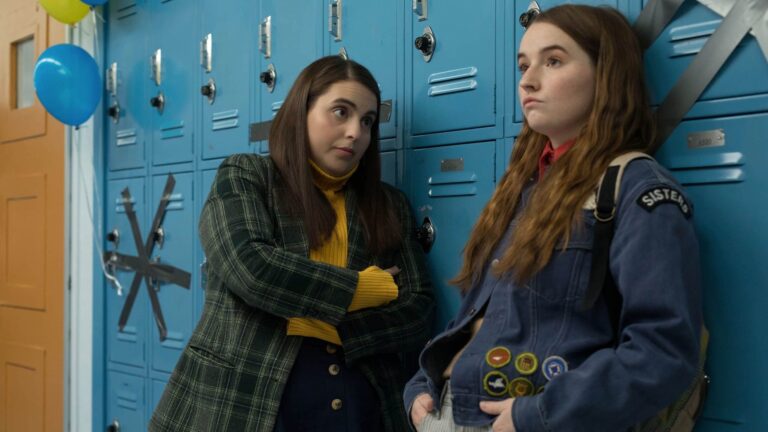
Olivia Wilde’s directorial debut Booksmart has gained quite the cult following since its 2019 release. The film didn’t perform exceptionally well at the box office, though dedicated fans have connected with its two female leads, Amy (Kaitlyn Dever) and Molly (Beanie Feldstein). The girls are about to graduate, but they realize they’ve been so dedicated to their studies that they haven’t enjoyed the high school experience.

When they decide to go to a party, the comedic duo embarks on a night of adventure that leads them down unexpected roads. The film has been dubbed “the female version” of the 2007 film Superbad – which, coincidentally, stars Beanie Feldstein’s brother Jonah Hill – but Wilde’s film stands tall on its own. Its quirky cast of characters, along with its breakout cast of actors, makes for a unique and surprising viewing experience with a heartfelt message at the core of the story.
The uplifting film makes excellent use of its funky, energetic soundtrack, accentuating comedic moments, intensifying the more emotional ones, and keeping things lively.

  • Boys – Lizzo
  • Can You Discover? – Discovery
  • Double Rum Cola – FATA BOOM
  • Give Up The Funk – Parliament
  • Cold War – Cautious Clay
  • What’s Golden – Jurassic 5
  • oh baby – LCD Soundsystem
  • Nobody Speak – DJ Shadow, Run The Jewels
  • How We Are – Lia Ices
  • Carries On – Edward Sharpe & The Magnetic Zeroes
  • Slip Away – Perfume Genius
  • Just Like Love (Jam City Remix) – Perfume Genius, Jam City
  • Open – Rhye

‘The Irregulars’ Receive an Official Trailer from Netflix

0

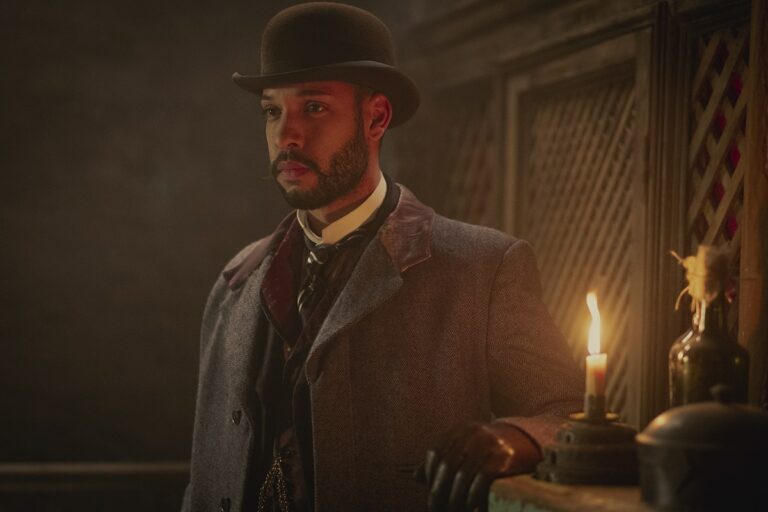
Netflix, the giant that dominates the streaming world, has released a follow up trailer to their teaser for The Irregulars. Set in Victorian London, the series follows a gang of suspicious street teens shaped into solving crimes for the sinister Doctor Watson and his mysterious business partner, the baffling Sherlock Holmes.
Netflix’s new series, The Irregulars, is another excellent addition to their eclectic catalogue. The series will stream on Netflix from the 26th of March.

Netflix is currently trading at US$510.82 on the NASDAQ.

Watch the official trailer for The Irregulars below.

2021 Oscar Nominations Revealed: The Complete List

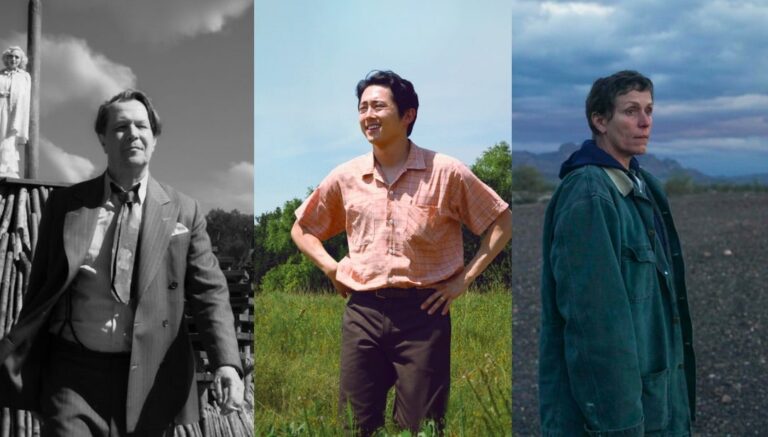
The nominations for the 93rd Academy Awards are finally here. Priyanka Chopra and Nick Jonas announced the nominees virtually in a two-part live presentation earlier today (March 15). Check out the complete list of 2021 Oscar categories below.

Winners for the 93rd Academy Awards will be announced on Sunday, April 25 during a live gala at the Dolby Theatre in Hollywood, California. Because the event had previously been delayed to late April due to the pandemic, the eligibility window for the 2021 Oscars was extended from January 1, 2020 to February 28, 2021. The Academy has also allowed films that debuted on streaming or PVOD platforms to compete for Oscars, given that they had originally planned for a theatrical release.


Best Picture
The Father
Judas and the Black Messiah
Mank
Minari
Nomadland
Promising Young Woman
Sound of Metal
The Trial of the Chicago 7
Best Director
Thomas Vinterberg, Another Round
Lee Isaac Chung, Minari
David Fincher, Mank
Chloé Zhao, Nomadland
Emerald Fennell, Promising Young Woman
Best Actor
Riz Ahmed, Sound of Metal
Chadwick Boseman, Ma Rainey’s Black Bottom
Anthony Hopkins, The Father
Gary Oldman, Mank
Steven Yeun, MinariBest Actress
Viola Davis, Ma Rainey’s Black Bottom
Andra Day, The United States vs. Billie Holiday
Vanessa Kirby, Pieces of a Woman
Frances McDormand, Nomadland
Carey Mulligan, Promising Young Woman

Best Supporting Actor
Sacha Baron Cohen, The Trial of the Chicago 7
Daniel Kaluuya, Judas and the Black Messiah
Leslie Odom Jr., One Night in Miami …
Paul Raci, Sound of Metal
Lakeith Stanfield, Judas and the Black Messiah

Best Supporting Actress
Maria Bakalova, Borat Subsequent Moviefilm
Glenn Close, Hillbilly Elegy
Olivia Colman, The Father
Amanda Seyfried, Mank
Yuh-Jung Youn, Minari

Best Original Screenplay
Judas and the Black Messiah, Will Berson and Shaka King
Minari, Lee Isaac Chung
Promising Young Woman, Emerald Fennell
Sound of Metal, Darius Marder, Abraham Marder
The Trial of the Chicago 7, Aaron Sorkin

Best Adapted Screenplay
Borat Subsequent Moviefilm, Sacha Baron Cohen, Anthony Hines, Dan Swimer, Peter Baynham, Erica Rivinoja, Dan Mazer, Jena Friedman, Lee Kern & Nina Pedrad
The Father, Florian Zeller and Christopher Hampton
Nomadland, Chloé Zhao
One Night in Miami …, Kemp Powers
The White Tiger, Ramin Bahrani

Best International Feature Film
Another Round
Better Days
Collective
The Man Who Sold His Skin
Quo Vadis, Aida?

Best Documentary Feature Film
Collective
Crip Camp
The Mole Agent
My Octupus Teacher
Time

Best Documentary Short
Colette
A Concerto Is a Conversation
Do Not Split
Hunger Ward
A Love Song for Natasha

Best Animated Feature Film
Onward
Over the Moon
A Shaun the Sheep Movie: Farmageddon
Soul
Wolfwalkers

Best Animated Short Film
Burrow
Genius Loci
If Anything Happens I Love You
Opera
Yes-People

Best Live Action Short Film
Feeling Through
The Letter Room
The Present
Two Distant Strangers
White Eye

Best Original Score
Da 5 Bloods
Mank
Minari
News of the World
Soul

Best Original Song
“Fight For You” by H.E.R., Judas and the Black Messiah
“Hear My Voice” by Celeste, The Trail of the Chicago 7
“Husavik” by Molly Sandén and Will Ferrell, Eurovision Song Contest: The Story of Fire Saga
“Io Si (Seen)” by Diane Warren, Laura Pausini, and Niccolò Agliardi, The Life Ahead
“Speak Now” by Leslie Odom Jr., One Night in Miami

Best Production Design
The Father
Ma Rainey’s Black Bottom
Mank
News of the World
Tenet

Best Cinematography
Judas and the Black Messiah, Sean Bobbitt
Mank, Erik Messerschmidt
News of the World, Dariusz Wolski
Nomadland, Joshua James Richards
The Trial of the Chicago 7, Phedon Papamichael

Best Costume Design
Emma
Ma Rainey’s Black Bottom
Mank
Mulan
Pinnochio

Best Film Editing
The Father, Yorgos Lamprinos
Nomadland, Chloé Zhao
Promising Young Woman, Frédéric Thoraval
Sound of Metal, Mikkel E. G. Nielsen
The Trial of the Chicago 7, Alan Baumgarten

Best Sound
Greyhound
Mank
News of the World
Soul
Sound of Metal

Best Visual Effects
Love and Monsters
The Midnight Sky
Mulan
The One and Only Ivan
Tenet

Best Makeup and Hairstyling
Emma
Hillbilly Elegy
Ma Rainey’s Black Bottom
Mank
Pinnochio

Then And Now: Mad Max Original Compared To Fury Road

0

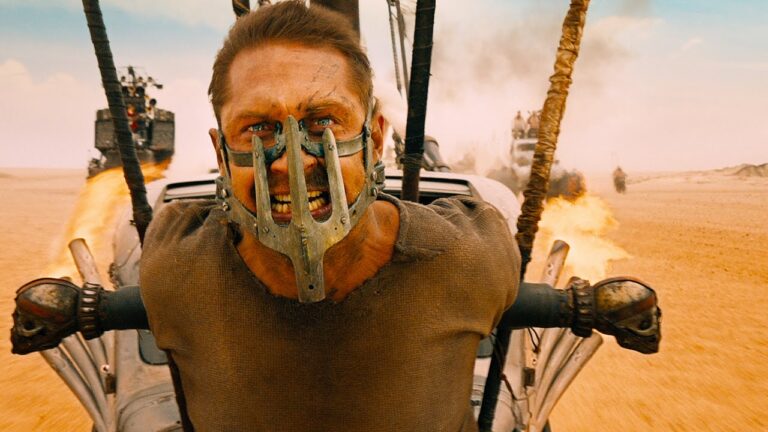
While the original Mad Max film and its most recent sequel Mad Max: Fury Road, look and feel like completely different movies on the surface, they are actually a lot more similar than you think.

Even though Mad Max and Fury Road are told from two different people’s perspectives from two different places, the story remains essentially the same between the two films. The original see Max seeking revenge on a bloodthirsty gang that killed his loved ones and left him with almost nothing, while Fury Road is about Furiosa taking revenge on a ruthless cult that has her loved ones imprisoned.

The decision may have been taken due to the first Mad Max film’s relative success compared to its sequels before Fury Road. While the original brought in over $100-million at the box office, each of the subsequent two films only managed around $36-million. The original film also spawned the franchise that Mad Max would become, including the novelization of the first three films published by QB Books and the creation of a limited comic book series by George Miller, Nico Lathouris, and Mark Sexton in 2015.

Mindscape Inc also created a survival game for the Nintendo Entertainment System (NES) based on Mad Max 2 and was working on a second game before they lost the license and had to rename it Outlander to avoid legal issues. This was followed by the 2015 open-world video game created by Avalanche Studios for console and PC that received rave reviews. There is even an official Mad Max: Fury Road slot game at some of the best casino sites, such as 888 Casino.

Even though the narrative between the first and most recent Mad Max movies is similar, the films remain distinctly different because the first is Max’s story, while in Fury Road, he is more of a vehicle through which the director could tell Furiosa’s story. Interestingly, both films feature very little dialogue, which sets them apart from the two sequels.

The two films are set in vastly different times in history. Society in the original Mad Max had not yet collapsed completely. There is no doubt it is well on its way to collapse, but the first film introduces viewers to a Max that is still officially a lawman trying to bring some semblance of order to his immediate surroundings, at least in the beginning. By the time Fury Road rolls around, there is no pretence at civilized society left, it’s all just brutal barbarism where might is right, and strength is leadership.

This also leads to a key difference in how the two films play out. Furiosa is trying to right a wrong and takes revenge on behalf of someone else; in the original, Max is just trying to get back at people who did him wrong. He has no interest in making the world a better place. He just wants revenge, whereas Furiosa wants to do what is right.

It is an interesting and underrated juxtaposition between the two because where there was the hope of maintaining order in the original, Max doesn’t care and is solely focused on the task he wished to accomplish. In contrast, in Fury Road, where there is almost no hope of a return to civilized society, Furiosa is trying to do what is right, hoping to fix a problem she could easily ignore and move on from.

The final major link between the two movies is Hugh Keays-Byrn. The British-Australian actor and film director played the monstrous villain’s role in both the original Mad Max and Fury Road. However, he did not play the same character, and it is very interesting seeing how expertly he pulls both roles off. Immortan Joe, the antagonist of Fury Road, is a much more successful gang leader than Toecutter from the original, having been able to assemble some form of a city in the shape of the Citadel. Still, both are equally powerful, dangerous, and frightening in their own ways.

Ultimately, both films are fantastic in their own right and are more than deserving of your time if you haven’t watched either or even both. There is a good reason the original film launched a successful franchise, and the visuals hold up surprisingly well today, considering it is a 41-year old film in 2021.

This Week’s Best New Songs: Lucy Dacus, spill tab, Crumb, and More

Throughout the week, we update our Best New Songs playlist with the new releases that caught our attention the most, be it a single leading up to the release of an album or a newly unveiled deep cut. And each Monday, we round up the best new songs released over the past week (the eligibility period begins on Monday and ends Sunday night) in this segment.

First, a (belated) warning: if you’re not ready to have your soul crushed and your heart ripped out of your chest, maybe don’t listen to Lucy Dacus’ new single. That said, there’s a reason it’s been a fan favourite for so long, and it’s easily our song of the week. Also featured on this week’s playlist and worth checking out are: spill tab’s wildly infectious ‘PISTOLWHIP’, Jorja Smith’s gorgeously layered ‘Addicted’, Skullcrusher’s stunning ‘Storm in the Summer’, Crumb’s unsurprisingly groovy, dreamy new single ‘Trophy’, Xenia Rubinos’ gut-wrenching meditation on loss, ‘Did My Best’, and Really From’s ‘I’m From Here’, a striking non-single highlight from their new self-titled album.

Best New Songs: March 15, 2021

Crumb, ‘Trophy’

Song of the Week: Lucy Dacus, ‘Thumbs’

Jorja Smith, ‘Addicted’

Skullcrusher, ‘Storm in the Summer’

spill tab, ‘PISTOLWHIP’

Really From, ‘I’m From Here’

Xenia Rubinos, ‘Did My Best’

Interview: Aniko

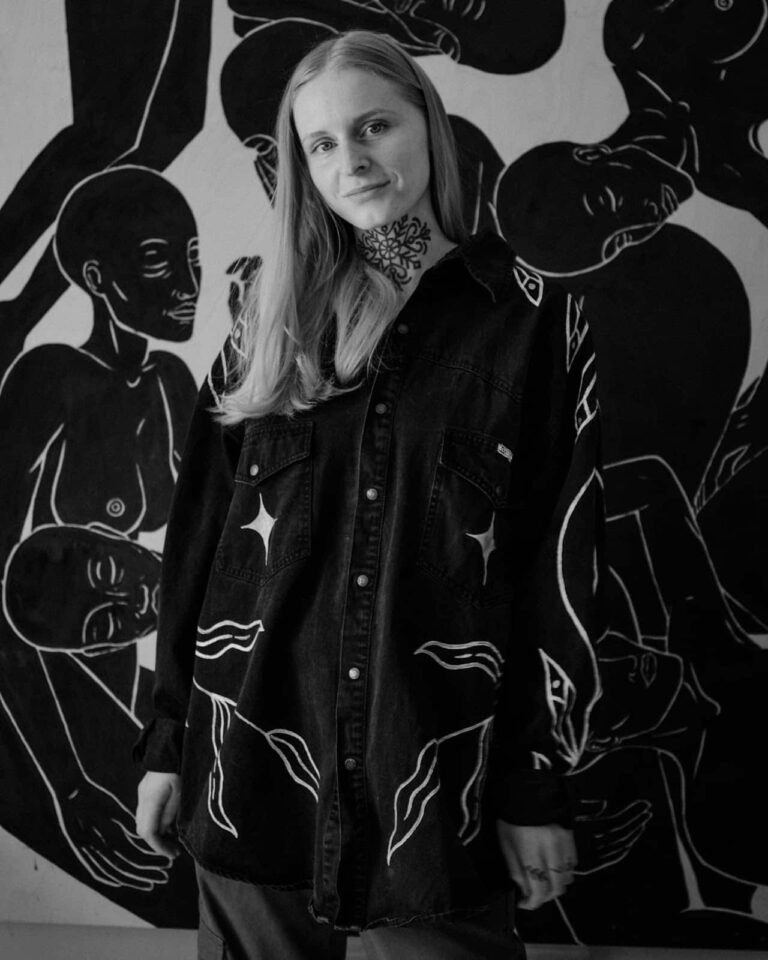
Aušrinė Daugėlaitė, known as Aniko on Instagram and her website, is an artist from Lithuania. With over 130,000 followers, Aniko’s creations attract audiences with their originality, spiritual symbolism, beautiful autumnal tones and effortless strength. The artist aims to convey feelings of unconditional love and bliss through her artwork, all the while trying to awaken and work on her most authentic self. 

Earlier in life, Aniko was interested in becoming a tattoo artist, and has in fact designed all of her tattoos herself. Nowadays, she focuses on visual and mostly digital art which she sells in original or print form on her website. Aniko’s vintage-style creations normally couple art with inspirational phrases, and her subjects are often other-worldly, connected to the natural and celestial world.

Hi, Aušrine! How have you been doing lately? Where are you currently based?

Hi! Well, winter isn’t my favourite time of year, but with spring just around the corner I can feel myself becoming more active and positive. I currently live in Druskininkai.

You were born and grew up in Lithuania. Which area are you from specifically and what is its significance in your life?

I was born and raised in Ignalina – that town has always had a special place in my heart. I love coming back there, as there are so many gorgeous lakes, pine forests, and natural areas where I like to wander with my dog. I call it home.

You work with very gentle, earthy tones, incorporating mythical and natural elements into your work, from three-headed creatures and snakes to mushrooms and living flowers. Would you say your art is inspired by Baltic folklore and nature, or do you draw your inspiration from elsewhere?

Folklore is actually not a source of my inspiration, but Baltic nature definitely is. I also find a lot of guiding ideas in spiritual texts and my goal with every piece of art is to transfer the feeling of eternal love and bliss to those engaging with my work.

I think you’re definitely succeeding at that. With your Instagram bio describing your creations as “soul art”, it seems like spirituality plays a huge role in your life. Could you comment on this a little bit?

Yes, spirituality is truly very important in my life. It’s no secret that nowadays the world tends to concentrate on the physical appearance of people or objects, forgetting everlasting values, the rhythms and rewards of nature, and most importantly, the importance of nurturing our souls. I hope to remind people that we are connected to every living being.

Leading on from that, would you say you’re religious?

I’m not religious, but I do believe all religions have great ideas, even if they are limited and therefore cannot paint the whole picture.

Credit: Aniko

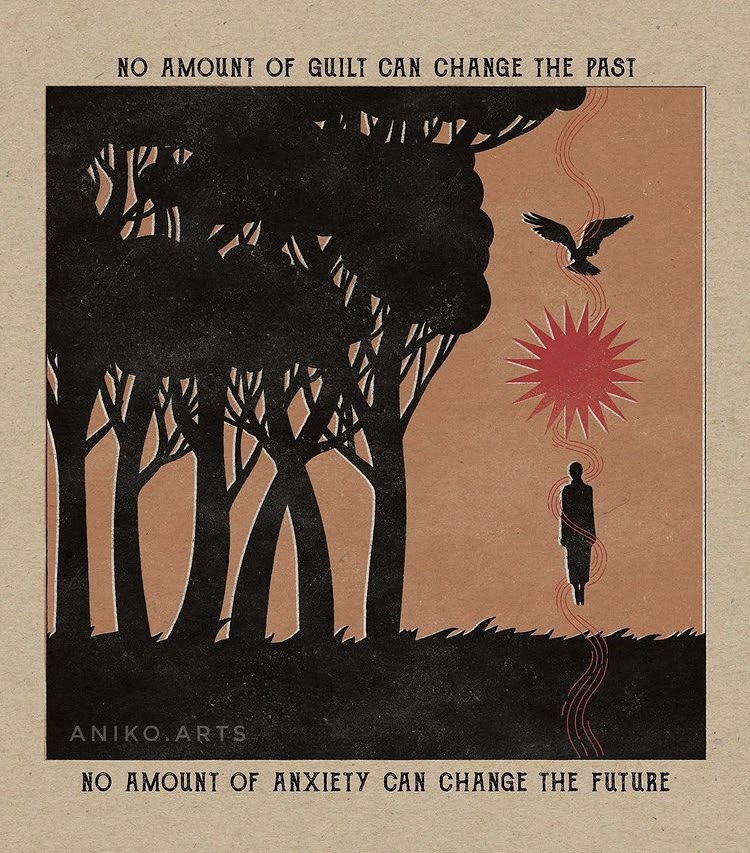
I’m a big fan of the “No amount of guilt can change the past” print. These are grounding, calming words, especially helpful in times of the coronavirus crisis. How do you choose the particular text that accompanies your artwork? Which one comes first?

I usually choose words and phrases that resonate and teach me something, but other times the text arrives in the form of a thought that keeps appearing in my head while I’m drawing, as if begging to be written down. There’s no real rule to how my artwork is born; most times I just sit in front of the canvas with no initial idea and my hand seems to know what to draw.

The female body seems central to your artwork, often taking on a magical role. Could you talk us through what femininity means to you?

The female body has inspired artists for centuries, and I am no exception. I find it so aesthetically appealing, fragile, powerful, divine, and wild, all at once. It feels like it hides all the secrets of the universe – that is why I love drawing women’s bodies. For me, to be feminine is to be completely, unapologetically yourself, owning your mysteriousness and wildness, but also your sacredness, warmth and care. 

Credit: Aniko
Credit: Aniko

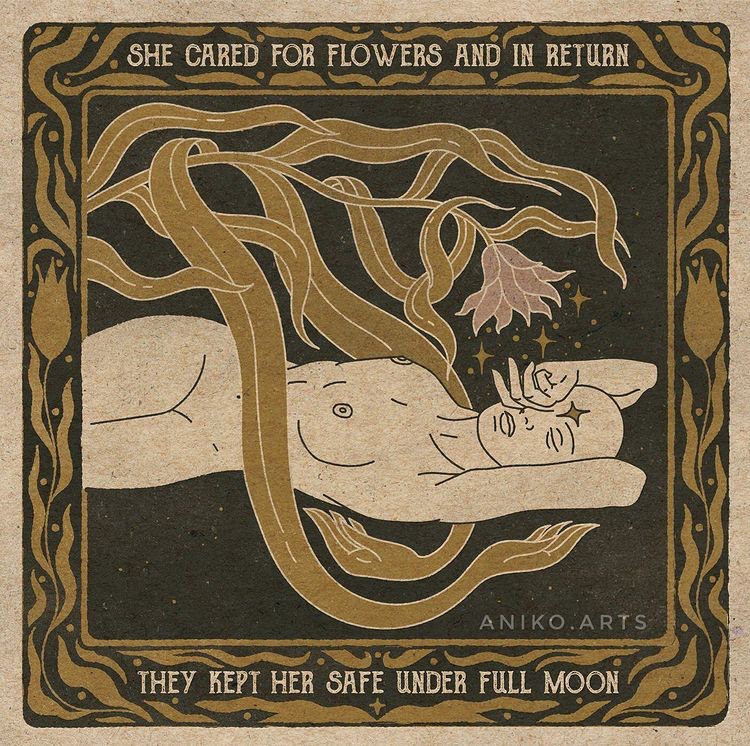
I love this idea of a mutual protective relationship between humans and nature in the “She cared for flowers” print. Do your works aim to remind people how crucial it is to take care of our natural world – especially in the context of a climate crisis?

Kind of, yes. We often see ourselves as the rulers of the Earth: we deplete the lands, cut down forests, destroy the nests of animals and pollute the waters. We forget that nature is indispensable to us, that we are as much a part of it as every tree or bird. I don’t view the forest as a pile of wooden sticks that cleans the air, but rather as a being that is able to heal, both spiritually and physically. In my eyes, the world is a magical place, and nature is an essential part of it.

Many of your subjects have a third eye. Could you explain what this means to you?

“We have two eyes to look, and one to see.” I can’t recall who spoke these words, but a third eye is for seeing truth, not illusion. 

Your artwork definitely inspires self-love and confidence. Do you find you draw a lot of boldness and self-assurance from your natural and social surroundings?  

I’d like to remind everyone who follows my artistic path that my creations are often a projection of what I’d like to see in myself or others. The things that I share are often what I lack in life, and I heal myself through creating art. I still struggle to get inspired by the confidence and self-assurance that surrounds me or even that is found within me, because I feel there are still so many lessons to be learned. 

On top of the original artwork and prints you create, you’ve also designed your own tattoos. Do you have a favourite one? 

I like all of them, but my favorite is my throat tattoo: a mandala of Baltic patterns which represents my roots. 

To finish off, what’s your favourite place on Earth?

It would have to be the pine forest I frequent in Ignalina. I’ve visited many locations that were much more mesmerizing, but there’s a certain beauty in coming back to the place you know so well. 

That’s wonderful. Thanks so much for your time.

Litkovskaya Fall/Winter 2021 at Paris Fashion Week

0

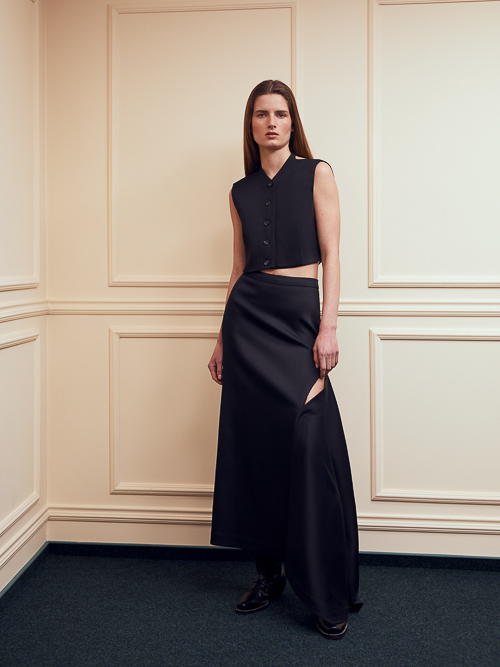
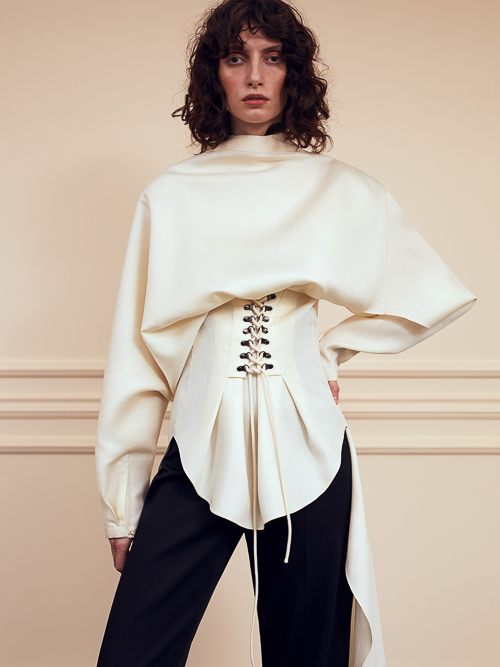
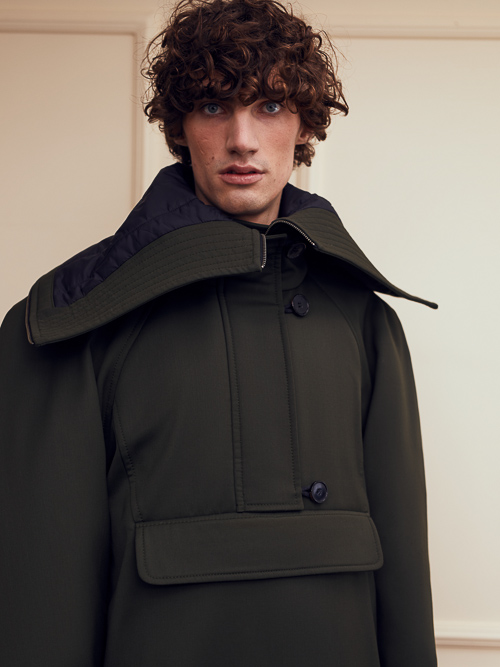
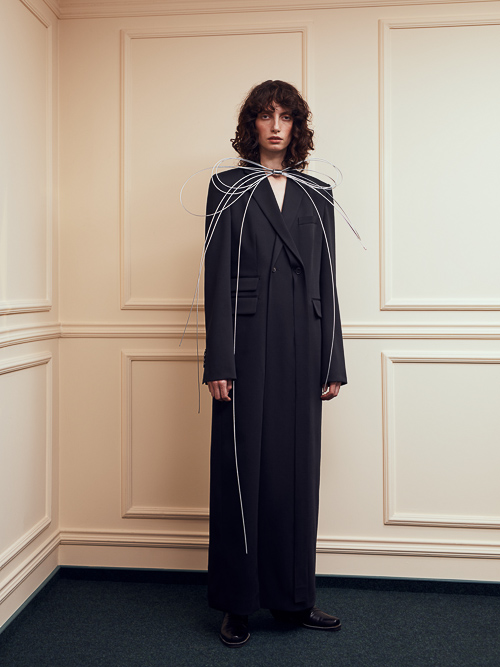
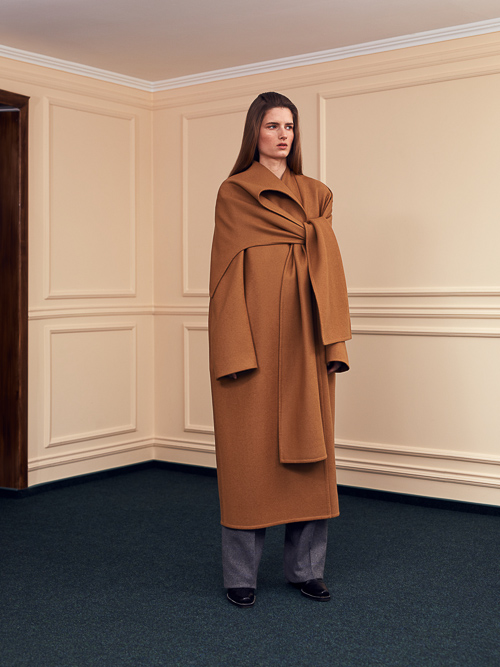
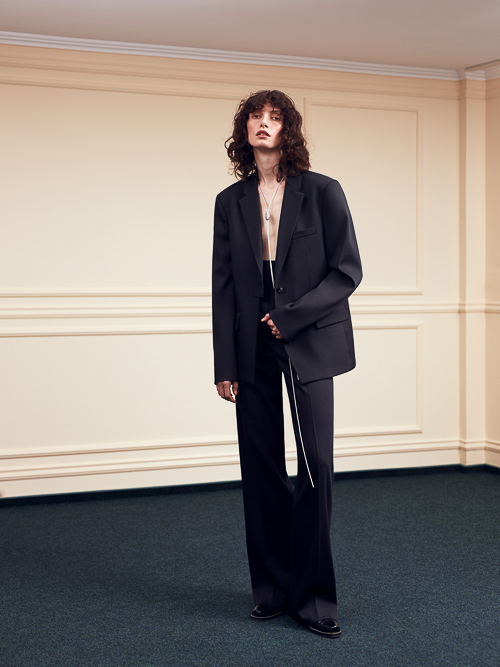
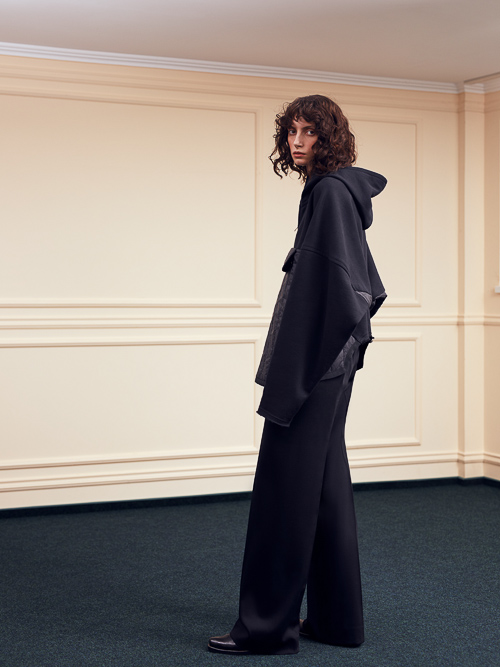
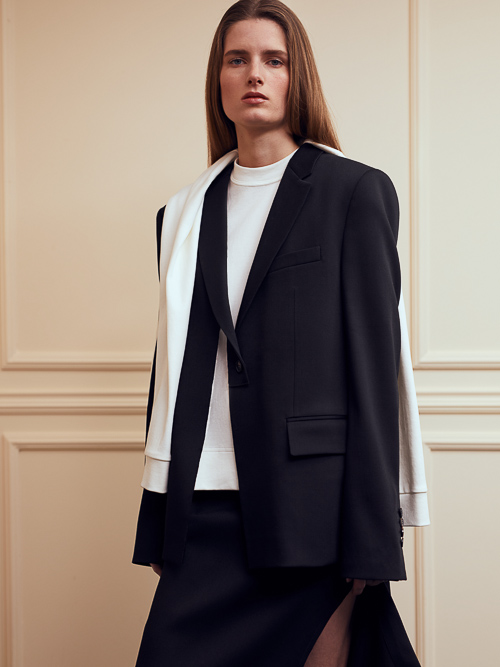
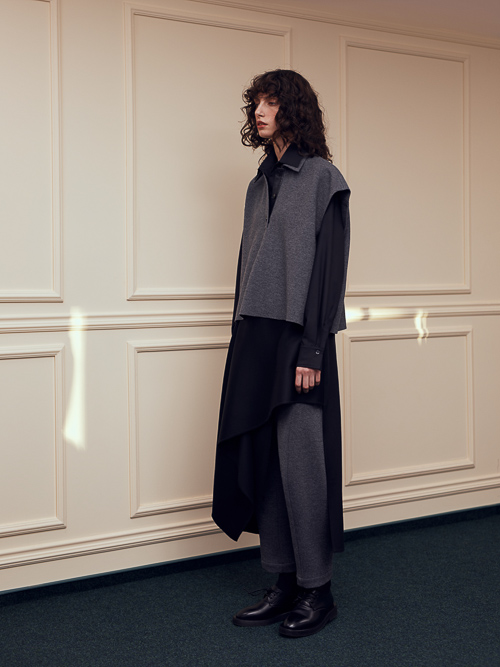
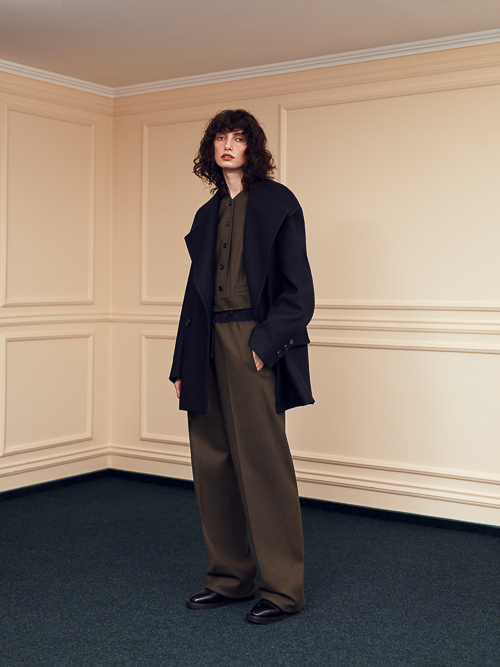
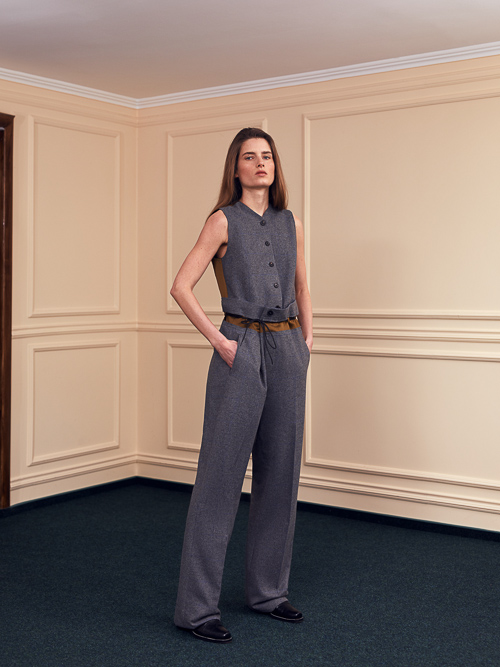
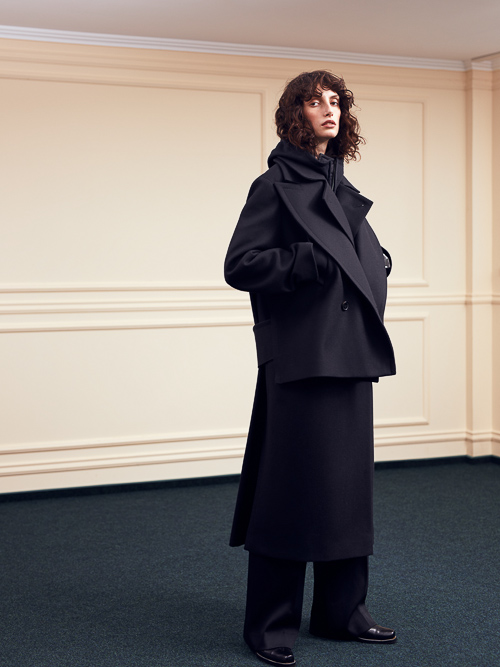
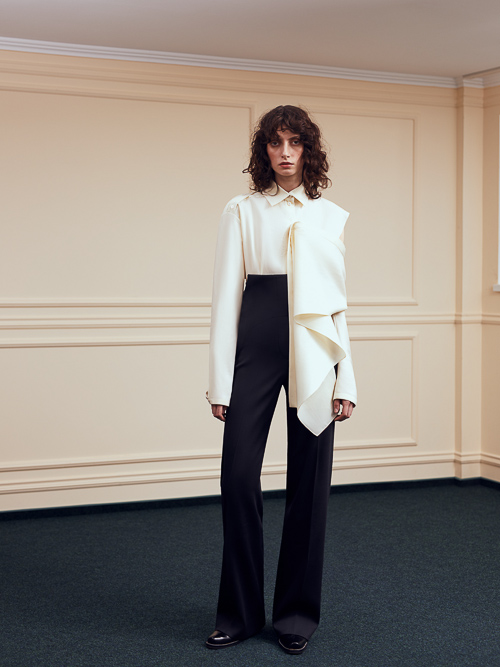
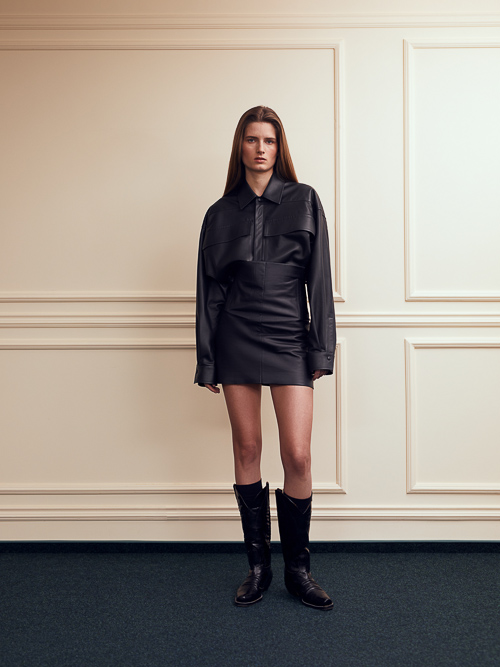
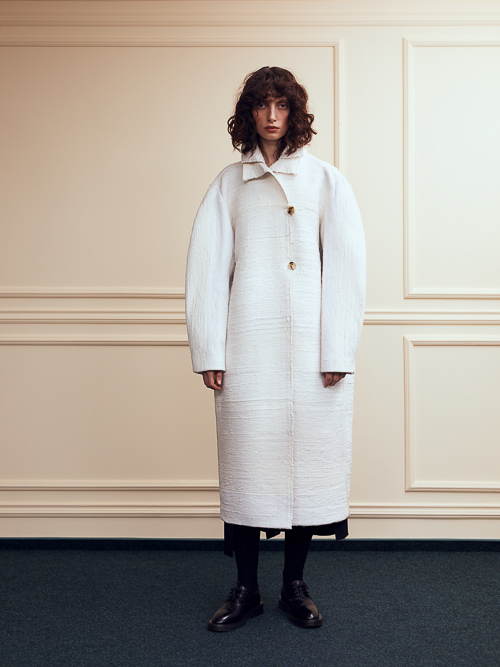
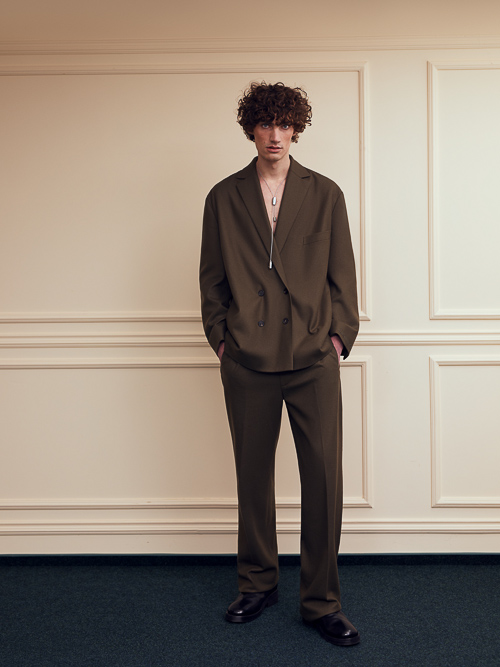
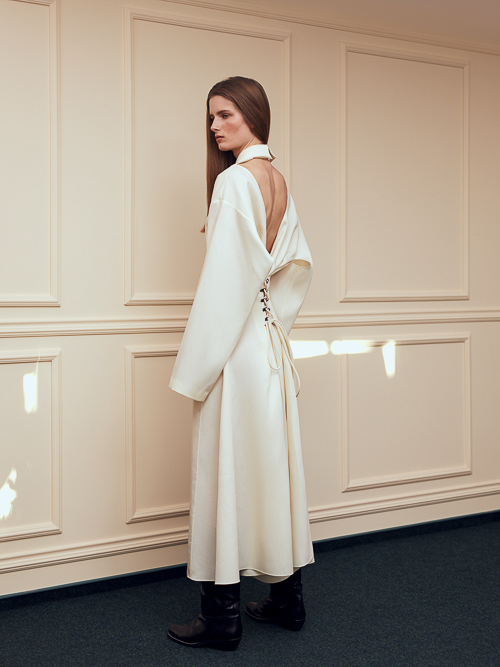
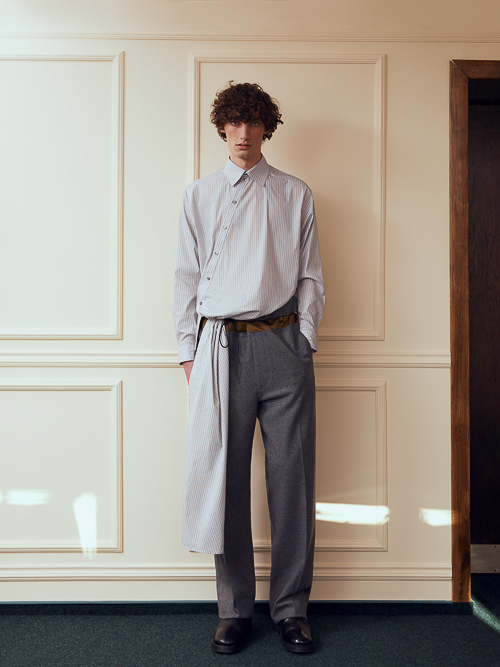
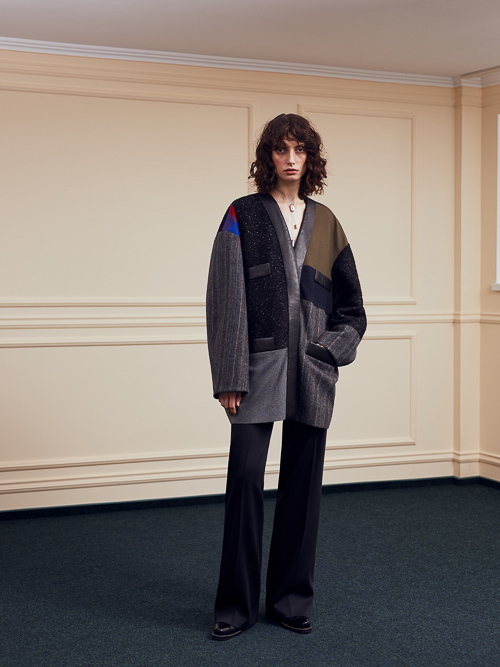
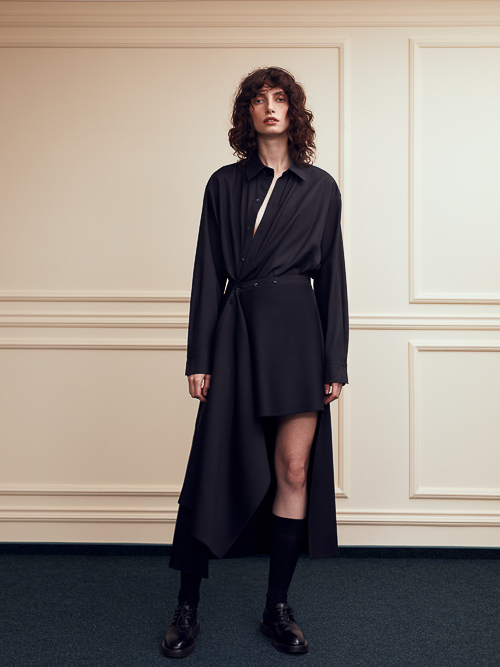
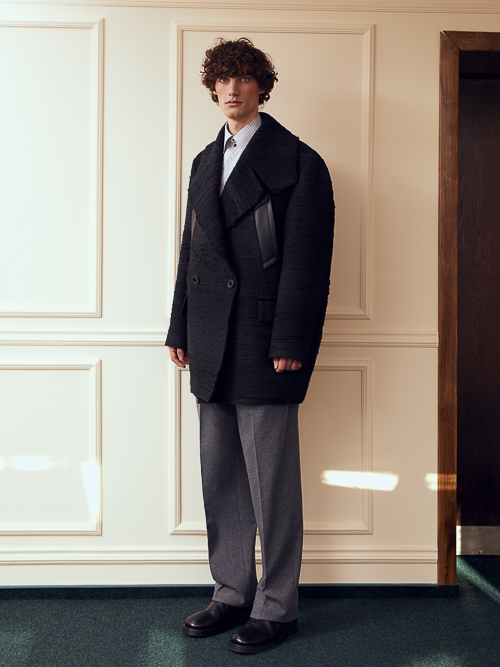
Ukraine brand Litkovskaya presented their fashion film at Paris Fashion Week. Designer Lilia Litkovskaya dedicated her collection Semper Tiro to poetic searches and a thirst for knowledge. Litkovskaya uses neutral colours in her collection, creating a tranquil ambience, which can easily be paired with various garments. Her collection is effortless with a creative twist. Throughout the collection, there are many exaggerated elements, such as the fold in the fabrics, the sleeves, and even some of the silhouettes. Some asymmetrical elements in the collection are highly exaggerated and big, bringing attention to the garment’s structure.

Watch the fashion show here.

Chloé Fall/Winter 2021 at Paris Fashion Week

0

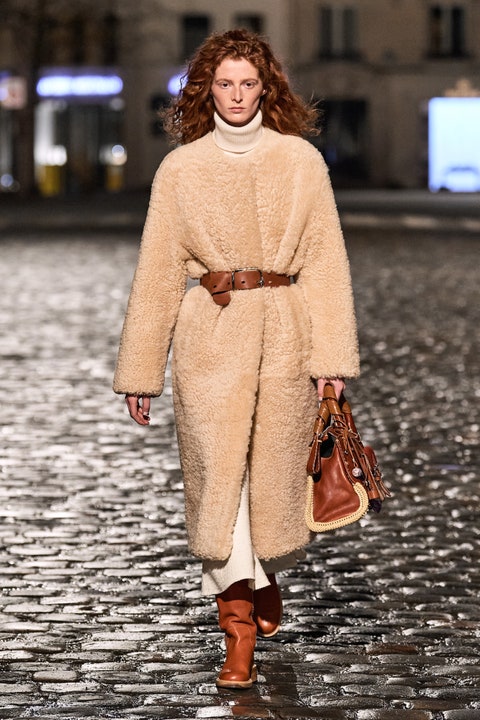
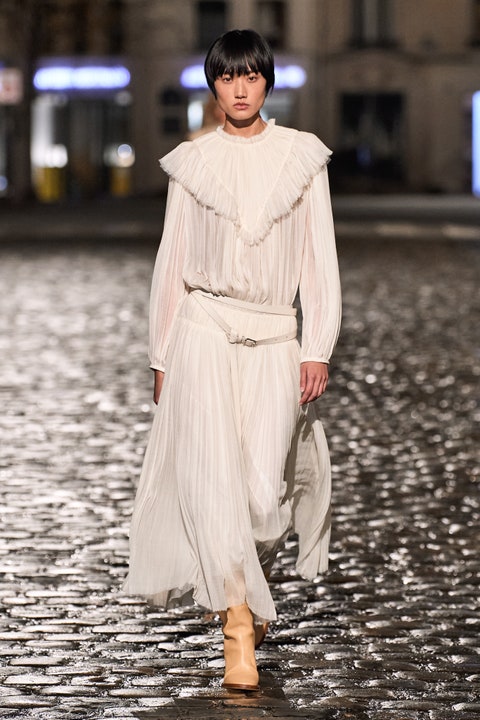
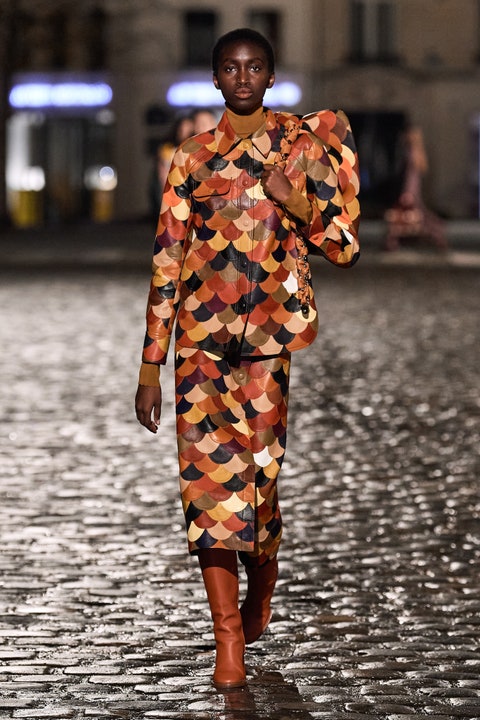
Just recently, designer Gabriela Hearst presented her first show for Chloé at Paris Fashion Week. Gabriella Hearst’s garments were intended to “hold memories for the woman who wears them.” Her collection Aphrodite for Chloé took on a bohemian appearance. Most of the outfits had floor or just above the ankle lengths creating cohesiveness throughout the collection. Each outfit was chic and effortlessly put together that embodied earthy tones. The collection was full of textures; there was pleating, quilting, fringing and laser cutting. Moreover, fabrics like leather, knitwear, and lightweight materials were utilised to add an extra dimension to the garments. 

Watch the runway show here.

Interview: awfultune

With over one-hundred-million streams throughout the entire discography, awfultune needs no introduction to any aficionado of indie-pop music. Shining from her previous single ‘lovesick,’ awfultune displays a refreshing comfort in bridging contradiction in this second chapter of her six-part, colour story. ‘SICK OF U,’ her latest single represents orange, whilst her previous single ‘lovesick’ represents red. Each song, alongside each colour, tackles the personal highs and lows of Layla’s coming-of-age story, finding herself and living as a member of the LGBTQ+ community.

To talk about her latest single, ‘SICK OF U,’ Layla joined us for an interview.

Hi Layla, how are you? How is 2021 going for you?

Hello, I’m doing okay right now thank you for asking! 2021 is a very insane year for me but probably the most rewarding. My life is changing really fast and sometimes it can be overwhelming, but I’m having a lot of fun!

So, how did your journey into music start?

I’ve always been obsessed with music my whole life, but I started on Soundcloud and would make little covers of my favorite songs on my phone. They’d usually get one hundred something likes. I’d always be really excited and think “I’ve made it.” Had no idea what was coming…

That’s amazing! And, you recently released your song ‘SICK OF U,’ how did the idea for it come about?

‘SICK OF U’ actually came to me before ‘lovesick’ (which was my first single this year) funny enough. I’m a huge fan of storytelling and I wanted to create a color story that correlates with a different emotion/mood to go with it.

Did you find any challenges making the song?

Surprisingly this song came very easy. The melody, harmonies, the lyrics… all of it was super natural! I don’t even think I mixed it to perfection either. It’s a very aggressive song with an indie pop beat. Sweet to listen to, but the lyrics pack a punch!

In terms of developing the music, did you explore any new techniques or ways of creating sounds for the song?

I actually got to use my new interface to record the vocals for this track which was really exciting. I’ve been using a USB condenser microphone for forever now. It was my first try with a different microphone and I love how it came out!

Can you tell us more about what your aim is for the coluor story around your releases?

Each song goes in order of the rainbow. ‘SICK OF U’ colour is an orange hue and talks about a break up. The next song is in yellow and is about healing from that toxic person and finding your self worth again. I went through everything that I’m writing about this year. I had to put a lot of the love I gave away right back into myself.

With the ‘SICK OF U’ released, what should we hope to see from you in the coming year?

It goes without saying you’ll get the rest of the songs to complete the color story. I’m looking forward to making more music videos. Possibly an EP or something? Only time will tell!

That sounds exciting. Finally, do you have any advice for aspiring musicians out there looking to get started in the music industry?

I’d say be yourself first and foremost. Don’t go into the industry looking for clout or anything like that, because that is definitely not what it’s about. If you really want to connect with someone, be passionate about your craft and put your all into it. People can recognize authenticity and can easily resonate with real feelings. Make whatever you want to make! But don’t go into it expecting something or comparing yourself to others. Your music is you. No one can recreate something special like that!


‘SICK OF U’ can now be streamed via Spotify.