Kidding. Zara made sure it was both. If fashion had its own little telenovela, Zara would be in it. Probably too much. After landing Steven Meisel for a 50-year celebration, dressing Bad Bunny at the Super Bowl, the random John Galliano tease, and now the Willy Chavarria capsule, that would feel about right. But since the short film situation belongs to Chavarria as much as to Zara, Christy Turlington fills that gap just fine.
VATÍSIMO, a few dramatic minutes from Glen Luchford and Chavarria messing with Zara’s archives, basically means the ultimate vato. In case that’s new to you, vato is Chicano slang for your homies, your ride-or-die, the one you text at 2 AM to see if they’re down for tacos. Not sure about tortillas, but Alberto Guerra tags along with Turlington for the campaign. He also agrees to get tossed in a pool. But then again, I’d do it too in Chavarria, who actually arrived right on cue, making it easily the most satisfying scene of the campaign.
The two brands worked on everything. For clothing, picture floral blouses with padded shoulders, leather jackets following that bold shoulder philosophy, almost ten times cheaper than his original leather ruff riders. Slip and button-up dresses bear a rose or a little lace, while men’s suits and bottoms do their loose-but-structured, sometimes barrelled thing, still looking very much intentional. Brooches look like his favorite flowers, pumps stay round-toed, and bags lean a bit slouched-up. Zara just looks good in Chavarria.
Not to brag, but I went most of my life without a single pimple. I still remember the day I discovered moisturizer wasn’t optional, when I suddenly found myself sharing a roof with three girls and their aggressively pink make up pouches. Imagine my shock when the skincare-obsessed of the group (still my most trusted reviewer) pulled out an azelaic acid serum. Fast forward a couple of years later, and azelaic acid proudly sits on the very top of my 2 AM TikTok searches. Guess who had hormonal acne crash the party.
But before serums took over my for you page, Alix Earle did. Get ready with me, get unready with me, outfit of the night, and chit-chat videos made her early content. Then came the bare-faced selfies. And suddenly, she was basically unavoidable. Ten times bigger, almost overnight. Next up, “leaving the house with nothing but acne” challenges and brutally open convos about… literally everything. Skin, accutane, life, you name it. Years passed and that girl went mega, her face was everywhere. The Super Bowl, Dancing With The Stars, late night shows, magazines, billboards, red carpets, even giant puzzles on NYC walls. All part of peak marketing, especially the puzzles.
A few days before the official launch, the no-context account @wtfisalixdoing (which turned out to be @realeactives), had already hundreds of thousands of followers connecting dots and spiraling. Big white boxes started showing up at people’s doors. Inside, a cryptic note and a giant puzzle piece, sitting on a passcode-locked suitcase. Honestly, the tease was cinematic. But by March 25, the secret was finally out.
Earle had been working closely with Dr. Kiran Mian, who is no stranger to us, or her 8 million followers, on an acne-first skincare brand. The first four products go by the names of get bare, a melting cleansing balm that shaves out and weirdly reminds me of flowers, go deep, a mandelic acid serum you tap instead of squeeze, pore power, an exfoliating gel cleanser, and dew more, a barrier-boosting moisturizer. After Rhode, skincare packaging will never look the same. Earle admitted she was done with the very unsexy, pharma-style products everyone shoves behind closed bathroom doors.
“Hot and acne can be used in the same sentence,” she wrote on Instagram. Which, given the very bare campaign photos as much as the unedited ones, is a big part of the line’s message. Between all the digital tweaks and fake lighting, we’re starting to forget skin actually has… skin. Texture, imperfections, and, you know, parts. Who knew breakouts and marks look this good far away from concealer.
Cosmoprof Bologna 2026 brought together the best of international perfumery, but among the brands that truly captured attention, Armaf stood out as a global fragrance leader. For men looking for a thoughtful and luxurious gift, the brand’s portfolio offers options that balance elegance, sophistication, and accessibility. Choosing a fragrance is personal, but with Armaf, it becomes effortless, offering a gift that is both meaningful and versatile.
Middle Eastern perfumery has long been known for its rich heritage and masterful use of ingredients like oud, amber, and musk. Armaf takes this tradition and modernizes it, creating scents that are approachable yet deeply luxurious. Its compositions appeal to a wide audience while maintaining a distinctive signature, making them perfect for gifting.
For a man selecting a present that will leave a lasting impression, the Delights collection offers indulgent and universally appealing options.
Delights Island Bliss
Delights Island Bliss is an exquisite example of this philosophy in action. It introduces a creamy, sun-warmed sweetness that feels indulgent yet light, striking a balance that makes gourmand fragrances suitable for everyday wear. The composition evokes the comforting aroma of delicate desserts paired with the warmth of a sunlit island, creating a scent that is at once familiar and luxurious. Island Bliss reflects a broader trend seen at Bologna: the modern gourmand direction. Unlike older interpretations that were often heavy or overpowering, today’s gourmand fragrances are nuanced, balanced, and wearable, offering indulgence without excess.
Delights Yum Yum
Delights Yum Yum represents a more playful interpretation of the gourmand trend. With its addictive, dessert-inspired notes, it captures the imagination immediately, creating a fragrant experience that is both joyful and sophisticated. Despite its expressive character, the fragrance maintains structure and balance, reflecting Armaf’s careful attention to composition. It is precisely this combination of playfulness and refinement that aligns with global trends, where consumers are increasingly seeking scents that evoke emotion and leave a lasting impression.
Delights Bon Bon
Delights Bon Bon takes indulgence a step further, demonstrating the sophistication of modern gourmand perfumery. The sweetness is layered, polished, and multifaceted, ensuring that it evolves gracefully over time. Bon Bon highlights how gourmand fragrances are moving beyond single-note dessert impressions into versatile, all-occasion signatures. This evolution reflects broader consumer expectations: fragrances that can be worn for work, social events, or quiet moments at home, offering both richness and subtlety without compromise.
Delights Island Breeze
Delights Island Breeze provides a refreshing complement to the richness of the Delights gourmand collection. It represents a parallel trend emerging at Cosmoprof Bologna: the demand for freshness with longevity. Gone are fleeting citrus-centric scents; modern fresh fragrances emphasize clarity, depth, and endurance. Island Breeze embodies these qualities, offering a clean, airy profile that feels effortless yet maintains a presence throughout the day. Its versatility makes it ideal for consumers who desire light, refreshing fragrances that still carry character and sophistication.
Middle Eastern Brands
Armaf’s ability to consistently deliver high-quality and accessible fragrances reinforces why the brand is regarded as a top mens perfume brand. For men considering a gift, Armaf ensures that the choice is both luxurious and practical, making a statement without overwhelming the senses. Each fragrance is crafted to suit different personalities and occasions, allowing the giver to select something that feels truly personal. Whether it is a warm gourmand profile or a fresh, airy composition, the versatility of the collection ensures that there is a fragrance suited for every preference and mood.
While other Middle Eastern brands such as Afnan and Rasasi offer remarkable fragrances, Armaf stands out for its combination of versatility, sophistication, and global relevance. It provides an experience that feels thoughtful, refined, and universally appealing. The brand’s growing presence across international markets further highlights its ability to resonate with diverse audiences, making it a reliable choice for those seeking both quality and accessibility in one offering.
Conclusion
Cosmoprof Bologna 2026 highlighted the brand’s ability to lead the conversation in luxury perfumery. For men searching for a gift that embodies style, elegance, and approachability, Armaf’s Delights collection makes the decision simple. These fragrances are not just products; they are experiences, perfectly suited for anyone who wants to give a gift that is remembered and cherished. Beyond their compositions, they represent a modern interpretation of luxury—one that values emotion, versatility, and connection. In a world where gifting is becoming more intentional, Armaf ensures that every fragrance carries meaning, making it not just a present, but a lasting impression.
Art Basel Hong Kong returned this March with strong sales and a notably international audience, underlining its role as a key meeting point for the art world in Asia. With more than 91,000 visitors and a wide range of curators and institutions, this year’s edition pointed to a market that is expanding and becoming more interconnected.
1. Cross-regional demand continues to grow
Galleries reported sustained interest from collectors across Asia-Pacific, alongside Europe and the United States. Many noted an increase in cross-regional acquisitions, with buyers collecting across geographies and generations. This indicates a more interconnected global market.
2. Strong sales across all market levels
Sales were steady throughout the week, extending beyond VIP days and spanning established and emerging artists. Demand was particularly strong for artists from Asia-Pacific, while international names continued to perform well with regional collectors.
3. A growing generation of collectors
Alongside established buyers, galleries noted increased engagement from younger and first-time collectors. This signals a growing and diversifying collector base, particularly within the Asian market.
4. Institutional presence remains central
More than 170 museums and foundations across 27 countries and territories were in attendance, including major international institutions. The fair’s alignment with museums and public programmes continues to play a vital role in its relevance.
5. Curatorial formats are evolving
Sections such as Encounters presented large-scale, site-responsive works, reflecting a more integrated approach to exhibition-making. New formats, including Echoes and Zero 10, introduced more focused presentations and expanded the fair’s engagement with digital and cross-media practices.
6. Hong Kong strengthens its position as a cultural hub
A new five-year partnership between Art Basel and Hong Kong’s Culture, Sports and Tourism Bureau underlines long-term investment in the city’s cultural infrastructure. Combined with a strong citywide programme, the fair continues to position Hong Kong as a key meeting point for the global art world.
Many of the effects of the climate crisis are not immediately visible to the naked eye. “Ghost forests” are an exception, and they may be among the most arresting physical signs of the dangers facing areas along coastal plains.
A ghost forest forms when rising sea levels push saltwater inland, slowly poisoning the freshwater trees that depend on it. What remains are the silhouettes of dead and dying timber standing in brackish water like huge grey pillars. In fact, a tree can remain upright for years after death, becoming a pale, leafless snag, which is what makes them so unsettling to look at.
Ghost forests are now visible from space, with vast stretches of coastal woodland dying along the entire Atlantic coastline, from Maine to Florida. Wetland forests store large quantities of carbon, and as they die, those stores are lost, contributing further to the climate crisis.Scientists estimate that around 150 square miles of forest surrounding the Chesapeake Bay area alone have transitioned since the mid-1800s, and the only way to slow the trend is to address sea level rise and climate change at the root. The rate of loss is only accelerating, and the landscapes being left behind are unlike anything that came before.
What comes next remains uncertain. As trees die and coastlines shift, some ghost forests will give way to marshes that maintain vital ecosystem functions, storing carbon and providing habitat. Others may be swallowed by invasive species or become barren entirely, with the ecosystem services disappearing with the trees.
Here are three photographers who have successfully captured ghost forests and the slow devastation they symbolise:
The Southern Highlands of New South Wales is one of Australia’s most elegant regional destinations. Located just 90 minutes from Sydney and two hours from Canberra, this cool-climate haven blends historic villages, rolling countryside, award-winning wineries and refined accommodation.
Whether you are planning a romantic weekend, a countryside wedding, a gourmet escape or a family retreat, choosing the right place to stay in the southern highlands accommodation is key to experiencing its understated luxury.
Boutique Hotels in Bowral and Berrima
For travellers seeking sophistication and convenience, boutique hotels in Bowral and Berrima offer comfort within walking distance of shops, galleries and restaurants.
In Bowral, visitors can explore Corbett Gardens, browse local bookstores, or dine at acclaimed restaurants before retreating to elegantly appointed suites. Historic Berrima, with its sandstone buildings and heritage charm, offers intimate guesthouses ideal for couples wanting a quiet, romantic stay.
Boutique accommodation in the Southern Highlands often features fireplaces, deep soaking baths and locally sourced breakfast provisions — perfect for the region’s crisp evenings.
Luxury Country Estates and Retreats
If privacy and indulgence are your priority, luxury estates and rural retreats provide a quintessential Highlands experience. Many properties sit on expansive acreage, complete with landscaped gardens, vineyard views or rolling paddocks.
These high-end stays frequently include premium amenities such as heated pools, tennis courts, chef-designed kitchens and outdoor entertaining spaces. Ideal for group getaways, weddings or milestone celebrations, private country houses allow guests to unwind in complete seclusion while remaining close to the region’s wineries and fine dining venues.
Cosy Cottages and Farm Stays
Travellers looking for charm and authenticity will find an abundance of heritage cottages and farm stays across the region. From Moss Vale to Robertson, self-contained cottages provide a relaxed home-away-from-home atmosphere.
Farm stays are particularly popular with families, offering wide open spaces, animal encounters and fresh country air. Many properties feature wood fireplaces, wrap-around verandas and scenic rural outlooks — capturing the timeless character that defines the Southern Highlands.
Vineyard Accommodation and Gourmet Escapes
The Southern Highlands is recognised as a premier cool-climate wine region. Staying at or near a vineyard allows visitors to immerse themselves in cellar door tastings, long lunches and seasonal produce.
Vineyard accommodation ranges from contemporary guest lodges to charming homesteads overlooking the vines. For food and wine enthusiasts, this is one of the most rewarding ways to experience the region.
Choosing the Best Place to Stay
When deciding where to stay in the Southern Highlands, consider the purpose of your visit. Bowral suits travellers seeking dining and shopping, Berrima appeals to history lovers, while rural properties offer tranquillity and scenic beauty. Booking well in advance is recommended during peak periods such as autumn, tulip season and major events.
With its blend of refined hospitality, natural beauty and village charm, the Southern Highlands remains one of Australia’s most desirable regional destinations. Selecting the right accommodation ensures your stay is not only comfortable, but truly memorable.
Infertility can be an emotional and challenging journey for many couples, especially when conventional treatments have limited success. For some, egg donation becomes a meaningful pathway to parenthood. In Melbourne, fertility clinics support individuals and couples who require donor eggs due to medical, genetic, or age-related factors.
A Melbourne fertility clinic can guide couples through this process by offering expert care, counselling, and personalised treatment options. Understanding how egg donation works, why it is needed, and what it means for intended parents can help couples make informed and confident decisions.
Why egg donation matters
Egg donation provides an option for people who cannot use their own eggs to conceive. This may be due to conditions including diminished ovarian reserve, premature ovarian insufficiency, medical treatments such as chemotherapy, age-related fertility decline, or genetic conditions that could be passed on to a child. Donor eggs can significantly increase the chances of a healthy pregnancy when other treatments have been unsuccessful.
For many Melbourne couples, egg donation is not just a medical solution. It is a pathway that restores hope and provides an opportunity to build a family when natural conception is no longer possible.
When egg donation is recommended
Egg donation is usually suggested after personalised assessments and earlier fertility interventions. A Melbourne fertility clinic may recommend exploring donor eggs in situations such as:
Age-related infertility
Egg quality naturally declines with age, particularly after 35. If previous IVF cycles have not produced viable embryos, donor eggs may offer a higher chance of success.
Genetic concerns
Some couples carry hereditary conditions that could affect their future child. Using donor eggs can reduce the risk of passing on these conditions.
Ovarian issues
Women with premature menopause, low ovarian reserve, or those who cannot produce eggs may be advised to consider egg donation.
Previous fertility treatment failures
If multiple IVF cycles have not resulted in pregnancy, donor eggs may be a suitable next step.
How egg donation works
Egg donation involves a donor providing eggs that are fertilised and then transferred to the intended parents’ uterus. Melbourne clinics follow a structured and supportive process.
1. Selecting an egg donor
Couples may choose between known donors, such as a friend or family member, or clinic-recruited donors. Fertility specialists help match donors based on medical history, characteristics, and personal preferences.
2. Medical screening and preparation
The donor and intended parent both undergo health checks. Donors are screened for genetic conditions and overall reproductive health. The intended parent may receive hormonal treatment to prepare the uterus for embryo transfer.
3. Fertilisation and embryo development
Donor eggs are fertilised with sperm in the laboratory. Embryologists monitor embryo growth, and viable embryos are frozen and quarantined. This quarantine period allows for additional donor health screening to ensure safety before transfer.
4. Embryo transfer
After the quarantine period is complete, a single frozen embryo is thawed and transferred to optimise safety and increase the chance of a healthy pregnancy. Any remaining viable embryos remain frozen for future use.
Benefits of egg donation for Melbourne couples
Egg donation offers several advantages for Melbourne couples who have struggled with infertility.
Higher success rates
Donor eggs typically come from younger donors (between 21 and 34 years old), which can increase the likelihood of pregnancy.
Opportunity for a biological connection
Even though the egg comes from a donor, the intended parent can carry the pregnancy and give birth, which creates an important biological and emotional bond.
Expanded family building options
Egg donation allows couples to continue their fertility journey when other treatments are no longer viable.
Supportive clinical care
Melbourne fertility clinics provide counselling, medical guidance, and ongoing care throughout the process to help individuals and couples navigate every stage confidently.
Emotional considerations
Choosing egg donation can bring mixed emotions such as gratitude, hope, uncertainty, or concern about the donor connection. Counselling is a required and important part of the process. It helps intended parents explore their feelings, understand their options, and prepare for future conversations with their child about donor conception. Many couples find that the joy of parenthood outweighs initial concerns once they understand the emotional and practical aspects of donor conception.
What to consider when choosing egg donation
Before beginning the process, couples may reflect on several key points.
Long-term planning
Think about how you may talk to your child about their donor origins in the future. Early openness is often recommended, and there are many age-appropriate resources available to help start and continue these conversations.
Personal preferences
Some couples prefer clinic-recruited donors while others feel more comfortable with a known donor.
Clinical support
Working with an experienced Melbourne fertility clinics ensures that screening, matching, and support are handled professionally and ethically.
Financial planning
Egg donation involves medical, legal, and procedural costs. Reputable clinics will walk you through all expenses with full transparency and can provide payment plan options if needed.
Conclusion
Egg donation plays a vital role in helping Melbourne couples who face infertility achieve their dream of becoming parents. It offers a hopeful and effective option for those who cannot use their own eggs and provides a pathway that blends medical science with compassion and support. With the guidance of a trusted fertility clinic and a deeper understanding of the process, couples can move forward with confidence as they take meaningful steps toward growing their family.
The 2026 edition of the Venice Biennale will see Venice transform into the epicentre of contemporary art between May to November, with major exhibitions unfolding across Palazzos, churches and historic institutions. From monumental painting to immersive installations and politically charged performance, here are six essential exhibitions to experience outside of the National Pavilions in the Giardini and Arsenale, in the city known as la Serenissima.
These six exhibitions offer a powerful cross-section of la Biennale di Venezia 2026, spanning painting, installation, sculpture, performance and conceptual art, all set against the unforgettable backdrop of Venice itself.
Jenny Saville at Ca’ Pesaro
A landmark moment for contemporary painting, Jenny Saville presents her first major Venetian solo exhibition at Ca’ Pesaro International Gallery of Modern Art. Spanning over three decades, the exhibition brings together around 30 monumental works, from early 1990s canvases to new paintings created in dialogue with Venice’s artistic heritage.
Saville’s visceral, large-scale depictions of the human body are placed in conversation with the Venetian masters, highlighting her enduring exploration of flesh, form and painterly tradition. This powerful retrospective underscores her status as one of the most influential figurative painters working today.
Jenny Saville a Ca’ Pesaro is at Ca’ Pesaro – International Gallery of Modern Artfrom 28th Marchto 22nd November, 2026.
Michael Armitage: The Promise of Change at Palazzo Grassi
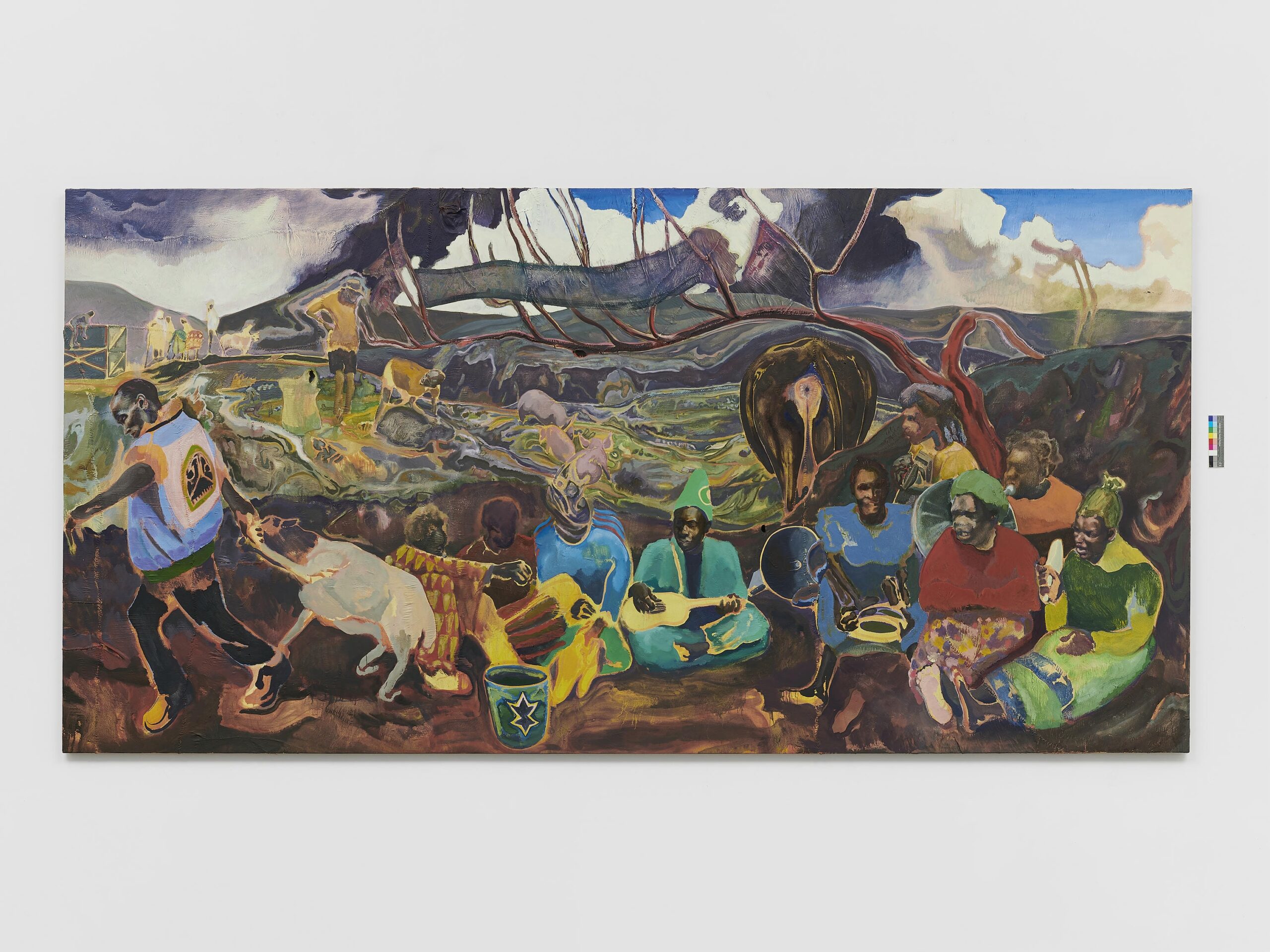
At Palazzo Grassi, Michael Armitage unveils a major exhibition with the Pinault Collection. Blending East African references with Western art history and mythology, Armitage’s paintings move fluidly between dreamlike imagery and socio-political commentary.
The Promise of Change brings together works from the past decade, exploring identity, memory, migration and sexuality. Monumental canvases and drawings create a rich visual language where personal narratives intersect with collective histories, offering a deeply poetic yet critical reflection on contemporary life.
The Promise of Change is curated by Jean-Marie Gallais, curator, Pinault Collection, in collaboration with Hans-Ulrich Obrist, art director, Serpentine Galleries, for the catalogue, and Caroline Bourgeois, advisor, Pinault Collection, and Michelle Mlati, art historian.
Michael Armitage: The Promise of Changeis at Palazzo Grassi from 29th March 2026 to 10th January 2027.
Koen Vanmechelen: We Thought We Were Alone at Palazzo Rota Ivancich
Belgian artist Koen Vanmechelen returns to Venice with an ambitious exhibition at Palazzo Rota Ivancich. Spread across three floors, We Thought We Were Alone features 30 installations exploring the interconnectedness of life on Earth.
Through sculptural works in marble, bronze and glass, Vanmechelen examines themes of hybridity, genetics and planetary ecology. His work challenges anthropocentric perspectives, proposing instead a vision of the world as a complex, self-regulating system where all forms of life are interdependent.
Koen Vanmechelen: We Thought We Were Aloneis at Palazzo Rota Ivancich from 9th May to 22nd November, 2026.
Gabrielle Goliath presents Elegy at Chiesa di Sant’Antonin
At Chiesa di Sant’Antonin, South African artist Gabrielle Goliath presents Elegy, a moving multi-channel video installation rooted in performance. Emerging in response to the cancellation of the South African Pavilion, this independent exhibition resonates with urgency and collective mourning.
For over a decade, Elegy has evolved as a ritual of shared breath and song, addressing global histories of violence and loss, from femicide in South Africa to displacement in Namibia and Gaza. Installed across eight monumental screens, the work immerses visitors in sound and light, creating a powerful space for remembrance, connection and care.
Gabrielle Goliath Elegy is at the Chiesa di Sant’Antonin from5th May to 31st July, 2026.
Arch Hades: Return | Ritorno at Scoletta Battioro e Tiraoro di Venezia
In a decommissioned church on the Grand Canal, Arch Hades presents Return | Ritorno, an immersive exhibition combining painting, sculpture and sound. The historic Scoletta Battioro e Tiraoro di Venezia becomes a contemplative environment exploring vulnerability and the human condition.
The centrepiece is a monumental 22-panel painting spanning 13 metres, populated by 63 life-size figures. Drawing on Classical and Symbolist traditions, the work evokes a collective journey through emotion and existence, echoing the grandeur of Gustav Klimt while forging a distinctly contemporary voice.
Arch Hades Return | Ritorno is at the Scoletta Battioro e Tiraoro di Venezia from 7th May to 30th October, 2026. The exhibition is supported by Erarta foundation.
Helter Skelter: Arthur Jafa and Richard Prince at Fondazione Prada Venice
At Fondazione Prada, curator Nancy Spector brings together Arthur Jafa and Richard Prince in a compelling two-person exhibition. Presented at Ca’ Corner della Regina, Helter Skelter explores image appropriation, popular culture and the complexities of American identity.
Through more than fifty works spanning film, photography, sculpture and painting, the exhibition reveals a shared methodology rooted in reworking existing imagery. Both artists probe the myths and contradictions of the United States, addressing race, masculinity and media culture with raw intensity and critical insight.
Helter Skelter is at Ca’ Corner della Regina, Fondazione Prada’s Venice venue, from 9th May to 23rd November 2026.
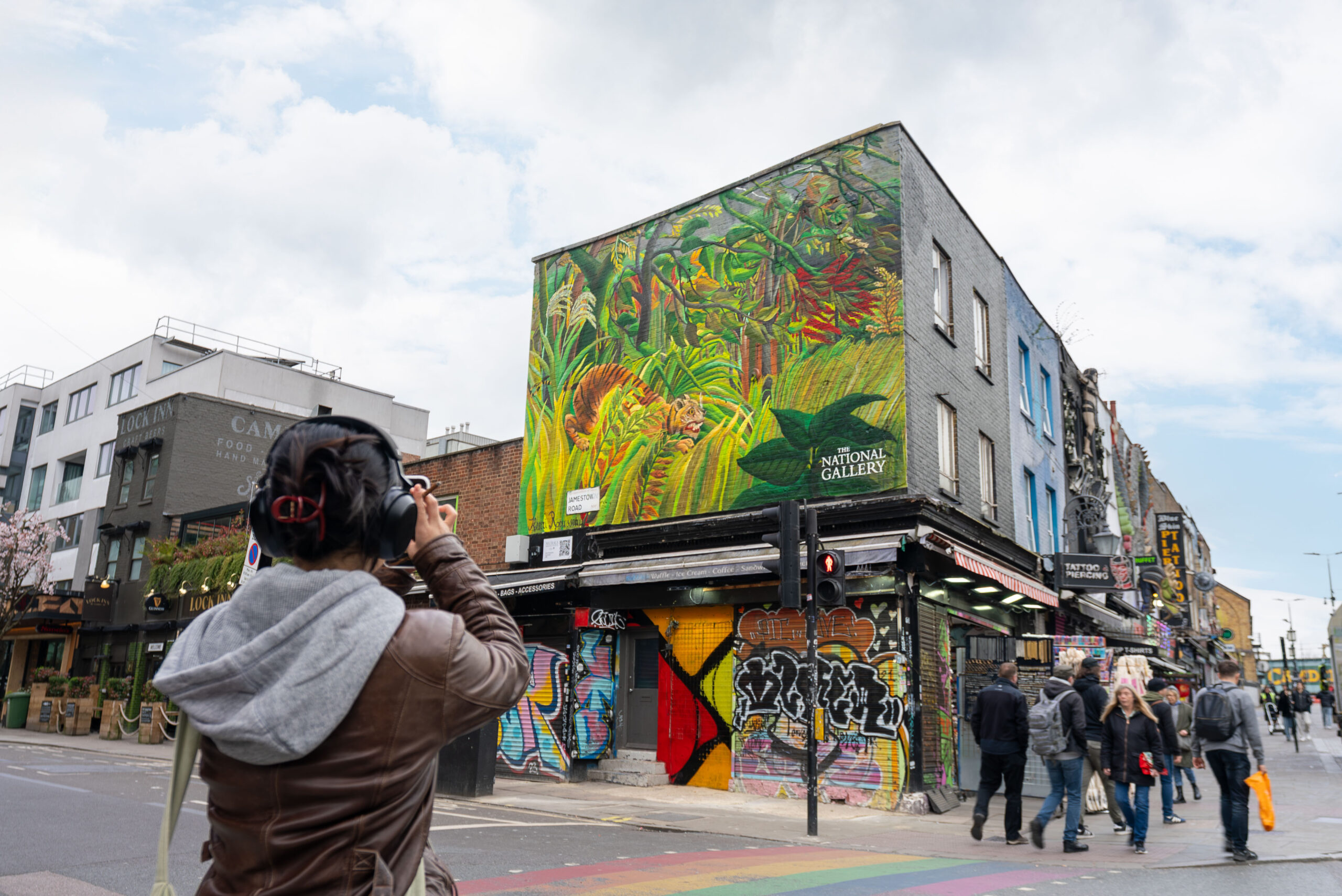
A large-scale mural inspired by Surprised! (Tiger in a Tropical Storm) has been unveiled in Camden, signalling the start of an ambitious nationwide initiative by the National Gallery in collaboration with Global Street Art. The 40 square metre hand-painted work, located on Jamestown Road not far from London Zoo, reimagines Henri Rousseau’s iconic 1891 jungle scene at a monumental scale.
The mural is the first in Murals reMastered, a project that will see some of the National Gallery’s greatest paintings recreated across towns and cities throughout the UK. Spanning more than 700 years of painting, the initiative aims to place historic artworks within everyday environments, encouraging new ways of encountering them outside of the traditional museum space. Future murals are planned for sites including Brent Cross Town and Carnaby Street in London, as well as retail destinations across the country, with further installations expected to roll out during spring 2026.
Developed by a team of contemporary mural artists, the project builds on previous public art initiatives by the National Gallery and reflects an ongoing effort to widen access to its collection. By transforming canonical paintings into large-scale works in the urban landscape, Murals reMastered seeks to connect audiences with art in more immediate ways.
Sir Gabriele Finaldi, Director of the National Gallery, noted: “By bringing some of the world’s greatest paintings onto UK streets, neighbourhoods and everyday public spaces, we hope to spark curiosity, conversation and connection – reaching audiences who may never have encountered these works before.”
The mural is on view at 267 Camden High St (Jamestown Road), London NW1 7BX.
Not sure how to unlock more bag space in Pokémon Pokopia? In a nutshell, your bag is your main inventory, and it’s where everything you collect while exploring and building ends up, including basic crafting materials like logs, stones, and leaves, along with food and other useful items you pick up along the way. Since your bag has limited space, you’ll be juggling a mix of items that all compete for the same slots, which means you will constantly have to decide what to keep and what to leave behind.
Unlocking bag upgrades in Pokémon Pokopia gives you more slots, letting you carry more in a single trip, hold onto a wider range of materials, and spend less time going back and forth between your base and resource spots. If you’re tired of constantly running out of space mid-run, here’s how to unlock bag upgrades in Pokémon Pokopia.
Pokémon Pokopia: How to Unlock Bag Upgrades and Get More Inventory Space
You can unlock bag upgrades in Pokémon Pokopia by buying Packing Tips from the PC shop. These upgrades will become available as you progress through the game and raise the Environment Level in different areas. You can only buy each one once, and every upgrade gives you more space in your bag.
There are four tiers of Packing Tips in total, and picking them all up increases your inventory to 120 slots, split across four pages. Since they’re unlocked through specific regions, you’ll naturally unlock them as you explore and develop new areas. Here’s how each one works:
Packing Tips: Rookie
Area: Withered Wasteland
This is the first bag upgrade you’ll unlock, and it becomes available once you reach Environment Level 1 in the Withered Wasteland. It costs 100 gold and adds a third row to your inventory, giving you a small but useful early boost in space.
Packing Tips: Intermediate
Area: Rocky Ridges or Bleak Beach
The next tier unlocks when you reach Environment Level 2 in either Rocky Ridges or Bleak Beach. This upgrade costs 500 gold and adds an extra inventory page, giving you 30 additional slots to work with.
Packing Tips: Pro
Area: Rocky Ridges or Bleak Beach
This upgrade also becomes available once you reach Environment Level 2 in the next major area you progress through after these regions. It costs 1,000 gold and expands your bag to three total inventory pages, significantly improving how much you can carry during longer resource runs.
Packing Tips: Expert
Area: Sparkling Skylands
This is the final bag upgrade, and it becomes available once you reach Environment Level 2 in Sparkling Skylands. It costs 1,500 gold and adds the last inventory page, bringing your total capacity to 120 slots.
Once you’ve unlocked all bag upgrades in Pokopia, inventory management becomes much easier since you’ll be able to carry more materials in a single run and won’t have to keep heading back just to empty your bag.
And that’s all there is to bag upgrades in Pokémon Pokopia. For more gaming news and guides, be sure to check out our gaming page!