Home Blog Page 1944

7 Empowering Moments in Anne With an E

Anne With an E (2017) is a divisive Netflix series that was recently cancelled despite its popularity and the reception of its third season. Based on Lucy Maud Montgomery’s Anne of Green Gables book series, the television show follows thirteen-year-old orphan Anne Shirley as she finds a home in Avonlea on Prince Edward Island. She is adopted by the elderly Cuthbert siblings who initially don’t know what to make of this wild, imaginative child, but soon love her as their own.

Anne makes many friends in Avonlea, but not without her fair share of struggles. The series is much darker and grittier than its utopian source material, and it sees Anne and many other characters deal with prejudice and discrimination. Some of the most empowering moments are when these characters are accepted and change their community for the better – and, more importantly, when they accept themselves.

Cole Belongs

Cole becomes one of Anne’s closest friends in season 2. He’s very artistic and somewhat feminine, which he’s bullied for by the other boys and the teacher. Anne gets to know her best friend Diana’s Aunt Josephine, who reveals that she never married because she lived with a woman she was in love with. Anne, Diana, and Cole attend a summer soiree at Josephine’s house, where Cole finds that he fits in among the quirky guests, many of whom identify as LGBTQ+.

When Cole returns to Avonlea, he’s miserable and doesn’t go back to school for fear of further bullying. When she learns that he’s been skipping school, his mother is so disappointed in him that she won’t let him leave the farm.

On their next trip to visit Aunt Josephine, Cole tells Anne that he won’t be returning with her. He remains to live with Josephine, where he can be open and proud of his identity, and where he hopes to one day find love.

Freedom of Speech Protest

Josie Pye is a mean girl who tries to demean Anne every chance that she gets. In season 3, she begins a courtship with Billy Andrews, who bullies Cole. When Billy attempts to assault Josie, she tries to confide in her parents, but her father is only frustrated that Josie has ruined her chances at marriage. Mrs Pye is sympathetic but thinks her daughter is to blame. Throughout the season she pushes Josie to advance her relationship with Billy, making Josie curl her every night and encouraging her to start a “Take-Notice Board” (where boys post notes about girls that they take notice of).

Anne is outraged by the rumours of Josie’s promiscuity when she knows that Billy is to blame, and she knows that it will ruin Josie’s reputation. Despite how awfully Josie usually treats Anne, she takes it upon herself to help her bully. She writes a feminist opinion article in the school paper without consulting anyone, but it isn’t received well. The school board bans Anne from the paper, Josie is angered, and Anne’s friends take Josie’s side. Gilbert, Anne’s future husband, is the only person to defend her. The school board also believes that the newly hired female teacher, Miss Stacy, is to blame for her classmates’ behaviour. They steal the printing press and burn the schoolhouse down.

The classmates come together to take a stand at the town hall and protest for freedom of speech. Mrs Rachel Lynde, Marilla Cuthbert’s best friend, threatens to expose the men on the board unless they allow three more women to join and create a gender balance. In the end, Anne’s friends see that she is right, even if it takes some work to push against preexisting ideologies they’ve had ingrained since childhood.

Students Rally Around Miss Stacy

When Miss Stacy replaces the previous teacher, Mr Phillips, many of the local women are shocked by her reputation. She is a widow who doesn’t wear corsets, rides a motorized bicycle, and teaches through practical methods rather than traditional memorization. The so-called Progressive Mothers Group attempt to remove her from her post, but the students won’t have it.

While the adults of the town are meeting to vote on Miss Stacy’s removal, the students concoct a plan to convince them otherwise. They travel to Charlottetown for supplies and return halfway through the meeting, each carrying a potato lightbulb – something Miss Stacy taught them to make in class. The parents are impressed and listen to the students talk about everything Miss Stacy has done for them. Miss Stacy herself walks in and offers her own opinion in a level, reasonable manner. The adults elect to keep Miss Stacy, and the students rejoice, excited to keep learning.

Ruby Loves Being a Woman

When Anne gets her first period, she laments that she’s not ready to be a woman. The girls discuss it at school the next day, calling menstruation shameful – but when curious Anne asks why they have no answer. “We can make a whole person,” she says with awe.

When a few boys lift their skirts, Anne yells, “A skirt is not an invitation!” while the others brush it off as a joke. In season 3 Gilbert proudly reads from Anne’s opinion article, “Women matter on their own, not in relation to a man.” Men repeatedly call the women of Avonlea “hysterical” and tell them their thoughts don’t matter. Diana, Anne’s best friend, lives with parents who insist that she’s “obliged to marry well” and that this is her one task in life.

At the ripe age of thirteen, Anne proclaims “I love being a woman,” not long before rebuking Billy, who says men do “real work” while girls bake cookies. Ruby’s house has been damaged in a fire, so she stays at Anne’s home while the men repair it. Ruby has a notorious crush on Gilbert, so Anne suggests they bake biscuits for the boys. Billy mocks them while Anne tells him she could do the work while he’s too busy being a bully to do it himself.

At first, Ruby resists being associated with Anne, but when Anne introduces her friends to Beltane rituals, they feel empowered. Ruby kneels on the ground, crying. “How I love being a woman,” she says emphatically, smiling.

Diana Takes the Queen’s Exam

The Barry family is firmly against girls receiving an education. Diana’s mother is preparing her for Finishing School, where she will learn to perform household duties and how to be a wife. Diana is confused. Aunt Josephine tries to talk to her, but she gets defensive. Yet when she leaves school while Anne and the others remain to study for their Queen’s Academy entrance exams, she seems longing and regretful.

At the last minute, Diana decides to sit the exam, but she can’t tell her parents about it. Aunt Josephine is secretly pleased but doesn’t let anything on. Diana ends up passing and is accepted to Queen’s with her friends – but her parents are sorely disappointed. Mr Barry yells at her and blames her for upsetting her mother, who is in tears on the sofa. Eventually, Diana’s parents relent, and she joins Anne at Queen’s Academy. Unfortunately, the series was cancelled before the Barrys’ reasoning behind this could be explored, and before viewers could see Anne and her friends embracing their futures.

Prissy Runs Away From the Wedding

From Anne’s first day at Avonlea School, Mr Phillips is portrayed as a biased, ornery man who is extremely unprofessional in his work. He shares a scandalous filtration with Priscilla (Prissy) Andrews, the sister of Billy and Anne’s friend Jane. In season 2, Mr Phillips asks Mr Andrews for permission to propose to Prissy, and she accepts. Everyone at school whispers about the unconventional relationship while Mr Phillips continues being rude and discriminating against students – like Anne and Cole – in class.

Prissy begins to have doubts about Mr Phillips. Her mother is one of the head members of the Progressive Mothers Group, and she expresses her concern over the arrangement, especially Prissy’s willingness to give up a college education. Prissy asserts that this is what she wants, but as the girls help her get dressed on her wedding day, Anne tells her that she hopes their marriage will one day become one in which they respect and like one another. Anne means it in earnest, but Prissy becomes sombre. At the altar, she glances around at her mother and her friends, drops her bouquet, and runs out of the church. Mrs Andrews smiles quietly to herself, and the girls run after her.

Prissy trips over in the snow and the girls think she’s crying. But when she lifts her head, she laughs. The girls dance around in their colourful dresses, playing with the snow, revelling in their youth and freedom.

Anne Accepts Herself

Anne often complains about her red hair, slim figure, and freckles because her appearance is considered “homely” and unappealing in the setting she’s living in. This is an important theme to bring up, especially in a series set in an environment where women are valued for their ability to be a good wife, and one of their greatest assets is supposed to be their appearance.

Anne continually compares herself to her friends, especially Diana, who she considers to be “divinely beautiful”. But when Mrs Lynde calls her ugly, Anne flies into a rage, telling her that she hates her. Marilla wonders why Anne is so infuriated by a comment that Anne makes often enough to herself. Instead of comforting Anne about her appearance, she only calls her vain. Anne seems to learn her lesson when she accidentally dyes her hair green, and Marilla cuts it all off.

But only at the end of season 3 does Anne like her appearance. After Diana joins her at Queen’s and she and Gilbert confess their love for one another, Matthew and Marilla arrive with a gift. Season 3 follows Anne’s search for her biological lineage. The Cuthberts, while worried at first that they would lose Anne, eventually decide to help her. They find a book that belonged to Anne’s parents. In it, Anne learns that her mother was a teacher and had red hair, like her. That night, Anne is penning a letter to Gilbert: “Dear Gilbert, I look like my mother …” She pauses and looks at her reflection in the mirror and smiles. This is a very fitting last shot for the season, which now also serves as a series finale.

Album Review: HAIM, ‘Women in Music Pt. III’

HAIM know how to craft an immaculate pop song. ‘Want You Back’, a highlight from their last album, 2017’s Something to Tell You, is a masterclass in pop songcraft, to the point where its infectious qualities almost conceal its emotionally charged subject matter. On that album, the indie rock group – comprised of sisters Danielle, Alana, and Este Haim – took their retro-leaning, summery blend of classic rock and modern pop to new heights. But despite its blissful melodies, their sophomore effort didn’t earn them the same rapturous response as their acclaimed 2013 debut Days Are Gone – expectations were high, and there was a fear that the group might be relying on the formula that brought them success a little too much this time around, even if they’d honed it to near perfection.

Women in Music Pt. III, with all its messy contradictions, does not fall into that trap. Though still rife with plenty of hooks and catchy choruses, the Los Angeles trio’s latest reveals a different side of the Haim sisters – many different sides, in fact. It’s their boldest, most experimental album to date, one that showcases their knack for nuanced yet emotive songwriting without sacrificing the effortless cool of their previous releases. HAIM don’t just step into a wide range of styles here; they prove that they can pull off every single one of them with just as much personality and charm. ‘Up from a Dream’ boasts a strutting, heavy guitar riff that calls back Heart; the synth-driven ‘I Know Alone’ sounds like a less indulgent 1975 song; ‘3am’ is a funky R&B tune as solid as any. Somehow, folk cuts like ‘Leaning on You’ and the Joni Mitchell-inspired ‘Man from the Magazine’ harmoniously coexist alongside the beach-ready ‘Another Try’ and the piercing heavy metal wails of ‘All That Ever Mattered’.

Rather than coming off as cluttered or unfocused, though, the diverse and eclectic sonic palette of WIMPIII feels like a flower opening up to unveil its many colours. That openness comes through in the album’s sharp lyricism, too, which finds the band at their most personal and vulnerable. “Been a couple days since I’ve been out/ Calling all my friends, but they won’t pick up,” Danielle sings on ‘I Know Alone’, a track that perfectly captures the cycle of loneliness that we’ve all experienced during quarantine as well as the feelings of worthlessness it comes with. As its title suggests, ‘I’ve Been Down’ delves further into the singer’s depression, but ends with the hopeful chant of “I think that we need to come together.” Elsewhere, the band’s raw honesty leads to some uncompromisingly confrontational moments: on the stand-out ‘The Steps’, Danielle confidently declares: “Every day I wake up and make money for myself/ And though we share a bed/ You know that I don’t need your help/ Do you understand?” A similar exploration of gender dynamics resurfaces on ‘Man from the Magazine’, this time exposing the kind of sexist comments targeted towards “women in music”, from “Do you make the same faces in bed?” to “Hey girl, why don’t you play a few bars?”

Much of WIMPIII deals with the complicated feelings of trying to hold onto a doomed relationship; not a new subject for HAIM, but never so candidly laid out. “It’s f*cked up, but it’s true/ That I love you like I do,” Danielle admits on ‘FUBT’ against a lone but punchy electric guitar. On the groovy ‘Don’t Wanna’ – the closest the album comes to sounding like the band’s previous outings – she continuously repeats that she doesn’t want to give up on the relationship, even if that very fact probably isn’t a good sign. But when she proclaims that “All that ever mattered was you” on the adventurous ‘All That Ever Mattered’, it’s not framed as a heartfelt affirmation but a bitter attack; she’s tired of being treated this way. The track features a larger-than-life solo and a throbbing drum kick, with Rostam’s production standing out. The album has a similar flair to Clairo’s Immunity, another album he co-produced, in the way it amplifies that sense of vulnerability with a sound that’s both subtly expansive and intimate; but it also calls back Vampire Weekend’s Father of the Bride, a record which, though somewhat overstuffed, featured noteworthy contributions from both Danielle and her partner Ariel Rechtshaid.

The three songs that served as a teaser for this new era in the band’s career – ‘Summer Girl’, ‘Now I’m In It’, and ‘Hallelujah’ – appear as bonus tracks here, each with their own unique eccentricities. ‘Summer Girl’ is a laid-back, tender homage to Lou Reed that hints at the jazz-inflected sound of tracks like opener ‘Los Angeles’, while ‘Now I’m In It’ is another propulsive synth jam for anyone who wants more of what ‘I Know Alone’ has to offer. But it’s ‘Hallelujah’ that hits the hardest, a finger-plucked acoustic ballad in which Alana reflects on the loss of a friend while Este opens up about her struggle with diabetes. More than anything, the track is about sisterhood: “Laughing together like our thoughts are harmonized/ Been that way since ’95,” they sing. Perhaps that sense of togetherness is part of what makes WIMPIII such an inviting journey – no matter how many different paths the album takes, HAIM are always in sync.

Watch the Video for Kanye West and Travis Scott’s New Track ‘Wash Us in the Blood’

0

Kanye West and Travis Scott have teamed up for a new song called ‘Wash Us in the Blood’, the first taste from West’s upcoming studio album, God’s Country. The new single arrives with a visual directed by previous West collaborator Arthur Jafa. The video includes footage from recent protests, as well as shots from from the rapper’s Saint Pablo Tour and Sunday Service rehearsals. Check it out below.

Sonically, ‘Wash Us in the Blood’ confirms rumours that West’s new album would call back the experimental leanings of Yeezus, though with more pertinent subject matter. Dropping as part of the rapper’s #WESTDAYEVER campaign and teased back in April in an interview with GQ, the track sees the rapper discussing the death penalty: “Thirty states still execute/ Thou shall not kill, I shall not spill, Nextels at the rendezvous,” he raps.

God’s Country will be the follow-up to the rapper’s 2019 gospel album, Jesus Is King, and Sunday Service Choir’s companion LP Jesus Is Born. Speaking of his new album, West said: “I was thinking of not rapping again, because I rapped for the devil so long that I didn’t even know how to rap for God. Then one of my pastors told me, ‘My son just said that he would want a rap album about Jesus from Kanye West.’ He didn’t say, ‘Kanye West, you should do this,’ or ‘you need to do this.’ He just told me something that a child said. And that one thing made the difference.”

Last week, West shared a teaser for a new CGI animated series based upon Kids See Ghosts, his 2018 collaborative project with Kid Cudi, directed by Takashi Murakami.

Sufjan Stevens Announces New Album ‘The Ascension’

0

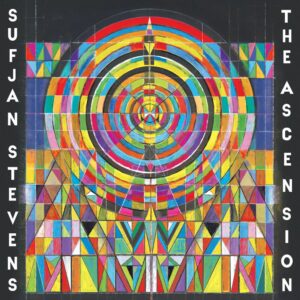
Sufjan Stevens has announced his long-awaited follow-up to Carrie & Lowell. His new album, comprised of 15 new songs and accompanied by a 16-page booklet of his drawings, is called The Ascension, and it’s set for release on September 25 via Asthmatic Kitty Records. Check out the cover art and tracklist below.

The first preview of the album, the 12-minute ‘America’, will be unveiled on Friday (July 3). Though his first full solo album in five years, the singer-songwriter released a collaborative record with his stepfather, Lowell Brams, back in March called Aporia.

The Ascension Cover Artwork:

The Ascension Tracklist:

1. Make Me An Offer I Cannot Refuse
2. Run Away With Me
3. Video Game
4. Lamentations
5. Tell Me You Love Me
6. Die Happy
7. Ativan
8. Ursa Major
9. Landslide
10. Gilgamesh
11. Death Star
12. Goodbye To All That
13. Sugar
14. The Ascension
15. America

Glass Animals Release New Single ‘Heat Waves’

0

Glass Animals have released a new single titled ‘Heat Waves’, taken from their upcoming studio album, Dreamland. The single comes with an accompanying video directed by Colin Read, which sees frontman Dave Bayley strolling around the streets of London during lockdown on his way to an empty venue. Check it out below.

In a press release, Bayley called the song “a love letter to live music and the culture and togetherness surrounding it.” Speaking of the video, he explained: “It was filmed at the peak of the lockdown in my neighbourhood in East London by the lovely people who live around me, just using their phones.”

He added: “These are people who are usually out at shows, in galleries, going to cinemas etc. These venues are left empty now, and many of them will not survive. The song is about loss and longing, and ultimately realising you are unable to save something… and this video is about that but for art, being together, and human contact.”

The UK indie pop group’s forthcoming album was originally slated for release on July 10th, but was recently postponed to August 10th “in order to respect and support the ongoing Black Lives Matter movement,” according to a statement. The band previously previewed the album with the Denzel Curry-featuring ‘Tokyo Drifting’ and the title track.

Phoebe Bridgers Shares Studio Recording of John Prine Cover

0

Earlier this year, Phoebe Bridgers shared a cover of John Prine’s ‘Summer’s End’ on Instagram following the legendary singer-songwriter’s death in April. Now, she has released a proper studio recording of the song for SiriusXM. Listen to it below.

The new recording, which features more polished production, dreamy guitars, and intricate vocal harmonies, was broadcast on SiriusXM last week as part of the station’s SiriusXMU Sessions series. When she originally performed the track, which is taken from Prine’s 2018 album The Tree of Forgiveness, for Pitchfork, she said: “He’s one of the most important people on the planet to me. I was lucky enough to see him a couple times. This is from his last record. It’s one of my favorite songs ever.”

Recently, Bridgers also covered Bright Eyes’ classic 2005 song ‘First Day of My Life’ for Deezer’s Home Sessions. Earlier this month, she released her sophomore album, Punisher, which we named one of the best albums of the year so far.

Julien Baker, Sharon Van Etten, The National, and More Contribute to ‘Save Stereogum’ Benefit Album

0

Julien Baker, Sharon Van Etten, and The National are among the artists contributing to a covers compilation to help music website Stereogum stay alive. The album, titled Save Stereogum: An ‘00s Covers Comp, serves as a fundraiser for the long-running music publication, which recently became fully independent after founder Scott Lapatine reacquired the site from its former parent company, Valence. The album is available to purchase exclusively through Stereogum’s Indiegogo campaign and will be available to download in September. The download will come in the form of a .zip file and will include MP3s, artwork, and liner notes. More perks are offered for the higher tiers, including a Stereogum T-shirt and Zoom Party.

The beloved website, which was founded in 2002, was an early champion of countless indie acts including Vampire Weekend, Arcade Fire, and Billie Eilish. But ever since the pandemic hit, revenue from advertising has fallen dramatically, and with that income basically out the window, Lapatine reached out to artists to help support the site’s independent journalism. More than 40 artists ended up recording covers for the benefit album, whose theme is 00’s hits, though only the names of the artists have been revealed, with more to be announced in the future.

“Our small team has always thought of itself as a DIY operation, which was difficult to reconcile while part of a corporate conglomerate,” Lapatine wrote in a blog post. “We’re grateful to finally be in charge of our own destiny. We set out with a solid plan to diversify Stereogum’s business, which currently derives all of its revenue from advertising at a time when 70% of all digital ad spending goes to Google, Facebook, and Amazon. We knew building a sustainable operation would not be easy. But since March, like so many other publications big and small, we have seen our advertising revenue plummet more than 50% because of the COVID-19 pandemic. Concerts and festivals, historically our biggest advertisers, have disappeared entirely.”

He added: “We risk shutting down before we even got a chance to get going as an independent entity. We have a plan to modernize and just need to survive this tough time in order to execute it.”

“And so: smart and attractive and generous readers, we are now asking for your help.”

Below, check out the full list of artists contributing Save Stereogum: An ‘00s Covers Comp, as well as a trailer for the album. Help support Stereogum’s crowdfunding campagin here.

  • Anna Calvi
  • Bedouine
  • Bethany Cosentino (Best Coast)
  • Bill MacKay
  • Car Seat Headrest
  • Charly Bliss
  • Chris Farren
  • Clipping.
  • Colleen Green feat. Diarrhea Planet’s Emmett Miller
  • Death Cab For Cutie
  • Dirty Projectors
  • El-P
  • Frankie Cosmos
  • Half Waif
  • Hamilton Leithauser
  • Hand Habits
  • Illuminati Hotties
  • Jeff Rosenstock
  • Julien Baker
  • Kero Kero Bonito
  • Laura Jane Grace & The Devouring Mothers
  • Laura Stevenson
  • Mac DeMarco
  • Nothing
  • PUP
  • Pure Bathing Culture
  • Ratboys
  • Rostam
  • Ryley Walker
  • SAD13
  • Shamir
  • Sharon Van Etten
  • Soccer Mommy
  • Strand Of Oaks
  • The National
  • The New Pornographers
  • Thou
  • TOPS
  • Ty Segall
  • Waxahatchee
  • Wet
  • White Reaper
  • Wild Pink
  • Wye Oak

…and more to be revealed soon!

Watch HAIM Stroll Around an Empty Parking Lot in New ‘Don’t Wanna’ Video

0

HAIM have shared a new video for ‘Don’t Wanna’, taken from their recently released third studio album, Women in Music Pt. III. Directed by Jake Schreier, the new video was filmed in the empty parking lot of the Forum in Los Angeles, where the sisters can be seen playfully chasing each other. Check it out below.

They shared the video on social media, writing: “We were so excited to headline the Forum on our upcoming tour – but when quarantine hit, we had to change our plans. Thank you to the the Forum for letting us run around in your parking lot tho.”

The track is the sixth song the band released ahead of the release of their new album, which dropped last week via Columbia. Speaking of the track, Alana Haim said in an interview with Apple Music: “I think this is classic Haim. It was one of the earlier songs which we wrote around the same time as ‘Now I’m In It.’ We always really, really loved this song, and it always kind of stuck its head out like, ‘Hey, remember me?’ It just sounded so good being simple. We can tinker around with a song for years, and with this one, every time we added something or changed it, it lost the feeling. And every time we played it, it just kind of felt good. It felt like a warm sweater.”

On Saturday, HAIM shared a video of their livestream album launch for their new record, recorded at Los Angeles deli Canter’s.

Diversity, Thou Art India by Sankar Sridhar

Diversity, Thou Art India is a beautiful photography series by an award-winning photographer Sankar Sridhar. The series focuses on people of India from different backgrounds and places that make up the stunning country of India.

Find more work by Sankar Sridhar here.


“People I have met through my travels across India. As different as the landscapes and terrain that make up this land, but an integral part of the fabric that makes this nation.”


5 Great Poetry Collections You Can Read For Free

Poetry is an important part of literature, though perhaps considered a form hard to access by some readers. The broken lines can be hard to digest sometimes, but they’re also a means for readers and writers alike to process the world. Here are six great collections of poetry by poets of a variety of backgrounds, all of which you can access for free.

Others for 1919: An Anthology of the New Verse by Alfred Kreymborg

This is an anthology featuring a large number of the world’s greatest poets, including Alfred Kreymborg, William Carlos Williams, Robert Frost, and many others. However, some of the names inside these pages may be unfamiliar, like the Italian Arturo Giovannitti, the painter Marsden Hartley, indigenous Australian activist Evelyn Scott, African American Fenton Johnson, and others. These poems explore a variety of themes, and are arranged in a variety of forms – but they are all considered to be a culturally important part of history.

The collection can be accessed here.

Shadow Black by Naima Yael Tokunow

Winner of the 2019 Frontier Poetry Digital Chapbook Contest, this collection of poetry “confronts and rants and blossoms with a singular powerful experience that transports the reader through the American apparatus of race, of loss, of perseverance”. Every poem in Shadow Black makes the author’s black body visible, and by extension, every black body. Supporting black artists has never been more important than it is now, so if you’re looking for ways to support and understand the Black Lives Matter movement, you can read the poems here.

Lyrics of Sunshine and Shadow by Paul Laurence Dunbar

This book is another piece of work by a black artist. Dunbar was born in 1872 to parents who were freed slaves of Kentucky. He was one of the first influential and successful African American poets. The poems in this book are rooted in place and family, which is why his conversational tone switches between mainstream English and the dialect of his community.

Read Dunbar’s collection here.

20 Poets by Kent MacCarter

As its title suggests, 20 Poets is a collection of poems by twenty poets. Compiled by the Australian literary journal, Cordite Poetry Review, the collection represents a variety of voices speaking to a variety of themes. The foreword describes the collected work as being able to speak to one another “in a horizontal manner: freed from identification with one author or collection”. Each poet is given four pages in the book, preceded by a brief statement that contextualizes their work and inspirations.

You can access the collection here.

Leaves of Grass by Walt Whitman

Walt Whitman (1819-1892) is regarded by many as “the father of free verse”. Leaves of Grass was published in 1855 and contains his most famous poem “Song of Myself”, which consists of fifty-two parts. The length of this poem is a hint at the length of the entire book. Its 624 pages have received some mild criticism from readers, but for the most part, the book is applauded as seminal, revolutionary, all-encompassing, and effectively conveying Whitman’s poetic vision, especially by his contemporaries.

Whitman spent his entire life rewriting the book, but the original version can be downloaded for free on Apple Books.