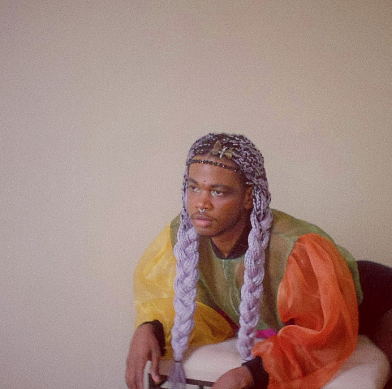
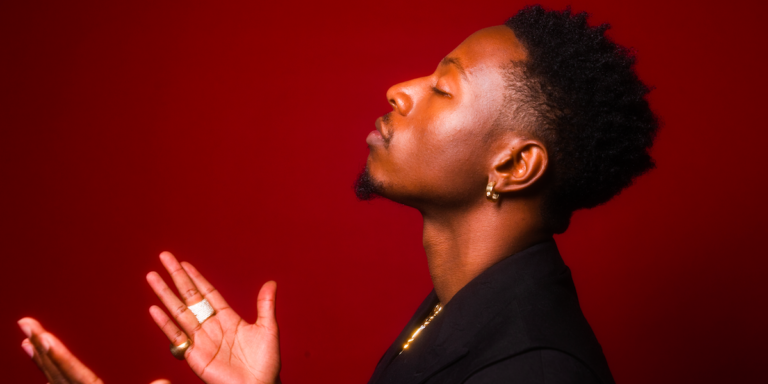
Boogrov, an exciting music producer out of Russia, has released his album Свет, just yesterday. The album comes two years after his thirteen-track album Define. It features many meteoric-like beats and atmospheric sounds, at times reminding us of musicians like Jamie xx and Pixelord, while still maintaining the euphonious, warm, textured sound we have come to love from Boogrov.
With Boogrov’s album released, we are eager to see what is next for him in the upcoming months.
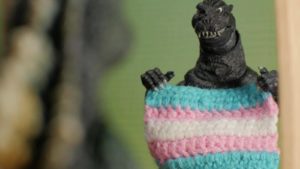
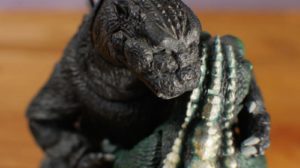
On 26th June, stop-motion artist Cressa Maeve Beer uploaded a short film. Coming Outfeatures Godzilla beginning to notice something about their child, Little Godzilla (Godzilla’s offspring from 1994’s Godzilla vs SpaceGodzilla). Little Godzilla comes out as trans, and the King of the Monsters sees and celebrates his daughter’s wonderful personhood. The short is warm and affectionate, openly affirming of transgender youth and wrapped in the brilliant guise of Toho’s icon. It also took the internet by storm.
As of July 2020, Coming Out has over 30,000 views on YouTube, over 21,000 retweets on Twitter, and has been viewed over 32,000 times on Instagram. It even garnered the attention of the official Godzilla channels, with both Legendary Pictures and Toho’s Official Godzilla Twitter account retweeting the film.
Our Culture is proud to present this interview with Cressa, who kindly sat down with us to talk about her film, how she got into stop-motion, and the importance of trans-affirming content.
Cressa, thank you so much for talking to Our Culture! Please introduce yourself for our readers.
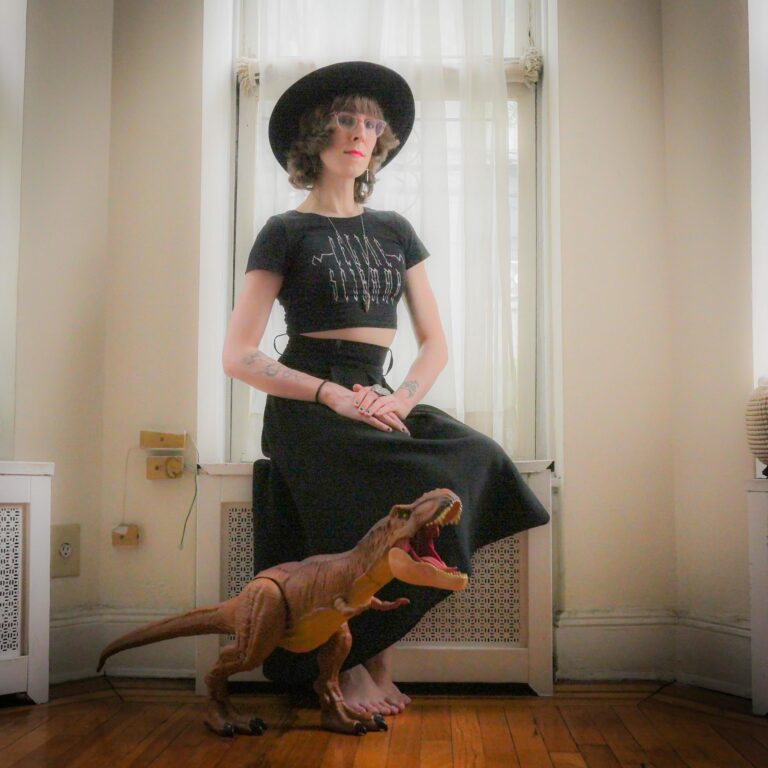
It’s an absolute pleasure! Hi Our Culture readers, I’m Cressa. I’m a stop motion animator and video producer, with work ranging from music videos, documentaries, and brand campaigns, to PSAs screening in front of your film at your local Alamo Drafthouse. I like tea, books, and I never grew out of my dinosaur phase. With my personal art, I like creating a sunny patch for people to lay in when they need it most, and it coincides with my advocacy for the Trans community.
How did you get into stop-motion animation?
When I was little, I was obsessed with stop motion; Wallace and Gromit, Harryhausen, and this show on PBS called Long Ago and Far Away, which featured tons of stop-motion shorts from around the world. I was also very obsessed with LEGOs. I would take my parents’ VHS camcorder (an admission that probably gives away my age) and attempt to replicate the frame-by-frame shooting style to make my characters move, eventually making teeny tiny short films about Indiana Jones-esque adventures or rip-offs of comics or anime. I didn’t do much with it until maybe 2015 when I received the Godzilla figure I now use in all my shorts from NECA, and just started playing around again. I started posting what I made online and eventually was contacted by an old dear friend, Ryan Oestreich, to create pre-show bumpers for Cinepocalypse Film Festival, which prompted me to start taking this stuff more seriously. Soon I had enough experience and momentum to quit my day job and devote my time fully to my original childhood passion – an opportunity for which I’m exceedingly grateful.
Your recent stop-motion short has taken social media by storm. What was your inspiration?
The inspiration was personal. Right now everyone’s social media timelines are filled with both explicit and implicit hatred for Trans people – whether it’s this god-awful administration reversing healthcare rights or moving to discriminate in housing, or a certain famous children’s author using her platform to further vilify women. In response, I wanted to put art out into the world that was tender and positive. Since I’m a Trans woman myself, I also wanted to make something that I personally would want in my feed. I’m happy it resonated with so many others, and not just solely within my community – the response has been overwhelmingly positive, and I’m receiving emails and DMs from strangers (cis and Trans both) who were personally touched by it or wanted to share their own story. I even had a kid who had been questioning their identity for a few years tell me that my short was what made them feel comfortable enough to come out to their parents – that leaves me speechless.
And actually, there’s a second piece of inspiration: my dad, who I lost relatively recently. He was the one who introduced me to Godzilla when I was little, and then our last conversation ended up being my coming out to him as Transgender. He was suffering from dementia, but in that conversation, his mind somehow pushed through, and his response was one of love and support. Not a day goes by where I don’t want him to see me now, as the real me, so this short is in a way dedicated to his memory.
Godzilla says “trans rights!”
How does it feel having official Godzilla channels (like Legendary’s twitter) sharing the short?
It leaves me sick with joy, and I wish I could go back in time and show this to the sad, scared child I used to be. Godzilla’s original creators, Toho, haven’t ever really taken a stance on anything LGBTQIAP+ related, so to have them not only support a Trans story from a Trans creator, but to share it far and wide during this time feels like real recognition – I suppose what it means to feel ‘seen’. When you also consider how toxic the Western/English fanbase can be, this was pretty bold.
But on the flip side of the coin, it’s easy for a big company to share a video on social media and hashtag support for a marginalized community – it’s another thing for that company, especially one in entertainment, to make it a point to start hiring or including Queer and Trans artists/actors/directors/characters/etc. So I’m beyond grateful, but I’m also hoping it’s only a first step and not the full extent.
What has Godzilla been for you?
I fear it’ll sound too vague or dramatic when I say that Godzilla has helped me survive multiple times. When I was little, watching all of the ‘vs.’ movies, Godzilla was a protector, a mythological symbol of resilience, a force of strength that would endure when nothing else could. As I got older, I learned more about the monster’s origins as a walking metaphor for nuclear holocaust, and how that metaphor has evolved to mean something different depending on which film in the 30+ catalogue you watch: climate activist, anti-bully, force of nature, allegory for Fukushima, alpha predator, superhero, supervillain, on and on and on. But for me personally, Godzilla will be the strength that I wish I had. It’s silly, but the ending of 1995’s Godzilla vs Destoroyah really affected me when I first saw it: Godzilla is melting down, but continues to fight until a final roar of defiance – only to be reborn, silhouetted on the horizon. The moment was beautiful to me: the idea that your old self can burn down, but then you can rise back up again anew.
Over the series’ 60+ year history, Godzilla has always been a tool to address cultural and social changes. How does it feel to contribute to that rich legacy?
Well, first of all, I’m exceedingly flattered that a short animation of monster action figures can be considered a contribution to a legacy! It’s like having someone you’ve admired your whole life turn to you and say “I’m a fan of yours in return” – it’s validating and empowering. Moreover, Godzilla was never gendered in Japan, but the English translations masculinized everything from the get-go – and, culturally, we in the US seem stuck in a false binary view of gender that defaults male. In a very conscious way, my short softly prods at that notion. So if I am contributing anything to Godzilla’s legacy, I hope it’s in a way that’s expanding viewpoints and opening hearts. Godzilla means something different to everyone, and that should actually mean everyone.
Godzilla lovingly embraces his daughter.
What’s next for you on the horizon?
I’m raising money for Black Trans causes, I have a big list here: https://linktr.ee/beeragon. Viral videos of Trans acceptance aside, we’re in the midst of a cultural revolution, and Black Trans lives are still the most attacked and persecuted just for existing. The first steps to cultural and societal reform is economic reform – providing equity and resources that aren’t just about survival, but thriving.
How can our readers follow/see your work?
I’m most active on Instagram and Twitter, where my handle is @beeragon and then I have a website that houses more of my non stop motion work: beeragon.org
We cannot thank Cressa enough for this interview. We ask our readers to check out Coming Out, and to support the causes that Cressa has highlighted.
Open Mike Eagle has released a new song called ‘Neighborhood Protection Spell (Lana Del Biden Nem)’. The new track arrives with a visual directed and edited by Ryan Calavano. Check it out below.
“When I wrote this song the world was not on fire yet,” the rapper said in a statement about the track. “I had felt subtle attacks on Blackness from Joe Biden and other public figures. Notions that were harmful about authenticity. Notions that called our behavioral and consumption choices into question without any reference to the historical context that they are couched in. I made this song as a spell to ward off subtle social attacks at Blackness. I put a lot in it to make sure it works.”
Open Mike Eagle released his most recent studio album, Brick Body Kids Still Daydream, back in 2017. Last week, Mike launched his own podcast network, Stony Island Audio.
100 gecs’ abrasive 2019 debut LP stuck out as such a jarringly singular DIY project from experimental pop duo Laura Les and Dylan Brady that it was hard to imagine any guest features being laid on top of it. The group’s hyperactive, maximalist approach already functioned much like a remix album, stitching together elements of bubblegum pop, metalcore, indie rock, and hip-hop and then throwing them all in a high-speed blender. So when 100 gecs announced their new, star-studded remix album, one had to wonder: would it be an attempt to make some of the songs off 1000 gecs appeal to a larger crowd, or would it serve as a vehicle to crank up their already whiplash-inducing sound to… well, a 1000?
The answer, of course, is a bit of both. Though, unsurprisingly, accessibility is never the goal here as much as it is an occasional side-effect, with Les and Brady aiming for just pure fun – whether it comes in the form of the catchy-as-hell ‘ringtone’ remix featuring Charli XCX, Kero Kero Bonito, and Rico Nasty or the playful, adrenaline-fuelling ‘stupid horse’ remix with GFOTY and Count Baldor, which kicks off with the sound of an actual horse. Elswhere, ‘xXXi_wud_nvrstøp_ÜXXx’ has been turned into a full-on Eurodance banger, complete with a tongue-in-cheek Pitbull impression courtesy of Estonian rapper Tommy and sweet AutoTuned vocals from Hannah Diamond. The pop singer is one of the many PC Music affiliates who appear on the album, including label head A.G. Cook, who lends a polished, glossy sheen to opener ‘money machine’, a perfect introduction to an album that mostly runs as a more polished yet equally chaotic and rapturous version of its predecessor.
These collaborations are far for surprising – Brady recently co-produced much of Charli XCX’s quarantine album, how i’m feeling now – and in that sense, 1000 gecs & The Tree of Clues highlights the participatory culture that permeates the hyperpop scene. But the duo aren’t afraid to go the extra mile and serve up something that seems to have come from an entirely different universe, like the stand-out ‘hand crushed by a mallet’, which enlists Fall Out Boy’s own Patrick Stump as well as Chiodos’ Craig Owens and singer-songwriter Nicole Dollanganger to deliver a fiery remix that does emo revival better than most emo acts of the 2010s.
The track’s unrelenting fusion of screamo and electronic music is the first real sign that 100 gecs’ wild-eyed adventurousness hasn’t gone anywhere. If much of first half of the album hints towards a less ear-piercing – but never conventional – direction, the second half is stacked with rougher remixes that are mostly varied enough to warrant their inclusion here. The umru remix of ‘ringtone’ drifts through constantly-mutating percussion before ending with a slowed-down guitar solo, while the ‘745 sticky’ remix featuring Canadian noise pop duo Black Dresses takes the crown for the most nightmarish track on the album. The previously amorphous ‘gecgecgec’, meanwhile, has been transformed into a fleshed-out blend of hip-hop and melodic indie pop featuring Lil West and Tony Velour that boasts one of the record’s more wrenching hooks.
Unfortunately, some of the remixes in the second half don’t quite stack up to the ones in the first, including the 99jakes remix of ‘xXXi_wud_nvrstøp_ÜXXx’ or the N0thanky0u-assisted ‘hand crushed by a mallet’; the Dorian Electra-featuring ‘gec 2 Ü’ is one notable exception. None of the remixes are bad, though – unless you already weren’t a fan of 100 gecs, in which case you probably have no reason to listen to this – and the fact that the album is hardly meant to be listened to from start to finish mostly invalidates that criticism. Similarly, the two live tracks and previously unreleased cuts are best seen as bonus tracks more than any kind of coherent ending to the album.
The new tracks in question, ‘toothless’ and ‘came to my show’, serve as reminders – not that they really were necessary – that the power of 100 gecs’ music rests on the duo’s originality more than any guest feature. Despite the blood-pumping pop-punk energy of ‘toothless’, though, it’s the heartfelt sincerity of ‘came to my show’ that stands out the most, a full-hearted display of affection that dismantles any wrongful assumption that gecs’ music is “post-ironic”. It would have made for the perfect closer, but then again, if Laura Les and Dylan Brady were aiming for perfection, nothing on 1000 gecs & The Tree of Clues would be quite as good as it is.
Joey Bada$$ has dropped The Light Pack, featuring three new songs: ‘The Light’, ‘No Explanation’ feat. Pusha T, and ‘Shine’. Below, listen to the tracks and check out the music video for ‘The Light’, directed by Kerby Jean-Raymond & Levi Turner.
“It’s been 3 long years, so how bout 3 new songs for your Mind, Body & Soul?” the rapper wrote on Twitter. “LOVE to you ALL.”
He later added: “Don’t call it an EP, I hate that. It’s 3 songs, bundled together.”
The Light Pack marks the first new solo material from Bada$$ since 2017’s acclaimed All-Amerikkkan Bada$$. In 2019, he put out a collaboration with Kirk Knight called ‘Gazzliona’.
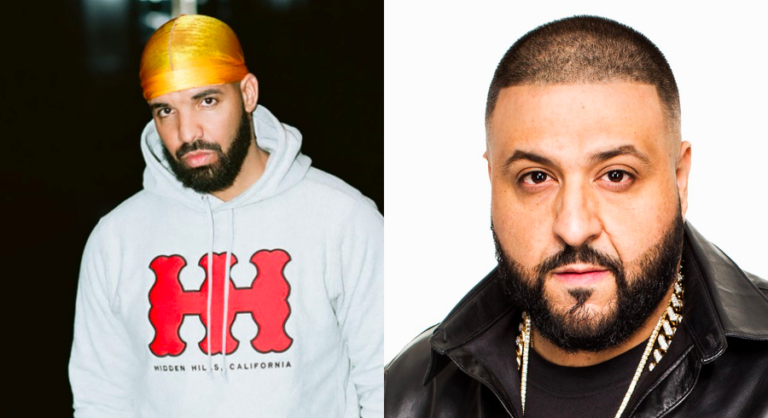
Drake and DJ Khaled have teamed up on two new songs, ‘Pop Star’ and ‘Greece’. The collaborative tracks are taken from DJ Khaled’s upcoming 12th studio album, Khaled Khaled. Check them out below.
This is not the first time the Miami producer and hip-hop superstar have joined forces – they first worked together all the way back in 2011 on the chart-topping single ‘I’m on One’. Their most recent collaboration was ‘To the Max’ in 2017.
DJ Khaled’s most recent album, Father of Asahd, dropped in 2019. Drake recently followed up 2018’s Scorpion with Dark Lane Demo Tapes, which included the No. 1 single ‘Toosie Slide’ but failed to reach the top of the album charts, ending his nine-album No. 1 streak on Billboard.
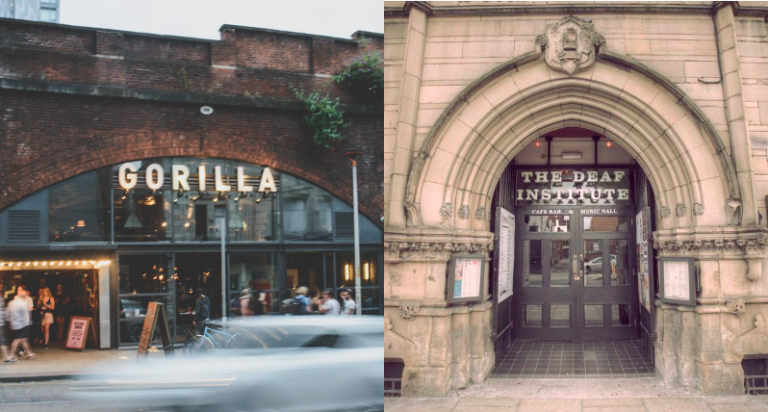
Two of Manchester’s most beloved music venues, the Deaf Institute and Gorilla, are permanently closing their doors due to financial complications brought on by the coronavirus crisis. Mission Mars, the company behind both venues, confirmed the news yesterday (July 16).
“The Deaf Institute and Gorilla have been at the forefront of the music scene in Manchester for many years and it is with great sadness that we announce that we will not be reopening,” Mission Mars CEO and founder Roy Ellis told Manchester Evening News. “This difficult decision has been made against the backdrop of COVID-19 and the enforced closure of all of our sites and with continued restrictions upon opening of live music venues.”
He added: “We appreciate that these music destinations are well loved and have provided an early stage for many acts in the North West and are therefore well known in the world of music… We would encourage any industry and music entrepreneurs who might be interested in this as an opportunity to please get in touch. We are extremely grateful to our hardworking teams and guests and followers for their loyal support over years.”
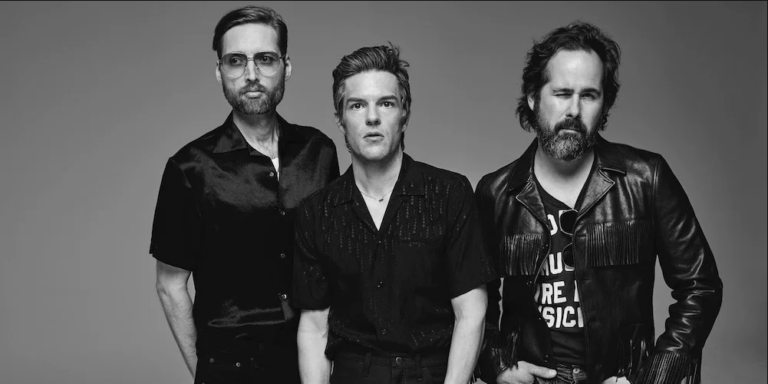
The Killers have revealed the new release date for their upcoming album Imploding the Mirage, which was originally slated for release on May 29 but was postponed due to the COVID-19 pandemic. The LP will arrive on August 21 via Island. The band accompanied the announcement with a new music video for single ‘My Own Soul’s Warning’, which you can watch below.
“COVID-19 monkey wrenched us,” the band wrote on social media. “But we preserved. Folks, mark your calendars.”
Imploding the Mirage was co-produced by Shawn Everett and Foxygen’s Jonathan Rado and recorded in Los Angeles, Las Vegas, and Park City, Utah. It features guest appearances from the likes of Lindsey Buckingham, Weyes Blood, Adam Granduciel of The War On Drugs, Blake Mills, and more. ‘My Own Soul’s Warning’ is the most recent single from the album, following ‘Caution’ and ‘Fire in Bone’.
The Killers also announced they will be postponing all their remaining tour dates across America and Australia. “As so many of us have come to realise during the Covid-19 pandemic, the idea that we would be returning to ‘normal’ is farther along in the future than we initially thought,” the band wrote.
They added: “The safety of our fans and families is of the utmost importance to us always. We want nothing more to hit the road and play these songs for you and when the time is right, we will do just that! Be safe and be healthy. We appreciate you.”
In this segment, we showcase the most notable albums out each week. Here are the albums out on July 17th, 2020:
Ellie Goulding, Brightest Blue
Ellie Goulding is back with her fourth studio album, Brightest Blue, out now via Interscope. Originally scheduled for release on June 5 but delayed due to the COVID-19 pandemic, the pop artist’s latest is split into two parts, the first of which displays more “vulnerability” while the second is more “confident, brave, and fearless”, according to a press release. Goulding also said that the tracks on the first side are more “classically influenced” while the second is more “my kind of alter ego songs”. Co-produced by Joe Kearns, the follow-up to 2015’s Delirium features guest appearances from the late Juice WRLD, Diplo, serpentwithfeet, Swae Lee, and more, and includes songwriting contributions from Tobias Jesso Jr. and Chairlift’s Patrick Wimberly.
Nicolás Jaar, Telas
Nicolás Jaar has released his third new album of 2020, Telas, via Other People/Mana Records. Following March’s Cenizas and his second LP as Against All Odds2017-2019 back in February, the electronic producer’s latest was previewed earlier this week in its “liquid state” via the newly launched website Telas.Parts. Now, the album – or, as a press release puts it, “a panspermic terrain where no matter — whether existing in thought, physical form or other — has a solid or unmovable origin” – is now available in its “solid state”. The one-hour LP consists of four parts – titled Telahora, Telencima, Telahumo, and Telallás – and features contributions from cellist Milena Punzi, vocalist Susanna Gonzo, and instrument makers Anna Ippolito and Marzio Zorio, with mastering done by Heba Kadry.
Lianne La Havas,Lianne La Havas
Lianne La Havas has put out her third, self-titled album, her first full-length release since 2015’s Blood. The London singer-songwriter’s latest includes the previously released singles ‘Paper Thin’ and ‘Bittersweet’, as well as her take on Radiohead’s ‘Weird Fishes’ from 2007’s In Rainbows. Co-produced by La Havas along with longtime collaborator Matt Hales, Beni Giles, and guest co-producer Mura Masa, the LP was recorded in London, Bath and New York throughout October and December of last year. “I’ve tapped into the best and worst parts of me,” La Havas said about the album in a statement. “While I didn’t expect this to be the direction of my new music, it’s my reality and it’s driven by emotion. I dare say that this is the closest I’ve gotten to a pure expression so far.”
Protomartyr, Ultimate Success Today
Detroit post-punk outfit Protomartyr have returned with their fifth studio album, Ultimate Success Today, out now via Domino. The follow-up to 2017’s Relatives in Descent and 2018’s Consolation EP, the record features contributions from Nandi Rose (aka Half Waif), jazz alto sax player Jemeel Moondoc, Izaak Mills, and Fred Lonberg-Holm. In the album’s accompanying bio, the Raincoats’ Ana da Silva wrote: “There is darkness in the poetry of Ultimate Success Today. The theme of things ending, above all human existence, is present and reminiscent of Cormac McCarthy’s The Road. Our world has reached a point that makes us afraid: fires, floods, earthquakes, hunger, war, intolerance…. There are cries of despair. Is there hope? Greed is the sickness that puts life in danger.”
Haux,Violence in a Quiet Mind
Singer-songwriter Woodson Black aka Haux has come through with his debut LP, Violence in a Quiet Mind, via Color Study. Following two acclaimed EPs in 2016 and 2018, All We’ve Known and Something to Remember, the artist’s latest is described as an “intensely personal album” in which he looks back on a childhood devastated by cancer, substance abuse and a fatal overdose. Produced by Thomas Bartlett (Sufjan Stevens, The National), Violence in a Quiet Mind was recorded on the Isle of Harris in Scotland before being shelved due to its sensitive subject matter, until Bartlett renewed Black’s confidence in the album. “The album is about honesty after hiding for so many years,” Black explains. “I think it’s something like a self-guided therapy session for sensitive people like me. It’s an album for people who naturally hide their true feelings; people that look OK on the outside but are struggling on the inside, people who think they don’t deserve to get the help they really need.”
Other albums out today:
Bush, The Kingdom; Blu & Exile, Miles; Pretenders, Hate For Sale; Surfer Blood, Carefree Theatre; Oliver Tree, Ugly is Beautiful.
Shamir has announced his second album of 2020, a self-titled release due out on October 2. The Philadelphia-based indie artist also shared a new single from the album called ‘I Wonder’. Check it out below, along with a self-directed visual inspired by Keith Haring.
Shamir described the new song as being “about the feeling of love taking over your heart, even when you don’t want it to. It also alludes to climate change and how humans (‘love’) can be the most toxic thing to the planet (‘the heart’), but also the only thing that can fix it.”
The track follows the previously shared single ‘On My Own’, which was released back in June. According to a press release, the new album finds the artist trading the R&B and pop-inspired sounds of March’s Cataclysmfor a grittier palette, with Shamir looking more “toward the post-hardcore ’90s for further inspiration — from Olympia, Washington cult heroes Unwound to bands of the Kill Rock Stars orbit.”
Speaking of the album’s title, Shamir added: “I felt like it didn’t need a name, cuz it’s the record that’s most me.” The artist worked with songwriter Lindi Ortega and producer Kyle Pulley (Hop Along, Diet Cig) and will be self-releasing the record, despite having his own label, Accidental Popstar.






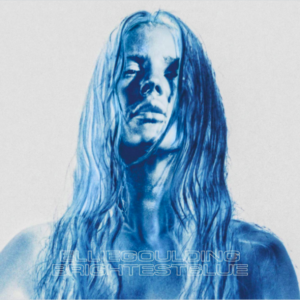 Ellie Goulding is back with her fourth studio album, Brightest Blue, out now via
 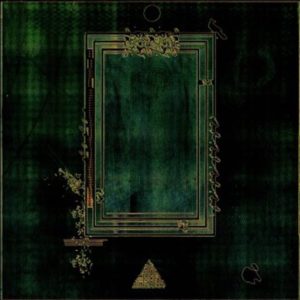 Nicolás Jaar has released his third new album of 2020, Telas, via
 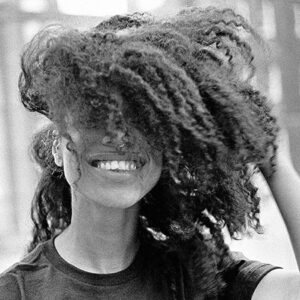 Lianne La Havas has put out her third, self-titled album, her first full-length release since 2015’s Blood. The London singer-songwriter’s latest includes the previously released singles ‘Paper Thin’ and ‘Bittersweet’, as well as her take on Radiohead’s ‘Weird Fishes’ from 2007’s In Rainbows. Co-produced by La Havas along with longtime collaborator Matt Hales, Beni Giles, and guest co-producer Mura Masa, the LP was recorded in London, Bath and New York throughout October and December of last year. “I’ve tapped into the best and worst parts of me,” La Havas said about the album in a statement. “While I didn’t expect this to be the direction of my new music, it’s my reality and it’s driven by emotion. I dare say that this is the closest I’ve gotten to a pure expression so far.”
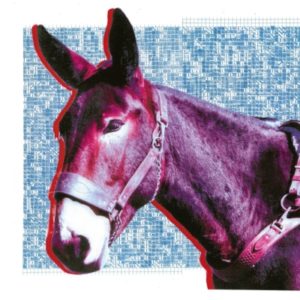 Detroit post-punk outfit Protomartyr have returned with their fifth studio album, Ultimate Success Today, out now via
 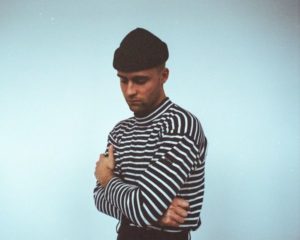 Singer-songwriter Woodson Black aka Haux has come through with his debut LP, Violence in a Quiet Mind, via