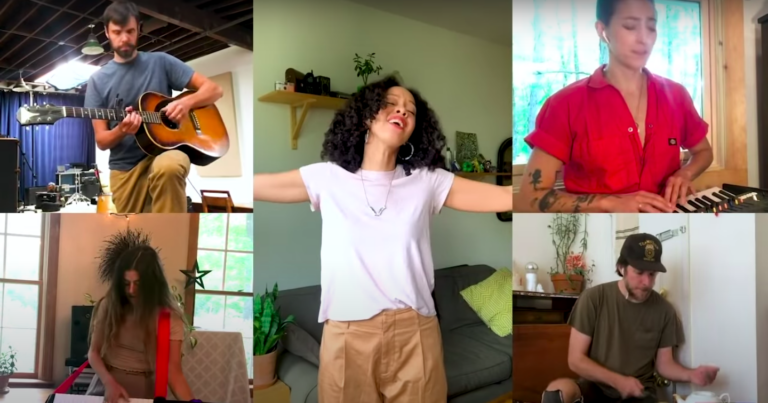
Dirty Projectors are the latest band to perform a quarantine live set as part of the ‘at home’ edition of NPR’s Tiny Desk concert series. The performance features all five members of the indie group’s current line-up – Dave Longstreth “shaking and tapping all things tiny”, Felicia Douglass and Maia Friedman on vocals, Kristin Slipp on keytar, and Mike Johnson on various other instruments. Check out the video below.
“We’ve loved Dirty Projectors for more than a dozen years – from the band’s ‘Black Flag’ covers record to the brilliant angular sounds we presented at SXSW, and more recently, a candlelit Tiny Desk concert in 2018,” NPR’s Bob Boilen wrote in the video’s description. “The lineup often shifts, but the creative nature of this band, headed by David Longstreth, doesn’t.”
He added: “It’s a band in which any member can take the lead, and that’s the beauty here. We see Dirty Projectors change and surprise us with each new song, something so rare and vibrant.”
Dirty Projectors played songs from their two most recent EPs, Windows Open and Flight Tower, namely ‘Lose Your Love’, ‘Overlord’, ‘Inner World’ and ‘Search for Life’. The band have committed to releasing a total of five new EPs in 2020.
The Dalai Lama has dropped his debut album, titled Inner World, in celebration of His Holiness’ 85th birthday (July 6). The record combines mantras and chants set against new age music composed by New Zealand musicians and practicing Buddhists Junelle and Abraham Kunin. Listen to it below.
The idea for the project goes back to 2015, when Junelle Kunin wrote a handwritten letter to one of The Dalai Lama’s assistants, pitching what would become Inner World. “I’d never heard him speak like this,” she said said in an AP story that announced the album back in June. “He really was so excited … he actually proceeded to explain to me how important music is. He leaned forward and his eyes were sparkling, and his fingers were rubbing together and he [talked] about how music can help people in a way that he can’t; it can transcend differences and return us to our true nature and our good heartedness.”
The album was also accompanied by a livestream, which featured appearances from Richard Gere and Anoushka Shankar, the daughter of Ravi Shankar, who is featured on one of the album’s tracks. Watch that below as well.
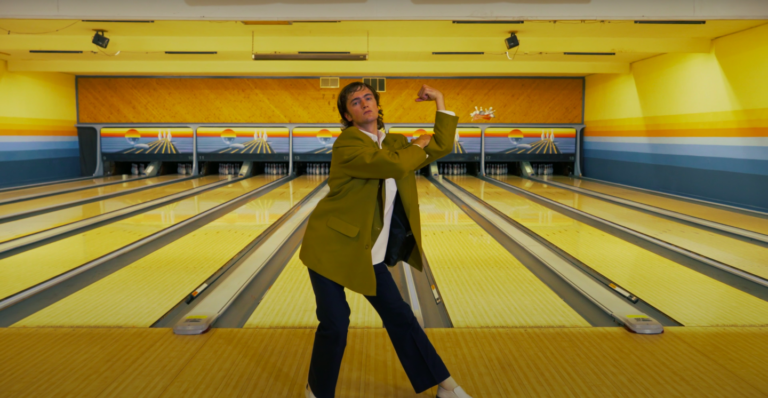
Jessie Ware has shared the music video for ‘Step into My Life’, taken from her latest studio album, What’s Your Pleasure? Directed by Madison Shelpuk, the video features dancer Eric Schloesser grooving out to the song alone in a bowling alley. Check it out below.
“Biggest love to Eric for making this video for Step Into My Life during lockdown in an American bowling alley,” Ware wrote on Twitter. “You’re giving me all The Big Lebowski Disco Jesus moments we need to start the damn week right!!!”
‘Step into My Life’ was co-produced by Kindness’ Adam Bainbridge and Ford, who also contributed to the writing of the track. What’s Your Pleasure? is Ware’s fourth studio album following 2017’s Glasshouse. Read our review of the album here.
The internet is the most wonderful horrible thing that could have happened to us. It is a universal tool for entertainment, knowledge sharing, keeping in touch with people from half a world away, an endless source of information and fun that we literally always have at our fingertips. And while it does have its downsides, ranging from the increasingly cynical people on Twitter to the endless stream of misinformation spreading on Facebook, it is an overall positive force in our lives. Especially for music lovers.
The ongoing pandemic has closed pretty much every concert venue and music festival. Considering the risk, this may not be such a big problem. Luckily, we have an alternative venue to visit: the internet. Countless artists are keeping in touch with their fans through streaming services like YouTube, Twitch, Facebook, and – believe it or not – video games.
Old dogs, new tricks
Jean-Michel Jarre was once known for his grandiose live concerts. The French electronica veteran performed everywhere from the Great Pyramid of Giza to the Eiffel Tower, and his performances broke the world record for the largest outdoor concert four times. With no way to perform live, Jarre learned a new trick: YouTube. Two weeks ago, the artist held his first VR concert called “ALONE TOGETHER” – and, unlike other VR performances, the event was “live-live”.
Those without a VR headset got to enjoy his performance in measly 2D through the artist’s YouTube channel.
Another “old dog” learning new tricks is none other than English singer, songwriter, composed, pianist, and knight Sir Elton Hercules John (yes, that’s his real name). This time, in turn, it’s not “live-live” performances that are shared on YouTube but recordings of his past concerts held around the world between 1976 and 2000.
Virtual worlds
Now, for the “inside video games” part.
Early last year, Marshmello held a virtual concert inside the video game Fortnite. It was a successful event, a replica of the DJ’s real-life performances. This year, Travis Scott took things one step further, setting a trend for virtual performances and interactive music videos. Astronomical was more than just a performance – the whole environment was a stage, and the participants (the players) were literally in the middle of the action.
But this is just the beginning. Rave.family, a “fusion” event organizer is holding its “Rave Family Block Fest” inside the popular video game Minecraft – the event will have more than 850 performers including Rudimental. And Tomorrowland, one of the biggest electronic music events in the world, is also going virtual: its 2020 edition called “Around the World” will be held in a virtual location that will be just as grandiose and colourful as the real thing.
Live music is pretty much off the table this year. In real life, at least – because in the virtual world, it’s going stronger than ever, everywhere from Twitch streams to entire virtual venues built to order.
Audrey Tautou stars as the titular character in this charming French romantic comedy directed by Jean-Pierre Jeunet. After mistakenly diagnosing her with a heart condition, Amélie is homeschooled by her mother and is raised isolated from other children. The film focuses on her young adulthood in Paris, where she’s surrounded by characters almost as quirky as her. A chance discovery of a box of childhood treasures in her apartment leads her on a search for their owner, which in turn leads Amélie on a search for love.
The film has a distinct visual palette, defined by a yellow hue pierced with bright colours and deep shadows, as well as its creative use of magical realism. Here are fifteen of the most creative shots from the film.
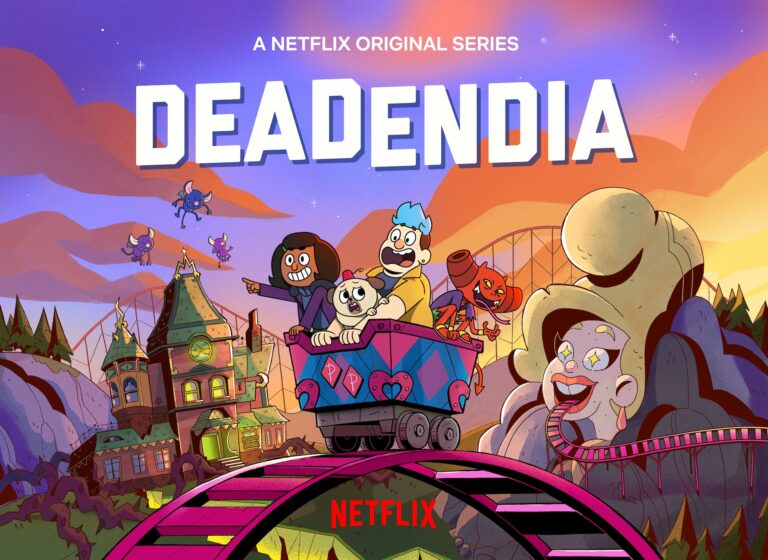
Our Culture is privileged to present an interview with Hamish Steele, creator of the DeadEndiacomic series.
DeadEndia “follows the adventures of Barney and Norma, two humans who stumble upon the supernatural secrets of Dead End, an amusement park haunted house! Joining their adventures are Pugsley, a pug possessed by a demon king, and Courtney, the guardian of the elevator to the 13 Planes of Existence!”
We sat down with Hamish to talk about his work, DeadEndia, and what’s next on the horizon.
Hamish, it’s a pleasure to talk with you. Please introduce yourself for our readers!
Aw thank you! I’m Hamish Steele! I live in London and by day I’m an animation show runner / writer person and by night I’m a comics creator. I won a Most Promising Newcomer Eisner a couple of years ago and I reaaaally love gators.
The announcement of the DeadEndiaseries from Netflix is terrific. How did that come about?
I’ve been in the world of animation development for about eight years. In fact, my first proper job in the industry was a DeadEndia short for Cartoon Hangover. We developed that for a little bit at Nickelodeon but it didn’t end up happening. But I did do a couple of pilots there and they got me in touch with Blink Industries and I’ve worked there ever since. Between the short and now, I developed DeadEndia into a webcomic on the side and the planets ended up aligning where Alexi Wheeler, the guy who originally wanted to make DeadEndiaat Nickelodeon, moved over to Netflix. Sometimes it takes many years for the right time, right place to happen but it does happen.
What are the challenges or advantages of translating the comic to an animated format?
In most adaptations, you have to cut things out for time. But I’ve found we’ve had this amazing opportunity to expand on everything: the characters, the world, the humour, the horror. In fact, scares have been the best advantage of the animated form as in comics you don’t have music, sound and timing to help you with the atmosphere. But obviously there’ve been huge challenges – setting an animated series in a bustling theme park is asking a LOT of the animation and design team. This is a BIG show.
DeadEndia is openly and wonderfully LGBT-inclusive. How does it feel to be able to continue that into the animated adaptation?
I feel amazingly grateful to Annie Liu, our main Netflix exec for not only letting us have the diversity I wanted but championing it and pushing me to tell the story I want to tell. GLAAD reviews all our scripts, we have cast the show responsibly and our writers room is a reflection of the characters. With so few trans storylines on tv, let alone as the lead character in a kid’s show, we know we can’t be everything for everyone. But this is Barney’s story and I can’t wait for people to get to know him.
What do you want most out of this programme?
If one lonely kid feels like someone out there has their back, that’ll be my job done. With kids tv, the impact is never felt at the time of its release. We can look at reviews and ratings and get some idea, but the real impact will come 5, 10, 15 years later when the kids who watched it are making the next generation of tv.
Are there any other projects on the horizon?
We have just launched the kickstarter for Croc and Roll, a new comic book series written by me and with art by George Williams (@neatodon on twitter). It’s kinda like a mix of TMNT and Jem and the Holograms but very gay. We’ve already funded Issue 1 but I hope we are aiming for a series of 6 issues!
Steele’s latest endeavour: Croc and Roll.
How can our readers support both DeadEndiaand Croc and Roll?
The DeadEndiagraphic novels are available on the Nobrow Website and at all good local book and comic stores. The Croc and Roll kickstarter is here.
As for the DeadEndiashow, look forward to it arriving in 2021. I promise it’ll be worth the wait!
We can’t thank Hamish enough for sitting down with Our Culture. To see more of his work in the meantime, check out his eclectic work on his website.
Los Retros, a Oxnard-based artist, has released a superb euphonious five-track EP named Everlasting, featuring Los Retros’ latest single New Humanity. The EP was released via Stones Throw Records.
Everlasting is the follow up to Los Retros’ debut EP Retrospect, which held his breakout single Someone To Spend Time With, it has currently gained over 20 million streams and views since its release day.
Tracklist for Everlasting
1. Cry of The Humble
2. Sweet Honey
3. The Messiah
4. New Humanity
5. Fruitful
Reece van der Merwe, a photographer and creative out of South Africa, has presented a superb editorial-like series named Leg Day. In this short but fantastic series, Merwe explores the graceful limbs that are legs through vibrant and eye-pleasing visuals. The model for the series is Cheri’ van Wyk.
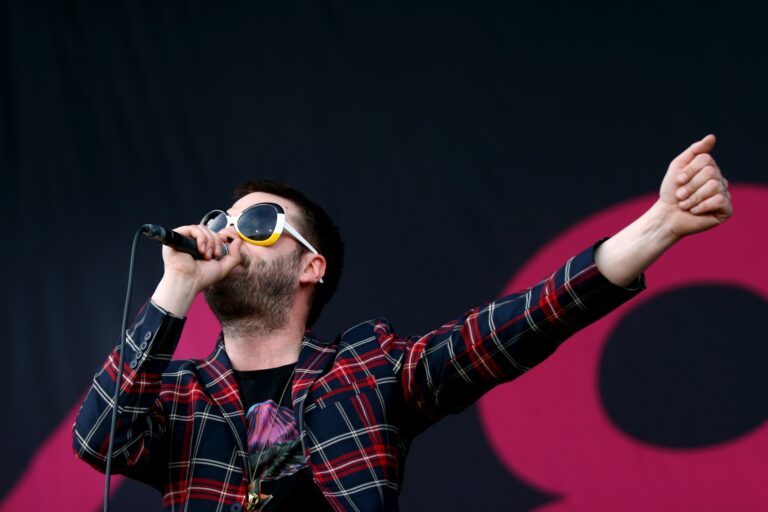
Kasabian have officially announced that frontman Tom Meighan is leaving the band due to “personal issues”.
The band posted a statement on Twitter explaining the singer’s departure: “Tom Meighan is stepping down from Kasabian by mutual consent. Tom has struggled with personal issues that have affected his behaviour for quite some time and now wants to concentrate all his energies on getting his life back on track. We will not be commenting further.”
Meighan had been the lead singer with the Leicester group since they formed back in 1997. Along with original guitarist and close friend Sergio Pizzorno, the band went to become one of the UK’s biggest alternative rock acts, headlining Glastonbury Festival in 2014 and landing five UK Number 1 albums and 12 UK Top 40 singles, including hit single ‘Fire’.
The news comes as somewhat of a surprise, as just last month the singer had confirmed that Kasabian were working on their seventh studio album. “We’re going to try and make a new record as soon as we can but we can’t really do anything while we’re restricted. Serge has been writing songs for Kasabian so it’s all good,” Meighan told Skye News.
The band’s last album was 2017’s For Crying Out Loud, while Pizzorno put out a solo album under the name The SLP last year. It is not yet clear whether Kasabian will continue to tour and make music following Meighan’s departure.
Tom Meighan is stepping down from Kasabian by mutual consent. Tom has struggled with personal issues that have affected his behaviour for quite some time and now wants to concentrate all his energies on getting his life back on track. We will not be commenting further.
Sir Elton John has become the second artist to be honoured in the Royal Mint’s new ‘Music Legends’ collection of commemorative coins, following an official coin in honour of Queen.
Designed by Bradley Morgan Johnson, a UK artist and digital sculptor, the coin features the rock icon’s trademark straw boater hat, as well as a Union Jack and a music note. The commemorative coins are now available to buy in gold proof, silver proof, and brilliant uncirculated editions. The cheapest coins are being sold for £13 while a one-kilo gold proof coin, with a face value of £1,000, is priced at £68,865. Check out the coin below.
“It really is a fabulous honour to be recognised in this way,” Elton John said in a press release. “The last few years have contained some of the most memorable moments of my career, and this is another truly humbling milestone on my journey.”
Clare Maclennan, Divisional Director of Commemorative Coin and the Royal Mint Experience, said: “Elton John is without a doubt a British music legend and is recognised as one of the most successful singer-songwriters of his generation.”
She added: “We are delighted to honour Elton’s significant contribution to British music on a UK coin. This is the second coin in the Royal Mint’s new Music Legends series, marking the work of our exceptional British musicians.”