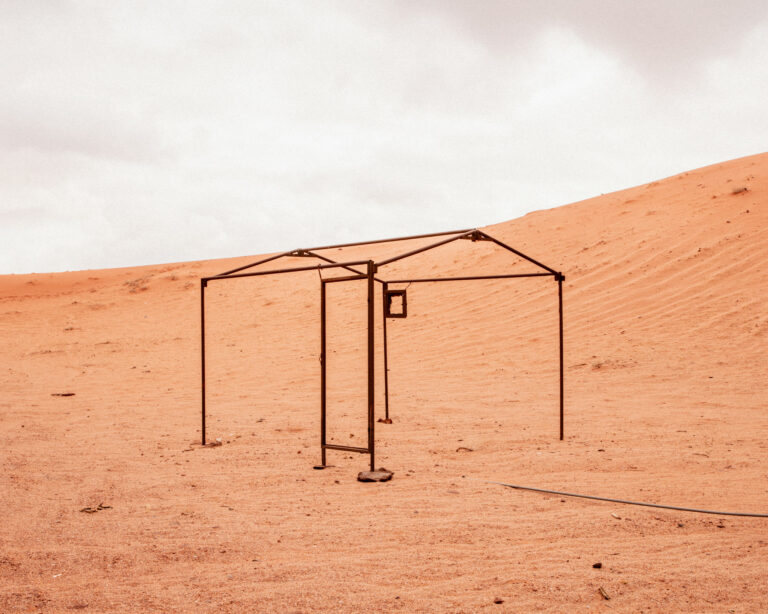
David Esquivel, a beforehand highlighted artist on Our Culture, has released an excellent series which utilises old newspapers from the 50s and 60s to create comedy-like, vibrant pieces of work. The series is named Don’t Miss It.
Writing about the project David Esquivel stated it’s “a side project I’ve been working on with all the excess paint from making my main body of work. All of these are painted directly on magazine pages from the 1950s and 60s.”
With the year coming to an end, we have selected some questions to test your knowledge on the past year in the art world. From a highly-priced banana to some big money sales at Sotheby’s, this year has had it all.
2019 was a pretty chaotic year when it came to music. Looking at the releases that came out this year, it’s particularly hard to come up with a coherent narrative to sum it all up. But one thing is clear: despite the continuing threat streaming services pose, the feature-length album still thrived in 2019. A few probably meaningless but nevertheless interesting observations: it was a notably strong year for pop, with exciting newcomers like Billie Eilish and Lizzo using the long format to their benefit rather than just profiting off their hits, while prominent stars like Ariana Grande and Charli XCX also utilized it to develop and mature their sound. When it came to hip-hop, it was a relatively quiet year, with most big names staying under the radar – with a couple of notable exceptions. In the rock and singer-songwriter territories, there seemed to be a healthy balance between refreshing debuts from up-and-coming artists and confident reinventions from established acts like Angel Olsen and Lana Del Rey. At the end of the day, all that we can gather from this is that there has been plenty of great music that’s kept us company through this tumultuous year.
Clairo, Immunity
When it comes to artists like Clairo, the 21-year-old singer-songwriter who rose to prominence after her home-made video for Pretty Girl went viral, it can be hard to really grasp the impact her music has had through the glass wall of the internet. But seeing her live in concert, where small armies of young people sing their lungs out to every single song, serves as a palpable reminder of how deeply and intensely her music has actually resonated with her generation. And it’s not like the songs on Immunity lend themselves to this kind of mass adoration. With the exception of ‘Sofia’, the most playful, catchy single here, most of the tracks are quiet and understated, like listening to the hushed confessions of a close friend. The rise of Clairo is emblematic of a generation connecting not through boastful self-presentation, like most would have it, but through unflinching vulnerability.
Ariana Grande, thank u, next
When Ariana Grande returned with Sweetener last year, it felt like not just a bold new chapter for the pop star, but also a triumphant affirmation of love and joy in the aftermath of tragedy and heartbreak. But with the release of thank u, next just a few months later, became clear that Sweetener, which presented a new, more mature side of Grande, was simply a glimpse into it, a kind of transitioning phase – the album was still bogged down by too many guest features and occasionally messy production. By contrast, thank u, next is a markedly authentic Ariana Grande project: despite the lack of ‘God Is a Woman’-esque anthems, the album is looser, more focused, and more coherent. Most of all, it’s not afraid to confront darkness – if Sweetener was an admirable effort to try to put on a happy face, thank u, next is a liberatingly earnest acknowledgement of being too broken to do so.
GLOO, XYZ
XYZ feels less like the collaborative project of three separate artists and more like the product of a single amalgamated being. The chemistry between the members of this closely-knit group of forward-thinking electronic producers – Iglooghost, Kai Whiston, and BABii – is incredibly palpable, the layers of sounds meshing in uncompromising, unpredictable ways that complement rather than cloud one another. Each member’s contributions are irrefutably as essential to the project’s success as any, and any attempt to guess who contributed what becomes as futile as it is exciting. Relentlessly frenetic, refreshingly inventive, and utterly addicting, XYZ is composed of “one thousand drops, looming blasts, rapid thuds, blistering squeaks, and seven hundred and eighty-nine crystal-clear kicks in the face,” all tightly packed within a manically hyper-saturated 28 minutes. No other album this year hit us with such an electrifying rush of adrenaline as XYZ.
Charli XCX, Charli
The mixtapes Charli XCX had been dropping in collaboration with experimental pop label PC Music throughout her four-year studio album silence hinted at an exciting new phase in the pop artist’s career. The much-anticipated Charli brought together the seemingly conflicting elements that have defined the artist’s career so far and refined them to create a more defining, wholistic Charli XCX experience, proving that left-field, abrasive production styles can coexist semi-harmoniously with a more conventional millennial pop sound. From infectious, radio-friendly singles like ‘Gone’ and the nostalgic ‘1999’ to more out-there, feature-heavy bangers like ‘Click’ and ‘Shake It’, what ties it all together at the center is Charli, whose songwriting gets more personal and heartfelt than ever. Not only did Charli prove once again that no one does pop quite like Charli XCX, but that eccentric and accessible, noisy and sweet, emotional and sultry, need not be mutually exclusive.
Angel Olsen, All Mirrors
The follow-up to 2016’s excellent and guitar-heavy My Woman saw Angel Olsen employing more synths and a lush 12-piece string section that took her already ambitious approach to the next level. But the reason the singer-songwriter’s new album resonated with fans of her intimate, acoustic sound is because the compositions here are still the result of deep personal introspection – as with her previous albums, she started working on the album almost entirely alone, focusing on stripped-back songwriting. All Mirrors confronts ideas of artistic self-presentation as notions of identity and romance reveal themselves as nothing but illusions. Regardless of the instrumentation that surrounds her – whether it’s the imposing strings on ‘Impasse’ or the quietly atmospheric, late-night-jazz melodies of ‘Endgame’, Olsen’s vocal presence is breathtakingly compelling, finding power in both intensity and subtlety. Whether it’s a detour or a new sonic direction, All Mirrors is her widest project in scope, and perhaps also her wildest.
Stella Donnelly, Beware of the Dogs
On Beware of the Dogs, Australian singer-songwriter Stella Donnelly somehow manages to combine biting humour, stark honesty, political commentary, and heartfelt lyricism. She makes use of the amiable, catchy sounds of indie pop and playfully twists them on their head, turning the most unlikely lines into sing-along choruses. The personal is political as she confronts sexism on tracks like the fearlessly acerbic opener Old Man or the devastatingly earnest ballad Boys Will Be Boys – the album might as well have been titled ‘Beware of the Patriarchy’. At times, the explicitness of the lyrics becomes liberating, like on the unexpectedly sweet love song Mosquito. Donnelly also has a uniquely memorable voice, heartwarmingly tender with a characteristic, instantly loveable tremor, which wonderfully complements the already solid songwriting and infuses it with even more personality. Beware of the Dogs is one of the most refreshingly enjoyable, pertinent, and confident debuts of the year.
Nick Cave & The Bad Seeds, Ghosteen
If 2016’s Skeleton Tree was about dealing with grief in the immediate aftermath of the death of his teenage son, Arthur, Ghosteen is about the long and difficult healing process that follows. Skeleton Tree was mostly written before the tragic incident and recorded after it, so grief hung over the album like a dark cloud. But the skies seem to have cleared on Ghosteen, and the Bad Seeds’ ethereal synths, transcendent vocal harmonies, and poetic lyrics allow us to ascend to the heavens along with Cave, a sailor in a galleon ship, a “long lonely rider across the sky” searching for hope. Sonically, the mood of the album is meditative, spare, and often serene, and it is that, if anything, that gives the listener some kind of assurance that peace will come in time, as Cave repeatedly intones. Ghosteen is a shatteringly haunting yet ultimately cathartic album about loss unlike any other this year.
Weyes Blood, Titanic Rising
A few months before Angel Olsen came out with All Mirrors, Weyes Blood released a similarly ambitious and enthralling chamber-folk album. Both singer-songwriters utilized grand, elegant instrumentation and self-aware lyrics to explore love and life in the modern age; but where All Mirrors is sometimes imposing and confrontational, Titanic Rising is dreamy and majestic, a radiant ornament drenched in a golden sea of nostalgia. Throughout its runtime, Natalie Mering floats through time and space, guiding the listener with her. In short, the album demands to be described in pretentiously elaborate metaphors. The album itself, however, is anything but: behind its beautifully pristine veneer and melodramatic presentation lies a deeply earnest effort to try not to let the weight of everything drown her, all while clinging onto human emotion in a time where technology seems to control our lives. Titanic Rising is an immense yet heart-rendingly delicate achievement, a transcendent piece of art with a true soul.
Lana Del Rey, Norman Fucking Rockwell!
Norman Fucking Rockwell! was the album that changed most critics’ perception of Lana Del Rey. While her past work has often felt like the epitome of style over substance, NFR! is a record full of emotional substance – not only her best material yet, but also her boldest and most mature. She collaborates with in-demand pop producer Jack Antonoff, who doesn’t alter Del Rey’s sound as much as lay the groundwork for her elegantly quiet voice to shine rather than drown in reverb, while polishing her sturdy and frequently heart-wrenching songwriting with lush instrumental embellishments. Del Rey lays her soul bare on every single track here, from the uncompromisingly feminist opener to the standout closer, where she compares herself to Sylvia Plath and holds on to a tinny glimmer of hope – “a dangerous thing for a woman like me to have,” she sings, but she has it – just enough to rise from the ashes, like Lady Lazarus herself.
Big Thief, U.F.O.F.
Big Thief’s U.F.O.F. is a mesmerizingly surreal force of nature. The third studio album by the folk-rock band is their best yet – and it’s only one of two excellent albums they released this year. Fueled by an atmosphere of deep interconnectedness between singer-songwriter Adrianne Lenker and the rest of the band, the record’s sound here feels honed-in, effortless, as natural as a river flowing to the sea. Essential in the true meaning of the word – not just important, but communicating some fundamental essence of being. An unknown entity they’ve discovered by digging deep into the earth. And yet it also feels strikingly intimate – Lenker’s poetry here is as captivating as it is evocative: “Fragile orange wind in the garden/ Fragile means that I can hear her flesh/ Crying little rivers in her forearm,” she sings on ‘Orange’. Words can’t really do justice to the majestic beauty of U.F.O.F. –- it’s just one of those albums.
Billie Eilish, When We All Fall Asleep, Where Do We Go?
Few artists have been as divisive this year as Billie Eilish, which is a testament to just how much her music and profile dominated the mainstream landscape in 2019. But when you actually take a step back and look at it, When We All Fall Asleep, Where Do We Go? is not just the most commercially successful and potentially game-changing debut of the year, but also a stunningly unique pop album showcasing Eilish and her brother and close collaborator Finneas’ singular artistic vision. It’s not that they invented all the musical ideas presented here, but the fact that they managed to bring together DIY production techniques, catchy and often intimately evocative songwriting, as well as Eilish’s underrated vocal delivery, and package them in a way that actually resonated with mass audiences, renders it a remarkable achievement. With WWAFAWDWG, Billie Eilish has managed to define and commercialize the sound of Gen Z.
Ada Lea, What We Say in Private
Sometimes, an album doesn’t have to break new ground or invent a new genre to stand out. Sometimes, all it needs to do is captivate you with the sheer power of its songwriting. And that’s exactly what Ada Lea did with what we say in private, an incredibly dynamic, emotionally potent, and artfully crafted debut that oscillates between fierceness and vulnerability. Musically, the record sits somewhere between the righteous punk rock energy of Sleater-Kinney and the poetic intimacy of Big Thief while still remaining a cohesively compelling listen. The result of a 180-day period of intense introspection following a break-up, the album is also grippingly intimate, from the hushed honesty of ‘the party’ to the diary-like ‘180 days’ to the soul-crushing ‘what makes me sad’ and the stunningly gorgeous ‘yanking the pearls off around my neck…’ It’s a shame what we say in private was largely overlooked – it’s a revelatory release, and one that doesn’t demand as much as invite repeated listens.
Dave, Psychodrama
Having won the Mercury Prize this year, there is no doubt that Dave deserves a spot in our Best Albums of the Year list with Psychodrama. The album covers themes of race, imprisonment and abusive relationships which Dave manages to capture excellently through raw energy and poignant lyrics. Psychodrama features notable guest appearances from J Hus, Burna Boy, and Ruelle and builds upon Dave’s 2017 album Game Over. Over the years, we have seen Dave develop his style and maturity as an artist; this album marks a milestone in the sphere of British music and Dave’s exciting career.
Little Simz, Grey Area
Simbiatu Abisola Abiola Ajikawo or better known under the moniker of Little Simz has made quite the leap in the world of music this year, having released the UK R&B number one album, Grey Area. Little Simz’ freshest album Grey Area emerges with a wave of eclectic songs that were produced by her friend, Inflo. There is no settling in Grey Area, with each song the listener is presented with a different theme or idea, making it an enjoyable trip throughout. Little Simz has given us a long-awaited album that punches well on many levels; fans and critics were craving for it after the promise Little Simz showed in Stillness in Wonderland, making Grey Area arguably the best rap album of the year.
FKA Twigs MAGDALENE
FKA twigs’ first album in five years was well worth the wait. While both LP1 and her 2015 EP M3LL155X received widespread critical acclaim for their boundary-pushing, cutting-edge R&B sound, MAGDALENE is a revelatory release that marks a drastic shift to a more accessible yet still forward-thinking approach. Drawing influences from the likes of Kate Bush and Björk, twigs’s varied sophomore LP boasts an impressive list of guest contributors from both the art pop and mainstream pop worlds, from experimental artists like Arca and Nicolas Jaar to megaproducer Jack Antonoff and rapper Future. But MAGDALENE is also a devastatingly personal album, as FKA twigs twists and stretches her voice in a remarkably expressive and immediate manner to evoke the shattering pain of heartbreak. From transcendent, expansive cuts like ‘thousand eyes’ and ‘mary magdalene’ to heartbreakingly spare ballads like ‘mirrored heart’ and ‘cellophane’, MAGDALENE is the sound of a fallen alien trying to reach out to the people of Earth by means of their most universal art form, just like FKA twigs flirts with the peripheries of commercial pop and ends up becoming one of its leading vanguards.
Kanye West Jesus Is King
Kanye West, the controversial and beloved figure, came back this year with his ninth album Jesus is King. While critically, it’s not the most popular album by Kanye, its cultural significance will most likely stand the test of time for its focus on religion and man himself, Kanye. The album itself is well-produced and holds maybe the best bassline of the year in Water but does not escape the self-loving themes of West that have been previously present in pretty much all of Kanye’s recent work. While it’s not the most definite contender for album of the year, the hype behind it and fearless style deserve a spot on this list.
Chromatics Closer To Grey
The seventh album by Chromatics Closer To Grey brings another step for Chromatics, a band that has helped architect the music world with their shoegaze pop and ’80s indie rock flair. When it comes to the quality of production, not many do it better than Chromatics, if any. Closer To Grey marks another landmark for the band, helping them progress on their mythical-like image through a delightful touch of nostalgia and incredibly selected synths of the 80s that we can only marvel at. For many fans, Closer to Grey, was a surprise and probably not the last one.
Tyler, the Creator IGOR
Tyler, the Creator has built on his aesthetic and soul with his most recent album IGOR. Through the buzzing synths in IGOR’S THEME to the warm production of GONE, GONE / THANK YOU, IGOR reveals and reflects more on who Tyler, the Creator is. There is a feel of honesty and tenderness in the album that fits Tyler, the Creator and his overall look as an artist — it’s a self-study of himself. Some may criticise Tyler’s singing, but the total production of the album is purely majestic that expands on you in an instance.
Michael Kiwanuka Kiwanuka
Kiwanuka’s latest masterpiece of an album comes in smoothly with a warm weekend feel as it slowly gradients to a sorrowful and reflective mode that has become present in much of Kiwanuka’s work. There is no denial that Kiwanuka is one of the most magnificent artists of the past decade, having released Cold Little Heart, Love & Hate, and Home Again. With this album, Kiwanuka delivers just that calibre of music we have come to love from him. Kiwanuka is a masterful album that deserves every bit of praise for its heart-wrenching emotion that cajoles you into pressing the repeat button, time and time over.
Kate Tempest The Book Of Traps And Lessons
The Book Of Traps And Lessons by Kate Tempest is a gentle and tender piece of work that tackles the internet, love, racial discrimination and overpopulation, making the listener abhor the world we live in. In terms of production, Rick Rubin’s use of raw sounds elevate the weight of each piece that reflects on the exhausting and rough world around us while still giving us a glimpse of optimism. Whilst it may not surpass Let Them Eat Chaos, it certainly stands out for its commentary.
Delia Owens’ latest bestseller follows ‘Marsh Girl’ from Barkley Cove, a quiet town on the North Carolina coast. In late 1969, when handsome Chase Andrews is found dead, the locals immediately suspect Kya Clark, the so-called ‘Marsh Girl’. Fine-tuned and intelligent, she has survived for years alone in the marsh that she calls home, discovering friends in the gulls and lessons in the sand. Then the time comes when she aches to be touched and loved. When two young men from town become intrigued by her wild beauty, Kya opens herself to a new life — until the unimaginable occurs.
Microsoft has presented their upcoming console Xbox Series X. With a lot of excitement coming from the gaming community, we have picked through the rumours to pick out three things we know about the Xbox Series X.
Release Date
According to Microsoft, Xbox Series X will be released in the “Holiday 2020,” meaning it will likely be released in late autumn or early wintertime next year.
8K Gaming
If you’ve just bought a 4K television, you might be disappointed. With the wave of TVs moving fast, Xbox Series X will support 8K gaming with frame rates of up to 120 frames per second.
New Titles
For fans of Halo and Forza series, we have some great news. Among other games which have not yet been announced Everwild, Forza Motorsport 8, Halo Infinite and Senua’s Saga: Hellblade II will be released on the Xbox Series X. The Xbox One Series will also feature backwards compatibility.
Ciggy, an experimental artist, based out of Brooklyn, US, released a debut single named Cassiopeia. Ciggy presents a smooth beat that utilises elements of lo-fi and hip-hop mixed with a euphonious vocal tone which is delightful to the ear. Having presented Cassiopeia, we will be eager to see what is next for Ciggy, an artist for the future.
The pop landscape changed significantly during the 2010s. On the one hand, pop as we know it ceased to be the dominant genre in the mainstream, and was instead overthrown by the new wave of trap-leaning hip-hop. Pop music was still, well, popular, but for the most part, pop artists didn’t enjoy the same kind of commercial success in the charts as they used to, and when they did, it often came in the form of mind-numbingly asinine singles by artists like Ed Sheeran and Justin Bieber (two artists who came together in 2019 for ‘I Don’t Care’, a song that seemed to epitomize everything that was wrong with contemporary pop). On the other hand, the rising tide of poptimism within the critical sphere led to a much-needed reappraisal of pop music, which was still seen as inferior and less authentic in many ways than more “serious” genres. It was in this climate that pop artists began to step out of their comfort zone, leading to more experimentation in the genre, and ultimately, more interesting, genuine, and artistically compelling music.
Instead of focusing merely on making great hits, more and more mainstream pop artists utilized the full-length album as a medium for artistic expression and storytelling, which was something quite rare in previous decades. This was especially the case in the latter half of the 2010s, as 8 out of 10 of the albums on this list came out during this period. It might just be recency bias, but 2019 was also a particularly strong year for pop – if I’d replaced two of these albums with records their respective artists released this year (which I easily could have, considering their quality), 2019 releases would have made up half of the list. It’s also worth noting that 9 out of 10 albums were made by female artists, particularly young female artists, which is perhaps reflective of the critical reevaluation that (female) youth culture has undergone in the 2010s.
There was one clear rule I set for myself: only one album per artist. But what made compiling this list difficult wasn’t so much picking the right albums as much as deciding what was even eligible, what could be considered pop. Somehow, an album by FKA twigs felt more pop than an album by Lana Del Rey, even though the latter is definitely considered more of a pop star. Perhaps that’s because as artists began to push their sound forward (or in strange directions), the boundaries between pop and indie, mainstream and experimental, became increasingly blurred. But that’s also exactly what made pop so exciting in the 2010s. From Robyn to Billie Eilish, it felt like the genre had been set free.
10. Ariana Grande,thank u, next (2019)
Ariana Grande has been, without a doubt, one of the most prominent pop figures of the decade. Some might even call her the last true pop star of her calibre – after all, who else with such a traditionalist, Max Martin-backed approach to pop managed to survive the radical changes the mainstream music landscape underwent in the 2010s? Even though she’s still just 26 years old, her sound kept growing and maturing with each new release, culminating in her most personal and introspective effort yet, thank u, next. It’s the result of a truly tumultuous string of events – first, the terrorist attack during the Manchester concert of her 2017 Dangerous Woman tour, her engagement with comedian Pete Davidson, then the tragic death of her ex-boyfriend Mac Miller, and her subsequent break-up with Davidson. While 2018’s Sweetener is undoubtedly an admirable and occasionally great record that features some of Ariana’s best hits to date, it was still bogged down by too many guest features and occasionally messy production. By contrast, the understated, unfiltered, and dark nature of thank u, next makes it her most liberatingly earnest and consistent. It’s a markedly authentic Ariana Grande project, and a great one to finish off the decade with.
9. Carly Rae Jepsen,Emotion (2015)
After releasing the ubiquitous single ‘Call Me Maybe’, Carly Rae Jepsen seemed to fade from the public spotlight. But her case serves as a great example of how the influence of a mainstream pop artist in the 2010s could be measured by more than just commercial success. Jepsen earned a cult-like following online, where her adoring fans made memes comparing her to Mozart and giving her a sword – one even wrote a 149-page thesis analyzing her music. So even though her third album, Emotion, didn’t see the kind of chart success major labels might expect, the devotion it received from her fans is a more reliable testament to its lasting impact. And it’s not hard to see why – the album’s 80s-inspired, neon-tinged brand of synthpop strays as much from the artist’s bubblegum roots and the sound of contemporary pop as from those trying to subvert it. Emotion proves that there’s a space for unapologetically formulaic, nostalgic pop music made in the post-post-modern age, especially when made by pure pop perfectionists like Jepsen. With lyrics that tuck at the heartstrings, lush instrumentals (nothing can beat that opening saxophone riff on ‘Run Away with Me’), and hooks that stick to your head, what’s there not to (really, really, really, really) like?
8. FKA twigs, MAGDALENE (2019)
It might be paradoxical to place an album that did its best to defy genre in a ‘best pop albums of the decade’ list. But in the context of FKA twigs’ career, MAGDALENE is the album that saw her going from the left-field R&B sounds of LP1 to a markedly more accessible and, yes, pop-sounding approach. Drawing influences from the likes of Kate Bush and Björk, twigs’s varied and revelatory sophomore LP boasts an impressive list of guest contributors from both the art pop and mainstream pop worlds, from experimental artists like Arca and Nicolas Jaar to megaproducer Jack Antonoff and rapper Future. But MAGDALENE is also a devastatingly personal album, as FKA twigs twists and stretches her voice in a remarkably expressive and immediate manner to evoke the shattering pain of heartbreak. From transcendent, expansive cuts like ‘thousand eyes’ and ‘mary magdalene’ to heartbreakingly spare ballads like ‘mirrored heart’ and ‘cellophane’, MAGDALENE is the sound of a fallen alien trying to reach out to the people of Earth by means of their most universal art form, just like FKA twigs flirts with the peripheries of commercial pop and ends up becoming one of its leading vanguards.
7. Daft Punk,Random Access Memories (2013)
Of all the albums on this list, none was as much of an artistic detour as Random Access Memories was for Daft Punk. The fourth studio album by the French electronic duo saw them trading EDM synths and samples for session musicians and live instruments in a genuine effort to pay homage to the disco and electronic dance music scenes of the 1970s and 80s. On a purely technical level, Random Access Memories is simply masterful: meticulously crafted, flawlessly engineered, and expertly mixed, it’s hard to deny the sheer sonic beauty of this album. But what’s most remarkable about it is that unlike all the other electronic acts of the decade that artlessly stole musical tropes from that era of pop, RAM feels so much more than just a dire exercise in nostalgia. The songs here are not just catchy – there’s a reason ‘Get Lucky’ dominated the airwaves, though it’s a shame other cuts didn’t find the same success – but also surprisingly ambitious in concept and narrative: once you dig deeper into the album, tracks like the nearly 10-minute prog-pop epic ‘Gorgio by Moroder’, album centrepiece ‘Touch’, and touching piano ballad ‘Within’ turn it into a holistically rewarding listening experience. With RAM, Daft Punk injected humanity into their robotic personas’ genetic code.
6. Janelle Monáe, Dirty Computer (2018)
At first glance, Dirty Computer might have seemed like a sub-par release compared to Janelle Monáe’s more expansive and ambitious concept albums, namely 2010’s sci-fi odyssey The ArchAndroid and 2013’s looser follow-up The Electric Lady. The record finds her stripping away the elaborate, sometimes difficult-to-digest features of her previous releases and tightening her focus to create a straightforward yet flawlessly executed and empoweringly liberating pop album. It has all the elements that make Monaé’s music so uniquely enjoyable, but this time designed for a newfound mainstream audience that was just starting to discover her work following her acting turns in 2016’s Oscar-winning Moonlight and Hidden Figures. But at no point does it feel like she’s doubling down on her approach: it’s a fearlessly joyful, uncompromisingly radical, and above all danceable record that’s filled to brim with queer sexual energy – look no further than the infectious lead singles, the Prince-indebted ‘Make Me Feel’ and the Grimes-featuring, irresistibly sultry ‘Pynk’. Yet it’s also Monaé’s most personal record as she abandons the persona of Cindi Mayweather and opens up about her own insecurities, unveiling the humanity that’s always been behind Monaé’s dense Afrofuturist worlds.
5. Beyoncé, Lemonade (2016)
Beyoncé had already risen to prominence as a cultural icon at the start of the decade. But although she had multiple great hits under her belt, she was always primarily a singles artist. This changed with her 2015 self-titled album, which took the female empowerment narrative she’d built a reputation for and extended it into an ambitiously feminist LP without sacrificing any of her commercial appeal. But it’s her follow-up record, Lemonade, a bona fide artistic statement and her most fully-fleshed album to date, that earns a spot on this list. In art, the personal has long been political; but before this album, the personal had largely been missing from Beyoncé’s music. Lemonade is an album about infidelity that only Beyoncé could have made: unashamedly angry, relentless, and raw, as much as an album engineered for mainstream popularity can be. What was perhaps more unexpected was the diverse range of genres through which the singer chose to express her frustration, as she drew from rock n’ roll, blues, and even country alongside her familiar R&B and pop stylings. There’s no doubt Beyoncé will find a way to stay on top in the 2020s – let’s hope it gives birth to more albums like this.
4. Charli XCX,Pop 2 (2017)
Charli XCX’s rise in the pantheon of pop was slow and steady, from her guest spot on Icona Pop’s massive 2013 hit ‘I Love It’ to the critical and commercial success of her 2019 album, Charli. But back when she released her first two albums, no one quite expected her music to become as subversive as it eventually did, as she utilized a relatively tried-and-true pop formula. Her 2016 avant-pop Vroom Vroom EP completely tore those expectations apart, signaling the beginning of a new, boundary-pushing phase for Charli. This led to Pop 2, the second of her two 2017 mixtapes, another collaboration with the experimental pop label PC Music. What made the mixtape so uniquely infectious was that instead of completely abandoning familiar pop tropes, Charli twisted them and pushed them to their extreme, giving birth to an abrasive, futuristic approach to the genre. While her 2019 album Charli is perhaps a more cohesive Charli XCX experience – and some might reasonably argue a better one – Pop 2 earns the spot on this list for being the more influential release. Don’t be surprised if the sound of pop in the coming decade can be traced back to this mixtape.
3. Billie Eilish,When We All Fall Asleep, Where Do We Go? (2019)
Not since Lorde’s Pure Heroine has a debut pop album made such a splash as Billie Eilish’s When We All Fall Asleep, Where Do We Go? The two albums have a lot of things in common: they were both made by teenage songwriters with a distinctive pop vision that felt intimate yet relatable. But where Lorde connected with the millennial generation, Billie Eilish has captured the existential fears and personal vulnerabilities, but also the quirky and referential sense of humour, of Generation Z. When We All Fall Asleep, Where Do We Go? showcases the singularly post-genre approach Eilish and her brother and close collaborator Finneas have come up with – it’d be a stretch to argue that they invented all the musical ideas presented here, but it’s the way they managed to bring together lo-fi production techniques, catchy yet intimately evocative songwriting, as well as Eilish’s underrated vocal delivery, and package them in a way that actually resonated with mass audiences, that earns it a spot on this list. It might be too early to tell if it will be as influential as Pure Heroine or Body Talk was, but if I had to guess, this album’s sound will no doubt be all over the 2020s.
2. Robyn,Body Talk (2010)
It might come as a surprise that at the time of its release, Body Talk was perceived by many as kind of a disappointment. But not due to lack of quality – Robyn had simply built so much hype around her in 2010, fans expected a full-length album of new material, rather than a compilation of tracks from her previously released mini-albums plus five new songs. But even as a standalone project, Body Talk acted as a surprisingly coherent greatest hits-type album that signaled the Swedish artist’s rebirth (or, rather, reboot). Body Talk was praised for its sharp and mature electro-pop songwriting, but time has also revealed how influential it came to be. It proved that pop could be forward-thinking yet accessible, danceable yet heartfelt, vulnerable yet triumphant. That it could have personality and attitude without losing its commercial appeal. After all, would there be a Charli XCX or a Janelle Monaé if Robyn hadn’t sung “Fembots have feelings too”? Would there be a Lorde without ‘Dancing on My Own’ or a Carly Rae Jepsen without ‘Call Your Girlfriend’? Body Talk has not just withstood the test of time – it has left a bigger mark on the shape of dance music than any other album this decade.
1. Lorde, Melodrama (2017)
When you listen to Melodrama, you can feel its pulsating heart beating through your chest. Lorde broadcasts the fears and anxieties of an entire generation with searing humanity and makes us want to dance to them. It’s not just infinitely relatable, but deeply resonant – if Pure Heroine was about exploring young adulthood, Melodrama is the definitive soundtrack to growing up. She proves that what society views as “generation L.O.V.E.L.E.S.S.”, young people that are as addicted to ephemeral relationships as they are to their phones, are in fact too cautious about their punctuation use because they simply have more love in them than their heart can handle. “I’ll love you ‘til my breathing stops,” Lorde bellows on ‘Writer in the Dark’. Against Jack Antonoff’s swooning, evocative production, her delivery goes from fierce to vulnerable, fearless to uncertain, capturing the loneliness of feeling everything in extremes. But feeling heartbroken after a breakup or alone at a party full of people are just parables for something bigger, something more existential. If all we spend our time doing is trying to find “perfect places” to make us feel more connected to each other, then Melodrama might be the closest thing we have to that. It makes you want to cry your eyes out, sing ‘til your lungs hurt, and share its beating heart with the world – and isn’t that what pop music’s supposed to do, after all?
Rosemary is a singer-songwriter hailing from Wilmington, North Carolina. She’s been releasing music on Bandcamp since 2014, ranging from lo-fi singer-songwriter to acoustic ambient to experimental psych-pop. Earlier this year, she came out with songs for sleep, a gorgeously soothing compilation of songs that sounds like a cross between a stripped-down version of a Grouper album and the confessional compositions of Julien Baker, as well as demos, an acoustic EP of songs she’s mostly been playing live. When compared to her first release, male induced migraines, demos showcases how much rosemary has grown as an artist: she has refined and tightened her songwriting without abandoning her DIY aesthetic. Any of these songs could have easily been recorded with a full band in the studio, but even as demos, their essence remains, and is perhaps even enhanced by the intimacy and rawness of the recordings. It’s her catchiest, most engaging collection of tracks yet, and a promising sign of what’s to come.
We caught up with rosemary for this edition of our Artist Spotlight series, where we showcase up-and-coming artists and give them a chance to talk a bit about their music.
What inspired you to start making music?
I’ve always loved the way making music made me feel. As a little kid, I’d sing at my family members for hours on end so as an attempt to reign in that unbridled passion for music, I tried out piano lessons. I had such a hard time reading music so I started relying heavily on my ear to learn how to play and I still do today. I picked up guitar when I was 13 and since then I’ve been playing and writing consistently. I can’t separate myself from music. It’s been the only constant in my ever-changing life. It’s just necessary.
What are some of your influences, musical or not?
During my first year of college, I remember seeing Greta Kline (Frankie Cosmos) sing with Aaron Maine (Porches) at a super small show at a music shop in my home town. Greta’s voice was so delicate and I was totally enamored by the entire set. After that, I listened to “affirms glinting” at least twice a day for an entire year. The album felt so intimate and authentic. It was something I desperately needed to hear during this time and it empowered me to pour my full self into my music and just start posting everything I had onto my Soundcloud without thinking twice about it. Porches’ “Scrap and Love Songs Revisited” was also extremely formative for me as well. Aside from that, I think Andy Shauf, Real Estate, Fleetwood Mac, Marika Hackman, and Alvvays are also some of my big influences.
Why did you pick the name rosemary?
My mother took care of an elderly woman named Rosemary while I was in high school. When she passed away, I ended up with a lot of her clothes which were beautiful and well kept and I wore a lot of them. I ended up taking on the name Rosemary ironically as an alter-ego, but the name started to feel like a natural fit. My middle name is Rose and my family calls me Rosie, so it felt right to put my music up under rosemary.
Do you record and produce your music completely by yourself? What is it about that approach that appeals to you?
Aside from the experimental Halloween album I put out on my bandcamp, everything I’ve ever recorded has been done on my phone with GarageBand. I’m very intimidated by recording on my computer and I psyche myself out a lot. I’ll usually sit on the floor of my bedroom, bathroom, or kitchen, and create instrumental loops until I feel like I’m floating in sound and zoned out. It’s a very intimate and cathartic process. I’m usually writing my best music when I’m extremely depressed so to work through it I really need that alone time to process and pour everything out. I start writing what I need to hear and then I start to feel lighter.
Can you walk us through the process of writing your latest EP, demos? What were some of the things you were thinking about?
‘demos’ is a compilation of songs that I’ve mostly been playing live. They’re definitely more stripped-down than what I play live when I have my friends on bass and drums (I think that sound is definitely more exciting). But, I had these recordings scattered, some never even uploaded, and I was starting to get a few people reaching out after shows asking if I had recordings of certain songs I played, so I just really wanted to have these demos all in one place to easily share.
What’s your favorite track off the EP and why?
‘Remi’ is the most fun to play live and I’ve gotten really awesome feedback on it. I love to play it because people will dance and it’s a wild feeling to see people moving to the sound that I’m putting out there. I think ‘Sprocket’ is my favorite though. I love the jangly lead guitar sound. It’s an exaggerated story about wanting to be good enough for someone you’re interested in, but never being able to satisfy their needs because at the end of the day you’re just not the one they want. It’s about taking a step back and realizing you can’t change yourself to please others. Let them have their space and figure their own crap out. Get on your bike and peace out of there.
How did you go about compiling the songs for songs for sleep?
‘songs for sleep’ is a compilation of demos that I’ve dozed off to at one point. When I first started putting my music online, I was creating really layered, floaty, and calming sounds. I had a few friends reach out to me all around the same time to tell me they’d used my music to relax to and it opened up some really cool, honest conversations. That’s when I first felt like sharing my music with others had a purpose – to help people relax and maybe not think about whatever shit they had going on even if only for a minute. So, I was recently itching to release something on bandcamp and started digging through old demos. Some of the songs are close to 5 years old like ‘bird’, ‘without a doubt’, and ‘float until rested’ and some are new within the last year like ‘dream river’ and ’12218’. I really hoped that this compilation would help some people feel a little lighter, a little calmer.
If you could cover any song that was released after you put out ‘some covers’, which would you choose?
Probably anything from Andy Shauf or Marika Hackman!
Do you have any plans for the future?
I don’t know what’s next. I’d like to finally put out an actual album, maybe get that on bandcamp and Spotify. Maybe play more shows with my friends and continue trying to help grow the music community where I’m currently living. I’d like to connect with other artists, learn about what they’re doing, share stories, share sounds, be a mentor or resource to those who need it, learn more about gear, learn more about recording and producing. There’s a lot I’d like to do. I’m taking every day as it comes.
Stephen King’s novel The Institute follows Luke Ellis, a regular 12-year old who is super smart and one day is abducted and is sent to a dark state facility named The Institute. In this place, kids like Luke are placed in closed rooms, some possessing talents in telekinesis and telepathy…
King’s novel The Institute flows gracefully with a never stopping plot that follows a gut-wrenching story. A must-read for fans of Stephen King.
Featuring Hannah Jenkin’s lovely vocals and a superbly warm production by Fallen Roses we have Crush. In this latest piece, Donovan Ferra and Ruben Reinoso, the duo behind Fallen Roses, bring a pleasant vibe with a stunningly produced beat that is accompanied by mellifluous vocals of Hannah Jenkins.
KLANGPLANET Space
KLANGPLANET’s freshest track Space plays a tribute to Apollo 13 space mission. Like always, KLANGPLANET delivers a neat production with a progressive structure that keeps you listening for days to come.
Felsmann + Tiley The Departure
Bringing more electronic music with a mix of filmic-like tones we have The Departure by Felsmann + Tiley . The composition builds on a dramatic melody with a growing backing that comes to a blossoming cessation. A film-ready piece.
MOLI On The Weekend (Phantoms Remix)
Lastly, on our Sound Selection, we have Phantoms’ remix of MOLI’s On The Weekend. In this brilliant version of the original piece, Phantom delivers an energy-filled, weekend-made track that delivers on all levels. This one is for the playlists and the dancefloor.