The Last Dance, perhaps the GOAT of documentaries, showcases how the unbelievable becomes believable.
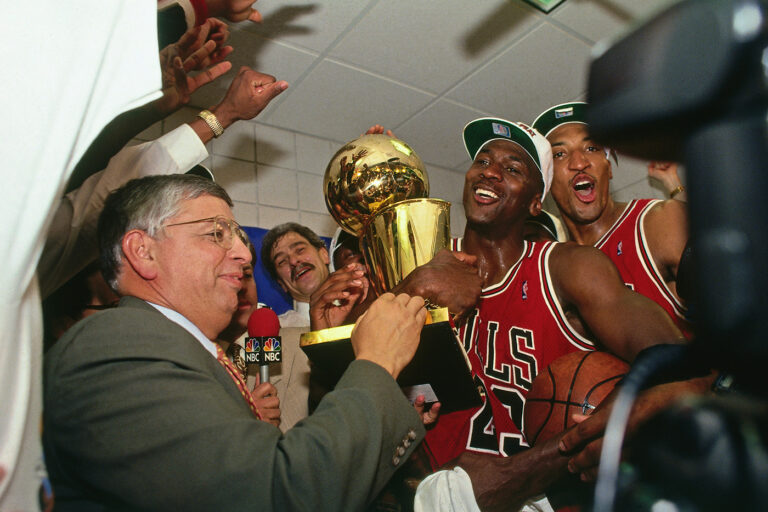
The Last Dance is a 10 part documentary series that follows Michael Jordan’s career with the Chicago Bulls. The series traces their three-peat victory (when they won the NBA Championship 3 years in a row) and their chance at a second three-peat. It also delves into Jordan’s personal life throughout the ’80s and ’90s and looks at the people around him on and off the court.
The documentary expertly goes back and forth between multiple points in Jordan’s life, creating a fascinating timeline. Although told in a non-linear fashion, the documentary pieces Jordan’s story together perfectly; linking points in his life from different eras but never losing your understanding of the whole picture.
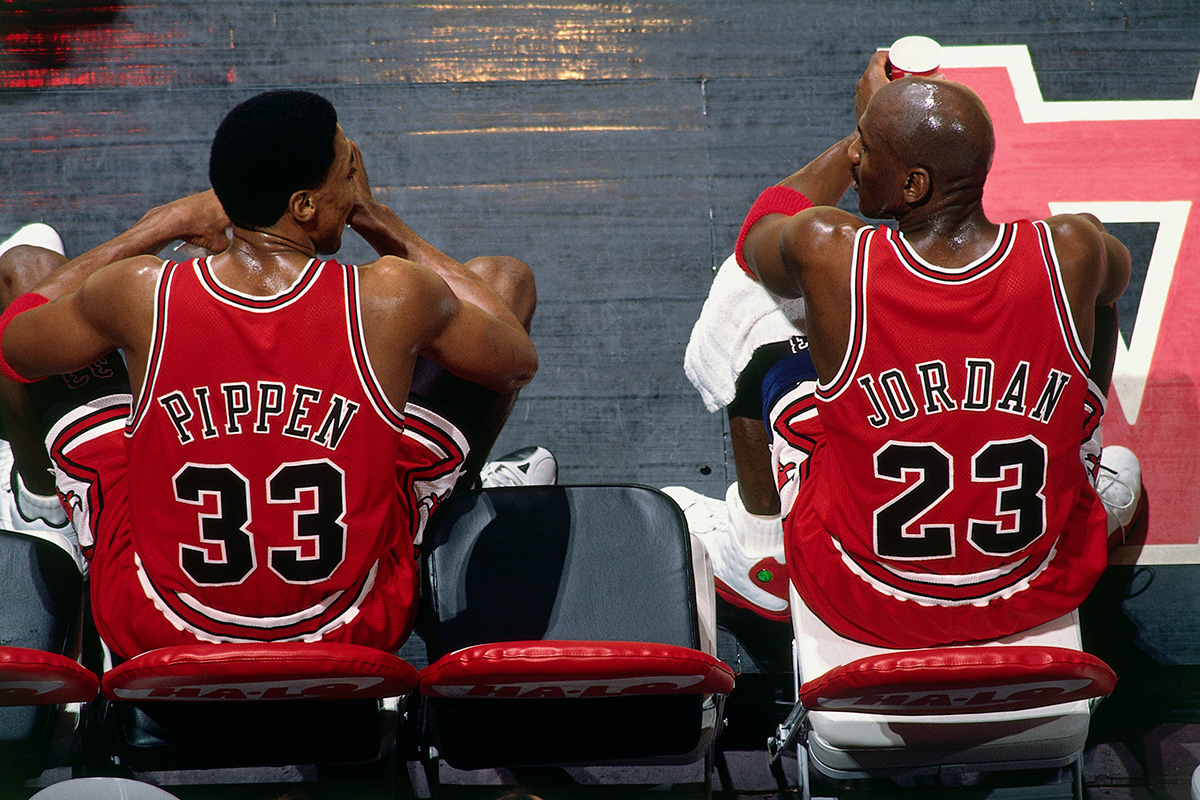
The series starts with the beginning of the ’97-’98 Bulls season as the team look to win an unprecedented 6th NBA Championship. Behind the scenes drama between the General Manager Jerry Krause, the coach Phil Jackson, and his team creates “The Last Dance”: the final opportunity for the Bulls dynasty to win the NBA Championship. The documentary then flips between Jordan’s start in basketball at college, his draft in ’84, the Bulls three-peat in ‘91-’93, ‘Air Jordan’, ‘Be Like Mike’, his year off, his family, and his friends. The documentary explores how Jordan and his teammates (Pippen, Rodman, Kerr, and Kukoč) all came to play for the team, how their relationships developed, and how MJ pushed their performances on the court.
Copyright Notice: Copyright 1998 NBAE (Photo by Andy Hayt/NBAE via Getty Images)
Over the 10 episodes we get to see never-before-seen footage of the ‘97-’98 season, as well as interviews with all the players, coaches and people close to Jordan. It provides an unbelievable rollercoaster showcasing the absolute highs and lows that Jordan had to face on the court – as well as off of it. What the documentary does most beautifully is show us a human being who would never give up, who gave more than anyone else could, who pushed himself beyond the limit, and who showed what motivation can bring you.
Michael Jordan will go down in history as the best and if you need any recollection as to why, this documentary provides just that. Full of unexpected turns and moments that are beyond belief, you will sit (with jaw dropped) in awe of the magnificence of Michael Jordan and the Chicago Bulls. Sports fan or not, The Last Dance is a must see.
23/23
All 10 episodes of The Last Dance are out on now on Netflix.
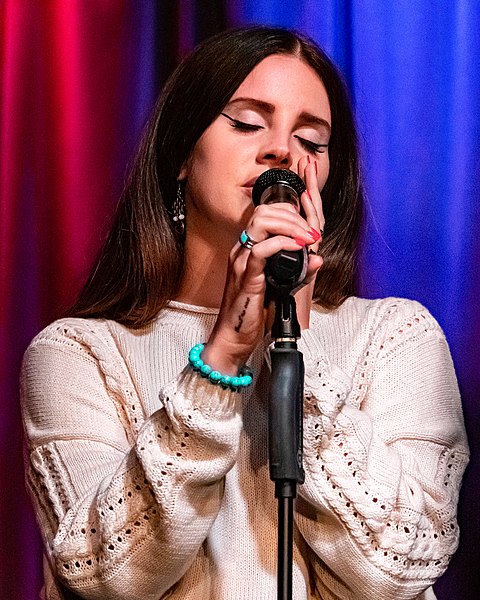
Lana Del Rey has announced the release date of her follow-up to 2019’s critically acclaimed Norman Fucking Rockwell. In an Instagram post, the singer confirmed the album, with a working title of White Hot Forever, will arrive on September 5th.
Back in August, the singer had said she had “already written parts” of the album and that it would “probably be a surprise release sometime within the next 12 or 13 months”. She is also set to release a spoken word album to accompany her poetry book, Violent Bent Backwards Over the Grass, but no release date has yet been confirmed.
In her post, Del Rey also talked about double standards in the music industry. “Doja Cat, Ariana, Camila, Cardi B, Kehlani and Nicki Minaj and Beyoncé have had number ones with songs about being sexy, wearing no clothes, fucking, cheating etc,” she wrote. “I’m fed up with female writers and alt singers saying that I glamorize abuse when in reality I’m just a glamorous person singing about the realities of what we are all now seeing are very prevalent emotionally abusive relationships all over the world.”
The singer continued: “I’m not not a feminist—but there has to be a place in feminism for women who look and act like me—the kind of woman who says no but men hear yes—the kind of women who are slated mercilessly for being their authentic, delicate selves, the kind of women who get their own stories and voices taken away from them by stronger women or by men who hate women.”
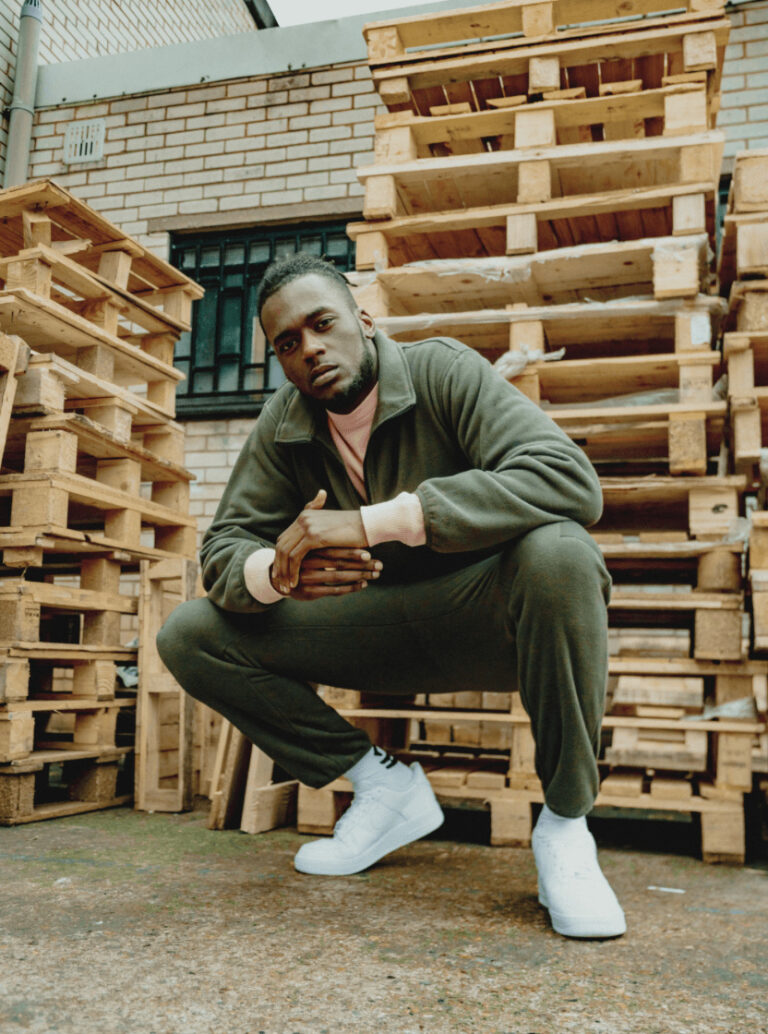
Yesterday, DC, a rising star in the British music scene, released his latest single Neighbourhood. The song was produced by TSB who is known for working with artists such as JHus, Mo Stack, NSG, and Headie One — to name a few.
Talking about the song DC said: “Neighbourhood is a reflection of my environment. Almost a detailed diary of experiences I’ve had in the ends and the results of that – whether good or bad. It addresses several issues but all centres around one thing of being ‘out here til it kills me, I’m gonna get the job done, I’m gonna keep going’. I’ve taken some time to live life outside of the studio and now I’m ready to return and it shows in the music. I’m feeling aligned in myself but at a higher level so let’s get it.”
Tom Hegen, a well-respected photographer based out of Munich, Germany, has exhibited his new series The Lockdown Series. In this latest selection of images, Hegen explores the world of aeroplanes during the crisis of COVID-19. Hegen is known for taking photos from an aerial point of view, and once again we are presented with an eye-pleasing series that does just that.
Writing about The Lockdown Series, Hegen stated: “Due to the current global situation, I decided to do a photo project about airports during corona. I was in search of a symbolic image that represents the corona crises, and I found it in grounded aeroplanes that to me, represent the lockdown around the world. The aviation industry, which is one of the key factors for globalization, helped to connect the world…”
Bert I. Gordon’s aesthetically-linked giant man trilogy of The Cyclops(1957), The Amazing Colossal Man(1957) and its sequel, War of the Colossal Beast(1958), contain all the spectacle one hopes to enjoy from ‘50s science-fiction monster pictures. Radiation, overgrown monsters and their awesome destructive powers are all key ingredients. While The Cyclops and War of the Colossal Beast are entertaining pictures that sometimes come close to interesting ideas about the loss of identity, it is The Amazing Colossal Man that explores that theme most cogently.
The film’s dissection of mankind’s changed position in a post-nuclear world affords it a striking maturity that may surprise viewers who’ve come for the ballyhoo offered by American International Pictures. Obviously, such ballyhoo is integral to these films’ cultural longevity, but there is much more that lies beneath the fabulous tagline of, “Growing…! To a giant…! To a monster…! To a behemoth…!”
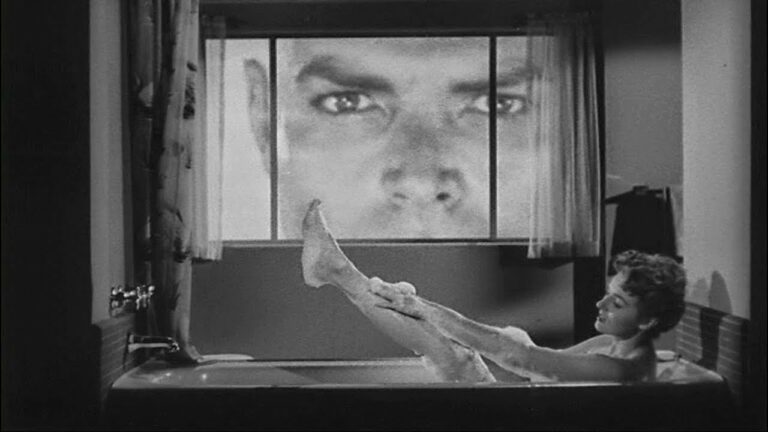
The Amazing Colossal Man opens with the testing of a new weapon: a plutonium bomb. After the bomb is triggered but fails to detonate, Colonel Glenn Manning (Glenn Langan) sees a civilian plane crash into the testing ground. Despite orders to stay put, Glenn runs out of his trench shelter to try and help the pilot. As he approaches, the plutonium bomb finally explodes. Manning is almost burned to death but miraculously survives. The morning after his admittance to hospital, his skin has somehow healed with no scarring whatsoever. In the following days, Manning starts growing by six to ten feet per day. Eventually, his mind begins to deteriorate as he struggles to adjust to his new scale.
The loss of self is the film’s key exploration. Glenn Manning outgrows his world and all that was familiar to him becomes alien and incomprehensible. In a particularly poignant moment, his fiancé, Carol (Cathy Downs), recalls times they spent together. Glenn struggles to remember and laments that, “time’s lost all perspective, it’s been a lifetime since that explosion. Everything that happened before seems…another world, another life.”
Glenn discusses his new existence with his fiancé, Carol.
At first, Glenn processes his situation with spiralling despair before turning cynical, and then aggressive. Reacting to a newspaper headline that reads “Man Lives Through Plutonium Blast”, Glenn laughs and asks, “they call this living?”, with an uncomfortably sharp edge. The rot of his decency grows until he shouts at Carol, ordering her to leave him alone. The flashbacks to the beginning of his relationship with Carol make clear the difference in personality that his growth has caused. Glenn lashes out at a world turned strange and small, and his former caring side is no more.
Viewing this through a more spiritual lens – aware of the Christian beliefs inherent to the contemporary American culture in which this film was produced – gives us a possible reading of what The Amazing Colossal Man has to say about mankind and identity loss in the atomic age.
Put yourself in the position of someone like Glenn Manning. We can presume that for the majority of your life, you’ve been told (by and in every facet of your culture) that that there is an almighty and that God is above you. Instilled in you by your parents, teachers, peers, and media is the belief that mankind is below or at least separate from God. You know that God has an immense power; power to create, but also to destroy.
Suddenly, in the middle of the 20th century, you find that your world has changed. Mankind now possesses the power to kill itself. In an instant, millions can be vaporised and cities can be flattened; lives destroyed, species made extinct. You are dealing with an idea that is, as Susan Sontag put it, “unsupportable psychologically.”
It is certainly unsupportable by a culture that has made clear the elevation of God above Man. You, as humanity, now hold a tremendous power, something understood in apocalyptic, biblical terms. You now possess weaponry so powerful that the sacred distinction between Man and God is fragile. Your command over the world around you has become immeasurable – one might say God-like. This change in status is horrifying because if you now have that sort of power (that for your entire life you’ve believed is reserved for the almighty), does that mean you’re on God’s proverbial level? If so, is there anything beyond or better than mankind? If there isn’t, do the limits of power (as we understand them) lie with the fallible human race? The questions begin tumbling, and the fixture of one’s cultural and individual identity cracks. You’re a giant in a smaller world. “Everything that happened before seems…another world, another life.”
In 1949, the Soviet Union detonated its first atomic weapon (codenamed Joe-1 by the United States) and the nuclear arms race was thrust into motion. Psychologically and culturally, you’ve gone from being the big fish in the small pond to just one of many ants waiting for the light of the magnifying glass. You’re simultaneously imposing but also vulnerable. Glenn’s size and aggression similarly belie the fear and anxiety swelling within. He is giant and powerful but becomes more isolated each day, as much a result of his own volition as well as his physical reality.
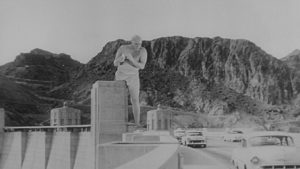
The Colossal Man atop the Boulder Dam.
The Amazing Colossal Man articulates the cultural and psychological development of a post-atomic world. That Glenn laughs and asks, “they call this living?”, is interesting. If a perpetual fear of collective extinction looms over us, are we really living?
Glenn’s continuous growth also speaks to the grotesque nature of the arms race itself. Unable to prevent what’s consuming him, Glenn is powerless before the atomic carnage happening within his cells. Similarly, the world could only watch and wonder as atomic testing turned into hydrogen testing, and aircraft-delivered bombs were replaced with ballistic missiles. The despair with which Glenn meets his condition speaks to the dreadful helplessness one feels at the scale of the weapons we now possess.
There is no salvation for Glenn in his first film (if we ignore his scarred return in War of the Colossal Beast). He grows without halt until he is cornered and shot, falling from atop the Boulder Dam near Las Vegas. If we are to use Glenn as a proxy for the United States and its cultural perception, then his grim end marks a bleak outlook – one that is unconvinced of an ending in the nuclear world that doesn’t see mankind destroyed, or at least the American idea of mankind. The film therefore posits the idea that any nation or people with such power to annihilate cannot exist under the weight of the moral implications. To exist as a technological terror towering tall above all invariably separates you from those below. It is a fragmented existence. With weapons to destroy humanity, have you forfeit your own?
Even if one doesn’t read the film with such lofty implications, The Amazing Colossal Man still approaches its concepts with a maturity at odds with the expectations placed on it by decades of derision toward low-budget genre cinema. The films of American International Pictures in particular have garnered a reputation for being purely exploitation fare – and therefore undeserving of further consideration. Indeed, exploitation was the modus operandi of James H. Nicholson and Samuel Z. Arkoff (AIP’s founders), but this knowledge has arguably snubbed their filmography of a deeper consideration. I Was a Teenage Werewolf(1957) is another of their stable that certainly offers more than just its bold title. Give a second thought the Colossal Man and to what it means to outgrow one’s world.
Vermont singer-songwriter Henry Jamison makes folk music that shimmers with a wistful sense of nostalgia. One of his biggest fans is none other than Big Thief’s Adrianne Lenker, who says his “songs sing me through mazes of my own sensuality and sadness, help me to feel less alone in the journey to understand myself more deeply and to face gaping wounds”. That journey may look different for each listener, but the warm, comforting presence of Jamison’s poetic songwriting makes for the perfect companion. His latest release is the EP Tourism, a collaborative effort that features the likes of Fenne Lily, Darlingside, Ed Droste (Grizzly Bear) and Lady Lamb as it explores the ways in which touring led to a “dissolution of the self”, and as a result, the falling off of a relationship. “The monster here/ He’s only half of me/ Alligator tears/ In my cup of tea,” he sings on the mellifluous ‘Green Room’, while highlight ‘Tourism’ is reminiscent of Damien Rice as Jamison and Fenne Lily duet against a beautifully spare, somber instrumental. The record may take on a new meaning during these times, but the sentiments expressed are as deeply resonant as ever.
We caught up with Henry Jamison for this edition of our Artist Spotlight series, where we showcase up-and-coming artists and give them a chance to talk a bit about their music.
You started recording your own music while you were still in elementary school. Do you remember the first song you wrote?
There’s a cassette tape called “Henry’s Tape” that I made when I was seven or so. It’s full of songs, if we’re using a loose definition. Mostly they were just me banging on pots and pans, with mixed results. There was one called “I Don’t Wanna Go to School” and one where I played guitar a bit, which is sadder, about staying inside while other kids play.
How has your approach to songwriting changed over time?
It’s become more intentional in a lot of ways. But it’s best to kind of be intentionally unintentional. To set aside time to just mess around on the guitar or piano and sing gibberish. I used to write songs constantly, like it was all I did so I didn’t need to articulate any method to myself or anyone else. I’m doing a “Song a Day” thing right now with some friends and that’s helped me reenter that old way of doing it again.
Who are some of your biggest influences?
Always the classics like Dylan and Joni Mitchell, almost just in the fact that I’m doing it at all, writing in a particular form. I don’t listen to them much anymore. Over the past years, Big Thief has inspired me a lot, as has James Blake. I’m not sure exactly how those influences come through, but I’m sure they do.
What was the inspiration behind your latest EP, Tourism?
Touring, as the name somewhat suggests. It was written on tour or between tours and is specifically about the way touring so much affected my relationship and homelife.
How did the different collaborations featured on the EP come about?
I met Darlingside right after college and we liked each other, but didn’t see each other again for years. Then I did a bunch of touring with them, supporting them through most of the US in 2018. I’m friends with all of them, but Harris and I developed a good writing relationship, so he and I cowrote most of the EP together and he produced it. And the rest of those guys played and sang on a lot of the tracks as well. Fenne and Ed featuring came about mostly due to instagram DMs. I had met both of them in person only once. Joseph and I met in VT a few summers ago and stayed in sporadic contact. I think I asked Natalie over text and then we hung out in Portland last summer before they tracked their vocals in LA. And Aly (Lady Lamb) is one of my oldest friends and it was great to collaborate with her again.
What were some of the highlights of making the EP?
The time in the studio was great. Honestly any time spent with Harris is fun and super interesting, since his mind works similarly to mine but also very differently in key ways. That makes us good collaborators, because we speak the same language but specialize in different areas. Hearing the features come in was also definitely a highlight, and seeing how they completed the songs.
What are your plans for the future?
Well, it’s hard to say exactly, given the state of the world. But I’m writing a record (or really just a ton of songs) and figuring out a process for recording them partly by myself and then also sending them out to other people. I think it’ll work well, but I’m still troubleshooting that. After that, touring next year, assuming venues still exist…
Lorde has broken her silence on her new album, which she had previously announced would be delayed due to the passing of her dog, Pearl. In a newsletter addressed to fans on Tuesday, the singer revealed she has been working on the follow-up to 2017’s Melodrama with producer Jack Antonoff. “The work is so fucking good, my friend,” she wrote. “I am truly jazzed for you to hear it.”
She said she started going back to the studio in December, and to her surprise, “good things came out.” About recording with Melodrama collaborator Jack Antonoff, she added: “It flowed. A thing started to take shape. And then, of course, the world shut down. We’re still working away—Jack and I FaceTimed for over an hour this morning going over everything. But it’ll take a while longer.”
Though she said she wasn’t sure when she’d go back to touring again, she’s excited about the possibility of getting back out there. “I want to eat summer foods in beautiful countries,” she wrote. “I want to use my gift, and watch it grow. Who knows when it’ll be safe to do those things, but I’m craving them, and I wanted you to know.”
The singer didn’t announce a release date for the album, but sympathizes with the fans’ impatience. “I understand— I want nothing more than to feed you treats, pop perfect morsels straight into your little mouths,” she wrote. “But as I get older I realise there’s something to be said for the pleasant feeling of waiting for something of quality to become available to you. You could have something of lesser quality much faster, but as the high quality thing comes into fruition, a warm feeling grows inside you. Do you know what I mean?”
She continued: “So if you can, I’d like for you to try tuning in to the time spent waiting for something of the highest quality to arrive. Enjoy the sensation as it builds. When the moment comes, our wave will crest super fucking high. I can tell you, this new thing, it’s got its own colours now. If you know anything about my work, you’ll know what that means.”
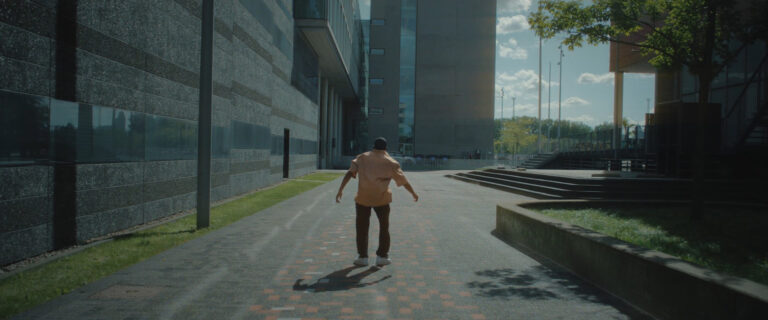
Michael Middelkoop, a film director based out of Amsterdam, Netherlands, has presented a beautiful short dance film named Meeting Point. The short film focuses on Calliope Tsoupaki’s musical piece, which was written in connection to the current events surrounding COVID-19.
Talking about the film Middelkoop said: “A few weeks ago, at the outbreak of Covid-19, I was connected via my agent to Greek composer Calliope Tsoupaki, who’s currently fulfilling a residency in the Netherlands. She created a piece in response to our current global status and asked if I had any ideas for it. I immediately responded to it, and the result is ‘Meeting Point’ featuring Shay Latukolan, choreographer of Stormy’s Vossi Bop and Yseult’s ‘Noir”
Credits
Composer & Artist: Calliope Tsoupaki
Director: Michael Middelkoop
Production: HEAT
Dancer: Shay Latukolan
Producer: Luc de Kock
Assistance: Merle Keller
Director of Photography: Zeeger Verschuren
1st Assistant Camera: Maric Dam
Steady Cam: Jasper van Gheluwe
Editing: Maarten Ernest
Grading: Ruben Labree
Special thanks to: Maene-Ypma, Cinesupply
Charli XCX is not the kind of artist you ever really know what to expect from, but how i’m feeling now certainly isn’t something anyone could’ve seen coming a year ago. An album made almost entirely during lockdown, the latest from the 27-year-old Charlotte Aitchison doesn’t stray too far from the boundary-pushing, futuristic brand of pop she’s associated herself with since her 2016 EP Vroom Vroom – from the glossy synths to the autotuned vocals and ear-drillingly abrasive production courtesy of AG Cook. But in almost every other way, the British pop star’s fourth studio record is the opposite of last year’s ambitious Charli, a defining musical statement that saw her taking the experimental stylings of her recent output and melding them with the commercial sound that put her on the map in the early 2010s.
For one thing, where Charli was expansive and grand in scope, the title of how i’m feeling now hints at something more introspective and vulnerable, even spontaneous. But it’s the now that perhaps stands out the most – Charli’s music was never locked into the present, looking instead to the future, not as some distant point in time but as a real possibility, a world you could visit with the tap of a button (and, ideally, a DAW). But the circumstances we find ourselves in have brought the future closer to us, rendering Charli’s hyperdigital approach to pop all the more fitting. As much as the album is intended as a reflection on the current crisis, it can only be described as such to the extent that it evokes the ways in which quarantine has forced most of us to look inwards, magnifying the personal spaces that give meaning to our day-to-day lives.
Part of the album’s value is symbolic. Besides laying claim to the first in what will sure be a long stream of ‘quarantine albums’, how i’m feeling now is also notable for utilizing a collaborative DIY approach that’s a testament to Charli’s unceasing drive to push her music forward. Though she rose to fame thanks to her appearance on Icona Pop’s chart-topping 2013 single ‘I Love It’, Aitchison first started releasing songs from her bedroom during the Myspace era of the late aughts. It’s one thing for an artist to revisit that DIY aesthetic more than a decade after their big break; it’s another thing entirely to use one’s profile to interact with fans in such a dynamic manner, inviting them to be part of the creative process by embracing the participatory culture of the internet. Despite featuring fewer guest stars than any other one of her albums (none, in fact), how i’m feeling now is a truly collaborative effort made possible only through the digital tools that now govern our reality, with Charli hosting weekly Zoom meetings, sharing updates, and organizing frequent Instagram livestreams, not to mention pulling together her usual host of co-producers.
But while the album is unmistakably of its time, the themes that permeate its shiny exterior are no doubt timeless. More than anything, how i’m feeling now is a love letter to the people that are closest to Charli, especially her boyfriend Huck Kwong, with whom she has been staying during lockdown alongside her two managers. In that sense, the album feels like a deeper dive into the heartfelt moments that were sprinkled onto her previous work, like ‘Official’ off Charli, pulling those tender sentiments further into focus. “I like, I like, I like, I like, I like everything about you,” Charli sings on the blissful ‘claws’, while on the equally euphoric ‘forever’, she proclaims, “I’ll love you forever/ Even when we’re not together”. Charli recognizes the fact that the couple’s previously on-and-off relationship might not always be as intimate as it has been during the past few months, but the time they’ve spent together has helped her appreciate the qualities that make it worth holding onto. “Could’ve fallen, but we only grew/ So I made my house a home with you/ I’m right here and it feels brand new,” she realizes on ‘7 years’.
At the same time, songs like ‘detonate’ and ‘enemy’ serve as an acknowledgment of how such closeness may intensify the insecurities that lie behind the surface, much like the experimental noises bubbling underneath the album’s sugary coating. While the former finds the singer confronting issues of self-trust and admitting that she might actually be closing herself off in new ways, the latter finds hope in vulnerability, recognizing that feeling those negative emotions is part of the path to self-growth and openness. During the track’s interlude, Charli includes a snippet of a voice recording taken following one of her therapy sessions, implying that this is still an ongoing process filled with uncertainty. The presence of her unfiltered voice on the track is a stark contrast to her usual delivery; but rather than standing out as an isolated instance, it acts as a reminder of the emotional rawness that Charli is allowing herself with this album as a whole.
It’s not all about her romantic relationship, though. A sequel to Charli’s ‘Click’, ‘c2.0’ is just as out-there and abrasive in its production as its predecessor, but it’s overtaken by a sense of nostalgia as Charli sings about missing her friends (“My clique running through my mind like a rainbow”), a theme that resurfaces on the even more hard-hitting ‘anthems’, where she sings: “All my friends are invisible/ Twenty-four seven, miss ’em all”. Despite the same sentiments recurring throughout the record, it never comes off as painfully repetitive – rather, it’s an honest representation of the cyclical thought patterns and emotional highs and lows that we’ve all found ourselves trapped in during this period.
But only Charli could write lyrics like “Wake up late, eat some cereal/ Try my best to be physical/ Lose myself in a TV show/ Staring out to oblivion” while delivering one of her most hard-hitting anthems, here assisted by PC Music’s Danny L Harle and 100 gecs’ Dylan Brady. What’s more, she bookends the record with two of the most straightforward club bangers, the sultry, sharp ‘pink diamond’ and the propulsive ‘visions’, indicating that, at the end of the day, she’s here to have fun. “I got pictures in my mind,” Charli repeats on the closer as a driving beat rises in anticipation; but the drop never arrives, instead devolving into something clunky and metallic, distant. We might not be able to party like we used to, but how i’m feeling now leaves us with the hope that this kind of unadulterated joy is just out there on the horizon, and makes sure to give us a taste of what it could be like.
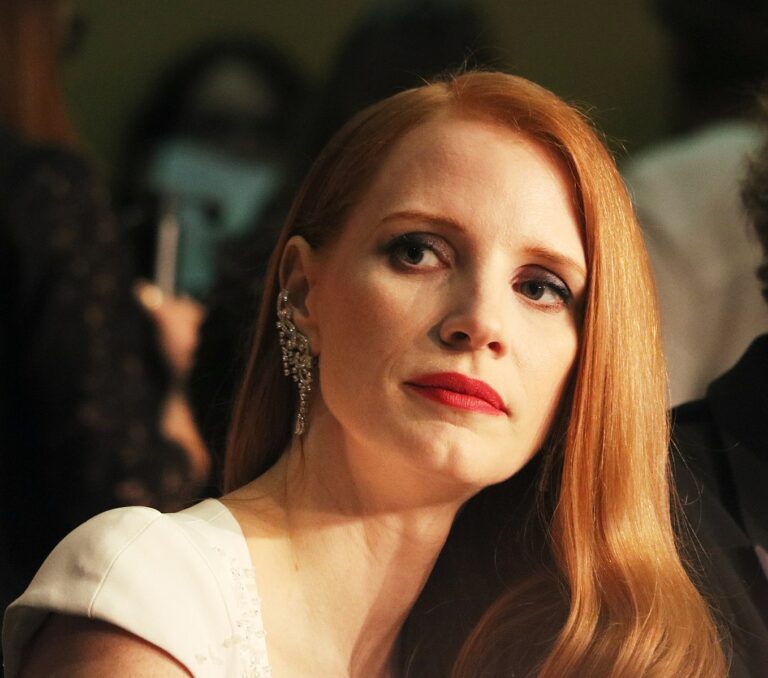
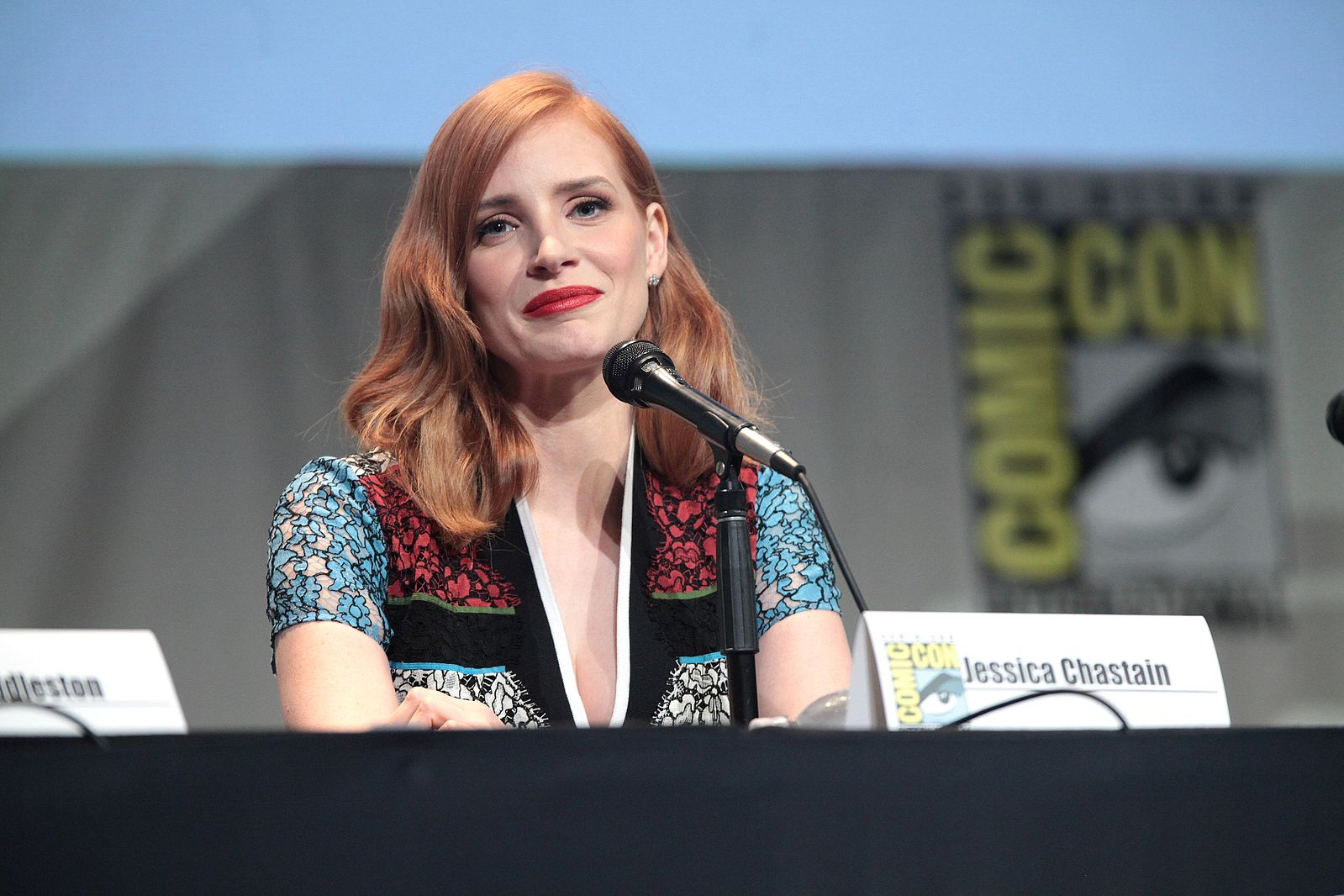
American actress and producer Jessica Chastain seemed to become a household sensation overnight. She stormed the Hollywood scene in 2011 with a stellar year in film which took her from struggling actress to award-winning leading lady. Though her fame appeared to be a meteoric success story, Chastain had quietly been laying the groundwork for her career since she was a teenager. While peers Kate Winslet and Michelle Williams were starring in blockbuster films and TV shows, Chastain was starring in amateur Shakespeare productions in the Bay Area.
After being awarded a scholarship to the prestigious Julliard performing arts school in New York, Chastain took on small roles in TV shows such as ER and Agatha Christie’s Poirot. Each job led to another, slightly bigger one until she was cast in the role of Salomé in the 2013 film of the same name. Her director and co-star was none other than Al Pacino, who recommended her to Terrence Malick who, in turn, recommended her to Steven Spielberg. She went on to star in 11 films over a period of 4 years, a feat which placed her firmly in the spotlight and has led to her being named one of Time magazine’s 100 Most Influential People. We take a look at some of her best films to date.
Salomé (2013)
Oscar Wilde’s most controversial work, Salomé is a story of lust, greed, and revenge. Following the story of King Herod, his stepdaughter Salomé, and John the Baptist, the play has been the basis of many stage productions throughout the years. Director Al Pacino’s take was the first of its kind – an attempt to merge the stage with film, creating a purely theatrical piece that could be viewed in the cinema. Not only was he hugely successful in his attempt, but he also launched the career of Chastain in the process. Her performance paved the way for her to gain bigger, better roles in mainstream Hollywood.
Could Jessica Chastain be the best leading lady in Hollywood?
The Help (2011)
A period drama based on the Kathryn Stockett 2009 novel of the same name, The Help tells the story of a young woman and aspiring journalist, Eugenia “Skeeter” Phelan, who writes a book from the perspective of her maids, exposing the horror that they were faced with on a daily basis. Not only did the film receive four Academy Award nominations, but it also saw Chastain receive her first Academy Award nomination, cementing her trajectory into superstardom.
Molly’s Game (2016)
In one of her most memorable performances to date, Chastain plays the role of Molly Bloom, a former elite skier in this dramatic retelling of her life story. Based on the book of the same name, Molly’s Game is an eye-opening look into the underground poker scene in Hollywood, one in which A-list actors played against each other for thousands of dollars under the watchful eye of Molly Bloom. Featuring characters that have been speculated to be based on the likes of Matt Damon and Tobey Maguire, this Netflix favorite has been described by film critic Richard Roeper to be one of the greatest poker movies of all time.
Miss Sloane (2016)
A 2016 political thriller which couldn’t be more different from Chastain’s recent horror It: Chapter 2, the film follows Elizabeth Sloane, a fierce lobbyist who campaigns for gun control legislation. Chastain’s performance is spellbinding, demonstrating her precision and skill at taking on a character study and leaving you wanting more from the movie. If it wasn’t apparent to audiences by now, then Chastain’s performance in Miss Sloane is the final confirmation anyone needs that she has earned her place among hr A-List peers.
Of course, with 11 movies released in the space of 4 years, there are obviously many, many more to choose from, however, these performances are notable in various ways. From her launch into the stratosphere with Salomé to her expertly executed character study in Miss Sloane, there is no doubt that Chastain has gone from overnight success to one of the greats. So, which one are you going to watch first?