Things rarely go well for anyone in Resident Evil Requiem; however, the story can still end on a better note if you manage to unlock the good ending. Multiple endings have become a pretty common sight in modern games, and Requiem is no different. Set nearly three decades after the destruction of Raccoon City, the ninth mainline entry follows FBI analyst Grace Ashcroft as she investigates a series of mysterious deaths tied to survivors of the original outbreak. Her search eventually crosses paths with Leon S. Kennedy, who is also looking into the case while dealing with the lingering effects of the T-virus.
Their investigation soon spirals into something much bigger, with Grace and Leon uncovering a secret Umbrella facility, running up against the rogue scientist Victor Gideon, and getting caught up in the mysterious Elpis project. As Grace digs deeper into the mysteries of ARK and Elpis, she eventually comes face-to-face with a choice that will determine whether she sees the good ending or the bad ending. So, if you’re hoping to see the more hopeful outcome, here’s how to get the good ending in Resident Evil Requiem.
Resident Evil Requiem: How to Unlock the Good Ending
To get the good ending in Resident Evil Requiem, you must choose to release Elpis during the final decision at the ARK facility. When Grace reaches the computer terminal and is asked the question, “What does the creator desire?”, you’ll need to select the option to Release Elpis to unlock the good ending.
When you choose to release Elpis, you’ll find out that it’s not a weapon, but an antiviral capable of counteracting the T-virus. Once Elpis is released, the game will throw one last big challenge your way and you’ll need to take on Victor Gideon, who has now mutated into a grotesque monster. This true final boss can be tough if you’re low on resources, so crafting ammo throughout the game will make the fight much more manageable.
After Gideon is defeated, you’ll see the ending cutscene, followed by the credits. However, make sure to stick around for the post-credits sequence, which shows Grace telling Leon that she has adopted Emily, who has regained her eyesight, and confirms that Sherry has been cured.
In Resident Evil Requiem’s good ending, Grace realizes that Elpis can cure the latent onset of T-virus syndrome affecting survivors like Leon. She also uses the antiviral to treat Emily after Leon reveals that he never actually shot any of her vitals earlier in the story. The game ends with Leon returning to the field while Grace takes care of the now-healthy Emily. And that does it for our how to get the good ending in Resident Evil Requiem guide.
It’s been a hot minute since we had a chance to binge a Sherlock Holmes TV adaptation. BBC’s Sherlock hasn’t been on the air since 2017. Elementary wrapped up in 2019.
Last year saw the arrival of Sherlock & Daughter, but the show hasn’t reached the popularity of its predecessors just yet. Could Young Sherlock manage that feat?
The new Prime Video series is currently gaining buzz, so things look promising. For those hoping to see more episodes, here’s what we know so far.
Young Sherlock Season 2 Release Date
At the time of writing, Prime Video hasn’t announced plans for a potential Young Sherlock season 2. That said, the show just came out. It might be a while until we hear what the future has in store for the fresh series.
As long as viewers tune in, the story is far from over. New episodes could arrive in early 2027.
Young Sherlock Cast
Hero Fiennes Tiffin as Sherlock Holmes
Dónal Finn as James Moriarty
Zine Tseng as Princess Gulun Shou’an
Joseph Fiennes as Silas Holmes
Natascha McElhone as Cordelia Holmes
Max Irons as Mycroft Holmes
Colin Firth as Sir Bucephalus Hodge
What Is Young Sherlock About?
Young Sherlock is a mystery drama that explores the early life of the legendary detective Sherlock Holmes. In other words, the story kicks off long before he becomes the brilliant investigator known from the work of Arthur Conan Doyle.
Impulsive and frequently in trouble, he arrives at Oxford under the watchful eye of his brother Mycroft Holmes. When a suspicious murder occurs at the university, Sherlock finds himself entangled in a complex investigation.
As the show progresses, he begins to cultivate the abilities that will define his future career. He also forms unexpected alliances, including an early friendship with James Moriarty. The case grows complicated, with dark secrets eventually coming to light.
What truly sets Sherlock apart are his brilliant deductive skills and close friendship with Watson. Like you’ve probably gathered by now, this series is set way before the two meet, and Sherlock’s skills are still taking shape.
If you find that idea appealing – and/or wonder about how a young adult Sherlock was like – you’ll find plenty here to love. The series is developed with Guy Ritchie, who was responsible for the two Sherlock movies starring Robert Downey Jr.
The ending of the first season leaves room for a sequel. Young Sherlock season 2 would likely see the detective look into another case, while his relationship with Moriarty eventually strains. For now, the eight episodes available are a fun watch.
Are There Other Shows Like Young Sherlock?
Looking for shows similar to Young Sherlock? We recommend checking out Netflix’s The Gentlemen and The Irregulars. Veronica Mars might also be up your alley.
Alternatively, catch up with the other series currently trending on Prime Video. Like Cross, 56 Days, Steal, andFallout.
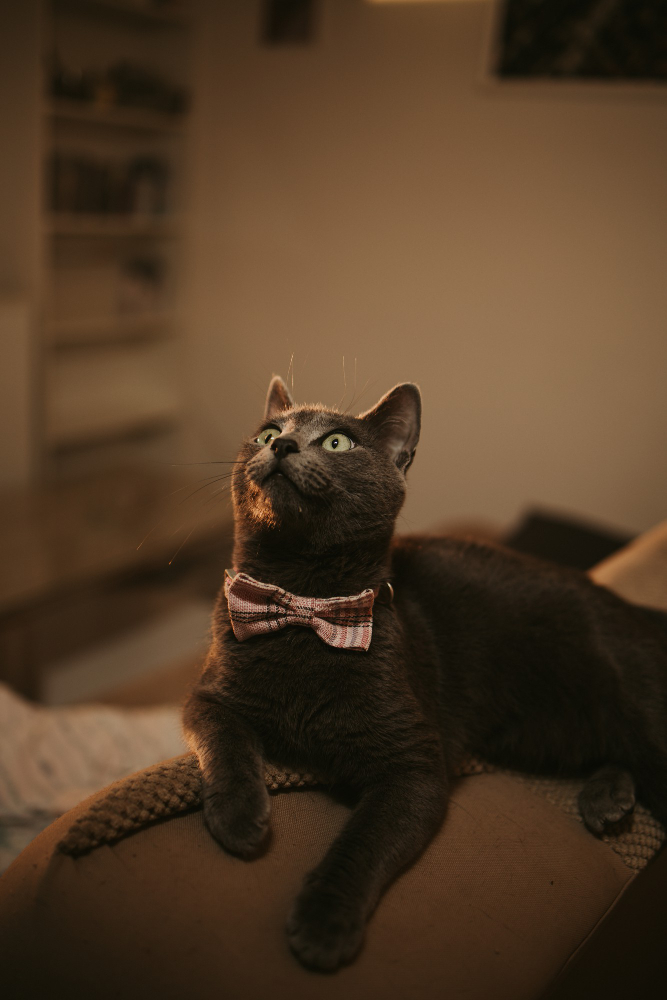
Is your cat secretly more stylish than you? Scroll through any pet corner of the internet, and feline fashion is having a moment. Spending on pet accessories keeps climbing, and it is not just about spoiling your cat. It is about comfort, enrichment, wellness, and yes, aesthetics. If your home is curated down to the throw pillows, why should your cat’s gear clash with the vibe? Here is a rundown of the trendiest accessories redefining modern cat life.
Comfy Cat Beds That Double as Decor
Cats spend around 70 per cent of their lives asleep, so upgrading their nap spot is a design decision as much as a practical one. Memory foam beds are big right now, offering orthopaedic support for older or larger cats. Heated beds are also trending, especially in cooler climates where warmth equals instant approval.
And aesthetically? Think bohemian wicker baskets, minimalist cushions in neutral tones, or sculptural pods that look like they belong in a contemporary gallery. Place the bed near a sunny window, and your cat is far more likely to claim it as their throne.
Chic Cat Collars That Actually Do Something
Collars are no longer just a place to hang an ID tag. Today’s versions come in reflective fabrics for nighttime prowls, soft velvet finishes for an elevated touch, and sleek designs that feel more boutique than basic.
As a result, for the style-conscious owner, a cat tracking collar is no longer a bulky afterthought. It’s a sleek, tech-forward accessory that blends high-end design with real-time security. Brands like Tractive and Pawfit have mastered the balance, offering lightweight silhouettes that complement a velvet or leather aesthetic while providing a “digital leash” for the adventurous urban cat.
High Tech Feeding Stations
Gone are the days of the dull plastic bowl. Automatic feeders with portion control help maintain a healthy weight, which is crucial since overweight cats are at a higher risk for health issues. Water fountains are equally popular, encouraging hydration and supporting kidney health.
Design-wise, brands are leaning into matte finishes, stainless steel accents, and low-profile silhouettes that blend seamlessly into modern kitchens. Functional and photogenic, just how we like it.
Interactive Toys with an Edge
Laser pointers, motion-activated feather teasers, and puzzle feeders have become staples in the stylish cat household. Beyond entertainment, they tap into a cat’s natural hunting instincts and help prevent boredom-related weight gain.
Since 2022, interactive toy sales have spiked, reflecting a shift toward more engaged pet parenting. The key is durability. Look for sturdy materials that can survive sharp claws and repeated ambushes from behind the couch.
Eco-friendly and personalised extras
Sustainable toys made from recycled materials, biodegradable litter, and organic treats are becoming mainstream. Green is not just a colour choice; it is a philosophy. Sales in eco-friendly pet lines continue to grow as owners prioritise planet-conscious purchases.
On the sentimental side, engraved tags, custom blankets, and personalised feeding mats add a unique touch. These minor details transform everyday essentials into keepsakes.
Feline fashion is not about turning your cat into an accessory. It is about enhancing their comfort, safety, and joy while keeping your space visually cohesive. In 2026, the most stylish homes are the ones where both humans and cats get to live beautifully.
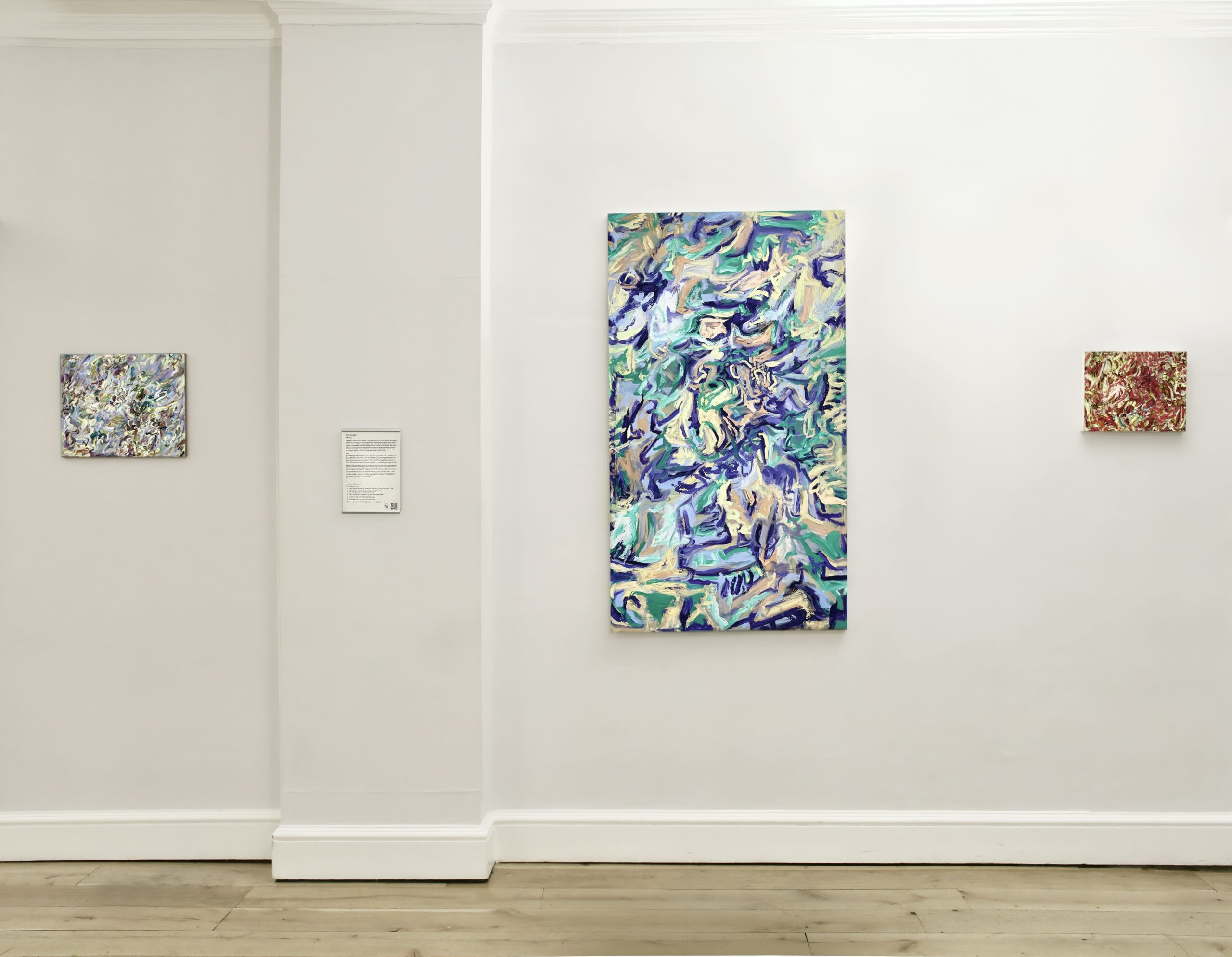
On 28 January, guests gathered at the Royal Society of Arts for an evening event at the Tavern Room, RSA House, featuring the High Commissioner of India, Vikram Doraiswami, in conversation with broadcaster Mishal Husain. Their discussion reflected on the contemporary relationship between India and the UK. For this occasion, Divya Balivada was a featured artist, and her solo exhibition at the RSA, In Between, offered a personal counterpart, which lived through the body, experiences, and memory. This exhibitionwas specifically curated and presented by Hannah De Rozario, head of House Curation & Governance at RSA House and Laure Barthelemy, House Curation Officer. The In Between show was later opened to the public, with the private view on 12th February and runs until 15th March 2026.
As an emerging talent who recently graduated with an MA in Painting from the Royal College of Art, Balivada’s first solo exhibition at RSA is a confident step forward. Additionally, she recently exhibited at “Small is Beautiful” at Flowers Gallery in London and the Goa Open Arts Group Exhibition and Festival in Goa. Balivada’s paintings at In Between offered a more intimate reflection on the India-UK relationship, through memory, identity and lived experience. The exhibition explores what it means to exist between memory, geographies, and histories. For Balivada, India and the UK are formative forces that continue to shape perception and belonging. The In Between becomes both a physical condition and an emotional state.
A former dentist turned artist, painting is the language through which Balivada takes up space. In this exhibition, she has developed a visual language that feels at once intimate yet vast through gestures that are in constant movement. Her paintings indeed carried gesture, colour, and emotional density at once. These unplanned compositions held rhythm, built from urgency and repetition. The surfaces read more as bodily accumulations, becoming records of endurance, healing, and reclamation. Generational trauma, memory, gender biases, and displacement are present, but never illustrated directly. The tension between control and excess in her mark-making reflects the violence of imposed structures and the body’s attempt to reclaim agency within them.
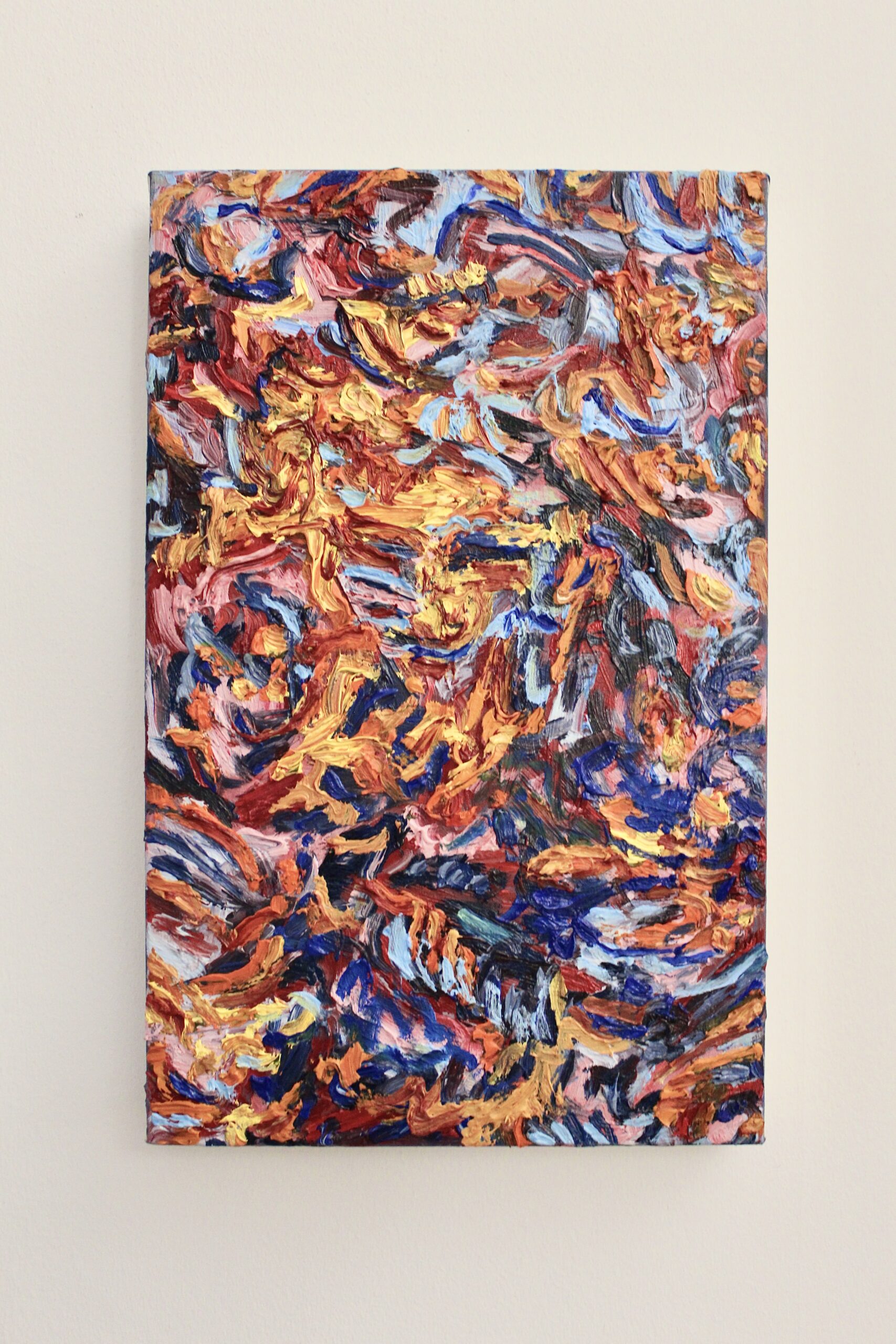
Colour in Balivada’s works carried so much emotional depth, and the surfaces felt alive with movement. Oil paint, pigment sticks, and pastels are not merely applied. They are pressed, dragged, and layered to the point of over-saturation in places. Beneath the exuberance of her palette, she challenges the historical devaluation of the ‘decorative’ within art histories. It brings to mind Emily Kam Kngwarray’s negotiation of ornament and identity. Divya also interrogates how the impact of colonialism is inadequately acknowledged in contemporary contexts. This interrogation is embedded in the material language of Balivada’s paintings.
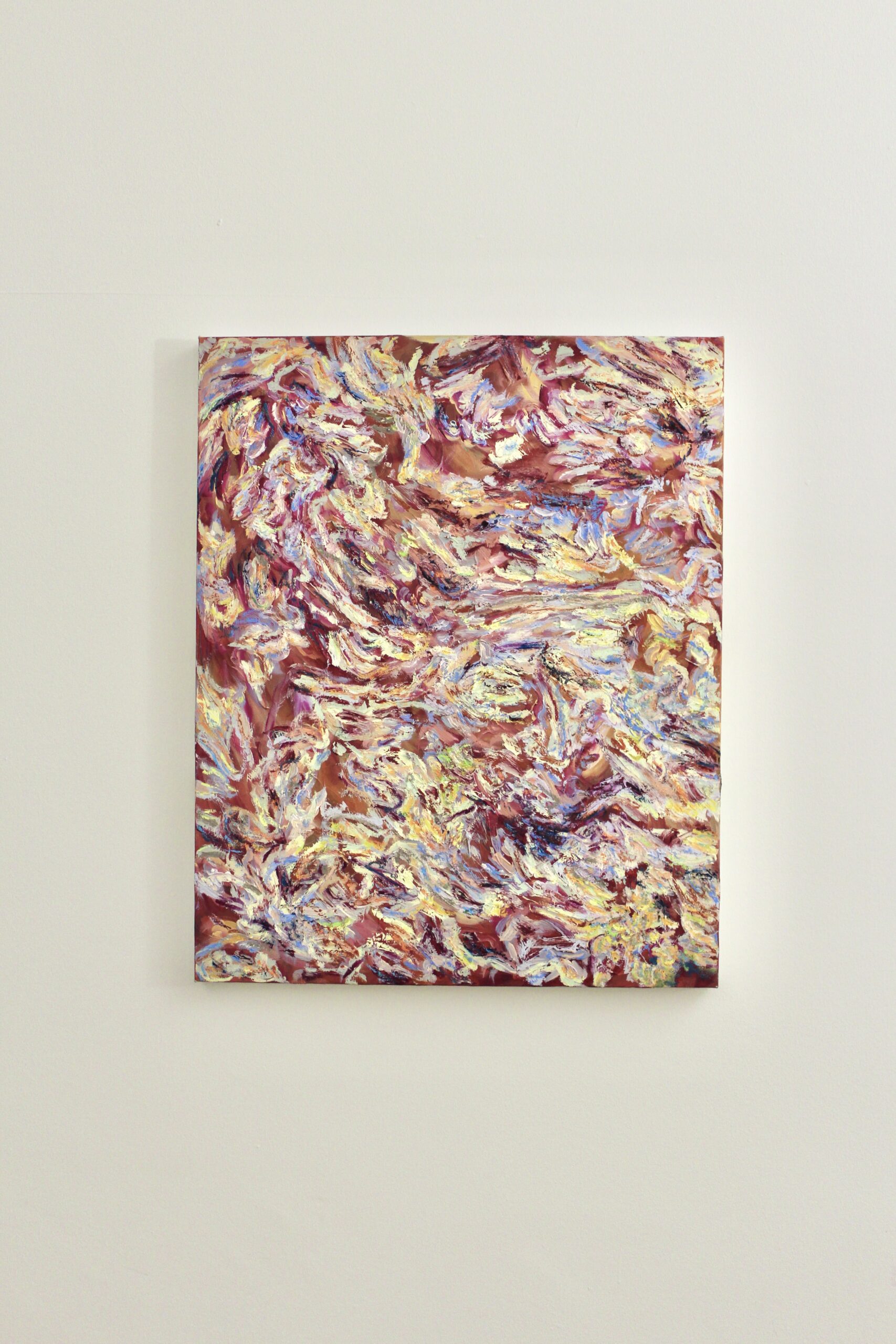
These themes can be seen to be exemplified in Almost There, Never Enough and Meant To Fail. In Almost There, Never Enough, the multitude of bright colours at first may seem decorative but are contrasted with the distinctive mark making. Colours seem to be drawn from India, where the artist grew up. On the other hand, the process of the definitive strokes espouses the expression of the body in its force and the mind in varying concentration across the canvas. As such, allowing the work to show the aesthetic form of her cultural upbringing while also featuring the intensity of lived experience and the reclamation of the expression of said experience. This work perhaps finds a place to sit between the traditionally western dichotomy of decor vs meaning.
Similarly, in Meant To Fail, some of the same common features were seen but at a different scale with its own distinct energy. The canvas measuring 160 by 90 cm claims space to be seen and witnessed. The gestures are less concentrated but still have areas of higher and lower density. These places of higher density seem to suggest places where emotion is stored, whereas areas of the canvas left to breathe lean more to a reflective atmosphere. Do these places and moments outside the concentration reflect on clusters of obsessive mark-making and paint? Perhaps. The colour palette is of cooler blues and green. While Balivada uses a range of different tones in these works, the emotion and experience linked to each does not feel intrinsically attached and escapes the cliche of the standardised associations between colour and emotion. The memories and feelings are explored through the movement and repetition of mark-making, and her use of colour allows one to visualise all this.
Balivada believes that contradiction is intrinsic to being human. Emotions like joy, anger, fear, and grief can coexist. Hence, her paintings at the RSA insist on complexity, multiplicity, and a lot of questions. What highlights from Balivada’s In Between exhibition is not merely its autobiographical transformation of lived experience into a visual narrative of survival, but its ability to activate beyond the material, operating politically and spiritually at the same time. They do not seek healing or repair in a conventional sense. Instead, they arrive as a necessity where painting becomes an act of surrender. Balivada positions herself less as an author and more as a vessel, allowing something larger than herself to move through the body and onto the surface.
Today, War Child released a star-studded album supporting its work to aid and protect kids in conflict zones, with contributions from Arctic Monkeys, Olivia Rodrigo, Cameron Winter, and more. Also today, Coca-Cola has released its Anthem for the FIFA World Cup 2026, which brings together Amber Mark, J Balvin, Travis Barker, and Steve Vai. That’s the music industry for you, baby. It’s a cover of Van Halen’s ‘Jump’, and it’s atrocious, but you can listen to it below.
“Music for me has always been about bringing people from different countries and cultures together – and ‘JUMP’ is all about that shared energy,” Balvin said in a press statement. “From the football stands to watching at home, everyone knows that moment when emotions are high and you’re jumping for greatness. Partnering with Coca-Cola on their anthem for FIFA World Cup 2026TM felt natural – it’s about hype, energy, and creating something that feels real. This song is about celebrating life and living in the moment.”
Mark, who otherwise rarely misses, added: “Van Halen’s ‘Jump’ is one of those rare songs that transcends generations, so approaching it came with a lot of respect. Being able to honor the original while bringing a modern perspective was incredibly special. I’m excited to be part of a track that connects past and present in such an uplifting, powerful way, and I hope fans feel that energy for years to come.”
HELP(2) has the return of Arctic Monkeys and Cameron Winter’s first song since the explosion of Geese. More than thirty years after the first benefit compilation from War Child UK brought together Stone Roses, Suede, Blur, and Oasis, the James Ford-produced sequel features Pulp and members of Blur alongside a string of younger bands who have outgrown their post-punk origins, from Black Country, New Road to Wet Leg. (Oasis were a last-minute addition, too, contributing a live version of ‘Acquiesce’ as a stand-alone 7” to help the charity’s cause, which is more vital than ever – even, devastatingly, than it was just a few days ago.) The 23-track album has King Krule and Olivia Rodrigo (who once covered another featured band, Fontaines D.C.), Beth Gibbons tackling Sunday Morning’ and Anna Calvi, Wolf Alice’s Ellie Rowsell, Nilüfer Yanya, and (recent Geese opener) Dove Ellis collaborating on an original called ‘Sunday Light’. It has every reason to exist but no business weaving all these voices together so effectively. HELP(2) would be a good album just by virtue of supporting the organization’s mission of delivering aid, education, mental health support, and protection to children in conflict zones, though I probably wouldn’t be writing about it in this capacity. But there’s something all the more poignant about everyone involved caring enough to make it a great one.
1. Arctic Monkeys, ‘Opening Night’
Is there an Alex Turner lyric that sums up Arctic Monkeys’ discography better than “Alternate realities sneak up on the sly”? It’s debatable. As the band’s first single in four years, ‘Opening Night’ is an event big enough to overshadow whatever the song had to offer. It’s strange, at this point, to get a glimpse into Turner’s surreal songwriting outside the context of a concept album, but there’s still a gravity to its dark atmosphere. If there’s truth to the rumour that it might be their last song, I can’t wait for the line “You’re a lonely little Hall of Famer” to be sung at the actual Rock Hall.
2. Damon Albarn, Kae Tempest, and Grian Chatten, ‘Flags’
Damon Albarn, Kae Tempest, and Giant Chatten trade coming-of-age memories over an arrangement – featuring Johnny Marr, Portishead’s Adrian Utley, Ezra Collective’s Femi Koleoso, Dave Okumu, and Gorillaz bassist Seye Adele – that wonderfully cracks itself open. Tempest’s childlike naivety stands out as it meets Albarn’s predictably wistful chorus, like a pre-India visit outtake from Gorillaz’s recent The Mountain.
3. Black Country, New Road, ‘Strangers’
It’s not hard to trace a line from ‘Besties’ to ‘Strangers’ as Black Country, New Road lean into the twee sensibilities of last year’s Forever Howlong. But it beefs itself up with a cathartic outro as the narrator finds herself on the cusp of Hollywood success, “so close to leaving my procession behind.”
4. The Last Dinner Party, ‘Let’s do it again!’
Black Country, New Road and the Last Dinner Party’s contributions make so much sense side by side (in their current iterations, I can’t imagine riding for one group but not the other), with the latter glamming it up a bit more on ‘Let’s do it again!’. Its desperate plea for reconnection is punctuated by some especially piercing language: “Crying like butter churning/ Show me your body cut like a branch/ Dead flowers/ I’ll send them to you.”
5. Beth Gibbons, ‘Sunday Morning’
It’s easy to deliver a rote rendition of ‘Sunday Morning’ – the classic’s beautiful enough as is – but not for Beth Gibbons. The Portishead singer foregrounds its haunting nuances in a patient cover that sounds like she’s been humming it in the back of her mind most of her life, which I can relate to. Ford notably helped produce Gibbons’ 2024 solo album Lives Outgrown, which channels the same innocent maturity.
6. Arooj Aftab and Beck, ‘Lilac Wine’
The album smartly spaces out its intriguing collaborations, of which ‘Lilac Wine’ is the most enchanting. Aftab and Beck’s take on Jeff Buckley’s ‘Lilac Wine’ works in part because it allows Aftab to take center stage, and her covers never disappoint.
7. King Krule, ‘The 343 Loop’
By far the greatest oddity on the album, ‘The 343 Loop’ is also the first song on it that sounds more like a disparate outtake, a vibey instrumental in the vein of King Krule’s 2025 record A New Place 2 Drown.
8. Depeche Mode, ‘Universal Soldier’
Depeche Mode offer their take on the Highwaymen’s ‘Universal Soldier’, which might be the most chillingly pertinent cover on the album: “His orders come from far away, no more/ They come from here and there, and you and me/ And brothers, can’t you see?/ This is not the way we put an end to war.”
9. Ezra Collective and Greentea Peng, ‘Helicopters’
Dubby and hypnotic, ‘Helicopters’ wasn’t an obvious choice for a single, but perhaps it was chosen as one because it’s one of the album’s most overt protest songs. It’s also sneakily catchy, with a chorus that rises out of the smoke.
10. Arlo Parks, ‘Nothing I Could Hide’
Arlo Parks’ honest intimacy is a constant in her music but almost startling in the context of HELP(2), which only makes it more mesmerizing. There’s a bit of thematic alignment when she sings, “When we picture our daughters/ There is nothing I could hide from them,” a poignant reminder of children’s unyielding openness upholding our own.
11. English Teacher and Graham Coxon, ‘Parasite’
English Teacher and Blur member Graham Coxon (who plays a supporting role in several of the album’s tracks) retain the dreamy demeanor of the previous song, though singer Lily Fontaine’s more assertive vocals raise the momentum. “This occasion is crying,” she sings, tying back to the closing line on ‘Flags’: “I stitch a tear to my prayer and hold tight.”
12. beabadoobee, ‘Say Yes’
If Olivia Rodrigo can do a cover of Magnetic Fields’ 69 Love Songs (more on that later), beabadoobee certainly earns this cover of an Elliott Smith song she clearly reveres. It’s lovely.
13. Big Thief, ‘Relive, Redie’
Big Thief have contributed to a fair share of charity compilations over the years, even releasing a benefit EP last year, so it’s no surprise they’re on here. It’s also not surprising, given their surely big vault of unreleased tracks, that ‘Relive, Redie’ is an older song dating back to 2020, though its conclusive bridge, “All I need is so simple,” could have been plucked from their most recent album. James Krivchenia and Dom Monks’ production spins out to imbue the song’s warm hues with richness.
14. Fontaines D.C., ‘Black Boys on Mopeds’
Sinéad O’Connor appeared on the original HELP album covering Bobbie Gentry’s ‘Ode to Billie Joe’, and today’s biggest Irish band carries the torch here with a doleful, stormy rendition of her song ‘Black Boys on Mopeds’. It starts off almost understated, letting the words sting – “I love my boy and that’s why I’m leaving/ I don’t want him to be aware that there’s any such thing as grieving” – before conjuring a string section that mirrors the chaos left behind.
15. Cameron Winter, ‘Warning’
Though not a single, ‘Warning’ is, for a certain kind of (annoying) indie fan (me), almost as big of an event as the Arctic Monkeys single. Swinging our attention from England to Fifth Avenue, it’s a foreboding, drumless (but certainly not percusionless – 2:22 for some real kooky shit) tune that peaks with the line, “There are plenty of people that I can very easily call who can come over here within an hour/ And do the work that must be done on your heart,” rivaling his “Doctor, doctor, heal yourself.” There’s Geese, of course, but as an actual collaboration with Ford, ‘Warning’ also acts as an interesting glimpse of Winter potentially working with a bigger producer on his post-Heavy Metal solo music. It’s certainly nothing to worry about.
16. Young Fathers, ‘Don’t Fight the Young’
Ramping up the pace is a frenetic, righteous tune from Young Fathers, as much of a freakout as ‘Warning’ but less abstruse about its message.
17. Pulp, ‘Begging for Change’
Pulp – who weren’t on the original album, but did donate the £25,000 they received for winning that year’s Mercury Music Prize to the charity – barge in with a more urgent rocker than anything on their latest album More. Damon Albarn, Chatten, Kae Tempest, and The Libertines’ Carl Barat all sing along to the chorus.
18. Sampha, ‘Naboo’
‘Naboo’ might have fit better during the album’s hazier middle-stretch, though it might have dragged it out a bit too long. Here, it serves as a welcome breather with a pretty memorable chorus: “Do we need to have a mansion just to feel we have a home?/ Do I have to have a kingdom, just to put you on a throne?”
19. Wet Leg, ‘Obvious’
As a fan of the more intimate songs on Wet Leg’s sophomore album, moisturizer, I’m glad they dug up ‘Obvious’, which nearly made it on their debut. Aside from rendering Ford a good candidate to produce their next record, it just goes to show that sweetness has always been part of their DNA.
20. Foals, ‘When the War Is Finally Done’
Perhaps no act’s relevance benefits more from its inclusion on HELP(2) than Foals, who haven’t put out new music in a while. Their ethereal, dramatic ballad is subtly textured, setting the stage for Bat for Lashes’ contribution.
21. Bat for Lashes, ‘Carried my girl’
Bat for Lashes’ work has been increasingly centered on motherhood, with her latest record, The Dream of Delphi, named after Natasha Khan’s daughter. ‘Carried my girl’ is a heart-wrenching elegy that finds her zooming out to wrestle with raising a child in a time when thousands die for nothing. “They’re all our babies,” delivered in Khan’s breathtaking voice, easily becomes one of the album’s most powerful refrains.
22. Anna Calvi, Ellie Rowsell, Nilüfer Yanya, and Dove Ellis, ‘Sunday Light’
Anna Calvi brings together Nilüfer Yanya, Dove Ellis, and Wolf Alice’s Ellie Rowsell (who’s also on the new Harry Styles album, if you can believe it) on ‘Sunday Light’, which almost sounds like an echo of ‘Sunday Morning’. Their voices blur together a little too much, until Rowsell’s stands out around the halfway point and beautifully commands the atmosphere.
23. Olivia Rodrigo, ‘Book of Love’
There’s no getting around the fact that Olivia Rodrigo is the only pop star on HELP (2), which means that Olivia Rodrigo is now on Bandcamp. But Olivia Rodrigo is not here simply to help War Child raise more money while making the album a little less tasteful. If Olivia Rodrigo was an upstart, I still can’t imagine having anything other than her cover – simple, stunning – of the Magnetic Fields’ ‘Book of Love’ close it out. Maybe because she’s the only pop star who wouldn’t oversell it. “The book of love has music in it/ In fact, that’s where music comes from,” she sings. “Some of it’s just transcendental/ Some of it’s just really dumb.” And some of it might have a chance of changing the world, just like that.
Netflix’s BAKI-DOU: The Invincible Samurai is part of the long-running Baki franchise, one of the most popular martial arts franchises in the anime and manga world. No wonder fans are eager to catch up with the latest chapter.
The series amassed 3.4 million views in the last week and made the Top 10 in 51 countries. BAKI-DOU: The Invincible Samurai is also the second most-watched non-English show on Netflix right now. Does that mean we should expect a follow-up?
BAKI-DOU: The Invincible Samurai Season 2 Release Date
At the time of writing, there’s no official news about a potential BAKI-DOU: The Invincible Samurai season 2. That said, the show premiered in late February, so Netflix may just wait a bit to assess viewership before making a decision other way.
As long as the platform gives the green light, new episodes could arrive in late 2026 or early 2027.
BAKI-DOU: The Invincible Samurai Cast (English Dub)
Troy Baker as Baki Hanma
SungWon Cho as Musashi Miyamoto
Kirk Thornton as Yujiro Hanma
Matthew Yang King as Mitsunari Tokugawa
Kaiji Tang as Kaio Retsu
Andrew Russell as John Honer
What Is BAKI-DOU: The Invincible Samurai About?
The martial arts anime is set in the brutal underground world of elite fighters and continues the story of Baki Hanma after his legendary battle with his father, Yujiro Hanma. With no rivals left capable of challenging them, Baki and the strongest warriors on Earth find themselves restless. They’re searching for a new test of strength.
Meanwhile, a secret scientific experiment resurrects the legendary samurai Miyamoto Musashi, one of Japan’s most feared warriors. Transported into the modern world, Musashi brings his unmatched swordsmanship and warrior spirit into a new era. As expected, he quickly becomes a terrifying threat to the underground fighting scene.
Musashi challenges the greatest martial artists of the present day, including Baki and other elite fighters. What follows is a clash between ancient swordsmanship and modern combat, with plenty of exciting battles along the way.
With beautiful animation and an intriguing story, the show is likely to appeal to viewers who like their anime action packed. If that’s you, BAKI-DOU: The Invincible Samurai season 2 likely can’t come soon enough.
Are There Other Shows Like BAKI-DOU: The Invincible Samurai?
Enjoying BAKI-DOU: The Invincible Samurai? You might want to check out some of the other popular anime series streaming on Netflix.
A new season of Formula 1: Drive to Survive recently dropped on Netflix, and fans can’t get enough. With 2.7 million views over the past week, the show has made the Top 10 in 37 countries where the platform is available.
That isn’t much of a surprise given that the docuseries has been a hit since its debut. But do the solid viewership numbers mean that a follow-up is in the cards? Here’s what we know so far.
Formula 1: Drive to Survive Season 9 Release Date
At the time of writing, Netflix is keeping mum about a possible Formula 1: Drive to Survive season 9. Even so, chances that the show will continue look good. The platform sometimes waits a while before breaking the news either way.
Asked what the future has in store on a podcast, Formula 1’s director of media rights and broadcasting was optimistic.
“I think it would be foolish not to think about what comes next. I don’t believe when we started this journey that we expected to reach an eighth season. Probably a ninth, and it would be nice to get to the magical tenth. But we are definitely thinking about it,” he said.
As long as people keep tuning in, the show is likely to go on. In that case, new episodes will likely arrive in early 2027.
Formula 1: Drive to Survive Cast
Lewis Hamilton
Max Verstappen
Charles Leclerc
Carlos Sainz
Sergio Pérez
Kevin Magnussen
Daniel Ricciardo
What Is Formula 1: Drive to Survive About?
Ever since it premiered, Formula 1: Drive to Survive has played a major role in expanding Formula 1’s global audience. The docuseries makes the complex world of motorsport accessible for longtime fans and newbies alike.
If you’re unfamiliar with the show, it offers a behind-the-scenes look at each season of the FIA Formula One World Championship. With unprecedented access to the teams and drivers, it shines a spotlight on the strategic decisions and personal pressures that mark each race. Expect exclusive interviews, race footage, and dramatic moments captured off the track.
Season 8, now streaming on Netflix, chronicles the events of the 2025 Championship. If the show gets renewed, Formula 1: Drive to Survive season 9 will tackle the 2026 competition, currently warming up. We’re sure fans are looking forward to it.
Are There Other Shows Like Formula 1: Drive to Survive?
Jehnny Beth has teamed up with Faith No More’s Mike Patton, a big influence on her latest LP You Heartbreaker, You, for the new single ‘Look at Me’. Check it out below.
“When Johnny [Hostile] and I wrote ‘Look At Me’, we had this idea of a song in two parts,” Beth explained in a press release. “When Mike sent his vocals it was like choosing candy in a candy store, he had a million ideas, it was mind blowing.”
“It’s about the modern sellers of truth, who share their opinion online on how to ‘better oneself’, giving an illusion of control – but all they really want is to be the centre of attention,” Beth added. “‘Look At Me’ is a song about deceivers and the effect they have on those susceptible to the sinister luring of misleading ideology.”
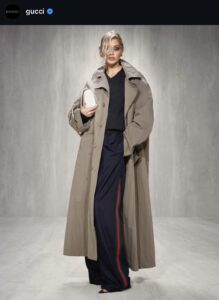
Gucci Fall 2026 feels like a flashback forwards. The loud years made headlines. They also made money, the brand’s highest numbers, in fact. But Demna’s Gucci reads like a reset, a familiar one. At its most transformative, Gucci ran on clarity, and his study of ‘the Gucciness of Gucci’ implies he’s well aware, landing squarely in the Tom Ford era. Sexy was once simple, and simple rebuilt the balance sheet, which, as it turns out, is the sexiest thing of all, giving the brand room to scale into what it hadn’t yet become.
The show took place inside the darkened Palazzo delle Scintille, a former 1920s velodrome turned industrial arena, temporarily converted into something between a museum and a stage set. For the occasion, it was filled with plaster replicas of Uffizi statues, something like Gucci’s visual proof of its own ancestry. Renaissance bodies frozen in white, alongside Demi Moore, her alarmingly small dog, and Alessandro Michele, seated between Donatella Versace and Paris Hilton, watched a runway built on recalibration.
“Gucci is a brand, but it is also a shared cultural touchpoint that speaks to a wide variety of people, reflected in the range of archetypes, tastes, identities, and dress codes of Primavera: a palette of stylistic propositions for those the House already speaks to, and those I hope for it to speak to,” read the opening of the collection’s notes. The show opened with that same sense of palette cleansing, a seamless minidress in white hosiery fabric. Fluid tailoring, tracksuits, trousers that looked more like leggings, low-cut jackets, leather and lace, all followed.
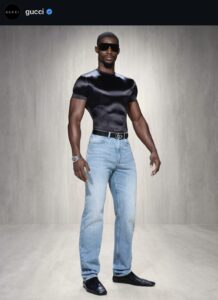
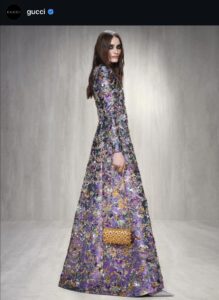
The boys were all about T-shirts so tight you half-expected an artery to snap. Meanwhile, the girls could fund a small country with their sparkle. Amelia Gray in black, Emily Ratajkowski in silver, Alex Consani in gold, and Kate Moss in a backless dress that gave a good hint of her double-G G-string with 10-carats of diamonds. My personal favorite was six looks earlier, a high-collar, long-sleeve maxi embroidered in purple, green, and gold florals.
“Do you know what Gucci is? It’s not just a brand It’s a word we use to describe a certain state of mind. If you feel Gucci, it means you want to do stuff and be crazy and meet people and be, like, out there,” Demna’s 16-year-old cousin told him, Vogue shares. “I see Gucci as a person. Someone with a wild, unforgettable past and unmistakable codes. Someone fully aware of who they are. Yet restless, curious, hungry to evolve, to surprise, to be surprised, to challenge and to be challenged, to be respected, to be desired,” his show’s notes added, “It has become clear to me what my mission here really is. Above the product, Gucci is culture, it is a way of thinking and a way of being. Gucci needs to become a feeling. Gucci must become an adjective.” Seems like he got the memo, the slang too.