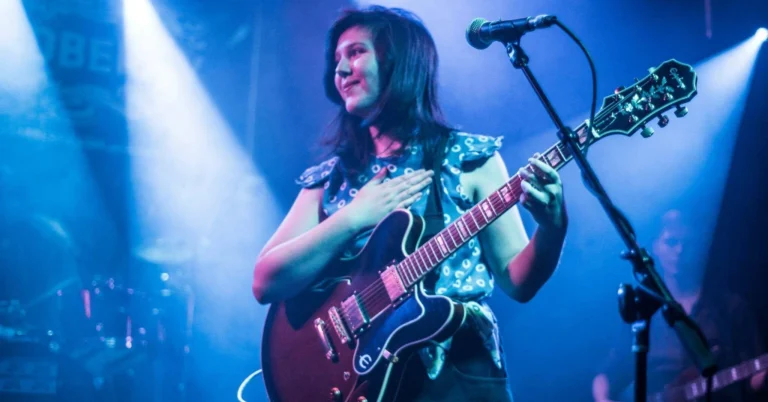
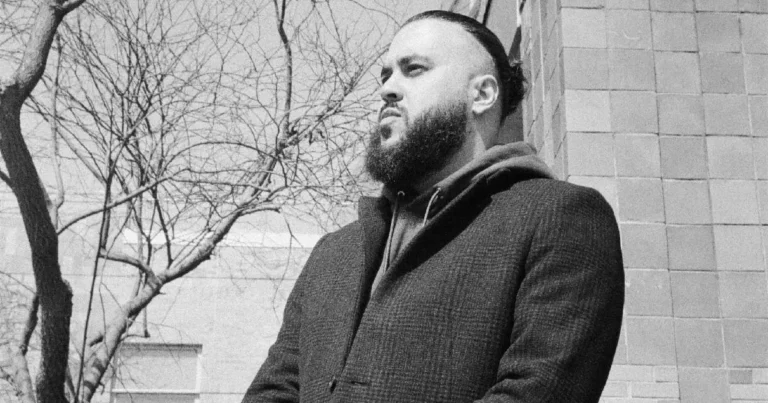
“You don’t want a familiar feeling,” Felix Walworth sings on ‘Real Love’, the opening track of their first Told Slant album in six years. Even at its most romantic, What’s Up is not exactly heartwarming so much as evocative of a “low fire burning,” and more than on any previous record, Walworth allows their simmering frustration to spill over into outrage, mingle with grief, and melt back into tenderness, resulting in their most dynamic record to date. Tracking everything to an eight-track reel-to-reel, they brought together Hannah Pruzinsky (aka h. pruz, also their collaborator in Sister.), their Florist bandmates Emily Sprague and Jonnie Baker, as well as Hellen Ballentine (aka Skullcrusher), Mari Rubio (aka more eaze), and Elijah Wolf – familiar names if you’ve been following Walworth’s work or the New York scene to which they’re embedded, but all of whom help fill the record with thorny, uncompromising details. You wouldn’t call it uncanny territory – just a raw body of work more comfortable making room for irregular shapes than being defined by its increasingly dour, homogenized surroundings.
We caught up with Told Slant’s Felix Walworth to talk about Alan Vega, turning 30, photography, and other inspirations behind What’s Up.
Alan Vega
When I was in high school, I was introduced to that wave of New York punk music, and after the more introductory bands, someone along the way showed me Suicide. They’ve always been in the background of what I’ve been making, but never in a way where I’ve really thought of them as a world that I could pull from. It’s only been recently that I’ve even been interested in experimenting with more synthesized music at all – or being angry in my music, for that matter, or confrontational. It was more that aspect, which is why maybe I list Alan Vega and not Suicide as a band. What I wanted to draw from him was the ability to alienate the audience, to be ungenerous with my audience. It’s just so easy to be like, “I only got this one shot, and I want to make it palatable in all of those ways.” And I’m not that interested in music that’s very palatable. I’m interested in music that’s challenging, maybe it’s got a little bit of a bad attitude sometimes.
‘I Am a Singer’ is this sort of confrontational moment that comes towards the end of the record. You’re not throwing this at the listener from the get go.
That, and ‘Rain of God’ as well. The places that those take on the record are chosen for some of those reasons – I didn’t want to start this record with ‘I Am a Singer’ because I’m not that cruel. There’s sweetness on this record, there’s beauty to be found, and the first song is a jumping-off point for what’s to come. I didn’t want to relegate the abrasion and the ugliness to the end, exactly. But I also didn’t want to say, “Hello, this is who I am.” Which is why the first track, ‘Real Love’, is definitely not one of the poppier songs on the record. Droning and slowly lurching forward – that felt like the way to introduce this thing that you’re gonna have to be patient with, and it’s not gonna jump out at you.
Becoming 30
When I was young or younger – let’s just say young, I’m old – I had so much concern about who I was. Identity was this central puzzle in my life: Who am I? What am I like? How am I influenced by the world around me? How am I changing in all of these ways? The self as this mutable category was something that I was always trying to interrogate. I think there’s something about entering my third decade on Earth that I feel like I reframed that question a little bit for myself, where it was less like “Who am I?” and more like, “I am all these things that I did. A bunch of things happened, and now I live like this. I wake up and this is what my day looks like.” I’m 34, and not to say that I’m done growing and changing and learning about things, but I was just approaching that question of identity from a slightly different angle. And I feel like decentering myself in that way allowed me to write more about what’s around me. My home – sure, my relationships as well, but how all of these things have coalesced to form who I am, and in a less of an insecure way.
I feel that shift in thinking also applies to the record’s sense of place. It’s less, “What is home?” or “What defines New York?” and more so, “What’s happened to this place that I’ve called home?”
Yeah, and I feel like there’s even a more subtextual question: how is my life impacting this place that I live? Which doesn’t get grappled with in a serious way on this record, I would say, but it’s in there. I think any conversation about gentrification has this structure and agency balance to it. These things live in the background of any thoughts I have about the city.
Attic Abasement
I saw they played at your album release show, and also recently put out a new record.
That’s an evergreen band for me, maybe my favorite band ever; at least my favorite band ever that isn’t in the widely hailed pantheon of bands. Mike just has this incredible lyrical and rhythmic sense. We’re very different writers, but I can tell that he arranges these complex rhythmic machines in his mind, and then goes into a studio, or opens up his laptop, or whatever way he’s recording, and the whole thing is coming from him. There’s also amazing players on those songs as well, but this approach to making music of doing a huge part of it yourself is something I used to be a little more attached to, and I kind of moved out of that for this record.
I wish I could ape Mike from Attica Basement more, but he’s just so singular. A lot of his music is in interesting time signatures, but very natural-sounding. The way that we find sort of comfort in the repetition of the 4/4 time signature, I feel like he lives in the 5/4 time signature. But he lives in it like he grew up there. He knows it, and he’s just comfortable.
What made you want to lean into that collaborative element a little bit more on this record, given that you do have different outlets for that side to come out more?
So much of the music that I listen to and that I love is recorded this way. Much of it was done pre-digital recording, where this style of multitracking that I learned on just wasn’t possible. The feeling of a band playing together – specifically even a band that doesn’t know how to play together that well yet, that’s not playing to a click track, and the drummer’s kinda scrappy – these are my favorite kinds of recordings. Velvet Underground, Tom Waits, Modest Mouse, these things that have this kind of ramshackle, about-to-fall-apart feeling. Attica Basement on that list as well. Mistakes laid bare in the recording process, but they’re mistakes that are born of improvisation, not knowing. It’s like a feeling of someone biting off a little more than they can chew in a moment, because they got too excited, they were feeling it too much.
Recording by yourself, there’s only so much you can react to. You’re reacting to yourself over and over again. How much can you surprise yourself? But when everyone’s in the room together playing and you hear someone kick it up a notch a little bit dynamics-wise, or throw a part in that you’ve never heard them throw in before, it changes the way that you’re gonna perform in that moment. When we did ‘I Am a Singer’ that was almost entirely live, vocals included. Hannah’s bass playing was live, and Johnny’s drum machine and live sampling was all simultaneous, just 5 or so tracks into the tape machine. There’s just no way that could have happened and feel that crazy and raw if it were stacked up. And especially not if it was me doing everything, because if I had it my way, it would probably end up being a rock song. It wouldn’t even be a cool, Nine Inch Nails vibe.
Allegra Krieger
I know you toured together around Florist’s Jellyfish and her latest record Art of the Unseen Infinity Machine. Where were you in the process of making What’s Up around that time, 2024 to 2025?
There was definitely still stuff to be written at that point. For some songs, I finished writing the lyrics while we were recording. But yeah, Allegra is such a genius songwriter, and has a way of writing about New York specifically that feels so honest, but also romantic. I think she’s aware of the history of this thing that she’s playing into with this romanticization of this city, and I can tell how much she loves being part of it, and also how difficult it makes her life. I was like, “You’re so good at doing this. I love the way you write these songs.” Touring with her and getting to pick her brain is always delightful.
When she introduces her perspective, or the individual perspectives of narrators on these songs, they all feel like vignettes in this larger, bleak, capitalist megacity landscape that she’s discussing. And she has so much love for those people, and for herself, and for this place, even though I feel like there’s criticism as well in there. It’s not a simple relationship. I tried to bring that kind of nuance into my own writing about New York, because it’s easy to romanticize this place. And it’s also easy to be a hater. But if you really know what it’s like here, you can tell a really good story about it, I think.
When did you realize your own record was shaping up to be a more complicated portrait of the city?
I think I knew from the top that it was gonna be like that. What would there even be to say? What would be the point of making a simple record about New York? Also, so much of it is just about being a working artist, which is such a fraught thing to be, because you do what you love with your life – which is the most beautiful thing in the world – and you are also constantly checking your bank account and having a panic attack, which is one of the worst things in the world. And that’s obviously just exacerbated by this place.
Commercial music
Let’s start by defining what you mean by that.
I think it’s music that wants to be enjoyed first and foremost. And then, after being enjoyed, it hopes that it can be sold as well. I’m just so bored of this kind of music. I would say that I’m inspired by how sick I am of it. When I set out to make this record, I was like, “I do not want to make a record that is easy, or that is beautiful, even.” It can have beautiful moments, sure, but it shouldn’t have mass appeal. It’s disheartening to me when I go to a show in a tiny venue in New York City, and I’m hearing essentially pop music, or alt-country pop music, or whatever. It feels so unimaginative, and it’s in these places that are supposed to be the breeding ground of interesting new ideas. Where do you take risks with your music if it isn’t in the 50-capacity venue in Brooklyn?
The fact that people at that level – small bands – are approaching music from this place of, “Let’s make something that the people want,” is sad to me. It feels stifling. And I was like, “I do not want to make a record that the people want.” Nor can I – I’ve made a lot of records, and the people don’t want them, and that’s fine. But I’m just not interested in that kind of thing. Seeing it so much made me be like, “I need to make something that feels real, that feels outside of commerce.”
I feel like we have so much access to data and information about music now that people know what BPM is the most popular BPM. I don’t know what it is, but I’m not interested in that. Imagine the first thing that you think about when you’re making a piece of art is, “Which BPM should I select as my template, because it’ll do the best on streaming?” I feel like that kind of mindset is very contagious for artists, especially because we’re so broke. So people are like, “Okay, I want to be an artist and I want to be able to pay my rent.” But yeah, I would rather die than figure out what BPM is the most important. It’s just not the reason why I’m doing it. And if I’m playing that song in a hole-in-the-wall bar for a bunch of people on a Wednesday night, that seems extra sad, because I’m like, “We’re supposed to be inventors.” We’re supposed to have the pop songwriters ripping us off. That’s how it’s supposed to work.
Do you find that it’s mostly young musicians who are infected by that sort of mindset, or is it also happening with artists who have been at it for a while?
It’s across the board. And there are so many ways to compromise, and we all have to draw our lines somewhere. Whether it’s songwriters making a reel every day and hoping that it goes viral as their life raft, and then being like, “Okay, this is the song that people liked 25% more in this reel, so maybe I’ll make another song that’s kind of like that.” To me, that is not a creative practice. That is more like superstitious people at the casino who are like, “You know, it hasn’t hit black in a while, so we’re gonna hit black. It’s coming, right?”
Becoming a photographer
I know that the early writing of the record was inspired by these photo walks that you were taking during the pandemic.
It was not a visible or conscious inspiration, but I’m noticing the more that I’m thinking about this record and talking about it, how photography and my interest in that form of expression has informed this music. These lyrics would mostly be written when I’m out taking photos and taking a break, sitting on a bench, surrounded by people, in this kind of mindset of observing something external rather than mining the internal depth. I don’t want to make too much of a distinction between those things, but I think that there is something different when you’re alone in your room thinking about your personal relationships and your feelings, versus when you’re out in the world thinking about how it feels to be among these people, how it feels to live here, and then dredging up your feelings about that. It’s a sort of different order of lyric writing, maybe.
It also strikes me as a creative practice that’s maybe less quantifiable in the sense that you were talking about earlier, like getting into any sort of new art form that you don’t expect to make much money from.
I know so little about the art world of photography, I’m so outside of it. And I’m so grateful to not know anything about that. I don’t know what makes someone like a photo, and I don’t care. Maybe they like color more than black and white – maybe I’ve learned that. But it’s so detached from its commercial value to me. Also, photography is more expensive than making music. There are material costs to making film photography, so I’ve always felt like I try to offset those, like I develop my film in my bathtub, but I’ve always thought of it as, “This is not something that I’m gonna make money from.” It’s something that I’m going to lose money doing, but I’m going to enjoy doing this thing. It doesn’t have to be solvent, it doesn’t have to pay for itself or anything like that. It’s nice when it does, when I do press photos for people, but it’s just not the point.
How has taking press photos affected your relationship to music, being a listener but also an observer who captures musicians in that sense?
There’s so much there. Something that’s beautiful about any art form is its ability to point to something true about the world. And it doesn’t have to be honest about the way that it does that, I think. Bruce Springsteen is a great example of someone like that, who tells these stories that may or may not have happened, but they’re true. Like, I don’t know if Johnny 99 is a real person who was waving his gun around and ended up going to the electric chair, but he is. Bruce Springsteen made something true in that depiction of this character. Photography has a reputation for honesty: the camera simply spits back up what’s already there. And I don’t think that’s true. I think you point it where you want to point it, and you are in control of this moment of capture, and you want to say something about a person.
So when I go into press photo mode with someone, one of the first things I’ll ask someone is, “What are the ways that you like to be perceived, and what are the ways that make you uncomfortable to be perceived?” And those might be aspects of that person that are real that we’re going to either accentuate or obfuscate in the process of taking these photos. So we have control; we’re gonna lie a little bit, right? And I like collaborating in that way, where we’re going to create a little story together and we’re gonna try to find something true about who you are, and we’re gonna try to highlight that thing. When I take portraits in general, I’m like, “I’m reducing you to this moment, but I want this moment to say something about you that is meaningful.”
Being mad at stuff
There’s a lot of bitterness on the record, and one song where you really channel anger is ‘Draw Blood’. But then on ‘I Am a Singer’, there’s that line: “Even if the world needs shouting, begging for its soul, I am a singer.” My understanding of it is that you can always “shriek at a pitch more dissonant,” but you’re always drawn back to the gentleness. I feel like the fact that you do give yourself permission to be mad on this record accentuates the sweeter moments that are maybe more prominent.
I think that dynamic is kind of at the core of this. There’s so much compassion on this record, and there’s self-directed anger on ‘I Am a Singer’. It’s like, what kind of schmuck looks at this world and does this? It’s towards myself, but it’s also towards other people, like, “What are we fucking doing?” At the same time, I hope you can tell from this record that this is from the perspective of someone who really believes wholeheartedly in what they’re doing: being an artist, expressing themself, and inspiring other people to express themselves. I feel like, on this record, I’m like, “I believe I’m doing the Lord’s work, and I am a complete waste of breath.” [laughs] I can’t imagine meeting an artist that doesn’t think that way about their work.
There’s something suspicious if both things aren’t true at the same time.
If someone’s just like, “I’m the second coming of Jesus Christ,” they’re usually not very good. There’s usually this cocktail of: I think something that I’m doing is really important enough for me to make this whole swath of sacrifices – to basically ruin my life to share this thing and make it happen – but also, what if it’s not enough? What if it’s not good? What if it could be better?
Not to go back to Bruce Springsteen, but I will. I heard this story, I don’t even know if it’s true, of when he received the master tapes of Born in the USA. He thought it just sounded like absolute shit, and he stole them from the studio. He wrestled into a van with these master tapes to destroy them. You have to know that he was in there making those things, being like, “I have something to say. It has to be said.” And this other voice inside of him was like, “This is absolute dogshit.” And that’s what made this record. And my record. And everything I’ve ever made, honestly.
This interview has been edited and condensed for clarity and length.
Told Slant’s What’s Up is out now via Mtn. Laurel Recording Co.