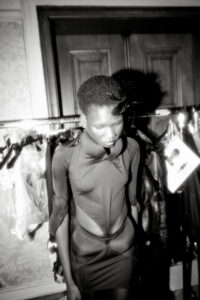
Lou De Bètoly is exactly what it sounds like. The brand takes its name from its creator, Odély Teboul, perfectly deconstructed. The same logic applies to the garments. Everyone loves to watch up close, very few can actually pull them off, and they tend to look better than everyone else. At least, they did on day two of Berlin Fashion Week.
Teboul is a French creative that understood fashion from the age of five. And by “understood”, I mean full-on cross-stitch embroidery, crochet, and knitting. She later studied fashion in Paris, one of the many perks of being French, and eventually found herself working in studios bearing Jean Paul Gaultier’s name, bringing her craft to knitwear and haute couture embroidery. Berlin, however, is where she found her footing, in case you couldn’t already tell. Luckily, the clothes carry the same sense of contradiction.
The collection she presented at Rathaus Schöneberg, under Tim Heyduck’s creative direction and styling, felt constructed for a persona living a double life. Front row at Paris Haute Couture Week one moment, chandeliers, whispered critiques, air-kissed greetings, old-world ateliers, then, hours later, swallowed by Berghain’s post-industrial cathedral, bodies blurring into one another, and bass and anonymity replacing polite chit-chat. If anything, the location made the contrast feel sharper rather than softened. It was a town hall, after all.
Underwear, vintage textiles, lace, yarn, body-contouring dresses, Hunkemöller, even a box of 740 buttons from the 90s, all had a special place in this season’s lineup. Bras were stitched together in unexpected ways, sometimes as knee-cups, sometimes as peplums, sometimes as high-necked collars. Patterns clashed, florals mixed and matched down the runway, lace and feathers perched atop heads, gloves adorned hands, and when none were present, Teboul made sure two fingers were swathed in black material. The show had everything. Handmade skirts, corsets, bodysuits, pants, dresses, jackets, yet nothing looked familiar, every detail was pure Lou De Bètoly. Let’s see which lucky A-listers get to pick and choose this time.
Chappell Roan has parted ways with the talent agency Wasserman Music after the company’s founder and CEO, Casey Wasserman, appeared in the latest release of the Epstein files. In an Instagram story, Roan wrote: “As of today, I am no longer represented by Wasserman, the talent agency led by Casey Wasserman,” wrote Roan. “I hold my teams to the highest standards and have a duty to protect them as well. No artist, agent or employee should ever be expected to defend or overlook actions that conflict so deeply with our own moral values.”
“I have deep respect and appreciation for the agents and staff who work tirelessly for their artists and I refuse to passively stand by,” she added. “Artists deserve representation that aligns with their values and supports their safety and dignity. This decision reflects my belief that meaningful change in our industry requires accountability and leadership that earns trust.”
Casey Wasserman had traveled on Jeffrey Epstein’s s plane during a 2002 humanitarian trip and, as the files made public, exchanged emails with convicted child sex trafficker Ghislaine Maxwell. The messages show Wasserman flirting with Maxwell, who in an April 2003 email offered to give him a massage that can “drive a man wild.” A photograph of Wasserman with Maxwell and Epstein was also released.
“I deeply regret my correspondence with Ghislaine Maxwell which took place over two decades ago, long before her horrific crimes came to light,” Wasserman stated. “I never had a personal or business relationship with Jeffrey Epstein. As is well documented, I went on a humanitarian trip as part of a delegation with the Clinton Foundation in 2002 on the Epstein plane. I am terribly sorry for having any association with either of them.”
Last week, Best Coast frontwoman Bethany Cosentino, who has been represented by Wasserman Music since 2021, shared an open letter urging Wasserman to resign. “I’m speaking out because pretending this is normal isn’t normal. Because people in power can’t keep skating by,” she wrote. “Artists are not interchangeable assets. We are people. Many of us are women. Many of us, myself included, are survivors. We deserve systems that let us work without asking us to compromise our values in exchange for opportunity.”
One of the biggest talent agencies in the industry, Wasserman represents hundres of artists and sports players, including Kendrick Lamar, Coldplay, Skrillex, Animal Collective, Geese, Wet Leg, Lorde, SZA, Ed Sheeran, and more. Several of them have announced or are in the process of leaving the agency. Notably, Billie Eilish fired the agency in 2024 after The Daily Mail reported that Wasserman had engaged in inappropriate relationships with female employees. Wednesday just openly left the agency, while Water From Your Eyes, Beach Bunny, and Sleigh Bells’ Alexis Krauss have shared statements demanding Wasserman be held accountable.
Towards the end of our 2023 Artist Spotlight interview, Mandy, Indiana guitarist and producer Scott Fair brought up an unlikely source of inspiration: Moana. “The Disney film,” he said, an important clarification in the context of a harrowingly chaotic noise rock LP recorded in caves, crypts, and shopping centers. (I guess there are caves in Moana, too. I did not interrupt Fair’s response at the time to admit this, but I have in fact watched the film.) The call at the start of the movie “influenced this kind of tribal call that happens while [vocalist Valentine Caulfield] is singing in the background,” referencing ‘Sensitivity Training’, the closing track on the band’s debut i’ve seen a way. For Mandy, Indiana, inspiration could come from anywhere, and their ears are as attuned to the sounds in their environment – whether close to (or in the literal walls of their) home or entirely foreign – as the ways they can be imagined into their piercing, uncanny body of work. And the body is precisely the animating force on URGH, their first album for Sacred Bones, which partly took shape during “an intense residency at an eerie studio house” near Leeds, but mostly, and painstakingly, over long distances. Buzzing, thrashing, and sloshing through unpindownable spaces that can only be defined by the coordinates of their own band name, the album similarly inspires countless reactions but can only really be captured by its own title.
We caught up with Mandy, Indiana’s Scott Fair and Alex Macdougall to talk about physicality, a wasp nest, video game atmospheres, and other inspirations behind their new album URGH.
Physicality
This major theme is mirrored in different aspects of the album, and the title is a good place to start. How did you land on it?
Scott Fair: I’ve seen it come up in a number of write-ups, that it is this aural encapsulation of the sound of the record, a collective verbalization or utterance. I suppose for the purposes of a record, it needs to be written down, but you could spell it in any number of ways, and in fact, that was the subject of weeks-long debates between the band members: How are we actually going to spell it? But it’s a physical response, I feel, that transcends language. It is something that feels more primal, but it could have lots of different meanings. We were discussing the definitions of that word, and there were synonyms that were floating around, but we had to pin it down to something. We’re always trying to operate within ambiguous areas, things that are hard to define, and using non-verbal language to communicate, so that felt like a very appropriate representation of what we’re trying to communicate as artists. We prefer not to have things spoon-fed, to leave things ill-defined or unresolved, closer to life.
Alex Macdougall: I was thinking about the difference between this album that’s coming out and the last one. The first record is much more escapist, creating these other atmospheres and worlds, and the name and the artwork lack the body, the physicality – it’s like a virtual world. Whereas this one is the opposite of that; the artwork is from these old anatomical drawings.
SF: Carnovsky interpreted these original works into the RGB.
AM: Our manager, Tasha, when we first put this idea forward as the artwork, she was like, “Oh, I remember these exact drawings from my textbook in university.” But yeah, the context around which this record has been made has felt much more stressful. The world around us is so fucked up and chaotic, and I think about how seeing the news and everything going on imprints on my nervous system, because I am addicted to my Instagram feed, seeing all this stuff roll in and having emotional reactions to it. It really gets under your skin, so I like how the artwork has the face, the skull, and underneath these nerves and the central nervous system, because it really reflects how I felt making this record as well.
These three-layered illustrations also made me wonder if you have a similarly anatomical view of the music in terms of structuring it.
SF: Yeah, I would argue that our music is somewhat reflective of the layers. We actually discovered in the early days of touring that we were neglecting whole massive frequency ranges, because we had this extremely low bass, and then these guitars and vocals in the high mid and high frequency range, and there was nothing there in the low mids. It’s almost like you have this low foundation, you have the vocals, and then you have these more ethereal, scratchier parts that sit on top. It is layered a bit like that, perhaps more so than other music, which tries to make use of the whole frequency range.
The 2024 film It’s What’s Inside
SF: The actual idea for the RGB artwork – if you haven’t seen the film, I consider this to be a minor spoiler. But it’s basically a body swap film, where some guy comes into a party, hasn’t seen his friends for years and years and years, and he brings a device. He doesn’t tell them what it is, but he’s gonna show them what it is, and then they all swap bodies. The filmmaker uses this ingenious device, a visual way of telling you who’s in whose body by changing the lighting. As a device, I found that to be really interesting and unique, and not something that I’d seen attempted in a film before, especially in such a well-realized way. That’s where the inspiration for the artwork came. I discovered Carnovsky, shared it with the others, and said this feels like a really good fit with the music. I really love that it’s something that you have to physically engage with in order to appreciate. I think there was some confusion, maybe at the start, when we first shared it with the label. They were like, “People might not understand what this is.” And it was like, “That’s kind of the point.” We want people to be confused by it and compelled to find out why it’s hard to see. I think that is an extension of how we make music as well.
Collective shared experiences
Before getting into collective shared experiences, I wanted to ask Alex something that lies in the intersection of physicality and performance, which then feeds into your live show. You’ve described the process of playing drums during the 10-hour work days when you were recording the album as being in “survival mode.” Do you feel like there’s a specific kind of intensity in the energy you’re able to exert when you’re pushing the limits of your body as opposed to relaxing it?
AM: It’s a really interesting question. That’s something that I think about quite a lot as a drummer, because learning the drums, you’re taught to relax as much as possible, because your muscles will work better if they’re in a relaxed state. But it’s just not the way I’ve ever been able to play. [laughs] The energy of the live situation always takes over me. I’m slowly changing that, but there’s something really interesting and different about playing at a physical limit, certainly live. I think it’s to do with seeing a real person in front of you, a human being really on the edge. That’s why I love drummers like Zach Hill, that kind of style.
Thinking back to the recording, we did the drums over the course of three days, and we were solely there to record the drums; we weren’t aiming to record any other instruments. It’s the first time I’ve done a recording session where that’s been the case. Previously, when you get a bit tired doing takes, you can hand over to the bassist or another musician to do some of their parts and rest. I was taking breaks, but it was all on me to get it completed in three days, which is all we had money for. That was off the back of some surgery I’d had earlier in the year, and I was feeling a bit like 70% battery anyway going into it. I really don’t want to glamorize all that, but I think that the sound of the drums and the urgency of it did stem from some of that context of really pushing through, because it’s not a walk in the park. Some of these drums are really intense to play, especially when you’re doing back-to-back takes. I think that has imprinted itself on the record.
You were also thinking about the different rhythms that cause the body to move in different ways, which ties into observing the audience in the live setting. Being at your Primavera gig in Barcelona a couple of years ago, I was struck by how there was a fine line between moshing and dancing at your show. I hadn’t really seen that specific combination before.
SF: That’s a really awesome observation to hear from you. A lot of these ways of moving to music originate somewhere – it’s not called moshing initially, somebody labels it that. I think if you can inspire a way of movement that is, at first, somewhat unrecognizable, there’s something really exciting about that. If you’re offering people music that they don’t know whether to dance or mosh or both, that’s really awesome. I hope that’s something that we can encourage people to explore at our shows, to move not necessarily in a practiced way, or in a way that feels like an imitation of something, but in response to the music and however that makes you feel. All of our self-described experimentation, however much you agree with that, is in pursuit of discovery. We’re trying to land on something that feels new and exciting to us, and only by regurgitating your influences in as interesting a way as you are able to do you have even a remote chance of landing on something that feels like it’s an experiment, like it might have some kernel of newness about it.
AM: I was thinking about how, throughout the record, there’s rhythms that are kind of rigid and on the grid, and then there’s rhythms that are weirder, kind of slushy. I’d basically go into a drum room and play around with these ideas and just record whilst improvising with these different images in mind. One example that comes to mind is, at the start of ‘Magazine’, there’s this cowbell rhythm that’s meant to sound slushy, a bit laid back. That was me going into the room and thinking about that band Liquid Liquid, the sort of mood they have, and what their music causes my body to do, trying to bring that out as well.
Wasp nest
AM: This was an idea I had to kind of chat about some of the less conventional samples that made it onto the record. Some wasps made a home out of the wall in the house I live in – actually, Val was staying here for a few weeks while that was going on, and she would go down into the bathroom in the middle of the night, and there would be five wasps in there. She was not happy at all. Just hearing the colony getting bigger and bigger was weird, and towards the end of their cycle, they got more aggressive, so I made a phone recording through the wall, sent it to Scott, and it’s somewhere on the album. Maybe I shouldn’t say where. There’s some other fun, interesting sounds. The subway in Budapest made it on. And then there’s your kids’ walkie-talkies feeding back as well.
SF: Yeah. We did some ASMR shit, hands rubbing together, packaging and things like that. If you get an idea for something textural – that’s what it usually is for me – and you’re like, “It needs this here,” it’s like, “How do I go about making that?” And sometimes it’ll be like, “Hey Alex, have you got anything that sounds like this?” And he’s like, “Well, I’ve got a recording of wasps right there inside my wall.” It’s like, “Oh yeah, we need a wasp-ish kind of sound.” [laughs] We’re not necessarily dropping things as little Easter eggs with that intention, it’s more just about broadening the sonic palette in that way. We’re not precious about what we should or shouldn’t include – if it works and it makes it more interesting, so be it.
AM: We’re lucky that we have two ways of incorporating that stuff into the live set as well. Simon’s got an SP404 sample pad, and I have an SPD pad by the kit.
SF: Oh, there’s the dogs from outside the White Hotel?
AM: Is that where they’re from?
SF: Yeah, in that car park. That’s literally me walking home from a show at the White Hotel, and them running over and trying to get me. [laughs]
AM: You couldn’t have been that scared if you whipped out your phone.
SF: I think it’s happened enough times that I was kind of prepared. I was like, “You guys are going on the album. You’ve harassed me enough.”
A song like ‘Cursive’ has so much in it, and I can appreciate the final product without knowing how you really got to those sounds. It’s almost like the starting point could be anything.
SF: That’s an interesting one, because that’s the one that has the Budapest subway sound on it. We played it live for the first time, we’ve been rehearsing it, and I can actually make very similar sounds to that subway and the kind of noises that it’s making on my guitar. That almost happened by accident, so it is weird how that happens.
Touring Europe and the US
I remember seeing both you and billy woods playing the same stage on different days at Primavera. Is that how you crossed paths?
Scott Fair: Actually, it wasn’t the Barcelona one, it was the Porto show. He was backstage being interviewed, and we were just sitting next to him. But I was such a big fan. I was like, “I’m not speaking to him.” And then it came to pass that we were also billed together at Club to Club, another festival in Turin, and his dressing room was right next to ours. I was talking about how I was listening to his music a lot at that time as well, so it was just a bit too raw for me to interact, but Val caught wind that I was a big fan and was just like, “Well, I don’t care, I’m gonna go in there.” [laughs] So she literally just walked into his dressing room unceremoniously, unannounced, just barged in and was like, “Hey, billy woods!” I feel like we need to sort of hold on to the rest of that story for a little longer, maybe, because it’s definitely a bit of a – what would you call it? You know when you hear these stories about music history, and nobody knows whether it’s true or not or whatever.
It’s not for the album campaign, it’s for the history books.
SF: We’ll talk in more detail about it one day, but maybe we’ll just leave that dangling for now.
AM: [laughs] I love how you’re talking as if we’re going in this history book in the sky eventually.
SF: I’ll tell you what, when we’re entered into the Rock and Roll Hall of Fame or whatever the equivalent is for a weird band like us, that’s when we’ll dish the dirt.
In what other ways did touring influence the record?
Scott Fair: That’s what I wanted to do when I was younger, just travel. I didn’t really get lots of opportunities to do that, and being in a band is a really amazing way of just getting to experience other cultures and meet interesting people, and that has to have an impact and an influence. There was one gig, which I still think about a lot, that was in Leipzig. They would broadcast the shows on this internet station – it was all ancient broadcasting equipment, but they would use these filters and effects, all this outboard stuff that they were doing in real time whilst we were playing the show. It was a really small room, everybody was smoking indoors, just living and breathing this very artistically stimulating atmosphere. That show was a real eye-opener for me. I was like, “I haven’t played a show like this for a long time.” We don’t play live that often, because we’re all so busy with our day jobs, our home lives, just everything else. So when we’re together, it’s really special, because other than three days in that house in Leeds, we didn’t really see each other while we were writing the record. I feel that’s really where the spirit of the band exists, when we’re together doing shows.
Creating long-distance
SF: There was much more involvement from the four members in terms of ideas where inspiration was coming from. The first record was a bit more myself and Valentine, ideas that we’d been working on as we assembled the band around us. The tastes and ideas of the four individual members have much more presence in this record. But otherwise, I would say it was probably even more of a remote, long-distance process than the first one, because a lot of the first one was written while Valentine was still in the UK. This time she was living in Berlin from the beginning of the process, and that meant that everything was done remotely, apart from the three days that we spent together, which were very productive.
It was super challenging, but we also knew we were doing something worthwhile, so it was worth the extra strain that it was putting on our personal lives, and that was pretty frequent. To be frank, it was pretty testing at times for us as a band, as individuals, given the other hardships that some of us were experiencing, surgeries and various kinds of health issues. It wasn’t as pleasant an experience as making the first album, I would say. It felt more like work at times. There were many times when it felt like it was finished, and then later we realized it wasn’t, and we had to tear things down and build them back up. And that’s all harder when you’re not occupying the same space, because communication can be fractured if it’s all via text message or voice note or an occasional sort of Zoom call. As Alex was saying before about pushing yourself to limitations, it’s like a football player out on the pitch, putting in absolutely everything they’ve got. I felt like that at times, like, “I’ve got nothing left to give this album now.” It’s all been wrung out, it’s all in there.
What was the most rewarding aspect of the process for you, Alex? Is it now, hearing the record, or maybe during those three days?
AM: I feel like now that it’s coming out, all the difficulty of it is receding into the background. But I just really enjoy hanging out with these guys, so the three-day thing was great for that. The other thing with that is that we were pretty cut off, there wasn’t much phone signal, we were just with each other there. It does make me feel sad that we don’t get to see each other as much now. The three of us guys do, because we live in Manchester and around Manchester, but seeing Val is a bit more challenging. So the times when I see these guys are the most rewarding because we do bounce off each other and just have a very interesting and silly time together.
Video game atmospheres
That’s definitely something that fed into your first record as well. I remember you mentioned BioShock.
SF: I guess this just alludes to a lot – it could be a film, it could be a video game. Music is the thing that comes most naturally to me, but I’m often motivated by visual stimulation, and often in combination with music. It could be any number of movies or games. In particular, the stuff that I was playing at the time: Alien: Isolation was a big one, and that was definitely a huge influence for a lot of the sounds that I was making with my guitar on the record. There was a game called Detention, which I was really transfixed by. It’s a side-scrolling puzzle horror game with a really creepy atmosphere. There’s not really anything that much deeper to any of these influences, but I’d always rather cite those visual things than list a bunch of records or artists, because I feel that that’s less interesting. Inside by Playdead was another one – also really loved Limbo by them but I remember specifically playing Inside really late at night and being like, “How does this game sound as a song?”
I don’t think it’s necessarily a super unique process, but that’s just the honest way that I went about starting off a lot of these ideas: How do you transfer the way that the atmosphere of this game, or of this film, into music? I imagine that’s fun to do for people who actually score those things, but in many ways, there’s much more freedom when you’re not doing that because it doesn’t have to work to picture; there’s no loop points or whatever. It’s just trying to find a tone, a feeling, and that can come from anywhere.
This interview has been edited and condensed for clarity and length.
Anna Calvi has announced a new EP, Is This All There Is?, which arrives March 20 via Domino. It includes the previously released cover of Bonnie “Prince” Billy’s ‘I See a Darkness’, which featured Perfume Genius, and today, Calvi has shared the Iggy Pop collab ‘God’s Lonely Man’. The EP also features duets with Matt Berninger and Laurie Anderson. Check out ‘God’s Lonely Man’ below.
The gritty new track comes with an accompanying video directed by Luigi Calabrese and Dominic Easter. Of collaborating with Iggy Pop, Calvi said: “He’s disruptive, raw, and honest — a singular force. His presence was so perfect for the narrative of this song.”
Is This All There Is? marks the first installment in a trilogy of records exploring identity as a metamorphosis. “Having a child was so transformative it made me consider the possibility that everything in life could potentially shift, and that is scary but incredibly freeing,” Calvi explained. “I didn’t want to take anything for granted any more. I want to exist in the best way for my child. I wanted to ask the most basic human question – is this all there is?”
Is This All There Is? Cover Artwork:
Is This All There Is? Tracklist:
1. God’s Lonely Man [feat. Iggy Pop]
2. I See A Darkness [feat. Perfume Genius]
3. Computer Love [feat. Laurie Anderson]
4. Is This All There Is? [feat. Matt Berninger]
Gambling doesn’t just change how we spend money. It quietly changes how we pay attention. Over time, the mind stops scanning the whole picture and starts locking onto very specific signals (flashes, sounds, short bursts of outcome). We don’t usually notice this shift while it’s happening, because it feels like focus, not distortion. But once attention starts narrowing in that way, decisions begin to follow a very different logic.
The Best Example of Attention Capture
The cleanest example of attention capture is Plinko, and it works because it wastes no time. The drop starts instantly. No setup, no pause, no extra choice. Our eyes lock onto the falling chip the moment it moves, because motion is the strongest visual trigger the brain has. Every bounce feels like progress, even though nothing meaningful changes between pegs. That illusion of progress matters. It keeps attention anchored to the screen instead of drifting away or questioning the outcome.
The unpredictability does the rest of the work. The chip never falls the same way twice, so the brain keeps waiting for resolution. That waiting state is powerful. Minimal controls make it even stronger. With nothing to adjust mid-round, attention shifts away from decision-making and into pure observation. We stop thinking about strategy and start watching. And once attention becomes passive like that, time stretches, rounds blur together, and the game quietly takes over the mental space.
Broad Focus and Narrow Tunnels
At the start, attention stays wide. We notice the room, the phone buzzing, the clock in the corner. But gambling slowly pulls focus inward. Each round asks for just a little more attention than the last. Not all at once. Gradually. The brain learns that the screen matters more than the surroundings. External noise fades because it carries no immediate outcome, while the game always promises one. That imbalance trains attention to narrow itself without us realizing it.
Time slips because rounds repeat with no clear endpoint
Notifications lose priority when they don’t affect the next result
Background sounds fade as the brain filters anything unrelated
With repeated play, this tunnel gets stronger. The mind starts locking onto a single stimulus and holding it there. Visual motion, countdowns, sound cues. They all point in one direction. Over time, attention stops scanning for alternatives. It waits. It watches. And once the brain is trained this way, breaking that tunnel requires effort, not just awareness.
Micro-Movements and Motion
Static screens are easy to ignore. The brain learns them fast and then tunes them out. Motion works differently. Any moving element, even a small one, triggers automatic tracking. Eyes follow before we decide to look. In gambling games, those tiny movements matter more than big animations. A peg flash, a chip bounce, a number shifting by one digit. Each micro-change pulls focus back to the center and resets attention without asking permission.
This is why games like Plinko feel hypnotic instead of demanding. There is no heavy thinking involved. Attention is guided, not forced. Small visual changes arrive in a steady rhythm, so the brain never fully disengages. Focus refreshes again and again, without effort. We are not solving a problem. We are following motion. And that passive following is what makes time disappear.
Anticipation Interrupts Logical Thought
Anticipation is a quiet interrupter of logic. The moment an outcome is pending, the brain changes mode. Instead of evaluating odds or recalling past results, attention moves forward in time. It waits. That waiting state suspends critical thinking because the mind expects resolution, not analysis. Thinking feels unnecessary when the result is already on the way.
Attention shifts from deciding to observing
Past outcomes stop informing the next moment
The brain stays busy without active effort
Suspense fills mental space efficiently. There is no need to solve or plan. The mind stays occupied simply by tracking what might happen next. That is why anticipation feels light but sticky. We remain engaged without realizing how little thinking is actually taking place.
Reward Signals and Attention Hijacking
Reward signals are designed to cut through everything else. A sound chime, a flash of light, a brief pause before a result. These cues pull attention back instantly, even if focus was fading a second earlier. Near-misses work the same way. They look like failure, but they feel like progress. The brain reacts to them as meaningful events, so attention snaps back to the screen without resistance.
Small wins feel loud because they arrive with emphasis. The reward itself may be minor, but the signal around it is not. Over time, attention becomes conditioned to these cues. The mind starts scanning for sounds and flashes instead of outcomes. Focus returns automatically, before any conscious thought kicks in.
Conclusion
When we put all of this together, the pattern becomes clear. Gambling does not overwhelm attention all at once. It reshapes it piece by piece. Motion pulls the eyes in, anticipation quiets logic, reward cues snap focus back, and repetition trains the brain to stay inside a narrow tunnel. Over time, attention stops roaming and starts waiting. Watching replaces thinking. And once that shift settles in, the experience feels effortless, absorbing, and strangely timeless. Not because it demands more focus, but because it no longer lets focus go.
Looking for the perfect museum date this Valentine’s Day, or just seeking to shake off the winter blues with some art? Our Culture recommends four London exhibitions to check out this February:
Lucian Freud: Drawing into Painting at The National Potrait Gallery (12 Feb – 4 May)
This landmark exhibition reveals how drawing stayed central to the figurative painter’s practice throughout his entire career. Come see rarely-exhibited drawings and preparatory studies displayed alongside Freud’s iconic paintings. Perfect for anyone curious about what happens behind the finished masterpiece.
Chiharu Shiota: Threads of Life at the Southbank Centre (17 Feb – 3 May)
Step into Chiharu Shiota’s mesmerising web-like installations exploring memory, consciousness and the fragility of life. The artist is best known for her large-scale works where everyday objects like shoes, beds, chairs and dresses become entangled in massive structures of woollen thread. This exhibition features new versions of Shiota’s monumental installations, including During Sleep (2026), which is activated with performances throughout the exhibition’s run.
Beatriz González at the Barbican (25 Feb – 10 May)
The first UK retrospective of groundbreaking Colombian artist Beatriz González brings together over 150 works spanning from the 1960s to today. Working across monumental paintings, repurposed furniture, wallpaper and installations, González transforms found images into bold, graphic works that question taste and critique power. Her vivid palette and distinctive style tackle everything from violence and displacement to community.
Tracey Emin: A Second Life at the Tate Modern (27 Feb – 31 Aug)
This landmark exhibition spans four decades of Tracey Emin’s deeply personal work, from her controversial Turner Prize-nominated My Bed to pieces never shown publicly before. Moving through painting, neon, textiles, video and installation, Emin’s practice turns autobiography into art, exploring passion and healing through an unflinching lens.
Everyone, grab a seat. No, literally. Fashion recently decided that it’s not time to end the game of musical chairs just yet. You know, the one where every creative director under the sun spent the past year chasing a luxury seat, fun times. Thought we kind of wrapped it up, but fun times. Pieter Mulier officially exited the maison of Alaïa, and the rumors didn’t just go nuclear, they turned out to be true.
Alaia isn’t exactly a complicated maison. Azzedine Alaïa himself called the shots for nearly four decades, until he sadly didn’t, in 2017. Pieter Mulier took the reins in 2021, but until then he was proving his chops next to Raf Simons at every major house, the good old right-hand man. Raf Simons, Jil Sander, Christian Dior, he was there. At Calvin Klein, Mulier officially became creative director, with Simons keeping the big chief creative officer’s chair. And that’s when the duo parted ways and Mulier took center stage at Alaïa.
2017 and 2021 are five years apart, but one title away. After Alaïa’s death, the house ran on its in-house team, to put it plainly, those five years were five really long years. But when Mulier stepped in, the energy shifted. He organized the maison, modernized the workflow, and mentored the team. He brought the collections closer to the market, gave the house a pulse, and proved you can update a legend without entirely killing its soul.
With Versace getting that big, fat hug from Prada Group, in other words, officially sold by Capri Holdings, and Dario Vitale’s sudden exit, the game of musical chairs crowned a new winner. Pieter Mulier is officially heading to Versace as chief creative officer, turning months of speculation into reality. Whether it’s actually the right fit is, of course, highly debatable, but it will certainly be entertaining to watch. Now, whispers of Mulier co-heading Versace with Donatella are everywhere, powered by the ever-reliable Internet. Considering Simons is currently teaming up with Miuccia herself at Prada, it doesn’t feel as far-fetched as it should, a sort of half-circle moment. And where does this leave the fashion world? Alaïa’s chair is open, and there’s a list of potential heavy hitters. Olivier Rousteing, Sabato De Sarno, dare I even say John Galliano. Point is, logic may be missing, but names definitely aren’t. Alaïa just landed the ultimate opportunity to shock us, the kind fashion usually wastes.
2026 marks the official arrival of the “Prepaid Pivot”. Sharp spenders refuse to leave their electronic breadcrumbs exposed, opting to lock down entertainment funds with tools that guarantee anonymity and control.
Booking a rideshare or streaming the latest hit should feel effortless in 2026. Instant gratification drives the economy. Privacy sits in the driver’s seat for the entertainment sector. No one wants every subscription or gaming session logging a permanent entry on a bank ledger. Keeping “gaming budgets” distinct from “grocery money” calls for a hard partition. Prepaid cards build that necessary wall. There’s no risk of a fun Friday night eating into the rent payment. Financial flexibility happens by design. Consumers are finally taking the reins back from pesky algorithms that track every move.
The Privacy Pivot of 2026
Casino operators in Canada saw a huge spike in searches for online casino accepting prepaid cards in recent months. That’s those holiday gift cards getting their time to shine. The numbers from 2025 scream volumes about user intent. Research and Markets data confirms the Canadian prepaid card market value hit $26.26 billion last year. Reports indicate that the Canadian online gambling industry simultaneously generated $15.6 billion in revenue.
A degree in economics isn’t required to see the connection. Rising market values in prepaid sectors match the rising revenue in digital betting. Users refuse to trust traditional banking statements to keep their secrets safe. Voting with wallets is the norm. Online casino platforms throughout Canada understand this player dynamic. They don’t clutter the user experience with intrusive credit checks or slow authorizations. Streamlining the process is key. Demand for anonymity doesn’t waver. Market value proves that privacy is a requirement. It’s the new baseline for doing business online.
The “Burner” Wallet Effect
Think of a prepaid card as a burner phone for your bank account. Tech insiders have whispered about “segmentation” for years. The Oasis “Live ’25” ticket fiasco finally brought it to the mainstream. Just take a look at the chaos from last August when the Gallagher brothers finally played the temporary Rogers Stadium at Downsview. The band promised to avoid dynamic pricing schemes, but that didn’t stop the affordable tickets from vanishing instantly. Fans found themselves staring at “Official Platinum” seats costing over $800 instead of the expected $150.
Panic set in. People with direct links to their savings accounts let the fear of missing out take the wheel and accidentally spent their rent money just to get through the virtual door. Prepaid users didn’t have that problem. A card loaded with a strict $200 budget simply declined the transaction when the total hit that absurd markup. The decline wasn’t an error. It was a guardrail. The hard limit saved them from a financial hangover that their main bank card would have happily authorized.
Retro Access, Modern Ease
Accessibility creates engagement. Complex barriers don’t keep players out; they just annoy them. Nintendo understood this perfectly with the Animal Crossing: New Horizons Version 3.0 update. Fans don’t need to hook up dusty consoles to play classics anymore. Unlocking the “Artful” set of in-game items grants immediate access to NES and Famicom games.
The hassle of hunting for cartridges is gone. No need to blow into slots to get them working. Nintendo has simplified the experience. Prepaid cards do the same for online betting. You can avoid the banking approval maze. Plus, getting a voucher doesn’t require a credit check. Obtain the voucher, and then you gain access. Removing these barriers saves time and makes things easier. Life has enough challenges, and paying for entertainment shouldn’t add to them.
Stopping the Subscription Bleed
Everyone has that one friend who pays for five streaming services they never watch. It’s the “subscription bleed,” and it drains bank accounts dry. A free trial turns into a two-year drain because of a forgotten checkbox. Direct debit links make it too easy to ignore a recurring charge. A prepaid card puts a hard stop to the madness. When the funds run out, the service stops.
Awkward cancellation phone calls aren’t needed. Hunting for a “delete account” button buried five menus deep is a thing of the past. Control the tap. To take a break from a gaming site or a streamer, simply stop loading the card. It forces every transaction to be a conscious choice rather than an automated drain. It’s financial discipline without the spreadsheet.
The Reliability Factor
Consumers don’t chase shiny new things as often as marketers think. Reliability wins. Look at the gaming habits defined in 2025. The latest stats show that the most played games on PlayStation and Xbox are still the same as they’ve been for the last few years.:
Fortnite
Call of Duty
Grand Theft Auto V
Roblox
Minecraft
Players usually stick with games they know and love. People prefer the familiar, especially when it brings consistent fun. The same goes for finance. Most folks won’t switch to random banking apps or new crypto wallets for their daily needs. It makes more sense to use payment methods that are reliable. Prepaid vouchers are solid; they don’t crash because of server problems, and they won’t get flagged by overly cautious fraud systems. Just like classic games stick around because they work, prepaid cards shine for the same reason. Instead of flashy marketing, it’s all about consistency. At the end of the day, what matters is staying in the game on your own terms.
Trend awareness is not just for runway watchers – it helps everyday buyers, too. It can guide how you evaluate a pre-owned bag, from shape to hardware to pricing, and how long you expect it to feel current. When you know what is rising, you can spot pieces that feel current without paying full retail and skip styles that are quietly fading. The goal is a bag that fits your life and still feels relevant next season.
Use trend signals to narrow the field
Market trends act like filters. They point you toward silhouettes, colors, and materials that many shoppers are hunting for right now. That saves time when you are scanning listings across several resale sites. If you track 3 to 5 signals, you can ignore the noise.
A 2024 Fashionista write-up on ThredUp’s resale report projected the global secondhand apparel market could reach $350 billion in merchandise value by 2028. Bigger demand often means more listings, plus faster price moves for popular styles. Keeping a watchlist lets you notice shifts before they show up in every feed. A spreadsheet can be enough for tracking dates and prices.
Watch category momentum, not just brand names
Some categories move in waves, even within the same brand. A bag type can jump from “nice extra” to “daily default” once people start favoring hands-free carry and lighter packing. When that wave hits, you may see fewer great options at the lowest prices. That is when resale pricing can feel less forgiving.
Fact.MR estimated the global fanny pack market at about $199.65 million in 2024. A number like that signals steady attention on the category, which can spill into the pre-owned space. If you want to lean into that momentum, pre-owned designer fanny packs can be a practical way to follow the trend while still comparing condition and price across multiple listings. When a style feels hotter, listings may sell faster, so condition and authenticity details matter more. Set your max price before you fall for a logo shot.
Read the micro-trends hiding in the details
Big trends are easy to spot, like smaller bags or neutral palettes. The tricky part is the small signals, such as strap width, zipper placement, or the kind of leather finish. Those details can turn a “good deal” into a piece that feels dated after a few wears. Tiny changes often show up in straps and closures first.
One detail, like hardware moving from bright gold to brushed metal, can signal a shift. When you see that change, pre-owned designer bags can match the moment without locking you into one look. Look for clean lines and adjustable straps that fit a wide range of outfits. A compact profile can carry the basics, and neutral stitching plus simple logos play nicely with new trends.
Balance trend appeal with condition reality
Trend value drops fast if the bag shows heavy wear. A good listing tells a story through close photos and clear measurements, not vague phrases. When details are missing, risk goes up, even at a tempting price. Repairs can wipe out the savings in a single visit.
Use a quick checklist before you compare prices. Focus on wear points that cost money to repair.
Strap wear near holes and buckles
Corner scuffs and edge paint cracking
Odor notes, plus lining stains
Hardware finish, scratches, and zipper glide
Clear shots of logos, stitching, and date codes
Time your search around style cycles
Trend talk gets louder around seasonal drops and street-style moments. That can pull attention toward certain shapes, like belt bags with extra pockets or utilitarian finishes. When the buzz rises, you may see sellers list more options, and pricing can swing. Tracking keywords can show when attention spikes.
Glamour’s fall and winter 2025 belt bag coverage highlighted cargo belt bags as a quick way to free your hands and upgrade an outfit. That kind of styling message tends to push functional shapes up the list for shoppers. If you like the look, track listings a few weeks before peak chatter, then compare similar pieces across sellers. A calm search window can beat the hype window.
Build a rotation that stays flexible
A single trend-led purchase can work, and a small rotation is often easier to live with. Think in roles: an everyday crossbody, a hands-free option, and 1 bag for dressier days. That approach spreads wear and keeps each piece looking better.
Try to pick pieces with at least 1 neutral element, like a black strap or simple hardware. Pair that with 1 detail that feels current, like a compact body or a clean front panel. When tastes shift, the bag can still earn its place, even when one trend cools off. You can swap straps or small accessories to refresh the look.
Trend awareness should feel like a tool, not a rulebook. Use it to spot what will get worn, what will sit, and what will keep value in your own closet. A pre-owned bag can be both smart and stylish when you choose with clear signals in mind. Notes on what you wear most can sharpen your next pick.
In a digital landscape saturated with travel imagery, New York-based graphic designer and visual artist Qinyan (Doris Liu) poses a disruption. “Now that we have devoted so much effort to taking good photos,” she asks, “don’t we deserve something more than a failure of participation?”
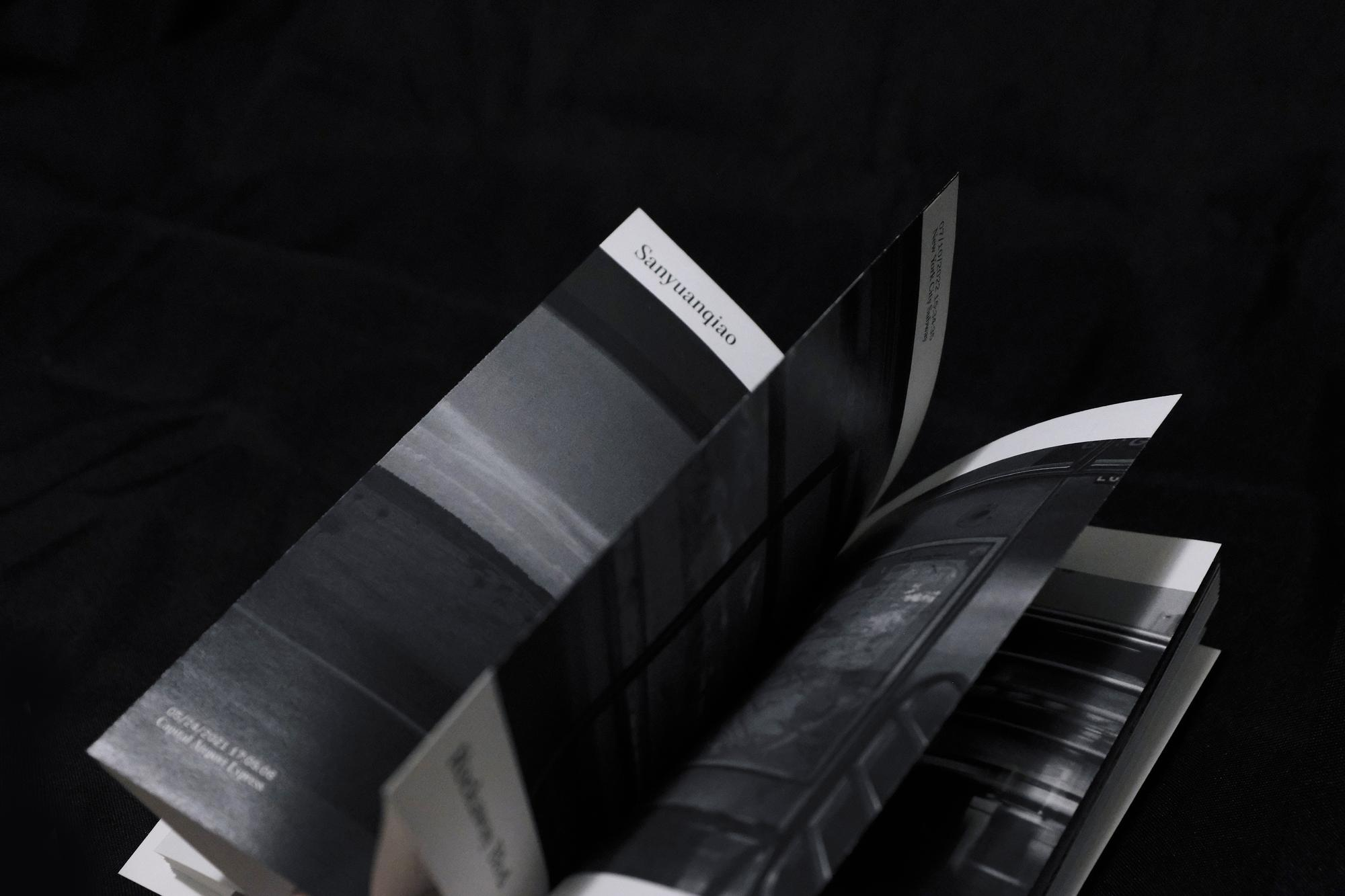
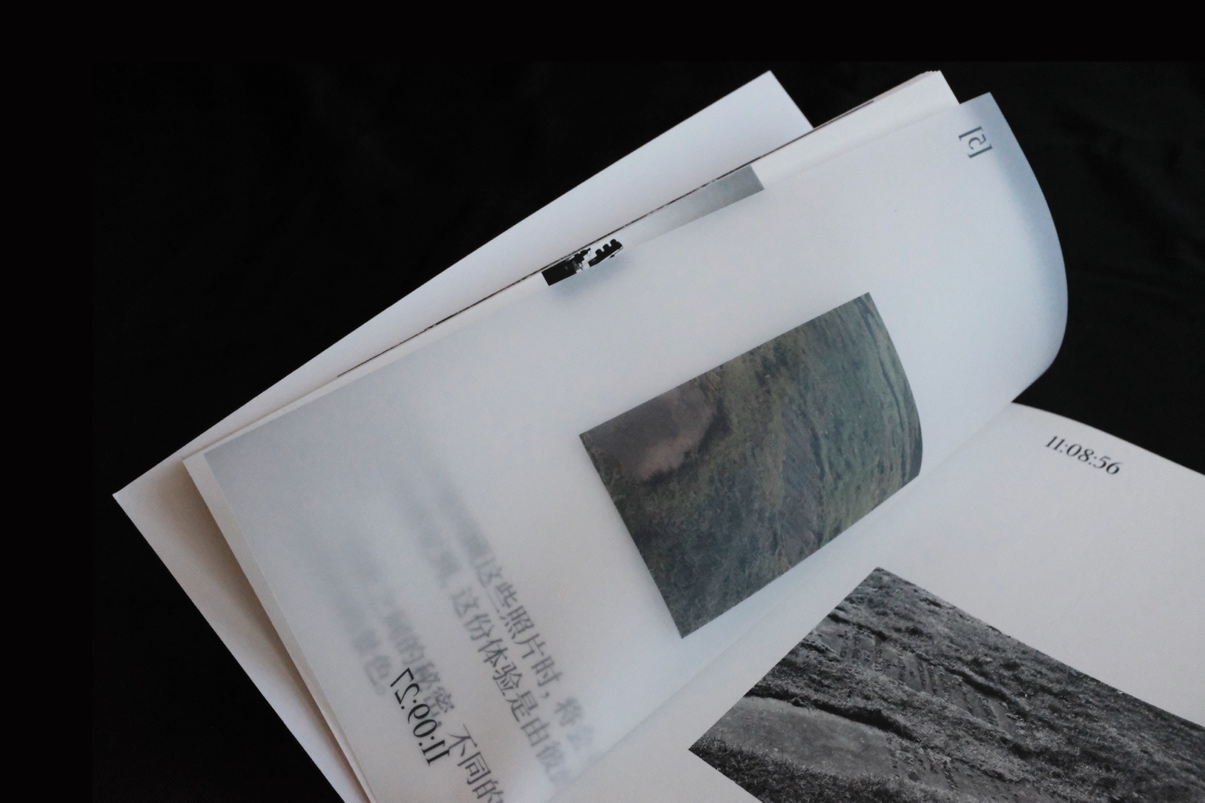
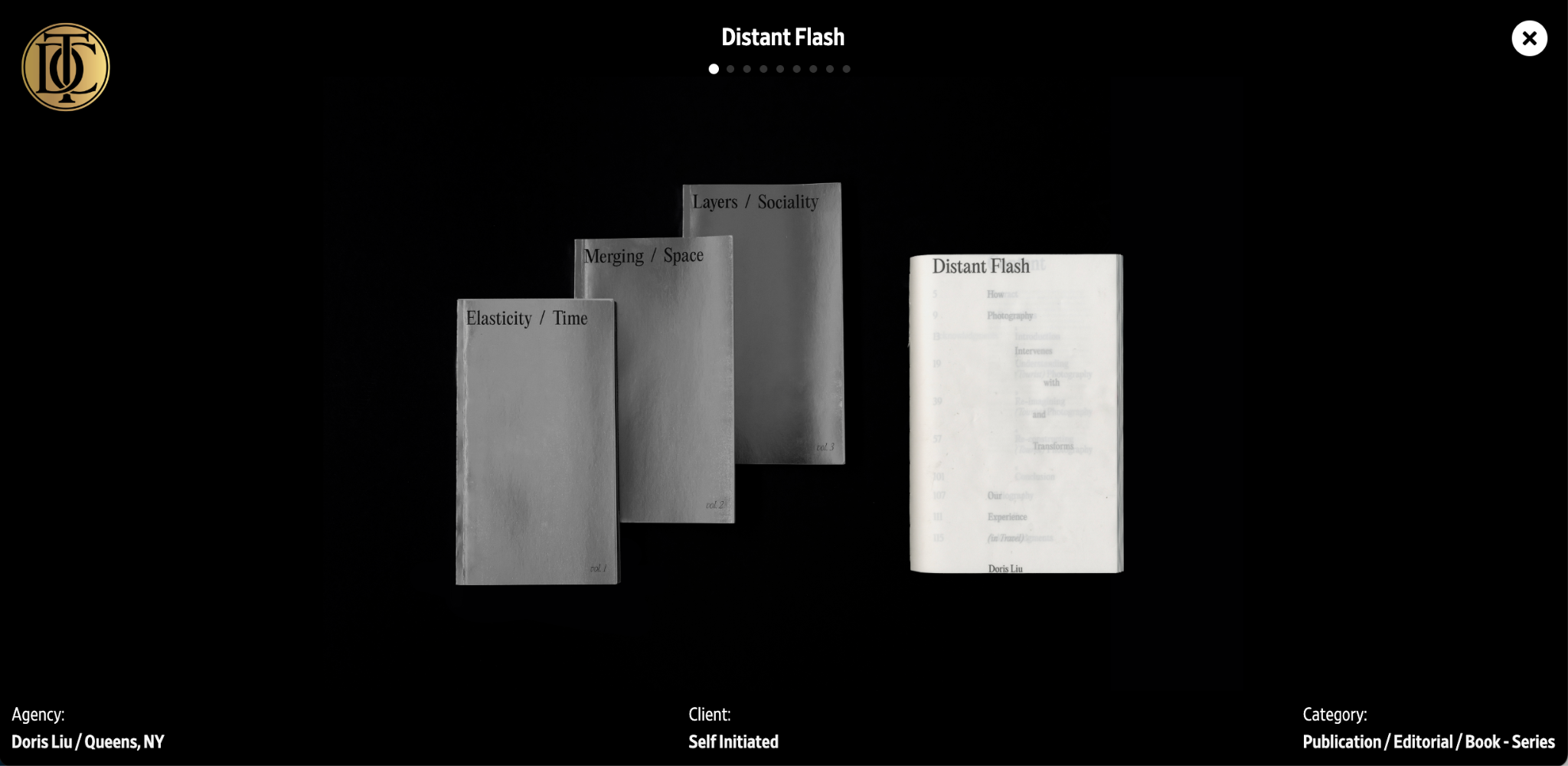
This question is the foundation of Distant Flash, Liu’s signature photobook series. Published in 2023, the work is a critically recognized example of material-driven narrative. It operates not merely as a collection of photographs, but as a “phenomenological interstice”—a design intervention that forces the viewer to navigate the mutable terrains of Time, Space, and Sociality, in order to reconstruct the embodied experiences when the photos were originally taken by travelers.
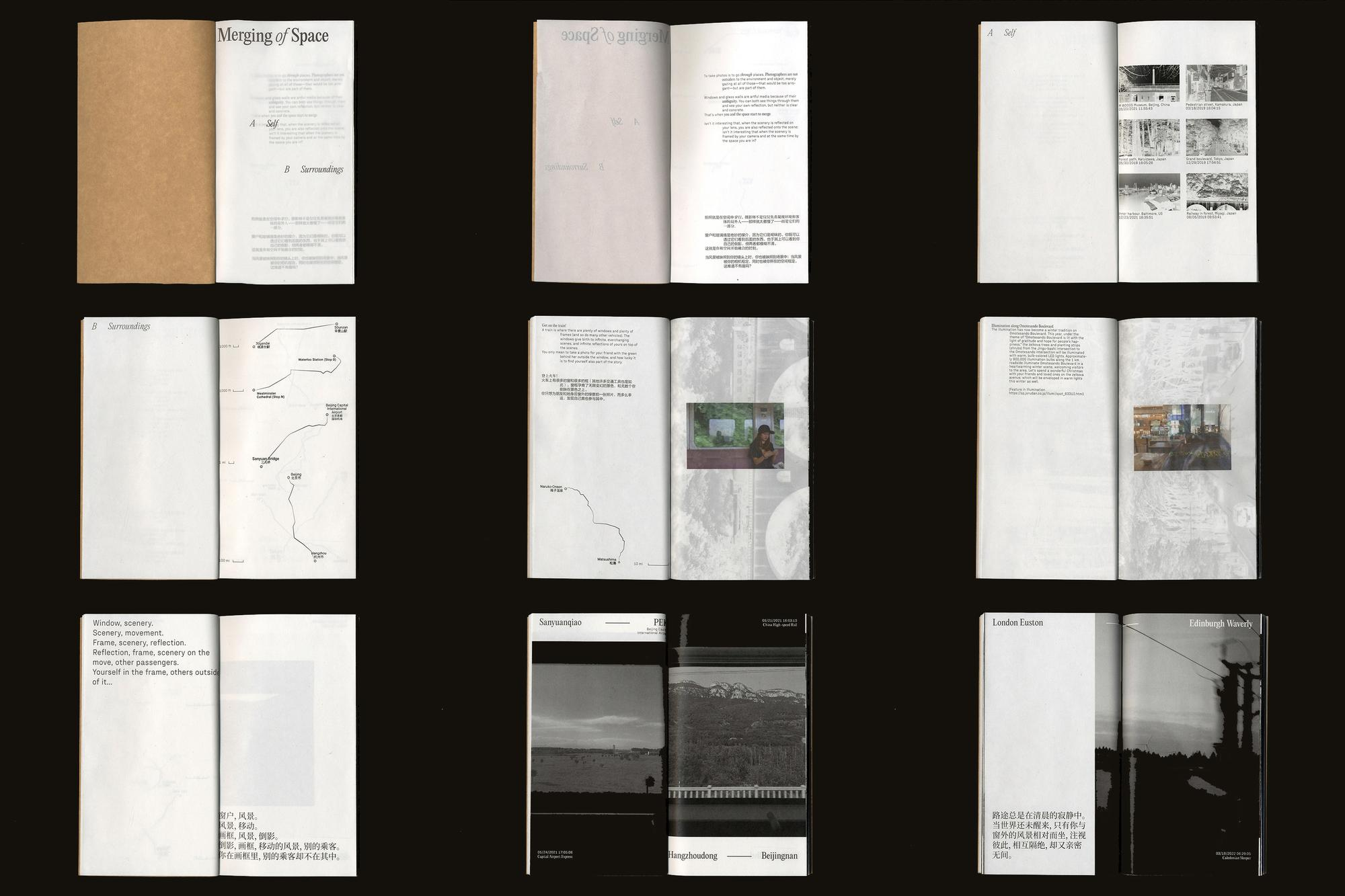
Liu’s practice is defined by a dual commitment: to the architecture of the book object, and to the emotional resonance of the archive. In Distant Flash, she “installs” images within the codex, employing French folds (a binding technique where sheets are folded inward to create double-thick pages and hidden interior planes). This choice is not purely aesthetic; it gives weight to the ephemeral, creating an organically continuous flow that mimics the passage of memory itself.
The complex structure serves a tender and subtle purpose. While the project originates from Liu’s deeply personal travel diaries, her design transmutes these specific, intimate moments into universal feelings of displacement and wonder. By constructing an immersive viewing rhythm, the book becomes a gallery where the viewer’s own memories are invited to inhabit the space. The personal archive becomes a shared horizon.
Distant Flash, Doris Liu, 2023
This interplay between tactile rigor and emotional intimacy is further articulated in her following project, Here, the inquiry shifts from the act of traveling to the ache of departure.
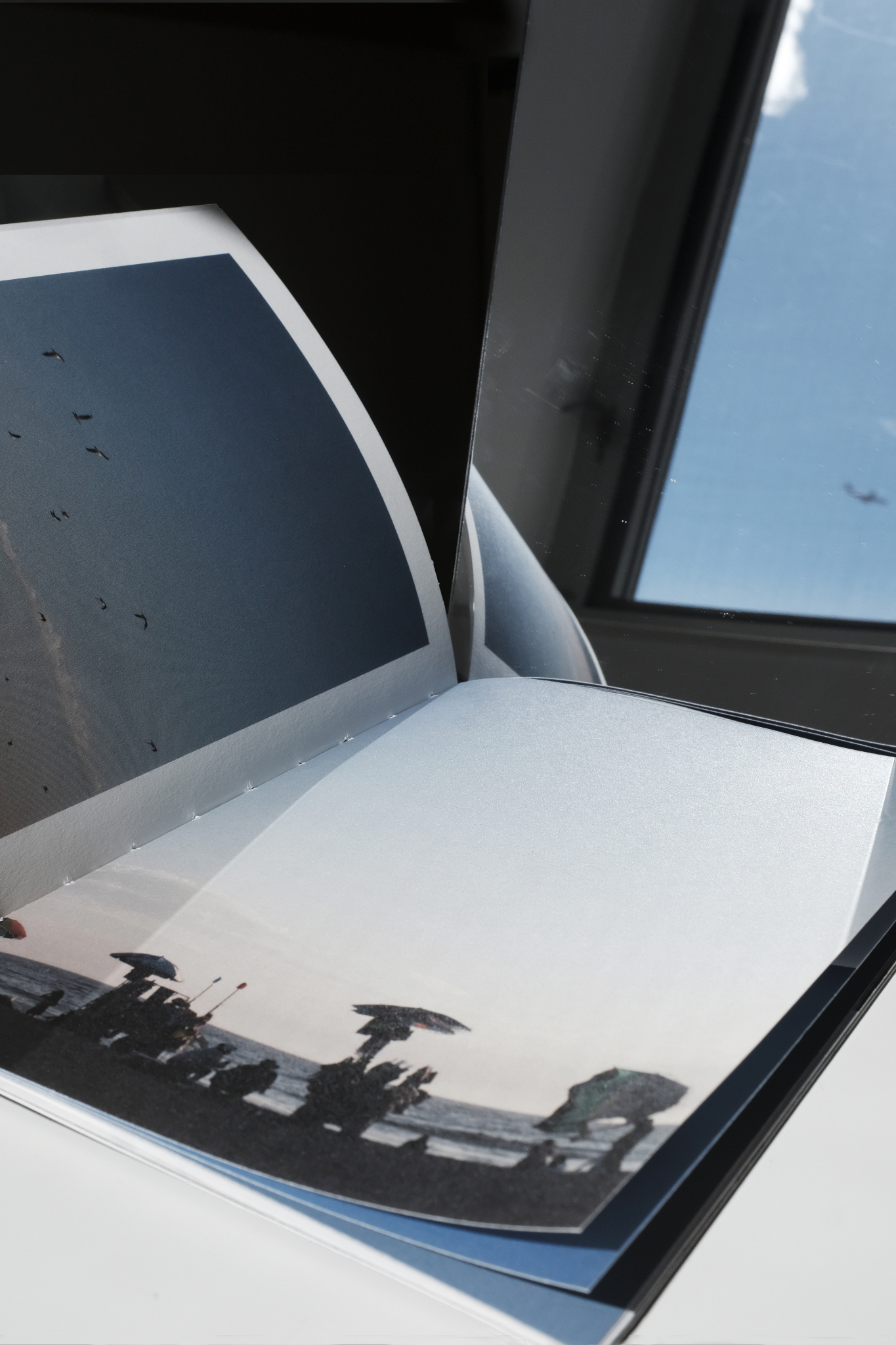
Weaving the melancholy of a traveler with the ephemera of flight, Liu uses material contrast to externalize internal states. The book pairs dark cardstock jackets with translucent vellum foldouts, creating a tactile “beat” that echoes the whir of wind and the complex, bittersweet rhythm of leaving. Just as in Distant Flash, the physical object acts as a bridge, translating Liu’s private encounters with flying objects into a collective meditation on distance and return.
Beats of Goodbye, Doris Liu, Dream Labor Press, 2024Beats of Goodbye, Doris Liu, Dream Labor Press, 2024
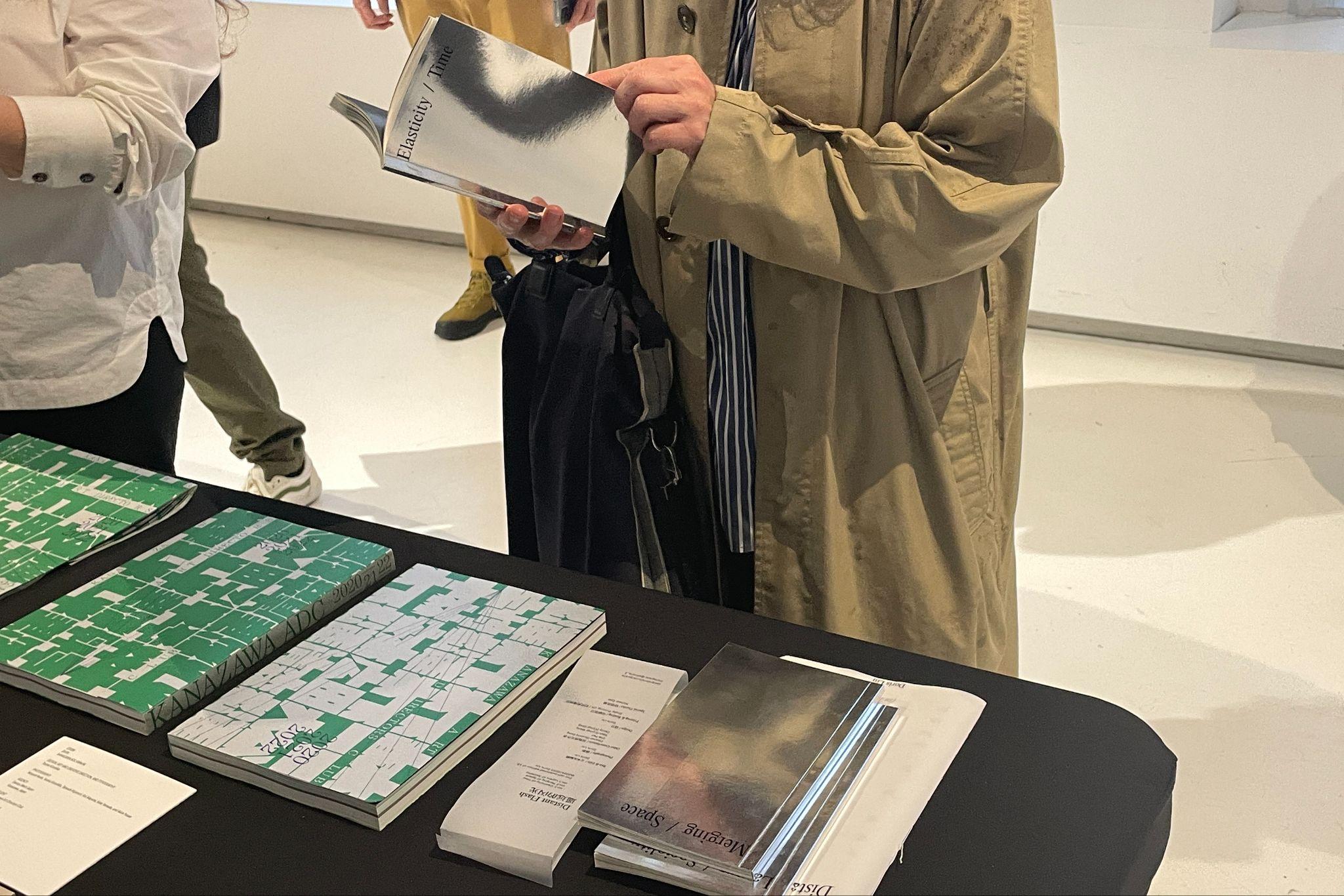
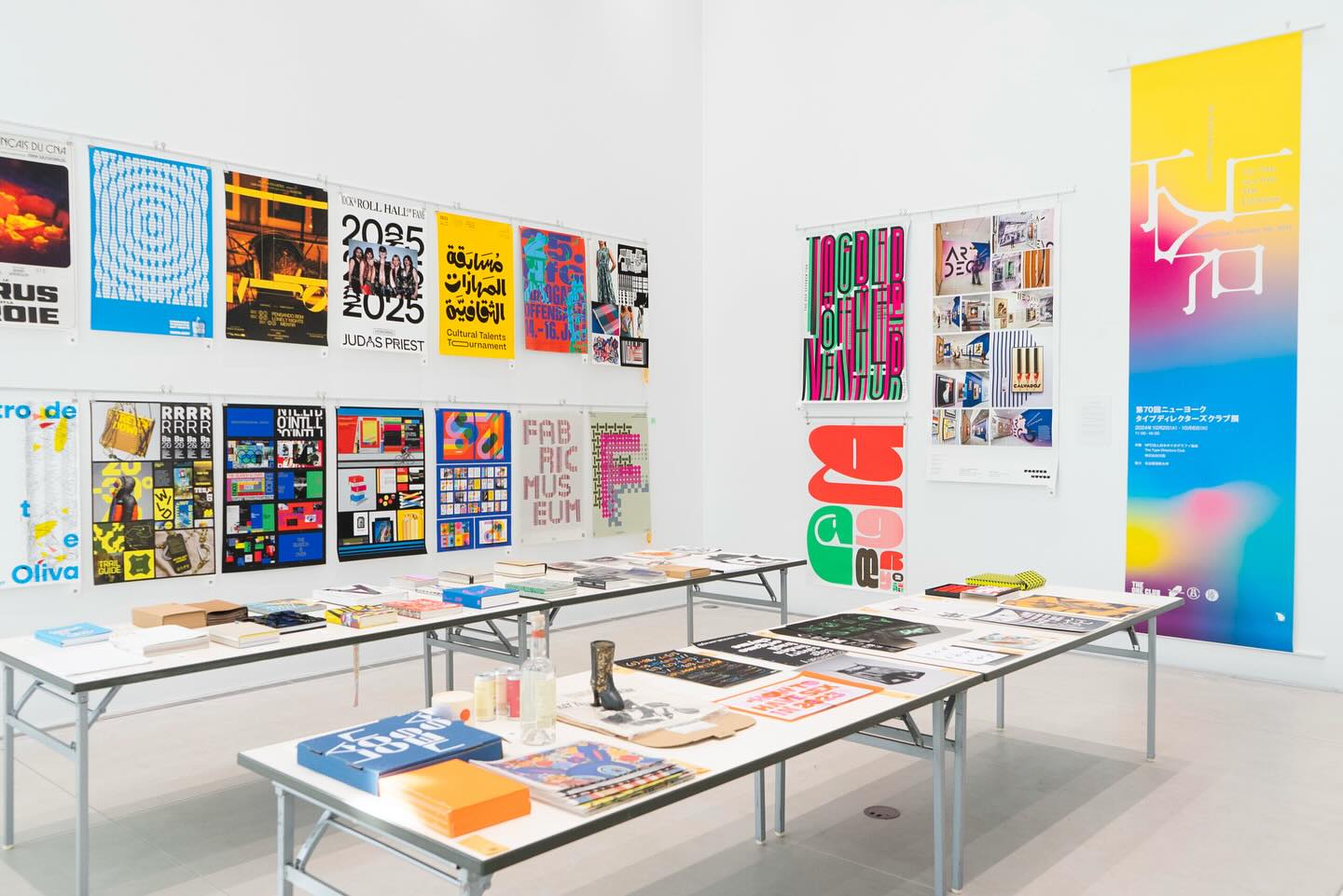
While the project captures fleeting moments, it has got lasting recognition. In the years since its release, Distant Flash has garnered consistent industry acclaim, cementing Liu’s status as a distinctive voice in experimental publication design. The project was honored as a Winner in Communication Design at the TDC70 Awards, making its way to major cities, such as New York, Barcelona, Warsaw, and Tokyo, with the traveling TDC exhibitions, and received the Outstanding Award at the KTK Design Awards.
This distinct ability to merge rigorous theory with tactile execution has drawn the attention of major institutional archives. Distant Flash has been acquired for the collections of the Bowes Art & Architecture Library at Stanford University, the Fleet Library at RISD, the Pratt Institute Library, and the Minnesota Center for Book Arts. These acquisitions signal a consensus among curators: Liu’s work is deserving of preservation as a study in the materiality of the image.
Distant Flash, Doris Liu, 2023
Liu’s influence continues to expand. Her ability to decode the mechanics of memory has established a pattern of excellence recognized at the highest levels, with other works being collected by the Thomas J. Watson Library at The Metropolitan Museum of Art, the institution’s main research library and an indispensable cornerstone of comprehensive research in art history, archaeology, and the decorative arts.
Driven by a commitment to crafting sophisticated, layered visual narratives, Liu has expanded her experimentation to include mediums such as risograph printing and polaroid transfers. As she continues to navigate the intersection of visual design and self-publishing, Qinyan (Doris) Liu emerges as a compelling voice for those asking how design can reclaim the intimacy of experience in an automated world.