There’s so much music coming out all the time that it’s hard to keep track. On those days when the influx of new tracks is particularly overwhelming, we sift through the noise to bring you a curated list of the most interesting new releases (the best of which will be added to our Best New Songs playlist). Below, check out our track roundup for Wednesday, August 5, 2026.
Weezer – ‘C.E.O.’
On their latest single, Weezer grapple with “the passage of time and the pressures of trying to meet the demands of your own inner C.E.O.,” according to a press release. So the track, which follows the Wednesday-assisted ‘We Might As Well Be Strangers’ and ‘Shine Again’, comes paired with a music video that finds the band going back in time, tagging along Tony Hawk, Curry Barker, Dax Flame, Chit, Rob Riggle, Rob Huebel, Michael Peña, Giovanni Ribisi, and Christopher Mintz-Plasse. The clip was directed by Brendan Walter and Jasper Graham.
This Is Lorelei – ‘Oh No Now My’
‘Billy Came Back’, the first single from This Is Lorelei’s new album The Singer in My Band, made our list of the best songs of June. Today, Nate Amos is back with another track, the equally anthemic if slightly more off-kilter ‘Oh No Now My’, describing it as “a song that ate itself – there were 3 versions of it before it landed here, where it has nothing in common with the original. I think it’s good but it’s hard to sing. I hope you like it.”
Dawn Richard – ‘Enough’
Dawn Richard has announced a new album, Creole Culture. Out October 9 via Merge, it features gusts spots from Big Freedia, Anjelika “Jelly” Joseph, Tarriona “Tank” Ball, and Richard’s father Frank Richard. The vibrant lead single ‘Enough’ is about “unlearning the lie that your value has to be earned,” according to Richard. “Sometimes the greatest act of resistance is believing you were always worthy.”
Sleep – ‘The Morrisist’
Sleep’s first album in 8 years, the cheekily titled Hempispheres, is on the way. Along with the news, they’ve previewed the five-track LP with ‘The Morrisist’, which follows June’s ‘Have Spacesuit Will Travel’.
Asher White – ‘Stage Diva’
Asher White describes ‘Stage Dive’, the jangly, mesmerizing new single off her forthcoming Love Aggregates, as “a tongue-in-cheek speculative fantasy of fame and fortune wherein I admit to feeling a little uncertain about the ‘Point; of developing a pop music enterprise; whether it reflects or belies a true love of the Scene and the Community; what the threshold of public perception is and how it may only be masturbatory ego meglomania. Like if you’re pulling up the DIY show and leaving before it’s over, for example. “I used to watch you shave…” is about how I once communed with myself while shaving as a meditative workshop in gender dysphoria and vulnerability but as of last year I now only do it in the shower, blindly, where I don’t have to see myself. Musically I was thinking: ‘iI would like to be in Alvvays.'”
Marci – ‘Liquid Heartbeat’
Marci – the project of TOPS’ Marta Cikojevic – has dropped ‘Liquid Heartbeat’, the latest offering from her forthcoming album, Mask Lady and Late Night Girl. It arrives alongside an Elliot Weaver-directed video.
Jacques Greene – ‘Presence’
Jacques Greene has announced a new album, jg, arriving October 16. “This record moves away from concepts and follows an intuition for places where I wanted to be and where I would be wanted,” Greene commented. Today, he’s shared ‘Presence’, which follows the umru-assisted ‘What They Say’.
Devil Master – ‘Death Anthem’
Theatrical psych-metal outfit Devil Master have unleashed ‘Death Anthem’, the latest preview of their forthcoming Bloody Dreams. It’s “an homage eulogy to G.I.S.M. – our label mates with visionary Sakevi Yokohama having passed on August 23 2023, and his cohort Randy Uchida in 2001,” according to ringleader Darkest Prince. “Lyrically you can hear our calls to Satan, Dionysus and Kali respectively! Fangs to Eva and crew for the video.”
BODEGA – ‘Weather Me’
NYC quintet BODEGA have previewed their fourth LP, All Inside Aquarium, with a funky, infectious track called ‘Weather Me’. “This is a track about living in an information kaleidoscope full of everyday grievances alongside very real problems,” vocalist and percussionist Nikki Belfiglio explained. “If you don’t know who or what to prioritize, this kaleidoscope can fracture your everyday existence. You must stand strong and weather the current.”
Sam Burton – ‘I’m a Stranger’
Palestinian-American musician Sam Burton has signed to Captured Tracks and announced his first album for the label, Fairweather Friend, arriving October 30. Today, the Palestinian-American musician has shared the poignant lead single ‘I’m a Stranger’. “The song sits somewhere between nostalgia and alienation,” Burton reflected. “It’s more of a feeling than a statement. There is no home to go back to.”
About a year ago, Daisy the Great responded to a request to do a cover of “any Frankie Cosmos song” in their signature hocket style. They shared their take on ‘Fool’, to which Frankie Cosmos, who had posted the original comment, replied, “HELL YEAH!!!!!!!!” Both bands had recently celebrated the release of their latest albums, Rubber Teeth Talk and Different Talking – release-day twins, in fact – so there was something fitting about Mina Walker and Kelley Dugan singing the lines, “I thought we could eat bread/ I thought we could talk.” (Eating bread, it turns out, might be a good idea after a bunch of talking. Read on for more vocal loss hacks.) The Greta Kline-led band has had a formative influence on Mina Walker and Kelley Dugan, which became clear when the latter found herself singing along to every word at Frankie Cosmos’ recent New York show celebrating the 10th anniversary of Next Thing.
Kline had only just spent time with the duo in the studio, helping expand the world of Rubber Teeth Talk by singing one of their songs. Their collaborative version of ‘Dog’ opens The Rubber Teeth Talk With Friends, which features covers, reworkings, and remixes of the album’s songs by the likes of Harmony Tividad, Sleigh Bells’ Alexis Kraus, Babehoven, and more. For the latest installment of our In Conversation series, Daisy the Great and Frankie Cosmos’ Greta Kline hopped on Zoom to talk about touring, games, and more.
We were talking a little bit with Greta about how it’s been a year since we had our conversation around Different Talking. Mina and Kelley, how have you taken in the past year since your record came out?
Mina Walker: The years are getting shorter and shorter, it seems. I was talking about something that was six years ago, and I was like, I really remember it, and I was the same age as I am now, in my head.
Greta Kline: Yeah, it’s like, I wonder what traumatizing thing happened six years ago.
MW: [laughs] Stopped all of our growth.
GK: It’s interesting, whenever I talk to people who don’t tour who aren’t in the music world at all, and they’re just hearing somebody else’s perspective, they’re like, “That must be really weird, to sleep in a different bed every night.” You’re like, “Oh, I forgot that it’s a really strange way to measure time.”
MW: Yeah, touring is weird.
GK: When did you guys get back?
MK: Last week.
GK: You still jet-lagged?
Kelley Dugan: I don’t think I’m jet-lagged anymore. It’s interesting because I got a dog, so I got back from China, and I was very tired in the middle of the days. But also, my little baby boy wakes up at 5am, so I’m also ruined from that. I was like, “Am I tired in the middle of the day because of China, or because I’m a working mother and I have a lot on my plate?” I think it’s probably all of it.
MW: The week we got back, I was tired the whole time. For two nights in a row, I slept 12:00-10:00, and I was like, “This is amazing.” I’m a sleeping person, and I’m not usually a sleeping person. Usually, I’m an insomniac. And then last night, I stayed up till 4:30. I had no reason to. But I think that was just a glitch, and I’m back.
GK: I have a friend that says about jet lag, “The time is the time.” It’s like a mantra to get over jet lag.
MW: That’s so true. And you can always nap. Well, you can’t always nap, but if you have to fall asleep, just do it. If you’re at work, fall asleep. [laughs] Who cares?
I looked it up and realized that Different Talking and Rubber Teeth Talk actually came out on the same day.
KD: I didn’t even know that.
Did they not? June 27th?
GK: That’s my release date.
MW: Oh my god.
KD: That’s crazy.
MW: And they both have the word “talk” in the title.
GK: That’s true.
GK: And we’re all exactly the same age?
MW: We are. Were you born in ‘94? [Greta nods] The Daisy the Great account just got an email from Celebrity Birthdays, and it was like, “What is the age of Daisy the Great? We’re trying to update the age of Daisy the Great.” And I was like, “Well, she’s probably 10 years old.”
GK: That’s funny. It’s crazy that our albums came out the same day. Do you guys remember that day?
MW: Let me think about it.
GK: Actually, I can look at my log of things that I did every single day.
MW: Your photos?
GK: No, I have a thing where, every single day, I send my friend an email at the end of the day, we each say four things that we did. I feel like I probably just had a bunch of really stupid, no offence, social media tasks to do. It’s always like, “And don’t forget to do the 17 different websites.”
MW: Yeah, that kind of ruins the big day.
GK: Oh, I played a Lexie [Greta’s project with Alex Bailey and Doug Bleichner of Warehouse] show at TV EYE with All Dogs, and I had arepas for dinner.
KD: Love that. I think we were actually doing an in-store in DC. I think we weren’t here.
MW: But this is what happened, girl. On June 26th, we were at the Palace bar in Greenpoint, and we had them play the album over the speakers at midnight when it came out.
KD: But it was also someone’s birthday party who wasn’t us, and we didn’t really play the album very loudly, because we didn’t want to ruin this girl’s birthday.
MW: She loved it, though.
KD: I think she loved it too, but everyone was still talking when a new song would come on.
MW: It’s so crazy to have a listening party at a bar. But we had all our friends there, we had a cake with a picture of the album on it, we danced.
GK: What was the song that you danced to?
KD: ‘Lemon Seeds’, probably?
MW: Also, I have to say an album release is kind of more important than a birthday party, because you have a birthday party every year.
KD: Right.
GK: You didn’t do anything to earn a birthday.
MW: No, you just have it. Like, “You’re, what, 27 now, that’s great.”
KD: But this album is one. Is zero.
MW: This is literally a birth happening at the Palace.
GK: Although… There’s something kind of radical about loving your birthday, I think.
KD: I can never get behind doing a big birthday party.
MW: Kelley does not do her birthday.
KD: I hang out with my mom.
MW: And you know what? Kelley’s birthday is in two weeks, and she’s not gonna hang out with me.
KD: Totally. [laughs] I have plans with my mom.
GK: How are you guys feeling with your deluxe album out?
KD: It feels great. A lot of people ask us, “And are you guys gonna tour the album?”
GK: Yeah, with our 10 closest friends.
KD: And people will say, “You’re about to go on tour, are you playing the new album?” And we’re like, “Well, the new album is played by a lot of other people.” We should just impersonate the people who have performed it now. But I think that it has unlocked something, because I don’t really like listening to the music, usually. I’m not a casual listener of my own music. But I like to listen to this album. I’m giving myself permission to like it.
MW: Yeah, I think so too. It takes away the kind of self-judgment side of releasing music, because I’m like, “If people like it or not, I didn’t really make it.” [laughs] I like listening to it, so I’m not listening to it being like, “Do I like myself or not?” I’m listening to it being like, “I made this with a bunch of friends, and I love listening to it, because I admire everybody on it.”
KD: It’s not like we spent months on every song, so I feel like I’m still hearing things. When we put out a normal record, I know every little second.
MW: Also, I like the songs a lot from the Rubber Teeth Talk, and I really like hearing them in this way. We compiled them all just before it came out, so I’m still hearing new stuff in everything.
KD: I feel like some of them, we worked on less. With ‘Dog’, the three of us were deep in it together, but some of them, people would just send us something, and we would sing over it, but we had a lot less room time.
GK: So were you not part of the mixing for all of the songs?
KD: Nope.
GK: Were there any songs that you didn’t even give mixing notes to?
MW: Most of them.
KD: Whoa. We really collabed.
MW: We mixed with Benét’s [‘Rest of My Life’], because Benét came here, and we produced that out here. Matt [Lau], our guitarist, mixed it, and we sent notes to him. But in general, if the artist was producing it out, we were like, “Mix it how you would mix it.”
GK: Do you guys sing on every single one?
MW: Yeah. Some of them, I think our vocals are more buried in the background, and I think that’s totally cool. We begged Tex Patrello to sing on it.
KD: It was brutal, because she sent us a demo of her singing, and we were like, “We love your voice,” and then she was like, “I’m deleting it.” I tried to do a Tex Patrello impression when I was singing, really trying to fool people.
MW: I also think it’s cool that nobody heard anybody else’s songs till the album came out. We didn’t send it to anyone, and I feel like everyone texted us and was like, “Wow, I’m so happy to be in this whole thing.” I think it’s fun to be a part of an album where you only really know the part that you contributed, and me and Kelley were just puppet masters bringing everything together.
GK: How long were you just in China?
MW: Five days.
GK: And I was the drummer.
MW: You, Greg.
GK: There’s a thing where it’s not just a doppelganger, but you’re non-biological twins.
MW: You and Greg [Rutkin] are non-biological twins.
KD: Honestly, he would look at us and we would say, “That’s giving Greta. That little look is giving Greta.”
MW: It’s crazy to spend so much time with you, and then spend so much time with Greg.
KD: I think that’s what it was. I want to tell you something crazy.
GK: Please.
KD: In China, after the first show, a white bat flew into my face. Smacked me like a softball. It flew past Greg, and Greg had a spiritual experience with this bat, where he said he thought it was a bat, but then he said maybe it was a ghost? He said time slowed, 20 seconds later, he heard me go, “What was that?” It was one second, I saw it fly past him, and then it hit me in the head.
GK: Oh my god!
MW: On the walk home, Kelley was going, “Wait, guys, what was that?”
KD: I had a bad feeling that it was a bat. I know in my heart it was a bat, but I really don’t want it to be a bat, because I think that it means I have to get a rabies shot. And then Greg said, “What’s wrong? Are you worried?” And I was like, “Well, I just know that I’m gonna go into my hotel room and Google this, and I’m gonna have to look at Google, which I really don’t want to do.” And then I looked at Google, and Google really seemed to be suggesting that I should get a rabies shot, but I was like, “Can you even imagine doing that right now?” It’s midnight, and I’m in China, and I just don’t want to do that. I realized that it was noon in New York, so I just called my primary care doctor. I was more so looking to them for approval to not get it, but I told them what happened, and then they were like, “Yeah, you actually do have to go.”
GK: And what happens if you get a rabies shot and you don’t need one? Nothing.
KD: You’re fine. You’re just vaccinated against rabies.
MW: I didn’t know about rabies, okay? I was not warned about rabies as a child, I was warned about tetanus. And so, I know about tetanus. I know if you touch a dirty nail, you need to get a tetanus shot, you need to be up on that. But rabies, I guess I just wasn’t around a lot of bats growing up. I was on Reddit after Kelley told me about rabies, and I think the thing is ideally. people would just get rabies vaccinations, but it’s too expensive or something, so you need an excuse to get it.
GK: Oh, wow.
KD: And when I left the hospital in China, I thought, “Oh god, imagine if there’s another bat now.”
GK: How long do those vaccines last?
KD: I don’t know.
GK: Like, if you’re bit by a squirrel in six years, do you need to get another one?
KD: I don’t know. I’ll have to call my primary care doctor.
GK: Let me know what they say.
MW: I got a tetanus shot, and the reason I bring this up is because I did I scraped a tiny nail in a cupboard – I don’t even think I bled, but I’m a hypochondriac, so I was like, “I should get a tetanus shot.” I got a tetanus shot, and the very next day, I was carving a linoleum block for screen printing. I was stamping, and I had this metal scooper that was so filthy from scooping, and I scooped it into my hand and cut a big V into my hand, and I was like, “Now I need a tetanus shot, and I got one yesterday.” I actually probably needed stitches, but I was like, “I don’t want to do that,” so I taped it shut, and I think it’s okay.
GK: That’s really scary, both of your stories. Kelley’s is more scary to me.
MW: Well, it’s not a competition.
GK: It just sounds made up. Like, “I had to get a rabies shot in China at midnight because a white bat flew into my face.” Your story I can’t think about because it could happen to me in 10 minutes, because I’m going to be carving a stamp. I just can’t think about that.
KD: Over the intercom at the hospital, they were spelling out my entire name multiple times. When it was my turn, they were going, “K, E, L, L, E, Y, N, I, C, O, L, E, D, U,” and we were like, “We’re coming, oh my god,” and then it was looping. I was like, “Please, please.”
MW: I’ve never had to respond to the spelling of my name.
KD: I was like, “Oh my god, I’m on my way back, please stop.” It was so weird, but it was entertaining, too.
GK: This could be in your memoir. That’s the name of the memoir, maybe.
MW: What is it?
GK: A White Bat Hit Me in the Face in China, and I Had to Get a Rabies Shot at 3AM.
MW: Such a long title. Who are you, Fiona Apple?
GK: But hey, I would buy that.
I’d love for you tell me more about the day you recorded ‘Dog’, especially with it being about summertime in New York and sharing that experience of growing up in the city.
MW: I also grew up in New York… Just kidding.
KD: That’s our honorary girl.
MW: I’ve lived in New York a long time. I’m from New Orleans, though, but I think I’m also a New Yorker because I’ve lived here for almost 15 years, and my dad’s from here.
GK: One of the only other cities that starts with “new” is where Mina’s from.
MW: New York, New Hampshire…
KD: Well, that’s a state.
MW: New Hampshire is a state. Me and Kelley did a test…
KD: I quizzed Mina on whether or not she could – and listen, I know this isn’t about talking about ‘Dog’, but we’ll get there. I gave Mina a state test to try to name all the states.
MW: I named a lot of them.
KD: You named many states.
GK: I couldn’t do it.
MW: I named most of them.
KD: There’s game called Global, which is, where you guess a country, and then it tells you, basically, if you’re hot or cold. You have to keep guessing the country, and if you’re red, you’re close.
GK: That’s awesome. There’s a game like that, but with just anything.
MW: Oh, is it Semantle?
GK: I don’t remember, maybe.
MW: We have a game we play called Semantle where you just start guessing words.
GK: Hold on, wait, let me see if it’s Semantle. No, it’s more crazy than this. It’s like a big axis in space, and you’re like, “Daisy the Great,” and it puts it somewhere on the axis, and you have to get closer to it.
KD: Oh my god, I need to play that.
GK: I’ve never, ever won. It’s like the broader version of your country game.
KD: I love it. You should play Semantle.
GK: I will. My whole band actually might. We probably talked about this [during our inspirations interview], there’s game called Redactle that we were really into when we were making our record. We can actually all play it together, it’s really fun.
KD: That sounds fun.
MW: We were really into the crossword when we were making our record.
GK: Together or separate?
MW: Separate, we were trying to beat each other’s time. Hayden [Ticehurst], who was helping engineer the record, he’s a crossword genius, and he would finish it so fast, and we would try to beat him.
KD: He’s unbeatable.
MW: Let’s talk about ‘Dog’. We had so much fun making it with you.
GK: Me too.
KD: It was our dream. We talked to you on the phone before, and you said, “Girls, buckle up. It’s about to be a dog adventure.” And we were like, “This is actually better than my dreams.”
MW: Working on this song really gave me confidence in the record. I think that you were the first person that we worked with on the record, and our commitment and focus and excitement around it was so inspiring and exciting. It was lovely to feel like our baby was in good hands.
GK: This was a very new experience for me, too, and I felt like you guys believed in me in a way that was really good, too. I have to shout out Nate [Mendelsohn], too, because I feel like Nate, who engineered it, has always been very transparent about what producing is, and encouraging me as a producer, being like, “You actually are already producing.” It’s just one of those things that I have a hard time with the word and the concept of, producing something.
MW: Sounds like a boys’ club.
GK: Totally. And even if you do it, you never really get credit for it. I find it really hard to express ideas in a firm way in general, and be like, “Let’s do this.” I think we’re all kind of like, “Maybe we could try this, if you’re down, I don’t know.” But I feel like we had a really good environment from day one, because we did it over the course of three days. My core memory, of course, is the two hours before Nate arrived, because I told him to come later, where we just basically sat in chairs in the middle of the room in the studio, the three of us, and just talked about our deepest, personal lives.
KD: And then after an hour and a half, Greta was like, “Should we start to do something?” And we were like, “Yeah,” but then we started talking about ghosts or something.
GK: I think you guys are a really shining example of this, but I find that chemistry and hanging out is a huge part of art making together.
KD: Of course.
GK: I feel like that’s the environment that I was trying to create, and it was kind of shocking to meet you and find out that we went to school across the street from each other.
KD: Yeah, that is honestly crazy. I had to admit to you that I love Blue Tree.
GK: Yeah, Kelley immediately name-dropped my mom’s boutique where I work, and I was like, “Oh my god, how do you…” That’s just not the thing that people know or say about me.
KD: Right. But that’s what I know, because I lived right next door.
GK: So cool.
MW: I feel like the song sounds like us hanging out.
GK: Totally. As it should.
MW: My mom texted me after the album came out, she said, “The album’s great. I don’t know if I like the songs more than the original songs.” And I was like, “Well, that’s great, Mom, because I didn’t really make any of the songs, so you’re not supposed to like it more.” I would feel kind of strange. But she was like, “I do like the new ‘Dog’ more.”
GK: I just hired her to be my manager, and I asked her to say that to you. I want to ask you guys, because I forget if we talked about this, but Nate called me out as it being really brazen that I asked you guys to switch parts vocally. He was like, “That’s funny.”
KD: That was crazy.
GK: He was like.
MW: Crossed the line, Greta.
GK: I was like, “Wait, really?” I just thought that was a normal thing. I feel like my big idea is, what if we just did opposite day? [laughs] The chorus is small, and we’re switching the vocals…
MW: Yeah, because you were like, “I have this idea for the chorus to just be stripped down.” Then we were like, “Well, you’re gonna sing it,” and you were like, “No, I’m not,” and we were like, “Yeah, you are, you have to sing it exactly how you just did it, because I just cried.”
GK: Yeah, I gave in, with way less pushing than the other person that you said you couldn’t be pushed in.
MW: You’re like, “Don’t make me sing.”
KD: We were like, “You actually have to. I can’t even imagine what will happen if you don’t.”
GK: My favorite thing from recording was every single time we listened through, when it got to the chorus, they both just went, “Awww!”
MW: Because it was so cute. I felt like I could hold you in my palm.
GK: I felt like a little charm necklace that you were wearing.
MW: I felt like I was holding a little clamshell, and I opened it up, and there’s a tiny little Greta inside wearing a bonnet. If we made a music video for this version of ‘Dog’, I would put you in a little clamshell in the pond.
GK: I think we should.
MW: That’s a great idea.
GK: To me, part of the song is you guys going, “Aww.”
MW: We should add it. In the deluxe version of the deluxe, we’ll do a live reaction.
KD: Let’s do a reaction video.
MW: We should do a live director’s commentary on YouTube.
KD: You can come to it.
GK: We all comment throughout the whole thing.
KD: Greta keeps going, “I like ‘Dog’ better.”
GK: “The other songs don’t really have that Frankie touch.”
What about a full-length album cover by Greta?
KD: Yeah, that would be perfect.
MW: Has anyone ever done a full cover alone of an album?
GK: It’s a great idea.
MW: I would love to do a full album, but it would be so funny to do a full album of your peers. Like, what if me and Kelley just covered Different Talking?
GK: Why not?
I don’t know if you know Asher White, but she released a full-length cover of Jessica Pratt’s debut record this year.
MW: The whole album? That’s so sick. I like Asher White. And Jessica Pratt is still releasing music.
GK: Our peer.
MW: Jessica Pratt, my best friend. That would be so cool. I was listening to Jessica Pratt yesterday while giving my friend a haircut.
KD: Love it.
GK: I was going to ask if this song changed for you at all since Kelley got a dog.
KD: Oh my god, I really have been thinking about that. I’ve been thinking about how I said, “Walking my feet like a dog on the street,” and now, I’m walking my dog on the street. It feels different, and I think that what I meant the first time was what I was like, trudging along and dragging an old feeling. And now that my little dog is running around and sniffing everything, I’m like, “That’s not really what I meant.”
MW: Well, you’re walking a puppy on the street.
KD: Yeah, and also walking my feet like a dog on the street was supposed to mean, I’m walking by myself, but my feet are just going that way, and my brain is off? But my little puppy, Beau, is running all around, looking at everything, smelling everything, eating everything. Eating all types of stuff that then we have to stick our hands in his mouth and try to take out. It’s a very active experience.
MW: You have to have your brain on.
KD: It’s like spinning plates on sticks, running, multitasking. But yeah, it did maybe rethink the metaphor, sure.
GK: Mina, have you met Beau?
MW: I met Beau once. I need to meet Beau again. I’ve been texting Kelley and being like, “Hey, should I come over?” She’s like, “I’ll come over to yours.”
KD: Well, we keep having to do stuff, and the thing about him is that he’s on his own schedule.
MW: Greta, you haven’t done all your shows yet, how many more do you have?
GK: I have more shows. We have six Next Thing shows what we’re doing this year, and then I just announced an opening tour that I’m doing.
MW: That’s so cool. Are you excited? I love Liz Phair.
GK: Crazy excited.
MW: And we should also say that we went to your show, the extra secret one at Union Pool, and Kelley was singing.
KD: I know every word, and I’ll always know every word.
GK: Aww.
KD: Absolutely loved it. It’s so crazy to do this project and then immediately just get slapped in the head with being a big fan. I was like, “Right, I get it, I’m a big fan.”
MW: When we went in, every idea you had, we were like, “Perfect.”
KD: “Love that. Sounds like my favorite album.”
MW: How have the shows been?
GK: They were fun. We only did the New York ones.
MW: You didn’t do LA yet?
GK: We’re going to do it in October.
KD: What was the difference between the Union Pool show and the big boy?
MW: The Bowery Ballroom.
GK: Well, the biggest difference is that I really, really lost my voice after the end of the Bowery Ballroom night.
KD: Out of excitement?
GK: I just could feel that it was happening, and then I pushed through the show and drank honey and stuff and got through. But then at the end of the night, when the show was over, I was like, “ Now I get to talk to everybody, because I don’t need my voice anymore, and I just destroyed it for a couple days.”
MW: That happened to me in soundcheck in China. I think because we had just flown in, the first show, me and Kelley were a little zonked, and both of our voices were on thin ice. We had soundcheck, I was singing, and something happened, I got off the stage, and I was talking crazy raspy.
KD: They were like, you guys have an interview right now, and we were like, “Oh.” And we walked into the green room to a camera setup.
MW: We sat down, and I was, like [coughs], trying to get the phlegm off of my throat. They were going, “If you were a butterfly, what colour butterfly would you be?” And I was like [in a raspy voice], “If I was a butterfly…” We had some soup, and we got through the show.
GK: Do you guys have a good recipe for vocal loss?
KD: I think it depends on why. If you lost it from sickness, totally different from losing it from overuse. I haven’t lost my voice from overuse in a billion years. If you have a sticky, gross something from a sickness, I have some hacks. But usually, if your voice is dry, my voice teacher is really just like, “You gotta drink water, and there’s not much else you need.” And it’s always true. I went to a theater camp that was very Throat Coat Tea obsessed, and now I don’t think about it anymore.
GK: Love Throat Coats.
MW: Me and Kelley used to have this theory of bagel voice, that if you can’t use your voice, eat just a plain bagel, and it’ll kind of coat your throat in a really nice way.
KD: The bagel voice origin story is that I was doing a 5-hour long musical, and on my walk there, I would get an acai bowl. I would have it, and then I would be like, “My throat feels god-awful from having this.” And then I would eat a bite of bagel at the theater, and I would be like, “I’m completely cured. It’s literally completely fine now.”
MW: That’s the real hack.
GK: I get that. It resonates with me.
MW: We had an experience with Red Bull one time.
KD: Yeah, our old publishers were in the Red Bull offices, and we went there and they gave us Red Bulls.
MW: And Kelley said she had a voice lesson, and she was singing higher than she’s ever sung in her life.
KD: I went to my voice lesson, my voice teacher was like, “You’re really on fire today, girl. You’re hitting those notes.” I had super high notes from the Red Bull.
MW: I feel like I don’t want a Red Bull sponsorship, because then I would just drink it and have a heart attack or something.
GK: I’ve never tried it.
KD: You should stay pure.
GK: I don’t need it.
MW: I love the taste of it.
GK: Next time we record.
KD: ‘Dog 3’ should be up an octave, straight belt.
MW: We sound like chipmunks.
GK: I love that.
MW: That’s for the next Alvin and the Chipmunks movie.
GK: And we’re all in a little clamshell.
KD: That means we need to make a giant clam.
GK: That’s exactly where my mind went to. I was like, “I guess, Mina, you better get to carving.”
MW: Oh, I have my tetanus shot, so I can carve for days.
KD: And I can get bitten by Mina.
GK: And I’m gonna go get vaccinated for everything, just before I see you guys.
Sleep have announced a new album, Hempispheres, which is set to arrive on October 30 via Third Man. The follow-up to 2018’s The Sciences marks the band’s first LP with a new lineup featuring original singer, bassist, and lead songwriter Al Cisneros, Melvins drummer Dale Crover, and Void guitarist Bubba Dupree. It includes the previously unveiled track ‘Have Spacesuit Will Travel’, as well as a new single, ‘The Morrisist’. Check it out below.
Hempispheres Cover Artwork:
Hempispheres Tracklist:
1. Have Spacesuit Will Travel
2. The Morrisist
3. Hempispheres
4. Arrival of the Industry Ships
5. Whole Wheat Mountain Well Baked
New York-based nonprofit 603 Arts Foundation will present its inaugural exhibition, The cataclysm of binary star systems, at Nunu Fine Art from 8–29 August. Bringing together twelve artists from across the globe, the exhibition explores themes of identity, migration and collective memory, asking what values humanity might choose to preserve in the face of an uncertain future. The presentation features artists including Keb Cerda and José John Santos III, whose practices examine contemporary social and cultural experience through distinct visual languages.
Founded by Kate Lee and Clovis Lima Jr., 603 Arts Foundation is dedicated to supporting emerging artists worldwide, with a particular focus on practitioners with roots in Asia and Latin America. Alongside building a permanent collection, the nonprofit aims to foster cross-cultural dialogue through exhibitions and partnerships with galleries and cultural institutions.
Among the exhibiting artists, Filipino visual artist Keb Cerda is known for combining traditional painting with video game aesthetics, augmented reality and interactive media to critique issues such as surveillance and media addiction. Fellow Filipino artist José John Santos III works across painting, collage, assemblage and installation, crafting works that combine naturalism and dreamlike imagery.
There’s never been such a widespread choice of options when it comes to gaming in 2026. It doesn’t matter what type of games you prefer, video games or slot games; you really are spoilt for choice. Not only are there game types to suit everyone, but genres too, with the variety on offer something special.
Below, we’ve picked out some popular online games that are more than worth a try. From online video games that include battle royale titles to slots that include a title classed as an all-time leading slot game in Starburst.
Online Video Games To Play
Roblox is a game that still sits at the top of the pile where online gaming is concerned. It continues to draw in over a hundred million players daily thanks to its endless library of user-made experiences. It’s less a single game than a universe of them, which is why it has managed to retain its popularity for years.
Fortnite is still a popular choice too, with millions of players continuing to play the game on a regular basis. Battle royale titles are holding their own in the current era, and Fortnite is one of the biggest of them to this day.
Minecraft may not have the flashy graphics of other titles, but it doesn’t need them. More than a decade after its original launch, millions play daily because of the concept. It remains the best-selling video game of all time.
For those looking for something with a bit more of a competitive edge, Counter-Strike 2, League of Legends and the Call of Duty franchise are popular choices, and all offer something different to each other.
Slot Games Worth Checking Out
If spinning the reels of a slot game is more your thing, there are some standout titles worth your time. Book of Dead, with its treasure-hunting theme and expanding symbols during the free spins round, has features that keep players coming back for more.
Starburst, produced by NetEnt and one of the most iconic video slots of all time, earned its legendary status thanks to its simplicity, fast-paced gameplay and cosmic visuals. But there was more to its success than just simple gameplay, as expanding wilds helped boost the winning potential on offer.
If you’ve got something of a sweet tooth and you like your slots, look no further than Pragmatic Play’s Sweet Bonanza. Alongside its delicious candy-coated theme are cascading reels and multipliers that will build quickly during bonus rounds.
Gates of Olympus, from the same studio, swaps out the sweets for Greek mythology, which is always a hit with slot players. There are six vertical reels, and a scatter-pays system replaces traditional paylines. The dramatic multiplier feature tied to Zeus’ lightning strikes is eye-catching and can be hugely rewarding.
Conclusion
Single-player games and titles you can play offline are fun. But online games take things to another level. In the past, it was just a select few video games that could be enjoyed online, but today there’s a host of video games where you can go online as a solo player or compete with and against others. Then, add slot games into the mix, and you have real variety on your hands. Slots are not only fun to play in their own right, but there’s a chance to win prizes too, making them even more popular.
The NationalGallery will stage the first-ever exhibition dedicated entirely to the portraits of Jan van Eyck this winter, bringing together all ten of the Netherlandish master’s surviving portraits for the very first time. Opening 21 November 2026 and running until 11 April 2027, Van Eyck: The Portraits will unite works from major collections across Europe. This includes nine painted portraits as well as the artist’s only surviving drawing, Portrait of an Elderly Man, which will be reunited with its corresponding painting for the second time in history.
The exhibition will feature a series of remarkable reunions, including the Gallery’s Arnolfini Portrait displayed alongside Portrait of a Man (Giovanni Arnolfini?) from Berlin, as well as Van Eyck’s newly conserved Portrait of a Man (Self Portrait?) exhibited with his portrait of his wife, Margaret. Together, the works chart Van Eyck’s revolutionary approach to portraiture, revealing his unprecedented attention to individual likeness, psychological presence and material illusion at a time when portraits largely served dynastic or symbolic purposes.
Accompanied by new research into Van Eyck’s techniques, original frames and inscriptions, the exhibition will explore how the fifteenth-century painter transformed the genre of portraiture and elevated the status of the artist during the Northern Renaissance. The accompanying catalogue will also become the first English-language monograph devoted exclusively to Van Eyck’s portraits.
Beyoncé has dropped a remix pack of her latest single, ‘Morning Dew (Donk)’. The four-track EP features contributions from her husband, Jay-Z, credited as JAŸ-Z. “Top of the top, sloppy as a morning dew/ The watch is vintage, I don’t need nothing new coming through Malibu in the old school,” he raps. Take a listen below.
‘Morning Dew (Donk)’ is taken from the 20th anniversary edition of Beyoncé’s second studio album, B’Day, which is set for release on September 4.
Logchopper holds a specific spot in MM2 history as the first Ancient weapon shaped like an axe rather than a scythe, a format the game later reused for items like Icebreaker, Swirly Axe, and Traveler’s Axe. It came from the 2019 Christmas Event, where players had to reach tier 30 of the Main Event and spend 70,000 Snow Tokens to unlock it.
The design fits the holiday theme closely, a gingerbread blade with golden frosting held together by a thin candy cane handle, finished off with a golden orb and a sprig of holly at the base. Despite the detailed look and its Ancient rarity, Logchopper has settled into one of the lower value spots among Christmas-themed weapons.
In this article, we’ll explore how much Logchopper is worth in MM2, what kept its value from climbing over the years, and what to know before trading for one.
Logchopper Value
Logchopper currently holds a value of 18 on mostmm2 values websites including BloxSwaps and MM2Values, with demand being low. That puts it near the bottom of the Ancient tier, which is unusual since Ancients typically hold more weight in trading than most Godlies.
A lot of that comes down to how the item’s grown less relevant over time. Logchopper has been tradeable since the 2019 event ended, giving supply years to settle into the market, and its axe design, while distinct at release, doesn’t stand out as much now that the game has released several similar Ancient axes since.
How Logchopper Was Originally Obtained
Logchopper was originally obtainable by purchasing tier 30 of the Main Event for 70,000 Snow Tokens during the 2019 Christmas Event. That put it below the highest tiers of that event’s ladder, making it more accessible than some of the top-tier rewards from the same year.
Its design leans fully into the gingerbread theme. The blade is made of gingerbread with golden frosting and a silver edge with sharp indents, held together by a thin candy cane handle. A golden orb sits above the handle, with a smaller gingerbread blade and its own silver edge attached to it, and a piece of holly finishes off the bottom of the pommel.
Since the 2019 event has long ended, the only way to add Logchopper to an inventory now is throughmm2 trading. Given how low its demand runs, it’s worth checking current values before agreeing to anything, since items like this one don’t move often enough for most traders to have a solid read on what counts as fair.
Logchopper’s Rare Leaderboard Variants
Logchopper also has a set of rare variants tied to the 2019 Christmas Event Coin-Collecting Leaderboard, the Blue, Bronze, Silver, and Gold Logchopper. These share the same design as the standard version but swap the red coloring for their respective theme, with Gold Logchopper going to whoever finished first that year.
All four variants are untradable, which puts them completely outside the regular trading scene. They exist purely as a record of that leaderboard’s top finishers rather than anything a trader could realistically pursue, unlike the standard Logchopper which remains available through trading.
Conclusion
Logchopper holds Ancient rarity on paper, but years of steady supply and an axe design that’s since become common have kept its value low. If you’re looking to add one to your inventory, trading remains the only option, so it’s worth confirming current values before finalizing any offer.
Real talk. You’re not a student if you haven’t complained about schoolwork. Not the best attitude to have, but it’s normal. As such, your parents most likely gave you the “Back in my day” talk. Like how they had to rough it without the advanced devices and the internet that many enjoy today. Reading thick books and studies. Jotting pages of notes.Writing thousand-word essays. Solving equations manually. But somewhere between the all-nighters and the group projects, modern students face their own hardships. That’s what AI tools for students are for.
Modern technology introduced students to a fast-moving world. That somehow contributed to higher expectations and standards. So it’s no surprise that theDigital Education Council’s survey shows that nearly all students (92%) use AI. However, choosing among several AI tools has, ironically, become homework of its own. The good news is that this guide narrows the selection to those worth adding to everyday academic life.
Top Five Best AI Tools for Students
ChatGPT
ChatGPT is essentially an all-purpose student partner. Practically a tutor who never sleeps and never judges user questions. Students can use it to explain difficult topics, brainstorm essay ideas, generate study guides, practice interview questions, or summarize lengthy reading materials. And here’s the thing: Users can ask it to break down a concept five different ways until one finally clicks. Adjusting to the student’s level of understanding. ChatGPT allows for follow-up questions that support deeper learning.
Key Features:
Supports document analysis, image uploads, and voice chat
Detailed prompting to get real-time citations
Approaches school tasks in beginner-friendly language
Pricing:
Free Plan
Go Package – $8 per month
Plus Package – $20 per month
Pro Package – $100 per month
Real Use Case:
Getting stuck on how to structure a 15-page research paper is no longer a standing dilemma. ChatGPT can help students turn a messy pile of notes into a working outline. It can even catch weak arguments to avoid excessive revisions later on.
Perplexity AI
Image Credit: Perplexity AI
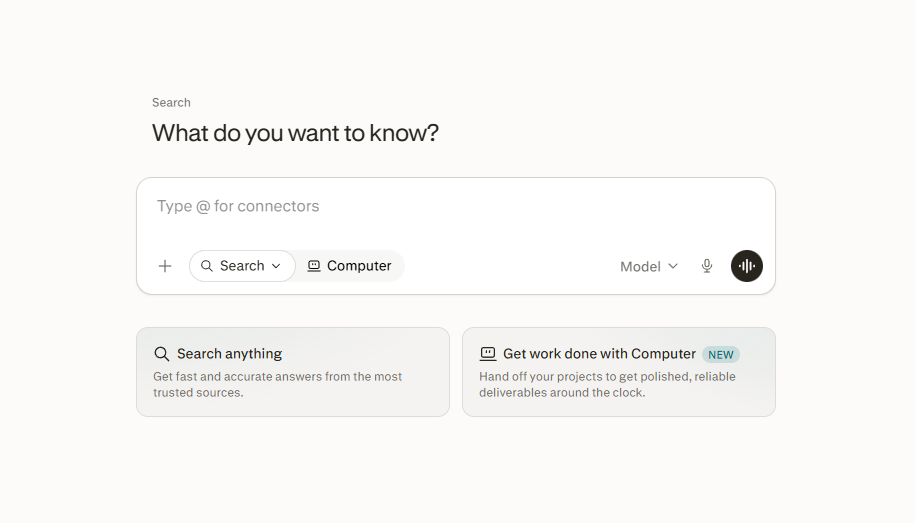
Putting an end to research gruntwork is the specialty of Perplexity AI. Compared to chatbots that work with trained data, this one works like a search engine that actually reads the results for users. Every answer and result comes with citations from the most trusted sources. For verification, each citation comes with the corresponding link. No need to scroll through dozens of tabs. This makes it easier for students to verify information, compare viewpoints, and discover recent studies.
Key Features:
Deep Research for synthesizing complex research into a thorough report
Real-time access to current information
Multiple app syncing for smarter and personalized answers
Pricing:
Free Package
Pro Package – $20 per month
Real Use Case:
Perplexity AI can help journalism students build a story about local housing policy with greater confidence. It can quickly map the major players and recent legislation. Students can then follow the citations for actual data and quotes.
Gemini Notebook (formerly NotebookLM)
Gemini Notebook approaches studying differently. It’s centered around a student’s own materials. Users upload audio files, PDFs, personal notes, websites, YouTube videos, and more. The AI then trains on them to answer questions strictly from those sources. It can do almost anything that helps a student learn more efficiently. Summarizing chapters. Identifying connections between topics. Generating study guides. Gemini Notebook can even create podcast-style audio overviews for revising on the go.
Key Features:
Supports a diverse set of file formats
Access to multimodal understanding capabilities
Citations pointing back to the exact page
Pricing (via Google AI subscriptions):
Free Package
Plus Package – $4.99 per month
Pro Package – $19.99 per month
Ultra Package – $99.99 per month
Real Use Case:
Juggling multiple research papers for a literature review is mind-draining. And Gemini Notebook prevents that. Students can upload the resources and have it identify where the authors disagreed. Decreasing manual cross-referencing.
Grammarly
Image Credit: Grammarly
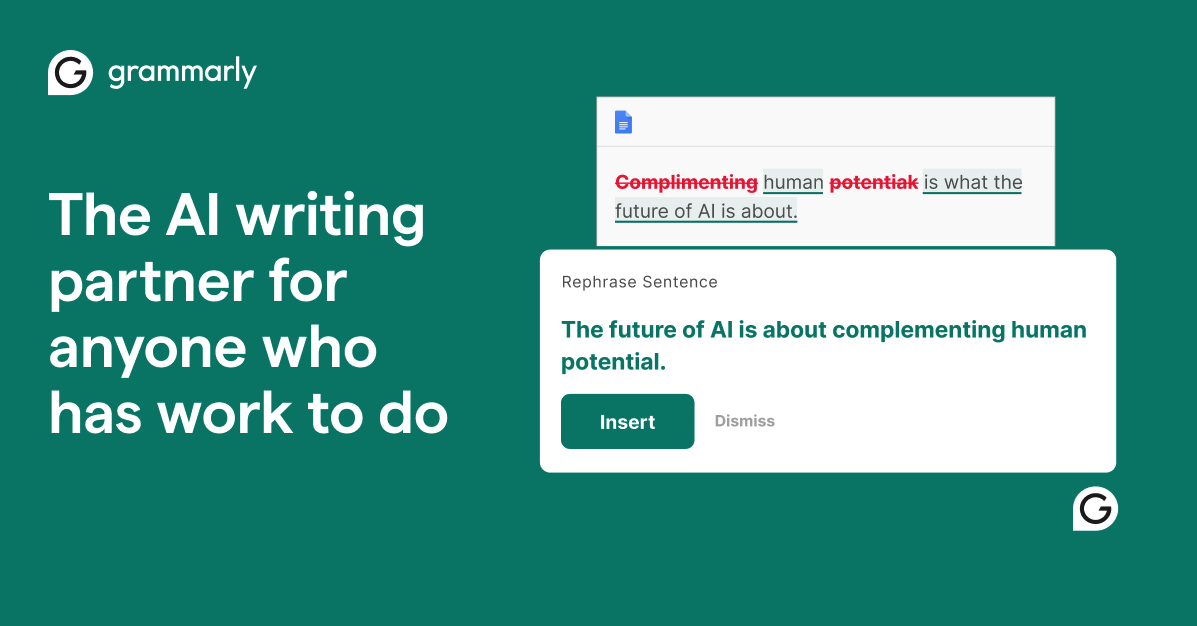
Stop the guesswork with grammar, punctuation, sentence patterns, and such. Grammarly helps students write with less uncertainty as they type. Real-time quality checks. It comes with an AI writing assistant that aids in improving clarity, vocabulary, and overall readability. Even the small stuff that is easy to miss can be fixed. Comma splices, passive voice, and inconsistent tone. And it’s no lazy writing. Grammarly’s actual features allow learners to improve their writing with explanations behind each suggestion.
Key Features:
Access to a more comprehensive plagiarism database
Blackboard, Canvas, Gmail, and Google Docs integration
Academic style suggestions and tone prediction
Pricing:
Free Package
Plus Package – $30 per month
Enterprise Package – Custom Pricing
Real Use Case:
Grammarly can help a university senior polish a scholarship application with precision. This AI tool can improve sentence flow and kick out awkward phrasing. This makes it easier to present a more professional final draft.
Wolfram Alpha
Wolfram Alpha doesn’t just answer like a chatbot. It computes. So obviously, it’s intended for students tackling topics such as Mathematics, Science, society and culture, and everyday life. Students can feed it an equation, a chemical formula, or a stats problem in natural language or specific expressions. It returns not only the answer, but also the step-by-step solutions. On top of that, Wolfram Alpha can do analysis and generate reports.
Key Features:
Converting plain language into mathematical expressions, equations, and computations
Curated a trillion pieces of data
Supports diverse algorithms and equations
Pricing:
Free Package
Pro Package – $9.99 per month
Pro Premium Package – $12 per month
Real Use Case:
Engineering students can solve differential equations faster with Wolfram Alpha. It helps verify calculations, visualize functions, and understand each step. This allows students to catch exactly where an error crept in.
Choosing the Recommended AI Tools for Students in 2026
Our parents indeed had it hard back then. But those challenges actually still exist, just in a different form. That’s why AI tools for students matter. Not to spoil them. But to help them keep up with current best practices.
Still, not every AI tool serves the same purpose. ChatGPT explains. Perplexity AI researches. Gemini Notebook organizes. Grammarly polishes. Wolfram Alpha calculates.
Don’t rely on one platform. Consider building a toolkit that matches your coursework. And remember, they only complement how students already study, not do the work for them. With a healthy dose of double-checking, these tools can genuinely support academic success.
Can someone practise piano seriously in a small apartment or compact home? Yes. A well-designed foldable digital piano can provide a full-sized playing experience without taking over the room.
For many learners, limited space is one of the biggest barriers to regular practice. A fixed piano setup can occupy a permanent corner, which may not suit a bedroom, studio apartment, shared home, or multipurpose living area.
TheTERENCE V70 foldable digital pianoaddresses this issue by combining a full-size 88-key layout, fully weighted hammer-action keys, a 50W four-speaker sound system, an intuitive LED touch panel, modern connectivity, and a body that folds for easier storage.
Why Small Homes Need a Flexible Piano Setup
Modern living spaces often serve more than one purpose. A living room may also function as a workspace, dining area, or study zone. In such homes, a large instrument that stays in place all day can feel inconvenient.
A foldable piano offers a more adaptable setup. It can be opened for practice and stored more easily when the session ends. This allows learners to create a dedicated practice routine without permanently sacrificing valuable floor space.
This type of design is especially useful for students, working professionals, families, and apartment residents who want to take piano learning seriously.
A Full 88-Key Layout for Long-Term Learning
The V70 features an 88-key full-size keyboard. This gives learners access to the complete range commonly used in piano music and helps them become familiar with standard key spacing.
A smaller keyboard may be enough for basic exercises, but it can become restrictive as a player improves. More advanced pieces often require wider movement across the keyboard, both hands working together, and access to lower and higher notes.
Choosing a full-sized instrument from the beginning can reduce the need for another upgrade later. For buyers looking for a foldable piano for serious practice, the 88-key layout supports both early lessons and continued development.
Fully Weighted Keys for Better Control
Key response plays an important role in effective practice. The V70 uses fully weighted hammer-action keys, giving players more resistance beneath their fingers than a lightweight keyboard.
This helps learners practise finger control, timing, dynamics, chord control, and expressive playing. Weighted keys can also make scales, technical exercises, and longer pieces feel more purposeful.
The V70 delivers real piano feel in a foldable design, making it suitable for learners who want practical storage without giving up a substantial playing experience.
A 50W Four-Speaker Sound System
Sound quality can influence how enjoyable and productive a practice session feels. The V70 includes a 50W four-speaker sound system, allowing players to hear their performance clearly without depending on separate external speakers.
The built-in system supports daily practice by keeping the setup simple. Learners can sit down and begin playing without connecting additional audio equipment.
Clear sound can also help players notice differences in timing, note balance, phrasing, and dynamics. This makes the speaker system useful for both technical exercises and complete pieces.
A Foldable Body Designed for Real Homes
The main practical advantage of the V70 is its foldable structure. Once practice is over, the piano can be folded for easier storage, helping users reclaim space in a room used for other activities.
TERENCE is positioned as a modern piano brand for real homes and smaller spaces. Within its foldable range, the V70 is presented as a premium model built around fit, feel, sound, and daily usability.
The folding design is not only about saving space between sessions. It helps make regular practice more realistic for people who do not have a separate music room.
The TERENCE V70 foldable digital piano can become part of a daily routine without permanently dominating the living space. This balance may also reduce buyer regret by addressing both long-term learning needs and practical storage concerns.
Why the V70 Is the Premium Foldable Model
The V70 is designed for serious beginners, returning players, and learners who want an instrument that can remain useful as their skills progress. Its main advantages are concentrated in the areas that matter most for consistent daily practice:
Full-size 88-key layout: Supports early lessons, wider-ranging exercises, and more advanced repertoire without limiting the available playing range.
Fully weighted hammer action: Provides more realistic resistance, control, and rebound for deliberate technique practice.
50W four-speaker sound system: Delivers fuller sound for home practice without requiring separate external speakers.
Foldable body: Makes it easier to reclaim space between sessions in apartments, bedrooms, and multipurpose rooms.
Intuitive controls and modern connections: The LED touch panel makes it easy to move between functions, while Bluetooth Audio supports lesson material and accompaniment, MIDI connects with compatible music software and learning tools, headphones allow quiet practice, and OTG adds a wired recording option.
These features position the V70 as the premium model in TERENCE’s foldable lineup rather than a temporary first keyboard. They address both sides of the buying decision: the feel and sound needed for longer-term practice, and the storage flexibility required by modern homes.
The available 30-day return period may help buyers assess whether the piano suits their room and routine, while the one-year warranty provides additional reassurance.
Serious Practice That Fits the Home
Serious piano practice is possible in a small home when the instrument is designed around both learning and everyday living. For learners who want substantial key feel in a space-conscious design, the V70 offers a practical premium balance of full-size range, weighted touch, fuller home sound, modern connectivity, and easier storage.