Home Blog Page 945

There Was a Father (1942): Yasujiro Ozu and National Policy

Japanese filmmaking is known to have begun as early as 1898—two years after the motion picture came to the Land of the Rising Sun with the importation of Thomas Edison’s Kinetoscope1—and in a short span of time became adopted as a propaganda tool for the country’s military ambitions. During the Russo-Japanese War of 1904-1905, the newspaper Asahi Shinbun called upon cameramen to shoot films imbuing “the minds of the young with a military spirit” while live commentators called benshi encouraged audiences to cheer “banzai!” whenever soldiers appeared on screen.2 Three decades later—after Japan’s annexation of neighboring lands such as Manchuria and the Korean peninsula—Prime Minister Makoto Saito established the Film Control Committee to hone cinema’s “entertainment-propaganda function.” In 1935, he passed legislature that outlawed “insulting the national policy, the military, or foreign policy,” promoting in their place movies championing “the brilliance of the Imperial Way.”3

Many filmmakers, even those with no outward interest in military policies domestic and abroad, were influenced and manipulated by this sea change. In the early 1920s, a young camera assistant at Shochiku named Yasujiro Ozu joined the army reserves—hoping status as a part-time soldier would help avoid the draft4 and thus only wrench him from his beloved set job for the occasional training session.5 For a short while, this proved successful; graduating to the director’s chair in 1927, he shot thirty-seven films over the next decade, performing military duties intermittently. But by 1937, Japan’s expansionist agendas in Asia had escalated into the Second Sino-Japanese War. That September, Ozu received a conscription notice summoning him to the front.6

At the time of the 1937 draft, Ozu—together with Tomio Ikeda and Takao Yanai—had finished a script titled There Was a Father, which the group decided not to pursue shooting until the former’s return.7 Dispatched to China, Ozu witnessed numerous battles and atrocities—including the Rape of Nanjing in 1938—and often expressed interest in making films about the wartime experience. “[I]t is my determination to take in all the sights of the battlefield,” he told a Tokyo Asahi correspondent in December 1937, “and, if I come through this alive, make some sort of movie in service to the national cause.”8 Such a project never materialized after his July 1939 return, however, despite his vocally criticizing unrealistic war films and novels by people who’d never experienced combat. Ozu’s not contributing to the genre might’ve stemmed from moral qualms (as film critic Hideo Tsumura speculated following an interview wherein the director admitted to having become “anxious” about filmmaking)9 but more likely derived from expanded control over motion pictures.

On March 6, 1939, the government passed the Film Law—modeled after Nazi Germany’s Spitzenorganisation der Filmwirtschaft10—to actively tailor cinema in accordance with national policy. In September 1940, as resources dwindled, studios were ordered to limit their annual productions to less than forty-eight pictures,11 and censorship became so strict that one director requested on-site consultants to gauge what he wasn’t allowed to shoot.12 While war films were aplenty, those presenting Japan’s overseas actions with nuance—e.g., Fumio Kamei’s Fighting Soldiers (1940)—were scorned by the government. The same was true of movies set on the home front, the most favorable of which depicted homogenous patriotism. Having given up on a battle drama, Ozu proposed a “New Years comedy” called He’s Going to Nanjing, later renamed The Flavor of Green Tea Over Rice.13 That project went unmade after the Censorship Office of the Home Ministry denounced the script as “Occidental” and lacking “martial spirit.”14

Reasoning also that “sarcasm or satire” was ill-suited for the times’ political climate, Ozu directed the straightforward Brothers and Sisters of the Toda Family (1941), which concludes with a matriarch and two of her children moving to occupied China. After the film received Kinema Junpo magazine’s “Best One” prize and attracted so many spectators that Shochiku entertained plans for a sequel,15 Ozu returned to the script he’d worked on before the draft. As penned in 1937, There Was a Father was an uncomplicated drama about a single parent and his son, but its framework was workable as a patriotic home front movie. Film historian Tadao Sato notes in his book Currents in Japanese Cinema that father-and-son dramas accommodated the censors’ portrait of Japanese domestic life during the war. “The father in the home was a microcosm of the emperor in the nation: as the emperor was the embodiment of virtue, so each father should be a small model of virtue.” (Even though such a presentation, as Sato further explains, “was hardly the case in reality, as often mediocre fathers took advantage of this heaven-sent authority to play the tyrant at home, alienating their children.”)16

The Brothers and Sisters of the Toda Family (1941)

Perhaps to increase the odds of script approval, Ozu made changes playing into what historian Tony Rayns describes as “fidelity to Japan’s wartime ethos. Besides promoting the cardinal virtues of loyalty and obedience, it teaches that every man should be content with his role in society, however modest, and should find fulfillment in doing his best.”17 In the original 1937 screenplay, the father (Chishu Ryu) and his young son (Haruhiko Tsuda) travel to the city of Ueda on a social call; they make the same trip in the 1942 revision, albeit to visit their ancestors’ graves. In both scripts, the pair, after the son’s matured and begun adult life in a community separate from his parent, meet at a public bathhouse; the son (Shuji Sano) expresses interest in relocating so they can live together again. However, whereas the father consoled his progeny in the original scenario, his counterpart in the finished movie, despite wanting them to be together, unleashes a vocal tirade about not shirking one’s current responsibilities.18

Other scenes are subtler when endorsing national ethics. Early on, the father, then employed as a junior high school teacher, takes his pupils on field trips to Mount Fuji as well as imperialistic/militaristic sites such as the Imperial Palace and Yasukuni Shrine. During these excursions they pose before the Great Buddha statue in Kamakura (Japan’s Buddhist establishment had emerged as a proponent of the war effort).19 Most noteworthy, though, is a scene wherein the son visits his father in Tokyo, hair shorn into a crew cut, declaring he’s passed the army’s physical exam.

The film doesn’t nauseatingly harp on these elements. Ozu admitted to having become weary of films that “forgot entertainment and [… preached] to no purpose,”20 and at its core There Was a Father remains a recognizably Ozu parent-child drama with dominant themes of loss and disappointment. By drama’s end, the father has passed away, and his son ruminates not on upcoming military duties but on their having spent less time together than hoped. (The depiction of a child reluctant to leave a one-parent household and the parent obliged but likewise reluctant to see them leave points to postwar Ozu masterworks such as 1949’s Late Spring and 1960’s Late Autumn.) Nonetheless, the familial subject matter and fleeting nationalistic elements won over the censors: There Was a Father received a Bureau of Information award as an excellent national policy film.21 For those same reasons, it was re-edited when Japan surrendered in 1945 and the victorious Allied Powers, led by the United States’ General Douglas MacArthur, assumed control of the nation’s media.

Tasked with banning nationalism, imperialism, and militarism from Japanese screens during the American Occupation of 1945-1952, MacArthur’s staff replaced existing censorship policies with their own—in addition to confiscating pre-1945 pictures and, if necessary, adjusting them for re-release. The latter practice is plainly evident in There Was a Father, with scenes that stop rather than conclude (i.e., the father being asked to recite a poem at a class reunion; the scene cuts off just as he’s about to speak) and moments wherein characters’ posture suddenly change mid-shot (indicating problematic lines or gestures had been edited out). At the same time, the film exemplifies the Occupation authorities’ inconsistency regarding their own regulations: not removed were shots of Mount Fuji (deemed such a nationalistic image that the volcano was seldom allowed on screen—except in Shochiku’s logo—for several years), dialogue referencing Yasukuni Shrine, and of course mention of the son prepping for military service. Still, There Was a Father, which Ozu counted among his three favorites—the other two being Late Spring and Tokyo Story (1953)22—has long existed in fragmented form.

Until recently, that is. 2023—the 120th anniversary of Ozu’s birth and the 60th of his passing—has already been an exciting year for fans of this director. In months previous, restored copies of Record of a Tenement Gentleman (1947) and The Munekata Sisters (1950) debuted at the Cannes Film Festival; news also came out regarding discovery of additional footage of 1929’s short comedy A Straightforward Boy. And on August 22, NHK announced that this year’s Venice International Film Festival will host a restored print of There Was a Father—with scenes originally axed by the Occupation censors. Among the reinstated footage is the above-mentioned poetry scene (likely cut because of rhetoric about feudal loyalty to the nation) and a closing sequence wherein Japanese civilians sing to war-bound soldiers.23 With good fortune, this longer version will receive international home release, allowing Ozu fans to discuss the “new” material and the historical context behind them.


Works cited and further reading:

  1. Dym, Jeffrey A. “Benshi and the Introduction of Motion Pictures to Japan.” Monumenta Nipponica, vol. 55, no. 4., 2000, p. 510
  2. High, Peter B. The Imperial Screen: Japanese Film Culture in the Fifteen Years’ War, 1931-1945. Madison: University of Wisconsin Press, 2003, pp. 4-5
  3. Ibid, pp. 52-5
  4. Richie, Donald. Ozu: His Life and Films. Berkeley: University of California Press, 1977, p. 199
  5. Rayns, Tony. “The Only Son: Japan, 1936.” The Current, 13 July 2010
  6. I Lived, But… A Biography of Yasujiro Ozu. Shochiku Co., Ltd., 1983
  7. High, p. 351
  8. Ibid, p. 181
  9. Joo Woojeong. The Cinema of Ozu Yasujiro: Histories of the Everyday. Edinburgh: Edinburgh University Press, 2017, p. 139
  • Hirano Kyoko. Smith Goes to Tokyo: Japanese Cinema Under the American Occupation, 1945-1952. Washington, D.C.: Smithsonian Institution Press, 1992, p. 15
  • High, p. 294
  • Ibid, p. Xv
  • Ozu eventually used this title on a movie made in 1953, though only a few plot threads and scenes were retained in an otherwise brand-new story. Source: Bordwell, David. Ozu and the Poetics of Cinema. Princeton: Princeton University Press, 1988, p. 280
  • High, p. 173
  • Joo, p. 128
  • Sato Tadao. Translated by Gregory Barrett. Currents in Japanese Cinema. New York: Kodansha International, Ltd., 1982, p. 126
  • Rayns
  • “There Was a Father.” Ozu-san. http://a2pcinema.com/ozu-san/films/therewasfather.htm Accessed 26 August 2023
  • Rayns
  • Joo, p. 129
  • Bordwell, p. 292
  • Richie, p. 235
  • “Ozu Yasujiro’s 1942 film ‘There Was a Father’ restored.” NHK World-Japan 22 August 2023

Zachary Armstrong to Exhibit at Vito Schnabel Gallery

Vito Schnabel Gallery, the beloved art gallery, will exhibit Zachary Armstrong: New Work in their New York gallery on 43 Clarkson Street. The exhibition will run from the 13th of September until the 28th of October.

As part of this exhibition, the artist will present a new body of work that reflects his inventive multi-medium practice, including paintings, sculpture reliefs, and an installation of ceramic lamps and carved wooden sewing machines. These objects show Armstrong’s technical innovation and his uninhibited, idiosyncratic use of imagination and memory to connect with the viewer.

Zachary Armstrong’s recent solo exhibitions have included presentations at GNYP Gallery, Antwerp, Belgium (2023); Tilton Gallery, NY (2022, 2018, 2016); Faurschou Foundation, New York, NY/Beijing, China (2022, 2021); and quite a few others.

Mannequin Pussy Share Video for New Single ‘I Got Heaven’

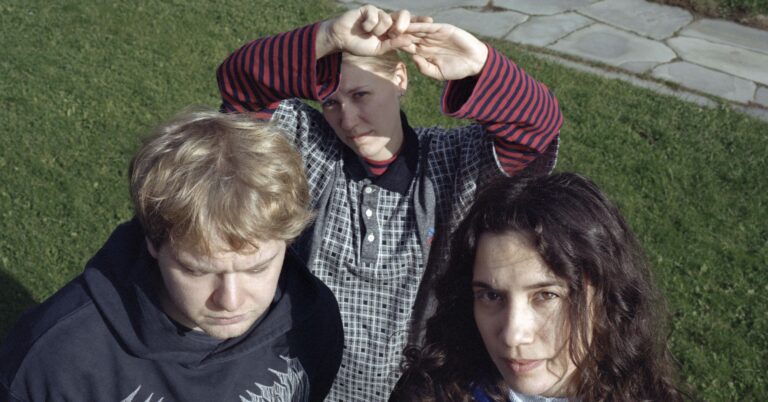
Last week, Mannequin Pussy announced they’ve bought back their masters from their former label, Tiny Engines, and launched their own imprint, Romantic Records. Today, they’ve released a new single, ‘I Got Heaven’, their first new music since 2021’s Perfect EP. It was produced by John Congleton and comes with a video directed by Mason Mercer and Anthony Miralles. Check it out below, along with the band’s upcoming tour dates.

“‘I Got Heaven’ is a song intended to merge the sacred and the profane and to serve as a reminder that we are all perfect exactly as we have been made and that no one gets to decide how a life should or should not be lived,” Marisa Dabice explained in a statement. “Heaven is here on a planet that gave us everything we needed to survive. Heaven is in the plants and in the water and in the animals who we share this world with. Heaven is inside of me and inside of you. The weaponization of Christianity for political means, for individual profit and power, as a tool to intentionally divide us is one of the greatest threats to our modern world and a threat to our ability to find solidarity through love. To allow the hatred and the violence and the noise to rise is to reject our sacred purpose as individuals, which is simply to love.”

Mannequin Pussy’s most recent LP, Patience, came out in 2019. Last year, Dabice appeared on a remix of Dazy and Militarie Gun’s ‘Pressure Cooker’. A press release notes more new music is “on the way soon.”

Mannequin Pussy 2023 Tour Dates:

Sep 7 Los Angeles, CA – Hollywood Palladium *
Sep 8 Tempe, AZ – Marquee Theatre *
Sep 9 Albuquerque, NM – El Rey Theater *
Sep 10 El Paso, TX – Lowbrow Palace *
Sep 12 Houston, TX – House of Blues *
Sep 13 Austin, TX – Emo’s *
Sep 15 Atlanta, GA – Center Stage *
Sep 16 Tampa, FL – The Ritz Ybor *
Sep 18 Asheville, NC – The Orange Peel *
Sep 19 Nashville, TN – Brooklyn Bowl *
Sep 21 Louisville, KY – Louder Than Life *
Sep 22 Mckees Rocks, PA – Roxian Theater *
Sep 24 Worcester, MA – Palladium *
Sep 26 Washington, D.C. – 9:30 Club *
Sep 27 Brooklyn, NY – Brooklyn Steel *
Sep 29 Columbus, OH – The King of Clubs *
Sep 30 Chicago, IL – Concord Music Hall *
Oct 3 Lawrence, KS – The Granada *
Oct 5 Denver, CO – Summit *
Oct 6 Salt Lake City, UT – Soundwell *
Oct 10 Seattle, WA – Neptune Theatre *
Oct 11 Portland, OR – Wonder Ballroom *
Oct 13 Santa Cruz, CA – The Catalyst *
Oct 14 Anaheim, CA – House of Blues *
Oct 23-27 Miami, FL – Coheed & Cambria SS Neverender Cruise
Nov 17 San Juan de Alicante, Spain – Magic Robin Hood
Nov 18 L’Hospitalet de Llobregat, Spain – Primavera Sound Weekender
Nov 19 Lisbon, Portugal – ZDB
Nov 20 Porto, Portugal – Maus Hábitos

* with Movements, Softcult, & Heart To Gold

Taking Meds Release New Song ‘The Other End’

0

Taking Meds have shared the latest single from their upcoming LP, Dial M for Meds, ahead of its release on Friday. ‘The Other End’ follows previous cuts ‘Memory Lane’, ‘Outside’, and ‘Life Support’. Check it out below.

“‘The Other End’ was one of the first songs we wrote for this record,” bandleader Skylar Sarkis explained in a statement. “I’ve had the chorus melody in my head for a couple years. I’m really glad it came together the way it did. One of the main themes in this song is mundanity. When you have a vision for how something should go, or even how your entire life should go, it’s always going to get filtered through reality and come out looking pretty different. There is, of course, something wonderful about that, but this song talks about about how disappointing and empty that can feel.”

Ty Segall Shares Video for New Song ‘Void’

Ty Segall has released a new song, ‘Void’, which accompanies the announcement a 2024 tour. The track arrives with a music video directed by Ty and Denée Segall. Check it out and find Segall’s upcoming tour dates below.

Earlier this year, the C.I.A. – Ty and Denée Segall’s band with the Cairo Gang’s Emmett Kelly – released their latest LP, Surgery Channel. Ty Segall put out “Hello, Hi” in July 2022.


Ty Segall 2023-2024 Tour Dates:

Wed Sep 6 – Topanga Canyon, CA – Theatricum Botanicum*
Thu Sep 7 – Topanga Canyon, CA – Theatricum Botanicum*
Thu Oct 5 – Milwaukee, WI – Turner Hall Ballroom^
Fri Oct 6 – Detroit, MI – Majestic Theatre^
Sat Oct 7 – Indianapolis, IN – Deluxe at Old National Centre^
Thu Oct 26 – Austin, TX – LEVITATION
Fri Nov 10 – Jersey City, NJ – White Eagle Hall – Solo Acoustic
Sat Nov 11 – Hamden, CT – Space Ballroom – Solo Acoustic
Tue Feb 20 – San Francisco, CA – Great American Music Hall
Wed Feb 21 – San Francisco, CA – Great American Music Hall
Sat Feb 24 – Solana Beach, CA – Belly Up
Fri Apr 19 – Tucson, AZ – 191 Toole
Sat Apr 20 – Albuquerque, NM – Sister Bar
Tue Apr 23 – Jackson, MS – Duling Hall
Wed Apr 24 – Nashville, TN – Brooklyn Bowl
Fri Apr 26 – Asheville, NC – The Orange Peel
Sat. Apr 27 – Washington, DC – Atlantis
Sun Apr 28 – Philadelphia, PA – Union Transfer
Mon Apr 29 – New York, NY – Webster Hall
Wed May 1 – Boston, MA – Royale
Thu May 2 – Montreal, QC – Club Soda
Fri May 3 – Toronto, ON – Danforth Music Hall
Sun May 5 – Cleveland, OH – Beachland Ballroom
Mon May 6 – Chicago, IL – Thalia Hall
Tue May 7 – Omaha, NE – The Waiting Room
Thu May 9 – Englewood, CO – Gothic Theatre
Sat May 11 – Sacramento, CA – Harlow’s

* acoustic set with The Freedom Band
^ with Axis: Sova

This Week’s Best New Songs: Mitski, Jane Remover, twst, and More

Throughout the week, we update our Best New Songs playlist with the new releases that caught our attention the most, be it a single leading up to the release of an album or a newly unveiled deep cut. And each Monday, we round up the best new songs released over the past week (the eligibility period begins on Monday and ends Sunday night) in this best new music segment.

On this week’s list, we have Mitski’s gorgeous, shimmering slow-burn of a song, ‘Star’; the lead single from Jane Remover’s new album, Census Designated, the nervous, explosive ‘Lips’; twst’s dynamic, infectious new single ‘Catch Me (Beautiful Fall)’, which is co-produced by Clarence Clarity; Squirrel Flower’s sparkling new single ‘Alley Light’; Slow Pulp’s warm, heartfelt ‘Broadview’, the latest single from their upcoming LP Yard; L’Rain’s hypnotically ambiguous new song, ‘Pet Rock’, which leads her next album I Killed Your Dog; and Jenny Hval and Håvard Volden’s entrancing new Lost Girls track, ‘With the Other Hand’.

Best New Songs: August 28, 2023

Mitski, ‘Star’

Jane Remover, ‘Lips’

Song of the Week: twst, ‘Catch Me (Beautiful Fall)’

Squirrel Flower, ‘Alley Light’

Slow Pulp, ‘Broadview’

L’Rain, ‘Pet Rock’

Lost Girls, ‘With the Other Hand’

Stars of the Lid’s Brian McBride Dead at 53

Brian McBride, one half of the ambient duo Stars of the Lid, has died at the age of 53. “I am deeply saddened to tell everyone that Brian McBride has passed away,” a note on the band’s official Instagram page reads. “I love the guy & he will be missed.”

Born Brian Edward McBride in Irving, Texas, McBride met his bandmate Adam Wiltzie after moving to Austin, and the pair formed Stars of the Lid in 1993. They released their debut album, Music For Nitrous Oxide, which they recorded alongside Kirk Laktas, in 1995 via Sedimental. Stars of the Lid went on to release four albums in a row for each following year, including 1996’s Gravitational Pull vs. the Desire for an Aquatic Life, 1997’s The Ballasted Orchestra, 1998’s Per Aspera Ad Astra, and 1999’s Avec Laudenum. Six years after 2001’s The Tired Sounds of Stars of the Lid, the duo put out their final album, 2007’s And Their Refinement of the Decline, though they played a handful of shows in the years following its release.

Outside of his work with Stars of the Lid, McBride released two solo albums, 2005’s When The Detail Lost Its Freedom and 2010’s The Effective Disconnect, the latter of which served as the soundtrack to the documentary Vanishing of the Bees. After relocating to Los Angeles, he collaborated with Kenneth James Gibson under the name Bell Gardens, whose debut EP Hangups Need Company came out in 2010. It was followed by their debut full-length Full Sundown Assembly in 2012 and Slow Dawns for Lost Conclusions in 2014.

When asked about what he will miss the most when he’s gone, McBride said in a 2017 interview with FiveQuestions: “Surprises. Maybe you’re in a matter of fact mood, you’re driving home from doing a bunch of errands, you see somebody walking their dog, and the cat has gone on the walk with dog and the owner, and she’s running past them, showing off, scratching the trees. And you suddenly take delight in that.”

“The weird appreciation for the mundane or the banal,” he continued. “That’s what I’ll miss the most. The times when you can surprise yourself and notice things that seem quite matter of fact but are actually quite beautiful depending on how you look at it.”

Whitesnake Guitarist Bernie Marsden Dead at 72

Bernie Marsden, the original guitarist for Whitesnake and co-writer behind hits including ‘Here I Go Again’ and ‘Fool for Your Loving’, has died. “On behalf of his family, it is with deep sadness we announce the death of Bernie Marsden,” a statement on his official website reads. “Bernie died peacefully on Thursday evening with his wife, Fran, and daughters, Charlotte and Olivia, by his side. Bernie never lost his passion for music, writing and recording new songs until the end.” Marsden was 72.

Born in Buckingham, UK in 1951, Marsden played with various local bands before getting his first professional gig with UFO in 1972. Throughout the 1970s, he played in bands including Wild Turkey, Cozy Powell’s Hammer, Babe Ruth, and the Deep Purple offshoot Paice Ashton Lord. It was while recording with the latter that he met Deep Purple vocalist David Coverdale, with whom he formed Whitesnake alongside guitarist Micky Moody.

As a member of the band between 1978 and 1982, Marsden contributed to the Whitesnake’s first five albums: 1978’s Trouble, 1979’s Lovehunter, 1980’s Ready an’ Willing, 1981’s Come an’ Get It, and 1982’s Saints & Sinners. Though ‘Here I Go Again’ originally came out in 1982, it was the re-recorded 1987 version of the track that became a chart-topping single in the US.

After Whitesnake, Marsden went on to tour and record with bands including Alaska, MGM and the Moody Marsden Band, and contributed to albums by the likes of Jack Bruse, Jon Lord, and Ian Paice. He also released several solo albums, with his last LP, Trios, released in August 2022.

Coverdale paid tribute to Marsden on social media, writing, “I’ve just woken up to the awful news that my old friend & former Snake Bernie Marsden has passed. My sincere thoughts & prayers to his beloved family, friends & fans. A genuinely funny, gifted man, whom I was honored to know & share a stage with RIP, Bernie XXX.”

Artist Spotlight: Strawberry Runners

Strawberry Runners is the musical project of Emi Night, who started gaining traction with releases like the 2015 tape Hatcher Creek and 2017’s In the Garden, In the Night EP. Though they kept writing songs – often centered around traumatic events involving domestic violence and mental illness in their family – Night took a break from performing and recording music, which was starting to feel like a selfish pursuit as they saw people struggling to make ends meet. But realizing the impact it had on others and finding a sense of community in the Philly music scene inspired her to get back into it, and with help from friends and collaborators including co-producer Michael Cormier-O’Leary, Strawberry Runners’ self-titled debut LP, out today, was able to slowly come to life. It’s a mesmerizing, beautifully realized collection that not only seems to stretch its hands across time but treats it kindly, letting in a warmth not usually afforded to songs wrought from chaos and solitude. In sharing them, Night reminds us that in order to take something in, like beauty, you have to learn to let go. “I lie on the water/ Too breathless to speak,” they sing on ‘Can I Take This’, “Dare I beg my maker/ This moment, to keep.”

We caught up with Emi Night for the latest edition of our Artist Spotlight series to talk about their earliest musical memories, the journey behind Strawberry Runners, the recording process, and more.


Could you share your earliest memories of connecting with music?

When I was about four, my mom would be at work, my dad would be watching me. He’d have to run errands all the time, and we’d be in the truck driving around – there’s no A/C or anything, we’d just have the windows down, and he’d always made up songs while we were driving. He’s singing really loud – he was an opera singer, so he really just let loose out on the highways of Southern Indiana, making up stupid songs about stuff that we’d see. I was pretty shy when I was little, so I would have a hard time on the spot freestyling lyrics, but I’d always be singing his songs with him. Singing was a part of everyday life, just how we communicated. As I got a little older, I went to a Catholic school, which was weird for me because I didn’t really feel like I fit into that religion. But I did love how at church we would sing, and the music was so moving. I joined the choir, and my second grade teacher taught me how to play guitar so that I could play with the choir. I did feel like an outsider, I didn’t feel religiously connected to the school and to my peers, but when we were playing the songs at church, that was my way of connecting to people and making friends and feeling like a part of the community. It’s always been my form of communication.

Did you feel the need for it to become something a little more private or personal over time?

I always had this dream of standing out, I guess, because I didn’t really fit in when I was little. I was bullied a lot, and I just didn’t feel like I had friends. But I loved music so much, I wanted to use that as a way to prove, I don’t know, I belonged in the world or something. I started this girl group, this pop group when I was little. [laughs] I just made up dumb songs – I actually think I stole some songs from someone, I was like, “These are my songs.” But as I got older, I don’t know how to describe it – I just felt comforted by music. When things would be happening in my life – like my parents were going through a divorce, and I lost a relative – I just remember taking a lot of solace in being able to just like sit with my guitar and come to myself. I started writing then, probably when I was like 12 or 13, and not really fitting in was to my benefit in a way, because I spent a lot more time alone. I was comfortable being alone as a kid, so as a teenager, I was like, “I’ll just sit here for hours and work on a song, and that’s fine.” But then I could share it with people, and that was a way to engage with the world and make friends and connect with other people who felt similarly, like they didn’t fit in, and we’d play music together.

When did you really feel comfortable sharing your music with people?

I felt a little uncomfortable with the way that people treated me when I played music, but when I got older, I realized people just really needed to hear the songs. I guess I just felt obliged to continue making music – I felt obliged to continue putting music out and playing it in front of people, for more than just myself. Because people would reach out and tell me how some of the songs connected to them. Selfishly, I was just writing it because I needed to write that thing at the time. But when I realized that the music was connecting to people, I started to understand that there’s more weight there; there’s more importance in actively participating in that as a performer and as an artist.

How does this fit into the evolution of Strawberry Runners as a project? I know that it dates back to 2013 in some form.

I started writing the Strawberry Runner songs around the time when my dad had brain cancer, and he died. I was writing these songs processing his death and processing his life. It was a really confusing and difficult relationship. My dad was abusive and a very, very scary person, and in the last few years of his life, he just became very small from this illness. These aspects of his character started coming out that I had never seen before, like the love and the curiosity and the patience, and I was processing all of that and writing about it. And then I was writing about my family, how everyone was coping and what I was seeing in the people around me. It was hard to play those songs for my family, but when they came out, people told me that it was meaningful to them, so it made me want to continue writing. But I also had other things to write about. That history is still a part of who I am and how I write and how I see the world, but I think it’s important to also be able to take a step back and integrate that into a bigger view of the world and other experiences. I did need to take a little bit of time to figure out how to do that, because it’s my own trauma that I’m working through. I don’t produce music to be successful. I’m making music to process life. Sometimes that’s convenient for putting things out and having this commodification of feelings and art, but sometimes it’s not. Sometimes it just takes time.

I read the part of what legitimized music as a passion for you, also, was a conversation you had with the department head of the master’s program in psychology that you were in. What do you remember about it, and how was it different from other things people had told you?

Well, first of all, it was my interview for the program, I hadn’t gotten in yet. The interview was going really well, I was on that day. And then she asks me, “What do you do in your spare time?” I like to compartmentalize things, I don’t usually tell people what I do outside of work. But in this moment I was like, why not, I’m kind of moving on from playing music anyway. So, “I play music and I write songs.” And she said, “Oh, yeah, I know of your music.” And I was like, “No, you don’t.” She said, “Your band is called Strawberry Runners.” And I was like, “Oh God, she does know about my music.”  I was like, “That’s so interesting, how did you hear of my music?” And she said, “I actually print off your lyrics for my clients sometimes in sessions.” It just threw me for a spin, and in the moment I was like, “Whoa, that’s amazing, thank you.” I just forgot about it for a little bit, and then I was like, “Well, this interview definitely going well, I’m definitely gonna get in. She likes me and thinks that I have good lyrics, that’s probably good for a psychology program.” I did end up getting into the program, but the school was really expensive, so I decided couldn’t really afford to go. I had been thinking about the interview, and it just hit me later: I’m doing what I’m setting out to do right now. I’m reaching people in the way that I think I want to reach people, and I’m doing it in this form that I actually love. I don’t think I need to stop doing that, and I also think I should do it more and just see what happens. So it did make me feel like it was more legitimate, but it also made me feel like I don’t need to go totally change my life to reach people the way that I’m trying to reach people. I can do that just by being myself and living the way that feels honest to me.

There’s a lot of small moments and different characters spread across these songs, often alternating between the past and present. When you think about the big picture of the album, what is it that comes to mind?

I’ve been thinking of it like that story form, the journey and return, where the character is in a situation where it’s like, “Okay, this is fine, right?” But then maybe there’s something that seems like maybe it’s not so fine, or there’s some problem that comes up that needs to be resolved, but in order to resolve it, they have to go through this whole process of going somewhere, going into some dark places. But then they come out the other side kind of back to where they were, but it’s not the same. Whatever issue had come up is now resolved. So, the pacing of the album is supposed to kind of resemble that. At the beginning, on ‘When I Walk’, it’s clear that there’s a certain level of comfort with this solitude, but then there’s also a bit of bitterness or a bit of sadness, or something that’s hinted at in that song. And then we kind of get into where that’s coming from, and we bring it around all the way through the ups and downs of the album. And then ‘Circle Circle’ is the final song, where it’s this sense of belonging and the sense of holding all of the chaos of everything, just recognizing that’s the way the world is, and we still belong in it.

Tell me more about coming up with that song.

I was feeling kind of sick and delirious. Sometimes playing music comforts me when I’m feeling crappy, so I just took it through my sickness. One night, when I was just not able to sleep, I picked up my guitar and I was looking around my room. I’ve moved around so much in my life – I grew up in Indiana, I moved to Colorado, I moved to Connecticut, I moved to Philly, I moved to New York, I moved upstate, I went to school in Vermont. I feel like I’ve been in a lot of places. Sometimes when I’m really tired, I get really anxious, and that’s what was happening in my sick time. I was just trying to make sense of things, like, What is my story? What’s going on here? I’m looking around my room and all of the things that I’ve collected that represent different times in my life, and I settled this painting that my friend made. We went to school together – I studied painting and we were studio mates, and she and I traded paintings before we left. I was looking at this painting that she made, and there was this section of the painting that is these little circles, and there are a bunch of them.

I was thinking about how things come back around, looking at the painting and kind of describing it with lyrics, and then it opened up my memory. As I was writing about the painting, I was also seeing all of these different stories in my life and how they all fit together and overlapped. It was a delirious song, but sometimes when you’re in a different mindset, you’ll see things that you took for granted and find a connection there. I think that’s what I did when I was writing this. I was finding this comfort in the chaos of everything and not really being able to make sense of my story. In the end, that’s just how life is. We all have these days and weeks and years, and that becomes your life, and that’s your story.

You recorded the album in several different studios, which I think also contributes to this pacing and the chaos of moving around, this feeling of it not being locked in a particular time and space. In what ways did that approach benefit the music for you?

I love recording music, and I also get so nervous in the studio. In each of the sessions, I was in a different place in my journey – musically, mentally, emotionally – and the band was in a different formation each time. I think that it offers more depth than just one week in the studio would have. I’m always intentional about how I record things, and my intentions were changing over that period. It’s like having a lot of different versions of me producing the album in a room.

What were those different versions?

When we started this, I was playing electric guitar, and we had Heather [Jones] on lead guitar. Heather has this really beautiful way of playing the songs. They just brought out this darkness and this sadness in certain places that, it was there in the song, but Heather really found it and shed light on it. You can hear it in, like, ‘Buddy’, and they were playing Rhodes on ‘Can I Take This’.  The chords that they chose add this sad question at the end of a line, maybe, and that’s something I wanted to have. But it didn’t fit everywhere, and there were certain songs that I don’t think they found what they needed in the first round. The first round was with Heather in Philly at So Big Auditory, and the second round was at Headroom in Philly. In that round, we found a lot of energy, and it felt very band-y. There were some more rocking moments, like ‘Alison’ came to life there, and it felt just right. We didn’t need to change it much after that. But there are a few songs, like ‘Breakup 2’ and ‘Look Like This’ and ‘Circle Circle’ – those are the three singles that are out right now – which were still like, “What are these songs?”

After two rounds of recording, my life was changing, I was going through a lot of stuff, and I needed to just take a break. I was feeling frustrated that the album wasn’t where I wanted it to be. It wasn’t ready to release, there were still these songs that just didn’t seem to have an identity yet. So I took some time away, and that’s when I started thinking of going back to school. I was working a lot, and stuff was happening with family. And then I came back to wanting to do music again. Mike, who had been drumming on the album for round two, was like, “Hey, what’s going on with these songs? Let’s see if we can make this happen.” We decided to go back into it and get into those three songs that I just didn’t even want to listen to ever again. They gave me so much energy when I heard the new versions, and I knew that we could do this album because of these songs. I started taking voice lessons and started teaching voice lessons. I feel like the way that I performed changed a lot over the last couple of years, so going back into the studio, I just felt like a new musician. I brought everything that I had been learning over the years and finished the album at Big Nice studio outside of Providence. It was just an amazing experience. After all the ups and downs, I felt so much joy to be there and see it all coming together. It felt like there was no work to do, even though we were going constantly for a few days.

I love the vocal arrangements throughout the album, but especially on ‘Slip Through’, which has this dreaminess that intensifies through the fried distortion and the guitars it’s filtered through. How intentional were you about achieving that effect?

It’s funny you mentioned ‘Slip Through’ – that one and ‘Hollow’ are the two songs that I recorded at home very early on. I had ‘Slip Through’ before we ever went into the studio. And then I kind of used that to judge everything else against; if the other songs weren’t sounding good as ‘Slip Through’, which I did myself at home, then it wasn’t good enough for the album. I love recording vocals and layering vocals and finding harmonies. In that one, I remember specifically, I was in a new house, and it was kind of empty. With the chorus, I was like, I’m gonna do really, really low, and I’m gonna sing really, really high. At that time, I didn’t really know how to sing high, I didn’t know how to do it without hurting my voice, and I needed to be really loud to feel comfortable singing that high. So I went out in the hallway of my house, and it was all reverberating through the house. It felt cathartic singing that part. It felt like I was touching on my dad’s operatic “ahh” stuff, remembering how he sings.

When we took it into Big Nice – we did re-record it both other times that we went into the studio at So Big Auditory and at Headroom, and it never felt right. So I actually scrapped both of those recordings and just went back to the original demo, brought that into Big Nice. We were like, this is good, but there’s this part in the chorus, I had this classical guitar that was just rhythmic, pulsing 4/4 strums. And that was working, but Brad [Krieger] was like, “I just feel like it’s it’s not allowing the emotiveness of that moment to come through.” I think Mike was on the same page. I was like, “Hmm, no, I think we need to keep that.” And they were like, “I think we should try this other thing, let’s just see.” And I was like, “Okay, sure, do what you want, we’ll see what happens.” And then they added this heavy, gritty electric guitar that was super overdriven. And it was shocking to hear it. At first I was like, “This kind of hurts my ears, I don’t know.” [laughs] And they were like, “No, no, no, this is the moment, this is it.” And I was like, “Okay, okay. Let’s keep going.”

That moment where it gets really loud and distorted, I went back and forth on it a couple of times. I’d let other people hear it, and they were like, “I actually had to turn it down that point.” My mom listened to it and was like, “This hurts my ears.” But then some other friends were like, “No, that’s the moment that you need to keep.” I spend a lot of time just listening to other people and I think about what other people want all the time. It’s something that is very dividing – some people are gonna love it, some people are gonna hate it – but it’s it’s kind of good to have those moments. I think it gives it a character that it wouldn’t have had otherwise, so in the end I decided to keep it, and I do love it myself.

What are you most proud of yourself for achieving with this album?

I feel the most pride in letting go of control of the songs that I didn’t really know how to figure out myself. I think that asking for help from someone is an essential part of the process of making anything at all. That’s just being a creative person. You have to be able to balance your own like intentions and your own wilful, prideful decisions with being able to take input from other people and sources. I just had to have a ton of faith, and I’m not great at having faith. [laughs] But I think I’m better now, knowing how this went. Everyone thinks differently, everyone sees things differently, and if you get trapped in your own little view of the world, you’re just never going to be able to do your best work, or see so much of the beauty that exists already around you. Letting go of that control allowed me to see so much that I had been missing and taking for granted and gave me so much more opportunity to grow and keep playing.


This interview has been edited and condensed for clarity and length.

Strawberry Runners’ Strawberry Runners is out now.

The Callous Daoboys Announce New EP, Share New Song ‘Waco Jesus’

0

The Callous Daoboys have announced a new EP, God Smiles on the Callous Daoboys, which is out October 20 via MNRK Heavy/Modern Static Records. Following last year’s Celebrity Therapist, the three-track collection includes the new single ‘Waco Jesus’, which you can check out below.

“’Waco Jesus’ is about insecurity, projecting that insecurity and not doing anything to solve it regardless of how people are telling you to NOT be insecure,” vocalist Carson Pace explained in a statement. “It’s about being unable to take a compliment.”

“In a way it feels like the band just started, even though we’ve been chipping away at it for the last six years,” Pace added. “We want to be the defining band of this weirdo genre-swapping heavy music, where you can’t put it under an umbrella. I think what’s cool about it is it’s just immediately like, ‘Hey, fuck you, this is The Callous Daoboys!’”

God Smiles Upon The Callous Daoboys Cover Artwork:

God Smiles Upon the Callous Daoboys EP Tracklist:

1. Pushing The Pink Envelope
2. Waco Jesus
3. Designer Shroud Of Turin [feat. pulses.]