

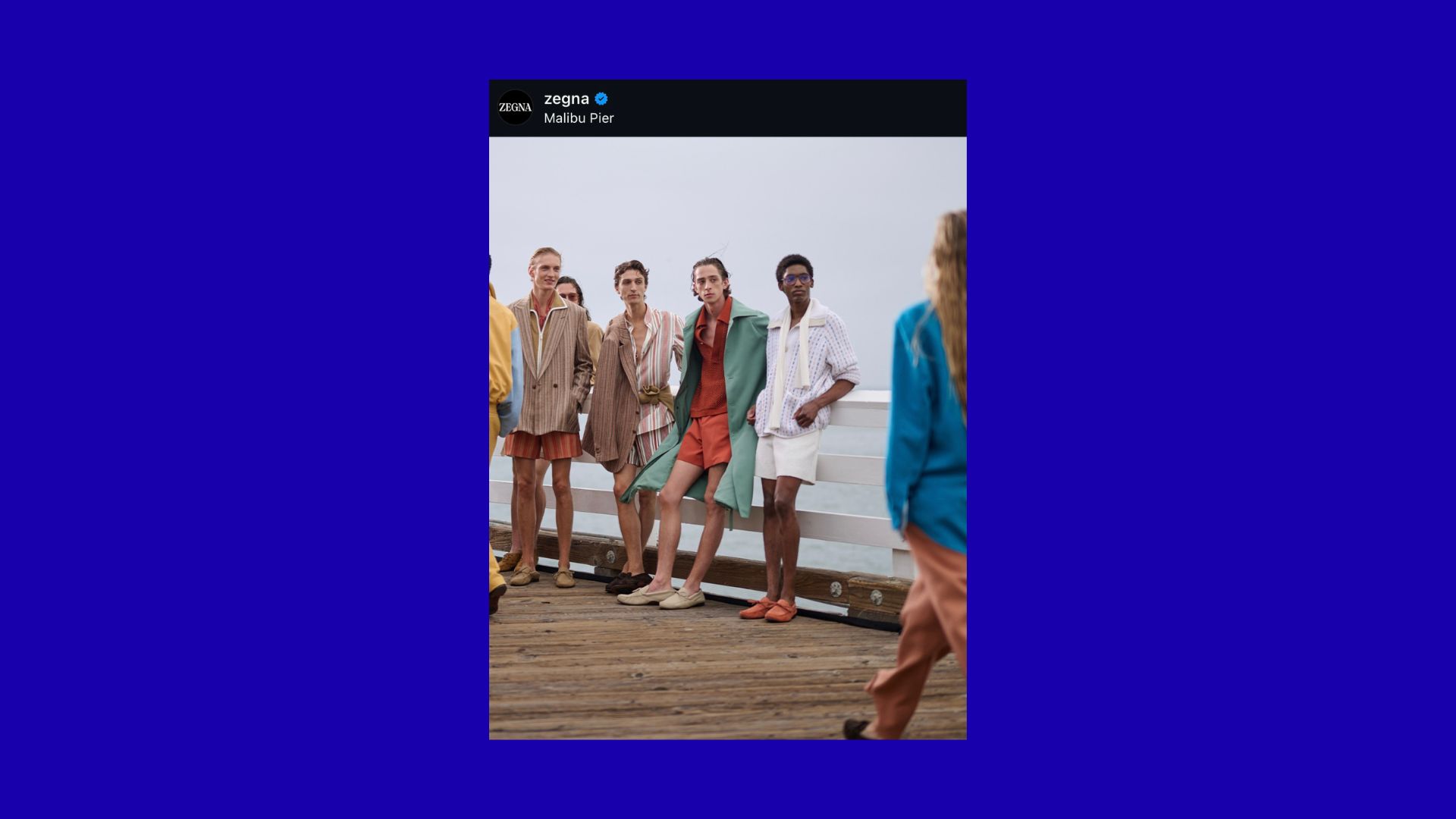
Ever heard of villeggiatura? Italian for a picturesque vacation so long and leisurely it starts requiring generational wealth and a pause button on real life. Born among Renaissance Venetian aristocrats escaping the city heat, it later became a tradition centred on slowing down, staying put and surrendering to local rhythms. In other words, the Zegna man doesn’t go on holiday. He relocates. This season, preferably to California. New York may be the brand’s largest market, but after a month overloaded with Cruise shows and luxury fashion summer migrations, Zegna looked towards its second-largest one instead. “We let Hermès take the hills,” Gildo Zegna told Vogue. Malibu got the Italians.
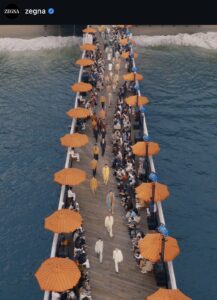
To be exact, Malibu Pier got them. Out past the pier, surfers were already circling the waves with the patience of people who had nowhere else to be, and the kind of ease that makes for a perfect background. While pelicans hovered lazily, as if also considering the cocktail selection, nearly 500 guests arrived to their Aperol Spritz-colored seats under matching parasols. Among them were Rami Malek, Roman Coppola, Andy Garcia, Easy Otabor, Scottie Pippen, and a handful of key clients, who later moved to Chateau Marmont for a buy-now, order-now version of Alessandro Sartori’s runway. The pier’s wooden boards, tired as they were, started to look oddly alive under the scene.
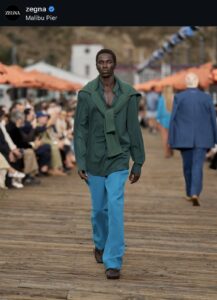
The clothes, on the other hand, carried an easy-going elegance, as the brand likes to describe. “The silhouettes always fluid, with lines that gently touch the body,” said the collection’s notes. Lines, however, weren’t always that gentle with fabrics. Stripes were everywhere, discreet, obnoxious, consistent. Elsewhere, think knit shirts, slouchy cardigans, silk suits, safari jackets, detachable collars, and bermuda shorts, a go-to in menswear this season (though slightly longer than Zegna’s version). Sartori leaned on Tessitura Ubertino’s restored 1950s-60s jacquard looms, where silk, paper and cotton blends produced the collection’s textured stripes, while a new woven-leather process saw suede and napa cut into strips, spun into yarn and reworked into fabric over more than a year. You can take the man out of the city, but not the city out of the man.

