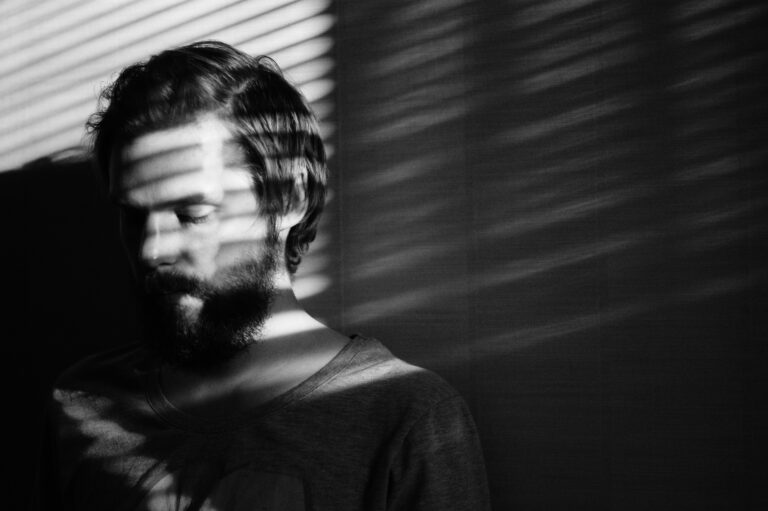
Swedish musician Rain on Monday is one of the promising rising talents today. His debut single ‘Kill My Love’ is a refreshing single featuring great vocals and production. This is our interview with Rain on Monday.
Hi, how are you?
I’m fine, thanks. The summer is almost here in Sweden so I can not complain.
So, how did you get into music?
I was around 10 years old when I really got into music. I saw together with my big sister a U2 concert on MTV and after that I was stuck. Around the same time when I learned my first chord on the guitar, I immediately started to write my own songs and recorded them with my cassette tape recorder. That’s how it all started, I still have all the old cassettes stored in a box at my parents house.
How did you come up with the name Rain on Monday?
“Rain on Monday” is based on my given name Raimond. After I’ve been playing in different bands for quite some time I started this has a solo project, but I don’t want it to be so obvious either. So I played around with some words and came up with the name “Rain on Monday”.
What inspires you to make music?
Life and different kind of emotions is what inspires me most.
Describe yourself in one word.
Calm
Describe your music in one word.
Honest
If you could give any advice to an upcoming musician what would it be?
Follow your instincts and keep on having fun.
What is your definition of culture?
For me is culture a way to express yourself in different art forms. I also like how different art forms interact with each other, for example how music can affect the feeling of a movie scene or a dance performance etc.
To find out ore about Rain on Monday follow his Facebook here.
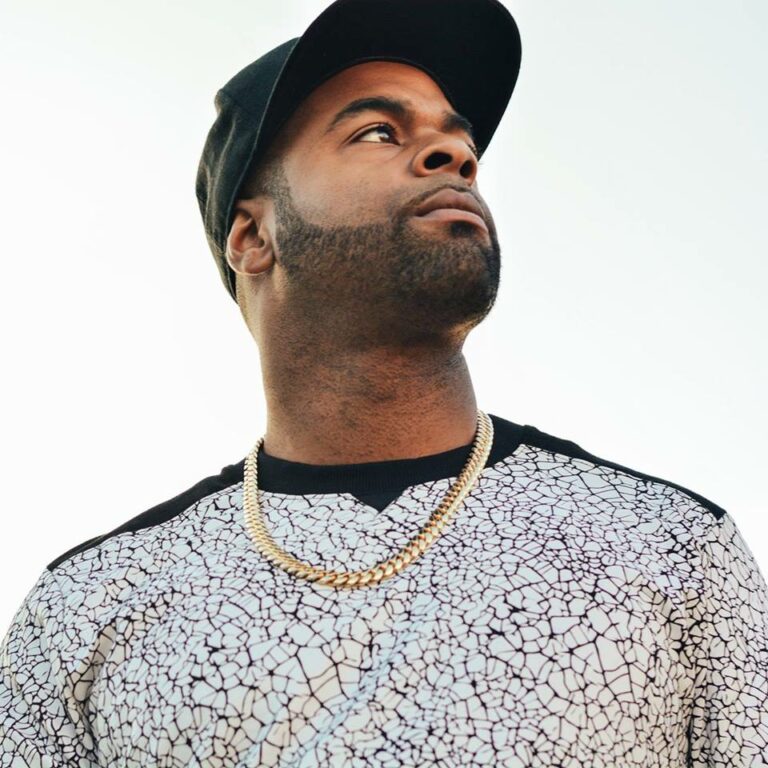
Hip-hop artist Wes Krave has released his latest single ‘Dream of Getting On’
Dreams, hopes and success. The latest single by Wes Krave features just that. Currently, expanding his discography with more and more impressive music Wes Krave’s latest single puts him on a map as a name to watch. The single was produced by Fourtune Ave and all vocals were recorded by Wes Krave.
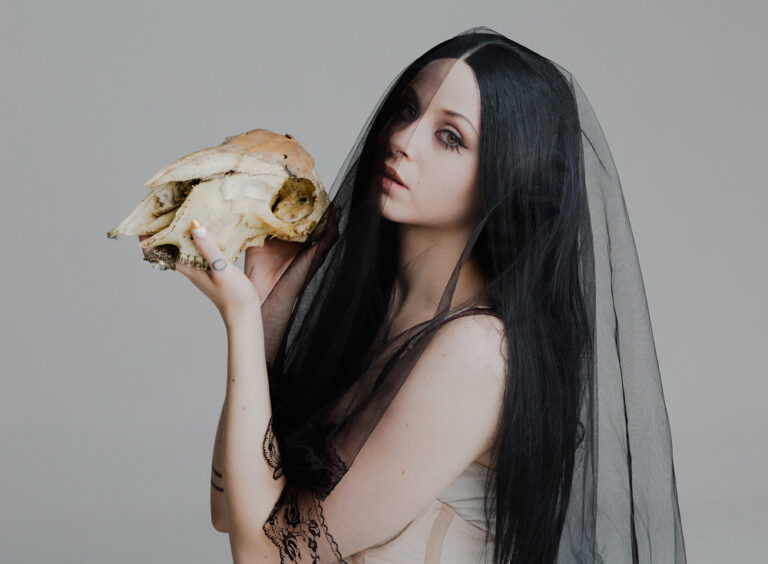
The dark pop artist HEXEN is relevantly unknown in the world of music. However, her powerful and moving music is starting to put her on the radar. This is our interview with her.
Hi, how are you?
I’m good, I’ve got tea and an evening of drawing merch designs ahead of me.
So, how did you come up with the name HEXEN?
I had a few names before I morphed into HEXEN. I re-incarnated a few times through the years, but now it just feels like the right word. In the end the universe just gave it to me and I ran with it.
When did you decide to start working on music?
About two years ago it started pulling me towards it. I’ve always done music in some way or another, but limited myself due to a lack of confidence. For about six months the idea sort of bubbled around my brain, and then one day I walked away from my entire life and started again with music as my primary focus.
Do you have anything exciting in the works?
I’m going to be putting out a single a month for the rest of 2017, plus a video or two here and there. There will be a heavily visual element accompanying most new works.
Outside of music do you have any hobbies that you like to escape to?
I’ve always done visual art & creative writing. They’re not escapes though, all of my creative work (visual art, writing, music) ends up informing each other. Outside of creative work I’m mostly just focusing on exploring reality.
Describe your music in one word.
Gothpop
Describe yourself in one word.
Tempestuous
If you could give any advice to any aspiring musicians out there what would it be?
Just do it. Stop wondering if you’re good enough. Trust your instincts not your anxieties. Don’t place limits on yourself.
What is your definition of culture?
Human curation.
To find out more about HEXEN follow her on Twitter here.
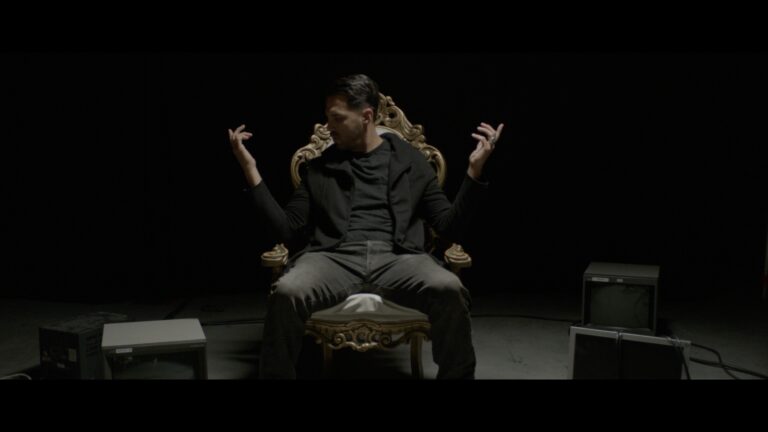
We had a pleasure of interviewing of the very talented musician Mezo. His latest single Human Contact is out now with a great official video supporting it. Here is our interview with him.
Hi, how are you?
Everything is great, trying to live life to the fullest & focused on creating good art. Been a little retrospective about the loss of so many great musical artists in the last year or so. Many great ones like George Michael, David Bowie, Prince & most recently Chris Cornell, makes me wonder if their is a bit of curse for the artist.
When did you decide to start working on music?
I honestly remember making up what I thought were songs around 5 or 6 years old but I first stated really working with instruments, drum machines, programs, & samples in my early teens.
Do you have anything exciting in the works?
Yes, I am working on new material & more specifically working with a few music supervisors on some film placements for some of my newest material. Also, I’m currently working with my co-writer / producer Andy Anderson on some new talented artists projects (w.o.l.f. pack 6) that encompass multi genres. Future r&b, pop, electronic. & even a bit of reggae.
Outside of music do you have any hobbies that you like to escape to?
Besides music, I really love films & studying some of my favorite actors. I am a professional actor as well & I enjoy learning monologues. One that I have been recently working on is the Christopher Walken one on “Lions” and I also love another one Johnny Depp did in “Black Mass” at the dinner table. Both of them are little sinister, maybe I’m a bit crazy.
Describe your music in one word.
Existential
Describers yourself in one word.
Conscious
If you could give any advice to any aspiring musicians what would it be?
Pray to God you have great connections & money. lol Seriously, just be truthful & study the greats. Every great artist that you love never believes in their heart that they are as good as those that they have admired & been inspired by.
What is your definition of culture?
Culture to me is when sub groups of people gravitate to what they believe is highest standard of their personal taste. These groups help to elevate their brand of art, music, literature, fashion & philosophy.
To find out more about Mezo click here for his Twitter.
“Dressing well is a form of good manners.” – Tom Ford
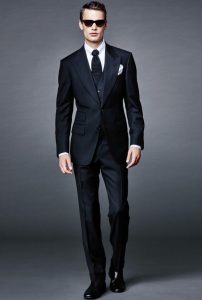
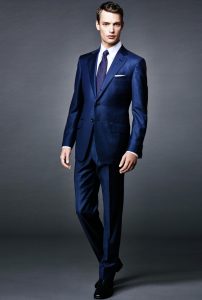
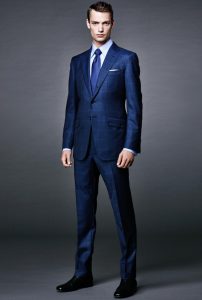
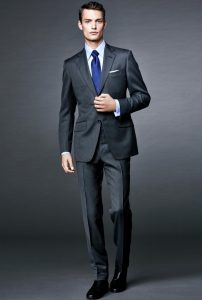
It is essential to wear a good fitting suit, too loose or too tight can ruin the look. When it comes to suits you need to pay attention to details such as the fit, size, length and movement. You need something that fits just right. A good fitting suit will make you feel confident, so here are the tips for wearing a perfectly fitted suit.
1. Length is everything
Starting from the top, the suit jacket sleeve must end mid cuff of the shirt. Too small the full cuff of the shirt will be on show and too long the cuff won’t show at all. The hem of the suit jacket must end mid palm of your relaxed hand. If proportions are wrong it can look odd.
When it comes to trousers it can be hard to get a good fit and length the same time, a perfect length would be that the hem of the trouser sits on the shoe nicely with a small break so there is only the most subtle crease there is.
2. The suit should lie flat on the body.
When I say the suit should lie flat on the body I mean that it doesn’t wrinkles so much that the suit is too tight or that the suit has heavy wrinkles that it’s too big. The shoulder seam should lay flat on top of your shoulder, it should be similar to the length of your shoulder bone for the suit to fit perfectly around your body.
Next, is the trousers, another way to judge if it’s too big or too small is the back of the trousers. The fabric should fall smoothly over the bum. If it’s too small the trousers crease and if it’s too big it bags and creates heavy wrinkles.
“Looking good isn’t self-importance; it’s self-respect.” Charles Hix
3. The right fitting of the suit jacket
For a perfectly fitted suit jacket the collar should sit nicely against the shirt collar. If not the collar of the jacket will either have a gap between the shirt collar and the jacket collar or the back of the suit jacket will wrinkle upwards.
The area underneath of which the shoulder and sleeve seam joins should have a smooth line if the suit jacket is too small it will dip and show off the shoulder padding which is not ideal.
4. The final look when the button of the front is closed
Another key thing to look for when finding a perfectly fitted suit is how it looks when the button at the front is closed. So do up one button and check how it looks. If the suit is too small the front will create distinctive creases. A well fitted suit should remain flat against the body.
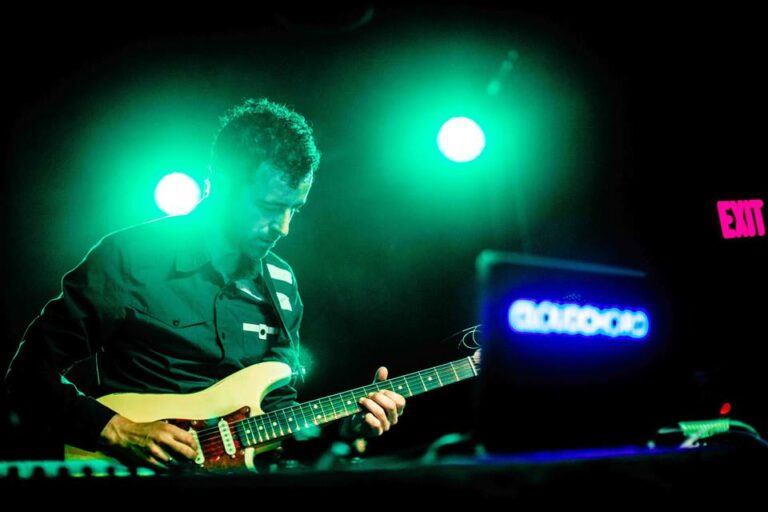
Producer and guitarist Derek VanScoten better known under his alias Cloudchord has dropped a new stunning remix.
With his career progressing up and up Cloudchord has released a new remix of Savoy’s ‘Living Colour’ which features Father Dude. The remix is beautiful, full of modern synths driven by stunning drum patterns. If you like the original you will definitely love this remix, as it brings it into another life. Cloudchord’s talent is definable unquestionable with his latest work backing it all up.
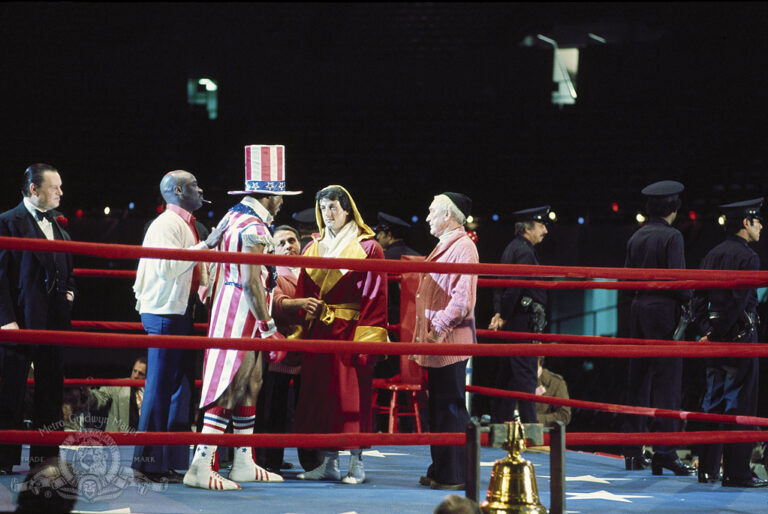
Seen by most as a sports film Rocky (1976) is much more than that. A drama filled film that uncovers the themes of the American dream and struggle, puts us into the world that is still very relevant today.
When the film was initially released on its tiny budget of $1.1 million no one expected it to hit as high as it did. However, it did just that as it went on to make $225 million and furthermore went onto to develop into a franchise which in total at this moment of time has grossed $1.407 billion.
The films success has to come down to many things. Firstly, the story. The elements of the story have quite a few things that really make a film successful these are: love, struggle, dreams, friendship and rivalry. All of these are covered in Rocky which quickly give the film a dynamic range in terms of emotional affect it has on the viewer, meaning the film can move the audience from left to right without boring them and keeping Rocky’s dream of beating Apollo alive more than anything.
Additionally, the music and editing are more technical but equally creative elements that really make the film stand the test of time. These elements combined give the character of Rocky a world which he can live in. Without certain cuts, music scores, wide or close up shots the film wouldn’t stand. For example, the music by Bill Conti is so dramatic and pacey that it drives you into the story and makes you feel the rough times Rocky is going through. It is powerful and warrior-like but at the same time grabs you in with the feel of love and sadness – truly beautiful. Furthermore, the editing by Richard Halsey and Scott Conrad is superb for several reasons. One it doesn’t feel edited which is key in editing, if an audience sees a cut most of the time that is bad editing, in Rocky you don’t get that. It also enhances the emotions of characters as the pacing of the editing transports us into the time and place of the characters and makes us empathise with them. Another key element in Rocky that has become a thing of tradition in Rocky films are the montages. They become associated with the film more than anything, which really gives the Rocky the status of a classic film as it has created something that now is associated with it.
Now, onto the actual acting and story. The film’s main character Rocky played by Sylvester Stallone is a lonely, hard-hitting amateur boxer that does anything to survive. From working for the mafia to fighting amauter boxers he will try anything to get by. His life is hard and its getting even worse, his boxing coach Micky has kicked him out the gym, even though he has been loyal for years. But something comes up, an opportunity to fight the greatest boxer alive the current world champion, the man of the people Apollo Creed. Whilst resisting first, he submits himself into giving it a shot and starts to get trained by Micky who wants him to succeed in the end even though he turned his back on him first. During the time of training he also starts dating the love of his life Adrian, who is a shy at first but full of love. With so many emotions and stories blending in, the film Rocky really stand its ground. Its full of love, raw fight and determination.
To summarise Rocky it is simply beautiful. Moments of grittiness contrast with moments of warmth and love, giving us a film that one would define as a classic.
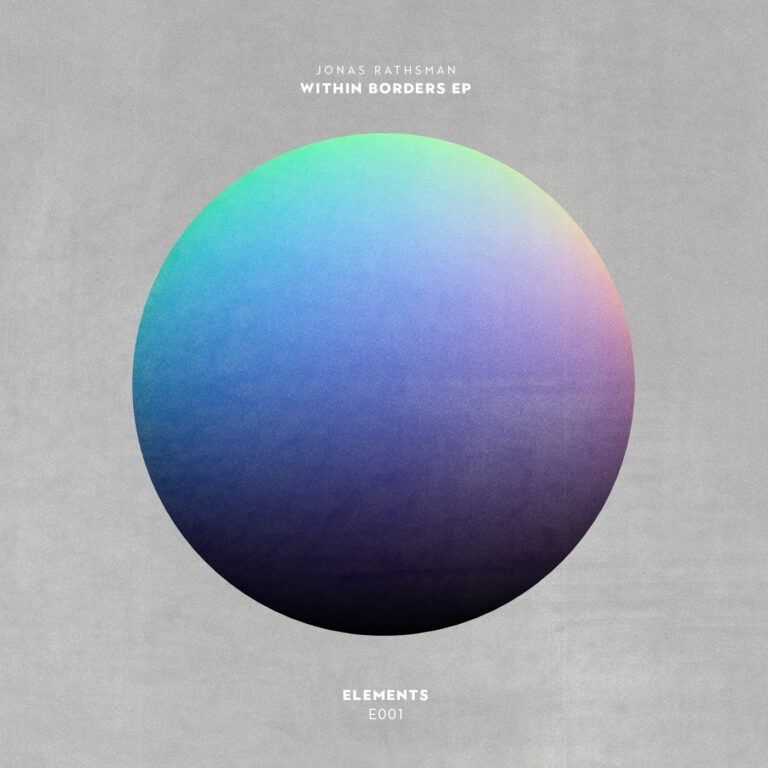
The prolific music producer Jonas Rathsman has released his latest EP ‘Within Borders’ and its stunning.
The EP includes three Techno/Electronic tracks. Firstly, at 124 BPM is the booming and stunning ‘Within Borders’. This track sets you in the mood for more, and solidifies the strength of this wonderful EP with its flowing synths and ambient percussion patterns. Secondly ‘Skymning’, this track is much more subtle but still has that reflective synth pop that makes it full of character. Finally, the last track of the EP is ‘101 Secrets’ this track is quite different from the first two, it develops more rhythmically and becomes more emerging and raw throughout. The strong jumpy bass and humming vocals with punchy but warm sound effects contrasts, giving you the feel of progression and rawness, just what this EP is about.
‘Within Borders’ is currently exclusively available for buying on Beatport and stream-able via Spotify. It has been released on the record label ‘Elements’. Speaking on the new label, Rathsman says:
“It’s been one year since the first ELEMENTS episode was released, and even from the first one people were asking me if they could release on the label! The connection I built with both new and established artists has been really amazing, and I feel privileged that they have put their trust in me to feature their music. The label is a natural development and we have some amazing releases lined up!”
Parodied many times but never quite matched, The Fly (1958) remains a unique film amongst the pantheon of science-fiction thrillers from the 1950s.
Despite some occasional slow pacing and some outdated social dynamics, The Fly is well-scripted, features some excellent performances, and has a grandiose musical score by Paul Sawtell. Bathed in lavish, saturated colour tones, and enjoying the scale of CinemaScope photography, The Fly is an elegant horror; a story of ambition and grave mistakes.
Arrested for killing her husband Andre (David Hedison), Helene Delambre (Patricia Owens) recounts the strange and horrifying explanation of how her husband came to beg her to end his life. Told in flashback, the film tells the story of how Andre, a brilliant scientist, creates a matter transportation device. An object (or living organism) has its matter disintegrated into its atoms at one location to then be reintegrated at another. First experimenting with just inanimate objects, his ambition gets the better of him as he transports the family cat. The poor animal never reintegrates at the second location, and their atoms are lost to time and space. After a brief success with a guinea pig however, Andre enters the transport himself unbeknownst to his wife. A common housefly is accidentally transported along with Andre, mixing their atoms. The result is a hideous mutation, and a man turned suicidal knowing his mind is doomed to decay.
If one were to simply glance at the poster, one may mistake the film for a simpler, more predictable story. On the contrary, The Fly has a thoughtful poignancy that elevates it above what one may assume. The performance of David Hedison as Andre Delambre may come across as smug or overly self-assured, but it this characterisation that makes Andre’s fate all the more tragic. Andre does show a concern for the lives he has played with (those of their cat and the guinea pig) but his concern is minimal at best and is overwhelmed by his curiosity and ambition. Once transformed however, Hedison’s performance becomes strikingly different. With a cloth covering his transformed head, and his left arm almost permanently hidden in his coat pocket, Hedison’s somewhat lethargic physicality and strained gestures amplify how horrific his accident has been. Without seeing what lies beneath that cloth, the audience is made aware of how terrible things have become. Without dialogue, and only banging his fist on surfaces to communicate with his wife, the transformed Andre is a desperate and trapped individual. The juxtaposition of his characterisation before and after his accident is brilliant, and speaks to the subtler approach the film takes with its content. It is, after all, only after sufficient tension is built that we finally see the monstrous thing that he has become.
The saturated colour photography makes The Fly a visual delight. Every frame of the film is eye-catching. Colour itself is used exceptionally to create the mood and tone of sequences. Andre’s laboratory is grey with blue hues. The dark tones of his machinery and equipment make the location a cold place; fitting for the horror that will unfold within its walls. Andre’s teleporter (when turned on) is anything but dark, with neon green and blue lights erupting from the darkness and bright flashes of pink filling the screen. The brilliance of Andre’s findings literally leaps out of the dark machinery in dazzling colour. The colour is further amplified by the scale of the CinemaScope photography. The grandiose nature of the Delambre house (not just the laboratory) is captured in full anamorphic grandeur.
If there is one point of contention with the camera work however, it is that the opening sequence shows and promises brilliant cinematography. As a night watchman walks through the shadows of the Delambre’s factory, the camera glides beside or before them. It builds momentum brilliantly in an eerie and horrifying sequence. Unfortunately, most of the remainder of the camera work remains static. The shots that do demonstrate movement are mainly panning shots which, although still dynamic, don’t quite visually compare to the brilliant glides of the camera in the opening sequence.
Paul Sawtell, who provided some equally memorable scores for such science-fiction films as The Black Scorpion (1957) and Kronos (1957) gives a masterful score for The Fly. The main title piece in particular sets one up for the horror to follow. Beginning with a crescendo of brass and horns, the piece moves into strings with a melody that suggests the strange nature of what is to follow. Sawtell’s music is particularly frightening and startling when Helene (and the audience) finally see what Andre has become.
What Andre has become is equally something of great merit. Ben Nye (who would go on to produce the test makeups for the original Planet of the Apes) crafted a grotesque fly head with eyes that shimmer with a metallic green hue. Truly, the sight of the transformed Andre is monstrous and very effective. Seeing it is a satisfying (and unnerving) payoff not least because of how convincing the actual fly head is, but also because of how well the screenplay leads up to the reveal. Patricia Owens’ Helene describes the fly with restraint, building tension and pulling the audience in. What was it that she saw beneath that cloth? How hideous must it have been that she actually agreed to help kill her husband?
Despite some slow-paced sequences and generally-static camera work, The Fly is a unique and fascinating film. Expectations of characters (and their performances) are challenged. Andre may seem smug and self-assured and that may make one reserved about him as a character, but that characterisation sets up the distinct change (both mentally and physically) that befalls him. The gorgeous CinemaScope and colour photography amplify the film’s imagery and make the fly (once revealed) appear all the more grotesque. The film’s comments on the possibilities of science are simultaneously optimistic and cautionary and that helps the film maintain its poignancy almost sixty years on. First and foremost, The Fly is an entertaining piece of science-fiction cinema, but its central character transformation of Andre gives the film a further significance. The film becomes a message that discusses how ambition can override one’s caution and in some cases, one’s awareness of others. Just as the cloth that covers Andre hides a hideous mutation beneath, so too does the monstrous visage of the fly hide a cautionary tale.
American rapper Vince Staples releases new single ‘Big Fish’.
For his upcoming album ‘Big Fish Theory’ rapper Vince Staples has released his single ‘Big Fish’. The single will be used to promote the upcoming album which is due to be released on the 23rd of June. The album will be second album Staples has released after his first being ‘Summertime ’06” which went onto chart #3 on the Billboard US Top R&B/Hip-Hop Albums.



 vocals with punchy but warm sound effects contrasts, giving you the feel of progression and rawness, just what this EP is about.