Home Blog Page 341

The Art of Becoming: Anyi Ji’s Embrace of Nature’s Cycles

In a dusty, shard-littered studio in South London, artist Anyi Ji sinks her hands into moist clay, allowing it to yield to its own gravity and weight. She doesn’t rush to impose form. Instead, she waits—for a response, a rhythm—something intuitive that emerges from within the material itself.

Ceramics embody a paradox between impermanence and permanence,” she reflects. “Once fired, clay transforms from soft earth into a solid, enduring substance. Yet it remains fragile, prone to breaking. That duality speaks to life itself—and to time.”

This philosophy forms the foundation of her artistic practice. Born in Hangzhou, China and currently based in London, Anyi Ji is a contemporary artist whose primary medium is clay. Her work is deeply informed by Buddhist and Daoist philosophies, rooted in the East, but speaking to universal themes. Through the tactile language of ceramics, she explores the transience of existence and the persistence of memory.

Letting the Material Speak: An Intuitive Process

Unlike strictly planned or sketched-out approaches, Ji’s creative process often begins with only a vague impulse. She embraces unpredictability and allows the material to guide the outcome. Moisture, weight, resistance—each physical property of clay plays a role in shaping the final form.

She describes it as a subconscious process, where intuition and experience serve as quiet collaborators, and the material becomes an active participant. This approach resonates with the Zen principle of wu wei, or effortless action: a state of balance between letting go and taking control. While technical elements like firing temperature demand precision, the form itself often arises through spontaneous gestures.

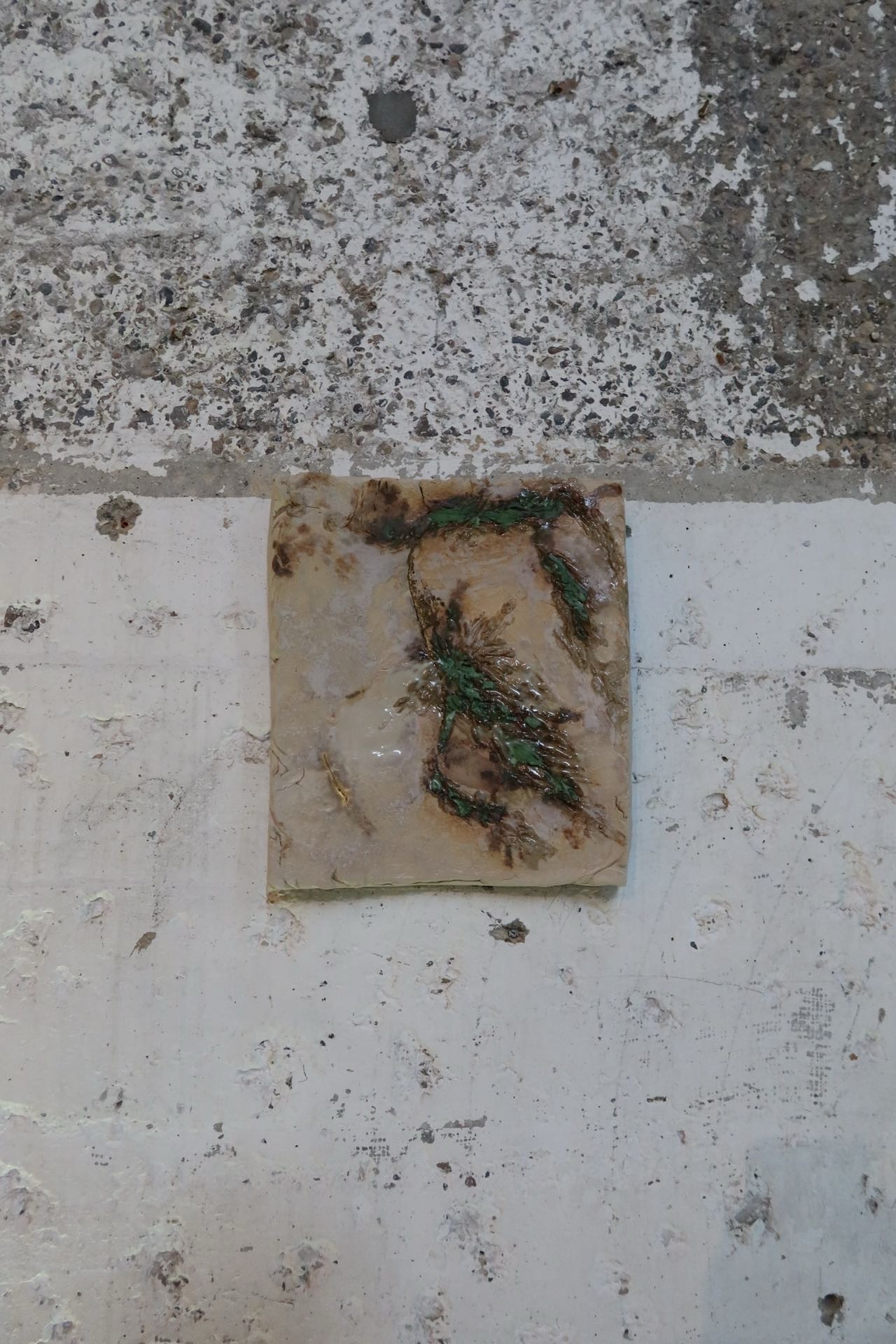
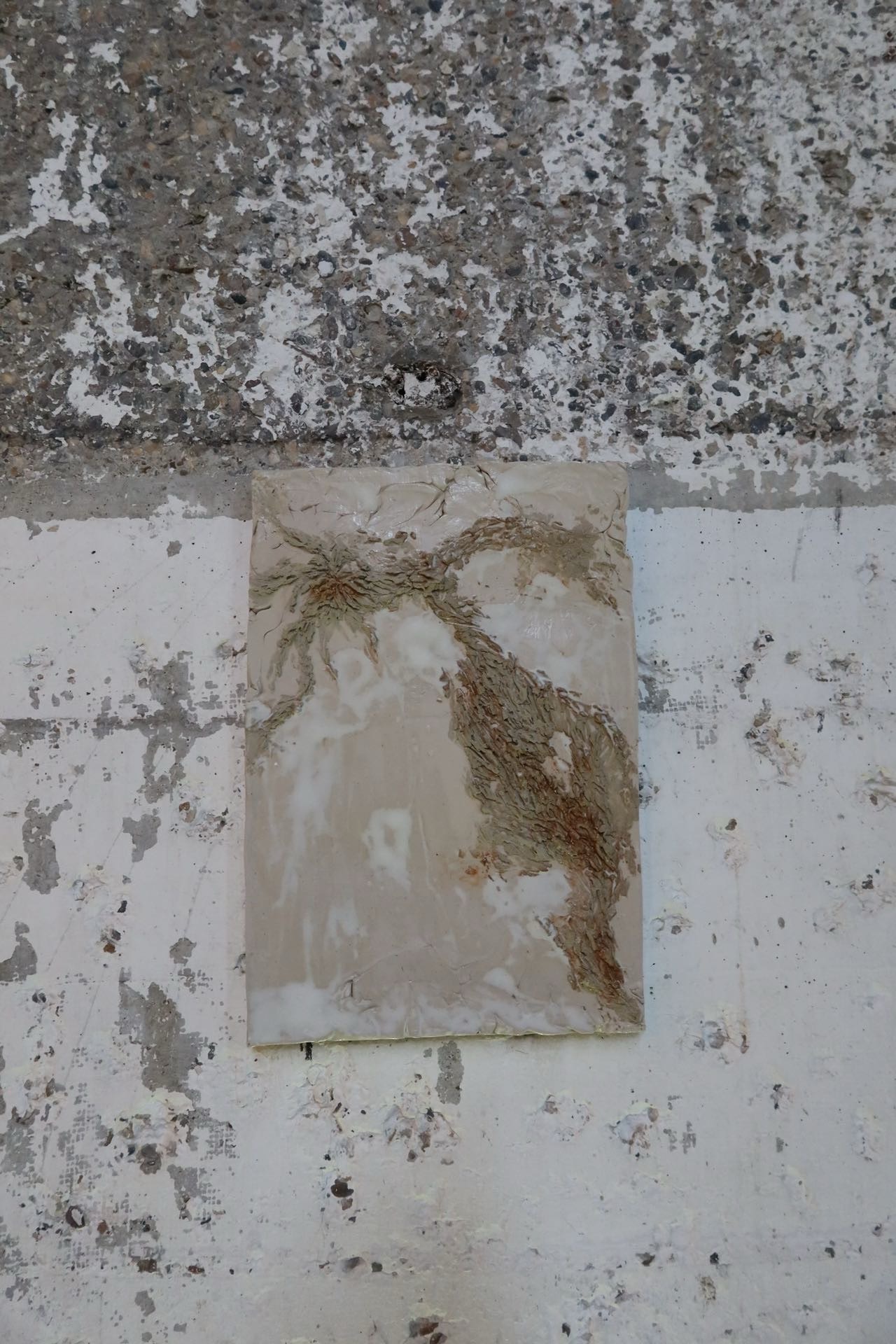
The asymmetry, raw surfaces, cracks and marks on her works are not imperfections, but intentional testaments to the uncontrollable nature of existence—traces of becoming rather than signs of flaw.

Between Form and Meaning: Nature, Death, and Transformation

In her representative work Forever Moment, Ji employs motifs of flowers and mountains as symbolic expressions of natural cycles. These forms are not literal representations, but distilled essences—how mountains erode over millennia, how flowers bloom and wither in a matter of days. Surface cracks echo geological time or the edge of a petal curling into decay, evoking a rhythm that cannot be reversed.

“I’m not trying to reproduce nature,” she explains, “but to explore how nature can serve as a metaphor for impermanence.” In Buddhist and Daoist traditions, nature is not merely scenery, but a mirror for inner life—mountains and rivers, wind and fire, blooming and falling—all part of a cosmic cycle of renewal and decay.

In her more experimental works, Ji incorporates herbal and organic materials into the clay. During firing, these materials combust and disappear, leaving behind traces—textures, colors, voids. It’s a process reminiscent of alchemy: an elemental death that births a new form.

“Earth, fire, water, plants—they’ve all lived, and they all die,” she says. “But death isn’t an ending. It’s a transition into something else.”
Beyond Language: An Invitation to Presence

Ji’s sculptures avoid overt narratives or symbolic codes. Instead, they invite viewers into a non-verbal encounter—a moment of resonance that transcends literal understanding. Her organic lines, flowing contours, and delicate yet grounded forms create an atmosphere rather than a message. In this space, the viewer is gently pulled into a state of attentiveness, where the boundary between object and observer dissolves into presence.

“My work doesn’t need to be understood in a conventional way,” Ji offers. “Its meant to be felt. 

In Fragments, a Sense of Wholeness

In a contemporary art world often marked by conceptual density and digital slickness, Anyi Ji’s practice offers quiet, meditative resistance. Her ceramics speak not with loud declarations, but through layered, subtle reflections on time, life, memory, and nature. The cracks, textures, and remnants left by fire are more than aesthetic—they are philosophical reminders that everything we experience continues to exist, only in different forms.

From Wooden Boards to Digital Worlds – The Evolution of Games

In the beginning, it was all about simplicity. A couple of dice. Maybe a board carved into wood or drawn on parchment. People sat across from each other, face to face, reading reactions, planning moves, and more often than not, bluffing just for the thrill of it.

However, then came electricity, computers, the internet, and everything changed. Today, gaming isn’t just about play, but also immersion, competition, and even identity. And the pace of change? Unreal. The way games have evolved says a lot about how we’ve become, too.

Ancient Games to Living Room Staples

The earliest games weren’t played for profit, prestige, or bonuses like Vulkan Bet 50 free spins. They were social, sometimes spiritual, and often tied to rituals or storytelling. Senet in Ancient Egypt, Go in China, and the Royal Game of Ur in Mesopotamia weren’t just entertainment. They reflected culture, beliefs, and class.

Fast-forward to the 20th century and the boom of classic board games like Monopoly, Risk, and Clue. These titles didn’t need glowing screens or headsets to be addictive. All they needed were simple mechanics, a bit of strategy, and that one friend who always took the game too seriously.

These games taught us something essential: competition can be fun, failure doesn’t sting for long, and revenge is best served after reshuffling the deck.

But, as TVs and computers entered our homes, the board started to collect dust. Players wanted more. They wanted color, sound, motion, and most of all, connection. That hunger would spark the next era of play.

The Rise of Consoles and the Birth of Digital Play

In the late ’70s and early ’80s, pixels replaced pawns. Atari, Nintendo, and Sega didn’t just launch consoles – they introduced a new language of play. Suddenly, kids weren’t just rolling the dice; they were jumping over barrels, saving princesses, and unlocking levels.

Games moved from the coffee table to the TV screen. And instead of competing with friends in the same room, players began taking on the computer, exploring solo campaigns that felt like miniature Hollywood blockbusters.

What made consoles so revolutionary wasn’t just the tech, but the sense of control. You could pause, restart, or play for hours without ever looking up. This changed how we defined entertainment.

By the 2000s, the internet kicked things up a notch. Online multiplayer became the norm. You could be in Kraków and team up with someone in Seoul. Gaming was no longer local; it was global.

This new landscape led to major shifts in how people play:

  • Accessibility: Free-to-play models and mobile gaming brought in millions of casual players.
  • Community: Forums, Twitch streams, and Discord servers created loyal fanbases and subcultures.
  • Competition: Esports went mainstream, with tournaments rivalling traditional sports in viewership.
  • Platforms: Brands like Vulkan Bet began bridging the gap between gaming and betting, offering new ways for players to engage with competitive play.
  • Gaming wasn’t just fun anymore; it became a lifestyle. And soon, it would become something even more immersive.

Immersion, VR, and the Virtual World Takeover

Once games became global, the next logical step was to make them feel real. Not just realistic graphics, but full-on immersion. Headsets like Oculus and PlayStation VR brought players inside the game, letting them look around, move their bodies, and interact with 3D environments as if they were there.

But immersion wasn’t just about hardware. Games like Elden Ring, The Witcher 3, and Cyberpunk 2077 built living, breathing worlds with lore so rich, fans didn’t just play, but studied, debated, and role-played.

And then came the metaverse hype. Suddenly, gaming wasn’t limited to action or strategy. It became social again. Platforms started blending gaming with virtual life with custom avatars, digital real estate, and even virtual concerts. Some people mocked it, others mortgaged their house to buy a pixelated monkey, because nothing says “future” like JPEGs and existential dread.

Meanwhile, online betting and competitive gaming started to overlap. Sites saw the opportunity early, tapping into the rising demand for watching, predicting, and interacting with esports. Betting wasn’t just about luck anymore – it was about knowing the game, the players, the meta.

From Parchment to Pixels

Games started as simple tools for connection, and that’s exactly what they still are. The difference is, today’s “boards” are made of code, not cardboard. Whether it’s rolling the dice with friends or exploring vast digital landscapes with strangers across the globe, the core idea remains: play is human.

As technology evolves, so will games. But the spark that drives them, the need to connect, compete, and escape, will never go out. And that’s the real game changer. Ready to connect, compete, and explore? Dive into the next evolution of play.

Winter Enlists Horse Jumper of Love for New Single ‘Misery’

Winter has shared a new song, ‘Misery’, a vulnerable, affecting preview of her forthcoming album Adult Romantix. The track, which follows ‘Just Like a Flower’, features Horse Jumper of Love’s Dimitri Giannopoulos. Check it out below.

“This song was written with my friend Alex Craig,” Samira Winter explained. At first, we imagined a fictional story about being in love with someone who was unavailable, leaning into the romanticization of indulging in a kind of sadness. However, during the recording process, the story of Elliott Smith’s love and tragic death came up, which in turn inspired the song title and the rest of the lyrics written by Dimitri. The song was originally written at a faster tempo, but we discovered that slowing it down on the tape machine created an interesting androgynous effect on my voice.”

Dimitri Giannopoulos added: “I was excited when Samira hit me up to sing on her track – she told me some of the backstory of the song, how it was a nod to Elliott Smith. That made me want to channel the inspiration he has given me as a songwriter and in my vocal delivery. Samira’s clear vision of what the song needed to be made it easy to write a verse with her and I’m happy with the way it came out.”

Adult Romantix is out August 22. Revisit our Artist Spotlight interview with Winter, and read our inspirations interview with Horse Jumper of Love.

LosMovies Alternatives, Mirror Sites & Reddit Updates

0

Streaming is the new cinema. It’s a new version where all you need to do is grab your snacks and get ready. So, yes — gone are the days of waiting for DVD releases. Streaming has taken over. That convenience is why platforms like LosMovies caught fire so quickly. But due to its legal standing, it’s also likely to go down fast. Sites like this have reliability issues and more. That is why the search for better LosMovies alternatives is on.

This article covers the best-streaming sources, mirror links, and Reddit feedback.

Top Five LosMovies Alternatives

  • Hulu

Hulu offers its handpicked selection of films and TV series for $9.99 a month. But if you’re unsure, you can try its three-day trial version. Once you subscribe, you can enjoy smash hits and award-winning titles. Also, Hulu delivers documentaries and docudrama series.

  • Cineverse

Cineverse is a free website that satisfies content cravings. Similarly, users can expect several titles across different genres. Specifically, there are movies and series from horrors, crimes, comedies, and more. Viewers can also watch on any device.

  • Arrow Player

Arrow Player serves as one of the great LosMovies alternatives waiting for you to discover. It focuses on cult classics while featuring many horror titles. At the same time, the site provides restored versions of rare films.

  • FilmRise

FilmRise is a media streaming service that gives ad-supported content. Likewise, all movies and TV shows are in high definition. Also, users don’t have to worry about legal issues, even if it’s a free platform.

  • FlixHQ

FlixHQ has a big library of movies and TV series. There is no need to sign up or register. Similarly, you do not need to pay for anything. Users can enjoy unlimited content across genres with multiple streaming links. It’s a good choice for LosMovies alternatives.

Mirror Sites for LosMovies

At the moment, there are two working links for LosMovies. Here is the list:

  • https://losmovies.city/
  • https://losmovies-id.lol/

Take note that these are mirror sites, and they change frequently. Most of them also have data theft risks and malicious ads. Do not enter personal information on any clone site.

Reddit Community Updates

Based on the last discussion about LosMovies on r/Piracy, it went down for several users. So, some contributors suggested their LosMovies alternatives. Follow the thread to get additional updates about streaming in general.

Legal Matters to Consider

Choose official streaming platforms to avoid legal trouble and privacy concerns. Similarly, don’t settle with illegal websites to show support to the creators and the film industry.

Key Takeaways

Streaming is the heart of modern entertainment. Likewise, there are a variety of LosMovies alternatives. Whether you prefer free or paid platforms — the real winner is you.

Cinebloom Alternatives, Mirror Sites & Reddit Updates

0

Steaming changes the way we watch, relax, and escape. Likewise, it continues to dominate how we consume movies and TV shows. For that reason, sites like Cinebloom have drawn attention for offering streaming services. However, platforms like this face downtime and limited availability over time. So, users are now searching for great Cinebloom alternatives.

This article highlights five platforms worth checking out, along with mirror sites and Reddit insights.

Top Five Cinebloom Alternatives

  • Sweet TV

Sweet TV is probably the cheapest subscription-based streaming platform out there. Users can buy its basic plan for only $2. Also, this cheap price comes with over 10,000 TV series and films in high definition. The website also supports multi-device access.

  • Mubi

Mubi lets you stream tons of movies for a $14.99 monthly subscription fee. Users can find a combination of cult classics and new releases. At the same time, there is a rotating library of special titles. Plus, there is a seven-day free trial.

  • Eternal TV

Eternal TV is a unique streaming platform. It has a collection of hidden gems like series, feature films, and short films. Similarly, it’s a whole package of surreal entertainment. This one is a fresh choice for Cinebloom alternatives.

  • Movierr

Movierr may not be that popular among viewers. But it is a growing free movie platform. Also, it’s not as flashy but it delivers a reliable streaming service. Specifically, it provides many streaming links with minimal ads.

  • AZMovies

AZMovies is one of the most dependable free streaming sites. Likewise, it has a large database of high-quality movies. The platform may have ads but it does not require registration. It’s a great pick for Cinebloom alternatives.

Mirror Sites for Cinebloom

The available domains for Cinebloom are these two:

  • https://cinebloom-official.lol/
  • https://cinebloom.pokipro.com/

For your information, these clones are filled with pop-ups or malware. Be cautious when using the mirror links, and get an ad-blocker if you can.

Reddit Community Updates

From how it looks, there is nothing new about Cinebloom on Reddit. But you can follow threads like r/Piracy and r/cinebloom to catch the latest updates. Also, users on the threads may suggest great tips and more Cinebloom alternatives.

Legal Matters to Consider

Streaming from pirated websites can come with serious legal risks. It’s because they break copyright laws. So, we advise viewers to use platforms with proper licensing.

Key Takeaways

Whether you’re looking for free streaming, unique options, or paid platforms, there are many Cinebloom alternatives for you. Thanks to streaming, the screen is now yours to enjoy.

Accessibility in Gaming

Embracing Disabled Players

In recent years, the gaming industry has undergone significant changes. This shift isn’t just in technology, storytelling, visuals and live betting experience. Accessibility has also become a major focus. The push for inclusive design is gaining momentum. This change is driven by awareness and advocacy for disabled players. For a long time, they faced barriers to enjoying games. Accessibility is no longer a niche issue. It’s now central to the future of gaming.

The Needs of Needy People

Over one billion people globally live with a disability, says the World Health Organization. Many of them play video games—or want to. But they often face obstacles. These include complex controls and a lack of visual or audio alternatives. For years, disabled players were ignored. They were offered few options. This led to an exclusionary environment.

Accessibility issues vary. They include physical limitations like limited motor control. Others face sensory impairments such as blindness or deafness. Some have cognitive or neurological conditions like ADHD or dyslexia. Solving these challenges needs thoughtful design. It also requires developers to rethink traditional approaches.

The Rise of Inclusive Game Design

Inclusive design starts with everyone in mind. It doesn’t treat accessibility as an afterthought. This shift is growing. Developers, studios, and platforms now support this approach.

Big companies are leading the way. Microsoft, Sony, and Nintendo are making accessibility a priority. In 2018, Microsoft launched the Xbox Adaptive Controller. It was built with input from disabled players. The device supports customizable inputs and assistive tech.

Sony has also made progress. The PlayStation 5 added features like customizable controls and screen reader support. It includes visual cues for those with sensory challenges. Meanwhile, more developers are adding accessibility into gameplay itself. They’re realizing accessibility improves the experience for all players.

Games Leading the Way

Some games stand out for accessibility. The Last of Us Part II is a strong example. Developed by Naughty Dog and released in 2020, it offers over 60 accessibility options. These include presets for vision, hearing, and motor challenges. Features include high-contrast mode, speech-to-vibration, and full control remapping.

Forza Horizon 5 is another standout. It added on-screen sign language interpreters—a first for the industry. The game also offers many difficulty and control options. These allow players to tailor the game to their needs.

Even small studios are stepping up. Celeste, an indie platformer, shows this. It includes an “Assist Mode.” Players can slow time, become invincible, or skip parts of the game. This helps more players enjoy the story and gameplay.

The Boost for Accessibility

Tech advancements are boosting accessibility. Tools like speech-to-text, text-to-speech, and haptic feedback help many players. Eye-tracking software is also becoming more common.

Community efforts are just as vital. Groups like AbleGamers, SpecialEffect, and Can I Play That? are making a big impact. They consult with developers. They fund adaptive hardware. They publish reviews and guides for disabled gamers.

Platforms like YouTube and Twitch are key too. They highlight disabled content creators. These voices help build awareness and community around accessible gaming.

Gaps to Suppress

Despite progress, issues remain. Some developers lack resources or knowledge. Indie studios often face budget limits. Big studios sometimes see accessibility as optional.

Another issue is lack of standardization. There are guidelines, like the Game Accessibility Guidelines. But there’s no industry-wide enforcement. This causes inconsistencies, even among major titles.

There’s also “checkbox accessibility.” This means adding features just to check a box. It doesn’t always reflect meaningful inclusion. Real progress requires feedback from disabled players. It takes testing and deep commitment—not just marketing.

The Future of Accessible Gaming

The momentum is building. As demand rises, the industry sees that accessibility benefits everyone. Features like subtitles and flexible controls help many players. This includes people in noisy places, beginners, or those with injuries.

Looking ahead, AI could change everything. Smart settings, voice commands, and real-time translation are just a few examples. These tools could reshape how games are played.

Education is another key. More design programs now teach accessibility. This prepares future developers to create games for all players.

Accessibility in Gaming

Accessibility in gaming isn’t a luxury anymore—it’s essential. The industry must grow in its understanding of inclusion. It’s not just about meeting rules or reaching new markets. It’s about making games a shared cultural experience.

Designing with purpose, listening to disabled players, and embracing new tech will lead the way. Games should welcome everyone. Every player deserves a seat at the table—and a controller in hand.

Kwon Woo Koh and the New Visual Rebellion

“Whatever you now find weird, ugly, uncomfortable and nasty about a new medium will surely become its signature.”

-Brian Eno 

Eras of art are defined not by their liberties, but by their restrictions. What is dismissed today as ugly or outdated is likely to become tomorrow’s aesthetic ideal, as the acceptance of a neglected or shunned medium is, for the counterculture, a form of rebellion against conformity. Brian Eno’s claim that the physical limitations of recording technologies allow for art styles to stave off ubiquity across generations, is far more relevant today than ever before. Unlike the early 2000s, there are no new garage bands hitting the mainstream with themes of teenage angst and suburban unrest. In those days, the only teenagers who could afford rudimentary recording equipment were the same kids whose parents had spare rooms in the home. Recording music was expensive, gritty, and tied to the resources available to the middle class. Aesthetics were not solely defined by artistic intent, but by economic circumstance. Art today is largely tethered not to what a person possesses, but what they choose to imitate.

Today, recording music has become so accessible that anybody with ample time and an Ableton trial can produce industry-standard works with relative ease. High budget films in twenty years will likely look indistinguishable from the blockbusters of today because CGI has reached photorealism. However, since there is nothing we can’t do, there is nothing we must do. Flip phone cameras looked terrible, so the photos taken on blackberries had to be lo-fi. Photographs taken in Wyoming and Paris in 2003 would be uniquely tied by their medium’s visual qualities, regardless of the intent behind them; images represented a context beyond their subject. In contrast, the iPhone camera is nearly perfect. A photo of a dog no longer represents a time – only a dog. There is nothing a photo must be, so no implicit value tying two images together exists. The idea of accessibility in art to all people may sound like a blessing, but for the modern bohemian, rebellion has manifested in the rejection of these boons. Among Gen Z, rebellion exists not solely against authority, but over-abundance as well. For a generation trapped in a cycle of meaningless consumption, subject to being endlessly force-fed content with little regard for artistic integrity, abundance does not represent blessings. Rather, it represents a bloated, all-consuming vapidness that has infiltrated their artistic inlets. The youth’s cultural diet no longer has room for high art; that space is full. In response, the new bohemian doesn’t want more tools. They want fewer, more meaningful ones.

This pushback against digital perfection has manifested in what might be called the rise of the ‘intentional grain’. From urban centers in Korean islands to the underground arts communities in London, artists have turned to using 1990s camcorders, flip phone cameras and classic radio broadcast microphones to create their works in lieu of the equivalent modern equipment. This progression represents a larger theme in Gen Z’s broader rejection of the modern day’s blindness to their needs and desires. Lo-fi becomes popular when perfect becomes sterile. Cheap is cool when expensive represents inaccessibility. The notion that rebellion lies in friction, in the rejection of abundance, has become the ethos for a generation of artists. Whether rising, mainstream, or underground, creatives across all art forms have begun channeling this sensibility through their own creative contexts. Unified, they represent a culture where authenticity is found not in what’s available, but in what’s left out.

While his schoolmates studied the history of contemporary philosophy, YT studied the recent history of pop culture and its aesthetics. A modern-day English Bruce Wayne, YT began his career stuck between worlds: Oxford student by day, underground rapper by night. Now a college graduate, he continues to entertain a mass audience of consumers and contemporaries alike who have been inspired by his uniquely curated visual and sonic identities. Since the release and subsequent virality of his 2021 track Arc’teryx, YT has gained recognition and acclaim, captivating the masses with his signature brand of jerk-adjacent rap and 2000s-era styled music videos.

The lyrical and musical content of his art holds a certain specificity only truly accessible to those who have lived in similar circumstances as the ones he experienced growing up. Although he presents himself as an embodiment of 2000s party culture in videos such as #Purrr, his songs remain true to his personal identity rather than to a wider culture. Regardless of the lucrative prospect of crossing the pond and gaining recognition in the United States, his art remains inextricably British. YT often makes hyper-specific references to the England he knows, opting to appeal to those who would personally identify with him rather than pandering to the masses by making references to the popular image of Britain or to western urban culture. By choosing to maintain his genuine niche self present in the music and its presentation, YT rejects abundance in favor of sincerity. This quality goes hand-in-hand with his adoption of Y2K aesthetics, a choice he helped popularize in the UK.

YT’s nostalgic imagery prioritizes texture over polish – the inclusion of flip phones and solo cups in his visual artistic output is important not only because of their role in anchoring him to an aesthetic bound to him in particular, but also because they represent an inconvenience. The use of a flip phone in 2025 is an eccentric choice due to the technology being antiquated and the relative inaccessibility we now have to the technology. As it is inconvenient, it is without doubt an intentional decision, and intention is attractive. No one knows where to even buy a flip phone, so seeing a rapper use one in a video simply because they wanted to is endearing. 

Although to a lesser extent than YT, Yeat’s acceptance and adoption of Y2K aesthetics as a mainstream US rage rapper speaks to the newfound cultural ubiquity of the style. His Dec. 2024 spread with The Face magazine entitled Welcome to Planet Yeat presents the rapper in a new light, one that embraces the visual motif of the chaotic workplace that was present in 90s and 2000s era cinema. At the time, films such as Joel Schumacher’s Falling Down or David Fincher’s Fight Club used the drab beige wallpaper, gray polyester carpets and tacky cubicle dividers present in office spaces as visual representations of the feelings of insignificance the working class were subject to. Yeat opts to use these liminal spaces as a playground for artistic expression and experimentation, with photographer Moni Haworth capturing photographs of the rapper burning trash, modeling high fashion pieces, lying in a discarded pile of old office chairs and generally expressing comfort within chaos. Yeat’s musical style had always stood at odds with his visual aesthetic, presenting a contrast between his innovative, destructive rage sound and mostly traditional glam rapper persona. His adoption of a visual language defined by distorted and entropic imagery makes sense once one recognizes that the visual distortions present in older imagery mirrors the auditory distortion present in his music today. His sound is uniquely from the 2020s, and yet the visuals of his time fail to match his particular energy. In reality, it likely wasn’t the Y2K era of grainy imagery itself that captivated Yeat. He is simply a better fit in a medium more imperfect than otherwise. 

Yeat’s chaotic and heavy electronic style of hip-hop would have been nigh-inconceivable in the nineties. The rapper makes no attempt to hide this, nor has he changed his sound to better fit an older vibe. Maintaining the qualities that bind his music to the 2020s is beyond important to the advancement of hip-hop and popular culture as a whole because the style of rap pioneered by artists such as Yeat or Playboi Carti has been made possible only because of the technical advancements of the decade. Rather than being thoughtful mimicry, the rage sound grew organically within the context of a culture. The few artistic developments that develop over the course of an era are to be cherished because it is these sounds that will become the identifying stamp of the period once future generations begin to consume art from our time. Decades from now, it won’t be the historically safe bets that come to define our era’s mainstream. Rather, it will be the abrasive sounds like Yeat’s that kids will cherish and mimic.

The individuals that spearhead striking visual developments like Yeat’s are often not the faces of the pieces themselves. Often, the public faces of aesthetic projects are subjects in the visions of creative directors and dedicated visual artists whose efforts are dedicated to the contexts surrounding art rather than the consumer art itself. The lack of recognition given to the music video directors, cover art designers and photographers that make rappers’ ability to captivate an audience possible ignores that these visionaries are artists in their own right. It is through these directors that the aesthetic principles entire eras follow are defined. The mainstream follows the underground because the underground has no safety net with which to forgo intention, and is therefore often at the cutting edge. This intention has manifested in the rejection of abundance through the shape of revitalizing the market for the distorted, with photographers and videographers scrambling to get their hands on vintage equipment that represents scarcity and the imperfection that mirrors their imperfect means. In the New York City underground, Kwon Woo Koh has established himself as a key figure in the popular adoption of visual discord. Koh, a Korean national hailing from Jeju Island who went to high school in Lower Manhattan, and who began his career by photographing fashion figures in both Korea and the US, moved towards adopting this vintage aesthetic as he began to work closely with the underground New York rap scene. Koh works as a creative director, designer and photographer that focuses on capturing fashion and the current hip-hop landscape on antique digital formats. 

Among his extensive catalog of directorial work in music videos is REM SLEEP, the debut single and video of MILLENIUM that has amassed over 140,000 views on youtube, an impressive point for the debut release of an independent artist. Koh shot and edited the video on an iPhone under the moniker Finale Of 111. His use of the iPhone, perhaps the greatest culprit in reducing the visual identifiability of our current cultural moment, creates a thought-provoking dilemma in the context of the ‘intentional grain’. Although the video was shot on an iPhone, the editing style and graphics make it appear lo-fi. The video is not necessarily tied to today, regardless of the use of current technology. Therefore, was it truly developed in the spirit of embracing the Y2K aesthetic, or simply mimicking it? The reality is, it does not matter. The point of imposing artificial limitations on art is to create defining characteristics through purposeful decisions on the art. In this way, the accessibility of the iPhone and video editing technology makes the creation of art less subject to social and economic barriers, but not necessarily an artistic barrier itself. Koh’s work is exemplary in the context of proving that the endless possibilities provided to artists by modern tools can be a force of artistic liberation rather than creative handcuffs.

Similarly to Yeat, Koh also implements his dilapidated visual style in more mainstream creative pursuits. His photography of a collaboration piece between brands Mowalola and Ksubi maintained his creative vision as a fashion-focused creative director and photographer.

Kwon Woo Koh as an underground visual artist beginning to rise in prominence represents the integral underbelly of popular art and culture as we know it today. Koh shared behind the scenes footage of a video shoot for The Weeknd’s XO brand to his followers on instagram, showcasing his presence in and influence on larger culture as he implemented his own style for the campaign. Seemingly for every music video he shoots for a small artist, he performs another task that acts as an active injection of the underground’s style into the mainstream. It is through these injections of the underground creative spirit that the mainstream can remain alive and thriving, and it is through the support of the mainstream that these artists can find a path in their industry to continue blazing new paths forward.

Cass McCombs Announces New Album, Shares New Song ‘Peace’

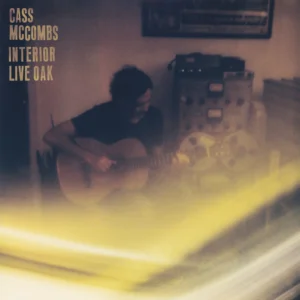
Cass McCombs has announced a new album, Interior Live Oak, which will be released on August 15 via Domino. Today’s announcement comes with the release of the new single ‘Peace’, which is wistful yet poised with resolve. “Peace is what we say when we say goodbye,” McCombs sings. Check it out and find the album cover and tracklist below.

In making the new album, McCombs was inspired by his return to the Domino label, which released the archival album Seed Cake on Leap Year last year, as well as 4AD’s reissues of early records including Not the Way, A, and Prefection. He worked with some of his earliest collaborators in the Bay Area, including Jason Quever (Papercuts), Chris Cohen, and more. Additional recording in New York City brought contributions from Matt Sweeney and Mike Bones, among others.

Interior Live Oak also features the previously released song ‘Priestess’. McCombs’ last solo studio album was 2022’s Heartmind, though in 2023 he teamed up with Mr Greg, a San Francisco school teacher, for Mr Greg & Cass McCombs Sing and Play New Folk Songs for Children.

Interior Live Oak Cover Artwork:

Interior Live Oak Cover Artwork

Interior Live Oak Tracklist:

1. Priestess
2. Peace
3. Missionary Bell
4. Miss Mabee
5. Home At Last
6. I’m Not Ashamed
7. Who Removed The Cellar Door?
8. A Girl Named Dogie
9. Asphodel
10. I Never Dream About Trains
11. Van Wyck Expressway
12. Lola Montez Danced The Spider Dance
13. Juvenile
14. Diamonds In The Mine
15. Strawberry Moon
16. Interior Live Oak

Cass McCombs 2025 Tour Dates: 

Aug 13 – Porto, PT – Paredes de Coura ^
Aug 17 – Crickhowell – Green Man Festival ^
Aug 19 – Bristol – Lantern Hall ^
Aug 20 – London – Bush Hall ^
Aug 21 – Manchester – YES ^
Aug 23 – Galway, IE – Leisureland * %
Aug 24 – Dublin, IE – Wider Than Pictures Festival * %
Aug 25 – Belfast, IE – Ulster Hall * %
Aug 26 – Cork, IE – City Hall * %
Aug 28 – Glasgow, SCT – Barrowland * %
Aug 29 – Glasgow, SCT – Barrowland * %
Sep 10 – San Diego, CA – The Casbah ^
Sep 11 – Los Angeles, CA – Shrine Expo Hall & ^
Sep 12 – Riverside, CA – Farmhouse ^

* with Father John Misty
& with MJ Lenderman, Nap Eyes
% Solo
^ Full Band Performance

Nation of Language Announce New Album ‘Dance Called Memory’, Share New Single

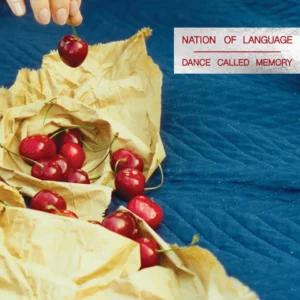
Nation of Language have announced Dance Called Memory, their fourth album and first for Sub Pop. The 10-track LP, which follows Strange Disciple, arrives on September 19. It features the previously released single ‘Inept Apollo’, as well as the new song ‘I’m Not Ready for the Change’, which injects the group’s gleaming synthpop with a dose of shoegaze. Check it out via director John MacKay’s video below, and scroll down for the album cover and tracklist.

Dance Called Memory finds Nation of Language reuniting with collaborator Nick Millhiser, who recorded, produced, and mixed the album in New York City. It was mastered by Heba Kadry in Brooklyn. “What’s so great about Nick is his ability to make us feel like we don’t need to do what might be expected of us,” synth player Aidan Noell commented  in a press release.

Reflecting on the philosophy behind the record, frontman Ian Richard Devaney said: “There is a dichotomy between the Kraftwerk school of thought and the Brian Eno school of thought, each of which I’ve been drawn to at different points. I’ve read about how Kraftwerk wanted to remove all of the humanity from their music, but Eno often spoke about wanting to make synthesized music that felt distinctly human. As much as Kraftwerk is a sonically foundational influence, with this record I leaned much more towards the Eno school of thought. In this era quickly being defined by the rise of AI supplanting human creators I’m focusing more on the human condition, and I need the underlying music to support that… Instead of hopelessness, I want to leave the listener with a feeling of us really seeing one another, that our individual struggles can actually unite us in empathy.”

Revisit our inspirations interview with Nation of Language.

Dance Called Memory Cover Artwork:

Dance Called Memory Cover Artwork

Dance Called Memory Tracklist:

1. Can’t Face Another One
2. In Another Life
3. Silhouette
4. Now That You’re Gone
5. I’m Not Ready for the Change
6. Can You Reach Me
7. Inept Apollo
8. Under the Water
9. In Your Head
10. Nights of Weight

A Classic Choice That Combines Craftsmanship and Prestige

Some timepieces simply tell time, and then some define moments. Watches with rich history, iconic design, and enduring appeal carry a presence that sets them apart. Known for precision and timeless aesthetics, certain models have become symbols of accomplishment and style. Whether worn for formal occasions or day-to-day refinement, a well-chosen watch offers more than just utility. It becomes a reflection of personal taste and ambition. Selecting such a piece takes thought, especially when considering legacy, materials, and wearability. Read the full article to explore features that make an iconic watch worth the investment.

Recognising the Signature Features

Timeless models often have distinctive elements that separate them from others in the market. From fluted bezels to bold dial displays, the character of the piece is in the details. Day and date complications are both functional and elegant, offering extra information without clutter. Presidential-style bracelets or polished links contribute to a look that is both refined and recognisable. These touches create a watch that’s not just attractive but unmistakably classic. When considering your options, look closely at the specific hallmarks that define its style and identity.

Factoring in Material and Finish

From yellow gold to platinum, the material of the watch speaks volumes. Heavier metals tend to lend a greater sense of formality, while white tones offer modern versatility. Dial options range from minimal to ornate, with colours like champagne, ivory, or black providing different visual effects. Some models include gem-set indices or bezels, adding another layer of luxury. Brushed and polished finishes work together to create texture and light contrast. These combinations are more than decoration—they reflect craftsmanship at every angle.

Matching Style to the Occasion

While some watches are built for sport or adventure, others are made to complement a refined lifestyle. This type of timepiece shines in business settings, social events, or formal celebrations. Despite its polished presence, it can still function as an everyday companion for those who prefer classic over casual. The balance of sophistication and wearability makes it a favourite across generations. Depending on your wardrobe, you can pair it with tailored suits or elevated casual wear. Its understated power lies in versatility without compromise.

Understanding the Investment Element

Luxury watches are more than accessories—they’re assets. Certain models retain or increase in value over time, especially those with unique configurations, limited production, or historical relevance. Condition, paperwork, and original packaging all influence value. Servicing history can also affect both function and collectability. When buying with investment in mind, it’s essential to do due diligence and consider long-term potential. It’s not just about the cost, but the continued value the piece holds as time moves forward.

Considering Longevity and Maintenance

A high-quality timepiece is built to last with proper care. Mechanical movements, though intricate, are designed for endurance. Regular servicing ensures accuracy and preserves condition, especially with precious materials. Water resistance, scratch-proof surfaces, and solid construction support daily use without worry. With a little attention over the years, the watch becomes not just a personal item but a generational piece. Owning such a model brings a sense of responsibility as well as pride.

If you’re thinking about making an iconic timepiece part of your collection, buying a Rolex Day-Date can be a rewarding experience that blends tradition, style, and value. Choosing such a watch means stepping into a legacy—one that continues with you.