Covering musicians for years taught me something unexpected. The most gut-wrenching albums often came from people whose marriages were falling apart. In 2019 I sat down with 47 independent artists and asked them about creating work during major life upheavals, and 68% said their separation became this intense source of material. What shocked me was how many said dealing with legal paperwork caused more stress than writing songs themselves.
Filing legal documents should be simple, right? Wrong. I watched a folk singer spend $4,200 on lawyer fees even though he and his wife had already worked everything out. No drama. No custody issues. Just needed signatures on paper. He could’ve used an online service to file for divorce online and saved himself three months of attorney emails.
When Art Meets Real Life Admin
Creative people hate bureaucracy. But I’ve noticed artists who avoid dealing with legal stuff because they think it’ll kill their creative energy end up way more drained by the avoidance itself. Procrastination is weirdly exhausting.
A singer-songwriter in Portland wrote five complete songs for an EP while her unsigned divorce papers sat on her kitchen table. Five whole months. She kept assuming she needed to pay someone a fortune to handle everything. Her bandmate eventually mentioned that uncontested cases, where both people actually agree on terms, don’t require expensive formal legal help. She finished her paperwork in 11 days.
The Cost of Waiting
My friend Jordan makes electronic music and runs a small label. His marriage ended in 2021 and he and his ex-wife figured everything out in two conversations. Apartment stuff got divided easily, no children involved, both had separate incomes. Jordan kept putting off the filing because he figured he needed at least $3,000 to start.
Didn’t need it. Found a service charging him $179 flat rate. Got his forms completed faster than he finished mixing his album. He told me, “I wasted six months stressing about lawyer appointments that I didn’t even need.”
The contested versus uncontested thing matters here. Fighting over assets or custody? Sure, get serious legal representation. Already worked everything out? You’re just filling out forms correctly.
Why Musicians Wait (And Shouldn’t)
Artists delay because we romanticize struggle. There’s this bizarre notion that suffering automatically creates better art. Maybe sometimes. But I’ve found clearing away practical problems actually opens up way more mental space for creativity.
A jazz pianist in Brooklyn told me she couldn’t write anything new until her divorce finalized. She called it “unfinished business playing on loop in my head.” Papers went through, and she recorded 14 new compositions in three months.
The actual process? Not as emotionally heavy as people imagine. You answer questions about your situation, the system generates paperwork based on your state’s requirements, you review everything, then file with your local court. Straightforward for uncontested situations.
What Actually Matters
I’ve watched enough artists navigate this to know what genuinely helps. Being honest about whether your case is actually simple comes first. Both agree and there aren’t complicated assets? You don’t need the full legal treatment. Just starting helps too. Sounds basic, but I’ve seen people lose months to anxiety about taking that first step.
The creative community talks constantly about vulnerability and authenticity. But we skip over handling boring life stuff efficiently so we can return to making things. Your art deserves your complete attention instead of half your brain spinning about unsigned documents collecting dust.
Culture sites live on speed and proof. A sharp album review lands harder when you can confirm a release time, a track list, and which stores still stock vinyl.
OurCultureMag.com runs on that same mix of taste and facts, from music picks to film and TV guides. The hard part sits behind the scenes. Streaming pages change fast, ticket sites shape price by region, and stores swap stock status by the hour.
Scrapers can solve this, but only if you run them like a newsroom tool, not a bot swarm. Imperva reported that bots made up 49.6% of all internet traffic, so most big sites now treat odd traffic as a threat.
Start with the data that edits your story
Pick a tight set of fields before you write code. You want data you can use in a headline, a guide, or a quick update.
For film and TV, capture title, season, episode count, rating, and where it streams per region. For music, capture release date, label, formats, and a short list of links you can check by hand when things look off.
Set a fetch pace that matches real change. Ticket prices can shift in minutes, while a catalog page may only change once a day.
Build a “culture ID” for every item
Sites rename things all the time. Your pipeline needs a stable key that survives a rebrand, a URL change, or a new artwork crop.
Use the source’s own ID when you can. If you cannot, hash a mix of title, creator, and release date, then store alias titles as extra fields.
Scrape like a fan, not a flood
Most blocks come from patterns, not from one request. Keep your request rate low and steady, and match the site’s real user flow.
Fetch the page that lists items, then follow only the links you need. Cache responses and reuse them across teams, so one edit does not trigger a full re-crawl.
Send clean headers and accept cookies when the site needs them to show the right region. Rotate user agents, but do it with care, since wild shifts can look fake.
Reduce page weight before you parse
Many culture pages ship huge scripts, ad tags, and video. You can cut load time and risk by blocking heavy file types when you only need HTML.
Headless tools help with script-run pages, but they cost more and fail in new ways. Use them only when a plain HTTP fetch cannot see the data.
When geo locks hit, proxies keep your feed honest
Region locks distort culture coverage. A show can trend on social, yet not stream in your reader’s market, and a tour can show a different fee set by city.
Datacenter IPs work for low-risk pages, but many ticket and retail sites flag them fast. Residential proxies often blend in better because real homes use them too.
If you need stable sessions for cart flows or seat maps, pick sticky sessions. If you need broad checks across cities, rotate by region and keep a strict cap per IP.
Teams that need reliable geo checks often start with providers like Byteful.
Control drift with repeatable test routes
Run the same query from the same regions every time. Store the raw HTML for a short window, so you can prove what the site showed when an edit goes live.
Log block signals like captcha pages, odd redirects, and blank seat maps. Treat those as data too, since they tell you when the site changes its guard.
Turn messy pages into a clean culture feed
Parsing breaks when sites tweak layout. Write selectors that anchor on meaning, not on fragile class names.
Normalize dates, currency, and time zones at ingest. A tour date means nothing if you mix local time and UTC across sources.
Use change detection to cut noise. Alert only on meaningful shifts, like a new platform added, a price jump over a set percent, or a sold-out flag.
Design for editors and for SEO
Editors need fast checks. Keep a small dashboard view that shows the last fetch time, the current value, and a diff snippet.
Search needs clean, stable fields. Store canonical titles, alt titles, and structured entities, so your pages match what people type when they search.
Compliance rules you can defend in public
Read the site’s terms and respect access limits. If a source offers an API, use it, since it often sets clear bounds.
Avoid personal data unless you have a clear reason and a legal basis. Do not collect emails, device IDs, or session tokens from user pages.
Copyright still applies to culture work. Store facts and metadata, and keep full text or images out of your data store unless you hold rights or a clear license.
When you treat scraping as reporting support, you make better guides and cleaner updates. You also keep your operation stable when sites tighten rules.
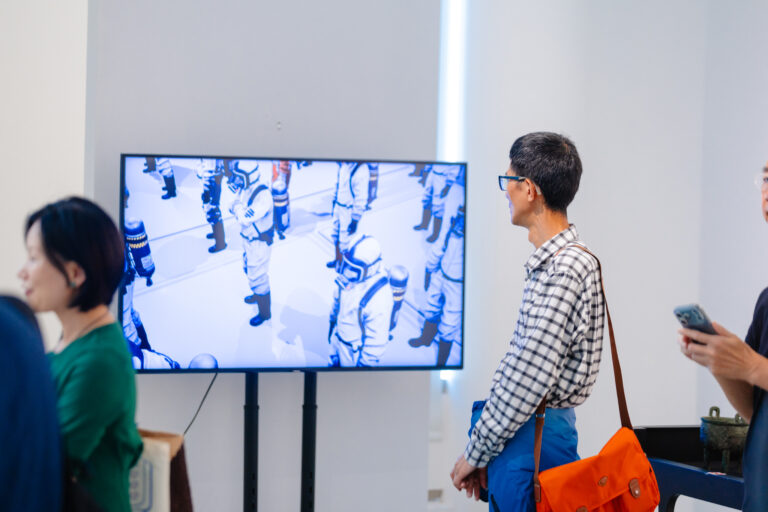
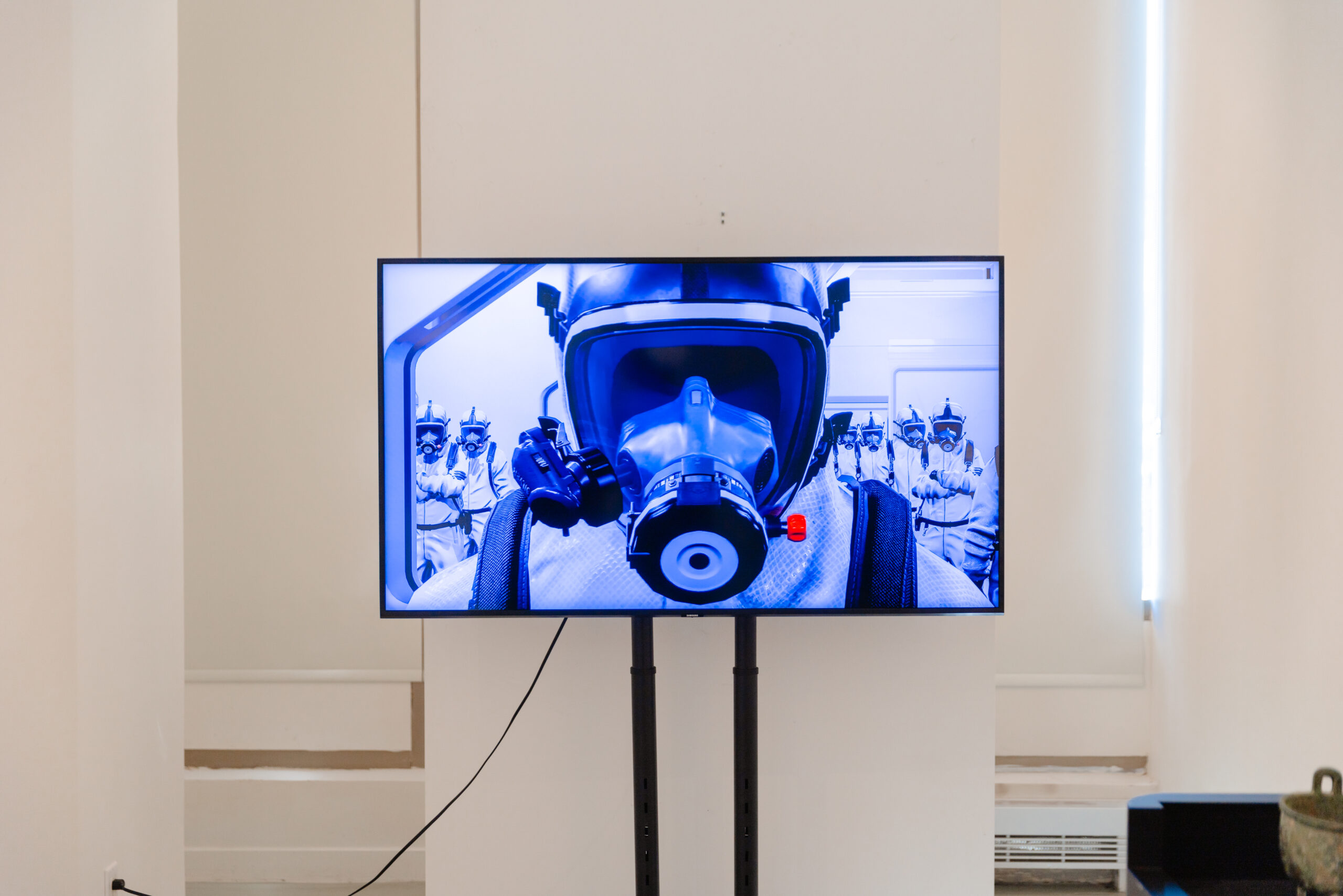
The camera tilts up from the bottom to gradually reveal a vast crowd of anonymous workers wearing identical whole-body protective suits, respirators and oxygen tanks on their backs. They’re standing still, as if waiting for instructions. Set within a white, aseptic, futuristic environment, Chonghao Hua’s Burnout Current (2025)recreates an indistinct world, where standardisation has become the norm, and individuality is therefore no longer an obvious human trait: each worker appears to be interchangeable, inscrutable through their masks, and invisible under their uniforms.
As the video progresses and exhaustion accumulates, Hua treats it as labour’s structural component rather than its mere consequence. In the second scene, a defenceless body gets hoisted up by a crane while other workers witness unperturbed. The figure, treated like industrial cargo, is ambiguously being rescued or discarded; regardless, human life and industrial components are intertwined parts of the same operational logics, both equally aimed at endless productivity. Indeed, for Hua, burnout doesn’t interrupt completion, rather it feeds it.
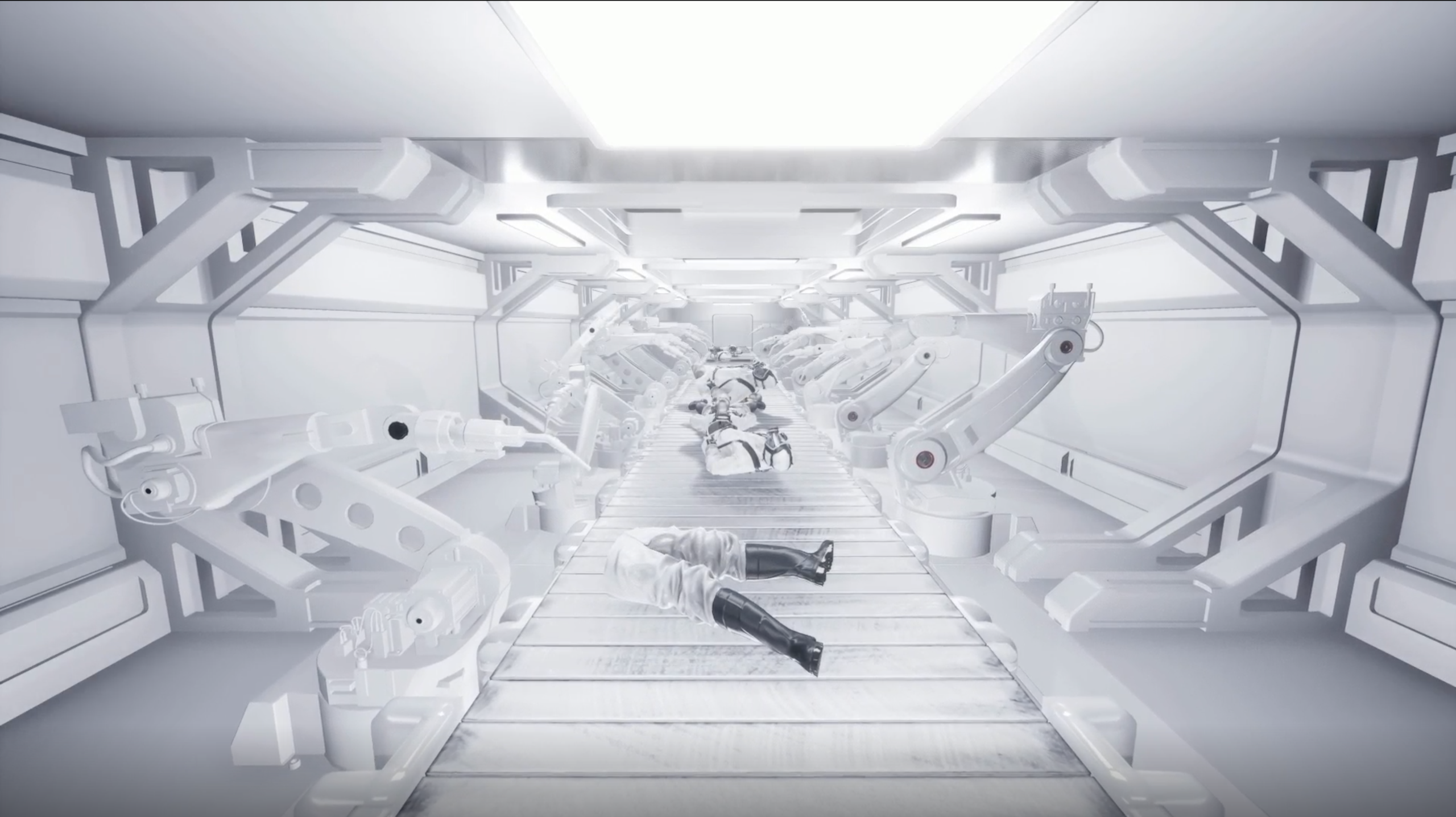
Still image of “Burnout Current”,2025. Courtesy of the artist.
Across moving image and performance, the Chinese artist explores how the capitalist system of production depletes individual subjectivity, and how exploitation annihilates and revises human behaviour, needs, and biological cycles. His practice doesn’t position itself as a critique of work conditions but extends into a speculation of contemporary and future life, where values are reconsidered and reimagined, aptly evoking current debates about the supplantation of human labour carried out by AI––thus the future of work as we know it. Burnout Current epitomises this through eerie images of body parts on assembly lines and the uncanny absence of any social interaction. The space depicted functions like a Foucauldian panopticon, where surveillance, order, efficiency are internalised and performed by the workers themselves, perfectly in synch with the automated movements of the central robotic arm.
The Installation view of “Burnout Current” at the 1215 Gallery, Canada. Courtesy of the artist.
While the visuals remain pristine and sterile throughout the length of the video work, the closing sequence takes on some poignant colouring: the room turns blue, as one of the workers—the only one wearing an orange suit—sits in front of the working robotic arm. He then stands up and touches the machine, now still, in a strikingly affective manner, while piano music sublimates the encounter. Through the staging of this moment, Hua veers from the dystopian and produces a narrative where workers and machine may recognise each other, reconcile, or even, ultimately, converge.
Cristea Roberts Gallery’s summer exhibition showcases fifty years of editions and prints by artists who helped define and expand the visual language of the Pop-era. Titled Pop Revisited, the show returns to a movement born amid the postwar image boom, when glossy advertising and mass media gave rise to what Richard Hamilton famously described as an art that was popular, transient, expendable, mass-produced and glamorous.
Bringing together works by artists including Peter Blake, Patrick Caulfield, Jim Dine, Richard Hamilton, David Hockney, Jasper Johns, Roy Lichtenstein, Claes Oldenburg, Bridget Riley, Joe Tilson and Tom Wesselmann, the exhibition explores the many ways artists responded to the explosion of consumer culture and mass imagery. Hamilton’s I’m dreaming of a black Christmas (1971) and Joe Tilson’s Is this Che Guevara? (1969) subvert the imagery of cultural icons, while Caulfield and Wesselmann are able to transform everyday domestic life scenes into enduring representations of collective nostalgia.
The exhibition also highlights printmaking as a defining medium of the Pop movement, reflecting the same systems of repetition and production that shaped contemporary visual culture. Alongside works by artists such as Jasper Johns, whose recurring motifs underscore the conceptual power of seriality, Pop Revisited extends beyond Pop Art to include Bridget Riley’s Op Art explorations of perception and optical experience.
The exhibition will be on view 23 July – 20 August 2026 at 43 Pall Mall, London SW1Y 5JG.
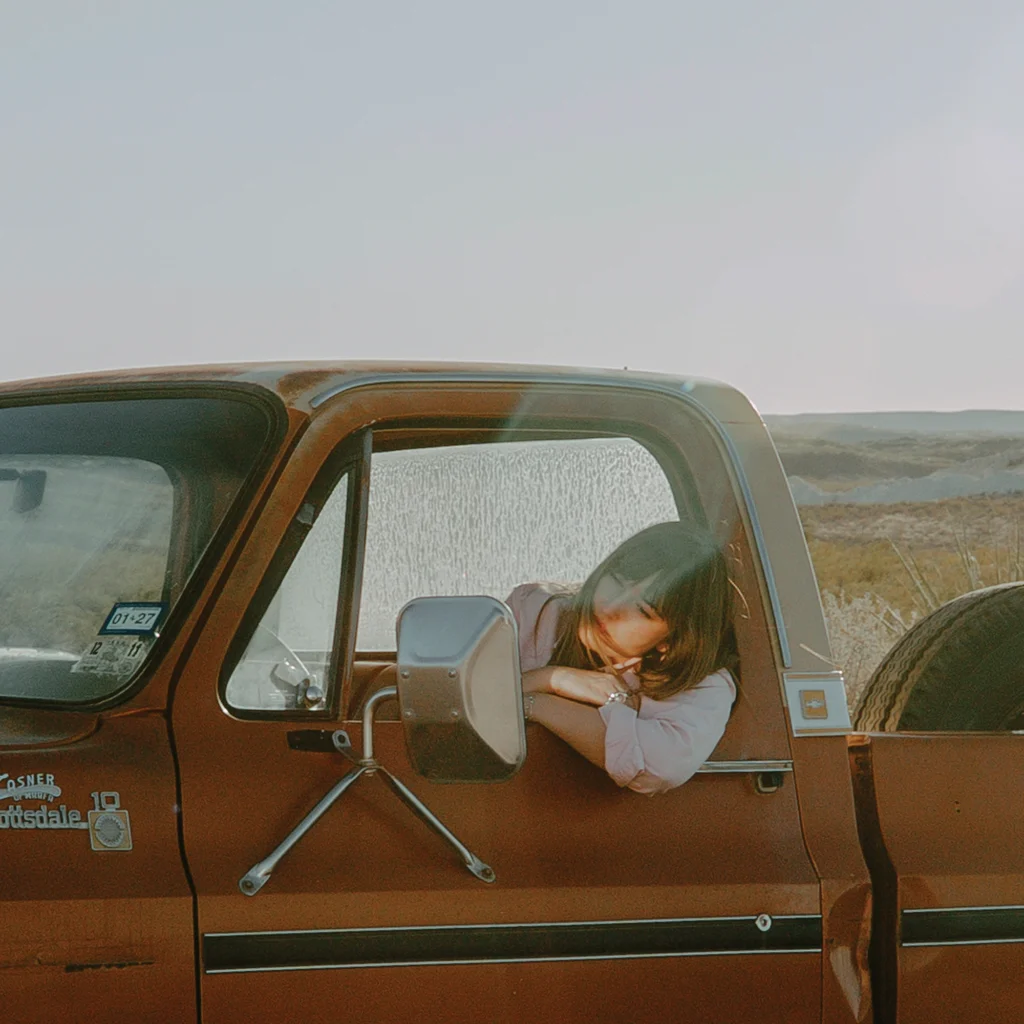
Texas-born singer-songwriter Jess Williamson has announced A Mile South of Heaven, her sixth studio album and first for New West Records. It’s set to arrive on October 9. Today’s announcement comes with the release of the new single ‘Goodbye to All That’. Check it out and find the album cover and tracklist below.
The new single was inspired by Williamson’s favorite Joan Didion essay of the same name. “Didion’s essay is about leaving New York after eight years and how ‘it’s distinctly possible to stay too long at the fair,’” Williamson explained in a statement. “In my eighth year of living in LA, I felt it was time to leave. I wrote this song as my farewell to LA, but songs are powerful in sneaky ways, and the song itself changed my mind. I realised I wasn’t finished with life in LA.”
Written between LA and Marfa, A Mile South of Heavenfollows 2023’s Time Ain’t Accidental. “Depending on your outlook, a mile south of heaven may sound sad, or it may sound hopeful,” Williamson reflected. “We’re always a mile south of the impossible goals we set for ourselves, and my point is, maybe that’s ok, because a mile is pretty close. It’s about appreciating where we are now, because there is no finish line. There is always more work to be done.”
A Mile South of Heaven Cover Artwork:
A Mile South of Heaven Tracklist:
1. Goodbye to All That
2. High Heels and Blue Jeans
3. Country Mile
4. A Mile South of Heaven
5. Tracking the Tropics
6. Dark Day in Dallas
7. Hum of the City
8. Texas Time
9. Someone Else’s Horse
10. Legends Die
11. Battle Scar
12. The Gem and Mineral Show
For Finn Wolfhard, it’s been good to focus on the music. Despite a persistently busy schedule – not to mention international – he still follows the pace of his favorite independent artists when it comes to writing and releasing records. In the span of a year that has included wrapping up his decade-long run in Stranger Things, Wolfhard has put out two solo albums, Happy Birthday and the recently-unveiled Fire From the Hip, whose title alludes to the spontaneous energy with which it sprung following a fall 2025 tour. Though still very much active in the film industry, he’s taken on a couple of music-related projects in recent years, from starring in and contributing original folk-rock songs to Jesse Eisenberg’s 2022 feature directorial debut, When You Finish Saving the World, to currently working on a Replacements biopic with his father Eric. In the past decade, he’s also gone from playing a younger version of PUP frontman Stefan Babcock to directing a clip for Atlanta’s Lunar Vacation to, just this year, helming the first-ever official video for George Harrison’s ‘Give Me Love (Give Me Peace on Earth)’. The new album’s cover may be framed as a duel between Wolfhard’s conflicting impulses, but as creative fuel – and with a little help from his friends – they’ve produced his most confident and vibrant collection yet.
We caught up with Finn Wolfhard to talk about recording his new album, working with members of the Slaps and Twin Peaks, loyalty in friendships, and more.
I’ve had the pleasure of interviewing many of your musical peers and collaborators, including Lunar Vacation, the Slaps, and Lifeguard. I realized that all these bands, except for Lunar Vacation, have only put out one official studio record so far, so I’m curious who it was you maybe talked or looked up to when it came to thinking about a sophomore album. Were concerned at all with what you wanted it to represent, given the quick turnaround?
As far as the fast turnaround went, it ended up working out so well. I’m so lucky that it’s coming out as fast as it is, because I don’t know if I’ll ever get that again. I had this record sort of ready, or at least all the demos, by the time that Happy Birthday came out. It was one of those things where we had to wait such a long time between recording Happy Birthday and releasing, where we were underneath planning the recording of this one. We had feelers out there already for vinyl and just getting people ready for it earlier on. I’m a huge fan of people being able to release their records in the way that they want. I have a few friends that are doing it that way, like Kai from Lifeguard with his band Sharp Pins, he’s on K Records. It seems like they have a really cool momentum and way of releasing stuff. Slaps, they’re independent, they’re great, they put out music sort of like whenever they can and have been doing it all by themselves for a long time. Twin Peaks is another band that I’m close to and that are legends. A long time ago, they had the Sweet ‘17 singles, where they would put out two singles, and then by the end of the year, they had a huge record. They would compile all the songs together and just put it out. I love that.
It can be really tough, especially with music, where people write a record and it’s so personal, but then they start to write other stuff, they start to experience life in different ways, and maybe that record isn’t as much at the forefront of their minds. They’re not feeling the same things that they were when they were writing that record. Sometimes, the luxury is being able to just do it when it’s on the top of your mind and and go out and tour it.
Fire From the Hip was tracked in February, and you finished the last tour in October. What was the energy those live shows left you with? Did you have the time to take pause and reflect on how it maybe had affected you?
It felt really good to play these to play the songs off Happy Birthday and some of these new songs on the October leg in Europe with the Slaps guys and Gep [Repasky] from Lunar Vacation, who now, sadly, can’t be on tour with me for this tour, because they’re pursuing Lunar full time. But we just had the best time. It was one of those things where we were playing two or three songs from Fire From the Hip on that tour, and it felt very good to play them live. The way that we were playing it live, it felt like we should just take this, whatever we have right now, and just put it into a record. I remember walking in London with the Slaps guys and saying to them, “I think I want to do another record. I think we should just go and do one.” And they were like, “Yeah, man, let’s do it.”
I remember we were in an Uber, and I was like, “What do you guys think about Fire From the Hip?” And they’re like, “That’s a cool saying.” I was like, “Yeah, it’s kind of impulsive, and it just makes sense.” When it came to the art, I was like, “Oh, Fire From the Hip, maybe it’s like a duel.” This idea of, I constantly I feel at odds with myself, where I’m fighting between someone who’s confident and then also super worried all the time. And what if it was like a Barry Lyndon recreation where it’s that duel, but it’s me doing myself. It all just came together very seamlessly and fast. It was special to have the guys and my band with me and just to bounce ideas off them and talk through it with them. And I was lucky to have Gep on the record a lot; she came for the last three days. I basically was like, “All right, let’s go through every song and have them sing on it.”
With the cover art, how did all the different layers come together from the moment you came up with the idea?
We had my friend Hudson [McNeese] and Louis [Nicely], who are a photographer-videographer duo, and they were there the whole process, shooting 16mm and photos. The idea was, we were just going to shoot the cover on-site, at the studio. It was freezing cold; you would literally go outside and your nose hair would freeze. My idea was to shoot it on large format. Louis had a large format camera, so we went out, we shot it, and it was so cold that the metal slide they were using was getting stuck, and there were only a few options. We actually shot more, but it was so cold that the camera froze up. I was really happy with the photos, but I felt like there was a lot of negative space with the rock wall behind, and it’s still very much featured on the vinyl. When you open it up, it’s a die cut, so when you open it up, it’s just this little window of me pointing the gun at me, but when you take it out of the sleeve, it shows more of the whole photo.
I just wanted a little more of a pop of colour, so when I was mixing here in Vancouver with Cadien [Lake James] and Andrew [Humphrey], I was like, “I gotta figure out this record cover. It’s very close, but I don’t know. I think it needs something.” Cadien has a background in design, and he does all the Twin Peaks covers. He was like, “Just throw it into Photoshop, let’s fuck around with it.” Immediately, he’s like, “Oh, what about pink? That’s its own very specific vibe, and it would be a very striking vinyl.” And I was like, “What if it was this old English font? What if we use mediaeval writing to offset it a little bit and make it a bit weird?” And then my friend Grant Prettyman, he did the layout, so it was a big group effort.
Happy Birthday was a collaborative process with Kai, but given the focused studio time you had recording this album, did it feel collaborative in a different way?
To me, why I make music is because it’s collaborative and you’re sharing something together. At the same time, on Happy Birthday, me and Kai co-produced it, so I would defer to Kai if there were production things that I wasn’t sure about. He’s so fucking talented and I loved his production so much. When we were touring, I was talking to the backing band, to the Slaps guys and to Gep, and the resounding thing was that if we make another record, I should produce it. And I was like, “I don’t know. I don’t know if I have the confidence to do it.” And they were all like, “Dude, you’re already basically producing and directing the live show. You’re doing that now. You do all that, you produce all the demos by yourself. Why would you not do that?” And I was like, “Yeah, I guess.” I don’t know why I thought I couldn’t do it.” But I guess it makes sense that I did and it was really fun. I feel like it was a muscle that I got so much better at, and I really knew what I wanted when it came to the sound of the record. Especially the drum sound — I think me and Josh from the Slaps, and Andrew, my partner in crime throughout the whole process, we spent the first few days on the drum sound.
For me, the big challenge was the balance between knowing what I wanted for the record as a solo record, and also, I want people to be able to play the parts that they want to play. I want people to be able to express themselves in the way they want, but sometimes those are not mutually. Sometimes, someone wanting to play a part that they really like, in my head that’s a cool part, but it’s not right for the song. The whole point of music is being able to play in the way that you want, but at a certain point, it’s what the song needs. It’s not what you want to play. And that’s what was so great about everyone, they were there to serve the song. They would always be so cool about me being like, “All right, let’s try something else.” I was just getting used to that and trying to put up the boundary of, “OK, we’re all a band, but also, it’s a solo record and in the end, it’s up to me.”
I’m curious about one part that might have been an example of someone coming up with an instrumental section on the spot. It’s the dreamy outro on ‘Nice to Meet You Again’ — what I love about is that you don’t really feel the meaning of “again” until that final minute.
Yeah, that was fully Cadien and Clay [Frankel]. They played on the record with me for a few songs, and it was really special because their ideas were amazing. It was the first time they’d both been in the studio together since Twin Peaks had technically broken up. They were still friends after the band had broken up — they were still really close friends and brothers in so many ways, but they had never, I think, fully played music together. ‘Nice to Meet You Again’ was the first time. For me and the other guys, we grew up on Twin Peaks, they’re heroes of ours. To see them just firing back and forth — there was a moment where, it was funny, I walk into this live room, and I look at Clay and he’s got his guitar and he goes, “All right, what’s the vibe of the song?” And I go, “It’s the Faces. It’s Ooh La La.” And he goes, “Say no more.”
And then I went into the other room and we jammed it out a few times. We all played it live, and everyone’s singing backup, it was a great vibe. At a certain point, Cadien and Clay were like, “And what if we did this?” At this point, I had lost creative control, but in the best possible way, where I did not want to interrupt their mind meld. It was one of those things where I had no idea what they were talking about. Everyone was just watching it happen. Cadien was like, “Finn, are you good with that?” And I was like, “Honestly, I have no idea what the fuck you guys are talking about. But yes, let’s do it.” And that’s the best part of the song, to me. I’m glad I didn’t say anything, because it would have been insane if I did. They really elevated things. That’s what’s great about collaborating with people that you respect, they bring their own juice into the song.
And the magic — I’ve had this line from the record stuck in my head: “We come to this place for the magic/ And isn’t it tragic/ To see the sausage get made.” Obviously, you’re talking about the movies in a specific context, but it sounds like the magic of music-making maybe isn’t taken away so easily when you can have moments like that.
100%. That’s my big goal in being in these really tricky but creative industries — it’s very easy to get jaded, and to me, it’s always about finding those moments. I’m really lucky that I’ve been able to find it over and over again.
You’ve talked about going for a more hi-fi sound with this record. More than an aesthetic decision or way of shifting things up, was it also a matter of confidence, not only in terms of production but vulnerability? ‘Trail’, for example, could have been recorded with a lo-fi, muffled sort of intimacy, but the feelings are amplified in that way.
A big reason why I didn’t end up going with a more lo-fi recording style is because I think that these songs lent themselves to a more lush production quality. It just depends on the song, but for this specific record, I really wanted the songs to be able to be really open, compressed, and have a lot of breathing room. That song specifically, the guitar sound of it, I was looking a lot to the song by The Replacements called ‘Skyway’. It’s this really pristine, beautiful, acoustic guitar, but it’s also weirdly compressed. A fou-track always sounds great, but I’m glad tried it on a grander scale with the 24-track reel-to-reel, just because we also had more people. It would have been easier probably to just get an eight-track Tascam, set it up, and just do eight tracks. But this was great, because you still had this feeling of imperfection and analogue, but also you’re allowing the songs to sound beautiful at the same time. I love lo-fi, but it was nice testing the hi-fi tape out.
Taking a look at the official tracklist, I realized ‘The Climb (Not That One)’ is the final track – it was earlier in my promo stream. It almost homes in on the idea of loyalty in friendship, which is a big theme on the record. I feel like young people worry all the time about making friends, but I wonder what music has maybe taught you about keeping them.
For sure. It’s weird, music is such a vulnerable thing — you think it’s not, until it is. And with music and playing music with other people, I feel like, it’s everything you’re not saying. There’s so much unsaid. You’re expressing yourself — and sometimes it’s not enough, expressing yourself through music — and it’s been a great outlet to communicate with people. Even a tour and being with the Slaps guys, you’re with each other every day, you have to be honest with each other and be able to support each other. And, in a lot of ways, like, be patient with each other, because everyone is going through their own thing.
‘The Climb’ is not at all about anyone in music. ‘The Climb’ is about a childhood friend that I’m since not in contact with. There’s the last lyric about being a loyal friend: “To you I’m not, to me I am.” It’s this idea of: you can only give someone so much, and so much of your patience or support, and if someone’s not taking it, that’s up to them. If you gave it all you got and you really tried, that’s really all you can do and all you can give someone. I think that’s the most important part of friendship: being able to show up, being there for someone who’s maybe still figuring things out. And if it’s not being reciprocated, things naturally start to run their course; that’s just how friendships work.
And then they come back — that’s what’s amazing about friendships. I’m pretty lucky that I haven’t had a lot of crazy drama with friends, but it’s really interesting, the amount of friends that I have that I was once super close with, and then, for whatever reason, we just fell out of touch. We didn’t have anything in common or there was a mini falling out, and four years later, we’re friends again. It’s a really odd thing, because with friendships, you know someone so deeply, it’s like you know someone more than anything. I started making music to make friends, also. You connect to people through this, so it’s definitely a huge theme in what I try to write.
This interview has been edited and condensed for clarity and length.
Finn Wolfhard’s Fire From the Hip is out now via Night Shift Productions.
Longtime L7 bassist Jennifer Finch has been diagnosed with an aggressive form of brain cancer. The 59-year-old musician has already been through multiple surgeries, and her friends and family have launched a GoFundMe campaign to help with the high expenses of her treatments, recovery, and ongoing care.
“We are all devastated by the news and are surrounding her with love,” L7 frontwoman Donita Sparks said in a press statement. “Jennifer is family, and we want her to feel the full strength of the community that has loved and supported her for so many years.”
A couple of months ago, L7 announced plans for their Last Hurrah farewell tour, which is slated to begin in the fall. Finch will not join the band on the initial North American leg, but asked that they move forward with the shows without her.
“When she first heard the diagnosis, there was reason to believe that treatment, including a full course of radiation, would get her back to some version of normal living. Unforeseen complications led to multiple surgeries and a string of difficult setbacks,” the GoFundMe page reads. “The cancer and everything that comes with it have left her with significant physical limitations so she’s handling this the only way she knows how: one day at a time.”
Steampunk fashion is one of the few styles that blends history and imagination in equal measure. Inspired by the elegance of the Victorian era and the innovation of the Industrial Revolution, it creates an aesthetic that feels both nostalgic and futuristic. Rather than reproducing historical clothing exactly, steampunk reimagines the past through the lens of an alternate world where steam-powered technology shaped modern society.
Over the years, the style has grown beyond books and films to become a thriving fashion movement embraced by convention-goers, makers, history enthusiasts, and people who simply enjoy dressing differently.
The Origins of Steampunk Fashion
The roots of steampunk can be traced back to science fiction literature inspired by writers such as Jules Verne and H.G. Wells. Their stories imagined incredible machines powered by steam and set in worlds where Victorian engineering had evolved far beyond reality.
As the genre gained popularity, fashion naturally followed. Fans began creating steampunk outfits that looked as though they belonged in those fictional worlds, combining authentic nineteenth-century garments with industrial-inspired accessories and mechanical details.
Today, steampunk fashion continues to evolve while remaining closely connected to its literary and artistic origins.
The Key Elements of the Style
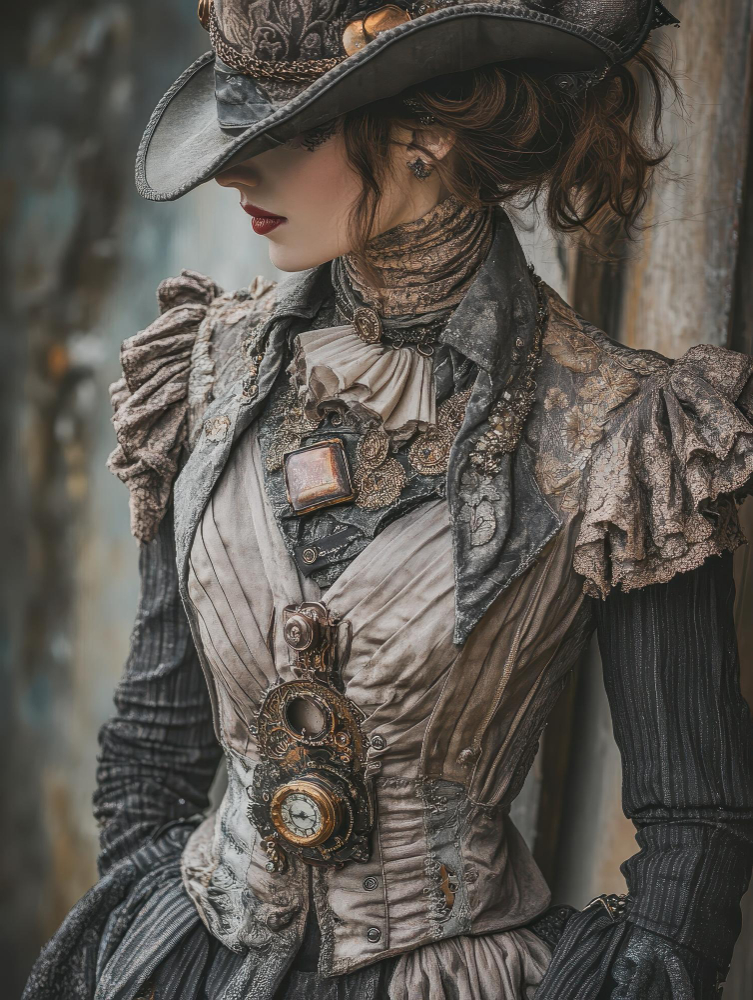
Steampunk clothing often begins with classic Victorian silhouettes. Tailored waistcoats, long coats, corsets, high-neck blouses, lace dresses, and fitted trousers all reflect the elegance of the period.
What transforms these garments into steampunk fashion are the industrial influences layered on top. Leather belts, brass hardware, buckles, pocket watches, goggles, gears, and utility-inspired accessories introduce the mechanical aesthetic that defines the genre.
Materials also play an important role. Leather, velvet, tweed, lace, cotton, and aged metals are commonly used to create texture and reinforce the vintage atmosphere.
A Style That Encourages Creativity
Unlike many fashion trends, steampunk has never followed a strict set of rules. Some people prefer historically accurate outfits with only subtle fictional elements, while others embrace elaborate costumes featuring mechanical wings, clockwork accessories, or imaginative inventions.
Many enthusiasts also enjoy creating original characters. An outfit might represent an inventor, an explorer, an airship captain, a scientist, or a detective, with every clothing choice contributing to that character’s story.
This freedom is one of the reasons the community remains so creative. Personal interpretation is valued far more than following a specific formula.
Is Steampunk Only for Cosplay?
Although steampunk is often seen at conventions and themed events, the style extends well beyond cosplay. Many people incorporate individual pieces into their everyday wardrobe without wearing a full character-inspired outfit.
A vintage waistcoat, leather boots, a tailored jacket, or antique-inspired accessories can add subtle steampunk influences to modern clothing. This approach allows people to enjoy the aesthetic while adapting it to their own lifestyle.
As interest in vintage fashion and handcrafted clothing continues to grow, steampunk has found an audience that appreciates both historical design and individuality.
Why Steampunk Fashion Remains Popular
One reason steampunk continues to attract new enthusiasts is that it offers an alternative to fast-changing fashion trends. Instead of focusing on seasonal collections, it celebrates craftsmanship, quality materials, and timeless design.
It also encourages people to be creative. Whether someone enjoys sewing garments, customizing accessories, or collecting vintage-inspired pieces, steampunk provides endless opportunities to build a wardrobe that feels unique.
At the same time, its blend of history and fantasy gives the style a lasting appeal that few other aesthetics can match.
Final Thoughts
Steampunk fashion is much more than Victorian clothing decorated with gears. It is a creative interpretation of history that combines elegance, craftsmanship, and imagination into a distinctive visual identity. Whether worn at conventions, incorporated into everyday outfits, or used as a form of artistic expression, the style continues to inspire people who appreciate originality and timeless design.
Making a narration for any type of content creation is easy withAI text-to-speech tools. But the situation shifts once a project calls for characteristics of a specific voice. The challenge would even be doubled when it’s time to keep that voice consistent across various content. And realistically speaking, it’s impractical to keep hiring voice artists. Or pay for professional studio setups every time you need to record. That’s the reason why data shows that2.3 million users worldwide turn to AI voice cloning software.
A distinctive voice is one of the hardest brand assets to replace. It’s literally the element that audiences can recognize with their eyes closed. However, with newAI tools popping up regularly, finding the right one is a challenge in itself. That said, we took the liberty of doing the dirty work. This guide explores the top AI voice cloning software options that capture natural, human-sounding voices.
Top Five Best AI Voice Cloning Software
ElevenLabs
ElevenLabs is one of the biggest names in AI voice cloning. Right off the bat, users can choose between two methods. For high-quality, high-speed voice generation, they can go with Instant Voice Cloning. But if there’s a need for hyper-realistic original voice replication, creators can opt for the Professional Voice Cloning. Either way, Elevenlabs can create voice clones from a sample audio file (uploaded or recorded). It accurately captures vocal traits and accents. This ensures natural results. Not robotic.
Key Features:
Analyzes and copies emotion, delivery, personality, and tone with precision
Extended control over clarity, energy, and pacing to match personal vocal style
Generate voice clones in more than 70 languages.
Pricing:
Free Package
Starter Package – $6 per month
Creator Package – $22 per month
Pro Package – $99 per month
Scale Package – $299 per month
Business Package – $990 per month
Enterprise Package – Customizable
Real Use Case:
YouTube content creators can clone their own voice once using Elevenlabs. Then, they can scale their production by creating narrations for updated explainer videos. All without returning to the recording booth.
Descript
Image Credit: Descript
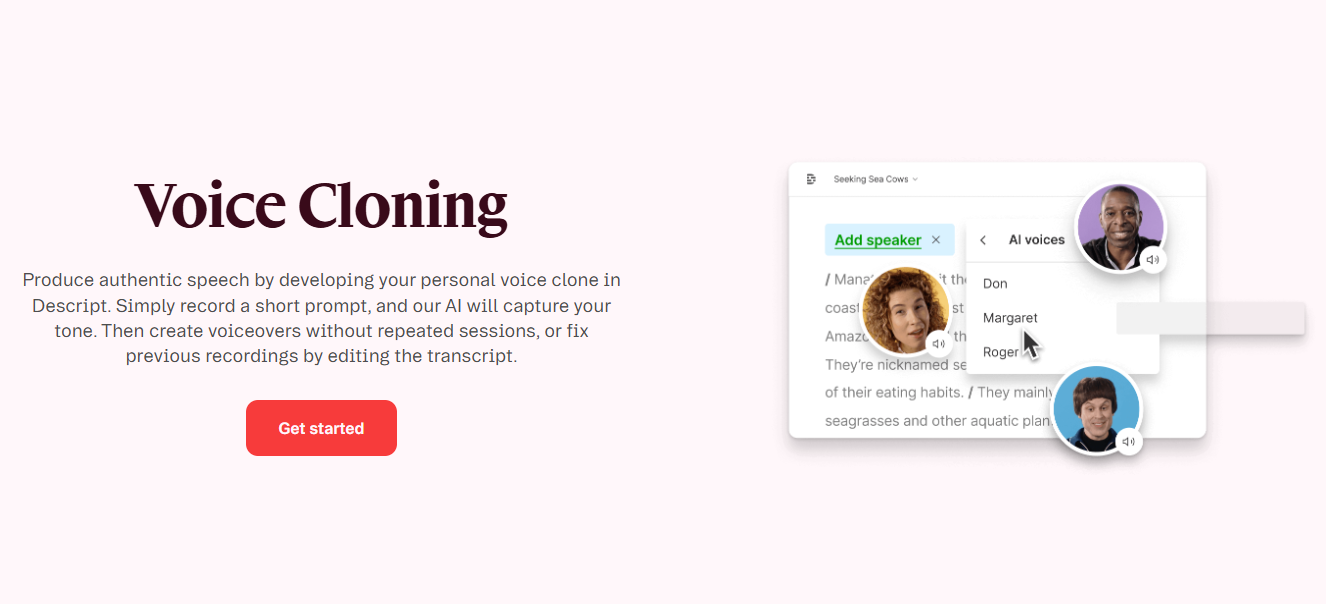
One of Descript’s newest AI tools is Overdub. A built-in feature for generating speech with a user’s own cloned voice. The workflow starts with a creator recording while reading the system-provided brief script. It’s capable of delivering clear, fluid, loud clone results that match most expressions, intonation, and pitch. What’s more, users can tap into Descript’s text-based editing when removing mistakes from a generated audio.
Key Features:
Supports more than 10 audio file formats
Making source-faithful pitch variation
Beginner-friendly with prompts and status updates
Pricing:
Free Package
Hobbyist Package – $24 per month
Creator Package – $35 per month
Business Package – $65 per month
Enterprise Package – Customizable
Real Use Case:
Live podcasts are prone to minimal factual errors. Instead of letting it slide, producers can use Descript’s Overdub. This allows quick cloning of the host’s voice and seamless replacement of the specific audio part.
Voice AI
Image Credit: Voice AI
Voice AI focuses on real-time voice cloning. This makes it ideal for fast-paced projects, as it enables users to create voice agents for real-time conversations. Beyond that, it also has a standalone voice cloning feature. Like many other options, users just have to upload or record an audio sample. Using advanced AI, this tool can replicate actual inflection and vocal nuances from the source material. Creators would also benefit from its manual control options over adherence, creativity, diversity, guidance, and precision.
Key Features:
Replicating the person’s accent, intonation, nuances, and vocal patterns
Producing realistic audio from any text
Intuitive interface and no learning curve required
Pricing:
Free Package
Starter Package – $8 per month
Launch Package – $29 per month
Core Package – $99 per month
Scale Package – $330 per month
Business Package – $880 per month
Enterprise Package – Customizable
Real Use Case:
Gaming creators can provide a more immersive experience for viewers using Voice AI. It can help them switch between multiple character voices during live role-playing streams.
Resemble AI
Image Credit: Resemble AI
Real voice creation is one of Resemble AI’s AI features. When working with an existing audio file, users can choose between Rapid Clone and Professional Clone. This ensures that the quality and speed of production match the creator’s needs. Likewise, they have the option to make one completely from scratch with a text description. Resemble AI will then present 3 options for selection. And with no additional training required, it can maintain accent and vocal character.
Key Features:
Multilingual cloning and speech generation
Customizable pronunciation for any term
Creating different variants of the cloned voice (commercial, conversational, etc.)
Pricing:
Flex Package – Pay per consumption based on usage
Enterprise Package – Customizable
Real Use Case:
Professional productions can pay for actors likeVin Diesel to record a line in different languages. Meanwhile, small-time producers can localize content in 23 languages through Resemble AI. So no costly re-recording.
Vocloner
Vocloner is one of the newest AI voice cloning software. Yet, it already comes with a promising AI voice cloning technology. Following a straightforward workflow, users can input a sample to quickly train an AI model. This also allows Vocloner to generate new speech that reflects the original speaker’s tone and cadence. It’s also one of the full-fledged voice cloning platforms. That means creators can expect a simple interface that doesn’t clutter it with multiple AI tools.
Key Features:
Text-based emotion control
Multilingual voice cloning while maintaining intonation and tone
Accessing features focused solely on AI voice cloning
Pricing:
Free Package
Basic Package – $8 per month
Pro Package – $25 per month
Advanced Package – $49 per month
Enterprise Package – Customizable
Real Use Case:
For maintaining a consistent brand identity across every video, Vocloner can be the top choice for small business owners on TikTok. They can use it to clone their own voice and quickly make fresh narrations when product features change.
Choosing the Leading AI Voice Cloning Software in 2026
Tone. Pacing. Pronunciation. Emotional delivery. Voice characteristics can easily be replicated with remarkable accuracy today. However, despite these options being great, the final output largely depends on the recording technique used for the sample. Background noise and unclear pronunciations can lead to poor cloning results. Better sample. Better cloned voice.
In the same way, the best choice depends on how you work. So don’t chase the longest feature list. Pick the AI voice cloning software that best complements your production needs. And when used responsibly and with proper consent, these tools ensure consistency and reduce production time incontent creation.
A different kind of psychological thriller is currently making waves on Netflix. Notes from the Last Row expertly builds tension not by relying on explosive action, but by drawing in viewers with a complex mentor-student dynamic.
The tactic works. The Korean production is currently one of the most-watched non-English series on the platform, with 2.6 million views last week. It’s also a Top 10 show in 21 countries. Could that mean a follow-up is on the way? Here’s what we know so far.
Notes from the Last Row Season 2 Release Date
At the time of writing, there’s no official news available about a potential Notes from the Last Row season 2.
While nothing is out of the question, the K-drama is listed as a limited series, and the main story is pretty much over by the time the final end credits roll. In other words, it looks like the six episodes now available are all we’re going to get.
Notes from the Last Row Cast
Choi Min-sik as Heo Mun-oh
Choi Hyun-wook as Lee Kang
Huh Joon-ho as Kim Su-hun
Kim Yunjin as Ahn Eun-joo
Jin Kyung as Jo Hyeon-suk
What Is Notes from the Last Row About?
Loosely based on the Spanish play El chico de la última fila, Notes from the Last Row centres on Heo Mun-oh. A hot-tempered literature professor and failed novelist, he has never recovered from the collapse of his writing career.
Things change when Mun-oh discovers that a quiet student named Lee Kang is extremely talented. Fascinated by the young man’s writing, he begins to give him private lessons. As the story grows darker and more personal, Mun-oh becomes increasingly obsessed with the manuscript.
Turns out, Kang’s writing is based on observations of Mun-oh’s rival, who also happens to be the source of his inferiority complex. At the same time, the relationship between teacher and student evolves into a dangerous psychological game. The kind that makes it hard to stop watching.
By the time the finale wraps up, viewers learn what’s really been going on between Mun-oh and Kang. While Notes from the Last Row season 2 is unlikely, the show is a tense and rewarding watch. It messes with your perspective in the best way possible.
Are There Other Shows Like Notes from the Last Row?