The CS2 skin conversation has become one of the biggest in the whole gaming community. CS2 skins have well and truly overtaken the gaming industry. They’ve become what many would call an absolute gaming phenomenon. They are now an integral part of gaming culture, giving players new ways to express themselves while building collections that feel personal and memorable.
Customization has always added another dimension to gaming. In CS2, weapon finishes have developed into something that many players enjoy just as much as the gameplay itself. Over the years, collecting skins has become a hobby that continues to bring people back for new discoveries.
More Than a Cosmetic Feature
The first time you come across CS2 skins, they might seem like nothing more than visual upgrades. After spending more time with the game, though, it’s easy to understand why they attract so much attention. They allow you to put your own stamp on the experience, turning familiar weapons into something that feels uniquely yours.
Every player has different tastes. You may prefer bright, eye-catching finishes or you might lean toward cleaner, more understated designs. That’s one of the biggest reasons skins remain so popular: there’s no single style that everyone follows and the level of customization is high.
As you play more matches, certain cs2 skins naturally become favorites. You begin to recognize them instantly and before long, they become part of your regular loadout. Even though they don’t change how the game plays, they often become part of how you experience it.
What begins with a few favorite skins can turn into a whole inventory that shows your own preferences.
Every Collection Tells a Different Story
One thing that makes CS2 stand out is the incredible variety of skin designs available. Instead of repeating the same ideas, collections explore different themes, artistic styles and color combinations that appeal to a wide range of players. You can really get creative when it comes to the skins you’re after.
Some collections are known for vibrant artwork, while others focus on simple patterns or detailed illustrations.
Over time, certain skins become especially recognizable within the community. Players remember them not only because of their appearance but also because they’ve appeared in memorable matches or become long-time favorites among collectors.
As your inventory grows, you may notice your own preferences becoming clearer. Perhaps you start choosing skins with similar colors or maybe you’re drawn to collections featuring particular weapon types.
That’s one of the most enjoyable parts of collecting. There’s no rule saying your inventory has to look a certain way. It develops naturally as your interests change, which is pretty nifty.
The Memories Behind the Inventory
Ask different players about their favorite skins and you’ll often hear completely different answers. The reasons usually have very little to do with rarity alone.
You might keep a particular skin because it reminds you of an exciting match, while another one becomes a favorite simply because you’ve used it for so long. Over time, these cosmetic items become linked to your own experiences in the game.
That’s why inventories often feel personal. Even when two players own similar skins, the stories behind those collections are rarely the same.
Many players also enjoy revisiting older collections. Familiar designs can bring back memories of earlier updates or periods when certain finishes first became popular. Those connections add another layer to the collecting experience and help explain why older skins continue to attract attention.
A Community Built Around Creativity
Creativity has played a major role in keeping skin collecting interesting over the years. Players regularly share loadouts, compare collections and discuss which designs work well together.
Some people enjoy matching every weapon around a single color scheme. Others prefer combining completely different styles to create something original. Plus, small details often become part of the fun. You may spend time comparing finishes, deciding which skins complement each other or adjusting your collection as new designs become available. As fresh collections are introduced, players naturally begin exploring different combinations.
Instead of collecting becoming repetitive, it continues to evolve as more designs and themes appear.
Why Players Continue Collecting
The popularity of CS2 skins has lasted because collecting means something different to everyone. Some players enjoy completing themed inventories, while others simply like finding designs that stand out whenever they enter a match.
You see, CS2 skins have become much more than cosmetic additions. They’ve become part of the way you experience the game, build your own identity and connect with the wider community. Every inventory develops differently, shaped by your own personal taste, memorable moments and the designs that stand out to you.
In the end, that is part of what keeps collecting fresh. You are never limited to one approach and there is always another collection worth exploring.
Listening to an audio. Typing words. Individually, these tasks can be done without breaking a sweat. However, when combined and done for hours or days, it’s one of the easiest ways to catch a headache. In fact, a study shows thattranscription can be psychologically draining due to its mundane, monotonous nature. But instead of giving up your weekend or hiring professionals, modern workflows focus on adopting AI tools for transcription.
That’s because withblogging,academic writing,copywriting, and other tasks, the real challenge starts after recording. Journalists replay interviews to find the perfect quote. Students pause lecture recordings every few seconds to catch key details. Business teams sift through long meetings searching for action items.
That said, this guide digs into the best choices for AI tools that turn transcription from a tedious manual process into an automated one that takes only minutes.
Top Five Best AI Tools for Transcription
Otter
Otter is one of the most recognizable AI tools for transcription. It’s mainly used for meetings and collaborative work. What makes it stand out is that users can set it to automatically join calls. This allows it to capture the full conversation and provide a complete transcript. There are also AI summaries that track takeaways and organize action items, thereby enhancing workflows. The output comes with timestamps and clear speaker diarization. It’s like having an assistant who never takes a day off.
Key Features:
Multiple-language support and speaker separation in live transcription
MCP Server for in-depth analysis and better workflows.
Claude, Google Drive, Salesforce, Slack, and Zoom integration
Pricing:
Free Package
Pro Package – $16.99 per month
Business Package – $30 per month
Enterprise Package – Customizable
Real Use Case:
Online course instructors can use Otter to automatically capture discussions or lectures. This helps them assist students who missed a meeting using AI-generated, searchable notes. So learners can catch up quickly by reviewing assigned tasks and discussion highlights.
Sonix
Image Credit: Sonix
Compared to Otter, Sonix works on uploaded media. And it puts great emphasis on accuracy, making it ideal for serious projects. Beyond fast automated transcription, it comes with built-in editing, subtitle generation, translation, and collaborative tools. Sonix also provides structured insights. This includes AI summaries, topics, key statements, action items, and every essential metadata. What’s more, it supports more than 50 languages, multi-track audio, and filler word control.
Key Features:
Identifying who said what and when through speaker-labeled, timestamped text
Highly accurate speech-to-text at scale, even with difficult audio
Sentiment Analysis feature for determining emotional tones
Pricing:
Free Trial
Pay As You Go Package – $10 per hour
Core Package – $25 per month
Advanced Package – $50 per month
Pro Package – $80 per month
Real Use Case:
Sonix can help students speed up analysis and coding in their research projects. After conducting interviews or focus group discussions, they can leverage the multi-track support to quickly generate transcriptions with timestamps and speaker diarization.
Fireflies
Fireflies treats insights as important as the transcript itself. It’s also capable of joining and recording meeting conversations. This option automatically summarizes discussions, extracts action items, and integrates with CRM systems and productivity software. Also, Fireflies features AI-PoweredSearch and Conversation Intelligence. These two enable users to get answers to any question and uncover insights. Like key topics, keywords, action items, and important decisions.
Key Features:
Post-call analytics with sentiment analysis and speaker talk-time
Supports over 100 languages and has auto-language detection
Turning every conversation into searchable records to track follow-ups
Pricing:
Free Package
Pro Package – $18 per month
Business Package – $29 per month
Enterprise Package – $39 per month (billed annually)
Real Use Case:
Sales teams can capture client discovery calls and automatically summarize customer requirements with Fireflies. This makes it easier for them to build client relationships thanks to less time needed for data entry.
Rev
Image Credit: Rev
Among the AI tools for transcription on this list, Rev specializes in legal transcription and evidence analysis. For that, its pipeline features a hybrid model. For internal meetings or casual content creation note-taking, the AI transcriber option is the right pick. But for users who need the utmost accuracy. Like for clinical, financial, and legal files. Rev offers a human transcription and captioning tool that delivers outputs within a minimum of 2 hours. This tool also has an AI chatbot that users can ask questions to. Every answer is pulled from the original record. No AI guesses.
Key Features:
Pre-built AI prompts for faster transcript analysis
AI transcription and human review options (file-by-file basis)
Making every recording searchable for top scrutiny
Pricing:
Free Package
Essentials Package – $29.99 per month
Pro Package – $59.99 per month
Unlimited Package – Customizable
Real Use Case:
Criminal defense attorneys can easily spot inconsistencies in police reports or jail calls with Rev. With the precise transcript and source-faithful citations, they can draft robust motions and trial briefs. This can help in turning the case around.
Notta
Notta is an all-around tool for automated transcription. It has a bucketload of features intended for live transcription, meeting recording, file uploads, and real-time translation. And each one supports numerous languages. That means multilingual users and international teams can benefit from it. With advanced AI, Notta can also provide users with detailed insights. This includes action items, key decisions, and critical topics. No need to scan through lengthy meeting transcripts.
Key Features:
Premade and customized prompts for personalized recaps
Supports roughly 58 international languages
Generating slides and infographics based on transcribed materials
Pricing:
Free Package
Pro Package – $13.99 per month
Business Package – $27.99 per month
Unlimited Package – Customizable
Real Use Case:
International consulting firms can use Notta during virtual meetings. Built to support multilingual communication, it can easily make searchable transcripts for discussions involving clients from different countries.
Choosing the Smartest AI Tools for Transcription in 2026
Transcribing is probably one of the simplest but most infuriating tasks. Oftentimes, a single recording can take longer to review than it did to create. That’s why AI tools for transcription have become an essential part of modern workflows.
Whether you’re documenting meetings, editing podcasts, or conducting interviews, make sure that you pick based on how you capture, review, and use conversations every day. Nonetheless, Otter, Sonix, Fireflies, Rev, and Notta dramatically reduce the workload. They make recordings easier to search, summarize, and turn into actionable information.
“At an early age,” Agnes Maurer thinks near the end of Agnes Lives!, “we were taught to negotiate with our status.” She remembers that growing up, when patronizing a high-end cafe, it doesn’t matter if the bakery next door technically isn’t connected to the restaurant, if you really want it. One must simply ask the waitress, politely but firmly, to go get it. She’ll oblige.
Agnes, the high-octane narrator of Hallie Elizabeth Newton’s disorienting debut novel, is catty, name-dropping, and bends the world to the reality she wants, even while absolutely nothing is going her way. She’s narcissistic and flighty, basing her worth on getting over 11 Instagram likes and what her boyfriend thinks of her. Once, Leonard Cohen told her she’s pretty. The novel is an uninterrupted stream of consciousness broken only by her speech; we don’t hear from anyone else, mirroring her pretentious phasing-out of anyone she deems beneath her. Agnes Lives! is ambitious and risky—her voice is somewhere between Valerie Cherish’s unabashed desire for the spotlight and Marnie Michaels’ relentless desperation—and yet it’s one of the most riotously funny novels of the year.
“Babe, so the movie? I’ll be doing errands all day but I’ll wait for your text. I love you. Love you. Big day. Love you. Will you say it back? Go to sleep.”
Sweating it out during a SoulCycle class at 6:30am one September morning in 2014, she realizes that she’ll do anything for someone to kill her. This sort of idea is at first mention a little juvenile—her first ask to the barista has the cadence of the Tumblr-seeped self-lacerating humor that we’re trying to move on from—until you realize that she’s dead-serious, and tries robustly to get the job done. She snatches a knife from the desk of her (“self-made and big-boned”) boss and is promptly fired, she buys a gun from a girl in a Carly Rae Jepsen shirt and wanders the hallway of a shady building to buy cocaine, overhearing “a conversation in Chinese that I imagine involves a multigenerational family’s meeting about a problematic child not doing his homework.” As her day stretches into the night, her methods get more drastic and unhinged.
Just by the pummeling nature of her thoughts, the book makes it quite clear why Agnes wants to die—it isn’t a one-off joke, thankfully. Her mind zips from topic to topic—sometimes feeling unsubtly quirky, but most often working in her favor, depicting a troubled woman, or a woman who simply is faced with the world as it is. Agnes’ darkest thoughts are on display, unsavory and brash. She spears Obama for not acknowledging Black Lives Matter or the fact that it’s the year of the crystal, but what bothers her most is the casual tan suit he wore during an ISIS briefing. “What the fuck was he thinking?” she asks. She’s burdened by life, and her interior monologue is shaped by the pacing and freneticism of someone with nothing to lose. I think of Meg Stalter speaking to a confused Stephen Colbert about her London experience: “You’ll be eating breakfast, and you’ll go, ‘Get me outta here!’” Agnes’s scream is concealed, but barely.
She’s a model at Whorl magazine (which reserves a spot for her on their “cultural council”), and a girlfriend to indie filmmaker Nathan Gray, a despondent, apathetic man who couldn’t care less about her. She snatches up movie tickets for at least five different timeslots for whichever works best for him, and he doesn’t even get back to her on time to see any of them, despite her prodding. “He likes me in turtlenecks and white undies, serving him takeout in bed on a tray,” which is a skateboard. She brings him back coffee and cleans the apartment naked for him, remembering the time he said she was “controlling his life” by installing a medicine cabinet in the bathroom. Nevertheless, she remains faithful to “my brilliant man,” delivering a danish to his bedside, “his hair in a swirl of intellect, his lips pursed in a cupid’s bow of wit.” Leaving for work, she inflicts a barrage: “Babe, so the movie? I’ll be doing errands all day but I’ll wait for your text. I love you. Love you. Big day. Love you. Will you say it back? Go to sleep.”
Agnes Lives! is often hilarious, but the narration goes from a joke to an affecting moment with overwhelming dexterity. She says to two separate men, as a bonus for killing her, that they’re able to do anything they want to her after she dies—her body is their thank-you gift. And it’s clear she gets more from Nathan than he does her—“I’m going to meet my partner, Nathan Gray, at the movies”—but her desire to be her own kind of artist is wholly unexplored. “I wanted to make things with people, with men,” she thinks. “Movies with men, our own kind of baby.”
At times reliant on shock value and gore (Agnes succumbs to the muck of what New York City has done to her in its last third), the novel really could have gone sideways. An overly ambitious dilemma, an impossible narrator, an unwieldy structure—it’s a miracle Agnes Lives! reflects Newton’s talent so well, in repeatedly brilliant flashes. Take this half-visible conversation with the gun-seller, whose dog has social anxiety: “He needs to get used to strangers. We’re in New York. I personally like strangers. I’m busy, too. Good luck to you too.” Many chats with sales clerks, editors and longtime exes rely on the same subtle cleverness, wry language tricks from an irresistible sense of humor. Agnes Lives! is more than meets the eye—both a serrated knife and a child’s play cutlery utensil.
There’s so much music coming out all the time that it’s hard to keep track. On those days when the influx of new tracks is particularly overwhelming, we sift through the noise to bring you a curated list of the most interesting new releases (the best of which will be added to our Best New Songs playlist). Below, check out our track roundup for Wednesday, July 15, 2026.
Fiona Apple – ‘Horns of a Bull’
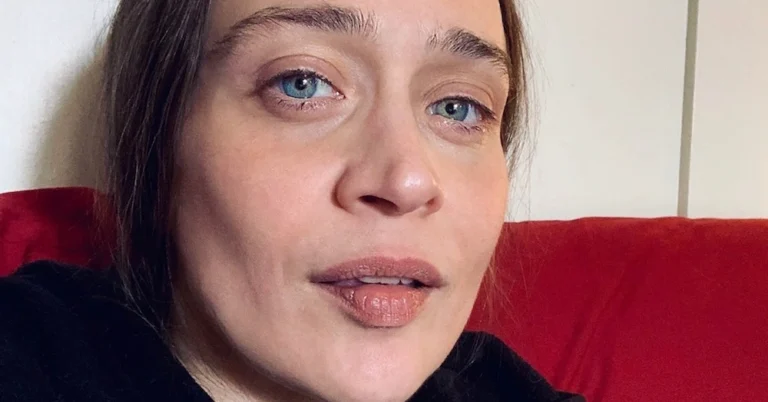
Fiona Apple’s new song, ‘Horns of Bull’, was written as the theme for the Apple TV series Lucky, but it might as well have been lifted from the sessions behind Fetch the Bolt Cutters. Apple co-produced the track with her drummer Amy Aileen Wood, and Wood’s wife Cassie Pappas is one of the show’s two showrunners. Though only a minute and 40 seconds long, it demands your attention.
Beck – ‘In the Night’
A few months ago, Beck shared ‘Ride Lonesome’, which turns out to be the title track of his first album in 7 years. Today, he’s official announced the record with the lush, haunting single ‘In the Night’, which comes with a video starring Denis Lavant.
Logic1000 – ‘All in for You’ [feat. KUČKA]
Logic1000 has announced a new album, Confirmation!, which is out October 2 and features Christine and the Queens, Jam City, FAUZIA, KUČKA, and yunè pinku. The KUČKA collab accompanies the announcement, an effervescent, intimate track called ‘All in for You’. “I’ve realised that being ‘confirmed’ isn’t about arriving at a final version of yourself,” Logic1000 explained. “It’s about feeling aligned with who you are today, while knowing you’ll continue to grow. It’s about having faith in yourself.”
Meshel Ndegeocello – ‘I Knew You Were Waiting (For Me)’ (Aretha Franklin and George Michael Cover)
Cat Power, Chaka Khan, Brandi Carlile, Bill Callahan, Chris Thile, Nick Hakim, Madison Cunningham Lianne La Havas, Moses Sumney, ANOHNI, Willow, and more appear on Meshel Ndegeocello’s new album, Synonym. Out October 2, it serves as a collection of “classic songs that…have diverse tones, representing various genres and intentional grooves,” according to the Grammy-winning singer. She’s enlisted Cynthia Erivio for a cover of the 1987 Aretha Franklin and George Michael duet ‘I Knew You Were Waiting (For Me)’.
“This project is an expression of queer liberation as a synonym for liberation of all kinds,” Ndegeocello added. “The queer community claimed me when others didn’t and for a long time that felt too far away from other communities to which I belong but now I recognize the ways in which it all overlaps. Once again, I went back to my elders: Audre Lorde told us that there is no single issue struggle. Similarly, these arrangements are synonyms for their originals – these different sounds still mean the same thing.”
Arab Strap – ‘Glamour Magick’
‘Glamour Magick’ is the latest single from Arab Strap’s upcoming LP, Half-Told Tales, following previous cuts ‘You You You’ and ‘Fighting For You. “‘Glamour Magick’ is about the pressure to look youthful, and how far we might go to hide our natural selves,” singer Aidan Moffat expounded. “I started with a few things I use regularly in middle age – caffeine shampoo, whitening toothpaste, eye cream etc. – and then I wondered how much further I’d be willing to go. New teeth, new hair, liposuction, eye-lifts, facial fat injections … how long until there’s nothing really left of me? It’s nothing new, of course – the end of the song mentions the Fountain of Youth and Greek goddess Hebe – and looking young has always been an inherent human desire. Time is our enemy, and we’re all spending money on trying to fight it – it’s just a question of how much we’re willing to pay.”
No Joy – ‘Barking at the Sun’
‘Big Life’, the title track from No Joy’s upcoming Fire-Toolz-produced EP, landed in our list of the best songs of June. The new cut ‘Barking at the Sun’ is full of pummeling, intricate aggression, but weaved in the middle is one of the band’s most ethereal passages.
Dry Cleaning – ‘I Have the Key’ and ‘Grass’
Dry Cleaning have unveiled a deluxe edition of their latest LP Secret Love, which features two new tracks along with the recently released ‘Sliced by a Fingernail’. ‘I Have the Key’ and ‘Grass’ are both accompanied by music videos Bellyache, who made visuals for all of the LP’s original tracks. “‘Grass’ is about grieving for someone still alive,” vocalist Florence Shaw explained. “The lyrics use some metaphors from nature inspired by two trips; one to see the melting Rhône Glacier in Switzerland and the other to Laurissilva, the ‘living fossil’ ancient forest on the island of Madeira. Whilst it has lots of imperfections and was a bit improvised, Cate [Le Bon, producer] had a real affinity for the vocal performance we chose for this track.”
”The lyrics to ‘I Have the Key’ came from a feeling of sadness and helplessness at the state of the world. The genocide in Gaza had begun around the time I was writing some of the lyrics. The saxophone part was improvised by Bruce Lamont at the Loft studio in Chicago, and the structure and delivery of the vocal, as well as the choice of words came as a response to his playing.”
Mallory Hawk – ‘Four O’ Clocks’
Mallory Hawk has shared ‘Four O’ Clocks’, a tenderly nostalgic track from her debut album, Chinook. “This song is about the house I lived in from ages 6 to 16 in Fayetteville, North Carolina,” she explained. “It was eventually demolished by the city so they could build a highway that made it easier to get to the Fort Bragg military base from residential areas. Shortly after we moved, a tornado came through and damaged the house, which was really jarring and made us grateful to have left even though we never wanted to. I tried driving back there and got far enough to remember that it’s not even possible to visit or really identify where the house was—it’s a highway exit ramp now. ‘Four o’clocks’ are the flowers that lined the walkway to our front steps. They’re fragrant and magenta, and only bloom from 4 to 8 pm. They were always fresh when I got home from school and the smell just transports me there—it’s such a vivid memory for me, down to the sounds, colors, and textures. I really wanted to just feel the winds and smell the smells of my home and reflect on how far I’d come since then, but the reality is quite drab and anti-climactic.”
koleżanka – ‘Levers and Pulleys’
koleżanka has announced Zone 2, the follow-up to 2023’s great Alone With The Sound The Mind Makes. It’s out September 18, and it’s led by ‘Levers and Pulleys’, a playful piece of sophistipop. It marks Kristina Moore’s first release since severing her flexor tendon in her left finger in the fall of 2023, which resultted in months of surgery and recovery. “I wrote this song a few days before my surgery,” she recalled. “I was spending almost every day sitting for hours at this weighted yamaha keyboard I borrowed from my bandmate, Mitch, of Foyer Red. I often played a lot of nothing leading to nowhere, just wanting to indulge in a compulsion of making music however I could. But something stuck that day and I ran with it. The song has changed so much since it’s first conception and became so many different versions of itself it almost didn’t even make the record. Obviously there were no guitars at first, and I changed the bass part several times as I was relearning how to play before I finally just asked Ark (koleżanka’s other half) to take over with their ideas.”
”The end is particularly special to me – I had a clear picture of how I wanted it to sound, but all I could do was perform it twice between the two parts with my one hand in this clunky way,” she added. “After I had recovered and worked towards my final stage of my finger’s new range, I realized I had to learn how to play this part with both hands for recording. It was a very emotional experience, both learning and practicing the part as well as recording the final take and working with Elana on the clarinet arrangements.”
Soft Cell – ‘In Heaven (When We Dance)’
Marc Almond and Dave Ball have served up ‘In Heaven (When We Dance)’, the euphoric second single from their new album. “‘In Heaven (When I Dance With You)’ is a celebration of the early Eighties joyful disco scene,” Almond commented. “A coming together of the sentiments of the time. I wanted it to be that moment when you run to the dancefloor…”
GB – ‘The Next Day’
‘The Next Day’ is easily the sunniest single to be released from Gustav Berntsen’s upcoming album Herzsprung, but it’s no less intricate than previous cuts ‘Adrenaline’ and ‘Starsound’. The LP arrives August 21 via AD 93.
Big Red – ‘Isn’t He Funny?’
Big Red is the new project of Joseph Scarisbrick, who leads the London seven-piece The Orchestra (For Now). Drummer Charlie Hancock and bassist/vocalist Millie Kirby are also part of the band, whose debut single ‘Isn’t He Funny?’ is spindly and explosive, ultimately echoing Radiohead’s ‘Creep’, of all things. “I was playing a few shows with just a drummer and with this song I was improvising the lyrics on stage,” Scarisbrick explained. “The only line that stayed the same each time was ‘Isn’t He Funny?’. Afterwards I went home, wrote down the bits that I liked, and gradually pieced it together from all these different versions. I like that the song can’t quite decide whether it’s joking or breaking down. There’s all these threats and pull backs, small jabs and unease. It’s about trying to maintain control of how others see you while simultaneously losing control of yourself, and how actually it is best to not perform because you will go insane.”
daine – ‘Love Love (Love Love)’
Ninajirachi/underscores collaborator daine has announced their debut LP, In Endless Awe & Agony?, with the uplifting, instantly catchy new single ‘Love Love (Love Love)’. It’s set to drop on November 6.
Willi Carlisle – ‘Mason Jar at the Center of the World’
Willi Carlisle has announced a new album, The Universal Bubba, which was produced by Tyler Childers. It’s out November 6, and the new single ‘Mason Jar at the Center of the World’ is out now. “The universal bubba is somebody who can fix anything, somebody who is good for just about anything,” Carlisle explained. “Everywhere I go I meet these giant people — and what I mean is these men and women and folks who can do it all themselves. Something that’s really struck me about traveling around the world is that everywhere you go there are people who are tirelessly working to make things a little bit better without succumbing to modernity’s pitfalls. They’re somebody who has enough, and if it wasn’t enough they would make it enough.”
Nina Winder-Lind – ‘Headfirst’
Swedish singer-songwriter and multi-instrumentalist Nina Winder-Lind, best known as a member band The New Eves, has shared ‘Headfirst’, a nervy single off her debut solo album, Wild Love. “‘Headfirst’ is the amalgamation of two elements; a spoken poem that I made whilst out on a walk in my neighbourhood, and an odd two harmony guitar riff that I recorded on GarageBand and labeled ‘television guitar,’” she explained. “The song is a declaration of existence and an ode to movement and emotion. It’s an animal song.”
Beck has announced his first album since 2019’s Hyperspace. It’s called Ride Lonesome, and it’s set for release on September 18 via Capitol. Along with the news, Beck has shared the stark, haunting lead single ‘In the Night’, which follows the title track. It comes paired with a Mikai Karl-directed video starring Denis Lavant, which you can check out below.
“My new album Ride Lonesome is coming out this fall,” Beck commented in a press release. “The musicians from my original touring and recording band that I recorded Sea Change, Morning Phase and Mutations with — Smokey Hormel, Joey Waronker, Justin Meldal-Johnsen, Roger Joseph Manning Jr., and Jason Falkner— reconvened with me at my favorite studio (Room B at United Studios in Hollywood). We had Nigel Godrich, who worked on Sea Change and Mutations with us mixing all the songs. It had been a decade since we went in the studio and recorded Morning Phase. This time It felt like the playing and the chemistry had evolved and deepened— a sound that’s come together over the decades of working together.”
“While we were revisiting a musical and physical place, it also felt like we were finding new sounds and emotional textures along the way,” he added.
Ride Lonesome Cover Artwork:
Ride Lonesome Tracklist:
1. Ride Lonesome
2. Run Away
3. In The Night
4. Failed Words
5. Bleed
6. Disappearing Act
7. For Your Love
8. Slow Canyon
9. It Ends Right Here
10. Falling Through My Hands
11. If You Don’t Know What Love Is
12. Beyond The Light
Exactly one month before the release of her new album Lost Weekend, Phoebe Bridgers delivered a surprise performance of its lead single, ‘Lost Boys’, on The Tonight Show Starring Jimmy Fallon. Bridgers – the show’s first-ever surprise musical guest, in fact – was accompanied by a group of young musicians who really knew how to rock out. Watch it go down below.
‘Lost Boys’ was co-produced with Tony Berg, Ethan Gruska, Jack Antonoff, and Alex G. Lost Weekend, Bridgers’ third solo LP, is out August 14 via Dead Oceans.
A recent survey found that82% of marketers use AI for their tasks. But generally speaking, many campaigns still fail before customers even see the product. And the problem often comes down to the words. Not allAI writing assistants are built for marketing or advertising. Most of the time, general-purpose AI leads to content that falls short. Headlines that don’t spark curiosity. Product descriptions that fail to answer buying questions. Landing pages that don’t persuade visitors to act. To avoid this, writers need to use dedicated AI tools for copywriting.
With so manyAI tools on the market, finding the best ones is likely to make the writing predicament worse. But we already did the legwork. This article lists some of the leading AI tools for copywriting. Each option keeps every message persuasive while maintaining a consistent brand voice.
Top Five Best AI Tools for Copywriting
Jasper
Image Credit: Jasper
More thanblogging, Jasper is one of the most recognized AI tools for copywriting. It can handle end-to-end marketing workflows. It has an intuitive document editor that lets users write, edit, and format copy that converts. This tool also offers more than 50 content templates to further streamline the process. But its standout feature is Jasper IQ. A proprietary AI context layer that maintains brand authenticity. This allows marketers to integrate brand voices, style guides, product knowledge, and audience profiles.
Key Features:
Extensive training in more than 50 copywriting skills to deliver top-tier results
Transforming strategy into execution
Repurposing, length, and tone adjustment features
Pricing:
Free Trial
Pro Package – $69 per month
Business Package – Customizable
Real Use Case:
Jasper can help SaaS companies in launching a new software product. They can use it to make landing pages, promotional emails, or paid advertisements. It helps in uncovering innovative ways to engage customers and propel business outcomes.
Copy.ai
Copy.ai focuses on accelerating sales and marketingcontent creation. This makes it ideal for boosting go-to-market strategies. It comes with workflows for prospecting emails, sales sequences, blog introductions, and product messaging. Copy.ai also offers a bucketload of tools for generating marketing emails, Instagram captions, product descriptions, and more. It even has an Ad Copy Generator. By setting the target URL, persona, and keyword, marketers can produce compelling ad copy that hooks audiences at speed.
Key Features:
LLM integration for future-proofing GTM strategies
More than 50 AI writing generators
Integrating brand voice consistently across every marketing channel at scale
Pricing:
Free Package
Chat Package – $29 per month
Enterprise Package – Customizable
Real Use Case:
Digital marketers, including pay-per-click specialists, can use Copy.ai. It can help in generating ad copy. All while adapting messaging based on different industries and customer pain points. This makes it easier to tailor outputs to the target audience and increase conversion rates.
Copysmith
Image Credit: Copysmith
Started as one of the standalone AI tools for copywriting. But now, Copysmith specializes in broader AI content. It now houses Frase, Describely, and Rytr. Nonetheless, it can still help marketers make ad copy, product descriptions, social media posts, catalog content, and marketplace listings at scale. It’s particularly beneficial for companies managing tons of products. It maintains consistent and optimized descriptions without having to write each one from scratch.
Key Features:
Creating different advertising and copywriting assets
Extensive template library for various use cases
Supports bulk content creation
Pricing:
Free Trial
Starter Package – $19 per month
Professional Package – $59 per month
Real Use Case:
Copysmith allows online fashion retailers to launch several new clothing items. This tool enables the quick generation of product descriptions. All while maintaining a consistent brand voice across the entire catalog.
Writer.com
Writer.com positions itself as an enterprise AI platform. So users can expect it to approach copywriting from a brand governance perspective. It offers AI agents that do the heavy lifting. Users just need to describe what they need, along with the context and standards. As such, this helps marketing teams ensure every piece follows approved messaging, terminology, and style guidelines. It can deliver on-brand work instantly. That means larger organizations can use copy that fits into existing content management processes.
Key Features:
Personalizing brands across channels, personas, and products
Collaboration tools for enterprise teams
Automated workflows without eliminating human control
Pricing:
Free Trial
Starter Package – $29 per month
Enterprise Package – Customizable
Real Use Case:
Financial institutions can use Writer.com to automate handoffs, reviews, and redundant work. So marketing teams can make website copy, email campaigns, and promotional materials more efficiently. This accelerates cycles and launches campaigns faster.
Anyword
Image Credit: Anyword
Emphasizing brand and performance, Anyword is another option built specifically for GTM teams. Its standout capability is performance prediction. This platform taps into marketing data. Like audience, business goal, and channel. Doing so allows it to advise marketers which copy is more likely to resonate with a target audience. With its suite of AI tools, including content intelligence, a blog wizard, and a data-driven editor, users can eliminate time-consuming, resource-intensive A/B testing.
Key Features:
Creating high-converting marketing copy
Real-time business results monitoring
Maintains brand identity across every channel and team
Pricing:
Free Trial
Starter Package – $49 per month
Data-Driven Package – $99 per month
Business Package – Customizable
Enterprise Package – Customizable
Real Use Case:
Marketing directors can benefit from Anyword’s copywriting features. It helps refine email marketing copy using AI-powered performance predictions. In practice, this is likely to boost click-through rates by creating more engaging, data-backed messaging.
Choosing the Standout AI Tools for Copywriting in 2026
Successful copywriting has always been about persuasion. But the work isn’t just focused on pricing, design, or quality. The words that represent it need to make the difference between attracting attention and getting ignored. That’s what makes these AI tools for copywriting essential. They can be used to create copy for advertisements, e-commerce listings, emails, landing pages, and social media.
But as with choosing any set of AI tools, the best one often depends on your workflow. Jasper shines in full-scale marketing campaigns. Copy.ai backs up sales and outbound messaging. Copysmith streamlines e-commerce content. Writer.com helps enterprise teams maintain brand consistency. Anyword focuses on optimizing copy for conversions.
That said, copywriters should not fear these AI counterparts. In fact, they should maximize them to elevate their efficiency and output quality.
Tracy Weisman is an interdisciplinary artist and visual storyteller whose work explores identity, vulnerability, American symbolism, and the emotional tension between attachment and disillusionment. Rooted in her background as a professional speechwriter, Weisman’s practice is shaped by a deep engagement with narrative, persuasion, public language, and the ways national myths are constructed and communicated. Working across textiles, sculpture, installation, and mixed media, she often transforms familiar cultural objects through processes of stitching, alteration, accumulation, and physical disruption.
Her practice draws equally from contemporary art methodologies, craft traditions, and vernacular Americana, resulting in a body of work that resists categorisation. Her work emphasises emotional resonance and material transformation, balancing conceptual rigour with physical immediacy, and reflecting on contemporary America through both personal and collective experience. Rather than offering fixed political conclusions, the work explores emotionally charged themes by inviting viewers into a space of reflection, discomfort, contradiction, and empathy.
She lives and maintains studio practices in both Palm Springs, CA, and Narragansett, RI.
You spent years as a speechwriter before moving into visual art. Does your background in persuasive language show up in how you construct an artistic piece?
It does. Humans are hardwired to learn from what we hear. After all, we’ve only had written language for around 5,000 years; prior to that, we communicated and transmitted our culture orally. As such, I used to remind my clients that every successful speech is grounded in a good story. To make ideas stick with an audience, I used metaphors and vivid language to engage the visual brain as well as the ear. Today, I rely on that same construct as a visual artist, using familiar but altered objects to create visual metaphors that stop viewers in their tracks. I’m especially drawn to vintage materials because they have stories embedded in them already, which adds depth and complexity to a piece.
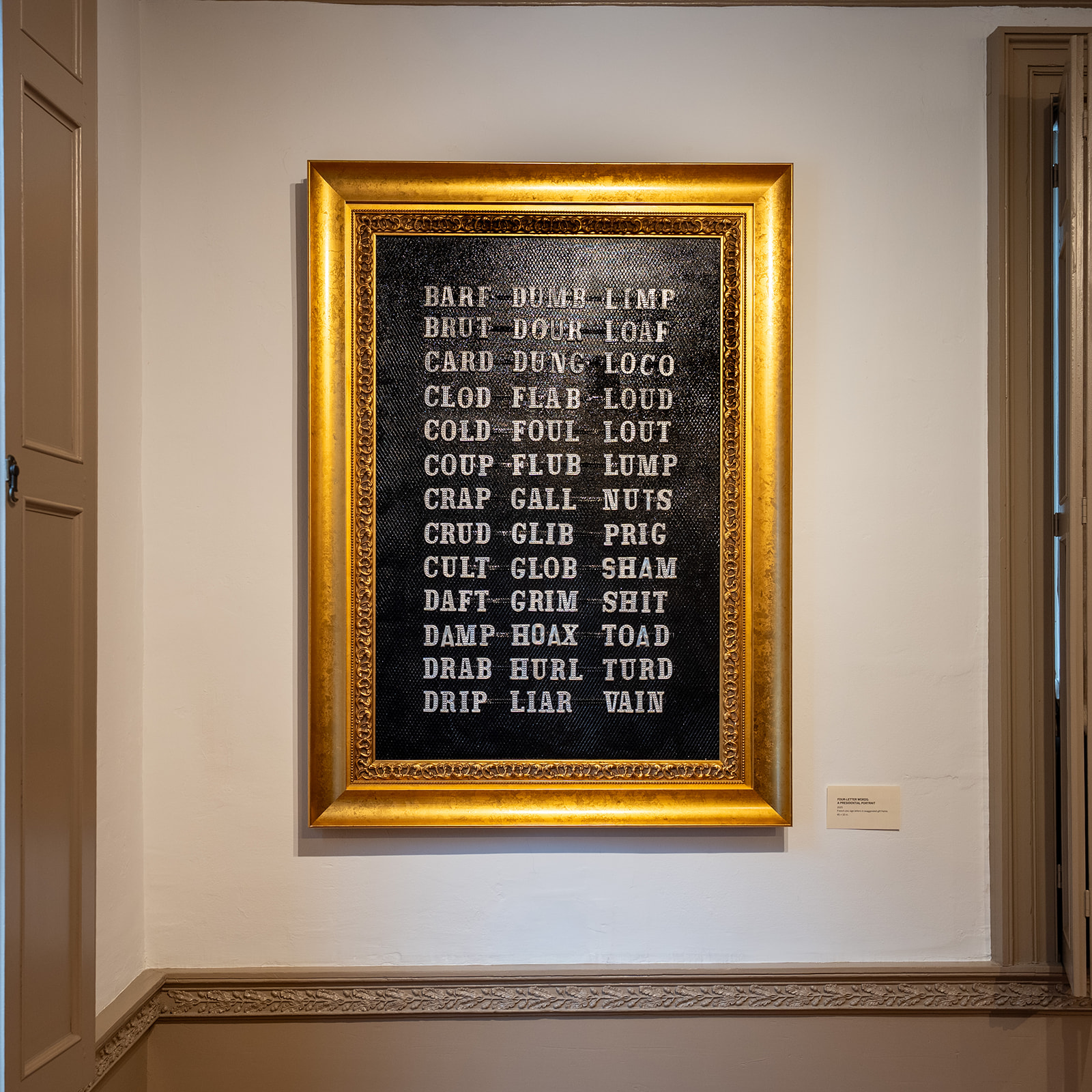
I find the presidential ‘portrait’ made of four-letter words particularly fascinating. What was the process of choosing those words like, and how did you navigate the line between commentary and caricature?
As a life-long word nerd, I had a lot of fun creating this piece out of vintage French tin sign letters. I dumped them out on my work table and played Scrabble, creating as many four-letter-words as possible to describe the current Oval Office occupant. To strike a balance between commentary and caricature, I let language do the work. For example, I combined humorous, onomatopoeic words like glob and crud with more serious descriptors like vain, liar and sham, and then alphabetised everything in columns to give each word equal emphasis. The triple gold frame surrounding the words leaves no doubt about the subject of the piece. It’s one of my favourites in the show.
Photo credit: Madison van Wylen
Turning quahog shells into fundraising objects that benefit Newport’s Dr. Martin Luther King, Jr. Community Center connects this conceptual work to something very local. How did that idea come together?
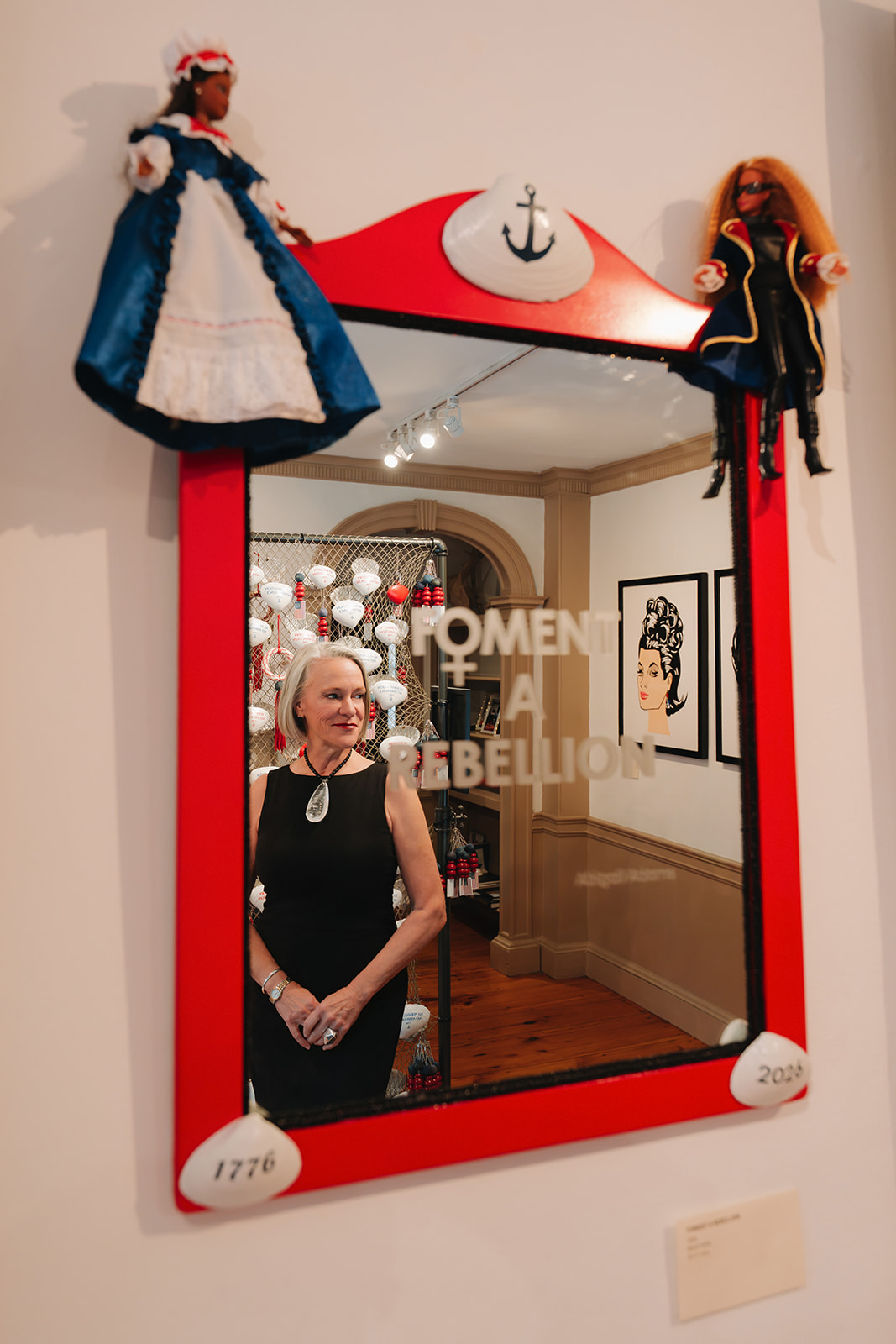
Creating this show helped me work through heavy feelings of despair, betrayal and grief. After getting that out of my system, I resolved to fight back by “helping the helpers,” as Fred Rogers used to say. The MLK Jr. Community Center is a critical RI resource for the people most directly targeted by the current administration: immigrants, persons of colour or those struggling to put food on the table. The shells are symbolically significant, as prior to colonisation, the indigenous people of RI relied on the plentiful quahog as a food source, ornamentation and currency. Each shell bears half of George Washington’s famous quote from his 1790 letter to Newport’s Hebrew congregation in which he promised that the new government of the United States would give “to bigotry no sanction, to persecution no assistance,” a fitting reminder for our divided times. The idea has resonated strongly with visitors; halfway through the show we’ve already raised thousands of dollars.
The show is described as situated “between affection and unease.” Was there a particular piece where you found that balance hardest to strike?
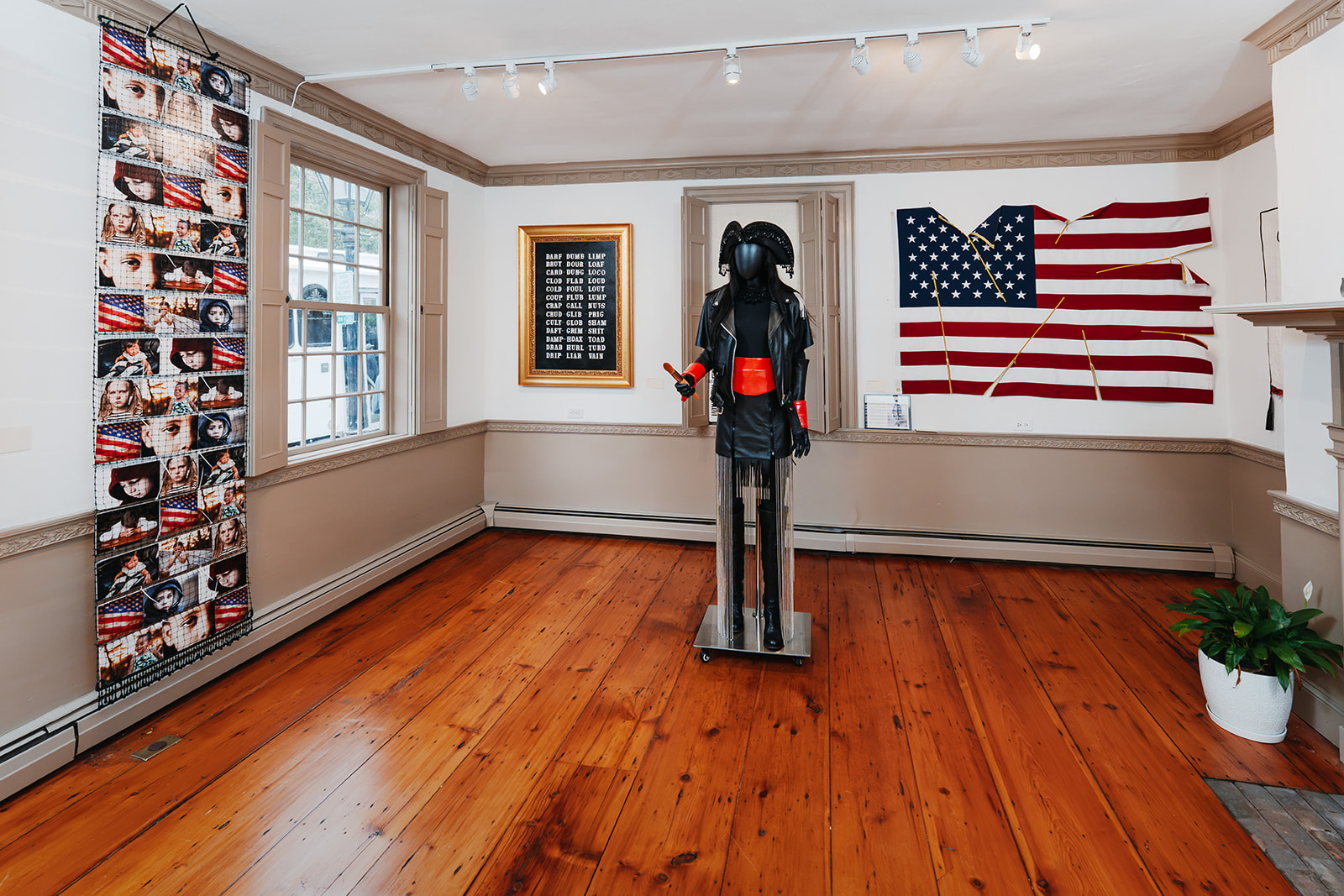
Yes, the flag with gold zippers which is also the namesake of the show, Some Birthday, America. Even though altering an American flag is protected as political speech under the First Amendment, it was still heartbreaking to take a pair of scissors to our beloved national symbol. The insertion of gold zippers, which can be used to either divide or heal, introduces a sense of uncertainty and resignation because even when all the zippers are closed the flag is forever altered.
Photo credit: Madison van Wylen
Do you think of your work as being in conversation with other artists making 250th-anniversary art right now, or intentionally separate?
Artists are truth-tellers in times of crisis and I’m proud to add my body of work to the ongoing conversation my fellow artists are having about America as we turn 250.
Are there any artists or writers that you have found particularly inspiring lately, perhaps in relation to this body of work?
Yes. I thought the entire body of work newly commissioned by MOCA and The Brick for the recent MONUMENTS exhibition in LA was profound, particularly Kara Walker’s breathtaking Unmanned Drone, a brilliant reconstruction of the Confederate statue of General Stonewall Jackson. I deeply identify with Walker’s fearless alteration of the familiar to tell a different story and her piece is a punch to the gut. As for writers, Abigail Adams’s March 31, 1776 letter to her husband John in Philadelphia during the Second Continental Congress also inspired me. She sternly warned him: “If particular care and attention is not paid to the ladies, we are determined to foment a rebellion, and will not hold ourselves bound by any laws in which we have no voice or representation.” The bold section of that quote became the centrepiece of one work in my show. Further, as American women are experiencing a brazen rollback of our rights, I consider it a rallying cry and the fuel for my next body of work.
Covering musicians for years taught me something unexpected. The most gut-wrenching albums often came from people whose marriages were falling apart. In 2019 I sat down with 47 independent artists and asked them about creating work during major life upheavals, and 68% said their separation became this intense source of material. What shocked me was how many said dealing with legal paperwork caused more stress than writing songs themselves.
Filing legal documents should be simple, right? Wrong. I watched a folk singer spend $4,200 on lawyer fees even though he and his wife had already worked everything out. No drama. No custody issues. Just needed signatures on paper. He could’ve used an online service to file for divorce online and saved himself three months of attorney emails.
When Art Meets Real Life Admin
Creative people hate bureaucracy. But I’ve noticed artists who avoid dealing with legal stuff because they think it’ll kill their creative energy end up way more drained by the avoidance itself. Procrastination is weirdly exhausting.
A singer-songwriter in Portland wrote five complete songs for an EP while her unsigned divorce papers sat on her kitchen table. Five whole months. She kept assuming she needed to pay someone a fortune to handle everything. Her bandmate eventually mentioned that uncontested cases, where both people actually agree on terms, don’t require expensive formal legal help. She finished her paperwork in 11 days.
The Cost of Waiting
My friend Jordan makes electronic music and runs a small label. His marriage ended in 2021 and he and his ex-wife figured everything out in two conversations. Apartment stuff got divided easily, no children involved, both had separate incomes. Jordan kept putting off the filing because he figured he needed at least $3,000 to start.
Didn’t need it. Found a service charging him $179 flat rate. Got his forms completed faster than he finished mixing his album. He told me, “I wasted six months stressing about lawyer appointments that I didn’t even need.”
The contested versus uncontested thing matters here. Fighting over assets or custody? Sure, get serious legal representation. Already worked everything out? You’re just filling out forms correctly.
Why Musicians Wait (And Shouldn’t)
Artists delay because we romanticize struggle. There’s this bizarre notion that suffering automatically creates better art. Maybe sometimes. But I’ve found clearing away practical problems actually opens up way more mental space for creativity.
A jazz pianist in Brooklyn told me she couldn’t write anything new until her divorce finalized. She called it “unfinished business playing on loop in my head.” Papers went through, and she recorded 14 new compositions in three months.
The actual process? Not as emotionally heavy as people imagine. You answer questions about your situation, the system generates paperwork based on your state’s requirements, you review everything, then file with your local court. Straightforward for uncontested situations.
What Actually Matters
I’ve watched enough artists navigate this to know what genuinely helps. Being honest about whether your case is actually simple comes first. Both agree and there aren’t complicated assets? You don’t need the full legal treatment. Just starting helps too. Sounds basic, but I’ve seen people lose months to anxiety about taking that first step.
The creative community talks constantly about vulnerability and authenticity. But we skip over handling boring life stuff efficiently so we can return to making things. Your art deserves your complete attention instead of half your brain spinning about unsigned documents collecting dust.
Culture sites live on speed and proof. A sharp album review lands harder when you can confirm a release time, a track list, and which stores still stock vinyl.
OurCultureMag.com runs on that same mix of taste and facts, from music picks to film and TV guides. The hard part sits behind the scenes. Streaming pages change fast, ticket sites shape price by region, and stores swap stock status by the hour.
Scrapers can solve this, but only if you run them like a newsroom tool, not a bot swarm. Imperva reported that bots made up 49.6% of all internet traffic, so most big sites now treat odd traffic as a threat.
Start with the data that edits your story
Pick a tight set of fields before you write code. You want data you can use in a headline, a guide, or a quick update.
For film and TV, capture title, season, episode count, rating, and where it streams per region. For music, capture release date, label, formats, and a short list of links you can check by hand when things look off.
Set a fetch pace that matches real change. Ticket prices can shift in minutes, while a catalog page may only change once a day.
Build a “culture ID” for every item
Sites rename things all the time. Your pipeline needs a stable key that survives a rebrand, a URL change, or a new artwork crop.
Use the source’s own ID when you can. If you cannot, hash a mix of title, creator, and release date, then store alias titles as extra fields.
Scrape like a fan, not a flood
Most blocks come from patterns, not from one request. Keep your request rate low and steady, and match the site’s real user flow.
Fetch the page that lists items, then follow only the links you need. Cache responses and reuse them across teams, so one edit does not trigger a full re-crawl.
Send clean headers and accept cookies when the site needs them to show the right region. Rotate user agents, but do it with care, since wild shifts can look fake.
Reduce page weight before you parse
Many culture pages ship huge scripts, ad tags, and video. You can cut load time and risk by blocking heavy file types when you only need HTML.
Headless tools help with script-run pages, but they cost more and fail in new ways. Use them only when a plain HTTP fetch cannot see the data.
When geo locks hit, proxies keep your feed honest
Region locks distort culture coverage. A show can trend on social, yet not stream in your reader’s market, and a tour can show a different fee set by city.
Datacenter IPs work for low-risk pages, but many ticket and retail sites flag them fast. Residential proxies often blend in better because real homes use them too.
If you need stable sessions for cart flows or seat maps, pick sticky sessions. If you need broad checks across cities, rotate by region and keep a strict cap per IP.
Teams that need reliable geo checks often start with providers like Byteful.
Control drift with repeatable test routes
Run the same query from the same regions every time. Store the raw HTML for a short window, so you can prove what the site showed when an edit goes live.
Log block signals like captcha pages, odd redirects, and blank seat maps. Treat those as data too, since they tell you when the site changes its guard.
Turn messy pages into a clean culture feed
Parsing breaks when sites tweak layout. Write selectors that anchor on meaning, not on fragile class names.
Normalize dates, currency, and time zones at ingest. A tour date means nothing if you mix local time and UTC across sources.
Use change detection to cut noise. Alert only on meaningful shifts, like a new platform added, a price jump over a set percent, or a sold-out flag.
Design for editors and for SEO
Editors need fast checks. Keep a small dashboard view that shows the last fetch time, the current value, and a diff snippet.
Search needs clean, stable fields. Store canonical titles, alt titles, and structured entities, so your pages match what people type when they search.
Compliance rules you can defend in public
Read the site’s terms and respect access limits. If a source offers an API, use it, since it often sets clear bounds.
Avoid personal data unless you have a clear reason and a legal basis. Do not collect emails, device IDs, or session tokens from user pages.
Copyright still applies to culture work. Store facts and metadata, and keep full text or images out of your data store unless you hold rights or a clear license.
When you treat scraping as reporting support, you make better guides and cleaner updates. You also keep your operation stable when sites tighten rules.