No one has flaunted his introspective streak quite like slowthai. While he rose to fame thanks to the incisive political commentary of 2019’s Nothing Great About Britain, his status as a celebrated rapper in today’s culture – especially one whose career has been shrouded in controversy – has required him to look inward. slowthai’s last album, Tyron, did include a somewhat heavy-handed takedown of cancel culture, but its two-part structure made way for a nuanced, if rather disjointed, portrait of the artist beyond his public persona. Though it may not have received the same acclaim as his debut, it was a compelling effort that not only saw him overcoming his resistance to maturity but opened new avenues for expressing it. On his new record, UGLY, Tyron Frampton continues to tackle the contradictions within himself – the title is an acronym for U Gotta Love Yourself, and “self-reflection” is the first word we hear him speak – but commits to more of a single lane, narrowing his focus, and, unfortunately, some of his ambition.
Nowadays, a mainstream album built around therapy is pretty common across genres. In 2019, Dave won some of Britain’s most prestigious awards for his album Psychodrama. Last year, Kendrick Lamar made his grand return with an album doubling as a messy, cathartic therapy session that went well over an hour. In pop, that kind of framing is almost expected. Last year’s Hold the Girl brought Rina Sawayama the title of “pop therapist”; a few months after Tyron came out, Anne-Marie, whom slowthai is dating, released an album called Therapy. This context is relevant because UGLY is refreshingly not that kind of therapy album, deliberately stumbling around the concept more than channelling it into music. “I’ve been lacking motivation/ I need an innervention,” he declares on ‘Yum’, his clumsy (but practically indiscernible) wordplay undercutting his urgency. He then relays an exchange with his therapist whose breathing exercises have him questioning “What am I paying for?” before spiralling into a frenzy: “Excuse me while I self-destruct/ ‘Cause I don’t give a fuck.”
Even as the album progresses, UGLY is less about digging himself out of those self-destructive tendencies than learning to face up to and embrace different facets of his personality. The catharsis Frampton didn’t get out of therapy he found by returning to his roots, which may sound surprising to some: he grew up wanting to be in rock bands but turned to rap because none of his peers would give him a serious shot. Now, having already teamed up with acts like Slaves (now known as Soft Play) and IDLES, he has the tools and connections to make the album he always wanted and that every rapper-turned-rockstar wishes they could. More drawn to post- than pop-punk, slowthai scrubs off the “ish” out of the “punkish” energy of his debut, going as far as to enter the extended “produced by Dan Carey” universe and enlisting Fontaines D.C. alongside a crew of contributors that include Shygirl, Kwes Darko, and Jockstrap’s Taylor Skye. The results have all the authenticity and raw grit you’d want from such a transition, even if beneath the convincing surface the songwriting isn’t always up to par.
slowthai generally sounds invigorated by Carey’s dynamic production, which is able to match the rapper’s dizzying and often conflicting train of thought. ‘Yum’ and early single ‘Selfish’ are among the album’s most thrilling cuts, with the dark, propulsive swagger of the latter allowing slowthai to tap into one of his most vibrant performances. But the record quickly starts to lose momentum, competently switching between styles but slowly losing its sense of identity. slowthai has no issue commanding whatever instrumental he and his collaborators whip up, revealing the mangled irony behind ostensibly carefree songs like ‘Feel Good’ and ‘Wotz Funny’. But on songs like ‘Sooner’, he seems to just be hanging along for the ride. The pair of ‘HAPPY’ and ‘UGLY’ is particularly puzzling: spelling out the title of a song is rarely a good idea, but to do it on two tracks in a row? The forced positivity of ‘HAPPY’ is more baffling than biting, while ‘UGLY’ sounds like a Pablo Honey-era Radiohead cut with a wearying chorus. When slowthai struggles to find the right balance between singing and rapping, it sometimes undercuts the emotion of his words.
Amidst the noise and confusion, there are flashes of brilliance. UGLY‘s best song might be ‘Fuck It Puppet’ – the name his therapist gave “the self-destructive imp on his shoulder” – which is just seventy-three seconds of pure dramatic intensity. On ‘Never Again’, the live instrumentation beautifully accentuates his rich, contemplative lyricism. slowthai’s endearing sense of humour still shines through when you least expect it, like when he ends the final verse on ‘Feel Good’ with a reminder that “Everything ain’t nice like cherry pie,” giggling at his own joke. For a therapy album about how therapy doesn’t always work but the transformative power of music might be more than a cliché, UGLY has some genuinely potent moments, like when it evokes the abyss of depression on the Pixies-indebted (maybe too indebted) ‘Falling’. But the biggest piece of evidence for UGLY‘s thesis lies in ‘Tourniquet’, which unravels purposefully before reaching its conclusion: “I give you everything I’ve got/ Until the last fucking bone I have,” he sings with selfless desperation, dispelling every shred of doubt thrown his way. There’s no impish persona, no devil on his shoulder, no obsessions to toy with, just unvarnished desire to get to the core of this – by, if not entirely for, himself.
Online negotiation certificate courses are becoming increasingly popular with businesses and professionals, providing knowledge and skills that can help develop personal and professional success. Whether you’re looking to gain a competitive edge in a business role or getting ready for job interviews, this course provides you with the skills needed for successful negotiation. When you enroll into a negotiation programme online, you’ll learn the basics of bargaining and negotiating strategies, practice techniques to enhance your communication skills, and understand how to manage difficult conversations.
What You Can Learn with an Online Negotiation Certificate
An online negotiation certificate course covers a wide range of topics related to effective negotiation. These include understanding different types of negotiations, developing tactics to reach an agreement, and learning how to manage difficult conversations. Here’s a look at the major topics typically covered in this type of course:
Negotiation Basics
The first section of an online negotiation certificate course covers the basics. This includes understanding the different types of negotiations, such as distributive bargaining, integrative bargaining, and collaborative bargaining. It also covers the stages of negotiation, such as problem definition, proposal generation, offer evaluation, and agreement seeking. Students will learn key concepts related to negotiation, including how to prepare for negotiations, assess leverage points and develop persuasive strategies.
Tactics & Strategies
The second section of the course focuses on tactics and strategies. This includes understanding the different tactics available to negotiators, such as anchoring, problem-solving, and active listening. Students will also learn to effectively employ these tactics to resolve conflicts and reach agreements more quickly. They will gain an in-depth understanding of the importance of communication in negotiation, including how words can be used strategically to influence an outcome. This section also introduces the various negotiation styles prevalent in business, such as distributive bargaining and integrative bargaining.
Preparing for Negotiations
The third section of the course focuses on preparing for negotiations. Here, students will learn how to assess leverage points and develop persuasive strategies. They will also be introduced to BATNAs (Best Alternative to a Negotiated Agreement) and its importance in negotiation. The section includes practical advice on how to construct effective negotiation plans and how to research the other party’s interests.
Communication During Negotiations
The fourth section of the course explores communication during negotiations. It covers topics such as active listening, probing questions, and language choice. Students will learn to identify nonverbal cues to gauge the other party’s reactions and adjust their strategies accordingly. They will also acquire techniques for managing difficult situations, such as responding to anger or hostility.
Closing the Deal
The fifth section of the course focuses on closing the deal. It covers topics such as informing the other party of your offer, making counteroffers, and revising terms. Students will learn to identify when a negotiation is reaching its conclusion and how to use this important moment to their advantage. They will also explore strategies for resolving final disagreements and sealing the deal.
Post-Negotiation Techniques
Once a negotiation is complete, students will learn valuable post-negotiation techniques such as evaluating the process, memorializing the agreement in writing, and building a positive relationship with their counterpart. These tactics ensure that an agreement is respected and that both parties remain satisfied with the results.
Course Outcomes
By the end of the course, students will be prepared to successfully negotiate in various settings. They will possess a detailed understanding of each stage of negotiations as well as effective strategies for presenting their case and responding to their counterpart’s demands. Students will also have the knowledge and confidence to close any deal with satisfaction.
Debby Friday has shared a new single, ‘HOT LOVE’, the latest offering from her upcoming debut album GOOD LUCK. It follows previous cuts ‘SO HARD TO TELL’ and ‘I GOT IT’, both of which landed on our Best New Songs list. Check it out below.
“The song itself is about the karma of relationships,” Friday said of ‘HOT LOVE’ in a statement. “You meet someone, and you idealize them, you project onto them, and they do the same to you, and it’s all fun and games until it isn’t. This way of loving is so intoxicating and combustible and so hot it burns you right up.”
GOOD LUCK will be released on March 24 via Sub Pop.
Christian artist Jie Han is pleased to introduce her latest collection of picture albums regarding The Book of Revelation. As a devout believer, Jie sees applying surrealism to the Bible as her unique approach to reinterpreting a classical story with a modern presentation.
After being baptized, Jie started exploring different themes in her art creations. Expressing biblical verses with artistic creativity is something she immensely enjoys, as it helps her to connect better with God. The themes of salvation and grace through Jesus deeply touched Jie, becoming her main source of inspiration for her artwork.
According to Jie, “In the Christian worldview, both man and nature are made by God,” she adds, “When I observe the physical structure of humans and the diverse elements in nature, I’m always amazed by how beautiful and stunning these creations are.”
Jie also states that many surrealist artists sought to explore the hidden depths of the human mind and to reveal human nature. This process is usually personal and subjective and is revealed through the artist’s own subconscious and imagination. But Jie focuses on the exploration of God’s will in the Bible instead of discussing the overall human subconscious. The Book of Revelation, for example, refers to the process by which God reveals himself and his will to mankind.
Jie has selected a few sections from each of the 22 chapters of The Book of Revelation as the inspiration source of her collection. The 22 images are presented as digital paintings and will be published in picture albums on Amazon as well as in the form of NFT.
Inspired by Revelation 2:26 ESV, Jie brought to life God’s view of “The one who conquers and who keeps my works until the end, to him I will give authority over the nations.” She depicted a modern cityscape to convey the message that God wants to impart to his followers.
(Revelation 2:26 ESV, by Jie Han)
This unexpected combination of modern world and biblical scenes takes the audience into an extraordinary space, creating a contemporary but classical level of art that allows viewers to better relate to her artworks without feeling too dogmatic.
“As a Christian, the fundamental concept of my art is to interpret and express the praise of the Creator by the Created,” Jie shares, “In the Book of Revelation, John the Apostle describes a vision of heaven full of strange and wonderful creatures, which generates infinite imagination for creation. The story it tells is unbelievably incredible.”
Individuals have different perspectives and approaches to understanding God and the original saints, which brings peace to Jie and fills her with spiritual power. The classic paintings and sculptures of the Middle Ages and Renaissance still offer an intimate approach to the Bible even today. That’s why Jie sees them as classics that never end.
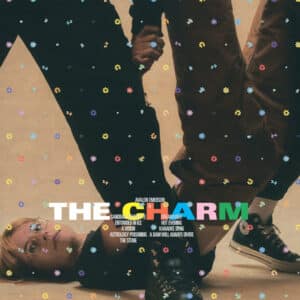
Avalon Emerson has announced a new album under the moniker Avalon Emerson & the Charm. The self-titled LP will arrive on April 28 via her new label Another Dove. To accompany the announcement, the DJ and producer has unveiled a new song called ‘Hot Evening’. Check it out below and scroll down for the album’s cover art and tracklist.
In a press release, Emerson had this to say about ‘Hot Evening’:
Hot Evening is a stamped passport. It’s a series of diary entries, home movies, and polaroids. It’s the moment of calm when 200 adults all partake in group snack time and nap time at 35 thousand feet. It’s seeing the same sun set over a new city skyline. It’s wondering if I’ve spent my youth on too many proverbial and literal moving sidewalks, going forward sure, but to where? and will there just be another long terminal to cross when I arrive?
The sonic inspiration comes from somewhere between Todd Edwards, the Magnetic Fields, and the Chordettes. Unlike Sandrail, where disparate sketches slid together into a final version quickly, Hot Evening hovered around 75% done for over a year, ebbing and flowing into different shades of complete until the final touches came together right at deadline.
Emerson’s new record was executive produced by Bullion. It includes the previously released single ‘Sandrail Silhouette’.
Avalon Emerson & the Charm Cover Artwork:
Avalon Emerson & the Charm Tracklist:
1. Sandrail Silhouette
2. Entombed In Ice
3. A Vision
4. Astrology Poisoning
5. The Stone
6. Dreamliner
7. Hot Evening
8. Karaoke Song
9. A Dam Will Always Divide
@ is the folk-pop project of guitarist Victoria Rose and Baltimore multi-instrumentalist Stone Filipczak, who started exchanging musical ideas over iMessage in the spring of 2020. Despite being 100 miles away from each other and operating in different musical spheres – Filipczak had a background in the noise rock and experimental scene, while Rose gravitated toward hushed, confessional songwriting – the pair continued their entirely remote collaboration, leading to their debut album, Mind Palace Music, which was originally released in 2021 and recently reissued by Carpark. So much of @’s music hinges on a delicate balance: it can be playful bordering on goofy yet strikingly earnest, personal yet flirting with fantasy, emanating an off-kilter, homespun charm but made with careful attention to craft. As they nudge each other out of their comfort zone, Rose and Filipczak’s voices and songwriting instincts counteract each other in ways that are warm, inventive, and often unpredictable. As much as you can feel the influence of cult singer-songwriters like Vashti Bunyan or the lo-fi ethos of the Elephant 6 collective, Mind Palace Music feels like an outpouring of inspiration channeling a dazzling little universe all its own.
We caught up with @ for this edition of our Artist Spotlight interview series to talk about their origin story, their collaborative process, hyperfolk, and more.
Do you mind sharing how the two of you first met and what your first impressions of each other were?
Victoria Rose: We met in Boston years ago in our early twenties. We were just hanging out, we weren’t making music together at that time. We were just in the same circle, in the same music scene, and got along. But I would say my first impression was – I don’t know, at the time, I was a little bit intimidated, because he was very friendly, very nice, and also a little bit opinionated.Also intimidated, I think, musically, because the world that I was operating in felt a little bit different. It was very much more song-oriented, a little bit softer, and I was experiencing him working within more of the noise scene and being in noise rock bands or full-on experimental projects that I found interesting but didn’t know how to access.
Stone Filipczak: I thought she was super smart. We could talk about a lot of different things, and I think that eventually translated into being able to collaborate on music pretty well.
Victoria, I read that your first reaction to hearing Stone’s contribution to ‘Star Game’, the first track you collaborated on, was that it was too arranged. What made you warm up to the song, and how did the collaboration flourish into a full-length project?
SF: Well, we revisited that moment and we remembered exactly how it went, and it was because I called it a drug song, right? I called it a stoner jam or something, because I thought that was hilarious.
VR: Usually when I have a song that I recorded, there’s something very personal about it to me. And then I sent it to Stone, and he responds with like, “I turned into a stoner jam.” I hated that. [laughs]
SF: The stuff that I added on ‘Star Game’ is literally like, bongos, shaker, and a ridiculous-sounding high background vocal, and it all literally sounded like hippies chanting in a drum circle or something. But I think that’s what makes it really cool, to me at least.
VR: It’s wonderful. What it took for me to like it – if I’m honest, I was squatting at my friend’s house and I was upstairs, I listened to it through my phone and I didn’t really like it. And I brought it down and shared it with a bunch of people downstairs in the kitchen, and they’re all like, “This is really good.” It took somebody else telling me it was good to sit down and accept it. And then the next thing we worked on was a song of yours.
SF: And I think after we had done one of your songs and one of my songs, and both of them worked as collaborations, it was like, “We can just keep making songs.”
VR: Yeah, it was first going to be some kind of split, then it was going to be an EP, and then it just turned into a full album. I mean, there really wasn’t a lot to do at the time. It was early 2020, and there was a lot of time totalk and record and just get immersed in a project. I was working on a farm during the day, and then working on music or talking about music anytime I wasn’t doing that, pretty much.
Did the two of you talk a lot about music around that time?
VR: Yeah, we hadn’t really spoken or spent much time with each other since Stone moved out of Boston at the end of 2017. We ended up reconnecting mostly through text message for a long time, just talking to each other a lot about music. And obviously other things, but I feel like that was the focal point.
SF: We both had a lot of free time, and we had the ability and the gear to work on recordings from our houses. The gear was literally just we each had laptops and like one microphone. There was no substantial studio gear being used. But we had that, and we knew how to make recordings, so when we had this opportunity to collaborate long distance, it just all came together in a way that became very productive very quickly. And that became exciting because it’s very exciting to be working on a project that has momentum. It gives you a reason to get up the morning. There was other stuff going on that wasn’t @, but @ became eventually the main thing that we were both focused on as far as getting it done and making it good.
The name @, I initially related it to what you’re talking about in terms of texting and email being your main form of communication at the time, but some of both your songs also address the mediation of technology in relationships. Maybe I’m reading too much into it?
SF: I don’t think it was really that deep, honestly. I decided that it would be cool to call the band at, because then you could use that sign as a symbol. That was maybe three or four months before me and Victoria had our project going and needed a name, and we were talking about what to call it and I mentioned a couple of ideas, and Victoria ended up liking @ the best.
VR:It took some convincing, but I liked that idea the most. It was succinct, and it was so ridiculous, especially for the kind of music we’re making. Maybe @ would be fitting for some heavy electronic project. I wanted to see what would happen if we made it a symbol. It’s so short, it’s the shortest band name in my mind.
SF: I like how it lends itself to iconography very easily. The album cover is basically an @ sign, but stylized.
You’ve also used the term “hyperfolk” to describe your music in press materials, which I haven’t seen a lot of bands embrace.
SF: Yeah, our homie West Kaplan, when the album first came out and it was just a Bandcamp release, he wrote a review of it for the Boston Hassle, and he called it “boomer-pilled hyperfolk.” It was meant to be kind of silly, but I think Carpark ended up liking it and using it in the press material. That’s why now people think we call ourselves hyperfolk, but really we never did – it was a term that somebody else used about us.
VR: I do like it. I like the “boomer-pilled” part.
SF: Yeah, because it is boomer-pilled. More than anything, it’s influenced by ‘60s folk rock.
Can you talk about your favorite songs that the other person wrote for the record?
VR: If I had to choose, I really like ‘Major Blue Empty’. The structure of it and the actual chords, the bones of it, are pretty simple, but he throws in these subtly eerie-sounding flutes, and then a ridiculous guitar solo. I love anything that’s just a little bit over the top and comical in terms of music, but still extremely earnest. It’s over this very spooky, almost somber-sounding song, but I love the contrast between the instrumental and the actual tone of the song.
SF: Once we started getting into the swing of actually working on tracks together, every time she would send me something I’d be really excited to work on it, because they were all so different, and they’re all incredible for different reasons. I think probably ‘Letters’ was my favorite one to do the arrangement for, just because Victoria’s melody – mostly it’s the melody on that song, but also the rhythm, is crazy. It’s so different from what most singer-songwriters are singing in terms of their melodies. It was really exciting to me being like, I can get really far out on the arrangement for this, and it won’t sound stupid or goofy. It’s going to sound good because the songwriting itself is so twisted and so all over the place.
Is there a song that you feel was the most collaborative in terms of how it came together?
SF: Definitely ‘Boxwood Lane’. That’s the one that wasn’t clearly written by either one of us, but it was a true collaboration in the sense that I wrote the chords and the flute backing, and then Victoria wrote the top line and the lyrics.
Your voices blend beautifully together on many of the songs. How did you feel when you first heard your voices layered alongside each other?
VR: That’s part of what was exciting about working together – I think it might have been ‘Camera Phone’ where we realized that. That was the second song we worked on, and it’s heavy on harmony. How did we feel? I think just excited, knowing that our voices blended so well together.
SF: ‘Camera Phone’, I remember we had worked on it, and I had the track on my phone and I showed it to my grandma, who’s a singer and big into music. She just heard it coming out of my phone, and she goes, “Oh, that’s so nice! Those harmonies are great, the voices are blending really well together.” I just felt like that was pretty special, because I had never ever done anything like that. All the music I had made before was just way so far outside of any type of grandma-friendly comfort zone, you know. It was exciting, not just being able to make music that could connect with much older people in that way, but also to be able to make it remotely with Victoria.
From what I understand, a lot of the songs were written or recorded in a short amount of time, but ‘My Garden’ was an exception to that. How did it come together?
VR: I was writing that song a while before we started working together. I just came across two chords that felt really good, like, “Oh, this sounds like the kind of chord Nick Drake would play.” I had that sort of middle part, where I’m singing, “Why do you seesaw? Why don’t you stay?” I was going on that back and forth with the chords, and I had to come up with some sort of song structure. But the structure was so strange I was intimidated to record it, so I had it written for a while without having it formally recorded. I think that was the last song that I wrote and recorded for @. That one was tricky. I remember that was one of the ones that came the least easy in terms of adding arrangement. I think there was a moment where you almost weren’t sure you were going to be able to do anything for that song.
SF: Yeah, it just was hard to get something sounding good. I feel like when I do arrangements on your songs, I try a bunch of stuff until something sounds cool, and it creates an avenue to keep going. Sometimes that happens really quickly and other times it takes a while – that probably took like a week or something.
VR: That’s probably one of my favorite songs on the whole record.
SF: It ended up having a lot of MIDI orchestral elements, like timpani and weird little percussion stuff like that.
It’s an interesting closer as well, because I feel like it encapsulates a lot of what the record is about – this push-and-pull between confusion and intimacy when it comes to human connection. When you’re writing about that subject, do you tend to lean more on one side over the other?
VR: They’re kind of hand-in-hand. I don’t know if I lean on one or the other too often. If I’m writing about connection, a lot of the time it’s in this aspirational way, or maybe I’m writing about an ideal version of the way I’d like to feel about something. It’s difficult to write about the pain and that confusion it causes without allowing myself to write about an out for that, too.
Stone, ‘Friendship Is Frequency’ seems like an aspirational song in that sense too.
SF: For sure, yeah. That’s coming from a very abstract place where it’s not about any particular friendship, it’s about friendship as a concept, and how maybe it could be. What I’m saying in the verses, I don’t usually act that way all the time. If a friend of mine were upset, I could be vibrating in some type of frequency where I could lift them up, but it wasn’t about a particular actual historical time when that happened.
VR: I feel the same. It feels like I write about something inspired, maybe, by historical events, but I broaden it. It’s never quite about that; I make up ideas around it that I have nothing to do with an actual person.
SF: I always feel like songs are inspired by real life and the emotions are based off of things that happen in real life, but the songwriting process, you sort of mould that into something that is going to sound good when you sing it and resonate with other people.
‘Boxwood Lane’ is mostly autobiographical, I assume.
SF: [laughs] ‘Boxwood Lane’ is awesome. It’s honestly some of my favorite lyrics on the album. That song just shows how good of a lyrics writer Victoria is, because she took this concept about hobbits and elves and turned it into a beautiful, incredible little jaunt through the imagination.
Did you ever have conversations about songwriting or the differences in your approach while making Mind Palance Music?
SF: The way that Mind Palace Music went, we didn’t really talk too much about songcraft. It was more like, someone would write an entire song with the whole structure and all the lyrics, and then the other person would collab on that and add stuff to make it into a completed thing that felt like it represented both of us. But I think more recently, since the album has been released and we’ve gotten to actually interact as a band and play show and think about how we’re gonna make the music for our next album, I think now we probably are starting to get a little bit more aware of our differences and respective strengths when it comes to crafting songs. But it wasn’t something we talked about a lot during the making of Mind Palace Music.
VR: That was just feeling a lot of things out.
What are some things you’re thinking about in terms of the future of the project?
SF: We’re just trying to figure out what the next phase is going to be like. If we’re going to continue with an all-remote approach like Mind Palace Music, or if we’ll try to incorporate more of our live band into the recording and songwriting process. There’s a lot of options for how we could approach it. We’re both always just building up a back catalogue of songs that may or may not turn into @ songs, depending on if they resonate with the other person or not.
VR: I think one thing is that we were not living anywhere near each other to practically meet up and work on music in person as frequently. But when I moved down to Philly, I ended up only being just about two hours away from Baltimore, so we’re now able to drive down to Baltimore, drive up to Philly, to song write together and practice in person – just collaborate face-to-face in a way that is different. We’re talking about recording some stuff in person together. I think it will end up being maybe a combination of those.
Can you share one thing that inspires you about the other person?
VR: Stone is just singularly obsessed with making music, and that is really inspiring, to see how much work and thought is put into his practice.
SF: I’m afraid to pick this one thing. Something that inspires me about Victoria is that she’s very adventurous and self-possessed. For example, this past week we were supposed to play a show in New York, but I got sick. And not only did she go by herself and play it alone, totally confidently, but then she also last second added another show in Boston and went and played that, too, and did like a little mini tour through the northeast, spur of the moment and basically alone. I find that pretty inspiring because I am not that way. I find myself much more of a homebody and much more stressed out by stuff like that, and I really admire the adventurousness that that betrays. And I think you hear it in the music. We just kind of went out on all limb on a lot of these tracks, and we were able to go to some pretty far-out places. I see parallels to that in the way that Victoria lives her life.
VR: I see parallels in the way you make the music and the way that you live your life, too. Very thoughtful.
SF: Do the same thing every day. [laughs]
VR: I think that’s what works really well. You’re methodical, you’re very skilled, you do have a regimen. And I’m… [laughs] really loose.
This interview has been edited and condensed for clarity and length.
Scowl have dropped a new single from their forthcoming Psychic Dance Routine EP. It’s called ‘Shot Down’, and it follows ‘Opening Night’, which made our Best New Songs list. Check it out below.
“This song is supposed to represent a battle between concealing your fears and vulnerability and desperately opening up about said fears,” the band’s Kat Moss explained in a press release. “I’m expressing distaste and fury towards the fearful part of myself, ‘Hate you right now’ is aimed at myself. ‘I wanna impress, impressive sound’ – I’m begging to feel confident in my own work and I feel as though this song stealthily disguises those internal fears in a bubblegum hook, only to be immediately punched in the gut with fast guitars and harsh vocals.”
The Psychic Dance Routine EP will be out April 7 on Flatspot Records.
Jana Horn has released a new track, ‘The Dream’, which will appear on her upcoming second album, The Window Is the Dream. It follows lead offering ‘After All This Time’. Take a listen below.
Discussing the new single, Horn said in a statement: “‘The Dream’ is a song I wrote in the stir of waking, about midway through the process of writing this album, and it felt that way, that this song was central, maybe a sample of the whole— ‘a tiny piece of mirror (is always the whole mirror),’ Clarice Lispector says— its recurring lines which depict the image of a bird hitting a window, though not out of oblivion, but because the bird knows something we don’t.”
The Window Is the Dream arrives April 7 via No Quarter.
boygenius have shared another single from their forthcoming debut album, the record. ‘Not Strong Enough’ comes with an accompanying video shot by the band – composed of Phoebe Bridgers, Lucy Dacus, and Julien Baker – and edited by Bridgers’ brother Jackson. Watch and listen below.
the record is set for release on March 31 via Interscope/Polydor. Upon its announcement, the trio unveiled three songs from it: ‘$20’, ‘Emily I’m Sorry’, and ‘True Blue’.
Fontaines D.C. have offered their take on Nick Drake’s ‘Cello Song’. The cover appears on the upcoming tribute albumThe Endless Coloured Ways: The Songs of Nick Drake, which comes out July 7 (via Chrysalis) and also features Liz Phair, Feist, Radiohead’s Philip Selway, Let’s Eat Grandma, Bombay Bicycle Club & The Staves, Ben Harper, John Parish & Aldous Harding, Christian Lee Hutson, Skullcrusher & Gia Margaret, Mike Lindsay & Guy Garvey, Aurora, and more. Check out the tracklist below.
The compilation was put together Cally Callomon, manager of the Nick Drake Estate, and Jeremy Lascelles, co-founder of Blue Raincoat Music and CEO of Chrysalis Records. “Cally and I embarked on this venture with one simple brief to each of the artists – that they ignore the original recording of Nick’s, and reinvent the song in their own unique style,” Lascelles said in a statement. “It was really humbling to hear so many similar responses, with everyone saying how important Nick’s music was to them, and how much they wanted to be part of this project. As the results came in one by one, we were thrilled by the brilliance and invention that each artist had shown. They had done exactly what we hoped for – they had made the song their own.”
Callomon added: “Nick Drake was not that concerned with promoting himself as an artist but I think he would have been overjoyed to hear his art revisited and newly promoted by so many vibrant and talented artists. Jeremy and I also felt it crucial that the album should flow, as a cohesive listening experience, as opposed to a gallery of separate exhibits. Whether we have succeeded in these two ambitions, only the listener can tell. We are honoured and so grateful to all our friends, old and new, who took part in the making of this beautiful set.”
The Endless Coloured Ways: The Songs of Nick Drake Cover Artwork:
The Endless Coloured Ways: The Songs of Nick Drake Tracklist:
1. The Wandering Hearts – Voice From A Mountain
2. Fontaines DC – Cello Song
3. Camille – Hazey Jane II
4. Mike Lindsay [feat. Guy Garvey] – Saturday Sun
5. Bombay Bicycle Club and The Staves – Road
6. Let’s Eat Grandma – From The Morning
7. David Gray – Place To Be
8. John Parish and Aldous Harding – Three Hours
9. Stick in the Wheel – Parasite
10. Ben Harper – Time Has Told Me
11. Emeli Sandé – One Of These Things First
12. Karine Polwart and Kris Drever – Northern Sky
13. Craig Armstrong [feat. Self Esteem] – Black Eyed Dog
13. Bombay Bicycle Club and The Staves – Road (reprise.
14. Nadia Reid – Poor Boy
15. Christian Lee Hutson feat. Elanor Moss – Which Will
16. Skullcrusher and Gia Margaret – Harvest Breed
17. Katherine Priddy – I Think They’re Leaving Me Behind
18. AURORA – Pink Moon
19. Joe Henry and Meshell Ndegeocello – Time Of No Reply
20. Feist – River Man
21. Liz Phair – Free Ride
22. Philip Selway – Fly
23. John Grant – Day Is Done
24. The Wandering Hearts – Voice From A Mountain