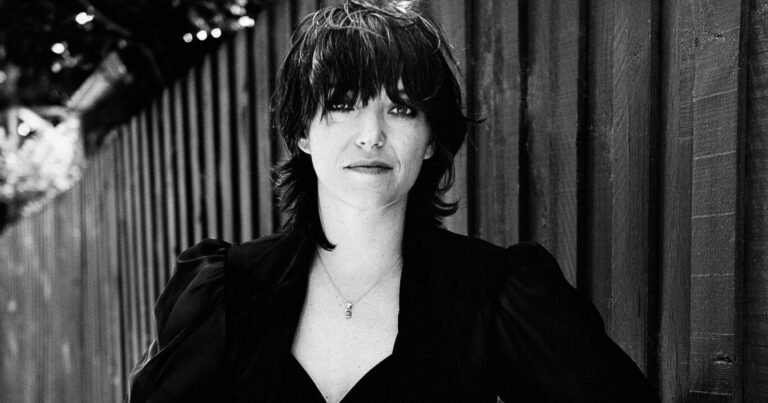
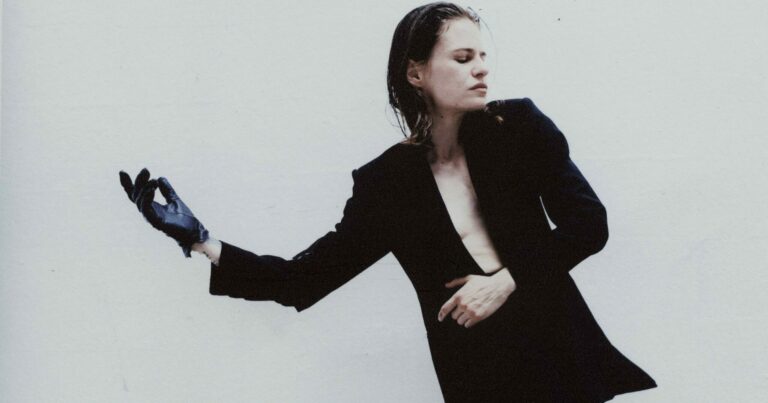
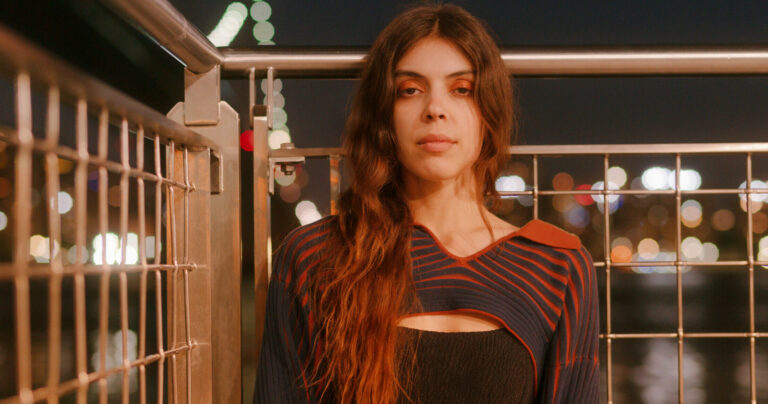
Sharon Van Etten has shared ‘Quiet Eyes’, which appears in the closing credits of the new A24 film Past Lives. Zachary Dawes of Mini Mansions produced and co-wrote the song. Check it out below.
“The song is an attempt to embody the sentiment that Celine Song so gracefully portrayals in her film, Past Lives,” Van Etten said in a statement. “Longing. Loss. Identity… It was an honor to be a part of this incredible production. The most beautiful story I’ve seen in a long time.”
Grizzly Bear members Daniel Rossen and Christopher Bear composed the score for Past Lives, which is directed by Celine Song and stars Greta Lee, Teo Yoo, and John Magaro. The soundtrack arrives this Friday, June 9 via A24 Music.
“This delicate and beautiful song eluded us until the very last day in the studio,” Harvey shared in a press release. “Over the previous five weeks we had tried so many times to capture it and failed, and/but then John reinvented the feel of the guitar pattern. As he was demonstrating it in the control room, Flood handed me a microphone and pressed record whilst I sat next to John trying to work out how to sing to it. The result somehow captures the ethereal and melancholic longing I was looking for.”
She added: “In the lyric everyone is waiting for the saviour to reappear – everyone and everything anticipates the arrival of this figure of love and transformation. There is a sense of sexual longing and awakening and of moving from one realm into another – from child to adult, from life to death and the eternal.”
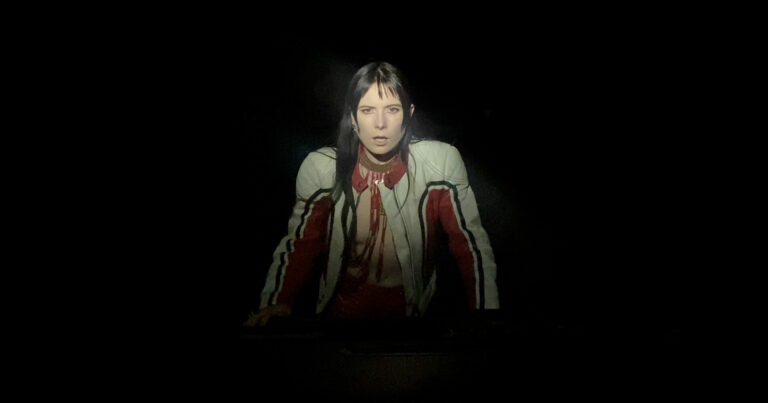
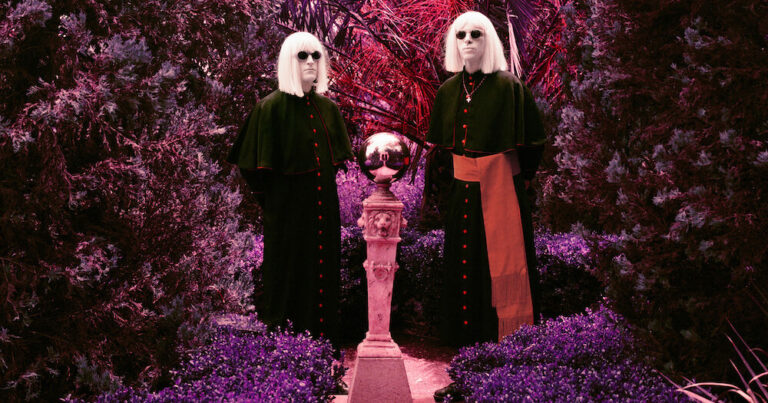
Commenting on the song’s visual, the directors said: “We envisioned the video as a short story about love, death, and resurrection. We imagined that the video can be seen as a little fairy tale and also as an intimate ritual. We wanted to keep the animation in a state of scenic and material rawness, as if the elements we see are not characters or props, but artifacts and talismans that are part of a ceremony.”
I Inside The Old I Dying is set for release on July 7 via Partisan.
PJ Harvey 2023 Tour Dates:
Sep 22 – 3Olympia Theatre, Dublin
Sep 23 – 3Olympia Theatre, Dublin
Sep 25 – Barrowland, Glasgow
Sep 26 – Barrowland, Glasgow
Sep 18 – Roundhouse – London
Sep 29 – Roundhouse, London
Oct 2 – Albert Hall, Manchester
Oct 3– Albert Hall, Manchester
Oct 6 – Paradiso, Amsterdam
Oct 7 – Paradiso, Amsterdam
Oct 9 – Cirque Royal, Brussels
Oct 10 – Cirque Royal, Brussels
Oct 12 – Olympia, Paris
Oct 13 – Olympia, Paris
Oct 15 – Volkshaus, Zurich
Oct 16 – Volkshaus, Zurich
Oct 18 – Velký sál Lucerna, Prague
Oct 19 – Velký sál Lucerna, Prague
Oct 21 – Admiralspalast, Berlin
Oct 22 – Admiralspalast, Berlin
Oct 24 – Palladium, Warsaw
Oct 25 – Palladium, Warsaw
Oct 27 Falkonersalen, Copenhagen
Oct 28 – Falkonersalen, Copenhagen
Oct 30 – Sentrum Scene, Oslo
Oct 31 – Sentrum Scene, Oslo
But Here We Are was never going to be an easy listen. In the wake of two devastating losses – first, the untimely death of Foo Fighters’ beloved drummer Taylor Hawkins in March 2022, and the passing, months later, of Dave Grohl’s mother, Virginia – the band could certainly have taken their time to come back with a new record, and it could have gone a number of different ways. It could have been a challenging, forlorn experience that mirrored the amorphous fog of grief; it could have been a bombastic, by-the-numbers arena rock record that only made vague references to the losses that inspired it. Given just how public part of the grieving process was, with the band organizing two epic, all-star tribute concerts in London and Los Angeles, I can’t imagine there being any significant backlash if the Foos decided to put an end to this enterprise altogether and never make another album – even if it would go against the spirit of resilience that has been its driving force since the very beginning, when it was formed as a solo project in the aftermath of Kurt Cobain’s suicide.
Foo Fighters’ 11th LP, which follows 2021’s Medicine at Midnight, is billed partly as a return to the “naiveté” of their self-titled debut, which Grohl wrote and recorded mostly by himself. The refreshing thing about But Here We Are is that this promotional angle is actually an accurate reflection of what the album has to offer rather than something it hazily aspires toward. The part of the pitch that worried me most, though, was the claim that the songwriting was simultaneously “informed by decades of maturity and depth” – in those decades the Foo Fighters have also become a rock institution, and guarding whatever that means is enough reason to shield away emotional vulnerability. But the songs on But Here We Are are personal in a way that’s genuinely, disarmingly direct: “It came in a flash/ It came out of nowhere/ It happened so fast/ And then it was over,” Grohl sings on the opening track and lead single, ‘Rescued’. The content is so heavy and explicit it could justify them easing into the rest of the record, hitting another point of catharsis, and ending it there. As remarkably driven as it sounds, however, there’s no attempt to structure or conceptualize its way out of grief. A relentless, searching desperation carries over from track to track, and it uniformly gives the record a lot of unexpected weight.
What’s most impressive is just how much it animates the music, too. Even as the lyrics constantly seek direction, the music is just as purposeful and ferocious in shining the way through. “Waning, fading innocence,” Grohl sings on the title track, but that’s exactly when the song soars with a chorus worthy of the greatest outpouring of love: “I gave you my heart, but here we are.” There are moments in Grohl’s writing that are unusually vivid and down-to-earth in their specificity as he attempts to immortalize his friend’s memory – “Pictures of us sharing songs and cigarettes/ This is how I’ll always picture you” – but it’s really the soulful depths he reaches for that render it so moving, as in ‘The Glass’: “I had a person I love/ And just like that I was left to live without him.” The struggle charges the most vital, explosive, and reinvigorated music the band has made in years, injecting their go-to anthemic formula with a renewed sense of purpose without sacrificing its broad populist appeal. Everything from Grohl’s howling vocals to his impassioned drumming feels like an expression of raw anguish, channeled into something unifying through the only means possible.
That’s not to say But Here We Are entirely strays from more somber territory. The shoegazey ‘Show Me How’ is affectingly understated, with guest vocals from Grohl’s daughter Violet that keep the song’s gentle affirmations from feeling lonely and implausible. Its titular plea returns on the penultimate 10-minute epic ‘The Teacher’, which finds Grohl singing, “Show me how to grieve, man/ Show me how to say goodbye.” Foregoing a traditional rock structure, the track is by turns pensive and noisy and guttural, doing everything in its power to find release in actually saying the word. It leaves you awe-struck and overwhelmed, but that’s not where things end. The album closes with its second most outstanding song, ‘Rest’, which is more content to sit in the uneasy quiet. Even as the band does eventually ramp up the distortion, it inevitably, heartbreakingly returns to its demo-like form, as Grohl dreams of a reunion “in the warm Virginia sun.” Ater all the sweat and tears have dried, that feeling of temporary resolve suddenly feels like the only possible vision of eternity.
Cartier is synonymous with their iconic watches representing style, elegance, and savoir-faire. Their watches are a mark of status that enhances outfits by virtue of their presence alone and is distinctly visible in their world-renowned Santos watches, officially named Santos de Cartier. In this piece, we’ll cover our favoured large model, which comes in just under 40mm in diameter.
Design
Santos is, without a doubt, one of the more iconic pieces in the watch world. It’s appreciated by tasteful watch enthusiasts and is part of many collections that embrace minimalist aesthetics. As mentioned above, the large model appears just under 40mm in diameter, making it a suitable watch for most modern watch wearers who prefer bigger-sized watches. It comes with a steel case and strap, bringing an eye-catching look to formal and semi-formal outfits, especially those embracing monochromatic colour pallets. Yet, if you’re looking for a more organic look, you can change the bracelet with a high-quality calfskin bracelet. This can be done in a flash with the “QuickSwitch” system that’s been introduced by Cartier.
When it comes to the dial, we are opened up to a visually captivating design that embraces a beautiful slanted font with Roman numerals that help to accentuate the piece while making it seem graceful. This is a common characteristic in Cartier watches, hence why they particularly stand the test of time with their timeless appeal. The steel sword-shaped hands with the sapphire crystal complete the piece.
Movement
This iconic piece includes a mechanical movement with automatic winding named calibre 1847 MC. It was initially introduced in 2015 by Cartier as part of their Cartier Clé collection and is only 3.5mm thick. It has a frequency of 28800, 23 jewels, and a reserve of 42 hours.
Conclusion
From the design appeal to the iconic history Cartier holds, the Santos de Cartier is certainly a no-brainer for those happy to spend £7,400 on a brand-new watch. Also, if you’re looking for a smaller size alternative, the medium option comes in at £6,750. To be candid, not everyone will love this or any Cartier watch, but if you do, you’ll get hooked and become a brand fanatic. Just look at famous collectors like Tyler the Creator, and many others beside him.
The resurgence of Brooks Koepka this year is something not many golf fans and pundits alike would have seen coming. The 33-year-old rose to prominence around five years ago when he won the US Open back-to-back in 2017-18 and two PGA Championships in succession in 2018-19 to become the number one-ranked player in the world.
But his struggles since have been well documented and made for all to see thanks to Netflix’s hit docuseries Full Swing. Koepka is portrayed as a broken man, suffering from fatigue, injury and severe loss of form, with no answers to how he can get his career back on track and his decision to join LIV Golf comes to fruition as well.
At the time, the choice to jump ships to the Saudi-led, controversial breakaway league seemed to be almost entirely based on the financial security that LIV can offer. But the less taxing tour, with events not taking place as frequently as they do on the PGA, and being under arguably less pressure week-in week-out as he would on the PGA has perhaps played in his favour.
Brooks’ uptick in form started when he won his second LIV Golf event at Orange County National in Florida just one week out from the Masters earlier this year and that gave him the confidence boost to challenge for the one piece of silverware he so desperately wants to add to the trophy cabinet in his living room at Augusta National.
In fact, Koepka had one arm in the green jacket before an agonising final round implosion in Georgia. The American entered the Masters as a 50/1 outsider with Betfair Golf, but he held the overnight lead from Jon Rahm going into the final round and he had never not gone on to win a tournament from that position — until now, the worst time possible.
Koepka shot three over on Masters Sunday to ultimately finish five strokes adrift from Spaniard Rahm, who shot -3 to finish on 12 under and secure his first Masters title. It would have been a bitter pill to swallow for the 33-year-old, but he said at the time that he would eventually like to see positives and carry them over to the rest of the majors — and he already has, winning his third PGA Championship at Oak Hill Country Club last month.
A 19th-place finish in Adelaide, third in Singapore and sixth in Tulsa on the LIV Tour kept Koepka’s form ticking over nicely until the PGA and this time he delivered what was not only a massive victory for himself, but also a monumental success for his new organisation — becoming the first representative of LIV to win a major since its inauguration.
Koepka had the overnight lead going into the final round again, but this time there would be no collapse. He started strong with three successive birdies at two, three and four before two bogeys at six and seven threatened to derail that initial effort to pull clear of the rest of the pack. However, Koepka went on to bridie four more times and bogey just twice in the back nine as he held off a progressing Scottie Scheffler by two shots.
Up next in terms of majors is the US Open at the Los Angeles Country Club (15-18 June) and Koepka is heading to California riding on the crest of a wave and in the best run of form for years. At the top of his game, we have witnessed him win the PGA Championship and US Open in succession and he has a great chance of doing that again this year with odds of 14/1 to lift his third US Open — which would see Koepka pull level with the likes of Nick Faldo and Phil Mickelson on six majors and just one behind the legendary Arnold Palmer.
Martha Skye Murphy has returned with new single called ‘Dogs’. Max Goulding mixed and engineered the track, which was self-produced. It comes paired with three music videos by Billy Howard Price, “to imitate Cerberus, the three-headed dog,” per a press release; two of them are available to watch exclusively via Muprhy’s website. Check out the new single below.
Last year, Martha Skye Murphy issued a new collaborative EP with Maxwell Sterling titled Distance on Ground. In 2021, she released the triptych Concrete.
“The song is about that feeling of being deep in the water when you feel the world cannot touch you anymore,” Chris said pf ‘A day in the water’ in a statement. “It’s behind the glass of your own melancholia but in that deep dive of vulnerability hopefully the light arrives. The light of honesty.”
Julie Byrne has released another song from her forthcoming album, The Greater Wings. ‘Moonless’, which follows previous offerings ‘Summer Glass’ and the title track, is the first song Byrne has ever written and performed on piano. Listen to it below.
“I remember walking through the dune systems on the ocean side of Culatra, the noises of the docks, the scent of tidal flats,” Byrne noted in a statement about ‘Moonless’. “The land itself, as a coastal formation, in a constant state of movement between erosion and growth.”
She added, “Something I love about being a songwriter, especially as a queer woman, is being able to have the last word in my work, becoming myself line by line. This is a breakup song, and it’s the first song I wrote on piano.”
The Greater Wings is due for release on July 7 via Ghostly.
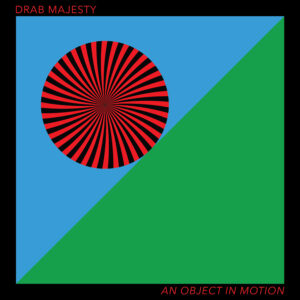
Drab Majesty have announced a new EP, An Object in Motion, which drops on August 25 via Dais Records. To accompany the announcement, they’ve shared the new single ‘Vanity’, which features guest vocals from Slowdive’s Rachel Goswell. Check it out below.
“As a long time listener and devotee of Slowdive, a band that literally shaped my DNA as a listener and musician, it was truly humbling to have Rachel offer her iconic vocal stylings to this song,” the band’s Deb Demure said in a statement. “Her voice is a sonic treasure and unmistakable. I’m infinitely grateful to call her a friend and am still pinching myself wondering – how did we get here?”
Goswell added: “It’s no secret that I am a long time Drab Majesty fan so when Deb asked me some years ago now if I would be interested in collaborating it was an immediate yes. Honoured to give my voice to Vanity.”
An Object in Motion Cover Artwork:
An Object in Motion Tracklist:
1. Vanity [feat. Rachel Goswell]
2. Cape Perpetua
3. The Skin and the Glove
4. Yield to Force
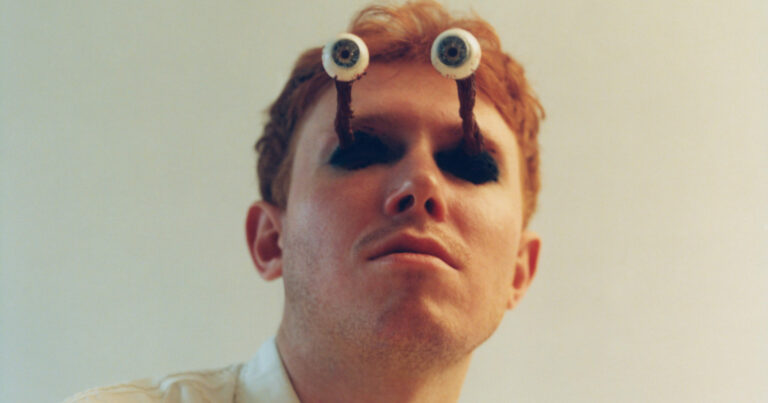
King Krule has unveiled a new single, ‘Flimsier’, which opens his upcoming album Space Heavy. Archy Marshall debuted the track during his performance at Primavera Sound before it was circulated via exclusive flexi-discs sold at King Krule’s SHHH Tour earlier this year. Check out the studio version below, along with a visualizer created by Archy’s brother Jack Marshall.
Space Heavy, the follow-up to 2020’s Man Alive!, arrives on June 9. It includes the previously shared singles ‘Seaforth’ and ‘If Only It Was Warmth’.