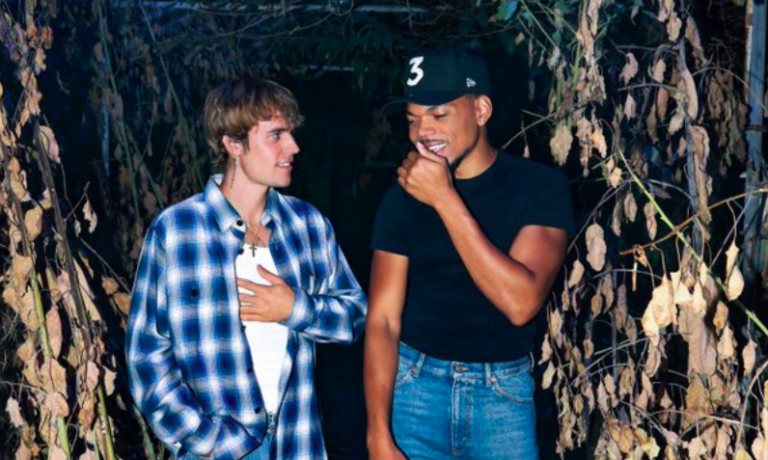
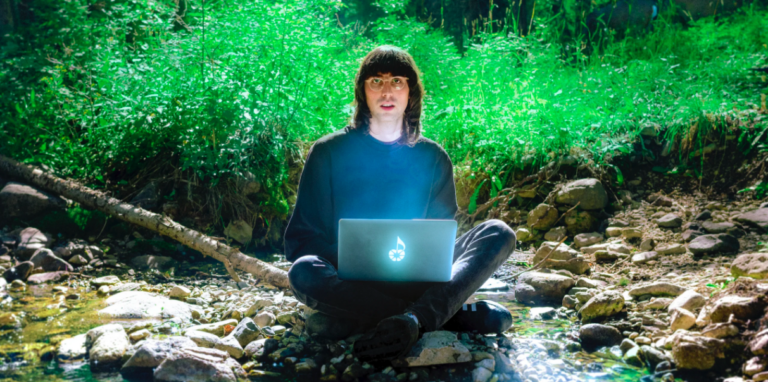
Limón Limón, an LA-based duo, have released their new single Barcelona Night which they state recalls the memories of days spent wandering a vibrant city by the sea. The single comes after the release of their song Routine.
Barcelona Night is the perfect song for the summer, featuring euphonious vocals, catchy lyrics and warm, energy-filled production. If you’re looking for a refreshing track, then you’ll love Barcelona Night.
Bonnie Pointer, one of the founding members of the Grammy Award-winning vocal group The Pointer Sisters, has died at the age of 69.
Anita Pointer confirmed her sister’s passing in a statement to TMZ. “It is with great sadness that I have to announce to the fans of The Pointer Sisters that my sister, Bonnie died this morning,” she said. “Our family is devastated, on behalf of my siblings and I and the entire Pointer family, we ask for your prayers at this time.”
Born in Oakland, California, Bonnie and her sister June started performing as a duo in 1969 before the group expanded into a quartet including their other sisters, Anita and Ruth. After signing to Blue Thumb Records in 1972, the group found success with the release of their debut self-titled album, released the following year, which featured their first hit single ‘Yes We Can’. A year later, the group won a Grammy for Best Country Performance by a Duo or Group for their second hit, ‘Fairytale’, off their album That’s a Plenty, which was later covered by Elvis Presley. This led them to become the first African American group to perform at the Grand Ole Opry.
The band’s success continued with 1975’s Steppin’, but in 1977, Bonnie left the group to pursue a solo career before the band’s commercial peak. She made her self-titled debut for Motown Records in 1997 and went on to release four albums, with her most popular single ‘Heaven Must Have Sent You’ reaching No. 11 on the Billboard Hot 100.
In 1994, The Pointer Sisters reunited in celebration of their Hollywood Walk of Fame star. In 2010, she played herself in Monte Hellman’s 2010 romantic thriller Road to Nowhere, and released her final album, Like A Picasso, in 2011.
We are all stuck with a lot of time on our hands at the moment. Some people are embracing it such as decluttering their homes and making some positive changes in their lives, whereas others are finding that boredom has started to creep in. Are you finding lockdown hard right now? If so now might be the time to try out a new hobby. Here are some suggestions to help you get started.
Collecting
Collecting is a great hobby, and it can be quite time-consuming which makes it ideal to start in January when you really don’t want to be overdoing it with spending a lot of money. Collecting things could range from anything like stamps and first day covers to rare stones. Some people like to collect china or mugs, the options are endless, and you can spend your time hunting out bargains to add to your collection. Be that online at specialist websites or even on auction sites like eBay.
Exercise
So I guess that exercise might be a hot topic of conversation for some as people tend to place a lot of focus with their new year’s resolutions around being healthy. So why not seize the opportunity and really focus on it by turning it into a hobby. You may find that you want to take up a new sport like tennis or football, or simply join a gym or go out for a run. Whatever you decide to do, exercise not only gives you something to do but after a few weeks, you will start to see the benefit of it.
Maybe you want to learn music and try something different, and now with some extra time, you could finally learn that musical instrument. You may want to start playing the guitar, or even the piano. You could try out things such as learn to play the Piano in 21 Days and see how you get on. It could be a great thing to focus your mind and energy, especially during difficult times we all find ourselves in.
Start a blog or journal
Blogging and journaling have become somewhat trendy of late, but that doesn’t mean you can seize the opportunity and start one yourself. Blogging is a great way to share your knowledge and tips on any subject you feel passionate about, or simply document your life as an online diary. Journaling might be taken differently as you can choose to write in a diary your thoughts and hopes, but you could also be specific with things like a happiness or gratitude journal where you place some focus on your mental well-being.
Learn a language
Maybe you want to do something a little out of your comfort zone or just something completely different, then learning a language could be the ideal option for you. Whether you choose something obscure, or something a little more mainstream, the added attention to something could help you in other areas of your life as well as enabling you to feel more confident if you do visit that country in the future.
Let’s hope that this has inspired you to consider some of the hobbies you could try this month.
Petra Leary, an award-winning New Zealand born photographer, has released a superb aerial series named Daily Geometry. In this eye-pleasing series, Leary explores different basketball courts that showcase various colours, shapes and textures. This is a wonderful series that brings us a new view from above.
Sometimes when you think of switching towards sustainable fashion, it can feel overwhelming as to where to start. While one of the most obvious ways to keep your fashion sustainable is to maintain what you own, and consider to recycle, repair, and alter your existing clothes, unfortunately, sometimes you just need a handful of new t-shirts and a fresh pair of jeans. Even with high-quality sustainable clothing, things are likely to still wear out over long periods of time.
So, how do you go about finding online brands that are sustainable, and what are red flags to avoid?
Red flag: cheap prices
The reason that fast fashion is so affordable is that it isn’t sustainable. If a price seems too good to be true, it unfortunately likely is. When you sit down and think about it, garments that are priced as fast fashion reflect the reality that someone down the manufacturing line is not being rewarded for the work that they are doing.
That doesn’t automatically mean that each item you buy has to cost an arm and a leg, but it does mean you need to be honest with yourself about whether a price seems too good to be true. Sustainability in fashion can not be simply looked at from an environmental perspective only but needs to take in the socio-economic repercussions of sustainability as well.
Fabric choices
Since you can’t feel how high-quality a product is when you are shopping online, you have to take into consideration the details provided online. Look for natural fibers, which tend to be more environmentally sustainable. Avoid things like polyester that are considered incredibly harmful to the environment. However, you can aim to use “recycled polyester” in your fabric choices. Recycled polyester uses approximately 50% less energy to be created than virgin polyester, and uses old plastic bottles that are turned into a form of yarn which is made into fashion garments.
Natural fibers are often more ecologically sustainable than other options, especially items such as hemp and linen. Natural fibers are biodegradable so they won’t have such a negative impact if or when the item is discarded or eventually wears out.
Take your time looking over websites, and make sure when you are purchasing an item that it states directly the type of fabric that is being used, and avoid things like nylon or typical polyester.
Made in the UK
When you’re searching for great options online, look for fashion brands that are produced and manufactured in the UK or European countries. Local manufacturing means there is less environmental impact from shipping. Additionally, the UK has stricter manufacturing regulations on fashion than other less sustainable companies based outside of Europe.
When in doubt, avoid clothing that is manufactured in Asia, Africa, and Latin America since they often are countries that employ children and do not have a good working environment for their employees, forcing them to work long hours, often without adequate pay.
Other countries that typically have good work environments are Canada and the USA, so you can look for those as potential good signs when you are looking for sustainable fashion from outside the UK.
When it comes to body art there are plenty of new designs and new ideas coming to the forefront in recent times. With the rise of the hotly debated white highlight option and the hyper-realistic options that people have come up with now are becoming more popular by the day. If you are looking for a specific style then more often than not you will find somebody within your local area to match you. Artists that work on body art and piercings are now much more commonplace and can be found via social media in most scenarios. Everybody is different and whether you’re looking for a large custom piece of artwork or a commemorative piece, do you have many options in 2020. Here are some of the things that you may see this year, and reasons why research is as important as ever.
Technology
Technology is playing a wonderful role in the world of tattooing and body art. Being able to manipulate artwork via software, and print out easily onto stencils with a stencil printer tattoo, means that the process is speeded up significantly. Artists are now able to get their designs on paper and start work within hours rather than spending more time on the unnecessary time spent on traditional methods. Even when it comes down to the cleanliness of equipment, you can purchase high-quality cleaning equipment, and especially during this year it is more important than ever before.
Quality
Years ago you would need to have asked around to find details of a local tattoo artist, and relied on word-of-mouth. However, with the rise of the Internet and social media, you can now find and check out an artist before you even meet them. It’s great that you can see a tattoo artists work before you even need to consider booking an appointment and looking at the quality and consistency that they are putting out, can mean the world of difference. The ability to purchase high-quality materials is also a game-changer for tattoo artists who may have had to work with lower quality products before as well.
Long-term
Tattoos used to generally spread and reduce in quality and clarity over time, and they still due to an extent, but the quality of the ink that is used on the technology being accessed to create much cleaner lines and quicker healing, means that you should be able to gain a level of longevity from your tattoos that was never accessible before. It is important to ensure that you are speaking to professionals and only receiving artwork from people who know exactly what they are doing, You will experience a much better and higher quality tattoo that lasts for a longer time then if you don’t do your research.
The overall message is to ensure that the business is registered, and follows the highest possible quality and hygiene processes, it’s not something that you want to regret doing further down the line, and tattoos are a long-term commitment of course.
Named after a peak inside a Pennsylvania national park near where singer Matt Quinn and guitarist Sam Cooper grew up, Mt. Joy make the sort of folk music that feels like a ray of sunshine. The indie rock outfit – which also features bassist Michael Byrnes, drummer Sotiris Eliopoulos, and keyboardist Jackie Miclau – just released their sophomore effort, Rearrange Us, through Dualtone Records, home to the likes of The Lumineers and Angie McMahon. After touring extensively in support of their breakthrough self-titled debut, the band started working on their new album with producer Tucker Martine (My Morning Jacket, The Decemberists, Modest Mouse), who lends a lushly organic sheen to the album’s compositions. In short, Rearrange Us deals with heartbreak – and though that’s a pretty omnipresent theme in folk music, here it’s interestingly rendered through a collective lens, an experience shared among different members of the band at the same time. But the album is also more broadly about change, as epitomized by its stunning opening track ‘Bug Eyes’, which showcases Quinn’s dynamic songwriting in all its epic glory, as well as his versatile voice. From that point on, the record comfortably sways from breezy, summer-drenched cuts like ‘Rearrange Us’ and ‘My Vibe’ to soaring rock jams like ‘Acrobats’ and heartfelt ballads like ‘Every Holiday’ and ‘Us’. The closing sentiment, though, is one of hope: “If our lives don’t work then we can change,” Quinn sings on ‘Strangers’, “Lord knows we’ve changed, love will rearrange us.”
We caught up with Matt Quinn of Mt. Joy for this edition of our Artist Spotlight series, where we showcase up-and-coming artists and give them a chance to talk a bit about their music.
How did you form Mt. Joy?
Sam and I went to high school together out side of Philadelphia. His brother introduced us to each other and we have been making music ever since. We both moved away to separate cities after high school, but serendipitously jobs both landed us in LA and we started making music together again in LA in 2015. Those songs were the start of Mt. Joy.
How has your approach changed since releasing your debut album?
I think the approach is similar, but if anything has changed it’s that we spent most of the last three years on the road. So, you really see how different song elements work in front of audiences of varying sizes and that definitely informed the creation of some of these songs. We know we are going to make our living on the road, and I think these songs really improve our live show.
What was the inspiration behind ‘Rearrange Us’?
Put simply, four of the five of us were dealing with break-ups that were at least tangentially related to touring and the time spent on the road. It’s an album about change. It brought us closer together, and I think I sort of wrote sad songs because I knew I needed them, but I also felt like my band mates did too. On the other hand, we were trying to find a healthy way forward and we built a few hopeful, exciting tunes to get out of our heads and try to keep moving forward.
How was the writing and recording process like?
The writing was definitely a little more stressful the second time around just because we had so much less time to really sit and write and play with the songs. Sam and I were fortunate though we had the opportunity to go into the wilderness of Montana for a few days. We bought some old beat up amps from a pawn shop and rented a truck and drove very far from civilization, the stillness was stunning and inspiring and definitely contributed to the record. The recording process was pretty amazing this time around. We spent a lot of the summer up in Portland, Oregon at Tucker Martine’s studio. He is one of our all-time favourite producers and it was a dream to get to work with him. He has an amazing ear and is a true artist in terms of the way he approaches making records. I think the end result has a lot to do with his talent and leadership.
What are some of your favourite moments from the album?
I really love the album opener Bug Eyes. A lot of that tune came from the session out in the wilderness, and I think it thematically speaks for the whole album. This idea that you can learn to live with change and be grateful for the perspective you gain from the things that you can’t carry across the finish line. I am truly really proud of all the songs on the record but some other standouts for me are Let Loose, Death, Rearrange Us, Witness, and Every Holiday.
How have you been keeping busy during this quarantine period?
We’ve been working really hard to try to find creative ways to promote this record without shows. We are so damn proud of the record, and want to make sure people know its coming. So, we’ve been doing a lot of virtual performances and trying to find anyway we can use our platform to make a difference in these crazy times including a livestream where we brought together a bunch of friends and raised $30K for a local food bank and Musicares. We have some more fun stuff that we are working on as well to continue to give back.
What’s next?
Well, we hope the album propels us a little further into the vast unknown that is the music industry in 2020. Beyond that, we had such an amazing slate of shows and festivals lined up that are all likely to be pushed to next year. So, a lot of it is continuing to shift our presence online and work on exciting ways for people to hear our live show in a world where we can’t gather for shows. We have some exciting stuff planned…
Few melodic lines in the history of popular music are as omnipresent as that of Nirvana’s 1993 single ‘All Apologies’. Though, to this day, the opening riffs of ‘Smells Like Teen Spirit’ or ‘Come As You Are’ are arguably more ubiquitous in terms of radio play, ‘All Apologies’ has an altogether different quality about it, a kind of mystical languor that seeks to permanently etch itself into the back of your brain. Maybe that’s just me, but I can’t be the only one who finds himself humming that song on an irregular but oddly constant basis – that almost spectral pervasiveness is practically embedded into its musical DNA, inhabiting some sort of shared space in our collective conscience. Dave Grohl said of the song in a 2005 interview with Harp: “I remember hearing it and thinking, ‘God, this guy has such a beautiful sense of melody, I can’t believe he’s screaming all the time.'”
Perhaps music theory alone can adequately explain why the song is so hauntingly potent – Kurt Cobain did in fact have an unlikely penchant for pop melodies, a reflection of some of the less-than-apparent mainstream influences that permeate his music. But another seemingly no less viable theory is that Cobain infused part of his soul into the song, which would explain its placement as the 12th and final track on the band’s last studio effort, In Utero. Though the popular narrative that the album served as a kind of rock n’ roll suicide has since been challenged by critics who were able to separate Cobain’s music from its mournful context by pointing to the raw vitality of the album’s sound, it’s still difficult to make that same argument for ‘All Apologies’, an eerily poignant masterpiece that’s driven by an all-consuming sense of resignation and existential ennui. Despite being coated in layers of sarcasm, it seems impossible not to view the apologetic tone of lyrics like “everything’s my fault” and “I’ll take all the blame” as a premonition of Cobain’s suicide.
But there’s a lot to unpack behind the song’s deceptively simple formula. In a more overt manner, ‘All Apologies’ presents itself partly as a sardonic response to Cobain’s newfound fame and the scrutiny that came with it – which, of course, is often seen as shaping the conditions that led to his death. Accompanied by a listlessly upbeat melody, Cobain issues a fake apology to all those who have formed multiple, sometimes conflicting expectations of him. He opens the song with the rhetorical question “What else should I be?” before rhyming “What else could I say?” with the infamous “Everyone is gay”, mocking not just those who were quick to take offense at his every word, but also those who praised it as deeply profound and somehow revelatory. Both were guilty of the same crime: building a false perception of him based on some narrative he wasn’t in control of, but could at least toy with in the form of a pointedly silly song.
As reasonable as that interpretation may sound, the history of the song also renders it a somewhat implausible one. ‘All Apologies’ was reportedly first written as early as 1990 and recorded for the first time by Craig Montgomery at Music Source Studios in Seattle, Washington on January 1st, 1991, seven months before Nevermind was even released, and a whole year before Cobain and Courtney Love were married. And though the lyrics were indeed quite different, the lines that are now seen as referring to his fame and his tumultuous marriage were still there – either he was, as many of his most ardent followers would have it, capable of magically predicting the future, or that wasn’t at all the intended meaning. As far as we know, Cobain didn’t even want the song to sound ominous, but genuinely calm – “peaceful, happy, comfort – just happy happiness” was how he described it to Michael Azerrad in the 1993 biography Come As You Are: The Story of Nirvana. He dedicated the song to Courtney Love and their daughter, Frances Bean Cobain, explaining that “the words don’t really fit in relation to us… the feeling does, but not the lyrics.”
Of course, it’s entirely possible that the song inadvertently took on a new meaning as the band’s popularity began to skyrocket, which can be traced in the many mutations that appeared throughout its lifetime. That first demo, which appeared on the album’s 20th-anniversary reissue, is an acoustic cut that takes inspiration from the Beatles at their most cheerful, aptly described by Pitchfork’s Stuart Berman as “transmuting the song’s overarching sense of resignation into bright-eyed, fresh-start optimism.” The lyrics are even more simplistic than those that appear in the final version, with Cobain singing: “You stole things from me/ All apologies/ I stole things from you/ All of us stand accused”. Cobain might be pointing the finger at a specific person here, but he’s willing to happily move on from what seems to be a relatively petty dispute. Even what has now become one of the song’s defining lines sounds more like “married/ married” – the dark cynicism of the “married/buried” equation has yet to settle in. “All in all is all we are”, the Buddhist mantra that closes off the song and encapsulates so much of the band’s philosophy, is also notably absent – all in all, it’s just an unironically jolly tune.
Another demo, this time recorded by Cobain himself at his residence at an unknown date, is more reminiscent of the version we remember today, though naturally much more intimate. While he sounds more conflicted than in the other demo (“I don’t want to fight,” he declares on the first verse, instead of “I don’t have the right”), it’s more of an internal conflict this time; the song no longer addresses a specific you, but rather steers toward personal self-reflection. But it also hasn’t yet evolved into the kind of meta-commentary on his public image that the song would later become: “What else could I be?” he sings instead of the more stinging “What else should I be?” The only instance where he doesn’t use the first person is in the song’s outro, where he references that deeply spiritual quote about how all things in the universe are connected – which should serve to highlight the meaningfulness of his own existence but instead seems to hint at an overwhelming feeling of insignificance and alienation (it’s not a coincidence that the line is often heard as “All alone is all we are”). This doesn’t necessarily imply that it was an early sign of suicidal ideation – any such suggestion is probably little more than an attempt to fit the song’s lyrics into some media narrative surrounding Cobain’s death. But when you suddenly find yourself being idolized by millions of people around the world, it probably helps to be reminded that, in the grand scheme of things, you’re no more important than an ant.
‘All Apologies’ is often remembered as a song that started out as an electric composition before being immortalized on MTV Unplugged, but it wasn’t performed as an electric track until its first live performance at the Wolverhampton Civic Hall in England on November 6, 1991. What’s interesting about this performance is that not only does Cobain switch up the final line to the more accurate “all is one and one is all”, but he also sounds uncomfortable with that universal truth, screaming it out louder than in any other version. If you’re looking for a more polished live recording that also sounds like actually it’s coming from a grunge band, though, 1992’s Live at Readingoffers just that, ramping up the intensity while also displaying more of that sense of restraint that would come to define the track. Of all the versions covered so far, it sounds the closest to the studio one, which was recorded in February of 1993 with the legendary Steve Albini at Pachyderm Studios in Cannon Falls, Minnesota.
Still tentatively titled ‘La La La’ (which, oddly enough, sounds exactly like what someone who isn’t paying serious attention to the lyrics – basically anyone who would come to stumble upon it on the radio – would hear during the song’s outro), the studio version features the important addition of the cello, which is now as strongly associated with the track as that guitar melody. Played by Kera Schaley, its looming background presence is largely responsible for the track’s eerie atmosphere, which is what transcends it to a whole new level. But the studio version that appeared on the original In Utero didn’t sound as Albini intended it to. Alongside ‘Heart-Shaped Box’ and ‘Pennyroyal Tea’, ‘All Apologies’ was handed to R.E.M. producer Scott Litt to create a cleaner, more radio-friendly version that, in the words of bassist Krist Novoselic, would serve as a “gateway” to the album’s more alternative sound. In a 1993 interview with Jon Savage, Cobain said the issue was actually that “the vocals weren’t loud enough… In every Albini mix I’ve ever heard, the vocals are always too quiet. That’s just the way he likes things, and he’s a real difficult person to persuade otherwise.” Listening to the original mix, which appeared on the album’s 20th-anniversary reissue, the vocals are indeed drowned out in a way that almost unintentionally fits the theme of the song, Cobain’s pained vocals struggling to rise above the chaos of distortion and that monstrous snare kick. But in every other way, the differences are almost indecipherable, a testament to the amount of scrutiny the band was constantly subjected to from their label.
The cover art for the ‘All Apologies/ Rape Me’ single.
The song was released as a double A-side single alongside the much more controversial ‘Rape Me’ on December 6, 1993, boosting sales of In Utero, which was released two months earlier. For the cover of the single, Cobain’s only instruction to art director Robert Fisher was that he wanted “something with seahorses”. Though no one knows exactly why he chose that imagery, it’s interesting to note that during those early 1991 live performances, he opened the song with “Living in the sea” (coupled with “What else can I do/ I’m in love with you”). There’s also the line “aqua seafoam shame”, which could be interpreted in a number of ways. It could just be an instance of absurdist wordplay – Cobain, though sometimes viewed as a weak lyricist, had a penchant for abstract, sometimes meaningless poetry; alternatively, it could be a reference to his heroin use, especially alongside the line “find my nest of salt”, though that seems a bit of a stretch; and finally, it could allude to the feelings of self-loathing Cobain was experiencing following the success of Nevermind, given the symbolism of the album’s iconic cover. Though this kind of lyrical dissection is exactly what Cobain would have despised, there’s no denying that there’s at least some significance to the motif of underwater imagery recurring throughout Nirvana’s work.
A sketch of a suggested tour T-shirt, from Kurt Cobain’s Journals.
Though it’s tempting to relate Cobain’s choice of a seahorse for the single’s cover art to the ancient belief, prevalent among the Phoenicians and Etruscans, that hippocampi accompanied the dead on their journey into the afterlife, it’s much more likely that it’s just another manifestation of Cobain’s long-standing fascination with seahorses, particularly pregnant seahorses. “He was really into the whole aspect that males got to carry their young,” Fisher said, a fact further evidenced by his original artwork as well as the sketches that appeared in his Journals (which also featured a proposed video idea for ‘Rape Me’ that included scenes of seahorses as well as a man preparing himself for a gynecological exam). This also ties into the album’s title, as the seahorse’s ability to provide a womb for the embryo is a case of what is scientifically known as inutero pateris. Of course, none of this explains exactly why Cobain was so obsessed with seahorses, but given that he dedicated the song to his daughter, who was born in August of 1992, one could reasonably speculate that it was a projection of his newly emergent paternal instincts, as well as his lifelong disdain for fixed gender roles. But the same year that Cobain told Spin that the lyrics on In Utero were “more focused, they’re almost built on themes”, he also told Q that the abundance of childbirth and infant imagery had nothing to do with his newfound fatherhood. At the end of the day, it’s probably wisest to stick with what he said in an interview with Frédéric Brébant (speaking of ‘Teen Spirit’): “Whatever you want to make out of it. It’s up to you. It’s your crossword puzzle.”
‘All Apologies’ wouldn’t have found the same commercial success were it not for MTV Unplugged, nor would it have the same kind of resonance. Touted by many as the definitive version of the song, it’s far more than just a palatable acoustic rendition – it’s as chillingly intimate as that home demo, but much more stately and refined in its beauty, Cobain’s rough-hewn vocals accompanied by Dave Grohl’s unusually hushed drums and the unearthly grandeur of the cello. It’s a stunning testament to just how perfectly precise and composed Cobain could be in his delivery, which only serves to amplify the emotional tensions boiling underneath the song’s calm veneer. Beyond proving the band’s ability to diversify their sound more successfully than any of their peers, Cobain’s stark sincerity also paints the song in a different light, putting lie to the notion that it was just a tongue-in-cheek joke song. Within Unplugged’s sombre setting, the song’s hummed final mantra, aptly described by Spin’s Kyle McGovern as “an epitaph equal parts puzzling, comforting, and devastating”, also takes on more weight – just as it seems to stretch on forever.
‘All Apologies’ was performed for the last time by Cobain on March 1st, 1994 at the Terminal Einz in Munich, Germany, but in April of 2014, Nirvana’s surviving members – Novoselic, Grohl, and Pat Smear – performed the song with none other than Lorde on lead vocals for the band’s Rock and Roll Hall of Fame induction ceremony. The performance itself was more than satisfactory, but its power was mostly symbolic – for one thing, it featured rock icons Annie Clark, Kim Gordon and Joan Jett, which could be seen as a nod to Cobain’s embrace of feminism as well as his close allyship with the riot grrl movement. And though choosing a rising pop star to sing a Nirvana song might have seemed like a questionable idea at first, the decision highlighted just how poppy the song really was. But there’s also a much more obvious and meaningful parallel – much like Cobain, Lorde has been repeatedly described as ‘the voice of a generation’, a characterization she isn’t particularly fond of. Her music appeals to the masses while also being uniquely alternative – as Grohl said, “There’s something about her that represented or resembled the Nirvana aesthetic.”
From its inception to the very last time it was performed, though, the song’s melodic line remains a stirring constant, one that seems to occupy some sort of liminal space. Its lullaby-like resonance makes it an unlikely but perfect choice for the Rockabye Baby! series, which reinterprets popular songs into lullabies geared towards babies, and it’s not just because of the strange way the whole concept is connected to the album’s infant imagery. Released as part of the 2006 album Lullaby Renditions of Nirvana and utilized to haunting effect in the excellent 2015 documentary Montage of Heck, the track reveals the true essence of the song when stripped down to its core – more so, in my view, than even the MTV Unplugged performance. A lullaby has the uncanny quality of existing both within and without one’s consciousness, its echo persisting even after it’s lulled you to sleep. ‘All Apologies’ feels timeless not just in the sense that it stands the test of time, but also in the way its phantom-like echo seems to never really fade away, as if escaping time entirely – a true embodiment of the “All in all is all we are” mantra. The song is often remembered as Cobain’s final goodbye, an inescapable premonition of his suicide, but it’s truly a reminder that, in the most uncomfortably real sense, his spirit lives on through his music.
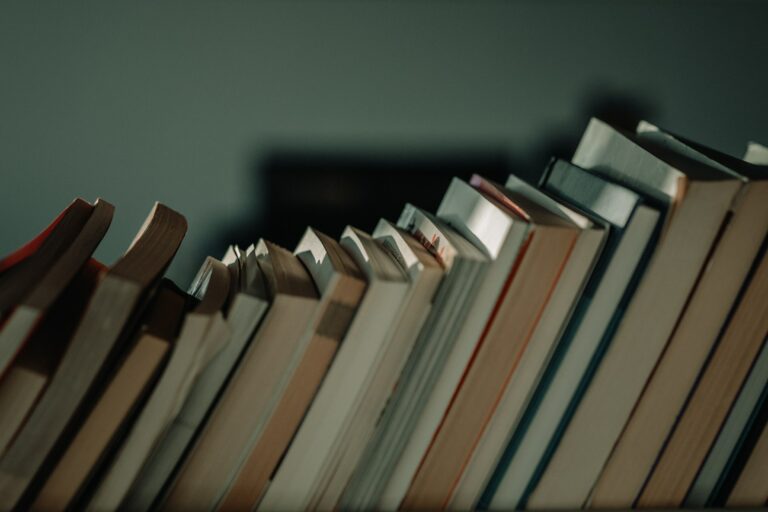
Some of the most famous and popular books in English literature are written by American or English authors. Still, Australia is home to some of the world’s most talented – but perhaps undiscovered – authors. Spanning a variety of genres, here are six books by Australian authors that you may not have heard of before: a sampler of Australia’s finest literature.
The Yellow House by Emily O’Grady
This debut novel from Brisbane-born Emily O’Grady was published in 2018 when it won the Vogel Prize – one of Australia’s most prestigious literary awards. The story is told from the point of view of a ten-year-old girl known as Cub. She lives with her twin brother Wally, parents, and old brother on an isolated property near an abandoned farm and knackery.
Cub’s Granddad Les was a notorious serial killer whose reputation hangs over the family, but because Cub and Wally are so young, they aren’t yet aware of their family’s dark history. But when Cub’s estranged aunt and cousin move into Les’s yellow house across the road, Cub begins to learn why her family has been ostracised by the rest of the town.
Breath by Tim Winton
Hailing from Perth, Western Australia, Tim Winton has written more than thirty novels, many short stories, and children’s fiction. Many of his stories take place near the ocean, as does Breath, which was published in 2008. The book was adapted for the big screen in 2017, but it didn’t gain much traction globally despite its critical acclaim.
Breath was Winton’s twentieth book, and his first novel in seven years. Set on the coast of Western Australia, the story is a man’s memory of his adolescence spent surfing, resisting complacency, and looking up to a man he thought was a legend until he gets to know him better. This man, known as Sando, encourages the boy to take risks, but won’t reveal the truth about his past. The book morphs from a series of small adventures into one that’s larger and longer-lasting.
The Natural Way of Things by Charlotte Wood
Winner of the 2016 Stella Prize, a prestigious Australian award for female writers, The Natural Way of Things is set in the middle of the Australian desert. Two women wake from a drugged sleep to find themselves on an abandoned property with no recollection of how they got there. They discover that they are not alone and that this facility is like a prison for women who seem to have absolutely nothing in common, except for their memory loss and gender.
Brutal security guards control these women and their hard labour without mercy. The women soon discover that what links them is an involvement in a public sex scandal with a powerful man. With no hope for rescue or reprieve, the women must rescue themselves when it becomes clear that their jailers are imprisoned with them.
Talking To My Country by Stan Grant
Stan Grant is an indigenous Australian journalist and television presenter, as well as a filmmaker and the author of several books. In 2015, Grant wrote a piece for The Guardian after indigenous AFL player Adam Goodes was booed at games. The article went viral. This memoir was published in 2016 and is a personal meditation on race, culture, and Australia’s national identity. The subject matter is relevant not only to indigenous Australians but all Australians – and especially at a time like now, to everyone.
The Arrival by Shaun Tan
Published in 2006, this graphic novel is an imaginative take on immigration in a world of the author’s creation. Shaun Tan grew up in Perth, Australia, and has won an Academy Award for an animated film adaptation of his book, The Lost Thing.
Fantastical creatures roam the pages of this book, befriending a man who has traversed the seas to build a better life for himself and his family when they join him in this ethereal land. While the images appeal to young readers, the message in the story can be understood by everyone.
The Book of Daysby K.A. Barker
This is an adventurous fantasy novel aimed at young adults, originally published in 2014. In a world where its citizens have the opportunity to forget anything they no longer wish to remember, sixteen-year-old Tuesday wakes from a lengthy sleep with no memory of her former self. She wakes into a world of wonder, but also extreme danger at the hands of people she can’t remember.
Her self-absorbed guide, Quintalion, accompanies her as she meets a blind assistant librarian, visits flying ships and levitating cities, and other fascinating settings and creatures. But Tuesday is being hunted by the merciless Daybreakers. She must discover who she is and what her connection is to the mysterious Book of Days before the Daybreakers find her.
Mariama Diallo’s Hair Wolf is nothing short of an ode: to the Black salon, spiritual religions, to Brooklyn, the ‘70s blaxploitation aesthetic—but mostly, to Black women.
Tackling overarching themes concerned with the impact of gentrification and appropriation on Black folks’ actual lived experience, Hair Wolf operates through the horror-comedy camp native to the exploitation films it riffs on. Clocking in at twelve minutes, this short is both hysterical and subversive while notedly refraining from any exploitative treatment of its subject matter. Which is all to say, it operates squarely within the broader tradition of Black Horror, which casts aside the projection of the White Male Gaze to reconstruct our concept of the monstrous.
Diallo’s landscape of choice for this exploration is the contentious subject of hair. The film is obsessed with it; reflecting many of the ways American white supremacy is similarly obsessed withregulating and surveillingBlack folks’- and more specifically, Black women’s- hair. Latent in this hypervisibility is a simultaneous fetishizing and devaluation, wherein our hair, our bodies, our fashion, and cultural traditions are deemed undesirable unless featured on a white body. There is no better example of this than the Kardashian Klan.
It must be noted that the women of Hair Wolf are fly as fuck, and the short’s overall costume design and cinematography make it an absolute aesthetic delight, while still remaining true to itself as a monster movie. This is not a film whose stylization should be ignored, but rather contributes in a major way toward establishing its subtext.
Kara Young stars as Cami.
In her 1980 text, Powers of Horror,French feminist theorist, Julia Kristeva, defined the abject– the horrific- as that which crosses a perceived border. Thirteen years later, Australian cultural critic, Barbara Creed uses this concept to explore the ways the feminine has been coded abject in her book, The Monstrous Feminine: Film, Feminism, Psychoanalysis:
The horror film attempts to bring about a confrontation with the abject (the corpse, bodily wastes, the monstrous-feminine) in order to finally eject the abject and redraw the boundaries between the human and non-human (Creed 14).
Together, these texts have helped establish the ways that nearly the entire tradition of horror is rooted in this anxiety of trespass: of the psyche, the body, the dwelling, the nation-state, the planet itself.
Hair Wolfmakes new use of the monstrous feminine, redrawing the borders of the abject to also situate itself within what we may consider ‘gentrification horror’ (Candyman, The People Under the Stairs)—part of a larger tradition of films whose horrific elements hinge on the trespasses of our lives’ literal infrastructure: cities (28 Days Later), malls (Dawn of the Dead), suburbs (It Follows), andhaunted houses (Poltergeist).
In this case, Diallo explores the vampiric nature of white exploitation in and of Black neighborhoods, Black culture, and Black bodies. While the film isn’t explicit in its setting, Diallo has discussed it in the context of Brooklyn’s Crown Heights, though it could just as easily take place in Fort Greene, Bushwick, or Bed-Stuy—or any historically Black neighborhood which becomes infested with white zombie trendsters “literally biting people’s style.”
Though Whiteness is often prescribed to the Subject (Inside) position, wherein the white protagonists fear contamination by some threat coded Other, Diallo subverts this formula to reassign feelings of safety and authenticity to Blackness and Black spaces—notedly the salon, the community landmark site of Black intimacy and care.
Hair Wolf is a film made for a Black audience, and references to ritual hoodoo practices function as a powerful through-line in speaking to our specific cultural anxieties, which are both informed by and exacerbated when subject to white infiltration and appropriation.
This tension is foreshadowed in our initial introduction to characters, Janice (Trae Harris), Eve (Taliah Webster), and Damon (Jermaine Crawford) who are all at the shop after close. As Eve, midway through braiding Damon’s hair, assures Janice, “You won’t catch this man’s hair lyin’ around all willy-nilly waiting for the next bitch to cast some type of jinx.” Shortly thereafter, our lead, Cami (played by Kara Young) bursts through the door, exclaiming, “Guys. There’s something fucking strange in the neighborhood.”
She relays her terrifying encounter with Count Beckula (Madeline Weinstein)– a pallid, dark-haired waif lurking in an aisle at the hair supply shop who asks if Blue Magic will lay her edges (Janice: “girl, what edges?”) before accosting Cami for a handful of hair. Of her escape, Cami proclaims, “You know I had to get her in the eyes with some Afro Sheen,” but not before Count Beckula made off with “a whole chunk of it.” It being her hair.
There’s a rap on the locked door and despite Cami’s protests, Janice opens it to reveal Count Beckula, nasally drawling a single-syllable request for “braaaaaaids.” Claiming to “get these reparations,” Janice invites Beckula inside, a moment significant for further situating the white girl-monster within the vampire canon.
One of Hair Wolf’s most brilliant movements is this play between “brains” and “braids,” which Diallo has stated originally birthed the film’s overall concept. Needing little more than a few white extras in bantu knots to periodically splay themselves on the salon windows, moaning, “braaaaids,” she establishes a parallel between the compulsive drive of consumers to remain ‘on trend’ and the mindless consumption of the capitalist zombie as represented in American cinema through the mid-late twentieth century—itself an appropriation of the zombie born of Haitian folklore.
That’s all happening outside though. Inside, lurks Count Beckula.
What lurks beyond the safety of the salon?
Vampires of & for fashion are not necessarily new to horror (Neon Demon, The Hunger), but in this context, vampirism is established through the act of appropriation, wherein the Count Beckulas of the world suck the lifeblood out of Black culture, yes, but more specifically, Black women’s selfhood.
When asked what style she’s looking for, Beckula replies, “Something funky. You know, like Rihanna.” She lets out a scream which startles the other characters, but then releases the tension with a chuckle: “I thought it was a little bug but it’s just your hair,” before posing with the tuft as a Hitler mustache. Her camera flashes, capturing Janice’s look of incredulity in the background. “That’s gonna go viral.”
It’s not just that Count Beckula is a vampire of culture—she’s a contagion. Her monstrosity is constructed on compulsive consumption and entitlement, engendering the commodification of the Black woman’s body with her overlined lips and chicken-cutlet ass enhancers; what Damon refers to as “Oakland booty.” Her reduction of our bodies to spare parts- bits to pick and choose for consumption- echoes the violence of our literal commodification under slavery and the endurance of this psychology over time.
Beckula is the contagion but the virus is internalized anti-Blackness.
When Janice returns from a back room, her gorgeous mane of black and purple kinky curls have been replaced with stick-straight, platinum blonde strands she continuously runs her fingers through; a decision which was extremely evocative for me on a personal note, as it recalled the ghost of my little girl self who so desperately longed for the ability to make that combing gesture, which my hair would never allow—that is, without an iron or chemical treatment.
Shocked at her change in appearance, Cami almost whispers, “Janice, why you out here looking like ‘My Little Pony’ girl. What happened to ‘nappy is happy’?”
Janice turns on her. “Nappy? Honey you don’t know my curl pattern. I’m a 3B.”
Gradually, the virus of internalized anti-Blackness spreads. When Beckula “goes viral” on Damon, Eve’s despair at his leaving her to walk out with “a whole pig” exhibits the very real pain of desirability politics and colorism, which denies darker-skinned Black women’s beauty and worth as love interests and romantic partners, particularly within a hetero(normative) context. “…you could have the most Black like, Black Power, Black Lives motherfucker- and he still be waiting for his shit to be with some white girl.”
Beckula’s touch reaches through the cast.
The virus of self-loathing threatens to claim Eve (“People out here talking about ‘black girl magic’ like we living in Harry Potter”), and just like Janice and Damon, the shift is embodied through her hair. Where she previously had it done in a beautiful Nigerian textile headwrap (what one might imagine is a direct reference to the history of the Tignon Laws and their influence on Black women’s fashion), she suddenly emerges, distraught, in a short, blonde bob. The following exchange between her and Cami is both completely earnest and completely terrifying for the accuracy of its mirroring the specific pains of Black women’s lived experience.
“Fucking white girl went viral on your ass,” Cami observes. “Fight it. Love yourself. Black power is real.”
With Cami’s support (and a slew of reminders about the undeniable truth of Black beauty), Eve is able to defeat the internalized anti-Blackness inspired by the virus. “You just gave me life,” she says as the two embrace.
Hair Wolf acknowledges the trauma we experience raised as Black femmes and girls and women in a white supremacist capitalist patriarchal world—but it does not exploit it. In the tradition of Black feminism, it offers a way forward through self-love and sisterhood without underestimating the monsters of white supremacy and internalized self-hate that we’re up against.
This film is nothing short of a poem. Diallo seamlessly weaves and breathes new life into the monsters of contagion- the vampire, the zombie, the virus- to showcase the existential threat of whiteness trespassing on the banalities of Black life.