Home Blog Page 1690

Album Review: Shame, ‘Drunk Tank Pink’

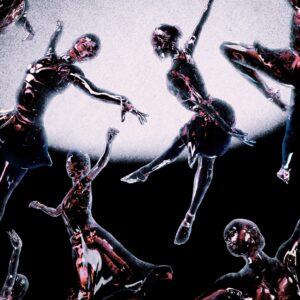
Propelling Drunk Punk Pink is the same anxious ferocity that characterized Shame‘s riveting 2018 debut, Songs of Praise; that the album won’t steer too far away from that sound is evident from its first few moments of feedback noise. But what seems to have changed on the South London post-punks’ second album is not only the source of that anxiety, but also the way it’s projected outward; the humour and playfulness of their debut have mostly been swept away by a whirlwind of insurmountable chaos. Part of that can be attributed to the exhaustion that came as a result of the band’s relentless touring schedule, and part of it is a reflection of the period of self-imposed isolation that followed when frontman Charlie Steen and his bandmates – Sean Coyle-Smith, Josh Finerty, Eddie Green, and Charlie Forbes – finally returned home. Drunk Tank Pink oscillates and effectively blurs the line between restlessness and listlessness, giving rise to a brooding atmosphere that burrows itself under your skin.

By making what is essentially a post-touring album, Shame run the typical risk of failing to relate to the fears and anxieties of those who haven’t fallen prey to that lifestyle. What’s more, the record isn’t marked by the kind of meta-commentary on fame of, say, Fontaines D.C.’s recent sophomore effort, nor is it populated by as many catchy hooks or subverted mantras that lodge themselves into your brain. But those feelings of depression are cast in such a vague yet pervasive manner that they elicit a gut-level response as urgent as anything they’ve made in the past, and perhaps even more harrowing.

The album is named after a particular shade of pink known for its calming effects, the same pigment said to be used in drunk tanks and which Steen slathered all over the walls of the cupboard in which he sequestered himself. When he declares “In my room, in my womb/ Is the only place I find peace” on ‘March Day’, the final three words are overshadowed by a needling guitar-line and a sneering, ghostly echo of a voice, as if to undercut their impossibility. “Peace” is merely what happens when you replace the noise of the outside world with that inside you, and Drunk Tank Pink deftly holds a mirror to that claustrophobic space.

An album so insular, so stuck in its own perpetual cycle of hopelessness and disarray, probably shouldn’t work. And it wouldn’t, were it not for the band’s revitalized approach: aided by producer James Ford (Arctic Monkeys, Foals), new layers and textures emerge to amplify Shame’s rambunctious sound. The album’s best moments arrive when they take what could have been a meditative cut from Songs of Praise and transform it into a full-blown mini-epic: ‘Born in Lutton’ tumbles its way to a searing, funereal outro; ‘Snow Day’ churns over like an avalanche, Steen’s frantic vocal delivery blowing everything its path and dragging you along with it: “I live deep within myself/ Just like everyone else,” he hollers with such conviction it’s hard not to feel in some way culpable. Even if songs like ‘Nigel Hitter’ and ‘March Day’ plod through the kind of punk-funk grooves that sound almost derivative, they do so in a way that accentuates the theme of identity crisis that permeates the album.

It’s not like Steen isn’t looking for a way out: “Will this day ever end?/ I need a new beginning,” he realizes on ‘Nigel Hitter’; the stunning closer begins with the lines, “I need a new solution/ I need a new resolution.” There are glimpses of connection on ‘Human, for a Minute’, even if the song as a whole doesn’t offer much consolation. The fog is never quite lifted, but by the end, the band seems capable of at least sifting through it. For all its introspective, and at times suffocating, qualities, there’s a real sense of dynamism pulsing throughout the record that’s both incendiary and exhilarating. Dr. Alexander Schauss, who studied the effects of ‘Drunk Tank Pink’, described it as “a tranquilizing color that saps your energy”; there’s little evidence of that here, but that energy is paired with a growing sense of maturity and depth that makes it sound all the more potent.

6 Tips for Digital Photography Success

Whether you’re just starting out with digital photography or you have more experience with the medium, there are a few things that will undoubtedly help you to take better photos. 

Below you will find some of our favorite tips for digital photograph success!

  1. Remember the rule of thirds

The rule of thirds is one of the most important rules in photography. When used correctly it can improve your compositions and ensure that your photographs really draw the eye.

Okay, but what is the rule of thirds? This technique asks you to imagine your composition as having dour lines, two of which are horizontal and two if which are vertical, thus separating the image into 9 separate squares. You can then decide to have the focal point of your picture in the center square or slightly off-center at one of the intersectional points, depending on the look you are going for. By doing this, you can ensure that there is a focal point to draw the eye, as well as lots of other points of interest and a sense of balance in your images.

  1. Matte backdrops are best

If you’re going to be using photography backdrops, it’s almost always a good idea to use a matte background, Why? Because they’re less likely to produce glare or orbs, which can ruin a composition, and they will ensure that the subject of your photo pops.

  1. Don’t shake the camera

Camera shake is one of the biggest causes of blurred photos when using a digital camera. If you’re shooting handheld, you can avoid a shaky composition by keeping both hands on the camera – one around the lend and one around the main body of the machine. It’s also a good idea to hold the camera as close to your body as possible for extra stabilization.

Another thing that can help to prevent shaking is using the right shutter speed for the focal length of your camera lens. A shutter speed that is too slow can accentuate the effects of any movements, producing photos that are extremely blurred. A good rule of thumb is that one focal length is equal to the same minimum shutter speed in seconds, so for example, a 100mm kens should be used with a shutter speed of around 1/100th of a second.

  1. Buy a polarizing filter

We all know that camera equipment is expensive, but there are some things it is always worth buying and polarizing filters are one of those things. Ideally, you should invest in a circular polarizing filter that will enable you to use through the lens metering and auto exposure. This will enable you to minimize reflections from things like glass, water, and shiny metals. Not only that, but it will enhance the color of plants, flowers, and even the sky, and give your photographs the X factor. Basically, it will make your photographs look a whole lot more artistic and professional with minimal effort on your part.

  1. Turn the flash off

A lot of photography newbies think that turning the flash on in low-light conditions is always the best thing to do, but if you’re indoors, this is probably not the case. Having the flash turned on when you’re inside can make the subject of your compositions look pretty unnatural, especially if you’re taking portrait pictures in particular. It’s far better to increase your ISO level to a number between 800 and 1600. This, combined with using the widest aperture you are able will let more light filter through to your camera’s sensor for a clean, clear subject with a slightly artistic background blur. Want less blur? Use a tripod and turn on any image stabilization features your camera has to offer.

  1. Take a class

Although all of the above tips will help you to improve your photography, it is always a good idea to learn as much as you can for as long as you can. Taking a photography class is the best way to make the most of your digital camera, but if you can’t do that, there are lots of online tutorials, magazines, and resources that will enable you to educate yourself. The more you know about the features at your disposal, the better your photographs will be.

Digital photography can be a very fulfilling hobby or career, but it takes time and effort to make amazing images. So, don’t be disheartened and do work hard and practice regularly if you want to get the best possible results. 

This Week’s Best New Songs: Julien Baker, Gia Margaret, IAN SWEET, and More

Throughout the week, we update our Best New Songs playlist with the new releases that caught our attention the most, be it a single leading up to the release of an album or a newly unveiled deep cut. And each Monday, we round up the best new songs released over the past week (the eligibility period begins on Monday and ends Sunday night) in this segment.

This was an especially strong week for singer-songwriter music. Julien Baker shared the second single from her long-awaited third album, the heavy and expansive ‘Hardline’; Rat Tally made her debut for 6131 Records (which helped launch artists like Baker) with the similarly crushing ‘Shrug’; Lael Neale delivered the stirring and meditative ‘Blue Vein’; Lizzie Reid came through with her most ambitious arrangement yet on ‘Been Thinking About You’, the latest preview from her debut EP; IAN SWEET announced a new album with the heartfelt and incredibly catchy ‘Drink the Lake’, while Gia Margaret returned with the dreamy and intimate ‘Solid Heart’. Julia-Sophie released the first single from her upcoming second project, the ethereal yet strikingly resonant ‘I Wish’; and finally, Black Country, New Road served up one of the more somber cuts from their upcoming record, but impressive and textured nonetheless.

Best New Songs: January 18, 2021

Lael Neale, ‘Blue Vein’

Song of the Week: Julien Baker, ‘Hardline’

Lizzie Reid, ‘Been Thinking About You’

Gia Margaret, ‘Solid Heart’

IAN SWEET, ‘Drink the Lake’

Black Country, New Road, ‘Track X’ 

Julia-Sophie, ‘I Wish’

Rat Tully, ‘Shrug’

Artist Spotlight: mimete

Taking her stage name from a Sailor Moon character, mimete is the musical project of singer-songwriter and visual artist Rinn G, who blends elements of bedroom rock, dream pop, and shoegaze. She released her debut EP daygleam in October of last year, a hauntingly ethereal collection of songs that attempt to grapple with the nature of change, here cast less as a day-to-day reality and more like a ghostly presence floating through the room as the walls slowly close in on you. “When will the way be clear?” she ponders on ‘false air’, her pillowy voice caught in the haze; but the music feels like a way of filtering that air, too, drifting through it. On her follow-up tracks, ‘milk & water’ and ‘in my time’, which she dropped at the tail end of 2020, the lighter qualities of the EP are replaced by a kind of heavier breeze to reflect the themes of social anxiety and intrusive thoughts that permeate them. Even as the production leans, or rather plunges, into the darker, sludgier corners of shoegaze, there’s something more refined about it, too; the songwriting is sharper, the vocals more pronounced. But when the thick wall of sound kicks in, it’s hard not to find yourself sinking into that abyss.

We caught up with mimete for this edition of our Artist Spotlight Q&A series, where we showcase up-and-coming artists and talk to them about their music.

I’m assuming your stage name is a reference to the Sailor Moon character of the same name. For someone who’s not familiar with the series, what is it that resonates with you about the character, and how if at all does it tie into your musical project?

Yes! Sailor Moon has always been an extremely important part of my life. I actually got my own name “Rinn” from Chibiusa’s dub name “Rini” about 16 years ago. It only felt right to get my artist name from the same series. I’ve always loved Mimete and her aesthetic, and thought it would be funny since her character wants to be a performer, but is purposely annoying about it. It has a pretty ring to it too, so I felt like it would convey my aesthetic well.

What inspired you to start making music, and how did you settle on this particular sound?

A couple of years ago I was at a very difficult time in my life and a creative crossroads, so I needed a new outlet. Music ended up making the most sense for me since I played the bassoon in high school and really missed it, but I hadn’t picked it up in 10 years and wanted to write my own music, so I started teaching myself the ukulele.

Once I met my girlfriend, who is a shoegaze solo artist (GODRAYS), she inspired me to continue in this direction, talked me into picking up the guitar, and introduced me to so many new styles of music I hadn’t even heard of. Dreampop had such a pretty name and stood out to me a lot so I slowly fell in love with it. It was the easiest way for me to understand guitar-focused music because the ethereal sound gave me a way to connect to it right away. So a year ago I started writing songs and taking singing lessons, and now I’m just catching up.

You’ve said that the songs on your debut EP “encapsulate all of the progress I’ve made after steering my creative energy in a new direction.” Could you talk more about how that artistic evolution came about, and how that theme of change informed the songs?

I have always been very passionate about creating, and for a long time, cosplay was my only outlet. It wasn’t a very healthy hobby for me personally, and got to the point where I started to neglect other areas of my life and settle for choices that didn’t really suit me. It took a lot of difficult decisions to steer my life in a new direction while also taking a step back from cosplaying. Doing both at the same time was daunting, but music was my way to move forward, even if I had to start from almost scratch.

The songs in daygleam reflect the feelings I had while I was in denial, while I was letting go, and my thoughts as I continue to have as I feel critical of my own past.

You also created the EP cover – what was the process behind this particular artwork? And as a visual artist, how are you looking to combine those different art forms?

I wanted a very DIY look for my first EP as a bedroom artist, so I decided to make a dreamscape collage. I put on Candy Claws for 9 hours while aimlessly gluing holographic paper, cotton balls, glitter, and other random bits to a piece of cardboard, until it started to make sense to me. In a funny way it felt similar to the process of making the EP.

It was refreshing to make art with my hands again. I realized visual art is something I can never really quit, and it inspires my music tremendously.

I love the idea that everything I make has a visual component, so I want to use that in any opportunities that crop up. Cosplay has taught me photography, make-up, sewing, and so many other skills, and college taught me some videography and graphic design. So I can definitely call on all of those skills eventually. Maybe through a music video, set design, or something else? I’m still figuring that out but it’s exciting.

 I love the darker, moodier direction of your latest couple of tracks. Is that something you wish to explore more in the future, both lyrically and musically?

Thank you! That’s something I’ve been thinking about for sure. I’m trying out a lot of different things right now, but I know for sure that I want to keep my sound at least a little bit ominous. I’ll probably play around with both softer and heavier songs, and find a way to make them work off of each other. I love the idea of making music that’s beautiful, but something is always a little bit unsettling about it.

Both the EP and the recent single were mixed and mastered by Jonathan Mackall. What do you feel he brought to these songs?

As someone who has been creating and mixing music for years, Jon brought so much experience and insight into my music. He knew exactly the vibe I was going for, loved it, and made sense of it. I’m still learning so much, so working with someone who was honest about what worked/didn’t work and added his own touches was important to me.

What’s something you’re looking forward to in 2021?

This year, I really want to work toward being comfortable as a vocalist so that I can start performing, even if I have to keep my shows online for the time being. I’m excited to see how much I can grow while also exploring my sound.

mimete’s daygleam EP and milk & water are out now.

The Blues Rock Gigs to Look Out For in 2021

We’ll remember 2020 for many things, but the one thing that hurts blues rock fans more than most is the lack of live shows. A video concert will never replicate the adrenaline of being at a gig, and thankfully the return of regular live events appears to be on the horizon.

Several blues rock artists have already booked events into their calendar for 2021, after releasing some excellent material, and here are some who could be coming to a venue near you.

Joe Bonamassa

Joe Bonamassa has been playing live for over thirty years, stretching back to when he opened for B.B. King at the tender age of 12. His output in the last 15 years has been prolific, with him releasing twelve studio albums, and his latest British-Blues-inspired effort, Royal Tea, released in October.

Fans will be able to get a taste of the songs off that record when Bonamassa hits the road with his stellar band of musicians, including Rock & Roll Hall of Famer Reese Wynans and David Letterman drummer Anton Fig. At the time of writing, the New Yorker has a string of dates booked for late July and early August in California and Colorado, before jetting to Greece and Turkey to appear at the Keeping Blues Alive at Sea Fest in mid-August.

Mike Zito

Since leaving Royal Southern Brotherhood in 2014, Mike Zito has charted a path that has led to a number one slot on Billboard’s Blues Album Chart and a Blues Music Award nomination. When the pandemic struck in March 2020, Zito was halfway through his European tour and had to cancel a series of shows.

Such a shock to the system can have a heavy psychological effect. Some people suffer from depression, others might develop an addictive disorder such as problem gambling due to the boredom, while others might be fortunate enough to do something productive with their time. Thankfully, Zito is in the latter category, and his latest album Quarantine Blues is a result of that. Dealing with the issues caused by the pandemic, the record zips along with upbeat tracks such as ‘Don’t Let the World Get You Down’ and ‘Look Out This Window’ firing things off.

It’ll be possible to hear these tracks live, along with some of Zito’s chart-topping material, when he starts performing again in 2021. His pair of shows in the Netherlands and an appearance at RBC Ottawa Bluesfest in mid-July were the first ones to be announced, but Zito could add several more to his schedule.

Larkin Poe

‘The little sisters of the Allman Brothers’ are making up for lost time in 2021. Buoyed by the success of their 2020 album Self Made Man — the record hit top spot in three UK and US charts — they’ve scheduled over 40 dates starting in Australia before embarking on a European tour between July and November.

Fans will be happy to see the Roots Rock foursome, fronted by sisters Megan and Rachel Lovell, after their electric live performances in previous years. 2014 saw them the Observer newspaper call them the ‘best discovery of Glastonbury festival’, and in 2017 they performed with Tom Petty in Los Angeles at the MusiCares tribute gig.

The 2020 Grammy Award nominees look to have an exciting 2021 up their sleeves, for themselves and their fans.

Fantastic Negrito

The artist formerly known as Xavier, Fantastic Negrito, is a huge fan of Prince – he even started out under the legendary funk musician’s former manager – and you can still hear his influence in FN’s latest record Have You Lost Your Mind Yet? The album has yet to reach the heights of his 2016 and 2019 releases, which both won Grammy awards, but you’ll be able to hear it for yourself in 2021 when the artist starts touring again.

Alcatraz in Milan will be the first venue to hear Fantastic Negrito’s whoops and yells before he heads to France and Spain for a pair of shows in Paris and Madrid. He then spends several weeks travelling between the UK and Italy, with an appearance at the WOMAD festival a highlight.

The Allman Betts Band

Devon Allman and Duane Betts formed their band in late 2018 and set out on a worldwide tour playing songs off their debut album in 2019. They followed this up with the release of ‘Bless Your Heart’ in August, which impressed critics and suggested that they are forging their own path after the incredible success of their fathers.

There’s certainly a lot of gigs to come from them. Starting early on in 2021 with dates in Texas in February, the band then continue a full US tour which takes them all the way to October. They also find time for a couple of European dates in July, with Germany and the Netherlands the beneficiaries, while they also travel to New Brunswick, Canada, in the same month.

Allman Betts should keep a look out for further dates on their official website, although with a busy schedule planned, it’s unlikely that they’ll add too many more.

Album Review: Jazmine Sullivan, ‘Heaux Tales’

On its surface, Jazmine Sullivan’s Heaux Tales might seem like a lesser project than any of the R&B artist’s previous outings. The first reason is kind of obvious: clocking in at just 32 minutes, her fourth full-length effort is short enough to be categorized as an EP, even if it feels more substantive and insightful than dozens of albums in the same vein that somehow deliver a lot less in double the time. But beyond that, it also relies on a considerably (and deceptively) simpler palette than her previous albums, particularly her incredible 2015 LP Reality Show, where the songwriting was as dynamic as the hooks were immediate. On its long-awaited follow-up, Sullivan doesn’t narrow her scope as much as renew her focus, alternately zooming out of and zeroing in on the complicated frameworks of love and sex that have defined her music in the past; the result is her most fully-realized and nuanced work to date.

Sullivan has always been an incisive songwriter as well as an impassioned singer, but Heaux Tales highlights another one of her gifts as a storyteller: here, she hones in on her ability to stitch together different narratives and identify a common thematic through-line while acknowledging their messy contradictions. Centered around spoken word vignettes from different women that were reportedly inspired by real events, the album serves as a deft exploration of the relationship between sex and power; Sullivan uses each story as a prompt which she then amplifies in song form, allowing each individual perspective to shine before infusing them with her own voice and personality. In the first interlude, a woman named Antoinette Henry asserts her own agency over her body, and follow-up ‘Pick Up Your Feelings’ finds the narrator – here identified as the Other Woman – reaffirming her worth in a romantic relationship. The track also boasts one of the album’s most infectious performances as Sullivan delivers the titular line, throwing an extra “oh” before “feelings” that punctuates all the implications of the word with invigorating precision.

There’s a clear sense of narrative progression throughout the album, with each ‘tale’ uncovering new layers that contribute to a greater sense of cohesion while playing up their unique specificities. Sullivan’s aim might be to shed light on the sexual politics nestled inside these personal truths, but her reflections here are more than just intellectual: songs like ‘Put it Down’ and ‘On It’ openly lean into the physical side of carnal desire without ignoring its dynamic contexts, instead tracing the journey of demanding fairer treatment from the other party. At times reining in and flaunting her powerful voice, Sullivan makes lines that may have come off as silly in the hands of a less talented singer sound delightfully funny: “But he’s so big, call him King Kong/ When he call me up, he like, “Ding dong”,” she raps on ‘Put it Down’.

Heaux Tales may lack a certain vitality or commercial appeal that has characterized Sullivan’s previous efforts, but it’s a testament to her storytelling ability that the experiences she relays feel both lived-in and communal despite its relatively short runtime. The album also contains some of her most poignant songs yet: standout single ‘Lost Ones’ opens with a spare guitar melody whose liquid tone sets the stage for Sullivan’s grief-stricken lyrics, each vocal harmony oozing with a sense of loss before arriving at that all-too-familiar plea: “Don’t have too much, don’t have too much fun/ Please don’t forget about me.” Collaborative cuts like ‘On It’ and the Anderson .Paak-featuring ‘Pricetags’ are among the album’s most vibrant moments, but the project’s relatively minimalist sonic backdrop often makes even her lone yet agile vocals feel like she’s in conversation with her own self; on the textured opener ‘Bodies – Intro’, they sound more like a delicate dance.

Rather than leaving you wanting more, Heaux Tales has you marveling at how Sullivan manages to distill these narratives in a way that reveals their core without diminishing their impact. If the album’s thematic tread feels incomplete by the end, it’s because there are no easy answers to the questions she poses; Sullivan has described the album as being about “today’s women standing in their power and owning who they are,” but the project is as concerned with channeling sexual empowerment as it is with underscoring the bleak realities that may come with it. “I ain’t wanna be/ But you gon’ make a hoe out of me,” she sings with a kind of painful resignation on the H.E.R.-assisted ‘Girl Like Me’. It’s a strikingly somber note to end the album on, but at this point, it should come as no surprise.

Review: Target Earth (1954)

Herman Cohen’s Target Earth is an underrated ‘50s invader film. While far from the heights of Earth vs. The Flying Saucers or Invasion of the Body Snatchers (both 1956), Target Earth nonetheless deserves a renewed consideration. Its character studies are striking, and the ideas it plays with are often poignant. 

Nora King (Kathleen Crowley) wakes up to an empty Chicago. Wandering the streets, she finds herself alone until Frank Brooks (Richard Denning) bumps into her. The pair join together and find Jim Wilson (Richard Reeves) and Vicki Harris (Virginia Grey), who are just as confused as they are. The group realises they’ve all been left behind after an apparent mass evacuation of the city. As they come across dead bodies in the streets, the culprits reveal themselves: gigantic, cycloptic robots. Is this an invasion? Is it already too late for humanity? The questions mount as the group struggles for survival… 

Producer Herman Cohen, who would go on to produce I Was a Teenage Werewolf and I Was a Teenage Frankenstein (both 1957) for American International Pictures, estimated that Target Earth cost just $85,000. Indeed, the film’s low budget somewhat hinders its depiction of the apocalyptic premise. For example, all-too-obvious stock footage is used to represent a bomber attack on the invading robots. However, Target Earth is not really about the spectacle of invasion (as much as its marvellous poster may say otherwise) and is more concerned with character.  

A fabulous quad poster for Target Earth.

The film opens with an extended shot of Nora’s bedroom. We pass over her ticking clock and her reflection in the mirror, before reaching a bottle of sleeping pills just beyond her reach. She wakes, and the camera lingers over her eyes as they flicker about in confusion. This marvellous opening sets up a firm foundation on which mature ideas are explored. Once Nora and Frank have warmed to one another, she reveals that she slept through the evacuation because of a failed suicide attempt. She speaks of how she thought she had no reason to live, and how that’s changed in light of their new reality.   

While this may seem bleak, the film balances it with an optimism from Jim and Vicki. While the couple bicker and nip at each other, the rising tension prompts not breakdown, but love. The pair come together and put aside petty squabbles. As sentimental as it is, their love is a glimmer of hope in a situation that seems without it, a genuine surprise after the hopelessness of later apocalypse films like The Last Man on Earth (1964), or novels like Cormac McCarthy’s The Road (2006). 

To its detriment, the film eventually resolves its robot invasion with certainty, which perhaps lessens the significance of character developments stirred by hardship. Indeed, a more ambiguous ending – a la Terence Fisher’s The Earth Dies Screaming (1964) – may have benefitted the narrative. 

Finally, a review for Target Earth would be incomplete without mention of its gigantic robots. While they may appear clunky, their glowing eyes and sheer height give them an imposing power. In an interview with Tom Weaver, Herman Cohen explained that they only had one robot suit for the production, and that it was built in his garage. Moreover, Cohen stated that scenes depicting a deserted Chicago were shot during early mornings in L.A. over four or five weekends – often without location permits. In an amusing anecdote, Cohen explained how shooting in front of a church gave the crew an issue when, “all of a sudden the church doors swung open and the people came piling out [laughs]! ‘Oh God! Stop the cameras!’ We forgot they were all in there.” This conjures up a fantastic image of churchgoers suddenly confronted by a giant robot on an early Sunday morning!  

Unholy robots aside, Target Earth deserves a renewed interest and evaluation. Its characters communicate fascinating ideas about humanity in times of crisis. And while the budget may have hindered its scope, the narrative is still one of poignancy. With a healthy dose of robots for sci-fi wonder, Target Earth is a worthwhile watch.  

13 Best Quotes From 500 Days Of Summer

0

500 Days of Summer is an award-winning 2009 romantic comedy from Marc Webb. Joseph Gordon-Levitt stars as Tom, a hopeless romantic who writes greeting cards for a living. He falls in love with Summer, who works in the same building as him, and doesn’t quite believe in love yet.

Tom believes Summer is the one for him, while she’s just looking for a casual relationship. This results in a lot of conflict, both internal and external, as Tom tries to convince Summer that they are meant to be while he projects a glorified image of his ideal woman onto her.

The film’s structure is non-linear, as Tom looks back on his time with Summer from the future. His half-sister Rachel (Chloë Grace Moretz), a precocious young girl, is present in both timelines to offer him advice and consolation, as is Tom’s friend Paul (Matthew Gray Gubler). The vibrant characters have a lot to say about love and heartbreak. Some of their words are wise and should be heeded, while others’ flawed ways of thinking shouldn’t be taken too seriously. Here are thirteen of the best quotes from 500 Days of Summer.

Rachel: “Just because she likes the same bizzaro crap you do doesn’t mean she’s your soulmate.”

Tom: “You’re ridiculous – your favourite Beatle is Ringo.”

Paul: “Misery, sadness, loss of faith, no reason to live – this is perfect for you.”

Paul: “I’m running out of ways to say ‘congratulations’. So far, I’ve got, ‘congrats’, ‘good job’, and ‘well done’.”

Summer: “You weren’t wrong, Tom. You were just wrong about me.”

Rachel: “I know you think she was the one, but … I think you’re just remembering the good stuff. Next time you look back, I really think you should look again.”

Tom: “Author’s note: The following is a work of fiction. Any resemblance to persons living or dead is purely coincidental. Especially you, Jenny Beckman. B**ch.”

Tom: “I liked this girl … What did she do? She took a giant s**t on my face.”
Alison: “Literally?”

Tom: “Not literally. That’s disgusting. Jesus, what’s the matter with you?”

Tom: “Why do people buy cards? It’s not because they want to say how they feel. People buy cards because they can’t say how they feel or are afraid to. And we provide the service that lets them off the hook.”

McKenzie: “Arthur Miller said, ‘If you want to understand a woman, you have to turn her into a piece of literature.'”

Tom: “The best way to get over a woman is to turn her into literature.”
Tom: “Things are going well; you start putting labels on it – that’s like the kiss of death. It’s like saying, ‘I love you’.”

Rachel: “Yeah, I know what you mean. That’s what happened between me and John.”

Summer: “No, I’m Sid.”

Tom: “Oh, so I’m Nancy.”

Netflix Unveil Teaser Trailer for ‘Pelé’

0

Pelé is a documentary that tells the story of the legendary footballer and his quest for perfection. The narrative explores how Pelé, the only man to win three World Cup titles, went from a superstar in 1958 to inspiration in 1970 — during a dramatic period in Brazilian history. 

In addition to the unprecedented access to Pelé, the film features stunning archive footage and interviews with legendary ex-teammates such as Zagallo, Jairzinho and Rivellino.

Pelé is directed by Ben Nicholas and David Tryhorn.

Pelé will be available on Netflix from the 23rd of February, 2021.

Artist Spotlight: Pillow Queens

Irish queer quartet Pillow Queens have been doing things differently since their formation in 2016. Having grown tired of playing for kicks, the foursome – composed of Sarah Corcoran and Pamela Connolly on lead vocals, Cathy McGuinness on lead guitar, and drummer Rachel Lyons – decided to come together to give their music career a real chance. They made their mark with their debut EP Calm Girls, which featured the scrappy fan favourite ‘Rats’, a track that emits a “give a fuck” attitude while maintaining an overarching sense of sincerity. Their sophomore outing, 2018’s State of the State, boasted the searing track ‘Gay Girls’; anchored in moody guitar riffs and haunting wails, the song is a masterclass in build-up and control, switching tempo, key and tone throughout the song’s verses, chorus, and a surprisingly airy bridge. Featuring the aforementioned tracks as well as ‘Brothers’ and ‘Handsome Wife’, their debut album In Waiting arrived late last year. Exploring themes of sexuality, religion, politics and life’s larger questions, the gripping LP ultimately hinges on positivity and vitality; a vitality that comes through living life vivaciously.

We caught up with Pillow Queen’s Pamela Connolly for this edition of our Artist Spotlight Q&A series, where we showcase up-and-coming artists and give them a chance to talk about their music.

It’s the question that’s difficult to avoid… but how has life been since March? What’s been the most positive thing that’s happened to you all, a ray of hope in all the madness?

Well, releasing the album has been such a source of joy for us over 2020. During the initial lockdowns it kept us busy organising, and distracted us from the doom of the outside world. When we were finally able to share it in September it was another hit of much needed serotonin for us despite it having to be done in a less than normal way.

You’ve flourished a lot as a band since Calm Girls (‘Rats’ still hits different though). Yet what’s the biggest difference that you all notice about the way you go about making music? Was the experience of making In Waiting noticeably different?

I think our sound is a lot bigger since our first releases as a band. We’re so much more in tune to the minutia of the overall sound. We know ourselves and each other so much more than when making In Waiting, while it felt superorganic and flowed in a way that it hadn’t before, we also had the patience to nitpick at every detail till we felt it sounded the way we all collectively wanted it to.

Do you all have a personal favourite track you’ve ever created or is that like choosing your favourite child?

It is quite like choosing a favourite child. I think we all love the closing track ‘Donaghmede’ as the majority of it was formed in the studio and feels like it embodies what it was like the entire record. 

Your debut album In Waiting truly feels like a staggeringly accomplished encapsulation of what makes Pillow Queens, Pillow Queens. Before you started recording, did you have a specific vision or direction you wanted to go in or was it more of an exploration as you went along?

Recording was very exploratory, and certain things came out of it that we hadn’t expected going in. What we did want to accomplish was a sound that mimicked the grandness of our live show, and to make an album that would only make our live show grander. We’d hoped to create an album that would become a touchstone for people. We don’t know if we’ve accomplished that yet but here’s hoping!

What do each of you cite as the most seminal album for you in terms of the development of your music taste?

We all have very varied music tastes, though when it comes to Pillow Queens we all reference very similar artists. Early on, and still, we cite the likes of Weezer and the Pixies. For this album we would listen to Manchester Orchestra, particularly their Mean Everything to Nothing or Simple Math album. Mostly for their ability to create a sound so big and then pull back to something tender so effortlessly.

It seems ridiculous that this even needs to be commented upon, but singing in your accents… it’s something that’s remarkably lacking in the mainstream music industry, particularly in the UK and Ireland. Was this something that was ever discussed amongst yourselves or was it just a given that you would sing in your accent?

It’s certainly something we’re conscious of. Growing up listening to a lot of music from outside Ireland you tend to just end up singing in a fairly neutral accent. We want people to have an instant recognition of where we’re from when they listen to our music as we think it gives a little more context to who we are. We love the way we sing, and we like that people enjoy it but it’s just our preference. If when you sing your accent doesn’t come out, more power to you. Music is escapism and the way someone chooses to express their art is completely up to them.

What’s your favourite collective memory as a band, a moment that you each remember and sticks out for whatever reason?

We played a festival last year called All Together Now. We had a moment where the crowd in the tent were singing along to ‘Rats’. While this is usually a song that gets accompanied with a crowd, it was the sheer amount of people. The wall of sound permeating back at us. It was completely overwhelming to all of us. In excitement, Rachel decided to throw one of her sticks but didn’t it just wallop me in the head and then the moment was over.

Pillow Queens’ In Waiting is out now.