Cinematographer and writer Piper Yu has spent the last decade trying to answer this singular, recurring question: what is the price of being alone and how much do you pay to show up even when you don’t want to? That theme shows itself throughout three script drafts, which also loosely serve as an autobiography. The Better Place is a script tells the story of a young man obsessed with his teacher, stemming from memories of leaving home to go to the ocean as a teenager and instead of getting solace found exile. In Sunset, Yu splits the fear of inadequacy across two brothers. One brother chooses to move aimlessly and avoid taking risks and the other tries to outdo everyone else in order to escape feeling inadequate. Emergency Contact (Yu’s current writing/production project) is the most literal example of that fear of inadequacy. This is about a caregiver who finds herself physically and emotionally isolated in a foreign land (the U.S.) after living there for many years and not really integrating into society. Yu based this character off of her own struggles building a support system here in NYC.
There is a consistent pattern here and it could be viewed as both a strength or weakness. The commonality among these three films created around the same wound suggests a filmmaker that is still processing personal experience vs. someone that has processed their experiences and now has new ideas to explore. It remains unclear if Emergency Contact will represent a resolution of that issue or just another version of the same theme.
As a professional, Piper Yu works as a generalist because she wants to: director, cinematographer, editor and colorist, usually all at once, shooting on Alexa, Red, Sony, Panasonic and BlackMagic cameras, cutting on Premiere, Resolve and Avid. Since moving to Brooklyn from Taipei, her resume is filled with branded commercials and commercial jobs including: Midea, iFFALCON, plus multiple jobs for the cocktail bar Double Chicken Please. Some of her earlier work in Taiwan included: music video production for SKR Music and Chiming Publish, assisting with camera equipment on shoots for Uniqlo, Decathlon and NYT T Brand Studio, same day post-production editing for Taiwan Plus.
Yu’s festival history includes: Bad Daughter selected for Kyoto Cinematica; a top ten placement for Ulam Asian in a 48-hour filmmaking competition sponsored by the Asian International Film Festival; a nomination for Fatima at Queens World; and screenings of The Better Place at Women Make Waves and Windows of Formosa. Yu has not yet made a feature-length film. Her commercial reel stands as a technical achievement in its own right: a Midea dishwasher ad for Amazon, a iFFALCON social media campaign, plus directing work for Double Chicken Please’s fifth anniversary film.
What I find to be the more compelling narrative of the two (and perhaps more compelling than each individually) is the way in which Yu’s short-form confessionals contrast against her commercially-driven work. Yu’s personal projects are where we see her authorial voice; Yu’s commercially-driven work is where we see her technical abilities put to use and rewarded. While these two worlds have not intersected on any one large-scale project, Emergency Contact, currently in development, represents Yu’s first opportunity to take her recurring themes of isolation outside of the confines of the short-film circuit and determine if her skills as a generalist will translate into a cohesive directorial identity.
Compared to the slots of today, old mechanical slots had a simpler, more visible mechanism, which is one reason some players say they still find them appealing. The player put the coin in the slot, pulled a lever and waited for the mechanical reels to come to a stop. There weren’t the graphics, animations and fancy bonus mechanics typically seen today, just instant results delivered by the mechanical gears, springs and levers within the cabinet.
We should point out that their simplicity does not mean they were fairer than modern machines, as that’s just not true. Modern gaming machines are more regulated than ever to ensure they deliver random and fair outcomes. That said, some players may describe the older mechanism as feeling more transparent, simply because its physical parts were visible and easier to follow.
When the Reels Were the Mechanism
Charles Fey built the Liberty Bell in San Francisco in 1895. Historical accounts of the machine, including records held by the Nevada Gaming Control Board and slot-machine historians, describe its cast-iron gears, springs and stopping mechanism as adaptations of the coin-operated vending and clockwork engineering already common at the time. It was less a gambling innovation than a mechanical one — the same core principles that governed music boxes and early cash registers, repurposed to spin three weighted reels and stop them at a readable position.
The very first slots were all powered mechanically and would typically dispense tokens to winners that could be exchanged for prizes in the establishment they were located. According to the RNG testing company Gaming Laboratories International, machines such as the first popular three-reel slot, the Liberty Bell, would rely on the reels and mechanical mechanisms to deliver random results. Air, friction, speed and timing would all have an influence on how the reels stopped.
For most players, the experience was easy to understand. The reels and the symbols would spin, and if they landed in a certain combination, they’d win a prize. The player could see with their own eyes how the mechanism was working.
Modern Systems are More Hidden
According to U.S. Patent 4,448,419, filed by engineer Inge Telnaes and issued in 1984, the shift accelerated when microprocessors were introduced to control reel-stop positions electronically. This was built on electromechanical machines from the 1960s and 70s, which had already added circuit boards to control payouts. From that point on, the reel functioned as a display rather than the actual mechanism determining the result.
As for more modern slot machines, how they work is not anywhere near as visible. The reels no longer have a part to play in determining results, and it is hidden software and mathematical algorithms known as random number generators that now determine the outcome of each spin.
Even though the player might see the symbols spinning on the reels, that visual representation means nothing to the result. The outcome is already decided by the slot’s underlying RNG the moment the spin button is pressed. The spinning, graphical effects and animations that look like they have come from top video games are just there for visual purposes.
How Modern Slots Are Tested for Fairness
What players can no longer see has been replaced by testing and certification. Independent laboratories such as Gaming Laboratories International audit random number generators and verify that a game’s mathematical model performs as declared before it reaches the market.
In Canada, gaming is regulated at provincial level. The Alcohol and Gaming Commission of Ontario, for example, requires slot games to be tested by an independent laboratory and certified as random before they can be offered through the province’s regulated iGaming market.
Return-to-player, or RTP, is often misunderstood in this context. It does not decide individual spins. It is the long-run percentage of stakes a game is designed to pay back across millions of results, derived from the game’s underlying maths. Any single session can fall well short of it or well above it, so it shouldn’t be used to predict or plan individual results.
Anyone concerned about their play can find free, confidential support through GameSense, ConnexOntario, or their own provincial responsible gambling helpline.
The Trade-Off Between Simplicity and Technology
Old mechanical slots may have been easier for players to understand because the reels, symbols and mechanisms were all visible. Modern slots, on the other hand, are not as easy to understand, but they operate within considerably more developed regulatory and testing frameworks.
The main difference between the two is where the reassurance comes from: older machines put their mechanics on display, while modern slots rely on independent testing and regulation to demonstrate that their outcomes are random. Whichever version appeals more, both represent a specific moment in mechanical and computing history: one built from visible gears, the other from mathematics no one can see.
Font have announced a new LP, American Bully XL, arriving November 13 via Acrophase. The follow-up to their 2024 debut Strange Burden is led by the gorgeously radiant new single ‘Texas’. “It was time for us to leave more sky in the songs,” the band remarked. Take a listen below.
The new track was written in the wake of the Kerr Country Floods in Texas. “Pretty much everyone I know from home was just one or two degrees away from someone who lost a loved one in the flood,” Font’s Thom Waddill explained. “So the state was on our minds when we came up with the initial idea together in one of our final improv sessions in the Long Beach studio. The file of the idea that we passed around for months was just called ‘Texas’. I was intimidated by writing a song with that title. It wasn’t until I moved up to Brooklyn months later that I found the chords and lyrics to put on top of it. I was listening to a lot of country, like a lot of people do after they move away from Texas. There’s a lot of Lyle Lovett in this song.”
Waddill, Anthony Laurence, Jack Owens, Roman Parnell retreated to Long Beach, California for a three-week recording stint at Dutch Interior’s home studio. The group found themselves exploring “tension between the electronic and the acoustic,” in their words, “the programmed and the natural, the abstract and the confessional.”
American Bully XL Cover Artwork:
American Bully XL Tracklist:
1. Bad Faith
2. Punish Task
3. Night Sight
4. Noon Room
5. Wilderness2
6. Cling
7. Texas
8. You
9. Bang Bang
10. Atom
11. American Bully XL
Copenhagen artist Fine has announced the follow-up to her incredible 2024 debut, Rocky Top Ballads. It’s called Jazz Dreams, which, judging from the new single ‘Everything in the shade’, is an apt title. It follows the already-released ‘I Could’, ‘Run’, ‘Portal’, and ‘Moment’, all of which appear on the LP. Check out a video for it below.
Jazz Dreams is set to arrive on October 23 via Escho. “Making records, it is not linear, Something is thrown into a room, and the bizarre is simply accepted, without ever feeling strange, you a surrender to the dream’s own logic,” Fine Glindvad Jensen explained in a press release. “It’s cruel, but it’s also freeing.”
Jazz Dreams Tracklist:
Jazz Dreams Tracklist:
1. The thing
2. If you wanna come down
3. I Could
4. Goodbye Brain
5. Get In
6. Any Minute
7. Million years
8. Sometimes I rush
9. Run
10. Moment
11. Everything in the Shade
12. Portal
13. Much to say
Bingo has always been a game of chance and community. From packed bingo halls buzzing with excitement to cozy neighborhood sessions, the simple thrill of calling out “BINGO!” has remained timeless. Now, in a digitally driven world, this traditional game has found its footing online, thanks to platforms like GZone. But with innovation comes challenges—a fact any beginner stepping into the virtual bingo arena quickly learns.
GZone’s Bingo Online offers a plethora of titles from developers like BingoPlus, Monte, and Aqua. It marries convenience with modern mechanics, letting players access their favorite numbers-based game whenever and wherever they choose. But herein lies a problem: for newbies, the many variations, formats, and fast pacing of digital bingo can feel downright overwhelming.
At its best, Bingo Online can be a beginner-friendly experience filled with entertainment and excitement. Done poorly, it leaves a new player frustrated and unsure where they went wrong. In this piece, we explore why an intentional, knowledge-driven approach is key to preventing GZone’s offerings from becoming a maze—and how to make Bingo Online a joyful experience from your first session onward.
The Allure of a Digital Classic
First, let’s talk about why Bingo Online even matters in today’s gaming ecosystem. GZone deserves credit for revitalizing a timeworn classic, making it relevant to modern gamers. By removing physical barriers—no need to find a bingo hall or wait for scheduled games—it brings something familiar to an entirely new stage. All you need is a device and a little curiosity.
But the shift to digital also means bingo’s physical simplicity sometimes gets lost in translation. Once restricted to rows of paper sheets and colored daubers, today’s Bingo Online titles feature electronic cards, automated number tracking, and, often, lightning-fast gameplay.
For an experienced player, these features are liberating. For a beginner? They’re a recipe for confusion. Without prior knowledge of how virtual bingo sessions flow—or how card layouts and patterns differ across titles—a first-timer might spend their introductory rounds frozen under the weight of doing too much, too soon.
Why the Format Matters
One of the overlooked barriers for beginners entering GZone’s Bingo Online ecosystem is the sheer diversity of formats. Players eager to jump in often realize they don’t understand what they signed up for until the first number is called.
Take the two primary online bingo formats:
75-Ball Bingo: Arguably the most recognizable format, this version uses a 5×5 card grid, with B-I-N-G-O written across the top. Its variety of patterns (horizontal, vertical, diagonal, or custom shapes) adds a layer of predictability for new players learning the ropes.
90-Ball Bingo: A simpler configuration consisting of three rows and nine columns. The sparser card design appeals to enthusiasts who enjoy clear, straightforward objectives, such as completing lines or a full house.
Does this mean a beginner should master every format before joining? Absolutely not. Rather than trying to juggle the differences between games like BingoPlus, Aqua, or Monte’s variations, focus on one type—preferably 75-ball bingo—and build confidence from there.
Starting with a simple, easy-to-understand format helps beginners feel less overwhelmed. Once players grasp the basics of card anatomy, identifying patterns, and reacting to numbers as they’re called, exploring new titles and features feels far less daunting.
Automation: Blessing or Crutch?
Digital bingo offers tools that simplify gameplay, such as automatically marking called numbers and even alerting players when cards meet win conditions. These time-saving features enhance the game for everyone—especially beginners who don’t want to worry about missing a mark.
But therein lies the risk: relying entirely on automation disconnects players from understanding key gameplay mechanics. Patterns, for example, play a vital role in bingo, yet automated systems can devalue pattern recognition by doing the thinking for you.
This isn’t to suggest players should limit themselves to manual processes (after all, automation is part of what makes Bingo Online so convenient). Rather, automation should enhance—not replace—a player’s comprehension of the game. Knowing the logic behind which numbers correspond to columns in a 75-ball grid, for instance, keeps you engaged in the round rather than zoning out and waiting for the platform to do all the work.
Dispelling the Myths of Virtual Bingo
As with any luck-based game, Bingo Online attracts its fair share of myths that can confuse or mislead beginners. For new players browsing GZone’s offerings, separating fact from fiction is vital.
The “Lucky Card” Myth: Some believe certain cards perform better than others. Digital bingo doesn’t work that way—random number generators ensure fairness, giving each card an equal shot at victory.
The “Balancing Numbers” Theory: A common misconception holds that numbers called frequently in early rounds are less likely to appear later. In reality, numbers are called at random, making past events irrelevant.
Learning to dismiss these myths early prevents unnecessary frustration and directs focus to tangible strategies, like understanding patterns or pacing gameplay to fit personal comfort.
Responsible Gaming in a Seamless Format
GZone’s ability to host bingo sessions anytime, anywhere is a double-edged sword. While the flexibility is a boon to the modern player, it also requires self-discipline. Without physical markers like time-limited bingo hall sessions, the risk of prolonged play is higher.
To mitigate this, GZone equips players with built-in tools for responsible gaming: session caps, self-exclusion options, and more. Beginners should use these features to create sustainable boundaries. After all, bingo is supposed to be fun, not an open-ended black hole for time and money.
A Call for Patience From New Players
If there’s one message to take away, it’s this: entering the world of Bingo Online doesn’t have to feel overwhelming, provided you approach it with patience and intention. GZone’s wide variety of bingo titles isn’t a gauntlet to conquer in one day—it’s an ecosystem meant for exploration over time.
Beginners should start small, focus on understanding a single format, and play at a pace they’re comfortable with. Learning to follow sessions and recognize patterns might seem like basic advice, but it can be transformative for those standing at the intersection of curiosity and confusion.
Ultimately, Bingo Online—like its traditional counterpart—is not about winning every round or mastering advanced strategy immediately. It’s about finding joy in the numbers, relaxing as the patterns unfold, and discovering the perfect mix of randomness and familiarity.
So here’s our advice to GZone’s next wave of players: Slow down, enjoy the process, and trust that the magic of bingo is still alive and well—even in the digital age.
This year, same as last, there are simply too many books coming out in the fall to make one single list palatable or easy to compile at once. So here’s the first part of our fall list, covering novels and journalistic works from September to October, some of which have already been longlisted for prizes or buzzed about in literary coverage. Let us know which picks you added to your to-read list and enjoy a couple more months of long sunsets.
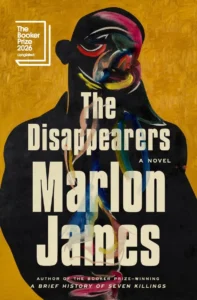
Already receiving rapturous praise, the Booker Prize finalist’s newest maximalist novel follows a group of closeted gay men in 1980s Jamaica reeling from a homophobic attack.
Another early Booker Prize nod goes to Emma Cline’s latest novel, Switzy, where an aging man travels through Europe to Zurich with his assistant, reminiscing on his life.
The debut book from the economist, philosopher and lawyer is fittingly hard to label, a blend of fact and fiction that traces the arc of global capitalism.
The playwright returns with a crisp novel set in the dog days of summer, when an attempt at gay cruising stirs memories of a long-lost lover for a young queer man.
In our uncanny age, it’s not out of the ordinary to need a book like this, even if the technology at our hands is upending most facts of life. The journalist and author breaks down how bots impact our relationships with others, and themselves.
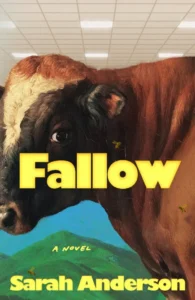
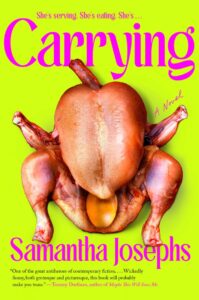
Combining the absurdity of contemporary motherhood and the drudgery of corporate life, Sarah Anderson’s debut novel follows Natalie, who signs up to become the first ever in-house surrogate. Can she meet the demands the family has placed on her, which require seven babies in ten years?
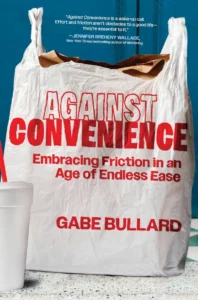
The journalist’s first book advocates taking a pill that’s quite tough to swallow: that our age of endless convenience is smoothing our brains and might not even save time (or money!). Is “frictionmaxxing” the way out of our malaise?
The sci-fi legend and author of Station Eleven and Sea of Tranquility returns with her newest novel, where shortly after the collapse of the United States, a glitzy hotshot Angelean disappears from the glitzy party he’s in the middle of throwing.
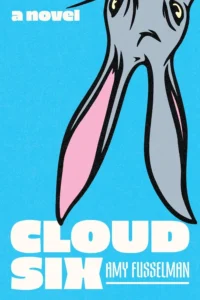
In the author’s tender-hearted and quite silly new novel, Mam and Bunko are flying over the United States when their plane suddenly explodes, sending them to not-quite-heaven. In this strange new environment with shooters and demons, they must make it back to their child, Penny, before they’re stuck there for good.
The Pulitzer Prize winner, who has written previously about Susan Sontag and Clarice Lispector, returns with a necessary history of Jewish anti-Zionism, which throughout history has been met with censorship and death.
In the latest from Hagfish, an independent publisher celebrating out-of-print works, a woman falls in love with a dog, horrifying her friends and poking fun at our own endless and unreachable expectations. Cosmopolitan indeed!
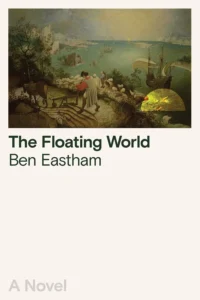
Ben Eastham’s elegant and blistering debut novel follows an unnamed narrator who accepts a suspicious job working for a corporation that sets up a dystopian island-slash-art-installation off the coast of Greece. From the editor-in-chief of e-flux Criticism and co-founder of The White Review, this absurdist art-world satire comes with a bite.
In their first book, the cult podcast Who? Weekly hosts divide the world—somewhat crudely—into Whos and Thems. But their celebrity-addled vision shifts in the new era, when the lines are smudged and anyone can transcend the boundary with ease.
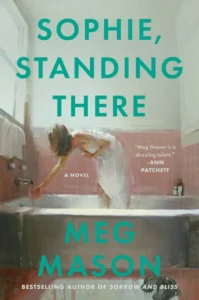
The brilliant Meg Mason, the author of one of my all-time favorite novels, Sorrow and Bliss, returns with a new novel where a woman happily married and surrounded by books reconnects with an author and dreams of their possible meeting.
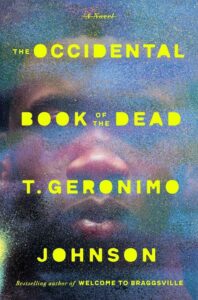
From the author of Welcome to Braggsville comes a starkly funny crime novel where a Black cop’s life after shooting a white teen, unraveling the white-washing he’s covered his life with.
In this captivating, horrific debut, Martha has everything a woman could want: a beautiful husband, a loving stepdaughter, yet her own family doesn’t even know she’s trans. When she finds out one day that she’s impossibly pregnant, she struggles to decipher the life she’s always wanted with the one she never thought she’d have.
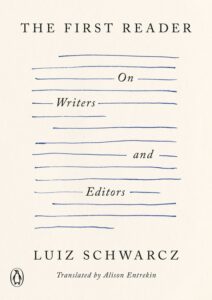
The founder of Brazilian publishing house Companhia das Letras offers advice from his nearly 40 years of writing, craft and editing. The First Reader is a tender book for the metafictionally-geared.
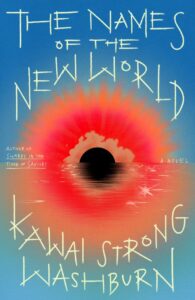
From the author of 2020’s splashy Sharks in the Time of Saviors comes a new novel where an enormous storm destroys Minneapolis that forces three people together, where they orbit for the next twenty years from Washington, DC, to Hawaii.
The latest short story collection from the Maudlin House publisher and editor-in-chief is a Midwest horror showstopper, full of black cats, Ouija boards and religious fanaticism. Sure to be a creepy riot.
One of the most important—and most undervalued—human invention gets its necessary due in Richard Cooke’s meticulous history of the internet’s community gathering place.
Paradise Burns, Pol Guasch, translated by Mara Faye Lethem (Oct 20)
The Spanish novelist returns with Paradise Burns, where two friends who meet at a party form a bond despite the fires ravaging the dystopian landscape and the mines where men are put to work.
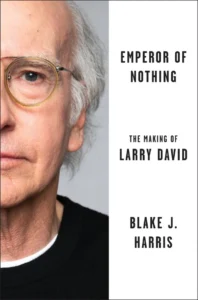
As a huge fan of Larry David and Curb Your Enthusiasm, I couldn’t be more excited for the first authorized biography of the Seinfeld and comedy legend, which compiles more than five years of research and interviews.
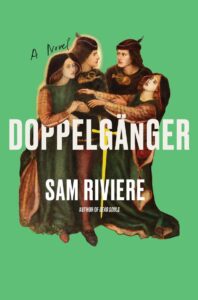
For fans of Black Bag, Sam Riviere’s hotly anticipated and quite absurd follow-up to Dead Souls takes place in a fictional university where a new “twinning” trend takes over the campus, starting with a student who begs another to punch him, part performance art and social experiment.
Thousands of Eyes, Maximiliano Barrientos, translated by Thomas Bunstead (Oct 27)
In this high-speed, post-apocalyptic maximalist thrill ride, a man and his young son escape a cult attempting to unleash a primordial specter known as The Dream in 1970s Bolivia. Centuries later, after The Dream has been enacted, a girl returns to the land to carry out her father’s dying wish.
Already enjoying the benefits of a tight-knit community, seven distinct lives in a small Appalachian town collide over one hot summer week in this debut, already longlisted for the 2026 Center for Fiction First Novel Prize.
Both a scathing critique of colonialism and a chilling horror story, a quiet family purchases a beautiful brownstone and learns of the deaths of the previous residents through manifestations within the house.
What makes cooking hard isn’t always the cooking part. It’s the part that comes before it. Opening the fridge and seeing a bunch of ingredients that make dinner feels like a puzzle. Or seeing a dish somewhere, but there’s no recipe to search for at all. Traditional recipe searches don’t always help either. Scrolling past twelve paragraphs about someone’s childhood on a food blog. Flipping through pages of cookbooks with limited options. On the bright side, you can now find AI tools for finding recipes that skip straight to the useful part.
There’s no shame in usingAI tools. It doesn’t make you less of a cook or chef. A Statista survey even showed that 60% of respondents reported usingAI for food-related activities, including recipe suggestions. And here’s where it gets even better. This article gives you a curated list of the best picks when the usual recipe question strikes.
Top Five Best AI Tools for Finding Recipes
DishGen
DishGen is home to an intuitive chat-based recipe generator. Describe a dish idea or a set of ingredients in plain language, and the tool produces a unique recipe. And take note: the output comes with an overview, ingredients, and instructions. No dealing with a page of loosely related search results. Beyond that, users can continue refining the results. Over the chat, they can ask for ingredient substitutions, other cuisines, or dietary adjustments. There’s even a tab for saved recipes to revisit later.
Key Features:
Dedicated AI-Powered Kitchen Coach for smarter suggestions and efficiency
AI-driven meal planning and nutrition facts
Shareable food recipes
Pricing:
Free Package
Premium Package – $7.99 per month
Pro Package – $15.99 per month
Real Use Case:
Families with a bunch of leftovers in the fridge can avoid food waste with DishGen. They can use the AI to generate several dinner ideas and choose one that uses most of those ingredients.
ChefGPT
Image Credit: ChefGPT
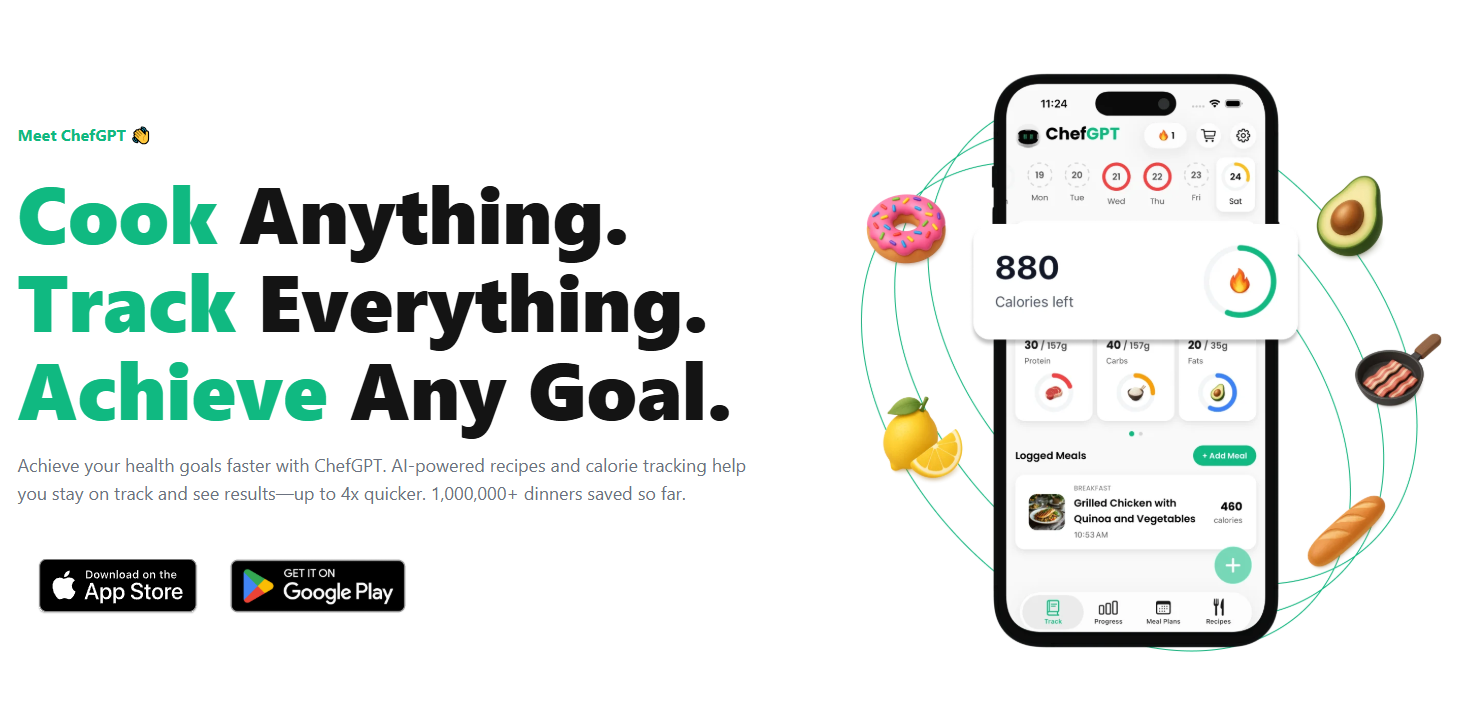
ChefGPT puts the power of AI on users’ plate. With three different themed modes for finding recipes, people are sure to get what they need for every situation. PantryChef is ideal for getting recipe inspiration using the ingredients users have on hand. MasterChef caters to ambitious meal cravings. And MacrosChef is a strong choice for achieving macronutrient goals. What’s more, people can customize every request based on various preferences. That includes meal types, kitchen utensils, available time, skills, servings, and more.
Key Features:
Built-in cook mode for AI-assisted meal planning
Integrated inventory for real-time pantry tracking and organization
Image-based nutrition and calorie monitoring
Pricing:
Free Package
Pro Package – $2.99 per month
Real Use Case:
Busy parents arriving home with eggs, potatoes, and vegetables can ask ChefGPT’s PantryChef for help. They can get a recipe built around using all three and turn them into a practical dinner.
Samsung Food
Samsung Food is ideal for people invested in the Samsung ecosystem. In its Food+ tier, users can access AI-powered features that make finding recipes and planning meals more tailored to individual preferences. That means people can customize their meals to balance macros, make them healthier, or add a fresh twist. A handy addition is that Samsung Food’s AI helps users with steps, tips, and appliance control. Other than that, it’s also useful for saving and organizing recipes from any source. Plus, it offers a library of thousands of recipes for quick searches.
Key Features:
AI-powered recipe personalization
Built-in grocery list generator and meal planner
AI-guided recipes for a smoother workflow
Pricing:
Free Trial
Food+ Package – $6.99 per month
Real Use Case:
Casual home cooks can save recipes that expected visitors enjoy and use Samsung Food to discover similar options. They can even use the app to customize recipes and spice up dishes.
SideChef AI
SideChef AI blends recipe discovery with guided cooking. And it does so in many ways. For starters, there’s RecipeGen AI. It lets users photograph the ingredients they have and have the AI tailor a fitting recipe. If needed, they also get an automated shopping list for additional ingredients. Meanwhile, MySubstitution AI allows users to tweak any recipe based on cooking preferences, dietary restrictions, and health goals. Guess what? There’s more to it. Users can also find tools for cooking instructions, cooking progress monitoring, and more.
Key Features:
Recommends recipes based on preferences and available ingredients
Step-by-step guidance for multi-recipe cooking
AI companion for food pairings, nutrition facts, and recommendations
Pricing:
Free Trial
Premium – $4.99 per month
Real Use Case:
College students who forgot to get the recipe for a dish they tried at a friend’s party can turn to SideChef AI’s RecipeGen AI. They can take a picture of the food and let the AI analyze and reconstruct a usable version to cook at home.
CookAIFood
Image Credit: CookAIFood
CookAIFood helps users create unique recipes and discover new dishes. When it comes to generation, the tool can produce recipes from ingredients, cuisines, descriptions, or a photo of what’s available. On the other hand, CookAIFood offers a massive collection of AI-generated recipes that are readily available. This makes it useful when the goal is to find what can realistically be made right now. Not just to find a specific dish. And one differentiator is that it also handles full menu and food visual creation well.
Key Features:
More than 9,000 AI-generated recipes
Image generation for food content purposes
Shareable AI-powered recipes
Pricing:
Free Package
Basic – $5 for 100 credits
Advanced – $10 for 225 credits
Premium – $20 for 500 credits
Real Use Case:
Home cooks can capture their on-hand ingredients and let CookAIFood suggest three fitting recipe options. At the same time, they can use it to generate a shareable-looking AI-generated photo to post that day.
Choosing the Best AI Tools for Finding Recipes in 2026
Finding a recipe isn’t always a search-bar problem. And these five solve different versions of it. Overall, these AI tools for finding recipes can work backward from your ingredients, preferences,dietary needs, and even cravings. Not just search by dish name alone.
When making a choice, focus on what you’re trying to solve. That means pick a tool based on whether you’re starting with an idea, an ingredient, a photo, or other resources.
There’s so much music coming out all the time that it’s hard to keep track. On those days when the influx of new tracks is particularly overwhelming, we sift through the noise to bring you a curated list of the most interesting new releases (the best of which will be added to our Best New Songs playlist). Below, check out our track roundup for Tuesday, September 1, 2026.
Oso Oso – ‘know you know me better’
Oso Oso have announced a new album, An Exchange of Information, arriving on November 6. It marks the inaugural release on Feral Twin, a new label founded by Hop Along’s Mark Quinlan, and the radiant, tuneful lead single ‘know you know me better’ is out now. “I’ve spent most of my life around independent music, as a musician, an agent, a talent buyer, touring, booking shows, and working with artists,” Quinlan said in a statement. “Feral Twin grew out of wanting to take everything I’ve learned from those different sides of the industry and build something intentional where every release matters. I’m not interested in putting out records just to fill a release schedule. I want Feral Twin to be a home for music and ideas I genuinely believe in, made by artists I respect, and to give those works the kind of care and attention they deserve.”
Kali Malone – ‘Heavy With Fruit’
Kali Malone recorded her just-announced album, Burning Song, at the historic Thomaskirche in Leipzig, Germany, where J.S. Bach was cantor for the last 27 years of his life and was then buried. The first musician to perform contemporary works on the church’s Bach Organ, Malone is joined on the record by Lucy Railton on cello and Stephen O’Malley on bowed acoustic guitar, and the five-minute ‘Heavy With Fruit’ is a mesmerizing first preview.
Pet Fox – ‘Balance’
If the new Oso Oso single is up your alley, definitely give a listen the uproarious title track from Pet Fox’s just-announced album, Balance. The follow-up to the Boston indie rockers’ debut A Face in Your Life lands on October 23, and it was produced by Alex Farrar, whose work on Truth Club’s Running From the Chase is cited as an influence.
Lily Seabird – ‘Lightspheres on Their Way’
Ahead of the release of her new album Lightspheres on Their Way on Friday, Lily Seabird has shared another breathtaking preview in the form of the title track. “Lightspheres are so many things throughout this record, UFOs, memories, dreams, people, an unknown force pushing and pulling us through,” Seabird expounded. “Without being too specific I think in a lot of ways this song deals with the feeling of loving someone through a great distance. I was also thinking a lot about Brent Mydland who was the keyboardist of the Grateful Dead from 1979-1990, the end of this song is really inspired by his song ‘I Will Take You Home,’ specifically the studio version which is on Built to Last (1989). Recording this song was really fun and figuring out the arrangement me Daniel and Rick really worked this one out together. The outro of this song is my favorite part which we completely improvised and kept.”
Death Valley Girls – ‘Basic Witch’
Death Valley Girls have previewed their upcoming album, Welcome to Earth, with a boisterous new single called ‘Basic Witch’. The track comes paired with a music video featuring Exene Cervenka of Los Angeles punk legends X. The band’s Bonnie Bloomgarden summed the song up as being “about taking control of your own boundaries. It’s about taking responsibility for your choices without needing blame, fault, victim, or perpetrator to consume you. Because when you stop looking outside yourself for someone to blame—or someone to save you—you get your power back.”
Eliza Edens – ‘Death Drive’
Eliza Edens has announced a new album, Death Drive, which is set for release on October 30 through First City Artists. The title track is out today alongside a self-directed video, about which Edens said: “This video was inspired by the location. I spotted this antique car place off the side of the road in Stephentown, New York, not far from where I grew up in the Berkshires. I had been passing it my whole life—hundreds of charmingly dilapidated vintage automobiles in a giant field. It felt more like a museum than a junkyard, with all of the vehicles arranged by make and model. I drove past it again last fall after a visit to my dad and it hit me as the perfect location to shoot a music video—especially for a song named ‘Death Drive’. I sent a cold email to the owner, Bob, and he kindly let us shoot there. Then I wrote and self-directed for the first time.”
Alana Markel – ‘Not Likely’ and ‘Not Likely 2’
Alana Markel has previously described her music as “cold weather music,” but the Brooklyn-based composer’s new double single elicits a hazy, playful warmth. “The song is about having the bravery to honestly share your desire and life force with the world,” Markel said of ‘Not Likely’, which is accompanied by a stripped-back rendition.
Every week, we update our Best New Songs playlist with several tracks that catch our attention, then round up the best songs of each month in this segment. Here, in alphabetical order, are the best songs of August 2026.
Alex G, ‘Pain is the Heart of Love’ [feat. Paul Buchanan]
I can’t imagine writing about yeule’s cover of Broken Social Scene’s ‘Anthems for a Seventeen Year-Old Girl’ outside the context of Jane Schoenbrun’s last film, I Saw The TV Glow, so I should probably reserve my thoughts on ‘Pain is the Heart of Love’ until I get to watch their new film, Camp Miasma, later this week. Still, the impact Alex G’s standout contribution to the soundtrack had on me was immediate, buzzing around in my mind like a haunting echo of his work on Phoebe Bridgers’ then-just-released Lost Weekend. Unfurling over four minutes, the song hammers down its aching romanticism with swirling layers of acoustic guitars and strings, over which The Blue Nile’s Paul Buchanan delivers an unbearably tender performance that seems to scrape every word in the title for new meaning with each repetition. Long after its essentialist message has pierced through, the words themselves seem to lose weight – some sort of answer hanging instead in the gaps between, the distance between love and pain.
Lex Walton, ‘Hipster Runoff’
If I’m being honest, I gave Lex Walton’s Sub Pop debut, ULTIMATE LOVE FOREVER, a single listen and thought every single song could land on this list; the title track is one of the catchiest songs I’ve heard all year. But ‘Hipster Runoff’ gets extra points for the music video, which adds another layer to the song’s metacommentary on the cultish, apolitical optimism of blog-era indie rock; Walton not only tried to make it sound like a Wolf Parade song in light of Dan Boeckner being involved, but got Arcade Fire’s Sarah Neufeld to contribute violins, too. But unlike its overly earnest or verbose reference points, some more contemporary than others, ‘Hipster Runoff’ is unafraid to tease, taunt, and diss at every turn, defining itself in opposition to the things it despises: “Hypnagogic Republicans, shitgaze landlords/ Short form video content, optimized for playlists.” If she’s just stating the obvious, why is there so little rock music that sounds as undeniable as this?
Phoebe Bridges, ‘Bobby’
On Phoebe Bridgers’ previous album, which now sounds born from a different universe all together, “This could the end” could be classified as apocalyptic, but the qualifying “of wanting” makes all the difference here. As the most joyful highlight on Lost Weekend, ‘Bobby’ could carry the breathless momentum of ‘Lost Boys’ as the album’s second, superior single. Oblivion is still the backdrop of the song’s bleeding optimism, but even when the song does dissolve into a puddle of sentimental synths – whether they come from Bridgers, Ethan Gruska, or Jack Antonoff hardly matters – you have no doubt it’s a only a long exhale before it picks up steam again. With scenes of domestic specificity augmented by the singer’s titular partner on backing vocals, ‘Bobby’ might sound a little too on the nose coming from someone else. For Bridgers, it’s a triumph that points to but sounds like nothing else in her discography.
Squirrel Flower, ‘Cleveland’
Like ‘Bobby’, ‘Cleveland’ is a song of idealized domesticity, but Squirrel Flower’s Ella Williams wrestles with the acceptance she might have to fashion a version of it all by herself. “He’s cute but he doesn’t like Cleveland/ No house no dog in the yard,” she sings on the song’s gigantic chorus, bolstered by mounting layers of guitar from co-producer Alex Farrar, Horse Jumper of Love’s Dimitri Giannopoulous, and Andy Krull. Williams credits her brother Nate for that chorus lyric, rendering the Say a Prayer to the Gods of Getting Going standout a rare co-write in Squirrel Flower’s discography – and a pointed one, making a love song to the titular city feel anything but lonely. Even in the final note of resignation, Williams sounds defiantly resolute.
Tinashe, ‘Melatonin’
Tinashe is a maximalist; this much ‘Melatonin’ makes clear. The sneering, club-ready hook of her latest single is instantly attention-grabbing, but the singer does way more than coast on vibes, effortlessly proving her critics wrong. Barely a minute in, Tinashe launches into an energetic verse that sounds like another song for a moment, then sends the original one to the stratosphere over swirling synths. She hints as much early on, but the shift is unexpected regardless: “Bet you thought we’d stop, you already know we kept it going.” The production is by turns effervescent and clanging, as if scoffing at you for not taking her seriously enough but more concerned with reeling you onto the dance floor.
untitled (halo), ‘aimee lou wood freestyle’
A few years ago, I saw Aimee Lou Wood star in an incredible production of Chekov’s Uncle Vanya, a role that likely inspired her famous turn in season three of The White Lotus. That context isn’t very useful in understanding untitled (halo)’s latest single, which the band’s Jack Dione titled ‘aimee lou wood freestyle’ simply because he had been watching the show in the spring of 2025. And while Dione’s rapping might be the most distinctive feature of an otherwise gauzy indie rock song, it’s far from a solo showcase, triangulating the members’ free-form sensibilities: drummer and producer Jay Are’s gripping jerk beat, Ariana Mamnoon’s ethereal vocals, Nicholas Noneman’s subtle textures. “I found myself in the depths of you,” the chorus goes: for a group like this, the abyss should sound like a breakthrough.
Kali Malone has a new album on the way. Burning Song, the follow-up to 2024’s All Life Long, is set for release on October 30 via Ideologic Organ. Check out the five-minute stunner ‘Heavy With Fruit’ below.
Burning Song was recorded at Thomaskirche in Leipzig, Germany, the historic church where J.S. Bach was cantor for the last 27 years of his life. The first musician to perform contemporary works on the church’s Bach Organ, Malone is joined on the record by Lucy Railton on cello and Stephen O’Malley on bowed acoustic guitar.
Burning Song Cover Artwork:
Burning Song Tracklist:
1. Grieving Figure
2. Map The Path
3. Bells On A Branch
4. Crawling Ashore
5. Sounding A Void
6. Heavy With Fruit
7. My Eve My Dawn























 Thousands of Eyes
 Shelter is Necessary for Existence