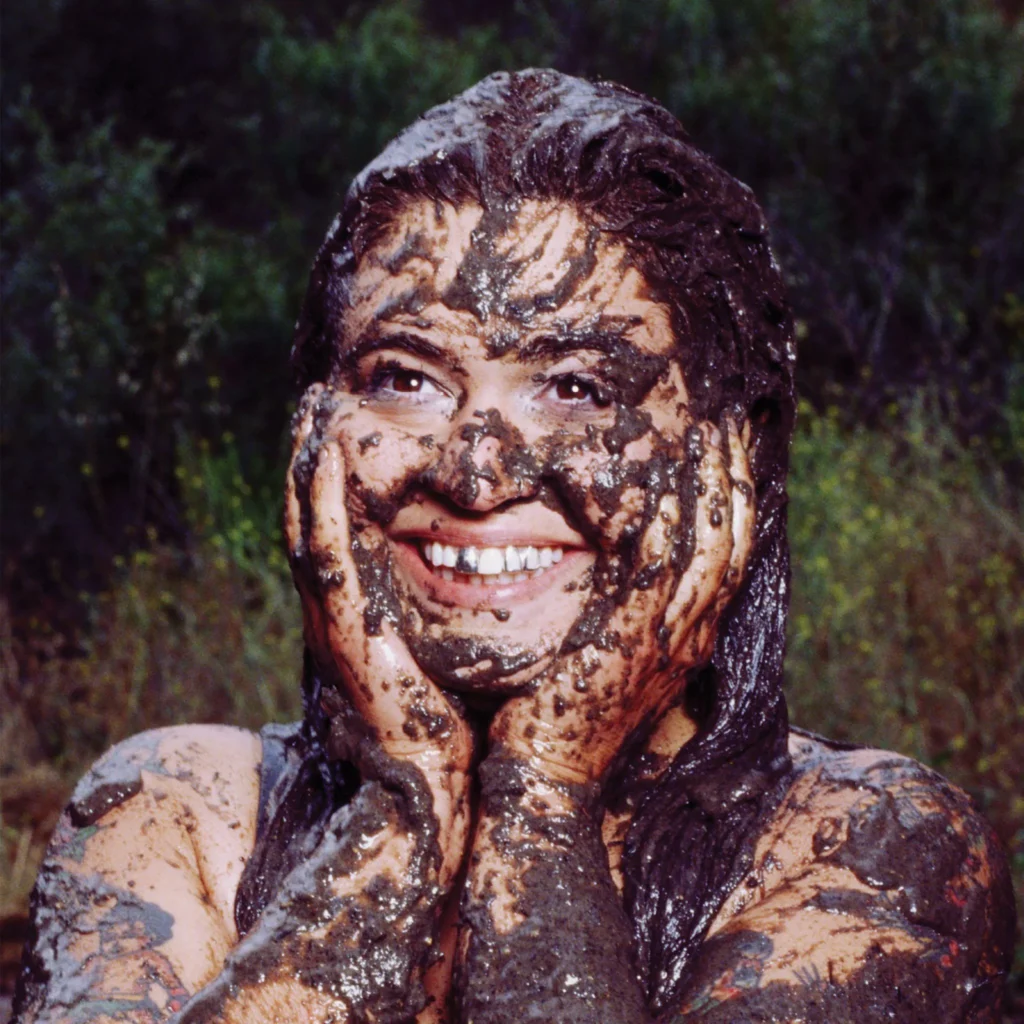
Remi Wolf has announced that her third album, Mud, is due to arrive on October 9 via Island Records. A new single, ‘Bottle’, will be released this Thursday, August 20. Check out the album’s cover art and tracklist below.
The follow-up to 2024’s Big Ideas includes the recently released track ‘Twiggy’. “I feel like I’ve crossed into a new phase of life because of this album,” Wolf said in a statement. “I literally felt like I was covered in shit. And now, at the end of the album process, I feel so clean and clear. It has been a very cleansing record to make for me.”
Mud Cover Artwork:
Mud Tracklist:
1. Bottle
2. Champagne
3. Twiggy
4. Burn Me Blue
5. Jamie
6. Covered In Mud
7. Moon So High
8. I Won’t Cry
9. Wine Drunk
10. Guess
11. Yellow Rose
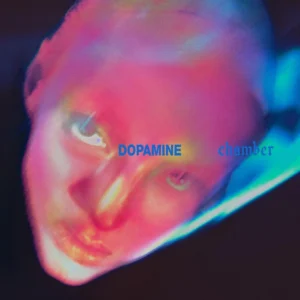
After teasing their fifth album earlier this month, Fontaines D.C. have now shared the details of Dopamine Chamber. The follow-up to 2024’s Romance comes out October 16 via XL. It’s led by the boisterous new single ‘Marianne’, which you can hear below.
The new album finds the Irish band reuniting with producer James Ford. For lyrical inspiration, frontman Grian Chatten spent time in Venice, Vienna, and Sicily, according to a press release. “I think Romance was maybe 60 per cent human and 40 per cent corrupted by automation, and a loss of feeling,” he explained. “This one feels more like 60 per cent corrupted – the mask is wearing the face a little more. I felt it would be more powerful to leave the hope out and reflect the ugliness honestly. This one needed to feel more like a catastrophic warning.”
“The album itself is a dopamine chamber,” Chatten remarked. “You step inside and we test these different mind – or mood-altering pieces of music on you.”
“Our albums have always questioned a sense of place,” bassist Conor Deegan added. “First Dublin, then being away from Dublin, and then trying to find the romance elsewhere. On this record, the question became: where do you escape to?”
Broadway curtains go up at 7 or 8, no exceptions, and most Chelsea galleries lock their doors by 6 on a Saturday. That gap in the middle of the day is basically your whole cultural weekend, and it’s a lot tighter than it looks on paper. Unless you study the city map beforehand (recommended) you’ll spend the first hour of your trip doing math in your head: can I get from the Whitney to a 6th Avenue theater in twenty minutes, or is that a fantasy I made up because I didn’t want to leave the museum yet. Usually it’s the second one.
Chelsea on foot, gallery by gallery
The gallery strip along 10th and 11th Avenue, roughly West 19th to West 27th, rewards people who are willing to just wander into buildings that don’t look like much from outside. David Zwirner, Gagosian, and Pace all sit within a few blocks of each other, and the real trick is pacing yourself, because gallery fatigue is a real thing – your eyes glaze over somewhere around gallery number six and everything starts looking like the same white cube with a different price list taped to the wall. Give yourself two hours here, not four. You’ll absorb more.
Matinee, evening, or both: picking your shows
Wednesday and Saturday matinees free up your evening for dinner and a second show if you’re the type who wants both, though most people end up picking one performance and building the rest of the day around it. A matinee crowd is a different animal, too – older, quieter, fewer phones lighting up mid-scene. If your weekend only has room for one Broadway night, evening shows tend to have the sharper energy, the kind where the audience actually gasps instead of just clapping politely.
Where you sleep decides how much you actually see
This is the part people underestimate until they’re standing on a subway platform at 11pm wondering if the L train is even running tonight. Staying near the Theater District or Chelsea itself cuts your travel time down to something manageable, ten or fifteen minutes on foot instead of a cross-borough trek that eats into the next morning’s plans.
Immersing yourself in New York’s cultural offerings requires a well-thought-out logistics plan, especially when balancing evening Broadway curtain calls with morning museum visits. To minimize travel time across town, securing accommodation within comfortable distance of the Theater District or Chelsea’s gallery circuit is key. By comparing rates across top new york hotels via multi-provider search platforms, art travelers can easily spot stylish boutique properties offering creative interiors, rooftop lounges, and convenient access to the city’s top cultural hubs.
Theater District, Chelsea, or somewhere in between
Midtown puts you closest to the marquees but further from the art, and Chelsea flips that arrangement on its head. Flatiron sits in a strange, useful middle ground, which is a ten to fifteen minute walk or a quick cab either direction, and it comes with its own scattering of small restaurants that haven’t quite made it onto every tourist list yet. If you’re the sort who wants to walk everywhere, that middle location saves you from the daily negotiation of which neighborhood gets sacrificed.
Feeding yourself between acts
Pre-theater menus exist for a reason, and most restaurants near the Theater District start serving them around 5, timed for a 7pm curtain with just enough breathing room. It’s not just convenient, but also a really nice way to feel entrenched in a little universe ruled by curtain calls and let out times.
Skip that window and you’re eating standing up at a hot dog cart, which honestly isn’t the tragedy people make it out to be, though it’s not quite the meal you pictured when you booked the trip.
On gallery days, the food carts and small cafes tucked between 9th and 10th Avenue tend to move faster than the sit-down spots, useful when you’re trying to squeeze in one more gallery before the light changes.
Of all the features people wish they could change, the smile sits near the top of the list. A crooked or crowded set of teeth can make someone hide their grin in photos, cover their mouth when they laugh, or feel quietly self-conscious in meetings. It is no surprise that teeth straightening has become one of the most popular confidence investments of the decade.
The effect can be genuinely life-changing. A practice such as Sun Orthodontist shows how modern treatment fits neatly into a beauty and wellness routine. This is general information rather than medical advice, so here is whether a better smile really boosts confidence.
Does Your Smile Affect Confidence?
The link is stronger than most realise. How you feel about your teeth shapes how freely you express yourself. That ripple effect touches daily life.
The psychology is clear. People who feel good about their smile tend to smile more often, and a genuine smile shapes first impressions at work and socially. Hiding your teeth, by contrast, can read as reserved or unhappy even when you are neither. The modern confidence conversation increasingly links appearance, wellness, and self-belief.
The benefits stack up. Straight teeth also photograph better, which matters in an image-driven world. Around one in three orthodontic patients is now an adult, a sign of how much people value the change. Feeling free to laugh without a second thought is a small shift with an outsized effect.
What Are Your Straightening Options?
Modern treatment is discreet and flexible. Gone are the days of one bulky option for everyone. Knowing the key terms helps you compare:
Orthodontics. Orthodontics is the branch of dentistry that straightens teeth.
Clear aligners. Clear aligners are removable, near-invisible trays that shift teeth.
Malocclusion. Malocclusion is a misaligned bite that treatment can correct.
Weigh the discreet choices. These options suit different lifestyles.
Clear aligners. Removable and nearly invisible.
Ceramic braces. Tooth-coloured and subtle.
Metal braces. Reliable for complex cases.
Lingual braces. Hidden behind the teeth.
Retainers. Worn afterwards to hold the result.
Match the method to your life. The right option depends on your alignment, your budget, and how visible you want treatment to be.
How Does a Smile Fit a Beauty Routine?
A smile is the centrepiece of a face. Skincare, hair, and makeup all frame it, so straight teeth complete the picture. Increasingly, people treat it as part of self-care.
Think holistically. A consistent wellness routine that balances skin, body, and smile pays off in lasting confidence. Just as you might invest in your skin and hair, your smile rewards steady, thoughtful care. The mouth is central to how the whole face reads.
Keep it healthy, not just straight. Good daily hygiene protects both the look and the health of your teeth during treatment. Guidance on cosmetic procedures is worth reading before any appearance-focused decision. A healthy smile always looks better than a merely straight one.
What Does Treatment Involve?
The process is straightforward and well managed. Straightening teeth is a gradual, carefully planned journey. Understanding it removes the worry.
Expect a clear path. An orthodontist assesses your teeth, discusses your goals, and creates a tailored plan. Most adult treatments take 12 to 24 months, though mild cases finish sooner. Regular check-ins let the orthodontist fine-tune progress toward the final result.
Aftercare seals the deal. Wearing a retainer afterwards keeps teeth in their new position for good. Consistency during and after treatment is what protects your investment. A little patience now buys a confident smile for decades.
How Do You Choose an Orthodontist?
The provider shapes the whole experience. Not every clinic offers the same options or care. A few checks lead you to the right one.
Look for expertise. Choose a qualified orthodontist with strong reviews, clear before-and-after examples, and a range of treatments. As with any professional cosmetic decision, it pays to ask about experience and expected results. Professional guidance on orthodontics for adults shows what good, safe care looks like.
Value comfort and clarity. A welcoming clinic with transparent pricing and flexible scheduling makes a long treatment far easier. Beware anyone who guarantees a specific result, since no honest clinician can. Trust how you are treated from the very first appointment.
What to Keep In Mind
A confident smile shapes self-image and first impressions.
Discreet options include clear aligners and hidden braces.
Treat your smile as part of a wider wellness routine.
Most adult treatments take 12 to 24 months to complete.
Wear a retainer afterwards to protect the result.
Choose a qualified, transparent orthodontist you trust.
Smiling Like You Mean It
A better smile really can boost confidence, and modern orthodontics makes achieving one more comfortable and discreet than ever. By treating your smile as part of a wider beauty and wellness routine, understanding your options, and choosing a skilled orthodontist, you invest in something that shows every single day. The result is not just straighter teeth, but the easy confidence to share them.
FAQ
Can Straightening My Teeth Really Improve Confidence?
Yes, many people feel noticeably more self-assured once they like their smile. They tend to smile more freely in photos and social settings. The psychological lift is often the most valued result.
Is Teeth Straightening Just for Teenagers?
Not at all. Around one in three orthodontic patients is now an adult. Discreet options like clear aligners make treatment easy to fit into adult life.
How Long Does Treatment Take?
Most adult treatments take 12 to 24 months, depending on complexity. Mild cases can finish sooner. Your orthodontist will give a timeline at your consultation.
Do I Need to Wear a Retainer Afterwards?
Yes, a retainer keeps your teeth in their new position. Without it, teeth can gradually drift back. Wearing it as advised protects your results for the long term.
YUNYE Art presents Vitality: Still Becoming, a group exhibition bringing together 20 emerging artists at The Bomb Factory Art Foundation – Holborn, London, from 6–9 August 2026. Curated by Yutong Ye, the exhibition explores becoming as an ongoing process of growth, transformation, and possibility.
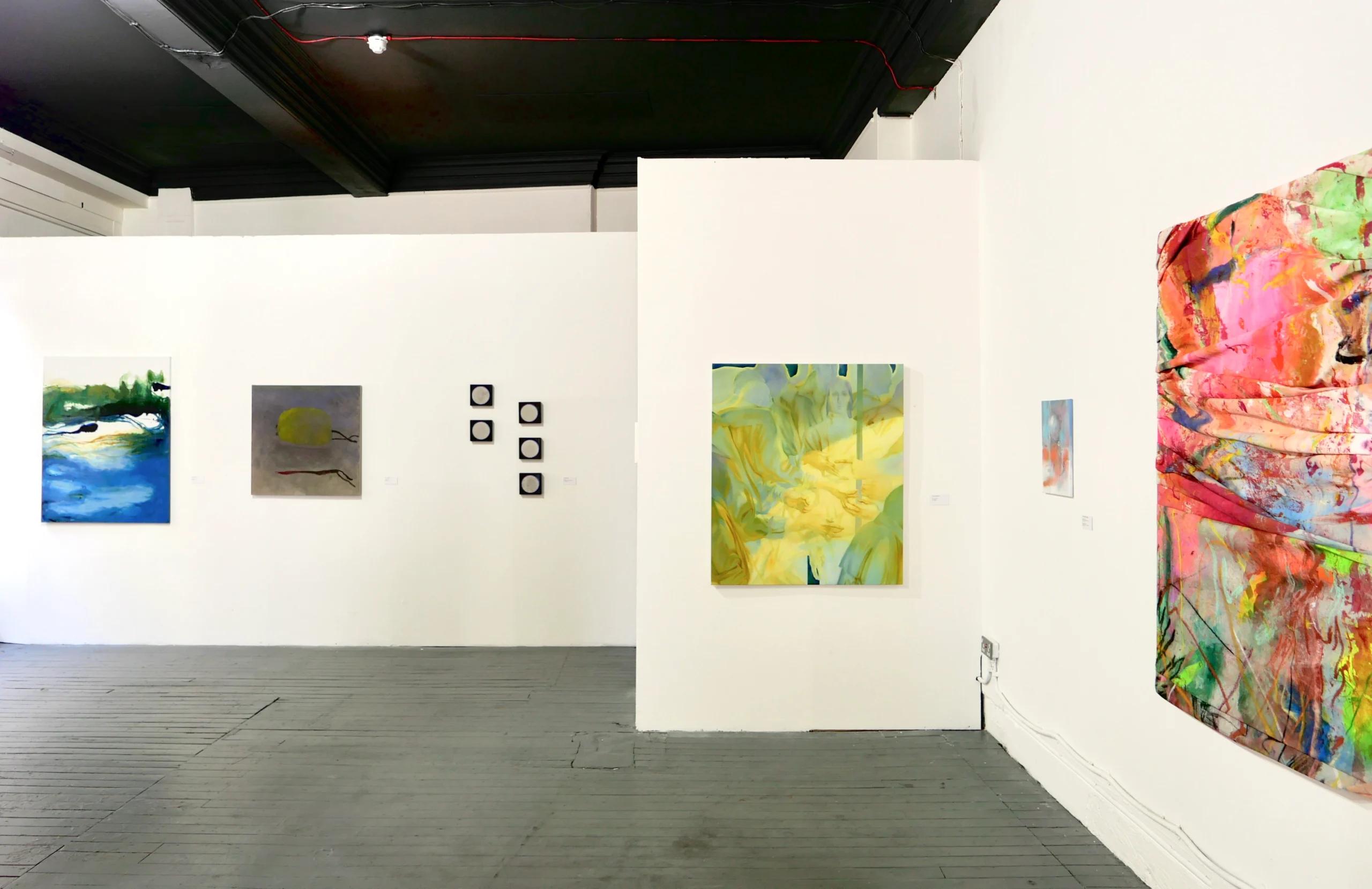
Through painting, installation and mixed media, artists approach becoming from different perspectives, exploring moments in which identities, emotions and meanings are still taking shape. Paintings move between abstract and figurative languages, while sculptural and mixed-media works bring everyday materials and tactile surfaces into the space. Forms emerge and dissolve, materials accumulate and transform, and images move between recognition and abstraction. Vibrant colours, fluid forms, and layered surfaces evoke a sense of movement and emergence, capturing moments in which possibilities are still unfolding.
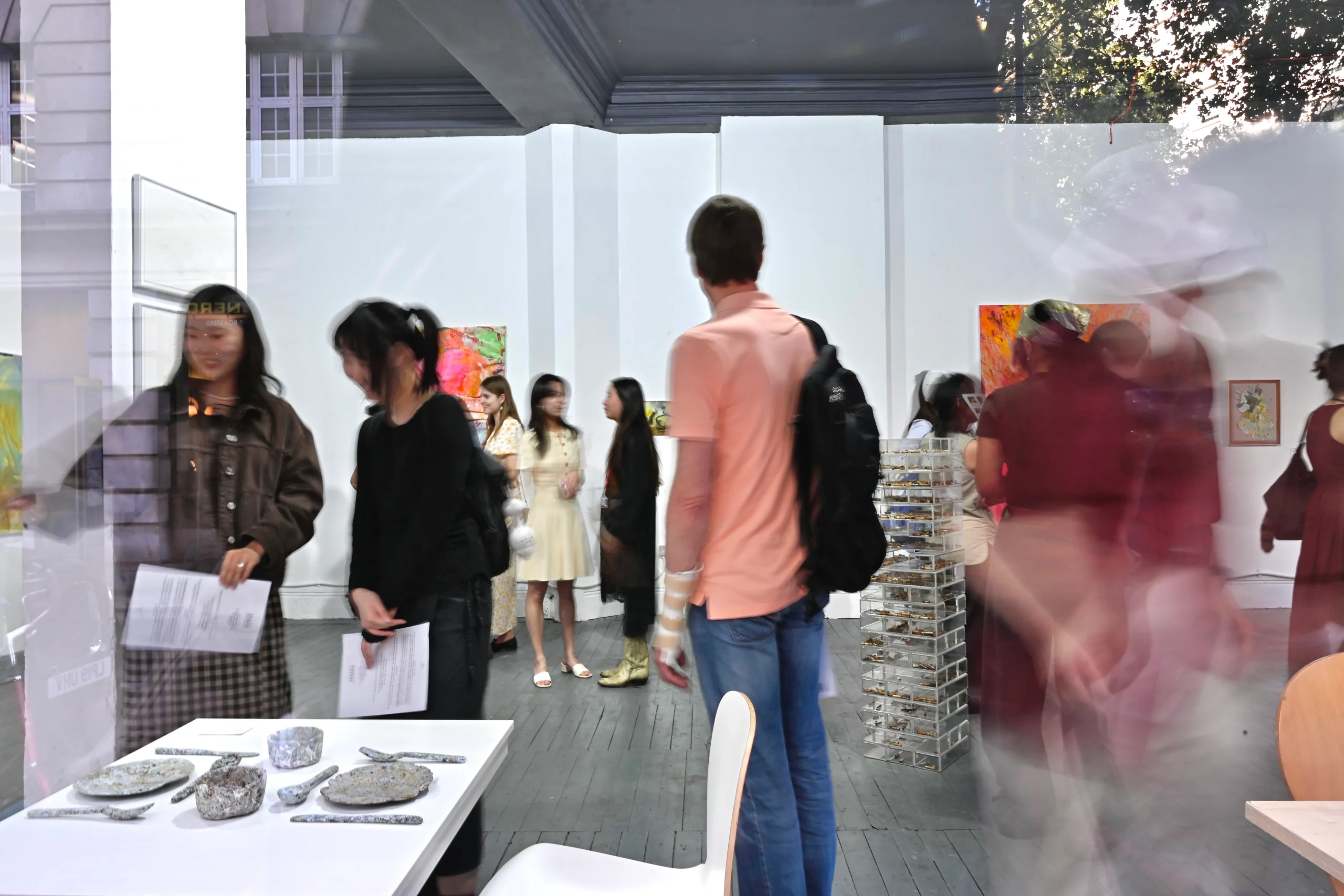
Installation view of Vitality: Still Becoming, The Bomb Factory Art Foundation, London, 2026
The works move between intimate personal narratives and broader cultural and social experiences. Some turn inward towards perception, imagination and emotional experience, while others consider relationships between individuals and their surroundings, exploring intimacy, distance, place and connection. This sense of the ongoing creates a space in which new meanings and possibilities can continue to emerge, inviting viewers to remain with the moments before arrival.
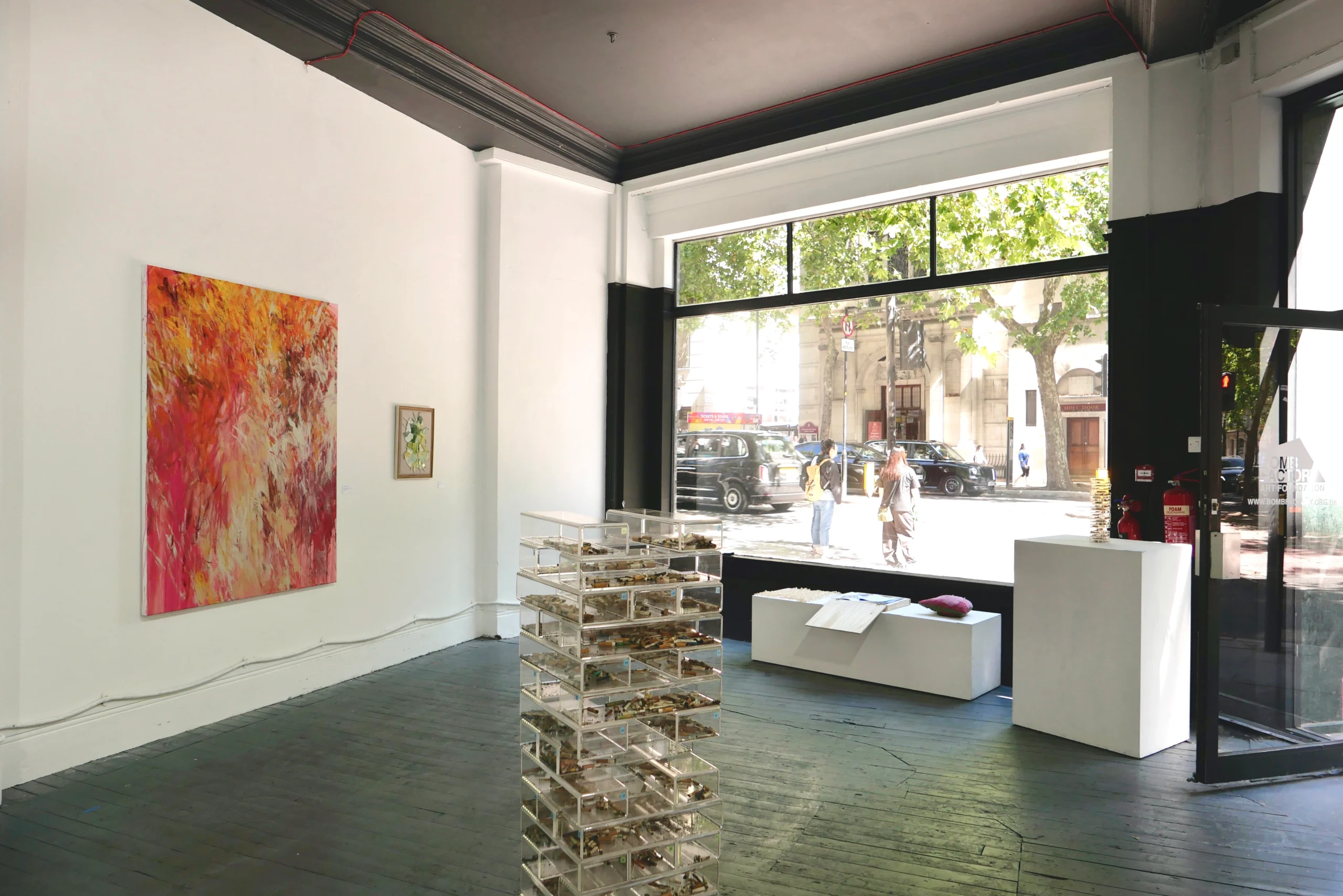
Installation view of Vitality: Still Becoming, The Bomb Factory Art Foundation, London, 2026.
“Vitality: Still Becoming began with a personal idea that the most beautiful state is the moment when you know something is coming, but it has not yet arrived,” says curator Yutong Ye. “In life, we often pursue a finished state, yet in art we embrace uncertainty and leave ambiguous spaces open for discussion. The process itself can be vital precisely as it is unsettling, exploratory and exciting.”
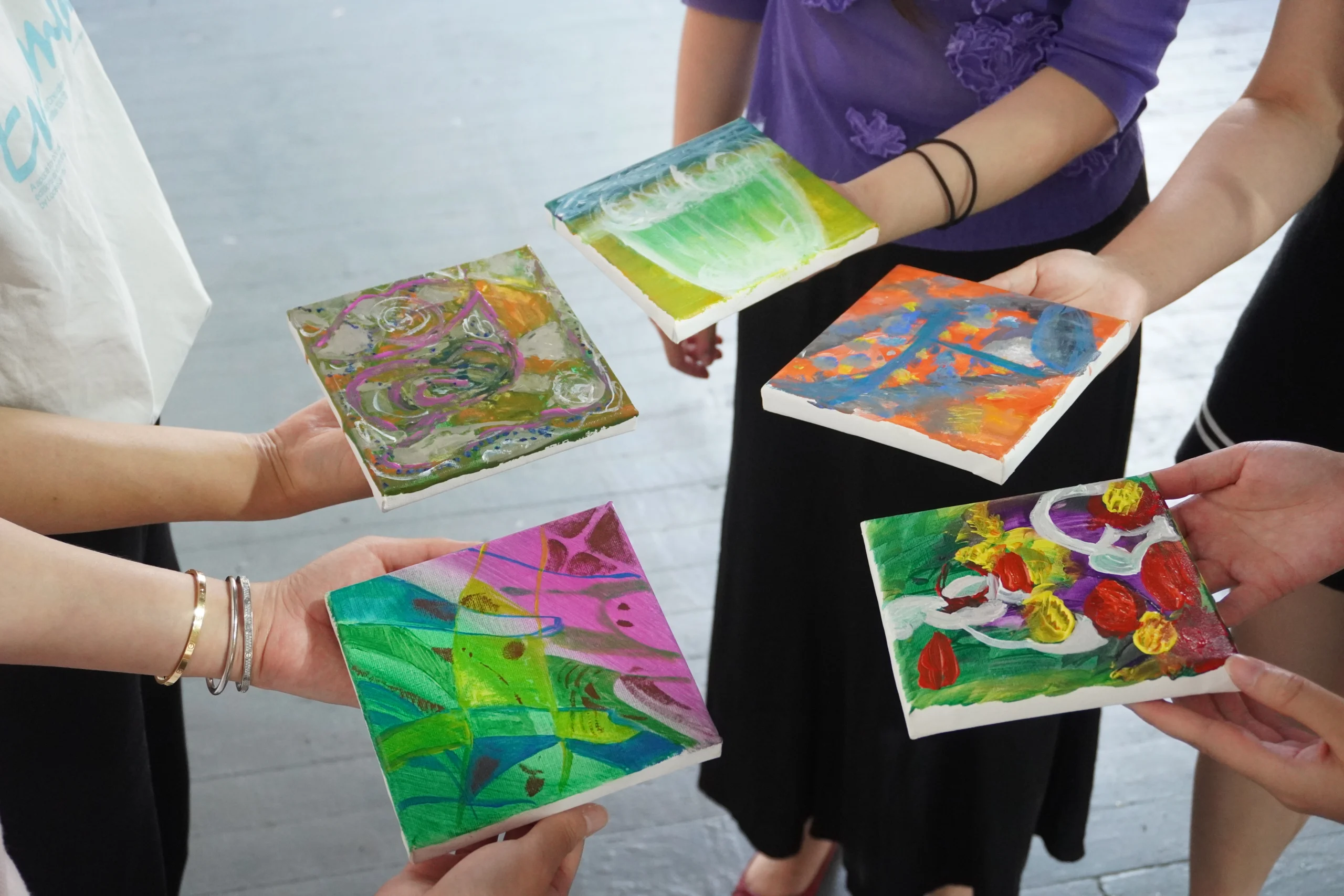
Opening view of Vitality: Still Becoming, The Bomb Factory Art Foundation, London, 2026.Workshop view of Vitality: Still Becoming, The Bomb Factory Art Foundation, London, 2026.
The exhibition is accompanied by a series of public programmes, including expressive painting and collage workshops that invite audiences to engage directly with the artists’ thinking and creative processes. Through making, conversation and exchange, the programme extends the exhibition beyond finished works and invites audiences to become part of its ongoing process.
Participating Artists:
Anna Lugovska, Cristallina Fischetti, Cynthia Zhang, Danlu Zheng, Guangyu Zhang, Jan Valik, Ketong Xing, Lifeng Liao, Ma Qianchun, Na Young Lee, qianqian, Shijia Huang, Sinuo Chen, Tianyi Xu, Tianyu Zhou, Xinmiao Yu, Yifan Lyu, Yiwen Liang, Yunqi Zhang, and Zhiqi (Shiki) Zhang.
We’ve already covered theAI tools for resume building. But that’s not the only thing job seekers have to take care of. They also need to prepare cover letters. Both go hand in hand. However, opinions and numbers on this are mixed. Some research shows that77% of hirers consider cover letters useful for learning more about applicants. Other LinkedIn analyses suggest that93% of employers don’t even bother to read them. But these conflicting claims are not a reason to treat your job application letters as an afterthought. That’s where AI tools for writing cover letters come in — they help you hit the balance.
Instead of writing the sentence that opens half the cover letters ever submitted, theseAI tools focus on proving you’re a real, thoughtful person. And what matters most is that they connect what a candidate has actually done with what an employer is asking for.
Let’s look at the top options that await you!
Top Five Best AI Tools for Writing Cover Letters
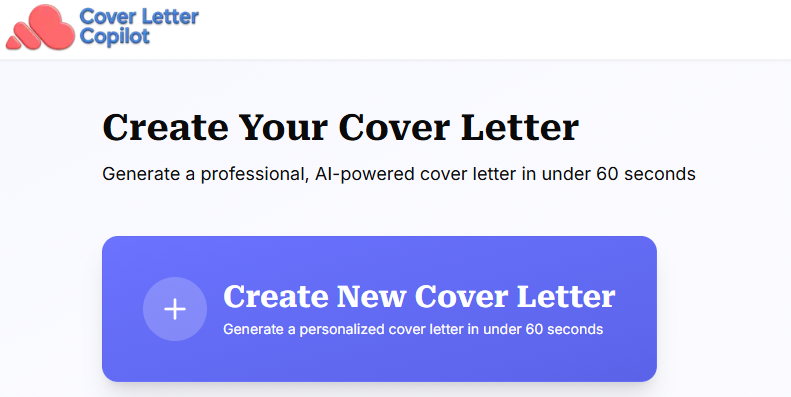
Cover Letter Copilot
Image Credit: Cover Letter Copilot
Cover Letter Copilot does exactly what its name suggests. It emphasizes creating personalized cover letters that work well with automated screening and hiring managers. Besides uploading a resume, users only need to specify the job title and company name and paste the job description. This lets Copilot tailor the output to the applicant’s actual experience and the target role. What deserves even more attention is the granular control it offers. Users can make adjustments through prompts and dropdown options.
Key Features:
Language, template, and tone customization
Crafting cover letters that match key job requirements
Keyword optimization and ATS-friendly formatting
Pricing:
Free Package
Active Seeker Package – $8 per month
Elite Navigator Package – $12 per month
Real Use Case:
Fresh graduates no longer have to sit through an afternoon building a cover letter from scratch. Cover Letter Copilot lets them upload a resume with internship experience and provide the job posting. It then uses the relevant experience to create a starting letter.
Kickresume
Kickresume comes with a reliable AI cover letter generator. Applicants can use it to write from scratch or enhance an existing one. This tool allows users to upload a resume and paste the job description. That means they’ll get a keyword-rich, well-structured cover letter aligned with the specific role. Kickresume helps job seekers stand out as the stronger fit for the position. What’s more? The seamless integration with its resume builder makes both documents look and read cohesive. Not pieced together from different tools.
Key Features:
Supports multiple languages
Functional cover letter templates to speed up the process
Customization options for every detail
Pricing:
Free Package
Monthly Package – $19 per month
Real Use Case:
Kickresume’s ability to deliver visual consistency can give graphic designers an edge. When applying to creative agencies, they can build both a resume and cover letter using matched template pairs.
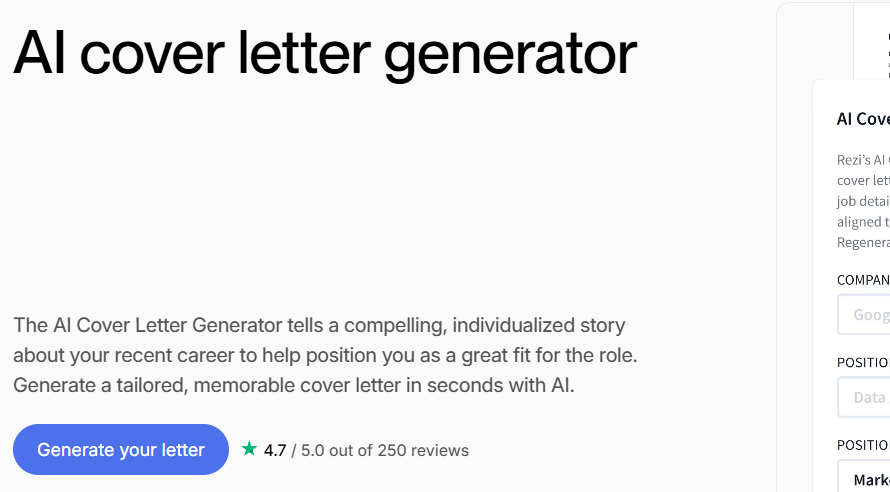
Rezi
Image Credit: Rezi
Rezi, much like Kickresume, brings cover-letter writing into an ATS-focused career toolkit. With it, users can generate a compelling cover letter by uploading their resume. Adding job details, such as the company name and position, also helps. Together, they enable Rezi to pull experience and the target job’s keywords into a structured, ATS-aligned letter. Here’s where it gets more interesting: this tool uses industry-specific phrasing. On top of that, applicants have the option to make adjustments to the typography.
Key Features:
Autofill from resume feature to avoid a repetitive process
Extensive control over font size and spacing
Making a cover letter with keyword alignment
Pricing:
Free Package
Pro Package – $29 per month
Enterprise Package – $99 per month/200 users
Real Use Case:
Applicants in keyword-heavy roles can get over the hump with Rezi. They can use it to match their resume with a cover letter echoing the same terminology an ATS is scanning for. This way, both documents reinforce each other.
Resume.io
Resume.io combines guided document creation, templates, and AI assistance. So it’s safe to say the tool is for those who are fine with getting a bit hands-on during the process. Even so, approachability remains. Pick a template, add personal info, and fill in the sections. That’s basically the workflow. But the AI-powered sample sentences deserve even more attention. Quick suggestions that spark ideas. Not to mention the built-in spell-checker and customization options.
Key Features:
Keyword integration and template-based suggestions
Manual control for making adjustments to the template
Cover letter examples and expert guides
Pricing:
Free Trial
Premium Trial Package – $2.95 for 7 days
Paid Package – $49.95 per quarter
Real Use Case:
Non-native English speakers applying abroad can benefit from Resume.io’s AI phrasing suggestions. This helps in smoothing out sentences that read correctly but sound stiff or overly literal. One way to make cover letters fluent-sounding, not just technically correct.
Grammarly
Image Credit: Grammarly
Grammarly now has its own AI cover letter generator. It’s built on the same engine that many trust to handle grammar and tone across millions of inboxes and documents. And the process is very simple. Applicants upload their resume and enter the job title and responsibilities. Plus, even without specialized cover-letter features, it banks on users’ trust in its language-processing capabilities. That means job seekers still have access to its editing tools to help refine clarity, grammar, tone, and wording.
Key Features:
Text adjustments with only a few clicks
Writing clear, professional, and mistake-free cover letters
Natural-sounding first draft
Pricing:
Free Package
Plus Package – $30 per month
Enterprise Package – Custom Pricing
Real Use Case:
Mid-career professionals planning to switch industries can use Grammarly to draft a cover letter explaining the career transition. With its advanced language features, it can make the output more concise and confident. All without stripping away the personal story.
Choosing the Smartest AI Tools for Writing Cover Letters in 2026
Each tool is built for a different sticking point. So no single tool here is the “right” one. Cover Letter Copilot is the specialist. Kickresume combines AI writing with polished templates. Rezi connects the letter to an ATS-focused application strategy. Resume.io is the gentlest on-ramp for a first attempt. Grammarly generates a draft while catching tone issues the others miss.
When choosing, consider the factors that cause your struggles with cover letters. And whatever tool you use, keep the experiences, reasons, and personality unmistakably yours.
To get an overview of the applications that help applicants throughout the hiring process, check out our full guide on theAI tools for job seekers.
Vertical drama is developing a visual language of its own.
Designed to be watched on smartphones and structured around short, fast-moving episodes, the format asks audiences to enter a story almost immediately. Characters have little time to make an impression. Locations need to be understood at a glance. Changes in emotion, atmosphere, and dramatic stakes must register clearly within a narrow vertical frame.
Behind that immediacy is a considerable amount of visual decision-making.
At Crazy Maple Studio, Visual Development Artist Lin Jin has taken on leading creative responsibilities across a growing range of ReelShort productions, helping determine how characters, environments, moods, and narrative concepts are translated into visual worlds built specifically for mobile audiences.
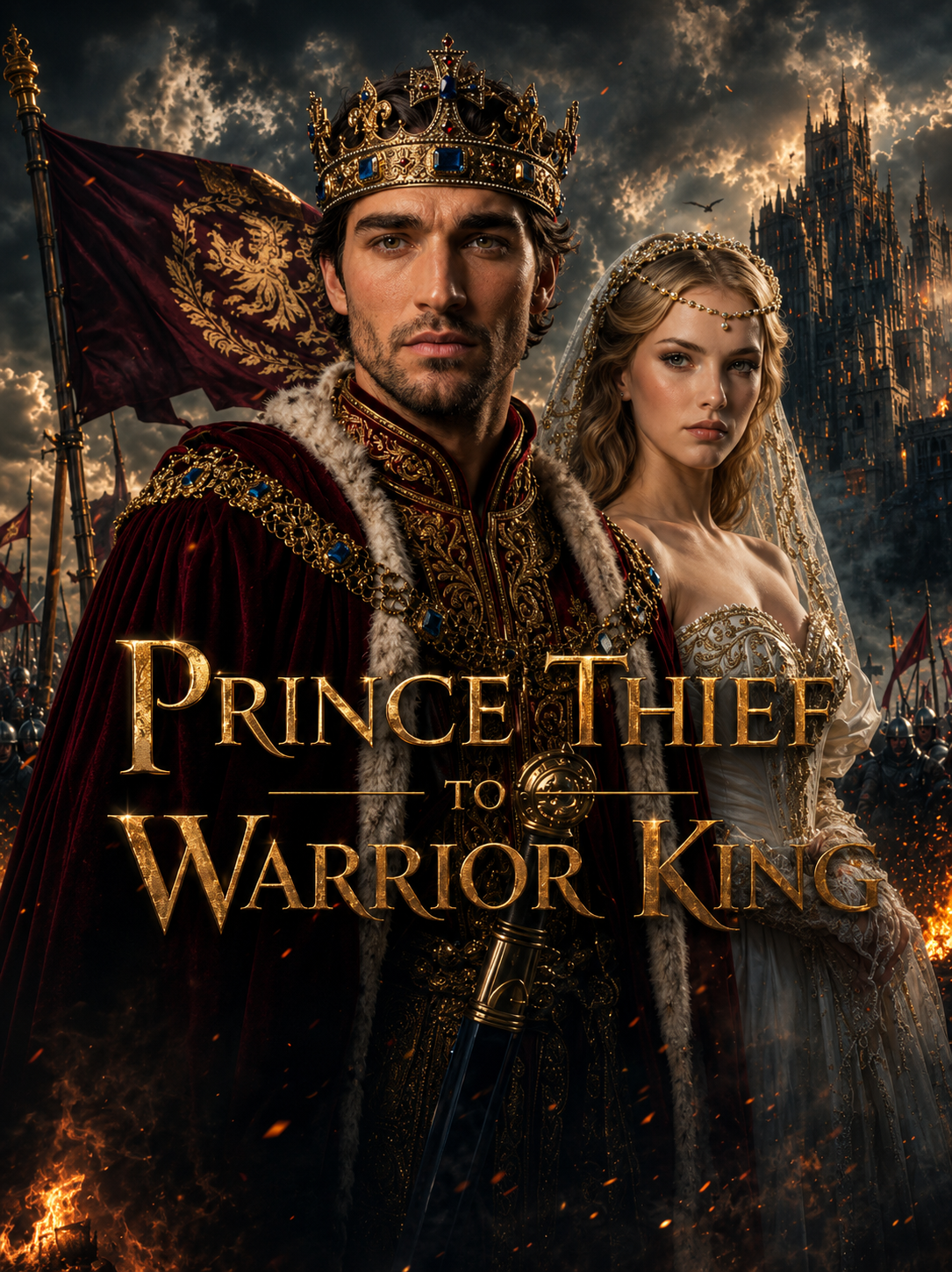
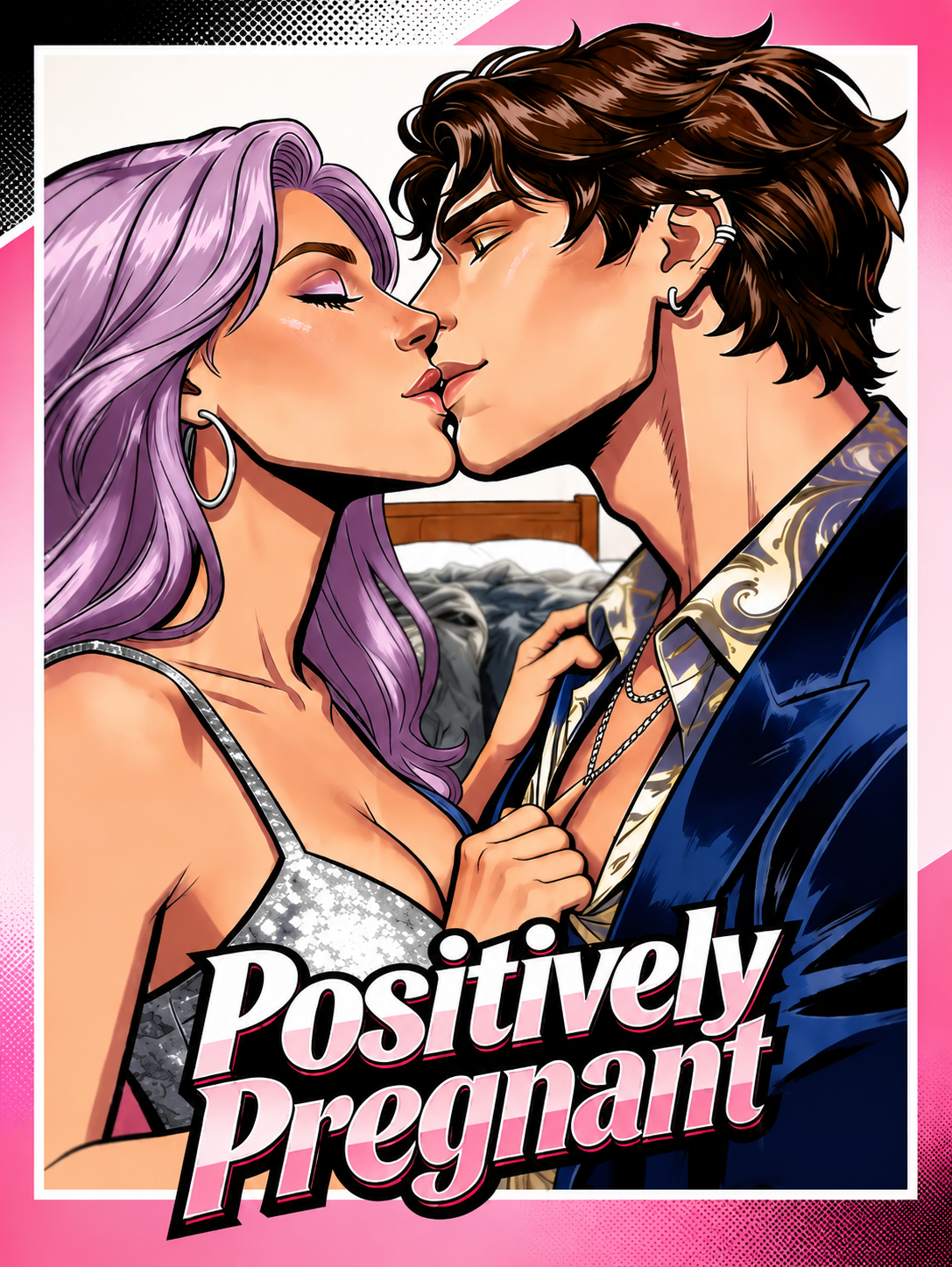
Her work includes Positively Pregnancy, Love Cruise, The Neighbor They Should’ve Left Alone, Reborn to See the Football Stars Ruin Themselves, Sci-fi Show, Veronica, and Prince, Thief to Warrior King—projects that move across romance, contemporary drama, psychological storytelling, sports-related narratives, science fiction, revenge, and fantasy.
On several of these productions, Jin’s responsibilities extend across significant portions of the series. Her visual development work covers Episodes 16–50 of Positively Pregnancy, Episodes 28–50 of Love Cruise, Episodes 31–50 of The Neighbor They Should’ve Left Alone, and Episodes 1–30 of Veronica.
The extent of those responsibilities places her work well beyond the creation of isolated visual assets. Across these episode ranges, Jin helps establish and maintain the characters, environments, atmosphere, and visual direction through which the stories develop.
Her project slate also includes ReelShort productions reaching substantial audiences. Reborn to See the Football Stars Ruin Themselves has reached 38.3 million views, Prince, Thief to Warrior King has reached 5.6 million views, and Positively Pregnancy has reached 963.4 thousand views.
For Jin, those projects are part of a broader creative challenge: defining what effective visual storytelling looks like when drama moves from traditional screens into a vertical, mobile-first environment.
Designing for a Story That Moves Fast
Visual development has always occupied an important place in film and animation, but vertical drama changes the conditions under which those visual decisions are experienced.
A ReelShort viewer encounters a story through a narrow smartphone screen. Episodes are brief. Plot developments arrive quickly. Characters, relationships, and conflicts need to remain legible even as the narrative moves at considerable speed.
That means visual information has to work efficiently.
A character’s appearance needs to communicate personality and remain recognizable from episode to episode. Environments need to establish a place without requiring lengthy explanation. Changes in atmosphere must support the emotional rhythm of a scene. Across a serialized production, all of those elements need enough consistency to feel like parts of the same world.
Jin’s work begins within this set of challenges.
As a Visual Development Artist, she interprets narrative material and develops the characters, settings, moods, and visual concepts through which that material can be translated into production.
It is a role that combines artistic execution with narrative judgment.
Rather than asking only what an image should look like, visual development asks what that image needs to accomplish for the story: what audiences should understand about a character, what an environment should communicate, what emotional tone a scene requires, and how those choices can remain coherent as a series progresses.
For a format built around speed and immediate audience comprehension, those decisions become particularly consequential.
Visual development in vertical drama is not simply a layer of decoration added to a finished story. It is one of the systems through which the story becomes immediately readable on screen.
Taking Responsibility Across ReelShort Series
The scope of Jin’s work becomes clearer through the individual productions she has helped develop.
On Positively Pregnancy, she has been responsible for visual development across Episodes 16–50. The assignment places her creative work across a substantial portion of a series that has reached 963.4 thousand views on ReelShort.
Her responsibilities on Love Cruise span Episodes 28–50, while her work on The Neighbor They Should’ve Left Alone extends across Episodes 31–50.
On Veronica, Jin’s visual development responsibilities cover Episodes 1–30. Working across the opening stretch of a series carries particular visual importance: characters, environments, atmosphere, and the broader identity of the story all need to become recognizable as audiences are first introduced to its world.
Across these projects, the episode ranges also illustrate something important about Jin’s role.
Visual development carried across dozens of episodes requires more than producing a collection of individual images. Characters continue to develop. Locations change. New narrative situations appear. Emotional tone evolves. Yet the production still needs to retain a coherent visual identity.
Jin’s sustained involvement helps support that continuity.
It also requires her to move between markedly different genres.
The visual questions presented by romance are different from those presented by psychological drama. A sports-related narrative brings different expectations from science fiction, while fantasy can require the construction of an entire visual logic beyond familiar contemporary settings.
Jin’s work therefore changes with each production.
What remains consistent is the responsibility to identify the visual characteristics that make a story distinctive and translate them into a direction capable of supporting the larger production.
From Romance to Science Fiction, One Format With Many Worlds
The variety of Jin’s ReelShort projects reveals another challenge facing visual artists working in vertical entertainment: the format may remain consistent, but the worlds inside it cannot.
A platform built around serialized storytelling needs differentiation.
If characters, environments, and atmosphere become visually interchangeable from one series to the next, individual stories lose part of what allows audiences to recognize and remember them.
That makes genre adaptability an important part of Jin’s contribution.
Her work across romance, drama, sports-related storytelling, science fiction, revenge narratives, and fantasy requires different approaches to character development, setting, mood, and visual tone.
A contemporary romantic story may need an environment that feels immediate and emotionally accessible. A darker psychological narrative may rely more heavily on tension and atmosphere. Fantasy and science-fiction concepts may require visual development to establish spaces, objects, or environments that have no straightforward real-world equivalent.
The task is not to impose one visual style across every project.
It is to determine what each story needs and develop a visual identity capable of expressing it within the constraints of vertical production.
For Crazy Maple Studio, that versatility matters because ReelShort is built around a continuing slate of stories rather than a single title.
The studio must repeatedly create new visual worlds while maintaining a production model capable of moving those worlds efficiently from narrative concepts toward the screen.
Jin’s ability to operate across genres helps make that process possible.
When Visual Development Meets a Multimillion-View Audience
The reach of Jin’s ReelShort projects provides another way to understand the scale of the productions in which she works.
Among them, Reborn to See the Football Stars Ruin Themselves has reached 38.3 million views.
Jin contributed visual development to the production, working on the visual elements through which its story world, characters, environments, and atmosphere could be communicated to viewers.
The 38.3 million-view audience places that creative contribution within the production process of one of the high-viewership ReelShort titles on her project slate.
Her work on Prince, Thief to Warrior King connects her to another production with a multimillion-view audience. The series has reached 5.6 million views.
And on Positively Pregnancy, Jin’s connection to the production is particularly sustained: her visual development responsibilities cover Episodes 16–50 of a series that has reached 963.4 thousand views.
Viewership on that scale is never the product of a single discipline. Writers, directors, performers, producers, designers, artists, editors, and many other creative professionals contribute to the success of a series.
Visual development, however, addresses some of the most fundamental questions audiences encounter when they watch: Who are these characters? What kind of world are they inhabiting? What should this moment feel like? And does the visual experience remain coherent as the story continues?
Those questions fall directly within Jin’s area of responsibility.
Her role can therefore be connected to audience success in a specific and grounded way. She is not responsible for viewership alone; rather, she contributes to the visual framework of productions that have demonstrated substantial audience reach, including titles viewed millions—and in one case tens of millions—of times.
That distinction is important. It also makes the scale of her work easier to understand.
Why Jin’s Role Matters to Crazy Maple Studio
For Crazy Maple Studio, the challenge is larger than producing a single successful series.
ReelShort depends on the studio’s ability to repeat the process.
New stories require new characters. New genres require new visual approaches. New environments need to be established quickly. And serialized productions need visual continuity across episodes even as the company continues developing additional titles.
Visual development sits near the beginning of that chain.
It creates a bridge between what exists in narrative form and what can eventually become a coherent visual production.
Jin works at that bridge.
Through her development of characters, environments, moods, and visual concepts, she helps convert narrative ideas into visual frameworks that can support subsequent production.
Because her responsibilities extend across substantial episode ranges and multiple titles, the impact of that work is not confined to a single image or scene.
It supports the larger systems through which individual ReelShort productions establish and maintain their identities.
This gives Jin’s role particular importance within Crazy Maple Studio’s production model.
The company needs visual artists capable not only of producing strong individual concepts, but of understanding story, maintaining continuity, adapting across genres, and developing visual solutions that can function within the pace and framing of vertical entertainment.
Jin’s work addresses each of those needs.
Her value to Crazy Maple Studio lies in the combination of sustained project responsibility and adaptability: she helps establish the visual foundations of individual ReelShort series while also supporting the studio’s broader ability to develop distinctive vertical productions across an expanding range of stories.
Building a Production Model for What Comes Next
The growth of vertical entertainment also raises a question facing creative studios across the industry: how can production expand without losing visual consistency?
Jin has participated in Crazy Maple Studio’s exploration of AI-integrated creative workflows aimed at accelerating concept exploration and visual iteration while maintaining artistic direction, character continuity, and visual coherence.
The distinction between speed and useful speed is important.
Producing more visual material does not necessarily make a production process better. Characters still need to remain consistent. Environments need to serve the narrative. Visual ideas need to belong to the same story world. And ultimately, creative judgment still determines whether an image is actually appropriate for the production.
Jin’s experience in visual development gives her a practical perspective on that process.
She can assess emerging workflows according to the requirements she already encounters across ReelShort productions: whether they preserve character identity, whether they support story and atmosphere, whether visual continuity remains intact, and whether the resulting material can actually function within production.
That work connects her role to another aspect of Crazy Maple Studio’s development.
Her contribution is not limited to helping build the visual worlds of current ReelShort series. It also supports the studio’s exploration of how those worlds might be developed more efficiently as vertical production continues to expand.
The People Behind the Vertical Frame
Vertical drama can appear deceptively simple from the viewer’s side of the screen.
A phone is opened, an episode begins, and within moments the audience is inside a new relationship, conflict, environment, or fictional world.
Making that experience feel immediate requires many creative disciplines working behind the frame.
Visual development is one of them.
Across ReelShort, Jin’s work demonstrates how much responsibility can sit behind the visual choices audiences absorb almost instantly.
Her visual development responsibilities span Episodes 16–50 of Positively Pregnancy, Episodes 28–50 of Love Cruise, Episodes 31–50 of The Neighbor They Should’ve Left Alone, and Episodes 1–30 of Veronica.
Her broader ReelShort slate includes projects ranging from romance and contemporary drama to science fiction, fantasy, sports-related narratives, and revenge stories.
And her work has contributed to productions reaching substantial audiences, including Positively Pregnancy at 963.4 thousand views, Prince, Thief to Warrior King at 5.6 million views, and Reborn to See the Football Stars Ruin Themselves at 38.3 million views.
Together, those projects illustrate why Jin’s role has become important within Crazy Maple Studio.
She works at the point where stories begin acquiring a visual identity, where characters and environments become more than descriptions on a page, and where creative decisions need to remain coherent enough to support dozens of episodes.
For a company building its success around mobile-first serialized entertainment, that is a critical part of the production process.
As ReelShort continues to reach large audiences with vertical stories across increasingly varied genres, Jin’s leading visual development work helps Crazy Maple Studio do something essential to that growth: repeatedly turn new narratives into distinctive, coherent visual worlds built for the vertical screen.
At the 2020 Nirvana reunion show, in what was not even her first highly publicized performance, 13-year-old Violet Grohl joined Krist Novoselic, Pat Smear, and her father Dave for a memorable rendition of ‘Heart-Shaped Box’. By 2025, when the surviving members of Nirvana reunited once again for the Fire Aid benefit concert and she handled vocals for ‘All Apologies’, Grohl already had one thing in common with Kim Gordon, the Sonic Youth legend who was performing alongside her: they’d both made an album with producer Justin Raisen. (Gordon, in fact, had made two, and a third was well on the way.) Inspired by hours-long conversation as well as playlists that spanned everything from trip-hop to Scandinavian black metal, Grohl took her lifelong love of songwriting into the collaborative space of Raisen’s LA studio, experimenting with songs that are by turns naturally grungy, hauntingly ethereal, and altogether dynamic. Now, a few months after the release of her debut album, Be Sweet to Me, and following a brief run of shows that included opening for the Breeders, she’s about to go on her first headlining tour, beginning this Friday in Berlin and stretching through November, before another set of dates supporting beabadoobee.
We caught up with Violet Grohl to talk about her debut album, working with Justin Raisen, her upcoming tour, and more.
Has Be Sweet to Me taken on a new resonance for you since its release? Are there parts of it that have come to light in a different way?
It’s just a new experience for me. It’s rooted in a world that I’ve grown up in and I’ve been around my whole life, but having first-hand experience and going out there and doing it has been really exciting. But the music has definitely taken on new meaning, and my perspective on certain songs has totally shifted. I wrote the album when I was 18, and we did it two years ago, and it kind of sat in the files for a while while we were figuring out all the logistical things behind the scenes. Now it totally feels like something completely different to me, and it feels like a reflection of my life at the time, and even experiences that were prior to that period of my life.
The song that I always think about whenever I think about the meanings changing is ‘Mobile Star’. When I wrote that song, I was so tired that day. I had been in the studio for a couple of weeks at that point, and we had pauses in between, and then we would come back and we would just kind of hammer it out in the studio. And that one was a really laid-back day. It was pretty much me, my producer Justin, Joe Kennedy, who played guitar and played some keys on the record, and our engineer Brad [Lauchert]. We were trying to come up with something, and I had this vague idea of what I wanted the song to sound like instrumentally, but I just didn’t have a clear concept in my head, which isn’t very typical when I’m in the studio space. I usually have a very clear picture, and it all comes together pretty quickly. But that day, I was just really foggy, and the melody that we had written for the keys and the drum beat all felt kind of sleepy to me. I think it really reflected how I was feeling that day, but I know we were all exhausted at that point. And then all of a sudden, I had this visual, kind of a mind’s-eye picture of a baby bassinet with these golden, almost iridescent stars spinning around, and I just started writing about that.
Throughout that recording session, Justin and I were talking a lot about Ian Curtis from Joy Division, and there was this really weird, dark parallel with his passing, the visual I saw, and the lyrics that were coming out. The puzzle pieces fell into place, and it felt like a really disassociated song with the weight of expectations from the outside world, and from people who are trying to look in. But as I’ve gone on, it ended up kind of becoming like a “mobile” [holds up phone] star, and I wasn’t thinking of that when I wrote it, but it kind of started to feel like a song almost about bed rotting going through an existential crisis in your room. Having visions of what you wish the world could look like, but it’s unattainable, and all you’re doing is just sitting in your bed and complaining about it, and a hopeless feeling. But that song has totally evolved and morphed as time has gone on. It becomes different things. But I love that song, and I’m super stoked with the way that it’s been able to move and grow.
I wanted to ask about the vocals on that track, too, because you’re singing so intimately into the mic, and that sense of exhaustion comes through even in the detail of dragging out the word “end.” Were you conscious of exposing your voice in that way in that moment?
Once we had the song written and all of those puzzle pieces were in place, I just kind of went into a daze, and I went into the song. I tend to close my eyes – not always when I’m singing, but especially when I’m recording, because I really like to just feel the music, and I get visuals and colors and stuff like that. But there were just a few little things, lyrically, that I wanted to emphasize; you picked up on holding out, “As we begin, so shall we end.” It was something I was doing consciously, but at the same time, it just was what I heard in my head, and it felt like the way that I had to sing it. But that one’s really special to me, and that whole day was definitely a standout from the rest of them. It was a different energy from all of the other sessions that we did for this album.
I read that you were initially supposed to meet Justin Raisen at an Elliott Smith tribute concert where you were going to perform, but you got sick. Was he one of the artists you talked about when you did get to hang out for the first time? What do you remember about that conversation?
The first time meeting Justin was a trip. I mean, he’s a trippy dude. He’s a perfect caricature of the mad scientist kind of archetype. He’s always running around, he always has an idea, constantly working. But he’s so sensitive and just has that real artistic antenna that can tap into wherever it is that we as creatives pull from when we make art. But he’s just really in tune to that, and he’s able to translate these visual concepts that I’ll come up with into the exact sonics that I’m hearing in my head but I can’t exactly describe properly, or that would take me 30 minutes to find myself on a synth, and he just gets it. Him and I jokingly call it “The Shining,” where we’ll both have the same idea at the same time. We’ll look at each other or we’ll be sitting across the room from each other and brainstorming lyric ideas, and we’ll basically write down the same thing. It’s just this special something that he and I have where the flow of creativity really moves through us when we get together, and when we’re with all of our friends and musical partners.
But the initial hang, we talked about music for anywhere from 6 to 8 hours in his little back studio. We just talked and talked and talked. Elliott came up a lot in the beginning talking about that tribute show that I had missed, and I was so devastated about it. It was truly gonna be one of the highlights of performance for me, and to have it fall apart because I got pneumonia, of course, is just stupid. I was actually supposed to do ‘Everything Reminds Me of Her’ at that show, and so we had talked about that song a lot, because that song is just so emotionally potent. You can just feel his suffering and the pain that he was going through at the time. It’s just engraved into that song, it’s so palpable.
We talked about Elliott’s influence on my songwriting and, you know, growing up around people who knew him. Over time, when I was getting ready for that, I had talked to a bunch of people about him, and I found out that my aunt had seen him at Largo in LA before. I had no idea that she’d ever seen him play, and they hung out at a bar once. It was just so beautiful to hear all these stories about him. Everyone just has this deep appreciation for him, for his art, and just for who he was as a person. I just find that so admirable and so special that even through death, his legacy has left such a massive impact on the people around him, and then newer generations and generations to come. It’s really special.
You talked about your visual approach to lyric writing, which is something that stood out to me while listening to ‘Applefish’. How did your approach to writing lyrics develop as a result of working on this record, and doing so collaborative?
Yeah, I’ve always been a very visual person. I’ve done creative writing since I was a kid. My dad’s mom was an English teacher, and it was always something that was encouraged – I don’t want to say pushed upon me, because it wasn’t forced, but it was always, “This is a really beautiful tool that you have access to, and everyone has access to. Hone in on that, and use it to your advantage.” I started writing songs when I was 12. It started out as a form of journaling, because I’ve never found the release from writing out, “This is what I did today, this is how it made me feel.” That doesn’t get it out of me – it just puts it somewhere else temporarily. But music and songwriting really help to get whatever I’m feeling out, and to express it in a way that is truer to how I feel. I guess I’ve always drawn inspiration from things I see around me, places I’ve been, and little objects around me. As a kid, when I wanted to just write poetry for fun, I would pick objects in my room, or in whatever room I was in, and I would just write about those objects and try to build a story around what I was looking at and how I was feeling.
I think with this album, it made me realize that I was doing that. I wasn’t fully aware of my process – it was just a habitual thing that I did because I needed to do it. Being in a room with other people and writing with other people for the first time, and jamming with the intent to write my music, made me more aware of it. Having people around me, like Justin interpreting those visuals and putting music to those visuals that I’m giving them, was just so eye-opening. It also really helped me let go of these negative attachments and mental blocks that I had when it came to songwriting, and even to singing, doing vocal takes. Since I was 12, I had a little laptop bedroom set up with a MIDI keyboard, an interface, speakers, and a mic. I would literally sit in my room after school for hours doing vocal takes. I would just go back and try to do it over and over again, and I would stop myself eventually and give up because I would get so frustrated that I wasn’t getting what I wanted.
Being in the studio with other people for the first time helped me let go a bit and, you know, do three takes, and out of those three, there will be one that will work. Even if there aren’t three that I like, I can always do one more, and it’s no problem. It made it less frustrating for me. I still come down pretty hard on myself, but not as hard as I used to, and I’m able to actually follow through with projects I’m working on rather than just giving up and scrapping them entirely.
Keeping that memory in mind of singing alone in your bedroom, how do you feel in light of these upcoming shows? What kind of significance does it have for you to take your own songs on the road, especially at festivals like Reading?
It’s all such a whirlwind, but at the same time, I’m doing things that I’ve wanted to do since I was a little kid. Actually getting into the studio and making music, which is something I’ve wanted to do for as long as I can remember, and playing shows with people that I love, like The Breeders, and with a band of people that I love so much and that I made my record with. It’s all really special, and it’s all happened in a way that I’m just beyond grateful for. I’ve been really, really fortunate to be in the position that I’m in, to work with the people I work with, and to make the music I make. But it’s so exciting – and also, I don’t want to say daunting, but it’s a big task to have to really open up and drop the armor, and let those songs come out the way that they’re supposed to come out and the way that they’re written, basically. Not exactly note for note, but the feeling, the meaning, and the intention behind it all.
And that’s honestly the thing that I have the most anxiety about: Am I performing these songs in a way that people will really be able to feel and understand what I’m trying to get across, and what these songs mean to me? I always love hearing people’s interpretations of not just my music, but music in general, and I’ve always loved the way that music and memory are so closely linked, and songs can bring up feelings from a couple days ago or 20 years ago. I just want to be able to provide a real musical experience, because that’s what matters – just the music and how it makes people feel. It’s been so much fun getting all the music ready for tour. We have a blast rehearsing. I’m excited and I’m nervous, and I guess I’m trying not to think about it too deeply, because if I do, then I’ll really psych myself out. [laughs] But this is a really big moment for me. This is something I’ve wanted to do my whole life.
This interview has been edited and condensed for clarity and length.
An endearing rom-com is doing numbers on Netflix, and this one has a crime-thriller twist. Our Sticky Love premiered in early August and is currently among the most-watched non-English series on the platform.
With 3.2 million views last week, the Korean production also claimed the #1 spot in two countries. Could this mean that a follow-up is on the way? Here’s what we know so far.
Our Sticky Love Season 2 Release Date
At the time of writing, there’s no news about a potential Our Sticky Love season 2.
That said, the show is listed as a limited series on Netflix, and K-dramas rarely get sequels. Plus, the story wraps up nicely by the time the end credits roll. In other words, it looks like 12 episodes are all we’re going to get.
Our Sticky Love Cast
Jung Hae-in as Jang Tae-ha
Ha Young as Go Eun-sae
Heo Sung-tae as Baek Sang-gil
Jeon Bae-soo as Hong Do-yeop
Seo Jung-yeon as Do Jeong-hwa
Lee Jae-won as An Gi-jun
Choi Yu-ju as Min Su-ji
Kim Young-ok as Go Yeon-hong
What Is Our Sticky Love About?
Our Sticky Love revolves around Go Eun-sae, an ambitious prosecutor who wakes up in a hospital with amnesia. Before she can figure out what’s what, rugged boxing coach Jang Tae-ha shows up and tells her they are together. While Eun-sae isn’t sure that everything adds up, she reluctantly follows Tae-ha to his home in a quirky countryside village.
Once there, Eun-sae realises that Tae-ha’s story is fishy, to say the least. As they are forced to live together, his warmth gradually wins her over, and their fake relationship starts to feel genuine. However, Tae-ha has a past that involves a dangerous crime boss, and Eun-sae is in danger. Viewers get traditional rom-com elements, plus a mystery that isn’t afraid to get dark.
While Our Sticky Love season 2 is unlikely, the limited series wraps up the story in a satisfying manner. You don’t have to worry about cliffhangers or unanswered questions. Whether or not the two protagonists end up together, though, you’ll have to find out for yourself.
Chicago-based five-piece Marital Bed have announced their debut self-titled album, which is set to arrive on December 4. Check out a video for the disquieting lead single ‘Ghost’ below.
“Instead of it focusing on heart break or boys, the lyrics explore a young woman uncovering the fact that a rich powerful man she is having an affair with is in communion with a dark, sinister force,” singer-songwriter Charissa Jene Lindquist said of the new track in a statement. “I wrote it after having a vivid nightmare about Elon Musk and Grimes. This was during the peak of the Jeffrey Epstein drama surrounding Trump’s 2nd election, which I assume was a major subconscious influence on the lyrics.”
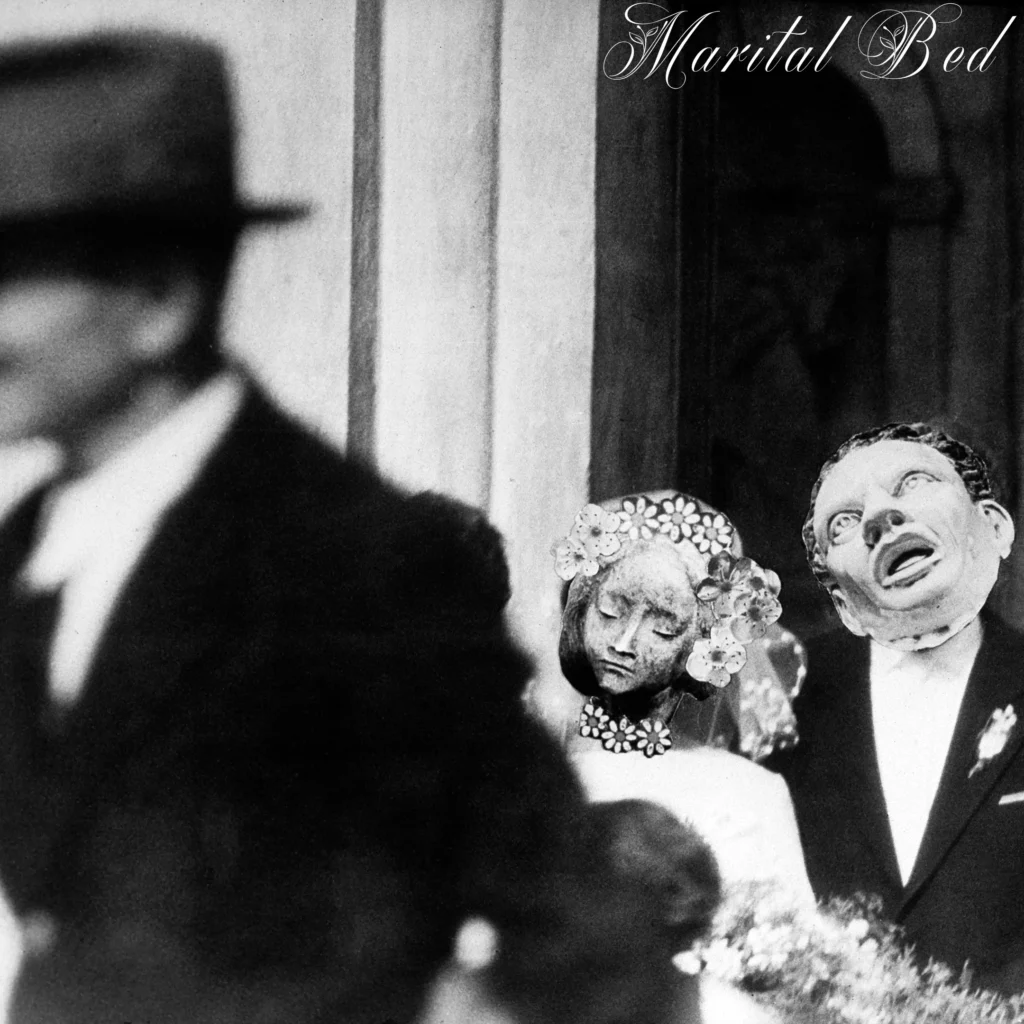
Marital Bed Cover Artwork:
Marital Bed Tracklist:
1. Real Life Romance
2. Our Favorite Game
3. Incompatible
4. Boys In the Band
5. Ghost
6. Goodbye
7. He or She
8. Simulacrum