Let’s cut to the chase: Career Mode players aren’t just asking for new features. We’re begging EA to stop treating our football fantasies like a spreadsheet simulator. This isn’t about “adding depth”—it’s about reigniting the spark that made us fall in love with managing a club in the first place. The spark that turns “I’ll play one more match” into “Wait, is the sun rising?”
Here’s what we actually need—not as gamers, but as humans clinging to a pixelated escape.
1. Let Us Grieve When Our 37-Year-Old Striker Retires
You know the feeling. That striker you signed on a free transfer in League Two? The one who scored a hat-trick in the playoff final despite a torn ACL? When he retires, we don’t want a cold email from the board. We want a cinematic farewell—teary-eyed fans holding up his name, a locker room speech where he passes the armband to your 18-year-old wonderkid, and maybe a statue outside the stadium (even if it’s just a JPEG).
2. Let Us Screw Up (And Make It Matter)
We don’t want perfect. We want messy. Let us:
Sign a flop who tanks morale because he parties more than he trains.
Accidentally sell a club legend because we misread the “Loan Offer” button (again).
Get fired for refusing to sign a 35-year-old goalkeeper the board insists we need.
And when we fail? Let the game haunt us. Make former players trash-talk us in interviews. Have fans throw (virtual) cabbages. Let the local newspaper headline read: “Manager Blows Transfer Budget on a Striker Who Can’t Score in an Empty Net.”
3. “Let Me Steal My Best Friend’s Wonderkid”
Career Mode scouting feels like dating apps: Swipe left on faceless regens until you find “the one.” But where’s the drama? The betrayal? Let us:
Poach a rival’s youth star by offering their parents a shady “house in Ibiza” (aka Financial Shenanigans Mode).
Discover a gem while watching a simulated U-18 match… only to realize he’s got the stamina of a napping sloth.
Lose a prospect to a bigger club because our training facilities are held together by duct tape and hope.
“I want to feel like a CONSPIRACY THEORIST when my scouts recommend a player. Is he a hidden gem? Or did EA program him to have two left feet?”
— Twitter user @FM_Addict
4. Let Us Be Petty
Football is built on pettiness. Let us:
Start a feud with a rival manager who called our tactics “Sunday League-level.”
Bench a player because he liked an Instagram post about joining Chelsea.
Customize pre-match handshakes to be icy glares or overly aggressive hugs.
And for the love of all that’s holy, let us rename the “El Plastico” derby to something that doesn’t sound like a Tupperware ad.
5. Let Us Fall in Love With a Kit
Kit customization shouldn’t feel like a PowerPoint slide. We want:
Socks that MATTER: Let us clash patterns like a hungover kitman. Polka dots? Vertical stripes? Let chaos reign.
Fans who riot if we change the home kit’s shade of blue.
A “Retro Kit Pack” unlocked by winning the Champions League with a team from Malta.
“My partner saw me spend 45 minutes designing a third kit and said, ‘It’s just pixels.’ I said, ‘IT’S PERIWINKLE, KAREN.’ We’re in therapy now.”
— Discord user PixelPepGuardiola
6. Let Us Live in the World, Not a Menu
Career Mode feels like a never-ending to-do list. Replace the robotic menus with:
Training montages where your 16-year-old prospect learns to curl free kicks… or accidentally breaks the stadium lights.
A locker room where players argue over music playlists or prank each other with moldy boots.
A manager’s office with sticky notes, a fading photo of your first promotion, and a stress ball shaped like the board’s unrealistic expectations.
Award showcase would be nice
Historical stats would add so much more depth and to strive for
7. Let Us Stay Up Until 3 AM… For a Reason
We’ve all been there: It’s 2:53 AM, and you’re negotiating a loan deal for a backup left-back. But why? Give us:
A youth prospect who texts you at midnight: “Gaffer, can I take the next penalty?”
A Champions League group stage draw that makes you yell, “HOW ARE WE IN A GROUP WITH BARCELONA AND A SHEEP FARMERS’ FC?!”
A deadline day where your CEO panic-buys a striker because “the fans are tweeting mean things.”
The Real Ask: Let Us Care Again
EA, we’re not naive. We know Ultimate Team pays the bills. But Career Mode players aren’t just a demographic—we’re custodians of stories. Stories about rebuilding our hometown club, about turning a backup goalkeeper into a set-piece wizard, about crying when our 40-year-old virtual self finally hangs up their boots.
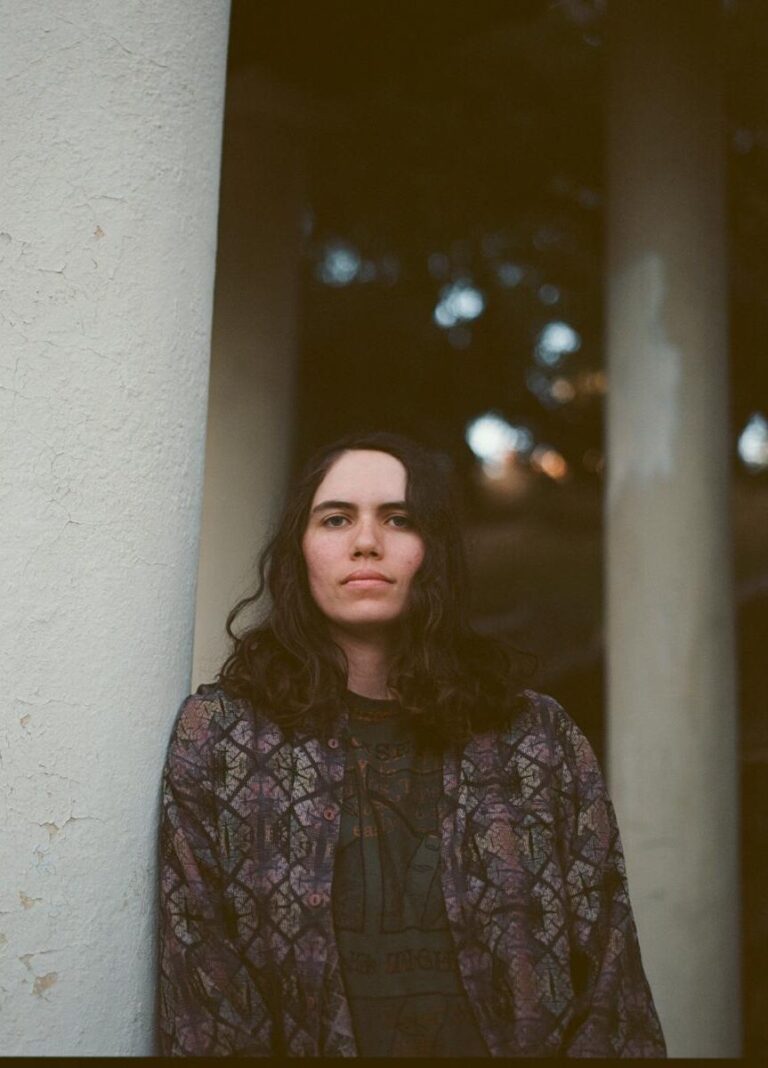
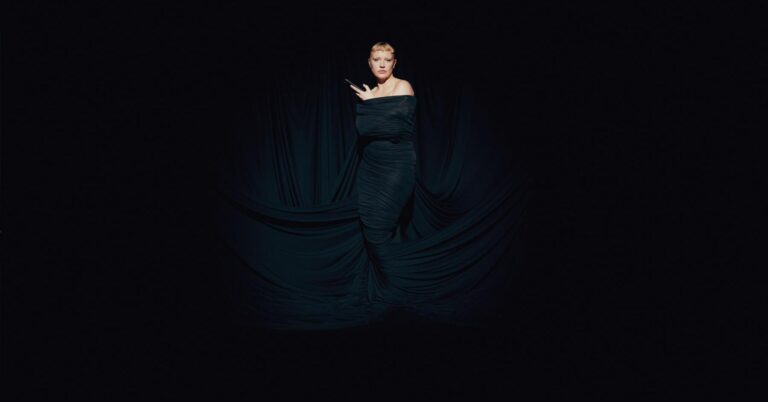
Kathryn Mohr is an Oakland-based experimental musician who released her first record, the self-recorded demo tape As If, in 2020. Though her music remains insular in nature, every record she’s made since has required some sort of separation from home: she laid down her 2022 EP, Holly, produced by Midwife’s Madeline Johnston, in rural Mexico, whose desert environment had a palpable influence on the music. Her latest effort and debut full-length, Waiting Room, released Friday via the dark experimental label the Flenser, was not only self-recorded but also conceived over the course of a month in eastern Iceland, as Mohr wove together songs in a windowless concrete room of a disused fish factory. The effect of the place is captured visually on the album cover and sonically through Mohr’s use of field recordings and imagistic writing, but the record only burrows further inward, at once liminal and confrontational, embodied and otherworldly. From the grungy, nightmarish exorcism of ‘Elevator’ to the ambient romance of the title track, it stirs the horror and tenderness out of big, empty spaces, be they physical or emotional.
We caught up with Kathryn Mohr for the latest edition of our Artist Spotlight series to talk about the beginnings of her musical journey, her month spent in a fishing village in eastern Iceland, the process behind her debut album, and more.
When did music start to feel like a vehicle for expression for you?
I started as a listener, and music was so important to me going through the really messy middle school to high school ages. I was like, “Oh, this is why I should be alive,” because this is so wonderful, and it spoke directly to my heart, for lack of a better word. It’s so genuine, so real – the things that people express in music. I was like, “Oh, I can relate to this. This is what being human is like.” It’s complicated, and it’s unclear – there’s not just happy and sad. That was very important to me, and it made me want to continue to live when I was growing up because there were all these people I could look up to who had very complex feelings. So I always wanted to add to this music community that I loved, and I always knew I wanted to be a musician, but I knew that’s very hard.
I never really had music lessons until pretty late in my teens. I finally got an acoustic guitar, and it wasn’t until I was 21 that I got an electric guitar. That was when I started writing my own music. Things came pretty late for me because I was just so like, “This isn’t something that can happen. I have to go do normal things and be an adult. Music is silly.” Which is what the people surrounding me were telling me: You have to get a real job and make money and not focus on something like that. But I never let that go, so here I am.
What kind of music felt genuine to you? You mentioned community, and I’m curious if it came from people you were surrounded by.
Yeah, it’s not really a sense of a physical community because there were not a lot of musicians in the town I grew up in that I knew. I didn’t have a lot of friends interested. It was more of this community that was made possible by the internet. I really fell in love with post-rock bands like Sigur Rós. When I was very young, I really liked their first album and their second album, so I got really into this online community of people talking about the strange samples they would use and how to interpret the lyrics or non-lyrics. That was kind of the taking-off point for just getting really deep into listening to entire discographies and reading all the lyrics and translating the lyrics if they’re not in English – just starting to try to imagine, “How does somebody make this?” I would also just read interviews nonstop of musicians I loved, because that’s the community I really want to be a part of: the creators. I wanted to create. People who make music come from all sorts of places, and the uniting thing is so emotional and personal.
I was listening back to As If, and the track ‘About Me’, as brief as it is, seems to capture something that still resonates in your music, which has to do with the way you engage with interiority and the self. Do you feel like there’s a thread between that song and record and what you’re working on now?
I’m a very visual person, and any emotion I feel comes with an image or a space in my head that I move through. A lot of the lyrics I write are about things I think about and see that help me express my emotions – kind of like strange, dream-like situations. One of my favorite lines from that particular song was “an all-way stop with no cars” – the idea of stopping, surrounded by darkness, and having to stop because the sign is telling you to, but there’s nobody else around. It’s those kinds of images that just circle around in my head, and the places and images are better at conveying emotions than normal words, like saying “happy,” “sad,” “melancholy.” I think I always bring that into my lyrics. From As If through Holly, and especially in Waiting Room, I use a lot of these images to try to create a world that people can interpret in whatever way they want. I want it to be very immersive and complete, because my favorite albums are, in my head, very visual. They’re their own little ecosystems.
Do you feel like the language is becoming more elusive or subconscious with each record in terms of the way that the images correlate to your emotions?
Before this record, I was listening to a lot of Sparklehorse, and the way he does his lyrics had a big influence on me. The lyrics are affected by whatever I’m listening to at the time, so it’s always a little different. I love the way Sparklehorse’s lyrics are so random, almost putting things that you wouldn’t normally think of together, like a burning piano. I kind of let myself get weird, like say things that don’t make sense. With Waiting Room specifically, just letting these words come out. I found that after I wrote the songs and listened back, at first I thought, “Yeah, this is just nonsense. I have no idea what I’m talking about.” But then later on, I was like, “Okay, I think I kind of get what I was talking about.” And the fact that I didn’t know at the time what I was talking about until later is very interesting. It was a new experience, just trusting that these random words are coming out of my brain and that these images I describe are meaningful without knowing their meaning originally.
One song that came to mind is from ‘Take It’, where you sing, “Holding on to my skeleton like fruit.” That’s a weird tangle of words.
Yeah, ‘Take It’ is a very good example of me doing the free-associative thing, just writing what I thought originally was nonsense. But then there are other songs, like ‘Elevator’, where I’m just telling a story, which is something I haven’t done much. I did it a little bit on Holly, specifically with the song ‘Holly’. To me, that is a narrative about a character’, and ‘Elevator’ is very much telling this very simple, bleak story about a person in an elevator. That was also a little bit different. It’s a recurring nightmare I have – I’ve always been afraid of elevators, and that was kind of an experiment. I’m not sure if it was successful or not, but it was fun to do, so I want to do more of that.
That’s my favorite song on the record; it still follows a dreamlike logic, but it hit in a really visceral way for me. What made you want to write about this recurring nightmare?
In my music, I’ve kind of been shying away from, in my opinion, my worst fears and my personal demons – some of my very personal trauma and terror — and not touching that anger. With ‘Elevator’, I was like, “Okay, I’m gonna try to touch this.” The song is about dealing with a personal demon – that can mean whatever you want it to mean, but to me, it’s a very clear image of a person who I’ve seen my whole life – not a real person – but it always feels too scary to put into words and too crazy to write a song about. I love going toward things that scare me, so I was like, “I’m going to put this character into a song and try to express those really strong emotions are.” And I want to do more of that because a lot of my songs are “beautiful” or just kind of slow. I want to feel anger because that’s something I very much struggle with, to feel anger and to scream. It’s hard because I’m very – what’s the word – reserved, maybe, or shy, quiet. I don’t express anger a lot, and I’m so fascinated by it. ‘Elevator’ was like me trying to take away my wall a little bit.
Was the place where you recorded the album, this tiny fishing village in Iceland, something that allowed you to tap into those stronger emotions, or almost gave you permission to express them?
Yeah, I think so, especially because I often feel like somebody’s listening. When you live in a city like I do, I’m like, “My neighbors can hear me,” or “Somebody can hear me.” But out there, I was trying to shut that feeling down and not feel like I have to be quiet, not feel like I have to worry about bothering someone. I felt like, “I can just be as loud as I want, and I can bother people. I should not worry about this.” I still struggled with that, like, “What if one of the other people in the factory can hear me?” But it was definitely the loudest I’ve ever let myself be, and that was very powerful. That’s something that’s also come with playing live shows – I’m less and less afraid to turn my amp up to a normal loudness because before I would be as quiet as possible. I think being out there in a very sparsely populated area allowed me to let myself take up more space and feel somewhat less fear about making too much noise. The emotions I feel are always there; it’s whether or not I can let them out that stops them from coming out more. It’s very much a mental game.
Can you describe the factory or your room in it? What are your visual memories of it?
It’s a really special building. About half of it had been redone by local artists who worked to make it a creative space and bring electricity in for people to make art. I tended to put myself away in one of the less finished rooms, which is where the light bulbs [on the cover] were. It had very concrete walls, very cold, with a little heater at the top, and a very tall ceiling. It felt very small in there, but it was very comfortable. There were a lot of beautiful things that the artists had brought in, like rugs and chairs, and everything was very old – “old” as in it had a lot of energy, it had been well used. In a small fishing village, every object that comes in is brought in with care, and it’s not easy to bring things out there at all – trucks don’t come through, there are no grocery stores, nothing. So everything that comes in, the people in the village reuse. If it breaks, they’ll take it apart and put it into something else. Every object in those rooms was very beautiful and full of history.
I also took a lot of walks in the unfinished areas of the factory. Some of the areas were left exactly as they were when the factory closed. There was a locker room, and some of the belongings of the people who worked there were left behind. No lights, lots of dust, old cans of asbestos; it was very haunting. I love abandoned spaces because I love to just stand in them and feel their energy, and there’s so much energy in there because that used to be the main hub of Stöðvarfjörður; it was the life of that town. When it shut down in 2010, the town’s population dwindled down. All the people had to leave because there were no other jobs. Knowing that it used to be full of life and then was just emptied out made me feel a lot of emotions and think about the people who worked there, the families they might have had, the feelings they might have experienced. Being in a big concrete space is always very religious to me, I guess. It definitely had an effect on what I was writing.
I wonder if you feel like it’s more the building, the isolation, the history, or the actual mode of living that affected you the most while making Waiting Room.
It was very much the building itself. The way it was built was very interesting because it had started as a small concrete building, and then they just kept adding parts onto it, so it’s labyrinthine. It’s really big, but you could see where there had been an old building that they built another layer on top of, and then they built a side, then another side. That connects with so many dreams I have. I talk about the building specifically in one of the songs, ‘Rated’. I had no structure to my day, so that was different, but I had to create a structure. I’d usually go into the factory in the morning, work until I couldn’t anymore, and then in the afternoon, I’d have lunch and just go hike in the mountains. There were no trails; I’d just cross-country wherever I saw a big mountain and go towards it. That was magical. There were no fences. It’s kind of like a common area with the sheep grazing, and people won’t, like, shoot you for being on someone else’s property. It’s land, which is how I dream of all land being.
Do you feel like your sense of time was kind of warped and distorted, too? I feel like that’s something that feeds into your music generally.
Yeah, not having any structure was really freeing. I feel like that’s how people should live, honestly, without the normal 9 to 5 sort of thing. But of course, there was also the fact that the sun was up for like 11 hours a day, and it wouldn’t go down until almost midnight, because I was there in August. That was really disorienting and beautiful. I had no sense of time; I forgot about which day it was, I didn’t look at clocks. It didn’t matter. I was like, “Okay, I’m hungry, so I’m gonna eat a meal.” I loved that. I wish I could always live like that.
Did you change how you think about the past or trauma?
It didn’t really change how I thought about the past. I was trying not to think about the past too much, but when it comes up, it comes up, and I will do with it what I will. But yeah, everything in the past is very hard for me; it’s not simple or linear. The brain doesn’t work that way. Memories are not static; they’re warping. Sometimes they feel much longer, and sometimes they feel much shorter, even if they’re the same amount of time. That’s always been something I’ve felt, and it didn’t really change by being there.
You talked about how the factory was in the process of being remade, and I’m curious if and how you see Waiting Room, too, as a project of reworking memories.
Yeah, it’s all a processing of memories. Every time you think of a memory, you process it a little differently, and that changes what you remember. All of Waiting Room is my brain processing something and making sense of a lot of emotions I was feeling at the time – not necessarily very old memories, but recent things that were happening in that moment or just before, and also just general feelings about being alive. A lot about closeness and love, as at that time, I hadn’t been close to anybody in about five years. Learning about how to open up, to take that risk, to care about someone else and be cared for when it’s so much easier to just cut yourself off, like I had been doing for a very long time. So it was very much a processing of the idea of loving somebody else, how to approach it when it feels so impossible.
What was it like when you came back from Iceland?
It was pretty jarring. At first, it felt pretty easy, and then I kind of went through a lot of emotions. But I always have a lot of emotions and ups and downs. I just readjusted. It wasn’t such a big difference for me, making that change. I love chaos, so having to adapt from one life to another one was something I enjoyed taking on.
What about the songs you made during that time? Did you start seeing them differently?
That yeah, definitely. It’s kind of torturous working with music. [laughs] Sometimes I wonder, “Why do I do this?” because it becomes so hard to hear my own music, especially after I produce it and listen to it a million times. I start to go crazy; I can’t hear my music anymore. I don’t know if it’s good. I have to trust that at one point I liked it, so I have to trust that initial feeling, because the more I listen to it, it just becomes noise. Coming back from Iceland and listening back, sometimes I was like, “I don’t know what I’m listening to.” And then there were other times when I was able to become like a listener. I remember once, at the time I lived in San Francisco, I took a walk and put on my album to listen to through my headphones. I thought, “I expressed what I wanted to express. This sounds good.” I got chills out of it. And then, you know, I’d go back and listen again and think, “Yeah, I don’t like this.” [laughs] But I have to have a lot of faith in those moments when I can kind of hear it, not as myself, but maybe as someone else. It’s a very difficult process, but I think all musicians go through it.
The Holly EP was engineered by Madeline Johnston of Midwife. In terms of production, was having less outside output with this record a different process for you?
Yeah, it was really wonderful to be able to let go of my music and let Madeline take it into her hands and work on it. That required a lot of trust and faith in Madeline. It was beautiful to let go of that control and experience what it feels like to put it into the hands of someone I trust, but it was difficult as well. I definitely love how Holly came out, and I learned so much from Madeline. I feel like I’ve used that knowledge in Waiting Room. Doing it all myself put more pressure on me, but I also had all the control, and I think in the past, I haven’t really trusted myself to take full control. With As If, I didn’t know what I was doing at that time, and it’s okay that it sounds the way it does; some people like that it sounds so lo-fi. But with Waiting Room, it was hard, and I lost track of how it sounds, but I just trusted my ear. I let myself do what I had to do, not giving up control, and I think it came out pretty well. In the future, I would love to work with Madeline again, or anyone I trust and look up to. Having full control versus giving up control to someone else and trusting them – those are two wonderful and different experiences in music.
How do you deal with letting a piece of music reach a point of completion while staying true to an experience that still feels fragmented? Is that a struggle for you?
It’s definitely a challenge to know when a song is done. I feel like it comes pretty naturally to me when I know a song is finished. It usually happens when I’m exhausted and can’t hear it anymore. I’m like, “This is done. There’s nothing else I want to improve or change.” It kind of just comes down to that. Whether the song is a successful expression or if it’s a good song – I can’t really think in those terms. After so long of being with the song, I have to trust that, “Okay, this came out of myself a while ago. I’ve put a lot of time, work, and focus into it, and I’m just going to put it out.” Even if it’s not particularly successful to me, maybe it will affect someone else. Music is about getting things out there, not about killing them.
This interview has been edited and condensed for clarity and length.
There’s so much music coming out all the time that it’s hard to keep track. On those days when the influx of new tracks is particularly overwhelming, we sift through the noise to bring you a curated list of the most interesting new releases (the best of which will be added to our Best New Songs playlist). Below, check out our track roundup for Wednesday, January 22, 2025.
Circuit des Yeux – ‘Megaloner’
Circuit des Yeux has announced her next album, Halo on the Inside, with the single ‘Megaloner’, whose title is almost as great as the previously unveiled non-album cut ‘God Dick’. The song itself is as haunting as the video that accompanies it, and Haley Fohr calls it “an anthem for the place that exists after an action and inside its consequence. Prices are being paid and hope is our currency. I’m singing about endurance, faith, agency, and the singular, unbelievable path toward one’s own fate.”
Alabaster DePlume – ‘Oh My Actual Days’
British avant-jazz/pop artist Alabaster DePlume has announced his next LP, A Blade Because a Blade Is Whole, arriving March 7. Of the spiritually rousing lead single, the musician said: “We can, if we choose, read this phrase as a call to the divinity of the moment we are in. Wherever we are, whatever is happening, it is our own life – a life that is made up of the time (the days – the actual days) that we spend. And we call to this – the only real thing that we have. Our time. Whatever we are experiencing it belongs to us, it is the ‘actual’ moment we are in. And it is divine. This is the introduction to the album.”
Shygirl feat. PinkPantheress and Isabella Lovestory – ‘True Religion’
After announcing Club Shy Room 2 last month, Shygirl has tapped PinkPantheress and Isabella Lovestory for the bouncy new single ‘True Religion’. Saweetie, Jorja Smith, SadBoi, Bambii, and Yseult also appear on the project, whose full tracklist was unveiled today.
Daneshevskaya – ‘Kermit & Gyro’
Anna Beckerman, aka Daneshevksaya, wrote ‘Kermit & Gyro’ “in the desperation of a break-up,” but the song itself sounds wonderfully delicate and almost peaceful. It features Artur Szerejko on production, arrangements, mixing, guitar, and bass, Finnegan Shanahan on violin, and Madeline Leshner on piano. “I wrote it out of confusion and eagerness,” Beckerman added. “It’s about clinging to the idea of what the relationship brought you and how the relationship can still be a part of you. But also feeling completely untethered and adrift.”
Cross Record – ‘Charred Grass’
“I feel real,” Emily Cross reassures herself on ‘Charred Grass’, the mesmerizing first preview of her upcoming Cross Record LP Crush Me. Cross put out a record with her band Loma last year, but the new album, out March 21, is her first since her 2019 self-titled effort under the moniker. ‘Charred Grass’ is about “moments that stick with me, and help me feel real — essentially, times in which time itself ceases to exist,” Cross explained. “I drive past a lot of fields, and one morning I saw a big fire. The next day there was a baby calf laying on the bit of charred grass close to its mom, who was making eye contact with me as I drove by. Sometimes the car scares the cows but this one seemed to convey only peace and calm.” That otherworldly calmness shines through several layers of instrumentation, which features Ben Babbitt on mallet dobro, Marcin Sulewski on drums, Theo Karon on tape loops, sound design, prepared piano, and synth bass, and Devra Hoff on electric bass, arco upright bass, and arrangement.
Yetsuby – ‘Aestheti-Q’
Yetsuby’s latest EP, B_B, made our list of the best EPs of 2024. Now, the Seoul-based producer and DJ is back with news of her next album, 4EVA, coming out March 26 via Pink Oyster Records. Lead single ‘Aestheti-Q’ is exhilarating and texturally masterful.
Self Esteem – ‘Focus Is Power’
Self Esteem has announced a new album, A Complicated Woman. It’s led by the single ‘Focus Is Power’, which is as uplifting as you’d expect from the Prioritize Pleasure follow-up.
Röyksopp – ‘What Else Is There? (True Electric)’
The Norwegian duo have offered an update on their 2005 track, ‘What Else Is There?’, with features from Fever Ray. It’s taken from the just-announced True Electric, which “consists of recordings and renditions, meant to capture the essence of our live shows bearing the same name. The idea was to put an emphasis on the clubbier aspects of our music, as well as returning to our roots within the realms of electronic music.”
The Jesus Lizard – ‘Westside’
If you can believe it, “‘Westside’ goes along with the previous single, ‘Cost Of Living,’ which was subconsciously influenced by Leonard Bernstein’s West Side Story, and hence the name,” the Jesus Lizard’s Duane Denison remarked in a statement. “Really.” Frontman David Yow added of the monstrous track: “There is a part in ‘Westside’ where the lyrics say, ‘Give him back his arm.’ That was inspired by David Lynch’s Lost Highway, when Robert Blake’s character says, ‘Give me back my phone.’”
quickly, quickly – ‘Enything’
“I wrote this song from a fictional place of dumb love,” quickly, quickly’s Graham Johnson said of the lovely new single ‘Enything’, which leads his forthcoming LP I Heard That Noise (out April 18 via Ghostly International). “There is a place you can find yourself in where you are so infatuated with a person you would do anything to impress them, even to a fault, drastically changing yourself to match the idea of someone you barely know. That is what I tried to embody on this one.”
Pigs Pigs Pigs Pigs Pigs Pigs Pigs – ‘Stitches’
Pigs Pigs Pigs Pigs Pigs Pigs Pigs have announced a new album, Death Hilarious, with the riotous yet nervy single ‘Stitches’. “I’m aware our band sits in a world largely commandeered by bravado, confidence, and machoism, but ‘Stitches’ is an expression of vulnerability, paradoxical emotions, and those so familiar pangs of anxiety I wrestle with while butting heads with societal expectations and personal struggles,” frontman Matt Baty said in a press release.
Shura – ‘Recognise’
Shura has announced a new album, I Got Too Sad For My Friends, which arrives in May via [PIAS] and features an interesting cast of collaborators: Helado Negro, Cassandra Jenkins, and Becca Mancari. Of the soothing, radiant lead single, Shura said: “Following a period a despair in January, I felt like I had to hide myself from the world,” Shura says of her new single, which builds with fat ’80s drums and tinkling keys. “Recognise is about coming out of the other side of that feeling. Slowly understanding that everything is ok.”
Snapped Ankles – ‘Raoul’
London post-punks Snapped Ankles have announced a new LP, Hard Times Furious Dancing (out March 28), which is led by the freaky yet tuneful ‘Raoul’. It doesn’t exactly sound Paramore’s ‘Hard Times’, but it’s got some of that same disco-punk appeal.
Cheekface – ‘Growth Sux’
Cheekface are back with a new song called ‘Growth Sux’. “This is a little drum machine-driven hip-shaker about how growth sucks,” vocalist/guitarist Greg Katz said in a statement. “The last year or so has been an era of forced ‘growth’ for me and Mandy, and it’s impossible to ignore that it sucks. It just fucking sucks. The urge to put my heels in the ground and try to stop it is strong. Rather than use some kind of metaphor, we figured, why not just say it?” He (jokingly) added, “I guess the drum machine is giving indie sleaze a little bit, but please don’t hold that against us.”
Star 99 – ‘Kill’
Star 99 have a new album on the way, Gaman, arriving March 7 via Lauren Records. The follow-up to 2023’s Bitch Unlimited is led by the riveting and heartfelt ‘Kill’, which is about the existential dread “that’s telling me I need to get pre-Botox and sabotage my relationships,” according to siter/guitarist Saoirse Alesandro.
Cornelia Murr – ‘Skylight’
London-born, NY-based singer-songwriter Cornelia Murr has previewed her upcoming LP Run to the Center with the dreamy new single ‘Skylight’. “‘Skylight’ is about waking up out of the doldrums thanks to chance encounters that remind you life can change and look so many different ways, as if looking through windows into other timelines,” Murr explained in a press statement. “Director Laura-Lynn Petrick and I approached the video much the same way. We just played with the environment we had, which happened to be the Hudson Valley in summertime, and caught whatever good happenstance we could find. It amounted to trains, bridges, and truck rides among other scenes that suited the sense of movement the song is all about.”
Sister Ray – ‘Believer’
Sister Ray (aka Ella Coyes) is prepping asophomore album, Believer, which will get released on Royal Mountain Records on April 4. It’s led by the expansive single ‘Believer’, of which Coys said: “I’ve always been the kind of person that wants to believe in some kind of salvation or truth, and can’t quite make myself believe all the way. When I wrote this song I wanted to write about the liminal space that exists there, and the way it weaves itself into the beginnings of love; wanting to know this kind of all encompassing safety and trust, but feeling alienated by my own skepticism.”
Matt Maltese – ‘Anytime, Anyplace, Anyhow’
Matt Maltese has shared an intimate new single, ‘Anytime, Anyplace, Anyhow’, his first new music of 2025. “I think there are those people for all of us that occupy a certain incomprehensible place in our brain… a place we don’t quite have control over. People that have affected you so deeply you almost live with them still, remembering and imagining them against your will. And this song speaks to that, and to the physical (sorry) side of it too.”
Teether & Kuya Neil – ‘ZOO’
Teether and Kuya Neil have announced their debut LP, YEARN IV, following their 2023 mixtape STRESSOR. It’s out on May 2, and the zany new single ‘ZOO’ is out first preview. “It’s wild that each day, in whatever city you find yourself, there’s millions of people waking up and doing whatever they deem most important, all at once,” they said in a statement. “It’s going to be chaos. We’re animals running wild, acting like it all makes sense. ZOO is a song we made one day where this idea felt extra strange.”
Tao Xie, a London-based digital artist, is forging new paths in the realm of contemporary art. His practice spans 3D visual storytelling, virtual reality, mixed reality and immersive experience, and it is defined by his ability to address profound societal and philosophical themes through cutting-edge digital media. Drawing from his cultural heritage and philosophical beliefs, Tao attempts to construct new modes of digital storytelling. His work delves deeply into identity, mental health, social behavior, and cultural contradictions, with a particular focus on bridging Buddhist philosophy and modern artistic expression.
Graduating from the Royal College of Art, his narrative explorations have brought a deeper philosophical perspective and multidimensional approach to his work. One of Tao’s most compelling strengths lies in his capacity to fuse technical innovation with narrative depth. His works are not merely visually arresting; they invite introspection and provoke dialogue on issues often left unexplored in the digital art space. Whether tackling environmental concerns, reinterpreting religious philosophy, or examining the complexities of self-perception, his art resonates on both intellectual and emotional levels.
Rethinking the Pure Land: The Land of Utmost Badness
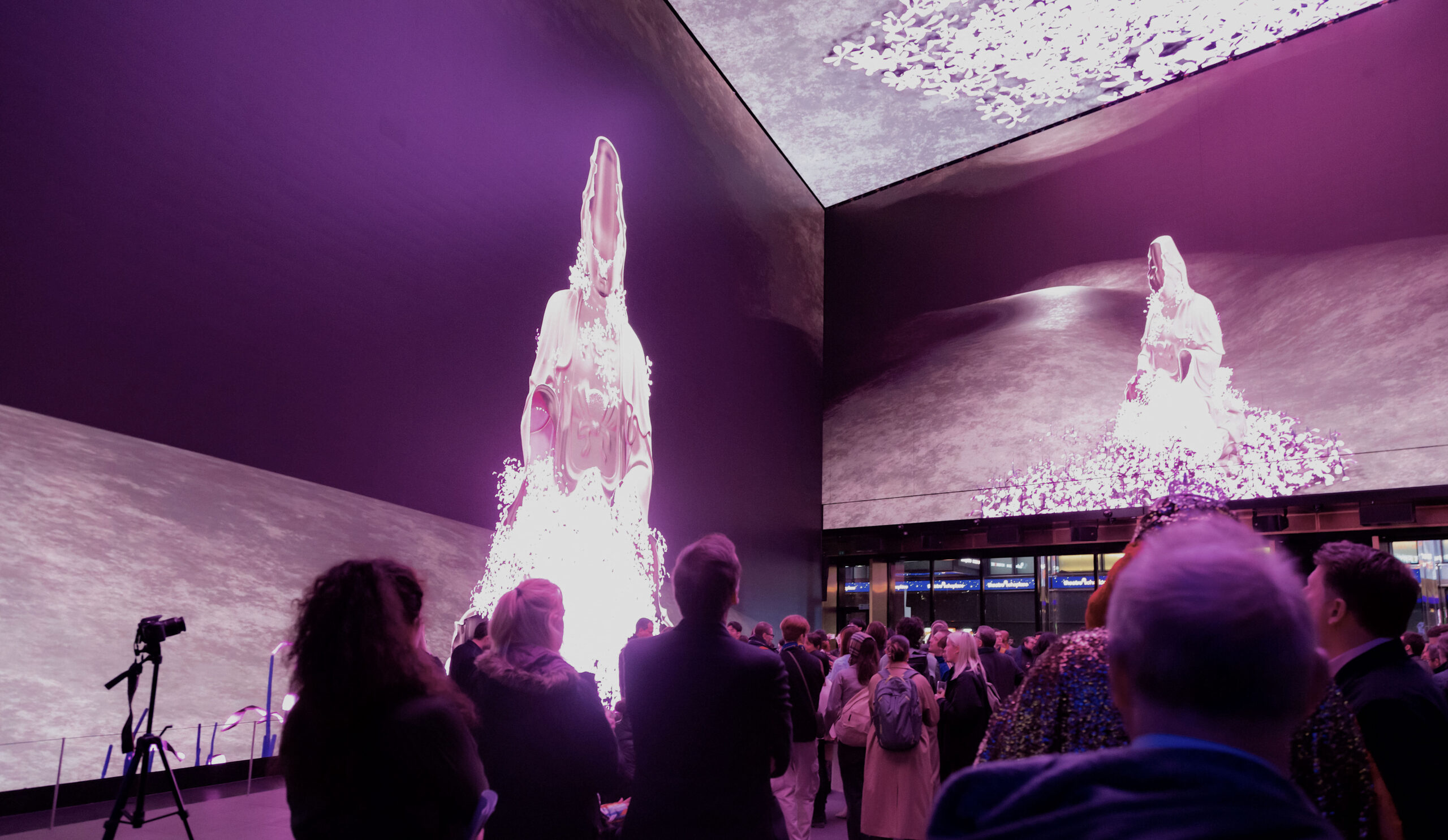
In The Land of Utmost Badness, Tao Xie reimagines the Buddhist concept of the Pure Land as an “inverted utopia,” using it as a metaphor to explore mental health. The 3D short film combines Tao’s philosophical reflections with his personal experiences, creating a world where serenity and chaos coexist. This imaginative reinterpretation of Buddhist themes offers a poignant commentary on the fragility of the human psyche.
Tao shares, “This work is inspired by my personal experiences and observations of those around me. Mental health is a common issue, yet it’s often overlooked. I struggle with it myself, and many people I know also face similar challenges. I wanted to create a piece that raises awareness about the importance of mental health. I chose to express this topic through a Buddhist perspective because of my own identity as a Buddhist. I began learning about Buddhism in 2015, studying Tibetan and Pure Land Buddhism. I believe Buddhist philosophy offers a way of life and a practice for achieving mental stability, which is why I wanted to combine it with the theme of mental health.”
The film’s narrative draws from The Amitabha Sutra but subverts the traditional depiction of the Pure Land as a place of perfection. Instead, Tao presents a space riddled with psychological dissonance, mirroring the struggles of those grappling with mental health challenges. By flipping this traditional Buddhist metaphor, Tao creates a universal framework for viewers to reflect on their own emotional landscapes.
Visually, The Land of Utmost Badness is as captivating as it is thought-provoking. The intricate 3D environments and fragmented storytelling pull the audience into a world where beauty and discomfort collide.
Identity and Materiality: Sinner Prayer
Tao’s exploration of identity and societal perception is perhaps most evident in his work Sinner Prayer. Using unconventional materials such as incense ash and the ash from cigarette smoke, he constructs a visual metaphor that grapples with the tension between societal expectations and personal authenticity. These materials, charged with symbolic meaning, highlight the duality of purity and destruction.
As Tao explains, “The choice of incense ash and cigarette ash wasn’t random. Incense ash symbolizes spirituality and ritual, while cigarette ash represents destruction and transformation. Together, they embody the blurred lines between purity and imperfection, much like the dualities we experience in life.”
The work’s AR component extends this exploration into the digital realm, presenting two figures engaged in seemingly different activities yet representing the same individual. This duality underscores the fluid nature of identity, suggesting that people cannot be confined to singular definitions or fixed stereotypes. By juxtaposing materials and mediums, Tao reflects the layered complexity of human identity in a way that is both subtle and profound.
The work’s philosophical depth and its engagement with societal norms provoke a deeper consideration of how identity is shaped by both internal and external forces. Although the work’s symbolism is intricate, it risks alienating some viewers who may find its abstract approach to identity and societal judgment too elusive. Nevertheless, the conceptual richness of Sinner Prayer provides a profound reflection on the complexity of the self and the layers of meaning we assign to material forms.
Digital Art as a Platform for Environmental Awareness: The Circle Reveals
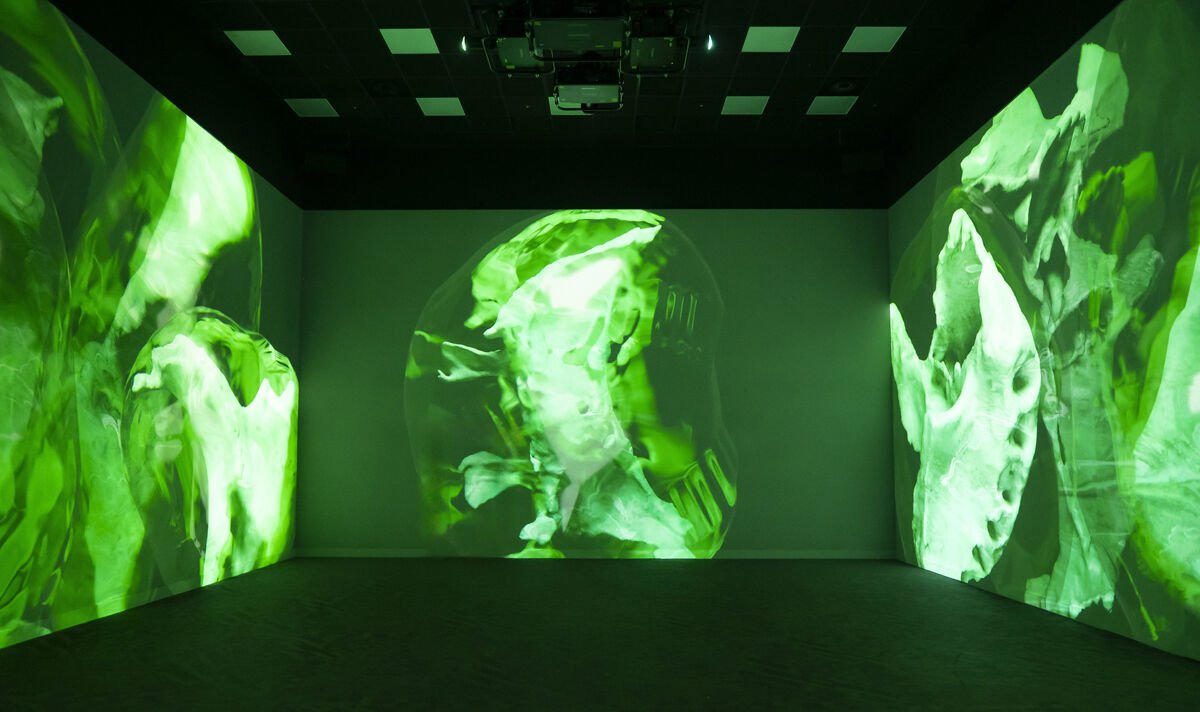
Beyond personal introspection, Tao Xie’s practice engages with global societal concerns. In The Circle Reveals, he examines the environmental impact of the NFT industry, exposing the hidden carbon footprint of blockchain technology. This VR project pairs research-driven insights with immersive storytelling, turning abstract data into an accessible and emotive experience.
Tao and his team set out to envision a system capable of achieving the cleanest possible NFTs—one that encourages audiences to think about how the digital world can coexist harmoniously with the physical environment. This concept is embodied in the creation of the “Cir-clean” system, inspired by the novel The Circular Ruins.
“We imagined Cir-clean as a system that could achieve the goal of the cleanest NFTs. The name ‘Cir-clean’ comes from combining the words ‘Circle’ and ‘Clean’—a direct nod to both the circular structure of the system and its aim to be environmentally sustainable,” Tao explains.
The project reimagines how new technologies could work alongside traditional blockchain systems to optimize energy consumption and reduce digital pollution. In their fictional narrative, viewers experience how the system would work, including how NFTs could be optimized for minimal energy usage, leading to a carbon-neutral ideal. “We wanted to create this fictional Cir-clean system to express our imagination of how humans can play a pivotal role in building a more sustainable digital future,” Tao remarks.
Narrative as the Core of Digital Innovation
In Tao’s practice, storytelling is paramount. While many digital artists prioritize technical spectacle, Tao places narrative at the heart of his creations. His works are deeply rooted in the belief that technology should serve as a tool to enhance storytelling, not overshadow it. This philosophy is evident in his preference for chapter-based, non-linear narratives, which encourage viewers to engage with his work on multiple levels.
Tao’s storytelling methods often involve breaking and reassembling conventional structures, creating a dynamic interplay of conflict and resolution. This approach invites the audience to become active participants in the narrative, rather than passive observers. By prioritizing narrative clarity and emotional resonance, Tao ensures that his works transcend their medium, offering insights that linger long after the experience ends.
Shaping the Future of Storytelling
Looking towards the future, Tao Xie reflects on the evolving potential of digital art: “Art should connect with people on multiple levels. It’s not just about the visual or technical aspects—it’s about telling stories that matter.” This forward-thinking approach has allowed Tao to push the boundaries of digital art, combining technical mastery, philosophical depth, and social engagement into a cohesive body of work.
Through his thoughtful exploration of complex themes, Tao has established himself as a leader in digital art, creating pieces that are not only innovative in form but also intellectually and emotionally impactful. His work challenges both the medium and the viewer, demonstrating that digital art, when driven by strong narrative and social relevance, can be as profound as any traditional art form.
Rubin Jiang, a Chinese visual artist and fashion designer, stitched together London’s gritty creativity with global narratives and crafts work that felt alive- messy, urgent, and unapologetically human. Her practice isn’t just interdisciplinary; it’s a conversation between ancient traditions and the hum of modern machines, all while centring stories society often muffles.
A graduate of the University of the Arts London’s Fashion Futures program, Rubin doesn’t just make art, she builds bridges. Bridges between silenced voices and the rest of us, between brushstrokes and binary code, between what’s worn and what’s felt. Three works – Fashion is Barrier, Information Gap, and Intimate Relationship – act as waypoints in her journey, each revealing an artist who refuses to stay still.
Fashion is Barrier
When Fashion is Barrier was first shown in Beijing in 2019, it didn’t just criticize the fashion world. Instead, it held up a cracked mirror to it. It’s a collaboration piece by Rubin with Cana, and Susie.The installation was a tight maze of fabric and ideas. It revealed fashion’s big secret: its focus on status. The idea that fast fashion is for everyone? That’s misleading. Rubin shows the real picture: a few at the top dream big while many chase trends, and then landfills get piled high with waste.
But there’s beauty in it. Soft silks tear at the edges, cheap brands shine under bright lights, and you start to feel a tug inside: I’m part of this, too. Rubin doesn’t point fingers. She hands you a thread and asks, “What will you fix?”
Information Gap
By 2020, Rubin was knee-deep in Homer’s “wine-dark sea”. Why “wine-dark”? she wondered. What gets lost when we name a colour? The resulting project, Information Gap, is part watercolour daydream, part digital fever. Traditional washes bleed into pixelated distortions, while an AR headset lets you watch words dissolve – red becoming crimson, becoming nothing—as if meaning itself is melting.
This isn’t just about cool tech. Rubin shows her vulnerable side. They’re the bumps in cross-cultural chats. The watercolours blur? That’s the hurt of being misunderstood. You walk away feeling like you’ve listened in on a secret talk between past and future.
Intimate Relationship
Fast-forward to 2024’s Intimate Relationship, exhibited in New York’s “Interconnecting Lines” show. Here, Rubin strips away the conceptual armour. No AR, no collaborators—just canvas, paint, and the trembling act of touching another human. Thick impasto layers mimic scars; translucent washes could be breath-fogging glass. It’s a portrait of modern love: equal parts devotion and doubt, like holding hands while standing on a cliff’s edge.
What’s startling is its quietness. Rubin’s piece dares to be awkward in a world of Instagram proposals and TikTok vows. The brushstrokes hesitate. Colors clash, then reconcile. You can almost hear the unspoken words: Stay. Go. I’m scared. Me too.
The Artist’s Pulse
Trace Rubin’s arc, and you’ll find a creator who’s shed skins. Fashion is a Barrier was a roar against systems; the information Gap a murmur about connection; Intimate Relationship—a heartbeat. What binds them? Her refusal to let art become a lecture. Even when dissecting capitalism or tech, she plants you firmly in the human mud: sweaty, flawed, yearning.
And that’s her quiet rebellion. While others chase trends, Rubin asks, Whose stories are missing? Her focus on women isn’t a checkbox—it’s a reclamation. When she stitches AR into watercolour, it’s not a gimmick; it’s a plea: Don’t forget the hands that held the brush first.
Final Thoughts
Rubin Jiang’s work lingers like a half-remembered dream. It doesn’t tidy up life’s chaos—it leans into it. Fashion has become a warzone. Language turns slippery. Love? A precarious dance. In her hands, art isn’t a product but a protest, a love letter, a question mark. She reminds us that “contemporary” doesn’t mean cold—it means alive, itching, human. And isn’t that the point? To make us feel less alone in the noise? Rubin’s answer: a brushstroke, a glitch, a silent yes.
Self Esteem, the project of Rebecca Lucy Taylor, has announced the follow-up to 2021’s Mercury Prize-nominated Prioritize Pleasure. A Complicated Woman is set for release on April 25, and it features contributions from Nadine Shah, Moonchild Sanelly, Sue Tompkins, and more. Check out the video for its first single, ‘Focus is Power’, below.
A Complicated Woman Cover Artwork:
A Complicated Woman Tracklist:
1. I Do And I Don’t Care
2. Focus Is Power
3. Mother
4. The Curse
5. Logic, Bitch! [feat. Sue Tompkins]
6. Cheers To Me
7. If Not Now, It’s Soon
8. In Plain Sight [feat. Moonchild Sanelly]
9. Lies [feat. Nadine Shah]
10. 69
11. What Now
12. The Deep Blue Okay
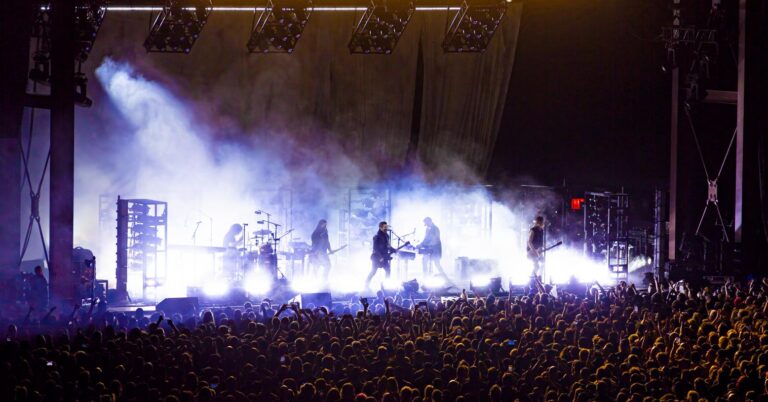
Nine Inch Nails have announced a massive 2025 tour. The Peel It Back Tour, the band’s first in three years, kicks off on Sunday, June 15, in Dublin before moving to North America in August. Tickets go on sale on Wednesday, January 29 at 12pm local time. Check out the full itinerary below.
Nine Inch Nails’ most recent albums, Ghosts VI: Locusts and Ghosts V: Together, came out back in 2020. Trent Reznor and longtime collaborator Atticus Ross, under the Nine Inch Nails moniker, are attached to score the upcoming film TRON: Ares, which is set to premiere later this year.
Nine Inch Nails 2025 Tour Dates:
Jun 15 – Dublin, Ireland – 3Arena
Jun 17 – Manchester, UK – Co-op Live
Jun 18 – London, UK – The O2
Jun 20 – Cologne, Germany – Lanxess Arena
Jun 21 – Dessel, Belgium – Graspop (Festival)
Jun 24 – Milan, Italy – Parco della Musica Novegro
Jun 26 – Zurich, Switzerland – Hallenstadion
Jun 27 – Vienna, Austria – Wiener Stadthalle
Jun 29 – Amsterdam, Netherlands – Ziggo Dome
Jul 1 – Berlin, Germany – Uber Arena
Jul 3 – Gdynia, Poland – Open’er Festival (Festival)
Jul 7 – Paris, France – Accor Arena
Jul 10 – Madrid, Spain – Mad Cool Festival (Festival)
Jul 12 – Oeiras, Portugal – NOS Alive (Festival)
Aug 6 – Oakland, CA – Oakland Arena
Aug 8 – Portland, OR – Moda Center
Aug 10 – Vancouver, BC – Rogers Arena
Aug 12 – Seattle, WA – Climate Pledge Arena
Aug 14 – Salt Lake City, UT – Maverik Center
Aug 15 – Denver, CO – Ball Arena
Aug 17 – St. Paul, MN – Xcel Energy Center
Aug 19 – Chicago, IL – United Center
Aug 22 – Detroit, MI – Little Caesars Arena
Aug 23 – Toronto, ON – Scotiabank Arena
Aug 26 – Baltimore, MD – CFG Bank Arena
Aug 27 – Philadelphia, PA – Wells Fargo Center
Aug 29 – Boston, MA – TD Garden
Aug 31 – Cleveland, OH – Rocket Mortgage Fieldhouse
Sep 2 – New York, NY – Barclays Center
Sep 5 – Raleigh, NC – Lenovo Center
Sep 6 – Nashville, TN – Bridgestone Arena
Sep 9 – Duluth, GA – Gas South Arena
Sep 10 – Tampa, FL – Amalie Arena
Sep 12 – Houston, TX – Toyota Center
Sep 13 – Ft. Worth, TX – Dickies Arena
Sep 16 – Phoenix, AZ – Footprint Center
Sep 18 – Los Angeles, CA – Kia Forum
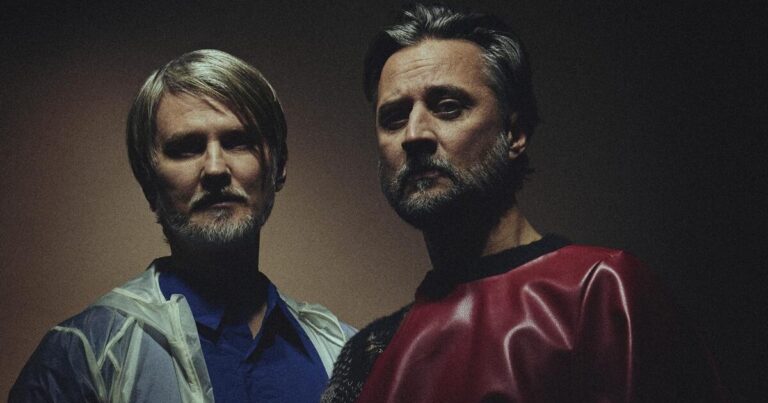
Röyksopp have announced a new album, True Electric. Following the Norwegian duo’s recent ambient record Nebulous Nights – An Ambient Excursion Into Profound Mysteries, the new LP comes out on April 11. Fever Ray features on the dizzying ‘What Else Is There? (True Electric)’, a new version of a track that first appeared on Röyksopp’s 2005 effort The Understanding. Its accompanying video, directed by longtime collaborator Stian Andersen, was shot on location at the band’s 2023 show in Athens, Greece. Check it out below.
Nearly all of True Electric‘s tracks are studio versions of the music from Röyksopp’s True Electric tour, including updates of the Robyn collaborations ‘The Girl and the Robot’ and ‘Monument’. “True Electric consists of recordings and renditions, meant to capture the essence of our live shows bearing the same name,” Svein Berge and Torbjørn Bruntland explained in a press release. “The idea was to put an emphasis on the clubbier aspects of our music, as well as returning to our roots within the realms of electronic music.”
Circuit des Yeux has announced a new album, Halo on the Inside. The follow-up to 2021’s -io lands on March 14 via Matador. It does not feature last year’s ‘God Dick’, which served as a “connective sonic link” between albums, but today, the Chicago-based musician has shared another incredibly titled track, the imposing ‘Megaloner’. Check it out and find the album cover and tracklist below.
“‘Megaloner’ is an anthem for the place that exists after an action and inside its consequence,” Haley Fohr explained in a statement. “Prices are being paid and hope is our currency. I’m singing about endurance, faith, agency, and the singular, unbelievable path toward one’s own fate.”
Halo on the Inside was recorded in Minneapolis with producer Andrew Broder. “Through the process of making this music I was able to rewind myself to a time before fear,” Fohr added. “And in the absence of fear I found the intimate beat of sex, love, and melody.”
Halo on the Inside Cover Artwork:
Halo on the Inside Tracklist:
1. Megaloner
2. Canopy of Eden
3. Skeleton Key
4. Anthem of Me
5. Cosmic Joke
6. Cathexis
7. Truth
8. Organ Bed
9. It Takes My Pain Away
Engaging in live online casino games, as opposed to traditional online casinos, has both advantages and disadvantages, although it ultimately relies on individual decisions and desires. This live casino guide will elucidate the advantages and disadvantages of live casinos. One of the key benefits is the convenience of playing from any location or device, putting you in control of your gaming experience. Yet, you may be curious about the pros and cons of a live online casino, and this comprehensive guide will cover all bases.
Simulated Gaming Environment: Pro and Con?
Live casino games offer a unique and authentic online gaming experience. These games are broadcast live from the studios of game providers, creating an atmosphere that mirrors a physical casino. The presence of real tables, Roulette wheels, cards, and dealers in elegant attire truly brings the casino to your screen.
For many players, the sensation of being at a physical table with others in a genuine casino remains superior to participating in an online live casino in the UK. Despite the contact, terrestrial casinos provide an ambiance that cannot be duplicated via a video feed. For some individuals, the ability to remain at home, avoid a dress requirement, and forgo travel to a casino is undoubtedly an advantage. For others, this is only a disadvantage of participating in live casino games.
Pro: Promotions and Bonuses
Engaging in an online casino provides access to several promotions and incentives, such as welcome offers for new registrants, reload bonuses, seasonal promotions, and free spins bonuses. And when it comes to live casinos, you can still reap the usual promotions and bonuses at regular online casinos.
For example, sites such as Hard Rock Bet give every new player a Welcome Bonus, like a deposit match, to begin their experience – find out more here.
Con: Technical Errors
The distinction between live and online casinos lies in the former being aired in real-time, whilst the latter consists of computer-simulated games that are perpetually accessible. Technical faults or mistakes may arise during live games, interrupting the gameplay. Generally, any game disruption might deter players from participating in a live setting.
Pro: Interpersonal Engagement
The primary benefit of live casinos is their provision of a very sociable atmosphere, albeit virtual. The presence of a genuine dealer, an authentic casino environment, and the use of actual cards create an immersive experience akin to that of a physical casino, significantly enhancing the enjoyment and excitement of the game. This level of engagement is a unique feature of live casinos.
There is an aspect of social contact, as players may engage with the dealer via the game’s chat function in live casino games. All participants at the table, including the dealer, are permitted to engage in conversation with one another during the game. If you are concerned that this may hinder gaming, you will be pleased to know that the dealers are trained to maintain the game’s speed while addressing players’ remarks or inquiries.
Con: Game Pacing
A significant disadvantage for several players who like a fast-paced game is that live casinos may exhibit slower gaming. In a game of Poker or Blackjack, one may see a player who consistently takes excessive time to examine their cards and deliberate on their subsequent action. This may result in a delay in the game, which some players may find unappealing.
Pro: Fair and Transparent
The equity and clarity associated with participating in online live casinos in the UK represent an additional advantage of live dealer games. Online casino table games use a Random Number Generator (RNG), while live casino games employ actual dealers. For several players, the visibility of the dealer distributing the cards in front of the camera, with all actions occurring in their presence rather than behind the scenes, enhances the game’s enjoyment. This transparency ensures a secure and fair gaming experience.
Con: Relying on WiFi
A significant disadvantage for several players who like a fast-paced game is that live casinos may exhibit slower gaming. In a game of Poker or Blackjack, one may see a player who consistently takes excessive time to examine their cards and deliberate on their subsequent action. This may result in a delay in the game, which some players may find unappealing.
Extensive Array of Live Table Games
Numerous parallels exist between live casino games and traditional Internet casinos. For example, you may earn actual money while participating in live dealer games or their online counterparts, similar to a physical casino. Blackjack, Roulette, Baccarat, and Poker are just a few of the fantastic tabletop games with live dealers available at UK online live casinos, and you can play them all right from the comfort of your home. In contrast to terrestrial casinos, there is no need to travel to play your preferred table game online or in a live setting.
Con: Less Games
In comparing live casinos to internet casinos, it is evident that the most favored table games, such as live Blackjack, Roulette, Poker, and Baccarat, are available on both platforms. Less common varieties of tabletop games may be exclusive to land-based casinos, but if you want the most popular online live casino games, you will easily locate them. Industry-leading live casino providers such as Evolution Gaming are expanding the selection of live tabletop games, with the recent trend of game shows gaining increasing popularity in online casinos.
However, while live casinos do present a healthy choice, more niche titles and game types are undoubtedly found at regular online casinos, unlike their live casino counterparts.
Increased Wagering Thresholds: Pro or Con?
The prevailing view about online casino live games is that they are specially tailored for big rollers because of their elevated betting limits. Furthermore, unlike online or virtual casino games, such as table games and slots, live casino games cannot be played in a demo format for free; they are only available for real money wagers. An account with a significant balance is required to participate at a live table and engage in the game.
Consequently, if you are a complete novice at Poker, Blackjack, or any other table game, it is advisable to practice at a virtual table game first until you have sufficient confidence to participate on a live table with real money. Nonetheless, while engaging at an online casino with a diverse array of live casino games, one may still discover tables with reduced betting limits to accommodate modest budgets.
Live Dealer Versus RNG: Pro or Con?
The primary distinction between live casinos and online casinos is in the operational method; one functions akin to a physical casino with actual dealers, while the other employs a computerized system known as a Random Number Generator (RNG).
A random number generator (RNG) is used in slot machines and video poker games. This is a crucial aspect of every online casino game, as it guarantees the randomness and fairness of the gameplay. When comparing live casinos to internet casinos, it can be confidently said that both are equitable and secure. That said, many players believe that an online table game lacks the authenticity of a game managed by a genuine, professional dealer.
Are Live Casino Games Right for You?
The decision between a live casino and an online casino mostly depends on one’s skill level, personal preference, and particular circumstances. For instance, if you want to practise for just a few minutes, engaging in an online table game may be more prudent. Conversely, if you engage in an extended session for practice, participating at a live table will provide a far more enjoyable experience over time.