Home Blog Page 82

Diesel x Tinder Want You Emotionally (and Commercially) Available

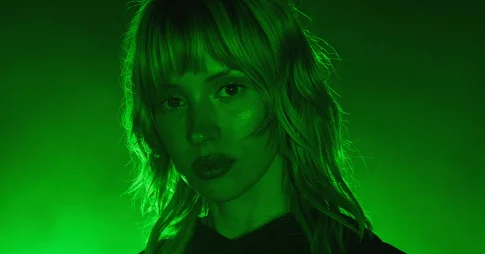
Diesel just turned its longstanding manifesto of For Successful Living into For Successful Loving, and you can blame Tinder for that. Both brands like to operate in worlds built around visibility, attraction and the strange performance of modern desire, where intimacy exists somewhere between genuine connection and genuine leather. Landing just in time for Pride 2026, the collaboration packages the ever-evolving concept of love, dating app vulnerability, and devoré denim into something you can emotionally relate to and, ideally, purchase immediately after.

Courtesy of Diesel

Filmed in a lo-fi VHS style, the campaign follows drag star and fashion darling Gigi Goode, who sits down with queer individuals and couples for open conversations. “Working with Tinder on ‘For Successful Loving’ felt like tapping into the same mindset. It’s not about idealizing love, but defending it and giving it a voice, one that creates space for all its forms, and above all, for something real,” Glenn Martens, Creative Director of Diesel, said in a statement.

Diesel x Tinder collection
Courtesy of Diesel

As the emotional confessions and off-the-cuff talks go on, the 17-piece capsule sits at the center. Spanning men’s, women’s and unisex ready-to-wear, the collection moves between ribbed jersey T-shirts, tanks, polo dresses, burnout devoré, trompe l’oeil lace, and of course, a whole lot of denim. Separate from the fashion release sits a $200,000 joint donation from the two brands to Outright International, which will be directed toward employment and entrepreneurship programs for LGBTQIA+ communities in Colombia, South Africa, Ukraine and the Philippines under Outright’s International Inclusive Solutions initiative. Love, still unfolding.

When the Gallery Is Closed: How Culture Lovers Spend Their Off Hours

There’s a particular kind of person who plans their calendar around exhibition openings, knows the next three films they want to see before finishing the one they’re currently watching, and has strong opinions about which era of a band’s discography is most underappreciated. You probably recognise the type. You might be the type.

But even the most culturally voracious person runs into Tuesday evenings. The exhibition you want to see doesn’t open until Friday. The gig sold out before you got to it. The film you’re anticipating isn’t released for another three weeks. What then?

It’s a question worth taking seriously, because how creative people spend their unstructured time says something interesting about what entertainment actually is, and why we reach for it.

The Myth of the Permanently Cultured Evening

There’s a romanticised image of the culture enthusiast whose every free hour is spent in enlightened engagement. Rereading Borges, attending an arthouse screening, discovering new music on a dedicated listening session. This person exists, probably, somewhere, a small percentage of the time.

The rest of the time, even the most dedicated culture lovers are watching something slightly trashy on a streaming platform, doomscrolling through social media, or playing some game on their phone that they’d be mildly embarrassed to mention at a dinner party.

This isn’t a failure. It’s human. The need for stimulation doesn’t always align with the availability of high culture. And there’s a real argument that the mental mode required for genuine cultural engagement, the focused, attentive, interpretive state required to really watch a film or absorb an album, actually needs to be rested before it can be engaged.

What People Actually Reach For

Speak to film enthusiasts, music obsessives, or regular gallery visitors and a few leisure patterns emerge outside their primary cultural interests.

Podcasts fill a lot of gaps. They’re low-commitment, absorb well during other activities, and for culture lovers, the available library is vast. Long-form interviews with directors, deep dives into specific albums, conversations between writers. It scratches the intellectual itch without requiring full attention.

Board games and puzzle-based entertainment have seen a genuine renaissance among this demographic. The success of games like Codenames, Wingspan, and the enduring appeal of crosswords and cryptic puzzles isn’t accidental. People who engage seriously with narrative and meaning in culture tend to enjoy systems with internal logic and satisfying resolution.

Then there’s online leisure, in its various forms. This is where things get interesting. The assumption that cultural engagement and digital entertainment are opposed doesn’t really hold up. Many of the people most enthusiastic about experimental cinema or contemporary art are equally willing to spend a casual evening on a gaming platform, a casual online quiz, or even an online casino. The appeal of non GamStop casino bonus offers for a low-stakes leisure session is precisely that they don’t demand anything from you aesthetically or intellectually. After a week of serious cultural consumption, there’s genuine pleasure in something that’s purely about the moment.

The Cognitive Value of “Unserious” Entertainment

This is worth examining further. There’s a tendency in culturally engaged circles to rank leisure activities, to treat a film by a celebrated director as more valuable than an evening of online gaming. But this hierarchy doesn’t survive scrutiny.

Cognitive rest is real. The brain regions activated during deep cultural engagement need recovery time. Entertainment that asks little of you, that doesn’t require interpretation or sustained attention, serves a restorative function that high culture actively cannot. The thriller you read purely for plot. The silly reality show. The casual game. These aren’t indulgences that distract from more worthy pursuits. They’re what makes the more worthy pursuits possible.

Research into creative productivity consistently finds that people who allow themselves genuine mental rest, not just physical stillness while mentally continuing to process, produce better work. For writers, musicians, directors, and artists, this isn’t a trivial point.

Serendipity and the Unexpected Leisure Choice

Some of the most interesting things in culture came from unexpected encounters. A song on a radio station you don’t usually listen to. A film you watched on a whim because it was the only one starting at the right time. A book picked up in a charity shop with no prior knowledge of the author.

There’s something to be said for leisure choices that don’t fit your established taste profile, that fall outside the curated algorithm that’s learned your preferences and serves them back at you. Trying something genuinely different, even something you’d consider beneath your usual standard, sometimes produces unexpected delight. And even when it doesn’t, it sharpens your sense of what you actually value and why.

The Tuesday Evening Problem, Solved

So what do culture lovers do when the curtain comes down and there’s nothing specific on the cultural calendar? Mostly, they do whatever they feel like, and they’ve stopped feeling guilty about it.

The most culturally engaged people tend to hold their leisure choices lightly. They’ve made peace with the fact that genuine enthusiasm for art, film, music, and literature coexists comfortably with occasional evenings of completely undemanding entertainment. The two aren’t in competition. They’re part of the same life.

And honestly, the culture that most resonates with us as audiences is usually the work made by people who understand this. The filmmakers, musicians and writers who create the most compelling things are often the same ones who’ll happily admit they spent last Tuesday watching something terrible and enjoying every minute of it.

Six Standout Book Covers Released In May

Whether you’re drawn to literary fiction, dark sports comedy or psychological thrillers, May’s book cover round-up has got something in store for you. Here are six designs that I found particularly outstanding.

Offseason by Avigayl Sharp
Cover design by Chloe Scheffe (Astra House, 5 May)

I’m suddenly aching to know how a ladybird, cigarette and glistening pearl might inhabit the same narrative. Unconventional, earthy-toned and curiosity-inducing.

Hunger and Thirst by Claire Fuller
Design by Josie Staveley Taylor, with art by Thérèse Mulgrew (Fig Tree, 7 May 2026)

A gothic psychological thriller, indeed. The font and fly illustration work wonderfully together, but the subject’s vacant stare is what will have me reaching for this in a bookshop.

Dad Had a Bad Day by Ashton Politanoff
Design by Rodrigo Corral (Astra House, 19 May)

Dad Had a Bad Day is described as ‘darkly funny’, and it’s fair to say the cover image does this justice. I adore the drooping tennis racket.

Inheritance by Jane Park
Design by Elisha Zapeda (21 May 2026)

With its intricate (Chekhov’s?) knife set against the prairies and its echoes of Wyeth’s Christina’s World, the cover of Inheritance raises all the right questions.

The Vivisectors by Missouri Williams
Design by Thomas Colligan (Fourth Estate, 21 May)

The cover of the intellectually charged campus novel is haunting, not least thanks to the delicate strings ominously connecting various letters. I can practically hear the violins playing in the background.

Pixie by Jill Dawson
Design by Carmen R. Balit (Bloomsbury Publishing, 26 May)

With 30% of Americans now consulting tarot regularly, Pixie’s cover is a smart move as well as an aesthetically alluring one. Bound to sit perfectly next to my Rider-Waite-Smith deck.

Oshorenoya David Francis’ portraits of intimate, everyday moments

What do we look for in a portrait? Is it an accurate resemblance or the story behind it? It’s often both, but portraits are also political artworks even when they don’t intend to be. That is because who gets featured in them serves as a social barometer. When you step inside a stately home in the UK, the full-length portraits tell you that the person you are looking up at is important.

What is absent is often any reference to a person of colour, unless they happen to be a servant in the background. It’s within this context that the portraits of Oshorenoya David Francis, presented in a solo exhibition at 1853 Studios, paint a different narrative.

The paintings are devoid of pretence; they capture intimate moments, often depicting young black men. The roughly painted backgrounds hint at these being snapshot moments in time, where the subjects aren’t posed but relaxed, going about their daily habits, whether that’s hunched over a laptop or sharing some wine.

His vision of masculinity captures the full spectrum from the stereotypical to the atypical. In ‘An Ode to the Physical Self’, a muscular man in only shorts photographs his reflection, much like we might see someone post on Instagram. Colour in the background is used sparingly to ensure our focus remains on the figure. It feels very much in keeping with today’s zeitgeist, where people feel pressure to share every moment on Instagram, and the more intimate and revealing it is, the more engagement it generates. 

While another man tries to better himself by reading a chapter of ‘Atomic Habits’. In this work, he is slumped in a chair, and it looks like he hasn’t even noticed us observing him as his brain processes the book’s contents. One work shows a man being performative and attention-seeking, while the other is a moment of learning and introspection. Both are displays of masculinity but take different forms.

Two of his paintings feature people embracing dogs, showcasing both a tender side of people and an owner-protector role. Oshorenoya captures these intimate moments that happen across the country every day, but immortalised in paint, they become something more: a celebration of love for ‘man’s best friends’ and a chance to highlight humanity at its most caring and loving.

Much like we see in painters such as Lucien Freud, the aim is not to create a flattering portrait but to capture the emotions and spirit of the moment. To me, the works most closely resemble those of Alice Neel, who also endeavoured to paint the kinds of people we don’t see in galleries or stately homes but who play important parts in their communities. She asked who deserves to be painted, and in her mind, the people she chose are the ones she thought we should all see; I see something similar in Osherenoya’s work. 

At a time when political and racial divisions are rising throughout Europe, it’s important to spotlight the people who often get missed, the migrants who make a country great, and to show their humanity. When we see the human side of any individual, we develop empathy for them, and Oshorenoya David Francis’ paintings open the door for that empathy. 

Oshorenoya David Francis’ exhibition at 1853 Studios was co-curated by Obi Nwaegbe and Natasha Virli, and the exhibition ran from 15 to 17 May 2026.

More information on the artist may be found on his Instagram account.

Phoebe Bridgers to Play One-Dollar Madison Square Garden Show This Week

After performing a series of pop-up concerts over the past month, Phoebe Bridgers has announced a show at Madison Square Garden. It takes place on Saturday, June 4, and tickets are priced from $1-20. Presented by Tidal Music, ticket sales will benefit the Community Justice Exchange’s Immigration Bond Freedom Fund, which works to release people from immigration detention.

Last week, Bridgers appeared in the trailer for Primetime, the upcoming A24 film in which she will make her acting debut.

The Avalanches and Jamie xx Team Up for New Song ‘Every Single Weekend’

The Avalanches have reunited with Jamie xx for ‘Every Single Weekend’, an extended version of the track that initially appeared on Jamie xx’s 2024 album In Waves. Check it out below.

The Avalanches and Jamie xx first teamed up on ‘Wherever You Go’ from the Avalanches’ 2020 album We Will Always Love You. In Waves also featured the collaboration 2024’s ‘All You Children’, while ‘Every Single Weekend’ was a minute-long interlude. “We’ve loved collaborating with Jamie xx over the years – his In Colour album reignited our passion for sampling, and this track is all about letting go, forgetting the 9-5 grind and enjoying every single weekend,” the Avalanches said in a press release.

Last month, the Avalanches returned with ‘Together’, their first new music in six years.

Zendaya Net Worth, Salary & Highest Grossing Movies

At only 29, Zendaya is a household name. Actor, singer, and fashion icon, she began her career as a child model before landing roles on several Disney Channel shows and movies. Things only got better from there.

Fast-forward to 2026, and her entertainment calendar is booked with major blockbusters and series. Besides starring in Euphoria, which just ended its three-season run, Zendaya was recently in the anti-rom-com The Drama, along with Robert Pattinson. Next up, she is set to appear in The Odyssey, Spider-Man: Brand New Day, and Dune: Part Three.

Given how busy she is, her net worth more than reflects her workaholic ways. Here’s what we know about her earnings.

Zendaya Net Worth

In 2026, Zendaya’s net worth is estimated at around $40 million.

As an award-winning actor and brand ambassador, she has maintained a lucrative career since 2010. Back then, she got her breakthrough in Disney Channel sitcom Shake It Up, in which she starred alongside Bella Thorne. More Disney opportunities followed, including the main role in K.C. Undercover and movies like Frenemies and Zapped. In parallel, Zendaya appeared on Dancing with the Stars and embarked on a music career.

Her transition to major studio movies went without a hitch. She plays MJ in the Marvel Cinematic Universe and previously had roles in The Greatest Showman and Malcolm & Marie. Zendaya also voiced Lola Bunny in Space Jam: A New Legacy and received widespread acclaim for 2024 hit Challengers.

Besides, Zendaya previously launched a shoe collection and clothing line. As for brands, she collaborated with Lancôme, Bulgari, Valentino, Glaceau Smartwater, Louis Vuitton, and Rolex, to name only a few.

Zendaya Salary

While information about salaries is generally kept under wraps, there have been rumours about how much Zendaya earned from different roles.

Back in 2022, for instance, it was reported that she earned $10 million from Spider-Man: No Way Home bonuses alone. The actor was paid the same sum to star in and produce Challengers, according to US Weekly.

On the TV side, there’s HBO hit Euphoria, which won Zendaya two Emmy awards. In 2023, the same US Weekly reported that she renegotiated her contract to be paid $1 million dollars per episode.

Zendaya Highest Grossing Movies

While Zendaya’s net worth is impressive, everything she stars in does well at the box office.

Spider-Man: No Way Home was the highest-grossing film of 2021. In fact, all of the Spider-Man and Dune films had solid box office runs. We’re guessing the sequels set to come out later this year will follow the same route.

CIFRA and the Rise of Everyday Media Art. A Curated Playlist on Myth, Technology, Nature, and Contemporary Consciousness

Screens are no longer tied to specific functions or places. We move between them constantly — at home, in transit, in waiting rooms, hotels, offices, cafes, and public spaces. They shape how we consume information, communicate, and experience culture. Increasingly, they also shape how we encounter art.

The growing presence of screens in everyday life is changing the role of digital art itself.  Media works are no longer limited to museums, festivals, or temporary installations shown for a fixed audience and a fixed period of time. Instead, they can exist as part of everyday visual environments — integrated into the spaces people already inhabit throughout the day. CIFRA expands the ways digital works circulate and are experienced, allowing media art to become less event-based and more continuous: something encountered casually, repeatedly, and alongside daily routines.

CIFRA is building a different kind of infrastructure for digital art, creating new ways for it to exist beyond the traditional exhibition cycle. Bringing together artists, curators, institutions, and audiences within one ecosystem, the platform combines access to works with curated selections, editorial framing, and long-term visibility. Moving across formats including video art, sound works, AI-based practices, audio art, and other forms of contemporary media art, CIFRA approaches digital culture as an evolving environment. Works that can be discovered gradually, revisited over time, and experienced in different contexts and ways of perception.

CIFRA operates as a curatorial environment shaped by human expertise instead of algorithmic recommendation. Audience participation and discovery are structured through public playlists, editorial pathways, and guided explorations, encouraging more intentional engagement with works, practices, and histories and moving away from passive scrolling.

The platform has an international Artistic Vision Council bringing together leading figures in media art and digital culture, including Olga Shishko, Lev ManovichDaniela Arriado, David Elliott,  Christiane PaulOliver Grau, and Martin Honzik, who help shape the platform’s editorial direction and seasonal programming.

Encountering media art no longer necessarily requires entering a museum or waiting for a major event. It can happen at home, during moments of transit, through personal devices, or within shared environments that people move through every day. In this sense, digital art is becoming less isolated from daily experience and more integrated into the visual language of contemporary life itself.

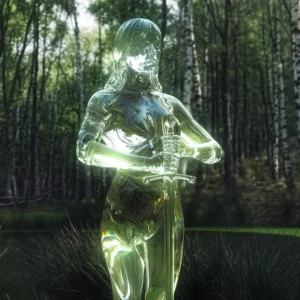
Central to CIFRA are curated playlists that connect works through shared themes, atmospheres, and artistic approaches. The playlist below, curated by Olga ShishkoChair of Artistic Vision Council, brings together works from CIFRA that reflect on mythology as a form of knowledge and explore how contemporary artists reinterpret relationships between technology, nature, identity, and perception.

Mariano Sardón, The Wall of Gazes
Created through an experiment conducted in Buenos Aires, the work tracks the eye movements of viewers observing portraits of other people. Sardón reveals the areas that escape perception — the “blind spots” in human observation. The piece reflects on the limitations of visual knowledge and suggests that understanding another person requires more than sight alone.

Sergey Kishchenko, The Duck Test
Set within the ruins of an industrial factory, the performance film follows the figure of the Duck Man moving through a landscape marked by labor, destruction, and transformation. Soil mixed with sweat, oil, and blood becomes a symbolic terrain where identity is unstable and constantly shifting. The work explores mythic cycles of creation and collapse.

Angelika Markul, Deadly Charm of Snakes
The film combines mythology, politics, beauty, and violence through the symbol of the snake. Referencing both the political atmosphere of the Trump era and ancient representations of feminine power, the work explores fear, aggression, and the enduring force of nature.

Almagul Menlibaeva, Steppen Barocco
Focusing on female identity in Central Asia, the work follows seven women whose connection to natural forces establishes continuity with ancestral memory, spirits, and the landscape of the steppe.

Giuliana Cunéaz, Quantum Vacuum
Set within a virtual environment performed by an actor, the work merges ritualistic and religious references with digital space, creating a hybrid environment between spirituality and technology.

Bjørn Melhus, Auto Center Drive
Using reconstructed voices of cultural icons including James Dean, Janis Joplin, Marilyn Monroe, Elvis Presley, and Jim Morrison, the work recontextualizes familiar figures from popular culture and examines how media continues to shape collective memory.

Chen Zhou, The Story of Nanka Gulu and Iron Hawk
The film follows a drone that escapes from a factory in search of ancient wisdom. After being adopted and renamed by Nanka Gulu, the machine gradually reconnects with nature, reflecting on technological alienation and the human desire to return to the natural world.

Bjørn Melhus, Sugar
In a post-apocalyptic future, the humanoid robot SUGAR attempts to restore human touch and emotional connection. Encountering a man isolated in an underground techno-environment, the robot tries to lead him outside, raising questions about self-awareness and isolation in contemporary capitalist society.

Alexandra Dementyeva, Alien Space
Combining imagery of aliens, robots, and television culture, the installation explores how myths evolve within technologically driven societies. The work imagines “space” as a symbolic realm populated by new gods and fictional beings, questioning the boundaries between imagination, media, and belief.

Charli XCX Details New Album ‘Music, Fashion, Film’

Over the past couple of months, Charli XCX has been teasing a new album and shared the singles ‘Rock Music’ and ‘SS26’. My guess was that ‘SS26’ – more thoughts on that song soon – would be included on the pop star’s forthcoming record, while ‘Rock Music’ was more of a discourse-stirring one-off. It turns out both will be included on the just-announced Music, Fashion, Film, which will be released on July 24. That’s the artwork below: a black-and-white photo of John Cale, Marc Jacobs, and Martin Scorsese shot by frequent collaborator Aidan Zamiri.

According to Charli’s Instagram post, Music, Fashion, Film is “11 songs, 30 minutes, 5 seconds.” That’s a pretty sweet runtime that, to me, suggests the record may not be as portentous as its cover art and title.

Earlier this year, Charli XCX released her companion album for Emerald Fennell’s film adaptation of Wuthering Heights. The new album, of course, will serve as her proper follow-up to BRAT.

Music, Fashion, Film Cover Artwork:

Music, Fashion, Film cover

The Best Albums of May 2026

In this segment, we round up the best albums released each month. From Aldous Harding to feeble little horse, here are, in alphabetical order, the best albums of May 2026.


Aldous Harding, Train on the Island

Aldous Harding - Train On The IslandWelcome to Aldous Harding’s island. You’re free to leave anytime you like, but the New Zealand artist is happy to show you around. There are no palm trees here; just the one tree that she used to climb, presumably as a child. Forget about the sensation of floating on the ocean blue; instead, lose yourself in questions like, “When I hit the ocean I was only a spark/ Who brought me up the stem with no love in their heart?” You’ll have to get by eating rocks and plants, but you can dance just to dance. You can get together with friends once in a while, but in the end, of course, it’s just you and your reflection. “I have met my sleeping self/ Things she knows keep me around/ I hope I’m more than I think about,” Harding sings towards the end of her insular yet inviting Warm Chris follow-up. Read the full review.


American Football, LP4

LP4 coverIn the decade-plus since American Football’s reunion, Mike Kinsella has reserved some harrowing lyrical specificity for his other project Owen, aware that it’s much less subject to scrutiny. Reeling from a divorce he’s already addressed on the last couple of Owen records, however, he leans into the vulnerability on the band’s first album in seven years, pointing fingers while claiming responsibility for the mess he’s created. “I can’t bathe in your malaise anymore/ I’d rather be profane than chaste and bored,” he sings deep into the storm of the record, which is dramatic and ambitious, yes, but will probably prove less divisive than some of us early listeners assumed. It’s exploratory, unmoored, and self-aware, though never to the point of rupturing the mythos of American Football. Read the full review.


Broken Social Scene, Remember the Humans

Broken Social Scene 2Broken Social Scene’s new album, Remember the Humans, urges you to think of music in organic terms. The title of the Canadian collective’s first album in nearly a decade came from Charles Spearin, who initially framed it as a joke: it sounds like the AI version of their seminal 2002 LP You Forgot It in People. The songs get lost in the haze of personal memory, eulogize individual people, and put relationships under the microscope, but the group still has a unique way of reveling in abstraction: finding relief from the burden of identity and emotional truth in every cliche. It’s a joyously universal kind of homecoming. Read our inspirations interview with Broken Social Scene.


feeble little horse, bitknot

bitknot Cover ArtOnce again recorded across the trio’s homes in Pittsburgh, Pennsylvania, the surprise follow-up to feeble little horse’s mesmerizing 2023 LP Girl With Fish isn’t exactly nostalgic for a time when tech and money were only responsible for human suffering in different ways, but it does grapple with the kind of discombobulation of memory and self that’s particular to this cultural moment. Using digital tools as an extension of their knotty group dynamic and Lydia Slocum’s wiry introspection, it interlaces sugary melodies and dizzying left turns that hardly pale in comparison to its predecessor, making it feel far from a tossed-off release.


Greg Mendez, Beauty Land

GregMendez-

By the time he released his disarmingly intimate self-titled album in 2023, Greg Mendez had spent a decade and a half as part of Philadelphia’s DIY scene. The singer-songwriter’s full-length debut for Dead Oceans is his most extensive collection to date, Beauty Land, one no less thematically heavy than its predecessor but more unburdened in its expression. The songs swell with unguarded emotion, whether looping a single thought over spare keyboard or slow-burning into miniature symphonies. Still recording almost entirely alone, Mendez finds ways to stir them outside the confines of his own reality; you could say that’s where the beauty comes from.


Iceage, For Love of Grace & the Hereafter

For Love of Grace & the HereafterIt’s not unusual for Iceage to obscure the narrative details of their songs. But when frontman Elias Rønnenfelt sings about catching “you like an ember falling down” on the opening track of their new album, he might as well be referring to the sparks of a new song that permeate the air when the band is in the studio. The more the Danish punks have pushed their sound forward since their 2011 debut New Brigade, the more days it’s taken them to record, with the last couple requiring – gasp – up to two weeks. Perhaps in reaction to the insularity of Rønnenfelt’s recent solo work, though, they returned to a speedier, raucous approach for For Love of Grace & the Hereafter, as if the ideas themselves were running for dear life. Read the full review.


Ivy Knight, Iron Mountain

ivy knight.Growing up in Oakland, California, Ivy Knight was tapped into different strains of alternative music: her dad brought her into the world of punk and experimental music early on, while her mom put on indie mixtapes in the car. That’s where we find the New York-based artist on the opening track of her debut album, Iron Mountain, where she sings, “You’re painting colors/ A picture for the sky/ The thin blue beads/ On the mirror while you’re speeding.” It becomes clear she’s absorbed those formative influences as deeply as she takes in her surroundings, her oneiric, often escapist imagery mirrored in frequent collaborator Deer park’s organic production. After a couple of blearier, stripped-back EPs, her first full-length homes in on subtly accented folk-rock, harking back to songwriters like Marty Robbins and Kate Wolf. If the vocal filters and synth flourishes position her as part of a new wave of alt-pop, they’re also just tools for her to blend into her own creative landscape, planting dreams into the earth. Read our Artist Spotlight interview with Ivy Knight. 


Kacey Musgraves, Middle of Nowhere

middle of nowhereKacey Musgraves was wandering around her hometown in Texas when she noticed a small sign that said, “Golden, Texas: Somewhere in the middle of nowhere.” She loved that it was “self-deprecating but also kind of confident,” she explained in an interview, which is the exact tonal balance she strikes on her latest record. Middle of Nowhere, in fact, begins “out there on the edge of the world, way past common sense” before Musgraves proclaims that she lives in “the great state of confusion.” Yet the album is less incoherent than her 2021 pop pivot star-crossed, and even more grounded than 2024’s Deeper Well, which focused less inspiringly on growth and healing. She’s not only more comfortable but more incisive in this transitional lane, leaning into the country classicism of Pageant Material and the radiance, if not the total brilliance, of Golden Hour. Read the full review.


Kevin Morby, Little Wide Open

little wide open artworkHow do you relate to Kevin Morby’s music if you’ve never even been to the Midwest? So much of the singer-songwriter’s work is beloved for its sense of place; I tend to appreciate it because it never seems entirely tied to a single one. Even as he delivers his most settled and, by all accounts, most Midwestern album to date, Morby’s life is split between Kansas City and Los Angeles, as he and his partner, Waxahatchee’s Katie Crutchfield, are expecting their first child. Little Wide Open, in its grand simplicity and cautious optimism, doesn’t cling to Middle America as a nostalgic signifier but mines its abundance of imagery, honouring a beautiful region you can drive through but will always ride passenger to time. It’s the same where you are; Morby just makes the truth easier to embrace. Read the full review.


Lip Critic, Theft World

theft worldLip Critic frontman Bret Kaser’s identity was purportedly stolen while the Brooklyn quartet was writing Theft World, the follow-up to their 2024 debut Hex Dealer; the thief turned out to be a devoted fan who believed he’d cracked the code to the band’s loosely conceptual universe. For a record that toes the line between absurdist fantasy and depressing realism, that origin story is almost too good, but the frenetic machinations of the record itself are even better: a melting pot of delirious characters, adrenaline-fuelled propulsion, and ingenious experimentation. Outlandish or not, it drives home the same truth: It’s happening to you right now. Read our inspirations interview with Lip Critic.


MUNA, Dancing on the Wall

dancing on the wallTowards the end of MUNA’s new album, Katie Gavin is convinced she’s past her prime – “and everyone knows it.” It’s a natural insecurity, but it’s laced with the understanding that “everyone” now implies a larger group of people who are far from friends or devoted fans. Whenever the band comes up in the lyrics of their latest, Dancing on the Wall – self-produced, like all their records, but with a heightened urgency – it’s to affirm that they’re doing alright, if with a knowing sigh. “Lots of people love me now,” Gavin sings to deal with an unrequited love, “Lots of people.” Whatever personal grievances these often dizzyingly infectious songs latch onto, they point to a band continuing to grow into themselves rather than self-consciously aging out of their peak. Read the full review.


Thomas Dollbaum, Birds of Paradise

birds of paradiseMany of the songs on Thomas Dollbaum‘s new album – propulsive, twangy, torch-like – spring from the setting of his childhood, driven to a magically placeless evocation of memory, empathy, and solitude. “What the living do is prowl around on their hands and knees/ Among the bodies we leave behind,” declares one of its characters; another is purely happy to be alive. Aided by guitarist Josh Halperm, bassist Nick Corson, and MJ Lenderman on drums, guitar, and backing vocals, Dollbaum is always somewhere in between, pooling the feelings together like they’re one and the same. Read our Artist Spotlight interview with Thomas Dollbaum.