

In this segment, we round up the best albums released each month. From This Is Lorelei to Tinashe, here are, in alphabetical order, the best albums of September 2026.
Angela Autumn, Believer
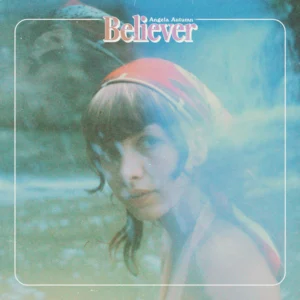 Taking shape in the wake of heartbreak, Believer was written across the South and Appalachia: in a treehouse outside Asheville, in the Tennessee woods, and in an empty warehouse near Chattanooga. Throughout it, Angela Autumn marries ample restlessness and nimble restraint in her search for a kind of light: “For a guarantee of sunshine, I got the blues,” the Nashville-based singer-songwriter sings on ‘My Alchemy’, in a voice that’s alternately airy, warm, and gutsy. But she puts faith in the idea that the blues – like any other genre or place she may choose to briefly inhabit – is somewhere you can store memories for all time, even before they get to live inside you. Read our Artist Spotlight interview with Angela Autumn.


Emma Ruth Rundle, These Killing Times
 “What will we live for beyond the valley of the shadow of the fear of all men?” That’s final question on the last track of Emma Ruth Rundle’s new album, These Killing Times, and hushed as ‘Oceans of Time’ may sound, it certainly doesn’t resign itself to a life of solitude. Doomful and devastating though it often feels, it’s worlds removed from any kind of isolationist perspective; Rundle widens not only her sonic palette but her non-musical reference points, moving across centuries through nods to Macbeth and Gone Girl while hammering down on the same themes of perpetual violence, patriarchal systems, and longing for redemption. These Killing Times succeeds not in colouring outside our bleak reality, or even imagining a path through it, but consolidating every possible reaction to the darkness – fear, yes, but also anger, unification, and even hope – as part of the same towering whole. Read our inspirations interview with Emma Ruth Rundle.
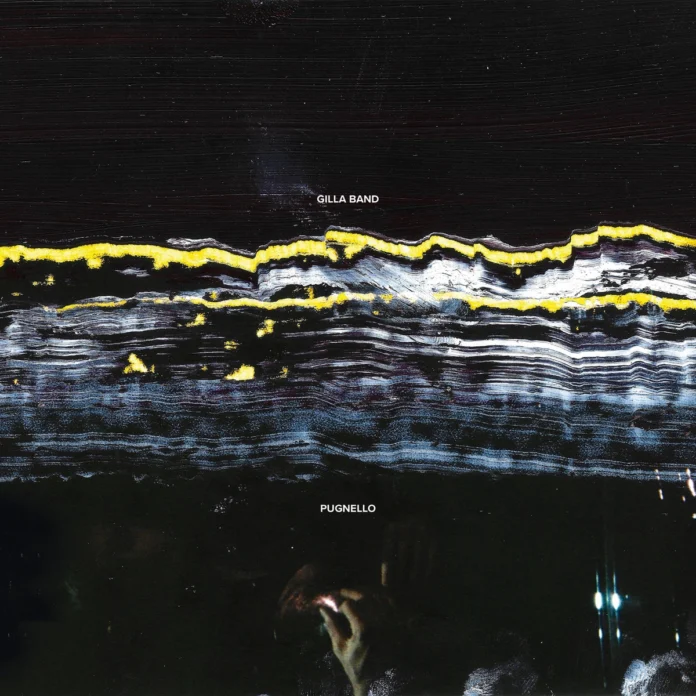
Gilla Band, Pugnello
 The third track on Gilla Band’s new album, ‘Alogia’, is Greek for “without words,” connoting an inability to speak. Pugnello is not only the kind of masterful record that leaves you speechless but serves as the opposite of functional music: the Irish band’s uncompromising blend of noise and dance styles relentlessly capitalizes on the most dysfunctional corners of the human brain. On the follow-up to 2022’s Most Normal, they sound simultaneously like a group in rueful disrepair and in complete control of their internal machinations. Though its mechanized rhythms and corrosive textures will be the main draw for many, it is not a record you turn to solely for its instrumental qualities; Dara Kiely’s lyrics are by turns silly, surrealist, and as heavy as the music. The more you try to find the words for it, the more it speaks for itself.
Hannah Cole, Switchbacks
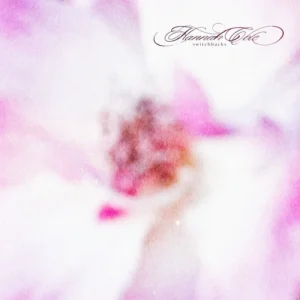 Following a series of EPs, Hannah Cole and her longtime collaborator and partner, Josef Kuhn, wrote and recorded Switchbacks at their home studio over the last two years. Even as an amalgamation of influences that includes Bully, Alex G, and Cocteau Twins – not to mention the heavier shoegaze bands the record’s mixer Sonny Diperri has worked with, from My Bloody Valentine to Julie – it conjures a well-defined, multidimensional sound most artists don’t arrive at until several LPs into their career, each song dynamically peppered with distinctive details. On her debut album, Cole peers into the future while treasuring the ecstatic moments of creativity on which it may depend, acknowledging that the promise of success is as fuzzy as memory itself. Read our Artist Spotlight interview with Hannah Cole.
Lily Seabird, Lightspheres on Their Way
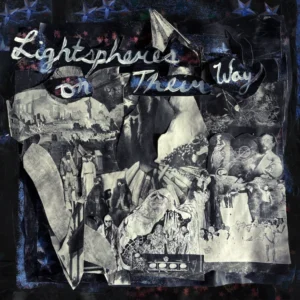 Lily Seabird zooms all the way out on Lightspheres on Their Way. Though revolving around many of the same themes, it stands in almost striking contrast to the rough-hewn intimacy of last year’s Trash Mountain, transposing its emotional volatility to a tangibly spiritual realm. The Vermont singer-songwriter is thinking less about a period of time, or a place in time, than the very nature of it: “Time’s a vortex coming in all directions/ Where I could live in memories for days,” she sings on the fittingly sprawling ‘Portal to the Past’, memory being the engine her music runs on to move through trauma. To title her most illuminating and dynamic record to date, she invents a word that encompasses it and every other catalyzing force in our lives. Her performances retain an awe-inspiring physicality even as her lyrics flirt with the metaphysical; by the end, you feel like she’s homing in on a universe all her own. Read the full review.
Starcleaner Reunion, Umbrella
 Taking their name from a 1970s children’s book about magical beings returning light to the sky, Starcleaner Reunion honed their spacey, kaleidoscopic indie rock style on a couple of EPs, 2023’s Club Estrella and 2024’s Café Life, before getting to work on their debut LP. The songs on the self-produced Umbrella are by turns jittery, hazy, and whimsical, showcasing a band whose converging taste opens up the imagination rather than leading to predictable songforms. There is more than a touch of nostalgia in a lot of Jo Roman’s lyrics: “I seem to be wanting the same old song,” she sings on the opening ‘Theme’, but Starcleaner Reunion have a way of twisting and reshaping familiar textures into new, uncanny territory. Read our Artist Spotlight interview with Starcleaner Reunion.
This Is Lorelei, The Singer in My Band

Billed as his debut proper, 2024’s Box for Buddy, Box for Star cemented Nate Amos as an artist who could cohesively translate both his melodic and production skills to a singer-songwriter framework. The Singer in My Band, the singer-songwriter’s first LP for Matador, marks not a shift in style so much as towards the purity of his songwriting, becoming a little meta but never more than it strives for universality. It’s strikingly vibrant from start to finish, even on a track sung from the perspective of someone who turns out to be – spoiler alert – dead. There’s humour, in the vastest sense of the word, in the anguish, romance, and mortal fears of its characters. “You can laugh at love here,” Amos sings on the closing track, not making a promise so much as affirming what you’ve already experienced. Read the full review.
Tinashe, Popstar
 These days, every pop star wants to make a concept album. Every pop star says things like, “For me, the album is so much better in its entire context,” as Tinashe did in a recent Stereogum cover story. (Not everyone is against AI and “the TikTokification of it all,” though.) What sets Popstar – the artist’s eighth LP and first on a major label (Atlantic) since parting ways with RCA in 2019 – apart is how its outsized ambition and sense of intentionality feels unequivocally like a product of self, one both unburdened and conflicted about its place in the industry. Brilliant, self-assured, and tapped-in, the album has little to say and a lot to emote about its titular subject, warping, relaying, and dissecting the singer’s experience like a lover would at the end of a long day. “The American Dream is outdated,” she sings on ‘Crash Out’, living her own while sounding totally of-the-moment. Read the full review.
Told Slant, What’s Up
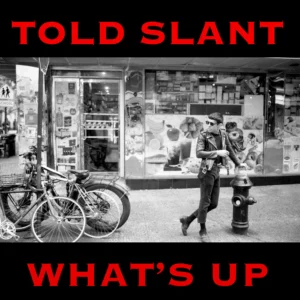 “You don’t want a familiar feeling,” Felix Walworth sings on ‘Real Love’, the opening track of their first Told Slant album in six years. Even at its most romantic, What’s Up is not exactly heartwarming so much as evocative of a “low fire burning,” and more than on any previous record, Walworth allows their simmering frustration to spill over into outrage, mingle with grief, and melt back into tenderness, resulting in their most dynamic record to date. Tracking everything to an eight-track reel-to-reel, they brought together Hannah Pruzinsky (aka h. pruz, also their collaborator in Sister.), their Florist bandmates Emily Sprague and Jonnie Baker, as well as Hellen Ballentine (aka Skullcrusher), Mari Rubio (aka more eaze), and Elijah Wolf – familiar names if you’ve been following Walworth’s work or the New York scene to which they’re embedded, but all of whom help fill the record with thorny, uncompromising details. Read our inspirations interview with Told Slant.

