Home Blog Page 1588

EP Review: Jorja Smith, ‘Be Right Back’

It’s been three years since Walsall’s Jorja Smith released her debut album Lost & Found to seemingly overnight success. The album peaked at number three in the UK album charts; she was named Best British Female Artist at the 2019 Brits and was nominated for Best New Artist at the Grammys that same year. Guest spots with everyone from Drake to Kendrick Lamar arrived. A new queen of British soul had been crowned before she had really even begun, still just 21 years old. 

Reflecting an honesty with herself and a commendable patience, Smith decided not to rush the follow-up album to Lost & Found, where most would have been tempted to cash in. So we have Be Right Back, an eight-strong EP that she’s released for fans while they await her next full-length, due to come out next year. These songs were deemed not quite right to make the cut for that record and it can be felt in the demo-esque production quality, particularly in the middle portion of the project. Tracks like ‘Home’ and ‘Burn’ are too dry, too bare, unable to maintain one’s interest. 

Smith puts the strongest efforts before these at the beginning. ‘Addicted’ is immediately attention-grabbing, full of moody beats and smouldering vocals. A twinkling piano and a hesitant drumbeat then fill ‘Gone’. Lyrically she continues the themes of young love and self-discovery that flourished in Lost & Found (she’s still only 23). “Tell me how to keep my world moving on without you,” she begs in ‘Gone’; “Nah, I’m not here to hug you, I’m just for the night,” she reminds someone in ‘Time’. 

Overall the beats remain a sweet fusion of bleary-eyed R&B and smoky soul, probably hinting at a similar sonic path in the upcoming album. ‘Bussdown’ And ‘Digging’ are the only significant departures, the former possessed with a slight dancehall element with rapper Shaybo being given a chance to shine, and the latter reverberating with murky ’90s energy. Whatever one thinks of the production, Smith’s voice is still the standout: she’s still able to stun and stop whenever she chooses as each word is delivered with a graceful sigh. On the closing track ‘Weekend’, most prominently, a simple piano line allows her gorgeous falsetto to fly into the sky.

It takes an artist possessed of poise and self-confidence to name a record Be Right Back: this is a minor release, she’s strong enough to acknowledge. Jorja Smith is still growing, but as she sings on this EP, “You should be addicted to me”: a listener would do well to heed those words and continue with the artist as she heads into her second full-length album.

Album Review: Weezer, ‘Van Weezer’

What is there left to say about the much-maligned Weezer? Their new album, Van Weezer, is their 15th album after all, and their second this year following January’s OK Human. In the public’s mind, they’ve arguably overtaken Nickelback as the ultimate ‘Band As Meme’, certainly aided by the rise of TikTok. It is, put another way, a long way since their glory days of 1994’s Blue Album and 1996’s Pinkerton. Yet something keeps bringing people back: a cursory glance at the streaming numbers for this new album astoundingly shows over 10 million plays for two of the tracks; of the rest, only 1 comes under 300,000. Fans, clearly, keep returning in the vain hope that glory will come back.

It’s the glory that kills you though. Ostensibly inspired by 80s’ hard rock and metal, this is an unsubtle creation from Rivers Cuomo and company (just look at that Van Halen-ripped album title). The mammoth riff from Ozzy Osbourne’s ‘Crazy Train’ is directly used in ‘Blue Dream’; Aerosmith is namechecked in ‘I Need Some of That’. The closest they come to matching the late, great Eddie Van Halen is on the stadium rock track ‘The End Of the Game’. Most of the rhythm still belongs to power pop, however, and this is where the band perform best, particularly on ‘Sheila Can Do It’, the exuberant and confident ‘Hero’, and ‘All the Good Ones’, the latter recalling ‘Beverly Hills’ in its pounding anthemic quality. 

Aside from one – again unsubtle – portrait of a troubled prostitute in ‘1 More Hit’, Cuomo’s lyrics are, strangely, ‘youthful’. Tracks like ‘I Need Some of That’, ‘All the Good Ones’, and ‘She Needs Me’ roar with unrestrained teenage fervour, slightly off-putting being performed by a man who turns 51 next month. “Who needs real estate when I got you?/ You’re my platinum blonde / With your spandex on,” he sings in ‘Precious Metal Girl’, and much of the lyrics are, pure and simply, lustful like this. 

And this is the thing: Cuomo really doesn’t seem to care. 30 years into their career, Van Weezer has the air of a group of muso dads, looking for a mid-life outlet that doesn’t involve buying a motorcycle, getting their teenage rock band back together in the garage on weekends. As such, it’s difficult to disparage the record too much, for much of it is joyous and geeky and fun. It’s not going to stop the memes, it’s not going to stop their seemingly never-ending downward spiral. As he sings in ‘Hero’, “On the inside, I’m an outcast”: it’s a role that Cuomo seems content to keep playing, probably for another 15 albums. 

Fashion Revolution: What is it and How to Get Involved

Fashion Revolution is a registered charity based in London, advocating for a more ethical and sustainable fashion industry.

The charity was founded in response to one of the worst ever industrial incidents: the Rana Plaza. On 24th April 2013 in Dhaka, Bangladesh over 1,132 people were killed and 2,500 injured when the garment factories they were working in collapsed.

Fashion revolution offers opportunities and information to push positive change. Rallying people to help change the way the fashion industry runs, helping prevent similar disasters from happening again.

What do they do?

Fashion Revolution advocates for change in the fashion industry, focusing on pushing reform within our culture, fashion industry and industrial policies and practices. They attempt to unite everyone within the fashion industry, including designers, manufacturers, factory workers, consumers and disposal.

The charity raises awareness with groups in 100 countries worldwide, highlighting the often dangerous workplaces, unethical treatment of workers, and unsustainable and polluting production methods within the fashion industry.

It is estimated that around 3.4 billion people are working in the fashion industry worldwide, with 430 million believed to be working in garment and fabric production. Fashion Revolution amplifies these often unheard voices within the fashion industry and holds companies accountable for their actions.

For the last five years, Fashion Revolution has created yearly Fashion Transparency index’s, reviewing 250 leading fashion brands using information regarding supply chains, policies, and practices they have disclosed. The charity pushes brands to be transparent about their practices, thus allowing consumers and the fashion industry to review and hold brands accountable for their practices to reduce the potential of greenwashing.

Fashion Revolution Week

Since 2014 Fashion Revolution has run Fashion Revolution Week, held around the date of the Rana plaza incident, to remember and raise awareness of the unethical and unsustainable sides of fashion through social media, online and physical events.

Due to social distancing measures, Fashion Revolution 2021 took place online, with over 60 designers across 20 countries opening their studios digitally for Fashion Open Studio.

Fashion Open Studio highlights designers who are transparent in their design, production, and supply chain who innovate ways to be as ethical, sustainable, and socially responsible as possible. This helps designers and consumers connect, enabling designers to understand the consumer’s needs and gives consumers an insight into how the clothes they wear are created.

During Fashion Revolution Week, participants are encouraged to contact brands directly and via social media using the hashtags: #whomademyfabric? #whomademyclothes, and #whatsinmyclothes? alongside pre-written templates. The aim is to pressure brands to disclose information relating to their supply chain, environmental impacts, and treatment of garment workers to help create transparency within the fashion industry.

Consumers are also encouraged to take selfies of themselves holding posters of these hashtags and to share them on social media.

I attended multiple online events during Fashion Revolution Week 2021, ranging from studio tours, interviews, workshops and seminars. The wide range of events catered to a broad range of needs and audiences, including students, industry professionals, fashionistas, bloggers, and people new to sustainable fashion. My highlights included a ‘Glorious Garbage’ studio tour, a conversation with Germanier, and an online handbag workshop by Clara Chu. With so many different style events on, there was something for everyone, and I personally left feeling inspired about where the fashion industry is heading due to innovative designers, industry professionals, and the community attending the events.

How to get involved

There are many ways to help support Fashion Revolution throughout the year alongside Fashion Revolution Week. These include:

Album Review: Sons of Kemet, ‘Black to the Future’

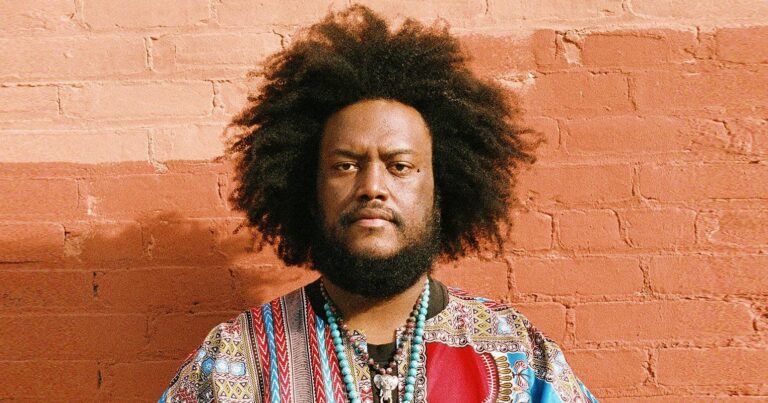
Shabaka Hutchings, the London-born, Barbados-raised multi-instrumentalist whose singular vision and unrelenting spirit have placed him at the forefront of Britain’s vibrant jazz scene over the past decade, last released an album in March 2020. That was with his group Shabaka and the Ancestors, in which he collaborates with South African musicians; his other projects include the cosmic jazz trio the Comet is Coming, featuring Dan Leavers on synths and Max Hallett on drums, and Sons of Kemet, the improvisational jazz quartet whose breakout third LP Your Queen Is a Reptile – their first for Impulse! – earned them a Mercury Prize nomination in 2018. What sets Sons of Kemet apart is both their fervent energy and their unconventional approach to genre, mixing jazz with elements of dub, hip-hop, and dancehall; there’s an undeniable urgency to their music that’s a key component of every one of Hutchings’ projects, but here it’s also informed by a heightened political consciousness that comes through in both their propulsive compositions and conceptual ambitions. Their latest release, Black to the Future, is the most powerful and pertinent expression of the group’s unique dynamic to date.

When the quartet locks into a certain groove, the effect is nothing short of exhilarating: twin drummers Edward Wakili-Hick and Tom Skinner provide a rhythmic backbone that not only gives the music a nervous quality but also makes it feel rooted to the earth, while tuba player Theon Cross casts a heavy, ominous cloud over the proceedings. But it is Hutchings’ layers of clarinet and saxophone that light the fire – SoK’s debut album was fittingly titled Burn – one that takes different forms throughout the duration of the new LP: on the frantic ‘Pick Up Your Burning Cross’, the flames sputter out in front of you as the words of Moor Mother and Angel Bat Dawid hover in and out like a haunting chant.

But it’s on the previous track, opener ‘Field Negus’, that the tension starts to simmer. Poet Joshua Idehen, a frequent collaborator of Hutchings who previously contributed spoken word to Your Queen Is a Reptile, plays an even more vital role here; not only because it is his voice that bookends the album, but because his performance feels more attuned to the language of the music, blending in rather than drawing attention away from its seething core. “You had me saying prayers in your language/ You made me forget your gods, question my spirits, forsake my prophets,” he decries on ‘Field Negus’. “Oh, the audacity, the Caucasity of it all!” His final proclamation, as caustic as it is furious, sets the tone for the rest of the record: “Burn it all, burn it all.”

Your Queen Is a Reptile was notable for being the group’s first album since the 2016 Brexit vote, and its celebration of visionary women of colour often overlooked by history doubled as a condemnation of and radical alternative to the British monarchy. Recorded in the midst of last year’s Black Lives Matter protests in the wake of the killing of Goerge Floyd, Black to the Future is fuelled by a similar sense of purpose: to “redefine and reaffirm what it means to strive for Black power,” as Hutchings writes in the liner notes. And it does so with tenacity and fervour, teeming with joy as well as resentment and sorrow: this, as the album’s title suggests, is not a commentary on current events, but a vision of the future built on the foundations of the past. Though there is a nuanced complexity to the album, it is above all a potent and rewarding piece of work.

Despite the upbeat energy of tracks like ‘Think of Home’ and ‘To Never Forget the Source’, Black to the Future does often see the quartet leaning into a more meditative – but never conventional – groove. The tone of ‘In Remembrance of Those Fallen’ is at once mournful and enchanting, while ‘Through the Madness, Stay Strong’ is as evocative as its title, one of the most transcendent examples of the group’s chemistry. When Idehen’s voice returns on the final track, ‘Black’, it’s not there to fill a void, but acts as a visceral affirmation of what’s already been conveyed in the music: “This Black praise is dance! This Black struggle is dance! This Black pain is dance!”

5 Simple Tips to Help You Choose an Online iGaming Platform

Choosing a platform is a major challenge for a gambler. With so many casinos, telling legit systems from scams is hard. Fraudsters create flashy sites to steal sensitive information and deposits. Follow our tips to identify a casino worth trusting.

1.  Bonuses That Really Work

Sign-up rewards are used by all digital providers. These are old marketing tools to attract and retain users. The bonuses are particularly lucrative in Bitcoin casinos. Even in Japan, casino bonus types include rewards in this cryptocurrency, which means their value is growing all the time.

Commonly, no deposit bonuses are free spins. If a casino offers progressive jackpot slots, you have a chance to win millions from the get-go. The provider may also double your subsequent deposits. Match bonuses may add from 25% to 100% to your balance, up to a certain amount.

What truly matters is not the bonus per se. Consider the corresponding wagering requirement. This multiplier shows how many times your gift must be wagered to allow withdrawal.

Suppose you deposit $100 and get a 100% match bonus, so there is $200 in total. If the wagering requirement is 40x, you need to make $4,000 worth of bets to qualify for withdrawal. Until then, the bonus is only virtual. The playthrough multiplier must be clearly stated in the terms and conditions of the site.

2.  Stellar Reputation

The status and reputation of the site are crucial. Fortunately, they are fairly easy to check online. Visit platforms with expert reviews and search for genuine user feedback. When players experience problems, they do not hesitate to share their grievances.

Of course, reviews may also be fake. Generally, solid companies have a mixture of excellent and fair ratings, with occasional complaints.

In addition, pay attention to the details of the website’s RNG, or random number generator. This engine determines the outcome of all games (except the live dealer mode). The system must be inspected on a regular basis, and trusted platforms share details of these audits.

3.  Flexibility of Payments

Casinos have to embrace different payment methods to stay competitive. Your choice is no longer limited to Visa or MasterCard. Top sites accept bank wires, prepaid vouchers, e-wallets, and even Bitcoin. Paying in cryptocurrencies has multiple advantages, including zero fees and enhanced security. These transactions are also quicker and often instant.

If you use conventional methods, find out about the pending time. Many websites will wait before processing a withdrawal request. This window (48 hours) allows players to cancel if necessary.

4.  Abundance of Games

The best websites are powered by world-famous development studios like NetEnt or Microgaming. They are fully optimized for mobile use and may offer free HD software. These days, members need flexible access. Play all of your favourite games from any laptop, tablet, or smartphone — now, top-notch entertainment is a click or tap away.

Libraries of top casinos offer a decent mix of classic and new games. Slots are the most numerous, as there are hundreds of them. These games are classified as three- or five-reel. Video slots have an astounding range of themes from lucky 7’s to adventure quests. Finally, there are progressive jackpots. One spin can bring millions of dollars, and every player has equal chances regardless of their bet size.

The most realistic type of gambling is the live dealer mode. Streaming video systems connect players to croupiers who work in studios with real casino tables and roulette wheels. They can interact with the dealers during the game. This is the closest e-gambling gets to a land-based casino.

5.  Efficient Customer Care

All popular websites work across time zones and provide support 24/7. At the very least, you should be able to contact their staff by email and live chat. When a phone number is specified, try calling it. Check that the centre exists, and how professional its operators are.

The Bottom Line

To pick the best casino, begin with your goals. What games do you want to play? What payment methods are the most convenient? Is mobile access necessary? Choose wisely and never judge a casino by its cover. Fraudulent websites have crisp graphics and lavish bonuses, too!

Album Review: Rosali, ‘No Medium’

The title for Philadelphia/Michigan musician Rosali’s third album, No Medium, is taken from the Charlotte Brontë novel Jane Eyre. The full quote from that is helpful in evoking the tension that controls Rosali’s record: “I know no medium: I never in my life have known any medium in my dealings with positive, hard characters, antagonistic to my own, between absolute submission and determined revolt. I have always faithfully observed the one, up to the very moment of bursting, sometimes with volcanic vehemence, into the other.” 

In the album, the tension comes from Rosali, ironically, being in a contested middle. She wishes to fully let go of a lost love, to move on, but in the songs she deliberates a little longer. She fondly recalls the good times of the relationship, nostalgia shrouding her senses; she is, in Brontë’s terms, not quite absolutely submissive nor wholly ready to revolt yet. Rosali wrote most of these songs in early 2019 while on a self-imposed two week residency in the hills of South Carolina. The isolation can be felt in the rawness of feeling as she faces her demons, thinking about loss and death, addiction and love; she sounds vulnerable and scarred after it all but also empowered. 

Self-doubt begins the record. “Doesn’t it feel like love? Doesn’t it remind you of that?” she asks in ‘Wish’, wishing more than believing the answer to be yes. Rosali’s voice is always excellent. She sometimes sounds determined and resolute, at other points sounding more restrained and uncertain; whichever emotion powers her delivery, though, her vocals are always lush and involving. 

The tension comes out sonically too. Much of the album is sparse, considered, mournful. The solemn piano ballad ‘Waited All Day’ captures the static feeling one finds themselves in during the dissolving of a relationship, choosing between coming and going. Ponderous acoustic guitar slows the pace on ‘All This Lightning’ and ‘Whisper’. It’s rugged yet contemplative Americana. The one-two guttural punch of ‘Bones’ and ‘Pour Over Ice’ are when she unleashes fully. The former is all wild blues, raucous and heavy; the latter’s energy is necessitated by its lyrics, Rosali contending with her toxic reliance on alcohol (“Not enough fuel to sustain,” she notes, clearly aware of its damage). 

‘Whatever Love’ also later begins harder and harsher, ebullient country rock, before grounding into sweet choral harmonies; it’s a striking balance between sweet and sour, soulful and spiky, a balancing act that Rosali manages throughout the record. Backed as she is by members of the David Nance Group, the instrumentation is illuminating. A mellow slide guitar captures the sadness of ‘Your Shadow’, as she sings, “I was taken with sorrow/ Oh the nights I’ve lain awake/ If you stare into darkness/ Soon you’ll be seeing/ The light start to break.” Elsewhere, a clattering lead guitar smashes through ‘Pour Over Ice’. 

Self-doubt closes the record, too. “By and large we’ve kept things together/ By and large we’ve stormed all this weather/ Why the false wildness?… I make my mind up all the time/ Each time it’s different,” she considers in anguish in ‘Tender Heart’, encapsulating the utter folly and unpredictability of decisions of the heart. 

Perhaps she will always be plagued by such self-doubt, always in transition. If anything sounds like it will get her to that Brontëan point of ‘determined revolt’, though, it’s this album. There is fear here but there is also fervour. The hauntingly accurate metaphor that Rosali croons soothingly at one point puts it best: “All this lightning ain’t frightening to me.” A future fourth album, one thinks, will be marked by perseverance and growth and, once more, authentic emotion. 

Artist Spotlight: Sophia Kennedy

Having grown up in Germany after her family emigrated from Baltimore, Sophia Kennedy started recording audio on a camcorder given to her on her sixteenth birthday. It’s no surprise that the singer-songwriter takes a cinematic approach to making music: obsessed with the work of John Cassavetes and 70s horror movies, she went on to study film in Hamburg, where she started her music career writing for theatre productions. While immersing herself in the city’s dance music scene, she met Mense Reents, who ended up co-producing her debut self-titled record, released in 2017 on DJ Koze and Marcus Fink’s Pampa Records – a label better known for house and techno than the eclectic pop stylings the album confidently displayed. Drawing inspiration from Tin Pan Alley and vintage showtunes as much as deconstructed club music, the album served as a bold introduction to Kennedy’s unique and playful vision as well as her distinct voice. Her sophomore LP, Monsters, released earlier this month via City Slang, sees her experimenting with a more diverse palette while leaning more into the darker, melancholic undertones that belied her debut: it’s an album that’s both unnerving and strangely comforting, yet Kennedy’s ability to craft a compelling world remains intact. The word monster might have different connotations depending on the context, but Kennedy evokes both its child-like and threatening qualities, stitching together parts of one’s self the human mind tends to separate.

We caught up with Sophia Kennedy for this edition of our Artist Spotlight interview series to talk about her earliest musical memories, her artistic journey, Monsters, and more.


 What are some of your earliest musical memories?

Growing up, my mother listened to a lot of music. She loved to sing, she loved to listen to music in the car and at home, so I always connected music with a very joyful way of life. She listened to a lot of soul, jazz, Ray Charles and Nina Simone, stuff like that. And then when I was teenager I got more into folk or indie music; Velvet Underground was a big thing for me growing up as a teenager, and the Beatles, of course, Smog, the band Moldy Peaches. When Moldy Peaches was introduced to me, I’d never – it’s such a teenage band, it’s like teenage people making teenage music for teenagers, and it really had an effect on me when I was young because I thought it was so close to the way that I was perceiving my life, you know, with the troubles I had being a teenager. And I really loved the lo-fi production, the fact that you could hear the telephone ringing in the background and the singer starting to laugh while she was still performing.

I think we all have that band or record that we identify with as teenagers. But it made me think of your song ‘Seventeen’, which opens with the line, “When I was seventeen, I was afraid of everything.” I guess that’s reflective of a lot of people’s experience, but how personal was it to you?

I ask myself this question a lot because I always – and I don’t know actually why – but in my lyrics, I’m rarely one-to-one with what really happened. Because I have, like, surrealism and other kinds of stuff in my lyrics. But this song – the lyrics just came to me when I was writing the piano and I was like, “Does this have any relevance at all?” Because there’s so many songs that reflect on that time. But I think in my song, it doesn’t glorify youth or anything, it’s more about the melancholy of growing up. I think that being a teenager in my life was a very important time, even though it was a very difficult time, because I felt – I was very productive, but I didn’t know what productive actually meant. I was driven by fear of life itself – that’s why afraid of everything – and confusion, but also being curious about what else will happen, and overcoming troubles and overcoming crises. That’s why it’s a personal song.

I read that you started recording sounds and music when you got your first camcorder. And you said you were very productive at the time, but why do you think you were drawn to documenting your life from such a young age?

I don’t know why; maybe it had something to do with growing up in two different places. I was born in America and then I moved to Germany, and so my family was kind of torn – the one side of my family who I was very close with, my grandparents and my father, they lived in America, and then I had my mother and my stepdad and my brothers in Germany. There was so much going on in my personal life, but also, I thought it was so important to hold on to that time, and that’s why I think that when I was in America I always took my camcorder with me; to have this kind of proof that this life actually existed, so I could take it back to Germany and then watch and see that I have this life as well, these people. And I used the camcorder as a tool to record audio because I didn’t know how else to record audio. So I took the camcorder and used it not only as a tool to film things but also use the audio, which I still have and I always kept with me my whole life. And that’s why I use the voices of my grandparents, which one can hear on the album as well, and it’s important because they’ve passed, sadly. But I just knew at that time that I want to have it and keep it; having the voice of my grandparents and putting it into my music is a way of keeping them in my memory.

That’s actually something I wanted to bring up later on because I wasn’t sure who it was in that voice recording. Do you feel that your music or the creative process in general is a way for you to hold on to a certain moment, despite it being quite surreal in places?

I don’t know if I only do music to hold on to something. With the audio snippets, it’s also just another thing I use, and it’s also an artistic thought. The last song, ‘Dragged Myself Into the Sun’, I think it’s the most tense and dense song on the album. It has these psychedelic moments and lyrics and then having the voice of this old lady – that is my grandmother, but to you can be somebody else – and having this real voice asking real questions, it channels the realness that I was looking for in the end. So I don’t think it’s necessary all about keeping memories. Music is just a way for me to create something that I think is important to say.

Your artistic trajectory has often been described as an unusual one – from your film studies to your experience in the theatre and your signing to DJ Koze’s Pampa label. When you look back on your musical and personal journey, does it feel in any way bizarre?

I don’t know if it’s a bizarre journey. I’m still thrilled that I can do what I do because I’ve been wanting to do it for so long, and it took me so long to realize that it’s actually a reality; it’s not just my fantasy or dream world. But I think that thing goes hand in hand, you have to hide away from a certain kind of reality; being this person who finishes school and studies and has a job, you know, that things are in a certain way. And from an early age, I just knew that that kind of normal expectation of life wasn’t for me. What I really like about the journey is that everything came organically, because I didn’t – I have the feeling that sometimes people who start making music are at a very high level when it comes to what they can actually do, but sometimes they don’t have time to grow or explore. And I’ve been in so many different places, trying to figure out how to become my own person in music, and I’m rather grateful for it.

The bizarre part I think is just the business part of it. It’s a weird feeling to work on something and put it out into the world because it automatically has a different context then, and people do stuff with it and people see different stuff in it. That’s actually a very beautiful process, but also can be scary. But my journey, I think I’ve enjoyed it – everything came at it at its time.

There’s a line on ‘Loop’ that goes, “All the people in art business trying making money with their visions.” 

That line is about my conflict of being in this kind of art world but also not fitting in, and because I sometimes have the feeling that the art world can also be very pretentious. That’s just something that I’ve noticed and that I’ve dealt with, that it’s contradictory to be willing to make art or to be in that world and being successful or something.

I wonder if the success of your debut album changed the way you feel about the art world in any way. How do you look back on that record now?

When I started that record, it was like this decision in my life to – because I was just floating before, and I think that I never thought of actually doing an album until Mense Reents, who co-produced the album, came up to me and said, “You have a lot of songs now, let’s just make an album.” And I was like, “I don’t know how to make an album! Me doing an album?” And then we went into the studio and that was the first time I thought, “Okay, I’m gonna make something out of this.” And I think on the first album, the songs are very strict; I layered my voice like three times and I wanted to be confident and fresh and everything is at its place, because it was a way for me to introduce myself into the world of pop music. And on the second album, it wasn’t that question of “How will I introduce myself into this world?” It was more about, “How can I bring more liveliness into the music?” That’s why we wanted more improvisation on the guitars, or why we just left mistakes or out-of-tune organs, we just left them that way, so things aren’t that strict anymore.

Can you talk more about your headspace going into the new album?

I wanted to do another album, but having the experience from the first album and playing live and going back into the studio – I think everything happens in a certain time and reflects upon that certain time, and for me it was important to be a little bit more personal or to make things that are a little bit darker and a bit more melancholic, and the music to feel more alive. But it took a long time to figure out what actually is the theme, because I never think of themes. I just want every song to be a chaotic world of its of its own, and I don’t want to get rid of the chaos; I just want to put it in form. But starting the second album – it’s hard to say that there’s a start point where I started working on the album, because everything has this flow and I don’t go into the studio if I know that nothing’s going to happen or that I’m not in the mood or whatever. But I think with the song ‘Loop’, when I had that song, that’s when I kind of knew what the album could be like.

What are some things that influenced the darker, more haunting direction of the album?

I think it’s two things: having the experience of my first album and coming out of that kind of dreamy world and that playfulness that was good at the time but I think wouldn’t have fit for this album, and it was also that I had my family in America – my grandparents who passed, and my father passed. It was a very dark time in my life in many ways and I think that that shaped and influenced the album a lot, but it was important to me that the album doesn’t feel morbid or that it’s about death or something. But it has traces and moments that deal with the heaviness of grief and loss. I just wanted it to feel conflicted and confused and irritated but also have lighter moments and be fun; that it’s a pop album that you can listen to and enjoy but also have these moments of heaviness.

That contrast definitely comes through. I think it’s interesting in particular that you said you went into this album wanting it to feel more alive while also reflecting on grief and loss. Was it a difficult process for you to bring those things together?

It was a difficult process because I wanted things to still be balanced, you know, like I said, that the album doesn’t feel like this heavy dark cloud. I didn’t want it to be depressing; I wanted it to have moments of lightness and hopefulness and funny and silly parts, because I think that’s an essential part of my life and but also life itself, but also to go places where it hits you in the core and makes you feel overwhelmed.

On your previous album, there was a strong preoccupation with place and a lingering sense of nostalgia, especially about home and the idea of home. And here, we mentioned ‘Seventeen’, but also the song ‘Do They Know’ is an example of this as well. Why do you think you keep returning to these themes?

It’s funny because when my first album came out and I was reading reviews and everybody was talking about, it’s a feeling of homesickness or place or home, I didn’t even think of that. But I think it was such a subconscious thing for me, and with my new record, there’s this – I don’t know if it’s exactly the same, but there is something about home and longing and memory, but I never do it on purpose. I think maybe it has something to do with living in Germany for so long, but my identity here is being this American who moved to Germany, and when I go to America I’m the German who’s visiting. And making music – I do often go there in my mind, you know, to Baltimore, trying to connect those two. And maybe that’s the case, but it’s not like I sit down and want to do that precisely. I think it’s just inside of me somehow.


This interview has been edited and condensed for clarity and length.

Sophia Kennedy’s Monsters is out now via City Slang.

6 Best Online Relationship Therapy Platforms

It is great and healthy to go through and discuss any relationships issues. It helps to keep relationships strong and relieve the burden of emotional struggles. And relationship therapy is the best way to do it with help of sites like https://pillarsofwellness.ca/.

People seeking an online relationship counselor can get mental health support from 6 reviewed online therapy platforms. Find them below.

What Does Online Relationship Therapy Entail?

Online therapy for individuals or couples help people deal with relationship challenges and mental health issues. Contrary to what many believe, getting professional support from relationship counselors online is not that pricey.

What makes it even stand out more is flexibility and accessibility. These often can not be enjoyed at face-to-face sessions.

Therefore, for people with tight schedules or those in a long-distance relationship, trying therapy online may be the best option.

All of the online therapy sites below have their own features, experience, and therapy platforms you can choose from. Therefore, you can have effective and comfortable sessions.

Are Online Therapists Licensed? 

Similar to in-office therapists, online relationship counselors are fully-licensed. They are degree holders and well-trained professionals with years of clinical experience.

With their guidance, you can achieve improvement in your relationships, effective mental support, and live a more fulfilling life.

How Effective Is Online Couple’s Therapy?

The recent research revealed that online therapy is as effective as a traditional one. Hence, you can expect the same positive results.

Of course, to get effective online counseling, a stable Internet is recommended.

However, the emotional connection with the therapists via chatting and video sessions is quite strong. You can be fully immersed in the session even despite having doubts about its success at first.

Top 6 Online Platforms for Relationships Therapy

When looking for therapy sites, there are several online platforms you can choose from. It all depends on your preferences and issues you want to deal with.

Here are 6 best e-therapy platforms.

Calmerry: #1 Choice

Calmerry is among the newest but the most convenient platforms providing access to online counseling sessions for everyone.

The fully-licensed counselors at this platform focus on:

  • Helping people understand their feelings better
  • Changing negative thinking patterns
  • Learning coping skills
  • Figuring out the reasons for conflicts
  • Dealing with anxiety, depression, stress, and other mental health issues.
  • Teaching how people can manage their behavior
  • Help improve relationships and make them more healthy

Getting mental health support on this platform is easy. Once your account is created, you will proceed to fill in a short survey. Based on your answers, you’ll get the most suitable therapist for you.

After that, you will choose the most convenient payment plan for you. Finally, you will meet your therapist and begin your text and video sessions.

The benefits of using this platform include getting therapy anytime and anywhere via unlimited messaging and live video sessions. Besides, customer care support is available 24/7.

Moreover, prices are suited for every pocket, starting from $42. Also, confidentiality, security, freedom to switch a therapist for free, and anytime cancellation are guaranteed.

Regain: Best for Live Video Counseling

Mental health help provided on Regain are best-suitable for couples. After signing up, you can begin your sessions through live chat, video, and phone calls.

On this platform, clients can interact with the therapist alone or together as a couple. The price range is specific to the type of services, and therefore, they do not have fixed rates.

In a week, the price ranges from $60-$80.

Talkspace: Offers Unlimited Communication

The Talkspace platform is exemplary with the unlimited messaging therapy. On this platform, couples interact with their assigned therapist in the chat room at any time.

Additionally, there are live video sessions that are highly secured, just like the messages. The site charges on average $396 per month for online counseling. Client support is available 24/7.

Growing Self: One of the Most Affordable Counseling                                     

The therapists at Growing Self are carefully vetted. Their price range corresponds to the client’s income and the therapist’s skills and experience.

Additionally, a free consultation is available for those interested in going for e-therapy. The mental health support majorly includes live video sessions. The prices charged range from $55-$150 for a 45-minute meeting.

Couples Therapy Inc.: Best Platform for Relationships Assessments

They offer 3 sessions to conduct an assessment of the relationship once you start therapy.

If a therapist that matches your needs is unavailable, you can try out their coaching option for couples, which is mostly done through phone calls.

The counseling services at Couples Therapy Inc. are carried out through live video calls and retreats. Their charges range from $145-$295 for an 80-minute session.

Pride Counseling: Excellent for LGBTQIA+

Pride Counseling offers teletherapy specifically to the LGBTQIA community — the professional therapists at this platform are very experienced in providing support to LGBTQIA clients.

You can attend therapy sessions from the comfort of your home through live text and video sessions.

How We Picked the Best Online Therapy Services

Several aspects were considered during the evaluation of these online platforms:

  • The first factor was checking whether the platforms are keen on the data privacy of their clients and abide by HIPAA
  • Additionally, we evaluated the affordability of their prices
  • Furthermore, we paid close attention to the mental health professionals’ experience
  • Finally, we went through the customers’ reviews and assessed client satisfaction

Confidentiality

HIPAA governs online therapy sessions to ensure client privacy is protected. Therefore, it gives a surety that information shared on the site is protected and secured.

The reviewed relationship counseling online platforms have strict security measures to control and protect client’s data.

It is why they allow clients to maintain anonymity and use end-to-end encryption.

Final Take

Choosing online therapy could be the solution to having a enjoying and healthy relationship. Online therapy is as effective as traditional therapy, and many offer excellent options for relationship counseling to fit different people’s needs.

Therefore, look through other reviews and read some testimonials. Or, start improving your life right away!

Video Games Are Bigger Than Classic Spectator Sports, But Why Do We Watch Others Play?

For gaming fans, the idea that the traditional giants of the game are losing a step is scary. What’s next? Will Facebook and Amazon add another string to their bow? Could Sony, Nintendo and Microsoft lose their crowns?

The answer to the last question is available for everyone to see because watching video games is now a bigger industry than traditional spectator sporting events, with young adults spending 3 hours and 25 minutes engaged in the activity weekly. Below, we’ll outline how the phenomenon has occurred and what’s behind audience-influenced gaming.

Fun for a Broad Range of People

If you’re the sort of person who thinks there is a set gaming demographic, then you’re behind the times. The truth is that the sector has worked hard to be inclusive across the board, and nowhere is this more evident than in the mixture of male and female players.

Ladies, you know better than anyone that you enjoy the latest releases as much as the next person. The statistic you can use if you are ever challenged about your favourite hobby is that the split between the sexes in gaming is almost equal. 54% of users are male, while 46% are female, and this includes everyone from millennials to baby boomers.

Playing video games is inclusive, but watching is probably more welcoming across the board as it negates the remaining hurdles in the way. For example, eclectic viewers only require an internet connection and device, meaning there’s no reason to splash out on expensive hardware and software. With fewer hurdles, it’s no wonder professional and amateur gamers are experiencing higher volumes of online traffic.

Part of an Authentic Experience

The harsh truth is, not everybody is as skilful at playing video games as they would like to be, which is one reason spectating becomes preferable. After all, you can live vicariously through intermediate and professional contestants by turning on Twitch, YouTube or Facebook Live, and the experience won’t be worse as a result or neglect the gameplay.

This is because features are added to the “show” to ensure that no one feels left out. For example, Dota 2 implemented a live stream for newcomers during its previous international tournament that tweaked the commentary so that beginners understood the terminology and the strategies.

Of course, the occurrence hasn’t sprouted legs overnight – iGaming has had a significant role to play in the current atmosphere, thanks to the sector’s investment in tech that makes players feel as if they are on the casino floor. As a result, authentic experiences have become the norm, such as table games that leverage live dealers to replicate the in-person sensation. Live streams and video elements are incorporated into the likes of online slots and bingo titles to take old and new releases to the next level. These are only two examples that highlight why the market for online casinos has skyrocketed recently.

With the emphasis on authenticity, watching gamers do their thing is much more appealing since everything is as real as it can be, while negative side-effects like not being any good at gaming are eliminated. Video gaming is now a spectator sport that is as powerful and influential as any other on the planet. Seeing as demographic splits between genders will only narrow and technology will continue to legitimise life-like experiences in the virtual world, the odds are high that the activity will only become more popular.

What Careers Can Computer Science Lead to?

Before you commit years of your life to studying something you think you might enjoy or be good at, you first may want to think about the possible career paths that it could lead to and whether you can see yourself working in any of them. Otherwise, you may well find that you are wasting your time. What type of careers can a degree in computer science lead to? In truth, there are many potential options here that we are going to discuss. This way, you can identify whether this is the right path for you. If you are already taking a computer science course, you can then start to assess the different options that are available to you.

Software Developer

As you may have already been able to guess or work out, the most obvious career path that an online masters in computer science or similar course will lead to is becoming a software developer. This job involves creating various programs that perform tasks on computer-based devices such as laptops and smartphones. As well as the development of the software, testing and maintenance also play a central role here. Fluency in computer languages is a must if you are hoping to excel. Also, if you have so-called ‘soft skills’ such as communication, this is also going to play a major role in your success in this path.

Computer Hardware Engineer

If you are interested in the hardware of computer systems, becoming an engineer in this field is another potential route of the computer scientist. Essentially, you will be involved in the design, development, and testing of a range of different components of a computer, such as routers and circuit boards. As well as a high level of technical expertise, you are also going to require a good level of creativity here too. You need to be good with your hands as well as having excellent theoretical knowledge. You will also have to be ready to update this over time as different components go in and out of being used on a regular basis.

Computer Systems Analyst

Next up on the list, we have a computer systems analyst, which involves you advising various organisations about their current hardware and software and the different ways in which improvements could be made to it all. As well the necessary technical knowledge, you will need to have the type of strong communication skills that allows you to communicate with an organisation about why they need to update their current tech and the different advantages that the systems you are proposing to offer to them. While in this job role, you need to have one eye continually on the future as this will allow you to track trends in the industry and respond to them accordingly. You need to have business knowledge as you will be making the type of suggestions that impact a business as a whole.

Web Developer

While you do not necessarily need to have a background in computer science to become a web developer, it is a path that you may find yourself embarking upon. You need to be able to understand a range of different coding abilities, as well as helping to develop the type of sites that provide a major benefit to organisations. In addition, a lot of businesses will have a grand vision in mind with regards to the type of site that they want to create, and you need to be willing and able to guide their expectations and listen and assess their main priorities.

Information Security Analyst

With the widespread rise of technology, the door has been opened to hackers and others with nefarious intentions. Therefore, organisations have a huge vested interest in protecting their assets and making sure that they are not at risk of an attack themselves. This is where the job of an information security analyst comes in. Essentially, you need to be able to assess and identify where the risks are likely to come from in the first place and be an expert in installing systems that will have a major positive benefit. You also need to have analysing skills as this will help you investigate thoroughly when a potential breach occurs and improve and repair security systems.

IT Project Manager

IT projects need to have someone leading the way, and if this person has a background in computer science, this can have a major positive impact as you are able to oversee everything with a clear technical background. While there are IT project managers who do not have this same type of background, they may also struggle somewhat as they are always going to need external advice. Of course, this type of job requires a great number of so-called soft skills, including the ability to delegate tasks, communicate your ideas thoroughly, and lead a team to achieve a set of pre-defined goals and targets.

Computer Network Architect

Your next potential option of career is to become a computer network architect. While this job role may not be as well-known as some of the other ones that we have already discussed in the section just above, it is a viable option that a lot of organisations are looking for. Essentially, this involves the development and maintenance of networking and data communication systems. With businesses more reliant on communication and data sharing than ever before with the advent of working from home, it is a career path that appears like it will become more and more popular in the years become.

While there are plenty of other options out there for potential career paths involving computer science, these are just a few of the main ones that you should bear in mind. Ultimately, it is worth keeping your options open to begin with. Once you pick a path, you are more likely to specialise and start to develop a niche of your own in which you can really start to make a name for yourself.