Home Blog Page 28

The Rise of Data-Driven Players in Online Gaming

0

Gaming culture has always attracted people who enjoy understanding how systems work. Anyone who has spent time around competitive players or online communities knows the pattern. Someone discovers a mechanic, someone else tests it, and before long, an entire forum thread exists explaining how it behaves.

For decades, that instinct lived mostly within traditional video games. Players studied frame data in fighting games, mapped optimal strategies in strategy titles, or shared spreadsheets explaining drop rates in large role-playing games.

Today, that analytical mindset has extended to other areas of digital entertainment. Casino platforms, sports betting apps and live service gaming environments all sit inside the same wider online ecosystem. Players move between them quickly, often carrying the same habits of research and comparison with them.

The result is a different type of audience. Instead of approaching platforms purely for entertainment, many users now arrive with questions.

How reliable are the payouts?
How quickly are withdrawals processed?
What do the probabilities behind certain games actually look like?

Those questions rarely stay unanswered for long.

Gaming Communities Have Always Loved Data

The idea that players analyze systems is not new. Competitive esports scenes run on statistics. Commentators talk about historical performance, win rates and map success percentages the same way sports broadcasters discuss league tables.

Role-playing communities operate similarly. Long before official guides appear, players begin documenting item drop rates and character builds. Someone measures something. Another player verifies it. Eventually, the information spreads across forums and video channels.

Speedrunning offers an even more extreme example. Entire communities study a game frame by frame, looking for movements or interactions that shave a few seconds off a run.

Online casino audiences have slowly adopted the same mindset. The themes and visual design of games still matter, but many players now examine the underlying numbers as well. Return-to-player percentages, volatility levels and payout speed have become part of the conversation.

The scale of the industry helps explain why this interest keeps growing. According to the American Gaming Association, U.S. commercial gaming revenue reached $78.7 billion in 2025, the highest annual total recorded for the sector.

When an industry reaches that size, it naturally generates more discussion, analysis and scrutiny.

Why Payout Transparency Became Part of the Conversation

Payout information used to sit quietly in the background of casino games. Most players knew it existed, but relatively few examined it closely.

That has changed. Return-to-player percentages, volatility ratings and withdrawal policies are now discussed far more openly across gaming communities. Players compare notes. Some track their own experiences. Others search for guides that break down how these mechanics actually work.

Independent information sites like casino.org have become an important part of that process. Their detailed guide outlines how casino payouts work in practice, including withdrawal speeds, return-to-player percentages and payment processing times across different operators. The site functions as an editorial information hub rather than a gaming service, publishing breakdowns that help readers understand how payout systems and casino mechanics operate.

For players trying to understand how different platforms behave over time, that type of explanation provides useful context.

Mobile Gaming Changed How Players Research Platforms

One of the biggest shifts behind this trend is simple convenience. Smartphones allow players to move between games, discussion forums and research guides almost instantly.

Someone can begin a session on a casino platform, pause briefly and check a guide explaining payout percentages before continuing. Another player might compare withdrawal policies between two sites while commuting on the train.

A few common habits have appeared alongside that behavior.

• checking payout reliability before registering
• comparing RTP values between similar games
• reading forum discussions about withdrawal experiences
• switching platforms quickly if something looks unclear

Mobile technology makes all of that frictionless. Information sits only a few taps away.

Industry estimates suggest nearly 80 percent of online gamblers now use smartphones as their primary device, reinforcing how central mobile access has become to the online gaming experience.

With research tools constantly available, the line between playing and analyzing has grown thinner.

Independent Data Sources Are Becoming Part of Gaming Culture

This behavior does not exist only in casino gaming. It reflects a broader shift across digital culture. Players increasingly treat online environments as systems worth studying.

Esports fans compare player statistics across tournaments. Strategy communities debate probabilities in game mechanics. Even single-player titles generate long discussions about balance changes, hidden mechanics and probability curves.

Gaming journalism has gradually followed that curiosity. Coverage now frequently explores how design systems shape player experiences rather than focusing only on surface-level features.

Seen alongside those trends, the growing attention to casino payout structures appears less surprising. It simply reflects another part of the same analytical culture.

A Different Kind of Digital Literacy

Players today move through digital platforms with a mindset that looks increasingly investigative. They compare services, study mechanics and seek out information that helps them understand how systems behave over time.

That habit resembles the analytical approach fans take in sports analytics or financial markets. People enjoy the entertainment, but they also enjoy understanding the structure behind it.

Online casinos sit inside that larger shift. As more information becomes available and players grow comfortable interpreting statistics, the audience naturally becomes more informed.

What once felt like background knowledge has become part of everyday gaming literacy. And as digital entertainment continues to expand, the players navigating those systems are likely to become even more curious about how everything works beneath the surface.

Two Aspects of Creating a Video Game

0

Creating a video game may look like magic, yet it rests on very real choices that shape the final adventure. Players understand the value of speed and clarity; just as fans of instant withdrawal casinos crave instant transactions to claim their winnings with fast payout, teams want quick tool chains that show progress right away. In the same spirit, reading a ranked Dragoslots casino review allows a gambler to weigh pros and cons before pressing “Spin,” and designers compare features before writing a single line of code. Others prefer playing at a Visa online casino because of the strict consumer laws in Germany, and studios also look at industry rules before they launch. By keeping the audience’s needs in mind and planning ahead, developers cut down on wasted work. This article explores two key aspects of game creation: imagining the world that players will explore and building the systems that make that world come alive.

Imagining the World

Every memorable game starts with a vision. In this stage, the team decides what kind of story, setting, and emotion they want the player to feel. Brainstorming sessions turn loose ideas into a “game bible,” a living document that lists characters, rules of the universe, art style, and tone. Keeping things clear and simple matters; if the theme is a spooky mansion, the color palette, music, and puzzles should all whisper “mystery” to the audience. Designers also sketch the main loop—what the player does again and again. Maybe it is jumping across rooftops or sorting colored gems. By locking this loop early, artists and writers can create assets that support it instead of fighting against it. Risk is reduced through early concept art, mood boards, and short text pitches that get quick approval. Solid vision sets a lighthouse that guides the crew when later storms of budget or scope appear.

Building the Core Systems

Once the vision is clear, coders and engineers bring it to life through core systems. The game engine acts as the skeleton, handling graphics, physics, and sound. Choosing between a ready engine like Unity or a custom tool set depends on time, money, and desired features. After the base is chosen, programmers craft prototypes that test the main loop in the roughest form possible. A gray box level with simple shapes may look dull, but it proves whether the jump feels snappy or the puzzle logic works. If the prototype fails, the team adjusts early, saving months of rework later. Parallel to coding, technical artists set up pipelines so that models, textures, and music drop into the engine without breaking. Clear naming rules and version control prevent the dreaded “it works on my machine” bug. With stable tools, designers can tweak numbers live and watch changes play out instantly too.

Balancing and Final Polish

Long before a release date appears on storefronts, balancing and polish tie the creative and technical sides together. Testers play through levels again and again, collecting data on difficulty spikes, frame rate drops, and odd camera angles. The team then meets, reviews charts, and chooses small, focused changes. Maybe an enemy has ten percent too much health or a timer feels a second too short; tiny numbers can make or break the fun. At the same time, quality-of-life features like adjustable text size, color-blind filters, and remappable controls open the door for more players. Sound designers soften harsh effects, writers trim dialog, and animators smooth jagged motions so every moment feels intentional. A short public demo can reveal fresh issues, but it also builds hype and sparks community feedback. When the final build runs smoothly on target hardware, the two aspects—vision and system—merge into a cohesive, playable adventure for players.

How Have Dating Apps Improved Technologically in 2026 to Try and Avoid Decline?

0

People got tired of swiping. That is the short version of what happened between 2024 and 2026, and the dating app industry knows it. The longer version involves shrinking subscriber counts, billions of left-and-right gestures that led nowhere, and a user base that started to feel like the whole format had run out of ideas. So the companies behind these dating apps did what large tech firms tend to do when growth stalls: they spent heavily on artificial intelligence and rebuilt their products around it. The question now is whether any of it will work fast enough to reverse the decline, or if the technology is arriving too late for a generation that has already started looking elsewhere.

Paying Users Are Leaving, and the Numbers Are Hard to Ignore

Match Group reported that its paying users fell 5% year over year to 13.8 million in Q4 2025. Tinder, its flagship product, saw an even steeper 8% drop in subscribers over the same period. Bumble lost 16% of its paying users by Q3 2025, landing at 3.6 million. These are large platforms with global reach, and the consistent downward movement tells us something specific about how people feel about the product they are paying for.

The losses are not random. They line up with years of user complaints about repetitive interactions, low-quality matches, and a general sense that the apps reward mindless swiping over real connection. Paying for a premium tier stopped making sense to millions of people who were not getting better results from it.

When Algorithms Started Writing the First Message

A 2024 Forbes study found that more than three quarters of dating app users reported swipe fatigue, and the major platforms have responded by investing heavily in AI tools designed to slow users down and make each interaction count. Match Group committed $60 million toward AI and product development at Tinder, which now includes a matching tool called Chemistry and a safety feature called FaceCheck that reduced interactions with bad actors. Hinge introduced an AI recommendation feature that drove a 15% increase in matches and contact exchanges, and its AI Convo Starters tool builds on the finding that 72% of daters are more likely to consider a match when it includes a message. Bumble, whose paying users dropped 16% to 3.6 million in Q3 2025, is building an AI-first, cloud-native platform set to launch by mid-2026. Platforms that already focus on targeted filtering, including dating apps for professionals, have leaned into precision matching for years, but the broader industry is now moving in the same direction by replacing volume with more relevant connections.

Tinder’s $60 Million Bet on Chemistry

Tinder’s parent company put $60 million behind a product overhaul centered on AI. The marquee feature is Chemistry, a matching tool that tries to pair users based on deeper behavioral signals rather than surface-level profile information. The idea is straightforward: if the algorithm can identify compatibility factors that users themselves might miss, the resulting matches should feel more relevant.

Alongside Chemistry, Tinder rolled out FaceCheck, a verification tool that compares a user’s live selfie against their profile photos. Match Group says it has reduced interactions with bad actors on the platform. This addresses a long-standing complaint from users who encountered fake profiles or felt unsafe meeting strangers from the app. Verification features existed before, but FaceCheck ties them more closely to active use of the platform rather than treating them as an optional step during signup.

Hinge Found That a Simple Message Changes Everything

Hinge took a slightly different approach. Its AI recommendation engine, introduced in late 2025, analyzes user behavior to surface profiles that are more likely to result in a real conversation. The company reported a 15% increase in matches and contact exchanges after the feature went live.

The more interesting piece is AI Convo Starters. Hinge found that 72% of users are more likely to consider a match when it arrives with a message attached. The app now generates opening lines based on the other person’s profile content. Users can send the message as it is or edit it before sending. This removes one of the most common points of friction on dating apps, which is staring at a match notification and having no idea what to say.

Bumble Is Rebuilding from the Ground Up

Bumble’s strategy is the most aggressive in terms of infrastructure. Rather than layering AI tools onto its existing app, the company is building an entirely new platform from scratch. This cloud-native, AI-first system is expected to go live around mid-2026 and will power everything from profile creation to match recommendations and conversation prompts.

The rebuild suggests that Bumble’s leadership sees the current app architecture as a limitation. Adding new features onto older code can only go so far, and the company appears to have concluded that competing in 2026 and beyond requires a foundation designed for AI from the beginning.

Will Technology Fix What Technology Broke?

The fundamental tension is that dating apps created the swipe model, profited from it for years, and are now spending hundreds of millions to undo the habits they helped establish. Users who burned out on high-volume, low-quality interactions are being asked to trust that the same companies can deliver something better with smarter algorithms.

Some early signs are encouraging. Hinge’s 15% increase in meaningful interactions is a measurable result, and Tinder’s safety improvements address a real barrier to trust. However, paying user counts are still falling, and many of these AI-driven features are arriving at a time when users have already begun exploring alternatives to traditional dating apps.

Conclusion

The technological changes taking place across dating apps in 2026 represent an effort to rebuild a product category that many users had started to lose confidence in. For years, swipe-based design emphasized speed and quantity rather than compatibility, which gradually produced fatigue among long-term users. By investing in artificial intelligence, smarter matching algorithms, improved verification tools, and conversation assistance, dating platforms are now attempting to shift the experience toward more thoughtful and meaningful interactions.

Whether these improvements can fully reverse the decline remains uncertain. Technology can refine how people meet and communicate, but restoring trust among users who have grown frustrated with dating apps will likely take more than new features alone. If these AI-driven systems succeed, the next phase of dating apps may focus less on endless swiping and more on relevant matches, safer interactions, and higher-quality conversations. If they fail, the industry’s challenge will not be technological innovation, but convincing users that the platforms themselves are worth returning to.

Animal Crossing: New Horizons: How to Edit Vacation Homes in Happy Home Paradise

0

If you’ve started decorating vacation homes in Animal Crossing: New Horizons’ Happy Home Paradise DLC, you might be wondering how to go back and tweak your first designs. The Happy Home Paradise DLC opens up a whole new side of island life, letting you create vacation homes for your favorite villagers. You travel to a tropical archipelago to design and build vacation homes and facilities, and as you complete more projects, you unlock new tools and techniques to customize further both interiors and exteriors, including roofs, siding, doors, and even outdoor settings like weather and season. So, if you have worked on a few homes and want to revisit past designs, here’s how to edit vacation homes in Animal Crossing: New Horizons and unlock all the decorating options available.

Animal Crossing: New Horizons: How to Edit Vacation Homes

To edit vacation homes in Animal Crossing: New Horizons’ Happy Home Paradise DLC, you first need to have completed at least two homes and met Lottie. After installing the DLC and upgrading your Resident Services and campsite, Tom Nook will call you to visit him and a visitor at the airport. There, Nook will introduce you to Lottie and ask if you want to help design homes. Once you say yes, the “I want to go to work” option with Orville will become available, and he will fly you to the resort archipelago.

On the islands, you’ll work for Paradise Planning alongside Lottie, Niko, and Wardell, designing vacation homes for villagers and special characters. After building a couple of homes, Lottie will explain how to revisit old projects. You can then head to Niko at his boat on the docks and he will pull up a map or a list of all the tenants you’ve worked with.

To remodel a vacation home, speak to the villager, choose “how is your home”, then select “let’s talk remodeling” and after confirming, you’ll enter remodeling mode. You can start in the yard and move inside once the villager gives permission, placing, moving, or removing furniture as you like.

From there, you’re free to go back to any of your previous homes and make changes to layouts, furniture, or decorations as much as you want. As you continue designing homes in Happy Home Paradise, you’ll unlock new decorating techniques such as polishing furniture, adding partitions and counters, or even creating second floors, all of which can eventually be used on your main island.

Here’s a list of all features you’ll be able to unlock as you design more homes:

  • Polishing furniture – unlocked on your 4th renovation.
  • DIY items and workbenches – unlocked after your 5th remodel.
  • Facilities like the school, café, and restaurant – unlock as you complete more homes.
  • Partitions, countertops, pillars, lighting, second floors, and soundscapes – gradually unlock with more remodels.
  • Visiting other players’ designs – available after 13 remodels (Nintendo Switch Online required).
  • Full catalog access and redesigning homes on your main island – unlocked after 25–30 homes.

Each new technique can eventually be used on your own island, letting you bring the vacation home creativity back to your own village.

For more gaming news and guides, be sure to check out our gaming page!

Three exhibitions to explore in Berlin this March

From major sculptural retrospectives to new contemporary art installations, here are three exhibitions to see in Berlin this March.

David Lynch at Pace Gallery (29 January – 29 March)

A presentation of works by filmmaker and visual artist David Lynch expresses the breadth of his practice beyond cinema. Bringing together paintings, sculptures, watercolours, photographs and short films, the exhibition celebrates the surreal visual language that runs through Lynch’s work. Created between the late 1990s and recent years, many of these works explore the uneasy atmospheres and dreamlike imagery associated with the artist’s films. Photographs taken in Berlin’s industrial spaces also appear in the show, reflecting Lynch’s fascination with decay, machinery and urban environments.


View this post on Instagram


A post shared by Pace Gallery (@pacegallery)

Constantin Brâncuși at Neue Nationalgalerie (20 March – 9 August)

More than 150 works by Romanian sculptor Constantin Brâncuși arrive in Berlin in a major exhibition organised in collaboration with Centre Pompidou. Installed in the museum’s glass hall, the exhibition offers a rare opportunity to see key sculptures alongside reconstructions of the artist’s Paris studio environment. Brâncuși’s work transformed modern sculpture through its simplicity and refined forms. Iconic pieces such as The Kiss and Sleeping Muse reveal his search for the essential shape of things, reducing figures to smooth volumes that continue to influence contemporary sculpture even today.

Katja Strunz: Future Collapses, Past Rises at Neuer Berliner Kunstverein (14 March – 3 May)

Berlin-based artist Katja Strunz presents a new installation that continues her exploration of memory and the shifting relationship between past and present. Working primarily with folded metal, collage and architectural fragments, Strunz creates sculptural forms that appear suspended between construction and collapse. Her works reference modernist structures and historical materials, reassembling them into precarious configurations. 


View this post on Instagram


A post shared by Katja Strunz (@katjastrunz_studio)

Paris Fashion Week Kicked Off With Our 3 Indie Obsessions

0

Paris fashion week AW26 had its debuts, its finales, and its Indie designers. Some shows are so neutral they could put you to sleep. Others are full of character, a welcome shock in a press-release-heavy, back-to-the-roots schedule. Enter Hodakova, Zomer, and Anrealage, doing enough weird and wonderful to make you grin like someone who gets way too excited about patterns. If fashion week ever feels like a questionable movie, these are the three friends who arrive early with the good snacks, keeping you energized for the whole thing.

Hodakova show at Paris fashion week Fall 2026
@hoda_kova via Instagram

Hodakova

Everything started off pretty normal, which immediately made me sweat. Is Ellen Hodakova Larsson really doing simplicity this season? Around the fifth look I realized the pants were actually hanging, not worn. I exhaled. Not long after, the same thing happened to skirts, tops, and vests. I exhaled again. Then I locked eyes with what turned out to be horsehair violin strings, turned into a high, wavy, slightly hairy collar. Somewhere between chairs as tops, carpets as skirts, and mirrors as props, I finally unclenched. Nature was healing, Hodakova still had her weird. Larsson approached the collection through the idea of home and the many versions of ourselves, the social one, the inner one, the real one. A building houses a person, clothes house the body, and the body houses the self. Easy theory, slightly stranger once the furniture gets involved. Brilliant, and that’s coming from a certified homebody.

Zomer show at Paris fashion week Fall 2026
@zomer.official via Instagram

Zomer

How does one start the brainstorming process for a Paris fashion week collection, you ask? Zomer’s duo Danial Aitouganov and Imruh Asha, at least, had every single one of their employees bring their favorite clothing pieces to the studio. They might have asked what everyone did last weekend too, considering the show took place in Paris’ Théâtre du Châtelet. Models walked down the stage and straight into the theatre’s aisles, draped in AI-developed motifs, plucked from vintage silk scarves, including some gems from Aitouganov’s mom’s stash of Russian prints. Jackets became skirts, watches held tops together (thanks to a Casio collab), vivid patterns clashed, and accessories peeked from places they shouldn’t have, but in the end, it all clicked.

Anrealage show at Paris fashion week Fall 2026
@anrealage_official via Instagram

Anrealage

Anrealage’s Kunihiko Morinaga took notes from Mamoru Oshii’s cult anime Ghost in the Shell, where invisibility isn’t about hiding, but about blending so well you practically vanish. There’s that cyberpunk vibe, a hint of robot-chic, and techy detailing, all mixed with just enough human-friendly references to make you wonder if the model is going to snipe someone seated front row or invite them into their garden. For anyone wondering how that translates into fashion, easy. All it takes is 10,000 individually controllable LEDs, reading the room and mirroring the world around them, volumes of a long-lost century, a hint of 70s tension, and florals that almost cross into ugly territory. I’d accept tea in their garden.

Louise Trotter’s Bottega Veneta Fall 2026 Was a Love Letter to Craft

0

Louise Trotter may come from the land of drizzle and practical coats, but you wouldn’t know it watching her settle into Milan. Nearly a year after stepping into Bottega Veneta’s top job, the British designer already seems fluent in the house’s favorite language, meticulous craft. Backstage, Trotter framed the classic Milan dichotomy as her starting point, brutalism and sensuality. In other words, stark architecture and the impossibly elegant women walking past it.

Bottega Veneta show at Milan fashion week Fall 2026
@newbottega via Instagram

“This is a season of structures, softened. A study of intimacy as much as protection. The way an austere facade belies beauty on the inside. There is a considered curve brought to daywear archetypes, reinvented as your own. A close connection between the garments and the person who wears them. Precise lines give away to gestures of flamboyance. A conversation across genders – and generations, too. A dash of nostalgic floral. Nonna’s everything purse. A father’s well-worn shoe. At the opera, the theatre, and in the public stage of the piazza, Milanese dress for their community as for themselves. There is a sense of pride in getting dressed with confidence and care… This collection is dedicated to the expression of the collective: the wondrous collaboration between the heart, the mind, and the hand,” the collection’s notes went on to say.

Bottega Veneta show at Milan fashion week Fall 2026
@newbottega via Instagram

Once everyone had settled inside Palazzo San Fedele, home to the brand’s headquarters, the show got underway off to an easy start. The first looks to walk down the runway were almost sculpted, suits and all. But since they all bear that little Bottega Veneta tag on the back, they came with rounder shoulders, while some shapes ballooned. Wrap skirts were fastened with leather belts, coats came in matte croc, and plaid was composed of strips of woven leather. Collars peeked out in playful ways, some coats were finished with the house’s signature Intrecciato weaving, while on others, a sharply triangular shirt collar casually escaped from the layer underneath, on one side only. Then came the colors and textures. Reds, yellows, blues, micro pleated leather coats, high pile shag dresses, silk threads that recalled curly shearling, and of course, the beloved fiberglass made a comeback, now almost touching the floor. By the time the last piece hit the floor, you almost forgot what side of Milan you were on.

Our Culture’s Most Anticipated Books of Spring 2026

It’s finally warming up here in Washington, DC, and earlier this month was the first instance I was able to comfortably sit on our roof and read. With a coffee in tow and the knowledge that soon, I’ll spend (brighter!) nights out here, I got through my spring stack, featuring the return of literary giants Ben Lerner and David Sedaris, thoughtful narratives from animal POVs, and, randomly, two essay collections about some of my homes so far (Florida and San Diego). Enjoy our selections, and let us know which ones you picked up.

Black Bag, Luke Kennard (March 17)

Alexandra Kleeman’s You Too Can Have a Body Like Mine meets insecure British masculinity in this strange, surprisingly tender novel about an actor who enrolls in a psychological study where he has to dress in a black bag and stay silent, from Luke Kennard, poet and author of The Transition.

My Lover, the Rabbi, Wayne Koestenbaum (March 17)

Koestenbaum’s newest novel in twenty years is a psychosexual tour de force where an unnamed narrator gets wrapped in an absurd adventure spurned by a religious devotion to his seriously toxic rabbi situationship.

The Oldest Bitch Alive, Morgan Day (March 24)

Wonderfully bizarre and philosophically ambitious, Morgan Day’s novel about Gelsomina the French Bulldog, dying of worms in a glass house, is one of the most memorable and creative debuts of the year so far. 

Anywhere Else: Essays on Florida, Rachel Knox (March 24)

As a native Floridian, I have to support whenever anyone comes to defend our home, a wonderfully bizarre and often absurd sweat-drenched scrap of land from hell. In her first nonfiction book, Rachel Knox memorializes and excoriates the Sunshine State. Gotta love it!

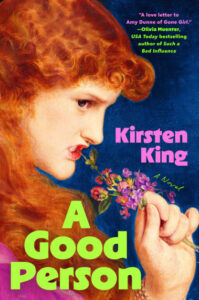
A Good Person, Kirsten King (March 31)

When Lillian places a hex on a guy who won’t lock her down, she doesn’t expect him to actually die. Her grieving process involves untangling his past, revealing hidden relationships, and harboring delusions about what the couple really was.

Only a Little While Here, María Ospina (March 31)

From the winner of Colombia’s National Novel Award, Only a Little While Here is an intimate look at the drama and journey of five animals: a dazzled songbird, orphaned porcupine, two dogs and a determined beetle. 

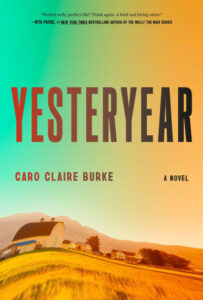
Yesteryear, Caro Claire Burke (April 7)

Playtime’s over: A tradwife influencer wakes up one morning to find herself trapped in the 1800s, where her life is no longer Instagrammable (or comfortable). Is it a cruel prank? Reality television gone wrong? Fantasy and expectation collide in this sharp satirical debut.

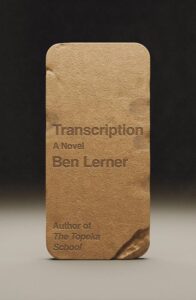
Transcription, Ben Lerner (April 7)

Poet and novelist Ben Lerner returns with Transcription, a strange and slim work where a narrator travels to interview, for the last time, his elderly mentor—but drops his phone in the sink and has no way to record the conversation.

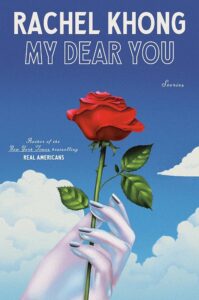
My Dear You, Rachel Khong (April 7)

From the author of Goodbye, Vitamin and Real Americans comes a thoughtful and masterful story collection about extraordinary choices, love, life, and the awkwardness of it all.

Superstars, Ann Scott (April 7)

An elegant and spiky novel that attracted a cult following when it was released in 2000, Ann Scott’s Superstars tracks one woman’s descent into the queer Parisian rave scene with the help of a hefty record label contract. 

American Spirits, Anna Dorn (April 14)

The mythic singer-songwriter Blue Velour has finally reached stardom with her newest album, a cheeky nod to a devoted fanbase sussing out her alleged relationship with her producer. She hires a superfan as a personal assistant, but when all three of them hole up in a cabin for the pandemic, tensions fly. Like if Misery happened to Lana Del Rey.

Famesick, Lena Dunham (April 14)

Lena Dunham needs no introduction, but the GIRLS writer, director and star returns with her second memoir after Not That Kind of Girl, a candid recollection of her life as a high-profile and often criticized talent and wonder.

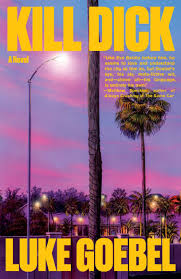
Kill Dick, Luke Goebel (April 14)

From the owner of the recently revived Tyrant Books and writer of films like Eileen and Causeway, Luke Goebel’s Kill Dick follows an NYU dropout headed to Los Angeles, where her life is derailed by a string of murderers her father, with ties to the opioid industry, might have been involved with.

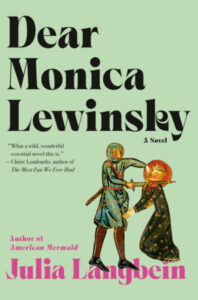
Dear Monica Lewinsky, Julia Langbein (April 14)

A woman regretting an affair with her professor during the summer of 1998 begins praying to Monica Lewinsky for guidance, like a secular saint—and is shocked to hear her respond.

Ultranatural, Candice Wuehle (April 14)

From the author of Monarch comes Ultranatural, a dizzying account of Lacey Love Bart’s rise to fame from an Appalachian teen to a controlled, monitored pop puppet. Think A24’s Pearl mixed with Britney Spears’ life saga.

Afternoon Hours of a Hermit, Patrick Cottrell (April 21)

From the author of Sorry to Disrupt the Peace comes Patrick Cottrell’s newest, where a trans man five years removed from publishing his autofictional novel, also titled Sorry to Disrupt the Peace, receives an unannounced envelope containing a photo of his deceased brother that provides inspiration for his metaphysical thriller.

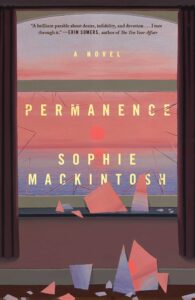
Permanence, Sophie Mackintosh (April 21)

Mackintosh is known for her speculative, dreamy scenarios, and Permanence, where a couple in love arrives in an unnamed town strangely designed to accommodate their partnership, doesn’t disappoint.

Squirming, Monika Ostrowska (April 21)

From the founder of Triangle House Literary comes a debut poetry collection about bodies, minds and in between. Squirming is a “primal meditation on embracing the erotic, challenging the complexities of womanhood, and bridging the chasm between self-awareness and external perception.”

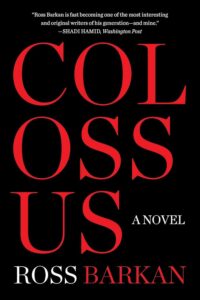
Colossus, Ross Barkan (April 28)

New York Magazine columnist and The Metropolitan Review editor Ross Barkan returns after Glass Century, last year’s novel. For fans of Philip Roth and Jonathan Franzen, Colossus follows a pastor whose perfect life landslides abruptly.

All Flesh, Ananda Devi (April 28)

Wondering why her family fattens her with feasts and her schoolmates bully her for her size, the narrator of All Flesh comes to the realization that she enveloped her twin sister in utero, and is now paying the price. A sharp study on bodies and consumption from one of Mauritius’ leading writers.

Binary Star, Sarah Gerard (May 5)

Memoirist and novelist Sarah Gerard’s Binary Star, her prescient 2015 saga of two young lovers traveling across the country bolstered by pills and trashy magazines, is being reissued with an introduction by Catherine Lacey.

GIRLS(®): Generation Z and the Commodification of Everything, Freya India (May 5)

The successful Substack newsletter of the same name is brought to life in GIRLS, Freya India’s debut essay collection exploring what happens when every bit of life is packaged and sold.

Mice 1961, Stacey Levine (May 5)

This republished Pulitzer Prize finalist from 2024 follows one pivotal day in the lives of two sisters, told from a Greek chorus of characters filtering through a neighborhood house party at the height of the cold war. 

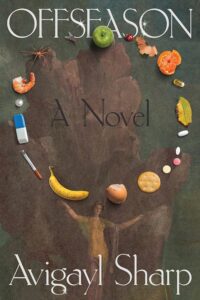
Offseason, Avigayl Sharp (May 5)

An irreverent and punchy debut novel from a Paris Review contributor, Offseason confronts generational Holocaust trauma, handsy male teachers, overbearing family members, all on the frigid seventh night of Hanukkah at a local bar.

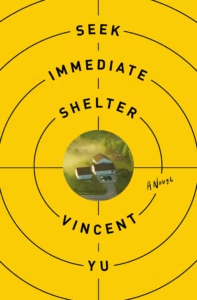
Seek Immediate Shelter, Vincent Yu (May 5)

A small Asian American community in Massachusetts is knocked off its axis when a missile threat turns out to be false. But with astonishing texts sent and declarations of love blurted out, its citizens now have to deal with the consequences of the actions they thought would be their last.

Make Me Better, Sarah Gailey (May 12)

For fans of Shirley Jackson and Ari Aster, Make Me Better follows Celia, who accepts an invite to an exclusive wellness retreat that promises healing through community. But of course, it’s not that simple. 

God Forgives, Brothers Don’t: The Long March of Military Education and the Making of American Manhood, Jasper Craven (May 19)

From the author of the recent Harper’s Magazine cover story on sports gambling, investigative reporter Jasper Craven’s first book tracks the dangerous manhood principle running through the American military, which has shaped notions of masculinity for decades.

Under the Perfect Sun: The San Diego Tourists Never See, Mike Davis, Kelly Mayhew, Jim Miller (May 19)

I was born in San Diego, so I’m up for any exploration that digs deeper into the sunny Southern California city, even its dark side. In three winding essays, Under the Perfect Sun offers a different look at the so-called “vacationland.”

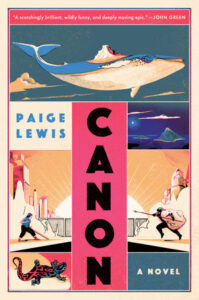
Canon, Paige Lewis (May 19)

In a fantastical and surprisingly grounded epic, two heroes fight for God’s attention, tracking down the Good Guys and the Bad Guys. Meta and narratively sharp, it might be one of the biggest books of the year.

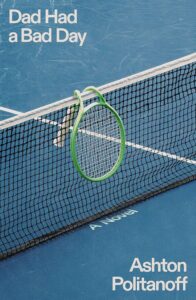
Dad Had a Bad Day, Ashton Politanoff (May 19)

Much has been said about men in literature, but what about pathetic men in literature? In Ashton Politanoff’s novel about middle-aged male friendship, a “sad dad” rediscovers his childhood passion for tennis and his resulting feelings when it doesn’t hit the same.

A Perfect Hand, Ayelet Waldman (May 19)

As detailed and captivating as its electric cover art, A Perfect Hand is a romance novel between a lady of the house and her clandestine maid. 

The Land and Its People, David Sedaris (May 26)

David Sedaris is actually my favorite author, so a new book from him is always a cause for celebration. The newest from the acclaimed writer merges the mordant humor of his earlier work with the macabre musings from old age that ran through Calypso and Happy-Go-Lucky.

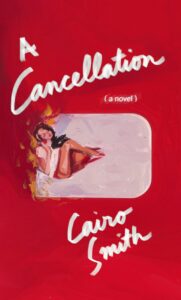
A Cancellation, Cairo Smith (May 30)

The newest novel from filmmaker and writer Cairo Smith follows Amanda Bannington, a successful vlogger, during one summer as she’s offered up as the San Fernando Valley’s next victim for public humiliation in 2023.

Netflix Review: The Dinosaurs

0

As someone who grew up enthused with dinosaurs in the 1990s and early aughts, nature documentaries about prehistoric life were an integral part of my childhood. I couldn’t even guess how many times my younger self watched BBC’s justly famous Walking With Dinosaurs (1999) or Pierre de Lespinois’s When Dinosaurs Roamed America (2001), both of which enchanted me with their insertion of computer-generated (and sometimes handcrafted) beasts into real-world locations, making it seem as though camera crews had traversed to ancient times. Intervening years saw me drifting from the genre, for a number of reasons: shifting interests, shows hampered by vexatious voiceover (e.g., Dinosaur Planet, narrated by an overperformative Christian Slater), and—I freely admit—my preference for anachronistic dinosaurs. On this last front I pin no blame on the science shows; their task is to depict ancient organisms according to the latest theories and research. It’s a personal bias, but I’ve always liked dinosaurs that have few to no feathers, protruding fangs, and cranial openings visible through their skin.

All that to say: I haven’t exactly kept up on the genre. However, a cold front this past Saturday left me sequestered indoors, and I found myself wandering over to Netflix to check out the new miniseries The Dinosaurs, from Amblin Documentaries and Silverback Films and executive-produced by Steven Spielberg. A decent amount of buzz has preceded this four-episode program, which follows the dinosaurs from their emergence to their extinction, and word of mouth seemed stronger than that for the Walking With Dinosaurs reboot that no one liked very much. I went in with a degree of optimism—and came out both mildly entertained and disappointed.

In what’s surely a delight for paleontology enthusiasts, The Dinosaurs shines the proverbial light on a variety of prehistoric species. Besides the usual suspects (Tyrannosaurus, Stegosaurus, etc.), the dramatis personae is populated by lesser-known taxa such as Volcanodon, Liliensternus, and Heterodontosaurus (the latter of which is amusingly portrayed as the squirrel’s spiritual ancestor: zipping around for pinecones and cramming them into pouch-like cheeks). There are also standout dramatic moments. Two heartbreaking scenes focus on herbivores struggling to feed on plants that have evolved to make foraging impossible. There’s a terrific hunting bit wherein a white-feathered tyrannosaurid uses its plumage to hide in a snowstorm. And the extinction finale is both cleverly foreshadowed and dramatically executed. Alas, these sequences, grand as they are, boil down to a few nice moments—in a series that otherwise settles for “good enough” and seems in too great a hurry to end.

Each episode is (expectedly) fifty minutes, and each (unexpectedly) attempts to cram multiple stories—set millions of years apart—into a single slot. Consequently, few stories receive sufficient breathing space, feeling more like clip shows to showcase prehistoric animals than an actual presentation of life in the ancient world, and the dinosaurs rarely develop into characters we can follow or care about. In many cases, they function like acts in a variety show: showing up to perform a trick or two and then disappearing to make room for the next attraction. Of no help is the show’s unfortunate habit of falling back on the same patterns. At least four times, a dinosaur manages to outrun or fend off a predator, only to be fatally ambushed seconds later. Twice we endure a beast “singing” to attract mates. (Morgan Freeman, as the narrator, receives the unenviable task of explaining, “It’s not bloodlust. It’s just plain lust.”) The filmmakers even insist on multiple iterations of close-ups and shadows teasing a monstrosity—only to arrive at something small, cute, and awkward. What’s familiar yet acceptable the first time around completely wears out its welcome by Round Three.

And cinematically, there’s not enough to make up for what’s missing. Some of the settings are quite picturesque—e.g., the shallows where a Spinosaurus fishes for sharks—while others are relentlessly drab and gray. Add to that: competent but never persuasive CGI models and Lorne Balfe’s score, which consistently fails to transcend adequacy. There’s nothing fatally wrong with The Dinosaurs; it’s a watchable enough program whose four parts can be digested in one sitting. At the same time, nothing about it makes for exemplary viewing. Paleontology fans will probably walk out pleased; casual viewers will discover something with which to pass a few hours. And that, I imagine, will be the extent of this show’s legacy. I knew in advance the charmingly outdated beasts that’d entertained me in youth would be absent, but I’d hoped for something with a grander sense of narrative and showmanship. A modern equivalent of Walking With Dinosaurs this is not.

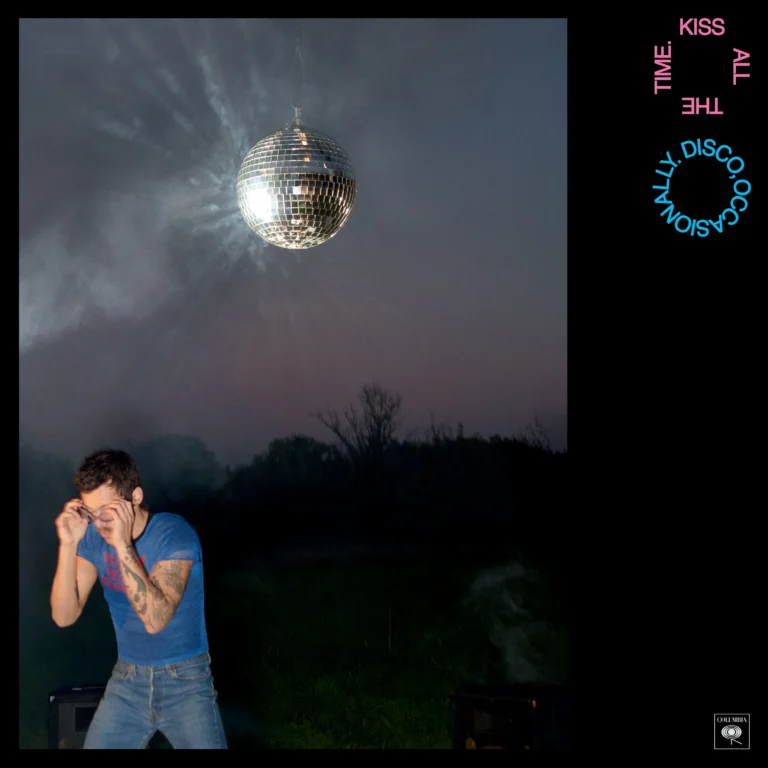
Album Review: Harry Styles, ‘Kiss All the Time. Disco, Occasionally.’

Between Harry Styles’ recent interviews with Apple Music and Runner’s World, a quote from the latter stands out: “I don’t even think I’m a creator; I’m just a recipient. I love to listen to music, I love to read books, but I’m just a reader, just a listener.” No, wait. Harry Styles wasn’t the one who said that. Haruki Murakami, in conversation with the pop star, did. Still, Styles – obviously adept at a few different musical instruments and an occasionally inspired pop songwriter – has never felt more like a recipient of other people’s music than he does on Kiss All the Time. Disco, Occasionally., tastefully recycling the sensibilities of a Matty Healy or Thom Yorke (whose The Smile collaborator Tom Skinner is featured on the album) while sidestepping any sense of personality, borrowed or not. Inevitably, you will find yourself a listener of these songs, though I doubt any of them will become as pervasive as the biggest hits from Styles’ previous albums. The sad thing is that you might also catch yourself wondering who made them: by the sound of it, a celebrity swimming, much less than running or even dancing, through the haze of an existential crisis murky enough for only the most devoted fans to project.


1. Aperture

“I’ve no more tricks up my sleeve,” Styles sings on only the second verse of the album’s opening track, a damning indictment of a lead single that hardly lifts itself up when the garden-variety chorus comes around – you can practically hear the “I guess” muttered after each repetition of “We belong together.” Upon release, it could plausibly be seen as a muted way of launching an album with some actual club influences by first teasing the afterparty haze. But as Styles keeps trying on different outfits, discovering some new tricks but conveying no tangible magic, ‘Aperture’ quickly fades from memory. Despite having listened to it a decent amount of times, I’m always surprised there’s a bridge, that it throws in another chorus, hammering the point home by hollowing itself out. 

2. American Girls

‘American Girls’ gets the vibe right: a mid-tempo song with shiny piano chords that evoke the loneliness of watching love radiate through other people’s lives while your own flashes by. But it’s a muddled song whose singalong chorus – actually the most memorable on the album – underlines not only how anonymous but unclear it is: Who are these friends, let alone their American girls, and to what extent is this a veiled criticism? Styles told Zane Lowe it’s “about watching them get married and there just is a magic when you find the right person that you want to be with but I think watching them do that and seeing that it doesn’t come without any risk.” Again, there’s certainly no magic on ‘American Girls’, but no suggestion of risk either. 

3. Ready, Steady, Go!

This song refutes claims of anonymity by mentioning someone named Leon, which somehow only makes whatever the situation is here more confounding. For the one song about infatuation on Kiss All the Time, there isn’t even the suggestion of kissing, only someone butterflying (ew) your belly and touching (gasp!) you goodnight. The exclamation point is somewhat warranted as the bassline has more pep in its step, but any kind of sensual urgency’s missing. 

4. Are You Listening Yet?

There’s a lot more of it on ‘Are You Listening Yet?’, the oldest song on the record and therefore energized rather than stifled by touring – or rather emerging the precise moment where weariness breeds sarcasm and arrogance; it’s almost distasteful, which is a compliment in the overwhelmingly respectable context of this album. Unlike a song like ‘Aperture’ that bores itself out, it pulls the rug out just when it knows you’re paying attention. You at least hope you get to listen to more music like it. 

5. Taste Back

Maybe the saddest thing about ‘Take Back’ is that the voice of Wolf Alice’s Ellie Rowsell is completely buried in the background. You can almost hear her belting in the final non-chorus, making Styles’ dry repetition of “Do you just need a little love?” all the more unpleasant. “Did you get your taste back?” he sings, as if ‘Are You Listening Yet?’ was too risque.

6. The Waiting Game

The emptiness makes itself known, if only at a point on the album where it can most easily be ignored. “You can romanticise your shortcomings, ignore your agency to stop/ Write a ballad with the details while skimming off the top,” he sings, the most emotionally intelligible he’s been so far. But the self-aware honesty is marred by an arrangement that’s split between acoustic instrumentation and an annoyingly squeaky synth. Styles may be talking about his life when he says that you can try “messing with your own design” and it still adds up to nothing, but he’s also betraying how vapid experimentation can yield him the same rewards. Why not actually change it up, then?

7. Season 2 Weight Loss

If the experimentation sounded more like this, the album might have had greater staying power; its sparkling synths and shapeshifting breakbeat at least faithful to their dance-punk influences rather than faintly echoing them. It’s almost the inverse of ‘The Waiting Game’; musically close to scintillating, lyrically way too abstract. “You want a piece or nothing at all,” he concludes; when it comes to the music industry, any piece is better than nothing, even if it approximates nothingness. 

8. Coming Up Roses

If ‘Coming Up Roses’ ends up being the album’s sleeper hit, a very plausible scenario, I wouldn’t be too mad. It’s the only point where the album’s understated facade leaves space for romantic earnestness, even if there’s nothing special or specific about the doomed affair in question. The orchestral break drives the song home, as if Styles’ words can only get him so far. I do find it funny, though, that the orchestral engineer is named James “Jez” Murphy and there’s no actual sign of LCD Soundsystem’s James Murphy, probably the album’s biggest inspiration, on any song.

9. Pop

I have no idea what the Crystal Castles is happening here beyond indulging in some kind of “squeaky clean fantasy,” but Styles himself did it better on ‘Cinema’. 

10. Dance No More

I do understand what the Jessie Ware is happening on ‘Dance No More’, and while no Harry Styles song needs the words “Respect your mother,” it is the most respectably infectious track on the album. If ‘Coming Up Roses’ is the sentimental ballad I wouldn’t mind hearing at the grocery store, ‘Dance No More’ is the jam I wouldn’t knock any DJ for using to warm up a crowd. 

11. Paint By Numbers

I just can’t find the words to describe this predictably penultimate, vaguely confessional acoustic tune. If only it was right there in the title. 

12. Carla’s Song

Only the third person to be mentioned by name on the album (assuming Katie’s not a slang term for a certain drug), Carla gets her own song, one that was supposedly vital to the heart of the record. A reminder of the transcendental power of music that nods to Simon & Garfunkel’s ‘Kathy’s Song’, the closer – like most of the album – is more caught up in the memory of musical magic, “melodies like the tide,” than creating something akin to it that’s capable of sweeping you away. Occasionally, perhaps.