Home Blog Page 1201

Sis Shares Matthew Herbert Remix of ‘Double Rapture’

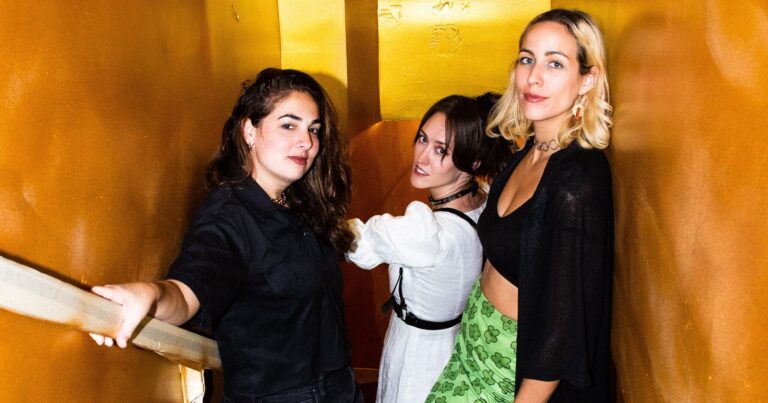
Jenny Gillespie Mason, aka Sis, has shared a remix of her single ‘Double Rapture’ by producer Matthew Herbert, who is known for his work with Radiohead and Björk among others. Listen to it below.

Mason said of the remix in a statement: “I wanted to work with Matthew Herbert to remix Double Rapture because I knew he would be able to take the romantic and tender essence of the song and stretch it into something even more cinematic and lush.”

‘Double Rapture’ appears on Sis’ latest EP Gnani, which came out in January. Check out our Artist Spotlight interview with Sis.

Artist Spotlight: Maria BC

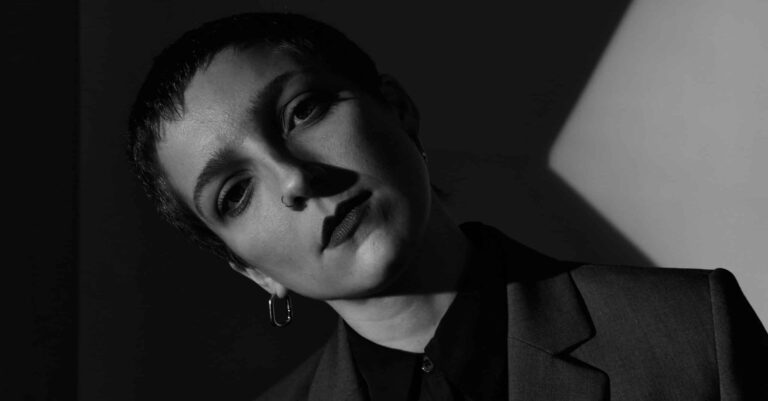
Maria BC treats music as both an unguarded space of intimacy and a tool for emotional discovery. Growing up, the Ohio-born, California-based artist, who was classically trained as a mezzo-soprano while their father played music in the church, came to associate singing with strong religious feeling – euphoria, adoration, forgiveness. Though this kind of faithful reverence is now absent from the hushed, contemplative atmosphere of the music they compose, it retains a quiet intensity as they explore, conjure, and transmute emotions and memories that are deeply rooted in the self and its interaction with the environment. Following their first release, last year’s Devil’s Rain EP, Maria BC has today issued their debut full-length, Hyaline, which presents these interconnected snapshots through sparse, mesmerizing arrangements and lyrics whose poetic resonance can be both evocative and abstract, untangling itself from personal experience. The result is at once haunting and inviting, a remarkable work of patience, trust, and care that revels in the magic of the moment but travels far beyond it.

We caught up with Maria BC for this edition of our Artist Spotlight interview series to talk about music as a source of comfort and darkness, their earliest musical memories, the ideas behind Hyaline, and more.


Talking about the making of your first EP, Devil’s Rain, you said that nothing about it was comforting, and that “music just seems necessary for whatever reason.” Has it always been that way for you? And does it feel different with Hyaline?

I still don’t think that my songwriting is comforting to me. I do hope that it brings comfort of some kind to other people. I think that writing songs offers me the opportunity to explore emotional spaces, modes of feeling that I kind of forbid myself otherwise. It allows me to say things that I feel like I can’t say in real life. And a lot of the songs on this record, I went to kind of a sinister place for them. [laughs] I don’t think I’m like evil in my real life, but I allowed myself to go to an evil place lyrically and in terms of the arrangements, the mood of the music. And that was there on Devil’s Rain for sure, but here it feels more intentional. On Devil’s Rain, on tracks like ‘The Deal’, for example, I wrote the song and afterward I was like, “Wow, that sounds so dark and sinister. I wonder if I’ll do that again.” And for this one, it felt more like I was consciously giving myself permission to go to that place. And so, with that in mind, it’s actually uncomfortable in some ways. It’s therapeutic in the sense that I can get some catharsis out of it or say something that I needed to say on an unconscious level, but it’s not soothing.

When you started making music or even just listening to music at an early age, was it something that brought you comfort? And was that feeling what led to you pursuing it later in life?

I think it was comforting. I remember starting to write songs as a way of keeping myself company. As a kid spending a lot of time alone, I would sing to myself, make up little stories in song. And in my adult life as well, I do have plenty of music that feels comfortable, that feels like being wrapped in a warm blanket or something. But it also tends to be music that at other times is uncomfortable, that is very dark or sad. I think I’ve always been attracted to that kind of music to some extent.

Could you share any fond memories that you have of connecting with music early on?

One that I share a lot is fond memories of my dad’s cassettes that he kept in his car. He had this collection of ‘70s trucker songs by this artist who actually died recently called C.W. McCall, and he had Andy Gibb. I just remember listening to that music in the car over and over and over again and getting to the point where I knew it so deeply that it felt like a natural extension of the paths that we would take driving. That was very important.

Also, I started singing in a focused way at a really early age. Singing at church in a spotlit kind of way – my church used a high school space and they used the theatre, like a big stage, and I would sing on it really often. And that was a way that I felt really… included, at the time? I don’t know, I guess a lot of people’s relationships with music start in church, and it just puts you in that place of associating ecstasy and really extreme emotions with music because you’re singing in a space where there are all these other people going through so much emotionally, cycling through grief and guilt, and then feelings of redemption and forgiveness all while you’re up there singing your song, and they’re often singing with you. I think that’s left its mark on my relationship to music in an indelible way, as it has for so many people.

You said that you would also spend a lot of time singing alone, making up stories. How did that feel different?

Yeah, it was more comforting in that context because there was no pressure on it. Whereas I would get really nervous before performances at church and elsewhere – I still get a lot of stage fright. But there was less reward, also. At the end of the performance, you get the relief from all of the nerves and your adrenaline is still pumping and you feel kind of high afterwards. But just singing to myself alone – it’s more just romantic and calming. It’s a very different place.

On the new album, ‘Betelgeuse’ is a song about a specific kind of loss, but it goes back to an experience you had in middle school when an astronomer said it was our only hope of seeing a star explode within our lifetimes. I was curious if learning that at the time had a strong effect on you, or if that was something that came later. Did it take time for you to think about the cosmic nature of that kind of destruction and compare it to something more human, like the desire for a certain kind of grief to be noticeable in a similar way?

I think a lot about how memory always surprises you. So often the things that you remember are things that in the moment didn’t seem that impactful; so much of life is just being surprised by things. And nevertheless, I do think that what filters up to the top of your memory, especially childhood memory, is of some significance. That’s all to say, no, I don’t think I was thinking about it all that deeply in seventh grade when that astronomer was speaking. But still, it was a memory that kept coming to the top of my mind for some reason. Especially when I would look at the stars at night, I wonder whether anything is going to explode. And that’s really one of the few things that I know about the stars, is from that one talk that this one astronomer gave so, so many years ago.

Both that song and ‘Keepsaker’ deal with that theme of being haunted by memories, while another track, ‘The Big Train, adopts the perspective of the father figure who abandons his family on ‘Betelgeuse’. What appeals to you about approaching this theme through different characters and perspectives?

I love music that is written in kind of a confessional mode or is highly autobiographical. I’ve listened to a lot of music like that. But for my own work, I am not really interested in drawing from actual life. Of course, I always want my lyrics to be describing some sort of truth, like an emotional truth, but I’m not interested in having a song that’s about something that happened to me. So what ends up happening is I write songs from the perspective of these characters that embody some set of emotions that I need to process. And sometimes it’s highly accidental – I write a verse and I’m like, where’s this going? And the story, the heart of the song, comes after; I interpret it after the fact.

In relation to that, you’ve mentioned that the album was inspired by the idea of the dreamer and the watcher archetypes, and that one way of embodying the latter, for you, is through music. Do you have any other ways of practicing that sort of presence?

Totally, yeah. It’s funny, I think interpreting dreams is one way of doing that. That’s taking the term dreamer literally, which is not what Louise Gluck was really intending. But in the same way I think sometimes my music or my lyrics speak to me after the fact of them being written, dreams, I believe, have something to tell you about what’s going on in your inner world and the outer world that you are recognising at a level that is pre-verbal. So yeah, I’m trying to do more dream journaling. I love talking to other people about their dreams. I like writing, I like reading. I’m trying to learn more about birds and plants, learning more how to be in the place that I live in.

What do you like about hearing other people’s dreams? I feel like that’s quite different from dream journaling, where you’re connecting more with your own self.

Well, it’s a way of getting intimate with people really quickly. [laughs] Sometimes to feel intimate with people you need it to be mediated by something else, and talking about dreams is one way of doing that. And it really interests me how people shared dreams in an eerie and accidental way. Before I knew that it was a common dream, for example, I had the recurring dream of all my teeth falling out. And I told that to someone and they were like, “No, I think everyone has that dream.” And it’s like, where does that come from? It’s not really rooted in language. I was reading this essay where someone was saying that since the onset of the pandemic, there’s been, like, endemic dreaming in the US, of people having nightmares about bugs, like locust infestation and stuff like that, because another way of saying plague or illness is “bug”, it’s like a pun. But that doesn’t extend, really, to like your teeth falling out. That’s not rooted in language. So where is it coming from?

And my friend did this – sorry, I could talk about this forever – but my friend was part of this group in Vermont where she lives. She was going to meetings with this group of, like, social dreamers, and they would all gather in a circle and share their dreams and interpret them in a group context. And very quickly, they found over the course of these meetings that they were all starting to dream about the same things. And it’s a very common phenomenon that people within each other’s orbits will have the same imagery in their dreams. And not something that they’ve all seen together or something, but very random things will appear in patterns. It’s so interesting. That kind of stuff just interests me – I don’t know why, but it does.

You’ve said that, when you were making the song ‘April’, you were listening to artists like FKA Twigs and Bonnie Prince Billy at the time. I don’t know how much you think about genre in those terms, but how do you feel like alternative pop and folk music intersect, whether in your listening habits or during the music-making process? What do you think these artists have in common?

I don’t think what attracts me or what inspires me in music has to do with genre so much as mood. Generally, I’m not that interested in music that doesn’t have some sort of darkness to it. And what, to my mind, FKA twigs and Bonnie share, if they share anything, is intense darkness, and, at times, just abject nihilism. [laughs] But also, their music respectively is rife with sexual energy. You know, like Bonnie ‘Prince’ Billy has that one song where’s he like, “Death to everyone is gonna come/ It makes hosing much more fun.” And then, FKA twigs has this song about wanting to be fucked while she’s staring at the sun. A lot of her songs are like that. There’s like a death drive, I guess is really what I’m getting at, in both their music. And that’s what interests me, really, more than I’m inspired by the instrumentation or something like that’s genre-defining.

I wanted to bring up a line from ‘Betelgeuse’ that I’ve been fixating on quite a bit: “I can’t tell you/ If loving alone will be/ Anything that becomes.” I hear the phrase “loving alone” a few different ways: only loving, loving aloneness, and loving in your aloneness. Is there any meaning to it that resonates with you the most?

I’m so happy that you picked out that line because when I play ‘Betelgeuse’ live, I’ve been slightly changing that line almost every time. Singing it sometimes as it appears on the album; sometimes I say “love on its own” instead. Because the meaning, for me, I think does change all the time. There’s the verse that comes before it that’s, “All the good people so nice in their loving.” So when it moves to the line, “I can’t tell you if loving alone will be anything that becomes,” I think actually what I was thinking about when I was writing it was how love means different things for different people. And what to some people is a satisfactory level of care, or kind of care, isn’t what I would call love. So, I guess I’m kind of interrogating, is just love enough to actually care for people if it’s defined in such an ambiguous way? And for some people, it’s bound up in so much inherited knowledge that I think is worth exploding, if that makes sense.

I understand there may not be a response to this, but has something helped you find your own definition of love that works for you in a meaningful way?

I think it changes all the time and it changes with different people, but… Oh my god, this is such a good question. What is love? Baby don’t hurt me! [laughter] Um, I just think it’s being sensitive to people and attentive to people and their needs, and being available to others teaching you how to care for them. For so many people, that’s not intuitive. But for that reason, I think if there is some sort of encompassing definition of love, it would be just being open to constantly reinterpreting it.

You were talking before about music and solitude and those two being bound for you. Is there a recent moment that you can talk about where music brought you joy in a social context?

Oh, totally. I love live music and going to concerts, standing there with all these sweaty people, your knees are kinda hurting and everyone’s uncomfortable, people are crying. I love that. [laughs] And I love dance music, too. Dancing with my friends is such a joyful activity. And over the past year or so, I’ve been playing music and working on music with other people more often I think than I ever have. And I felt so much less precious about exposing myself, exposing my creative process, and exposing my lack of – I’ve been playing with a band and practicing with them, and the first few times we practiced, I could barely sing properly because I was just so nervous to show it all happening in real time. But I think I’ve broken down a lot of those barriers and I’m so grateful for that, because it is a very different thing, to make music with people, but it’s also a really wonderful feeling.

Does breaking those barriers reshape your experience of writing and playing music alone? Does it make you more comfortable exposing certain parts of yourself to yourself?

Yeah, it’s rebuilt my confidence in some ways. I think I had to risk exposing myself as a fraud in order to realize, actually, my process is legitimate. So, then – following a bad practice or sending my friend a melody that I had written for their song or something, hearing their feedback – then I can go back to my private space with my guitar and feel like, actually, yeah, I kind of know what I’m doing. Because otherwise, if you spend too much time alone with your own work, you can get really paranoid about it and start to not hear it right, just not know whether it’s good. But taking breaks from that is healthy.

Do you feel like that realization started to happen while you were recording this album, or is it more now that you’re practicing these songs with a band? And how do you think you might channel that confidence going into the future?

Hyaline was kind of the beginning of my inviting other people into my little music world. Because whereas on Devil’s Train I did everything myself, on Hyaline I did 99% of things, but I invited a friend to record some drum samples for me. And my friend, Nell Sather, who has the best voice, she sings on the songs ‘Hyaline’ and ‘April’. My dad recorded some organ samples for me at his church. So there were other people involved in the recording process, and that felt very new to me. And then at the end of making Hyaline, I started practicing songs with a band of two other people in preparation for SXSW. And that was good because at that point, I had felt so sick of my own arrangements and heard so many sounds with myself that it was cool to bring it to these two other people and be like, “Don’t listen to the recordings, just do the arrangement that you want to do and then we’ll work from there.” And it just made the song sound so fresh to my ears. That was awesome.

But moving forward, I don’t anticipate songwriting with a band in mind. I think I’m going to continue to do most of the things on my own. I like having that kind of control, I guess. [laughs] But I’m going to also write knowing that there is always the possibility of me bringing other people into it for a live performance or something.


This interview has been edited and condensed for clarity and length.

Maria BC’s Hyaline is out now via Father/Daughter (US) and Fear of Missing Out Records (UK).

Bruce Hornsby and Danielle Haim Share Video for New Song ‘Days Ahead’

Bruce Hornsby and HAIM’s Danielle Haim have collaborated on the new song ‘Days Ahead’, which is lifted from Hornsby’s just-released album ’Flicted. The track arrives with an accompanying music video directed and filmed by Hornsby himself during the pandemic. Watch and listen below.

Hornsby recorded his new album with producer Ariel Rechtshaid and guitarist Blake Mills. The follow-up to 2020’s Non-Secure Connection includes the previously shared single ‘Sidelines’, featuring Vampire Weekend’s Ezra Koenig, as well as a cover of Chuck Berry’s ‘Too Much Monkey Business’.

Chance the Rapper Releases Video for New Song ‘A Bar About a Bar’

Chance the Rapper has shared a new song and video that’s billed as an interdisciplinary art piece. It’s called ‘A Bar About a Bar’, and it follows ‘Child of God’, a collaboration with Gabonese painter Naïla Opiangah that also featured Moses Sumney. In the visual for ‘A Bar About a Bar’, Chance and Vic Mensa can be seen doing writing exercises while Nikko Washington paints the single’s cover in the background. Check it out below.

Washington’s artwork was unveiled at the Art Institute of Chicago on May 25 and will remain on exhibit through this weekend. According to press materials, it was inspired by “Abar, the First Black Superman’s unorthodox, Afro-futuristic, and surrealist depiction of racial inequality, racial integration, and classism in the suburbs of white America.”

Benefits for Vip Program Players at Casiplay Casino

You arrive at Casiplay’s site with a visual bang. The outstanding graphic design heralds a new age for online gambling sites. Our Casiplay review shows that this iGaming platform is more than just particularly beautiful – it also stands out due to its state-of-the-art VIP program for UK players. We also advise you to pay attention to online casinos that accept credit cards UK.

Behind Casiplay is the experienced Aspire Global International Limited, which not only received the license from Malta for Casiplay, but also from the UK. 

The online casino holds a decent welcome bonus for new customers and a hefty multi-level VIP program for experienced and persevering players. The advantages of Casiplay at a glance, before jumping into the VIP program:

  • Top graphic design
  • Large game selection
  • VIP Club with 6 ranks
  • High-quality gaming software
  • Absolute transparency and security
  • Very professional and friendly customer support

Since its release in December 2018, Casiplay has made a name for itself, especially because the operator knew exactly what expert players were looking for. 

The trick was, that even after the welcome bonus, players can take home one or two other rewards in the regular promotions, and then a lot as VIP players. However, in the non-VIP section, the special promotions are always short-term and alternate regularly.

On top of that, there are a lot of weekly bonus promotions like one called Mission Possible and another one where you can use free spins for one minute.

On weekends, Casiplay also likes to offer no deposit bonuses for their new players. But, let’s dig into the VIP program and what it offers players in 2022.

The Benefits of the VIP Program for Players at Casiplay

The VIP ranks are divided into different levels, depending on your wagers and how loyal you are towards the iGaming site. You work your way up through ranks to claim smaller prizes such as free spins or bonus codes, and then the big ones like cashback, no deposit bonuses, cash bonuses, and even some without wagering requirements.

Therefore, with the VIP program, Casiplay Casino has landed its biggest hit so far. The VIP Club is particularly attractive for experienced and knowledgeable players, as it not only consists of ten ranks to reach but also unlocks further bonuses and exclusive winnings with each rank.

By playing persistently, you’ll reach the first level in the VIP Club and from now on you can call yourself a Bronze Count. It’s worth continuing to play, because the Silver Duke, Golden Prince, and VIP Platinum Duke rank follow.

You reach each status by collecting points. But wait, that was only four ranks! That’s right. Platinum VIP and VIP Prestige Master Royal can only be achieved by personal invitation from the provider.

For each rank, you get exclusive free spins on Sundays and receive your requested payouts faster than players who are not members of the VIP Club. The only thing you have to do is to check your status after your Casiplay Casino login and wait for the goodies to come to you.

WOOZE Release New Single ‘Bittersweet Timpani’

WOOZE – the London duo of Jamie She and Theo Spark – have unveiled a new single titled ‘Bittersweet Timpani’. Out now via Young Poet, it follows the band’s 2021 EP Get Me to a Nunnery. Give it a listen below.

In a statement, WOOZE described ‘Bittersweet Timpani’ as “a song about walking home alone, dejected and rejected. We thought the pitiful, pity-party lyrics would juxtapose nicely with the muscular glam-rock bravado of the music.”

PRISMA Unveil Video for New Song ‘Drive’

PRISMA – the Danish sister duo of Frida and Sirid Møl Kristensen – have released a new song called ‘Drive’. Following their 2021 EP Inside Out, the track arrives with an accompanying visual, which you can check out below.

“We have tried to create a sound universe where you as a listener get the feeling of driving fast,” the duo said of the single in a press release. “The song provides a very concrete description of an exciting car ride, but we also want to make room for the listener’s interpretation of the word ‘Drive’. It can be your personal drive, a work drive, etc. This song is a tribute to all the people who go out there in their everyday lives and chase their dreams; a tribute to the side roads; a tribute to the journey.”

Martha Return With Video for New Single ‘Please Don’t Take Me Back’

Durham pop-punk outfit Martha have returned with a new single called ‘Please Don’t Take Me Back’. It arrives today alongside the announcement of a 7” that will be released via Specialist Subject on June 24, featuring a cover of Allo Darlin’s ‘My Heart is a Drummer’ as the B-side. Check out the song’s accompanying video, directed by Sonny Malhotra, below.

Talking about ‘Please Don’t Take Me Back’, the band said in a statement: “The past was absolutely terrible. Don’t get us wrong, the present is also absolutely terrible, but that almost instantly becomes the past anyway, so we can quickly file it under ‘the past’. The really good news is that the future appears to have been totally cancelled by the loathsome politicians, oligarchs and CEOs hell bent on destroying the planet and all life on it, so we probably won’t have to put up with this garbage for much longer anyway. Please don’t take me back.”

They added of the video: “In a genuinely terrifying twist of fate, just before we were due to shoot the video, [band member] Daniel’s partner Steph unexpectedly went into labour a whole seven and a half weeks before her official due date. Daniel therefore does not appear in the video. If you look very closely you might see how low-key terrified the rest of us look, which sort of fits the tone of the song. Austin Ellis Bartle was born on the 21/10/21 and after a slightly bumpy start, is now a healthy, happy little fella.”

Martha released their third album, Love Keeps Kicking, back in 2019. It followed 2016’s Blisters in the Pit of my Heart and the band’s 2014 debut Courting Strong.

Depeche Mode’s Andy Fletcher Dead at 60

Andy Fletcher, founding member and keyboardist of Depeche Mode, has died at the age of 60. “Fletch had a true heart of gold and was always there when you needed support, a lively conversation, a good laugh, or a cold pint,” the band wrote in a statement. “Our hearts are with his family, and we ask that you keep them in your thoughts and respect their privacy in this difficult time.” No cause of death has been provided at this time.

Fletcher was born in 1961 in Nottingham, England, and his family moved to Basildon when he was a child. There, he met future Depeche Mode founding member Vince Clarke, with whom he formed a band called No Romance in China. After meeting Martin Gore, they formed a different group named Composition of Sound, changing their name to Depeche Mode in 1980 with the addition of Dave Gahan. Though Clarke departed the band following the release of their 1981 debut Speak & Spell, Fletcher remained an active member throughout their entire career, which spans 14 studio albums. Depeche Mode’s most recent LP was 2017’s Spirit.

In 2002, Fletcher launched his own record label, a Mute Records imprint called Toast Hawaii. In addition to his tenure with the band, he also had a career as a DJ. In 2020, Fletcher was inducted into the Rock and Roll Hall of Fame as a member of Depeche Mode.

“We’re saddened and shocked that Andy Fletcher of Depeche Mode has died,” Pet Shop wrote on Twitter. “Fletch was a warm, friendly and funny person who loved electronic music and could also give sensible advice about the music business.”

Lol Tolhurst, drummer with The Cure, also paid tribute to the late keyboardist online, writing: “I knew Andy and considered him a friend. We crossed many of the same pathways as younger men. My heart goes out to his family, bandmates, and DM fans. RIP Fletch.”

Albums Out Today: Wilco, Maria BC, Just Mustard, Liam Gallagher, and More

In this segment, we showcase the most notable albums out each week. Here are the albums out on May 27, 2022:


Wilco, Cruel Country

Wilco have released their latest album, a double LP called Cruel Country. Spanning 21 tracks, the follow-up to 2019’s Ode to Joy is mostly comprised of live takes tracked at the Loft in Chicago – the first time the band has recorded live together in the same room since 2007’s Sky Blue Sky. “There have been elements of Country music in everything we’ve ever done,” Jeff Tweedy said in a statement. “We’ve never been particularly comfortable with accepting that definition, the idea that I was making country music. But now, having been around the block a few times, we’re finding it exhilarating to free ourselves within the form, and embrace the simple limitation of calling the music we’re making Country.” The singles ‘Falling Apart (Right Now)’ and ‘Tired of Taking it Out on You’ preceded the record.


Maria BC, Hyaline

Hyaline, the debut album by Ohio-born, Oakland, CA-based artist Maria BC, is out now via Father/Daughter (US) and Fear of Missing Out Records (UK). Following their debut EP Devil’s Rain, Maria BC recorded the album across their untreated apartment while living in Brooklyn, using tracks recorded directly into their phone and audio samples collected over the years alongside ethereal guitars and minimal percussion. The record features the previously unveiled tracks ‘Betelguese’, ‘The Only Thing’, and ‘Good Before’. “Let the world wash over you,” Maria BC said in press materials, “rather than try to pin it to one single thing.”


Just Mustard, Heart Under

Just Mustard have followed up their 2018 debut Wednesday with a new album and their first for Partisan Records, Heart Under. The record was produced by the band and mixed by David Wrench, and its title is taken from the lyric “the heart under its foot” that appears on the track ‘Sore’. “This album felt very blue to us,” vocalist Katie Ball explained in a statement. “There was sadness and sorrow in the album, and it felt like being underwater and under something very heavy. We let that influence the music, but it wasn’t a decision – it just naturally happened that way.” Ahead of the album’s release, Just Mustard shared the singles ‘Seed’, ‘Still’, ‘I Am You’, and ‘Mirrors’.


Liam Gallagher, C’mon You Know

Liam Gallagher has issued his third solo album, C’mon You Know, via Warner Records. The follow-up to 2019’s Why Me? Why Not was previewed by the singles ‘Better Days’, the Dave Grohl-assisted ‘Everything’s Electric’,vand the title track. It was produced by Andrew Wyatt and features contributions from Vampire Weekend’s Ezra Koenig and Nick Zinner of Yeah Yeah Yeahs. “It’s a bit peculiar in places, which is good: 80 per cent madness and 20 per cent classic,” Gallagher told The Sunday Times. “If you’re going to start doing stuff like that on your third album, it helps if there’s a bit of Covid about. Because if it doesn’t take off, and people go, ‘I’m not sure about this, it’s a bit weird,’ we can blame it on the virus and go back to the classic stuff.”


Dehd, Blue Skies

Dehd have dropped their latest LP, Blue Skies, via Fat Possum. The follow-up to 2020’s Flower of Devotion includes the previously shared singles ‘Window’, ‘Stars’, and ‘Bad Love’. To bring their vision to life, the band worked with mixing engineer Craig Silvey (The Rolling Stones, The National, Arcade Fire) and mastering engineer Heba Kadry (Slowdive, Bjork, Cate Le Bon) for the first time. “The record got more instrumentally complex, but there aren’t a million different parts going on,” singer/guitarist Jason Balla told SPIN of the process behind the LP. “Everything is built to add texture and support what’s happening in the vocals and the emotions that are going on there.”


Rosie Carney, i wanna feel happy

Rosie Carney has returned with her sophomore album, i wanna feel happy, out today via Color Study. The 11-track LP follows the London singer-songwriter’s 2019 debut Bare as well as her full-length cover of Radiohead’s The Bends, which came out in 2020. “Once I started playing around with The Bends songs, I realised I was pretty capable of taking my music in whichever direction I wanted to,” Carney explained in press materials. “I’ve always been a fan of shoegaze, lofi, indie and classic rock music, I just didn’t think it was possible to combine those sounds with my own music. Besides Radiohead I listened to a lot of Big Thief, FKA Twigs, Foglake, Slow Dive, David Bowie to name a few while I was making my demos for this album.”


Companion, Second Day of Spring

Companion – the Fort Collins, Colorado-based twin sister duo of Sophia and Jo Babb – have unveiled their debut full-length, Second Day of Spring. The 10-track record includes the promotional singles ‘How Could I Have Known’, ’23rd Street’, ‘Snowbank’, and ‘If I Were A Ghost’. Drawing inspiration from the likes of Gillian Welch, Alison Krauss, and Samantha Crain, the duo recorded the album in a Colorado barn with an all-female team. “It’s been 10 years since our dad died, and it’s taken 10 years for us to get to this point where we feel like trusting,” they commented in press materials. “We don’t feel drawn toward chaos or constant darkness, whether it was self-manufactured darkness or just bad luck. We both feel better. We’re not unhappy every day anymore. And this album is like that next step toward this new phase of life.”


Stars, From Capelton Hill

Stars are back with their first album in five years. Following There Is No Love in Fluorescent LightFrom Capelton Hill is out now via Last Gang Records and features the previously shared tracks ‘Pretenders’, ‘Snowy Owl’, ‘Build a Fire’, ‘Patterns’, and ‘Capelton Hill’. “I guess what ‘From Capelton Hill’ means to me is from memory, from the past, from a place that seems permanent but isn’t, and I think that that sense of impermanence is a big part of what’s in the record,” co-vocalist Torquil Campbell explained in a press release. “Capelton Hill is a place where things in my mind, in my life, they’ve never changed. And yet it will go.” Vocalist Amy Millan added: “This band has always been us trying to navigate what it means to be inside a life that is going to end. And we’re getting closer.”


Other albums out today:

Yama Warashi, Crispy Moon; Def Leppard, Diamond Star Halos; SEVENTEEN, Face the Sun; Kaitlyn Aurelia Smith & Emile Mosseri, I Could Be Your Dog / I Could Be Your Moon; HAAi, Baby, We’re Ascending; Slang, Cockroach; 700 Bliss, Nothing to Declare; Bruce Hornsby, ‘Flicted; First Hate, Cotton Candy; Murkage Dave, The City Needs a Hero; Total Slacker, ExtraLife; Your Old Droog, Yod Stewart; Steve Earle & The Dukes, Jerry Jeff; Alfie Templeman, Mellow Moon; Melissa Weikart, Here, There; Stacks, Love and Language; ELLES, A Celebration of the Euphoria of Life; CTM, Babygirl; VHOOR, Baile & Bass.