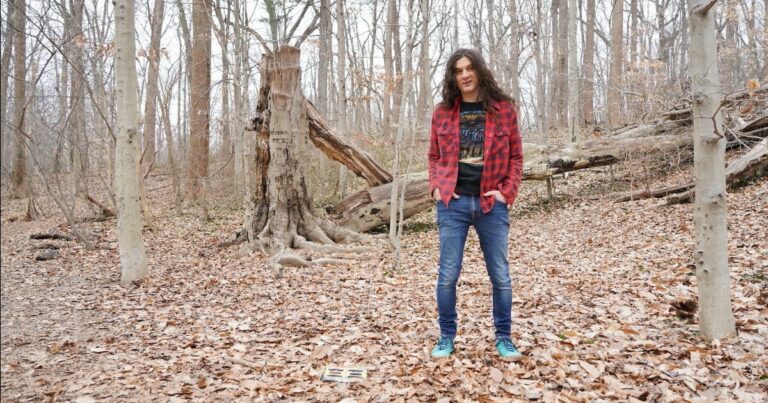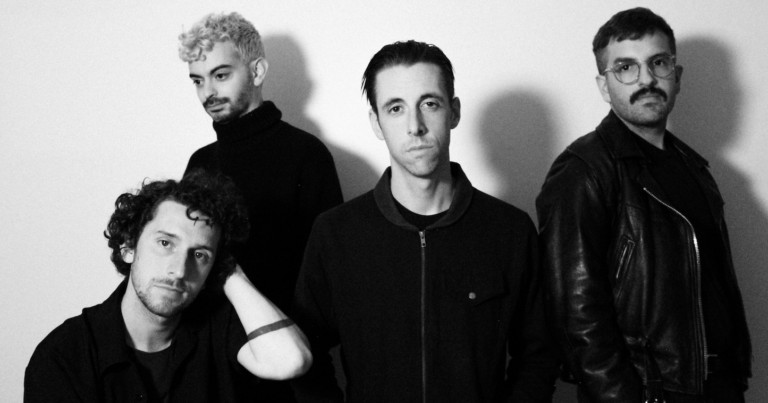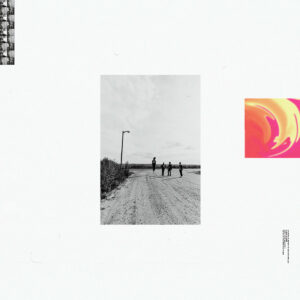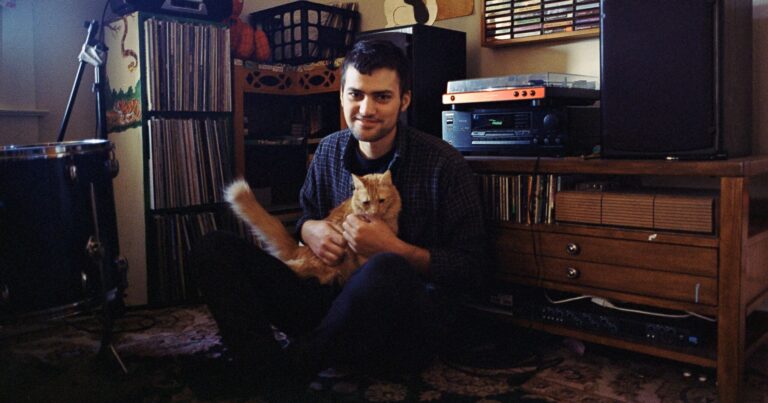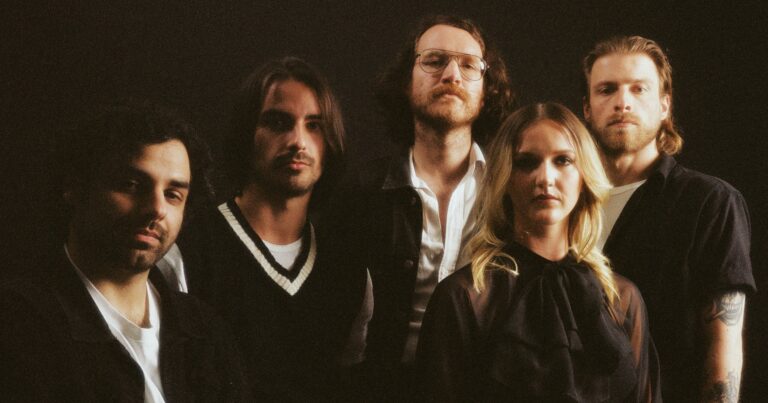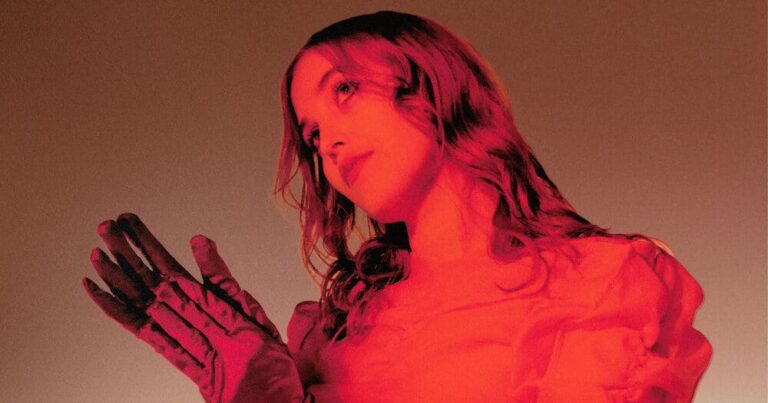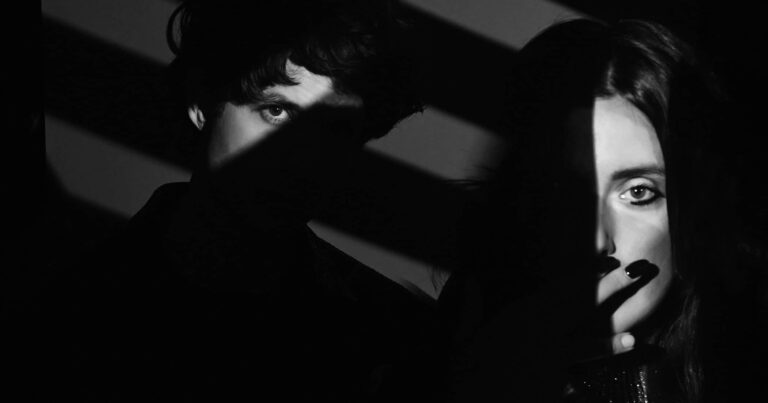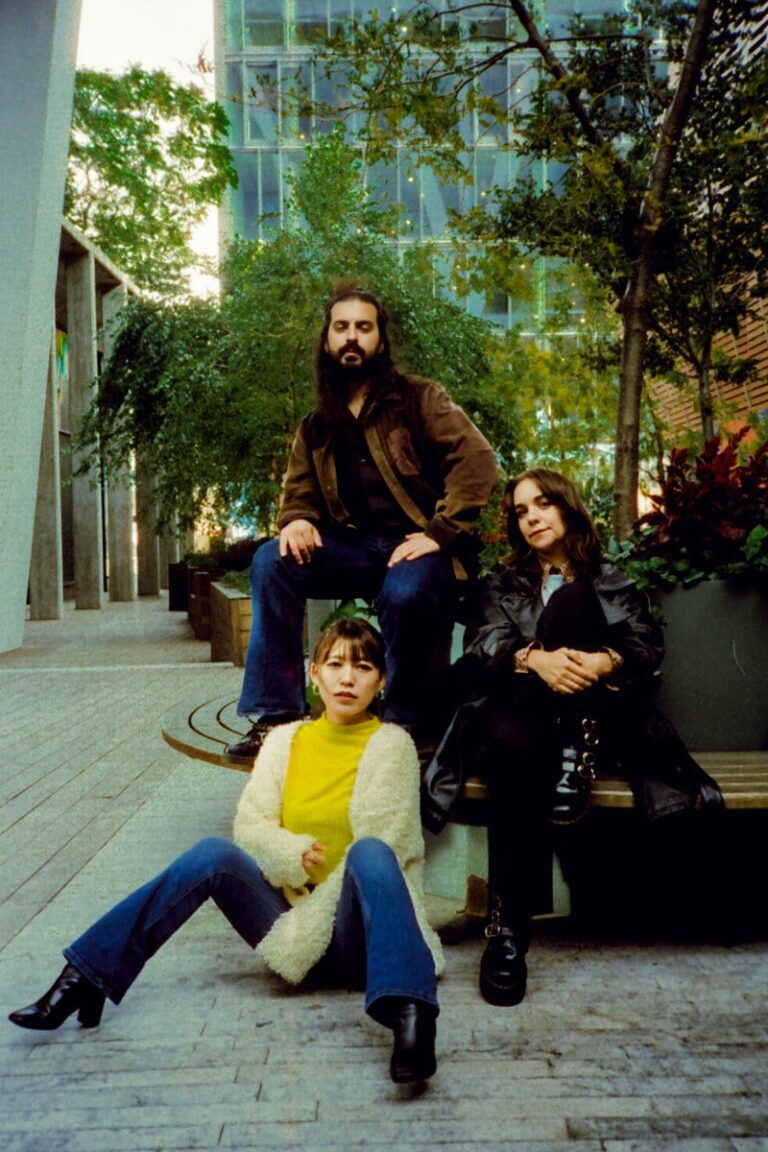
Dropper is the project led by Brooklyn multi-instrumentalist Andrea Scanniello, a veteran of the NYC indie rock scene who has played in bands like High Waisted, Stuyedeyed, TVOD, and Russian Baths. Dropper finds her stepping into the role of primary songwriter and vocalist for the first time, joined by longtime collaborators Jono Bernstein, Yukary Morishima, and her brother Larry Scanniello. She wrote the band’s debut album, Don’t Talk to Me, while working odd service industry jobs, including spraying bowling shoes at the local lanes and dealing with drunk strangers night after night. The grueling reality of just trying to get by is a focal point of the writing as much it provides a space for Scaniello to reflect on broken friendships and past relationships, lending the record a personal as well as a universal kind of resonance. Produced by Andrija Tokic, Don’t Talk to Me is packed with driving, anthemic songs that draw from garage rock, psych, and country to make regrettable situations sound slightly more bearable. “I’ve lived so many lives in so little time/ I feel like I am losing my mind/ Is this what it means to be living the dream?” Scanniello asks on ‘Waste of Time’, drained but not quite defeated: “Guess I’ll take it.”
We caught up with Dropper for this edition of our Artist Spotlight interview series to talk about the origins of the project, the making of their debut album, and more.
Andrea, you’ve performed in many bands before, but this project is sort of your brainchild. How did the idea for Dropper start to form, and when did it feel like a reality for you?
Andrea Scanniello: Around 2018, I started writing songs that eventually became the Dropper songs. I’d just left this band I’d been playing in for a long time and started playing in another band with Jono, where he was playing drums and I was playing bass. He was one of the first people I showed the songs to because I had never had a project that I was the primary songwriter, so I was very shy and nervous. I’m embarrassed by everything, but it’s fine. So I showed Jono and he’s like, “Let’s start working on them.” ‘Drive Thru Jesus’ was the first song, which I think is apparent because it sounds more like the band that I had stopped playing in than the rest of the record, which has over time formed into I think our own sound.
Jono and Yukary, what stood out to you about these songs or even the idea of this project? What excited you about it?
Jono Bernstein: I’ll let Yukary speak first because I don’t want to just go off on a thing.
Yukary Morishima: I had just moved from Japan and was looking for a band to play in, and me and Andrea met at some point – obviously, she’s a great bassist, and she asked me to play bass. It was special for me and I was so excited to play with them. I used to play noise music, so everything was very new to me. [laughs] I’m still learning from them.
JB: I hadn’t played drums for a long time. I grew up playing drums and I was a few years into it when I met Andrea. I kind of just was playing what was in front of me, I was really happy to play something that I could put my touch on that wasn’t something genre-specific. You could tell that we were on the way to making our own sound that kind of lived in this place between indie rock and alternative and psych and was actually pulling from our influences of the music we liked to listen to. And I think that the chemistry that we also have together lent itself to just having a really good time. It just felt natural. And I think when you have to give yourself to the art that you’re making, especially at this point in our lives, if we’re not having a good time doing it, it just didn’t make sense. It just feels really good to be making music that you also like – we’re only probably just now sick of listening to some of it [Andrea laughs], but it has never been like that before. It’s only getting to that point because we’ve been listening to the songs for a few years now.
That’s understandable, I hope it’s still exciting to see how people respond to it. In the press materials, you’ve offered this very handy list of the type of people who you consider would be your target audience, including “those with seasonal allergies” and “bisexuals with crumbs in their bed.” I believe those are kind of self-explanatory, but I was curious about another point, which is an “optimistic pessimist.” I was wondering what that means for you, and whether you each identify with that description.
AS: I see myself that way at least, because I don’t know, I’m a cranky bitch. I really am. I feel like I will fall into these moods, where I’m just, like, “Everything is stupid.” I’m so pissed and everything, but at the end of the day, I’m always like, “Everything’s chill. It’s gonna be fine.” I think it’s just a matter of having those waves in life, like peaks and valleys, and acknowledging that they both exist. You can be both at the same time, both optimistic and pessimist, and not letting the pessimistic side overrule the optimistic side. At least to me.
How do you deal with that in a sort of group context?
AS: I don’t know. We just play music and then it’s better, usually. [laughs]
JB: I think we just have a realistic approach to things. You know, the normal stuff gets you down and you just kind of deal with it and we laugh about it. It’s funny, we have like a revolving door of a group thread where there’s different people that we’re talking to in the moment, but usually Yukary and Andrea and myself are always talking. Lawrence, who is Andrea’s brother, is also in the band but he lives in LA, so it’s sometimes hard to bring him in on everything going on. Obviously he’s one of the songwriters, but because he doesn’t live here and he’s in a slightly different time zone, it’s like, you know, he’s just waking up right now and we’ve been up for a few hours. But especially in this process, just communicating and the dynamic of everybody and the BS that we deal with – we were having a conversation the other day about a show coming up, and I was just like, “I’m sorry, I’m being really salty about things right now. I’ll stop my crap.” And no one’s mad at me, because everyone gets it. You know, people can be kind of annoying and as long as you don’t harp on something for too long, we’re just kind of like, “Alright, let’s get back to the core of what we were talking about.”
AS: I feel like that’s just a New York Northeast attitude, you just have to say it out loud. You just have to be pissed off and bitch about shit. You have to complain and then you let it go, and it’s gone.
I do feel maybe that’s part of the point of the music, too, to unleash whatever negativity comes up. A lot of the album revolves around this exhaustion of years of working in the service industry, which comes through on the single ‘Memoirs of Working in a Bowling Alley’. But on a song like ‘Waste of Time’, you also address the frustrations of trying to make it in music. When it comes to music, what makes it worth it to you?
AS: I’ve gone back and forth about this because there have been times in my life where I’m like, “Why am I doing this? Am I doing this because I like it or am I doing this because I feel like it is what I’m good at because I’ve been doing it for so long, kind of?” But at the end of the day, I’ve realized especially over the course of this year now that the pandemic – and not that it’s over, but we’re coming out of that really depressive hole that we’re in for a long time – I really like making something that did not exist before. This idea of creating something entirely new is just so exciting to me. Right now we’re working on demos, and I have a list of all these ideas for the songs that we’re working on, and even if we end up not using it, it’s just still really fun. What do you guys think?
JB: I think that music is pretty magical in this sense of, it makes you feel a certain way and you can also use it to communicate, and not just lyrically. We communicate with each other, there’s an outgoing feeling of it. People feel that when you perform, they feel it when you listen to it. I think that we have to put the machine that everything is processed through being the music industry itself, and that’s definitely that optimistic pessimist thing, and just know that it’s always there. It’s something we have to deal with, it’s the way that you get exposure, but we have to remember that we can’t let it ruin why we started doing this in the first place. It just feels really great to make something where all these parts are coming together and we’re all like agreeing upon this and we’re feeling a certain way about it.
I love how the production and the guitar solo at the end of ‘Signal’ mirror the loss of self that you sing about in the lyrics. What is the significance of that moment on the album for you?
AS: The song for me was really about – I was going through this time where me and my friends were partying all the time. And I realized I was not having fun and didn’t like a lot of the people I was hanging out with, really, and was doing it just to be included but ended up being out all night and feeling like shit about myself. We had the idea for that ending, but the execution definitely was fully realized during the recording process because we had access to way more sounds. Andrija, who produced the record, had a Chinese instrument that he was able to add this plucking sound to it. Plus, my brother’s an insane guitarist and was able to get these really amazing sounds on the guitar and layering them on top of each other created this chaos.
The final track, ‘Telephone’, made me think about another point on that list, where you say that the record is for “people who are lonely yet want to be left alone.” That sounds like a form of self-defense, but by the end of the record, the desire to be alone seems to come from a place of self-acceptance – or at least there’s a recognition that it has to.
AS: Yeah. I was in a relationship with a person I was in this band with before I joined the band that I was in with Jono – basically my whole life living in New York up until that point kind of revolved around this person and became this really bad codependent thing where I was really miserable because I felt like I couldn’t exist without him. And so, it’s kind of this journey of just realizing that it’s okay to be alone, remembering that it’s better to be alone than be with somebody who’s not healthy for you. And accepting that when for so long, you were kind of attached to this person and felt like you lost your identity for a long time.
‘Telephone’ is definitely about that. That was the last song that we finished, and originally when we went to Nashville to record it, we had only demoed it and it was just omnichord and vocals. We didn’t have the whole arrangement. We pretty much finished that whole arrangement in Nashville in the studio, which was pretty cool. I really love how that song turned out.
Now that you’ve had some space from it, how do you look back on that song and that time in your life?
AS: That song was definitely a form of acceptance. I feel like now, being further removed from that time in my life, I look back on it and it feels like a necessary time in my life and something that I needed to go through to be where I am and who I am now. I don’t know, I still kind of feel like I like being alone. Yeah, it’d be nice to share your life with somebody and everything, but it’s not a deal breaker for my life in order to be happy. But time changes everything, you never know what’s gonna happen.
Yukary, is there anything that you wanted to add?
YM: I was surprised by how straight Andrea was about the lyrics, especially the song ‘Signal’. But at the same time, I believe what she says. I have the exact same friend situation. I’m kind of the opposite in that, I don’t like to be alone. I hate to be alone. But now, I started feeling like I totally understand what you mean. I love being alone now. [laughs] For me, moving here to America, I was making my new life here, so I was just hanging out with friends. Whatever people said, I was like, “Yes, okay.” Now, I started music, I found real friends. I can say no, I don’t need to say yes for everything. I’m still learning. But for me, people can hear this and feel relief mostly, like, “I’m not alone.” She says “I wanna be alone,” but of course you don’t wanna be alone, like feel lonely. I got courage listening to the songs, so I hope people feel the same as me.
Thank you for sharing that. That was really nice.
AS: That was really nice. She never told me that before.
I was wondering if you could share one thing that inspires you about being in Dropper.
AS: Jono, you can go first.
JB: Oh man. We feel comfortable enough with ourselves to share how we really feel and also express ourselves through art, aurally and visually. I think we end up doing what we want to do artistically even if the first time we bring it up, it sounds impossible. We eventually get to this point, to take that same courage that Yukary was talking about and really make something happen. This whole process has been stepping out of our comfort zone to make what we really wanted to make deep down all along and to become fully realized. Everyone can be themselves.
AS: I love that I feel like I can be honest. With the songs that I’m writing, with how I want it to sound, and with my bandmates. At this point, everything is just about being comfortable. I’m a very anxious person, and so having a band where I’m able to work with people I trust and I’m really comfortable with and can be honest with in order to make something that I feel is true to who we are as people, I think that’s really sick.
Andrea, how do you feel about the project now compared to when you first started it? Has it given you a sense of confidence as a songwriter, or is that something you’re still working on?
AS: I definitely feel like I’m growing. I mean, I think it’s good to kind of always feel that way. But I definitely feel more confident and validated in my writing by working with everybody than I did before, where I was constantly second-guessing every little thing. Now I’m just like, “Fuck it.” If it sounds like shit, throw it away, it doesn’t matter. Nothing matters. Do whatever, move on. And that’s very freeing – to take it seriously enough, but not take it so seriously where you’re beating yourself up over every little thing. And it’s exciting. I’m just really excited to see where everything goes.
This interview has been edited and condensed for clarity and length.
Dropper’s Don’t Talk to Me is out now via Dirt Dog Records.